

Ali 1112
3.8k Beiträge

Ali 1112
Melden
Nutzer blockieren
Trade eröffnen
Regelmäßiger Trader
8.7 Monate
2.1K+ Following
11.4K+ Follower
1.7K+ Like gegeben
Beiträge
Portfolio
Alle
Zitierungen
Live
·
--
$BTW
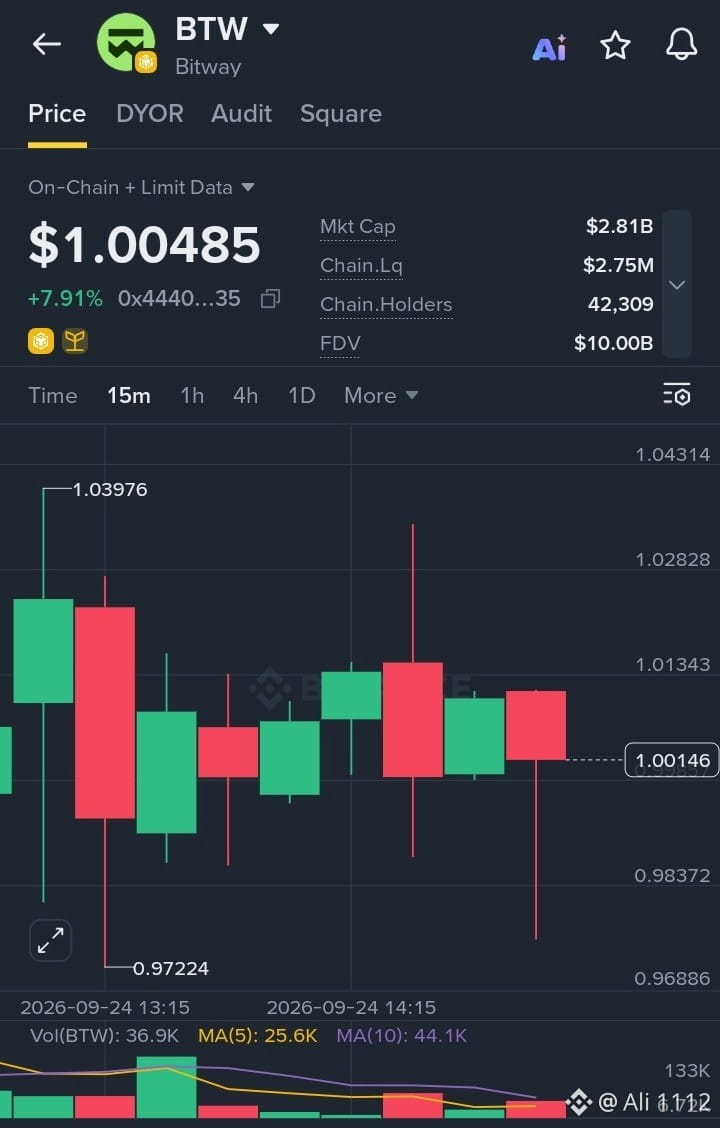
hält seine bullische Position bemerkenswert gut und konsolidiert sich eng direkt nahe seinen lokalen Hochs. Kurzfristig deutet diese enge Konsolidierung auf einen massiven Mangel an Verkaufsdruck hin, was darauf schließen lässt, dass der wahrscheinlichste Weg des geringsten Widerstands weiterhin stark nach oben ausgerichtet ist—für einen weiteren Anstieg. Langfristige Erkenntnisse deuten auf einen äußerst widerstandsfähigen Vermögenswert hin, der es geschafft hat, sich erfolgreich von der allgemeinen Marktschwankung zu lösen und sich als Vorreiter für die nächste Phase des Altcoin-Runs zu positionieren. Die Kursziele sind bei Ziel 1 1.1200, Ziel 2 1.2500 und Ziel 3 1.4000 festgelegt.
#DollarIndexReclaims101
#WallStreetEarningsRevisionsTurnBearish
#USWeighsPromotingDollarStablecoinsAbroad
$BTW
hält seine bullische Position bemerkenswert gut und konsolidiert sich eng direkt nahe seinen lokalen Hochs. Kurzfristig deutet diese enge Konsolidierung auf einen massiven Mangel an Verkaufsdruck hin, was darauf schließen lässt, dass der wahrscheinlichste Weg des geringsten Widerstands weiterhin stark nach oben ausgerichtet ist—für einen weiteren Anstieg. Langfristige Erkenntnisse deuten auf einen äußerst widerstandsfähigen Vermögenswert hin, der es geschafft hat, sich erfolgreich von der allgemeinen Marktschwankung zu lösen und sich als Vorreiter für die nächste Phase des Altcoin-Runs zu positionieren. Die Kursziele sind bei Ziel 1 1.1200, Ziel 2 1.2500 und Ziel 3 1.4000 festgelegt.
#DollarIndexReclaims101
#WallStreetEarningsRevisionsTurnBearish
#USWeighsPromotingDollarStablecoinsAbroad
hält seine bullische Position bemerkenswert gut und konsolidiert sich eng direkt nahe seinen lokalen Hochs. Kurzfristig deutet diese enge Konsolidierung auf einen massiven Mangel an Verkaufsdruck hin, was darauf schließen lässt, dass der wahrscheinlichste Weg des geringsten Widerstands weiterhin stark nach oben ausgerichtet ist—für einen weiteren Anstieg. Langfristige Erkenntnisse deuten auf einen äußerst widerstandsfähigen Vermögenswert hin, der es geschafft hat, sich erfolgreich von der allgemeinen Marktschwankung zu lösen und sich als Vorreiter für die nächste Phase des Altcoin-Runs zu positionieren. Die Kursziele sind bei Ziel 1 1.1200, Ziel 2 1.2500 und Ziel 3 1.4000 festgelegt.
#DollarIndexReclaims101
#WallStreetEarningsRevisionsTurnBearish
#USWeighsPromotingDollarStablecoinsAbroad
423
·
--
$STAR
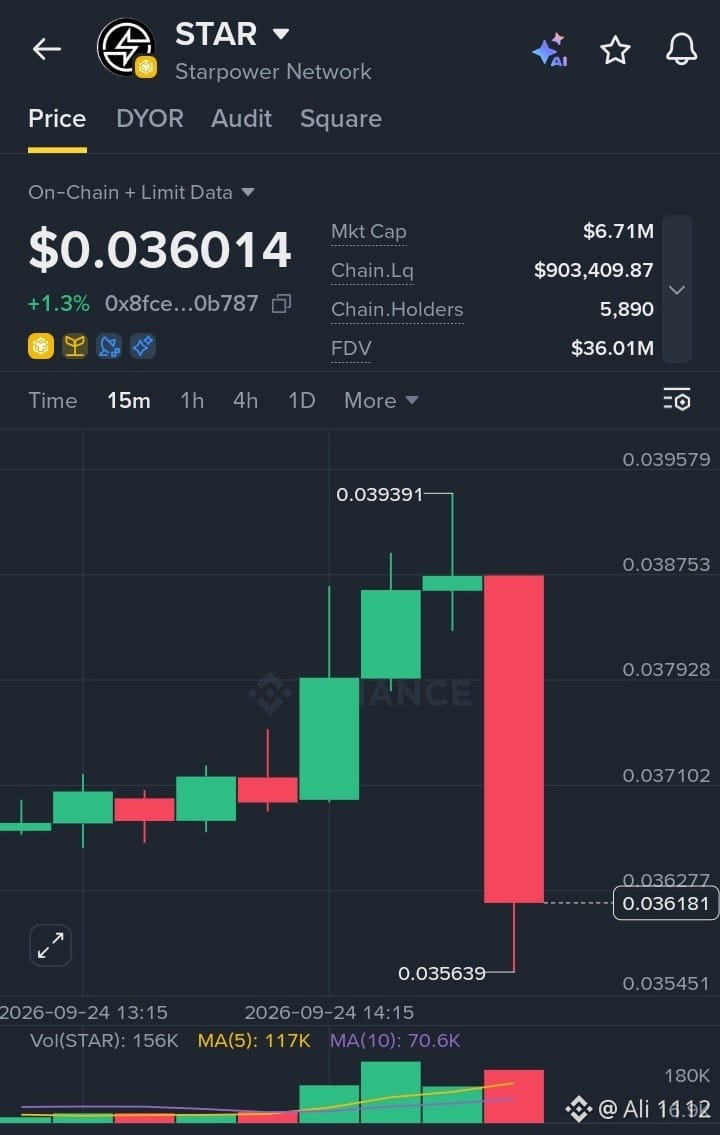
zeigt starke Anzeichen für eine bullische Trendwende, nachdem ein eindeutiger makroökonomischer Boden gefunden wurde. Der kurzfristige Order-Flow bestätigt, dass aggressive Käufer einspringen, um etwaige kleinere Rücksetzer aufzusaugen, wodurch auf den stündlichen Charts ein äußerst konstruktives aufsteigendes Dreieck entsteht. Blickt man auf den langfristigen Horizont, befindet sich dieses Asset ganz am Anfang seiner Erholungsphase, was es zu einem ausgezeichneten Kandidaten für Trendfolge-Strategien macht, während die Marktlquidität zunimmt. Die Kursziele sind bei Ziel eins 0.043000, Ziel zwei 0.049000 und Ziel drei 0.055000 festgelegt.
#BinanceWillListHyperliquid(HYPE)
#US10YTreasuryYieldHits19YearHigh
#WallStreetEarningsRevisionsTurnBearish
$STAR
zeigt starke Anzeichen für eine bullische Trendwende, nachdem ein eindeutiger makroökonomischer Boden gefunden wurde. Der kurzfristige Order-Flow bestätigt, dass aggressive Käufer einspringen, um etwaige kleinere Rücksetzer aufzusaugen, wodurch auf den stündlichen Charts ein äußerst konstruktives aufsteigendes Dreieck entsteht. Blickt man auf den langfristigen Horizont, befindet sich dieses Asset ganz am Anfang seiner Erholungsphase, was es zu einem ausgezeichneten Kandidaten für Trendfolge-Strategien macht, während die Marktlquidität zunimmt. Die Kursziele sind bei Ziel eins 0.043000, Ziel zwei 0.049000 und Ziel drei 0.055000 festgelegt.
#BinanceWillListHyperliquid(HYPE)
#US10YTreasuryYieldHits19YearHigh
#WallStreetEarningsRevisionsTurnBearish
zeigt starke Anzeichen für eine bullische Trendwende, nachdem ein eindeutiger makroökonomischer Boden gefunden wurde. Der kurzfristige Order-Flow bestätigt, dass aggressive Käufer einspringen, um etwaige kleinere Rücksetzer aufzusaugen, wodurch auf den stündlichen Charts ein äußerst konstruktives aufsteigendes Dreieck entsteht. Blickt man auf den langfristigen Horizont, befindet sich dieses Asset ganz am Anfang seiner Erholungsphase, was es zu einem ausgezeichneten Kandidaten für Trendfolge-Strategien macht, während die Marktlquidität zunimmt. Die Kursziele sind bei Ziel eins 0.043000, Ziel zwei 0.049000 und Ziel drei 0.055000 festgelegt.
#BinanceWillListHyperliquid(HYPE)
#US10YTreasuryYieldHits19YearHigh
#WallStreetEarningsRevisionsTurnBearish
523
·
--
$CYS
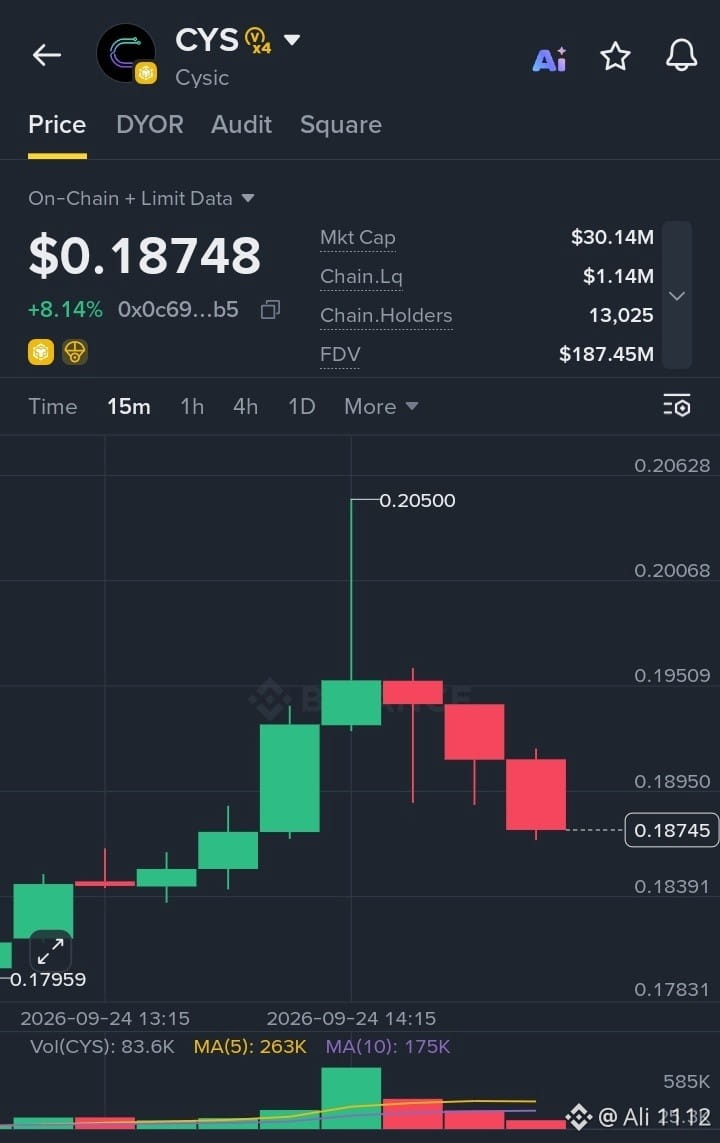
Es kommt zu einem intensiven Momentum-Impuls, nachdem der Kurs aus einem lang anhaltenden Akkumulationskanal ausgebrochen ist. Kurzfristig erfährt das Asset einen deutlichen Anstieg der Kaufnachfrage, der ausreichen könnte, um eine Kaskade von Short Squeezes auszulösen, falls der Kurs den unmittelbaren Widerstand über dem aktuellen Niveau durchbricht. Langfristig stellt dieser Ausbruch eine grundlegende Veränderung der Marktstruktur dar – weg von bärisch hin zu bullisch – und eröffnet die Möglichkeit für eine nachhaltige Fortsetzung nach oben in den kommenden Wochen. Die Kursziele sind bei Ziel 1 0.21500, Ziel 2 0.24800 und Ziel 3 0.29000 gesetzt.
#BinanceWillListHyperliquid(HYPE)
#USWeighsPromotingDollarStablecoinsAbroad
#BCHJumps28%OnCMEFuturesListing
$CYS
Es kommt zu einem intensiven Momentum-Impuls, nachdem der Kurs aus einem lang anhaltenden Akkumulationskanal ausgebrochen ist. Kurzfristig erfährt das Asset einen deutlichen Anstieg der Kaufnachfrage, der ausreichen könnte, um eine Kaskade von Short Squeezes auszulösen, falls der Kurs den unmittelbaren Widerstand über dem aktuellen Niveau durchbricht. Langfristig stellt dieser Ausbruch eine grundlegende Veränderung der Marktstruktur dar – weg von bärisch hin zu bullisch – und eröffnet die Möglichkeit für eine nachhaltige Fortsetzung nach oben in den kommenden Wochen. Die Kursziele sind bei Ziel 1 0.21500, Ziel 2 0.24800 und Ziel 3 0.29000 gesetzt.
#BinanceWillListHyperliquid(HYPE)
#USWeighsPromotingDollarStablecoinsAbroad
#BCHJumps28%OnCMEFuturesListing
Es kommt zu einem intensiven Momentum-Impuls, nachdem der Kurs aus einem lang anhaltenden Akkumulationskanal ausgebrochen ist. Kurzfristig erfährt das Asset einen deutlichen Anstieg der Kaufnachfrage, der ausreichen könnte, um eine Kaskade von Short Squeezes auszulösen, falls der Kurs den unmittelbaren Widerstand über dem aktuellen Niveau durchbricht. Langfristig stellt dieser Ausbruch eine grundlegende Veränderung der Marktstruktur dar – weg von bärisch hin zu bullisch – und eröffnet die Möglichkeit für eine nachhaltige Fortsetzung nach oben in den kommenden Wochen. Die Kursziele sind bei Ziel 1 0.21500, Ziel 2 0.24800 und Ziel 3 0.29000 gesetzt.
#BinanceWillListHyperliquid(HYPE)
#USWeighsPromotingDollarStablecoinsAbroad
#BCHJumps28%OnCMEFuturesListing
282
·
--
Übersetzung ansehen
$CNPY
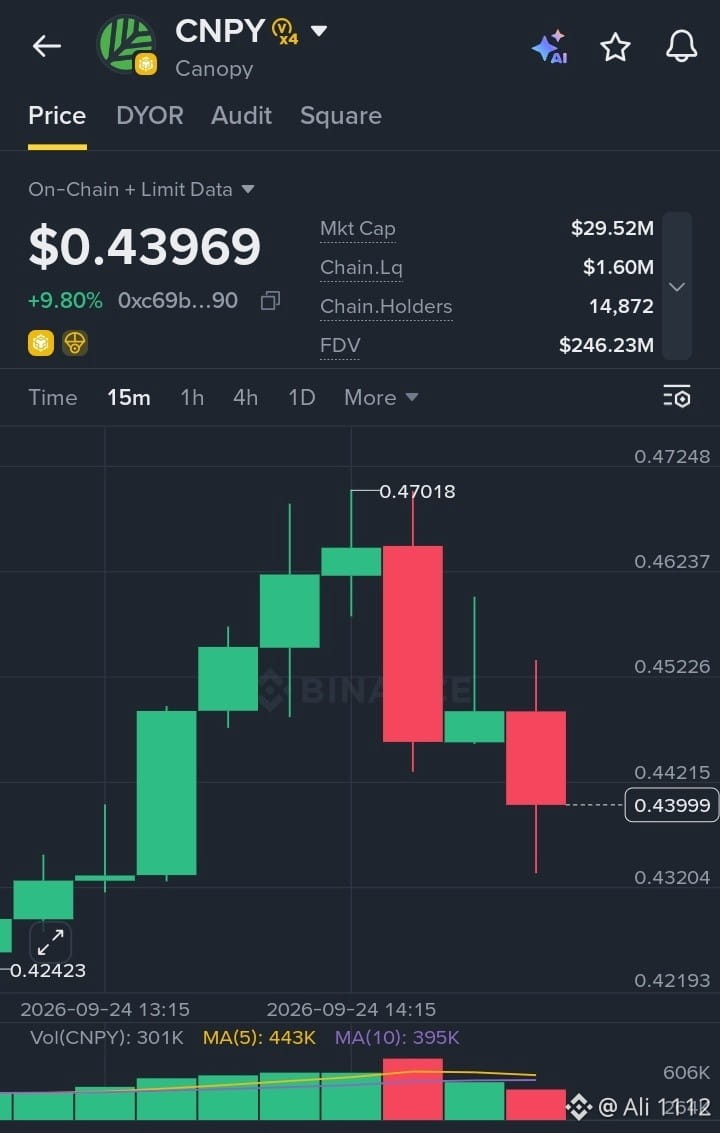
is firmly establishing a steady bullish structure, quietly climbing through key moving averages on the daily chart. Short-term price action looks incredibly clean as it forms a series of higher highs and higher lows, signaling consistent accumulation rather than a speculative pump-and-dump. Long-term insights suggest that as long as the current demand zone remains defended on daily closes, the asset is actively building a launchpad for a much larger expansion toward historical liquidity pockets. Trade targets are set at target one 0.49500, target two 0.55000, and target three 0.62000.
#DollarIndexReclaims101
#WallStreetEarningsRevisionsTurnBearish
#US10YTreasuryYieldHits19YearHigh
$CNPY
is firmly establishing a steady bullish structure, quietly climbing through key moving averages on the daily chart. Short-term price action looks incredibly clean as it forms a series of higher highs and higher lows, signaling consistent accumulation rather than a speculative pump-and-dump. Long-term insights suggest that as long as the current demand zone remains defended on daily closes, the asset is actively building a launchpad for a much larger expansion toward historical liquidity pockets. Trade targets are set at target one 0.49500, target two 0.55000, and target three 0.62000.
#DollarIndexReclaims101
#WallStreetEarningsRevisionsTurnBearish
#US10YTreasuryYieldHits19YearHigh
is firmly establishing a steady bullish structure, quietly climbing through key moving averages on the daily chart. Short-term price action looks incredibly clean as it forms a series of higher highs and higher lows, signaling consistent accumulation rather than a speculative pump-and-dump. Long-term insights suggest that as long as the current demand zone remains defended on daily closes, the asset is actively building a launchpad for a much larger expansion toward historical liquidity pockets. Trade targets are set at target one 0.49500, target two 0.55000, and target three 0.62000.
#DollarIndexReclaims101
#WallStreetEarningsRevisionsTurnBearish
#US10YTreasuryYieldHits19YearHigh
526
·
--
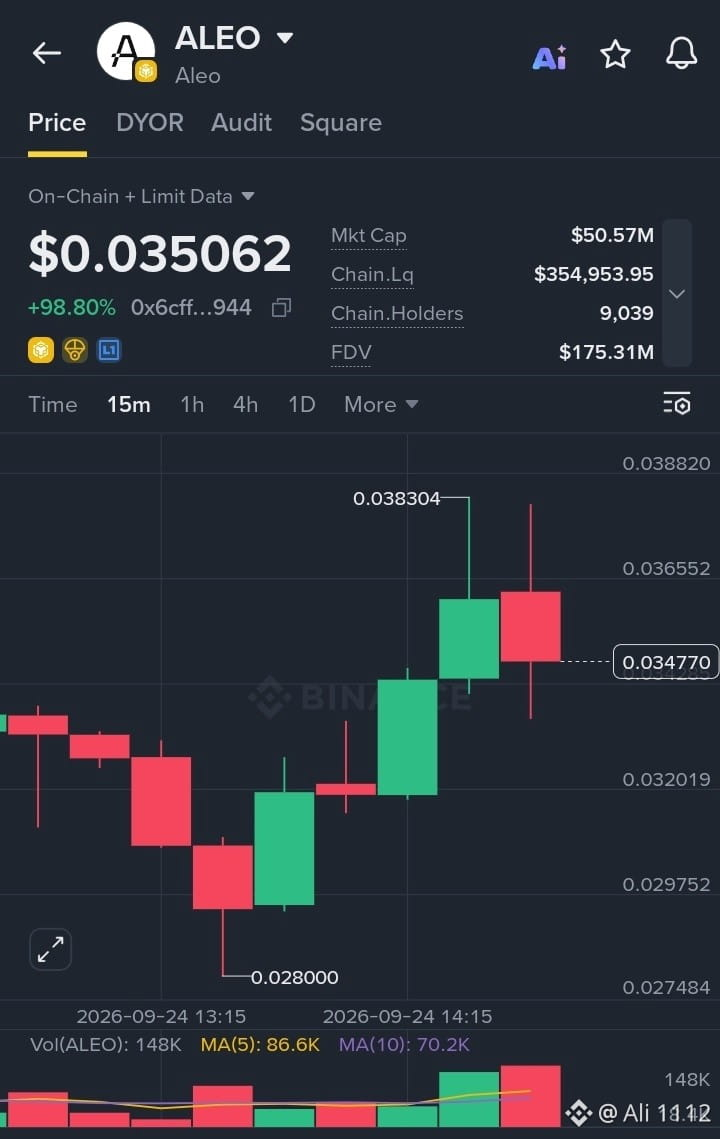
$ALEO hat einen absoluten Monster-Move ausgelöst, nachdem Bären auf historischen Unterstützungsniveaus gefangen wurden. Der Token hat in den letzten vierundzwanzig Stunden eine parabolische Rally gedruckt und ist mit massivem Spot-Volumen, das den Move untermauert, über den unmittelbaren Makro-Widerstand hinaus geschossen. Aus kurzfristiger Sicht ist der Token auf niedrigeren Timeframes stark überdehnt, sodass sehr wahrscheinlich eine kurze Abkühlungsphase oder ein Retest der Breakout-Zone entsteht, um ein höheres Tief zu bilden. Langfristig gilt: Wenn dieses Volumenprofil anhält und das Asset frühere lokale Hochs in Unterstützung umwandelt, ebnet es den Weg in Richtung einer großen Makro-Trendwende. Die Kursziele sind bei Ziel eins 0.038500, Ziel zwei 0.042000 und Ziel drei 0.046500 gesetzt.
#BinanceWillListHyperliquid(HYPE)
#US10YTreasuryYieldHits19YearHigh
#DollarIndexReclaims101
$ALEO hat einen absoluten Monster-Move ausgelöst, nachdem Bären auf historischen Unterstützungsniveaus gefangen wurden. Der Token hat in den letzten vierundzwanzig Stunden eine parabolische Rally gedruckt und ist mit massivem Spot-Volumen, das den Move untermauert, über den unmittelbaren Makro-Widerstand hinaus geschossen. Aus kurzfristiger Sicht ist der Token auf niedrigeren Timeframes stark überdehnt, sodass sehr wahrscheinlich eine kurze Abkühlungsphase oder ein Retest der Breakout-Zone entsteht, um ein höheres Tief zu bilden. Langfristig gilt: Wenn dieses Volumenprofil anhält und das Asset frühere lokale Hochs in Unterstützung umwandelt, ebnet es den Weg in Richtung einer großen Makro-Trendwende. Die Kursziele sind bei Ziel eins 0.038500, Ziel zwei 0.042000 und Ziel drei 0.046500 gesetzt.
#BinanceWillListHyperliquid(HYPE)
#US10YTreasuryYieldHits19YearHigh
#DollarIndexReclaims101
#BinanceWillListHyperliquid(HYPE)
#US10YTreasuryYieldHits19YearHigh
#DollarIndexReclaims101
165

·
--
🎙️ Mit echtem Live-Handel BNB fortlaufend per DCA investieren

Beenden
02 h 16 m 24 s
8.6k
18
24
·
--
🎙️ Den Binance-Platz bauen, BNB im Sparplan besparen|Am Montag kehrt „der King der Fake-ETHs“ zurück auf 2600 US-Dollar – denkt ihr, dass die nächsten Fake-Altcoins eine neue Runde „Abhebn“ starten werden? Lasst uns darüber reden~

Beenden
04 h 54 m 25 s
11.7k
36
42

·
--
🎙️ Willkommen im Tangbao-Livestream-Raum – lass uns über Web3-Vermögens-„Passwörter“ sprechen

Beenden
03 h 55 m 44 s
3.5k
49
73

·
--
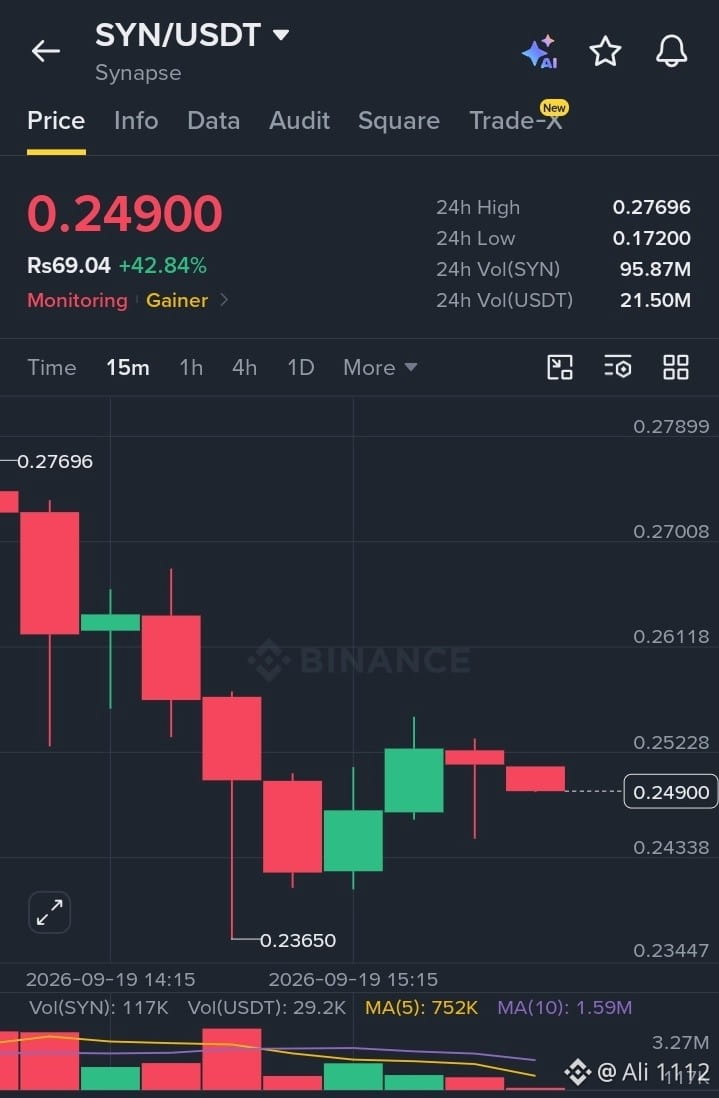
$SYN liefert in diesem Snapshot einen der stärksten Momentum-Impulse, handelt bei rund 0,25186 USD nach einem 43%igen Move. Die Beschleunigung ist beeindruckend, aber verlängerte Kerzen können auch zu heftigen Retracements führen.
TG1: 0,275
TG2: 0,300
TG3: 0,350
Kurzfristig würde das Halten der Zone 0,24–0,25 die Käufer in der unmittelbaren Struktur unter Kontrolle halten. Ein entschiedener Durchbruch durch 0,275 könnte die nächste Expansionsphase in den Fokus rücken.
#LineraShutsDownAfterFundraisingFallsShort
#SECReceivesAmendedInjectiveETFFiling
#BitcoinMarketCapTopsTesla
$SYN liefert in diesem Snapshot einen der stärksten Momentum-Impulse, handelt bei rund 0,25186 USD nach einem 43%igen Move. Die Beschleunigung ist beeindruckend, aber verlängerte Kerzen können auch zu heftigen Retracements führen.
TG1: 0,275
TG2: 0,300
TG3: 0,350
Kurzfristig würde das Halten der Zone 0,24–0,25 die Käufer in der unmittelbaren Struktur unter Kontrolle halten. Ein entschiedener Durchbruch durch 0,275 könnte die nächste Expansionsphase in den Fokus rücken.
#LineraShutsDownAfterFundraisingFallsShort
#SECReceivesAmendedInjectiveETFFiling
#BitcoinMarketCapTopsTesla
TG1: 0,275
TG2: 0,300
TG3: 0,350
Kurzfristig würde das Halten der Zone 0,24–0,25 die Käufer in der unmittelbaren Struktur unter Kontrolle halten. Ein entschiedener Durchbruch durch 0,275 könnte die nächste Expansionsphase in den Fokus rücken.
#LineraShutsDownAfterFundraisingFallsShort
#SECReceivesAmendedInjectiveETFFiling
#BitcoinMarketCapTopsTesla
190
·
--
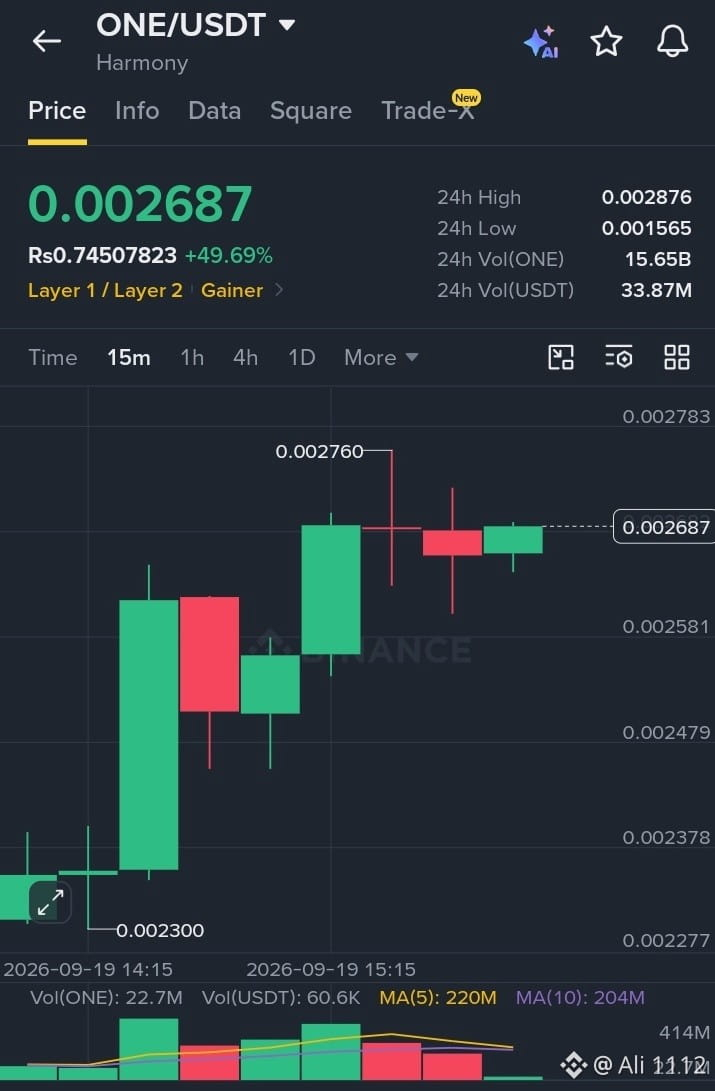
$ONE bewegt sich mit extremer Dynamik und liegt im Snapshot bei etwa $0.002661 nach einem 45%-Anstieg. Das ist eine Art Bewegung, bei der Volumenbestätigung wichtiger ist als dem grünen Kerzen hinterherzulaufen.
TG1: $0.00290
TG2: $0.00320
TG3: $0.00360
Kurzfristig wird $0.00250–$0.00260 zu einer wichtigen Momentum-Zone. Wenn man darüber bleibt, bleibt die Aufwärtsstruktur intakt; wenn man sie verliert, könnte dies eine tiefere Korrektur auslösen.
#BitcoinMarketCapTopsTesla
#SOLJumpsAbout10%
#SanDiskToJoinSP100OnSep21
$ONE bewegt sich mit extremer Dynamik und liegt im Snapshot bei etwa $0.002661 nach einem 45%-Anstieg. Das ist eine Art Bewegung, bei der Volumenbestätigung wichtiger ist als dem grünen Kerzen hinterherzulaufen.
TG1: $0.00290
TG2: $0.00320
TG3: $0.00360
Kurzfristig wird $0.00250–$0.00260 zu einer wichtigen Momentum-Zone. Wenn man darüber bleibt, bleibt die Aufwärtsstruktur intakt; wenn man sie verliert, könnte dies eine tiefere Korrektur auslösen.
#BitcoinMarketCapTopsTesla
#SOLJumpsAbout10%
#SanDiskToJoinSP100OnSep21
TG1: $0.00290
TG2: $0.00320
TG3: $0.00360
Kurzfristig wird $0.00250–$0.00260 zu einer wichtigen Momentum-Zone. Wenn man darüber bleibt, bleibt die Aufwärtsstruktur intakt; wenn man sie verliert, könnte dies eine tiefere Korrektur auslösen.
#BitcoinMarketCapTopsTesla
#SOLJumpsAbout10%
#SanDiskToJoinSP100OnSep21
138
·
--
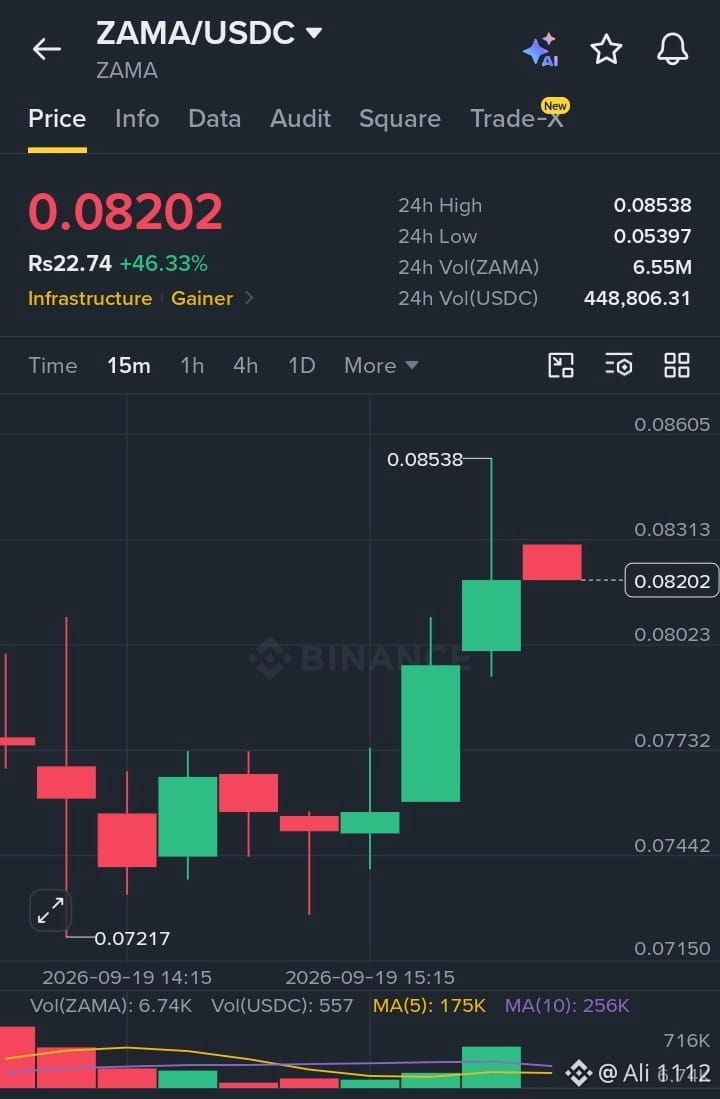
$ZAMA zeigt eine explosive Dynamik und handelt im Chart-Snapshot bei etwa 0,08292 US-Dollar, nachdem es um 47 % gestiegen ist. Entscheidend ist jetzt, ob Käufer die Ausbruchzone verteidigen können, statt eine scharfe Gewinnmitnahme-Rückwärtsbewegung zuzulassen.
TG1: 0,090
TG2: 0,100
TG3: 0,115
Kurzfristig bleibt die Dynamik aggressiv über 0,080. Ein sauberes Halten über 0,090 könnte den Weg zu den höheren Kurszielen öffnen, während das Verlieren des Ausbruchsbereichs das Risiko eines Pullbacks erhöht.
#HKCompletesFirstHKDStablecoinUseCase
#VietnamPlansFirstCryptoLicensesIn2026
#BTCBreaks80K
$ZAMA zeigt eine explosive Dynamik und handelt im Chart-Snapshot bei etwa 0,08292 US-Dollar, nachdem es um 47 % gestiegen ist. Entscheidend ist jetzt, ob Käufer die Ausbruchzone verteidigen können, statt eine scharfe Gewinnmitnahme-Rückwärtsbewegung zuzulassen.
TG1: 0,090
TG2: 0,100
TG3: 0,115
Kurzfristig bleibt die Dynamik aggressiv über 0,080. Ein sauberes Halten über 0,090 könnte den Weg zu den höheren Kurszielen öffnen, während das Verlieren des Ausbruchsbereichs das Risiko eines Pullbacks erhöht.
#HKCompletesFirstHKDStablecoinUseCase
#VietnamPlansFirstCryptoLicensesIn2026
#BTCBreaks80K
TG1: 0,090
TG2: 0,100
TG3: 0,115
Kurzfristig bleibt die Dynamik aggressiv über 0,080. Ein sauberes Halten über 0,090 könnte den Weg zu den höheren Kurszielen öffnen, während das Verlieren des Ausbruchsbereichs das Risiko eines Pullbacks erhöht.
#HKCompletesFirstHKDStablecoinUseCase
#VietnamPlansFirstCryptoLicensesIn2026
#BTCBreaks80K
231
·
--
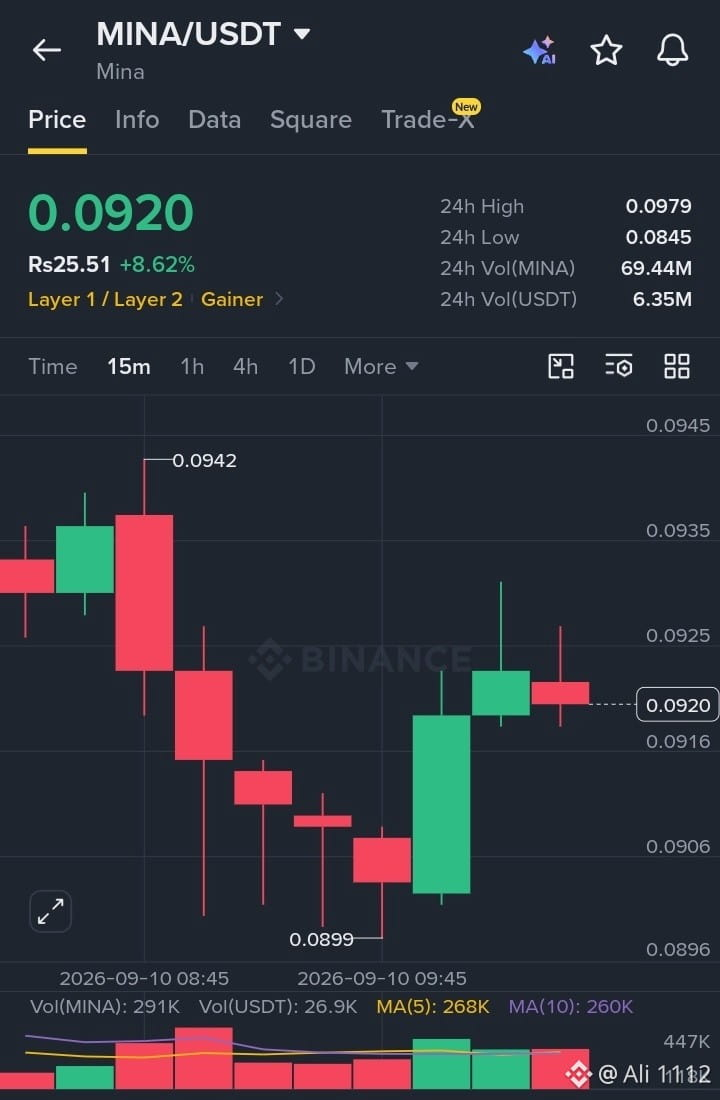
$MINA
zeigt frühe Anzeichen einer starken Trendwende, mit einer Abrundung der Bodenkonfiguration und steigenden Volumenindikatoren. Das sieht nach dem Beginn einer größeren makroökonomischen Bewegung aus. Kurzfristige Aufwärtsziele werden bei 0.1040 und 0.1180 erwartet. Langfristige Anleger, die auf eine vollständige strukturelle Erholung abzielen, können die Widerstandszone bei 0.1450 ansteuern.
#US10YTreasuryYieldHitsHighestSinceNov2023
#EUExtendsCentralContactPointToCASPs
#AppleDebutsFoldablePhone
$MINA
zeigt frühe Anzeichen einer starken Trendwende, mit einer Abrundung der Bodenkonfiguration und steigenden Volumenindikatoren. Das sieht nach dem Beginn einer größeren makroökonomischen Bewegung aus. Kurzfristige Aufwärtsziele werden bei 0.1040 und 0.1180 erwartet. Langfristige Anleger, die auf eine vollständige strukturelle Erholung abzielen, können die Widerstandszone bei 0.1450 ansteuern.
#US10YTreasuryYieldHitsHighestSinceNov2023
#EUExtendsCentralContactPointToCASPs
#AppleDebutsFoldablePhone
zeigt frühe Anzeichen einer starken Trendwende, mit einer Abrundung der Bodenkonfiguration und steigenden Volumenindikatoren. Das sieht nach dem Beginn einer größeren makroökonomischen Bewegung aus. Kurzfristige Aufwärtsziele werden bei 0.1040 und 0.1180 erwartet. Langfristige Anleger, die auf eine vollständige strukturelle Erholung abzielen, können die Widerstandszone bei 0.1450 ansteuern.
#US10YTreasuryYieldHitsHighestSinceNov2023
#EUExtendsCentralContactPointToCASPs
#AppleDebutsFoldablePhone
1
194
·
--
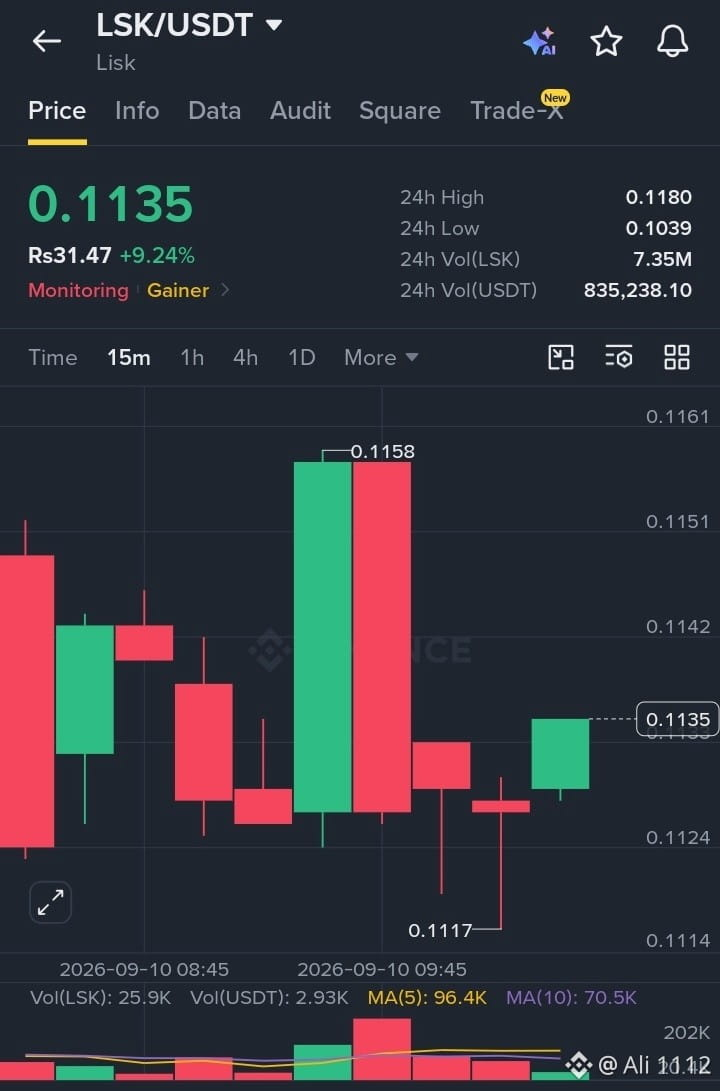
$LSK druckt eine äußerst zuverlässige bullische Marktstruktur, die sich beständig nach oben durch vorherige Supply-Zonen arbeitet. Dieser methodische Anstieg deutet darauf hin, dass eine institutionelle Akkumulation im Gange ist. Kurzfristige Trader können im nächsten Impuls-Impulszug die Ziele 0.1280 und 0.1420 anvisieren. Der langfristige Ausblick bleibt äußerst optimistisch, wobei das primäre Ziel bei 0.1750 liegt.
#AppleDebutsFoldablePhone
#EUExtendsCentralContactPointToCASPs
#USADPWeeklyEmploymentRises12000
$LSK druckt eine äußerst zuverlässige bullische Marktstruktur, die sich beständig nach oben durch vorherige Supply-Zonen arbeitet. Dieser methodische Anstieg deutet darauf hin, dass eine institutionelle Akkumulation im Gange ist. Kurzfristige Trader können im nächsten Impuls-Impulszug die Ziele 0.1280 und 0.1420 anvisieren. Der langfristige Ausblick bleibt äußerst optimistisch, wobei das primäre Ziel bei 0.1750 liegt.
#AppleDebutsFoldablePhone
#EUExtendsCentralContactPointToCASPs
#USADPWeeklyEmploymentRises12000
#AppleDebutsFoldablePhone
#EUExtendsCentralContactPointToCASPs
#USADPWeeklyEmploymentRises12000
86
·
--
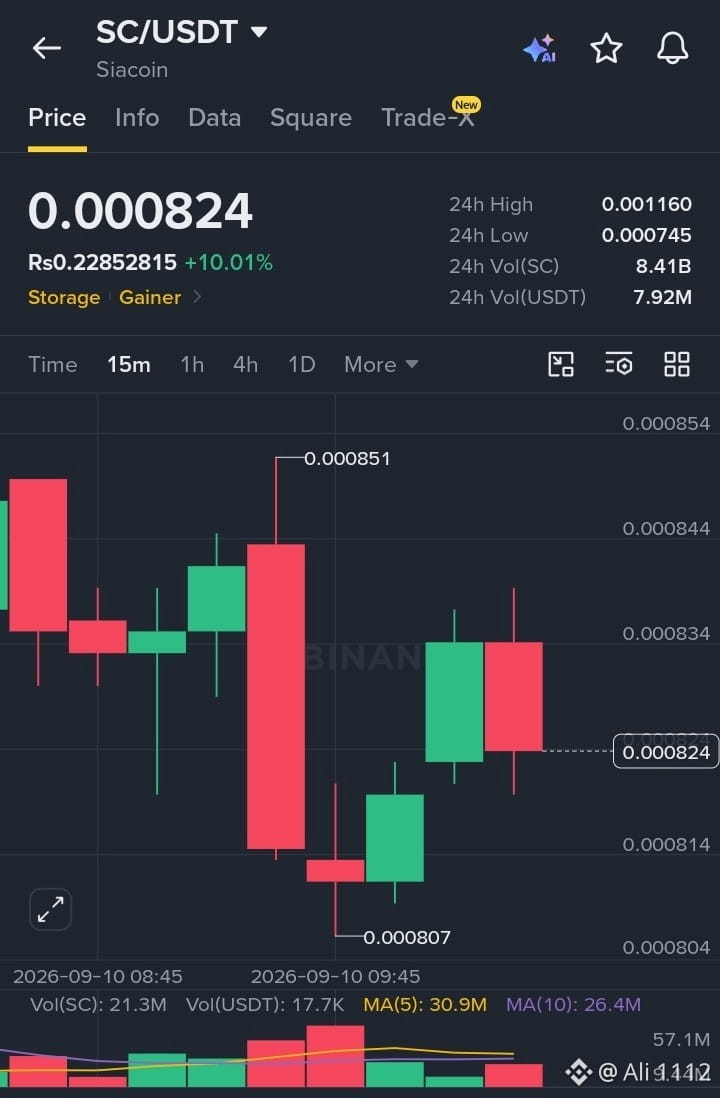
$SC hat einen entscheidenden Ausbruch aus einem mehrwöchigen Konsolidierungsmuster ausgelöst und großes Interesse von Privatanlegern geweckt. Die Kursentwicklung wirkt äußerst konstruktiv für eine fortgesetzte Aufwärtsfortsetzung. Die kurzfristigen Kursziele liegen bei 0.000950 und 0.001080. Für das langfristige Bild könnte ein nachhaltiger Trend den Preis mühelos in Richtung der 0.001350-Region treiben.
#AppleDebutsFoldablePhone
#EUExtendsCentralContactPointToCASPs
#US10YTreasuryYieldHitsHighestSinceNov2023
$SC hat einen entscheidenden Ausbruch aus einem mehrwöchigen Konsolidierungsmuster ausgelöst und großes Interesse von Privatanlegern geweckt. Die Kursentwicklung wirkt äußerst konstruktiv für eine fortgesetzte Aufwärtsfortsetzung. Die kurzfristigen Kursziele liegen bei 0.000950 und 0.001080. Für das langfristige Bild könnte ein nachhaltiger Trend den Preis mühelos in Richtung der 0.001350-Region treiben.
#AppleDebutsFoldablePhone
#EUExtendsCentralContactPointToCASPs
#US10YTreasuryYieldHitsHighestSinceNov2023
#AppleDebutsFoldablePhone
#EUExtendsCentralContactPointToCASPs
#US10YTreasuryYieldHitsHighestSinceNov2023
73
·
--
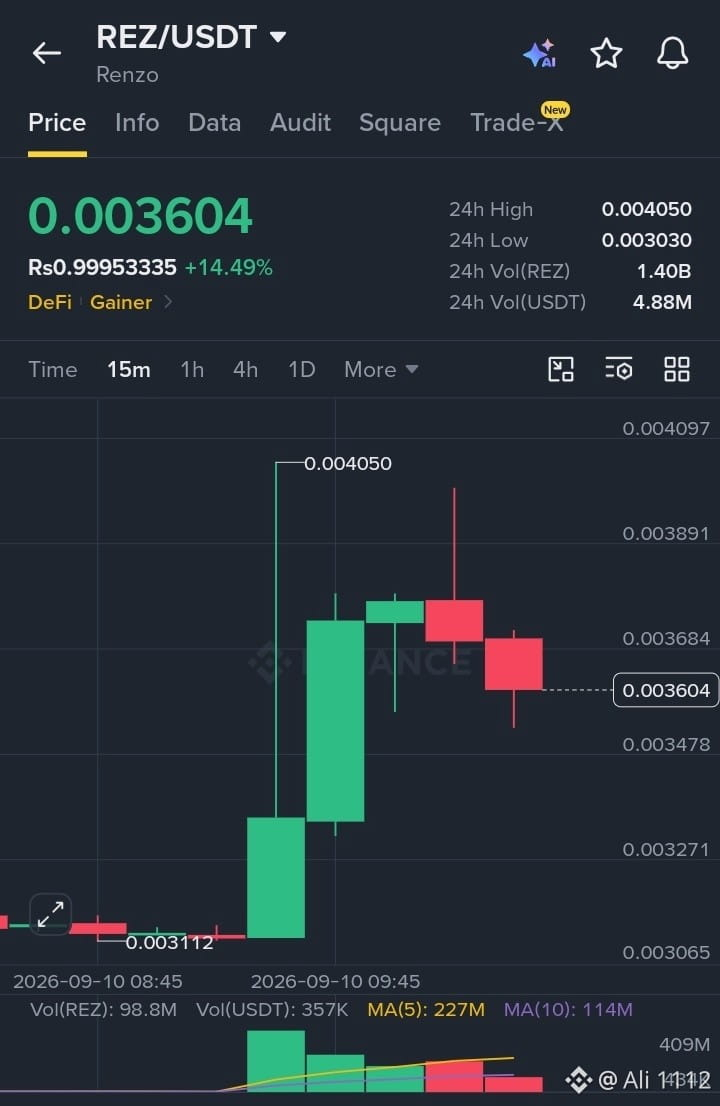
$REZ
ist dabei, nach dem Ausbruch aus seiner Akkumulationsbasis eine saubere, nachhaltige bullische Trendlinie aufzubauen. Der stetige prozentuale Zuwachs deutet auf starkes, bewusstes Spot-Kaufen hin und nicht nur auf eine kurzfristige Liquidations-Squeeze. Kurzfristige Momentum-Ziele liegen bei 0.004100 und 0.004650. In der weiteren Perspektive stützt die makrostrukturelle Lage ein langfristiges Ziel von 0.005800, solange die aktuelle Unterstützung als Boden hält.
#USADPWeeklyEmploymentRises12000
#RippleLobbiesToAdvanceCLARITYActVote
#AppleDebutsFoldablePhone
$REZ
ist dabei, nach dem Ausbruch aus seiner Akkumulationsbasis eine saubere, nachhaltige bullische Trendlinie aufzubauen. Der stetige prozentuale Zuwachs deutet auf starkes, bewusstes Spot-Kaufen hin und nicht nur auf eine kurzfristige Liquidations-Squeeze. Kurzfristige Momentum-Ziele liegen bei 0.004100 und 0.004650. In der weiteren Perspektive stützt die makrostrukturelle Lage ein langfristiges Ziel von 0.005800, solange die aktuelle Unterstützung als Boden hält.
#USADPWeeklyEmploymentRises12000
#RippleLobbiesToAdvanceCLARITYActVote
#AppleDebutsFoldablePhone
ist dabei, nach dem Ausbruch aus seiner Akkumulationsbasis eine saubere, nachhaltige bullische Trendlinie aufzubauen. Der stetige prozentuale Zuwachs deutet auf starkes, bewusstes Spot-Kaufen hin und nicht nur auf eine kurzfristige Liquidations-Squeeze. Kurzfristige Momentum-Ziele liegen bei 0.004100 und 0.004650. In der weiteren Perspektive stützt die makrostrukturelle Lage ein langfristiges Ziel von 0.005800, solange die aktuelle Unterstützung als Boden hält.
#USADPWeeklyEmploymentRises12000
#RippleLobbiesToAdvanceCLARITYActVote
#AppleDebutsFoldablePhone
243
·
--
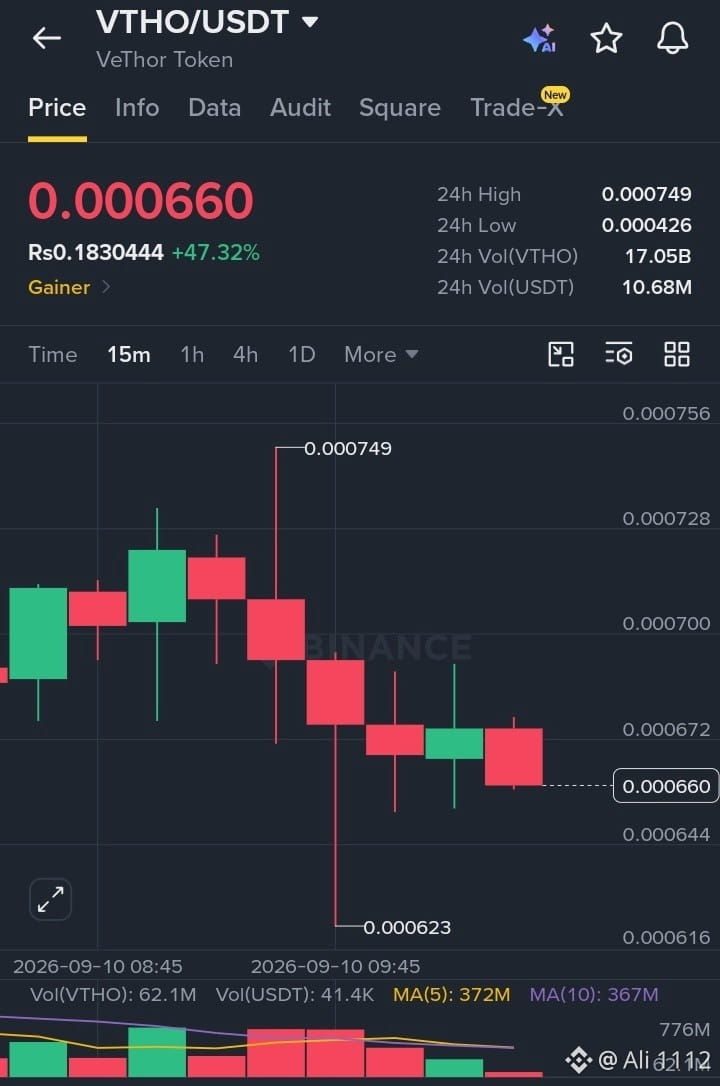
$VTHO
führt mit einer unglaublich aggressiven vertikalen Pumpe an und durchbricht unmittelbare Widerstandsniveaus bei enormem Volumen. Das Token zeigt klassisches Verhalten einer Fortsetzung mit hoher Dynamik. Für kurzfristige Scalping-Setups achte auf unmittelbare Ziele bei 0.000780, gefolgt von 0.000890, wenn der Kaufdruck anhält. Langfristige Positionstrader können sich entspannt in Richtung 0.001150 als großes Makro-Ziel orientieren. Steuere dein Risiko eng, da die Volatilität außergewöhnlich hoch bleibt.
#AppleDebutsFoldablePhone
#EUExtendsCentralContactPointToCASPs
#USADPWeeklyEmploymentRises12000
$VTHO
führt mit einer unglaublich aggressiven vertikalen Pumpe an und durchbricht unmittelbare Widerstandsniveaus bei enormem Volumen. Das Token zeigt klassisches Verhalten einer Fortsetzung mit hoher Dynamik. Für kurzfristige Scalping-Setups achte auf unmittelbare Ziele bei 0.000780, gefolgt von 0.000890, wenn der Kaufdruck anhält. Langfristige Positionstrader können sich entspannt in Richtung 0.001150 als großes Makro-Ziel orientieren. Steuere dein Risiko eng, da die Volatilität außergewöhnlich hoch bleibt.
#AppleDebutsFoldablePhone
#EUExtendsCentralContactPointToCASPs
#USADPWeeklyEmploymentRises12000
führt mit einer unglaublich aggressiven vertikalen Pumpe an und durchbricht unmittelbare Widerstandsniveaus bei enormem Volumen. Das Token zeigt klassisches Verhalten einer Fortsetzung mit hoher Dynamik. Für kurzfristige Scalping-Setups achte auf unmittelbare Ziele bei 0.000780, gefolgt von 0.000890, wenn der Kaufdruck anhält. Langfristige Positionstrader können sich entspannt in Richtung 0.001150 als großes Makro-Ziel orientieren. Steuere dein Risiko eng, da die Volatilität außergewöhnlich hoch bleibt.
#AppleDebutsFoldablePhone
#EUExtendsCentralContactPointToCASPs
#USADPWeeklyEmploymentRises12000
143
·
--
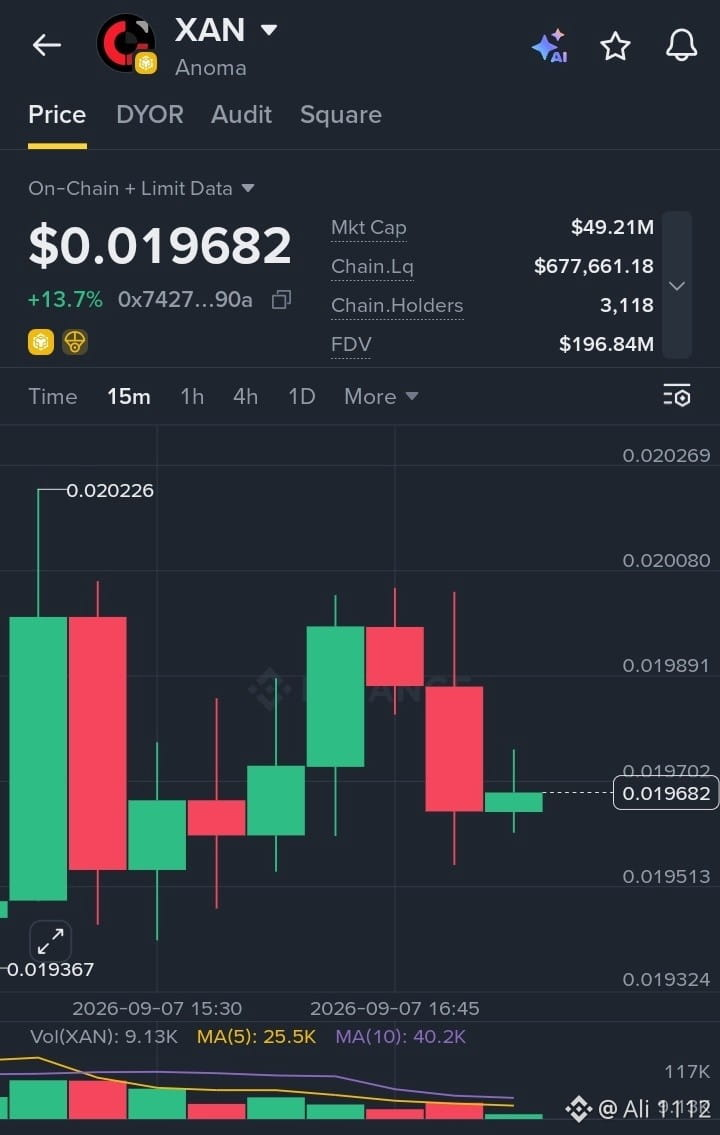
$XAN
Der Preis schleicht sich langsam aus einer längerfristigen Bodenbildungs-Phase nach oben und zeigt erste Anzeichen einer strukturellen Umkehr. Die kurzfristige Fortsetzung hängt vollständig davon ab, dass der Druck auf lokale Verkaufsblöcke aufrechterhalten wird, um einen schnellen Short Squeeze zu erzwingen. Die langfristige Tragfähigkeit ist an eine vollständige Wende des Makro-Trends gebunden, die bestätigt wird, sobald das Asset auf größeren Timeframes aufeinanderfolgende höhere Hochs ausbildet.
TG1: 0.02320
TG2: 0.02680
TG3: 0.03150
#USIranTradeTankerStrikesEscalate
#ZcashRises45%WeeklyToHighestSince2016
#IranSaysItHit3USShips3Tankers
$XAN
Der Preis schleicht sich langsam aus einer längerfristigen Bodenbildungs-Phase nach oben und zeigt erste Anzeichen einer strukturellen Umkehr. Die kurzfristige Fortsetzung hängt vollständig davon ab, dass der Druck auf lokale Verkaufsblöcke aufrechterhalten wird, um einen schnellen Short Squeeze zu erzwingen. Die langfristige Tragfähigkeit ist an eine vollständige Wende des Makro-Trends gebunden, die bestätigt wird, sobald das Asset auf größeren Timeframes aufeinanderfolgende höhere Hochs ausbildet.
TG1: 0.02320
TG2: 0.02680
TG3: 0.03150
#USIranTradeTankerStrikesEscalate
#ZcashRises45%WeeklyToHighestSince2016
#IranSaysItHit3USShips3Tankers
Der Preis schleicht sich langsam aus einer längerfristigen Bodenbildungs-Phase nach oben und zeigt erste Anzeichen einer strukturellen Umkehr. Die kurzfristige Fortsetzung hängt vollständig davon ab, dass der Druck auf lokale Verkaufsblöcke aufrechterhalten wird, um einen schnellen Short Squeeze zu erzwingen. Die langfristige Tragfähigkeit ist an eine vollständige Wende des Makro-Trends gebunden, die bestätigt wird, sobald das Asset auf größeren Timeframes aufeinanderfolgende höhere Hochs ausbildet.
TG1: 0.02320
TG2: 0.02680
TG3: 0.03150
#USIranTradeTankerStrikesEscalate
#ZcashRises45%WeeklyToHighestSince2016
#IranSaysItHit3USShips3Tankers
74
Anmelden und weiter Inhalte entdecken
Krypto-Nutzer weltweit auf Binance Square kennenlernen
⚡️ Bleib in Sachen Krypto stets am Puls.
💬 Die weltgrößte Kryptobörse vertraut darauf.
👍 Erhalte verlässliche Einblicke von verifizierten Creators.
E-Mail-Adresse/Telefonnummer
Trendthemen
CircleMints500MUSDCOnSolana
319 Aufrufe
51 Kommentare
💰 MASSIV: Circle prägt $500M USDC auf Solana!
Circle hat gerade 500 Millionen $USDC auf Solana in 2 Transaktionen geprägt ($250M + $250M) am 25. September – in nur 5,5 Stunden! 🚀
Solana hält jetzt $7,48B+ $USDC – über 50% seines $14,7B Stablecoin-Angebots.
Warum Solana?
⚡️ Geschwindigkeit: 65k TPS
💸 Niedrige Gebühren: $0.00025
🔥 DeFi-Hub: Jupiter, Raydium mit Pump
Das ist eine der größten Prägeserien an einem einzigen Tag & ein Signal für eine enorme, institutionelle Nachfrage nach der Solana-Ökonomie.
Bullish für $SOL? 👇
#Circle #USDC #Solana #Stablecoin #DeFi#circlemints500musdconsolana
True News
·1 Likes
·40 Aufrufe
PolymarketBankFailureBetsDrawFDICConcern
9,277 Aufrufe
341 Kommentare
BlackRockBuildsTokenizedPortfoliosForOndo
7,182 Aufrufe
239 Kommentare