

Amelia_BnB
18.3k Beiträge

Amelia_BnB
 Square Verified
Melden
Nutzer blockieren
Crypto Lover 💕|| BNB || BTC || Web3 content Creator
1.7K+ Following
30.5K+ Follower
17.0K+ Like gegeben
Beiträge
Alle
Zitierungen
Live
·
--
Bullisch
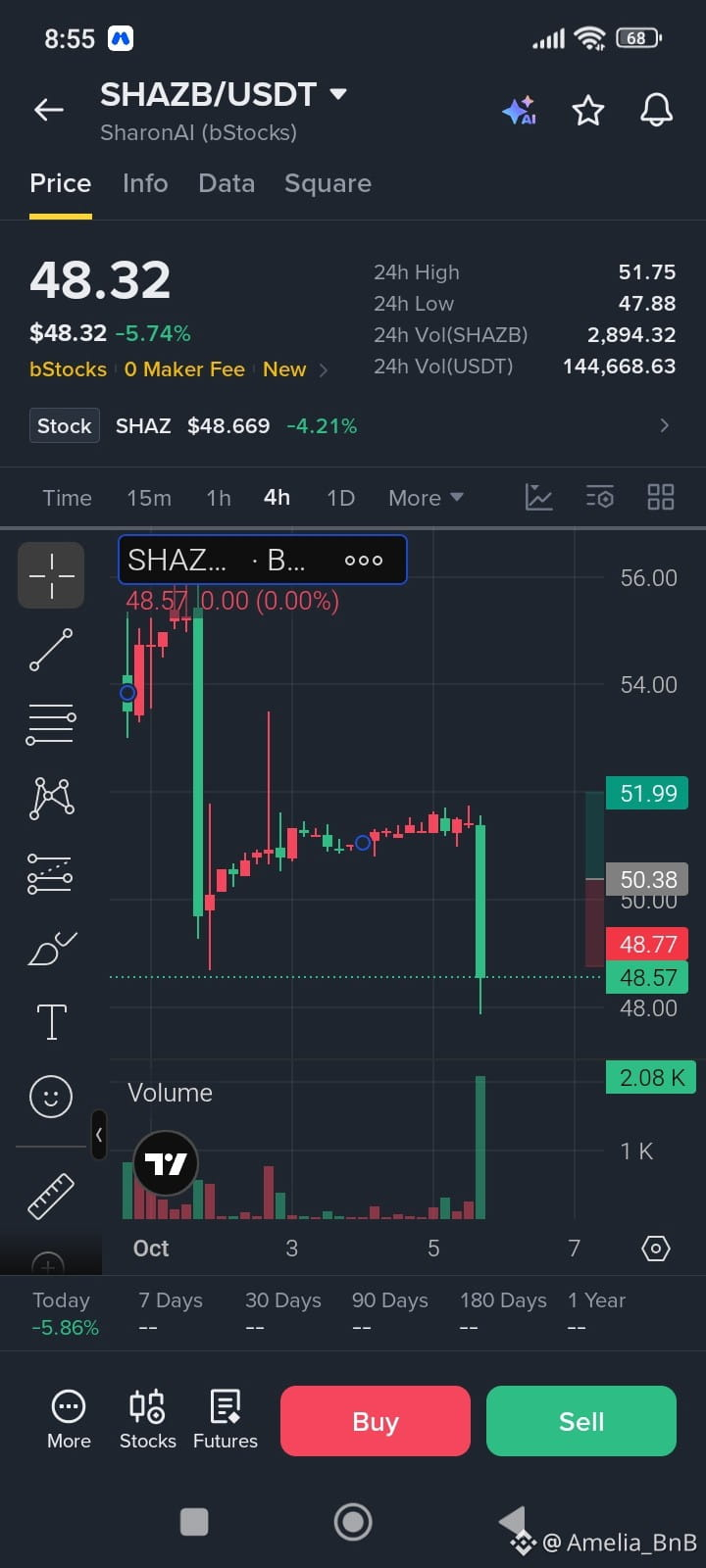
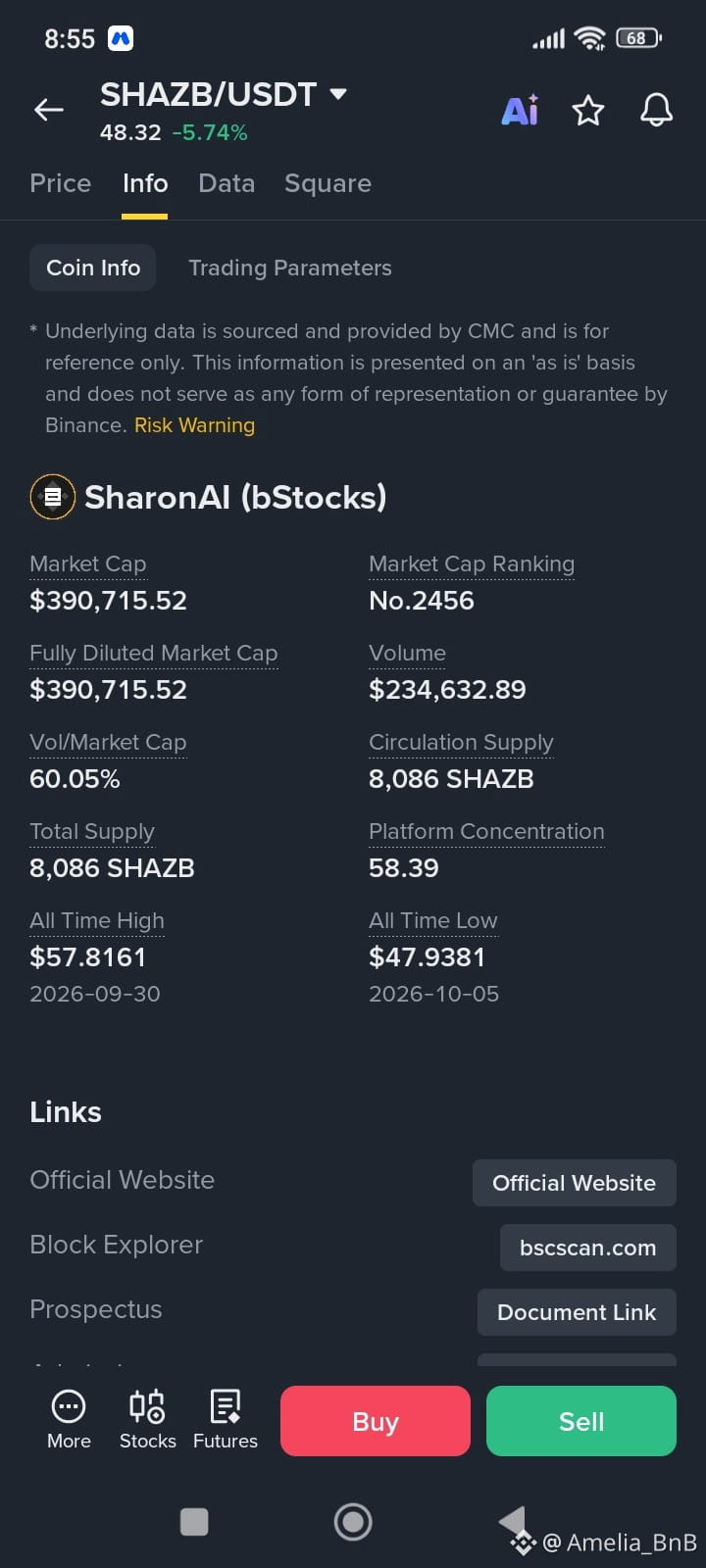
Ich beobachte $SHAZB genau, und genau hier beginnt der eigentliche Härtetest für diesen Rücksetzer. Nachdem der Kurs in Richtung des Bereichs von 55–57 $ gestiegen war, hat er deutlich nachgegeben und liegt jetzt bei etwa 48,32 $ – ganz in der Nähe der jüngsten Tiefzone. 👀
Was mir aufgefallen ist, ist das Volumen. Die jüngste 4-Stunden-Kerze ging mit einem deutlichen Volumenschub einher. Das bedeutet, dass der Kurs nicht einfach still und leise nach unten driftet. Die Verkäufer haben den Markt kräftig unter Druck gesetzt. Jetzt müssen wir sehen, ob die Käufer bereit sind, diesen Druck aufzufangen.
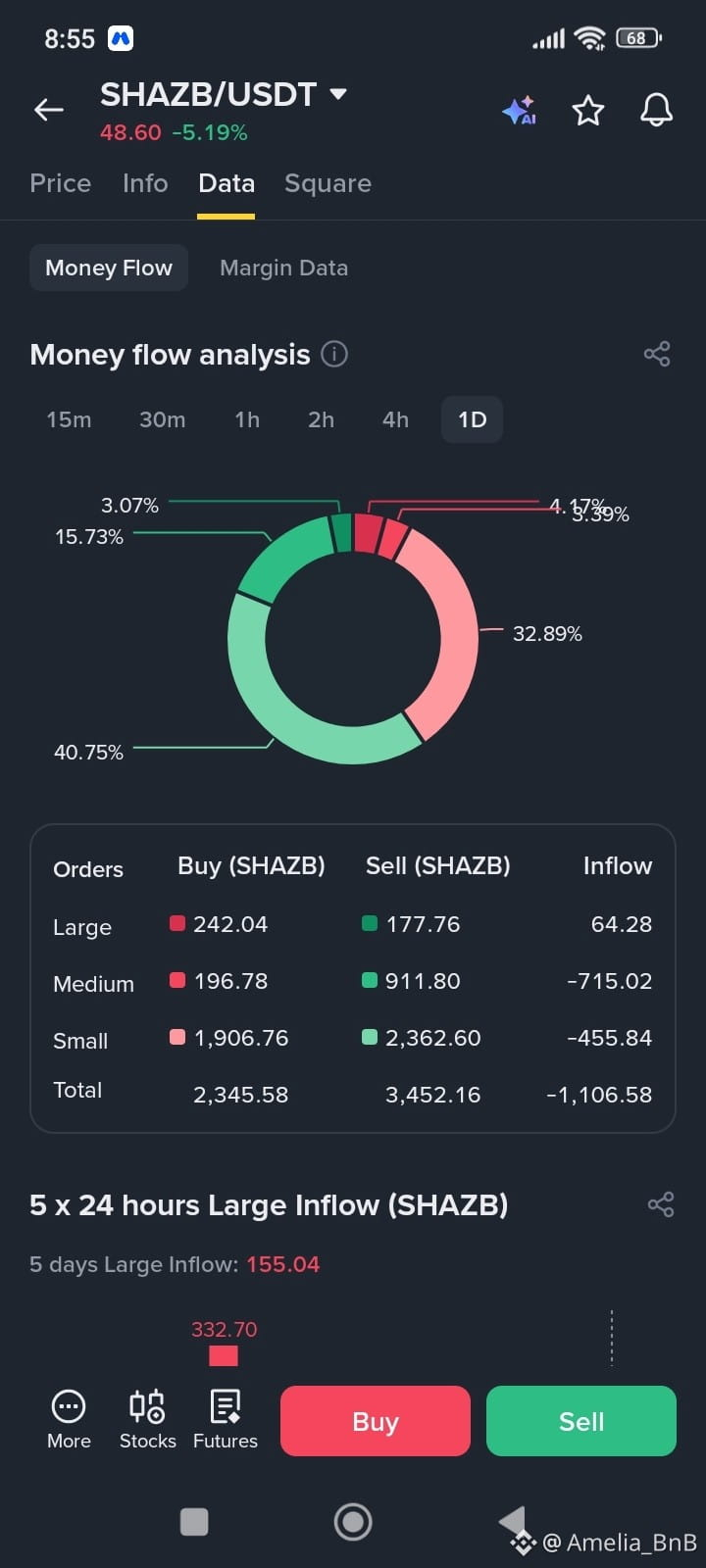
🐋 Auch die Kapitalflussdaten sind interessant. Bei großen Orders stehen 242,04 SHAZB auf der Kaufseite und 177,76 auf der Verkaufsseite. Damit liegt der Orderfluss großer Marktteilnehmer bei positiven +64,28. Auch der 5-Tage-Nettozufluss großer Orders ist mit 155,04 positiv. Gleichzeitig sind mittlere und kleine Orders per saldo Verkäufe. Deshalb würde ich noch nicht von einer bestätigten Akkumulation sprechen. Die größeren Marktteilnehmer sind aktiv, aber der Kurs muss erst noch beweisen, dass die Nachfrage stark genug ist.
📊 Im Chart liegt die unmittelbare Unterstützungszone bei 47,88–48,00 $. Wenn sie hält, behalte ich zunächst 50,38 $ im Blick, gefolgt von 51,75–51,99 $. Ein überzeugender Ausbruch über diese Zone könnte den Weg zurück in den Bereich von 54–55 $ ebnen.
⚠️ Hier sind keine Daten zu Token-Freischaltungen zu sehen, daher werde ich mir keine Geschichte über ein Angebotsrisiko ausdenken.
Ich bin interessiert, möchte dem Pump aber nicht blind hinterherlaufen. Jetzt kommt der eigentliche Härtetest: Können die Käufer die 48 $ verteidigen und die 52 $ mit Überzeugung zurückerobern?
#ETHUp70%InQ3ButLiquidityFalls #EthStakingExitQueueHits2026High #FedOctoberHoldOdds82.3%
Ich beobachte $SHAZB genau, und genau hier beginnt der eigentliche Härtetest für diesen Rücksetzer. Nachdem der Kurs in Richtung des Bereichs von 55–57 $ gestiegen war, hat er deutlich nachgegeben und liegt jetzt bei etwa 48,32 $ – ganz in der Nähe der jüngsten Tiefzone. 👀
Was mir aufgefallen ist, ist das Volumen. Die jüngste 4-Stunden-Kerze ging mit einem deutlichen Volumenschub einher. Das bedeutet, dass der Kurs nicht einfach still und leise nach unten driftet. Die Verkäufer haben den Markt kräftig unter Druck gesetzt. Jetzt müssen wir sehen, ob die Käufer bereit sind, diesen Druck aufzufangen.
🐋 Auch die Kapitalflussdaten sind interessant. Bei großen Orders stehen 242,04 SHAZB auf der Kaufseite und 177,76 auf der Verkaufsseite. Damit liegt der Orderfluss großer Marktteilnehmer bei positiven +64,28. Auch der 5-Tage-Nettozufluss großer Orders ist mit 155,04 positiv. Gleichzeitig sind mittlere und kleine Orders per saldo Verkäufe. Deshalb würde ich noch nicht von einer bestätigten Akkumulation sprechen. Die größeren Marktteilnehmer sind aktiv, aber der Kurs muss erst noch beweisen, dass die Nachfrage stark genug ist.
📊 Im Chart liegt die unmittelbare Unterstützungszone bei 47,88–48,00 $. Wenn sie hält, behalte ich zunächst 50,38 $ im Blick, gefolgt von 51,75–51,99 $. Ein überzeugender Ausbruch über diese Zone könnte den Weg zurück in den Bereich von 54–55 $ ebnen.
⚠️ Hier sind keine Daten zu Token-Freischaltungen zu sehen, daher werde ich mir keine Geschichte über ein Angebotsrisiko ausdenken.
Ich bin interessiert, möchte dem Pump aber nicht blind hinterherlaufen. Jetzt kommt der eigentliche Härtetest: Können die Käufer die 48 $ verteidigen und die 52 $ mit Überzeugung zurückerobern?
#ETHUp70%InQ3ButLiquidityFalls #EthStakingExitQueueHits2026High #FedOctoberHoldOdds82.3%
Was mir aufgefallen ist, ist das Volumen. Die jüngste 4-Stunden-Kerze ging mit einem deutlichen Volumenschub einher. Das bedeutet, dass der Kurs nicht einfach still und leise nach unten driftet. Die Verkäufer haben den Markt kräftig unter Druck gesetzt. Jetzt müssen wir sehen, ob die Käufer bereit sind, diesen Druck aufzufangen.
🐋 Auch die Kapitalflussdaten sind interessant. Bei großen Orders stehen 242,04 SHAZB auf der Kaufseite und 177,76 auf der Verkaufsseite. Damit liegt der Orderfluss großer Marktteilnehmer bei positiven +64,28. Auch der 5-Tage-Nettozufluss großer Orders ist mit 155,04 positiv. Gleichzeitig sind mittlere und kleine Orders per saldo Verkäufe. Deshalb würde ich noch nicht von einer bestätigten Akkumulation sprechen. Die größeren Marktteilnehmer sind aktiv, aber der Kurs muss erst noch beweisen, dass die Nachfrage stark genug ist.
📊 Im Chart liegt die unmittelbare Unterstützungszone bei 47,88–48,00 $. Wenn sie hält, behalte ich zunächst 50,38 $ im Blick, gefolgt von 51,75–51,99 $. Ein überzeugender Ausbruch über diese Zone könnte den Weg zurück in den Bereich von 54–55 $ ebnen.
⚠️ Hier sind keine Daten zu Token-Freischaltungen zu sehen, daher werde ich mir keine Geschichte über ein Angebotsrisiko ausdenken.
Ich bin interessiert, möchte dem Pump aber nicht blind hinterherlaufen. Jetzt kommt der eigentliche Härtetest: Können die Käufer die 48 $ verteidigen und die 52 $ mit Überzeugung zurückerobern?
#ETHUp70%InQ3ButLiquidityFalls #EthStakingExitQueueHits2026High #FedOctoberHoldOdds82.3%
131
·
--
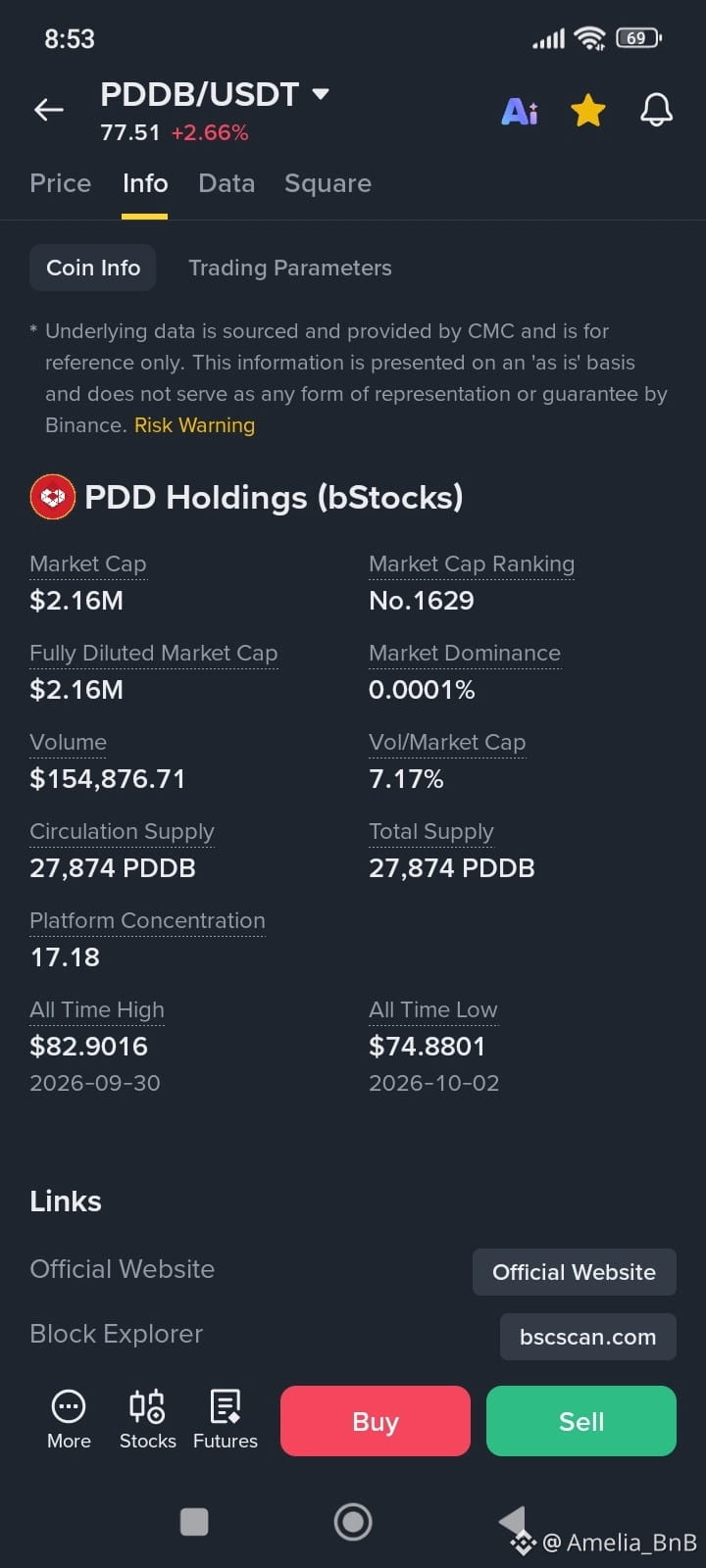
Ich beobachte $PDDB genau, und diese Bewegung wird langsam interessant. Nachdem der Kurs von etwa 78 $ in Richtung der 75-$-Zone gefallen war, sind die Käufer endlich wieder eingestiegen – doch jetzt kommt der eigentliche Test.
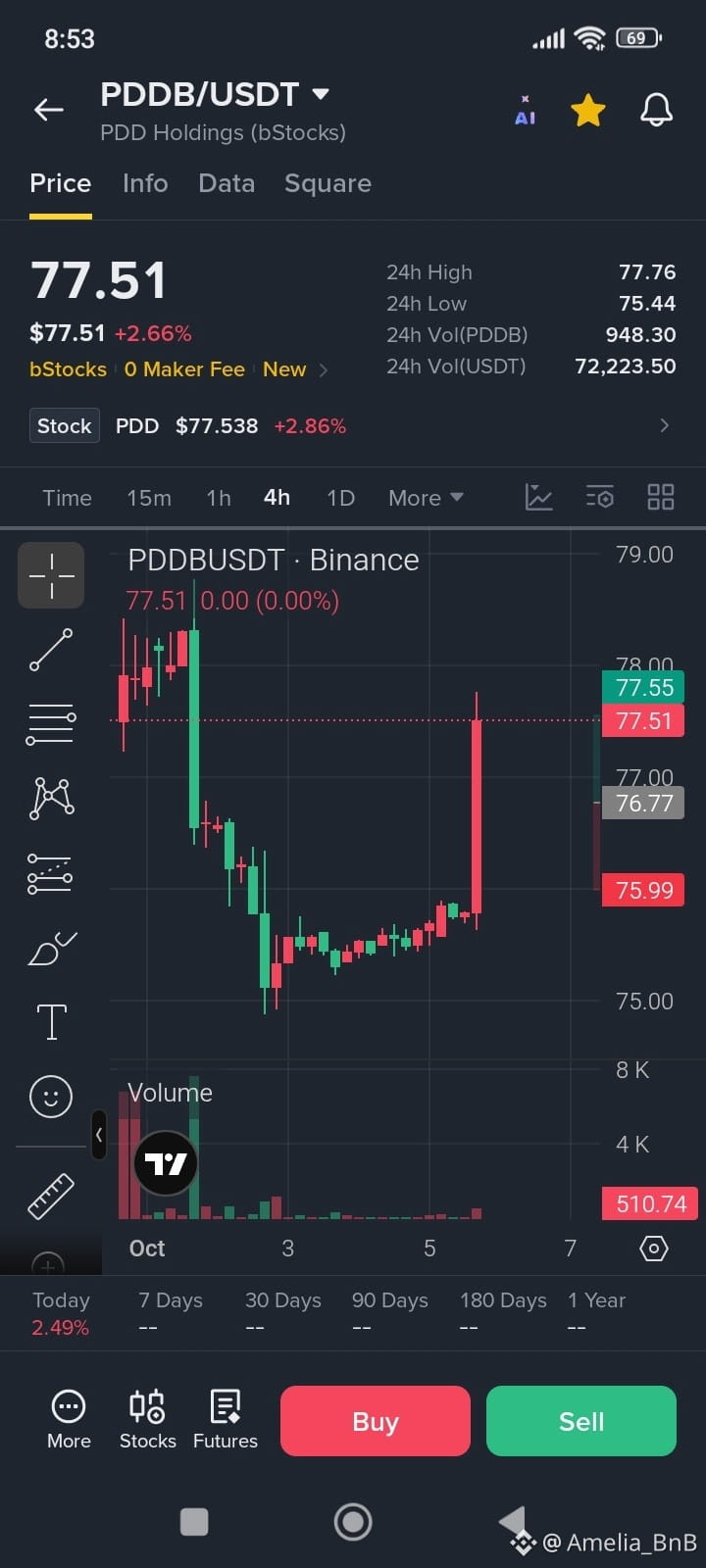
$PDDB liegt bei etwa 77,51 $, heute mehr als 2 % im Plus. Im 4-Stunden-Chart prallte der Kurs kräftig von der 75-$-Zone ab und stieg wieder in Richtung des vorherigen Widerstandsbereichs. Diese Erholung ist wichtig, aber ich möchte dem Anstieg nicht blind hinterherlaufen, solange der Kurs noch mit dem Verkaufsdruck über ihm kämpft.
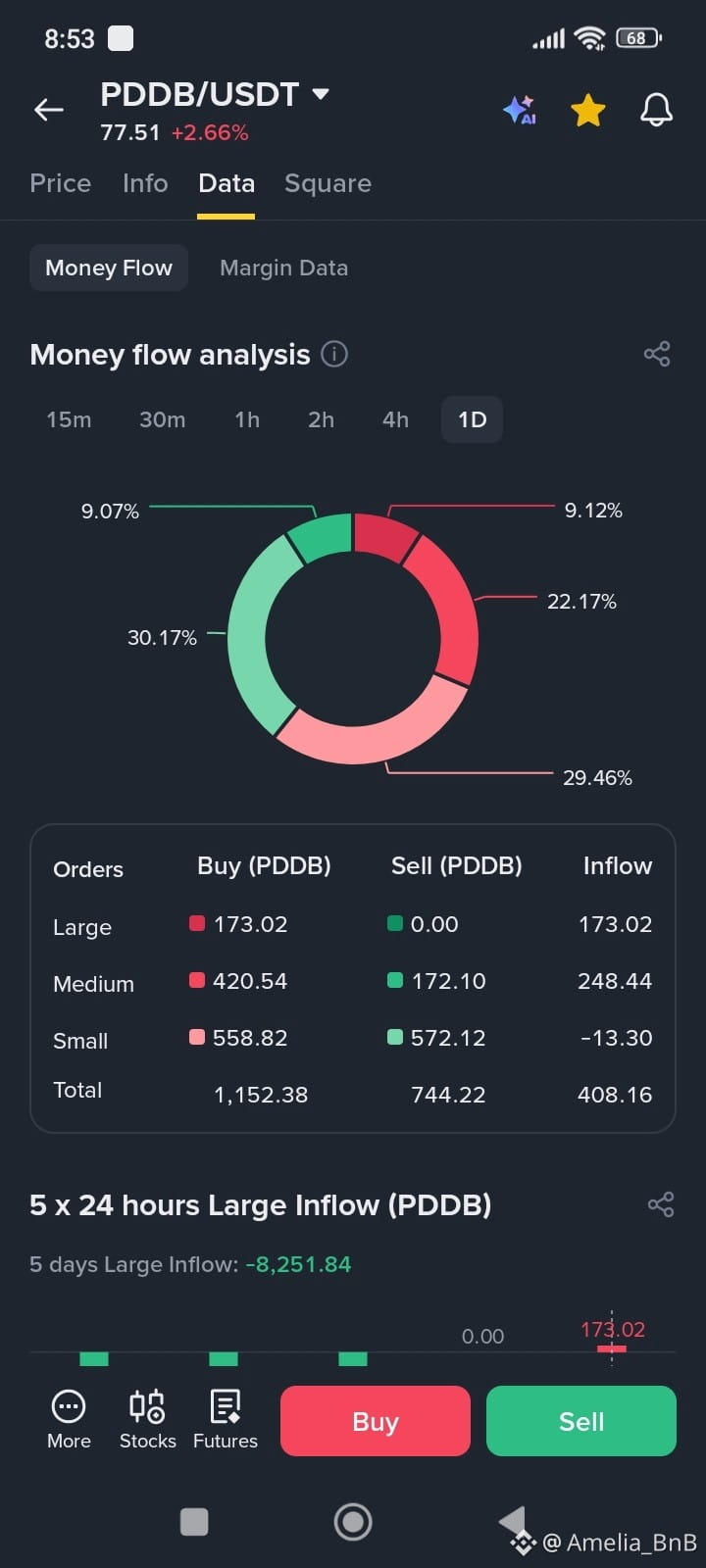
🐋 Die Geldflussdaten liefern einen interessanten Hinweis: Bei den großen Orders stehen 173,02 Käufe und 0 Verkäufe, während der Gesamtfluss mit 408,16 derzeit positiv ist. Das größere Bild ist jedoch weniger beruhigend – der 5-Tage-Nettogeldzufluss großer Orders liegt mit -8.251,84 weiterhin deutlich im Minus. Ich beobachte also, ob diese frischen Käufe der Beginn einer stärkeren Akkumulation sind oder nur eine kurzfristige Reaktion.
📊 Technisch gesehen ist 75,44 $ die unmittelbare Marke auf der Unterseite; das jüngste Tief liegt bei etwa 74,88 $. Oberhalb davon ist der Bereich von 77,76–78,00 $ die entscheidende Kampfzone. Ein klarer Ausbruch über 78 $ und ein anschließendes Halten darüber würden das vorherige Allzeithoch von 82,90 $ zum offensichtlichen nächsten großen Ziel machen.
🎯 Unterstützung: 75,44 $
Widerstand: 77,76–78,00 $
Ausbruch: 78,00 $
Kursziel: 82,90 $
🔥 Ich bin interessiert, aber vorsichtig. Die Käufer müssen erst beweisen, dass sie das Angebot absorbieren können.
Wenn du diese Rücksetzer bisher mit mir durchgestanden hast: Ich bin weiterhin hier und beobachte jedes Kursniveau.
👀 Bricht $PDDB endlich über 78 $ aus, oder wird die Bewegung an dieser Zone erneut abgewiesen?
#ETHUp70%InQ3ButLiquidityFalls #EthStakingExitQueueHits2026High #DriftHackVictimsBeginClaims
Ich beobachte $PDDB genau, und diese Bewegung wird langsam interessant. Nachdem der Kurs von etwa 78 $ in Richtung der 75-$-Zone gefallen war, sind die Käufer endlich wieder eingestiegen – doch jetzt kommt der eigentliche Test.
$PDDB liegt bei etwa 77,51 $, heute mehr als 2 % im Plus. Im 4-Stunden-Chart prallte der Kurs kräftig von der 75-$-Zone ab und stieg wieder in Richtung des vorherigen Widerstandsbereichs. Diese Erholung ist wichtig, aber ich möchte dem Anstieg nicht blind hinterherlaufen, solange der Kurs noch mit dem Verkaufsdruck über ihm kämpft.
🐋 Die Geldflussdaten liefern einen interessanten Hinweis: Bei den großen Orders stehen 173,02 Käufe und 0 Verkäufe, während der Gesamtfluss mit 408,16 derzeit positiv ist. Das größere Bild ist jedoch weniger beruhigend – der 5-Tage-Nettogeldzufluss großer Orders liegt mit -8.251,84 weiterhin deutlich im Minus. Ich beobachte also, ob diese frischen Käufe der Beginn einer stärkeren Akkumulation sind oder nur eine kurzfristige Reaktion.
📊 Technisch gesehen ist 75,44 $ die unmittelbare Marke auf der Unterseite; das jüngste Tief liegt bei etwa 74,88 $. Oberhalb davon ist der Bereich von 77,76–78,00 $ die entscheidende Kampfzone. Ein klarer Ausbruch über 78 $ und ein anschließendes Halten darüber würden das vorherige Allzeithoch von 82,90 $ zum offensichtlichen nächsten großen Ziel machen.
🎯 Unterstützung: 75,44 $
Widerstand: 77,76–78,00 $
Ausbruch: 78,00 $
Kursziel: 82,90 $
🔥 Ich bin interessiert, aber vorsichtig. Die Käufer müssen erst beweisen, dass sie das Angebot absorbieren können.
Wenn du diese Rücksetzer bisher mit mir durchgestanden hast: Ich bin weiterhin hier und beobachte jedes Kursniveau.
👀 Bricht $PDDB endlich über 78 $ aus, oder wird die Bewegung an dieser Zone erneut abgewiesen?
#ETHUp70%InQ3ButLiquidityFalls #EthStakingExitQueueHits2026High #DriftHackVictimsBeginClaims
$PDDB liegt bei etwa 77,51 $, heute mehr als 2 % im Plus. Im 4-Stunden-Chart prallte der Kurs kräftig von der 75-$-Zone ab und stieg wieder in Richtung des vorherigen Widerstandsbereichs. Diese Erholung ist wichtig, aber ich möchte dem Anstieg nicht blind hinterherlaufen, solange der Kurs noch mit dem Verkaufsdruck über ihm kämpft.
🐋 Die Geldflussdaten liefern einen interessanten Hinweis: Bei den großen Orders stehen 173,02 Käufe und 0 Verkäufe, während der Gesamtfluss mit 408,16 derzeit positiv ist. Das größere Bild ist jedoch weniger beruhigend – der 5-Tage-Nettogeldzufluss großer Orders liegt mit -8.251,84 weiterhin deutlich im Minus. Ich beobachte also, ob diese frischen Käufe der Beginn einer stärkeren Akkumulation sind oder nur eine kurzfristige Reaktion.
📊 Technisch gesehen ist 75,44 $ die unmittelbare Marke auf der Unterseite; das jüngste Tief liegt bei etwa 74,88 $. Oberhalb davon ist der Bereich von 77,76–78,00 $ die entscheidende Kampfzone. Ein klarer Ausbruch über 78 $ und ein anschließendes Halten darüber würden das vorherige Allzeithoch von 82,90 $ zum offensichtlichen nächsten großen Ziel machen.
🎯 Unterstützung: 75,44 $
Widerstand: 77,76–78,00 $
Ausbruch: 78,00 $
Kursziel: 82,90 $
🔥 Ich bin interessiert, aber vorsichtig. Die Käufer müssen erst beweisen, dass sie das Angebot absorbieren können.
Wenn du diese Rücksetzer bisher mit mir durchgestanden hast: Ich bin weiterhin hier und beobachte jedes Kursniveau.
👀 Bricht $PDDB endlich über 78 $ aus, oder wird die Bewegung an dieser Zone erneut abgewiesen?
#ETHUp70%InQ3ButLiquidityFalls #EthStakingExitQueueHits2026High #DriftHackVictimsBeginClaims
122
·
--
Bullisch
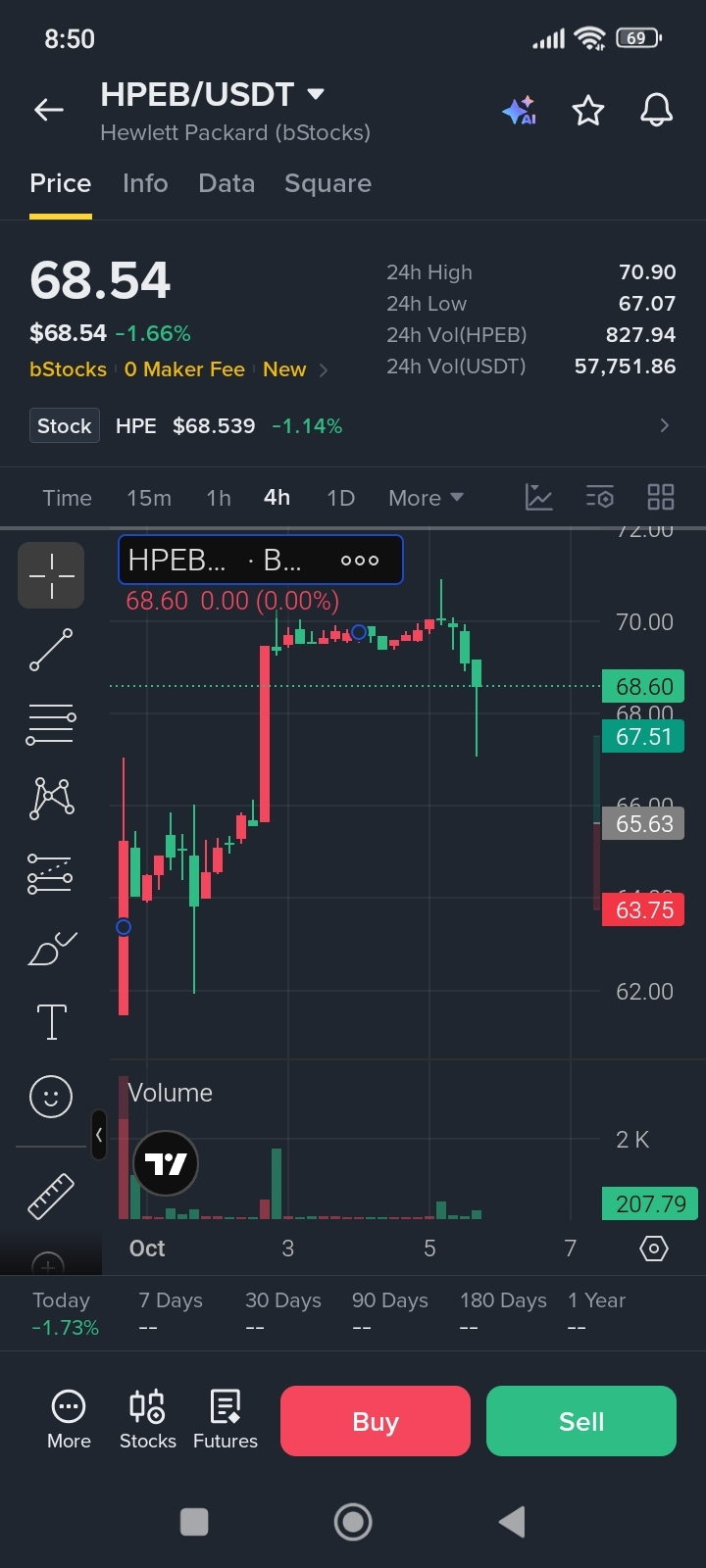
Ich beobachte $HPEB schon eine Weile, und genau bei solchen Bewegungen werde ich vorsichtig, statt den Kerzen hinterherzujagen. 👀
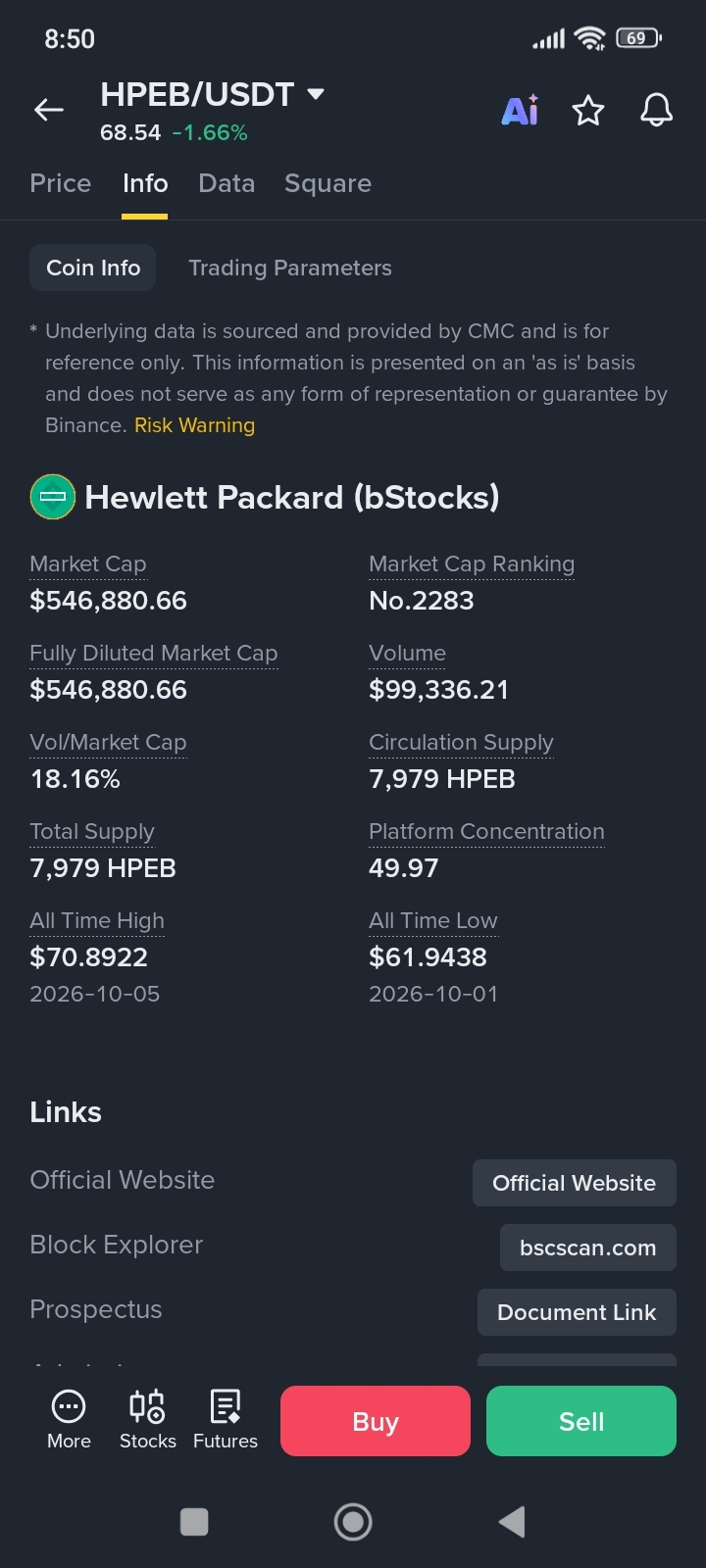
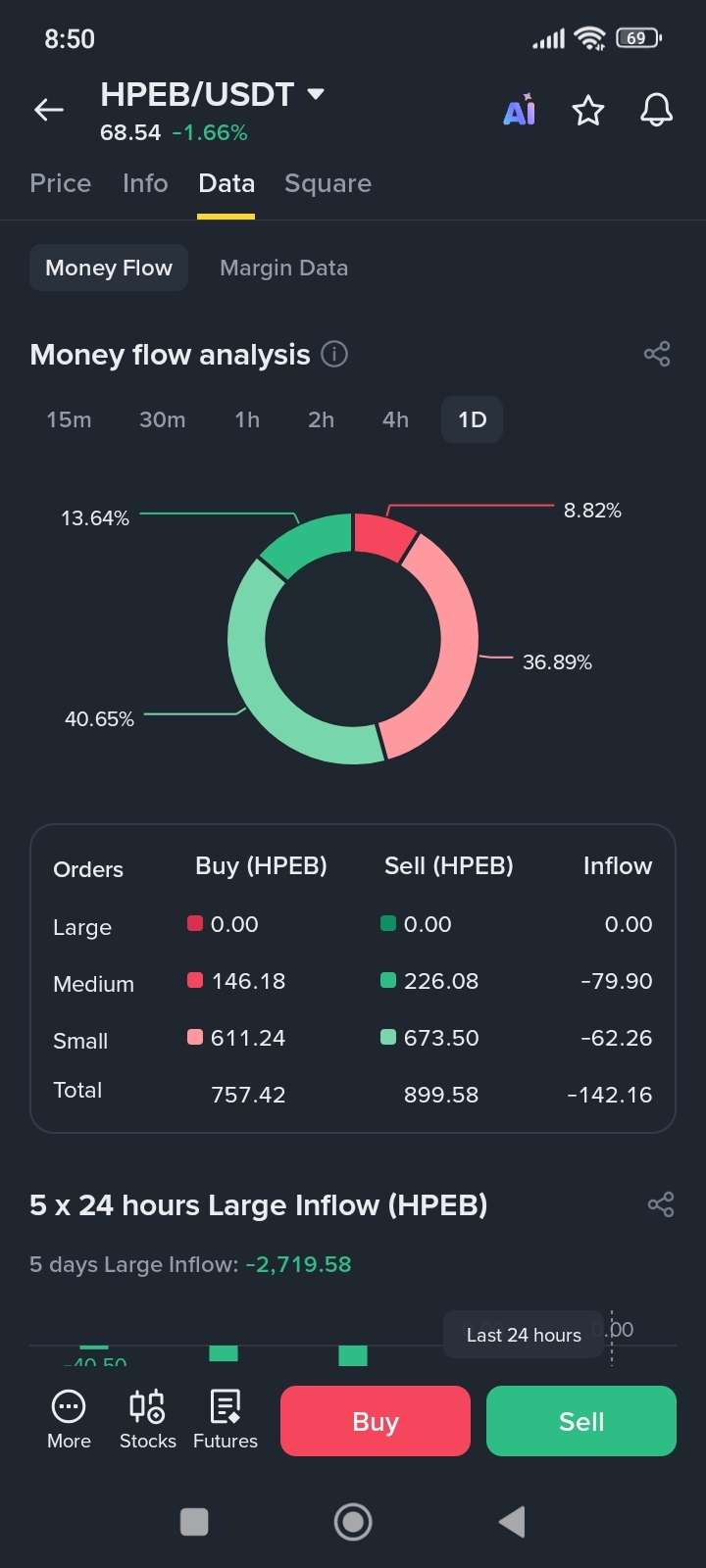
So fing es an: Der Kurs stieg kräftig aus dem Bereich von $63–65, brach nach oben aus und konsolidierte dann eine Weile um $69–70. Das zeigt mir, dass die Käufer während der anfänglichen Aufwärtsbewegung eindeutig die Kontrolle hatten. Doch jetzt lässt das Momentum nach. $HPEB liegt bei etwa $68.54, rund 1.66 % im Minus, nachdem der Kurs im Tagesverlauf $70.90 erreicht hatte.
📊 Die 4-Stunden-Struktur ist weiterhin interessant, aber die jüngsten Kerzen zeigen eine Zurückweisung im Bereich von $70. Beim ursprünglichen Ausbruch schoss das Volumen in die Höhe, während es zuletzt deutlich geringer war. Für mich bedeutet das: Die nächste Bewegung muss bestätigt werden, statt auf blinde Überzeugung zu setzen.
Die Niveaus werden immer deutlicher. $67.50 ist die erste Unterstützung, die ich im Blick habe, während $65.63 das tiefer liegende strukturelle Niveau ist. Auf der Oberseite bildet $70.00–$70.90 die wichtige Widerstandszone. Ein klarer Ausbruch über $70.90 mit anschließendem Halten wäre die Bestätigung, die ich sehen möchte, bevor ich $72 ins Auge fasse.
🐋 In diesem Screenshot habe ich keine verlässlichen Daten zu den Aktivitäten großer Marktteilnehmer, daher werde ich weder Akkumulation noch Distribution erfinden.
⚠️ Angaben zu Token-Freischaltungen liegen mir hier ebenfalls nicht vor. Das Angebotsrisiko muss also separat bestätigt werden.
🔥 Solange $67.50 hält, bin ich vorsichtig optimistisch, aber ich möchte dem Pump nicht hinterherjagen.
🎯 Unterstützung: $67.50 | Widerstand: $70.00–$70.90 | Ausbruch: $70.90 | Ziel: $72
Ich beobachte weiterhin jede Reaktion. Können die Käufer $70.90 zurückerobern, oder bereitet diese Konsolidierung den nächsten Rücksetzer vor?
#EthereumValidatorExitQueueJumps392% #DriftHackVictimsBeginClaims #FedOctoberHoldOdds82.3%
Ich beobachte $HPEB schon eine Weile, und genau bei solchen Bewegungen werde ich vorsichtig, statt den Kerzen hinterherzujagen. 👀
So fing es an: Der Kurs stieg kräftig aus dem Bereich von $63–65, brach nach oben aus und konsolidierte dann eine Weile um $69–70. Das zeigt mir, dass die Käufer während der anfänglichen Aufwärtsbewegung eindeutig die Kontrolle hatten. Doch jetzt lässt das Momentum nach. $HPEB liegt bei etwa $68.54, rund 1.66 % im Minus, nachdem der Kurs im Tagesverlauf $70.90 erreicht hatte.
📊 Die 4-Stunden-Struktur ist weiterhin interessant, aber die jüngsten Kerzen zeigen eine Zurückweisung im Bereich von $70. Beim ursprünglichen Ausbruch schoss das Volumen in die Höhe, während es zuletzt deutlich geringer war. Für mich bedeutet das: Die nächste Bewegung muss bestätigt werden, statt auf blinde Überzeugung zu setzen.
Die Niveaus werden immer deutlicher. $67.50 ist die erste Unterstützung, die ich im Blick habe, während $65.63 das tiefer liegende strukturelle Niveau ist. Auf der Oberseite bildet $70.00–$70.90 die wichtige Widerstandszone. Ein klarer Ausbruch über $70.90 mit anschließendem Halten wäre die Bestätigung, die ich sehen möchte, bevor ich $72 ins Auge fasse.
🐋 In diesem Screenshot habe ich keine verlässlichen Daten zu den Aktivitäten großer Marktteilnehmer, daher werde ich weder Akkumulation noch Distribution erfinden.
⚠️ Angaben zu Token-Freischaltungen liegen mir hier ebenfalls nicht vor. Das Angebotsrisiko muss also separat bestätigt werden.
🔥 Solange $67.50 hält, bin ich vorsichtig optimistisch, aber ich möchte dem Pump nicht hinterherjagen.
🎯 Unterstützung: $67.50 | Widerstand: $70.00–$70.90 | Ausbruch: $70.90 | Ziel: $72
Ich beobachte weiterhin jede Reaktion. Können die Käufer $70.90 zurückerobern, oder bereitet diese Konsolidierung den nächsten Rücksetzer vor?
#EthereumValidatorExitQueueJumps392% #DriftHackVictimsBeginClaims #FedOctoberHoldOdds82.3%
So fing es an: Der Kurs stieg kräftig aus dem Bereich von $63–65, brach nach oben aus und konsolidierte dann eine Weile um $69–70. Das zeigt mir, dass die Käufer während der anfänglichen Aufwärtsbewegung eindeutig die Kontrolle hatten. Doch jetzt lässt das Momentum nach. $HPEB liegt bei etwa $68.54, rund 1.66 % im Minus, nachdem der Kurs im Tagesverlauf $70.90 erreicht hatte.
📊 Die 4-Stunden-Struktur ist weiterhin interessant, aber die jüngsten Kerzen zeigen eine Zurückweisung im Bereich von $70. Beim ursprünglichen Ausbruch schoss das Volumen in die Höhe, während es zuletzt deutlich geringer war. Für mich bedeutet das: Die nächste Bewegung muss bestätigt werden, statt auf blinde Überzeugung zu setzen.
Die Niveaus werden immer deutlicher. $67.50 ist die erste Unterstützung, die ich im Blick habe, während $65.63 das tiefer liegende strukturelle Niveau ist. Auf der Oberseite bildet $70.00–$70.90 die wichtige Widerstandszone. Ein klarer Ausbruch über $70.90 mit anschließendem Halten wäre die Bestätigung, die ich sehen möchte, bevor ich $72 ins Auge fasse.
🐋 In diesem Screenshot habe ich keine verlässlichen Daten zu den Aktivitäten großer Marktteilnehmer, daher werde ich weder Akkumulation noch Distribution erfinden.
⚠️ Angaben zu Token-Freischaltungen liegen mir hier ebenfalls nicht vor. Das Angebotsrisiko muss also separat bestätigt werden.
🔥 Solange $67.50 hält, bin ich vorsichtig optimistisch, aber ich möchte dem Pump nicht hinterherjagen.
🎯 Unterstützung: $67.50 | Widerstand: $70.00–$70.90 | Ausbruch: $70.90 | Ziel: $72
Ich beobachte weiterhin jede Reaktion. Können die Käufer $70.90 zurückerobern, oder bereitet diese Konsolidierung den nächsten Rücksetzer vor?
#EthereumValidatorExitQueueJumps392% #DriftHackVictimsBeginClaims #FedOctoberHoldOdds82.3%
105
·
--
Bullisch
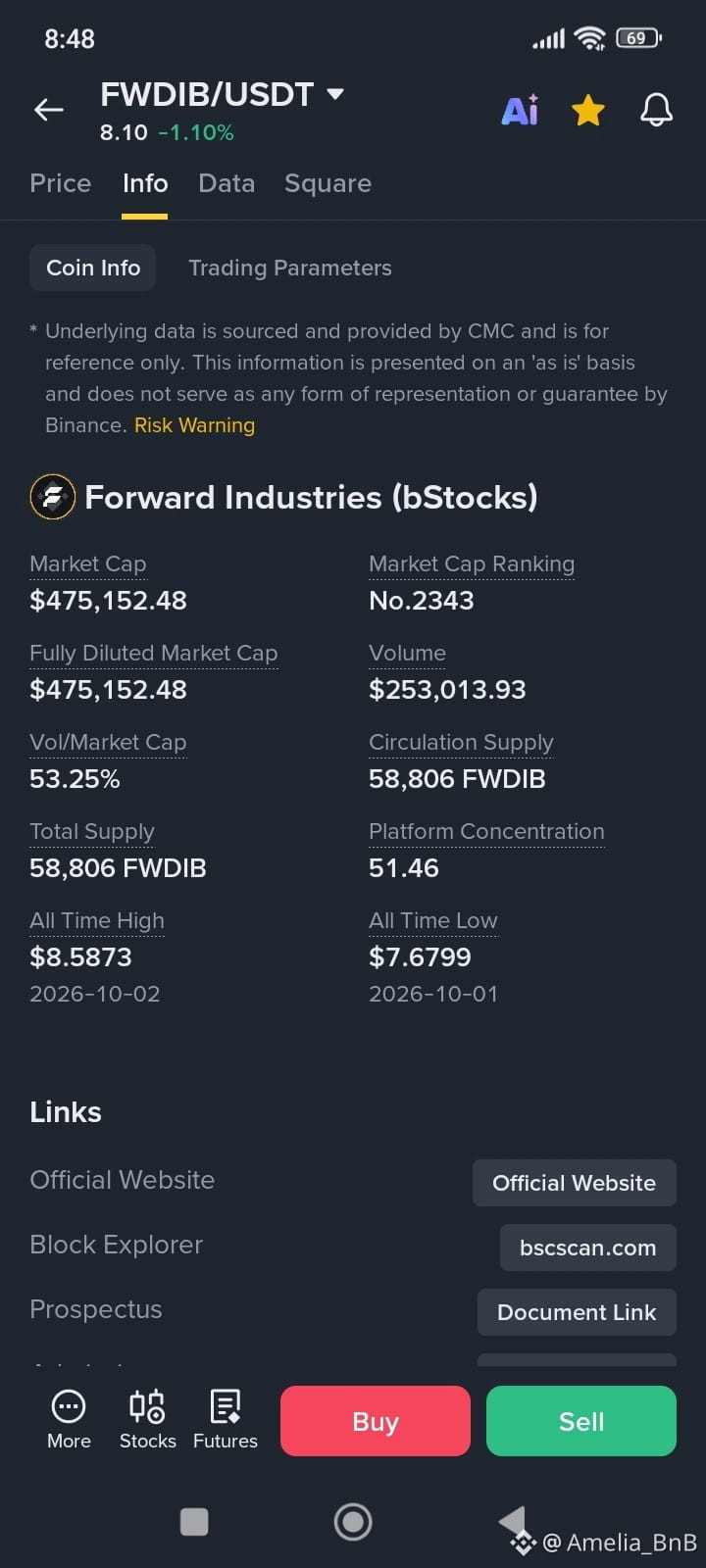
Ich beobachte $FWDIB schon eine Weile, und nachdem ich alle drei Datensätze zusammengeführt habe, finde ich, dass die aktuelle Konstellation viel interessanter ist, als es der Preis allein vermuten lässt. 👀
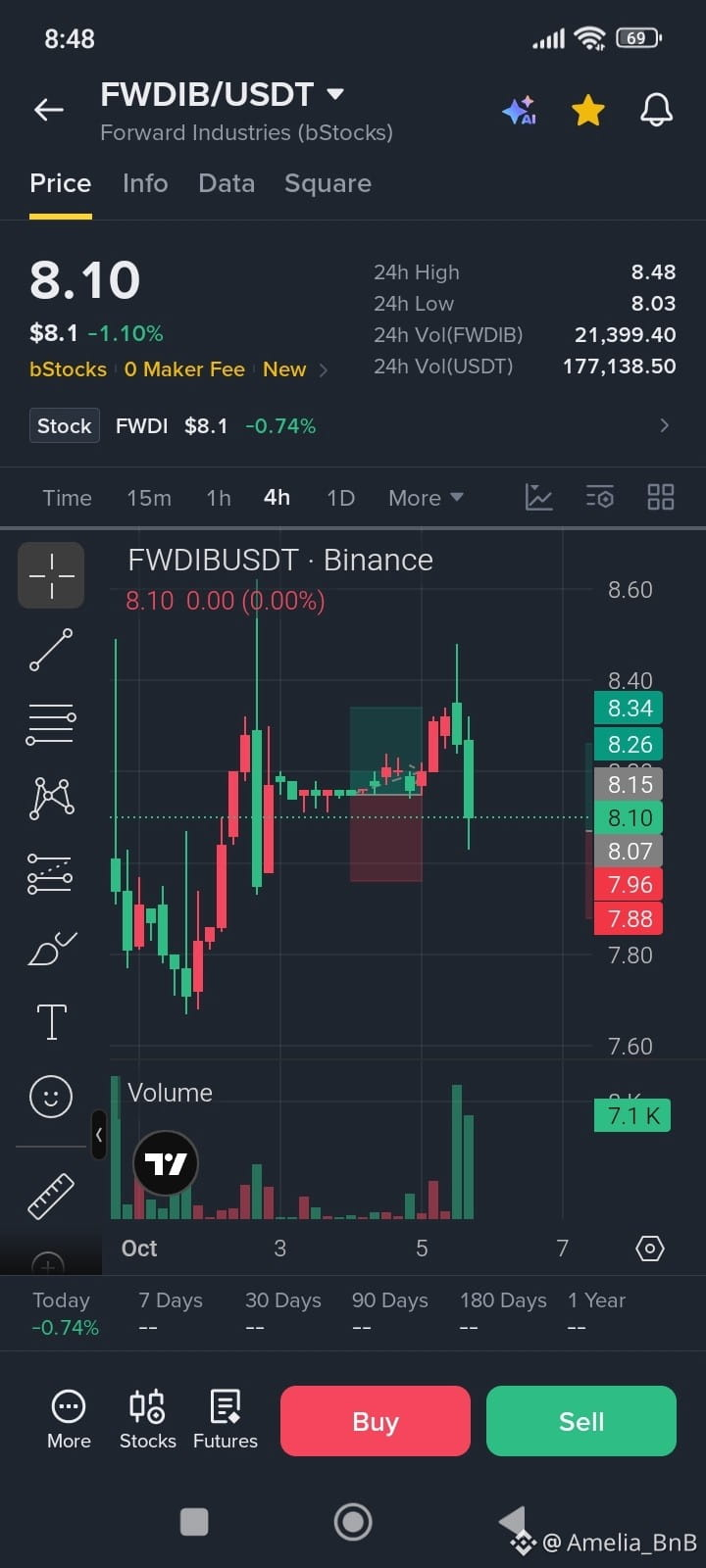
$FWDIB liegt bei etwa $8.10, nachdem der Kurs kürzlich aus der Zone zwischen $7.7 und $7.8 nach oben ausgebrochen und bis auf $8.48 gestiegen ist. Dieser Anstieg wurde von einem deutlichen Volumensprung begleitet, doch die jüngste Kerze zeigt, dass nahe den Höchstständen Verkäufer auf den Plan treten. Für mich ist das also kein Zeitpunkt, blind hinterherzulaufen – sondern einer, um zu beobachten, wie die Käufer reagieren.
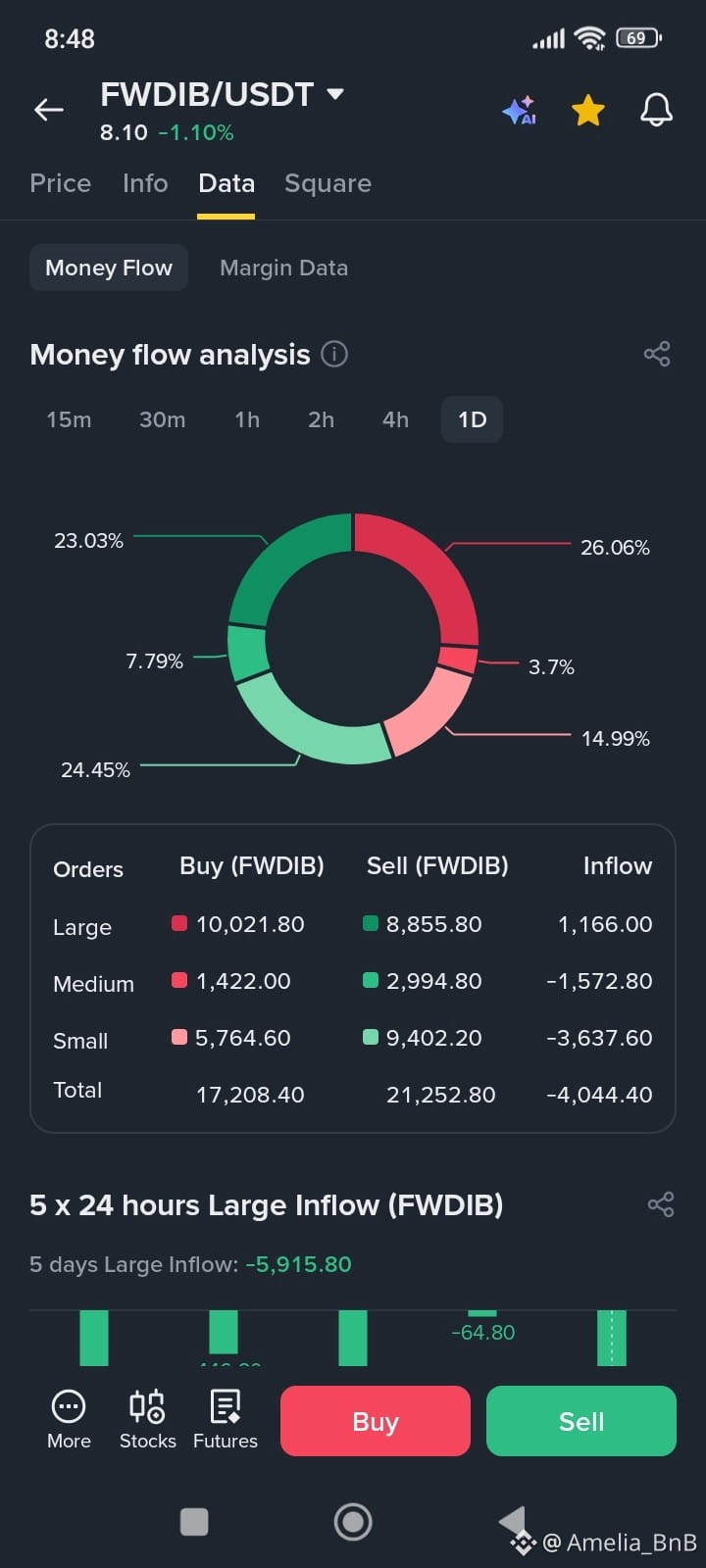
🐋 Die Daten zum Kapitalfluss zeichnen ein gemischtes Bild. Bei großen Orders gibt es einen Nettozufluss von +$1,166, während mittlere Orders bei -$1,572.80 und kleine Orders bei -$3,637.60 liegen. Insgesamt beträgt der Kapitalfluss -$4,044.40, was bedeutet, dass weiterhin Verkaufsdruck herrscht. Noch bedenklicher ist, dass der 5-Tage-Zufluss großer Orders bei etwa -$5,915.80 liegt. Große Käufer sind aktiv, aber ich sehe noch nicht genug Beständigkeit, um von einer starken Akkumulation zu sprechen.
📊 Die Struktur hält sich weiterhin über der jüngsten Unterstützung bei $8.03, während $8.34 der erste Widerstand ist. Darüber wird $8.48 zum entscheidenden Ausbruchsniveau. Das jüngste Allzeithoch von $8.58 ist das nächste große Ziel.
⚠️ Bei einem Gesamt- beziehungsweise Umlaufangebot von nur 58,806 Token und einem im Verhältnis zur Marktkapitalisierung relativ hohen Handelsvolumen kann die Liquidität hier eine große Rolle spielen. Ich rechne mit heftigen Bewegungen in beide Richtungen.
🔥 Ich bin interessiert, aber vorsichtig. Die Käufer sollen erst einmal beweisen, dass sie $8.48 mit ausreichend Volumen zurückerobern können.
🎯 Unterstützung: $8.03
Widerstand: $8.34
Ausbruch: $8.48
Ziel: $8.58
Ich beobachte weiterhin jede Kerze. Wird $FWDIB als Nächstes das Allzeithoch durchbrechen, oder werden die Verkäufer diese Zone erneut verteidigen?
#ETHUp70%InQ3ButLiquidityFalls #FedOctoberHoldOdds82.3% #Nikkei225Jumps2.5%ToThreeMonthHigh
Ich beobachte $FWDIB schon eine Weile, und nachdem ich alle drei Datensätze zusammengeführt habe, finde ich, dass die aktuelle Konstellation viel interessanter ist, als es der Preis allein vermuten lässt. 👀
$FWDIB liegt bei etwa $8.10, nachdem der Kurs kürzlich aus der Zone zwischen $7.7 und $7.8 nach oben ausgebrochen und bis auf $8.48 gestiegen ist. Dieser Anstieg wurde von einem deutlichen Volumensprung begleitet, doch die jüngste Kerze zeigt, dass nahe den Höchstständen Verkäufer auf den Plan treten. Für mich ist das also kein Zeitpunkt, blind hinterherzulaufen – sondern einer, um zu beobachten, wie die Käufer reagieren.
🐋 Die Daten zum Kapitalfluss zeichnen ein gemischtes Bild. Bei großen Orders gibt es einen Nettozufluss von +$1,166, während mittlere Orders bei -$1,572.80 und kleine Orders bei -$3,637.60 liegen. Insgesamt beträgt der Kapitalfluss -$4,044.40, was bedeutet, dass weiterhin Verkaufsdruck herrscht. Noch bedenklicher ist, dass der 5-Tage-Zufluss großer Orders bei etwa -$5,915.80 liegt. Große Käufer sind aktiv, aber ich sehe noch nicht genug Beständigkeit, um von einer starken Akkumulation zu sprechen.
📊 Die Struktur hält sich weiterhin über der jüngsten Unterstützung bei $8.03, während $8.34 der erste Widerstand ist. Darüber wird $8.48 zum entscheidenden Ausbruchsniveau. Das jüngste Allzeithoch von $8.58 ist das nächste große Ziel.
⚠️ Bei einem Gesamt- beziehungsweise Umlaufangebot von nur 58,806 Token und einem im Verhältnis zur Marktkapitalisierung relativ hohen Handelsvolumen kann die Liquidität hier eine große Rolle spielen. Ich rechne mit heftigen Bewegungen in beide Richtungen.
🔥 Ich bin interessiert, aber vorsichtig. Die Käufer sollen erst einmal beweisen, dass sie $8.48 mit ausreichend Volumen zurückerobern können.
🎯 Unterstützung: $8.03
Widerstand: $8.34
Ausbruch: $8.48
Ziel: $8.58
Ich beobachte weiterhin jede Kerze. Wird $FWDIB als Nächstes das Allzeithoch durchbrechen, oder werden die Verkäufer diese Zone erneut verteidigen?
#ETHUp70%InQ3ButLiquidityFalls #FedOctoberHoldOdds82.3% #Nikkei225Jumps2.5%ToThreeMonthHigh
$FWDIB liegt bei etwa $8.10, nachdem der Kurs kürzlich aus der Zone zwischen $7.7 und $7.8 nach oben ausgebrochen und bis auf $8.48 gestiegen ist. Dieser Anstieg wurde von einem deutlichen Volumensprung begleitet, doch die jüngste Kerze zeigt, dass nahe den Höchstständen Verkäufer auf den Plan treten. Für mich ist das also kein Zeitpunkt, blind hinterherzulaufen – sondern einer, um zu beobachten, wie die Käufer reagieren.
🐋 Die Daten zum Kapitalfluss zeichnen ein gemischtes Bild. Bei großen Orders gibt es einen Nettozufluss von +$1,166, während mittlere Orders bei -$1,572.80 und kleine Orders bei -$3,637.60 liegen. Insgesamt beträgt der Kapitalfluss -$4,044.40, was bedeutet, dass weiterhin Verkaufsdruck herrscht. Noch bedenklicher ist, dass der 5-Tage-Zufluss großer Orders bei etwa -$5,915.80 liegt. Große Käufer sind aktiv, aber ich sehe noch nicht genug Beständigkeit, um von einer starken Akkumulation zu sprechen.
📊 Die Struktur hält sich weiterhin über der jüngsten Unterstützung bei $8.03, während $8.34 der erste Widerstand ist. Darüber wird $8.48 zum entscheidenden Ausbruchsniveau. Das jüngste Allzeithoch von $8.58 ist das nächste große Ziel.
⚠️ Bei einem Gesamt- beziehungsweise Umlaufangebot von nur 58,806 Token und einem im Verhältnis zur Marktkapitalisierung relativ hohen Handelsvolumen kann die Liquidität hier eine große Rolle spielen. Ich rechne mit heftigen Bewegungen in beide Richtungen.
🔥 Ich bin interessiert, aber vorsichtig. Die Käufer sollen erst einmal beweisen, dass sie $8.48 mit ausreichend Volumen zurückerobern können.
🎯 Unterstützung: $8.03
Widerstand: $8.34
Ausbruch: $8.48
Ziel: $8.58
Ich beobachte weiterhin jede Kerze. Wird $FWDIB als Nächstes das Allzeithoch durchbrechen, oder werden die Verkäufer diese Zone erneut verteidigen?
#ETHUp70%InQ3ButLiquidityFalls #FedOctoberHoldOdds82.3% #Nikkei225Jumps2.5%ToThreeMonthHigh
126
·
--
Bullisch
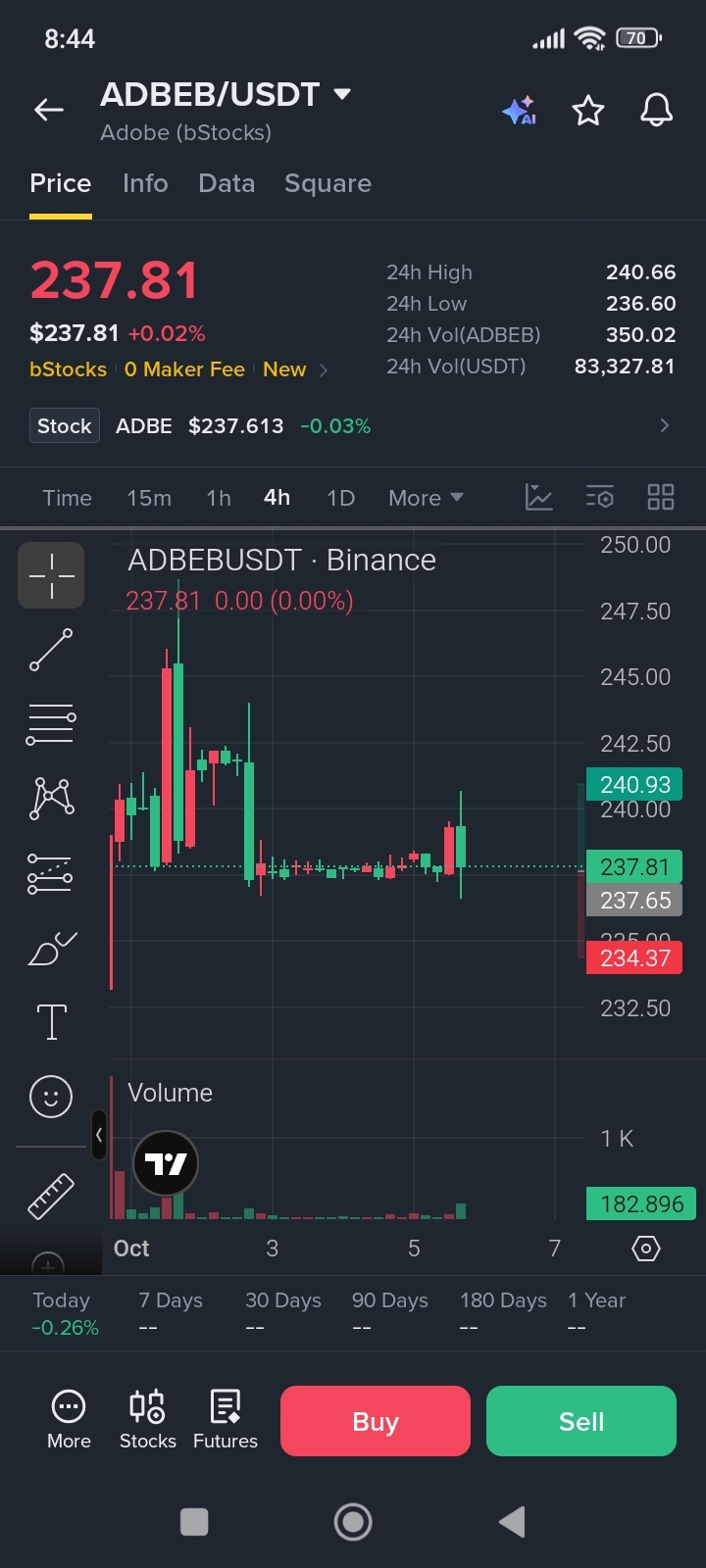
Ich beobachte $ADBEB genau, und das ist einer dieser Charts, bei denen die ruhige Kursbewegung interessanter ist als der erste Ausschlag. 👀
So hat es angefangen: Der Kurs zog kräftig an, erreichte kurz die mittleren 240-Dollar-Werte und kühlte sich dann ab, bis er sich in einer engen Spanne um 237–238 $ einpendelte. Aktuell liegt $ADBEB nahe bei 237,81 $, und es sieht so aus, als würde der Markt auf die nächste klare Entscheidung warten.
Der entscheidende Punkt ist für mich die Verengung der Spanne. Die Käufer haben die Kontrolle nicht vollständig verloren, aber sie haben auch noch nicht gezeigt, dass sie die obere Zone zurückerobern können. Das Volumen ist nach dem vorherigen Anstieg deutlich zurückgegangen. Deshalb warte ich lieber auf eine Bestätigung, statt blind der nächsten Kerze hinterherzujagen.
📊 Der wichtige Bereich darüber liegt bei etwa 240,93 $. Eine klare Bewegung darüber könnte die vorherige Zone bei 245–246 $ wieder in den Fokus rücken. Auf der Unterseite ist 234,37 $ das Niveau, das ich genau beobachten würde. Ein Verlust dieser Marke würde diese kurzfristige Struktur schwächen.
🐋 Mir liegen hier keine verlässlichen Daten zu den Aktivitäten großer Investoren vor, daher werde ich keine Geschichte über Akkumulation oder Verkäufe erfinden.
⚠️ Auch zu Token-Freischaltungen liegen keine Informationen vor. Möglicher Angebotsdruck muss also gesondert bestätigt werden.
Ich bin vorsichtig an $ADBEB interessiert, aber jetzt kommt der echte Test. 🔥
🎯 Unterstützung: 234,37 $
Widerstand: 240,93 $
Ausbruch: 240,93 $
Nächstes Ziel: 245–246 $
Wenn du diese Bewegungen schon eine Weile mit mir verfolgst, weißt du, dass ich die Niveaus weiterhin im Blick habe. Werden die Käufer endlich die Marke von 240,93 $ durchbrechen, oder wird diese Seitwärtsbewegung erneut zu einer Abweisung führen?
#EthereumValidatorExitQueueJumps392% #DriftHackVictimsBeginClaims #Nikkei225Jumps2.5%ToThreeMonthHigh
Ich beobachte $ADBEB genau, und das ist einer dieser Charts, bei denen die ruhige Kursbewegung interessanter ist als der erste Ausschlag. 👀
So hat es angefangen: Der Kurs zog kräftig an, erreichte kurz die mittleren 240-Dollar-Werte und kühlte sich dann ab, bis er sich in einer engen Spanne um 237–238 $ einpendelte. Aktuell liegt $ADBEB nahe bei 237,81 $, und es sieht so aus, als würde der Markt auf die nächste klare Entscheidung warten.
Der entscheidende Punkt ist für mich die Verengung der Spanne. Die Käufer haben die Kontrolle nicht vollständig verloren, aber sie haben auch noch nicht gezeigt, dass sie die obere Zone zurückerobern können. Das Volumen ist nach dem vorherigen Anstieg deutlich zurückgegangen. Deshalb warte ich lieber auf eine Bestätigung, statt blind der nächsten Kerze hinterherzujagen.
📊 Der wichtige Bereich darüber liegt bei etwa 240,93 $. Eine klare Bewegung darüber könnte die vorherige Zone bei 245–246 $ wieder in den Fokus rücken. Auf der Unterseite ist 234,37 $ das Niveau, das ich genau beobachten würde. Ein Verlust dieser Marke würde diese kurzfristige Struktur schwächen.
🐋 Mir liegen hier keine verlässlichen Daten zu den Aktivitäten großer Investoren vor, daher werde ich keine Geschichte über Akkumulation oder Verkäufe erfinden.
⚠️ Auch zu Token-Freischaltungen liegen keine Informationen vor. Möglicher Angebotsdruck muss also gesondert bestätigt werden.
Ich bin vorsichtig an $ADBEB interessiert, aber jetzt kommt der echte Test. 🔥
🎯 Unterstützung: 234,37 $
Widerstand: 240,93 $
Ausbruch: 240,93 $
Nächstes Ziel: 245–246 $
Wenn du diese Bewegungen schon eine Weile mit mir verfolgst, weißt du, dass ich die Niveaus weiterhin im Blick habe. Werden die Käufer endlich die Marke von 240,93 $ durchbrechen, oder wird diese Seitwärtsbewegung erneut zu einer Abweisung führen?
#EthereumValidatorExitQueueJumps392% #DriftHackVictimsBeginClaims #Nikkei225Jumps2.5%ToThreeMonthHigh
So hat es angefangen: Der Kurs zog kräftig an, erreichte kurz die mittleren 240-Dollar-Werte und kühlte sich dann ab, bis er sich in einer engen Spanne um 237–238 $ einpendelte. Aktuell liegt $ADBEB nahe bei 237,81 $, und es sieht so aus, als würde der Markt auf die nächste klare Entscheidung warten.
Der entscheidende Punkt ist für mich die Verengung der Spanne. Die Käufer haben die Kontrolle nicht vollständig verloren, aber sie haben auch noch nicht gezeigt, dass sie die obere Zone zurückerobern können. Das Volumen ist nach dem vorherigen Anstieg deutlich zurückgegangen. Deshalb warte ich lieber auf eine Bestätigung, statt blind der nächsten Kerze hinterherzujagen.
📊 Der wichtige Bereich darüber liegt bei etwa 240,93 $. Eine klare Bewegung darüber könnte die vorherige Zone bei 245–246 $ wieder in den Fokus rücken. Auf der Unterseite ist 234,37 $ das Niveau, das ich genau beobachten würde. Ein Verlust dieser Marke würde diese kurzfristige Struktur schwächen.
🐋 Mir liegen hier keine verlässlichen Daten zu den Aktivitäten großer Investoren vor, daher werde ich keine Geschichte über Akkumulation oder Verkäufe erfinden.
⚠️ Auch zu Token-Freischaltungen liegen keine Informationen vor. Möglicher Angebotsdruck muss also gesondert bestätigt werden.
Ich bin vorsichtig an $ADBEB interessiert, aber jetzt kommt der echte Test. 🔥
🎯 Unterstützung: 234,37 $
Widerstand: 240,93 $
Ausbruch: 240,93 $
Nächstes Ziel: 245–246 $
Wenn du diese Bewegungen schon eine Weile mit mir verfolgst, weißt du, dass ich die Niveaus weiterhin im Blick habe. Werden die Käufer endlich die Marke von 240,93 $ durchbrechen, oder wird diese Seitwärtsbewegung erneut zu einer Abweisung führen?
#EthereumValidatorExitQueueJumps392% #DriftHackVictimsBeginClaims #Nikkei225Jumps2.5%ToThreeMonthHigh
155
·
--
Bullisch
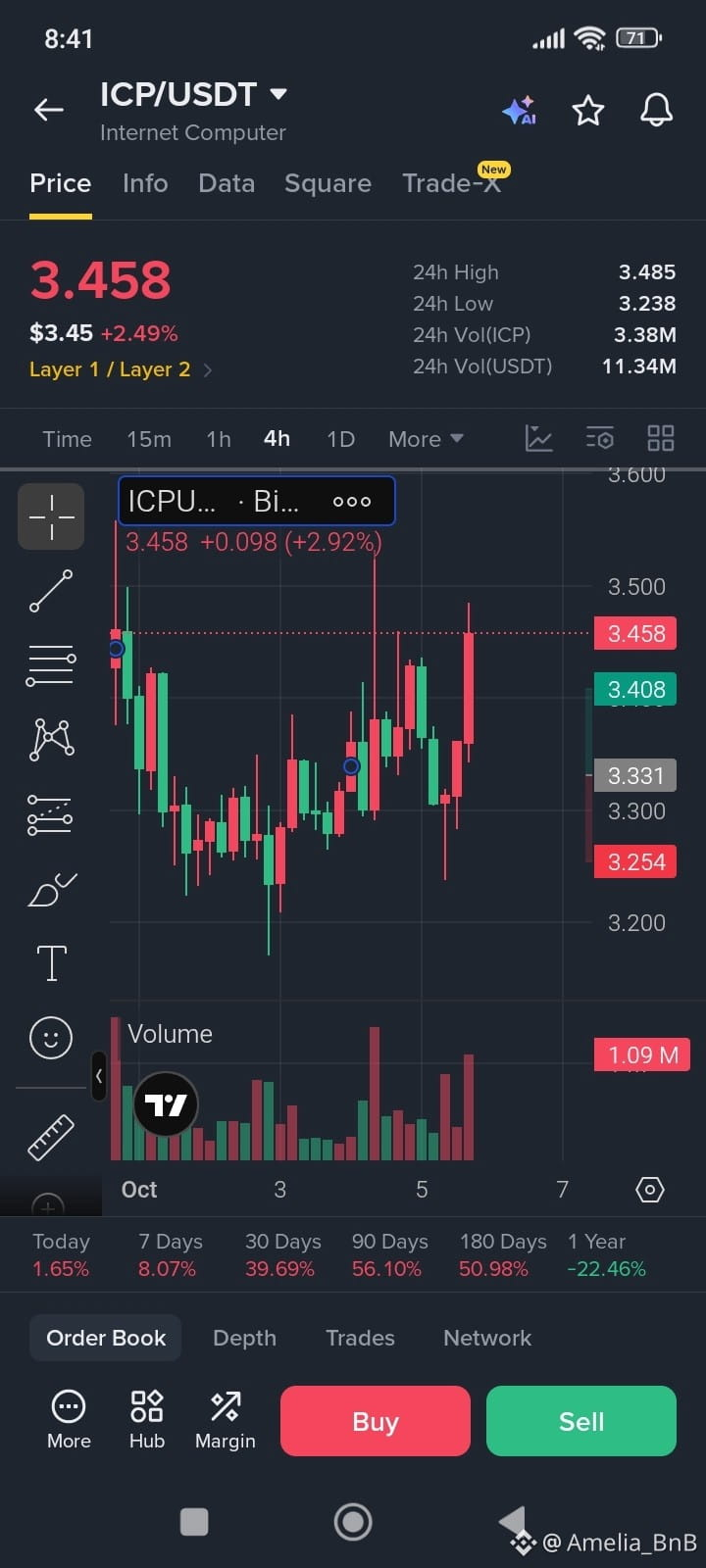
Ich beobachte $ICP genau, und diese jüngste Bewegung sieht endlich danach aus, als würden die Käufer versuchen, die kurzfristige Entwicklung zu verändern. Nachdem sich der Kurs eine Weile im Bereich von 3,25–3,33 $ bewegt hat, ist er wieder in Richtung 3,46 $ gestiegen. Die jüngsten Kerzen zeigen einen klaren Versuch, wieder höhere Niveaus zu erreichen.
So hat es angefangen: wiederholte Reaktionen aus der unteren Zone, gefolgt von stärkerem Kaufinteresse und steigendem Volumen. Jetzt kommt der eigentliche Test. 3,485 $ ist der unmittelbare Widerstand und liegt praktisch am 24-Stunden-Hoch. Wenn die Käufer dieses Niveau durchbrechen und darüber bleiben können, eröffnet sich auf dem Chart der Weg in Richtung 3,60 $.
📊 Die Struktur ist interessant, weil der Kurs über die Zone bei 3,33 $ gestiegen ist. Aber ich möchte dem Pump nicht blind hinterherlaufen. Eine Zurückweisung im Bereich von 3,48–3,49 $ könnte den Kurs wieder in Richtung 3,33 $ schicken, während 3,25 $ die tiefere Unterstützung bleibt, die ich im Auge behalten würde.
🐋 Ich habe aus diesem Chart keine verlässlichen Daten zu den Wal-Bewegungen, daher werde ich keine Akkumulation oder Distribution erfinden. Das Volumen ist der Beleg, den ich tatsächlich sehen kann.
⚠️ Hier liegen keine Informationen zu Token-Freischaltungen vor, daher muss dieses Risiko noch gesondert geprüft werden.
🎯 Unterstützung: 3,33 $ / 3,25 $
Widerstand: 3,485 $
Ausbruch: 3,485 $
Nächstes Ziel: 3,60 $
Ich bin weiterhin interessiert, aber Bestätigung ist wichtiger als Begeisterung.
Wenn du diese Rücksetzer mit mir durchgestanden hast, weißt du, dass ich immer noch hier bin und jedes Niveau beobachte. 👀
Können die Käufer 3,485 $ endlich in eine Unterstützung verwandeln, oder steuert diese Bewegung auf eine weitere Zurückweisung zu?
#ETHUp70%InQ3ButLiquidityFalls #EthStakingExitQueueHits2026High #FedOctoberHoldOdds82.3%
Ich beobachte $ICP genau, und diese jüngste Bewegung sieht endlich danach aus, als würden die Käufer versuchen, die kurzfristige Entwicklung zu verändern. Nachdem sich der Kurs eine Weile im Bereich von 3,25–3,33 $ bewegt hat, ist er wieder in Richtung 3,46 $ gestiegen. Die jüngsten Kerzen zeigen einen klaren Versuch, wieder höhere Niveaus zu erreichen.
So hat es angefangen: wiederholte Reaktionen aus der unteren Zone, gefolgt von stärkerem Kaufinteresse und steigendem Volumen. Jetzt kommt der eigentliche Test. 3,485 $ ist der unmittelbare Widerstand und liegt praktisch am 24-Stunden-Hoch. Wenn die Käufer dieses Niveau durchbrechen und darüber bleiben können, eröffnet sich auf dem Chart der Weg in Richtung 3,60 $.
📊 Die Struktur ist interessant, weil der Kurs über die Zone bei 3,33 $ gestiegen ist. Aber ich möchte dem Pump nicht blind hinterherlaufen. Eine Zurückweisung im Bereich von 3,48–3,49 $ könnte den Kurs wieder in Richtung 3,33 $ schicken, während 3,25 $ die tiefere Unterstützung bleibt, die ich im Auge behalten würde.
🐋 Ich habe aus diesem Chart keine verlässlichen Daten zu den Wal-Bewegungen, daher werde ich keine Akkumulation oder Distribution erfinden. Das Volumen ist der Beleg, den ich tatsächlich sehen kann.
⚠️ Hier liegen keine Informationen zu Token-Freischaltungen vor, daher muss dieses Risiko noch gesondert geprüft werden.
🎯 Unterstützung: 3,33 $ / 3,25 $
Widerstand: 3,485 $
Ausbruch: 3,485 $
Nächstes Ziel: 3,60 $
Ich bin weiterhin interessiert, aber Bestätigung ist wichtiger als Begeisterung.
Wenn du diese Rücksetzer mit mir durchgestanden hast, weißt du, dass ich immer noch hier bin und jedes Niveau beobachte. 👀
Können die Käufer 3,485 $ endlich in eine Unterstützung verwandeln, oder steuert diese Bewegung auf eine weitere Zurückweisung zu?
#ETHUp70%InQ3ButLiquidityFalls #EthStakingExitQueueHits2026High #FedOctoberHoldOdds82.3%
So hat es angefangen: wiederholte Reaktionen aus der unteren Zone, gefolgt von stärkerem Kaufinteresse und steigendem Volumen. Jetzt kommt der eigentliche Test. 3,485 $ ist der unmittelbare Widerstand und liegt praktisch am 24-Stunden-Hoch. Wenn die Käufer dieses Niveau durchbrechen und darüber bleiben können, eröffnet sich auf dem Chart der Weg in Richtung 3,60 $.
📊 Die Struktur ist interessant, weil der Kurs über die Zone bei 3,33 $ gestiegen ist. Aber ich möchte dem Pump nicht blind hinterherlaufen. Eine Zurückweisung im Bereich von 3,48–3,49 $ könnte den Kurs wieder in Richtung 3,33 $ schicken, während 3,25 $ die tiefere Unterstützung bleibt, die ich im Auge behalten würde.
🐋 Ich habe aus diesem Chart keine verlässlichen Daten zu den Wal-Bewegungen, daher werde ich keine Akkumulation oder Distribution erfinden. Das Volumen ist der Beleg, den ich tatsächlich sehen kann.
⚠️ Hier liegen keine Informationen zu Token-Freischaltungen vor, daher muss dieses Risiko noch gesondert geprüft werden.
🎯 Unterstützung: 3,33 $ / 3,25 $
Widerstand: 3,485 $
Ausbruch: 3,485 $
Nächstes Ziel: 3,60 $
Ich bin weiterhin interessiert, aber Bestätigung ist wichtiger als Begeisterung.
Wenn du diese Rücksetzer mit mir durchgestanden hast, weißt du, dass ich immer noch hier bin und jedes Niveau beobachte. 👀
Können die Käufer 3,485 $ endlich in eine Unterstützung verwandeln, oder steuert diese Bewegung auf eine weitere Zurückweisung zu?
#ETHUp70%InQ3ButLiquidityFalls #EthStakingExitQueueHits2026High #FedOctoberHoldOdds82.3%
1
569
·
--
Rendite 30-jähriger US-Staatsanleihen könnte 6 % überschreiten – warum das für die Märkte wichtig istDer Anleihemarkt könnte eine Warnung senden, die Anleger nicht ignorieren sollten.
Earl Davis, Leiter des Bereichs Fixed Income und Geldmärkte bei BMO Global Asset Management, glaubt, dass die Rendite 30-jähriger US-Staatsanleihen unweigerlich die Marke von 6 % überschreiten wird – und seinen Aussagen bei Bloomberg Surveillance zufolge könnte das bereits in diesem Monat geschehen.
Für mich ist nicht nur die Marke von 6 % entscheidend. Es geht darum, was an den globalen Märkten passiert, wenn die langfristigen Kreditkosten weiter steigen.
Ein anhaltender Anstieg der Treasury-Renditen kann Aktien, Risikoanlagen und besonders spekulative Märkte wie den Kryptomarkt unter Druck setzen. Höhere Renditen können sicherere Anlagen attraktiver machen und gleichzeitig die Kapitalkosten im gesamten Finanzsystem erhöhen.
Rendite 30-jähriger US-Staatsanleihen könnte 6 % überschreiten – warum das für die Märkte wichtig ist
Der Anleihemarkt könnte eine Warnung senden, die Anleger nicht ignorieren sollten.
Earl Davis, Leiter des Bereichs Fixed Income und Geldmärkte bei BMO Global Asset Management, glaubt, dass die Rendite 30-jähriger US-Staatsanleihen unweigerlich die Marke von 6 % überschreiten wird – und seinen Aussagen bei Bloomberg Surveillance zufolge könnte das bereits in diesem Monat geschehen.
Für mich ist nicht nur die Marke von 6 % entscheidend. Es geht darum, was an den globalen Märkten passiert, wenn die langfristigen Kreditkosten weiter steigen.
Ein anhaltender Anstieg der Treasury-Renditen kann Aktien, Risikoanlagen und besonders spekulative Märkte wie den Kryptomarkt unter Druck setzen. Höhere Renditen können sicherere Anlagen attraktiver machen und gleichzeitig die Kapitalkosten im gesamten Finanzsystem erhöhen.
Earl Davis, Leiter des Bereichs Fixed Income und Geldmärkte bei BMO Global Asset Management, glaubt, dass die Rendite 30-jähriger US-Staatsanleihen unweigerlich die Marke von 6 % überschreiten wird – und seinen Aussagen bei Bloomberg Surveillance zufolge könnte das bereits in diesem Monat geschehen.
Für mich ist nicht nur die Marke von 6 % entscheidend. Es geht darum, was an den globalen Märkten passiert, wenn die langfristigen Kreditkosten weiter steigen.
Ein anhaltender Anstieg der Treasury-Renditen kann Aktien, Risikoanlagen und besonders spekulative Märkte wie den Kryptomarkt unter Druck setzen. Höhere Renditen können sicherere Anlagen attraktiver machen und gleichzeitig die Kapitalkosten im gesamten Finanzsystem erhöhen.
TLTETF-0,88%
71
·
--
Bullisch
$MUBARAK
{future}(MUBARAKUSDT)
— +14.32%
MUBARAK zeigt eine starke Dynamik, liegt derzeit bei etwa $0.07774 und ist innerhalb von 24 Stunden um mehr als 14 % gestiegen. Ich bin nicht daran interessiert, einfach nur zu kaufen, weil die Kerze grün aussieht. Das wichtige Niveau ist jetzt die Unterstützung bei $0.07385. Wenn die Käufer sie weiterhin verteidigen, ist $0.08163 der erste Widerstand, gefolgt von $0.08551 und $0.08940.
Einstieg: $0.076–0.078
TP1: $0.0816
TP2: $0.0855
TP3: $0.0894
Stop-Loss: $0.0725
Momentum-Trader könnten das genau beobachten. Aber denk daran: Nach einer schnellen Bewegung kann die Volatilität späte Einstiege bestrafen. Handle nach dem Setup, nicht aus Aufregung.
#Nikkei225Jumps2.5%ToThreeMonthHigh
#EthereumValidatorExitQueueJumps392%
#GreekPoliceBustCryptoScamRingArrest17
$MUBARAK
— +14.32%
MUBARAK zeigt eine starke Dynamik, liegt derzeit bei etwa $0.07774 und ist innerhalb von 24 Stunden um mehr als 14 % gestiegen. Ich bin nicht daran interessiert, einfach nur zu kaufen, weil die Kerze grün aussieht. Das wichtige Niveau ist jetzt die Unterstützung bei $0.07385. Wenn die Käufer sie weiterhin verteidigen, ist $0.08163 der erste Widerstand, gefolgt von $0.08551 und $0.08940.
Einstieg: $0.076–0.078
TP1: $0.0816
TP2: $0.0855
TP3: $0.0894
Stop-Loss: $0.0725
Momentum-Trader könnten das genau beobachten. Aber denk daran: Nach einer schnellen Bewegung kann die Volatilität späte Einstiege bestrafen. Handle nach dem Setup, nicht aus Aufregung.
#Nikkei225Jumps2.5%ToThreeMonthHigh
#EthereumValidatorExitQueueJumps392%
#GreekPoliceBustCryptoScamRingArrest17
— +14.32%
MUBARAK zeigt eine starke Dynamik, liegt derzeit bei etwa $0.07774 und ist innerhalb von 24 Stunden um mehr als 14 % gestiegen. Ich bin nicht daran interessiert, einfach nur zu kaufen, weil die Kerze grün aussieht. Das wichtige Niveau ist jetzt die Unterstützung bei $0.07385. Wenn die Käufer sie weiterhin verteidigen, ist $0.08163 der erste Widerstand, gefolgt von $0.08551 und $0.08940.
Einstieg: $0.076–0.078
TP1: $0.0816
TP2: $0.0855
TP3: $0.0894
Stop-Loss: $0.0725
Momentum-Trader könnten das genau beobachten. Aber denk daran: Nach einer schnellen Bewegung kann die Volatilität späte Einstiege bestrafen. Handle nach dem Setup, nicht aus Aufregung.
#Nikkei225Jumps2.5%ToThreeMonthHigh
#EthereumValidatorExitQueueJumps392%
#GreekPoliceBustCryptoScamRingArrest17
216
·
--
Bullisch
$ADA
{future}(ADAUSDT)
— +10,87 %
ADA zeigt endlich deutliche Stärke und wird bei etwa 0,2714 $ gehandelt – ein Tagesplus von 10,87 %. Ich beobachte, ob sich diese Stärke zu einer anhaltenden Bewegung entwickeln kann und nicht nur zu einem weiteren kurzen Aufschwung. Meine erste Unterstützung liegt bei etwa 0,258 $, während 0,285 $ den unmittelbaren Widerstand darstellt. Ein Ausbruch könnte 0,299 $ und anschließend 0,312 $ in den Fokus rücken.
Einstieg: 0,266–0,272 $
Kursziel 1: 0,285 $
Kursziel 2: 0,299 $
Kursziel 3: 0,312 $
Stop-Loss: 0,250 $
Die Dynamik sieht vielversprechend aus, aber entscheidend ist die Bestätigung. Wenn Käufer bei Rücksetzern weiter einsteigen, könnte ADA von hier aus deutlich interessanter werden.
#GreekPoliceBustCryptoScamRingArrest17
#SECHaltsCryptoETFReviewsAmidFundingLapse
#EthereumValidatorExitQueueJumps392%
$ADA
— +10,87 %
ADA zeigt endlich deutliche Stärke und wird bei etwa 0,2714 $ gehandelt – ein Tagesplus von 10,87 %. Ich beobachte, ob sich diese Stärke zu einer anhaltenden Bewegung entwickeln kann und nicht nur zu einem weiteren kurzen Aufschwung. Meine erste Unterstützung liegt bei etwa 0,258 $, während 0,285 $ den unmittelbaren Widerstand darstellt. Ein Ausbruch könnte 0,299 $ und anschließend 0,312 $ in den Fokus rücken.
Einstieg: 0,266–0,272 $
Kursziel 1: 0,285 $
Kursziel 2: 0,299 $
Kursziel 3: 0,312 $
Stop-Loss: 0,250 $
Die Dynamik sieht vielversprechend aus, aber entscheidend ist die Bestätigung. Wenn Käufer bei Rücksetzern weiter einsteigen, könnte ADA von hier aus deutlich interessanter werden.
#GreekPoliceBustCryptoScamRingArrest17
#SECHaltsCryptoETFReviewsAmidFundingLapse
#EthereumValidatorExitQueueJumps392%
— +10,87 %
ADA zeigt endlich deutliche Stärke und wird bei etwa 0,2714 $ gehandelt – ein Tagesplus von 10,87 %. Ich beobachte, ob sich diese Stärke zu einer anhaltenden Bewegung entwickeln kann und nicht nur zu einem weiteren kurzen Aufschwung. Meine erste Unterstützung liegt bei etwa 0,258 $, während 0,285 $ den unmittelbaren Widerstand darstellt. Ein Ausbruch könnte 0,299 $ und anschließend 0,312 $ in den Fokus rücken.
Einstieg: 0,266–0,272 $
Kursziel 1: 0,285 $
Kursziel 2: 0,299 $
Kursziel 3: 0,312 $
Stop-Loss: 0,250 $
Die Dynamik sieht vielversprechend aus, aber entscheidend ist die Bestätigung. Wenn Käufer bei Rücksetzern weiter einsteigen, könnte ADA von hier aus deutlich interessanter werden.
#GreekPoliceBustCryptoScamRingArrest17
#SECHaltsCryptoETFReviewsAmidFundingLapse
#EthereumValidatorExitQueueJumps392%
1
86
·
--
Bullisch
$TST
{future}(TSTUSDT)
— +10.70 %
TST zeigt eine starke Dynamik und notiert nach einem Tagesplus von über 10 % bei etwa 0,01903 $. Ich beobachte den Bereich um 0,01808 $ als Unterstützung, denn ein Verlust dieser Zone könnte das Setup schnell schwächen. Auf der Oberseite liegt der erste wichtige Widerstand bei 0,01998 $. Wenn die Käufer diesen durchbrechen und sich darüber halten können, beobachte ich als Nächstes 0,02093 $ und 0,02188 $.
Einstieg: 0,0188–0,0191 $
TP1: 0,01998 $
TP2: 0,02093 $
TP3: 0,02188 $
Stop-Loss: 0,0177 $
Dies ist ein Momentum-Setup, keine garantierte Bewegung. Bevor ich aggressiv vorgehe, möchte ich Volumen und eine Bestätigung sehen. Die Käufer müssen sich erst beweisen.
#Nikkei225Jumps2.5%ToThreeMonthHigh
#DriftHackVictimsBeginClaims
#EthereumValidatorExitQueueJumps392%
$TST
— +10.70 %
TST zeigt eine starke Dynamik und notiert nach einem Tagesplus von über 10 % bei etwa 0,01903 $. Ich beobachte den Bereich um 0,01808 $ als Unterstützung, denn ein Verlust dieser Zone könnte das Setup schnell schwächen. Auf der Oberseite liegt der erste wichtige Widerstand bei 0,01998 $. Wenn die Käufer diesen durchbrechen und sich darüber halten können, beobachte ich als Nächstes 0,02093 $ und 0,02188 $.
Einstieg: 0,0188–0,0191 $
TP1: 0,01998 $
TP2: 0,02093 $
TP3: 0,02188 $
Stop-Loss: 0,0177 $
Dies ist ein Momentum-Setup, keine garantierte Bewegung. Bevor ich aggressiv vorgehe, möchte ich Volumen und eine Bestätigung sehen. Die Käufer müssen sich erst beweisen.
#Nikkei225Jumps2.5%ToThreeMonthHigh
#DriftHackVictimsBeginClaims
#EthereumValidatorExitQueueJumps392%
— +10.70 %
TST zeigt eine starke Dynamik und notiert nach einem Tagesplus von über 10 % bei etwa 0,01903 $. Ich beobachte den Bereich um 0,01808 $ als Unterstützung, denn ein Verlust dieser Zone könnte das Setup schnell schwächen. Auf der Oberseite liegt der erste wichtige Widerstand bei 0,01998 $. Wenn die Käufer diesen durchbrechen und sich darüber halten können, beobachte ich als Nächstes 0,02093 $ und 0,02188 $.
Einstieg: 0,0188–0,0191 $
TP1: 0,01998 $
TP2: 0,02093 $
TP3: 0,02188 $
Stop-Loss: 0,0177 $
Dies ist ein Momentum-Setup, keine garantierte Bewegung. Bevor ich aggressiv vorgehe, möchte ich Volumen und eine Bestätigung sehen. Die Käufer müssen sich erst beweisen.
#Nikkei225Jumps2.5%ToThreeMonthHigh
#DriftHackVictimsBeginClaims
#EthereumValidatorExitQueueJumps392%
1
256
·
--
Bullisch
$EDU
{future}(EDUUSDT)
— +9.98 %
EDU gewinnt still und leise an Dynamik und liegt jetzt bei etwa 0,0573 $, mit einem Tagesplus von fast 10 %. Ab hier beobachte ich, ob die Käufer die Dynamik in einen anhaltenden Ausbruch verwandeln können. 0,0544 $ ist mein wichtiger Unterstützungsbereich, während 0,0602 $ den ersten Widerstand darstellt. Ein klarer Anstieg über dieses Niveau könnte den Kurs in Richtung 0,0630 $ und 0,0659 $ treiben.
Einstieg: 0,0565–0,0575 $
TP1: 0,0602 $
TP2: 0,0630 $
TP3: 0,0659 $
Stop-Loss: 0,0535 $
Mir gefällt die Dynamik, aber ich werde keiner senkrecht ansteigenden Kerze hinterherlaufen. Ein Rücksetzer mit anschließender Bestätigung würde mir deutlich mehr Sicherheit geben.
#GreekPoliceBustCryptoScamRingArrest17
#SECHaltsCryptoETFReviewsAmidFundingLapse
#EthereumValidatorExitQueueJumps392%
$EDU
— +9.98 %
EDU gewinnt still und leise an Dynamik und liegt jetzt bei etwa 0,0573 $, mit einem Tagesplus von fast 10 %. Ab hier beobachte ich, ob die Käufer die Dynamik in einen anhaltenden Ausbruch verwandeln können. 0,0544 $ ist mein wichtiger Unterstützungsbereich, während 0,0602 $ den ersten Widerstand darstellt. Ein klarer Anstieg über dieses Niveau könnte den Kurs in Richtung 0,0630 $ und 0,0659 $ treiben.
Einstieg: 0,0565–0,0575 $
TP1: 0,0602 $
TP2: 0,0630 $
TP3: 0,0659 $
Stop-Loss: 0,0535 $
Mir gefällt die Dynamik, aber ich werde keiner senkrecht ansteigenden Kerze hinterherlaufen. Ein Rücksetzer mit anschließender Bestätigung würde mir deutlich mehr Sicherheit geben.
#GreekPoliceBustCryptoScamRingArrest17
#SECHaltsCryptoETFReviewsAmidFundingLapse
#EthereumValidatorExitQueueJumps392%
— +9.98 %
EDU gewinnt still und leise an Dynamik und liegt jetzt bei etwa 0,0573 $, mit einem Tagesplus von fast 10 %. Ab hier beobachte ich, ob die Käufer die Dynamik in einen anhaltenden Ausbruch verwandeln können. 0,0544 $ ist mein wichtiger Unterstützungsbereich, während 0,0602 $ den ersten Widerstand darstellt. Ein klarer Anstieg über dieses Niveau könnte den Kurs in Richtung 0,0630 $ und 0,0659 $ treiben.
Einstieg: 0,0565–0,0575 $
TP1: 0,0602 $
TP2: 0,0630 $
TP3: 0,0659 $
Stop-Loss: 0,0535 $
Mir gefällt die Dynamik, aber ich werde keiner senkrecht ansteigenden Kerze hinterherlaufen. Ein Rücksetzer mit anschließender Bestätigung würde mir deutlich mehr Sicherheit geben.
#GreekPoliceBustCryptoScamRingArrest17
#SECHaltsCryptoETFReviewsAmidFundingLapse
#EthereumValidatorExitQueueJumps392%
134
·
--
Bullisch
$VIRTUAL
{future}(VIRTUALUSDT)
— +9.58%
VIRTUAL rückt nach einem Tagesanstieg von 9.58 % in den Fokus und wird derzeit bei etwa $0.8624 gehandelt. Ich behalte diesen Coin im Auge, denn das Momentum nimmt zu. Der nächste Widerstand wird jedoch zeigen, ob die Käufer genug Stärke für einen weiteren Anstieg haben. $0.8193 ist meine erste Unterstützung, während $0.9055 der entscheidende Widerstand ist. Wird dieser klar durchbrochen, behalte ich $0.9486 im Blick, gefolgt von $0.9918.
Einstieg: $0.850–0.865
Kursziel 1: $0.906
Kursziel 2: $0.949
Kursziel 3: $0.992
Stop-Loss: $0.795
Dieses Setup wird attraktiv, wenn die Käufer die Unterstützung verteidigen und das Volumen zunimmt. Ich beobachte die Reaktion – ich jage der Kerze nicht hinterher.
#Nikkei225Jumps2.5%ToThreeMonthHigh
#EthereumValidatorExitQueueJumps392%
#GreekPoliceBustCryptoScamRingArrest17
$VIRTUAL
— +9.58%
VIRTUAL rückt nach einem Tagesanstieg von 9.58 % in den Fokus und wird derzeit bei etwa $0.8624 gehandelt. Ich behalte diesen Coin im Auge, denn das Momentum nimmt zu. Der nächste Widerstand wird jedoch zeigen, ob die Käufer genug Stärke für einen weiteren Anstieg haben. $0.8193 ist meine erste Unterstützung, während $0.9055 der entscheidende Widerstand ist. Wird dieser klar durchbrochen, behalte ich $0.9486 im Blick, gefolgt von $0.9918.
Einstieg: $0.850–0.865
Kursziel 1: $0.906
Kursziel 2: $0.949
Kursziel 3: $0.992
Stop-Loss: $0.795
Dieses Setup wird attraktiv, wenn die Käufer die Unterstützung verteidigen und das Volumen zunimmt. Ich beobachte die Reaktion – ich jage der Kerze nicht hinterher.
#Nikkei225Jumps2.5%ToThreeMonthHigh
#EthereumValidatorExitQueueJumps392%
#GreekPoliceBustCryptoScamRingArrest17
— +9.58%
VIRTUAL rückt nach einem Tagesanstieg von 9.58 % in den Fokus und wird derzeit bei etwa $0.8624 gehandelt. Ich behalte diesen Coin im Auge, denn das Momentum nimmt zu. Der nächste Widerstand wird jedoch zeigen, ob die Käufer genug Stärke für einen weiteren Anstieg haben. $0.8193 ist meine erste Unterstützung, während $0.9055 der entscheidende Widerstand ist. Wird dieser klar durchbrochen, behalte ich $0.9486 im Blick, gefolgt von $0.9918.
Einstieg: $0.850–0.865
Kursziel 1: $0.906
Kursziel 2: $0.949
Kursziel 3: $0.992
Stop-Loss: $0.795
Dieses Setup wird attraktiv, wenn die Käufer die Unterstützung verteidigen und das Volumen zunimmt. Ich beobachte die Reaktion – ich jage der Kerze nicht hinterher.
#Nikkei225Jumps2.5%ToThreeMonthHigh
#EthereumValidatorExitQueueJumps392%
#GreekPoliceBustCryptoScamRingArrest17
87
·
--
Bullisch
$RLC
{future}(RLCUSDT)
— +71.49 %
Nach diesem explosiven Anstieg von über 71 % habe ich RLC im Blick. Der Kurs liegt bei etwa 0,6208 $, und eine solche Dynamik kann ernsthafte Käufer anlocken – aber ich springe nicht blindlings auf den Zug auf. Meine erste Unterstützungszone liegt bei 0,590 $, während 0,652 $ der erste Widerstand ist, den es zu beachten gilt. Ein sauberer Ausbruch könnte den Weg in Richtung 0,683 $ und anschließend 0,714 $ freimachen.
Einstieg: 0,600–0,620 $
TP1: 0,652 $
TP2: 0,683 $
TP3: 0,714 $
Stop-Loss: 0,575 $
Die entscheidende Frage ist jetzt, ob die Käufer den Ausbruchsbereich verteidigen können. Bleib diszipliniert.
#Nikkei225Jumps2.5%ToThreeMonthHigh
#DriftHackVictimsBeginClaims #SECHaltsCryptoETFReviewsAmidFundingLapse
$RLC
— +71.49 %
Nach diesem explosiven Anstieg von über 71 % habe ich RLC im Blick. Der Kurs liegt bei etwa 0,6208 $, und eine solche Dynamik kann ernsthafte Käufer anlocken – aber ich springe nicht blindlings auf den Zug auf. Meine erste Unterstützungszone liegt bei 0,590 $, während 0,652 $ der erste Widerstand ist, den es zu beachten gilt. Ein sauberer Ausbruch könnte den Weg in Richtung 0,683 $ und anschließend 0,714 $ freimachen.
Einstieg: 0,600–0,620 $
TP1: 0,652 $
TP2: 0,683 $
TP3: 0,714 $
Stop-Loss: 0,575 $
Die entscheidende Frage ist jetzt, ob die Käufer den Ausbruchsbereich verteidigen können. Bleib diszipliniert.
#Nikkei225Jumps2.5%ToThreeMonthHigh
#DriftHackVictimsBeginClaims #SECHaltsCryptoETFReviewsAmidFundingLapse
— +71.49 %
Nach diesem explosiven Anstieg von über 71 % habe ich RLC im Blick. Der Kurs liegt bei etwa 0,6208 $, und eine solche Dynamik kann ernsthafte Käufer anlocken – aber ich springe nicht blindlings auf den Zug auf. Meine erste Unterstützungszone liegt bei 0,590 $, während 0,652 $ der erste Widerstand ist, den es zu beachten gilt. Ein sauberer Ausbruch könnte den Weg in Richtung 0,683 $ und anschließend 0,714 $ freimachen.
Einstieg: 0,600–0,620 $
TP1: 0,652 $
TP2: 0,683 $
TP3: 0,714 $
Stop-Loss: 0,575 $
Die entscheidende Frage ist jetzt, ob die Käufer den Ausbruchsbereich verteidigen können. Bleib diszipliniert.
#Nikkei225Jumps2.5%ToThreeMonthHigh
#DriftHackVictimsBeginClaims #SECHaltsCryptoETFReviewsAmidFundingLapse
1
314
·
--
Bullisch
$GTC
{future}(GTCUSDT)
— +66.59 %
GTC bewegt sich schnell, und ich beobachte die Reaktion genau. Bei etwa 0.21009 $ hat der Coin innerhalb von 24 Stunden bereits einen massiven Anstieg verzeichnet. Das Momentum ist stark, aber nach einem solchen Pump können Rücksetzer heftig ausfallen. Ich beobachte 0.200 $ als unmittelbare Unterstützung und 0.221 $ als ersten Widerstand. Wenn die Käufer dieses Niveau mit Volumen durchbrechen, werden 0.231 $ und 0.242 $ zu den nächsten Kurszielen.
Einstieg: 0.202–0.210 $
TP1: 0.221 $
TP2: 0.231 $
TP3: 0.242 $
Stop-Loss: 0.194 $
Ich möchte eine Bestätigung, keine FOMO. Die Käufer sollen erst beweisen, dass sie die Bewegung weiterhin kontrollieren.
#Nikkei225Jumps2.5%ToThreeMonthHigh
#DriftHackVictimsBeginClaims
#SECHaltsCryptoETFReviewsAmidFundingLapse
$GTC
— +66.59 %
GTC bewegt sich schnell, und ich beobachte die Reaktion genau. Bei etwa 0.21009 $ hat der Coin innerhalb von 24 Stunden bereits einen massiven Anstieg verzeichnet. Das Momentum ist stark, aber nach einem solchen Pump können Rücksetzer heftig ausfallen. Ich beobachte 0.200 $ als unmittelbare Unterstützung und 0.221 $ als ersten Widerstand. Wenn die Käufer dieses Niveau mit Volumen durchbrechen, werden 0.231 $ und 0.242 $ zu den nächsten Kurszielen.
Einstieg: 0.202–0.210 $
TP1: 0.221 $
TP2: 0.231 $
TP3: 0.242 $
Stop-Loss: 0.194 $
Ich möchte eine Bestätigung, keine FOMO. Die Käufer sollen erst beweisen, dass sie die Bewegung weiterhin kontrollieren.
#Nikkei225Jumps2.5%ToThreeMonthHigh
#DriftHackVictimsBeginClaims
#SECHaltsCryptoETFReviewsAmidFundingLapse
— +66.59 %
GTC bewegt sich schnell, und ich beobachte die Reaktion genau. Bei etwa 0.21009 $ hat der Coin innerhalb von 24 Stunden bereits einen massiven Anstieg verzeichnet. Das Momentum ist stark, aber nach einem solchen Pump können Rücksetzer heftig ausfallen. Ich beobachte 0.200 $ als unmittelbare Unterstützung und 0.221 $ als ersten Widerstand. Wenn die Käufer dieses Niveau mit Volumen durchbrechen, werden 0.231 $ und 0.242 $ zu den nächsten Kurszielen.
Einstieg: 0.202–0.210 $
TP1: 0.221 $
TP2: 0.231 $
TP3: 0.242 $
Stop-Loss: 0.194 $
Ich möchte eine Bestätigung, keine FOMO. Die Käufer sollen erst beweisen, dass sie die Bewegung weiterhin kontrollieren.
#Nikkei225Jumps2.5%ToThreeMonthHigh
#DriftHackVictimsBeginClaims
#SECHaltsCryptoETFReviewsAmidFundingLapse
173
·
--
Bullisch
$SCR
{future}(SCRUSDT)
— +21.27%
SCR ist mir mit einer starken Tagesbewegung von über 21 % aufgefallen und notiert derzeit bei etwa 0,03033 $. Hier beginne ich, die Kursstruktur zu beobachten, statt mich von der grünen Kerze mitreißen zu lassen. 0,0288 $ ist meine erste Unterstützung, während 0,03185 $ die wichtige Widerstandszone darstellt. Ein entschlossener Ausbruch könnte den Kurs in Richtung 0,03336 $ und möglicherweise 0,03488 $ treiben.
Einstieg: 0,0298–0,0305 $
TP1: 0,03185 $
TP2: 0,03336 $
TP3: 0,03488 $
Stop-Loss: 0,0280 $
Das Momentum ist eindeutig interessant, aber der nächste Schritt hängt davon ab, ob die Käufer den Ausbruch verteidigen. Kein blindes Hinterherjagen.
#Nikkei225Jumps2.5%ToThreeMonthHigh #DriftHackVictimsBeginClaims
$SCR
— +21.27%
SCR ist mir mit einer starken Tagesbewegung von über 21 % aufgefallen und notiert derzeit bei etwa 0,03033 $. Hier beginne ich, die Kursstruktur zu beobachten, statt mich von der grünen Kerze mitreißen zu lassen. 0,0288 $ ist meine erste Unterstützung, während 0,03185 $ die wichtige Widerstandszone darstellt. Ein entschlossener Ausbruch könnte den Kurs in Richtung 0,03336 $ und möglicherweise 0,03488 $ treiben.
Einstieg: 0,0298–0,0305 $
TP1: 0,03185 $
TP2: 0,03336 $
TP3: 0,03488 $
Stop-Loss: 0,0280 $
Das Momentum ist eindeutig interessant, aber der nächste Schritt hängt davon ab, ob die Käufer den Ausbruch verteidigen. Kein blindes Hinterherjagen.
#Nikkei225Jumps2.5%ToThreeMonthHigh #DriftHackVictimsBeginClaims
— +21.27%
SCR ist mir mit einer starken Tagesbewegung von über 21 % aufgefallen und notiert derzeit bei etwa 0,03033 $. Hier beginne ich, die Kursstruktur zu beobachten, statt mich von der grünen Kerze mitreißen zu lassen. 0,0288 $ ist meine erste Unterstützung, während 0,03185 $ die wichtige Widerstandszone darstellt. Ein entschlossener Ausbruch könnte den Kurs in Richtung 0,03336 $ und möglicherweise 0,03488 $ treiben.
Einstieg: 0,0298–0,0305 $
TP1: 0,03185 $
TP2: 0,03336 $
TP3: 0,03488 $
Stop-Loss: 0,0280 $
Das Momentum ist eindeutig interessant, aber der nächste Schritt hängt davon ab, ob die Käufer den Ausbruch verteidigen. Kein blindes Hinterherjagen.
#Nikkei225Jumps2.5%ToThreeMonthHigh #DriftHackVictimsBeginClaims
113
·
--
$MOVR
{future}(MOVRUSDT)
— +14,80 %
MOVR verzeichnet einen soliden Gewinn von 14,80 % und wird bei etwa 2,102 $ gehandelt – genau solche Bewegungen beobachte ich gern, bevor die breite Masse zu euphorisch wird. Meine unmittelbare Unterstützung liegt bei etwa 1,997 $, der Widerstand bei rund 2,207 $. Sollten die Käufer dieses Niveau zurückerobern und darüber bleiben, behalte ich 2,312 $ und anschließend 2,417 $ im Blick.
Einstieg: 2,03–2,10 $
Kursziel 1: 2,207 $
Kursziel 2: 2,312 $
Kursziel 3: 2,417 $
Stop-Loss: 1,94 $
Das Setup kann sich deutlich verstärken, wenn das Volumen den Ausbruch bestätigt. Bis dahin ist Geduld wichtiger als Euphorie.
#SECHaltsCryptoETFReviewsAmidFundingLapse
#GreekPoliceBustCryptoScamRingArrest17
$MOVR
— +14,80 %
MOVR verzeichnet einen soliden Gewinn von 14,80 % und wird bei etwa 2,102 $ gehandelt – genau solche Bewegungen beobachte ich gern, bevor die breite Masse zu euphorisch wird. Meine unmittelbare Unterstützung liegt bei etwa 1,997 $, der Widerstand bei rund 2,207 $. Sollten die Käufer dieses Niveau zurückerobern und darüber bleiben, behalte ich 2,312 $ und anschließend 2,417 $ im Blick.
Einstieg: 2,03–2,10 $
Kursziel 1: 2,207 $
Kursziel 2: 2,312 $
Kursziel 3: 2,417 $
Stop-Loss: 1,94 $
Das Setup kann sich deutlich verstärken, wenn das Volumen den Ausbruch bestätigt. Bis dahin ist Geduld wichtiger als Euphorie.
#SECHaltsCryptoETFReviewsAmidFundingLapse
#GreekPoliceBustCryptoScamRingArrest17
— +14,80 %
MOVR verzeichnet einen soliden Gewinn von 14,80 % und wird bei etwa 2,102 $ gehandelt – genau solche Bewegungen beobachte ich gern, bevor die breite Masse zu euphorisch wird. Meine unmittelbare Unterstützung liegt bei etwa 1,997 $, der Widerstand bei rund 2,207 $. Sollten die Käufer dieses Niveau zurückerobern und darüber bleiben, behalte ich 2,312 $ und anschließend 2,417 $ im Blick.
Einstieg: 2,03–2,10 $
Kursziel 1: 2,207 $
Kursziel 2: 2,312 $
Kursziel 3: 2,417 $
Stop-Loss: 1,94 $
Das Setup kann sich deutlich verstärken, wenn das Volumen den Ausbruch bestätigt. Bis dahin ist Geduld wichtiger als Euphorie.
#SECHaltsCryptoETFReviewsAmidFundingLapse
#GreekPoliceBustCryptoScamRingArrest17
230
·
--
Bullisch
$PARTI
{future}(PARTIUSDT)
— +14.49 %
PARTI nimmt gerade Fahrt auf und notiert nach einem Anstieg von mehr als 14 % derzeit bei etwa 0,0316 $. Ich beobachte diesen Coin genau, denn das Momentum baut sich auf. Der nächste Widerstand wird jedoch entscheiden, ob es weiter nach oben geht oder sich der Anstieg als vorübergehender Ausschlag erweist. 0,0300 $ ist meine wichtige Unterstützung, während 0,0332 $ die erste Ausbruchszone darstellt. Darüber liegen meine Kursziele bei 0,0348 $ und 0,0363 $.
Einstieg: 0,0308–0,0316 $
TP1: 0,0332 $
TP2: 0,0348 $
TP3: 0,0363 $
Stop-Loss: 0,0292 $
Ich bin mit Blick auf das Momentum optimistisch, möchte aber noch eine Bestätigung sehen. Lassen wir zuerst den Chart sprechen.
#Nikkei225Jumps2.5%ToThreeMonthHigh
#DriftHackVictimsBeginClaims
#SECHaltsCryptoETFReviewsAmidFundingLapse
$PARTI
— +14.49 %
PARTI nimmt gerade Fahrt auf und notiert nach einem Anstieg von mehr als 14 % derzeit bei etwa 0,0316 $. Ich beobachte diesen Coin genau, denn das Momentum baut sich auf. Der nächste Widerstand wird jedoch entscheiden, ob es weiter nach oben geht oder sich der Anstieg als vorübergehender Ausschlag erweist. 0,0300 $ ist meine wichtige Unterstützung, während 0,0332 $ die erste Ausbruchszone darstellt. Darüber liegen meine Kursziele bei 0,0348 $ und 0,0363 $.
Einstieg: 0,0308–0,0316 $
TP1: 0,0332 $
TP2: 0,0348 $
TP3: 0,0363 $
Stop-Loss: 0,0292 $
Ich bin mit Blick auf das Momentum optimistisch, möchte aber noch eine Bestätigung sehen. Lassen wir zuerst den Chart sprechen.
#Nikkei225Jumps2.5%ToThreeMonthHigh
#DriftHackVictimsBeginClaims
#SECHaltsCryptoETFReviewsAmidFundingLapse
— +14.49 %
PARTI nimmt gerade Fahrt auf und notiert nach einem Anstieg von mehr als 14 % derzeit bei etwa 0,0316 $. Ich beobachte diesen Coin genau, denn das Momentum baut sich auf. Der nächste Widerstand wird jedoch entscheiden, ob es weiter nach oben geht oder sich der Anstieg als vorübergehender Ausschlag erweist. 0,0300 $ ist meine wichtige Unterstützung, während 0,0332 $ die erste Ausbruchszone darstellt. Darüber liegen meine Kursziele bei 0,0348 $ und 0,0363 $.
Einstieg: 0,0308–0,0316 $
TP1: 0,0332 $
TP2: 0,0348 $
TP3: 0,0363 $
Stop-Loss: 0,0292 $
Ich bin mit Blick auf das Momentum optimistisch, möchte aber noch eine Bestätigung sehen. Lassen wir zuerst den Chart sprechen.
#Nikkei225Jumps2.5%ToThreeMonthHigh
#DriftHackVictimsBeginClaims
#SECHaltsCryptoETFReviewsAmidFundingLapse
201
·
--
Bullisch
$WENB
{spot}(WENBUSDT)
— $6.15
WENB bewegt sich derzeit seitwärts um die $6.15, und ehrlich gesagt macht das den nächsten Schritt umso wichtiger. Wenn sich der Kurs nicht bewegt, warte ich auf eine Ausweitung der Bewegung, statt die Richtung zu erraten.
Einstieg: $6.10–6.18
Unterstützung: $5.98
Widerstand: $6.35
Kursziel 1: $6.35
Kursziel 2: $6.60
Kursziel 3: $6.90
Stop-Loss: $5.85
Ein Ausbruch über $6.35 könnte Momentum-Trader anziehen, während ein Fall unter $5.98 das Setup schwächen würde. Ich würde einen Einstieg in der Mitte einer engen Handelsspanne nicht erzwingen. Lass den Kurs erst ausbrechen. Profi-Tipp: Seitwärtsmärkte belohnen Geduld. Lege deine Kursmarken fest, bevor die Bewegung einsetzt, damit deine Emotionen nach dem Ausbruch nicht deine Entscheidung bestimmen.
#EthereumValidatorExitQueueJumps392%
#Nikkei225Jumps2.5%ToThreeMonthHigh
$WENB
— $6.15
WENB bewegt sich derzeit seitwärts um die $6.15, und ehrlich gesagt macht das den nächsten Schritt umso wichtiger. Wenn sich der Kurs nicht bewegt, warte ich auf eine Ausweitung der Bewegung, statt die Richtung zu erraten.
Einstieg: $6.10–6.18
Unterstützung: $5.98
Widerstand: $6.35
Kursziel 1: $6.35
Kursziel 2: $6.60
Kursziel 3: $6.90
Stop-Loss: $5.85
Ein Ausbruch über $6.35 könnte Momentum-Trader anziehen, während ein Fall unter $5.98 das Setup schwächen würde. Ich würde einen Einstieg in der Mitte einer engen Handelsspanne nicht erzwingen. Lass den Kurs erst ausbrechen. Profi-Tipp: Seitwärtsmärkte belohnen Geduld. Lege deine Kursmarken fest, bevor die Bewegung einsetzt, damit deine Emotionen nach dem Ausbruch nicht deine Entscheidung bestimmen.
#EthereumValidatorExitQueueJumps392%
#Nikkei225Jumps2.5%ToThreeMonthHigh
— $6.15
WENB bewegt sich derzeit seitwärts um die $6.15, und ehrlich gesagt macht das den nächsten Schritt umso wichtiger. Wenn sich der Kurs nicht bewegt, warte ich auf eine Ausweitung der Bewegung, statt die Richtung zu erraten.
Einstieg: $6.10–6.18
Unterstützung: $5.98
Widerstand: $6.35
Kursziel 1: $6.35
Kursziel 2: $6.60
Kursziel 3: $6.90
Stop-Loss: $5.85
Ein Ausbruch über $6.35 könnte Momentum-Trader anziehen, während ein Fall unter $5.98 das Setup schwächen würde. Ich würde einen Einstieg in der Mitte einer engen Handelsspanne nicht erzwingen. Lass den Kurs erst ausbrechen. Profi-Tipp: Seitwärtsmärkte belohnen Geduld. Lege deine Kursmarken fest, bevor die Bewegung einsetzt, damit deine Emotionen nach dem Ausbruch nicht deine Entscheidung bestimmen.
#EthereumValidatorExitQueueJumps392%
#Nikkei225Jumps2.5%ToThreeMonthHigh
85
·
--
Bärisch
$ZMB
{spot}(ZMBUSDT)
— $93.10
ZMB ist heute leicht im Minus, aber ich schreibe den Coin noch nicht ab. Bei einem Kurs von etwa $93.10 bleibt er auf meinem Radar, besonders wenn Käufer die nahe Unterstützungszone verteidigen.
Einstieg: $92.80–93.20
Unterstützung: $91.50
Widerstand: $95.00
TP1: $95.00
TP2: $97.00
TP3: $100.00
Stop-Loss: $89.90
Der entscheidende Kampf findet um die $95 statt. Ein überzeugender Ausbruch könnte den Kurs in Richtung $97 und zur psychologischen Marke von $100 treiben. Fällt jedoch die Marke von $91.50, würde ich lieber mein Kapital schützen, statt zu hoffen. Profi-Tipp: Psychologische Marken sorgen oft für Volatilität. Platziere daher nicht deinen gesamten Ausstieg genau bei $100. Ziehe in Betracht, deine Position schon kurz vor wichtigen runden Marken schrittweise zu verkaufen.
#Nikkei225Jumps2.5%ToThreeMonthHigh
#DriftHackVictimsBeginClaims
#SECHaltsCryptoETFReviewsAmidFundingLapse
$ZMB
— $93.10
ZMB ist heute leicht im Minus, aber ich schreibe den Coin noch nicht ab. Bei einem Kurs von etwa $93.10 bleibt er auf meinem Radar, besonders wenn Käufer die nahe Unterstützungszone verteidigen.
Einstieg: $92.80–93.20
Unterstützung: $91.50
Widerstand: $95.00
TP1: $95.00
TP2: $97.00
TP3: $100.00
Stop-Loss: $89.90
Der entscheidende Kampf findet um die $95 statt. Ein überzeugender Ausbruch könnte den Kurs in Richtung $97 und zur psychologischen Marke von $100 treiben. Fällt jedoch die Marke von $91.50, würde ich lieber mein Kapital schützen, statt zu hoffen. Profi-Tipp: Psychologische Marken sorgen oft für Volatilität. Platziere daher nicht deinen gesamten Ausstieg genau bei $100. Ziehe in Betracht, deine Position schon kurz vor wichtigen runden Marken schrittweise zu verkaufen.
#Nikkei225Jumps2.5%ToThreeMonthHigh
#DriftHackVictimsBeginClaims
#SECHaltsCryptoETFReviewsAmidFundingLapse
— $93.10
ZMB ist heute leicht im Minus, aber ich schreibe den Coin noch nicht ab. Bei einem Kurs von etwa $93.10 bleibt er auf meinem Radar, besonders wenn Käufer die nahe Unterstützungszone verteidigen.
Einstieg: $92.80–93.20
Unterstützung: $91.50
Widerstand: $95.00
TP1: $95.00
TP2: $97.00
TP3: $100.00
Stop-Loss: $89.90
Der entscheidende Kampf findet um die $95 statt. Ein überzeugender Ausbruch könnte den Kurs in Richtung $97 und zur psychologischen Marke von $100 treiben. Fällt jedoch die Marke von $91.50, würde ich lieber mein Kapital schützen, statt zu hoffen. Profi-Tipp: Psychologische Marken sorgen oft für Volatilität. Platziere daher nicht deinen gesamten Ausstieg genau bei $100. Ziehe in Betracht, deine Position schon kurz vor wichtigen runden Marken schrittweise zu verkaufen.
#Nikkei225Jumps2.5%ToThreeMonthHigh
#DriftHackVictimsBeginClaims
#SECHaltsCryptoETFReviewsAmidFundingLapse
53
·
--
Bullisch
$HYPE
{future}(HYPEUSDT)
— $93.11
Jetzt wird es interessant. HYPE zeigt auf diesem Screenshot die stärkste Bewegung innerhalb von 24 Stunden und liegt rund 3 % im Plus – Momentum-Trader wissen genau, warum das wichtig ist.
Einstieg: $92.80–93.30
Unterstützung: $91.50
Widerstand: $95.50
TP1: $95.50
TP2: $98.00
TP3: $102.00
Stop-Loss: $89.80
Das Setup wird deutlich interessanter, wenn die Marke von $95.50 mit hohem Volumen durchbrochen wird. Das könnte eine weitere Momentum-Welle auslösen. Nach einer starken Bewegung wird es jedoch gefährlich, dem Kurs hinterherzulaufen. Ich würde lieber einen kontrollierten Rücksetzer kaufen, statt aus FOMO in eine Kursspitze einzusteigen. Profi-Tipp: Momentum ist kraftvoll, kann sich aber genauso schnell umkehren. Zieh den Stop nach, wenn der Kurs beginnt, höhere Hochs zu bilden.
#Nikkei225Jumps2.5%ToThreeMonthHigh
#EthereumValidatorExitQueueJumps392%
#SECHaltsCryptoETFReviewsAmidFundingLapse
$HYPE
— $93.11
Jetzt wird es interessant. HYPE zeigt auf diesem Screenshot die stärkste Bewegung innerhalb von 24 Stunden und liegt rund 3 % im Plus – Momentum-Trader wissen genau, warum das wichtig ist.
Einstieg: $92.80–93.30
Unterstützung: $91.50
Widerstand: $95.50
TP1: $95.50
TP2: $98.00
TP3: $102.00
Stop-Loss: $89.80
Das Setup wird deutlich interessanter, wenn die Marke von $95.50 mit hohem Volumen durchbrochen wird. Das könnte eine weitere Momentum-Welle auslösen. Nach einer starken Bewegung wird es jedoch gefährlich, dem Kurs hinterherzulaufen. Ich würde lieber einen kontrollierten Rücksetzer kaufen, statt aus FOMO in eine Kursspitze einzusteigen. Profi-Tipp: Momentum ist kraftvoll, kann sich aber genauso schnell umkehren. Zieh den Stop nach, wenn der Kurs beginnt, höhere Hochs zu bilden.
#Nikkei225Jumps2.5%ToThreeMonthHigh
#EthereumValidatorExitQueueJumps392%
#SECHaltsCryptoETFReviewsAmidFundingLapse
— $93.11
Jetzt wird es interessant. HYPE zeigt auf diesem Screenshot die stärkste Bewegung innerhalb von 24 Stunden und liegt rund 3 % im Plus – Momentum-Trader wissen genau, warum das wichtig ist.
Einstieg: $92.80–93.30
Unterstützung: $91.50
Widerstand: $95.50
TP1: $95.50
TP2: $98.00
TP3: $102.00
Stop-Loss: $89.80
Das Setup wird deutlich interessanter, wenn die Marke von $95.50 mit hohem Volumen durchbrochen wird. Das könnte eine weitere Momentum-Welle auslösen. Nach einer starken Bewegung wird es jedoch gefährlich, dem Kurs hinterherzulaufen. Ich würde lieber einen kontrollierten Rücksetzer kaufen, statt aus FOMO in eine Kursspitze einzusteigen. Profi-Tipp: Momentum ist kraftvoll, kann sich aber genauso schnell umkehren. Zieh den Stop nach, wenn der Kurs beginnt, höhere Hochs zu bilden.
#Nikkei225Jumps2.5%ToThreeMonthHigh
#EthereumValidatorExitQueueJumps392%
#SECHaltsCryptoETFReviewsAmidFundingLapse
192
Anmelden und weiter Inhalte entdecken
Krypto-Nutzer weltweit auf Binance Square kennenlernen
⚡️ Bleib in Sachen Krypto stets am Puls.
💬 Die weltgrößte Kryptobörse vertraut darauf.
👍 Erhalte verlässliche Einblicke von verifizierten Creators.
E-Mail-Adresse/Telefonnummer
Trendthemen
FedMinutesFocusOnOctoberPause
354 Aufrufe
74 Kommentare
#fedminutesfocusonoctoberpause
🚨 FED-PROTOKOLL RÜCKT PAUSE IM OKTOBER IN DEN FOKUS! 🇺🇸
Das neueste Protokoll der Federal Reserve lenkt die Aufmerksamkeit erneut auf die Möglichkeit einer Zinspause im Oktober. 👀
Die Märkte achten jetzt genau auf Hinweise darauf, was die Fed als Nächstes tun könnte.
Warum das für Krypto-Trader wichtig ist:
🔹 Eine Zinspause könnte Risikoanlagen stützen
🔹 Niedrigere Zinserwartungen können die Liquiditätsstimmung verbessern
🔹 Bitcoin und Altcoins könnten stark auf Signale der Fed reagieren
🔹 Der Dollar und die Renditen von US-Staatsanleihen bleiben wichtige Faktoren
🔥 Wenn die Fed eine Pause signalisiert, während die Inflation weiter abkühlt, könnte das ein weiterer Katalysator für Krypto sein?
WAS DENKT IHR, WAS ALS NÄCHSTES PASSIERT? 👇
🟢 Fed pausiert → BTC steigt 🚀
🟡 Fed bleibt vorsichtig
🔴 Eine restriktive Fed → Krypto stürzt ab
#Fed #bitcoin #crypto
Faizan Crypto Learner
·1 Likes
·324 Aufrufe
BinanceLaunchesBinanceIntelligence
865,979 Aufrufe
5,337 Kommentare
RobinhoodAdds$25MInBitcoinToBalanceSheet
76 Aufrufe
9 Kommentare