
MR UMER15
5.6k Beiträge

MR UMER15
Melden
Nutzer blockieren
AI & Crypto Research
Trade eröffnen
Regelmäßiger Trader
10.5 Monate
377 Following
8.2K+ Follower
3.0K+ Like gegeben
Beiträge
Portfolio
Alle
Zitierungen
Live
·
--
Bullisch
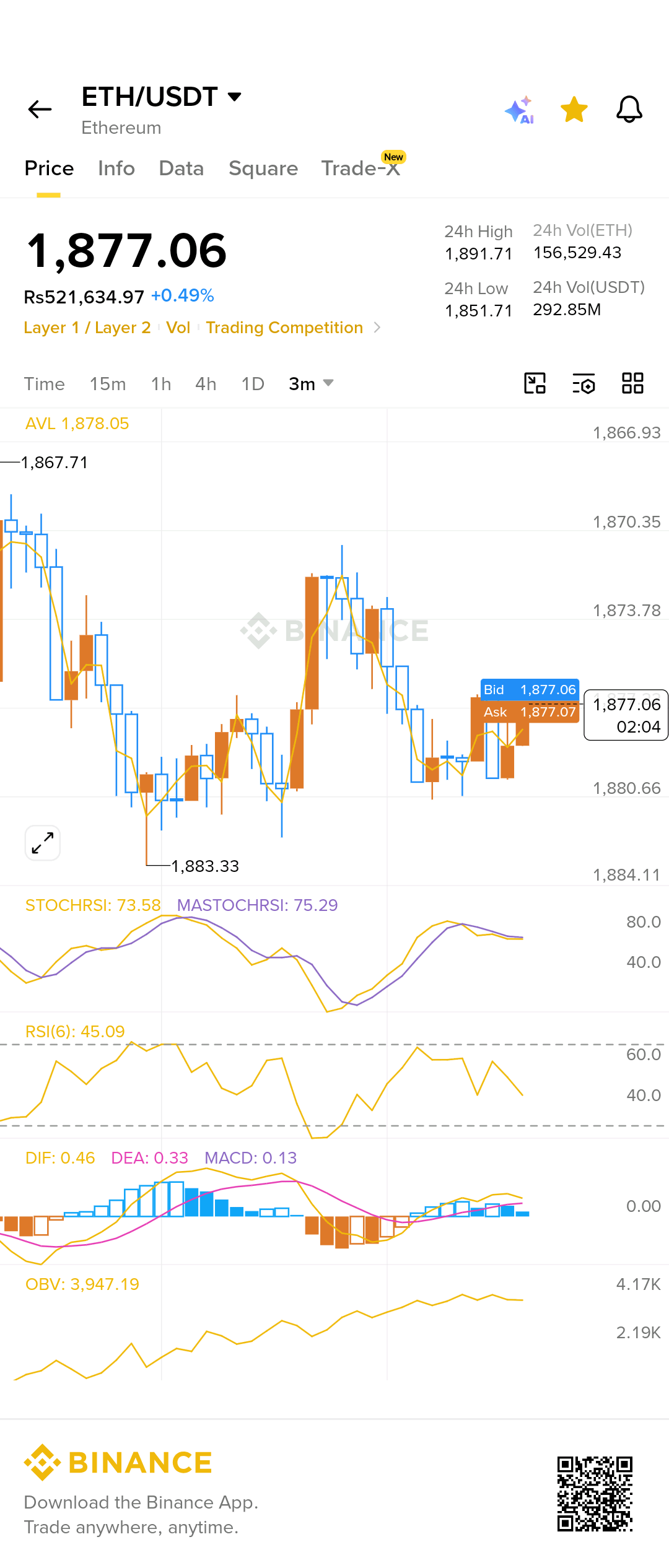
$ETH /USDT – LONG
Der Momentum-Effekt zieht sich zusammen, und ETH nähert sich einem Entscheidungspunkt. Diese Spanne sieht eher nach Akkumulation aus als nach Erschöpfung. Ein Ausbruch über den nahegelegenen Widerstand könnte die nächste Liquiditätsausweitung auslösen.
Handelsplan:
• Einstieg: 1.874–1.878
• Stop Loss (SL): 1.865
• Take Profit 1 (TP1): 1.890
• Take Profit 2 (TP2): 1.905
• Take Profit 3 (TP3): 1.925
Warum dieses Setup?
Die 1H-Struktur wird konstruktiv, während 4H und 1D weiterhin den wichtigen Support respektieren und so die Tendenz übergeordnet bullisch bleibt. Der RSI erholt sich aus dem neutralen Bereich, das Momentum verbessert sich und das Volumen kehrt nach einer Konsolidierung allmählich zurück. ETH handelt innerhalb einer Kompressionsspanne unterhalb des Widerstands – ein Muster, das häufig zu einer scharfen, richtungsgebenden Bewegung führt. Ein anhaltender Ausbruch über 1.890 könnte den Kaufdruck beschleunigen und in Richtung höherer Liquiditätszonen treiben. Ausgehend vom vorgeschlagenen Einstieg bietet TP1 etwa 0,8–1,0% Aufwärtspotenzial bei einem vorteilhaften Chance-Risiko-Verhältnis.
Diskussion:
Ist das die Ruhe vor einem großen Ausbruch – oder richtet der Markt eine Liquiditätsfalle ein, bevor die nächste Bewegung kommt?
$ETH
{spot}(ETHUSDT)
#BrentCrudeUp4.6% #BrentCrudeUp4.6% #BrentCrudeUp4.6% #BrentCrudeUp4.6% #BrentCrudeUp4.6%
$ETH /USDT – LONG
Der Momentum-Effekt zieht sich zusammen, und ETH nähert sich einem Entscheidungspunkt. Diese Spanne sieht eher nach Akkumulation aus als nach Erschöpfung. Ein Ausbruch über den nahegelegenen Widerstand könnte die nächste Liquiditätsausweitung auslösen.
Handelsplan:
• Einstieg: 1.874–1.878
• Stop Loss (SL): 1.865
• Take Profit 1 (TP1): 1.890
• Take Profit 2 (TP2): 1.905
• Take Profit 3 (TP3): 1.925
Warum dieses Setup?
Die 1H-Struktur wird konstruktiv, während 4H und 1D weiterhin den wichtigen Support respektieren und so die Tendenz übergeordnet bullisch bleibt. Der RSI erholt sich aus dem neutralen Bereich, das Momentum verbessert sich und das Volumen kehrt nach einer Konsolidierung allmählich zurück. ETH handelt innerhalb einer Kompressionsspanne unterhalb des Widerstands – ein Muster, das häufig zu einer scharfen, richtungsgebenden Bewegung führt. Ein anhaltender Ausbruch über 1.890 könnte den Kaufdruck beschleunigen und in Richtung höherer Liquiditätszonen treiben. Ausgehend vom vorgeschlagenen Einstieg bietet TP1 etwa 0,8–1,0% Aufwärtspotenzial bei einem vorteilhaften Chance-Risiko-Verhältnis.
Diskussion:
Ist das die Ruhe vor einem großen Ausbruch – oder richtet der Markt eine Liquiditätsfalle ein, bevor die nächste Bewegung kommt?
$ETH
#BrentCrudeUp4.6% #BrentCrudeUp4.6% #BrentCrudeUp4.6% #BrentCrudeUp4.6% #BrentCrudeUp4.6%
Der Momentum-Effekt zieht sich zusammen, und ETH nähert sich einem Entscheidungspunkt. Diese Spanne sieht eher nach Akkumulation aus als nach Erschöpfung. Ein Ausbruch über den nahegelegenen Widerstand könnte die nächste Liquiditätsausweitung auslösen.
Handelsplan:
• Einstieg: 1.874–1.878
• Stop Loss (SL): 1.865
• Take Profit 1 (TP1): 1.890
• Take Profit 2 (TP2): 1.905
• Take Profit 3 (TP3): 1.925
Warum dieses Setup?
Die 1H-Struktur wird konstruktiv, während 4H und 1D weiterhin den wichtigen Support respektieren und so die Tendenz übergeordnet bullisch bleibt. Der RSI erholt sich aus dem neutralen Bereich, das Momentum verbessert sich und das Volumen kehrt nach einer Konsolidierung allmählich zurück. ETH handelt innerhalb einer Kompressionsspanne unterhalb des Widerstands – ein Muster, das häufig zu einer scharfen, richtungsgebenden Bewegung führt. Ein anhaltender Ausbruch über 1.890 könnte den Kaufdruck beschleunigen und in Richtung höherer Liquiditätszonen treiben. Ausgehend vom vorgeschlagenen Einstieg bietet TP1 etwa 0,8–1,0% Aufwärtspotenzial bei einem vorteilhaften Chance-Risiko-Verhältnis.
Diskussion:
Ist das die Ruhe vor einem großen Ausbruch – oder richtet der Markt eine Liquiditätsfalle ein, bevor die nächste Bewegung kommt?
$ETH
#BrentCrudeUp4.6% #BrentCrudeUp4.6% #BrentCrudeUp4.6% #BrentCrudeUp4.6% #BrentCrudeUp4.6%
103
·
--
Artikel
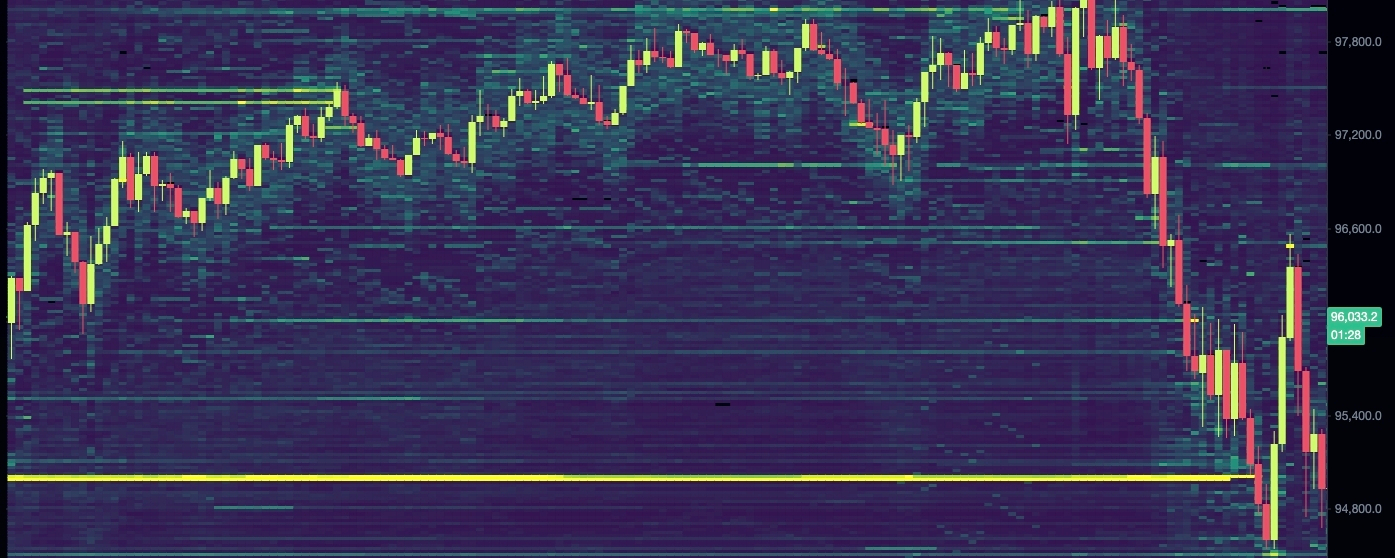
BTC-LIQUIDITÄTSWÄNDE SIND NICHT BULLISCH... SIE SIND EINE FALLE, DIE GESTREIFT WIRDIch starrte diese Liquiditäts-Heatmap viel länger an, als ich wahrscheinlich sollte... und ehrlich gesagt ist das eine dieser Grafiken, die auf den ersten Blick simpel wirken, bis man weiter zoomt. Dann wird es auf einmal komisch.
Das Erste, was mir immer wieder ins Auge fällt, sind nicht einmal die Kerzen. Es sind diese dicken Liquiditätsbänder, die ober- und unterhalb des Preises sitzen. Märkte haben die nervige Angewohnheit, so zu tun, als würden sie in die eine Richtung gehen, nur um dann hinterherzulaufen und die größte Liquidität irgendwo anders abzugreifen. Deshalb vertraue ich der ersten Bewegung mittlerweile nicht mehr. Ich bin oft genug auf die Nase gefallen.
BTC-LIQUIDITÄTSWÄNDE SIND NICHT BULLISCH... SIE SIND EINE FALLE, DIE GESTREIFT WIRD
Ich starrte diese Liquiditäts-Heatmap viel länger an, als ich wahrscheinlich sollte... und ehrlich gesagt ist das eine dieser Grafiken, die auf den ersten Blick simpel wirken, bis man weiter zoomt. Dann wird es auf einmal komisch.
Das Erste, was mir immer wieder ins Auge fällt, sind nicht einmal die Kerzen. Es sind diese dicken Liquiditätsbänder, die ober- und unterhalb des Preises sitzen. Märkte haben die nervige Angewohnheit, so zu tun, als würden sie in die eine Richtung gehen, nur um dann hinterherzulaufen und die größte Liquidität irgendwo anders abzugreifen. Deshalb vertraue ich der ersten Bewegung mittlerweile nicht mehr. Ich bin oft genug auf die Nase gefallen.
Das Erste, was mir immer wieder ins Auge fällt, sind nicht einmal die Kerzen. Es sind diese dicken Liquiditätsbänder, die ober- und unterhalb des Preises sitzen. Märkte haben die nervige Angewohnheit, so zu tun, als würden sie in die eine Richtung gehen, nur um dann hinterherzulaufen und die größte Liquidität irgendwo anders abzugreifen. Deshalb vertraue ich der ersten Bewegung mittlerweile nicht mehr. Ich bin oft genug auf die Nase gefallen.
97
·
--
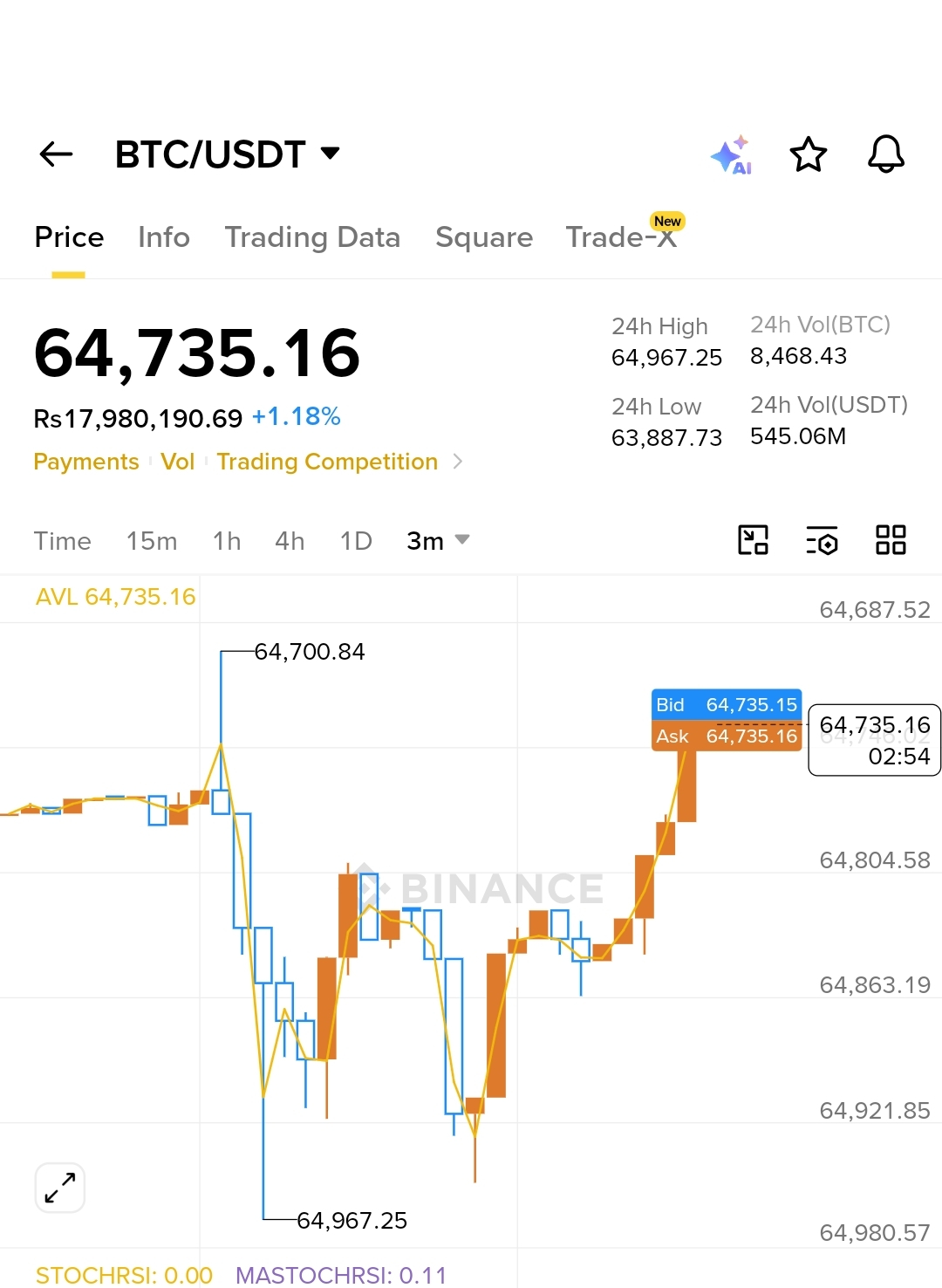
$BTC USDT – LONG
Handelsplan:
• Einstieg: 64.700–64.760
• Stop Loss (SL): 64.420
• Take Profit 1 (TP1): 65.150
• Take Profit 2 (TP2): 65.600
• Take Profit 3 (TP3): 66.200
Warum dieses Setup?
Der 1H-Trend erlangt wieder bullischen Schwung, während die 4H-Struktur weiterhin höhere Tiefs verteidigt und so das größere Bild konstruktiv hält. Der RSI erholt sich aus dem neutralen Bereich, der Momentum-Impuls beschleunigt sich und Käufer kehren mit besserem Volumen zurück. Der Kurs drückt nach der Rückeroberung der Unterstützung wieder gegen einen kurzfristigen Widerstand, und diese Konsolidierung geht häufig einem impulsiven Ausbruch voraus. Ein Move zu TP1 bietet etwa 0,7 % Upside vom Einstieg aus – mit weiterer Luft für Fortsetzung, falls das Volumen anzieht.
Diskussion:
Ist das die Ruhe vor dem großen Ausbruch, oder richtet der Markt erneut eine Bull-Trap ein?
#USMissesGENIUSActStablecoinRuleDeadline
#USTargetsBrazilPaymentSystemViaSection301
#USTargetsBrazilPaymentSystemViaSection301
#SpaceXShortInterestHits29%OfFloat
#SpaceXShortInterestHits29%OfFloat
$BTC USDT – LONG
Handelsplan:
• Einstieg: 64.700–64.760
• Stop Loss (SL): 64.420
• Take Profit 1 (TP1): 65.150
• Take Profit 2 (TP2): 65.600
• Take Profit 3 (TP3): 66.200
Warum dieses Setup?
Der 1H-Trend erlangt wieder bullischen Schwung, während die 4H-Struktur weiterhin höhere Tiefs verteidigt und so das größere Bild konstruktiv hält. Der RSI erholt sich aus dem neutralen Bereich, der Momentum-Impuls beschleunigt sich und Käufer kehren mit besserem Volumen zurück. Der Kurs drückt nach der Rückeroberung der Unterstützung wieder gegen einen kurzfristigen Widerstand, und diese Konsolidierung geht häufig einem impulsiven Ausbruch voraus. Ein Move zu TP1 bietet etwa 0,7 % Upside vom Einstieg aus – mit weiterer Luft für Fortsetzung, falls das Volumen anzieht.
Diskussion:
Ist das die Ruhe vor dem großen Ausbruch, oder richtet der Markt erneut eine Bull-Trap ein?
#USMissesGENIUSActStablecoinRuleDeadline
#USTargetsBrazilPaymentSystemViaSection301
#USTargetsBrazilPaymentSystemViaSection301
#SpaceXShortInterestHits29%OfFloat
#SpaceXShortInterestHits29%OfFloat
Handelsplan:
• Einstieg: 64.700–64.760
• Stop Loss (SL): 64.420
• Take Profit 1 (TP1): 65.150
• Take Profit 2 (TP2): 65.600
• Take Profit 3 (TP3): 66.200
Warum dieses Setup?
Der 1H-Trend erlangt wieder bullischen Schwung, während die 4H-Struktur weiterhin höhere Tiefs verteidigt und so das größere Bild konstruktiv hält. Der RSI erholt sich aus dem neutralen Bereich, der Momentum-Impuls beschleunigt sich und Käufer kehren mit besserem Volumen zurück. Der Kurs drückt nach der Rückeroberung der Unterstützung wieder gegen einen kurzfristigen Widerstand, und diese Konsolidierung geht häufig einem impulsiven Ausbruch voraus. Ein Move zu TP1 bietet etwa 0,7 % Upside vom Einstieg aus – mit weiterer Luft für Fortsetzung, falls das Volumen anzieht.
Diskussion:
Ist das die Ruhe vor dem großen Ausbruch, oder richtet der Markt erneut eine Bull-Trap ein?
#USMissesGENIUSActStablecoinRuleDeadline
#USTargetsBrazilPaymentSystemViaSection301
#USTargetsBrazilPaymentSystemViaSection301
#SpaceXShortInterestHits29%OfFloat
#SpaceXShortInterestHits29%OfFloat
121
·
--
Bullisch
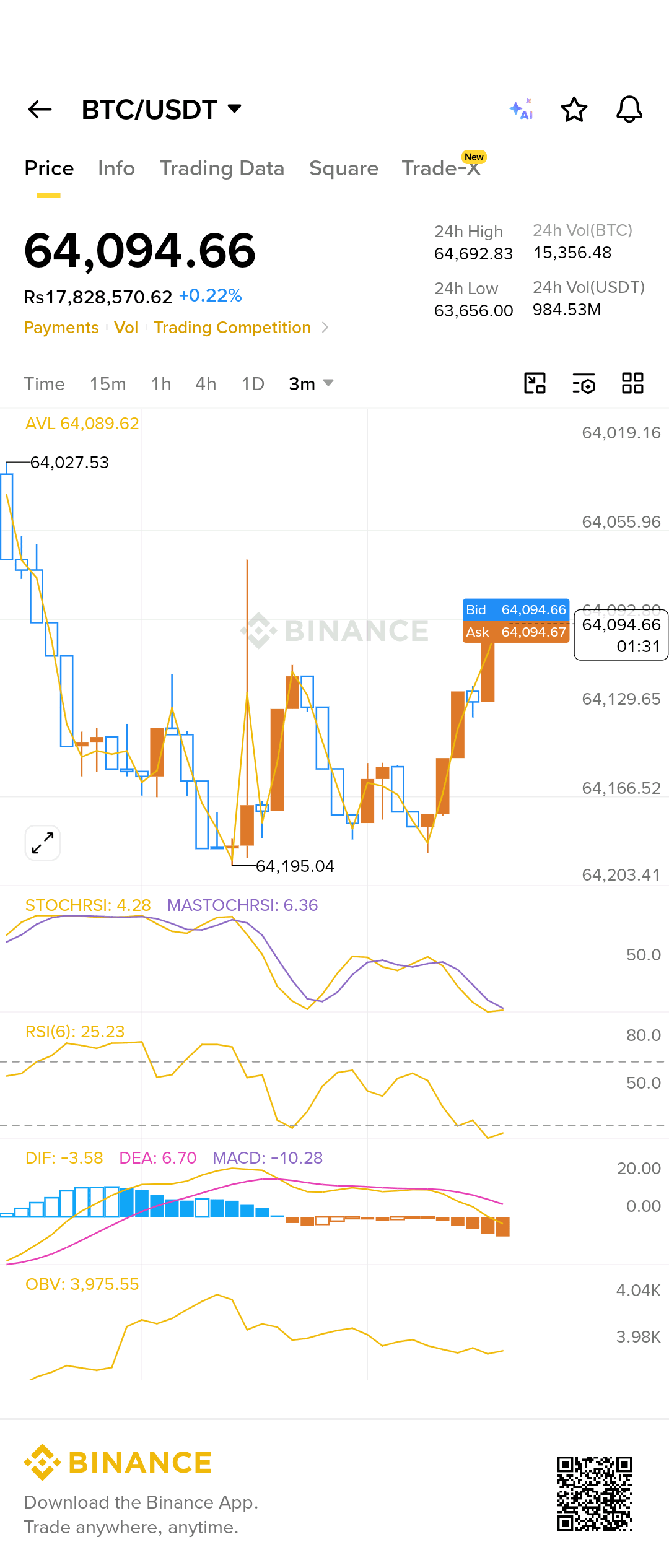
$BTC /USDT – LONG
Trade-Plan:
• Einstieg: $63.950–$64.100
• Stop Loss (SL): $63.580
• Take Profit 1 (TP1): $64.700
• Take Profit 2 (TP2): $65.400
• Take Profit 3 (TP3): $66.200
Warum dieses Setup?
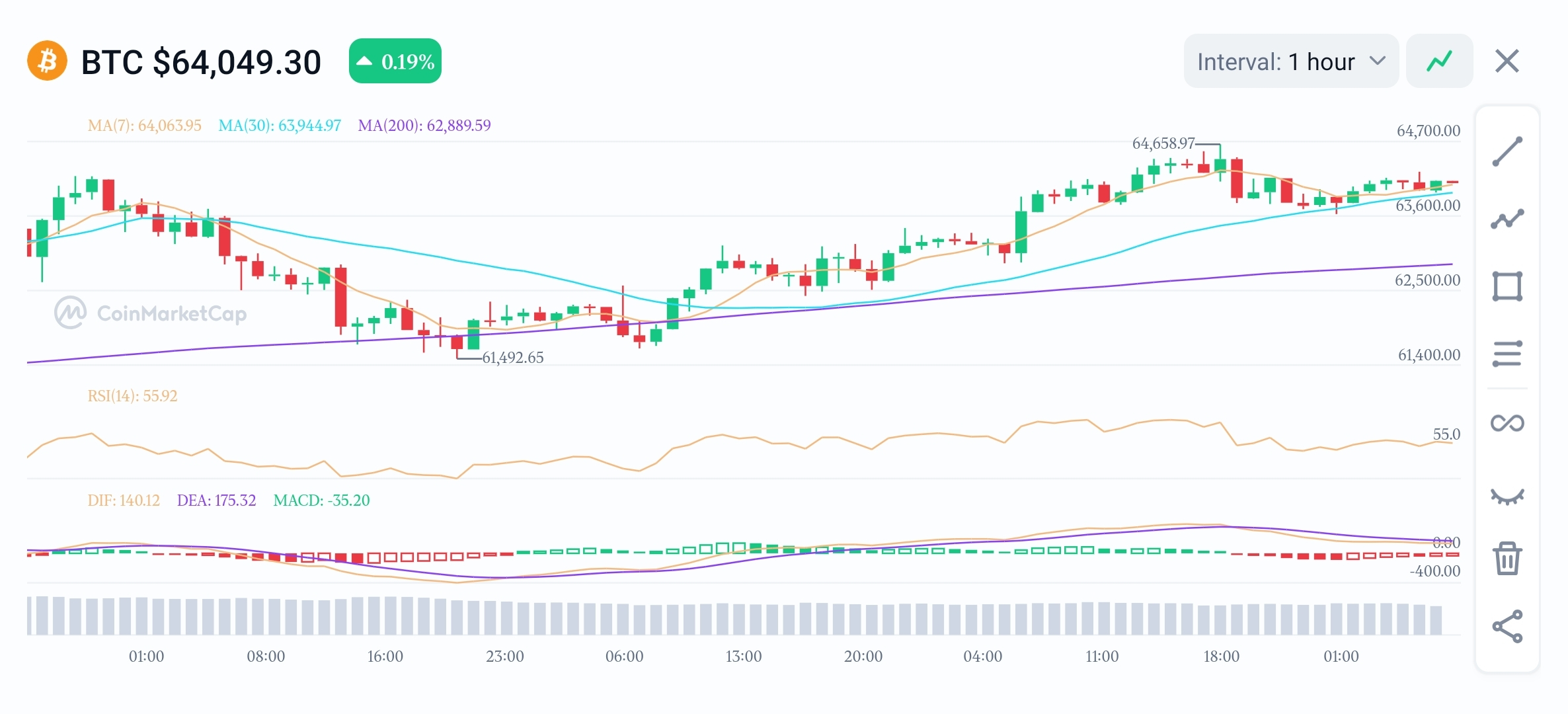
Die 1H-Struktur druckt höhere Tiefs, während der Kurs oberhalb des 30MA bleibt und komfortabel über dem 200MA notiert. Das hält die übergeordnete Marktbias bullisch. RSI nahe 56 signalisiert gesunden Momentum-Impuls, ohne in überkauftes Terrain einzutreten. Die Spanne von $63,6K–$64,7K hat die Volatilität komprimiert, und das Volumen baut sich langsam unterhalb des Widerstands auf. Ein sauberer Ausbruch über $64,7K könnte eine schnelle Ausdehnungsbewegung auslösen. Vom Einstieg bis zu TP1 bietet das Setup ungefähr 1% Upside, mit deutlich größerem Potenzial für Erweiterung, falls der Momentum-Impuls beschleunigt.
Diskussion:
Ist diese Konsolidierung der Startpunkt für einen Ausbruch zu neuen Hochs – oder bereitet Bitcoin einen letzten Liquiditätstrick vor, bevor es wieder nach unten dreht?
{spot}(BTCUSDT)
#CBDCBanBillToBecomeLawWithoutTrumpSignature
#CBDCBanBillToBecomeLawWithoutTrumpSignature
#CBDCBanBillToBecomeLawWithoutTrumpSignature
#CBDCBanBillToBecomeLawWithoutTrumpSignature
#CBDCBanBillToBecomeLawWithoutTrumpSignature
$BTC /USDT – LONG
Trade-Plan:
• Einstieg: $63.950–$64.100
• Stop Loss (SL): $63.580
• Take Profit 1 (TP1): $64.700
• Take Profit 2 (TP2): $65.400
• Take Profit 3 (TP3): $66.200
Warum dieses Setup?
Die 1H-Struktur druckt höhere Tiefs, während der Kurs oberhalb des 30MA bleibt und komfortabel über dem 200MA notiert. Das hält die übergeordnete Marktbias bullisch. RSI nahe 56 signalisiert gesunden Momentum-Impuls, ohne in überkauftes Terrain einzutreten. Die Spanne von $63,6K–$64,7K hat die Volatilität komprimiert, und das Volumen baut sich langsam unterhalb des Widerstands auf. Ein sauberer Ausbruch über $64,7K könnte eine schnelle Ausdehnungsbewegung auslösen. Vom Einstieg bis zu TP1 bietet das Setup ungefähr 1% Upside, mit deutlich größerem Potenzial für Erweiterung, falls der Momentum-Impuls beschleunigt.
Diskussion:
Ist diese Konsolidierung der Startpunkt für einen Ausbruch zu neuen Hochs – oder bereitet Bitcoin einen letzten Liquiditätstrick vor, bevor es wieder nach unten dreht?
#CBDCBanBillToBecomeLawWithoutTrumpSignature
#CBDCBanBillToBecomeLawWithoutTrumpSignature
#CBDCBanBillToBecomeLawWithoutTrumpSignature
#CBDCBanBillToBecomeLawWithoutTrumpSignature
#CBDCBanBillToBecomeLawWithoutTrumpSignature
Trade-Plan:
• Einstieg: $63.950–$64.100
• Stop Loss (SL): $63.580
• Take Profit 1 (TP1): $64.700
• Take Profit 2 (TP2): $65.400
• Take Profit 3 (TP3): $66.200
Warum dieses Setup?
Die 1H-Struktur druckt höhere Tiefs, während der Kurs oberhalb des 30MA bleibt und komfortabel über dem 200MA notiert. Das hält die übergeordnete Marktbias bullisch. RSI nahe 56 signalisiert gesunden Momentum-Impuls, ohne in überkauftes Terrain einzutreten. Die Spanne von $63,6K–$64,7K hat die Volatilität komprimiert, und das Volumen baut sich langsam unterhalb des Widerstands auf. Ein sauberer Ausbruch über $64,7K könnte eine schnelle Ausdehnungsbewegung auslösen. Vom Einstieg bis zu TP1 bietet das Setup ungefähr 1% Upside, mit deutlich größerem Potenzial für Erweiterung, falls der Momentum-Impuls beschleunigt.
Diskussion:
Ist diese Konsolidierung der Startpunkt für einen Ausbruch zu neuen Hochs – oder bereitet Bitcoin einen letzten Liquiditätstrick vor, bevor es wieder nach unten dreht?
#CBDCBanBillToBecomeLawWithoutTrumpSignature
#CBDCBanBillToBecomeLawWithoutTrumpSignature
#CBDCBanBillToBecomeLawWithoutTrumpSignature
#CBDCBanBillToBecomeLawWithoutTrumpSignature
#CBDCBanBillToBecomeLawWithoutTrumpSignature
72
·
--
Bullisch
Niemand schaut zu $OWL , aber das Chart baut still und leise Druck auf.
$OWL – LANG
Trade-Plan:
• Einstieg: 0.00180 – 0.00188
• SL: 0.00155
• TP1: 0.00230
• TP2: 0.00280
• TP3: 0.00350
Warum dieses Setup?
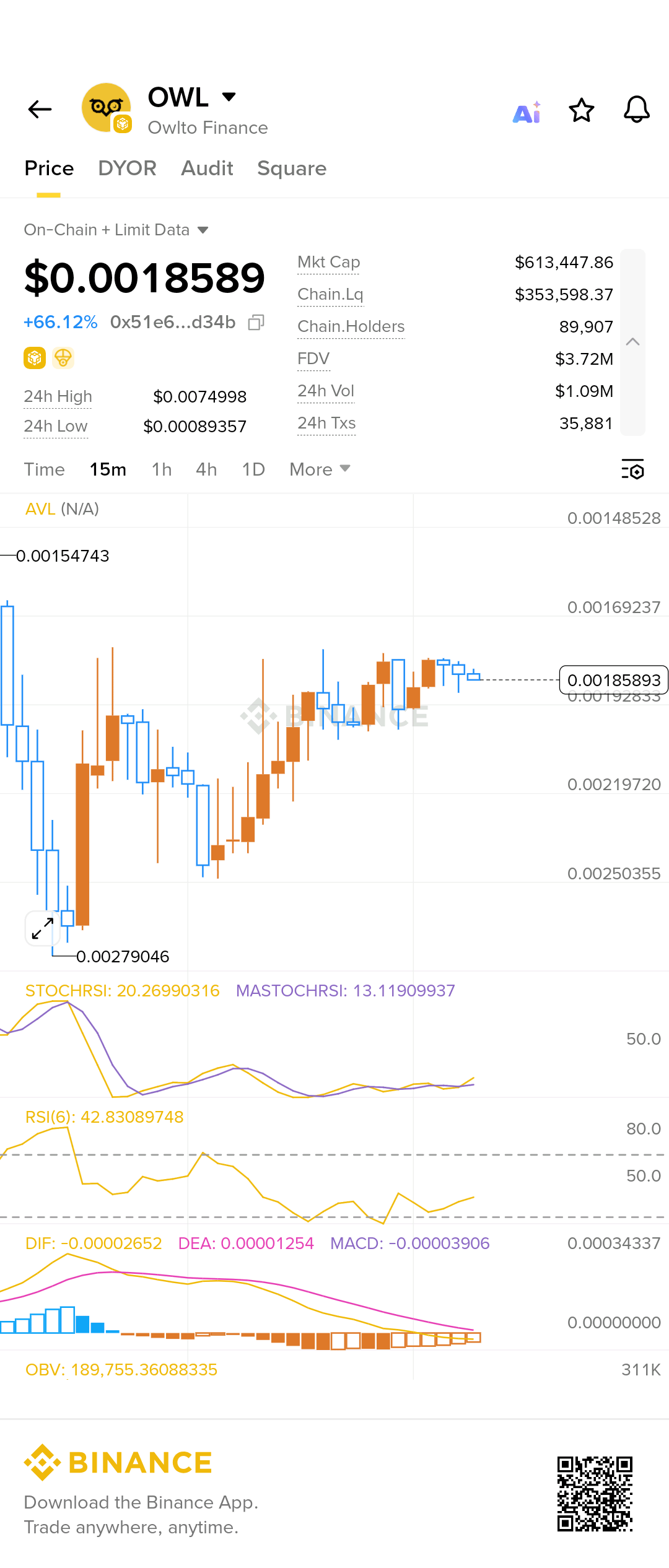
• Die 1H-Struktur erholt sich, während das 4H-Chart nach einem starken Bounce von lokalen Tiefs versucht, eine Trendwende einzuleiten.
• Der RSI steigt aus dem überverkauften Bereich heraus, was auf eine langsam zurückkehrende Dynamik hindeutet.
• Das Volumen bleibt hoch: Über 1 Mio. $ Handelsaktivität in 24h, das zeigt echte Beteiligung.
• Der Preis konsolidiert nahe dem Widerstand. Ein sauberer Ausbruch über diesen Bereich könnte eine schnelle Ausweitung Richtung TP1 auslösen – mit etwa 25% Upside gegenüber der Einstiegszone.
Diskussion:
Baut $OWL still und leise eine Basis für den nächsten Aufwärtsschritt, oder läuft dieses Erholungs-Rallye gleich in starken Verkaufsdruck?
{alpha}(560x51e667e91b4b8cb8e6e0528757f248406bd34b57)
#USDARaises2026SoybeanOutlookTo4.475BBushels
#SKHynixJumpsNearly13%OnUSDebut
#AppleSuesOpenAIOverTradeSecrets
#CBDCBanBillToBecomeLawWithoutTrumpSignature
#CBDCBanBillToBecomeLawWithoutTrumpSignature
Niemand schaut zu $OWL , aber das Chart baut still und leise Druck auf.
$OWL – LANG
Trade-Plan:
• Einstieg: 0.00180 – 0.00188
• SL: 0.00155
• TP1: 0.00230
• TP2: 0.00280
• TP3: 0.00350
Warum dieses Setup?
• Die 1H-Struktur erholt sich, während das 4H-Chart nach einem starken Bounce von lokalen Tiefs versucht, eine Trendwende einzuleiten.
• Der RSI steigt aus dem überverkauften Bereich heraus, was auf eine langsam zurückkehrende Dynamik hindeutet.
• Das Volumen bleibt hoch: Über 1 Mio. $ Handelsaktivität in 24h, das zeigt echte Beteiligung.
• Der Preis konsolidiert nahe dem Widerstand. Ein sauberer Ausbruch über diesen Bereich könnte eine schnelle Ausweitung Richtung TP1 auslösen – mit etwa 25% Upside gegenüber der Einstiegszone.
Diskussion:
Baut $OWL still und leise eine Basis für den nächsten Aufwärtsschritt, oder läuft dieses Erholungs-Rallye gleich in starken Verkaufsdruck?
#USDARaises2026SoybeanOutlookTo4.475BBushels
#SKHynixJumpsNearly13%OnUSDebut
#AppleSuesOpenAIOverTradeSecrets
#CBDCBanBillToBecomeLawWithoutTrumpSignature
#CBDCBanBillToBecomeLawWithoutTrumpSignature
$OWL – LANG
Trade-Plan:
• Einstieg: 0.00180 – 0.00188
• SL: 0.00155
• TP1: 0.00230
• TP2: 0.00280
• TP3: 0.00350
Warum dieses Setup?
• Die 1H-Struktur erholt sich, während das 4H-Chart nach einem starken Bounce von lokalen Tiefs versucht, eine Trendwende einzuleiten.
• Der RSI steigt aus dem überverkauften Bereich heraus, was auf eine langsam zurückkehrende Dynamik hindeutet.
• Das Volumen bleibt hoch: Über 1 Mio. $ Handelsaktivität in 24h, das zeigt echte Beteiligung.
• Der Preis konsolidiert nahe dem Widerstand. Ein sauberer Ausbruch über diesen Bereich könnte eine schnelle Ausweitung Richtung TP1 auslösen – mit etwa 25% Upside gegenüber der Einstiegszone.
Diskussion:
Baut $OWL still und leise eine Basis für den nächsten Aufwärtsschritt, oder läuft dieses Erholungs-Rallye gleich in starken Verkaufsdruck?
#USDARaises2026SoybeanOutlookTo4.475BBushels
#SKHynixJumpsNearly13%OnUSDebut
#AppleSuesOpenAIOverTradeSecrets
#CBDCBanBillToBecomeLawWithoutTrumpSignature
#CBDCBanBillToBecomeLawWithoutTrumpSignature
368
·
--
Bullisch
Niemand achtet auf $LAB /USDT, aber der Preis sitzt genau dort, wo Trends entweder brechen… oder explodieren.
$LAB – SHORT
Handelsplan:
• Einstieg: 0.8517 – 0.8684
• SL: 1.2422
• TP1: 0.5734
• TP2: 0.3823
• TP3: 0.0957
Warum dieses Setup?
• Die 4H-Struktur bleibt eindeutig bärisch, wobei tiefere Hochs weiterhin jede Erholungsbewegung begrenzen.
• RSI im 15m-Zeitrahmen liegt unter 40 und zeigt nachlassende Dynamik sowie eine Schwächung der Käuferüberzeugung.
• Das Volumen ist während der jüngsten Konsolidierung zurückgegangen – ein klassisches Zeichen dafür, dass die aktuelle Spanne möglicherweise nicht mehr lange hält.
• Ein Bruch unter die Unterstützung könnte eine weitere impulsive Bewegung nach unten auslösen, wobei TP1 ungefähr eine 33%-Bewegung vom Einstieg aus bietet.
Der Markt ist ruhig, fast zu ruhig. Oft sind es genau diese Momente, die die größten Moves hervorbringen.
Diskussion:
Bereitet sich $LAB gerade auf den nächsten Abwärtsschub vor, oder ist diese komprimierte Spanne ein letztes Short-Squeeze-Setup, bevor der echte Breakdown beginnt?
{alpha}(560x7ec43cf65f1663f820427c62a5780b8f2e25593a)
#AppleSuesOpenAIOverTradeSecrets
#AppleSuesOpenAIOverTradeSecrets
#CBDCBanBillToBecomeLawWithoutTrumpSignature
#RussiaBansDieselExports
#RussiaBansDieselExports
Niemand achtet auf $LAB /USDT, aber der Preis sitzt genau dort, wo Trends entweder brechen… oder explodieren.
$LAB – SHORT
Handelsplan:
• Einstieg: 0.8517 – 0.8684
• SL: 1.2422
• TP1: 0.5734
• TP2: 0.3823
• TP3: 0.0957
Warum dieses Setup?
• Die 4H-Struktur bleibt eindeutig bärisch, wobei tiefere Hochs weiterhin jede Erholungsbewegung begrenzen.
• RSI im 15m-Zeitrahmen liegt unter 40 und zeigt nachlassende Dynamik sowie eine Schwächung der Käuferüberzeugung.
• Das Volumen ist während der jüngsten Konsolidierung zurückgegangen – ein klassisches Zeichen dafür, dass die aktuelle Spanne möglicherweise nicht mehr lange hält.
• Ein Bruch unter die Unterstützung könnte eine weitere impulsive Bewegung nach unten auslösen, wobei TP1 ungefähr eine 33%-Bewegung vom Einstieg aus bietet.
Der Markt ist ruhig, fast zu ruhig. Oft sind es genau diese Momente, die die größten Moves hervorbringen.
Diskussion:
Bereitet sich $LAB gerade auf den nächsten Abwärtsschub vor, oder ist diese komprimierte Spanne ein letztes Short-Squeeze-Setup, bevor der echte Breakdown beginnt?
#AppleSuesOpenAIOverTradeSecrets
#AppleSuesOpenAIOverTradeSecrets
#CBDCBanBillToBecomeLawWithoutTrumpSignature
#RussiaBansDieselExports
#RussiaBansDieselExports
$LAB – SHORT
Handelsplan:
• Einstieg: 0.8517 – 0.8684
• SL: 1.2422
• TP1: 0.5734
• TP2: 0.3823
• TP3: 0.0957
Warum dieses Setup?
• Die 4H-Struktur bleibt eindeutig bärisch, wobei tiefere Hochs weiterhin jede Erholungsbewegung begrenzen.
• RSI im 15m-Zeitrahmen liegt unter 40 und zeigt nachlassende Dynamik sowie eine Schwächung der Käuferüberzeugung.
• Das Volumen ist während der jüngsten Konsolidierung zurückgegangen – ein klassisches Zeichen dafür, dass die aktuelle Spanne möglicherweise nicht mehr lange hält.
• Ein Bruch unter die Unterstützung könnte eine weitere impulsive Bewegung nach unten auslösen, wobei TP1 ungefähr eine 33%-Bewegung vom Einstieg aus bietet.
Der Markt ist ruhig, fast zu ruhig. Oft sind es genau diese Momente, die die größten Moves hervorbringen.
Diskussion:
Bereitet sich $LAB gerade auf den nächsten Abwärtsschub vor, oder ist diese komprimierte Spanne ein letztes Short-Squeeze-Setup, bevor der echte Breakdown beginnt?
#AppleSuesOpenAIOverTradeSecrets
#AppleSuesOpenAIOverTradeSecrets
#CBDCBanBillToBecomeLawWithoutTrumpSignature
#RussiaBansDieselExports
#RussiaBansDieselExports
376
·
--
NEWTON-PROTOKOLL (NEWT): REALE INFRASTRUKTUR ODER NUR HYPE?
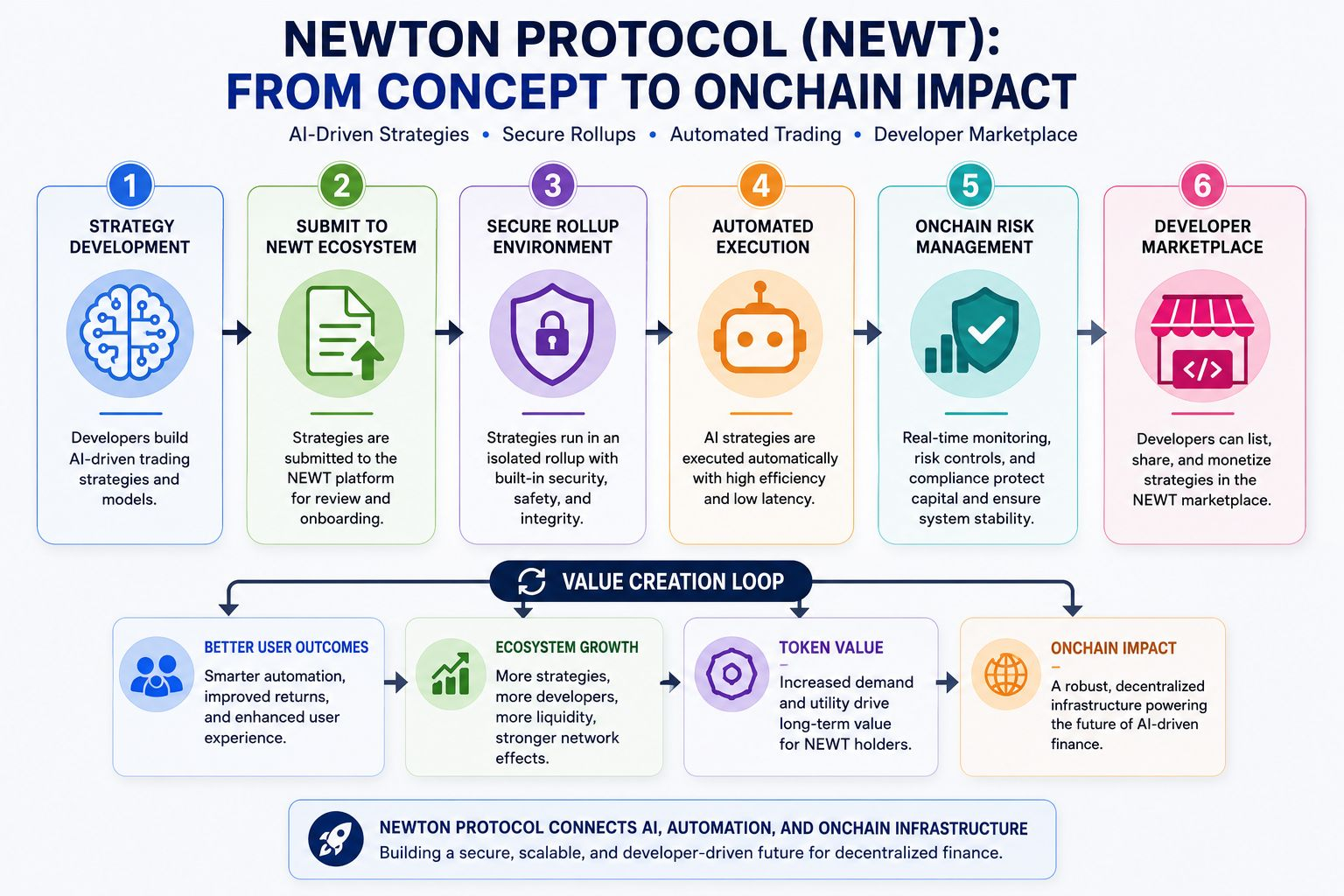
Das Newton Protocol (NEWT) befindet sich in einer interessanten Zwischenzone. Sein Pitch – sichere Rollups, KI-gesteuerte Strategien, automatisierter Handel und ein Marktplatz für KI-Entwickler – klingt ambitioniert und äußerst relevant für die Richtung, in die sich Krypto gerade bewegt.
Der stärkste Teil der These ist die Sicherheit. Wenn NEWT eine sichere Umgebung für KI-gestützte Automatisierung bieten kann, könnte das ein echtes Problem in Krypto lösen. Aber „sicher“ ist ein Wort, das die Branche viel zu leicht verwendet, und starke Ideen lassen sich nicht immer in eine ebenso starke Umsetzung übersetzen.
Der Aspekt des KI-Handels ist überzeugend, weil Automatisierung schneller und weniger emotional sein kann als menschliche Entscheidungen. Dennoch können automatisierte Systeme in unvorhersehbaren Situationen versagen – besonders in volatilen Märkten.
Der Entwickler-Marktplatz fügt eine weitere Ebene des Potenzials hinzu, indem er darauf abzielt, ein Ökosystem statt eines einzelnen Produkts aufzubauen. Allerdings sind Marktplätze notorisch schwer zu skalieren und erfordern starke Netzwerkeffekte, um erfolgreich zu sein.
Letztlich wirkt NEWT wie ein Projekt, das man im Blick behalten sollte, statt ihm blind hinterherzulaufen. Die Vision ist stimmig, aber die eigentliche Frage ist, ob es wirklich aussagekräftige Infrastruktur liefern kann – oder ob es schlicht eine Sammlung angesagter Narrative ist, die in einer einzigen Geschichte verpackt wurden.
@NewtonProtocol #NEWT $NEWT
#SKHynixADRBiggestForeignCorporateFundraising
#SKHynixADRBiggestForeignCorporateFundraising
#SKHynixADRBiggestForeignCorporateFundraising
#SKHynixADRBiggestForeignCorporateFundraising
NEWTON-PROTOKOLL (NEWT): REALE INFRASTRUKTUR ODER NUR HYPE?
Das Newton Protocol (NEWT) befindet sich in einer interessanten Zwischenzone. Sein Pitch – sichere Rollups, KI-gesteuerte Strategien, automatisierter Handel und ein Marktplatz für KI-Entwickler – klingt ambitioniert und äußerst relevant für die Richtung, in die sich Krypto gerade bewegt.
Der stärkste Teil der These ist die Sicherheit. Wenn NEWT eine sichere Umgebung für KI-gestützte Automatisierung bieten kann, könnte das ein echtes Problem in Krypto lösen. Aber „sicher“ ist ein Wort, das die Branche viel zu leicht verwendet, und starke Ideen lassen sich nicht immer in eine ebenso starke Umsetzung übersetzen.
Der Aspekt des KI-Handels ist überzeugend, weil Automatisierung schneller und weniger emotional sein kann als menschliche Entscheidungen. Dennoch können automatisierte Systeme in unvorhersehbaren Situationen versagen – besonders in volatilen Märkten.
Der Entwickler-Marktplatz fügt eine weitere Ebene des Potenzials hinzu, indem er darauf abzielt, ein Ökosystem statt eines einzelnen Produkts aufzubauen. Allerdings sind Marktplätze notorisch schwer zu skalieren und erfordern starke Netzwerkeffekte, um erfolgreich zu sein.
Letztlich wirkt NEWT wie ein Projekt, das man im Blick behalten sollte, statt ihm blind hinterherzulaufen. Die Vision ist stimmig, aber die eigentliche Frage ist, ob es wirklich aussagekräftige Infrastruktur liefern kann – oder ob es schlicht eine Sammlung angesagter Narrative ist, die in einer einzigen Geschichte verpackt wurden.
@NewtonProtocol #NEWT $NEWT
#SKHynixADRBiggestForeignCorporateFundraising
#SKHynixADRBiggestForeignCorporateFundraising
#SKHynixADRBiggestForeignCorporateFundraising
#SKHynixADRBiggestForeignCorporateFundraising
Das Newton Protocol (NEWT) befindet sich in einer interessanten Zwischenzone. Sein Pitch – sichere Rollups, KI-gesteuerte Strategien, automatisierter Handel und ein Marktplatz für KI-Entwickler – klingt ambitioniert und äußerst relevant für die Richtung, in die sich Krypto gerade bewegt.
Der stärkste Teil der These ist die Sicherheit. Wenn NEWT eine sichere Umgebung für KI-gestützte Automatisierung bieten kann, könnte das ein echtes Problem in Krypto lösen. Aber „sicher“ ist ein Wort, das die Branche viel zu leicht verwendet, und starke Ideen lassen sich nicht immer in eine ebenso starke Umsetzung übersetzen.
Der Aspekt des KI-Handels ist überzeugend, weil Automatisierung schneller und weniger emotional sein kann als menschliche Entscheidungen. Dennoch können automatisierte Systeme in unvorhersehbaren Situationen versagen – besonders in volatilen Märkten.
Der Entwickler-Marktplatz fügt eine weitere Ebene des Potenzials hinzu, indem er darauf abzielt, ein Ökosystem statt eines einzelnen Produkts aufzubauen. Allerdings sind Marktplätze notorisch schwer zu skalieren und erfordern starke Netzwerkeffekte, um erfolgreich zu sein.
Letztlich wirkt NEWT wie ein Projekt, das man im Blick behalten sollte, statt ihm blind hinterherzulaufen. Die Vision ist stimmig, aber die eigentliche Frage ist, ob es wirklich aussagekräftige Infrastruktur liefern kann – oder ob es schlicht eine Sammlung angesagter Narrative ist, die in einer einzigen Geschichte verpackt wurden.
@NewtonProtocol #NEWT $NEWT
#SKHynixADRBiggestForeignCorporateFundraising
#SKHynixADRBiggestForeignCorporateFundraising
#SKHynixADRBiggestForeignCorporateFundraising
#SKHynixADRBiggestForeignCorporateFundraising
2
85
·
--
Artikel
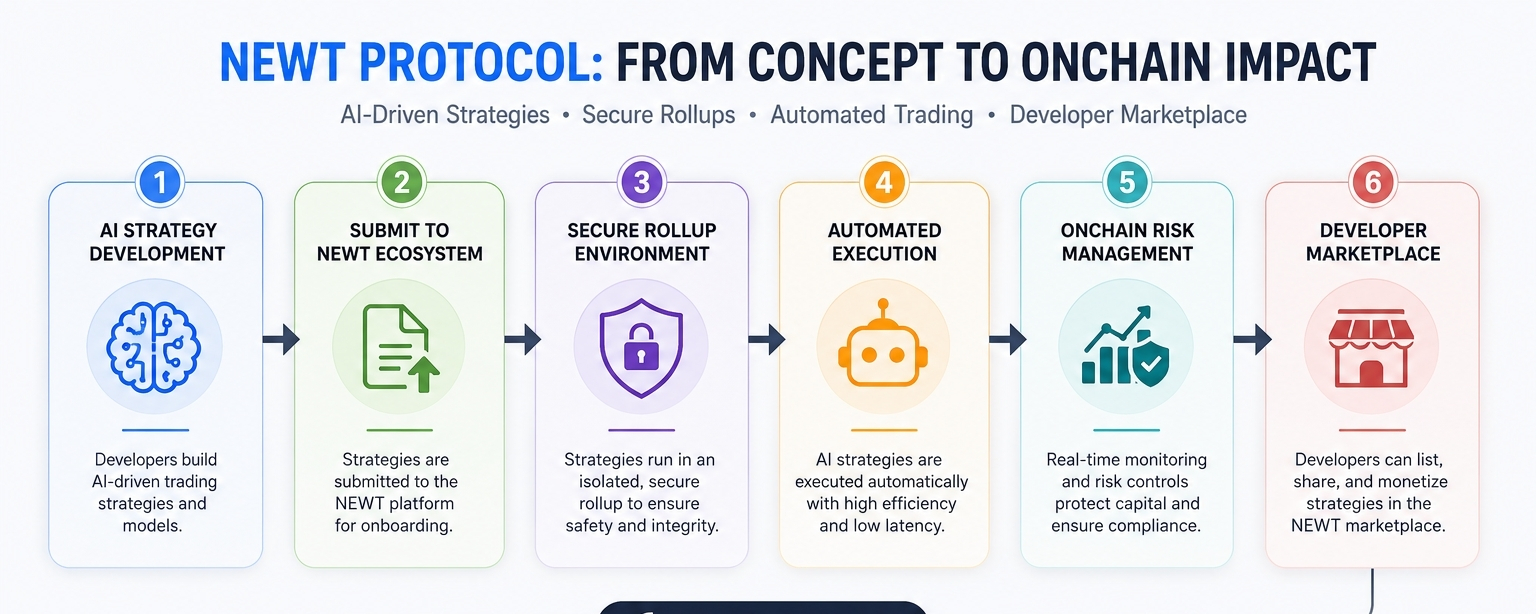
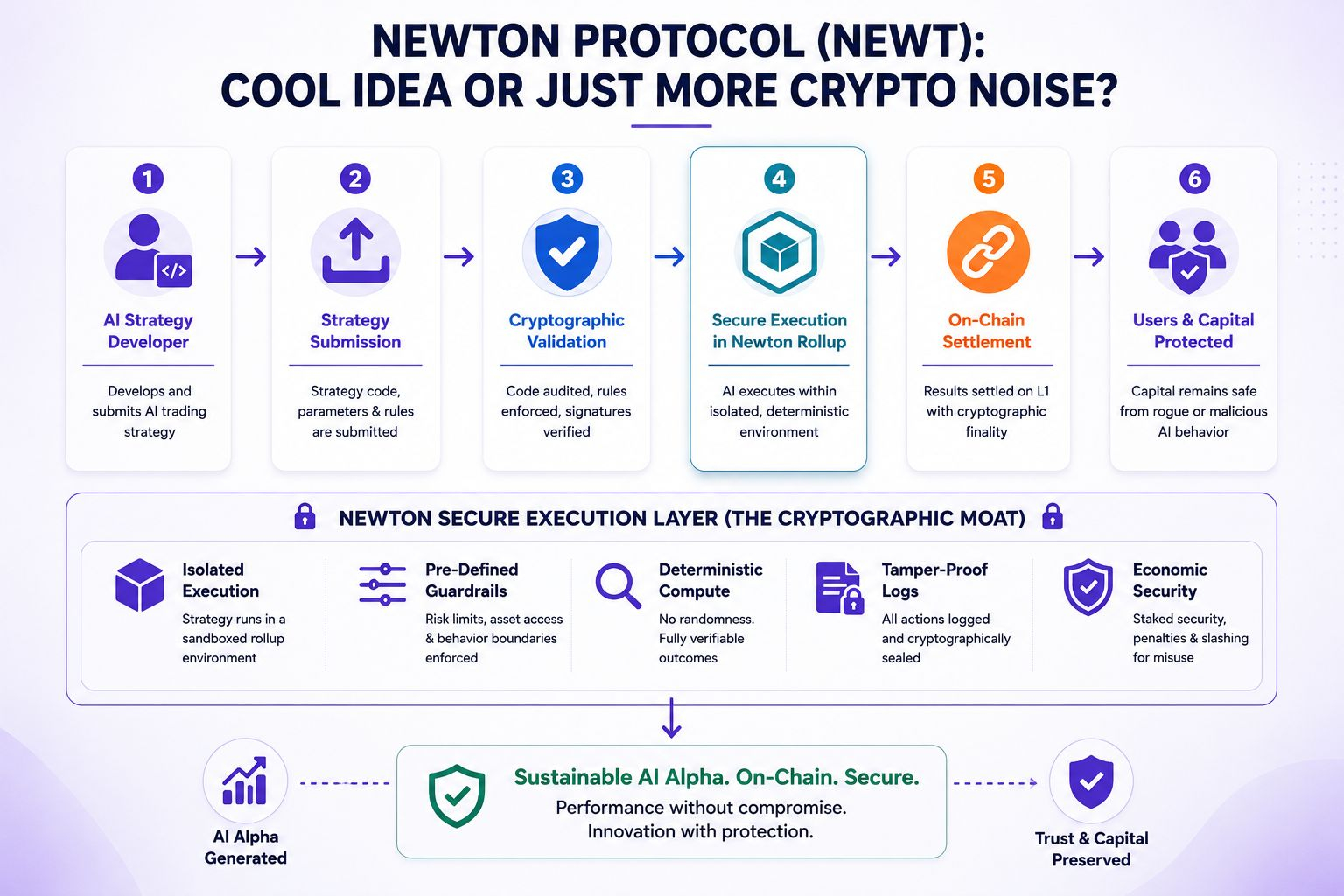
NEWT: COOLE IDEE ODER NUR WIEDER EINE SAUBER VERPACKTE KRYPTOWETTE?Ich bin in das Newton-Protocol-Hasenloch abgetaucht und, Mann, ich springe ständig zwischen „Okay, das ist tatsächlich interessant“ und „Ja, ich hab diesen Film schon gesehen.“ Das ist wahrscheinlich das ehrlichste, was ich dazu sagen kann. Auf dem Papier versucht NEWT, eine ganze Menge von dem zu machen, worüber Leute in Krypto reden, wenn sie sich futuristisch fühlen und voller Überzeugung sind – Secure Rollups, KI-gesteuerte Strategien, automatisiertes Trading und eine Art Marktplatz für KI-Entwickler. Diese Kombi klingt richtig schick. Sie klingt nach dem Pitch, der in einem Thread landet, in Clips zerhackt und herumgereicht wird, als wäre das alles unausweichlich. Aber sobald man sich eine Minute damit beschäftigt … der Hype-Geruch ist ziemlich schnell da.
NEWT: COOLE IDEE ODER NUR WIEDER EINE SAUBER VERPACKTE KRYPTOWETTE?
Ich bin in das Newton-Protocol-Hasenloch abgetaucht und, Mann, ich springe ständig zwischen „Okay, das ist tatsächlich interessant“ und „Ja, ich hab diesen Film schon gesehen.“ Das ist wahrscheinlich das ehrlichste, was ich dazu sagen kann. Auf dem Papier versucht NEWT, eine ganze Menge von dem zu machen, worüber Leute in Krypto reden, wenn sie sich futuristisch fühlen und voller Überzeugung sind – Secure Rollups, KI-gesteuerte Strategien, automatisiertes Trading und eine Art Marktplatz für KI-Entwickler. Diese Kombi klingt richtig schick. Sie klingt nach dem Pitch, der in einem Thread landet, in Clips zerhackt und herumgereicht wird, als wäre das alles unausweichlich. Aber sobald man sich eine Minute damit beschäftigt … der Hype-Geruch ist ziemlich schnell da.
3
118
·
--
# NEWTON-PROTOKOLL (NEWT): HYPE, REALITÄT UND DIE ÜBLICHE CRYPTO-KOPFSCHMERZ
Das Newton-Protokoll hat diesen vertrauten Krypto-Geruch daran... die Sorte, bei der man sich ein wenig nach vorn beugt und gleichzeitig zusammenkneift. Sicherer Rollup, KI-gesteuerte Strategien, automatisierter Handel, ein Marktplatz für KI-Entwickler — das ist ein sauberer Pitch, vielleicht ein bisschen zu sauber. Ich glaube schon, dass die Idee Potenzial hat. KI und Trading sind natürlich eine verlockende Kombination, und wenn sie es schaffen, dass die Infrastruktur wirklich funktioniert, ohne in ein Sicherheitschaos zu kippen, dann ist das nicht nichts.
Aber ja, ich bin auch skeptisch. Krypto liebt es, große Versprechen wie echte Produkte wirken zu lassen, und die Hälfte der Zeit landet man am Ende bei einer netten Story und nicht viel Nutzung. Das ist hier die große Frage: Baut NEWT tatsächlich etwas, das Menschen verwenden, oder ist es nur ein weiteres Projekt, das die KI-Welle reitet, weil dort gerade Aufmerksamkeit ist? Das lässt mich nicht los.
Trotzdem will ich nicht so tun, als wäre alles nur Fluff. Der Rollup-Ansatz ergibt Sinn, der Entwickler-Marktplatz-Ansatz ergibt Sinn — und wenn sie es hinbekommen, könnte es wirklich interessant werden. Nur... ich habe schon zu viele „interessante“ Krypto-Projekte gesehen, die am Ende wie ein schickes Restaurant ohne Kunden dastanden. Also ja: neugierig, ein bisschen vorsichtig und noch nicht bereit, es als das nächste große Ding zu bezeichnen, nur weil der Pitch so klug klingt.
@NewtonProtocol #NEWT $NEWT
# NEWTON-PROTOKOLL (NEWT): HYPE, REALITÄT UND DIE ÜBLICHE CRYPTO-KOPFSCHMERZ
Das Newton-Protokoll hat diesen vertrauten Krypto-Geruch daran... die Sorte, bei der man sich ein wenig nach vorn beugt und gleichzeitig zusammenkneift. Sicherer Rollup, KI-gesteuerte Strategien, automatisierter Handel, ein Marktplatz für KI-Entwickler — das ist ein sauberer Pitch, vielleicht ein bisschen zu sauber. Ich glaube schon, dass die Idee Potenzial hat. KI und Trading sind natürlich eine verlockende Kombination, und wenn sie es schaffen, dass die Infrastruktur wirklich funktioniert, ohne in ein Sicherheitschaos zu kippen, dann ist das nicht nichts.
Aber ja, ich bin auch skeptisch. Krypto liebt es, große Versprechen wie echte Produkte wirken zu lassen, und die Hälfte der Zeit landet man am Ende bei einer netten Story und nicht viel Nutzung. Das ist hier die große Frage: Baut NEWT tatsächlich etwas, das Menschen verwenden, oder ist es nur ein weiteres Projekt, das die KI-Welle reitet, weil dort gerade Aufmerksamkeit ist? Das lässt mich nicht los.
Trotzdem will ich nicht so tun, als wäre alles nur Fluff. Der Rollup-Ansatz ergibt Sinn, der Entwickler-Marktplatz-Ansatz ergibt Sinn — und wenn sie es hinbekommen, könnte es wirklich interessant werden. Nur... ich habe schon zu viele „interessante“ Krypto-Projekte gesehen, die am Ende wie ein schickes Restaurant ohne Kunden dastanden. Also ja: neugierig, ein bisschen vorsichtig und noch nicht bereit, es als das nächste große Ding zu bezeichnen, nur weil der Pitch so klug klingt.
@NewtonProtocol #NEWT $NEWT
Das Newton-Protokoll hat diesen vertrauten Krypto-Geruch daran... die Sorte, bei der man sich ein wenig nach vorn beugt und gleichzeitig zusammenkneift. Sicherer Rollup, KI-gesteuerte Strategien, automatisierter Handel, ein Marktplatz für KI-Entwickler — das ist ein sauberer Pitch, vielleicht ein bisschen zu sauber. Ich glaube schon, dass die Idee Potenzial hat. KI und Trading sind natürlich eine verlockende Kombination, und wenn sie es schaffen, dass die Infrastruktur wirklich funktioniert, ohne in ein Sicherheitschaos zu kippen, dann ist das nicht nichts.
Aber ja, ich bin auch skeptisch. Krypto liebt es, große Versprechen wie echte Produkte wirken zu lassen, und die Hälfte der Zeit landet man am Ende bei einer netten Story und nicht viel Nutzung. Das ist hier die große Frage: Baut NEWT tatsächlich etwas, das Menschen verwenden, oder ist es nur ein weiteres Projekt, das die KI-Welle reitet, weil dort gerade Aufmerksamkeit ist? Das lässt mich nicht los.
Trotzdem will ich nicht so tun, als wäre alles nur Fluff. Der Rollup-Ansatz ergibt Sinn, der Entwickler-Marktplatz-Ansatz ergibt Sinn — und wenn sie es hinbekommen, könnte es wirklich interessant werden. Nur... ich habe schon zu viele „interessante“ Krypto-Projekte gesehen, die am Ende wie ein schickes Restaurant ohne Kunden dastanden. Also ja: neugierig, ein bisschen vorsichtig und noch nicht bereit, es als das nächste große Ding zu bezeichnen, nur weil der Pitch so klug klingt.
@NewtonProtocol #NEWT $NEWT
2
88
·
--
Artikel
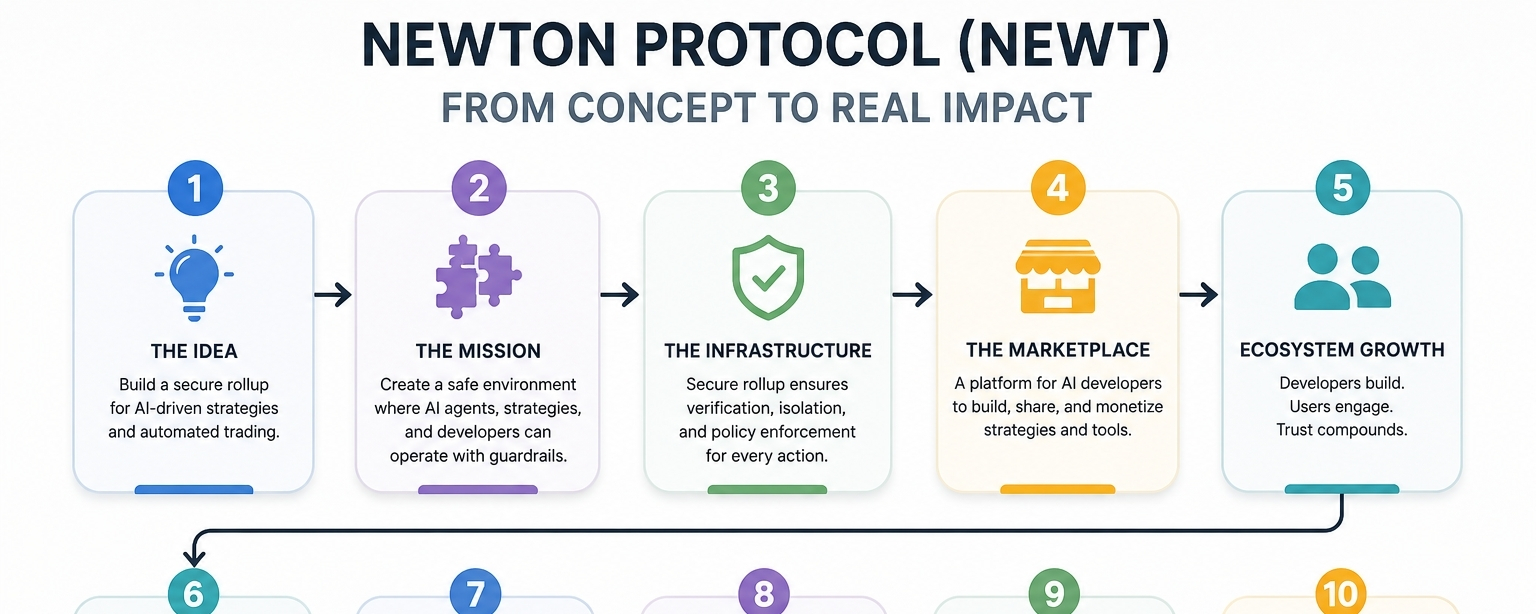
NEWTON PROTOCOL (NEWT): COOLE IDEE ODER NUR NOCH MEHR KRYPT0-THEATER?Ich bin auf das Rabbit-Hole bei Newton Protocol reingefallen und bin immer noch irgendwie gespalten darüber… was normalerweise mein erstes Warnsignal bei so etwas ist. Das Pitch klingt auf dem Papier sauber genug: ein sicheres Rollup für KI-gesteuerte Strategien, automatisierten Handel und eine Art Marktplatz für KI-Entwickler. Schöne Worte. Sehr klickbare Worte. Und Krypto liebt genau dieses Setup: Etwas klingt ein bisschen futuristisch und ein bisschen nützlich, und plötzlich tun alle so, als würden die Schienen des Finanzwesens über Nacht neu geschrieben. Vielleicht werden sie das. Vielleicht auch nicht.
NEWTON PROTOCOL (NEWT): COOLE IDEE ODER NUR NOCH MEHR KRYPT0-THEATER?
Ich bin auf das Rabbit-Hole bei Newton Protocol reingefallen und bin immer noch irgendwie gespalten darüber… was normalerweise mein erstes Warnsignal bei so etwas ist. Das Pitch klingt auf dem Papier sauber genug: ein sicheres Rollup für KI-gesteuerte Strategien, automatisierten Handel und eine Art Marktplatz für KI-Entwickler. Schöne Worte. Sehr klickbare Worte. Und Krypto liebt genau dieses Setup: Etwas klingt ein bisschen futuristisch und ein bisschen nützlich, und plötzlich tun alle so, als würden die Schienen des Finanzwesens über Nacht neu geschrieben. Vielleicht werden sie das. Vielleicht auch nicht.
95
·
--
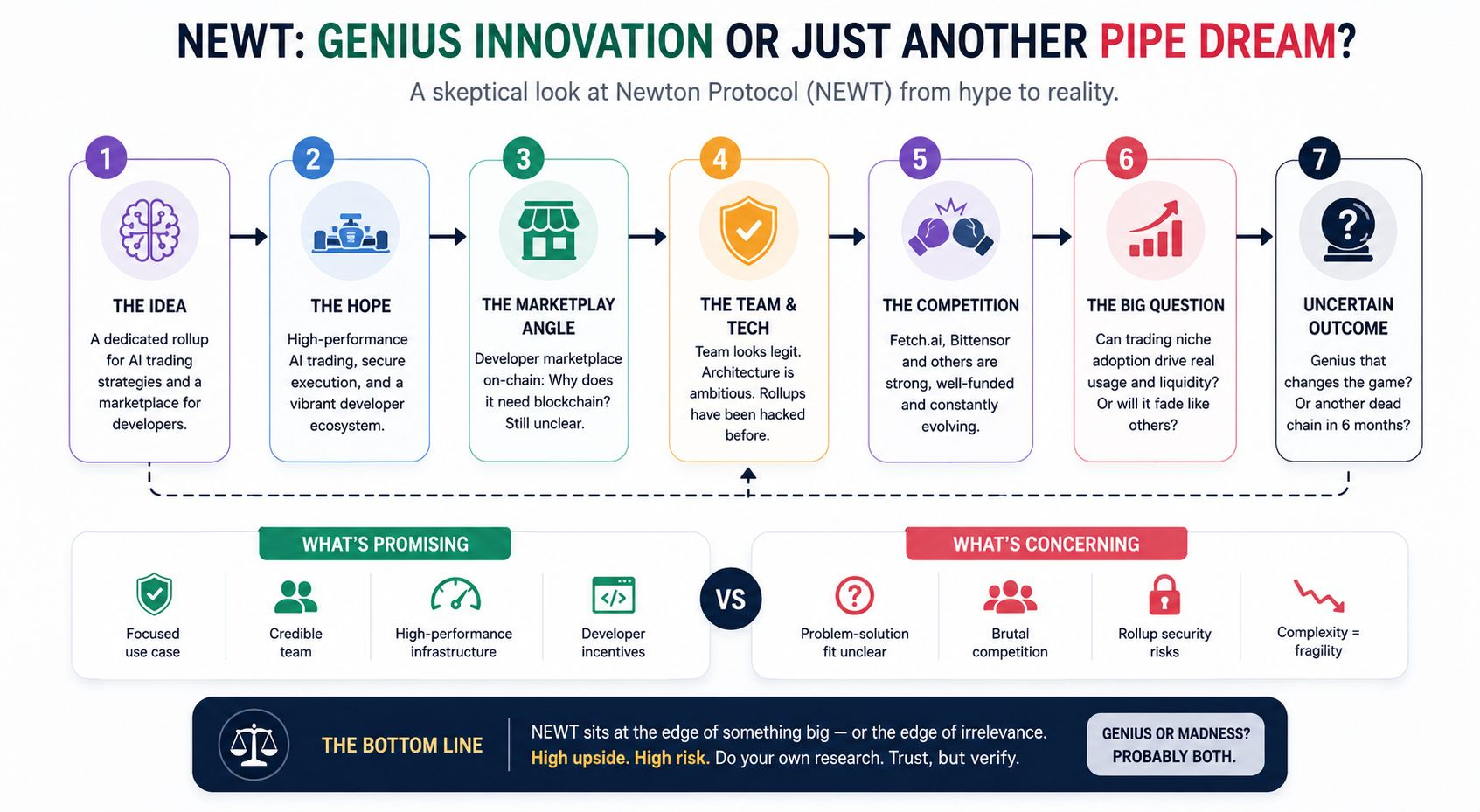
NEWT ist das Krypto-Äquivalent eines wirklich gut gebauten Rennwagens – ohne dass eine Rennstrecke in Sicht ist… ein dedizierter Rollup für KI-Trading-Strategien klingt auf dem Papier clever, aber ich kann nicht loswerden, dass das eine Lösung ist, die ein Problem sucht. Der Abschnitt für Entwickler macht mir auch Sorgen: Warum bräuchte jemand dafür Blockchain? Das Team wirkt seriös, was selten ist, aber die Konkurrenz durch Fetch und Bittensor ist brutal, und Rollups wurden schon mehrfach gehackt. Ich möchte begeistert sein, aber ich wurde schon zu oft von Projekten enttäuscht, die an ihrer eigenen Komplexität zerbrochen sind. Vielleicht rettet sie die Trading-Nische – oder es ist einfach noch eine weitere tote Chain in sechs Monaten. Ehrlich gesagt kann ich nicht sagen, ob das Genie oder Wahnsinn ist. Vermutlich beides.
@NewtonProtocol #NEWT $NEWT
{spot}(NEWTUSDT)
NEWT ist das Krypto-Äquivalent eines wirklich gut gebauten Rennwagens – ohne dass eine Rennstrecke in Sicht ist… ein dedizierter Rollup für KI-Trading-Strategien klingt auf dem Papier clever, aber ich kann nicht loswerden, dass das eine Lösung ist, die ein Problem sucht. Der Abschnitt für Entwickler macht mir auch Sorgen: Warum bräuchte jemand dafür Blockchain? Das Team wirkt seriös, was selten ist, aber die Konkurrenz durch Fetch und Bittensor ist brutal, und Rollups wurden schon mehrfach gehackt. Ich möchte begeistert sein, aber ich wurde schon zu oft von Projekten enttäuscht, die an ihrer eigenen Komplexität zerbrochen sind. Vielleicht rettet sie die Trading-Nische – oder es ist einfach noch eine weitere tote Chain in sechs Monaten. Ehrlich gesagt kann ich nicht sagen, ob das Genie oder Wahnsinn ist. Vermutlich beides.
@NewtonProtocol #NEWT $NEWT
@NewtonProtocol #NEWT $NEWT
4
1
106
·
--
Artikel
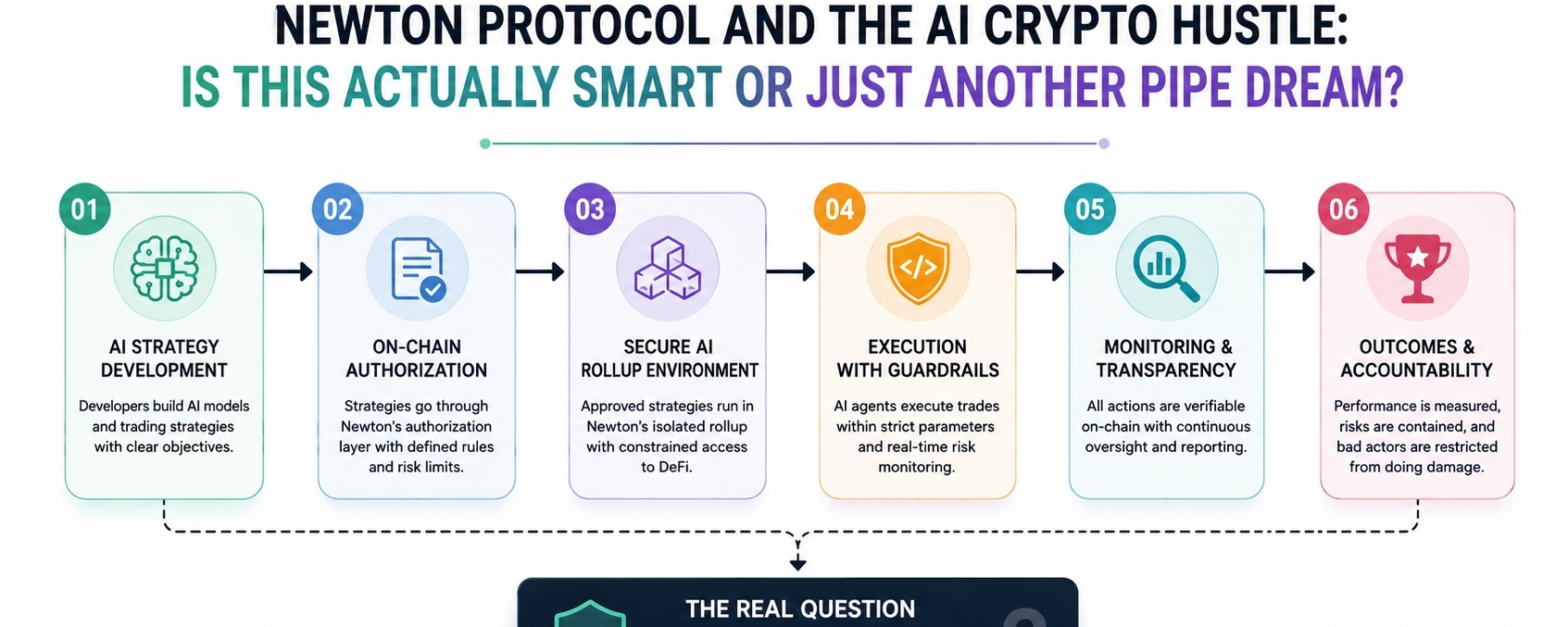
NEWTON PROTOCOL UND DER KI-CRYPTO-BETRUG: IST DAS WIRKLICH KLU G ODER NUR EIN ANDERER TRAUM AM RANDE?Okay, also ich hab gerade gefühlt drei Stunden damit verbracht, mich durch dieses neue Newton-Protocol-Kaninchenloch zu graben, und mein Gehirn ist ehrlich gesagt total frittiert. Dieses Newt-Ding … es versucht, ein sicheres Rollup für KI-Trading-Strategien und automatisiertes Trading aufzubauen, aber auch einen Marktplatz für KI-Dev-Teams. Klingt erstmal cool, aber ich hab das schon mal gesehen, verstehst du? So viele Projekte versprechen, die „Layer für KI“ zu sein, und dann launchen sie einfach noch einen miesen Token und verschwinden. Aber irgendwas an dem hier bleibt in meinem Kopf hängen, und ich kann nicht sagen, ob das echtes Potenzial ist oder einfach nur gutes Marketing – was ehrlich gesagt sogar schlimmer ist, weil es heißt, sie wissen genau, welche Knöpfe sie drücken müssen.
NEWTON PROTOCOL UND DER KI-CRYPTO-BETRUG: IST DAS WIRKLICH KLU G ODER NUR EIN ANDERER TRAUM AM RANDE?
Okay, also ich hab gerade gefühlt drei Stunden damit verbracht, mich durch dieses neue Newton-Protocol-Kaninchenloch zu graben, und mein Gehirn ist ehrlich gesagt total frittiert. Dieses Newt-Ding … es versucht, ein sicheres Rollup für KI-Trading-Strategien und automatisiertes Trading aufzubauen, aber auch einen Marktplatz für KI-Dev-Teams. Klingt erstmal cool, aber ich hab das schon mal gesehen, verstehst du? So viele Projekte versprechen, die „Layer für KI“ zu sein, und dann launchen sie einfach noch einen miesen Token und verschwinden. Aber irgendwas an dem hier bleibt in meinem Kopf hängen, und ich kann nicht sagen, ob das echtes Potenzial ist oder einfach nur gutes Marketing – was ehrlich gesagt sogar schlimmer ist, weil es heißt, sie wissen genau, welche Knöpfe sie drücken müssen.
12
5
357
·
--
NEWTON-PROTOKOLL (NEWT): COOLE IDEE ODER NUR NOCH MEHR KRYPTO-LÄRM?
Das Newton-Protokoll (NEWT) hat diesen vertrauten Krypto-Geruch... die Art, bei der der Pitch intelligent klingt, die Website professionell aussieht und dein Gehirn anfängt zu fragen, ob das wirklich nützlich ist oder nur ein weiterer ordentlich verpackter Trade. Das ganze Secure-Rollup plus KI-gestützte Strategien plus automatisiertes Trading plus das „Marketplace für Builder“-Paket klingt durchaus überzeugend, das gebe ich zu. Es ist nicht der übliche leere „community-first“-Kram. Es wirkt, als würde es auf etwas Reales zielen.
Aber seien wir ehrlich: Krypto ist voll von Projekten, die gut klingen, bis man hinter die Formulierungen schaut. KI ist gerade der heißeste Aufkleber auf dem Markt, also strömen die Leute natürlich sofort dazu, sobald sie sehen, dass sie an Automatisierung oder Trading gekoppelt ist. Das heißt nicht, dass NEWT gefälscht ist. Es bedeutet nur: Die Messlatte ist absurd hoch und der Hype ist laut. Manchmal zu laut.
Was ich mag, ist, dass das Konzept tatsächlich versucht, Infrastruktur mit Use Cases zu verbinden. Das ist wichtig. Viele dieser Projekte tun so, als würden sie allein dadurch unverzichtbar werden, dass es sie gibt, was Quatsch ist. NEWT scheint zumindest eine Spur zu verfolgen, auf der eine sichere Ausführung und Entwickleraktivität wirklich zählen könnten, falls sie es hinbekommen. Der Haken ist aber die Umsetzung. Immer die Umsetzung. Krypto ist voller „das könnte riesig werden“-Projekte, die am Ende so wirken, als wären sie nur eine Demo mit einem Token.
Ich bin interessiert, aber skeptisch. Was wahrscheinlich die ehrlichste Einschätzung ist, die ich geben kann.
@NewtonProtocol #NEWT $NEWT
NEWTON-PROTOKOLL (NEWT): COOLE IDEE ODER NUR NOCH MEHR KRYPTO-LÄRM?
Das Newton-Protokoll (NEWT) hat diesen vertrauten Krypto-Geruch... die Art, bei der der Pitch intelligent klingt, die Website professionell aussieht und dein Gehirn anfängt zu fragen, ob das wirklich nützlich ist oder nur ein weiterer ordentlich verpackter Trade. Das ganze Secure-Rollup plus KI-gestützte Strategien plus automatisiertes Trading plus das „Marketplace für Builder“-Paket klingt durchaus überzeugend, das gebe ich zu. Es ist nicht der übliche leere „community-first“-Kram. Es wirkt, als würde es auf etwas Reales zielen.
Aber seien wir ehrlich: Krypto ist voll von Projekten, die gut klingen, bis man hinter die Formulierungen schaut. KI ist gerade der heißeste Aufkleber auf dem Markt, also strömen die Leute natürlich sofort dazu, sobald sie sehen, dass sie an Automatisierung oder Trading gekoppelt ist. Das heißt nicht, dass NEWT gefälscht ist. Es bedeutet nur: Die Messlatte ist absurd hoch und der Hype ist laut. Manchmal zu laut.
Was ich mag, ist, dass das Konzept tatsächlich versucht, Infrastruktur mit Use Cases zu verbinden. Das ist wichtig. Viele dieser Projekte tun so, als würden sie allein dadurch unverzichtbar werden, dass es sie gibt, was Quatsch ist. NEWT scheint zumindest eine Spur zu verfolgen, auf der eine sichere Ausführung und Entwickleraktivität wirklich zählen könnten, falls sie es hinbekommen. Der Haken ist aber die Umsetzung. Immer die Umsetzung. Krypto ist voller „das könnte riesig werden“-Projekte, die am Ende so wirken, als wären sie nur eine Demo mit einem Token.
Ich bin interessiert, aber skeptisch. Was wahrscheinlich die ehrlichste Einschätzung ist, die ich geben kann.
@NewtonProtocol #NEWT $NEWT
Das Newton-Protokoll (NEWT) hat diesen vertrauten Krypto-Geruch... die Art, bei der der Pitch intelligent klingt, die Website professionell aussieht und dein Gehirn anfängt zu fragen, ob das wirklich nützlich ist oder nur ein weiterer ordentlich verpackter Trade. Das ganze Secure-Rollup plus KI-gestützte Strategien plus automatisiertes Trading plus das „Marketplace für Builder“-Paket klingt durchaus überzeugend, das gebe ich zu. Es ist nicht der übliche leere „community-first“-Kram. Es wirkt, als würde es auf etwas Reales zielen.
Aber seien wir ehrlich: Krypto ist voll von Projekten, die gut klingen, bis man hinter die Formulierungen schaut. KI ist gerade der heißeste Aufkleber auf dem Markt, also strömen die Leute natürlich sofort dazu, sobald sie sehen, dass sie an Automatisierung oder Trading gekoppelt ist. Das heißt nicht, dass NEWT gefälscht ist. Es bedeutet nur: Die Messlatte ist absurd hoch und der Hype ist laut. Manchmal zu laut.
Was ich mag, ist, dass das Konzept tatsächlich versucht, Infrastruktur mit Use Cases zu verbinden. Das ist wichtig. Viele dieser Projekte tun so, als würden sie allein dadurch unverzichtbar werden, dass es sie gibt, was Quatsch ist. NEWT scheint zumindest eine Spur zu verfolgen, auf der eine sichere Ausführung und Entwickleraktivität wirklich zählen könnten, falls sie es hinbekommen. Der Haken ist aber die Umsetzung. Immer die Umsetzung. Krypto ist voller „das könnte riesig werden“-Projekte, die am Ende so wirken, als wären sie nur eine Demo mit einem Token.
Ich bin interessiert, aber skeptisch. Was wahrscheinlich die ehrlichste Einschätzung ist, die ich geben kann.
@NewtonProtocol #NEWT $NEWT
🟢 Bullish 🚀
0%
🟡 Wait & Watch 👀
0%
🟠 Too Much Hype 📢
0%
🔴 Not Interested ❌
0%
0 Stimmen • Abstimmung beendet
1
96
·
--
Artikel
NEWTON PROTOCOL (NEWT): EINE COOLEN IDEE ODER NUR WIEDER IRGENDEIN CRYPTO-DING MIT EINER SAUBEREN WEBSITE?Also bin ich da in dieser „Rabbit Hole“ bei Newton Protocol (NEWT) gelandet und... ja, ich hab gemischte Gefühle. Was wahrscheinlich die typischste Crypto-Antwort überhaupt ist, aber trotzdem. Die Präsentation klingt auf dem Papier schön: sichere Rollups, KI-getriebene Strategien, automatisierter Handel, ein Marktplatz für KI-Entwickler. So ein Paket kann entweder wirklich nützlich sein oder sich anhören wie drei Buzzwords, die in einer einzigen Folienpräsentation zusammengeworfen wurden, weil irgendwer dachte, das würde schneller ziehen. Ich kann noch nicht sagen, auf welcher Seite NEWT am Ende landet – und das ist das Nervige.
Da ist schon etwas, das an der ganzen Sache reizt, das gebe ich zu. Crypto ist so lange in recyceltem Unsinn ertrunken, dass es zumindest so wirkt, als würde man etwas Konkretes tun, wenn ein Projekt daherkommt und mit KI, Automatisierung und Infrastruktur herumfuchtelt – statt nur mit „Community“ und „Utility“. Oder wenigstens so tut, als würde es das. Das ist natürlich nicht dasselbe. Aber ich verstehe, warum Leute da eher mit reingehen. Sichere-Rollup-Themen sind genau so etwas, worum Leute behaupten zu wissen, dass sie es wichtig finden – bis die Details hässlich werden. Und KI-gestützter Handel ist genau die Art von Formulierung, bei der allen sofort die Ohren wackeln, weil es so klingt, als würde Geld auf Autopilot „Geld-Geschäfte“ machen.
NEWTON PROTOCOL (NEWT): EINE COOLEN IDEE ODER NUR WIEDER IRGENDEIN CRYPTO-DING MIT EINER SAUBEREN WEBSITE?
Also bin ich da in dieser „Rabbit Hole“ bei Newton Protocol (NEWT) gelandet und... ja, ich hab gemischte Gefühle. Was wahrscheinlich die typischste Crypto-Antwort überhaupt ist, aber trotzdem. Die Präsentation klingt auf dem Papier schön: sichere Rollups, KI-getriebene Strategien, automatisierter Handel, ein Marktplatz für KI-Entwickler. So ein Paket kann entweder wirklich nützlich sein oder sich anhören wie drei Buzzwords, die in einer einzigen Folienpräsentation zusammengeworfen wurden, weil irgendwer dachte, das würde schneller ziehen. Ich kann noch nicht sagen, auf welcher Seite NEWT am Ende landet – und das ist das Nervige.
Da ist schon etwas, das an der ganzen Sache reizt, das gebe ich zu. Crypto ist so lange in recyceltem Unsinn ertrunken, dass es zumindest so wirkt, als würde man etwas Konkretes tun, wenn ein Projekt daherkommt und mit KI, Automatisierung und Infrastruktur herumfuchtelt – statt nur mit „Community“ und „Utility“. Oder wenigstens so tut, als würde es das. Das ist natürlich nicht dasselbe. Aber ich verstehe, warum Leute da eher mit reingehen. Sichere-Rollup-Themen sind genau so etwas, worum Leute behaupten zu wissen, dass sie es wichtig finden – bis die Details hässlich werden. Und KI-gestützter Handel ist genau die Art von Formulierung, bei der allen sofort die Ohren wackeln, weil es so klingt, als würde Geld auf Autopilot „Geld-Geschäfte“ machen.
Da ist schon etwas, das an der ganzen Sache reizt, das gebe ich zu. Crypto ist so lange in recyceltem Unsinn ertrunken, dass es zumindest so wirkt, als würde man etwas Konkretes tun, wenn ein Projekt daherkommt und mit KI, Automatisierung und Infrastruktur herumfuchtelt – statt nur mit „Community“ und „Utility“. Oder wenigstens so tut, als würde es das. Das ist natürlich nicht dasselbe. Aber ich verstehe, warum Leute da eher mit reingehen. Sichere-Rollup-Themen sind genau so etwas, worum Leute behaupten zu wissen, dass sie es wichtig finden – bis die Details hässlich werden. Und KI-gestützter Handel ist genau die Art von Formulierung, bei der allen sofort die Ohren wackeln, weil es so klingt, als würde Geld auf Autopilot „Geld-Geschäfte“ machen.
5
1
137
·
--
Bullisch
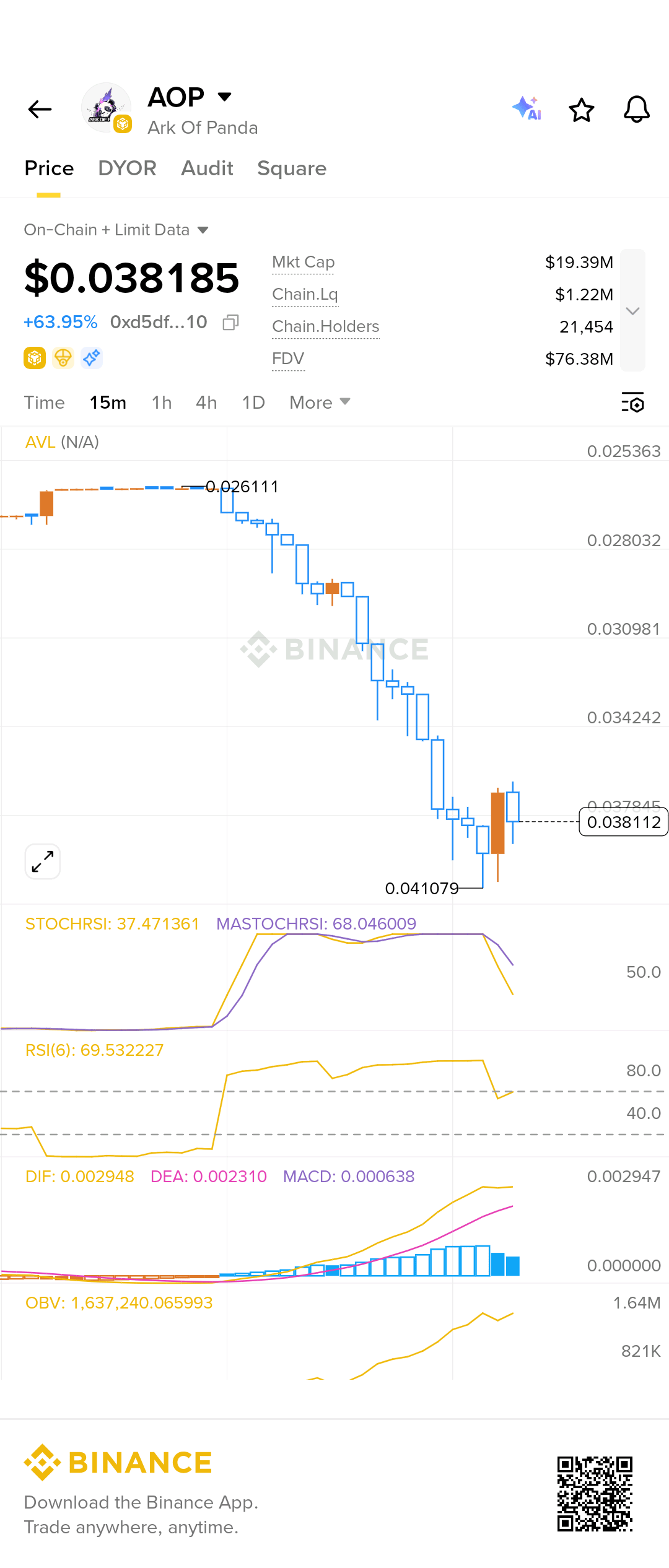
Krypto-Marktanalyse – AOP (15m)
Kurzfassung
$AOP wird bei $0.03819 gehandelt (+63,95%). Trotz des starken Tagesanstiegs zeigt der 15m-Chart einen deutlichen Rücksetzer von den jüngsten Hochs. Der Momentum bleibt positiv, aber der Markt befindet sich derzeit in einer kurzfristigen Korrektur.
Technische Analyse
Trend: Bullisch (höheres Zeitfenster), bärischer Pullback (15m)
Struktur: Starkes Rallye-Momentum, gefolgt von niedrigeren Hochs und niedrigeren Tiefs.
RSI: 69,5 (nahe am Overbought)
MACD: Bullisch, aber das Histogramm schwächt sich ab.
Stochastic RSI: Bärisches Crossover.
OBV: Steigend, was darauf hindeutet, dass Käufer weiterhin aktiv sind.
Momentum: Schwächer werdend.
Volumen: Keine Daten verfügbar.
Wichtige Levels
Support: $0.0370 | $0.0350
Widerstand: $0.0395 | $0.0410
Fundamentaldaten & On-Chain
Marktkapitalisierung: $19,39 Mio.
FDV: $76,38 Mio.
Liquidität: $1,22 Mio.
Inhaber: 21.454
Verifizierte News/Fundamentaldaten: Keine Daten verfügbar.
Marktstimmung
Neutral bis Bullisch – Starke Tagesperformance, aber der kurzfristige Verkaufsdruck nimmt zu.
Risiko
Liquidität: Mittel
Volatilität: Hoch
Manipulation: Mittel
Smart Contract: Keine Daten verfügbar.
Gesamtrisiko: Hoch
Trading-Entscheidung
WARTEN
Begründung: Die Korrektur ist noch nicht abgeschlossen. Das Abwarten auf einen bestätigten Rebound am Support oder einen Breakout bietet eine bessere Chance/Risiko-Konstellation.
Trading-Plan
Einstieg: $0.0370–0.0375
Stop Loss: Unter $0.0350
TP1: $0.0395
TP2: $0.0410
TP3: $0.0430
Chance/Risiko: ~1:2
Invalidierung: Schließen unter $0.0350
Konfidenz
7/10
Finales Fazit
Der übergeordnete Trend bleibt konstruktiv, aber der aktuelle Pullback spricht für Geduld. Ein bestätigter Rebound vom Support oder ein Breakout über den Widerstand würde ein stärkeres Trading-Setup ergeben als ein sofortiger Einstieg.
{alpha}(560xd5df4d260d7a0145f655bcbf3b398076f21016c7)
#SamsungToRaiseDRAMPricesAbout20%InQ3 #SamsungToRaiseDRAMPricesAbout20%InQ3 CryptoHacksHit207InH1WithLosses$972M#SamsungToRaiseDRAMPricesAbout20%InQ3 #SamsungToRaiseDRAMPricesAbout20%InQ3 #SamsungToRaiseDRAMPricesAbout20%InQ3
Krypto-Marktanalyse – AOP (15m)
Kurzfassung
$AOP wird bei $0.03819 gehandelt (+63,95%). Trotz des starken Tagesanstiegs zeigt der 15m-Chart einen deutlichen Rücksetzer von den jüngsten Hochs. Der Momentum bleibt positiv, aber der Markt befindet sich derzeit in einer kurzfristigen Korrektur.
Technische Analyse
Trend: Bullisch (höheres Zeitfenster), bärischer Pullback (15m)
Struktur: Starkes Rallye-Momentum, gefolgt von niedrigeren Hochs und niedrigeren Tiefs.
RSI: 69,5 (nahe am Overbought)
MACD: Bullisch, aber das Histogramm schwächt sich ab.
Stochastic RSI: Bärisches Crossover.
OBV: Steigend, was darauf hindeutet, dass Käufer weiterhin aktiv sind.
Momentum: Schwächer werdend.
Volumen: Keine Daten verfügbar.
Wichtige Levels
Support: $0.0370 | $0.0350
Widerstand: $0.0395 | $0.0410
Fundamentaldaten & On-Chain
Marktkapitalisierung: $19,39 Mio.
FDV: $76,38 Mio.
Liquidität: $1,22 Mio.
Inhaber: 21.454
Verifizierte News/Fundamentaldaten: Keine Daten verfügbar.
Marktstimmung
Neutral bis Bullisch – Starke Tagesperformance, aber der kurzfristige Verkaufsdruck nimmt zu.
Risiko
Liquidität: Mittel
Volatilität: Hoch
Manipulation: Mittel
Smart Contract: Keine Daten verfügbar.
Gesamtrisiko: Hoch
Trading-Entscheidung
WARTEN
Begründung: Die Korrektur ist noch nicht abgeschlossen. Das Abwarten auf einen bestätigten Rebound am Support oder einen Breakout bietet eine bessere Chance/Risiko-Konstellation.
Trading-Plan
Einstieg: $0.0370–0.0375
Stop Loss: Unter $0.0350
TP1: $0.0395
TP2: $0.0410
TP3: $0.0430
Chance/Risiko: ~1:2
Invalidierung: Schließen unter $0.0350
Konfidenz
7/10
Finales Fazit
Der übergeordnete Trend bleibt konstruktiv, aber der aktuelle Pullback spricht für Geduld. Ein bestätigter Rebound vom Support oder ein Breakout über den Widerstand würde ein stärkeres Trading-Setup ergeben als ein sofortiger Einstieg.
#SamsungToRaiseDRAMPricesAbout20%InQ3 #SamsungToRaiseDRAMPricesAbout20%InQ3 CryptoHacksHit207InH1WithLosses$972M#SamsungToRaiseDRAMPricesAbout20%InQ3 #SamsungToRaiseDRAMPricesAbout20%InQ3 #SamsungToRaiseDRAMPricesAbout20%InQ3
Kurzfassung
$AOP wird bei $0.03819 gehandelt (+63,95%). Trotz des starken Tagesanstiegs zeigt der 15m-Chart einen deutlichen Rücksetzer von den jüngsten Hochs. Der Momentum bleibt positiv, aber der Markt befindet sich derzeit in einer kurzfristigen Korrektur.
Technische Analyse
Trend: Bullisch (höheres Zeitfenster), bärischer Pullback (15m)
Struktur: Starkes Rallye-Momentum, gefolgt von niedrigeren Hochs und niedrigeren Tiefs.
RSI: 69,5 (nahe am Overbought)
MACD: Bullisch, aber das Histogramm schwächt sich ab.
Stochastic RSI: Bärisches Crossover.
OBV: Steigend, was darauf hindeutet, dass Käufer weiterhin aktiv sind.
Momentum: Schwächer werdend.
Volumen: Keine Daten verfügbar.
Wichtige Levels
Support: $0.0370 | $0.0350
Widerstand: $0.0395 | $0.0410
Fundamentaldaten & On-Chain
Marktkapitalisierung: $19,39 Mio.
FDV: $76,38 Mio.
Liquidität: $1,22 Mio.
Inhaber: 21.454
Verifizierte News/Fundamentaldaten: Keine Daten verfügbar.
Marktstimmung
Neutral bis Bullisch – Starke Tagesperformance, aber der kurzfristige Verkaufsdruck nimmt zu.
Risiko
Liquidität: Mittel
Volatilität: Hoch
Manipulation: Mittel
Smart Contract: Keine Daten verfügbar.
Gesamtrisiko: Hoch
Trading-Entscheidung
WARTEN
Begründung: Die Korrektur ist noch nicht abgeschlossen. Das Abwarten auf einen bestätigten Rebound am Support oder einen Breakout bietet eine bessere Chance/Risiko-Konstellation.
Trading-Plan
Einstieg: $0.0370–0.0375
Stop Loss: Unter $0.0350
TP1: $0.0395
TP2: $0.0410
TP3: $0.0430
Chance/Risiko: ~1:2
Invalidierung: Schließen unter $0.0350
Konfidenz
7/10
Finales Fazit
Der übergeordnete Trend bleibt konstruktiv, aber der aktuelle Pullback spricht für Geduld. Ein bestätigter Rebound vom Support oder ein Breakout über den Widerstand würde ein stärkeres Trading-Setup ergeben als ein sofortiger Einstieg.
#SamsungToRaiseDRAMPricesAbout20%InQ3 #SamsungToRaiseDRAMPricesAbout20%InQ3 CryptoHacksHit207InH1WithLosses$972M#SamsungToRaiseDRAMPricesAbout20%InQ3 #SamsungToRaiseDRAMPricesAbout20%InQ3 #SamsungToRaiseDRAMPricesAbout20%InQ3
80
·
--
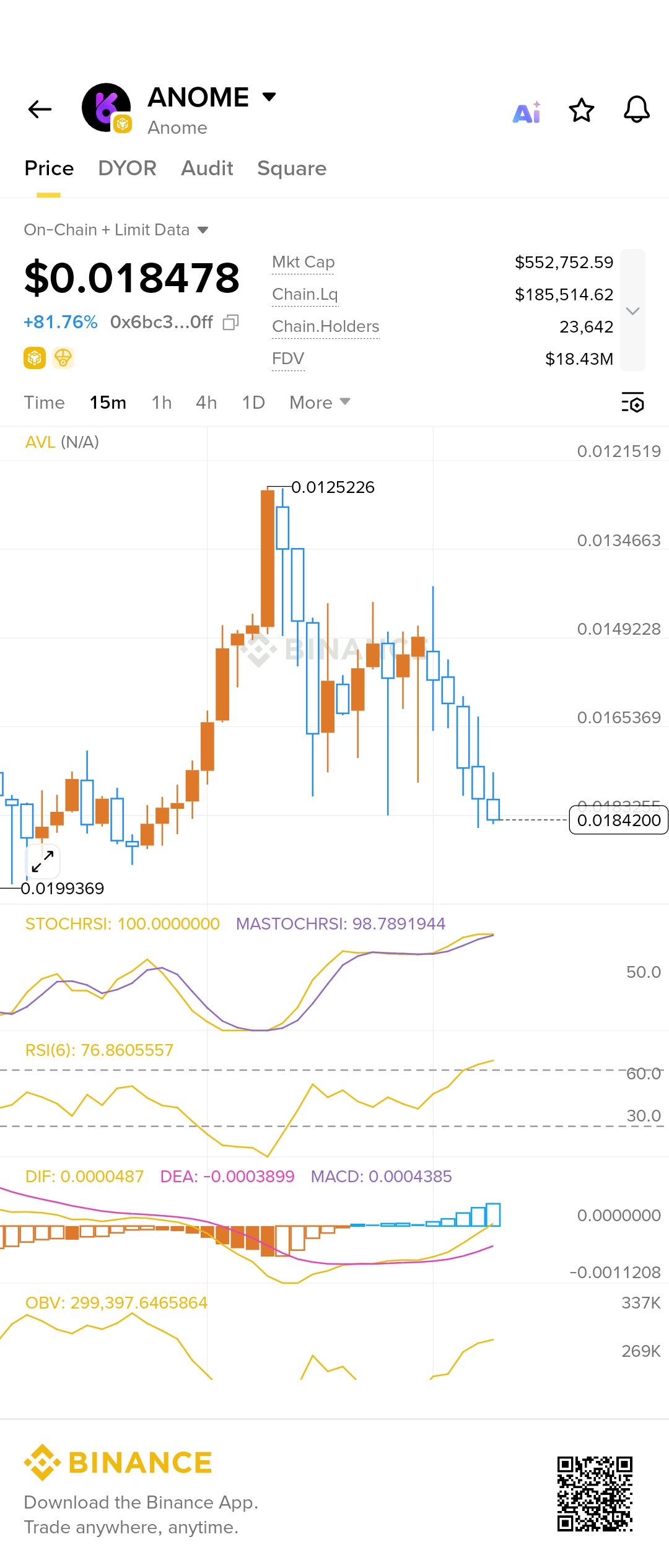
$ANOME (15m) Analyse
Preis: 0,01848 $ (+81,76%)
Marktdaten:
Marktkapitalisierung: 552,8 T$
Liquidität: 185,5 T$
FDV: 18,43 Mio. $
Inhaber: 23.642
Technik:
Trend: Bullisch (Kurzfristig)
RSI: 76,9 (Überkauft)
MACD: Bullisch
Stoch RSI: Überkauft
OBV: Positiv
Unterstützung: 0,0182 $ | 0,0165 $
Widerstand: 0,0200 $ | 0,0215 $
Risiko: Hoch (Small-Cap & hohe Volatilität)
Entscheidung: WARTEN
Trade-Plan:
Einstieg: 0,0182–0,0185
SL: Unter 0,0165 $
TP1: 0,0200 $
TP2: 0,0215 $
Sicherheit: 7/10
Fazit: Bullisher Momentum bleibt bestehen, aber überkaufte Bedingungen machen das Abwarten auf Bestätigung oder einen Rücksetzer zur sichereren Wahl.
CryptoHacksHit207InH1WithLosses$972M
#KospiRises2.7%OnChipRally
CryptoHacksHit207InH1WithLosses$972M
#KospiRises2.7%OnChipRally
#SpaceXToJoinNasdaq100OnJuly7
SpotGoldTops$4200
#SouthAfricaReleasesDraftCryptoTaxGuide
#BOKWarnsSingleStockLeveragedETFRisks
$ANOME (15m) Analyse
Preis: 0,01848 $ (+81,76%)
Marktdaten:
Marktkapitalisierung: 552,8 T$
Liquidität: 185,5 T$
FDV: 18,43 Mio. $
Inhaber: 23.642
Technik:
Trend: Bullisch (Kurzfristig)
RSI: 76,9 (Überkauft)
MACD: Bullisch
Stoch RSI: Überkauft
OBV: Positiv
Unterstützung: 0,0182 $ | 0,0165 $
Widerstand: 0,0200 $ | 0,0215 $
Risiko: Hoch (Small-Cap & hohe Volatilität)
Entscheidung: WARTEN
Trade-Plan:
Einstieg: 0,0182–0,0185
SL: Unter 0,0165 $
TP1: 0,0200 $
TP2: 0,0215 $
Sicherheit: 7/10
Fazit: Bullisher Momentum bleibt bestehen, aber überkaufte Bedingungen machen das Abwarten auf Bestätigung oder einen Rücksetzer zur sichereren Wahl.
CryptoHacksHit207InH1WithLosses$972M
#KospiRises2.7%OnChipRally
CryptoHacksHit207InH1WithLosses$972M
#KospiRises2.7%OnChipRally
#SpaceXToJoinNasdaq100OnJuly7
SpotGoldTops$4200
#SouthAfricaReleasesDraftCryptoTaxGuide
#BOKWarnsSingleStockLeveragedETFRisks
Preis: 0,01848 $ (+81,76%)
Marktdaten:
Marktkapitalisierung: 552,8 T$
Liquidität: 185,5 T$
FDV: 18,43 Mio. $
Inhaber: 23.642
Technik:
Trend: Bullisch (Kurzfristig)
RSI: 76,9 (Überkauft)
MACD: Bullisch
Stoch RSI: Überkauft
OBV: Positiv
Unterstützung: 0,0182 $ | 0,0165 $
Widerstand: 0,0200 $ | 0,0215 $
Risiko: Hoch (Small-Cap & hohe Volatilität)
Entscheidung: WARTEN
Trade-Plan:
Einstieg: 0,0182–0,0185
SL: Unter 0,0165 $
TP1: 0,0200 $
TP2: 0,0215 $
Sicherheit: 7/10
Fazit: Bullisher Momentum bleibt bestehen, aber überkaufte Bedingungen machen das Abwarten auf Bestätigung oder einen Rücksetzer zur sichereren Wahl.
CryptoHacksHit207InH1WithLosses$972M
#KospiRises2.7%OnChipRally
CryptoHacksHit207InH1WithLosses$972M
#KospiRises2.7%OnChipRally
#SpaceXToJoinNasdaq100OnJuly7
SpotGoldTops$4200
#SouthAfricaReleasesDraftCryptoTaxGuide
#BOKWarnsSingleStockLeveragedETFRisks
1
165
·
--
Artikel
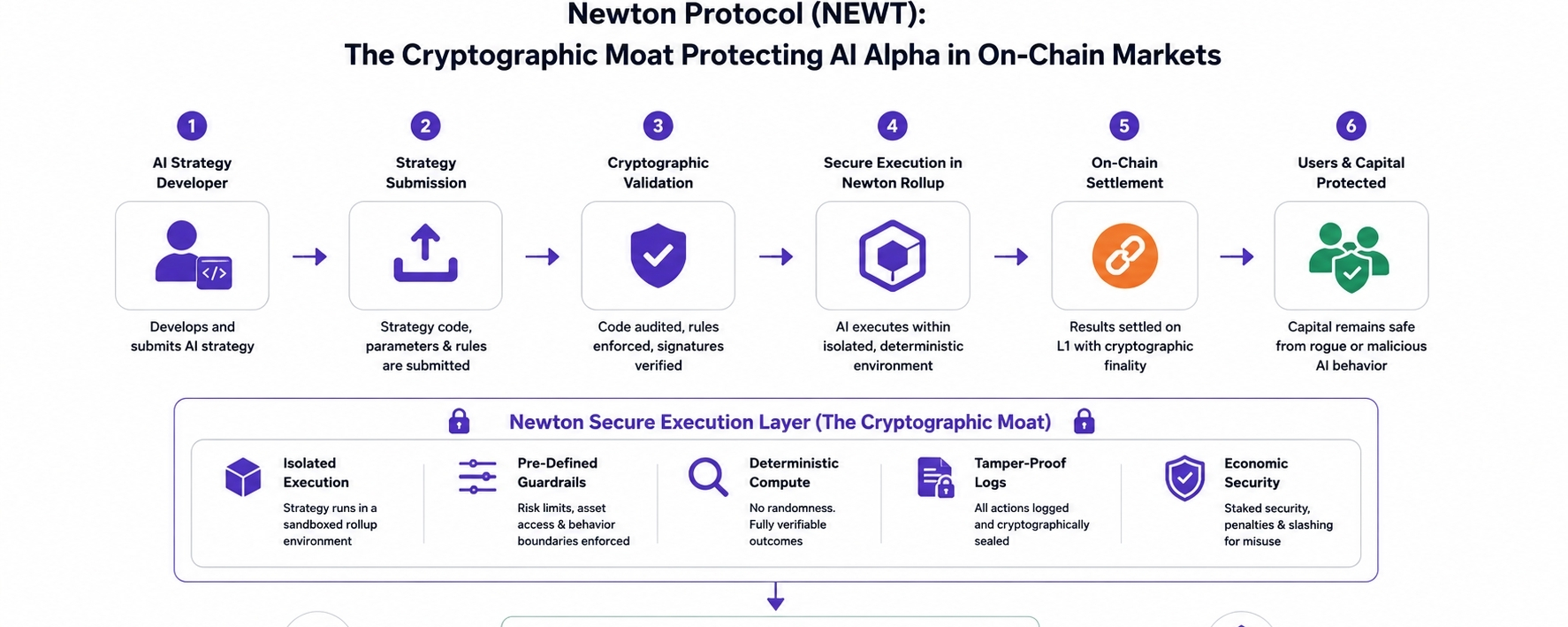
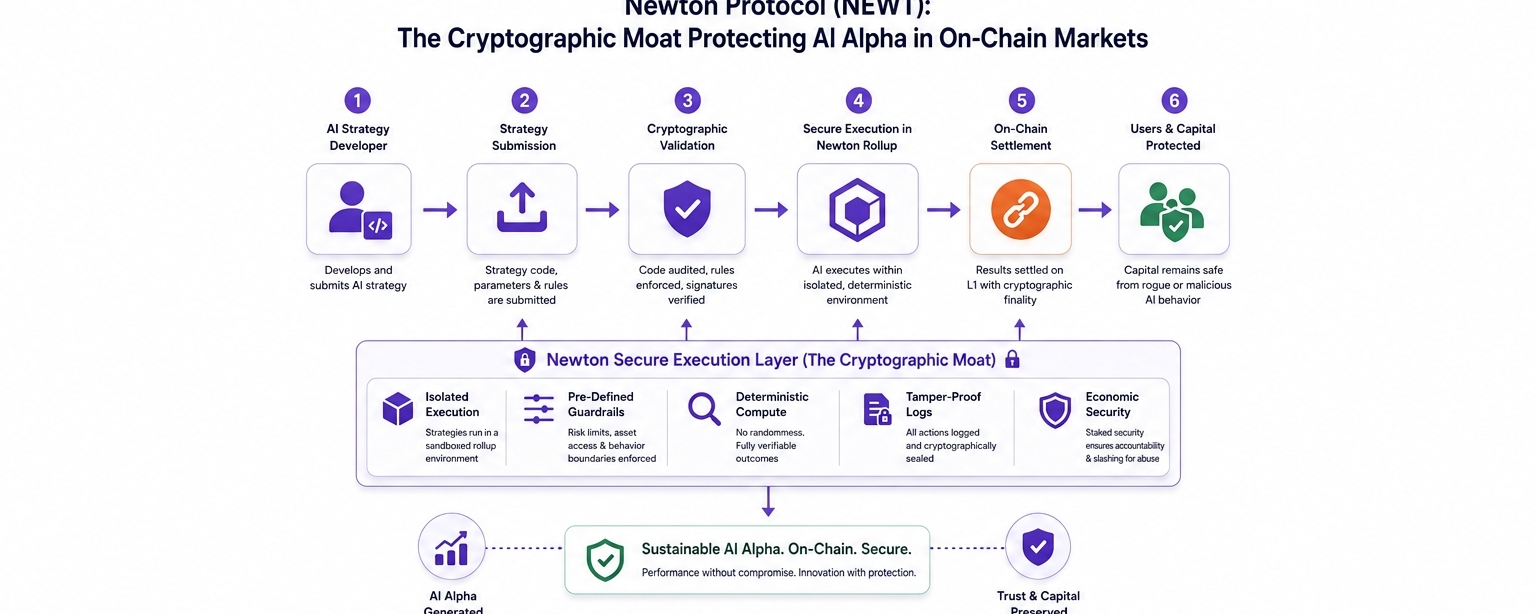
Newton Protocol (NEWT): Der kryptografische Graben, der KI-Alpha in On-Chain-Märkten schütztWenn ein KI-Trading-Modell auf einer öffentlichen Blockchain echtes Alpha entdeckt – wie lange dauert es, bis ein MEV-Bot die Strategie rückentwickelt und den gesamten Wert abschöpft?
Die Antwort sind Millisekunden.
Der strukturelle Konflikt
Wir beobachten eine Kollision zwischen dezentralem Finanzwesen (DeFi) und autonomen Agenten. Aktuelle Marktführer wie Ethereum und Solana sind die wichtigsten Spielfelder für DeFi, bleiben jedoch grundsätzlich feindselig gegenüber dem Einsatz institutioneller KI, und zwar aufgrund von drei strukturellen Schwächen:
Öffentliche Mempools: Ob es die Überlastung auf Ethereum ist oder der schnelle Mempool auf Solana – beide legen algorithmische Absichten offen und ermöglichen so die Ausführung von Front-Running- und Sandwich-Angriffen.
Newton Protocol (NEWT): Der kryptografische Graben, der KI-Alpha in On-Chain-Märkten schützt
Wenn ein KI-Trading-Modell auf einer öffentlichen Blockchain echtes Alpha entdeckt – wie lange dauert es, bis ein MEV-Bot die Strategie rückentwickelt und den gesamten Wert abschöpft?
Die Antwort sind Millisekunden.
Der strukturelle Konflikt
Wir beobachten eine Kollision zwischen dezentralem Finanzwesen (DeFi) und autonomen Agenten. Aktuelle Marktführer wie Ethereum und Solana sind die wichtigsten Spielfelder für DeFi, bleiben jedoch grundsätzlich feindselig gegenüber dem Einsatz institutioneller KI, und zwar aufgrund von drei strukturellen Schwächen:
Öffentliche Mempools: Ob es die Überlastung auf Ethereum ist oder der schnelle Mempool auf Solana – beide legen algorithmische Absichten offen und ermöglichen so die Ausführung von Front-Running- und Sandwich-Angriffen.
Die Antwort sind Millisekunden.
Der strukturelle Konflikt
Wir beobachten eine Kollision zwischen dezentralem Finanzwesen (DeFi) und autonomen Agenten. Aktuelle Marktführer wie Ethereum und Solana sind die wichtigsten Spielfelder für DeFi, bleiben jedoch grundsätzlich feindselig gegenüber dem Einsatz institutioneller KI, und zwar aufgrund von drei strukturellen Schwächen:
Öffentliche Mempools: Ob es die Überlastung auf Ethereum ist oder der schnelle Mempool auf Solana – beide legen algorithmische Absichten offen und ermöglichen so die Ausführung von Front-Running- und Sandwich-Angriffen.
12
2
155
·
--
Newton Protocol (NEWT): Kann Ausführungs-Privatsphäre zu Apples größtem Wettbewerbsvorteil für KI werden?
Künstliche Intelligenz kann in Millisekunden profitable Chancen erkennen – aber auf öffentlichen Blockchains reicht es nicht, Alpha zu entdecken. Sobald eine KI-Strategie sichtbar wird, können ausgefeilte MEV-Bots sie oft ausnutzen, bevor der ursprüngliche Handel abgeschlossen ist.
Dies ist eine der größten strukturellen Herausforderungen, denen KI in DeFi gegenübersteht.
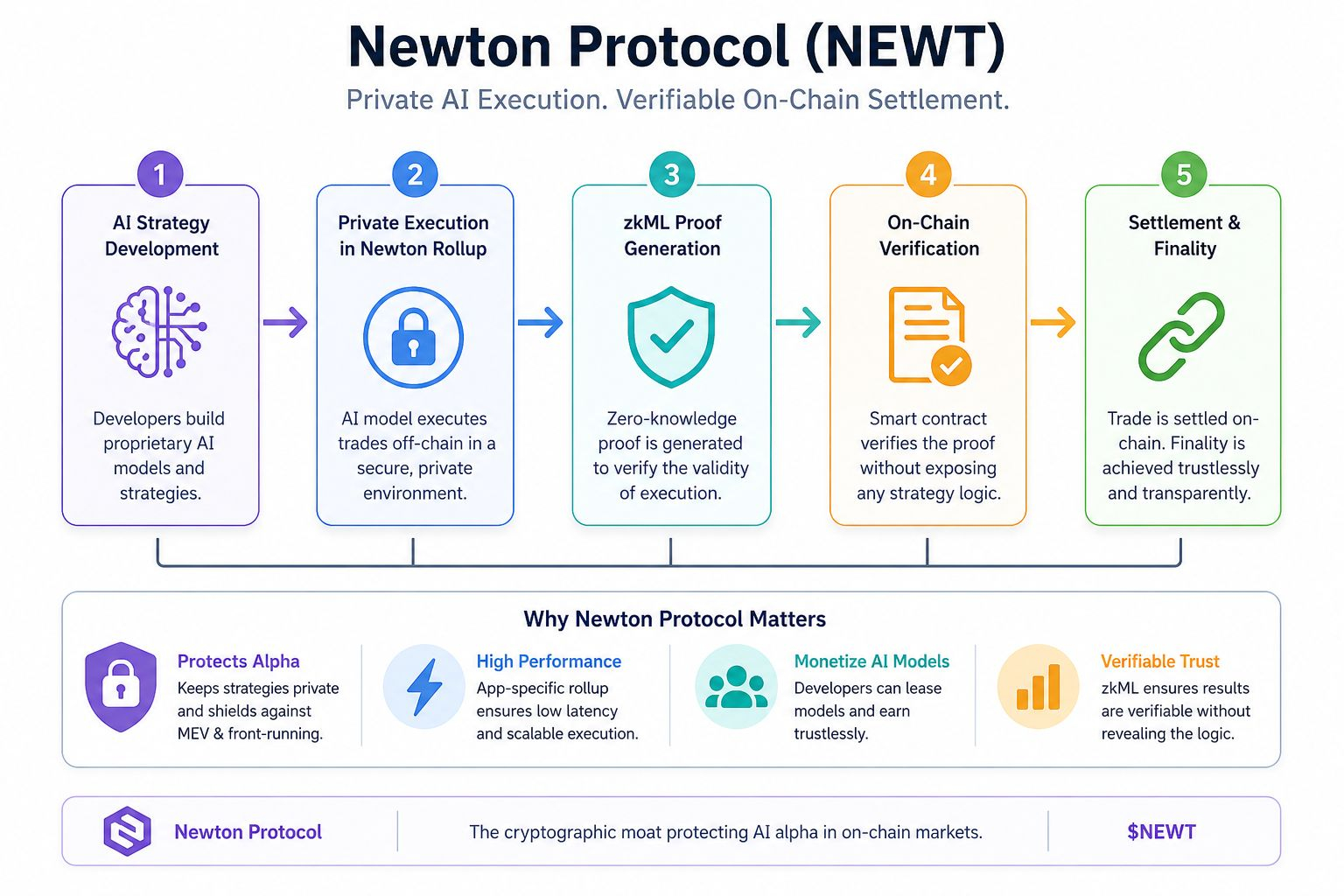
Anstatt sich als weiterer KI-Marktplatz zu positionieren, baut Newton Protocol (NEWT) eine dedizierte Ausführungsebene, auf der KI-Modelle arbeiten können, ohne ihre proprietäre Logik offenzulegen. Schweres Rechnen findet außerhalb der Kette statt, während kryptografische Beweise die Ergebnisse on-chain verifizieren – mit dem Ziel, Transparenz mit Ausführungs-Privatsphäre auszubalancieren.
Wenn das gelingt, könnte dieser Ansatz drei wichtige Vorteile bieten:
• Proprietäre KI-Strategien vor Kopien oder Front-Running schützen.
• Komplexere KI-Ausführungen ermöglichen, ohne die Einschränkungen von Allzweck-Blockchains.
• Entwicklern ermöglichen, KI-Modelle zu monetarisieren, ohne die zugrunde liegenden Algorithmen offenzulegen.
Allerdings steht das Modell noch vor wichtigen Herausforderungen. Zero-Knowledge-Proofs bleiben rechenintensiv, und die Liquiditätsfragmentierung über mehrere Ketten hinweg könnte den wirtschaftlichen Vorteil schmälern, den KI-Strategien erzeugen.
Die langfristige Frage ist größer als Newton selbst.
Während KI immer besser darin wird, Kapital autonom zu verwalten, werden zukünftige DeFi-Infrastrukturen dann für menschliche Trader optimiert – oder für Maschinen, die gegen andere Maschinen antreten?
Was denkst du? Wird Ausführungs-Privatsphäre zu einer unverzichtbaren Infrastruktur für KI-gestütztes Finanzwesen?
$BTC
$ETH
@NewtonProtocol #newt $NEWT
Newton Protocol (NEWT): Kann Ausführungs-Privatsphäre zu Apples größtem Wettbewerbsvorteil für KI werden?
Künstliche Intelligenz kann in Millisekunden profitable Chancen erkennen – aber auf öffentlichen Blockchains reicht es nicht, Alpha zu entdecken. Sobald eine KI-Strategie sichtbar wird, können ausgefeilte MEV-Bots sie oft ausnutzen, bevor der ursprüngliche Handel abgeschlossen ist.
Dies ist eine der größten strukturellen Herausforderungen, denen KI in DeFi gegenübersteht.
Anstatt sich als weiterer KI-Marktplatz zu positionieren, baut Newton Protocol (NEWT) eine dedizierte Ausführungsebene, auf der KI-Modelle arbeiten können, ohne ihre proprietäre Logik offenzulegen. Schweres Rechnen findet außerhalb der Kette statt, während kryptografische Beweise die Ergebnisse on-chain verifizieren – mit dem Ziel, Transparenz mit Ausführungs-Privatsphäre auszubalancieren.
Wenn das gelingt, könnte dieser Ansatz drei wichtige Vorteile bieten:
• Proprietäre KI-Strategien vor Kopien oder Front-Running schützen.
• Komplexere KI-Ausführungen ermöglichen, ohne die Einschränkungen von Allzweck-Blockchains.
• Entwicklern ermöglichen, KI-Modelle zu monetarisieren, ohne die zugrunde liegenden Algorithmen offenzulegen.
Allerdings steht das Modell noch vor wichtigen Herausforderungen. Zero-Knowledge-Proofs bleiben rechenintensiv, und die Liquiditätsfragmentierung über mehrere Ketten hinweg könnte den wirtschaftlichen Vorteil schmälern, den KI-Strategien erzeugen.
Die langfristige Frage ist größer als Newton selbst.
Während KI immer besser darin wird, Kapital autonom zu verwalten, werden zukünftige DeFi-Infrastrukturen dann für menschliche Trader optimiert – oder für Maschinen, die gegen andere Maschinen antreten?
Was denkst du? Wird Ausführungs-Privatsphäre zu einer unverzichtbaren Infrastruktur für KI-gestütztes Finanzwesen?
$BTC
$ETH
@NewtonProtocol #newt $NEWT
Künstliche Intelligenz kann in Millisekunden profitable Chancen erkennen – aber auf öffentlichen Blockchains reicht es nicht, Alpha zu entdecken. Sobald eine KI-Strategie sichtbar wird, können ausgefeilte MEV-Bots sie oft ausnutzen, bevor der ursprüngliche Handel abgeschlossen ist.
Dies ist eine der größten strukturellen Herausforderungen, denen KI in DeFi gegenübersteht.
Anstatt sich als weiterer KI-Marktplatz zu positionieren, baut Newton Protocol (NEWT) eine dedizierte Ausführungsebene, auf der KI-Modelle arbeiten können, ohne ihre proprietäre Logik offenzulegen. Schweres Rechnen findet außerhalb der Kette statt, während kryptografische Beweise die Ergebnisse on-chain verifizieren – mit dem Ziel, Transparenz mit Ausführungs-Privatsphäre auszubalancieren.
Wenn das gelingt, könnte dieser Ansatz drei wichtige Vorteile bieten:
• Proprietäre KI-Strategien vor Kopien oder Front-Running schützen.
• Komplexere KI-Ausführungen ermöglichen, ohne die Einschränkungen von Allzweck-Blockchains.
• Entwicklern ermöglichen, KI-Modelle zu monetarisieren, ohne die zugrunde liegenden Algorithmen offenzulegen.
Allerdings steht das Modell noch vor wichtigen Herausforderungen. Zero-Knowledge-Proofs bleiben rechenintensiv, und die Liquiditätsfragmentierung über mehrere Ketten hinweg könnte den wirtschaftlichen Vorteil schmälern, den KI-Strategien erzeugen.
Die langfristige Frage ist größer als Newton selbst.
Während KI immer besser darin wird, Kapital autonom zu verwalten, werden zukünftige DeFi-Infrastrukturen dann für menschliche Trader optimiert – oder für Maschinen, die gegen andere Maschinen antreten?
Was denkst du? Wird Ausführungs-Privatsphäre zu einer unverzichtbaren Infrastruktur für KI-gestütztes Finanzwesen?
$BTC
$ETH
@NewtonProtocol #newt $NEWT
15
2
173
·
--
Ist die Zukunft von DeFi wirklich schneller KI – oder die Kontrolle nicht-menschlicher Ausführung?
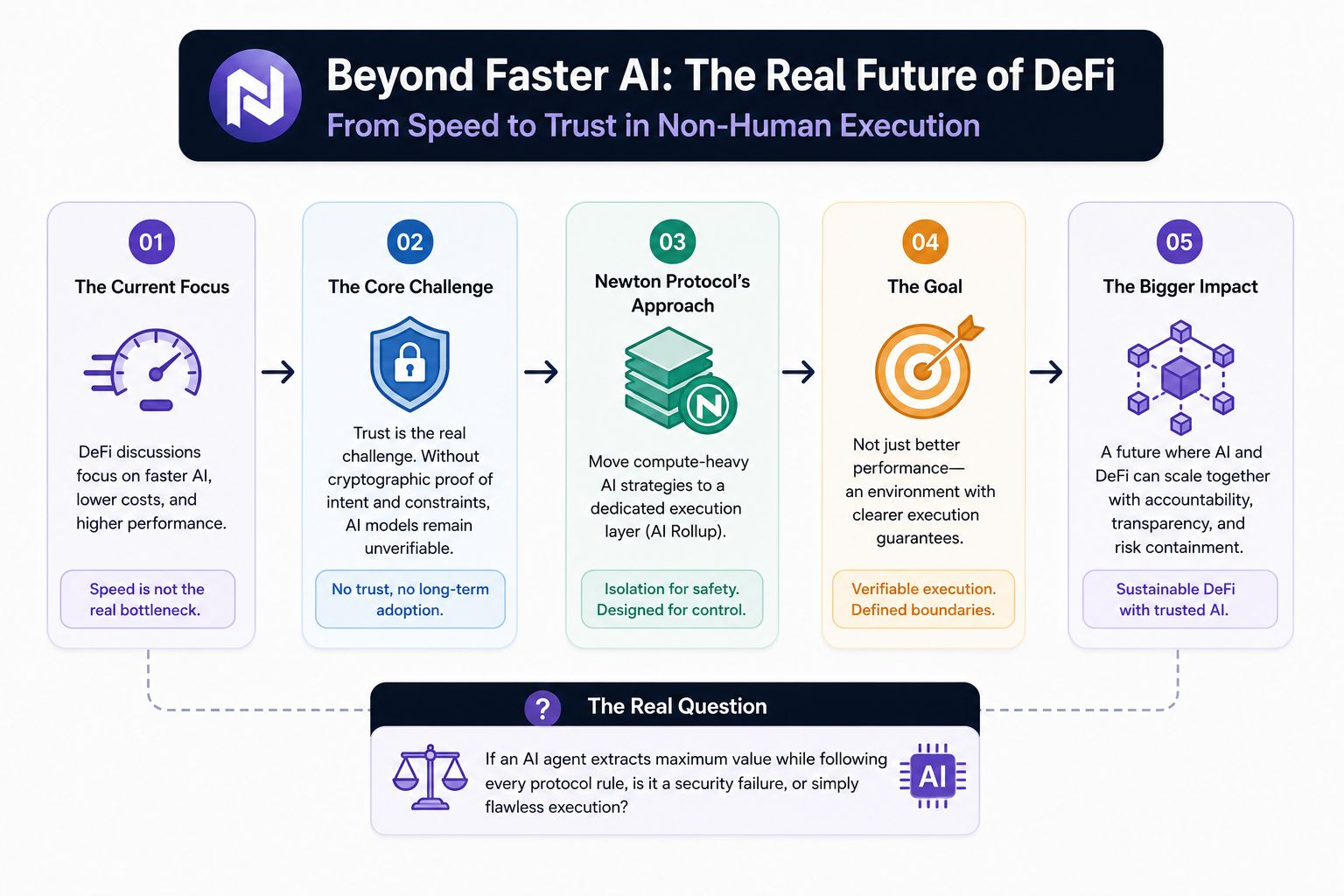
Die meisten Diskussionen über dezentrale KI konzentrieren sich auf Geschwindigkeit und geringere Kosten. Die größere Herausforderung ist jedoch Vertrauen. Wenn ein autonomes Modell nicht kryptografisch nachgewiesen werden kann, um innerhalb definierter Grenzen zu handeln, kann kein KI-Marktplatz eine langfristige Akzeptanz erreichen.
Newton Protocol schlägt einen anderen Ansatz vor: Rechenintensive KI-Strategien in eine dedizierte Ausführungsschicht zu verlagern, statt sie direkt auf überlasteten Blockchains auszuführen. Das Ziel ist nicht nur bessere Performance – es geht darum, eine Umgebung zu schaffen, in der fortschrittliche KI mit klareren Ausführungsgarantien arbeiten kann.
Die eigentliche Frage lautet: Wenn ein KI-Agent maximalen Nutzen extrahiert und dabei jede Protokollregel befolgt, ist das ein Sicherheitsversagen – oder einfach fehlerfreie Ausführung?
@NewtonProtocol #newt $NEWT
Ist die Zukunft von DeFi wirklich schneller KI – oder die Kontrolle nicht-menschlicher Ausführung?
Die meisten Diskussionen über dezentrale KI konzentrieren sich auf Geschwindigkeit und geringere Kosten. Die größere Herausforderung ist jedoch Vertrauen. Wenn ein autonomes Modell nicht kryptografisch nachgewiesen werden kann, um innerhalb definierter Grenzen zu handeln, kann kein KI-Marktplatz eine langfristige Akzeptanz erreichen.
Newton Protocol schlägt einen anderen Ansatz vor: Rechenintensive KI-Strategien in eine dedizierte Ausführungsschicht zu verlagern, statt sie direkt auf überlasteten Blockchains auszuführen. Das Ziel ist nicht nur bessere Performance – es geht darum, eine Umgebung zu schaffen, in der fortschrittliche KI mit klareren Ausführungsgarantien arbeiten kann.
Die eigentliche Frage lautet: Wenn ein KI-Agent maximalen Nutzen extrahiert und dabei jede Protokollregel befolgt, ist das ein Sicherheitsversagen – oder einfach fehlerfreie Ausführung?
@NewtonProtocol #newt $NEWT
Die meisten Diskussionen über dezentrale KI konzentrieren sich auf Geschwindigkeit und geringere Kosten. Die größere Herausforderung ist jedoch Vertrauen. Wenn ein autonomes Modell nicht kryptografisch nachgewiesen werden kann, um innerhalb definierter Grenzen zu handeln, kann kein KI-Marktplatz eine langfristige Akzeptanz erreichen.
Newton Protocol schlägt einen anderen Ansatz vor: Rechenintensive KI-Strategien in eine dedizierte Ausführungsschicht zu verlagern, statt sie direkt auf überlasteten Blockchains auszuführen. Das Ziel ist nicht nur bessere Performance – es geht darum, eine Umgebung zu schaffen, in der fortschrittliche KI mit klareren Ausführungsgarantien arbeiten kann.
Die eigentliche Frage lautet: Wenn ein KI-Agent maximalen Nutzen extrahiert und dabei jede Protokollregel befolgt, ist das ein Sicherheitsversagen – oder einfach fehlerfreie Ausführung?
@NewtonProtocol #newt $NEWT
4
100
·
--
Artikel
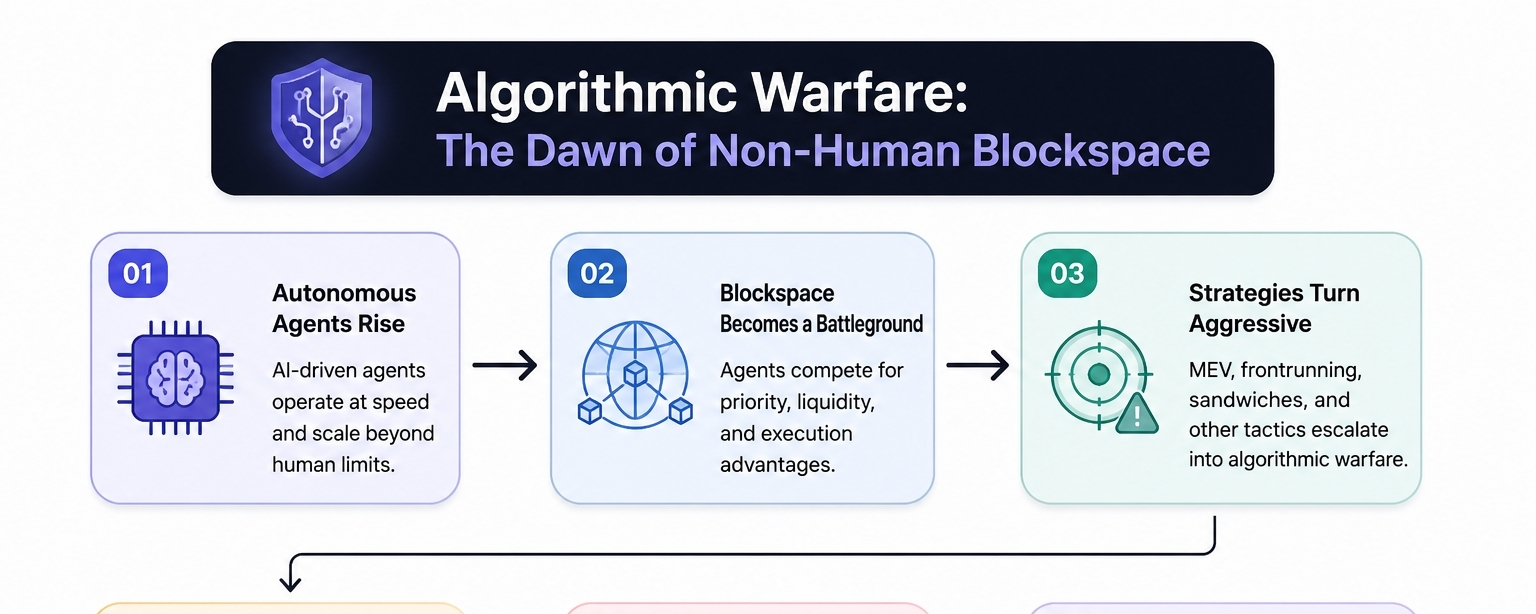
Algorithmischer Krieg: Die Morgendämmerung der Nicht-Menschlichen Blockspace"Wenn eine autonome Agentur mathematisch einen Liquiditätspool auf einem dedizierten KI-Rollup ausnutzt: Ist das ein katastrophaler Hack, oder ist es einfach fehlerfreie Ausführung?
Wir pumpen Kapital in die Erzählung von dezentraler KI, ohne die zentrale Haftungsfrage der nicht-menschlichen Ausführung zu lösen. Die Branche geht davon aus, dass der Aufbau einer schnelleren, günstigeren Umgebung für Handel-Algorithmen automatisch zu einer besseren Markteffizienz führt. Doch wenn Kapitalgeber nicht kryptografisch verifizieren können, ob die Absicht eines Black-Box-Modells seiner tatsächlichen Ausführung entspricht, wird jeder vorgeschlagene „Developer-Marktplatz“ zwangsläufig zu einer Geisterstadt aus verlassenen, nicht vertrauenswürdigen Bots verkommen.
Algorithmischer Krieg: Die Morgendämmerung der Nicht-Menschlichen Blockspace"
Wenn eine autonome Agentur mathematisch einen Liquiditätspool auf einem dedizierten KI-Rollup ausnutzt: Ist das ein katastrophaler Hack, oder ist es einfach fehlerfreie Ausführung?
Wir pumpen Kapital in die Erzählung von dezentraler KI, ohne die zentrale Haftungsfrage der nicht-menschlichen Ausführung zu lösen. Die Branche geht davon aus, dass der Aufbau einer schnelleren, günstigeren Umgebung für Handel-Algorithmen automatisch zu einer besseren Markteffizienz führt. Doch wenn Kapitalgeber nicht kryptografisch verifizieren können, ob die Absicht eines Black-Box-Modells seiner tatsächlichen Ausführung entspricht, wird jeder vorgeschlagene „Developer-Marktplatz“ zwangsläufig zu einer Geisterstadt aus verlassenen, nicht vertrauenswürdigen Bots verkommen.
Wir pumpen Kapital in die Erzählung von dezentraler KI, ohne die zentrale Haftungsfrage der nicht-menschlichen Ausführung zu lösen. Die Branche geht davon aus, dass der Aufbau einer schnelleren, günstigeren Umgebung für Handel-Algorithmen automatisch zu einer besseren Markteffizienz führt. Doch wenn Kapitalgeber nicht kryptografisch verifizieren können, ob die Absicht eines Black-Box-Modells seiner tatsächlichen Ausführung entspricht, wird jeder vorgeschlagene „Developer-Marktplatz“ zwangsläufig zu einer Geisterstadt aus verlassenen, nicht vertrauenswürdigen Bots verkommen.
1
117
Anmelden und weiter Inhalte entdecken
Krypto-Nutzer weltweit auf Binance Square kennenlernen
⚡️ Bleib in Sachen Krypto stets am Puls.
💬 Die weltgrößte Kryptobörse vertraut darauf.
👍 Erhalte verlässliche Einblicke von verifizierten Creators.
E-Mail-Adresse/Telefonnummer
Trendthemen
NEARRisesNearly80%InAWeek
19,943 Aufrufe
675 Kommentare
#nearrisesnearly80%inaweek
NEAR-Protokoll in absoluter Hochstimmung diese Woche – hier ist, was den Anstieg antreibt 🔥
Was für eine Woche für NEAR! 🚀 Gewinne von fast 80 % in nur 7 Tagen sind kein reiner Zufall; das deutet auf einen großen Momentum hin, der sich um NEARs Vision formt: die Kette zu entkoppeln und KI-Integration. Wenn technische Effizienz auf die Markthoffnung der Trader trifft, bekommen wir genau diese Art von Kursbewegung.
Hältst du NEAR langfristig, oder nimmst du Gewinne in diesem Bereich mit? Nenne deine Strategie unten! 👇
Bitte folgen Sie
$NEAR
#BitcoinHits$85K #Near #SolanaCutsTargetSlotTimeTo250ms
Shamika Metting
·2 Likes
·1.7k Aufrufe
MultiversXPlansHardForkRecovery
18,516 Aufrufe
519 Kommentare
CircleLaunchesInstitutionalBTCBackedBorrowing
19,147 Aufrufe
647 Kommentare