Binance Square

B R O W N

Hold dreams, take risks. X : @_mikebrownn_
Trade eröffnen
Hochfrequenz-Trader
1.8 Jahre
101 Following
19.4K+ Follower
82.1K+ Like gegeben
5.8K+ Geteilt
Beiträge
Portfolio
·
--
Übersetzung ansehen
Ultra-low latency doesn’t just make markets faster, it changes how participants behave. Fogo, an SVM-based L1 built for latency-sensitive trading, is targeting ~40 ms block times. With mainnet live and Wormhole positioned as the native bridge, capital can move in with minimal friction, a key ingredient for any new trading venue trying to attract real flow. Here’s the structural shift: when updates are cheap and fast, quote refresh becomes the norm. Market makers can constantly reprice risk, but the visible order book becomes more conditional than it appears. In volatility, liquidity can vanish the moment risk thresholds trip. A quieter, contrarian takeaway: Speed won’t automatically give most traders better entries. It gives an edge to desks that can manage inventory, cancellations, and exposure in real time. The real test isn’t latency, it’s whether meaningful size stays posted when the tape turns hostile. #fogo $FOGO @fogo {spot}(FOGOUSDT)
Ultra-low latency doesn’t just make markets faster, it changes how participants behave.

Fogo, an SVM-based L1 built for latency-sensitive trading, is targeting ~40 ms block times. With mainnet live and Wormhole positioned as the native bridge, capital can move in with minimal friction, a key ingredient for any new trading venue trying to attract real flow.

Here’s the structural shift: when updates are cheap and fast, quote refresh becomes the norm. Market makers can constantly reprice risk, but the visible order book becomes more conditional than it appears. In volatility, liquidity can vanish the moment risk thresholds trip.

A quieter, contrarian takeaway:

Speed won’t automatically give most traders better entries.

It gives an edge to desks that can manage inventory, cancellations, and exposure in real time.

The real test isn’t latency, it’s whether meaningful size stays posted when the tape turns hostile.

#fogo $FOGO @Fogo Official
Übersetzung ansehen
Fogo, A Trading Infrastructure Designed for Market Reality, Not Marketing Metrics!!Conversations around new blockchains often begin with performance claims. Faster blocks, higher throughput, and impressive benchmarks dominate the narrative. Fogo approaches the discussion from a different angle. While it is built on the Solana Virtual machine and inherits high execution performance, speed is not positioned as the primary innovation. Instead, performance is treated as a prerequisite for something more practical: enabling onchain markets to behave like professional trading environments. By building on the SVM stack, Fogo preserves compatibility with established tooling and developer workflows. Existing Solana programs can be adapted with minimal friction, and familiar development pipelines remain usable. This continuity lowers migration costs and allows builders to evaluate Fogo based on operational behavior rather than rewriting infrastructure to chase performance improvements. A defining element of Fogo’s design is its alignment with global market rhythms. Rather than relying on a static validator topology, the network rotates validator leadership across three time windows corresponding to major trading regions: Asia, the Europe–US overlap, and the US afternoon session. Validator infrastructure is positioned near major exchange hubs during each period, reducing network latency between the chain and liquidity venues. The objective is not decentralization for its own sake, but proximity to market activity where latency materially affects execution quality. This “follow-the-sun” model reflects how global markets actually operate. Liquidity shifts geographically over the course of a day, and infrastructure placement can influence pricing efficiency and execution fairness. By aligning consensus leadership with market centers, Fogo attempts to minimize geographic disadvantage while maintaining continuity through backup nodes and redundancy. Where the chain begins to diverge meaningfully from typical DeFi infrastructure is in its market structure design. Fogo integrates Dual-Flow Batch Auctions through Ambient, an onchain exchange that blends characteristics of central limit order books with automated market maker mechanics. Instead of prioritizing speed races between individual transactions, trades are batched within each block and cleared at a common oracle reference price. Participants receive the same clearing price, reducing latency arbitrage opportunities and diminishing the impact of maximal extractable value strategies. This batch settlement approach shifts competition away from racing the network and toward pricing accuracy and liquidity provision. Traders may even receive price improvement if the market moves favorably during the batch interval. Because the SVM environment supports high throughput and low latency execution, these auction mechanics function entirely within smart contracts rather than relying on offchain matching engines. User experience is addressed through Fogo Sessions, which introduce session-based authorization in place of repeated transaction approvals. Users can grant time-bounded permissions to an application with clearly defined limits on token access and activity scope. Once authorized, interactions occur without constant wallet prompts. Applications can also sponsor transaction fees, allowing onboarding flows that resemble centralized trading platforms rather than traditional DeFi friction. This design reflects an understanding that professional traders value speed and continuity of interaction. Reducing signature overhead and enabling gas sponsorship moves the onchain experience closer to familiar centralized interfaces while maintaining self-custody and permission boundaries. Infrastructure considerations extend beyond execution and UX. Fogo incorporates FluxRPC as a specialized RPC layer optimized for performance-sensitive workloads, alongside bridging through Wormhole and Portal Bridge for cross-chain liquidity movement. Market data and oracle services are supported through integrations such as Pyth, while indexing solutions enable efficient data access for analytics and trading systems. Together, these components form a complete trading infrastructure rather than a standalone blockchain. The hardware requirements for validators are intentionally high. Operating a node requires substantial processing power, memory capacity, and high-speed storage. This is not positioned as an exclusionary barrier but as a performance requirement necessary to support high-frequency networking and transaction throughput. Initial validator participation focuses on operators experienced with high-performance SVM environments, with gradual expansion planned over time. Validator commissions are set at moderate levels, while inflation declines rapidly to balance early incentives with long-term sustainability. The network token, FOGO, serves multiple roles including gas payment, staking, and ecosystem funding. Participation incentives are complemented by Flames, a points-based engagement program designed to reward activity and community involvement. These points are explicitly framed as non-token incentives, reducing regulatory ambiguity while encouraging participation. Staking aligns validators with network security while offering yield derived from fees and ecosystem activity. Revenue-sharing arrangements with partner applications further tie network growth to token value, reinforcing a usage-driven economic model rather than purely speculative demand. Like any emerging infrastructure, Fogo carries operational risks. Rapid iteration can introduce client updates and compatibility issues. The validator topology that improves performance may also reduce geographic diversity. Bridging introduces cross-chain risk that must be carefully managed. The project emphasizes operational caution, including verifying transactions via Fogoscan, using dedicated wallets for experimentation, and limiting session permissions. Fogo’s broader ambition is not to compete on raw performance metrics, but to bring professional-grade trading infrastructure onchain. Its time-zone-aligned consensus model mirrors global market behavior. Batch auction design aims to improve fairness and reduce extractive practices. Session-based UX reduces friction without sacrificing control. Infrastructure integrations ensure liquidity, data availability, and connectivity. The project remains early and carries the uncertainties inherent in new networks. Yet its design choices suggest a focus on reliability, fairness, and operational realism rather than speculative novelty. If onchain markets evolve toward environments capable of supporting professional trading activity at scale, Fogo represents one possible blueprint for how that future infrastructure might function. @fogo #fogo $FOGO {spot}(FOGOUSDT)

Fogo, A Trading Infrastructure Designed for Market Reality, Not Marketing Metrics!!

Conversations around new blockchains often begin with performance claims. Faster blocks, higher throughput, and impressive benchmarks dominate the narrative. Fogo approaches the discussion from a different angle. While it is built on the Solana Virtual machine and inherits high execution performance, speed is not positioned as the primary innovation. Instead, performance is treated as a prerequisite for something more practical: enabling onchain markets to behave like professional trading environments.
By building on the SVM stack, Fogo preserves compatibility with established tooling and developer workflows. Existing Solana programs can be adapted with minimal friction, and familiar development pipelines remain usable. This continuity lowers migration costs and allows builders to evaluate Fogo based on operational behavior rather than rewriting infrastructure to chase performance improvements.
A defining element of Fogo’s design is its alignment with global market rhythms. Rather than relying on a static validator topology, the network rotates validator leadership across three time windows corresponding to major trading regions: Asia, the Europe–US overlap, and the US afternoon session. Validator infrastructure is positioned near major exchange hubs during each period, reducing network latency between the chain and liquidity venues. The objective is not decentralization for its own sake, but proximity to market activity where latency materially affects execution quality.
This “follow-the-sun” model reflects how global markets actually operate. Liquidity shifts geographically over the course of a day, and infrastructure placement can influence pricing efficiency and execution fairness. By aligning consensus leadership with market centers, Fogo attempts to minimize geographic disadvantage while maintaining continuity through backup nodes and redundancy.
Where the chain begins to diverge meaningfully from typical DeFi infrastructure is in its market structure design. Fogo integrates Dual-Flow Batch Auctions through Ambient, an onchain exchange that blends characteristics of central limit order books with automated market maker mechanics. Instead of prioritizing speed races between individual transactions, trades are batched within each block and cleared at a common oracle reference price. Participants receive the same clearing price, reducing latency arbitrage opportunities and diminishing the impact of maximal extractable value strategies.
This batch settlement approach shifts competition away from racing the network and toward pricing accuracy and liquidity provision. Traders may even receive price improvement if the market moves favorably during the batch interval. Because the SVM environment supports high throughput and low latency execution, these auction mechanics function entirely within smart contracts rather than relying on offchain matching engines.
User experience is addressed through Fogo Sessions, which introduce session-based authorization in place of repeated transaction approvals. Users can grant time-bounded permissions to an application with clearly defined limits on token access and activity scope. Once authorized, interactions occur without constant wallet prompts. Applications can also sponsor transaction fees, allowing onboarding flows that resemble centralized trading platforms rather than traditional DeFi friction.
This design reflects an understanding that professional traders value speed and continuity of interaction. Reducing signature overhead and enabling gas sponsorship moves the onchain experience closer to familiar centralized interfaces while maintaining self-custody and permission boundaries.
Infrastructure considerations extend beyond execution and UX. Fogo incorporates FluxRPC as a specialized RPC layer optimized for performance-sensitive workloads, alongside bridging through Wormhole and Portal Bridge for cross-chain liquidity movement. Market data and oracle services are supported through integrations such as Pyth, while indexing solutions enable efficient data access for analytics and trading systems. Together, these components form a complete trading infrastructure rather than a standalone blockchain.
The hardware requirements for validators are intentionally high. Operating a node requires substantial processing power, memory capacity, and high-speed storage. This is not positioned as an exclusionary barrier but as a performance requirement necessary to support high-frequency networking and transaction throughput. Initial validator participation focuses on operators experienced with high-performance SVM environments, with gradual expansion planned over time. Validator commissions are set at moderate levels, while inflation declines rapidly to balance early incentives with long-term sustainability.
The network token, FOGO, serves multiple roles including gas payment, staking, and ecosystem funding. Participation incentives are complemented by Flames, a points-based engagement program designed to reward activity and community involvement. These points are explicitly framed as non-token incentives, reducing regulatory ambiguity while encouraging participation.
Staking aligns validators with network security while offering yield derived from fees and ecosystem activity. Revenue-sharing arrangements with partner applications further tie network growth to token value, reinforcing a usage-driven economic model rather than purely speculative demand.
Like any emerging infrastructure, Fogo carries operational risks. Rapid iteration can introduce client updates and compatibility issues. The validator topology that improves performance may also reduce geographic diversity. Bridging introduces cross-chain risk that must be carefully managed. The project emphasizes operational caution, including verifying transactions via Fogoscan, using dedicated wallets for experimentation, and limiting session permissions.
Fogo’s broader ambition is not to compete on raw performance metrics, but to bring professional-grade trading infrastructure onchain. Its time-zone-aligned consensus model mirrors global market behavior. Batch auction design aims to improve fairness and reduce extractive practices. Session-based UX reduces friction without sacrificing control. Infrastructure integrations ensure liquidity, data availability, and connectivity.
The project remains early and carries the uncertainties inherent in new networks. Yet its design choices suggest a focus on reliability, fairness, and operational realism rather than speculative novelty. If onchain markets evolve toward environments capable of supporting professional trading activity at scale, Fogo represents one possible blueprint for how that future infrastructure might function.
@Fogo Official #fogo $FOGO
Übersetzung ansehen
What stands out to me about Fogo isn’t how many validators it can stack — it’s how deliberately it tries to coordinate them. A lot of chains equate decentralization with sheer node count. But beyond a certain point, more participants can introduce timing noise, latency variance, and messy consensus under load. Fogo seems to be optimizing for synchronization quality, not raw participation volume. Its multi-local, follow-the-sun validator structure aligns activity by region and time window, tightening consensus where it matters instead of forcing a globally noisy quorum every block. That’s less about limiting decentralization and more about reducing coordination friction in real time. Pair that with a Firedancer-first performance mindset and you get a network tuned like market infrastructure: predictable cadence, tight execution, and consistency under pressure. The real test comes during volatility spikes and validator rotations. If stability holds when flow gets chaotic, the architecture starts to look intentional rather than experimental. Bottom line: Fogo isn’t optimizing for the biggest validator set. It’s optimizing for cleaner coordination and reliable execution. And in latency-sensitive markets, that distinction could matter far more than headline decentralization metrics. #fogo $FOGO @fogo {spot}(FOGOUSDT)
What stands out to me about Fogo isn’t how many validators it can stack — it’s how deliberately it tries to coordinate them.

A lot of chains equate decentralization with sheer node count. But beyond a certain point, more participants can introduce timing noise, latency variance, and messy consensus under load. Fogo seems to be optimizing for synchronization quality, not raw participation volume.

Its multi-local, follow-the-sun validator structure aligns activity by region and time window, tightening consensus where it matters instead of forcing a globally noisy quorum every block. That’s less about limiting decentralization and more about reducing coordination friction in real time.

Pair that with a Firedancer-first performance mindset and you get a network tuned like market infrastructure: predictable cadence, tight execution, and consistency under pressure.

The real test comes during volatility spikes and validator rotations. If stability holds when flow gets chaotic, the architecture starts to look intentional rather than experimental.

Bottom line:

Fogo isn’t optimizing for the biggest validator set.
It’s optimizing for cleaner coordination and reliable execution.

And in latency-sensitive markets, that distinction could matter far more than headline decentralization metrics.

#fogo $FOGO @Fogo Official
Übersetzung ansehen
Fogo, Designing a Trading Environment Instead of Just Another Fast Chain!!Most new blockchains introduce themselves with performance metrics: throughput ceilings, block times, and latency benchmarks. Fogo takes a different route. While it is fast, speed appears to be a consequence rather than the central mission. Built on the Solana Virtual Machine (SVM), Fogo maintains compatibility with Solana tooling and programs, allowing developers to deploy or adapt existing applications with minimal friction. Instead of forcing teams to relearn a new ecosystem, it lets them point their existing workflows to a new endpoint and observe how the system behaves under real market conditions. A defining structural choice is Fogo’s “follow-the-sun” validator model. Rather than relying on a single, globally fixed validator set, the network rotates validator leadership across regional windows aligned with major trading zones in Asia, Europe, and North America. Validators operate near key financial infrastructure during their window, reducing network latency between the chain and trading venues. Backup nodes in other regions maintain continuity, allowing the system to shift operational focus as global liquidity flows change throughout the day. The design aims to reduce geographic latency and better align network performance with real market activity cycles. Fogo’s market architecture also signals that it is targeting professional trading behavior rather than retail experimentation. Its Dual-Flow Batch Auction mechanism aggregates orders within each block and settles them at a uniform clearing price, derived from oracle inputs. This approach blends aspects of central limit order books with automated liquidity models. By executing trades in batches instead of race-based sequencing, the system reduces advantages gained from latency arbitrage and makes extractive MEV strategies more difficult. Participants compete on price rather than on speed alone, and traders may benefit from price improvement if market conditions shift favorably during the batch window. Because the SVM enables rapid execution, these auctions function entirely within smart contracts rather than relying on off-chain matching engines. Usability is addressed through Fogo Sessions, which replace constant transaction signing with time-limited session approvals. Users can authorize an application to execute predefined actions within specific limits, such as token amounts or permissions, for a defined period. This removes repetitive wallet prompts and creates an experience closer to centralized trading platforms. Applications can sponsor gas costs during sessions, enabling onboarding flows that resemble a single sign-in rather than a series of approvals. Liquidity movement and infrastructure connectivity are treated as core requirements rather than secondary integrations. FluxRPC provides a performance-oriented RPC layer, while bridging and asset transfers are supported through Wormhole and Portal Bridge integrations. Market data and oracle feeds are supplied through services such as Pyth Lzr, and indexing solutions like Goldsky support analytics and application queries. Fogoscan offers on-chain transparency for transaction and state verification. Together, these components form a trading environment rather than a standalone chain. Fogo’s performance targets necessitate substantial validator hardware capacity. Minimum requirements include high-core-count CPUs, large memory allocations, and high-speed NVMe storage to sustain low-latency networking and heavy throughput. The validator set begins with experienced operators familiar with high-performance SVM environments and is expected to expand gradually. Validator commissions are set around 10 percent, while inflation is structured to decline over time to balance incentives with long-term sustainability. The native token, FOGO, functions as the network’s operational fuel. It is used for gas, staking, and ecosystem incentives. A participation system known as Flames rewards community engagement and network interaction; the program is explicitly framed as a points mechanism rather than a guaranteed token distribution. Staking yields support network security, while partner projects may contribute revenue shares back to the ecosystem, linking network growth with token utility. Despite its performance orientation, the network carries risks typical of emerging infrastructure. Rapid iteration may introduce client updates or temporary instability. Concentrated validator performance requirements can limit geographic diversity. Cross-chain bridges remain a systemic risk vector, and users are encouraged to verify transactions through the explorer and manage risk through limited-exposure wallets and controlled session permissions. Fogo’s broader thesis is not simply that on-chain trading can be fast, but that it can be structured to resemble professional market infrastructure. By aligning validator operations with global trading cycles, introducing batch auctions to reduce adversarial order flow dynamics, and streamlining interaction through session-based UX, the network attempts to make on-chain markets more predictable and equitable. It remains an early and evolving system, but its design suggests an attempt to bring high-frequency trading mechanics and institutional workflow expectations into a decentralized environment where fairness and transparency remain enforceable. @fogo #fogo $FOGO {spot}(FOGOUSDT)

Fogo, Designing a Trading Environment Instead of Just Another Fast Chain!!

Most new blockchains introduce themselves with performance metrics: throughput ceilings, block times, and latency benchmarks. Fogo takes a different route. While it is fast, speed appears to be a consequence rather than the central mission. Built on the Solana Virtual Machine (SVM), Fogo maintains compatibility with Solana tooling and programs, allowing developers to deploy or adapt existing applications with minimal friction. Instead of forcing teams to relearn a new ecosystem, it lets them point their existing workflows to a new endpoint and observe how the system behaves under real market conditions.
A defining structural choice is Fogo’s “follow-the-sun” validator model. Rather than relying on a single, globally fixed validator set, the network rotates validator leadership across regional windows aligned with major trading zones in Asia, Europe, and North America. Validators operate near key financial infrastructure during their window, reducing network latency between the chain and trading venues. Backup nodes in other regions maintain continuity, allowing the system to shift operational focus as global liquidity flows change throughout the day. The design aims to reduce geographic latency and better align network performance with real market activity cycles.
Fogo’s market architecture also signals that it is targeting professional trading behavior rather than retail experimentation. Its Dual-Flow Batch Auction mechanism aggregates orders within each block and settles them at a uniform clearing price, derived from oracle inputs. This approach blends aspects of central limit order books with automated liquidity models. By executing trades in batches instead of race-based sequencing, the system reduces advantages gained from latency arbitrage and makes extractive MEV strategies more difficult. Participants compete on price rather than on speed alone, and traders may benefit from price improvement if market conditions shift favorably during the batch window. Because the SVM enables rapid execution, these auctions function entirely within smart contracts rather than relying on off-chain matching engines.
Usability is addressed through Fogo Sessions, which replace constant transaction signing with time-limited session approvals. Users can authorize an application to execute predefined actions within specific limits, such as token amounts or permissions, for a defined period. This removes repetitive wallet prompts and creates an experience closer to centralized trading platforms. Applications can sponsor gas costs during sessions, enabling onboarding flows that resemble a single sign-in rather than a series of approvals.
Liquidity movement and infrastructure connectivity are treated as core requirements rather than secondary integrations. FluxRPC provides a performance-oriented RPC layer, while bridging and asset transfers are supported through Wormhole and Portal Bridge integrations. Market data and oracle feeds are supplied through services such as Pyth Lzr, and indexing solutions like Goldsky support analytics and application queries. Fogoscan offers on-chain transparency for transaction and state verification. Together, these components form a trading environment rather than a standalone chain.
Fogo’s performance targets necessitate substantial validator hardware capacity. Minimum requirements include high-core-count CPUs, large memory allocations, and high-speed NVMe storage to sustain low-latency networking and heavy throughput. The validator set begins with experienced operators familiar with high-performance SVM environments and is expected to expand gradually. Validator commissions are set around 10 percent, while inflation is structured to decline over time to balance incentives with long-term sustainability.
The native token, FOGO, functions as the network’s operational fuel. It is used for gas, staking, and ecosystem incentives. A participation system known as Flames rewards community engagement and network interaction; the program is explicitly framed as a points mechanism rather than a guaranteed token distribution. Staking yields support network security, while partner projects may contribute revenue shares back to the ecosystem, linking network growth with token utility.
Despite its performance orientation, the network carries risks typical of emerging infrastructure. Rapid iteration may introduce client updates or temporary instability. Concentrated validator performance requirements can limit geographic diversity. Cross-chain bridges remain a systemic risk vector, and users are encouraged to verify transactions through the explorer and manage risk through limited-exposure wallets and controlled session permissions.
Fogo’s broader thesis is not simply that on-chain trading can be fast, but that it can be structured to resemble professional market infrastructure. By aligning validator operations with global trading cycles, introducing batch auctions to reduce adversarial order flow dynamics, and streamlining interaction through session-based UX, the network attempts to make on-chain markets more predictable and equitable. It remains an early and evolving system, but its design suggests an attempt to bring high-frequency trading mechanics and institutional workflow expectations into a decentralized environment where fairness and transparency remain enforceable.

@Fogo Official #fogo $FOGO
💥BREAKING: 🇺🇸 Die Demokraten planen, sowohl Trump als auch Vance abzusetzen, wenn sie die Zwischenwahlen 2026 gewinnen. Laut Polymarket haben die Demokraten derzeit eine 85%ige Chance, die Zwischenwahlen zu gewinnen.
💥BREAKING:

🇺🇸 Die Demokraten planen, sowohl Trump als auch Vance abzusetzen, wenn sie die Zwischenwahlen 2026 gewinnen.

Laut Polymarket haben die Demokraten derzeit eine 85%ige Chance, die Zwischenwahlen zu gewinnen.
Übersetzung ansehen
🇺🇸 Trade tensions are escalating again in the US. • Trump is considering a broad new tariff on trade partners using expanded trade powers. • He said IEEPA does not allow him to charge tariffs but claimed he could restrict or cut off trade instead. • Existing tariffs will stay in place, with a new 10% global tariff announced. • Additional trade investigations are expected to follow.
🇺🇸 Trade tensions are escalating again in the US.

• Trump is considering a broad new tariff on trade partners using expanded trade powers.

• He said IEEPA does not allow him to charge tariffs but claimed he could restrict or cut off trade instead.

• Existing tariffs will stay in place, with a new 10% global tariff announced.

• Additional trade investigations are expected to follow.
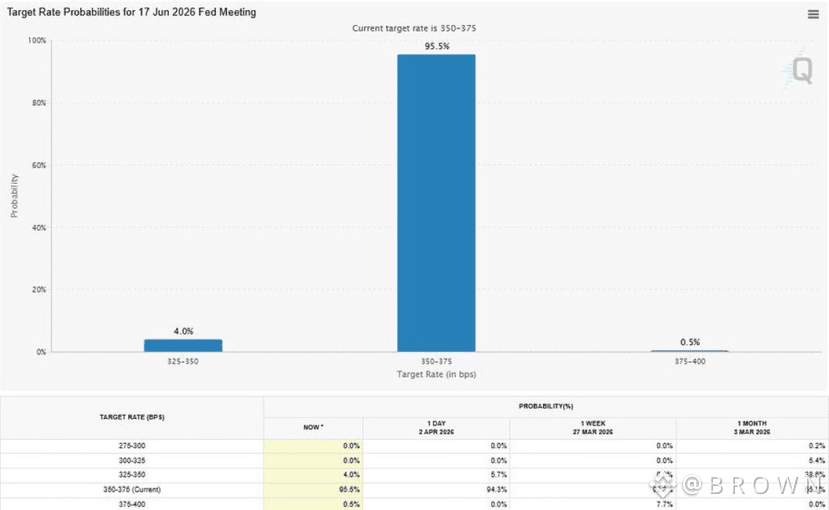
Die Wahrscheinlichkeit, dass die Fed die Zinsen stabil hält, ist gerade auf 96,5% gestiegen Selbst nachdem das Gericht Trumps Zölle aufgehoben hat Was Ihnen das sagt 👇 • Der Markt sieht keine sofortige Geldpolitische Erleichterung • Inflationsrisiko überwiegt weiterhin die Wachstumsbedenken • Liquiditätsentlastung kommt noch nicht Erwarten Sie also keinen tauben Kurswechsel, nur weil die Schlagzeilen politisch wurden.
Die Wahrscheinlichkeit, dass die Fed die Zinsen stabil hält, ist gerade auf 96,5% gestiegen

Selbst nachdem das Gericht Trumps Zölle aufgehoben hat

Was Ihnen das sagt 👇

• Der Markt sieht keine sofortige Geldpolitische Erleichterung

• Inflationsrisiko überwiegt weiterhin die Wachstumsbedenken

• Liquiditätsentlastung kommt noch nicht

Erwarten Sie also keinen tauben Kurswechsel, nur weil die Schlagzeilen politisch wurden.
Übersetzung ansehen
🚨 Trump just raised the global tariff baseline to 15% after the Supreme Court blocked his emergency tariff powers. He says new, legally tested tariffs are coming next. So tariffs aren’t ending, they’re being rebuilt under other trade laws like Section 232 and 301. Higher import costs = more pressure on prices and corporate margins. Trade tension is not going away, it’s entering a new legal phase.
🚨 Trump just raised the global tariff baseline to 15% after the Supreme Court blocked his emergency tariff powers.

He says new, legally tested tariffs are coming next.

So tariffs aren’t ending, they’re being rebuilt under other trade laws like Section 232 and 301.

Higher import costs = more pressure on prices and corporate margins.

Trade tension is not going away, it’s entering a new legal phase.
Übersetzung ansehen
🇺🇸 Over $380 BILLION has been added to the U.S. stock market today. Stocks are pumping even after the bad GDP data and the Supreme Court ruling against Trump, while crypto dumps even on every bullish news. Truly the worst time to be a crypto investor.
🇺🇸 Over $380 BILLION has been added to the U.S. stock market today.

Stocks are pumping even after the bad GDP data and the Supreme Court ruling against Trump, while crypto dumps even on every bullish news.

Truly the worst time to be a crypto investor.
Übersetzung ansehen
🚨 BREAKING 🚨 🇺🇸 President Trump just announced raising global tariffs to 15%.
🚨 BREAKING 🚨

🇺🇸 President Trump just announced raising global tariffs to 15%.
Was mir beim Eintauchen in das Verhalten von Fogo’s Validator aufgefallen ist, war, wie nicht zufällig sich das Netzwerk anfühlte. Es ähnelte nicht einem flachen, gleichmäßig verteilten Netz. Es fühlte sich strukturiert, fast rhythmisch an. In der traditionellen Finanzwelt ist die Liquidität nicht gleichmäßig über den Globus verteilt. Sie konzentriert sich, während sich der Handelstag bewegt: Asien übergibt an Europa, Europa an Nordamerika. Jede Sitzung ist lokal dicht, aber global kontinuierlich. Die Konsensdynamik von Fogo sendete ein ähnliches Signal. Die Koordination der Validatoren erscheint innerhalb regionaler Zeitfenster enger, was auf lokalisierte Aktivitätscluster hindeutet, die sequenziell das Netzwerk verankern. Die Kette bleibt global synchronisiert, doch die Intensität des Konsenses fühlt sich regional konzentriert an, anstatt gleichmäßig diffus zu sein. Diese Beobachtung hat es für mich neu formuliert: Fogo ist nicht nur geografisch verteilt. Es ist geografisch strukturiert. Weniger wie isolierte Knoten, die weltweit verstreut sind, mehr wie Handelsplätze, die den Markt über Zeitzonen hinweg weitergeben. Wenn absichtlich, priorisiert diese Architektur die Latenz-Effizienz und Stabilität der Koordination über rein theoretische Muster der Dezentralisierung, eine Designentscheidung, die mit Echtzeit-Finanzlasten übereinstimmt. $FOGO #fogo @fogo {spot}(FOGOUSDT)
Was mir beim Eintauchen in das Verhalten von Fogo’s Validator aufgefallen ist, war, wie nicht zufällig sich das Netzwerk anfühlte. Es ähnelte nicht einem flachen, gleichmäßig verteilten Netz. Es fühlte sich strukturiert, fast rhythmisch an.

In der traditionellen Finanzwelt ist die Liquidität nicht gleichmäßig über den Globus verteilt. Sie konzentriert sich, während sich der Handelstag bewegt: Asien übergibt an Europa, Europa an Nordamerika. Jede Sitzung ist lokal dicht, aber global kontinuierlich.

Die Konsensdynamik von Fogo sendete ein ähnliches Signal.

Die Koordination der Validatoren erscheint innerhalb regionaler Zeitfenster enger, was auf lokalisierte Aktivitätscluster hindeutet, die sequenziell das Netzwerk verankern. Die Kette bleibt global synchronisiert, doch die Intensität des Konsenses fühlt sich regional konzentriert an, anstatt gleichmäßig diffus zu sein.

Diese Beobachtung hat es für mich neu formuliert:

Fogo ist nicht nur geografisch verteilt.
Es ist geografisch strukturiert.

Weniger wie isolierte Knoten, die weltweit verstreut sind,
mehr wie Handelsplätze, die den Markt über Zeitzonen hinweg weitergeben.

Wenn absichtlich, priorisiert diese Architektur die Latenz-Effizienz und Stabilität der Koordination über rein theoretische Muster der Dezentralisierung, eine Designentscheidung, die mit Echtzeit-Finanzlasten übereinstimmt.

$FOGO #fogo @Fogo Official
Fogo, Märkte On-Chain für Händler, nicht Erzähler!!Wenn neue Blockchains gestartet werden, beginnt das Gespräch normalerweise mit Leistungskennzahlen. Schnellere Blöcke, höhere Durchsatzraten, geringere Latenz. Diese Zahlen ermöglichen einfache Vergleiche, sprechen jedoch selten an, was Händlern und Marktteilnehmern tatsächlich wichtig ist: die Fairness der Ausführung, zuverlässige Konnektivität und eine Infrastruktur, die sich unter Druck vorhersehbar verhält. Fogo scheint von dieser betrieblichen Realität auszugehen, anstatt von Benchmark-Wettbewerben. Basierend auf der Solana Virtual Machine (SVM) erbt es eine ausgereifte Programmierumgebung und Toolchain, die Entwicklern ermöglicht, bestehende Solana-Programme mit minimalen Reibungsverlusten bereitzustellen oder anzupassen. Anstatt Systeme neu zu schreiben, können Teams die Infrastruktur auf einen Fogo-Endpunkt umstellen und das Verhalten in der realen Welt sofort bewerten.

Fogo, Märkte On-Chain für Händler, nicht Erzähler!!

Wenn neue Blockchains gestartet werden, beginnt das Gespräch normalerweise mit Leistungskennzahlen. Schnellere Blöcke, höhere Durchsatzraten, geringere Latenz. Diese Zahlen ermöglichen einfache Vergleiche, sprechen jedoch selten an, was Händlern und Marktteilnehmern tatsächlich wichtig ist: die Fairness der Ausführung, zuverlässige Konnektivität und eine Infrastruktur, die sich unter Druck vorhersehbar verhält. Fogo scheint von dieser betrieblichen Realität auszugehen, anstatt von Benchmark-Wettbewerben. Basierend auf der Solana Virtual Machine (SVM) erbt es eine ausgereifte Programmierumgebung und Toolchain, die Entwicklern ermöglicht, bestehende Solana-Programme mit minimalen Reibungsverlusten bereitzustellen oder anzupassen. Anstatt Systeme neu zu schreiben, können Teams die Infrastruktur auf einen Fogo-Endpunkt umstellen und das Verhalten in der realen Welt sofort bewerten.
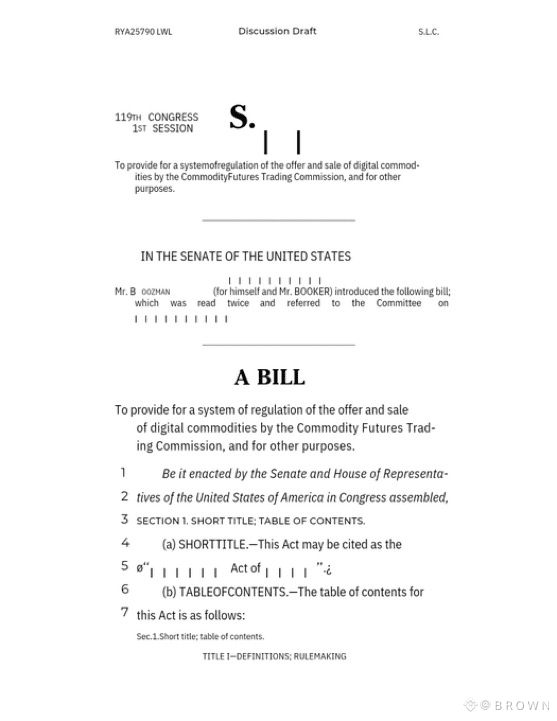
CRYPTO-MARKTSTRUKTURGESSETZ-AKTUALISIERUNG 👇 Ein U.S. Gesetz zur Marktstruktur von Kryptowährungen wird voraussichtlich vor Ende Mai 2026 verabschiedet Der Vorschlag zielt darauf ab, Manipulation um bis zu 70% zu reduzieren Wenn genehmigt, würde dies einen bedeutenden Wandel in der Regulierung digitaler Vermögenswerte in den USA markieren.
CRYPTO-MARKTSTRUKTURGESSETZ-AKTUALISIERUNG 👇

Ein U.S. Gesetz zur Marktstruktur von Kryptowährungen wird voraussichtlich vor Ende Mai 2026 verabschiedet

Der Vorschlag zielt darauf ab, Manipulation um bis zu 70% zu reduzieren

Wenn genehmigt, würde dies einen bedeutenden Wandel in der Regulierung digitaler Vermögenswerte in den USA markieren.
BREAKING: 🇺🇸 In einer Entscheidung von 6 zu 3 hat der Oberste Gerichtshof der Vereinigten Staaten entschieden, dass die Zölle von Präsident Donald Trump illegal sind. Die USA könnten nun mit mehr als 150 Milliarden Dollar an potenziellen Zollrückerstattungen konfrontiert werden.
BREAKING:

🇺🇸 In einer Entscheidung von 6 zu 3 hat der Oberste Gerichtshof der Vereinigten Staaten entschieden, dass die Zölle von Präsident Donald Trump illegal sind.

Die USA könnten nun mit mehr als 150 Milliarden Dollar an potenziellen Zollrückerstattungen konfrontiert werden.
Die Spannungen im Nahen Osten eskalieren schnell 👇 Die USA haben bedeutende militärische Vermögenswerte in die Region verlegt: Träger, Kampfflugzeuge und Raketenabwehrsysteme Berichten zufolge könnten die Streitkräfte bereits an diesem Wochenende bereit sein, Iran anzugreifen Gleichzeitig wurden Evakuierungsankündigungen für Bürger herausgegeben, und die nuklearen Gespräche bleiben ins Stocken geraten Wenn dies kinetisch wird, erwarten Sie Volatilität: • Öl steigt • Gold & Silber gefragt • Aktien und Krypto unter Druck Für jetzt gibt es keinen bestätigten Angriff, aber die Risikoniveaus steigen.
Die Spannungen im Nahen Osten eskalieren schnell 👇

Die USA haben bedeutende militärische Vermögenswerte in die Region verlegt: Träger, Kampfflugzeuge und Raketenabwehrsysteme

Berichten zufolge könnten die Streitkräfte bereits an diesem Wochenende bereit sein, Iran anzugreifen

Gleichzeitig wurden Evakuierungsankündigungen für Bürger herausgegeben, und die nuklearen Gespräche bleiben ins Stocken geraten

Wenn dies kinetisch wird, erwarten Sie Volatilität:

• Öl steigt

• Gold & Silber gefragt

• Aktien und Krypto unter Druck

Für jetzt gibt es keinen bestätigten Angriff, aber die Risikoniveaus steigen.
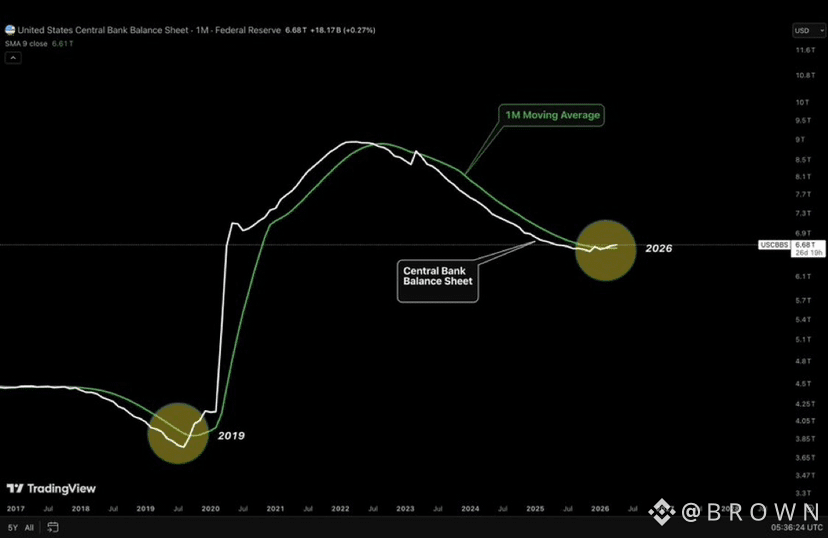
Globale Liquidität steigt weiter. Bitcoin bleibt zurück. Warum?
Globale Liquidität steigt weiter.

Bitcoin bleibt zurück.

Warum?
🚨 BREAKING 🚨 🇺🇸 Präsident Trump wird heute um 12:45 Uhr ET eine Pressekonferenz zur Tarifentscheidung des Obersten Gerichtshofs abhalten.
🚨 BREAKING 🚨

🇺🇸 Präsident Trump wird heute um 12:45 Uhr ET eine Pressekonferenz zur Tarifentscheidung des Obersten Gerichtshofs abhalten.
Das Klarheitsgesetz wäre ein massiver Auslöser für die Märkte. Das Genius-Gesetz hat dasselbe bewirkt --> Der Zufluss von Stablecoins hat sich schnell beschleunigt. Die Chancen, dass dies zur Genehmigung führt, haben sich im April '26 auf 90% erhöht. Wenn das passiert, dann ist es für mich ein Selbstläufer, $ETH {spot}(ETHUSDT) long zu gehen.
Das Klarheitsgesetz wäre ein massiver Auslöser für die Märkte.

Das Genius-Gesetz hat dasselbe bewirkt --> Der Zufluss von Stablecoins hat sich schnell beschleunigt.

Die Chancen, dass dies zur Genehmigung führt, haben sich im April '26 auf 90% erhöht.

Wenn das passiert, dann ist es für mich ein Selbstläufer, $ETH long zu gehen.
GERÜCHT 🚨 🇺🇸 Die Fed wird massive QE durchführen müssen, um der US-Regierung zu helfen, 150 MILLIARDEN Dollar an erhobenen Zöllen zu refinanzieren.
GERÜCHT 🚨

🇺🇸 Die Fed wird massive QE durchführen müssen, um der US-Regierung zu helfen, 150 MILLIARDEN Dollar an erhobenen Zöllen zu refinanzieren.
🚨 WARNUNG: Die Polymarket-Wahrscheinlichkeit eines US-Angriffs auf den Iran bis zum 31. März steigt auf 61%.
🚨 WARNUNG:

Die Polymarket-Wahrscheinlichkeit eines US-Angriffs auf den Iran bis zum 31. März steigt auf 61%.
Melde dich an, um weitere Inhalte zu entdecken
Bleib immer am Ball mit den neuesten Nachrichten aus der Kryptowelt
⚡️ Beteilige dich an aktuellen Diskussionen rund um Kryptothemen
💬 Interagiere mit deinen bevorzugten Content-Erstellern
👍 Entdecke für dich interessante Inhalte
E-Mail-Adresse/Telefonnummer
Sitemap
Cookie-Präferenzen
Nutzungsbedingungen der Plattform