
Zara ETH
6.3k Beiträge

Zara ETH
Crypto Girls...
8 Following
17.6K+ Follower
10.7K+ Like gegeben
Beiträge
Alle
Live
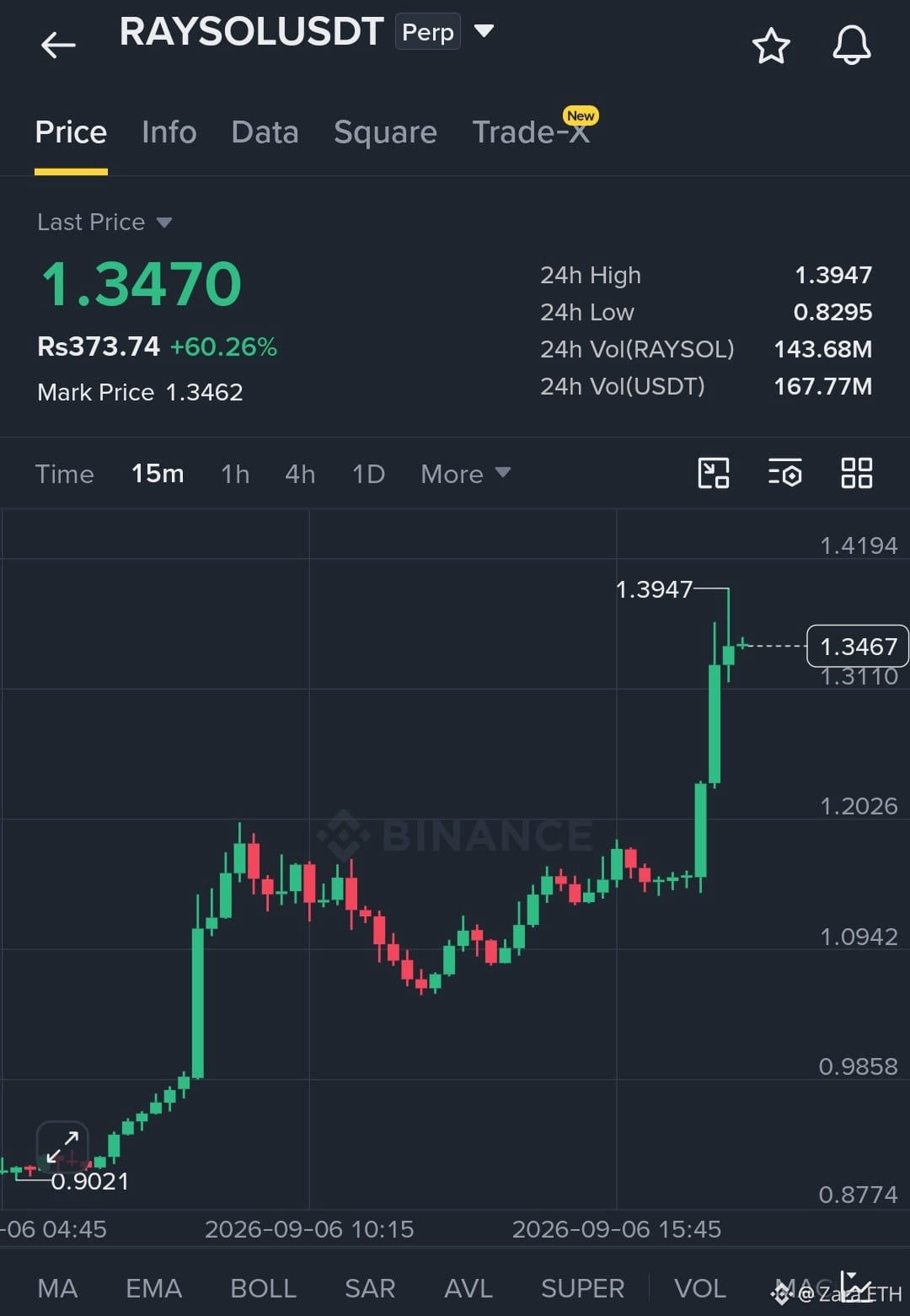
$RAYSOL heizt sich schnell auf.
Preis: 1,3470 $, +60,26 % in 24 Std
24H-Hoch: 1,3947 $
24H-Tief: 0,8295 $
24H-Volumen: 143,68 Mio. RAYSOL / 167,77 Mio. USDT
Der 15M-Chart zeigt einen starken Ausbruch aus der Zone um 1,20 $, wobei Käufer direkt auf 1,40 $ zusteuern.
Beobachte 1,31–1,20 $ als wichtigen Support. Ein klarer Ausbruch über 1,3947 $ könnte den Weg zu neuen Hochs öffnen.
#RussiaUkraine72-hourCeasefire #USAugustNonfarmPayrollsDueToday
Preis: 1,3470 $, +60,26 % in 24 Std
24H-Hoch: 1,3947 $
24H-Tief: 0,8295 $
24H-Volumen: 143,68 Mio. RAYSOL / 167,77 Mio. USDT
Der 15M-Chart zeigt einen starken Ausbruch aus der Zone um 1,20 $, wobei Käufer direkt auf 1,40 $ zusteuern.
Beobachte 1,31–1,20 $ als wichtigen Support. Ein klarer Ausbruch über 1,3947 $ könnte den Weg zu neuen Hochs öffnen.
#RussiaUkraine72-hourCeasefire #USAugustNonfarmPayrollsDueToday
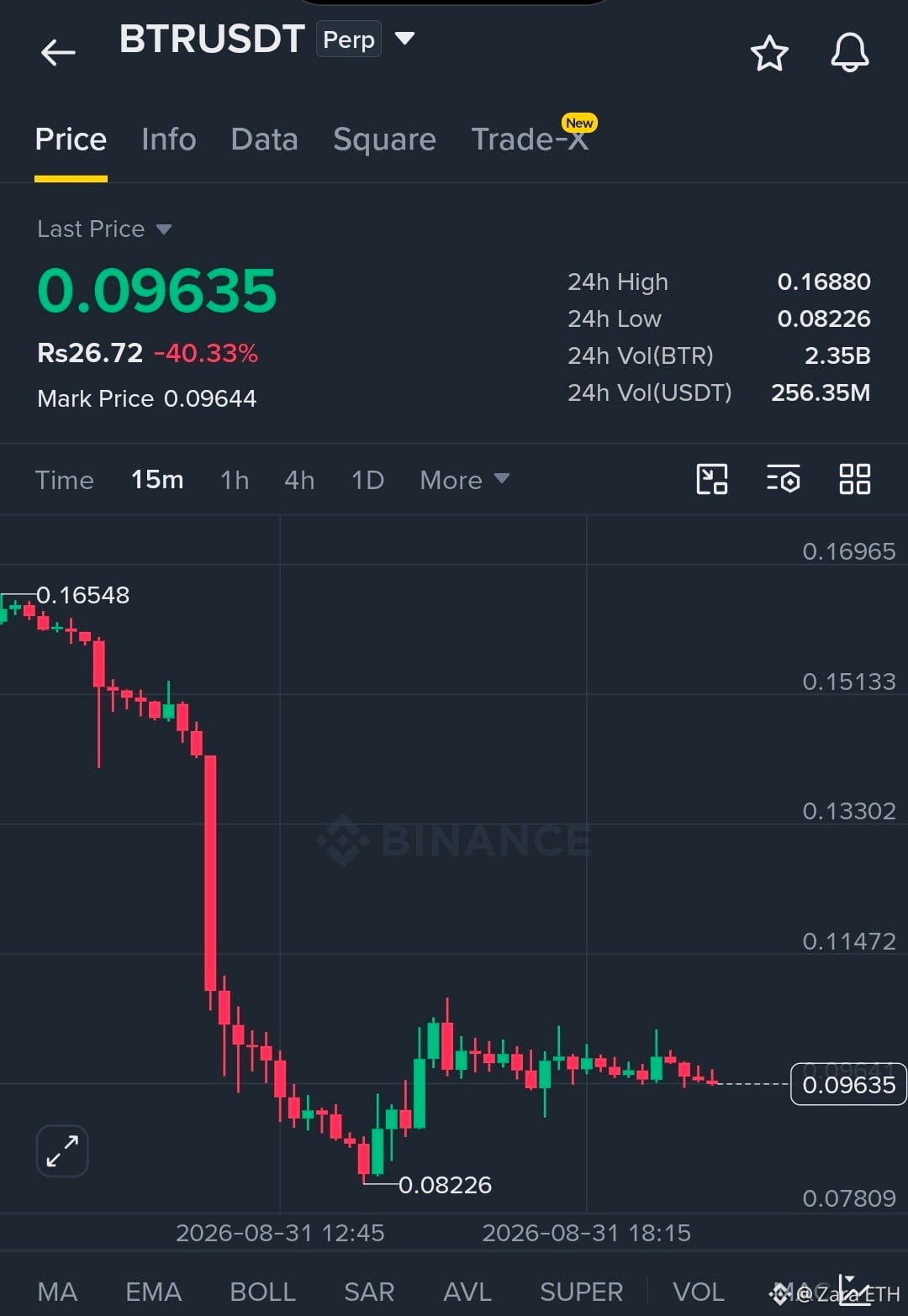
$BTR USDT Perp — extreme Volatilität
BTR handelt bei 0.09635 USDT und ist in 24 Std. um massive 40,33% gefallen.
24H-Hoch: 0.16880
24H-Tief: 0.08226
Kurs (Mark Price): 0.09644
24H-Volumen: 2,35 Mrd. BTR / 256,35 Mio. USDT
Chart: 15M
Nach dem brutalen Abverkauf bei 0.08226 ist der Preis zurückgesprungen und konsolidiert nun um 0.09635.
Wichtige Zone: 0.09635
Support: 0.08226
Widerstand: 0.10–0.11
BTR befindet sich im freien Fall — der nächste Ausbruch könnte explosionsartig werden.
#BitcoinUp23%InAugustOutperformingGoldAndStocks #ChinaPropertyStocksJumpOnNewMortgageRules
BTR handelt bei 0.09635 USDT und ist in 24 Std. um massive 40,33% gefallen.
24H-Hoch: 0.16880
24H-Tief: 0.08226
Kurs (Mark Price): 0.09644
24H-Volumen: 2,35 Mrd. BTR / 256,35 Mio. USDT
Chart: 15M
Nach dem brutalen Abverkauf bei 0.08226 ist der Preis zurückgesprungen und konsolidiert nun um 0.09635.
Wichtige Zone: 0.09635
Support: 0.08226
Widerstand: 0.10–0.11
BTR befindet sich im freien Fall — der nächste Ausbruch könnte explosionsartig werden.
#BitcoinUp23%InAugustOutperformingGoldAndStocks #ChinaPropertyStocksJumpOnNewMortgageRules
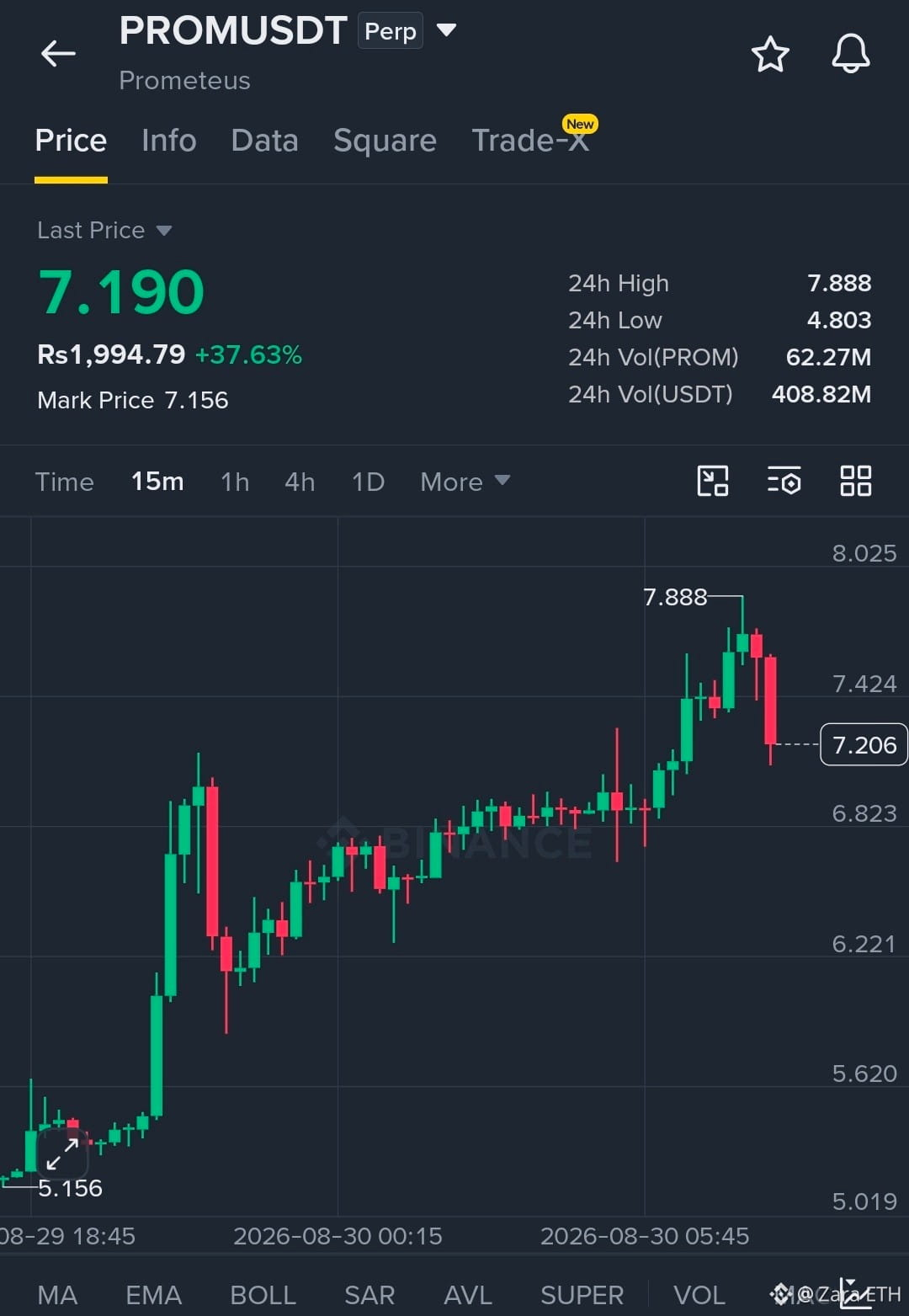
$PROM bewegt sich hart.
PROMUSDT handelt bei rund 7.190, ein Plus von 37,63% in 24H, nachdem ein Hoch von 7.888 nach einem Tief von 4.803 erreicht wurde.
24H-Volumen: 408,82M USDT
Aktuelles Chart: 15M
Wichtige Zone: 7.424
Widerstand: 7.888
Der Momentum bleibt intensiv, aber die starke Ablehnung vom Hoch macht den nächsten Schritt entscheidend.
PROM ist offiziell im Ausbruchsbereich.
#AfghanistanTalibanReportedlyBansCryptoNationwide #BitcoinSpotETFEnds9DayInflowStreak
PROMUSDT handelt bei rund 7.190, ein Plus von 37,63% in 24H, nachdem ein Hoch von 7.888 nach einem Tief von 4.803 erreicht wurde.
24H-Volumen: 408,82M USDT
Aktuelles Chart: 15M
Wichtige Zone: 7.424
Widerstand: 7.888
Der Momentum bleibt intensiv, aber die starke Ablehnung vom Hoch macht den nächsten Schritt entscheidend.
PROM ist offiziell im Ausbruchsbereich.
#AfghanistanTalibanReportedlyBansCryptoNationwide #BitcoinSpotETFEnds9DayInflowStreak
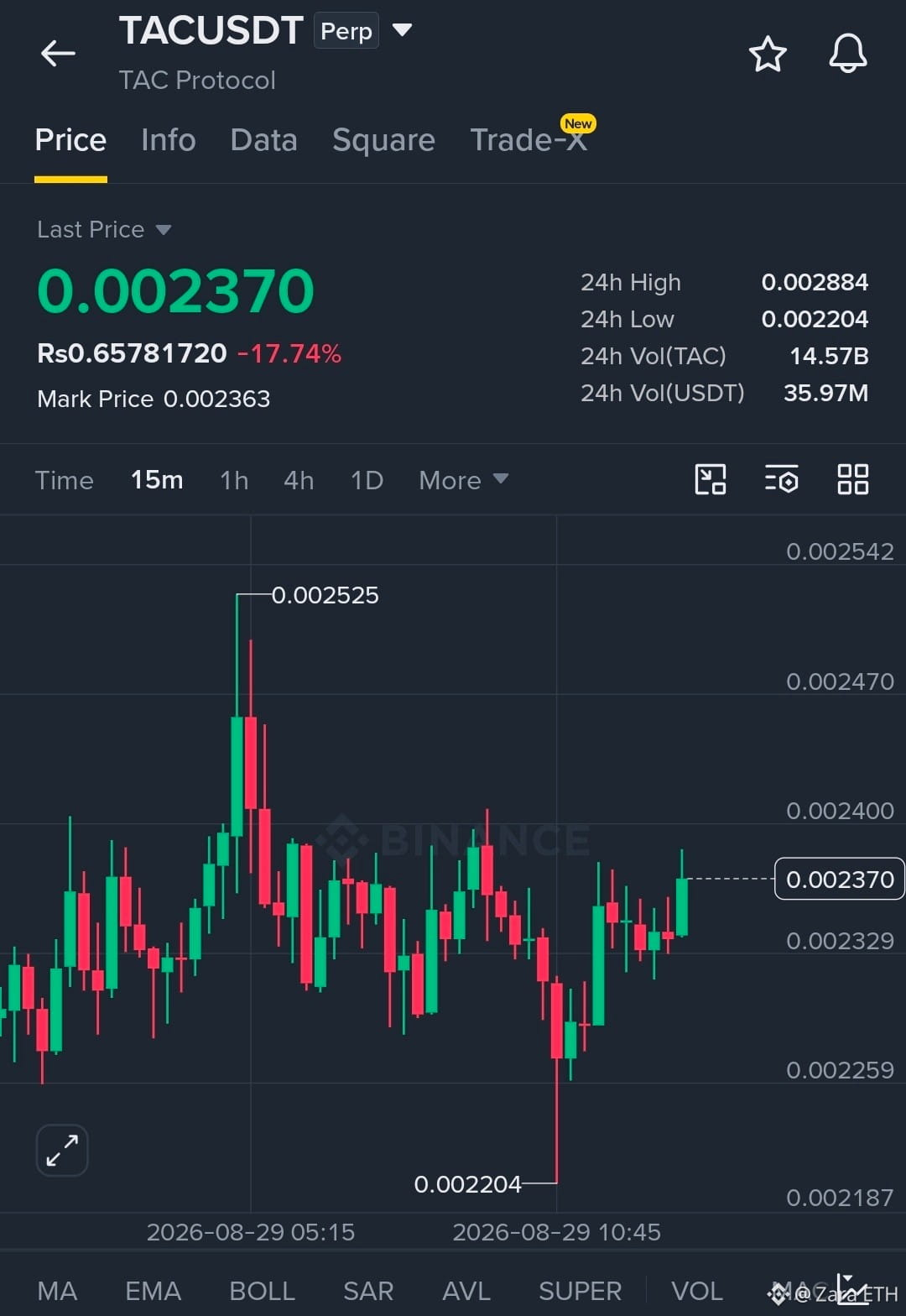
$TAC Protokoll (TACUSDT) zeigt ein Setup mit hoher Volatilität.
Preis: 0.002370
24H Veränderung: -17.74%
24H Hoch: 0.002884
24H Tief: 0.002204
24H Volumen: 14.57B TAC / $35.97M USDT
Marktpreis: 0.002363
Auf dem 15M-Chart ist TAC scharf von 0.002204 abgeprallt und drängt nun in Richtung des Widerstands bei 0.002400. Ein Ausbruch könnte die Erholung beschleunigen, während eine Abweisung den Kurs zurück in Richtung 0.002329 und 0.002259 senden kann.
Die Volatilität zieht an. Beobachte 0.002400 genau.
#WarshSaysInflationIsFedTopFocus #SOLJumps20%OnTheWeek
Preis: 0.002370
24H Veränderung: -17.74%
24H Hoch: 0.002884
24H Tief: 0.002204
24H Volumen: 14.57B TAC / $35.97M USDT
Marktpreis: 0.002363
Auf dem 15M-Chart ist TAC scharf von 0.002204 abgeprallt und drängt nun in Richtung des Widerstands bei 0.002400. Ein Ausbruch könnte die Erholung beschleunigen, während eine Abweisung den Kurs zurück in Richtung 0.002329 und 0.002259 senden kann.
Die Volatilität zieht an. Beobachte 0.002400 genau.
#WarshSaysInflationIsFedTopFocus #SOLJumps20%OnTheWeek
$MOVR USDT ist gerade in einem wilden Kampf.
Moonriver wird bei 0,7914 $ gehandelt, ist in den letzten 24 Stunden um 17,25 % gefallen, nachdem es eine brutale Abweisung von 1,0200 $ gab.
24H-Tief: 0,7316 $
24H-Volumen: 95,39 Mio. MOVR / 84,40 Mio. USDT
Auf dem 15-Minuten-Chart ist MOVR hart eingebrochen, hat bei etwa 0,7316 $ Unterstützung gefunden und erholt sich nun Richtung 0,80.
0,80 ist die unmittelbare Kampfzone. Ein Ausbruch könnte die Erholung beschleunigen, während das Verlieren von 0,7713 dazu führen könnte, dass das Tief bei 0,7316 wieder auf dem Plan steht.
Hohe Volatilität. Hohe Einsätze. MOVR ist in Bewegung.
#USShortTermTreasuryYieldsJump #CaliforniaBillWouldBarOfficialMemeCoins
Moonriver wird bei 0,7914 $ gehandelt, ist in den letzten 24 Stunden um 17,25 % gefallen, nachdem es eine brutale Abweisung von 1,0200 $ gab.
24H-Tief: 0,7316 $
24H-Volumen: 95,39 Mio. MOVR / 84,40 Mio. USDT
Auf dem 15-Minuten-Chart ist MOVR hart eingebrochen, hat bei etwa 0,7316 $ Unterstützung gefunden und erholt sich nun Richtung 0,80.
0,80 ist die unmittelbare Kampfzone. Ein Ausbruch könnte die Erholung beschleunigen, während das Verlieren von 0,7713 dazu führen könnte, dass das Tief bei 0,7316 wieder auf dem Plan steht.
Hohe Volatilität. Hohe Einsätze. MOVR ist in Bewegung.
#USShortTermTreasuryYieldsJump #CaliforniaBillWouldBarOfficialMemeCoins
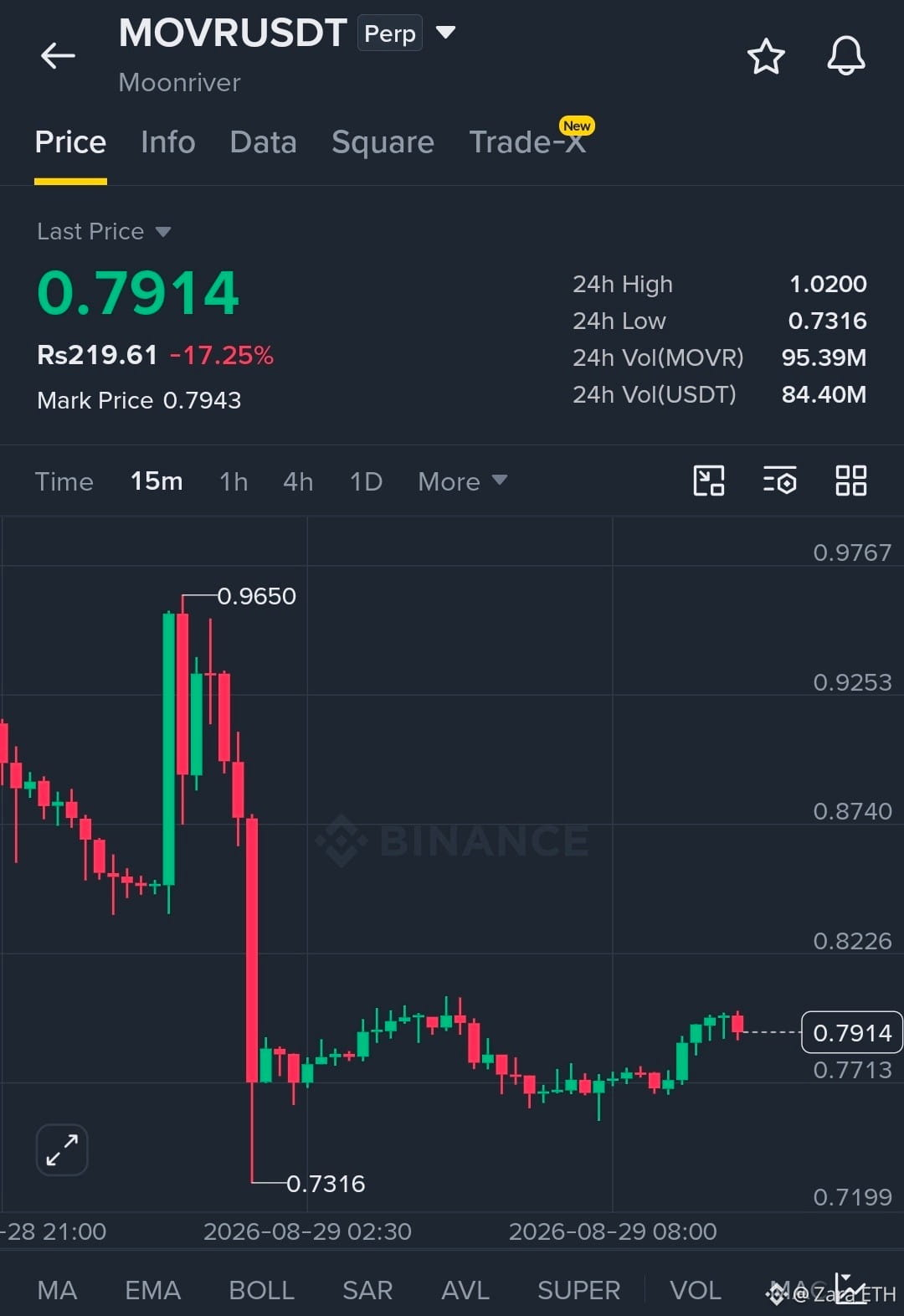
$BTR /USDT PERP — 15M
BTR bewegt sich stark, nachdem es nach einem massiven +36,13%-Anstieg stark gepulst ist.
Kurs: 0.15987
24H-Hoch: 0.17963
24H-Tief: 0.11113
24H-Volumen: 7,27 Mrd. BTR / 1,04 Mrd. USDT
Der Kurs liegt aktuell nahe bei 0.160, wobei 0.16994 der wichtigste Widerstand ist. Ein sauberer Ausbruch könnte BTR zurück Richtung 0.17963 treiben.
Wenn Käufer 0.159 verlieren, beobachte 0.14486 als die nächste große Unterstützung.
Die Volatilität ist extrem. Dieses Setup befindet sich in einer entscheidenden Zone.
#BestBuyQ2RevenueTopsEstimatesLiftsOutlook #DollarPostsBiggestGainInNearlyFourWeeks
BTR bewegt sich stark, nachdem es nach einem massiven +36,13%-Anstieg stark gepulst ist.
Kurs: 0.15987
24H-Hoch: 0.17963
24H-Tief: 0.11113
24H-Volumen: 7,27 Mrd. BTR / 1,04 Mrd. USDT
Der Kurs liegt aktuell nahe bei 0.160, wobei 0.16994 der wichtigste Widerstand ist. Ein sauberer Ausbruch könnte BTR zurück Richtung 0.17963 treiben.
Wenn Käufer 0.159 verlieren, beobachte 0.14486 als die nächste große Unterstützung.
Die Volatilität ist extrem. Dieses Setup befindet sich in einer entscheidenden Zone.
#BestBuyQ2RevenueTopsEstimatesLiftsOutlook #DollarPostsBiggestGainInNearlyFourWeeks
Teilweise korrekt
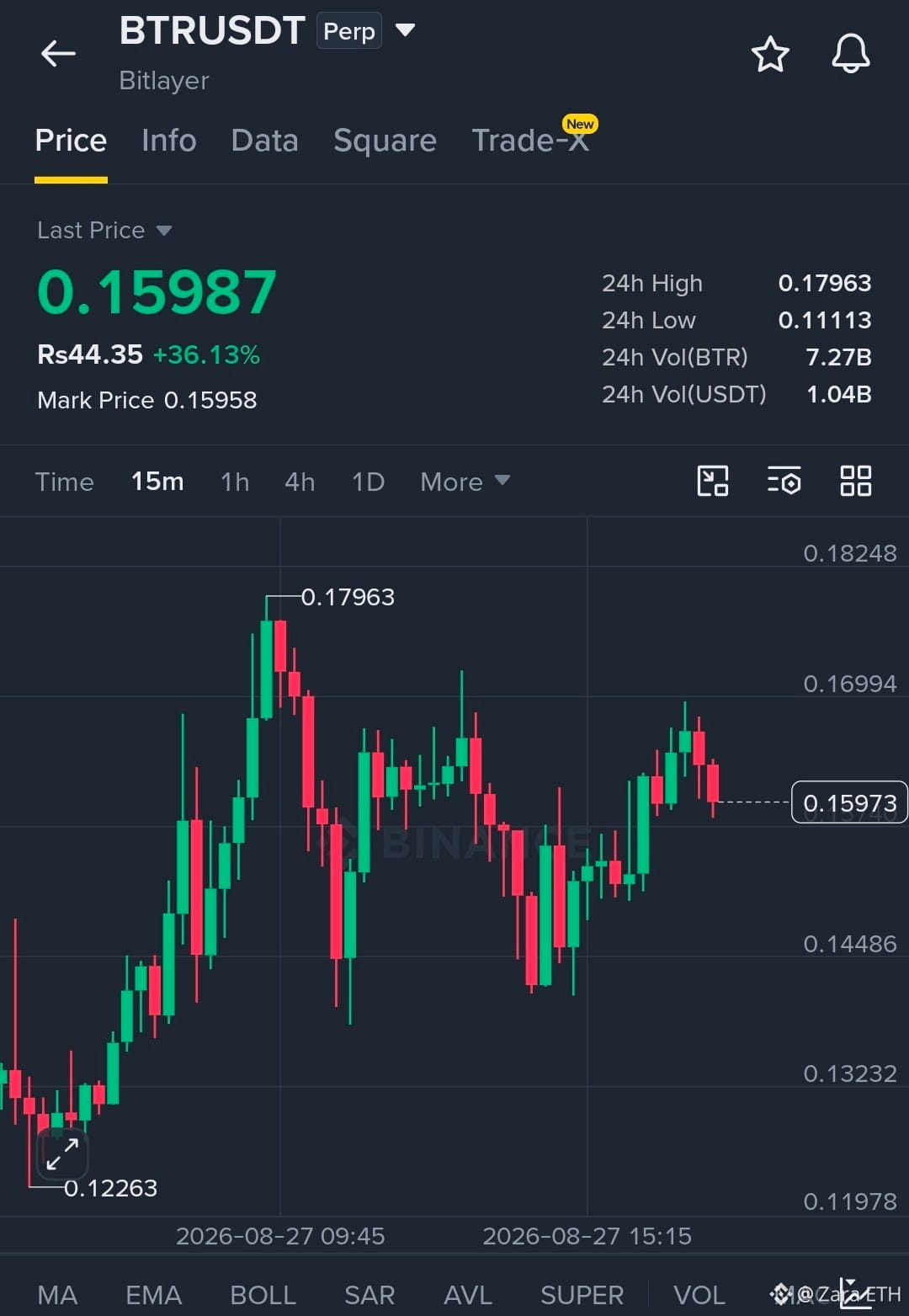
Ich habe den Überblick über den Treasury-Block von Dusk gelesen und bin dann buchstäblich mitten im Bissen stehen geblieben.
Die werfen hier „MiCA-konform, TradFi-On-Ramp“ in den Raum – alle institutionellen Buzzwords. Also erwartest du natürlich, dass die Stiftung selbst einen fetten Batzen ihres eigenen Tokens in der Tasche hat. Passt die Ausrichtung doch, oder?
Doch. Die Reserven sind stark auf Stables ausgerichtet. Fast kein DUSK.
Dann fiel mir August 16 ein: Das Bridge-Wallet hat verdächtige Aktivitäten abgefangen. Das Team hat schnell reagiert – Adressen eingefroren, Wallets recycelt, eine Blockliste durchgezogen, Binance eingebunden. Saubere Eindämmung.
Was hat das möglich gemacht? Sie waren nicht damit beschäftigt, ihren eigenen Token zu hedgen, während sie ihn handhaben.
DUSK steht bei 0,06 $ mit einer Marktkapitalisierung von 31 Mio. Dollar. Dünne Bücher. Wenn das Treasury in DUSK steckt, wird jeder Payroll-Run zum Glücksspiel. Stablecoins ermöglichen es ihnen, einfach Leute zu bezahlen und weiter aufzubauen – unabhängig von der Volatilität.
Ehrlich? Das ist einfach klug. Laufbahn absichern. Lass DUSK das spekulative Vehikel sein – nicht das, was das Team am Füttern hält.
Aber das hier lässt mich nicht los.
Sie geben täglich ~170k DUSK aus. Tatsächliche On-Chain-Gebühren? Vielleicht 3–4 DUSK pro Tag. Das ist keine Revenue-Loop. Wenn sie massiven Kaufdruck aufgrund der RWA-Adoption kommen sehen, wollten sie doch wenigstens etwas Upside-Exposure, oder? Selbst 10 %? Aber sie haben für null optimiert. Das ist eine Entscheidung.
Ich wippe ständig zwischen zwei Erklärungen. Kluges Management oder ein stilles Signal für wenig Vertrauen in die kurzfristige DUSK-Nachfrage?
Ich weiß, welche Lesart stimmt, wenn ich jemals sehe, wie sie Stables wieder zurück in DUSK rotieren, sobald die Pipeline live geht. Bis dahin beobachte ich einfach.
@Dusk #dusk $DUSK
Die werfen hier „MiCA-konform, TradFi-On-Ramp“ in den Raum – alle institutionellen Buzzwords. Also erwartest du natürlich, dass die Stiftung selbst einen fetten Batzen ihres eigenen Tokens in der Tasche hat. Passt die Ausrichtung doch, oder?
Doch. Die Reserven sind stark auf Stables ausgerichtet. Fast kein DUSK.
Dann fiel mir August 16 ein: Das Bridge-Wallet hat verdächtige Aktivitäten abgefangen. Das Team hat schnell reagiert – Adressen eingefroren, Wallets recycelt, eine Blockliste durchgezogen, Binance eingebunden. Saubere Eindämmung.
Was hat das möglich gemacht? Sie waren nicht damit beschäftigt, ihren eigenen Token zu hedgen, während sie ihn handhaben.
DUSK steht bei 0,06 $ mit einer Marktkapitalisierung von 31 Mio. Dollar. Dünne Bücher. Wenn das Treasury in DUSK steckt, wird jeder Payroll-Run zum Glücksspiel. Stablecoins ermöglichen es ihnen, einfach Leute zu bezahlen und weiter aufzubauen – unabhängig von der Volatilität.
Ehrlich? Das ist einfach klug. Laufbahn absichern. Lass DUSK das spekulative Vehikel sein – nicht das, was das Team am Füttern hält.
Aber das hier lässt mich nicht los.
Sie geben täglich ~170k DUSK aus. Tatsächliche On-Chain-Gebühren? Vielleicht 3–4 DUSK pro Tag. Das ist keine Revenue-Loop. Wenn sie massiven Kaufdruck aufgrund der RWA-Adoption kommen sehen, wollten sie doch wenigstens etwas Upside-Exposure, oder? Selbst 10 %? Aber sie haben für null optimiert. Das ist eine Entscheidung.
Ich wippe ständig zwischen zwei Erklärungen. Kluges Management oder ein stilles Signal für wenig Vertrauen in die kurzfristige DUSK-Nachfrage?
Ich weiß, welche Lesart stimmt, wenn ich jemals sehe, wie sie Stables wieder zurück in DUSK rotieren, sobald die Pipeline live geht. Bis dahin beobachte ich einfach.
@Dusk #dusk $DUSK
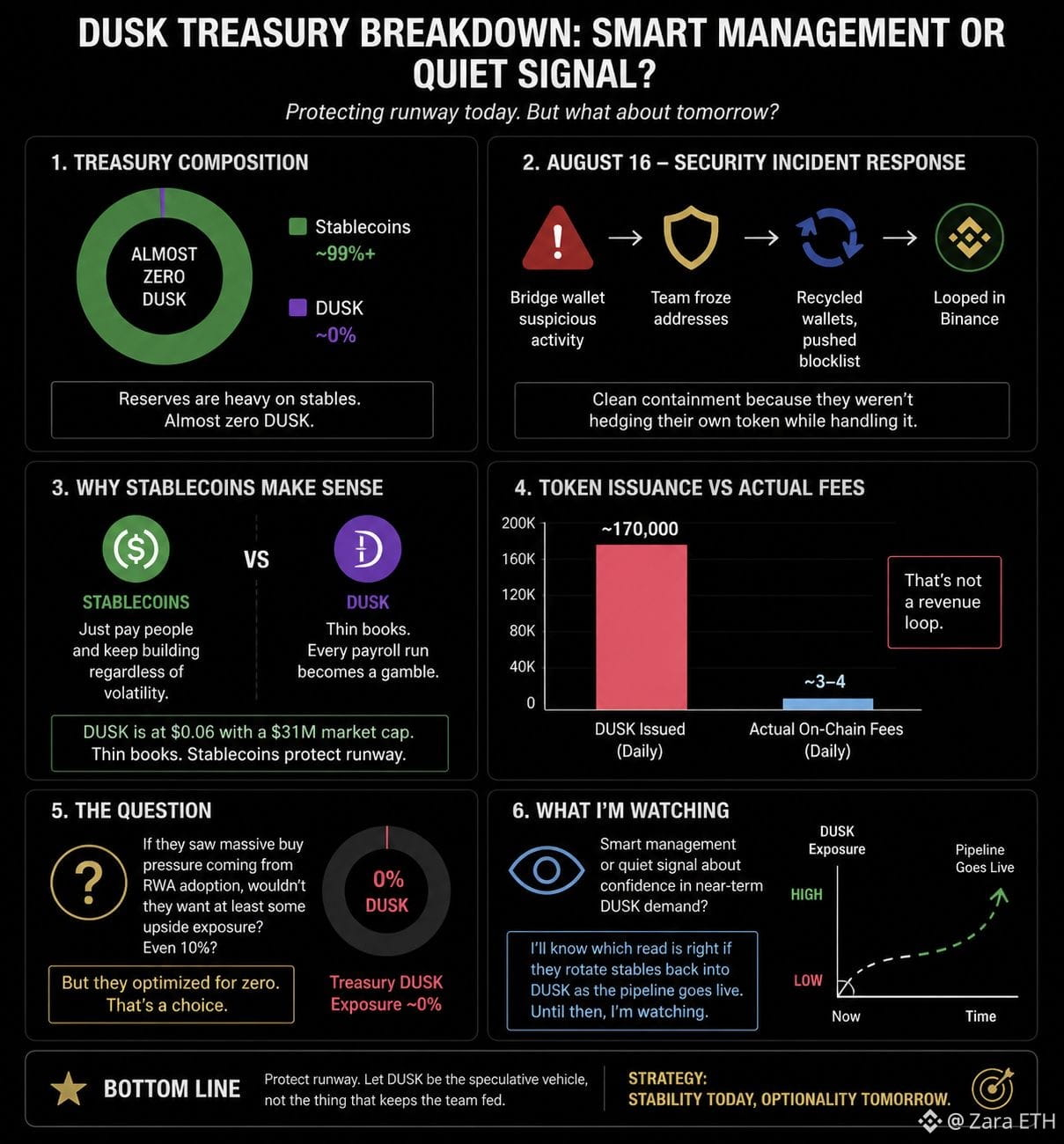
$STAR USDT macht einen starken Move.
Preis: 0.15739 | +15,32%
24H Hoch: 0.17989
24H Tief: 0.13518
24H Volumen: 31,13 Mio. USD
Nach einem scharfen Rallye-Anstieg vom Tief bei 0.13518 zieht STAR nun zurück und nähert sich wieder dem Bereich um 0.157.
Beobachte 0.159–0.164 genau. Wenn dieser Bereich zurückerobert wird, könnte der Weg Richtung 0.170 und 0.180 frei werden.
#USCryptoEquityIndexRises5.04% #SolanaRWAHoldersTop300000
Preis: 0.15739 | +15,32%
24H Hoch: 0.17989
24H Tief: 0.13518
24H Volumen: 31,13 Mio. USD
Nach einem scharfen Rallye-Anstieg vom Tief bei 0.13518 zieht STAR nun zurück und nähert sich wieder dem Bereich um 0.157.
Beobachte 0.159–0.164 genau. Wenn dieser Bereich zurückerobert wird, könnte der Weg Richtung 0.170 und 0.180 frei werden.
#USCryptoEquityIndexRises5.04% #SolanaRWAHoldersTop300000
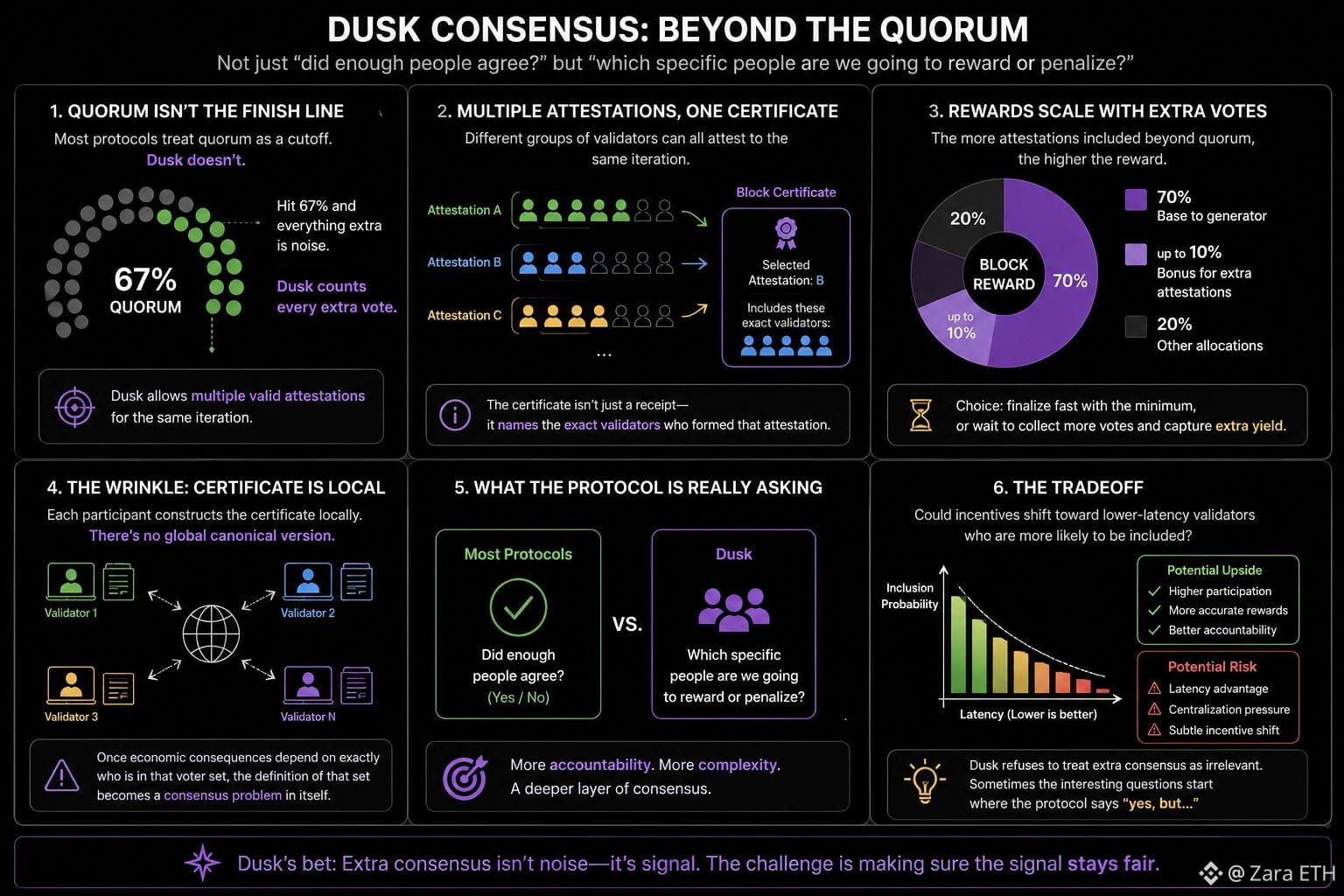
Die meisten Konsensprotokolle behandeln Quorum als eine Schwelle: Erreiche 67% und alles darüber hinaus ist nur Rauschen. Dusk macht das nicht.
Es erlaubt mehrere gültige Bestätigungen (Attestations) für dieselbe Iteration. Das bedeutet, dass verschiedene Gruppen von Validatoren alle Übereinstimmung beanspruchen können. Das Blockzertifikat wählt eine davon aus. Aber dieses Zertifikat ist nicht nur ein Beleg – es nennt die exakten Validatoren, die diese Bestätigung gebildet haben.
Warum ist das wichtig? Weil Belohnungen mit Stimmen über das Quorum hinaus skalieren. Der Generator erhält 70% der Blockbelohnung, plus einen Bonus von bis zu 10%, abhängig davon, wie viele zusätzliche Bestätigungen sie einpacken. Jetzt steht man also vor einer Entscheidung: Schnell mit dem Minimum abschließen oder etwas länger warten, um mehr Stimmen aufzusammeln und diese zusätzliche Rendite mitzunehmen.
Aber hier kommt die Besonderheit: Das Zertifikat wird lokal von jedem Teilnehmer erstellt. Es gibt keine globale, kanonische Version. Und sobald wirtschaftliche Konsequenzen davon abhängen, wer genau in diesem Wählermenge-Set enthalten ist, wird die Definition dieses Sets selbst zu einem Konsensproblem.
Das Protokoll fragt also nicht nur: „Haben genug Leute zugestimmt?“ Es fragt: „Welche konkreten Personen werden wir belohnen oder bestrafen?“ Das erhöht zwar die Rechenschaftspflicht. Aber es fügt auch eine Komplexität hinzu, die die Anreize subtil in Richtung von Low-Latency-Validatoren verschieben könnte, die eher aufgenommen werden.
Ich bin nicht überzeugt, dass dieser Tradeoff sauber ist. Aber ich denke, Dusk hat etwas erkannt, indem es sich weigert, zusätzlichen Konsens als irrelevant zu behandeln. Manchmal beginnen die spannenden Fragen genau dort, wo das Protokoll sagt: „Ja, aber…“
@Dusk #dusk $DUSK
Es erlaubt mehrere gültige Bestätigungen (Attestations) für dieselbe Iteration. Das bedeutet, dass verschiedene Gruppen von Validatoren alle Übereinstimmung beanspruchen können. Das Blockzertifikat wählt eine davon aus. Aber dieses Zertifikat ist nicht nur ein Beleg – es nennt die exakten Validatoren, die diese Bestätigung gebildet haben.
Warum ist das wichtig? Weil Belohnungen mit Stimmen über das Quorum hinaus skalieren. Der Generator erhält 70% der Blockbelohnung, plus einen Bonus von bis zu 10%, abhängig davon, wie viele zusätzliche Bestätigungen sie einpacken. Jetzt steht man also vor einer Entscheidung: Schnell mit dem Minimum abschließen oder etwas länger warten, um mehr Stimmen aufzusammeln und diese zusätzliche Rendite mitzunehmen.
Aber hier kommt die Besonderheit: Das Zertifikat wird lokal von jedem Teilnehmer erstellt. Es gibt keine globale, kanonische Version. Und sobald wirtschaftliche Konsequenzen davon abhängen, wer genau in diesem Wählermenge-Set enthalten ist, wird die Definition dieses Sets selbst zu einem Konsensproblem.
Das Protokoll fragt also nicht nur: „Haben genug Leute zugestimmt?“ Es fragt: „Welche konkreten Personen werden wir belohnen oder bestrafen?“ Das erhöht zwar die Rechenschaftspflicht. Aber es fügt auch eine Komplexität hinzu, die die Anreize subtil in Richtung von Low-Latency-Validatoren verschieben könnte, die eher aufgenommen werden.
Ich bin nicht überzeugt, dass dieser Tradeoff sauber ist. Aber ich denke, Dusk hat etwas erkannt, indem es sich weigert, zusätzlichen Konsens als irrelevant zu behandeln. Manchmal beginnen die spannenden Fragen genau dort, wo das Protokoll sagt: „Ja, aber…“
@Dusk #dusk $DUSK
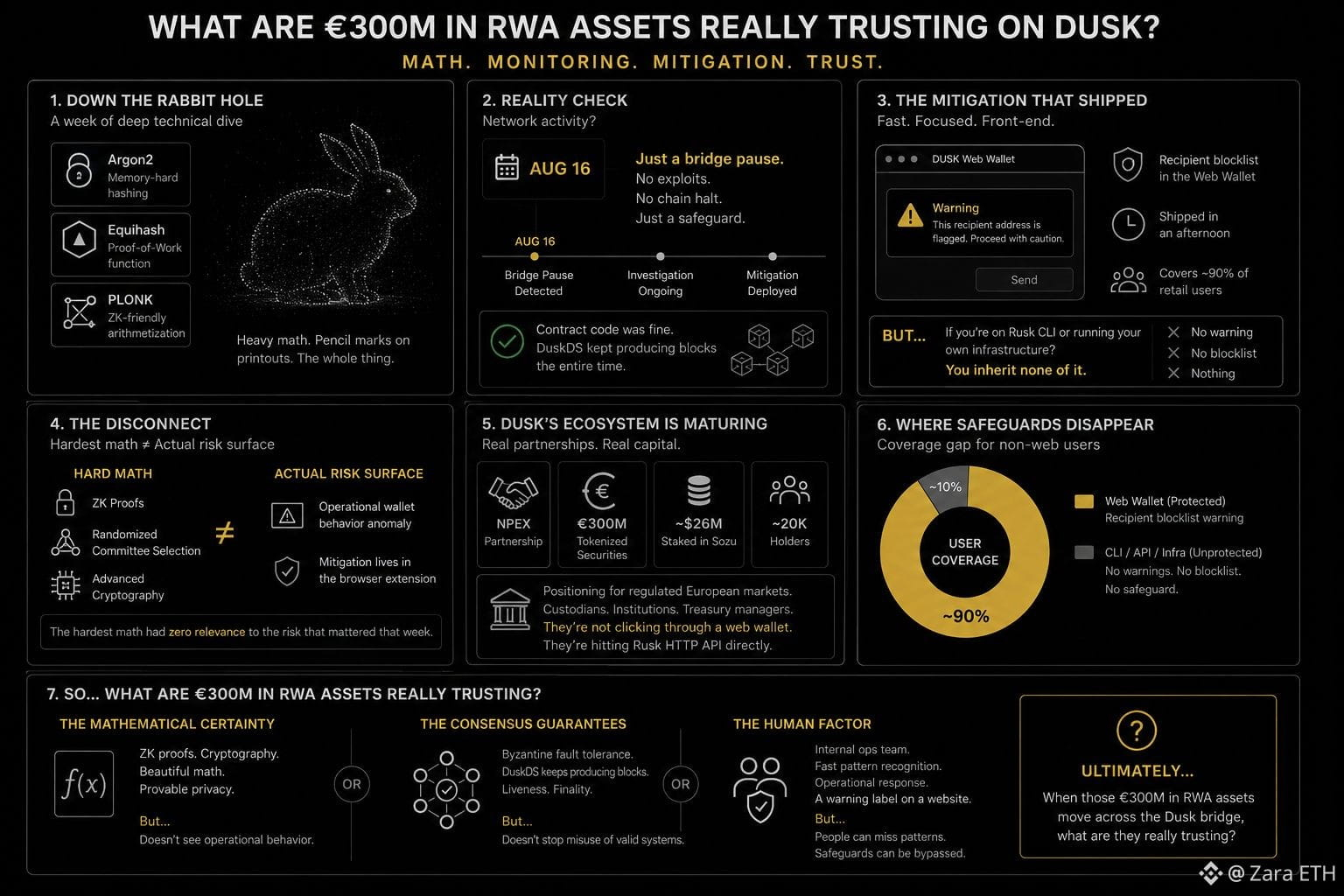
Verbrachte einen Großteil einer Woche in einem Khovratovich-Kaninchenbau bei Dusk—Argon2, Equihash, die PLONK-Arithmetisierung. Harte Mathematik. Bleistiftstriche auf Ausdrucke, das ganze Programm. Dann wechselte ich rüber, um die tatsächliche Netzwerkaktivität zu prüfen… und es war nur eine Bridge-Pause vom 16. August.
Ein teamverwaltetes Operational Wallet wurde wegen Verhaltens markiert, das nicht zu normalen Bridge-Operationen passte. Der Contract-Code war in Ordnung. DuskDS produzierte die ganze Zeit Blöcke. Die „Fix“-Maßnahme, die sie ausgeliefert haben? Eine Empfänger-Blockliste in der Web Wallet, die eine Warnung ausgibt, bevor man an eine als „geflaggt“ markierte Adresse senden kann.
Dort ist mein Gehirn praktisch kurzgeschlossen.
Die härteste Mathematik im Dusk-Stack—die ZK-Beweise, die zufällige Auswahl des Komitees—hatte in dieser Woche keinerlei Relevanz für die tatsächliche Angriffsfläche. Die Abmilderung landete dort, wo der Standardnutzer lebt: in der Browser-Erweiterung. Aber wenn man auf Rusk CLI ist oder die eigene Infrastruktur betreibt? Davon erbt man nichts. Keine Warnung. Keine Blockliste. Nichts.
Ich frage mich ständig, ob das pragmatisch oder beunruhigend ist. Die eine Hälfte sagt: Decke 90% der Retail-User an einem Nachmittag ab, streite später über Eleganz. Die andere Hälfte erinnert daran, dass Dusk sich für regulierte europäische Märkte positioniert—NPEX-Partnerschaft, 300 Mio. € in tokenisierten Wertpapieren, etwa 26 Mio. $ in Sozu eingesetzt mit rund 20k Inhabern. Wenn später Verwahrer und Treasury-Manager auftauchen, klicken sie nicht durch eine Web Wallet. Sie treffen direkt die Rusk HTTP API. Und diese Absicherung verschwindet für sie einfach still.
Also sitze ich hier und frage mich: Wenn diese 300 Mio. € an RWA-Assets tatsächlich über die Dusk-Bridge bewegt werden—worauf vertrauen sie dann wirklich? Auf die mathematische Gewissheit der ZK-Beweise? Auf die byzantinische Fehlertoleranz des Konsenses? Oder einfach darauf, dass das interne Ops-Team ein seltsames Muster schnell genug erkannt hat, um ein Warnlabel auf eine Website zu setzen?
@Dusk #dusk $DUSK
Ein teamverwaltetes Operational Wallet wurde wegen Verhaltens markiert, das nicht zu normalen Bridge-Operationen passte. Der Contract-Code war in Ordnung. DuskDS produzierte die ganze Zeit Blöcke. Die „Fix“-Maßnahme, die sie ausgeliefert haben? Eine Empfänger-Blockliste in der Web Wallet, die eine Warnung ausgibt, bevor man an eine als „geflaggt“ markierte Adresse senden kann.
Dort ist mein Gehirn praktisch kurzgeschlossen.
Die härteste Mathematik im Dusk-Stack—die ZK-Beweise, die zufällige Auswahl des Komitees—hatte in dieser Woche keinerlei Relevanz für die tatsächliche Angriffsfläche. Die Abmilderung landete dort, wo der Standardnutzer lebt: in der Browser-Erweiterung. Aber wenn man auf Rusk CLI ist oder die eigene Infrastruktur betreibt? Davon erbt man nichts. Keine Warnung. Keine Blockliste. Nichts.
Ich frage mich ständig, ob das pragmatisch oder beunruhigend ist. Die eine Hälfte sagt: Decke 90% der Retail-User an einem Nachmittag ab, streite später über Eleganz. Die andere Hälfte erinnert daran, dass Dusk sich für regulierte europäische Märkte positioniert—NPEX-Partnerschaft, 300 Mio. € in tokenisierten Wertpapieren, etwa 26 Mio. $ in Sozu eingesetzt mit rund 20k Inhabern. Wenn später Verwahrer und Treasury-Manager auftauchen, klicken sie nicht durch eine Web Wallet. Sie treffen direkt die Rusk HTTP API. Und diese Absicherung verschwindet für sie einfach still.
Also sitze ich hier und frage mich: Wenn diese 300 Mio. € an RWA-Assets tatsächlich über die Dusk-Bridge bewegt werden—worauf vertrauen sie dann wirklich? Auf die mathematische Gewissheit der ZK-Beweise? Auf die byzantinische Fehlertoleranz des Konsenses? Oder einfach darauf, dass das interne Ops-Team ein seltsames Muster schnell genug erkannt hat, um ein Warnlabel auf eine Website zu setzen?
@Dusk #dusk $DUSK
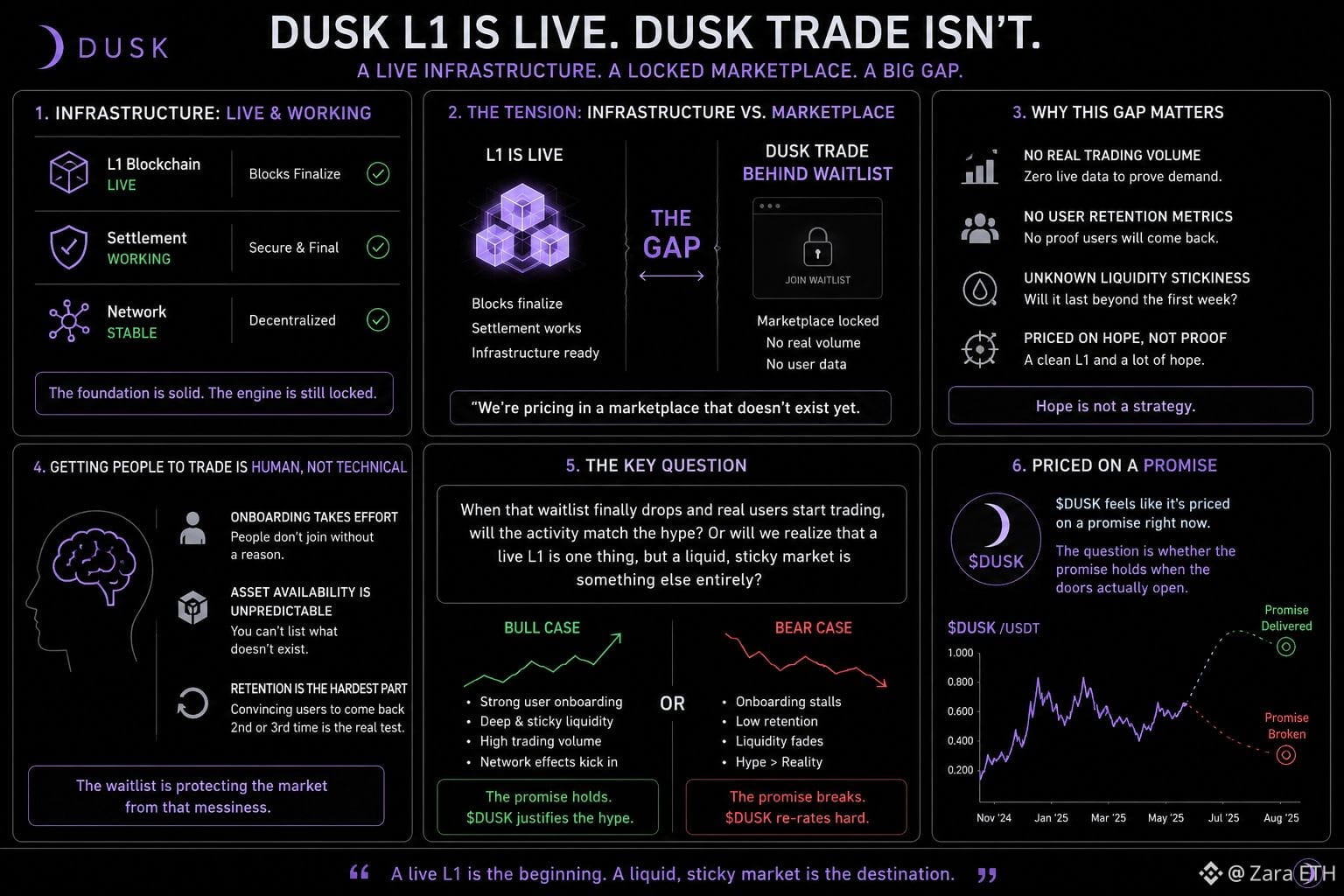
Es liegt eine stille Spannung darin, zu beobachten, wie Dusk's L1 live geht, während Dusk Trade hinter einer Warteliste sitzt.
Die Infrastruktur ist da. Blöcke finalisieren. Abwicklung funktioniert. Aber die wirtschaftliche Antriebskraft – also der eigentliche Marktplatz – ist noch immer hinter einem Anmeldeformular gesperrt. Diese Lücke ist wichtiger, als die meisten Menschen realisieren.
Zurzeit bepreisen wir einen florierenden Marktplatz, der noch gar nicht existiert. Kein echtes Handelsvolumen. Keine Kennzahlen zur Nutzerbindung. Kein Beleg dafür, dass die Liquidität nach der ersten Woche auch tatsächlich bleibt. Nur ein sehr sauberes L1 und viel Hoffnung.
Menschen zum Handel zu bringen ist kein technisches Problem – sondern ein menschliches. Onboarding kostet Aufwand. Die Verfügbarkeit von Assets ist unvorhersehbar. Und jemanden davon zu überzeugen, ein zweites oder drittes Mal wiederzukommen? Das ist der härteste Teil. Die Warteliste schützt den Markt vor dieser Unordnung.
Ich komme immer wieder auf dieselbe Frage zurück. Wenn diese Warteliste endlich fällt und echte Nutzer mit dem Handel beginnen: Wird die Aktivität mit dem Hype mithalten? Oder werden wir merken, dass ein Live-L1 das eine ist, aber ein liquider, stabiler Markt etwas ganz anderes?
$DUSK fühlt sich im Moment an, als wäre es auf ein Versprechen bepreist. Die Frage ist, ob das Versprechen hält, wenn die Türen sich dann wirklich öffnen.
@Dusk #dusk $DUSK
Die Infrastruktur ist da. Blöcke finalisieren. Abwicklung funktioniert. Aber die wirtschaftliche Antriebskraft – also der eigentliche Marktplatz – ist noch immer hinter einem Anmeldeformular gesperrt. Diese Lücke ist wichtiger, als die meisten Menschen realisieren.
Zurzeit bepreisen wir einen florierenden Marktplatz, der noch gar nicht existiert. Kein echtes Handelsvolumen. Keine Kennzahlen zur Nutzerbindung. Kein Beleg dafür, dass die Liquidität nach der ersten Woche auch tatsächlich bleibt. Nur ein sehr sauberes L1 und viel Hoffnung.
Menschen zum Handel zu bringen ist kein technisches Problem – sondern ein menschliches. Onboarding kostet Aufwand. Die Verfügbarkeit von Assets ist unvorhersehbar. Und jemanden davon zu überzeugen, ein zweites oder drittes Mal wiederzukommen? Das ist der härteste Teil. Die Warteliste schützt den Markt vor dieser Unordnung.
Ich komme immer wieder auf dieselbe Frage zurück. Wenn diese Warteliste endlich fällt und echte Nutzer mit dem Handel beginnen: Wird die Aktivität mit dem Hype mithalten? Oder werden wir merken, dass ein Live-L1 das eine ist, aber ein liquider, stabiler Markt etwas ganz anderes?
$DUSK fühlt sich im Moment an, als wäre es auf ein Versprechen bepreist. Die Frage ist, ob das Versprechen hält, wenn die Türen sich dann wirklich öffnen.
@Dusk #dusk $DUSK
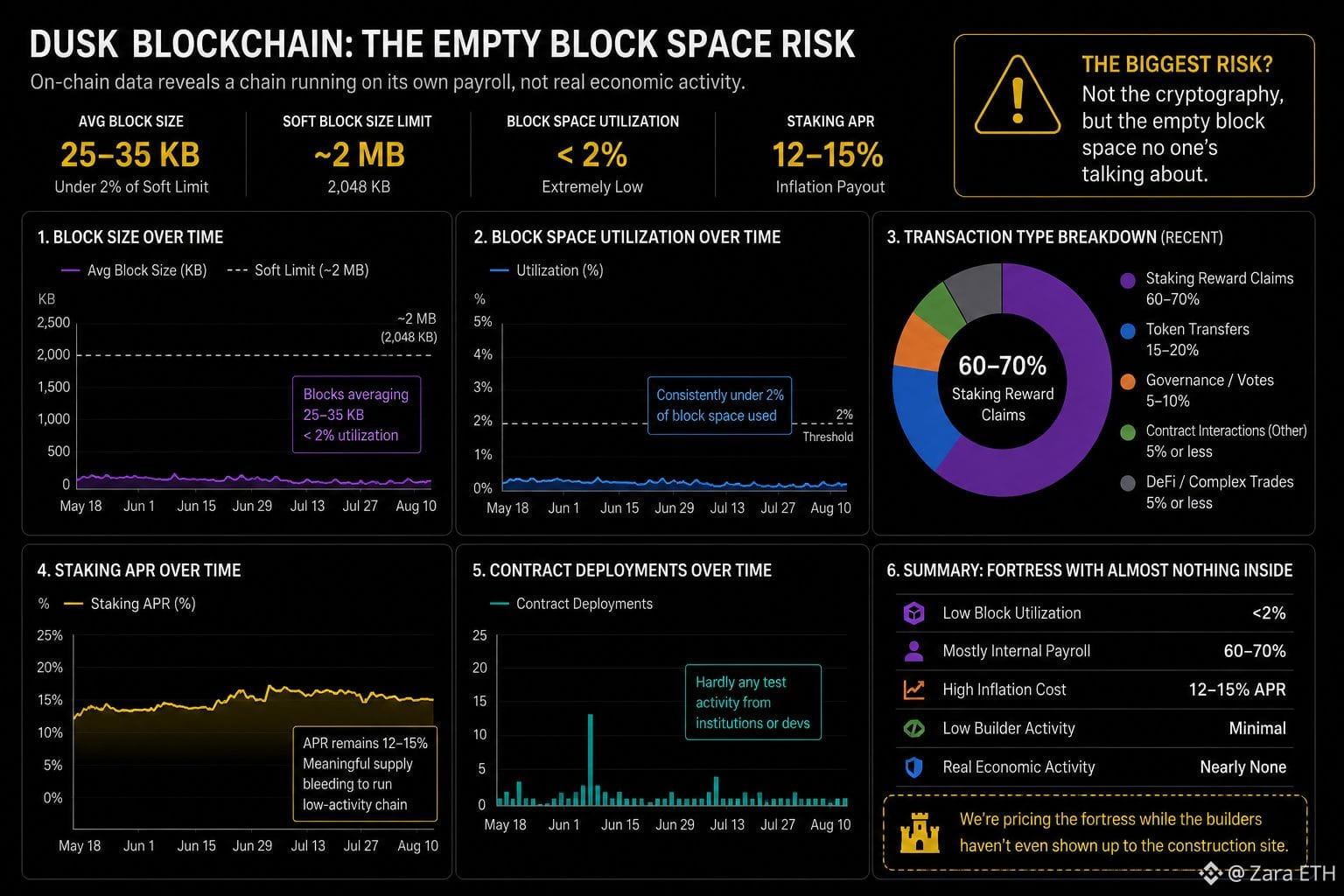
Ich habe letzte Nacht im Block-Explorer von Dusk gescrollt, einfach aus Neugier. Was ich gefunden habe, ließ mich innehalten.
Blöcke liegen im Schnitt bei 25–35 KB, während das Soft Limit bei etwa 2 MB liegt. Das sind unter 2% Auslastung. Für eine Layer-1, die für schwere Zero-Knowledge-Private-Contracts gebaut ist, habe ich etwas mehr Rauschen erwartet. Stattdessen ist da nur ein kaum hörbares Flüstern.
Dann habe ich hineingeklickt. Ungefähr 60–70% der jüngsten Transaktionen sind keine komplexen DeFi-Trades oder vertraulichen Wertpapiere. Es sind einfach Claims auf Staking-Belohnungen – Validatoren, die Inflationsauszahlungen einfahren, immer wieder.
Die Hauptaufgabe des Netzwerks besteht im Moment im Grunde darin, seine eigene Gehaltsliste abzuwickeln.
Währenddessen liegt das Staking-APR immer noch bei etwa 12–15%, um Validatoren zu incentivieren. Das ist ein bedeutender Teil der Emission, der in die Kette fließt, die laut ihren eigenen On-Chain-Daten bisher noch keinen echten externen wirtschaftlichen Mehrwert verarbeitet.
Ich habe mir Contract-Deployments angesehen. Kaum Testaktivität von Institutionen – oder sogar von Devs, die irgendetwas herumprobieren. Die Technik ist solide, die These ergibt Sinn. Aber die On-Chain-Daten zeigen einen befestigten Tresor mit fast nichts darin.
Wir bepreisen die Festung, obwohl die Builder noch nicht mal auf der Baustelle erschienen sind.
Und was, wenn das größte Risiko nicht die Kryptografie ist, sondern der leere Blockraum, über den niemand spricht?
@Dusk #dusk $DUSK
Blöcke liegen im Schnitt bei 25–35 KB, während das Soft Limit bei etwa 2 MB liegt. Das sind unter 2% Auslastung. Für eine Layer-1, die für schwere Zero-Knowledge-Private-Contracts gebaut ist, habe ich etwas mehr Rauschen erwartet. Stattdessen ist da nur ein kaum hörbares Flüstern.
Dann habe ich hineingeklickt. Ungefähr 60–70% der jüngsten Transaktionen sind keine komplexen DeFi-Trades oder vertraulichen Wertpapiere. Es sind einfach Claims auf Staking-Belohnungen – Validatoren, die Inflationsauszahlungen einfahren, immer wieder.
Die Hauptaufgabe des Netzwerks besteht im Moment im Grunde darin, seine eigene Gehaltsliste abzuwickeln.
Währenddessen liegt das Staking-APR immer noch bei etwa 12–15%, um Validatoren zu incentivieren. Das ist ein bedeutender Teil der Emission, der in die Kette fließt, die laut ihren eigenen On-Chain-Daten bisher noch keinen echten externen wirtschaftlichen Mehrwert verarbeitet.
Ich habe mir Contract-Deployments angesehen. Kaum Testaktivität von Institutionen – oder sogar von Devs, die irgendetwas herumprobieren. Die Technik ist solide, die These ergibt Sinn. Aber die On-Chain-Daten zeigen einen befestigten Tresor mit fast nichts darin.
Wir bepreisen die Festung, obwohl die Builder noch nicht mal auf der Baustelle erschienen sind.
Und was, wenn das größte Risiko nicht die Kryptografie ist, sondern der leere Blockraum, über den niemand spricht?
@Dusk #dusk $DUSK
Ich bleibe immer wieder an den Validatoren hängen.
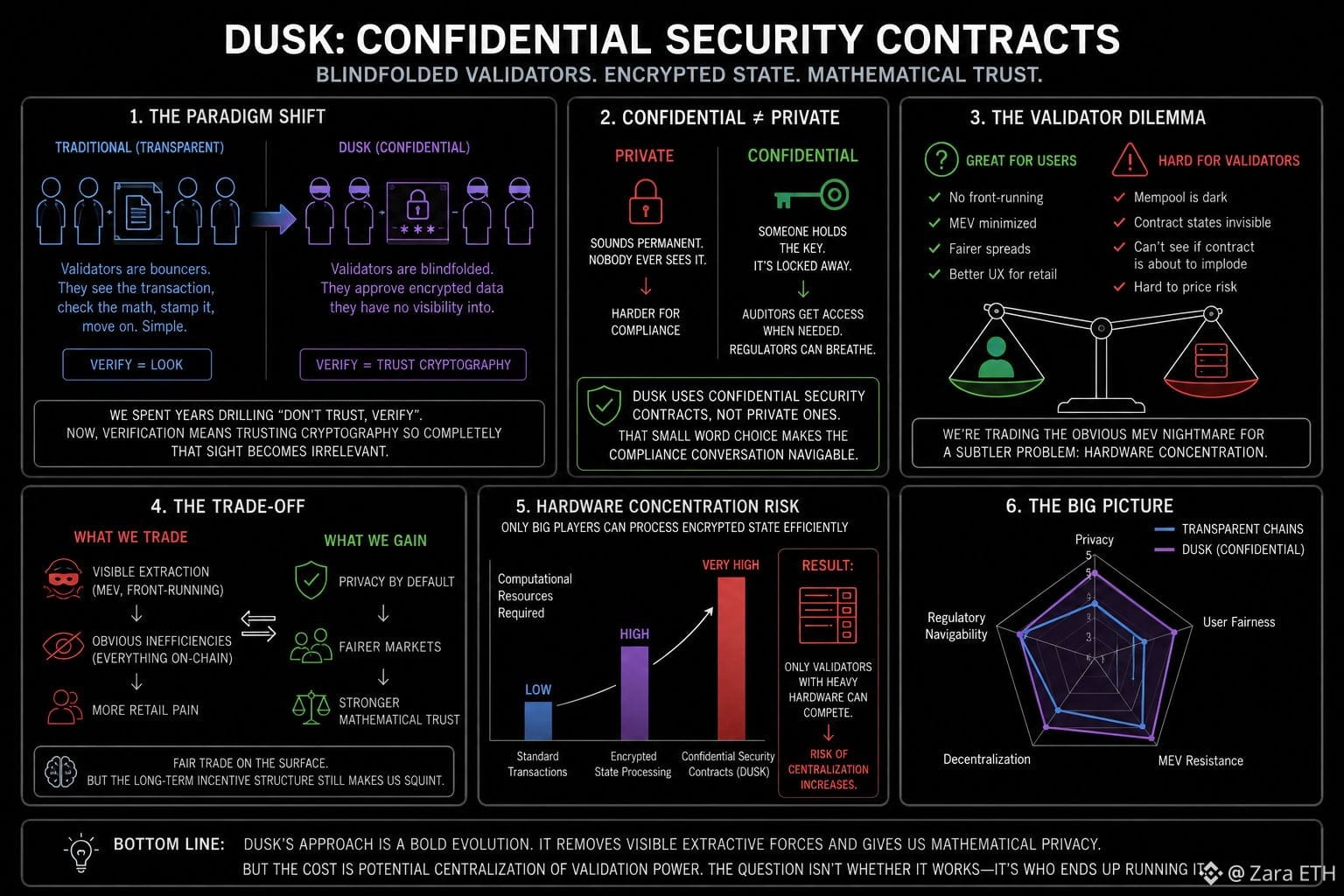
Normalerweise sind sie nur Türsteher. Sie sehen die Transaktion, prüfen die Rechnung, stempeln sie ab und machen weiter. Ganz einfach.
Aber auf Dusk bitten wir sie, Änderungen am Zustand zu billigen, die sie buchstäblich nicht lesen können. Sie sind blindfolded und genehmigen verschlüsselte Daten, auf die sie keinerlei Einsicht haben.
Wir haben jahrelang „Vertraue nicht, prüfe“ ins Ökosystem eingeprägt. Prüfen heißt normalerweise hinschauen. Aber hier bedeutet Verifizierung, der Kryptografie so vollständig zu vertrauen, dass das Sehen irrelevant wird. Das ist ein ziemlicher Wandel. Die Transparenz, auf die wir so fixiert waren, ist verschwunden – und trotzdem fühlt sich die Vertrauenslosigkeit irgendwie noch mathematischer, noch absoluter an.
Das Branding trifft diese Unterscheidung tatsächlich. Sie verwenden Confidential Security Contracts, nicht Private. Private klingt dauerhaft – niemand sieht es. Confidential heißt: Irgendjemand hält den Schlüssel, er ist nur weggeschlossen. Diese kleine Wortwahl macht die Compliance-Diskussion erst wirklich navigierbar. Prüfer bekommen Zugriff, wenn nötig. Regulierer können aufatmen.
Aber ich komme immer wieder auf die Validatoren zurück. Wenn der Mempool dunkel ist und Kontraktzustände unsichtbar sind – wie bewerten sie dann das Risiko der Validierung? Man kann nicht Front-Runnen, was großartig für Nutzer ist. Aber man kann auch nicht sehen, ob ein Kontrakt gleich implodieren wird.
Wir tauschen das offensichtliche MEV-Albtraumszenario gegen ein subtileres Problem: Hardware-Konzentration. Nur die großen Player mit schweren Setups können diese verschlüsselten Zustandsübergänge effizient verarbeiten.
Also klar, die Spreads werden für den Retail-Handel enger, weil Bots uns nicht anschnippen können. Aber ersetzen wir damit nur die sichtbare Extraktion durch eine unsichtbare Zentralisierung?
Auf der Oberfläche ein fairer Deal. Aber die langfristige Anreizstruktur lässt mich weiterhin skeptisch werden.
@Dusk #dusk $DUSK
Normalerweise sind sie nur Türsteher. Sie sehen die Transaktion, prüfen die Rechnung, stempeln sie ab und machen weiter. Ganz einfach.
Aber auf Dusk bitten wir sie, Änderungen am Zustand zu billigen, die sie buchstäblich nicht lesen können. Sie sind blindfolded und genehmigen verschlüsselte Daten, auf die sie keinerlei Einsicht haben.
Wir haben jahrelang „Vertraue nicht, prüfe“ ins Ökosystem eingeprägt. Prüfen heißt normalerweise hinschauen. Aber hier bedeutet Verifizierung, der Kryptografie so vollständig zu vertrauen, dass das Sehen irrelevant wird. Das ist ein ziemlicher Wandel. Die Transparenz, auf die wir so fixiert waren, ist verschwunden – und trotzdem fühlt sich die Vertrauenslosigkeit irgendwie noch mathematischer, noch absoluter an.
Das Branding trifft diese Unterscheidung tatsächlich. Sie verwenden Confidential Security Contracts, nicht Private. Private klingt dauerhaft – niemand sieht es. Confidential heißt: Irgendjemand hält den Schlüssel, er ist nur weggeschlossen. Diese kleine Wortwahl macht die Compliance-Diskussion erst wirklich navigierbar. Prüfer bekommen Zugriff, wenn nötig. Regulierer können aufatmen.
Aber ich komme immer wieder auf die Validatoren zurück. Wenn der Mempool dunkel ist und Kontraktzustände unsichtbar sind – wie bewerten sie dann das Risiko der Validierung? Man kann nicht Front-Runnen, was großartig für Nutzer ist. Aber man kann auch nicht sehen, ob ein Kontrakt gleich implodieren wird.
Wir tauschen das offensichtliche MEV-Albtraumszenario gegen ein subtileres Problem: Hardware-Konzentration. Nur die großen Player mit schweren Setups können diese verschlüsselten Zustandsübergänge effizient verarbeiten.
Also klar, die Spreads werden für den Retail-Handel enger, weil Bots uns nicht anschnippen können. Aber ersetzen wir damit nur die sichtbare Extraktion durch eine unsichtbare Zentralisierung?
Auf der Oberfläche ein fairer Deal. Aber die langfristige Anreizstruktur lässt mich weiterhin skeptisch werden.
@Dusk #dusk $DUSK
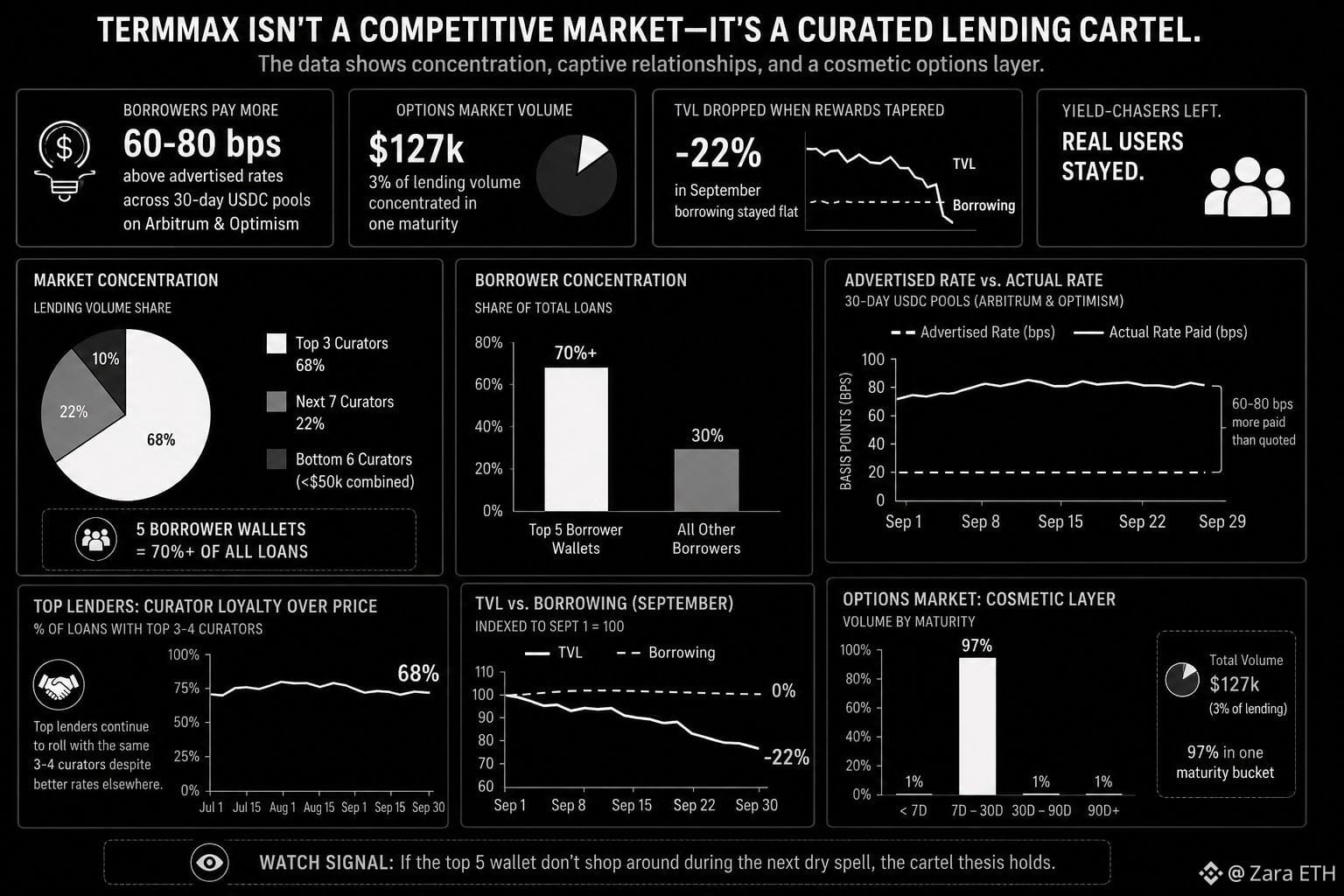
TermMax ist kein wettbewerbsfähiger Markt – es ist ein kuratierter Kreditkartell.
Werbesätze sind Köder. Kreditnehmer zahlen 60–80 bps mehr als angegeben über 30-Tage-USDC-Pools auf Arbitrum und Optimism.
Marktkonzentration:
· Die Top 3 Kuratoren kontrollieren 68% des Kreditvolumens
· Die unteren 6 Kuratoren haben zusammen <$50k
· 5 Kreditnehmer-Wallets = 70%+ aller Kredite
Der Optionsmarkt ist stumm: 127k Volumen (3% der Kredite) konzentriert sich auf eine einzige Laufzeit.
Die wahre Geschichte:
· Top-Kreditgeber arbeiten weiterhin mit denselben 3–4 Kuratoren, obwohl es anderswo bessere Sätze gibt
· Als die Rewards im September ausliefen, sank TVL um 22% – die Kreditaufnahme blieb jedoch stabil
· Yield-Jäger gingen. Echte Nutzer blieben.
Das ist strukturierte Finanzierung, nicht DeFi.
Top-Kreditnehmer schätzen Verlässlichkeit mehr als Basispunkte. Kuratoren haben captive Beziehungen. Die Optionsschicht ist nur Kulisse.
Beobachtungssignal: Wenn die Top 5 Wallets während der nächsten Trockenperiode nicht ihre Angebote vergleichen, hält die Kartellthese.
@TermMax #TermMax
Werbesätze sind Köder. Kreditnehmer zahlen 60–80 bps mehr als angegeben über 30-Tage-USDC-Pools auf Arbitrum und Optimism.
Marktkonzentration:
· Die Top 3 Kuratoren kontrollieren 68% des Kreditvolumens
· Die unteren 6 Kuratoren haben zusammen <$50k
· 5 Kreditnehmer-Wallets = 70%+ aller Kredite
Der Optionsmarkt ist stumm: 127k Volumen (3% der Kredite) konzentriert sich auf eine einzige Laufzeit.
Die wahre Geschichte:
· Top-Kreditgeber arbeiten weiterhin mit denselben 3–4 Kuratoren, obwohl es anderswo bessere Sätze gibt
· Als die Rewards im September ausliefen, sank TVL um 22% – die Kreditaufnahme blieb jedoch stabil
· Yield-Jäger gingen. Echte Nutzer blieben.
Das ist strukturierte Finanzierung, nicht DeFi.
Top-Kreditnehmer schätzen Verlässlichkeit mehr als Basispunkte. Kuratoren haben captive Beziehungen. Die Optionsschicht ist nur Kulisse.
Beobachtungssignal: Wenn die Top 5 Wallets während der nächsten Trockenperiode nicht ihre Angebote vergleichen, hält die Kartellthese.
@TermMax #TermMax
Öffentliche Blockchains sind schrecklich für institutionelles Finanzwesen. Warum? Weil jeder Handel für alle sichtbar ist.
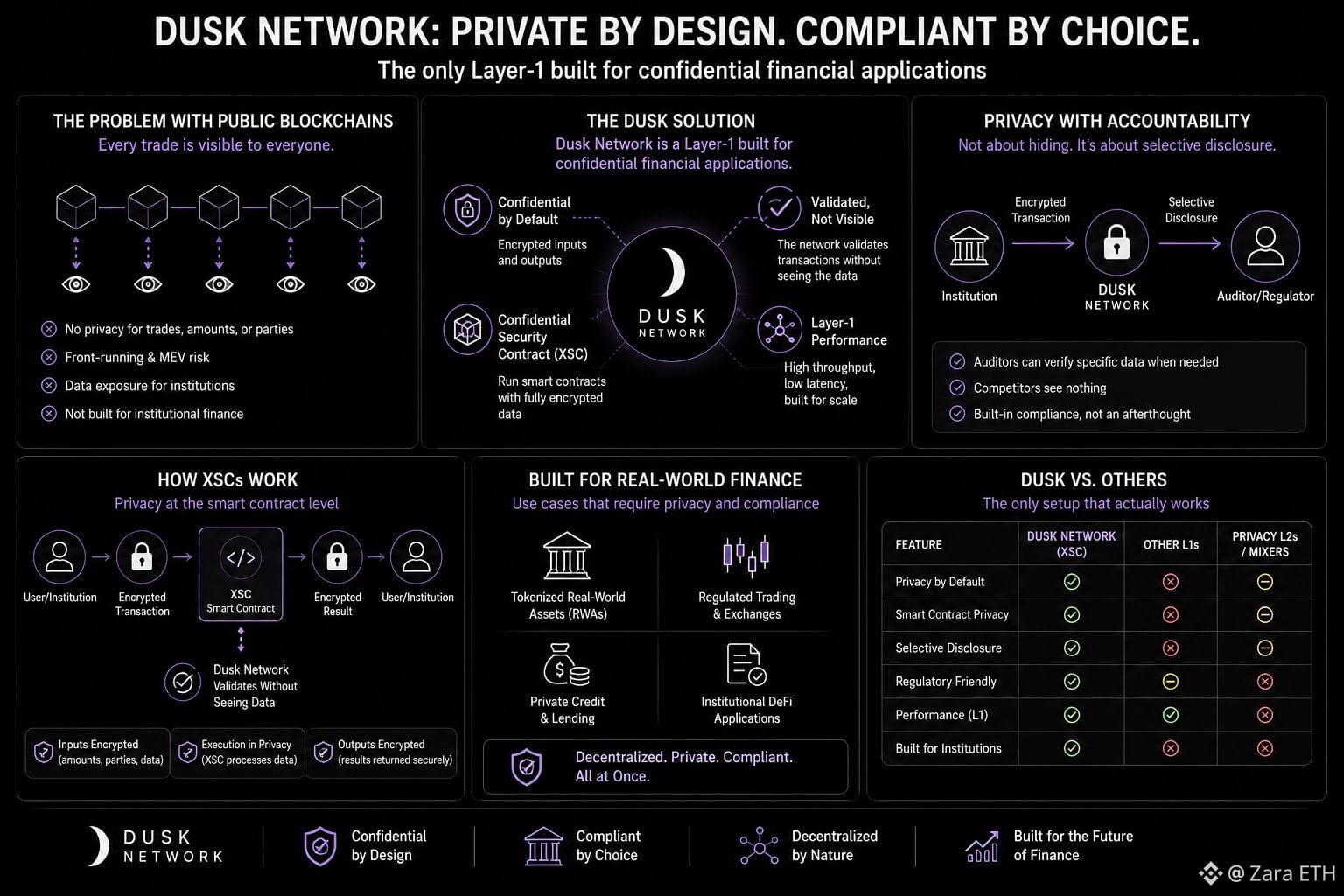
Dusk Network behebt das. Es ist eine Layer-1 für vertrauliche Finanzanwendungen, angetrieben durch den Confidential Security Contract (XSC)-Standard. XSCs ermöglichen es, Smart Contracts mit vollständig verschlüsselten Eingaben und Ausgaben auszuführen — das Netzwerk validiert die Transaktion, ohne jemals die Beträge oder beteiligten Parteien zu sehen.
Das ist Datenschutz by Design, nicht als Aufsatz. Aber der entscheidende Punkt: Es geht nicht darum, sich vor Regulierungsbehörden zu verstecken. Dusk unterstützt selektive Offenlegung — Auditoren können bei Bedarf spezifische Daten verifizieren, während Wettbewerber nichts sehen.
Für tokenisierte Real-World Assets und regulierten Handel könnte das die einzige Konfiguration sein, die wirklich funktioniert: dezentral, privat und zugleich compliant.
@Dusk #dusk $DUSK
Dusk Network behebt das. Es ist eine Layer-1 für vertrauliche Finanzanwendungen, angetrieben durch den Confidential Security Contract (XSC)-Standard. XSCs ermöglichen es, Smart Contracts mit vollständig verschlüsselten Eingaben und Ausgaben auszuführen — das Netzwerk validiert die Transaktion, ohne jemals die Beträge oder beteiligten Parteien zu sehen.
Das ist Datenschutz by Design, nicht als Aufsatz. Aber der entscheidende Punkt: Es geht nicht darum, sich vor Regulierungsbehörden zu verstecken. Dusk unterstützt selektive Offenlegung — Auditoren können bei Bedarf spezifische Daten verifizieren, während Wettbewerber nichts sehen.
Für tokenisierte Real-World Assets und regulierten Handel könnte das die einzige Konfiguration sein, die wirklich funktioniert: dezentral, privat und zugleich compliant.
@Dusk #dusk $DUSK
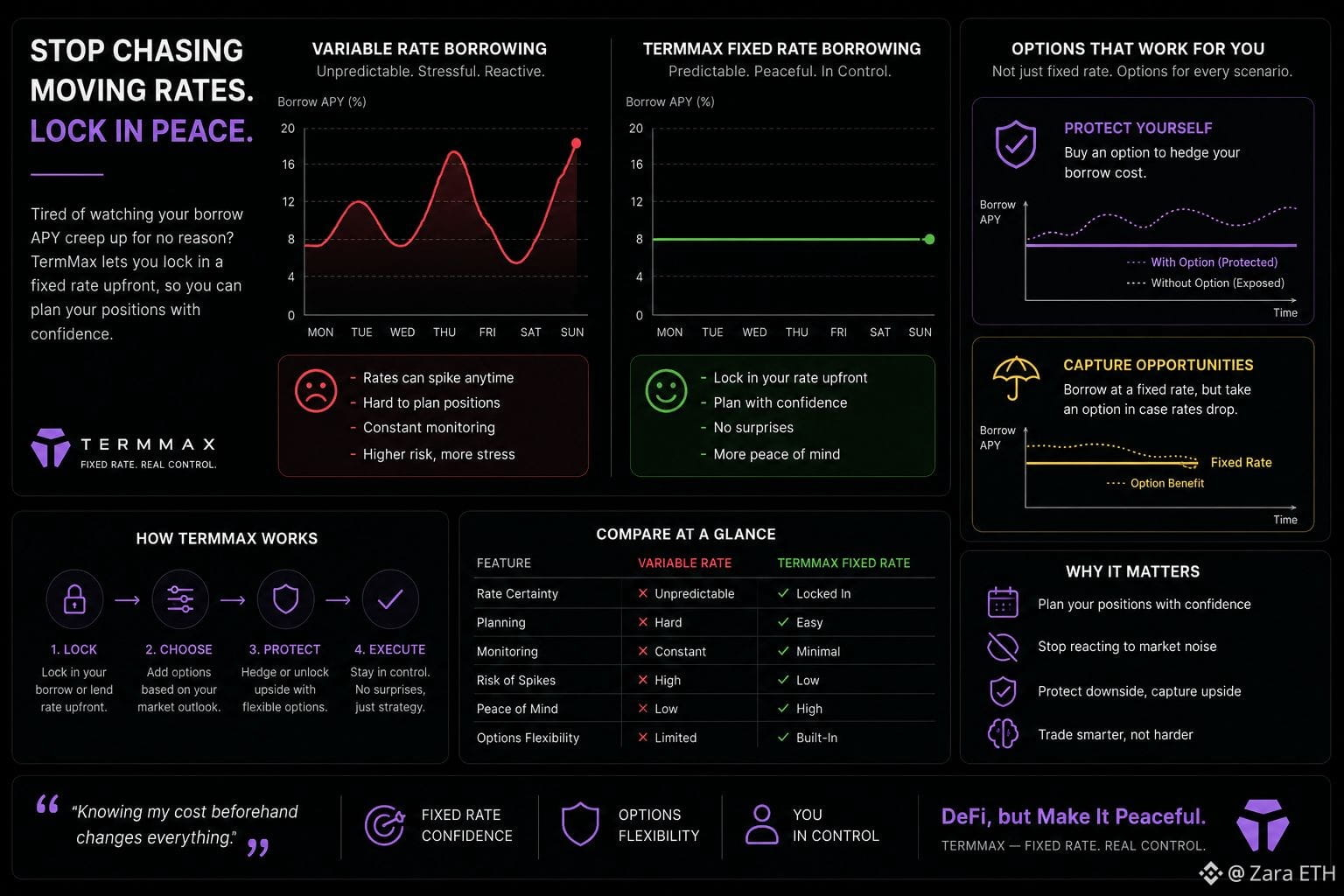
Ehrlich gesagt, fängt mich dieses Variable-Rate-Thema in DeFi langsam echt an zu nerven.
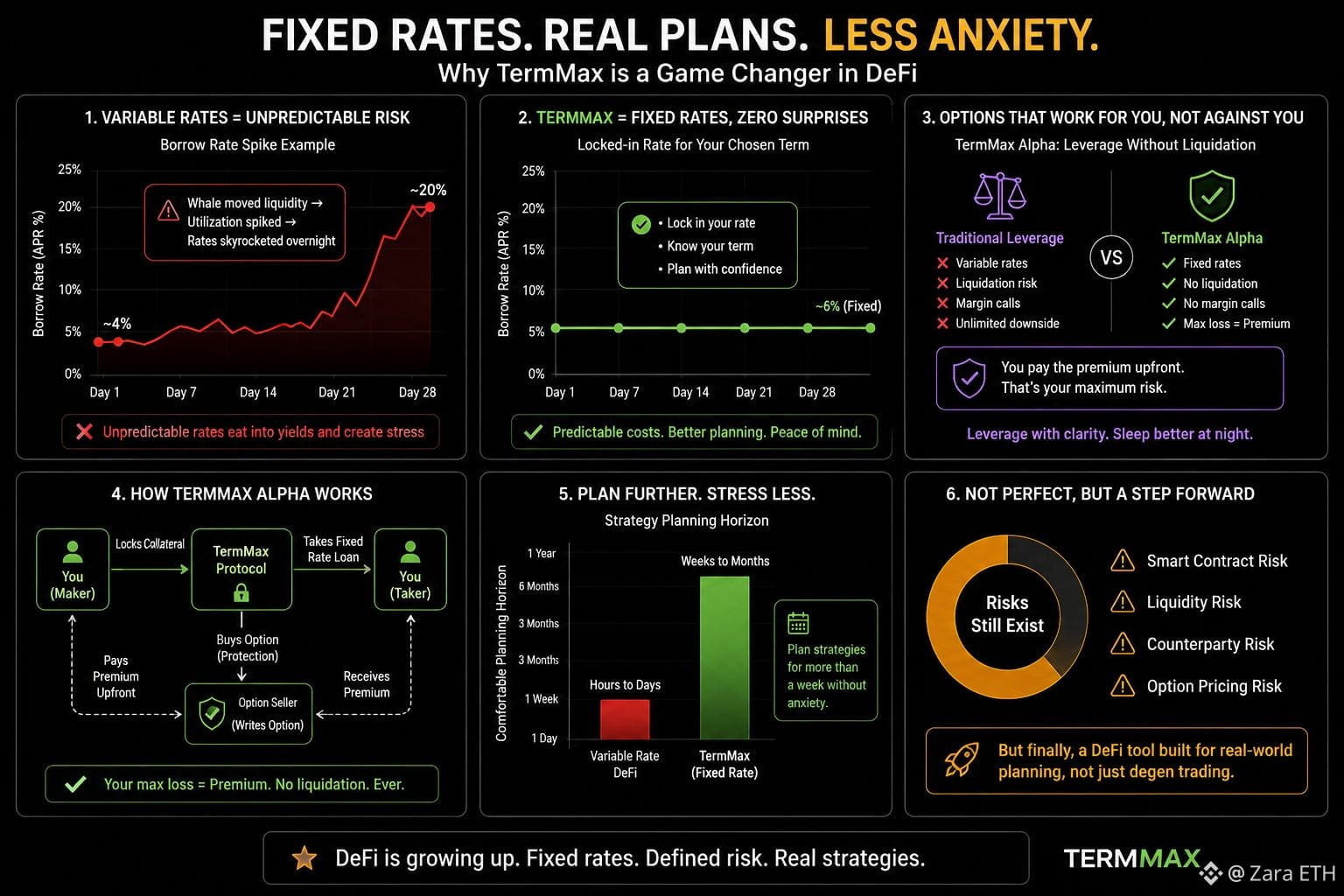
Ich hatte letzten Monat eine Position, bei der sich meine Borrow-Rate von ungefähr 4% auf fast 20% über Nacht hochgeschaukelt hat. Gleiches Protokoll. Gleiche Sicherheiten. Nur ein Wal hat Liquidität verschoben, und plötzlich wurde meine „sichere“ Rendite förmlich aufgefressen.
Deshalb ergab TermMax für mich tatsächlich Sinn, als ich darüber gestolpert bin. Die machen Fixzinsen, was zwar langweilig klingt, aber langweilig ist genau das, was ich brauche, wenn ich mehr als nur ein paar Tage im Voraus plane.
Du fixierst deinen Zinssatz, kennst deine Laufzeit – und das war’s. Kein ständiges Aktualisieren des Dashboards mehr, nur um zu sehen, ob du eine Position auflösen musst, weil die Auslastung um 3 Uhr morgens durchdreht.
Was mich überrascht hat, ist, wie sie das mit Optionen kombiniert haben. Ich dachte, Optionen bedeuten mehr Risiko, aber so, wie sie es aufsetzen, kannst du sie tatsächlich als Absicherung nutzen. Dieses Alpha-Produkt, bei dem du Hebel bekommst, ohne Liquidation? Du zahlst die Prämie einfach im Voraus, und das ist dein maximaler Verlust. Keine Margin Calls, kein Panikmodus.
Ich sage nicht, dass es perfekt ist oder so. Ich habe immer noch mit Smart-Contract-Risiken zu tun, und Liquidität kann natürlich auch immer ein Thema sein. Aber endlich hat jemand ein Tool gebaut, mit dem ich wirklich eine Strategie für mehr als eine Woche planen kann – ohne Angstzustände.
Irgendwie fühlt es sich so an, als würde DeFi ein bisschen erwachsener werden. Nicht alles muss ständig volatil sein.
@TermMax #TermMax
Ich hatte letzten Monat eine Position, bei der sich meine Borrow-Rate von ungefähr 4% auf fast 20% über Nacht hochgeschaukelt hat. Gleiches Protokoll. Gleiche Sicherheiten. Nur ein Wal hat Liquidität verschoben, und plötzlich wurde meine „sichere“ Rendite förmlich aufgefressen.
Deshalb ergab TermMax für mich tatsächlich Sinn, als ich darüber gestolpert bin. Die machen Fixzinsen, was zwar langweilig klingt, aber langweilig ist genau das, was ich brauche, wenn ich mehr als nur ein paar Tage im Voraus plane.
Du fixierst deinen Zinssatz, kennst deine Laufzeit – und das war’s. Kein ständiges Aktualisieren des Dashboards mehr, nur um zu sehen, ob du eine Position auflösen musst, weil die Auslastung um 3 Uhr morgens durchdreht.
Was mich überrascht hat, ist, wie sie das mit Optionen kombiniert haben. Ich dachte, Optionen bedeuten mehr Risiko, aber so, wie sie es aufsetzen, kannst du sie tatsächlich als Absicherung nutzen. Dieses Alpha-Produkt, bei dem du Hebel bekommst, ohne Liquidation? Du zahlst die Prämie einfach im Voraus, und das ist dein maximaler Verlust. Keine Margin Calls, kein Panikmodus.
Ich sage nicht, dass es perfekt ist oder so. Ich habe immer noch mit Smart-Contract-Risiken zu tun, und Liquidität kann natürlich auch immer ein Thema sein. Aber endlich hat jemand ein Tool gebaut, mit dem ich wirklich eine Strategie für mehr als eine Woche planen kann – ohne Angstzustände.
Irgendwie fühlt es sich so an, als würde DeFi ein bisschen erwachsener werden. Nicht alles muss ständig volatil sein.
@TermMax #TermMax
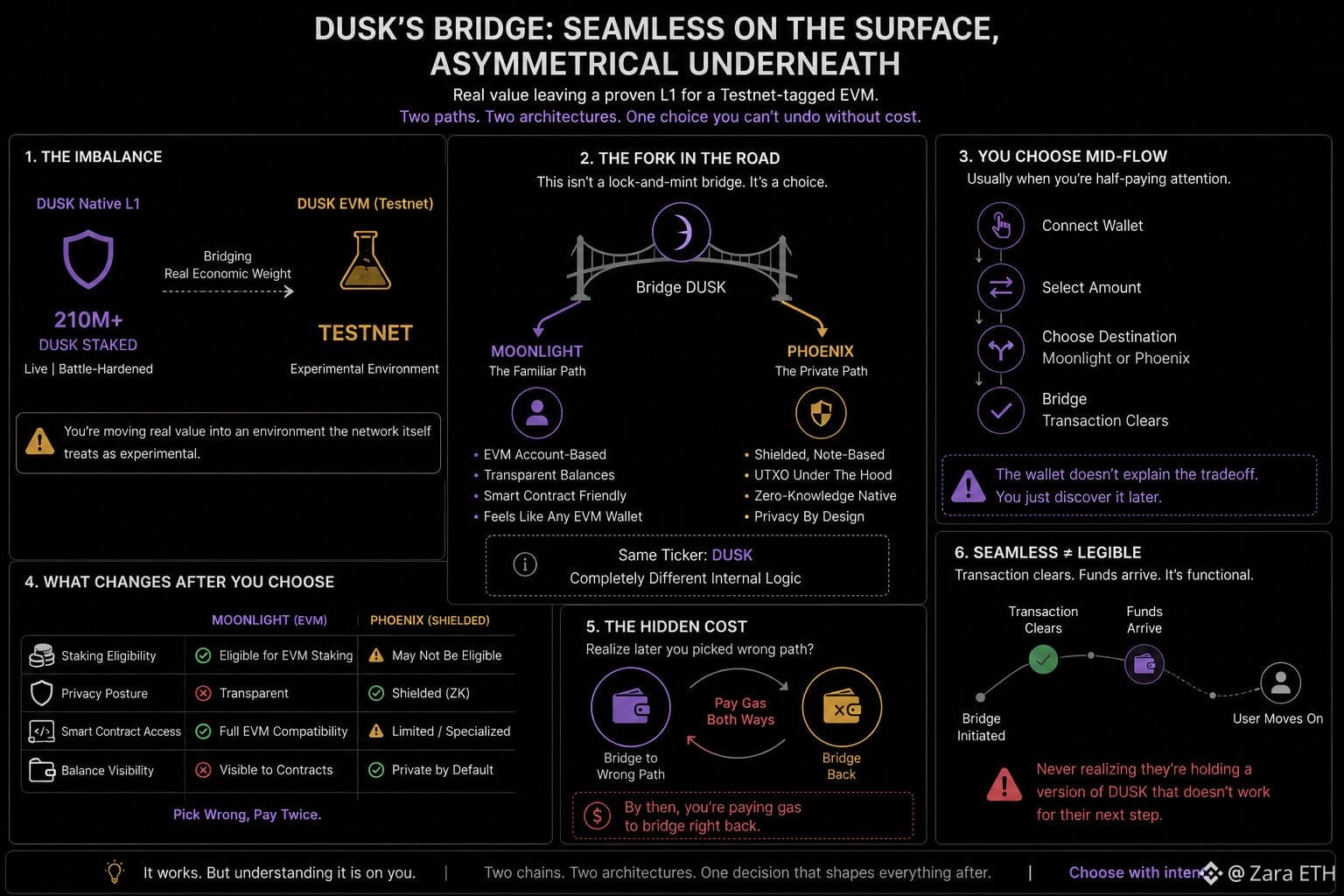
Da ist etwas still Seltsames an Dusk’s Brücke, das mir nicht aus dem Kopf geht. Nicht kaputt—nur asymmetrisch, auf eine Weise, die wirkt, als wäre sie so beabsichtigt, aber unausgesprochen.
Die native L1 zeigt 210M+ DUSK, live und kampferprobt, gestaked. Aber die EVM-Seite, in die du bridge? Die trägt immer noch einen Testnet-Tag. Also bewegst du echtes wirtschaftliches Gewicht in eine Umgebung, die das Netzwerk selbst als experimentell behandelt. Die UI lässt dir nicht mal einen Moment Zeit, um dabei zweimal zu blinzeln.
Der eigentliche Mind-Bend ist jedoch die Erkenntnis, dass das keine Lock-and-Mint-Brücke ist. Es ist eine Abzweigung. Moonlight ist die vertraute Variante—transparent, konto-basiert, fühlt sich an wie jede EVM-Wallet. Phoenix ist das ganz andere Wesen: abgeschirmt, notizbasiert, UTXO im Hintergrund, lebt im Zero-Knowledge-Terrain. Gleicher Ticker, völlig unterschiedliche interne Logik.
Du triffst diese Wahl mitten im Ablauf—meistens, wenn du nur halb aufmerksam bist und die Funds schnell rüberbringen willst. Aber die Auswahl bestimmt, was du danach tatsächlich tun kannst—Berechtigung zum Staking, Datenschutz-Haltung, welche Contracts überhaupt sehen können, was du an Guthaben hast. Die Wallet setzt dich nicht hin und erklärt dir den Tradeoff. Du entdeckst es eher, indem du die Unterscheidung zweimal neu liest, die Augen zusammenkneifst und hoffst, dass du nicht falsch gelegen hast.
Marketing nennt es nahtlos. Die Transaktion läuft durch, die Gelder kommen an—es funktioniert. Aber nahtlos und nachvollziehbar sind nicht dasselbe.
Lässt mich fragen, wie viele Menschen ihre Balance checken, einmal ausatmen und einfach weitermachen—ohne zu merken, dass sie eine Version von DUSK halten, die für den nächsten Schritt nicht funktioniert. Und dann zahlst du Gas, um direkt wieder zurück zu bridge.
@Dusk #dusk $DUSK
Die native L1 zeigt 210M+ DUSK, live und kampferprobt, gestaked. Aber die EVM-Seite, in die du bridge? Die trägt immer noch einen Testnet-Tag. Also bewegst du echtes wirtschaftliches Gewicht in eine Umgebung, die das Netzwerk selbst als experimentell behandelt. Die UI lässt dir nicht mal einen Moment Zeit, um dabei zweimal zu blinzeln.
Der eigentliche Mind-Bend ist jedoch die Erkenntnis, dass das keine Lock-and-Mint-Brücke ist. Es ist eine Abzweigung. Moonlight ist die vertraute Variante—transparent, konto-basiert, fühlt sich an wie jede EVM-Wallet. Phoenix ist das ganz andere Wesen: abgeschirmt, notizbasiert, UTXO im Hintergrund, lebt im Zero-Knowledge-Terrain. Gleicher Ticker, völlig unterschiedliche interne Logik.
Du triffst diese Wahl mitten im Ablauf—meistens, wenn du nur halb aufmerksam bist und die Funds schnell rüberbringen willst. Aber die Auswahl bestimmt, was du danach tatsächlich tun kannst—Berechtigung zum Staking, Datenschutz-Haltung, welche Contracts überhaupt sehen können, was du an Guthaben hast. Die Wallet setzt dich nicht hin und erklärt dir den Tradeoff. Du entdeckst es eher, indem du die Unterscheidung zweimal neu liest, die Augen zusammenkneifst und hoffst, dass du nicht falsch gelegen hast.
Marketing nennt es nahtlos. Die Transaktion läuft durch, die Gelder kommen an—es funktioniert. Aber nahtlos und nachvollziehbar sind nicht dasselbe.
Lässt mich fragen, wie viele Menschen ihre Balance checken, einmal ausatmen und einfach weitermachen—ohne zu merken, dass sie eine Version von DUSK halten, die für den nächsten Schritt nicht funktioniert. Und dann zahlst du Gas, um direkt wieder zurück zu bridge.
@Dusk #dusk $DUSK
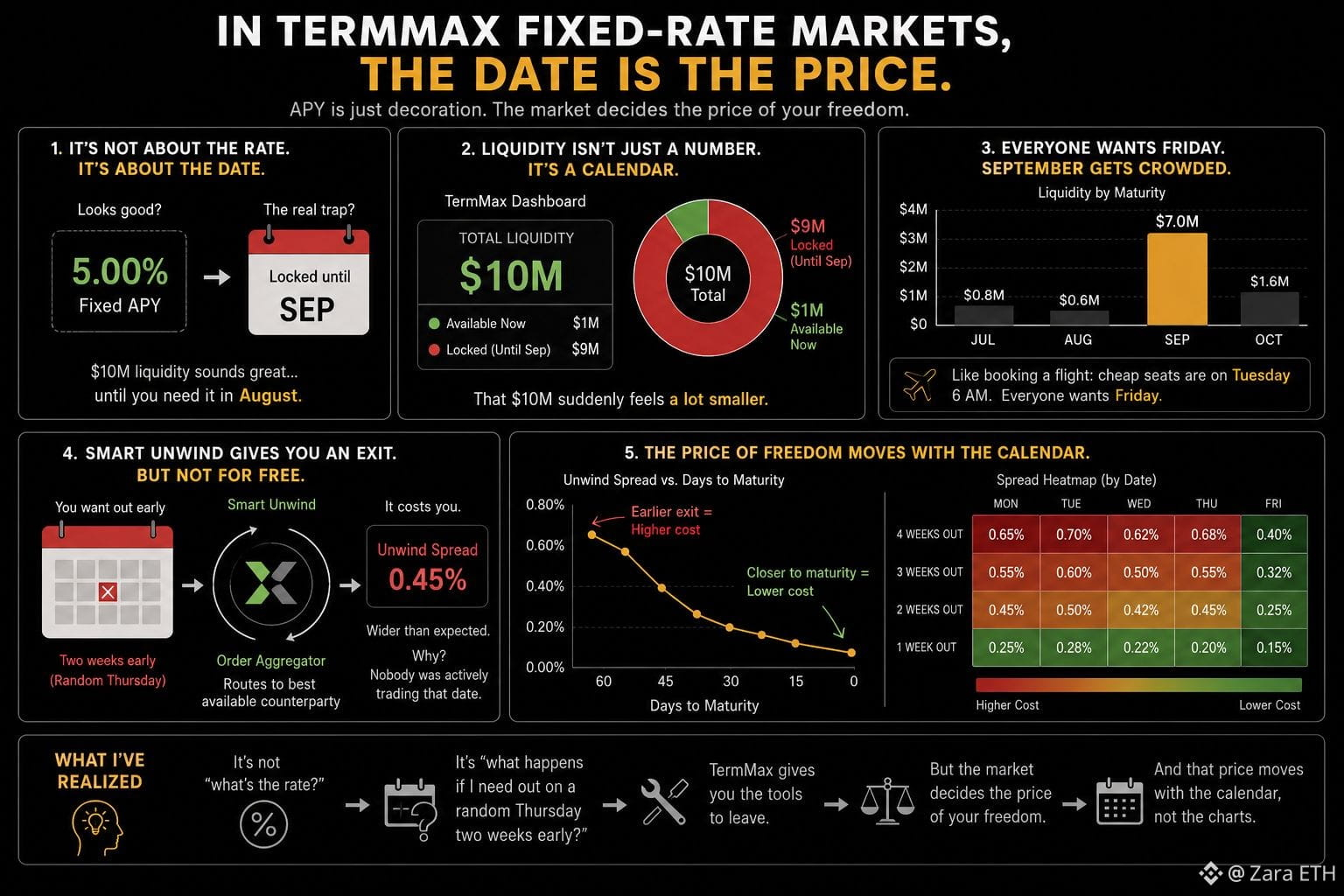
Ich dachte früher, Festzins-Kredite wären nur eine Frage der Zahl. Finde 5%. Sperr’s. Fertig.
Dann wollte ich mein Geld früh bewegen und merkte, dass das Datum die eigentliche Falle ist.
Das Dashboard von TermMax sagt „$10M Liquidität“. Klingt großartig. Aber $9M davon könnten bis September gesperrt sein, und ich brauche Zugriff im August. Dieses „$10M“ fühlt sich plötzlich viel kleiner an.
Es ist wie eine Flugbuchung. Der günstige Preis wirkt gut, bis du merkst, dass du dienstags um 6:00 Uhr fliegst, weil niemand dieses Zeitfenster haben will. Alle wollen freitags. Genauso bei den Fälligkeiten von TermMax: Alle drängen auf September, und August bleibt leer.
TermMax’ Smart Unwind versucht, das zu beheben, indem es dir erlaubt, früher auszusteigen. Der Order Aggregator routet deinen Unwind zum besten verfügbaren Kontrahenten. Aber da ist der menschliche Haken: Es kostet dich. Die Spreads hängen davon ab, wie viele Menschen bereit sind, dein Datum zu übernehmen. Ich habe einmal versucht, eine Position mit zwei Monaten Laufzeit aufzulösen. Der Spread war breiter als erwartet. Niemand hat an dem konkreten Dienstag aktiv gehandelt.
Was ich erkannt habe: In TermMax’ Festzins-Märkten ist das Datum der Preis. Der APY ist nur Deko. Die nützliche Frage ist nicht „Wie hoch ist der Zinssatz?“, sondern „Was passiert, wenn ich an einem zufälligen Donnerstag zwei Wochen früher raus muss?“
Denn TermMax mag dir zwar die Werkzeuge zum Ausstieg geben. Aber der Markt bestimmt den Preis deiner Freiheit. Und dieser Preis bewegt sich mit dem Kalender – nicht mit den Charts.
@TermMax #TermMax
Dann wollte ich mein Geld früh bewegen und merkte, dass das Datum die eigentliche Falle ist.
Das Dashboard von TermMax sagt „$10M Liquidität“. Klingt großartig. Aber $9M davon könnten bis September gesperrt sein, und ich brauche Zugriff im August. Dieses „$10M“ fühlt sich plötzlich viel kleiner an.
Es ist wie eine Flugbuchung. Der günstige Preis wirkt gut, bis du merkst, dass du dienstags um 6:00 Uhr fliegst, weil niemand dieses Zeitfenster haben will. Alle wollen freitags. Genauso bei den Fälligkeiten von TermMax: Alle drängen auf September, und August bleibt leer.
TermMax’ Smart Unwind versucht, das zu beheben, indem es dir erlaubt, früher auszusteigen. Der Order Aggregator routet deinen Unwind zum besten verfügbaren Kontrahenten. Aber da ist der menschliche Haken: Es kostet dich. Die Spreads hängen davon ab, wie viele Menschen bereit sind, dein Datum zu übernehmen. Ich habe einmal versucht, eine Position mit zwei Monaten Laufzeit aufzulösen. Der Spread war breiter als erwartet. Niemand hat an dem konkreten Dienstag aktiv gehandelt.
Was ich erkannt habe: In TermMax’ Festzins-Märkten ist das Datum der Preis. Der APY ist nur Deko. Die nützliche Frage ist nicht „Wie hoch ist der Zinssatz?“, sondern „Was passiert, wenn ich an einem zufälligen Donnerstag zwei Wochen früher raus muss?“
Denn TermMax mag dir zwar die Werkzeuge zum Ausstieg geben. Aber der Markt bestimmt den Preis deiner Freiheit. Und dieser Preis bewegt sich mit dem Kalender – nicht mit den Charts.
@TermMax #TermMax
Ganz ehrlich: Ich hab echt keinen Bock mehr, ständig mein Dashboard zu refreshen, jedes Mal wenn der Markt niest. Ich hab viel zu viele Nächte damit verbracht, wie sich mein Borrow-APY ohne jeden Grund nach oben schleicht.
Bin diese Woche zufällig auf TermMax gestoßen, und dieses Fixed-Rate-Thema hat mich kurz echt innehalten lassen. Eine Zahl von Anfang an festzuschließen fühlt sich irgendwie… ruhig an? So kann ich eine Position planen, ohne sie 24/7 im Auge behalten zu müssen. Fühlt sich komisch an, das über DeFi zu sagen, aber ja.
Der Options-Teil hat mich am Anfang erstmal verwirrt, ehrlich gesagt. Ich dachte, da kommt einfach nur irgend ein komplexes Overlay, aber es hat Klick gemacht, als ich gemerkt hab: Es ist im Grunde einfach da, wenn du es willst. Borrow zu einem festen Satz, aber mit einer Option, falls die Kurse später fallen? Oder sichere deine verliehene Rendite ab, wenn du nervös bist? Das ist nicht „DeGen“-mäßig — eher wie ein Sicherheitsnetz, das du selbst in der Hand hast.
Vielleicht denk ich da zu viel drüber nach. Aber nachdem ich ein paar Mal viel zu oft von variablen Sätzen überrascht wurde, ist die Idee, meine Kosten vorher tatsächlich zu kennen, irgendwie erfrischend.
Keine Ahnung, ob das Anklang findet oder ob die Leute einfach lieber das Chaos mögen, lol. Aber es bringt mich dazu, DeFi anders zu betrachten — was heutzutage selten passiert. Vielleicht pack ich einfach eine kleine Position rein, um zu sehen, wie sich die echte Erfahrung anfühlt.
@TermMax #TermMax
Bin diese Woche zufällig auf TermMax gestoßen, und dieses Fixed-Rate-Thema hat mich kurz echt innehalten lassen. Eine Zahl von Anfang an festzuschließen fühlt sich irgendwie… ruhig an? So kann ich eine Position planen, ohne sie 24/7 im Auge behalten zu müssen. Fühlt sich komisch an, das über DeFi zu sagen, aber ja.
Der Options-Teil hat mich am Anfang erstmal verwirrt, ehrlich gesagt. Ich dachte, da kommt einfach nur irgend ein komplexes Overlay, aber es hat Klick gemacht, als ich gemerkt hab: Es ist im Grunde einfach da, wenn du es willst. Borrow zu einem festen Satz, aber mit einer Option, falls die Kurse später fallen? Oder sichere deine verliehene Rendite ab, wenn du nervös bist? Das ist nicht „DeGen“-mäßig — eher wie ein Sicherheitsnetz, das du selbst in der Hand hast.
Vielleicht denk ich da zu viel drüber nach. Aber nachdem ich ein paar Mal viel zu oft von variablen Sätzen überrascht wurde, ist die Idee, meine Kosten vorher tatsächlich zu kennen, irgendwie erfrischend.
Keine Ahnung, ob das Anklang findet oder ob die Leute einfach lieber das Chaos mögen, lol. Aber es bringt mich dazu, DeFi anders zu betrachten — was heutzutage selten passiert. Vielleicht pack ich einfach eine kleine Position rein, um zu sehen, wie sich die echte Erfahrung anfühlt.
@TermMax #TermMax
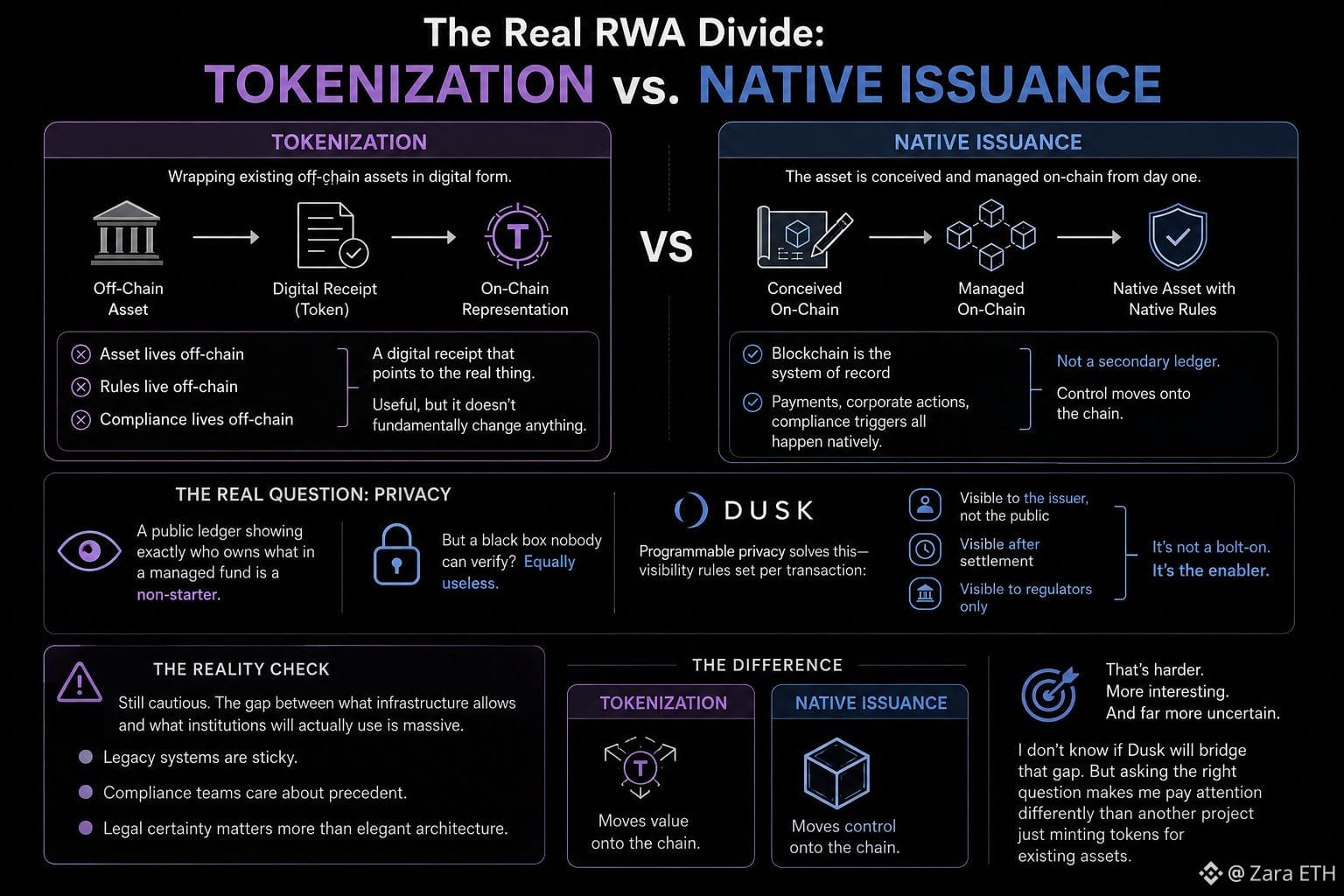
Die echte RWA-Kluft: Tokenisierung vs. Native Emission
Ich ging von einer einfachen Annahme aus: Das Asset on-chain bringen, ein Token minten, fertig.
Diese Denkweise zerfiel, nachdem ich mich mit der Dokumentation von Dusk auseinandergesetzt hatte.
Tokenisierung bedeutet, bestehende Off-Chain-Assets in digitale Form zu verpacken. Das Asset lebt Off-Chain. Die Regeln leben Off-Chain. Compliance lebt Off-Chain. Du erstellst also einen digitalen Beleg, der auf das echte Ding verweist. Nützlich, aber es ändert grundsätzlich nichts.
Native Emission dreht das komplett um. Das Asset wird von Tag eins an auf der Kette konzipiert und verwaltet. Die Blockchain wird zum System of Record – nicht zu einem nachgelagerten Nebenbuch. Zahlungen, Corporate Actions, Compliance-Auslöser: alles findet nativ statt.
Da traf mich die eigentliche Frage: Privatsphäre.
Ein öffentliches Ledger, das genau zeigt, wer in einem verwalteten Fonds was besitzt, ist für diesen Zweck ein No-Go. Aber eine Blackbox, die niemand verifizieren kann? Ebenso nutzlos.
Die programmierbare Privatsphäre von Dusk löst das: Sichtbarkeitsregeln werden pro Transaktion festgelegt:
· Sichtbar für den Emittenten, nicht für die Öffentlichkeit
· Sichtbar nach der Abwicklung
· Sichtbar nur für Regulierungsbehörden
Das ist kein Aufsatz. Es ist die Voraussetzung.
Weiterhin vorsichtig. Die Lücke zwischen dem, was die Infrastruktur ermöglicht, und dem, was Institutionen tatsächlich nutzen werden, ist riesig. Legacy-Systeme sind träge. Compliance-Teams achten auf Präzedenzfälle. Rechtssicherheit zählt mehr als eine elegante Architektur.
Tokenisierung verlagert den Wert auf die Kette. Native Emission verlagert die Kontrolle auf die Kette.
Das ist schwieriger. Spannender. Und viel ungewisser.
Ich weiß nicht, ob Dusk diese Lücke überbrücken wird. Aber die richtige Frage zu stellen macht mich anders aufmerksam als ein anderes Projekt, das einfach nur Tokens für bestehende Assets mintet.
@Dusk #dusk $DUSK
Ich ging von einer einfachen Annahme aus: Das Asset on-chain bringen, ein Token minten, fertig.
Diese Denkweise zerfiel, nachdem ich mich mit der Dokumentation von Dusk auseinandergesetzt hatte.
Tokenisierung bedeutet, bestehende Off-Chain-Assets in digitale Form zu verpacken. Das Asset lebt Off-Chain. Die Regeln leben Off-Chain. Compliance lebt Off-Chain. Du erstellst also einen digitalen Beleg, der auf das echte Ding verweist. Nützlich, aber es ändert grundsätzlich nichts.
Native Emission dreht das komplett um. Das Asset wird von Tag eins an auf der Kette konzipiert und verwaltet. Die Blockchain wird zum System of Record – nicht zu einem nachgelagerten Nebenbuch. Zahlungen, Corporate Actions, Compliance-Auslöser: alles findet nativ statt.
Da traf mich die eigentliche Frage: Privatsphäre.
Ein öffentliches Ledger, das genau zeigt, wer in einem verwalteten Fonds was besitzt, ist für diesen Zweck ein No-Go. Aber eine Blackbox, die niemand verifizieren kann? Ebenso nutzlos.
Die programmierbare Privatsphäre von Dusk löst das: Sichtbarkeitsregeln werden pro Transaktion festgelegt:
· Sichtbar für den Emittenten, nicht für die Öffentlichkeit
· Sichtbar nach der Abwicklung
· Sichtbar nur für Regulierungsbehörden
Das ist kein Aufsatz. Es ist die Voraussetzung.
Weiterhin vorsichtig. Die Lücke zwischen dem, was die Infrastruktur ermöglicht, und dem, was Institutionen tatsächlich nutzen werden, ist riesig. Legacy-Systeme sind träge. Compliance-Teams achten auf Präzedenzfälle. Rechtssicherheit zählt mehr als eine elegante Architektur.
Tokenisierung verlagert den Wert auf die Kette. Native Emission verlagert die Kontrolle auf die Kette.
Das ist schwieriger. Spannender. Und viel ungewisser.
Ich weiß nicht, ob Dusk diese Lücke überbrücken wird. Aber die richtige Frage zu stellen macht mich anders aufmerksam als ein anderes Projekt, das einfach nur Tokens für bestehende Assets mintet.
@Dusk #dusk $DUSK
Anmelden und weiter Inhalte entdecken