
Usman_ Malik
1.7k Beiträge

Usman_ Malik
Melden
Nutzer blockieren
crypto Enthusiast ,GEm .KOL lover .Trader
Trade eröffnen
Regelmäßiger Trader
11.5 Monate
378 Following
6.1K+ Follower
1.9K+ Like gegeben
Beiträge
Portfolio
Alle
Zitierungen
Live
·
--
Bullisch
87
·
--
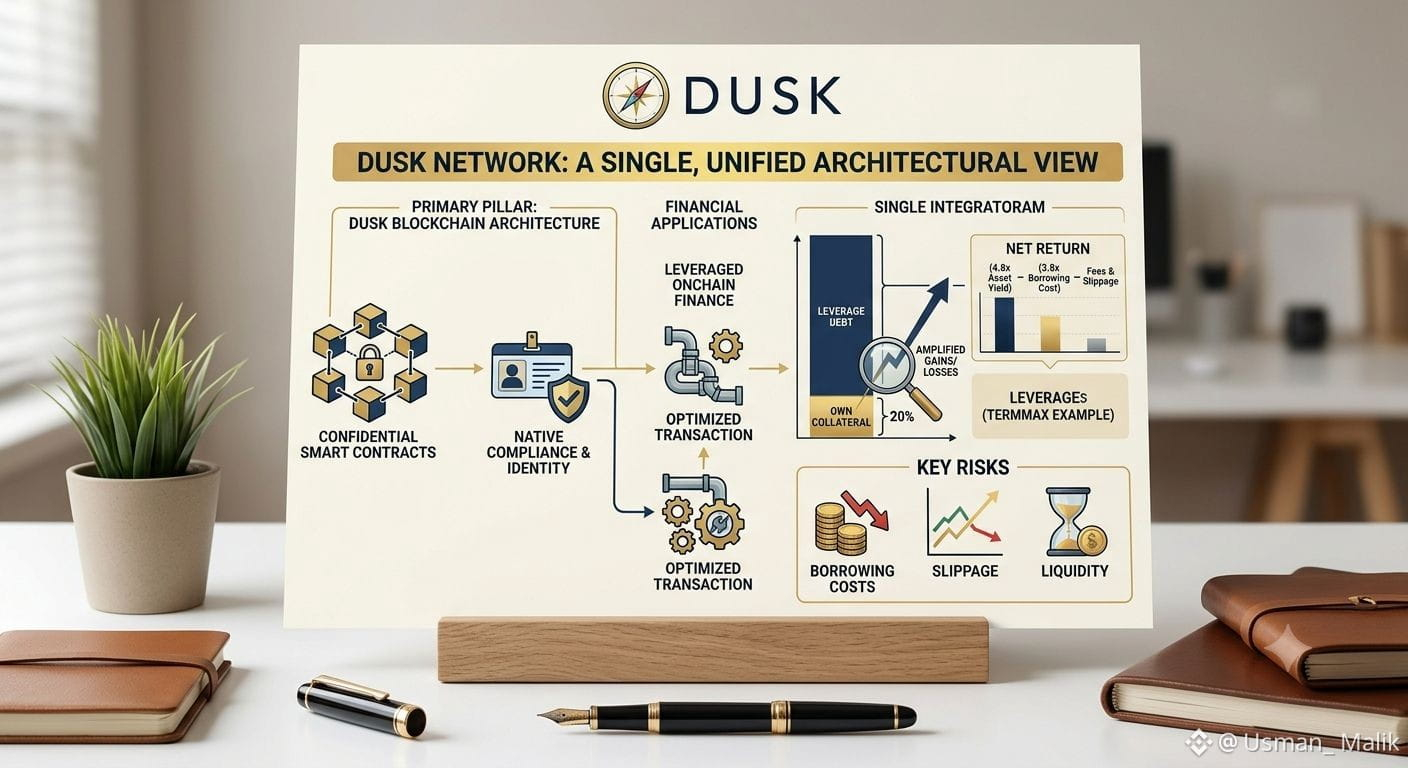
#dusk $DUSK @Dusk_Foundation Dusk’s Privacy-First Architektur trifft die realen Ökonomien des gehebelten Onchain-Finanzwesens
Dusk lohnt es sich zu beobachten, weil es die Blockchain-Finanzierung aus einem anderen Blickwinkel betrachtet: Privatsphäre, Compliance und programmierbare Finanzinfrastruktur. Als Layer-1, das auf regulierte Finanzanwendungen fokussiert ist, sollen seine vertraulichen Smart Contracts und das XSC-Framework Onchain-Aktivitäten praxisnäher für sensible Märkte machen.
Das TermMax-Leverage-Beispiel zeigt, warum Infrastruktur entscheidend ist. One-Click-Leverage kann geliehene Liquidität, Collateral-Management und atomare Ausführung in einen klareren Transaktionsablauf zusammenführen. Doch Bequemlichkeit beseitigt kein finanzielles Risiko.
Bei 4,8× Leverage ist ungefähr 3,8× der Position schuldenfinanziert. Das bedeutet, dass sowohl Asset-Renditen als auch Kreditkosten verstärkt werden. Eine hilfreiche, vereinfachte Sicht ist: Net Return ≈ 4,8× Asset-Rendite − 3,8× Kreditkosten − Gebühren und Slippage.
Die größere Frage ist der Ausstieg. In volatilen Phasen kann dünnere DEX-Liquidität das Entwinden teuer machen und Slippage potenziell zu einem wesentlichen Risiko werden lassen.
Die Chance für Dusk liegt im Aufbau von Infrastruktur, in der Privatsphäre und Compliance auf effiziente finanzielle Ausführung treffen. Dennoch bleiben Adoption, Liquidität, Kosten und die reale Nutzung entscheidende Variablen. Ohne verifizierte aktuelle Daten zur Token-Angebotsmenge oder frische Entwicklungen im Ökosystem sollten diese Kennzahlen überprüft werden, bevor man stärkere Schlussfolgerungen zieht. Die Kernaussage ist einfach: Bessere Ausführung hilft, aber Leverage folgt weiterhin den Marktökonomien.
{future}(DUSKUSDT)
{spot}(TRUMPUSDT)
#dusk $DUSK @Dusk Dusk’s Privacy-First Architektur trifft die realen Ökonomien des gehebelten Onchain-Finanzwesens
Dusk lohnt es sich zu beobachten, weil es die Blockchain-Finanzierung aus einem anderen Blickwinkel betrachtet: Privatsphäre, Compliance und programmierbare Finanzinfrastruktur. Als Layer-1, das auf regulierte Finanzanwendungen fokussiert ist, sollen seine vertraulichen Smart Contracts und das XSC-Framework Onchain-Aktivitäten praxisnäher für sensible Märkte machen.
Das TermMax-Leverage-Beispiel zeigt, warum Infrastruktur entscheidend ist. One-Click-Leverage kann geliehene Liquidität, Collateral-Management und atomare Ausführung in einen klareren Transaktionsablauf zusammenführen. Doch Bequemlichkeit beseitigt kein finanzielles Risiko.
Bei 4,8× Leverage ist ungefähr 3,8× der Position schuldenfinanziert. Das bedeutet, dass sowohl Asset-Renditen als auch Kreditkosten verstärkt werden. Eine hilfreiche, vereinfachte Sicht ist: Net Return ≈ 4,8× Asset-Rendite − 3,8× Kreditkosten − Gebühren und Slippage.
Die größere Frage ist der Ausstieg. In volatilen Phasen kann dünnere DEX-Liquidität das Entwinden teuer machen und Slippage potenziell zu einem wesentlichen Risiko werden lassen.
Die Chance für Dusk liegt im Aufbau von Infrastruktur, in der Privatsphäre und Compliance auf effiziente finanzielle Ausführung treffen. Dennoch bleiben Adoption, Liquidität, Kosten und die reale Nutzung entscheidende Variablen. Ohne verifizierte aktuelle Daten zur Token-Angebotsmenge oder frische Entwicklungen im Ökosystem sollten diese Kennzahlen überprüft werden, bevor man stärkere Schlussfolgerungen zieht. Die Kernaussage ist einfach: Bessere Ausführung hilft, aber Leverage folgt weiterhin den Marktökonomien.
Dusk lohnt es sich zu beobachten, weil es die Blockchain-Finanzierung aus einem anderen Blickwinkel betrachtet: Privatsphäre, Compliance und programmierbare Finanzinfrastruktur. Als Layer-1, das auf regulierte Finanzanwendungen fokussiert ist, sollen seine vertraulichen Smart Contracts und das XSC-Framework Onchain-Aktivitäten praxisnäher für sensible Märkte machen.
Das TermMax-Leverage-Beispiel zeigt, warum Infrastruktur entscheidend ist. One-Click-Leverage kann geliehene Liquidität, Collateral-Management und atomare Ausführung in einen klareren Transaktionsablauf zusammenführen. Doch Bequemlichkeit beseitigt kein finanzielles Risiko.
Bei 4,8× Leverage ist ungefähr 3,8× der Position schuldenfinanziert. Das bedeutet, dass sowohl Asset-Renditen als auch Kreditkosten verstärkt werden. Eine hilfreiche, vereinfachte Sicht ist: Net Return ≈ 4,8× Asset-Rendite − 3,8× Kreditkosten − Gebühren und Slippage.
Die größere Frage ist der Ausstieg. In volatilen Phasen kann dünnere DEX-Liquidität das Entwinden teuer machen und Slippage potenziell zu einem wesentlichen Risiko werden lassen.
Die Chance für Dusk liegt im Aufbau von Infrastruktur, in der Privatsphäre und Compliance auf effiziente finanzielle Ausführung treffen. Dennoch bleiben Adoption, Liquidität, Kosten und die reale Nutzung entscheidende Variablen. Ohne verifizierte aktuelle Daten zur Token-Angebotsmenge oder frische Entwicklungen im Ökosystem sollten diese Kennzahlen überprüft werden, bevor man stärkere Schlussfolgerungen zieht. Die Kernaussage ist einfach: Bessere Ausführung hilft, aber Leverage folgt weiterhin den Marktökonomien.
6
2
352
·
--
$DUSK ’s Datenschutzarchitektur könnte reguliertes Onchain-Finanzwesen neu gestalten
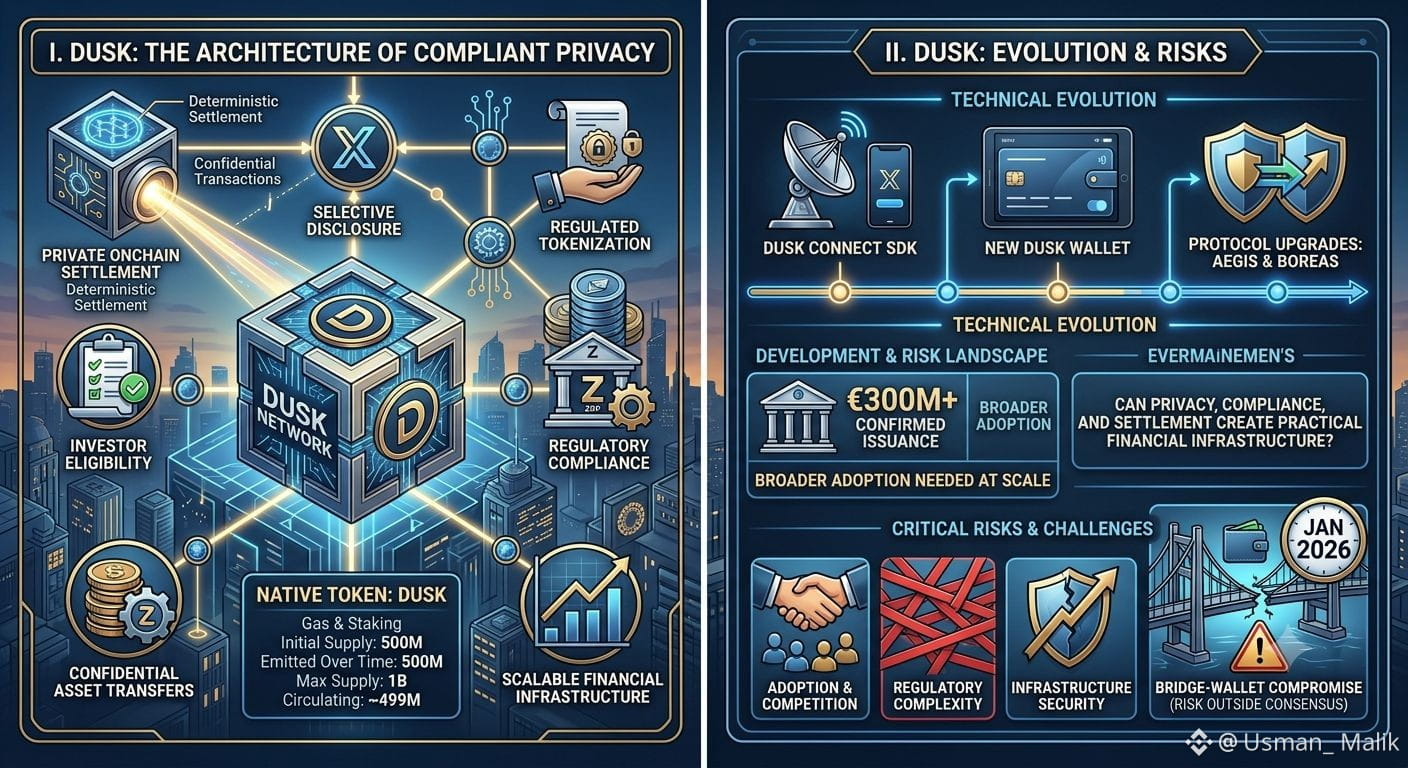
Dusk ist es wert, beobachtet zu werden, weil es den Ansatz für Blockchain-Privatsphäre aus der Perspektive einer Finanzinfrastruktur betrachtet, statt Privatsphäre nur als einfache Transaktionsverschleierung zu behandeln. Seine Architektur kombiniert vertrauliche Transaktionen, selektive Offenlegung, Zero-Knowledge-Technologie und deterministisches Settlement, um regulierte Vermögenswerte zu unterstützen, die onchain bewegt werden.
Das Netzwerk entwickelt sich außerdem technisch weiter. Zu den jüngsten Entwicklungen zählen das Dusk Connect SDK und eine neue Dusk Wallet, während Protokoll-Upgrades wie Aegis und Boreas die Netzwerkfunktionalität gestärkt haben.
Für das echte Finanzwesen umfassen mögliche Anwendungsfälle regulierte Tokenisierung, Investoren-Eignung, Vermögensübertragungen und Abwicklung. Dusk berichtet außerdem über mehr als 300 Millionen € an bestätigter Emission mit Institutionen, obwohl eine breitere Übernahme weiterhin in großem Maßstab nachgewiesen werden muss.
DUSK ist der native Token des Netzwerks für Gas und Staking. Offizielle Dokumentation nennt eine anfängliche Versorgung von 500 Millionen plus 500 Millionen, die im Laufe der Zeit emittiert werden, für ein maximales Gesamtangebot von 1 Milliarde DUSK. Aktuelle CoinMarketCap-Daten zeigen ungefähr 499 Millionen im Umlauf.
Die wichtigsten Risiken bleiben die Akzeptanz, der Wettbewerb, die regulatorische Komplexität und die Sicherheit der Infrastruktur. Ein Kompromiss bei einer Januar-2026-Bridge-Wallet verdeutlicht zudem Risiken außerhalb der eigentlichen Konsensschicht.
Das stärkste Argument von Dusk ist daher nicht garantiert eine bestimmte Marktentwicklung, sondern ob Privatsphäre, Compliance und Abwicklung zu einer praktischen Infrastruktur für echte Finanzmärkte werden können.
#dusk $DUSK @Dusk_Foundation
$DUSK ’s Datenschutzarchitektur könnte reguliertes Onchain-Finanzwesen neu gestalten
Dusk ist es wert, beobachtet zu werden, weil es den Ansatz für Blockchain-Privatsphäre aus der Perspektive einer Finanzinfrastruktur betrachtet, statt Privatsphäre nur als einfache Transaktionsverschleierung zu behandeln. Seine Architektur kombiniert vertrauliche Transaktionen, selektive Offenlegung, Zero-Knowledge-Technologie und deterministisches Settlement, um regulierte Vermögenswerte zu unterstützen, die onchain bewegt werden.
Das Netzwerk entwickelt sich außerdem technisch weiter. Zu den jüngsten Entwicklungen zählen das Dusk Connect SDK und eine neue Dusk Wallet, während Protokoll-Upgrades wie Aegis und Boreas die Netzwerkfunktionalität gestärkt haben.
Für das echte Finanzwesen umfassen mögliche Anwendungsfälle regulierte Tokenisierung, Investoren-Eignung, Vermögensübertragungen und Abwicklung. Dusk berichtet außerdem über mehr als 300 Millionen € an bestätigter Emission mit Institutionen, obwohl eine breitere Übernahme weiterhin in großem Maßstab nachgewiesen werden muss.
DUSK ist der native Token des Netzwerks für Gas und Staking. Offizielle Dokumentation nennt eine anfängliche Versorgung von 500 Millionen plus 500 Millionen, die im Laufe der Zeit emittiert werden, für ein maximales Gesamtangebot von 1 Milliarde DUSK. Aktuelle CoinMarketCap-Daten zeigen ungefähr 499 Millionen im Umlauf.
Die wichtigsten Risiken bleiben die Akzeptanz, der Wettbewerb, die regulatorische Komplexität und die Sicherheit der Infrastruktur. Ein Kompromiss bei einer Januar-2026-Bridge-Wallet verdeutlicht zudem Risiken außerhalb der eigentlichen Konsensschicht.
Das stärkste Argument von Dusk ist daher nicht garantiert eine bestimmte Marktentwicklung, sondern ob Privatsphäre, Compliance und Abwicklung zu einer praktischen Infrastruktur für echte Finanzmärkte werden können.
#dusk $DUSK @Dusk
Dusk ist es wert, beobachtet zu werden, weil es den Ansatz für Blockchain-Privatsphäre aus der Perspektive einer Finanzinfrastruktur betrachtet, statt Privatsphäre nur als einfache Transaktionsverschleierung zu behandeln. Seine Architektur kombiniert vertrauliche Transaktionen, selektive Offenlegung, Zero-Knowledge-Technologie und deterministisches Settlement, um regulierte Vermögenswerte zu unterstützen, die onchain bewegt werden.
Das Netzwerk entwickelt sich außerdem technisch weiter. Zu den jüngsten Entwicklungen zählen das Dusk Connect SDK und eine neue Dusk Wallet, während Protokoll-Upgrades wie Aegis und Boreas die Netzwerkfunktionalität gestärkt haben.
Für das echte Finanzwesen umfassen mögliche Anwendungsfälle regulierte Tokenisierung, Investoren-Eignung, Vermögensübertragungen und Abwicklung. Dusk berichtet außerdem über mehr als 300 Millionen € an bestätigter Emission mit Institutionen, obwohl eine breitere Übernahme weiterhin in großem Maßstab nachgewiesen werden muss.
DUSK ist der native Token des Netzwerks für Gas und Staking. Offizielle Dokumentation nennt eine anfängliche Versorgung von 500 Millionen plus 500 Millionen, die im Laufe der Zeit emittiert werden, für ein maximales Gesamtangebot von 1 Milliarde DUSK. Aktuelle CoinMarketCap-Daten zeigen ungefähr 499 Millionen im Umlauf.
Die wichtigsten Risiken bleiben die Akzeptanz, der Wettbewerb, die regulatorische Komplexität und die Sicherheit der Infrastruktur. Ein Kompromiss bei einer Januar-2026-Bridge-Wallet verdeutlicht zudem Risiken außerhalb der eigentlichen Konsensschicht.
Das stärkste Argument von Dusk ist daher nicht garantiert eine bestimmte Marktentwicklung, sondern ob Privatsphäre, Compliance und Abwicklung zu einer praktischen Infrastruktur für echte Finanzmärkte werden können.
#dusk $DUSK @Dusk
104
·
--
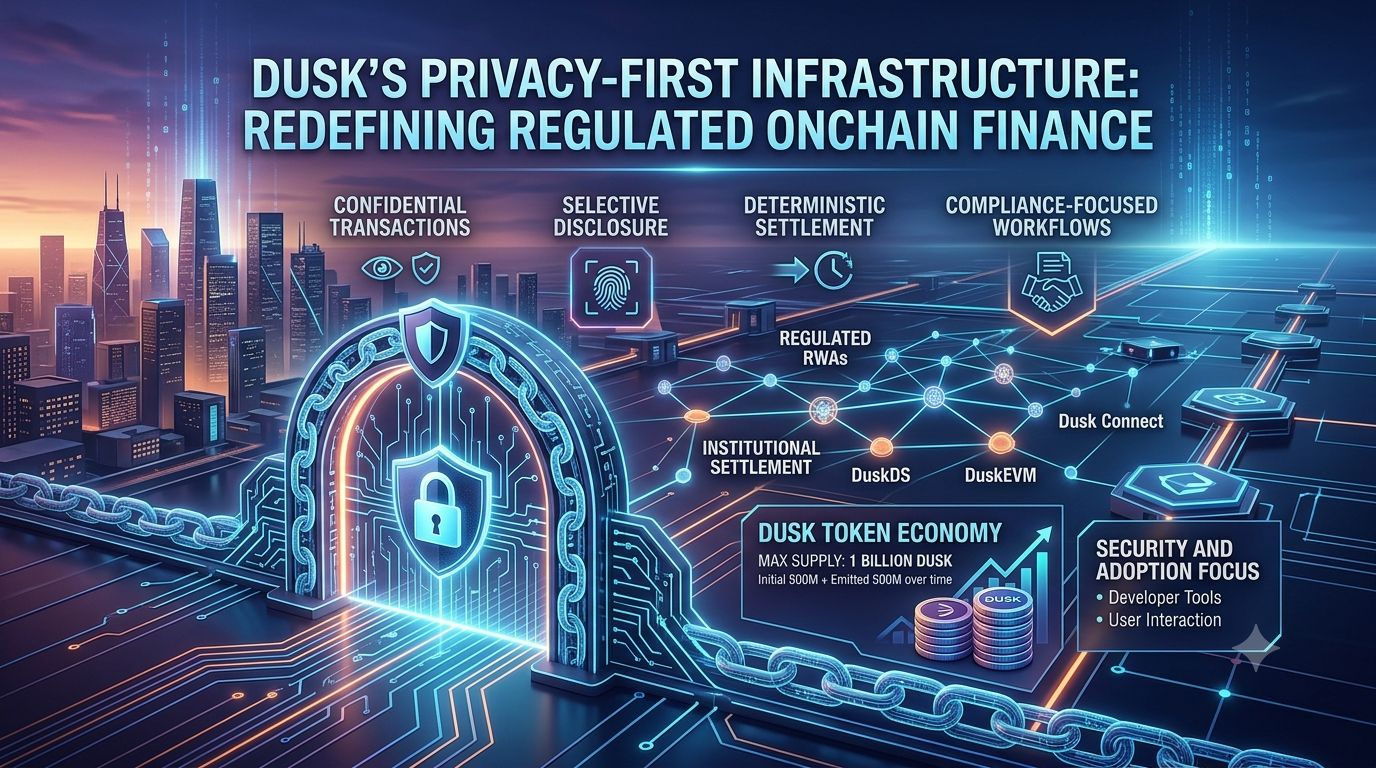
Die datenschutzorientierte Infrastruktur von Dusk könnte reguliertes Onchain-Finance neu definieren
Dusk erregt Aufmerksamkeit für eine praktische Herausforderung in der Blockchain: Wie können finanzielle Vermögenswerte onchain bewegt werden, ohne dabei Datenschutz, Compliance und Nachvollziehbarkeit zu beeinträchtigen? Als Layer-1 für regulierte Finanzen kombiniert Dusk vertrauliche Transaktionen, selektive Offenlegung, deterministisches Settlement und compliance-fokussierte Workflows.
Die Architektur entwickelt sich rund um DuskDS, @Dusk_Foundation DuskEVM und eine geplante Privacy-Layer weiter. So erhalten Entwickler eine vertrautere EVM-Umgebung, während Dusk seinen Fokus auf Finanzmärkte beibehält. Zu den aktuellen Entwicklungen gehören außerdem Dusk Connect sowie ein neues Wallet, das die Integration von dApps und die Interaktion mit Nutzern vereinfachen soll.
DUSK ist der native Token des Netzwerks, der für Transaktionsgebühren und Staking verwendet wird. @Dusk_Foundation Dusk’s offizielle Dokumentation nennt eine anfängliche Gesamtmenge von 500 Millionen, wobei im Laufe der Zeit weitere 500 Millionen ausgegeben werden. Damit ergibt sich eine maximale Gesamtmenge von 1 Milliarde DUSK. CoinMarketCap meldet derzeit rund 497 Millionen DUSK im Umlauf.
Die Chance ist groß, insbesondere bei regulierten Real-World-Assets und institutionellem Settlement. Allerdings bleibt Sicherheit ein zentrales Risiko: @Dusk_Foundation Dusk hat eine Kompromittierung eines 2026er Bridge-Wallets sowie anschließende Sicherheitsmaßnahmen offengelegt.
Der langfristige Erfolg von Dusk hängt daher weniger von Spekulationen ab, sondern vor allem davon, ob echte finanzielle Nutzung, Entwickler-Übernahme und eine sichere Infrastruktur weiter wachsen.#dusk $DUSK @Dusk_Foundation
Die datenschutzorientierte Infrastruktur von Dusk könnte reguliertes Onchain-Finance neu definieren
Dusk erregt Aufmerksamkeit für eine praktische Herausforderung in der Blockchain: Wie können finanzielle Vermögenswerte onchain bewegt werden, ohne dabei Datenschutz, Compliance und Nachvollziehbarkeit zu beeinträchtigen? Als Layer-1 für regulierte Finanzen kombiniert Dusk vertrauliche Transaktionen, selektive Offenlegung, deterministisches Settlement und compliance-fokussierte Workflows.
Die Architektur entwickelt sich rund um DuskDS, @Dusk DuskEVM und eine geplante Privacy-Layer weiter. So erhalten Entwickler eine vertrautere EVM-Umgebung, während Dusk seinen Fokus auf Finanzmärkte beibehält. Zu den aktuellen Entwicklungen gehören außerdem Dusk Connect sowie ein neues Wallet, das die Integration von dApps und die Interaktion mit Nutzern vereinfachen soll.
DUSK ist der native Token des Netzwerks, der für Transaktionsgebühren und Staking verwendet wird. @Dusk Dusk’s offizielle Dokumentation nennt eine anfängliche Gesamtmenge von 500 Millionen, wobei im Laufe der Zeit weitere 500 Millionen ausgegeben werden. Damit ergibt sich eine maximale Gesamtmenge von 1 Milliarde DUSK. CoinMarketCap meldet derzeit rund 497 Millionen DUSK im Umlauf.
Die Chance ist groß, insbesondere bei regulierten Real-World-Assets und institutionellem Settlement. Allerdings bleibt Sicherheit ein zentrales Risiko: @Dusk Dusk hat eine Kompromittierung eines 2026er Bridge-Wallets sowie anschließende Sicherheitsmaßnahmen offengelegt.
Der langfristige Erfolg von Dusk hängt daher weniger von Spekulationen ab, sondern vor allem davon, ob echte finanzielle Nutzung, Entwickler-Übernahme und eine sichere Infrastruktur weiter wachsen.#dusk $DUSK @Dusk
Dusk erregt Aufmerksamkeit für eine praktische Herausforderung in der Blockchain: Wie können finanzielle Vermögenswerte onchain bewegt werden, ohne dabei Datenschutz, Compliance und Nachvollziehbarkeit zu beeinträchtigen? Als Layer-1 für regulierte Finanzen kombiniert Dusk vertrauliche Transaktionen, selektive Offenlegung, deterministisches Settlement und compliance-fokussierte Workflows.
Die Architektur entwickelt sich rund um DuskDS, @Dusk DuskEVM und eine geplante Privacy-Layer weiter. So erhalten Entwickler eine vertrautere EVM-Umgebung, während Dusk seinen Fokus auf Finanzmärkte beibehält. Zu den aktuellen Entwicklungen gehören außerdem Dusk Connect sowie ein neues Wallet, das die Integration von dApps und die Interaktion mit Nutzern vereinfachen soll.
DUSK ist der native Token des Netzwerks, der für Transaktionsgebühren und Staking verwendet wird. @Dusk Dusk’s offizielle Dokumentation nennt eine anfängliche Gesamtmenge von 500 Millionen, wobei im Laufe der Zeit weitere 500 Millionen ausgegeben werden. Damit ergibt sich eine maximale Gesamtmenge von 1 Milliarde DUSK. CoinMarketCap meldet derzeit rund 497 Millionen DUSK im Umlauf.
Die Chance ist groß, insbesondere bei regulierten Real-World-Assets und institutionellem Settlement. Allerdings bleibt Sicherheit ein zentrales Risiko: @Dusk Dusk hat eine Kompromittierung eines 2026er Bridge-Wallets sowie anschließende Sicherheitsmaßnahmen offengelegt.
Der langfristige Erfolg von Dusk hängt daher weniger von Spekulationen ab, sondern vor allem davon, ob echte finanzielle Nutzung, Entwickler-Übernahme und eine sichere Infrastruktur weiter wachsen.#dusk $DUSK @Dusk
4
1
106
·
--
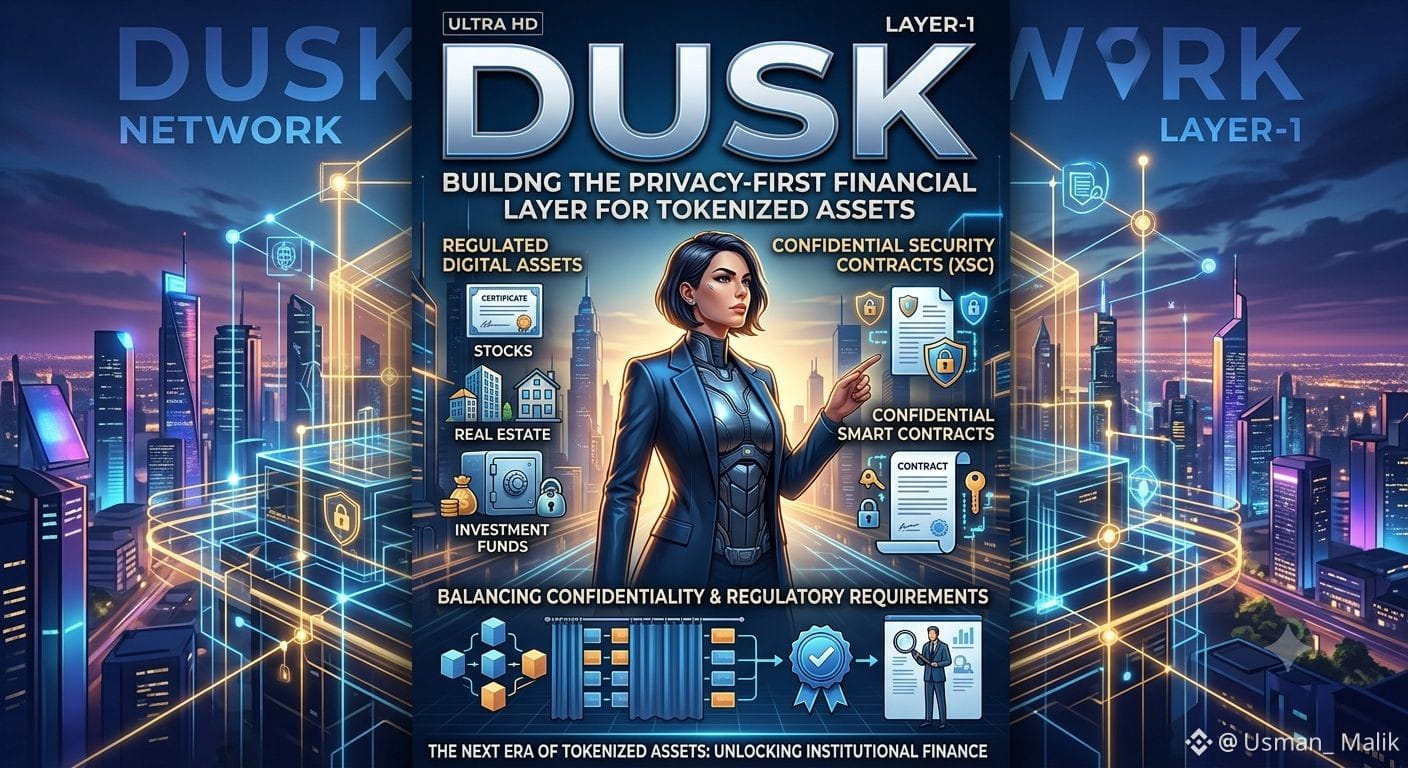
#dusk $DUSK Dusk baut eine datenschutzorientierte Finanzschicht für das nächste Zeitalter tokenisierter Vermögenswerte
Dusk sticht dadurch hervor, dass es Blockchain aus der Perspektive eines Finanzmarktes betrachtet, statt zu versuchen, ein weiteres Allzweck-Netzwerk zu werden. Wenn regulierte Vermögenswerte on-chain verlagert werden, benötigen Institutionen mehr als nur Geschwindigkeit – sie brauchen Privatsphäre, Compliance, Prüfbarkeit (Auditierbarkeit) und vorhersehbare Abwicklung. Dusk ist genau für diese Herausforderung konzipiert.
Das Dusk Network ist eine Layer-1-Blockchain, die sich auf Finanzanwendungen konzentriert und den Confidential Security Contract (XSC)-Standard sowie vertrauliche Smart Contracts unterstützt. Die Architektur zielt darauf ab, regulierte digitale Vermögenswerte wie Wertpapiere und Fonds zu ermöglichen, wobei Datenschutztechnologie und selektive Offenlegung eingesetzt werden, um Vertraulichkeit mit regulatorischen Anforderungen in Einklang zu bringen.
Der mögliche reale Nutzen hängt mit tokenisierten Wertpapieren, institutionellem Finanzwesen und Anwendungen zusammen, bei denen sensible Finanzdaten nicht einfach öffentlich offengelegt werden können. Die Akzeptanz bleibt jedoch eine wichtige Variable, und Aussagen über kürzliche Partnerschaften oder Wachstum im Ökosystem sollten anhand unabhängig verifizierter Bekanntmachungen beurteilt werden.
DUSK ist das native Token des Netzwerks, während seine langfristigen Fundamentaldaten von der Nutzung des Netzwerks, der Entwicklung des Ökosystems, dem Token-Use-Case und den Angebotsdynamiken abhängen. Anleger sollten außerdem Wettbewerb, regulatorische Unsicherheit, technische Umsetzung und Akzeptanzrisiken berücksichtigen.
Dusk muss möglicherweise nicht den gesamten breiteren Krypto-Markt dominieren, um relevant zu sein. Wenn finanzielle Anwendungen auf Blockchain-Basis weiter in Richtung regulierte, datenschutzfreundliche Infrastruktur wachsen, könnte der spezialisierte Ansatz von Dusk zunehmend an Bedeutung gewinnen.
@Dusk_Foundation
#dusk $DUSK Dusk baut eine datenschutzorientierte Finanzschicht für das nächste Zeitalter tokenisierter Vermögenswerte
Dusk sticht dadurch hervor, dass es Blockchain aus der Perspektive eines Finanzmarktes betrachtet, statt zu versuchen, ein weiteres Allzweck-Netzwerk zu werden. Wenn regulierte Vermögenswerte on-chain verlagert werden, benötigen Institutionen mehr als nur Geschwindigkeit – sie brauchen Privatsphäre, Compliance, Prüfbarkeit (Auditierbarkeit) und vorhersehbare Abwicklung. Dusk ist genau für diese Herausforderung konzipiert.
Das Dusk Network ist eine Layer-1-Blockchain, die sich auf Finanzanwendungen konzentriert und den Confidential Security Contract (XSC)-Standard sowie vertrauliche Smart Contracts unterstützt. Die Architektur zielt darauf ab, regulierte digitale Vermögenswerte wie Wertpapiere und Fonds zu ermöglichen, wobei Datenschutztechnologie und selektive Offenlegung eingesetzt werden, um Vertraulichkeit mit regulatorischen Anforderungen in Einklang zu bringen.
Der mögliche reale Nutzen hängt mit tokenisierten Wertpapieren, institutionellem Finanzwesen und Anwendungen zusammen, bei denen sensible Finanzdaten nicht einfach öffentlich offengelegt werden können. Die Akzeptanz bleibt jedoch eine wichtige Variable, und Aussagen über kürzliche Partnerschaften oder Wachstum im Ökosystem sollten anhand unabhängig verifizierter Bekanntmachungen beurteilt werden.
DUSK ist das native Token des Netzwerks, während seine langfristigen Fundamentaldaten von der Nutzung des Netzwerks, der Entwicklung des Ökosystems, dem Token-Use-Case und den Angebotsdynamiken abhängen. Anleger sollten außerdem Wettbewerb, regulatorische Unsicherheit, technische Umsetzung und Akzeptanzrisiken berücksichtigen.
Dusk muss möglicherweise nicht den gesamten breiteren Krypto-Markt dominieren, um relevant zu sein. Wenn finanzielle Anwendungen auf Blockchain-Basis weiter in Richtung regulierte, datenschutzfreundliche Infrastruktur wachsen, könnte der spezialisierte Ansatz von Dusk zunehmend an Bedeutung gewinnen.
@Dusk
Dusk sticht dadurch hervor, dass es Blockchain aus der Perspektive eines Finanzmarktes betrachtet, statt zu versuchen, ein weiteres Allzweck-Netzwerk zu werden. Wenn regulierte Vermögenswerte on-chain verlagert werden, benötigen Institutionen mehr als nur Geschwindigkeit – sie brauchen Privatsphäre, Compliance, Prüfbarkeit (Auditierbarkeit) und vorhersehbare Abwicklung. Dusk ist genau für diese Herausforderung konzipiert.
Das Dusk Network ist eine Layer-1-Blockchain, die sich auf Finanzanwendungen konzentriert und den Confidential Security Contract (XSC)-Standard sowie vertrauliche Smart Contracts unterstützt. Die Architektur zielt darauf ab, regulierte digitale Vermögenswerte wie Wertpapiere und Fonds zu ermöglichen, wobei Datenschutztechnologie und selektive Offenlegung eingesetzt werden, um Vertraulichkeit mit regulatorischen Anforderungen in Einklang zu bringen.
Der mögliche reale Nutzen hängt mit tokenisierten Wertpapieren, institutionellem Finanzwesen und Anwendungen zusammen, bei denen sensible Finanzdaten nicht einfach öffentlich offengelegt werden können. Die Akzeptanz bleibt jedoch eine wichtige Variable, und Aussagen über kürzliche Partnerschaften oder Wachstum im Ökosystem sollten anhand unabhängig verifizierter Bekanntmachungen beurteilt werden.
DUSK ist das native Token des Netzwerks, während seine langfristigen Fundamentaldaten von der Nutzung des Netzwerks, der Entwicklung des Ökosystems, dem Token-Use-Case und den Angebotsdynamiken abhängen. Anleger sollten außerdem Wettbewerb, regulatorische Unsicherheit, technische Umsetzung und Akzeptanzrisiken berücksichtigen.
Dusk muss möglicherweise nicht den gesamten breiteren Krypto-Markt dominieren, um relevant zu sein. Wenn finanzielle Anwendungen auf Blockchain-Basis weiter in Richtung regulierte, datenschutzfreundliche Infrastruktur wachsen, könnte der spezialisierte Ansatz von Dusk zunehmend an Bedeutung gewinnen.
@Dusk
1
105
·
--
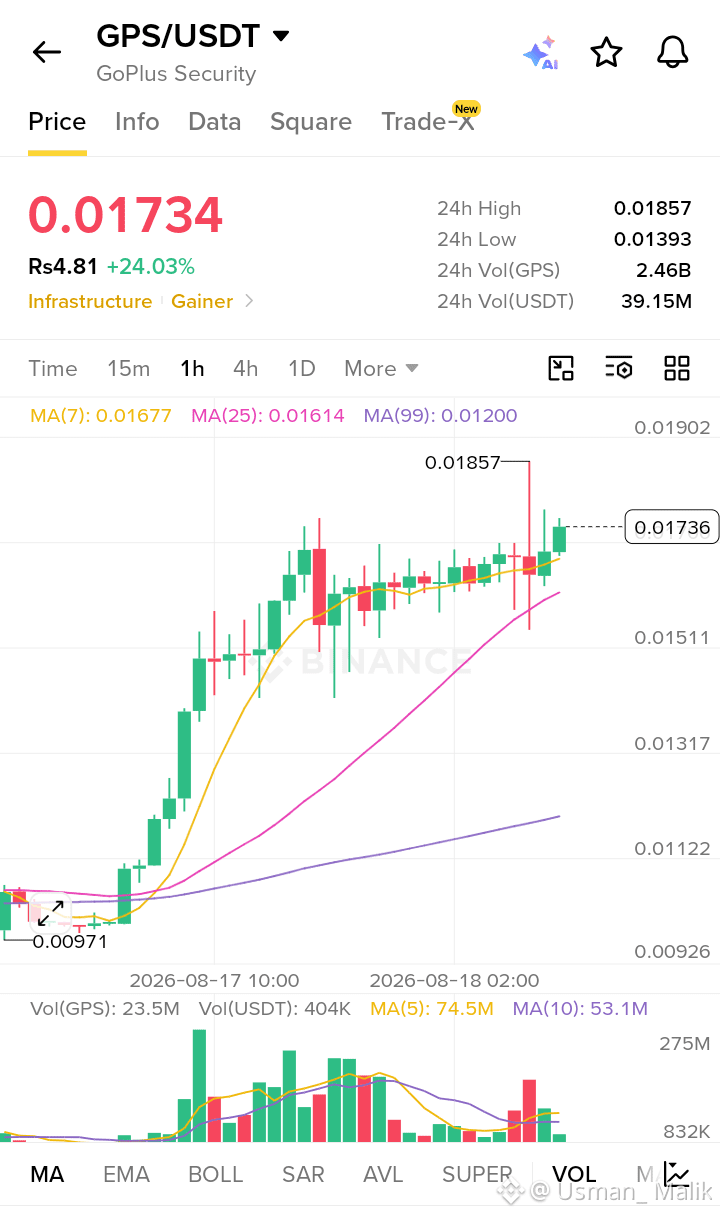
$GPS GoPlus-Sicherheit (GPS): Aufbau einer intelligenten Sicherheitsschicht für Web3
GoPlus Security (GPS) gewinnt an Aufmerksamkeit, weil es eine der größten Schwächen von Web3 adressiert: die Transaktions- und Assetsicherheit. Anstatt ein weiteres allgemeines Blockchain-Projekt zu sein, konzentriert sich GoPlus auf Echtzeit-Sicherheitsintelligenz für Token, NFTs, Adressen, Freigaben, dApps und Transaktionen. Seine APIs sind darauf ausgelegt, dass Entwickler und Plattformen Risiken erkennen können, bevor Nutzer mit potenziell schädlicher On-Chain-Aktivität interagieren.
Das GPS-Token ist auf Ökosystem-Nutzen ausgelegt. Laut dem regulatorischen Whitepaper von GoPlus kann es für Zahlungen für Sicherheitsdienste, Security Gas, Staking, Rewards und Governance verwendet werden.
Aktuelle verifizierte Entwicklung umfasst zudem die fortgesetzte Erweiterung der Token-Security-API, wobei 2026 die Plasma-Unterstützung hinzugefügt wurde.
CoinGecko listet GPS mit insgesamt 10 Milliarden und einer maximalen Gesamtmenge, während die Umlaufzahlen je nach Datenquelle variieren können und vor Entscheidungen überprüft werden sollten.
Die Chance ist klar: Eine stärkere Web3-Adoption erfordert einen besseren Schutz. Allerdings bleibt GPS anfällig für Token-Freigaben, Wettbewerb, Marktvolatilität und die Notwendigkeit einer nachhaltigen Nutzung im realen Umfeld. Seine langfristige Stärke wird letztlich davon abhängen, ob GoPlus Sicherheitsinfrastruktur in eine dauerhafte Ökosystem-Nachfrage verwandeln kann.
$GPS GoPlus-Sicherheit (GPS): Aufbau einer intelligenten Sicherheitsschicht für Web3
GoPlus Security (GPS) gewinnt an Aufmerksamkeit, weil es eine der größten Schwächen von Web3 adressiert: die Transaktions- und Assetsicherheit. Anstatt ein weiteres allgemeines Blockchain-Projekt zu sein, konzentriert sich GoPlus auf Echtzeit-Sicherheitsintelligenz für Token, NFTs, Adressen, Freigaben, dApps und Transaktionen. Seine APIs sind darauf ausgelegt, dass Entwickler und Plattformen Risiken erkennen können, bevor Nutzer mit potenziell schädlicher On-Chain-Aktivität interagieren.
Das GPS-Token ist auf Ökosystem-Nutzen ausgelegt. Laut dem regulatorischen Whitepaper von GoPlus kann es für Zahlungen für Sicherheitsdienste, Security Gas, Staking, Rewards und Governance verwendet werden.
Aktuelle verifizierte Entwicklung umfasst zudem die fortgesetzte Erweiterung der Token-Security-API, wobei 2026 die Plasma-Unterstützung hinzugefügt wurde.
CoinGecko listet GPS mit insgesamt 10 Milliarden und einer maximalen Gesamtmenge, während die Umlaufzahlen je nach Datenquelle variieren können und vor Entscheidungen überprüft werden sollten.
Die Chance ist klar: Eine stärkere Web3-Adoption erfordert einen besseren Schutz. Allerdings bleibt GPS anfällig für Token-Freigaben, Wettbewerb, Marktvolatilität und die Notwendigkeit einer nachhaltigen Nutzung im realen Umfeld. Seine langfristige Stärke wird letztlich davon abhängen, ob GoPlus Sicherheitsinfrastruktur in eine dauerhafte Ökosystem-Nachfrage verwandeln kann.
GoPlus Security (GPS) gewinnt an Aufmerksamkeit, weil es eine der größten Schwächen von Web3 adressiert: die Transaktions- und Assetsicherheit. Anstatt ein weiteres allgemeines Blockchain-Projekt zu sein, konzentriert sich GoPlus auf Echtzeit-Sicherheitsintelligenz für Token, NFTs, Adressen, Freigaben, dApps und Transaktionen. Seine APIs sind darauf ausgelegt, dass Entwickler und Plattformen Risiken erkennen können, bevor Nutzer mit potenziell schädlicher On-Chain-Aktivität interagieren.
Das GPS-Token ist auf Ökosystem-Nutzen ausgelegt. Laut dem regulatorischen Whitepaper von GoPlus kann es für Zahlungen für Sicherheitsdienste, Security Gas, Staking, Rewards und Governance verwendet werden.
Aktuelle verifizierte Entwicklung umfasst zudem die fortgesetzte Erweiterung der Token-Security-API, wobei 2026 die Plasma-Unterstützung hinzugefügt wurde.
CoinGecko listet GPS mit insgesamt 10 Milliarden und einer maximalen Gesamtmenge, während die Umlaufzahlen je nach Datenquelle variieren können und vor Entscheidungen überprüft werden sollten.
Die Chance ist klar: Eine stärkere Web3-Adoption erfordert einen besseren Schutz. Allerdings bleibt GPS anfällig für Token-Freigaben, Wettbewerb, Marktvolatilität und die Notwendigkeit einer nachhaltigen Nutzung im realen Umfeld. Seine langfristige Stärke wird letztlich davon abhängen, ob GoPlus Sicherheitsinfrastruktur in eine dauerhafte Ökosystem-Nachfrage verwandeln kann.
101
·
--
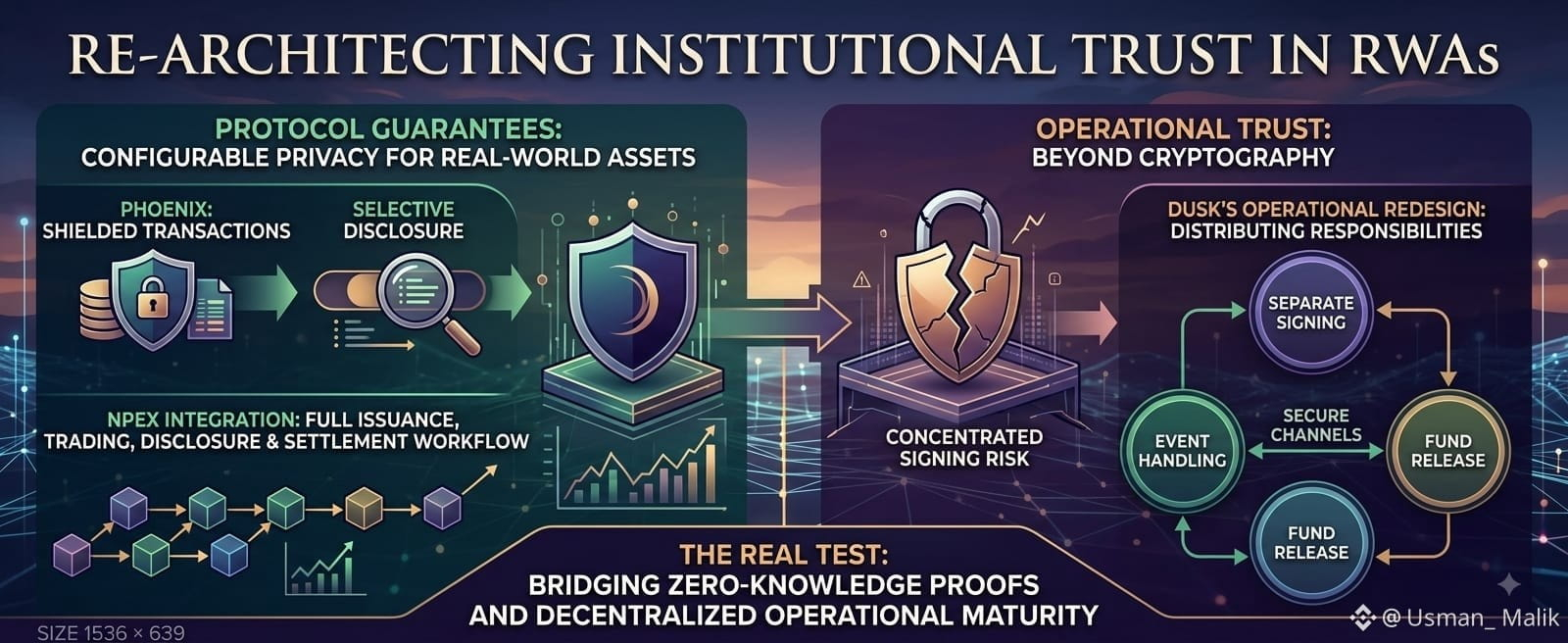
#dusk $DUSK @Dusk_Foundation Der interessante Teil von Dusk besteht nicht einfach darin, RWAs on-chain zu bringen. Es geht um den Versuch, Datenschutz auf der Transaktionsebene konfigurierbar zu machen.
Phoenix kann sensible Übertragungsdaten abgeschirmt halten, während selektive Offenlegung es autorisierten Parteien ermöglicht, einzusehen, was sie tatsächlich brauchen. Das ist für regulierte Märkte wichtiger als es, alles dauerhaft öffentlich zu machen.
Die NPEX-Beziehung macht dieses Design mehr als nur eine theoretische Übung: Das Ziel ist ein tatsächlicher Prozess für Emission, Handel, Offenlegung und Abwicklung.
Der Bridge-Vorfall ist jedoch eine hilfreiche Erinnerung daran, dass institutionelle Infrastruktur auch auf der operativen Ebene bewertet wird. Ein starkes Datenschutzmodell gleicht kein konzentriertes Signing-Risiko aus. Dusk’ Redesign, das Signing, Event-Handling und die Freigabe von Geldern trennt, könnte letztlich ebenso wichtig sein wie die Kryptographie.
Diese Unterscheidung zwischen Protokoll-Garantien und operativem Vertrauen ist wahrscheinlich der Punkt, an dem der eigentliche Test beginnt.
{future}(DUSKUSDT)
#dusk $DUSK @Dusk Der interessante Teil von Dusk besteht nicht einfach darin, RWAs on-chain zu bringen. Es geht um den Versuch, Datenschutz auf der Transaktionsebene konfigurierbar zu machen.
Phoenix kann sensible Übertragungsdaten abgeschirmt halten, während selektive Offenlegung es autorisierten Parteien ermöglicht, einzusehen, was sie tatsächlich brauchen. Das ist für regulierte Märkte wichtiger als es, alles dauerhaft öffentlich zu machen.
Die NPEX-Beziehung macht dieses Design mehr als nur eine theoretische Übung: Das Ziel ist ein tatsächlicher Prozess für Emission, Handel, Offenlegung und Abwicklung.
Der Bridge-Vorfall ist jedoch eine hilfreiche Erinnerung daran, dass institutionelle Infrastruktur auch auf der operativen Ebene bewertet wird. Ein starkes Datenschutzmodell gleicht kein konzentriertes Signing-Risiko aus. Dusk’ Redesign, das Signing, Event-Handling und die Freigabe von Geldern trennt, könnte letztlich ebenso wichtig sein wie die Kryptographie.
Diese Unterscheidung zwischen Protokoll-Garantien und operativem Vertrauen ist wahrscheinlich der Punkt, an dem der eigentliche Test beginnt.
Phoenix kann sensible Übertragungsdaten abgeschirmt halten, während selektive Offenlegung es autorisierten Parteien ermöglicht, einzusehen, was sie tatsächlich brauchen. Das ist für regulierte Märkte wichtiger als es, alles dauerhaft öffentlich zu machen.
Die NPEX-Beziehung macht dieses Design mehr als nur eine theoretische Übung: Das Ziel ist ein tatsächlicher Prozess für Emission, Handel, Offenlegung und Abwicklung.
Der Bridge-Vorfall ist jedoch eine hilfreiche Erinnerung daran, dass institutionelle Infrastruktur auch auf der operativen Ebene bewertet wird. Ein starkes Datenschutzmodell gleicht kein konzentriertes Signing-Risiko aus. Dusk’ Redesign, das Signing, Event-Handling und die Freigabe von Geldern trennt, könnte letztlich ebenso wichtig sein wie die Kryptographie.
Diese Unterscheidung zwischen Protokoll-Garantien und operativem Vertrauen ist wahrscheinlich der Punkt, an dem der eigentliche Test beginnt.
5
2
87
·
--
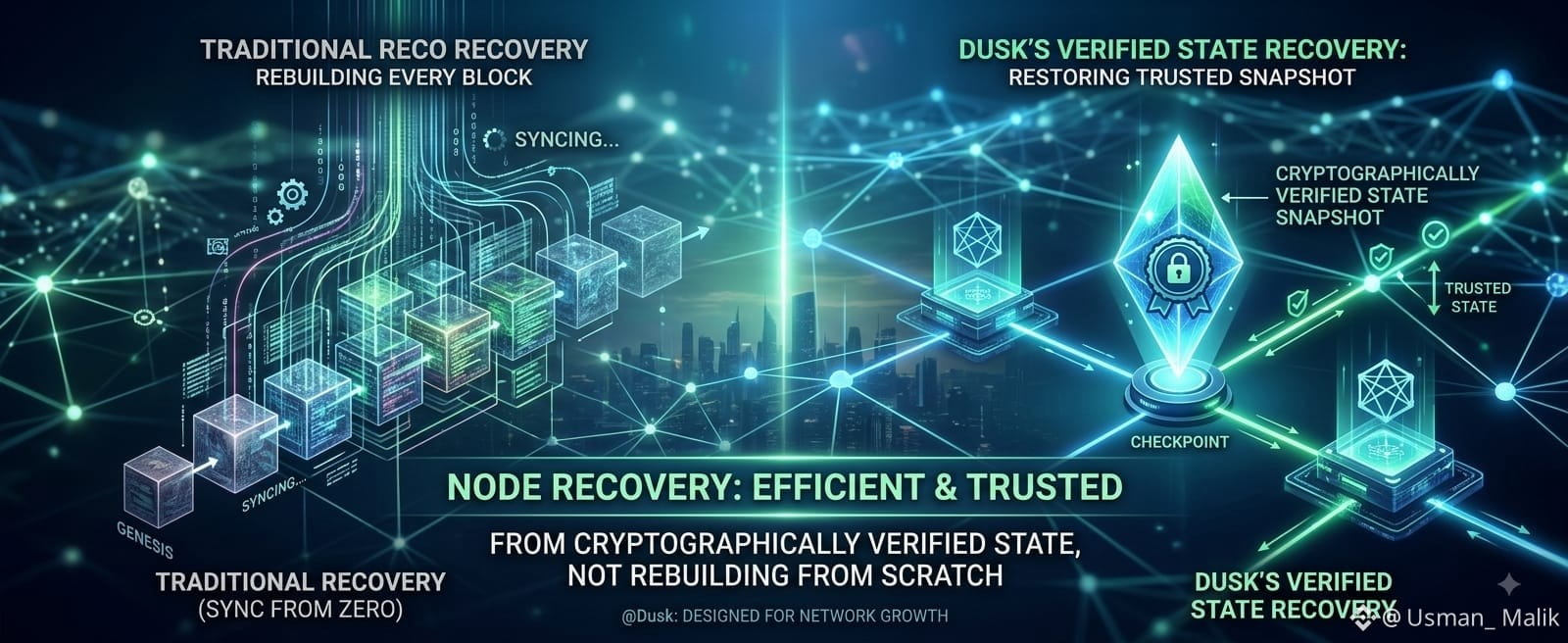
#dusk $DUSK @Dusk_Foundation Ich dachte früher, dass die Wiederherstellung von Nodes nur eine Frage des Neustarts des Clients sei und des Wartens, bis die Chain synchronisiert ist. Wenn man genauer betrachtet, wie @Dusk an die Recovery herangeht, hat sich diese Sicht verändert.
Das Interessante ist, dass das Netzwerk einen verifizierten Snapshot des Zustands bewahren, ihn validieren und dann diesen Checkpoint verwenden kann, wenn eine Node sich wiederherstellen muss. Das bedeutet: Recovery geht nicht nur um Geschwindigkeit oder darum, wieder online zu sein; es geht auch darum, sicherzustellen, dass der wiederhergestellte Zustand vertrauenswürdig ist.
Für ein wachsendes Netzwerk könnte das zunehmend wichtiger werden. Alles von Grund auf neu aufzubauen ist zwar möglicherweise unkompliziert, aber aus einem verifizierten Zustand wiederherzustellen kann die Recovery viel effizienter machen und gleichzeitig die Verifikation intakt halten.
Wenn mehr Dusk-Nodes online gehen, halte ich diese Design-Entscheidung für noch relevanter.
Würdest du einer Node mehr vertrauen, wenn sie sich aus einem kryptografisch verifizierten Zustand erholen könnte, statt alles von Grund auf neu aufzubauen?
#dusk $DUSK @Dusk Ich dachte früher, dass die Wiederherstellung von Nodes nur eine Frage des Neustarts des Clients sei und des Wartens, bis die Chain synchronisiert ist. Wenn man genauer betrachtet, wie @Dusk an die Recovery herangeht, hat sich diese Sicht verändert.
Das Interessante ist, dass das Netzwerk einen verifizierten Snapshot des Zustands bewahren, ihn validieren und dann diesen Checkpoint verwenden kann, wenn eine Node sich wiederherstellen muss. Das bedeutet: Recovery geht nicht nur um Geschwindigkeit oder darum, wieder online zu sein; es geht auch darum, sicherzustellen, dass der wiederhergestellte Zustand vertrauenswürdig ist.
Für ein wachsendes Netzwerk könnte das zunehmend wichtiger werden. Alles von Grund auf neu aufzubauen ist zwar möglicherweise unkompliziert, aber aus einem verifizierten Zustand wiederherzustellen kann die Recovery viel effizienter machen und gleichzeitig die Verifikation intakt halten.
Wenn mehr Dusk-Nodes online gehen, halte ich diese Design-Entscheidung für noch relevanter.
Würdest du einer Node mehr vertrauen, wenn sie sich aus einem kryptografisch verifizierten Zustand erholen könnte, statt alles von Grund auf neu aufzubauen?
Das Interessante ist, dass das Netzwerk einen verifizierten Snapshot des Zustands bewahren, ihn validieren und dann diesen Checkpoint verwenden kann, wenn eine Node sich wiederherstellen muss. Das bedeutet: Recovery geht nicht nur um Geschwindigkeit oder darum, wieder online zu sein; es geht auch darum, sicherzustellen, dass der wiederhergestellte Zustand vertrauenswürdig ist.
Für ein wachsendes Netzwerk könnte das zunehmend wichtiger werden. Alles von Grund auf neu aufzubauen ist zwar möglicherweise unkompliziert, aber aus einem verifizierten Zustand wiederherzustellen kann die Recovery viel effizienter machen und gleichzeitig die Verifikation intakt halten.
Wenn mehr Dusk-Nodes online gehen, halte ich diese Design-Entscheidung für noch relevanter.
Würdest du einer Node mehr vertrauen, wenn sie sich aus einem kryptografisch verifizierten Zustand erholen könnte, statt alles von Grund auf neu aufzubauen?
4
3
161
·
--
#dusk $DUSK Ich fange an, die größere These zu sehen
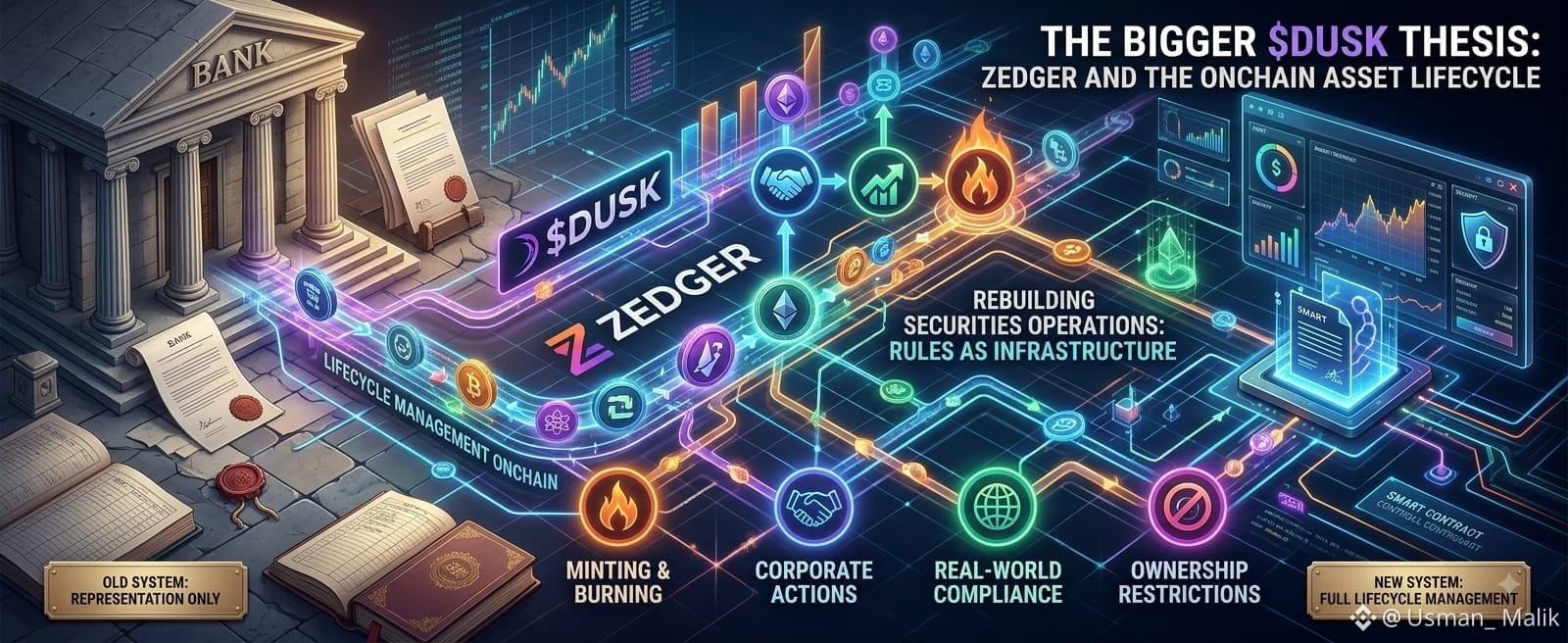
Ich habe mehr Zeit damit verbracht, mir @Dusk und Zedger anzusehen, und ich glaube, dass der spannende Teil weit über das bloße Onboarding von Wertpapieren auf der Kette hinausgeht.
Was meine Aufmerksamkeit erregt hat, ist der Versuch, mehr vom Lebenszyklus des Vermögenswerts direkt auf der Blockchain zu verwalten.
Ich spreche von Vorgängen wie Minting, Burning und Corporate Actions. Das verändert die Art, wie ich über tokenisierte Wertpapiere nachdenke.
Anstatt dass die Blockchain nur ein Asset repräsentiert, das irgendwo anders existiert, könnten mehr der Regeln, die dieses Asset betreffen, potenziell selbst Teil der Infrastruktur werden.
Das ist eine viel größere Idee.
Aber ich denke auch, dass das die eigentliche Herausforderung schafft.
Finanzielle Vermögenswerte sind nicht nur Tokens. Sie kommen mit rechtlichen Bedingungen, Eigentumsbeschränkungen, Compliance-Anforderungen und Ereignissen, die ihren Zustand im Laufe der Zeit verändern können.
Wenn also mehr von diesem Lebenszyklus onchain geht, wird die Infrastruktur zwar leistungsfähiger — aber sie muss auch dafür verantwortlich sein, die reale finanzielle Komplexität korrekt abzubilden.
Darin liegt für mich die Spannung, wo $DUSK interessant wird.
Ich sehe mir Zedger nicht einfach als eine weitere Tokenisierungslösung an. Ich schaue darauf, ob es die Blockchain-Infrastruktur in etwas verwandeln kann, das in der Lage ist, regulierte Finanz-Assets tatsächlich über ihren gesamten Lebenszyklus hinweg zu verwalten.
Wenn es funktioniert, besteht die Chance nicht nur darin, Wertpapiere onchain zu bringen.
Es geht darum, wie diese Wertpapiere funktionieren, neu aufzubauen. 🔥
@Dusk_Foundation
{future}(DUSKUSDT)
#dusk $DUSK Ich fange an, die größere These zu sehen
Ich habe mehr Zeit damit verbracht, mir @Dusk und Zedger anzusehen, und ich glaube, dass der spannende Teil weit über das bloße Onboarding von Wertpapieren auf der Kette hinausgeht.
Was meine Aufmerksamkeit erregt hat, ist der Versuch, mehr vom Lebenszyklus des Vermögenswerts direkt auf der Blockchain zu verwalten.
Ich spreche von Vorgängen wie Minting, Burning und Corporate Actions. Das verändert die Art, wie ich über tokenisierte Wertpapiere nachdenke.
Anstatt dass die Blockchain nur ein Asset repräsentiert, das irgendwo anders existiert, könnten mehr der Regeln, die dieses Asset betreffen, potenziell selbst Teil der Infrastruktur werden.
Das ist eine viel größere Idee.
Aber ich denke auch, dass das die eigentliche Herausforderung schafft.
Finanzielle Vermögenswerte sind nicht nur Tokens. Sie kommen mit rechtlichen Bedingungen, Eigentumsbeschränkungen, Compliance-Anforderungen und Ereignissen, die ihren Zustand im Laufe der Zeit verändern können.
Wenn also mehr von diesem Lebenszyklus onchain geht, wird die Infrastruktur zwar leistungsfähiger — aber sie muss auch dafür verantwortlich sein, die reale finanzielle Komplexität korrekt abzubilden.
Darin liegt für mich die Spannung, wo $DUSK interessant wird.
Ich sehe mir Zedger nicht einfach als eine weitere Tokenisierungslösung an. Ich schaue darauf, ob es die Blockchain-Infrastruktur in etwas verwandeln kann, das in der Lage ist, regulierte Finanz-Assets tatsächlich über ihren gesamten Lebenszyklus hinweg zu verwalten.
Wenn es funktioniert, besteht die Chance nicht nur darin, Wertpapiere onchain zu bringen.
Es geht darum, wie diese Wertpapiere funktionieren, neu aufzubauen. 🔥
@Dusk
Ich habe mehr Zeit damit verbracht, mir @Dusk und Zedger anzusehen, und ich glaube, dass der spannende Teil weit über das bloße Onboarding von Wertpapieren auf der Kette hinausgeht.
Was meine Aufmerksamkeit erregt hat, ist der Versuch, mehr vom Lebenszyklus des Vermögenswerts direkt auf der Blockchain zu verwalten.
Ich spreche von Vorgängen wie Minting, Burning und Corporate Actions. Das verändert die Art, wie ich über tokenisierte Wertpapiere nachdenke.
Anstatt dass die Blockchain nur ein Asset repräsentiert, das irgendwo anders existiert, könnten mehr der Regeln, die dieses Asset betreffen, potenziell selbst Teil der Infrastruktur werden.
Das ist eine viel größere Idee.
Aber ich denke auch, dass das die eigentliche Herausforderung schafft.
Finanzielle Vermögenswerte sind nicht nur Tokens. Sie kommen mit rechtlichen Bedingungen, Eigentumsbeschränkungen, Compliance-Anforderungen und Ereignissen, die ihren Zustand im Laufe der Zeit verändern können.
Wenn also mehr von diesem Lebenszyklus onchain geht, wird die Infrastruktur zwar leistungsfähiger — aber sie muss auch dafür verantwortlich sein, die reale finanzielle Komplexität korrekt abzubilden.
Darin liegt für mich die Spannung, wo $DUSK interessant wird.
Ich sehe mir Zedger nicht einfach als eine weitere Tokenisierungslösung an. Ich schaue darauf, ob es die Blockchain-Infrastruktur in etwas verwandeln kann, das in der Lage ist, regulierte Finanz-Assets tatsächlich über ihren gesamten Lebenszyklus hinweg zu verwalten.
Wenn es funktioniert, besteht die Chance nicht nur darin, Wertpapiere onchain zu bringen.
Es geht darum, wie diese Wertpapiere funktionieren, neu aufzubauen. 🔥
@Dusk
2
2
111
·
--
#dusk $DUSK — Das leise Setup, das laut werden könnte
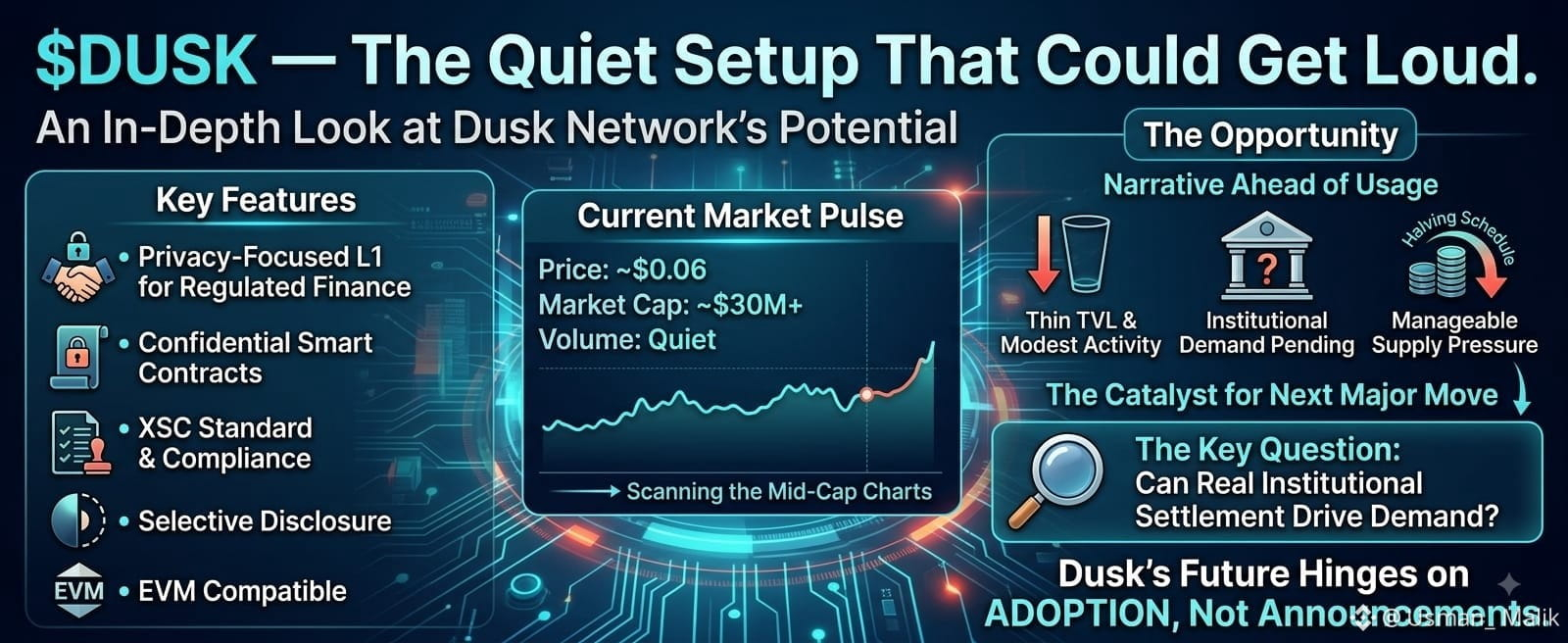
Spät in der Nacht habe ich die Mid-Cap-Charts gescannt, als $DUSK — meine Aufmerksamkeit auf sich zog— um etwa 0,06 $ herum, mit einer Marktkapitalisierung knapp über 30 Mio. Das Volumen war ruhig, die Kursbewegung wirkte schläfrig, aber ich habe weiter gegraben.
Ich mag die Architektur. Dusk baut eine datenschutzorientierte Layer-1 für reguliertes Finance auf und kombiniert vertrauliche Smart Contracts, den XSC-Standard, selektive Offenlegung, Compliance-Funktionen und eine EVM-Umgebung. Das Ziel ist einfach: echte finanzielle Aktivität on-chain ermöglichen, ohne jede einzelne Information in die Öffentlichkeit zu zwingen.
Aber hier sehe ich die eigentliche Chance: Die Story ist der Nutzung noch voraus.
TVL bleibt dünn, die Aktivität ist verhalten, und eine spürbare institutionelle Nachfrage ist bisher noch nicht im großen Stil angekommen. Der Verkaufsdruck wirkt zudem überschaubarer als bei vielen neueren Projekten, wobei die verbleibenden Emissionen an einen langfristigen Halving-Plan gebunden sind.
Ich beobachte eine zentrale Frage:
Kann echtes institutionelles Settlement endlich Dusk- Infrastruktur in messbare Nachfrage verwandeln?
Denn ich glaube, der nächste große Schritt wird nicht aus einer weiteren Ankündigung kommen.
Er wird aus der Adoption entstehen.
Und genau das macht $DUSK gerade jetzt interessant.
@Dusk_Foundation
#dusk $DUSK — Das leise Setup, das laut werden könnte
Spät in der Nacht habe ich die Mid-Cap-Charts gescannt, als $DUSK — meine Aufmerksamkeit auf sich zog— um etwa 0,06 $ herum, mit einer Marktkapitalisierung knapp über 30 Mio. Das Volumen war ruhig, die Kursbewegung wirkte schläfrig, aber ich habe weiter gegraben.
Ich mag die Architektur. Dusk baut eine datenschutzorientierte Layer-1 für reguliertes Finance auf und kombiniert vertrauliche Smart Contracts, den XSC-Standard, selektive Offenlegung, Compliance-Funktionen und eine EVM-Umgebung. Das Ziel ist einfach: echte finanzielle Aktivität on-chain ermöglichen, ohne jede einzelne Information in die Öffentlichkeit zu zwingen.
Aber hier sehe ich die eigentliche Chance: Die Story ist der Nutzung noch voraus.
TVL bleibt dünn, die Aktivität ist verhalten, und eine spürbare institutionelle Nachfrage ist bisher noch nicht im großen Stil angekommen. Der Verkaufsdruck wirkt zudem überschaubarer als bei vielen neueren Projekten, wobei die verbleibenden Emissionen an einen langfristigen Halving-Plan gebunden sind.
Ich beobachte eine zentrale Frage:
Kann echtes institutionelles Settlement endlich Dusk- Infrastruktur in messbare Nachfrage verwandeln?
Denn ich glaube, der nächste große Schritt wird nicht aus einer weiteren Ankündigung kommen.
Er wird aus der Adoption entstehen.
Und genau das macht $DUSK gerade jetzt interessant.
@Dusk
Spät in der Nacht habe ich die Mid-Cap-Charts gescannt, als $DUSK — meine Aufmerksamkeit auf sich zog— um etwa 0,06 $ herum, mit einer Marktkapitalisierung knapp über 30 Mio. Das Volumen war ruhig, die Kursbewegung wirkte schläfrig, aber ich habe weiter gegraben.
Ich mag die Architektur. Dusk baut eine datenschutzorientierte Layer-1 für reguliertes Finance auf und kombiniert vertrauliche Smart Contracts, den XSC-Standard, selektive Offenlegung, Compliance-Funktionen und eine EVM-Umgebung. Das Ziel ist einfach: echte finanzielle Aktivität on-chain ermöglichen, ohne jede einzelne Information in die Öffentlichkeit zu zwingen.
Aber hier sehe ich die eigentliche Chance: Die Story ist der Nutzung noch voraus.
TVL bleibt dünn, die Aktivität ist verhalten, und eine spürbare institutionelle Nachfrage ist bisher noch nicht im großen Stil angekommen. Der Verkaufsdruck wirkt zudem überschaubarer als bei vielen neueren Projekten, wobei die verbleibenden Emissionen an einen langfristigen Halving-Plan gebunden sind.
Ich beobachte eine zentrale Frage:
Kann echtes institutionelles Settlement endlich Dusk- Infrastruktur in messbare Nachfrage verwandeln?
Denn ich glaube, der nächste große Schritt wird nicht aus einer weiteren Ankündigung kommen.
Er wird aus der Adoption entstehen.
Und genau das macht $DUSK gerade jetzt interessant.
@Dusk
116
·
--
Bullisch
#dusk $DUSK Phoenix-Einsichtsschlüssel: Die stille Datenschutz-Risiko
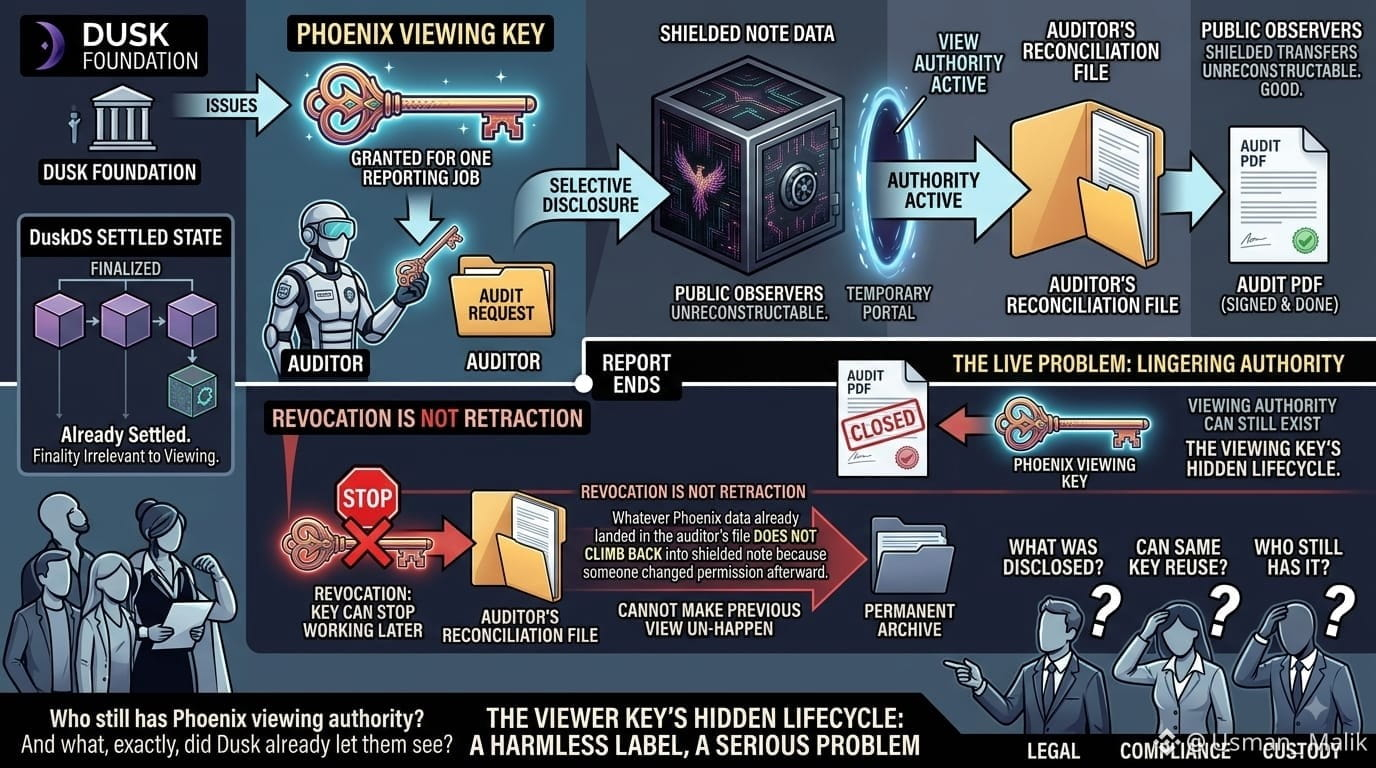
Ich komme immer wieder auf einen unangenehmen Detailpunkt im Phoenix-Design von Dusk zurück: Ein Einsichtsschlüssel wirkt harmlos, bis ich aufhöre, ihn als einfachen „Zugriff zum Ansehen“ zu betrachten.
Ich kann den legitimen Arbeitsablauf nachvollziehen. Ein Aussteller ermächtigt einen Auditor, eine Phoenix-Übertragung zu prüfen, Beträge zu verifizieren, Geschäftspartner abzugleichen und einen Bericht abzuschließen. Die Übertragung wird ausgeglichen. Die Notizen bleiben vor allen anderen verborgen. Selektive Offenlegung funktioniert genau wie beabsichtigt.
Aber ich sehe ein anderes Problem, nachdem der Bericht beendet ist.
Die Prüfung hat einen Lebenszyklus. Die Einsichtsberechtigung vielleicht nicht.
Ich kann später einen Schlüssel widerrufen, aber ich kann keine Informationen widerrufen, die bereits in die Systeme des Auditors gelangt sind. Sobald Phoenix-Daten in Abgleichsdateien, Berichten oder interne Aufzeichnungen exportiert wurden, holt eine Änderung der Berechtigungen diese Informationen nicht wieder in den geschützten Zustand zurück.
Das wirft die Frage auf, die ich für die wichtigste halte:
Wer hat noch immer Phoenix-Einsichtsberechtigung, nachdem der ursprüngliche Grund für den Zugriff verschwunden ist?
DuskDS-„Finality“ kann die Transaktion abschließen. Phoenix kann Vertraulichkeit bewahren. Aber Datenschutz hängt auch davon ab, die Lebensdauer der Offenlegung selbst zu kontrollieren.
Genau dort beginnt die eigentliche Infrastrukturfrage.
@Dusk_Foundation
#dusk $DUSK Phoenix-Einsichtsschlüssel: Die stille Datenschutz-Risiko
Ich komme immer wieder auf einen unangenehmen Detailpunkt im Phoenix-Design von Dusk zurück: Ein Einsichtsschlüssel wirkt harmlos, bis ich aufhöre, ihn als einfachen „Zugriff zum Ansehen“ zu betrachten.
Ich kann den legitimen Arbeitsablauf nachvollziehen. Ein Aussteller ermächtigt einen Auditor, eine Phoenix-Übertragung zu prüfen, Beträge zu verifizieren, Geschäftspartner abzugleichen und einen Bericht abzuschließen. Die Übertragung wird ausgeglichen. Die Notizen bleiben vor allen anderen verborgen. Selektive Offenlegung funktioniert genau wie beabsichtigt.
Aber ich sehe ein anderes Problem, nachdem der Bericht beendet ist.
Die Prüfung hat einen Lebenszyklus. Die Einsichtsberechtigung vielleicht nicht.
Ich kann später einen Schlüssel widerrufen, aber ich kann keine Informationen widerrufen, die bereits in die Systeme des Auditors gelangt sind. Sobald Phoenix-Daten in Abgleichsdateien, Berichten oder interne Aufzeichnungen exportiert wurden, holt eine Änderung der Berechtigungen diese Informationen nicht wieder in den geschützten Zustand zurück.
Das wirft die Frage auf, die ich für die wichtigste halte:
Wer hat noch immer Phoenix-Einsichtsberechtigung, nachdem der ursprüngliche Grund für den Zugriff verschwunden ist?
DuskDS-„Finality“ kann die Transaktion abschließen. Phoenix kann Vertraulichkeit bewahren. Aber Datenschutz hängt auch davon ab, die Lebensdauer der Offenlegung selbst zu kontrollieren.
Genau dort beginnt die eigentliche Infrastrukturfrage.
@Dusk
Ich komme immer wieder auf einen unangenehmen Detailpunkt im Phoenix-Design von Dusk zurück: Ein Einsichtsschlüssel wirkt harmlos, bis ich aufhöre, ihn als einfachen „Zugriff zum Ansehen“ zu betrachten.
Ich kann den legitimen Arbeitsablauf nachvollziehen. Ein Aussteller ermächtigt einen Auditor, eine Phoenix-Übertragung zu prüfen, Beträge zu verifizieren, Geschäftspartner abzugleichen und einen Bericht abzuschließen. Die Übertragung wird ausgeglichen. Die Notizen bleiben vor allen anderen verborgen. Selektive Offenlegung funktioniert genau wie beabsichtigt.
Aber ich sehe ein anderes Problem, nachdem der Bericht beendet ist.
Die Prüfung hat einen Lebenszyklus. Die Einsichtsberechtigung vielleicht nicht.
Ich kann später einen Schlüssel widerrufen, aber ich kann keine Informationen widerrufen, die bereits in die Systeme des Auditors gelangt sind. Sobald Phoenix-Daten in Abgleichsdateien, Berichten oder interne Aufzeichnungen exportiert wurden, holt eine Änderung der Berechtigungen diese Informationen nicht wieder in den geschützten Zustand zurück.
Das wirft die Frage auf, die ich für die wichtigste halte:
Wer hat noch immer Phoenix-Einsichtsberechtigung, nachdem der ursprüngliche Grund für den Zugriff verschwunden ist?
DuskDS-„Finality“ kann die Transaktion abschließen. Phoenix kann Vertraulichkeit bewahren. Aber Datenschutz hängt auch davon ab, die Lebensdauer der Offenlegung selbst zu kontrollieren.
Genau dort beginnt die eigentliche Infrastrukturfrage.
@Dusk
10
6
157
·
--
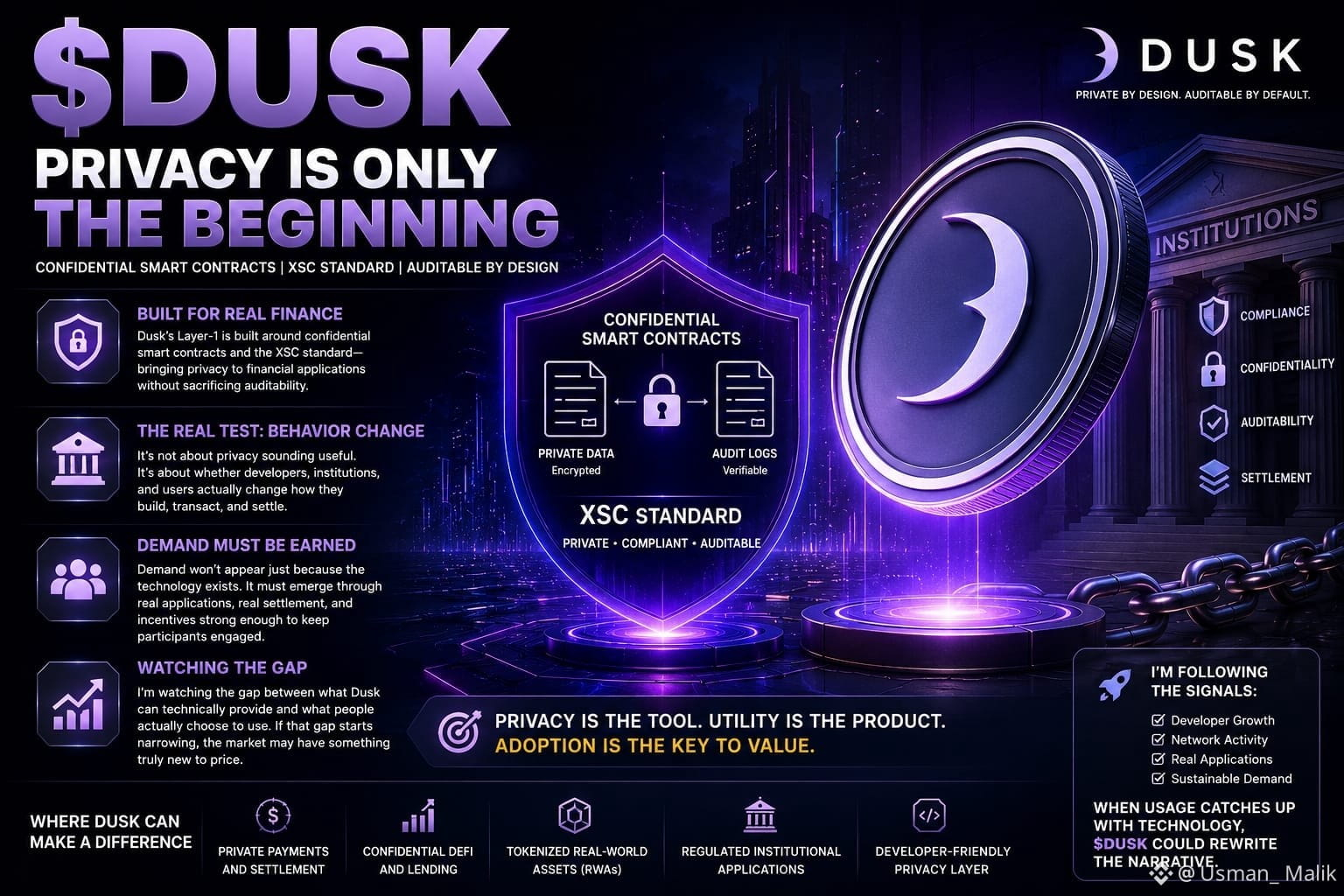
#dusk $DUSK — Datenschutz ist erst der Anfang
Früher dachte ich, dass Privacy-Ketten allein deshalb Aufmerksamkeit gewinnen würden, weil sie verbergen können, was öffentliche Blockchains offenlegen. Doch wenn ich genauer auf @Dusk blicke, sehe ich eine viel größere Chance – und einen viel härteren Test.
Ich sehe, wie Dusk seine Layer-1 rund um vertrauliche Smart Contracts und den XSC-Standard aufbaut, mit dem Ziel, Finanzanwendungen privat zu machen, ohne dabei auf überprüfbare Regeln zu verzichten. Diese Kombination könnte für Institutionen äußerst wirkungsvoll werden, die Vertraulichkeit, Compliance und transparente Ausführung gleichzeitig benötigen.
Aber ich bewerte DUSK nicht nur nach der Technologie.
Ich beobachte, ob Entwickler tatsächlich darauf aufbauen, ob Institutionen die Infrastruktur als nützlich empfinden und ob Nutzer sich für privates Settlement entscheiden, weil dadurch ein echter Reibungspunkt entfällt.
Dort wird die Geschichte interessant.
Datenschutz ist nicht das Produkt an sich. Der Nutzen ist es.
Wenn Dusk vertrauliche Ausführung in echte Anwendungen, echtes Settlement, tiefere Liquidität und nachhaltige Netzwerkaktivität verwandeln kann, könnte der Markt es irgendwann aufhören, als bloß weiteres Privacy-Narrativ zu betrachten.
Ich beobachte die Einführung, die Transaktionsaktivität, das Wachstum des Ökosystems und die Zugkraft bei Entwicklern sehr genau.
Denn wenn die reale Nutzung anfängt, mit der Technologie Schritt zu halten, könnte $DUSK eine ganz andere Geschichte zu erzählen haben. 🚀
@Dusk_Foundation
#dusk $DUSK — Datenschutz ist erst der Anfang
Früher dachte ich, dass Privacy-Ketten allein deshalb Aufmerksamkeit gewinnen würden, weil sie verbergen können, was öffentliche Blockchains offenlegen. Doch wenn ich genauer auf @Dusk blicke, sehe ich eine viel größere Chance – und einen viel härteren Test.
Ich sehe, wie Dusk seine Layer-1 rund um vertrauliche Smart Contracts und den XSC-Standard aufbaut, mit dem Ziel, Finanzanwendungen privat zu machen, ohne dabei auf überprüfbare Regeln zu verzichten. Diese Kombination könnte für Institutionen äußerst wirkungsvoll werden, die Vertraulichkeit, Compliance und transparente Ausführung gleichzeitig benötigen.
Aber ich bewerte DUSK nicht nur nach der Technologie.
Ich beobachte, ob Entwickler tatsächlich darauf aufbauen, ob Institutionen die Infrastruktur als nützlich empfinden und ob Nutzer sich für privates Settlement entscheiden, weil dadurch ein echter Reibungspunkt entfällt.
Dort wird die Geschichte interessant.
Datenschutz ist nicht das Produkt an sich. Der Nutzen ist es.
Wenn Dusk vertrauliche Ausführung in echte Anwendungen, echtes Settlement, tiefere Liquidität und nachhaltige Netzwerkaktivität verwandeln kann, könnte der Markt es irgendwann aufhören, als bloß weiteres Privacy-Narrativ zu betrachten.
Ich beobachte die Einführung, die Transaktionsaktivität, das Wachstum des Ökosystems und die Zugkraft bei Entwicklern sehr genau.
Denn wenn die reale Nutzung anfängt, mit der Technologie Schritt zu halten, könnte $DUSK eine ganz andere Geschichte zu erzählen haben. 🚀
@Dusk
Früher dachte ich, dass Privacy-Ketten allein deshalb Aufmerksamkeit gewinnen würden, weil sie verbergen können, was öffentliche Blockchains offenlegen. Doch wenn ich genauer auf @Dusk blicke, sehe ich eine viel größere Chance – und einen viel härteren Test.
Ich sehe, wie Dusk seine Layer-1 rund um vertrauliche Smart Contracts und den XSC-Standard aufbaut, mit dem Ziel, Finanzanwendungen privat zu machen, ohne dabei auf überprüfbare Regeln zu verzichten. Diese Kombination könnte für Institutionen äußerst wirkungsvoll werden, die Vertraulichkeit, Compliance und transparente Ausführung gleichzeitig benötigen.
Aber ich bewerte DUSK nicht nur nach der Technologie.
Ich beobachte, ob Entwickler tatsächlich darauf aufbauen, ob Institutionen die Infrastruktur als nützlich empfinden und ob Nutzer sich für privates Settlement entscheiden, weil dadurch ein echter Reibungspunkt entfällt.
Dort wird die Geschichte interessant.
Datenschutz ist nicht das Produkt an sich. Der Nutzen ist es.
Wenn Dusk vertrauliche Ausführung in echte Anwendungen, echtes Settlement, tiefere Liquidität und nachhaltige Netzwerkaktivität verwandeln kann, könnte der Markt es irgendwann aufhören, als bloß weiteres Privacy-Narrativ zu betrachten.
Ich beobachte die Einführung, die Transaktionsaktivität, das Wachstum des Ökosystems und die Zugkraft bei Entwicklern sehr genau.
Denn wenn die reale Nutzung anfängt, mit der Technologie Schritt zu halten, könnte $DUSK eine ganz andere Geschichte zu erzählen haben. 🚀
@Dusk
14
7
137
·
--
🎙️ Bau die Binance-Showcase, investiere regelmäßig in BNB|Sonntag: Gibt es heute einen Markttrend? Lass uns darüber sprechen

Beenden
05 h 42 m 35 s
17.7k
69
79
·
--
🎙️ Bau den Binance-Platz, setze BNB-Ratenzahlungen|Lass uns die zugrunde liegenden Logiken von USD1 und der WLFI-Ökosysteme verstehen – willkommen, dass ihr alle mit uns ins Gespräch kommt

Beenden
04 h 59 m 05 s
9.4k
30
36
·
--
Echte Liquidität beginnt mit Überzeugung, nicht mit Hype. Darüber lohnt es sich nachzudenken.
Echte Liquidität beginnt mit Überzeugung, nicht mit Hype. Darüber lohnt es sich nachzudenken.
CM_SUNNY
·
--
Bitcoins stiller Test echter Liquidität
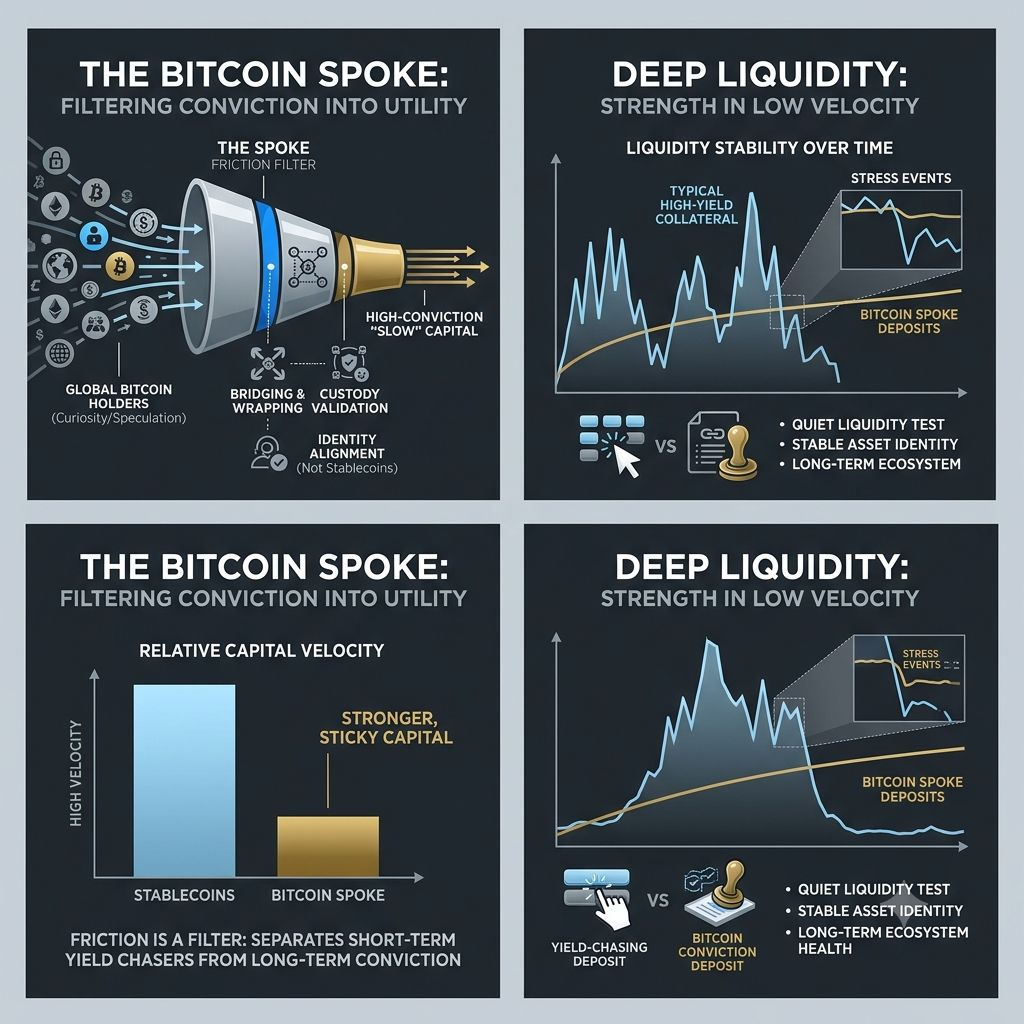
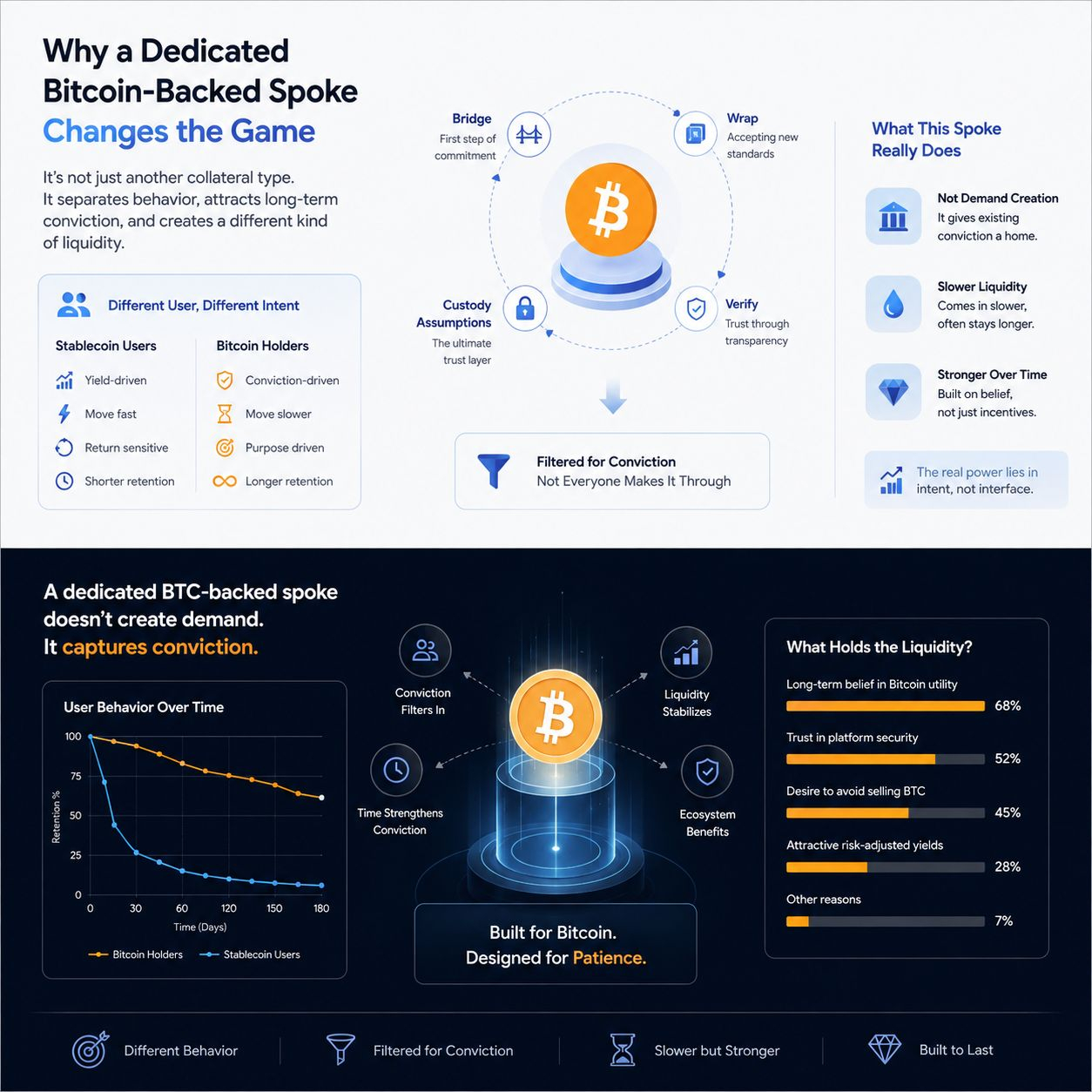
@BabylonLabs_io Zunächst dachte ich, ein dedizierter Bitcoin-Backed Spoke sei nur der nächste Produkt-Schritt, diese Art von Veränderung, die auf dem Papier technisch aussieht und in einem Dashboard ganz normal wirkt.
Doch je tiefer ich schaue, desto mehr erkenne ich, dass es dabei weniger um Sicherheiten geht als um Verhalten. Bitcoin-Nutzer treten nicht mit derselben Denkweise ein wie Einzahler von Stablecoins. Sie jagen nicht einfach nur Rendite; sie fragen vielmehr, ob ihr Bitcoin nützlich werden kann, ohne dabei seine Identität zu verlieren. Dieser Wandel ist entscheidend. Das bedeutet: Der Spoke schafft keine Nachfrage aus dem Nichts, sondern gibt bestehender Überzeugung einen Platz, auf dem sie landen kann. Und die Reibung auf dem Weg – vom Bridging über das Wrapping bis zu den Custody-Checks – ist kein Makel, sondern eher ein Filter. Sie trennt Neugier von Überzeugung. Was diese Reibung übersteht, ist langsameres Kapital, aber oft auch stärkeres Kapital – und genau das könnte dieses Design über die Zeit hinweg still und wirkungsvoll machen.
#baby $BABY $BLESS
@BabylonLabs_io Zunächst dachte ich, ein dedizierter Bitcoin-Backed Spoke sei nur der nächste Produkt-Schritt, diese Art von Veränderung, die auf dem Papier technisch aussieht und in einem Dashboard ganz normal wirkt.
Doch je tiefer ich schaue, desto mehr erkenne ich, dass es dabei weniger um Sicherheiten geht als um Verhalten. Bitcoin-Nutzer treten nicht mit derselben Denkweise ein wie Einzahler von Stablecoins. Sie jagen nicht einfach nur Rendite; sie fragen vielmehr, ob ihr Bitcoin nützlich werden kann, ohne dabei seine Identität zu verlieren. Dieser Wandel ist entscheidend. Das bedeutet: Der Spoke schafft keine Nachfrage aus dem Nichts, sondern gibt bestehender Überzeugung einen Platz, auf dem sie landen kann. Und die Reibung auf dem Weg – vom Bridging über das Wrapping bis zu den Custody-Checks – ist kein Makel, sondern eher ein Filter. Sie trennt Neugier von Überzeugung. Was diese Reibung übersteht, ist langsameres Kapital, aber oft auch stärkeres Kapital – und genau das könnte dieses Design über die Zeit hinweg still und wirkungsvoll machen.
#baby $BABY $BLESS
1
138
·
--
🎙️ Bau den Binance-Platz, halte BNB|Eine neue Woche, blaues Himmelswetter, weiße Wolken – wird die Kursentwicklung heute auch „blaues Himmelswetter“ sein? Lass uns darüber reden

Beenden
04 h 49 m 55 s
8.2k
39
39
Anmelden und weiter Inhalte entdecken
Krypto-Nutzer weltweit auf Binance Square kennenlernen
⚡️ Bleib in Sachen Krypto stets am Puls.
💬 Die weltgrößte Kryptobörse vertraut darauf.
👍 Erhalte verlässliche Einblicke von verifizierten Creators.
E-Mail-Adresse/Telefonnummer
Trendthemen
BOJRaisesRatesTo31YearHigh
61,958 Aufrufe
1,057 Kommentare
#bojraisesratesto31yearhigh ¿Boj auf dem Höchststand seit 31 Jahren und Bitcoin steigt? Die institutionelle Reife von $BTC in einem einzigen Diagramm 🇯🇵📈⚡
Die Bank von Japan hat ihren Zinssatz auf 1,25% angehoben (historisches Hoch seit mehr als drei Jahrzehnten), und was viele als Zusammenbruch des Carry Trades prognostiziert hatten, zeigte sich am Ende als die sauberste Stärke des Kryptomarkts.
🧠 3 wichtige Erkenntnisse von der technischen Tafel:
1️⃣ Makro-Entkopplung: Der Yen hat sich nicht so gestärkt wie es die traditionellen Analysten erwartet hatten, und BTC reagierte mit einem deutlichen Rebound – ein Beleg dafür, dass die Spot-Nachfrage intakt bleibt.
2️⃣ Vor den Tech-Giganten: Mit einer Marktkapitalisierung von über 1,63 Billionen US-Dollar platziert sich Bitcoin erneut vor Tesla (1,438B) und bekräftigt seine Rolle als globales Reserve-Asset und Liquiditäts-Refugium.
3️⃣ Struktur in 4H und 1D: Die Absorption an den Unterstützungen bestätigt, dass makroökonomische Korrekturen Fenster für institutionelle Akkumulation sind – nicht für Kapitulation.
$Während der Retail aufgrund der Schlagzeilen zu den Zinssätzen in Panik gerät, folgt das professionelle Management weiter der realen Liquidität. 💎🛡️
💬 Debatte für die Community: Sehen Sie in dieser Entkopplung die Bestätigung, dass der letzte Abschnitt des bullischen Zyklus hin zu neuen Allzeithochs begonnen hat – oder wird die globale Liquidität die Unterstützungen noch einmal auf die Probe stellen? Postet eure Analyse unten! 👇🔥
#bojraisesratesto31yearhigh #MacroEconomy #Trading #BinanceSquare
Jacktraders
·1 Likes
·4.3k Aufrufe
BuffettStepsDownAsBerkshireChairman
26,552 Aufrufe
483 Kommentare
XRPExchangeReservesHitSevenYearLow
32,532 Aufrufe
456 Kommentare