

Kai _Darko
19.3k Beiträge

Kai _Darko
Melden
Nutzer blockieren
538 Following
24.7K+ Follower
18.3K+ Like gegeben
Beiträge
Alle
Live
·
--
Übersetzung ansehen
$ELIZAOS 🚀 — $ELIZAOS is showing serious momentum after the +130.62% surge. Support: $0.000486–$0.000508. Resistance: $0.000572, then $0.000609. Targets 🎯: $0.000661 → $0.000714. Next move: A clean break and hold above $0.000572 could trigger another explosive leg higher; rejection there may send price back toward support for a retest. Pro tip: Don’t FOMO into a vertical candle — wait for a breakout/retest and watch volume. Invalidation: below ~$0.000466. 🔥📈$AI
{alpha}(46630x2e8c31162b855a2ffa90f6f8634643ad6f111e18)
$ELIZAOS 🚀 — $ELIZAOS is showing serious momentum after the +130.62% surge. Support: $0.000486–$0.000508. Resistance: $0.000572, then $0.000609. Targets 🎯: $0.000661 → $0.000714. Next move: A clean break and hold above $0.000572 could trigger another explosive leg higher; rejection there may send price back toward support for a retest. Pro tip: Don’t FOMO into a vertical candle — wait for a breakout/retest and watch volume. Invalidation: below ~$0.000466. 🔥📈$AI
1
446
·
--
Übersetzung ansehen
$PNT 🚀 — $PNT is catching major attention after a +95.63% move. Price shown: $0.08417. Support: $0.0774–$0.0808. Resistance: $0.0909, then $0.0968. Targets 🎯: $0.1052 → $0.1136. Next move: A strong close above $0.091 could turn this into another momentum expansion, while rejection could create a healthy pullback into the support zone. Pro tip: The best entries often come after resistance flips to support — not during the first spike. Invalidation: below ~$0.0741. 🚀💥$AVAX
{future}(AVAXUSDT)
$PNT 🚀 — $PNT is catching major attention after a +95.63% move. Price shown: $0.08417. Support: $0.0774–$0.0808. Resistance: $0.0909, then $0.0968. Targets 🎯: $0.1052 → $0.1136. Next move: A strong close above $0.091 could turn this into another momentum expansion, while rejection could create a healthy pullback into the support zone. Pro tip: The best entries often come after resistance flips to support — not during the first spike. Invalidation: below ~$0.0741. 🚀💥$AVAX
131
·
--
$RLC 🚀 — $RLC kommt nach einem Anstieg von +113.64% mit starkem Momentum und liegt im Screenshot jetzt bei etwa $1.1137. Unterstützung: $1.025–$1.069. Widerstand: $1.203, dann $1.281. Kursziele 🎯: $1.392 → $1.504. Nächster Schritt: Wenn $1.20 zur Unterstützung wird, könnte sich schnell die nächste Beschleunigungszone in Richtung $1.28+ und darüber hinaus eröffnen. Profi-Tipp: Nach einer Bewegung von über 100 % ist es wichtiger, Gewinne abzusichern, als den Kerzen hinterherzujagen — achte auf eine Bestätigung oberhalb des Widerstands. Ungültigkeit: unter ~$0.98. ⚡🔥$AVNT
{future}(AVNTUSDT)
$RLC 🚀 — $RLC kommt nach einem Anstieg von +113.64% mit starkem Momentum und liegt im Screenshot jetzt bei etwa $1.1137. Unterstützung: $1.025–$1.069. Widerstand: $1.203, dann $1.281. Kursziele 🎯: $1.392 → $1.504. Nächster Schritt: Wenn $1.20 zur Unterstützung wird, könnte sich schnell die nächste Beschleunigungszone in Richtung $1.28+ und darüber hinaus eröffnen. Profi-Tipp: Nach einer Bewegung von über 100 % ist es wichtiger, Gewinne abzusichern, als den Kerzen hinterherzujagen — achte auf eine Bestätigung oberhalb des Widerstands. Ungültigkeit: unter ~$0.98. ⚡🔥$AVNT
566
·
--
Übersetzung ansehen
$ZEUS ⚡ — $ZEUS has jumped +46.05%, putting the token into a high-momentum zone around $0.004776. Support: $0.00439–$0.00458. Resistance: $0.00516, then $0.00549. Targets 🎯: $0.00597 → $0.00645. Next move: Hold above $0.00516 and momentum could accelerate toward $0.0055 and the psychological $0.006 area. A rejection could mean a retracement before the next attempt. Pro tip: Watch volume carefully on the breakout — price without volume can become a bull trap. Invalidation: below ~$0.00420. ⚠️🚀$VANRY
$ZEUS ⚡ — $ZEUS has jumped +46.05%, putting the token into a high-momentum zone around $0.004776. Support: $0.00439–$0.00458. Resistance: $0.00516, then $0.00549. Targets 🎯: $0.00597 → $0.00645. Next move: Hold above $0.00516 and momentum could accelerate toward $0.0055 and the psychological $0.006 area. A rejection could mean a retracement before the next attempt. Pro tip: Watch volume carefully on the breakout — price without volume can become a bull trap. Invalidation: below ~$0.00420. ⚠️🚀$VANRY
324
·
--
🔥 $CCD.US — Concordium | +5.27% 🚀 CCD zeigt nach dem jüngsten Anstieg bei etwa $0.00523 ein starkes kurzfristiges Momentum. Unterstützung: $0.00505–$0.00510, mit stärkerer Unterstützung nahe $0.00485. Widerstand: $0.00535, dann $0.00560. Ziel 🎯: $0.00560 → $0.00590 → $0.00620. Nächste Bewegung: Ein Kurs über $0.00510 könnte die Ausbruchsstruktur aufrechterhalten, während eine Zurückweisung nahe $0.00535 einen schnellen Rücksetzer auslösen könnte. Profi-Tipp: Lauf keiner grünen Kerze hinterher; ein erneuter Test der Unterstützung bei entsprechendem Volumen kann ein besseres Setup bieten. ⚡
🔥 $CCD.US — Concordium | +5.27% 🚀 CCD zeigt nach dem jüngsten Anstieg bei etwa $0.00523 ein starkes kurzfristiges Momentum. Unterstützung: $0.00505–$0.00510, mit stärkerer Unterstützung nahe $0.00485. Widerstand: $0.00535, dann $0.00560. Ziel 🎯: $0.00560 → $0.00590 → $0.00620. Nächste Bewegung: Ein Kurs über $0.00510 könnte die Ausbruchsstruktur aufrechterhalten, während eine Zurückweisung nahe $0.00535 einen schnellen Rücksetzer auslösen könnte. Profi-Tipp: Lauf keiner grünen Kerze hinterher; ein erneuter Test der Unterstützung bei entsprechendem Volumen kann ein besseres Setup bieten. ⚡
CCDUS-0,34%
32
·
--
🌌 $ATOM — Cosmos | +5.20% 🚀 ATOM gewinnt bei etwa $2.56 an Fahrt, und die Dynamik wird interessant. Unterstützung: $2.45–$2.50, mit einer tieferen Unterstützung bei etwa $2.35. Widerstand: $2.65, danach $2.80. Ziel 🎯: $2.80 → $3.00 → $3.20. Nächster Schritt: Ein anhaltender Kurs über $2.50 könnte ATOM in Richtung der nächsten Widerstandszone treiben, doch ein Rückgang unter $2.45 würde das Setup schwächen. Profi-Tipp: Achte rund um $2.65 auf das Volumen – ein Durchbruch des Widerstands bei hohem Volumen ist deutlich stärker als ein Anstieg bei geringem Volumen. 🔥
🌌 $ATOM — Cosmos | +5.20% 🚀 ATOM gewinnt bei etwa $2.56 an Fahrt, und die Dynamik wird interessant. Unterstützung: $2.45–$2.50, mit einer tieferen Unterstützung bei etwa $2.35. Widerstand: $2.65, danach $2.80. Ziel 🎯: $2.80 → $3.00 → $3.20. Nächster Schritt: Ein anhaltender Kurs über $2.50 könnte ATOM in Richtung der nächsten Widerstandszone treiben, doch ein Rückgang unter $2.45 würde das Setup schwächen. Profi-Tipp: Achte rund um $2.65 auf das Volumen – ein Durchbruch des Widerstands bei hohem Volumen ist deutlich stärker als ein Anstieg bei geringem Volumen. 🔥
155
·
--
💚 $ADX — heyAura | +5.14% 🚀 ADX wird nahe $0.0969 gehandelt, wobei die Käufer eindeutig aktiv sind. Unterstützung: $0.092–$0.094, mit einer wichtigen Unterstützung nahe $0.088. Widerstand: $0.100–$0.102, danach $0.108. Ziel 🎯: $0.108 → $0.115 → $0.125. Nächste Bewegung: Wenn ADX $0.10 in eine Unterstützung verwandelt, könnte sich schnell ein weiterer Momentum-Schub entwickeln; ein Scheitern am Durchbruch von $0.102 könnte zunächst zu einer Konsolidierung führen. Profi-Tipp: $0.10 ist die psychologische Marke, die es zu beobachten gilt – eine Bestätigung darüber könnte Momentum-Trader anziehen. ⚡
💚 $ADX — heyAura | +5.14% 🚀 ADX wird nahe $0.0969 gehandelt, wobei die Käufer eindeutig aktiv sind. Unterstützung: $0.092–$0.094, mit einer wichtigen Unterstützung nahe $0.088. Widerstand: $0.100–$0.102, danach $0.108. Ziel 🎯: $0.108 → $0.115 → $0.125. Nächste Bewegung: Wenn ADX $0.10 in eine Unterstützung verwandelt, könnte sich schnell ein weiterer Momentum-Schub entwickeln; ein Scheitern am Durchbruch von $0.102 könnte zunächst zu einer Konsolidierung führen. Profi-Tipp: $0.10 ist die psychologische Marke, die es zu beobachten gilt – eine Bestätigung darüber könnte Momentum-Trader anziehen. ⚡
196
·
--
🚀 $POLS — Polkastarter | +5.09 % POLS liegt bei etwa 0,0951 $ und nähert sich einer wichtigen Ausbruchszone. Unterstützung: 0,091–0,093 $, danach 0,087 $. Widerstand: 0,098–0,100 $, gefolgt von 0,105 $. Kursziele 🎯: 0,105 $ → 0,112 $ → 0,120 $. Nächster Schritt: Ein klarer Ausbruch über 0,10 $ könnte die Bewegung beschleunigen, während eine Zurückweisung an dieser Marke den Kurs zurück in Richtung 0,092 $ schicken könnte. Profi-Tipp: Warte auf den Ausbruch und den anschließenden Retest, statt direkt in den Widerstand hinein einzusteigen. 🔥
🚀 $POLS — Polkastarter | +5.09 % POLS liegt bei etwa 0,0951 $ und nähert sich einer wichtigen Ausbruchszone. Unterstützung: 0,091–0,093 $, danach 0,087 $. Widerstand: 0,098–0,100 $, gefolgt von 0,105 $. Kursziele 🎯: 0,105 $ → 0,112 $ → 0,120 $. Nächster Schritt: Ein klarer Ausbruch über 0,10 $ könnte die Bewegung beschleunigen, während eine Zurückweisung an dieser Marke den Kurs zurück in Richtung 0,092 $ schicken könnte. Profi-Tipp: Warte auf den Ausbruch und den anschließenden Retest, statt direkt in den Widerstand hinein einzusteigen. 🔥
44
·
--
⚡ $ATH — Aethir | +5.06% 🚀 ATH bewegt sich um $0.01063 und zeigt erneuten Kaufdruck. Unterstützung: $0.0102–$0.0104, mit stärkerer Unterstützung nahe $0.0098. Widerstand: $0.0109–$0.0110, danach $0.0115. Ziel 🎯: $0.0115 → $0.0120 → $0.0130. Nächste Bewegung: Ein Halten über $0.0104 hält das bullische Setup intakt, während ein klarer Ausbruch über $0.0110 den Weg für eine stärkere Fortsetzung ebnen könnte. Profi-Tipp: Behalte $0.0110 im Auge – das ist die entscheidende Triggerzone für den nächsten möglichen Anstieg. 🚀
⚡ $ATH — Aethir | +5.06% 🚀 ATH bewegt sich um $0.01063 und zeigt erneuten Kaufdruck. Unterstützung: $0.0102–$0.0104, mit stärkerer Unterstützung nahe $0.0098. Widerstand: $0.0109–$0.0110, danach $0.0115. Ziel 🎯: $0.0115 → $0.0120 → $0.0130. Nächste Bewegung: Ein Halten über $0.0104 hält das bullische Setup intakt, während ein klarer Ausbruch über $0.0110 den Weg für eine stärkere Fortsetzung ebnen könnte. Profi-Tipp: Behalte $0.0110 im Auge – das ist die entscheidende Triggerzone für den nächsten möglichen Anstieg. 🚀
175
·
--
$4Stock ist einer der stärksten Bewegungen auf dem Bildschirm und liegt bei etwa $0.01130 mit +6.08% Momentum. Unterstützung: $0.0108–$0.0104. Widerstand: $0.0118–$0.0125. Eine entscheidende Bewegung über $0.0125 könnte die nächste Expansion auslösen Richtung 🎯 Ziel 1: $0.0135, Ziel 2: $0.0150, Ziel 3: $0.0180. Die nächste Bewegung hängt alles davon ab, ob Käufer den Druck weiterhin über $0.0118 halten können. Pro-Tipp: Starkes grünes Momentum ist bullisch, aber eine Abweisung am Widerstand kann einen schnellen Rücksetzer verursachen – steuere das Risiko statt FOMO. 🚀#SECHaltsCryptoETFReviewsAmidFundingLapse #NvidiaHitsRecordHighUp2.4%
$4Stock ist einer der stärksten Bewegungen auf dem Bildschirm und liegt bei etwa $0.01130 mit +6.08% Momentum. Unterstützung: $0.0108–$0.0104. Widerstand: $0.0118–$0.0125. Eine entscheidende Bewegung über $0.0125 könnte die nächste Expansion auslösen Richtung 🎯 Ziel 1: $0.0135, Ziel 2: $0.0150, Ziel 3: $0.0180. Die nächste Bewegung hängt alles davon ab, ob Käufer den Druck weiterhin über $0.0118 halten können. Pro-Tipp: Starkes grünes Momentum ist bullisch, aber eine Abweisung am Widerstand kann einen schnellen Rücksetzer verursachen – steuere das Risiko statt FOMO. 🚀#SECHaltsCryptoETFReviewsAmidFundingLapse #NvidiaHitsRecordHighUp2.4%
1
1.2k
·
--
$MARSCOIN zeigt ernsthaften Schwung bei etwa $0.1638, +7.77% im Plus, und macht es hier zu einer der interessantesten Setups. Unterstützung: $0.155–$0.150. Widerstand: $0.172–$0.180. Wenn die Bullen $0.180 mit Volumen durchbrechen, könnte das Chart in Richtung 🎯 Ziel 1: $0.190, Ziel 2: $0.210, Ziel 3: $0.250 beschleunigen. Die nächste Bewegung dürfte ein Kampf im Bereich $0.172–$0.180 sein, und ein Ausbruch dort könnte die gesamte Struktur verändern. Profi-Tipp: Momentum-Trader sollten sich auf Volumenbestätigung konzentrieren—ein Ausbruch ohne Volumen kann zur Falle werden. 🔥#SECHaltsCryptoETFReviewsAmidFundingLapse #FedOctoberRateHikeOddsFallTo17%
$MARSCOIN zeigt ernsthaften Schwung bei etwa $0.1638, +7.77% im Plus, und macht es hier zu einer der interessantesten Setups. Unterstützung: $0.155–$0.150. Widerstand: $0.172–$0.180. Wenn die Bullen $0.180 mit Volumen durchbrechen, könnte das Chart in Richtung 🎯 Ziel 1: $0.190, Ziel 2: $0.210, Ziel 3: $0.250 beschleunigen. Die nächste Bewegung dürfte ein Kampf im Bereich $0.172–$0.180 sein, und ein Ausbruch dort könnte die gesamte Struktur verändern. Profi-Tipp: Momentum-Trader sollten sich auf Volumenbestätigung konzentrieren—ein Ausbruch ohne Volumen kann zur Falle werden. 🔥#SECHaltsCryptoETFReviewsAmidFundingLapse #FedOctoberRateHikeOddsFallTo17%
390
·
--
$CP liegt derzeit bei etwa 0,01807 $, ein Rückgang von -1,10 %, daher braucht diese Aktie eine Rückeroberung, bevor das Setup wieder bullisch wird. Unterstützung: 0,0173–0,0167 $. Widerstand: 0,0188–0,0195 $. Ein Ausbruch über 0,0195 könnte den Kurs in Richtung 🎯 Ziel 1: 0,0205 $, Ziel 2: 0,0225 $, Ziel 3: 0,0250 $ treiben. Der nächste Schritt ist wahrscheinlich eine Konsolidierung zwischen Unterstützung und Widerstand, wobei die Bullen zuerst 0,0188 zurückerobern müssen. Pro-Tipp: 0,017 ist die entscheidende Verteidigungszone—wenn sie gehalten wird, bleibt das Erholungs-Setup am Leben; wenn sie verloren geht, könnte es eine weitere Abwärtsbewegung geben. ⚠️#SECHaltsCryptoETFReviewsAmidFundingLapse
$CP liegt derzeit bei etwa 0,01807 $, ein Rückgang von -1,10 %, daher braucht diese Aktie eine Rückeroberung, bevor das Setup wieder bullisch wird. Unterstützung: 0,0173–0,0167 $. Widerstand: 0,0188–0,0195 $. Ein Ausbruch über 0,0195 könnte den Kurs in Richtung 🎯 Ziel 1: 0,0205 $, Ziel 2: 0,0225 $, Ziel 3: 0,0250 $ treiben. Der nächste Schritt ist wahrscheinlich eine Konsolidierung zwischen Unterstützung und Widerstand, wobei die Bullen zuerst 0,0188 zurückerobern müssen. Pro-Tipp: 0,017 ist die entscheidende Verteidigungszone—wenn sie gehalten wird, bleibt das Erholungs-Setup am Leben; wenn sie verloren geht, könnte es eine weitere Abwärtsbewegung geben. ⚠️#SECHaltsCryptoETFReviewsAmidFundingLapse
456
·
--
Bullisch
💥 DAS KÖNNTE EIN WICHTIGER WENDEPUNKT FÜR KRYPTOWÄHRUNGEN SEIN! 🇺🇸🌎 Donald Trump sagte, dass Stablecoins extrem kostengünstige Transaktionen ermöglichen könnten, die in Sekunden statt in Wochen oder Monaten abgewickelt werden, damit Menschen U.S.-Dollar weltweit bewegen können. Und da die USA jetzt den GENIUS-Act-Rahmen umsetzen, dringen Stablecoins immer tiefer in den Mainstream-Finanzsektor vor. Das ist eine starke Story für globale Zahlungen — und $XRP ist einer der größten Krypto-Assets, die man im Blick behalten sollte. 👀🚀
{future}(XRPUSDT)
💥 DAS KÖNNTE EIN WICHTIGER WENDEPUNKT FÜR KRYPTOWÄHRUNGEN SEIN! 🇺🇸🌎 Donald Trump sagte, dass Stablecoins extrem kostengünstige Transaktionen ermöglichen könnten, die in Sekunden statt in Wochen oder Monaten abgewickelt werden, damit Menschen U.S.-Dollar weltweit bewegen können. Und da die USA jetzt den GENIUS-Act-Rahmen umsetzen, dringen Stablecoins immer tiefer in den Mainstream-Finanzsektor vor. Das ist eine starke Story für globale Zahlungen — und $XRP ist einer der größten Krypto-Assets, die man im Blick behalten sollte. 👀🚀

166
·
--
Bullisch
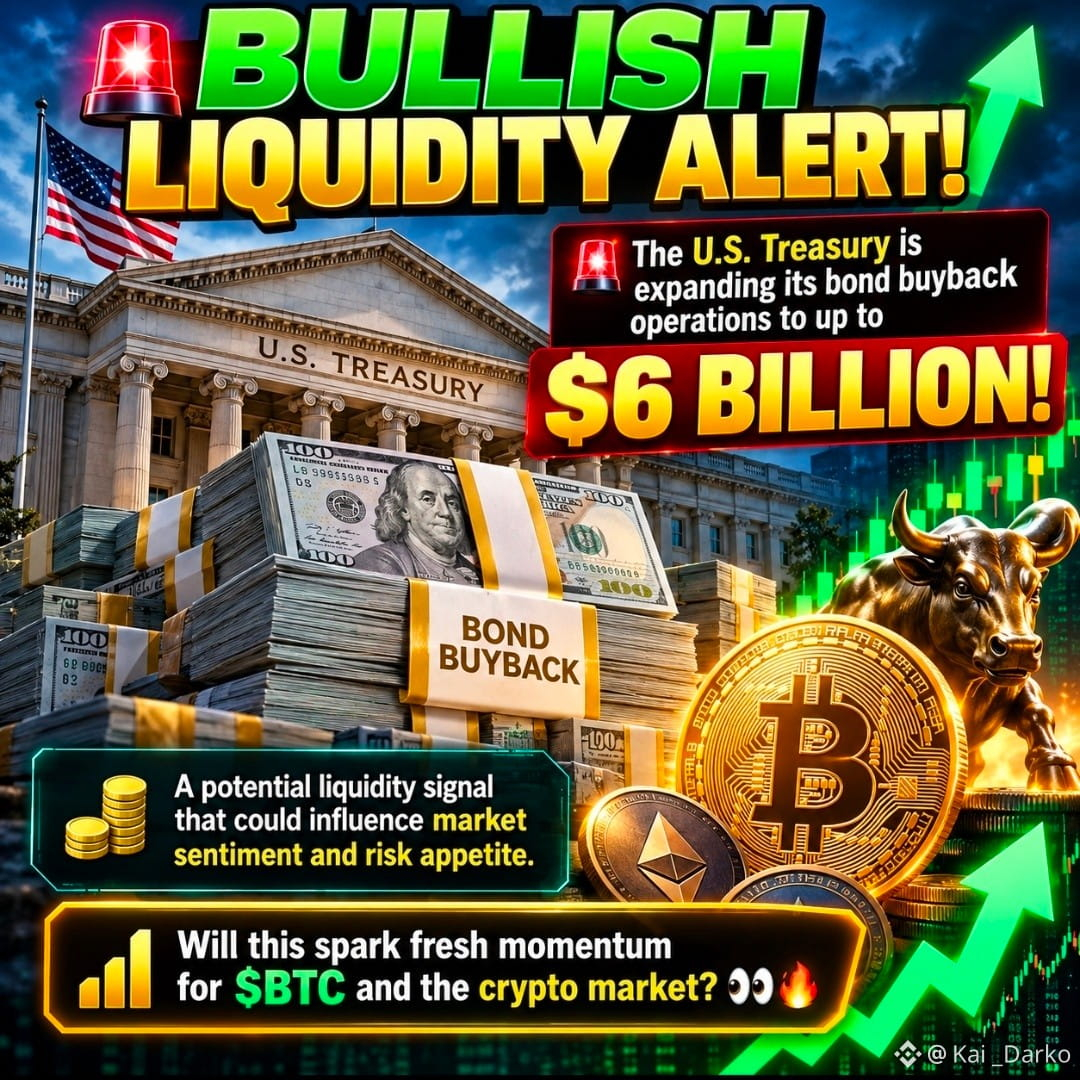
🔥🔥 BULLISCHER LIQUIDITÄTS-WARNSIGNAL! 🇺🇸💰
🚨 Das 🇺🇸 U.S.-Finanzministerium erweitert seine Anleihe-Rückkaufprogramme auf bis zu 6 MILLIARDEN US-Dollar!
💵 Ein mögliches Liquiditätssignal, das die Markstimmung und die Risikobereitschaft beeinflussen könnte.
📈 Wird das neue Schwung für $BTC und den Kryptomarkt entfachen? 👀🔥
#Bitcoin #BTC #Crypto #Liquidity #Bullish
$BTC
{future}(BTCUSDT)
$VELVET
{future}(VELVETUSDT)
🔥🔥 BULLISCHER LIQUIDITÄTS-WARNSIGNAL! 🇺🇸💰
🚨 Das 🇺🇸 U.S.-Finanzministerium erweitert seine Anleihe-Rückkaufprogramme auf bis zu 6 MILLIARDEN US-Dollar!
💵 Ein mögliches Liquiditätssignal, das die Markstimmung und die Risikobereitschaft beeinflussen könnte.
📈 Wird das neue Schwung für $BTC und den Kryptomarkt entfachen? 👀🔥
#Bitcoin #BTC #Crypto #Liquidity #Bullish
$BTC
$VELVET
🚨 Das 🇺🇸 U.S.-Finanzministerium erweitert seine Anleihe-Rückkaufprogramme auf bis zu 6 MILLIARDEN US-Dollar!
💵 Ein mögliches Liquiditätssignal, das die Markstimmung und die Risikobereitschaft beeinflussen könnte.
📈 Wird das neue Schwung für $BTC und den Kryptomarkt entfachen? 👀🔥
#Bitcoin #BTC #Crypto #Liquidity #Bullish
$BTC
$VELVET
177
·
--
🚀 $BTC — BITCOIN | DER NÄCHSTE GROSSE SCHRITT? 🔥
Bitcoin handelt um etwa 84.586 $, und der Markt wartet auf seinen nächsten Ausbruchsversuch. 🐂 Unterstützungszone: 83.000–84.000 $. Widerstandszone: 85.500–86.500 $. 🎯 Bullishes Kursziel: 88.000 $, mit 90.000 $ als nächster Aufwärtspunkt, falls der Momentum aufbaut. Ein Bruch unter der Unterstützung könnte 81.500 $ freilegen. Der nächste Schritt hängt davon ab, ob BTC den Widerstand mit starkem Volumen zurückerobern kann. 💡 Profi-Tipp: Achte auf einen bestätigten Ausbruch und einen erfolgreichen Retest – statt einem plötzlichen grünen Candle hinterherzujagen. #BTC #Bitcoin #CryptoTrading
🚀 $BTC — BITCOIN | DER NÄCHSTE GROSSE SCHRITT? 🔥
Bitcoin handelt um etwa 84.586 $, und der Markt wartet auf seinen nächsten Ausbruchsversuch. 🐂 Unterstützungszone: 83.000–84.000 $. Widerstandszone: 85.500–86.500 $. 🎯 Bullishes Kursziel: 88.000 $, mit 90.000 $ als nächster Aufwärtspunkt, falls der Momentum aufbaut. Ein Bruch unter der Unterstützung könnte 81.500 $ freilegen. Der nächste Schritt hängt davon ab, ob BTC den Widerstand mit starkem Volumen zurückerobern kann. 💡 Profi-Tipp: Achte auf einen bestätigten Ausbruch und einen erfolgreichen Retest – statt einem plötzlichen grünen Candle hinterherzujagen. #BTC #Bitcoin #CryptoTrading
Bitcoin handelt um etwa 84.586 $, und der Markt wartet auf seinen nächsten Ausbruchsversuch. 🐂 Unterstützungszone: 83.000–84.000 $. Widerstandszone: 85.500–86.500 $. 🎯 Bullishes Kursziel: 88.000 $, mit 90.000 $ als nächster Aufwärtspunkt, falls der Momentum aufbaut. Ein Bruch unter der Unterstützung könnte 81.500 $ freilegen. Der nächste Schritt hängt davon ab, ob BTC den Widerstand mit starkem Volumen zurückerobern kann. 💡 Profi-Tipp: Achte auf einen bestätigten Ausbruch und einen erfolgreichen Retest – statt einem plötzlichen grünen Candle hinterherzujagen. #BTC #Bitcoin #CryptoTrading
43
·
--
🔥 $QNT — QUANT | BULLS WACHEN AUF? 🚀
Quant handelt nahe $257.39 und zeigt in dem Screenshot einen positiven Move von 1,8%. Können Käufer diese Dynamik in einen größeren Ausbruch umwandeln? 🐂 Unterstützungszone: $248–$252. Widerstandszone: $263–$270. 🎯 Ein überzeugender Move über dem Widerstand könnte $280 und $290 in den Fokus rücken. Wenn die Dynamik nachlässt, ist ein Rücksetzer in Richtung $240 ein mögliches Downside-Szenario. 💡 Pro-Tipp: Achte darauf, ob QNT nach einem Widerstands-Test seine Ausbruchsmarke hält. Ein Ausbruch ohne Follow-Through kann sich schnell in ein falsches Signal verwandeln. #QNT #Quant #CryptoMarket
🔥 $QNT — QUANT | BULLS WACHEN AUF? 🚀
Quant handelt nahe $257.39 und zeigt in dem Screenshot einen positiven Move von 1,8%. Können Käufer diese Dynamik in einen größeren Ausbruch umwandeln? 🐂 Unterstützungszone: $248–$252. Widerstandszone: $263–$270. 🎯 Ein überzeugender Move über dem Widerstand könnte $280 und $290 in den Fokus rücken. Wenn die Dynamik nachlässt, ist ein Rücksetzer in Richtung $240 ein mögliches Downside-Szenario. 💡 Pro-Tipp: Achte darauf, ob QNT nach einem Widerstands-Test seine Ausbruchsmarke hält. Ein Ausbruch ohne Follow-Through kann sich schnell in ein falsches Signal verwandeln. #QNT #Quant #CryptoMarket
Quant handelt nahe $257.39 und zeigt in dem Screenshot einen positiven Move von 1,8%. Können Käufer diese Dynamik in einen größeren Ausbruch umwandeln? 🐂 Unterstützungszone: $248–$252. Widerstandszone: $263–$270. 🎯 Ein überzeugender Move über dem Widerstand könnte $280 und $290 in den Fokus rücken. Wenn die Dynamik nachlässt, ist ein Rücksetzer in Richtung $240 ein mögliches Downside-Szenario. 💡 Pro-Tipp: Achte darauf, ob QNT nach einem Widerstands-Test seine Ausbruchsmarke hält. Ein Ausbruch ohne Follow-Through kann sich schnell in ein falsches Signal verwandeln. #QNT #Quant #CryptoMarket
410
·
--
⚡ $ETH — ETHEREUM | AUSBRUCH ODER RÜCKZUG? 🚀
Ethereum schwebt derzeit um 2.677 $, während Trader genau auf eine richtungsweisende Bewegung achten. 🔥 Unterstützungszone: 2.600–2.640 $. Widerstandszone: 2.730–2.800 $. 🎯 Ein bestätigter Ausbruch könnte den Weg hin zu 2.900 $ und möglicherweise 3.000 $ eröffnen. Wenn jedoch die Unterstützung verloren geht, könnte 2.500 $ in den Fokus rücken. Der Kampf zwischen Käufern und Verkäufern heizt sich auf. 📈 Pro-Tipp: Beobachte ETH/BTC zusammen mit dem Handelsvolumen, um Hinweise auf eine sich verstärkende Dynamik zu erkennen. #ETH #Ethereum #Altcoins
⚡ $ETH — ETHEREUM | AUSBRUCH ODER RÜCKZUG? 🚀
Ethereum schwebt derzeit um 2.677 $, während Trader genau auf eine richtungsweisende Bewegung achten. 🔥 Unterstützungszone: 2.600–2.640 $. Widerstandszone: 2.730–2.800 $. 🎯 Ein bestätigter Ausbruch könnte den Weg hin zu 2.900 $ und möglicherweise 3.000 $ eröffnen. Wenn jedoch die Unterstützung verloren geht, könnte 2.500 $ in den Fokus rücken. Der Kampf zwischen Käufern und Verkäufern heizt sich auf. 📈 Pro-Tipp: Beobachte ETH/BTC zusammen mit dem Handelsvolumen, um Hinweise auf eine sich verstärkende Dynamik zu erkennen. #ETH #Ethereum #Altcoins
Ethereum schwebt derzeit um 2.677 $, während Trader genau auf eine richtungsweisende Bewegung achten. 🔥 Unterstützungszone: 2.600–2.640 $. Widerstandszone: 2.730–2.800 $. 🎯 Ein bestätigter Ausbruch könnte den Weg hin zu 2.900 $ und möglicherweise 3.000 $ eröffnen. Wenn jedoch die Unterstützung verloren geht, könnte 2.500 $ in den Fokus rücken. Der Kampf zwischen Käufern und Verkäufern heizt sich auf. 📈 Pro-Tipp: Beobachte ETH/BTC zusammen mit dem Handelsvolumen, um Hinweise auf eine sich verstärkende Dynamik zu erkennen. #ETH #Ethereum #Altcoins
79
·
--
🌙 $NIGHT — NACHT | IMPULSEXplosion! 🚀🔥
NACHT stiehlt mit einer beeindruckenden +27,85%-Bewegung auf dem Screenshot die Aufmerksamkeit, handelt rund um 0,049989 $. Aber kann der Schwung anhalten oder kommt eine Korrektur näher? ⚡ Unterstützungszone: 0,046–0,048 $. Widerstandszone: 0,052–0,055 $. 🎯 Ein starker Ausbruch könnte 0,060 in den Fokus rücken, während ein Verlust der Unterstützung einen tieferen Rücksetzer bis hin zu 0,042 auslösen könnte. Die nächsten Kerzen könnten zeigen, ob die Käufer weiterhin die Kontrolle haben. 💡 Profi-Tipp: Nach einem starken Anstieg solltest du keine FOMO-Einstiege machen. Beobachte das Volumen, die Volatilität und die erneuten Tests der Unterstützung, bevor du ein Setup in Betracht ziehst. #NIGHT #CryptoGems #Altcoins
🌙 $NIGHT — NACHT | IMPULSEXplosion! 🚀🔥
NACHT stiehlt mit einer beeindruckenden +27,85%-Bewegung auf dem Screenshot die Aufmerksamkeit, handelt rund um 0,049989 $. Aber kann der Schwung anhalten oder kommt eine Korrektur näher? ⚡ Unterstützungszone: 0,046–0,048 $. Widerstandszone: 0,052–0,055 $. 🎯 Ein starker Ausbruch könnte 0,060 in den Fokus rücken, während ein Verlust der Unterstützung einen tieferen Rücksetzer bis hin zu 0,042 auslösen könnte. Die nächsten Kerzen könnten zeigen, ob die Käufer weiterhin die Kontrolle haben. 💡 Profi-Tipp: Nach einem starken Anstieg solltest du keine FOMO-Einstiege machen. Beobachte das Volumen, die Volatilität und die erneuten Tests der Unterstützung, bevor du ein Setup in Betracht ziehst. #NIGHT #CryptoGems #Altcoins
NACHT stiehlt mit einer beeindruckenden +27,85%-Bewegung auf dem Screenshot die Aufmerksamkeit, handelt rund um 0,049989 $. Aber kann der Schwung anhalten oder kommt eine Korrektur näher? ⚡ Unterstützungszone: 0,046–0,048 $. Widerstandszone: 0,052–0,055 $. 🎯 Ein starker Ausbruch könnte 0,060 in den Fokus rücken, während ein Verlust der Unterstützung einen tieferen Rücksetzer bis hin zu 0,042 auslösen könnte. Die nächsten Kerzen könnten zeigen, ob die Käufer weiterhin die Kontrolle haben. 💡 Profi-Tipp: Nach einem starken Anstieg solltest du keine FOMO-Einstiege machen. Beobachte das Volumen, die Volatilität und die erneuten Tests der Unterstützung, bevor du ein Setup in Betracht ziehst. #NIGHT #CryptoGems #Altcoins
146
·
--
🚨 $MOVR — MOONRIVER | RECOVERY WATCH! ⚡
Moonriver steht vor einer ernsthaften Prüfung, nachdem in dem Screenshot der massive Rückgang von -34,82% zu sehen ist. Der Kurs liegt derzeit etwa bei 1,8851 $. Baut sich gerade eine Erholung auf, oder könnten Verkäufer den Kurs weiter nach unten drücken? 📉 Unterstützungszone: 1,70–1,80 $. Widerstandszone: 2,05–2,20 $. 🎯 Wenn Käufer die Kontrolle zurückgewinnen und den Widerstand zurückerobern, könnten nach oben Potenziale bei 2,45 und 2,70 $ liegen. Ein Bruch unter der Unterstützung könnte den Bereich um 1,50 $ freilegen. 💡 Profi-Tipp: Nach einem starken Sell-off solltest du auf eine Bodenbildung und ein stärkeres Kaufvolumen achten, bevor du einen Bounce als Trendwende interpretierst. Kapital zu schützen ist wichtiger, als jede Bewegung erwischen zu wollen. #MOVR #Moonriver #cryptotrading
🚨 $MOVR — MOONRIVER | RECOVERY WATCH! ⚡
Moonriver steht vor einer ernsthaften Prüfung, nachdem in dem Screenshot der massive Rückgang von -34,82% zu sehen ist. Der Kurs liegt derzeit etwa bei 1,8851 $. Baut sich gerade eine Erholung auf, oder könnten Verkäufer den Kurs weiter nach unten drücken? 📉 Unterstützungszone: 1,70–1,80 $. Widerstandszone: 2,05–2,20 $. 🎯 Wenn Käufer die Kontrolle zurückgewinnen und den Widerstand zurückerobern, könnten nach oben Potenziale bei 2,45 und 2,70 $ liegen. Ein Bruch unter der Unterstützung könnte den Bereich um 1,50 $ freilegen. 💡 Profi-Tipp: Nach einem starken Sell-off solltest du auf eine Bodenbildung und ein stärkeres Kaufvolumen achten, bevor du einen Bounce als Trendwende interpretierst. Kapital zu schützen ist wichtiger, als jede Bewegung erwischen zu wollen. #MOVR #Moonriver #cryptotrading
Moonriver steht vor einer ernsthaften Prüfung, nachdem in dem Screenshot der massive Rückgang von -34,82% zu sehen ist. Der Kurs liegt derzeit etwa bei 1,8851 $. Baut sich gerade eine Erholung auf, oder könnten Verkäufer den Kurs weiter nach unten drücken? 📉 Unterstützungszone: 1,70–1,80 $. Widerstandszone: 2,05–2,20 $. 🎯 Wenn Käufer die Kontrolle zurückgewinnen und den Widerstand zurückerobern, könnten nach oben Potenziale bei 2,45 und 2,70 $ liegen. Ein Bruch unter der Unterstützung könnte den Bereich um 1,50 $ freilegen. 💡 Profi-Tipp: Nach einem starken Sell-off solltest du auf eine Bodenbildung und ein stärkeres Kaufvolumen achten, bevor du einen Bounce als Trendwende interpretierst. Kapital zu schützen ist wichtiger, als jede Bewegung erwischen zu wollen. #MOVR #Moonriver #cryptotrading
238
·
--
🚀 $PUMP — Die Bullen erwachen!
🔥 $PUMP wird bei $0.006052 gehandelt, +5.78%! Der Schwung nimmt zu, und der nächste Ausbruch könnte für frische Begeisterung sorgen. 🟢 Unterstützung: $0.00580–$0.00595 | 🔴 Widerstand: $0.00620–$0.00640 | 🎯 Ziele: $0.00650, $0.00700 und $0.00750. 📈 Nächster Schritt: Ein starker Schlusskurs über $0.00640 könnte den Weg für einen weiteren bullischen Impuls öffnen, während das Verlieren der Unterstützung einen Rücksetzer auslösen kann. 💡 Profi-Tipp: Achte auf das Volumen, bevor du dem Ausbruch hinterherjagst. Die echte Bewegung braucht eine Bestätigung! 🚀
🚀 $PUMP — Die Bullen erwachen!
🔥 $PUMP wird bei $0.006052 gehandelt, +5.78%! Der Schwung nimmt zu, und der nächste Ausbruch könnte für frische Begeisterung sorgen. 🟢 Unterstützung: $0.00580–$0.00595 | 🔴 Widerstand: $0.00620–$0.00640 | 🎯 Ziele: $0.00650, $0.00700 und $0.00750. 📈 Nächster Schritt: Ein starker Schlusskurs über $0.00640 könnte den Weg für einen weiteren bullischen Impuls öffnen, während das Verlieren der Unterstützung einen Rücksetzer auslösen kann. 💡 Profi-Tipp: Achte auf das Volumen, bevor du dem Ausbruch hinterherjagst. Die echte Bewegung braucht eine Bestätigung! 🚀
🔥 $PUMP wird bei $0.006052 gehandelt, +5.78%! Der Schwung nimmt zu, und der nächste Ausbruch könnte für frische Begeisterung sorgen. 🟢 Unterstützung: $0.00580–$0.00595 | 🔴 Widerstand: $0.00620–$0.00640 | 🎯 Ziele: $0.00650, $0.00700 und $0.00750. 📈 Nächster Schritt: Ein starker Schlusskurs über $0.00640 könnte den Weg für einen weiteren bullischen Impuls öffnen, während das Verlieren der Unterstützung einen Rücksetzer auslösen kann. 💡 Profi-Tipp: Achte auf das Volumen, bevor du dem Ausbruch hinterherjagst. Die echte Bewegung braucht eine Bestätigung! 🚀
226
Anmelden und weiter Inhalte entdecken
Krypto-Nutzer weltweit auf Binance Square kennenlernen
⚡️ Bleib in Sachen Krypto stets am Puls.
💬 Die weltgrößte Kryptobörse vertraut darauf.
👍 Erhalte verlässliche Einblicke von verifizierten Creators.
E-Mail-Adresse/Telefonnummer
Trendthemen
FedMinutesFocusOnOctoberPause
17,692 Aufrufe
385 Kommentare
#fedminutesfocusonoctoberpause
🚨 DIE CHANCEN AUF EINE FED-ZINSERHÖHUNG IM OKTOBER FALLEN AUF 21,6 %… Steht $BTC kurz vor einer Reaktion? 👀
Die Fed steht kurz davor, den Märkten einen weiteren wichtigen Hinweis zu geben.
Anleger warten auf das heutige Sitzungsprotokoll des FOMC – und die größte Frage ist, ob es im Oktober eine weitere Zinserhöhung oder eine Pause geben wird.
Aktuell ist die Wahrscheinlichkeit einer Zinserhöhung um 25 Basispunkte im Oktober auf gerade einmal 21,6 % gesunken.
Das ist eine gewaltige Veränderung der Erwartungen.
Doch genau das macht die Sache interessant… 👀
Die Fed hob die Zinsen im September auf 3,75 %–4,00 % an, doch die jüngste Schwäche am Arbeitsmarkt und die nachlassende Inflation lassen eine weitere sofortige Erhöhung weniger wahrscheinlich erscheinen.
Und für Krypto ist das wichtig.
Eine Zinspause der Fed könnte den Druck auf die Finanzierungsbedingungen verringern und die Risikobereitschaft möglicherweise verbessern.
Das könnte BTC Rückenwind geben
Doch es gibt einen Haken…
Bitcoin steht bereits unter Druck, da der Dollar und die Renditen von US-Staatsanleihen steigen.
Das heutige Protokoll könnte also für Volatilität sorgen.
Eine taubenhafte Fed → Hoffnung auf mehr Liquidität → bullishe BTC-Erzählung?
Eine restriktive Fed → Angst vor höheren Zinsen → noch mehr Druck auf Risikoanlagen?
Die entscheidende Frage:
Wird der Oktober zur Zinspause, auf die die Bitcoin-Bullen gewartet haben… oder könnte die Fed den Markt erneut überraschen? 👀
Behalte BTC, die Zinserwartungen und die Renditen von US-Staatsanleihen genau im Auge.
#FederalReserve #Fed #Crypto #InterestRates
$ETH
$SOL
Shae Cassler Sw9r
·14 Likes
·30.1k Aufrufe
BinanceLaunchesBinanceIntelligence
930,515 Aufrufe
5,658 Kommentare
RobinhoodAdds$25MInBitcoinToBalanceSheet
854 Aufrufe
28 Kommentare