
CAT TRADERS
4k Beiträge
CAT TRADERS
Slow and Steady always wins🥇
Hochfrequenz-Trader
3.4 Jahre
275 Following
16.6K+ Follower
11.3K+ Like gegeben
Beiträge
Alle
Zitierungen
Videos
Live
Endlich habe ich einen Festzinskredit über @TermMax für meinen ETH-Hebel-Trade aufgenommen – 4,3% für 90 Tage festgeschrieben, keine weitere Sorge mehr um die schwankenden Spikes. Das AMM-Orderbuch hat meinen Limit-Order tatsächlich ausgefüllt, ohne die üblichen Slippage-Dramen. Außerdem habe ich ein paar LP-Tokens in ihre Farms gesteckt, der APR sieht ordentlich aus. TMX TGE ist am 25. Aug, ich werde auch dieses Booster-Event auf Binance Wallet farmen (läuft noch bis zum 24.). Zum ersten Mal habe ich das Gefühl, dass ich die Kosten meiner Aufnahme kontrolliere – nicht andersherum. #TermMax $BTW
$ACE
$ALPINE
#DollarHits3MonthLow
$ACE
$ALPINE
#DollarHits3MonthLow
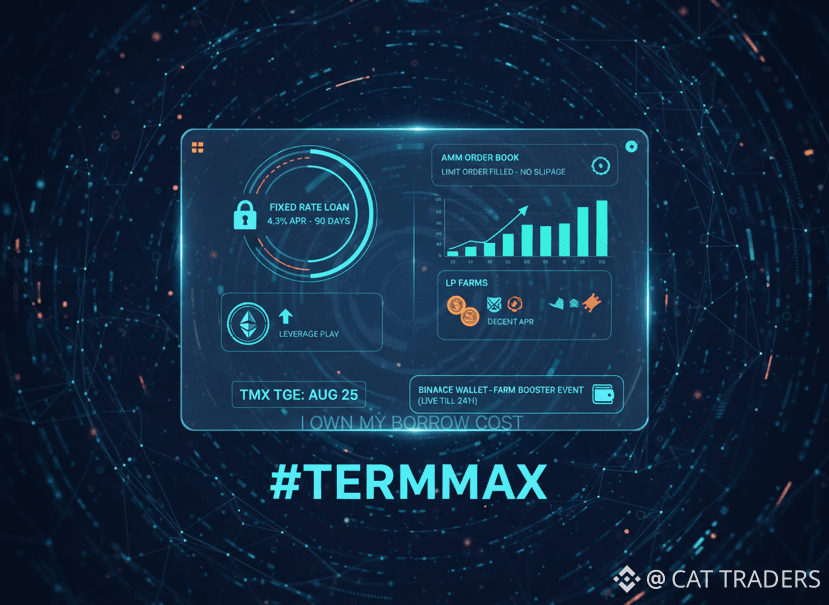
Gerade einen Kredit mit festem Zinssatz über @TermMax for meine ETH-Loop abgeschlossen. Keine Überraschungen durch Slippage, keine Angst vor variablen Zinssätzen. Das AMM-Design hält die Kurve tatsächlich stabil. TMX TGE am 25. Aug – bereits vorgemerkt. Das ist die DeFi-Infrastruktur, auf die wir gewartet haben. #TermMax $TUT
$NVDAB
$BTC
$NVDAB
$BTC

$OPG

AFRA-公主⁰⁰²
·
--
@OpenGradient dient dazu, ein großes Problem in der Blockchain zu beheben.$OPG
Viele Menschen hassen es, lange zu warten, und sie haben Angst, dass Transaktionen plötzlich fehlschlagen könnten.
Dieses Warten macht On-Chain-Apps langsam, stressig und nervig.
OpenGradient versucht, alles schneller, reibungsloser und vertrauenswürdiger zu machen.
Dabei nutzt es CometBFT – ein System für schnelle Finalität.
Einfach gesagt: Bestätigte Ergebnisse werden direkt nach der Freigabe endgültig.
Die Nutzer müssen nicht mehr unendlich viele weitere Bestätigungen abwarten.
Das gibt den Menschen mehr Sicherheit, wenn sie Apps täglich nutzen.
#OPG ist wichtig, weil Validatoren es staken müssen, bevor sie mitmachen.
Staking bedeutet, dass sie Token sperren, um alles richtig abzusichern.
Wenn ein Validator betrügt, kann er die gestakten OPG-Token verlieren.
Diese Strafe hilft dabei, schlechte Akteure davon abzuhalten, dubiose Dinge zu tun.
Ein weiterer spannender Teil ist die Effizienz auch beim Prüfen von KI-Ergebnissen.
Validatoren müssen nicht bei jeder Anfrage das komplette KI-Modell erneut ausführen.
Stattdessen prüfen sie kryptografische Beweise, was Zeit und Aufwand spart.
So bleibt das System schneller, ohne Sicherheit und Vertrauen zu verlieren.
Die Sicherheit bleibt stark, solange weniger als ein Drittel der Validatoren böswillig handeln.
Der Prozess fühlt sich an wie ein sorgfältiges Abstimmungssystem in Runden.
Zuerst schlägt jemand ein Ergebnis vor, das andere sorgfältig prüfen sollen.
Dann stimmen Validatoren ab, diskutieren und stimmen erneut ab, wenn es wirklich nötig ist.
Sobald genügend Zustimmung da ist, wird das Ergebnis dort für immer festgeschrieben.
Danach muss niemand mehr extra warten oder ständig nachträglich zweifeln.
Das ist für Apps, die täglich mit Geld umgehen, besonders wichtig.
Es hilft auch Apps mit häufigen Aktionen, sich zuverlässiger anzufühlen.
Insgesamt wirkt OpenGradient schneller, sicherer und besser für echte Nutzer.
$币安人生
$RAVE
Was ist für dich am wichtigsten?
Viele Menschen hassen es, lange zu warten, und sie haben Angst, dass Transaktionen plötzlich fehlschlagen könnten.
Dieses Warten macht On-Chain-Apps langsam, stressig und nervig.
OpenGradient versucht, alles schneller, reibungsloser und vertrauenswürdiger zu machen.
Dabei nutzt es CometBFT – ein System für schnelle Finalität.
Einfach gesagt: Bestätigte Ergebnisse werden direkt nach der Freigabe endgültig.
Die Nutzer müssen nicht mehr unendlich viele weitere Bestätigungen abwarten.
Das gibt den Menschen mehr Sicherheit, wenn sie Apps täglich nutzen.
#OPG ist wichtig, weil Validatoren es staken müssen, bevor sie mitmachen.
Staking bedeutet, dass sie Token sperren, um alles richtig abzusichern.
Wenn ein Validator betrügt, kann er die gestakten OPG-Token verlieren.
Diese Strafe hilft dabei, schlechte Akteure davon abzuhalten, dubiose Dinge zu tun.
Ein weiterer spannender Teil ist die Effizienz auch beim Prüfen von KI-Ergebnissen.
Validatoren müssen nicht bei jeder Anfrage das komplette KI-Modell erneut ausführen.
Stattdessen prüfen sie kryptografische Beweise, was Zeit und Aufwand spart.
So bleibt das System schneller, ohne Sicherheit und Vertrauen zu verlieren.
Die Sicherheit bleibt stark, solange weniger als ein Drittel der Validatoren böswillig handeln.
Der Prozess fühlt sich an wie ein sorgfältiges Abstimmungssystem in Runden.
Zuerst schlägt jemand ein Ergebnis vor, das andere sorgfältig prüfen sollen.
Dann stimmen Validatoren ab, diskutieren und stimmen erneut ab, wenn es wirklich nötig ist.
Sobald genügend Zustimmung da ist, wird das Ergebnis dort für immer festgeschrieben.
Danach muss niemand mehr extra warten oder ständig nachträglich zweifeln.
Das ist für Apps, die täglich mit Geld umgehen, besonders wichtig.
Es hilft auch Apps mit häufigen Aktionen, sich zuverlässiger anzufühlen.
Insgesamt wirkt OpenGradient schneller, sicherer und besser für echte Nutzer.
$币安人生
$RAVE
Was ist für dich am wichtigsten?
Jetzt behaupten🧧🧧🧧

ELİF ARDA
·
--
🧧 USDT-Red-Paket wird geladen...
Hilf mir, 35k Follower zu erreichen, und ich feiere, indem ich für die Community ein USDT-Red-Paket droppe! 💸
Was du tun musst:
✅ Folge meinem Profil
✅ Liked diesen Post ❤️
✅ Repost/Teilen 🔄
Sobald wir die 35 Follower erreicht haben, poste ich das USDT-Red-Paket. Lass es uns gemeinsam schaffen! 🚀🍀
$TAC
$RAVE
Hilf mir, 35k Follower zu erreichen, und ich feiere, indem ich für die Community ein USDT-Red-Paket droppe! 💸
Was du tun musst:
✅ Folge meinem Profil
✅ Liked diesen Post ❤️
✅ Repost/Teilen 🔄
Sobald wir die 35 Follower erreicht haben, poste ich das USDT-Red-Paket. Lass es uns gemeinsam schaffen! 🚀🍀
$TAC
$RAVE
Glückwunsch Elif🎉 Möge Allah dir mehr Erfolg und Momente des Glücks schenken
ELİF ARDA
·
--
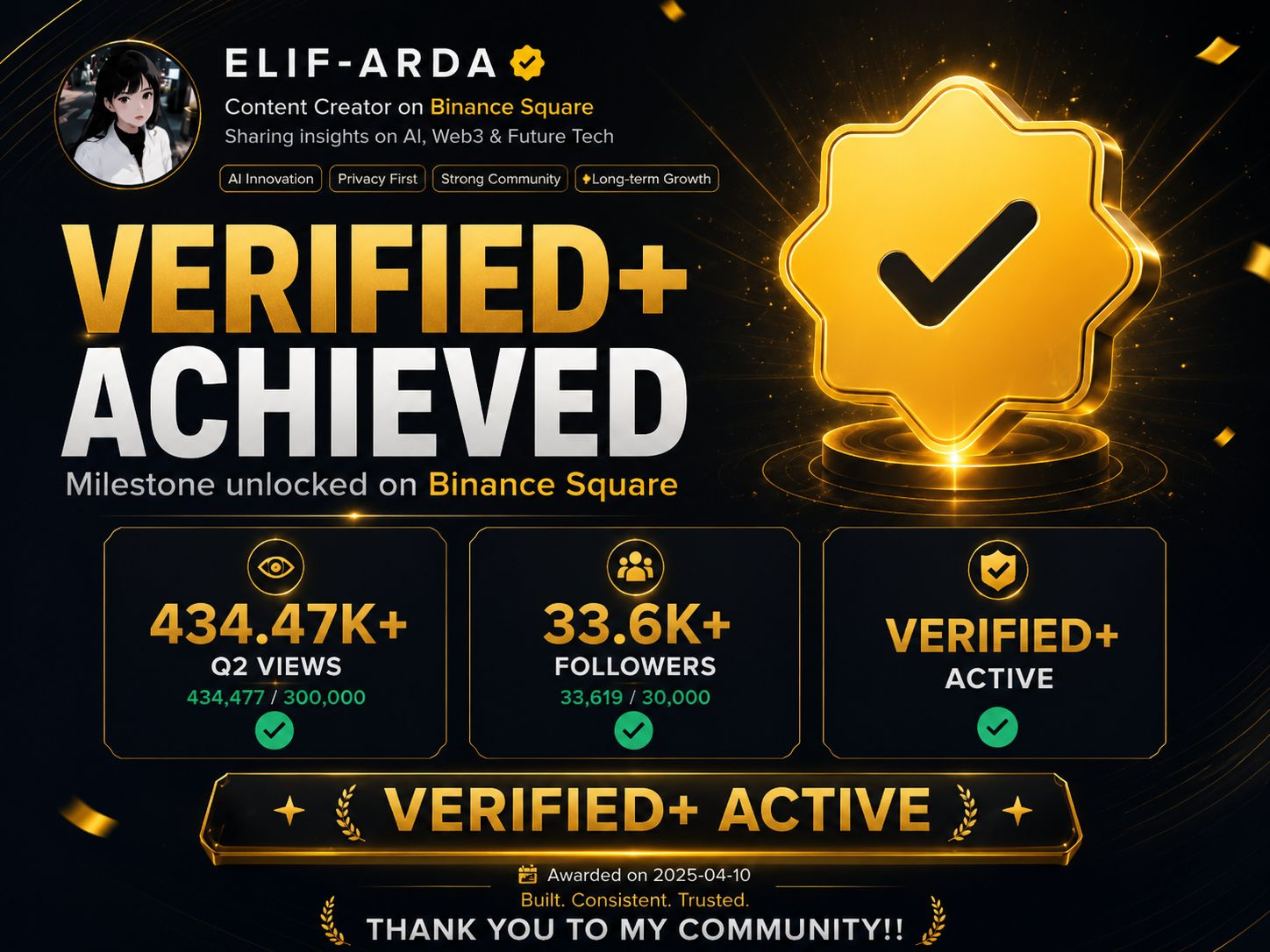
> Offiziell verifiziert + aktiv! ✅✨
Dieses Meilenstein wäre ohne die unglaubliche Unterstützung meiner Community nicht möglich gewesen. Danke für jede Ansicht, jeden Follow und jede Interaktion. Auf noch größere Erfolge in der Zukunft! 🚀💛
#VerifiedPlus #BinanceSquare #Web3 #Crypto #Milestone $ACT
$MANTA
$S
Dieses Meilenstein wäre ohne die unglaubliche Unterstützung meiner Community nicht möglich gewesen. Danke für jede Ansicht, jeden Follow und jede Interaktion. Auf noch größere Erfolge in der Zukunft! 🚀💛
#VerifiedPlus #BinanceSquare #Web3 #Crypto #Milestone $ACT
$MANTA
$S
Fordern Sie hier $SOL gifts kostenlos an

PINDI BOY PK²⁵
·
--
Bullisch🎁 SOL Red Packet ist JETZT LIVE! 🚀
Klicke auf das SOL Red Packet und beanspruche deine SOL-Belohnungen, bevor sie weg sind. Verpasse nicht deine Chance, kostenloses SOL zu erhalten, und teile die Gelegenheit mit deinen Freunden.
⚡ Jetzt klicken & SOL-Belohnungen verdienen!
#solana #RedPacket #CryptoRewards #BinanceSquare #PindiBoyAnalysis
$SOL $SPCXB $BNB
Klicke auf das SOL Red Packet und beanspruche deine SOL-Belohnungen, bevor sie weg sind. Verpasse nicht deine Chance, kostenloses SOL zu erhalten, und teile die Gelegenheit mit deinen Freunden.
⚡ Jetzt klicken & SOL-Belohnungen verdienen!
#solana #RedPacket #CryptoRewards #BinanceSquare #PindiBoyAnalysis
$SOL $SPCXB $BNB

$OPG

Arafta 努什
·
--
BullischDas nächste Kapitel von Enterprise AI wird nicht nur durch reine Intelligenz geprägt. Es wird durch Vertrauen gestaltet.
Während KI beginnt, echte Arbeit in echten Unternehmen zu übernehmen, werden die Fragen größer als die reine Leistung.
Kann die Ausgabe verifiziert werden?
Kann der Datenschutz geschützt werden? Kann der Prozess geprüft und als vertrauenswürdig eingestuft werden?
Darauf setzt OpenGradient. Mit OPG liegt der Fokus auf dem Aufbau von KI-Infrastruktur, die nicht nur leistungsstark ist, sondern transparent – eine Infrastruktur, die Unternehmen dabei hilft zu sehen, wie Ergebnisse zustande kommen, und die zugleich von der Abhängigkeit von einem einzelnen zentralen Gatekeeper wegführt.
Wenn die Zukunft der KI Systemen gehört, die verifizierbar sind, datenschutzbewusst und für Vertrauen entwickelt wurden, dann $OPG könnte eine sinnvolle Rolle spielen.
Denn die Zukunft der Enterprise AI wird nicht nur intelligenter sein. Sie wird etwas sein, dem Unternehmen tatsächlich vertrauen können.#opg @OpenGradient $ACT $RAVE #SaylorHintsStrategyBitcoinBuy
Während KI beginnt, echte Arbeit in echten Unternehmen zu übernehmen, werden die Fragen größer als die reine Leistung.
Kann die Ausgabe verifiziert werden?
Kann der Datenschutz geschützt werden? Kann der Prozess geprüft und als vertrauenswürdig eingestuft werden?
Darauf setzt OpenGradient. Mit OPG liegt der Fokus auf dem Aufbau von KI-Infrastruktur, die nicht nur leistungsstark ist, sondern transparent – eine Infrastruktur, die Unternehmen dabei hilft zu sehen, wie Ergebnisse zustande kommen, und die zugleich von der Abhängigkeit von einem einzelnen zentralen Gatekeeper wegführt.
Wenn die Zukunft der KI Systemen gehört, die verifizierbar sind, datenschutzbewusst und für Vertrauen entwickelt wurden, dann $OPG könnte eine sinnvolle Rolle spielen.
Denn die Zukunft der Enterprise AI wird nicht nur intelligenter sein. Sie wird etwas sein, dem Unternehmen tatsächlich vertrauen können.#opg @OpenGradient $ACT $RAVE #SaylorHintsStrategyBitcoinBuy
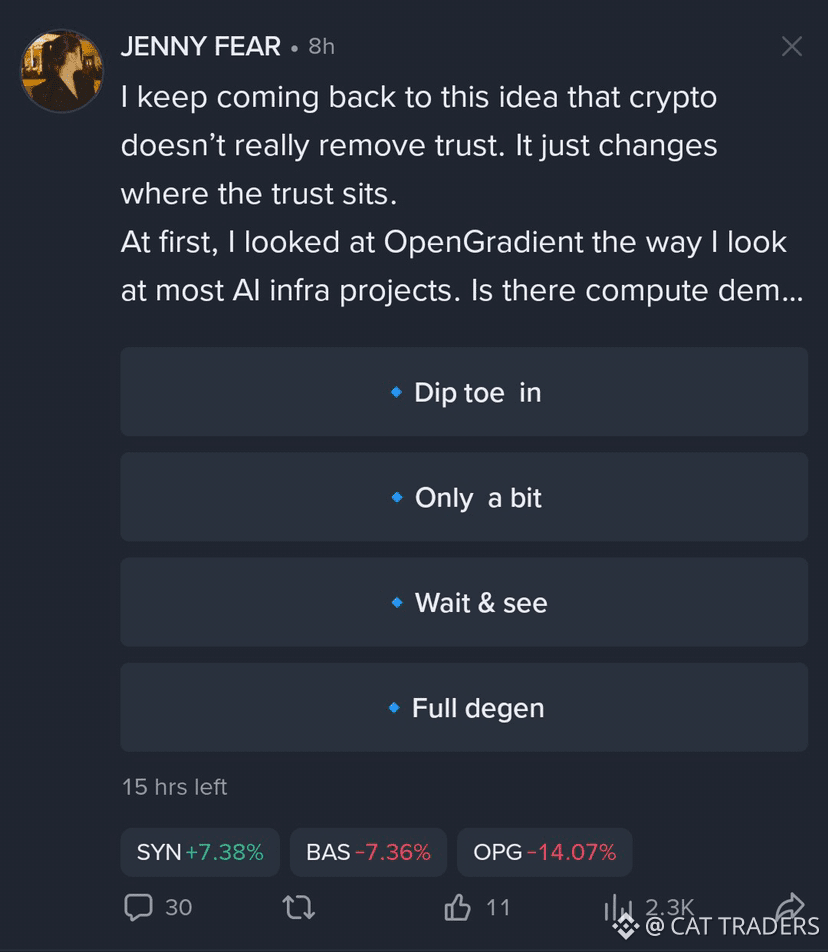
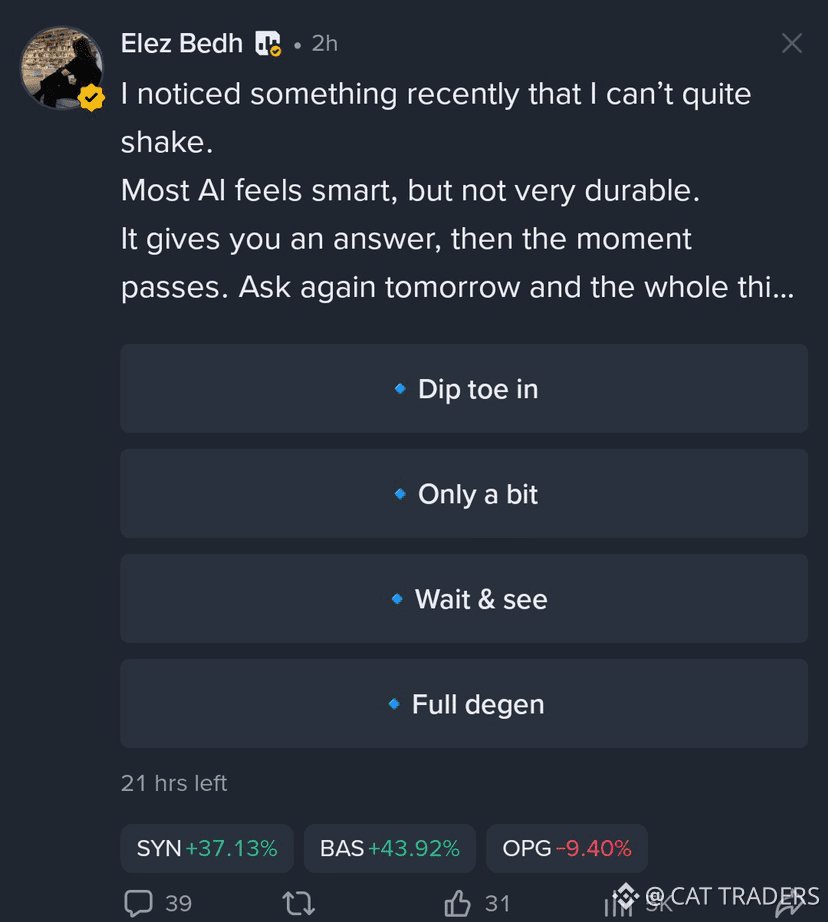
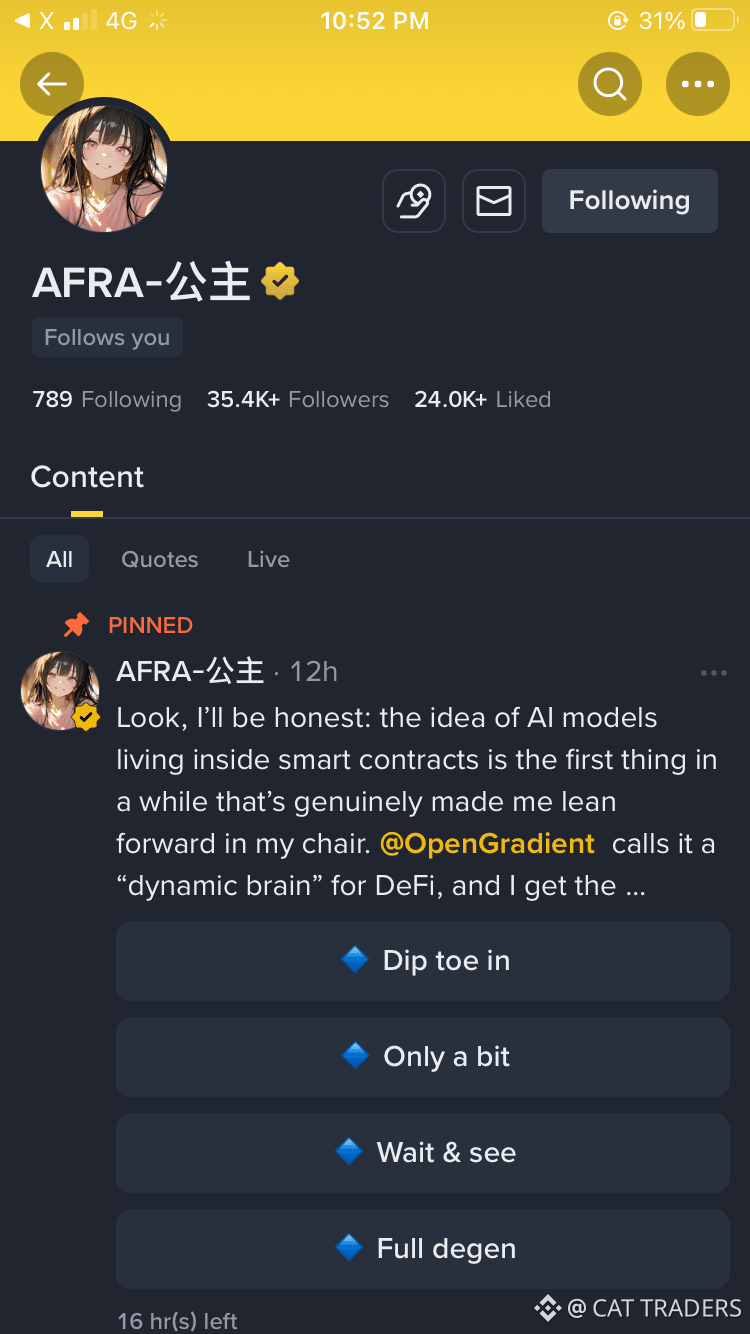
⚠️ Hinweis: @Elez Bedh & @JENNY FEAR
Kopiere @AFRA-公主⁰⁰² posts nicht ohne Erlaubnis.
Du wurdest vom Inhaber gewarnt, aber du hast nicht geantwortet.
*Frag zuerst oder hör auf zu kopieren.*
Wenn nicht, müssen wir dich melden.
Wir helfen dir, wenn du es brauchst, aber Kopieren ist nicht der richtige Weg.
---
#report #stopcopying $BTC
Kopiere @AFRA-公主⁰⁰² posts nicht ohne Erlaubnis.
Du wurdest vom Inhaber gewarnt, aber du hast nicht geantwortet.
*Frag zuerst oder hör auf zu kopieren.*
Wenn nicht, müssen wir dich melden.
Wir helfen dir, wenn du es brauchst, aber Kopieren ist nicht der richtige Weg.
---
#report #stopcopying $BTC
Will reach to 1$✅✅📈⏫
0%
Will down to 0.7$❌❌📉⏬
0%
0 Stimmen • Abstimmung beendet
🎁🎁🎁🎁🧧🧧🧧🧧🏆

Minahil Era
·
--
BullischWIN FREE REWARD BNB SXT USDT AND WIN MORE CLICK HERE🧧🎁🎁🎁🎁 Klicken Sie und gewinnen Sie mehr Rewards $SPCXB $BNB $SXT Eile auf #btc #YenNears40YearLow
WIRD DEUTSCHLAND SEIN NÄCHSTES SPIEL GEWINNEN???
Click here👈 for answer and win 🏆
Click here👈 for answer and win 🏆
Yes ⚽️⚽️
0%
NO🌊🍀
0%
0 Stimmen • Abstimmung beendet
Klick hier oder erhalte eine Belohnung. Die meisten davon🏆🎁🎁🎁🧧🧧🧧🧧 #XiaohongshuHKIPOValuationAbove$70B
CAT TRADERS
·
--
BullischCLICK HERE AND WIN 🏆 FREE FREE REWARDS 🧧🎁👈👈👈
Hallo Freunde, ich habe gerade eine großartige Belohnung von der Binance für die Weltmeisterschaft erhalten
Klicke hier, um Belohnungen zu erhalten
Du kannst auch gewinnen, indem du beitrittst und Aufgaben erledigst und einige Tipps/„Picks“ für Geschenke bekommst — geh hin und gewinne
#Binance #WTIFallsBelow$80
#BinancePickAndWin $SPCXB
Warte nicht, geh hin und spiele, erledige es und gewinne
Mehr spielen, mehr gewinnen
Hallo Freunde, ich habe gerade eine großartige Belohnung von der Binance für die Weltmeisterschaft erhalten
Klicke hier, um Belohnungen zu erhalten
Du kannst auch gewinnen, indem du beitrittst und Aufgaben erledigst und einige Tipps/„Picks“ für Geschenke bekommst — geh hin und gewinne
#Binance #WTIFallsBelow$80
#BinancePickAndWin $SPCXB
Warte nicht, geh hin und spiele, erledige es und gewinne
Mehr spielen, mehr gewinnen
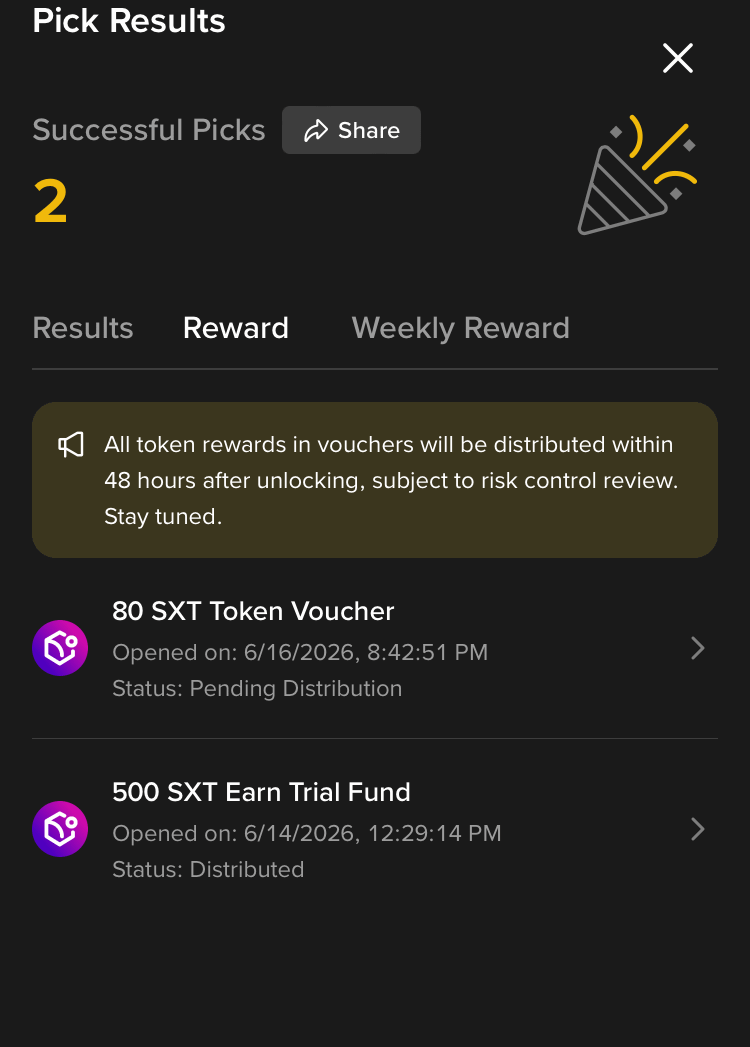
Click and win free free 🏆 🏆 🏆 🎁🎁🧧🧧👈👈👈
CAT TRADERS
·
--
BullischCLICK HERE AND WIN 🏆 FREE FREE REWARDS 🧧🎁👈👈👈
Hallo Freunde, ich habe gerade eine großartige Belohnung von der Binance für die Weltmeisterschaft erhalten
Klicke hier, um Belohnungen zu erhalten
Du kannst auch gewinnen, indem du beitrittst und Aufgaben erledigst und einige Tipps/„Picks“ für Geschenke bekommst — geh hin und gewinne
#Binance #WTIFallsBelow$80
#BinancePickAndWin $SPCXB
Warte nicht, geh hin und spiele, erledige es und gewinne
Mehr spielen, mehr gewinnen
Hallo Freunde, ich habe gerade eine großartige Belohnung von der Binance für die Weltmeisterschaft erhalten
Klicke hier, um Belohnungen zu erhalten
Du kannst auch gewinnen, indem du beitrittst und Aufgaben erledigst und einige Tipps/„Picks“ für Geschenke bekommst — geh hin und gewinne
#Binance #WTIFallsBelow$80
#BinancePickAndWin $SPCXB
Warte nicht, geh hin und spiele, erledige es und gewinne
Mehr spielen, mehr gewinnen
CLICK HERE AND WIN 🏆 FREE FREE REWARDS 🧧🎁👈👈👈
Hallo Freunde, ich habe gerade eine großartige Belohnung von der Binance für die Weltmeisterschaft erhalten
Klicke hier, um Belohnungen zu erhalten
Du kannst auch gewinnen, indem du beitrittst und Aufgaben erledigst und einige Tipps/„Picks“ für Geschenke bekommst — geh hin und gewinne
#Binance #WTIFallsBelow$80
#BinancePickAndWin $SPCXB
Warte nicht, geh hin und spiele, erledige es und gewinne
Mehr spielen, mehr gewinnen
Hallo Freunde, ich habe gerade eine großartige Belohnung von der Binance für die Weltmeisterschaft erhalten
Klicke hier, um Belohnungen zu erhalten
Du kannst auch gewinnen, indem du beitrittst und Aufgaben erledigst und einige Tipps/„Picks“ für Geschenke bekommst — geh hin und gewinne
#Binance #WTIFallsBelow$80
#BinancePickAndWin $SPCXB
Warte nicht, geh hin und spiele, erledige es und gewinne
Mehr spielen, mehr gewinnen
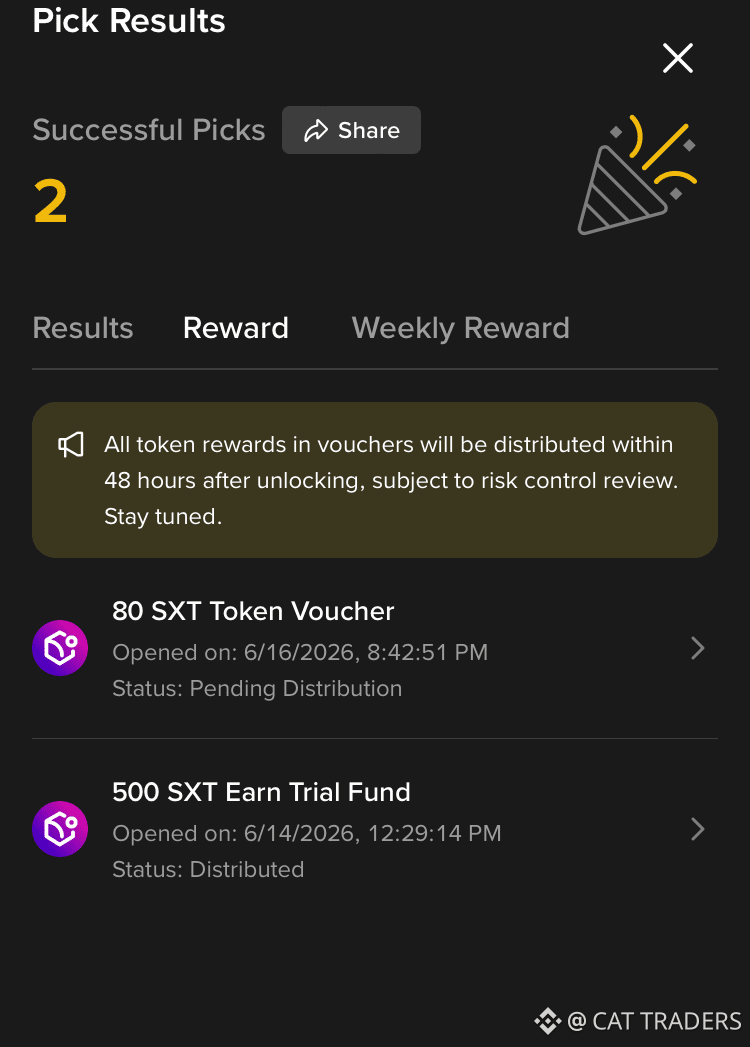
Mach mit und gewinne🎁🎁🎁🎁🧧🧧🧧🧧🧧
CAT TRADERS
·
--
BullischPLAY AND WIN BNB, SXT AND MANY REWARDS WIN🧧🎁🎁🎁
Klicke dort oben und gewinne $USDC $BNB $SXT
Klicke dort oben und gewinne $USDC $BNB $SXT
Verdiene Geld und mehr Belohnungen $SPCXB
CAT TRADERS
·
--
BullischPLAY AND WIN BNB, SXT AND MANY REWARDS WIN🧧🎁🎁🎁
Klicke dort oben und gewinne $USDC $BNB $SXT
Klicke dort oben und gewinne $USDC $BNB $SXT
Anmelden und weiter Inhalte entdecken