
QueenElara
227 Beiträge

QueenElara
Melden
Nutzer blockieren
I AM A CONTENT CREATOR
Trade eröffnen
Regelmäßiger Trader
1.7 Jahre
16 Following
3.3K+ Follower
2.0K+ Like gegeben
Beiträge
Portfolio
Alle
Zitierungen
Live
PINNED
·
--
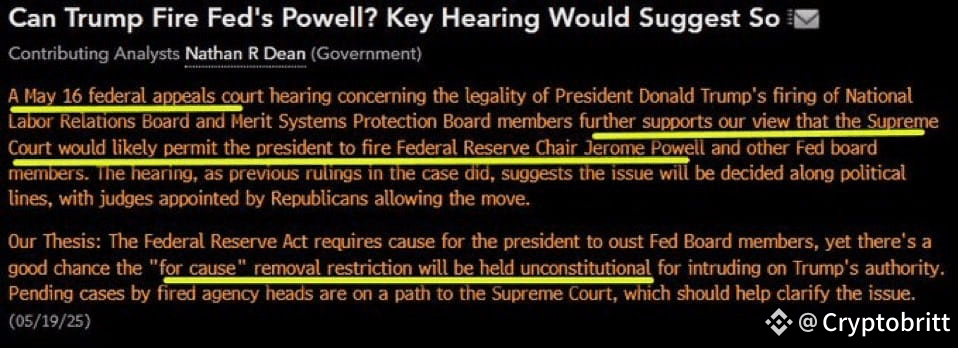
🚨 BREAKING: MASSIVE POWER SHIFT INCOMING!
Ein US-Gericht hat gerade entschieden, dass Präsident Trump Jerome Powell FEUEREN und einen neuen Fed-Vorsitzenden ernennen KANN 😳🔥
🚨 BREAKING: MASSIVE POWER SHIFT INCOMING!
Ein US-Gericht hat gerade entschieden, dass Präsident Trump Jerome Powell FEUEREN und einen neuen Fed-Vorsitzenden ernennen KANN 😳🔥
Ein US-Gericht hat gerade entschieden, dass Präsident Trump Jerome Powell FEUEREN und einen neuen Fed-Vorsitzenden ernennen KANN 😳🔥
4
1
24
36.9k
·
--
🎓 Stolzer Moment!
Gerade den Binance Academy-Kurs abgeschlossen: „AI Unlocked: Agents and Skills.“ 🤖
Es ist immer gut, etwas Neues zu lernen – besonders in KI und Web3.
Noch eine Fähigkeit dazu, noch ein Schritt nach vorn. 🚀
#BinanceAcademy #AI #Web3 #Crypto
🎓 Stolzer Moment!
Gerade den Binance Academy-Kurs abgeschlossen: „AI Unlocked: Agents and Skills.“ 🤖
Es ist immer gut, etwas Neues zu lernen – besonders in KI und Web3.
Noch eine Fähigkeit dazu, noch ein Schritt nach vorn. 🚀
#BinanceAcademy #AI #Web3 #Crypto
Gerade den Binance Academy-Kurs abgeschlossen: „AI Unlocked: Agents and Skills.“ 🤖
Es ist immer gut, etwas Neues zu lernen – besonders in KI und Web3.
Noch eine Fähigkeit dazu, noch ein Schritt nach vorn. 🚀
#BinanceAcademy #AI #Web3 #Crypto

2
2
109
·
--
Bullisch
$BZ Ich beobachte diese Rückerholung ganz genau
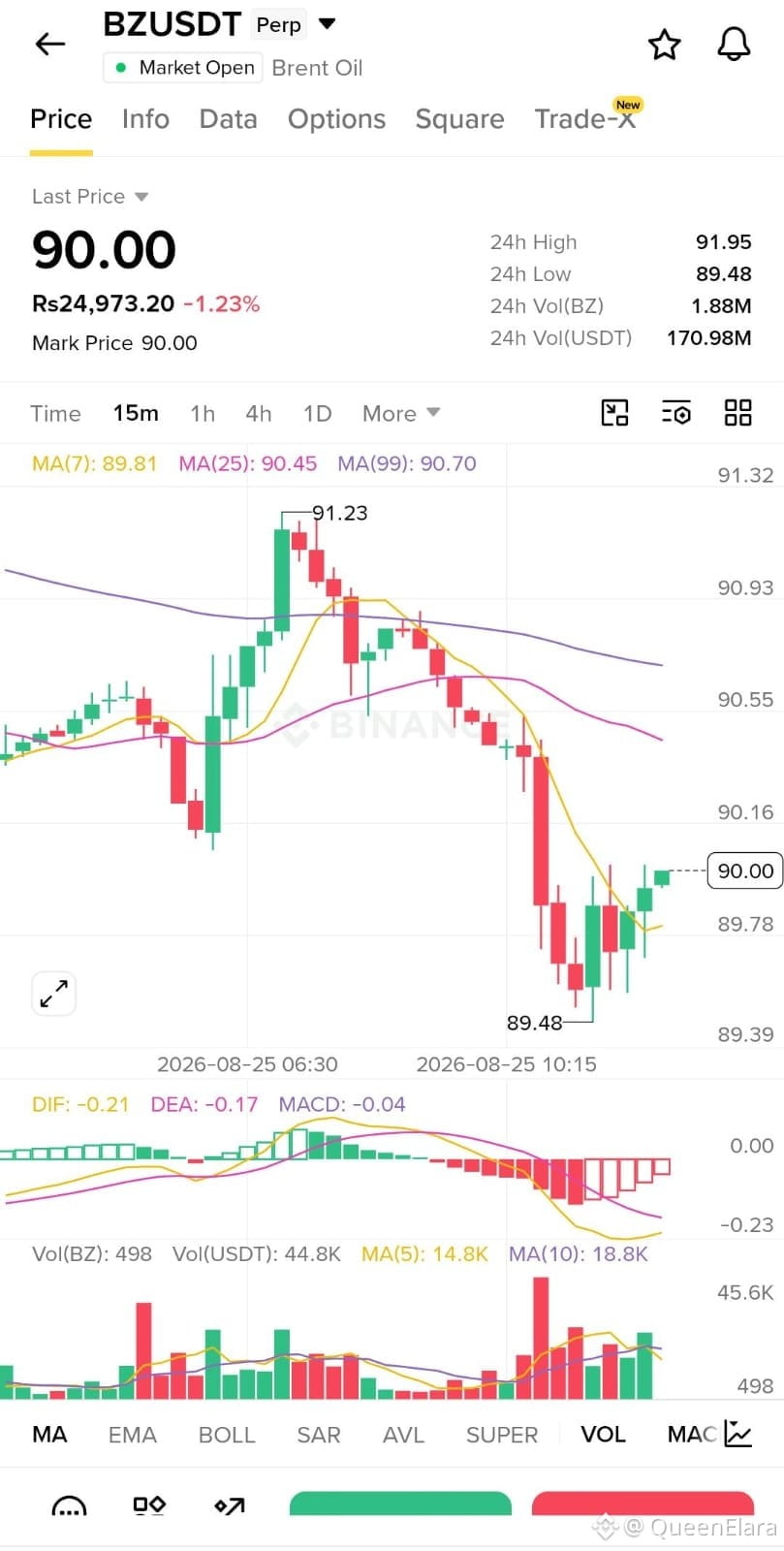
Ich habe mir mit meinem Team $BZ USDT angesehen, und ein Aspekt ist mir auf dem 15m-Chart besonders aufgefallen: Der Kurs ist von 89.48 abgeprallt, aber die größere Struktur ist noch nicht wirklich bullisch gedreht.
BZ liegt bei etwa 90.00, ist in 24H um ca. 1,23% gefallen und hat eine 24H-Spanne von 89.48–91.95. Das ist ein anständiger Bereich, daher möchte ich den Markt nicht nur anhand dieses kleinen Rückpralls beurteilen.
Die Bewegung von 91.23 → 89.48 war ziemlich aggressiv. Wir haben mehrere rote Kerzen gesehen und einen deutlichen Anstieg des Volumens während des Abverkaufs. Für mich zeigt das, dass die Verkäufer hier tatsächlich aktiv waren – nicht nur ein langsames Abdriften nach unten.
Jetzt erholt sich der Kurs wieder von 89.48, und genau das ist der Teil, den ich beobachte.
Der kurze MA7 liegt bei rund 89.81, also hat der Kurs es geschafft, wieder darüber zu kommen. Aber MA25 ist 90.45 und MA99 ist 90.70 – beide liegen weiterhin oberhalb des aktuellen Kurses. Daher würde ich das persönlich noch nicht als Trendwende bezeichnen.
Die Levels, die ich in meinem Chart im Blick habe:
89.48 — jüngstes Tief und wichtiges Support-Level
89.75–89.80 — erster Bereich, den ich beobachte, damit der Rückprall hält
90.45 — MA25 + wichtiger Reclaim-Bereich
90.70 — MA99, stärkerer Widerstand
91.23–91.95 — vorherige Hoch-Zone
MACD ist immer noch negativ: DIF -0.21, DEA -0.17, MACD -0.04. Aber das Histogramm beginnt sich zu verbessern, weg von den tieferen negativen Werten. Das finde ich interessant, weil sich der Momentum-Strom vielleicht stabilisiert. Dennoch brauche ich noch eine Bestätigung, bevor ich das ernsthaft so einordne. Auch das Volumen ist etwas, das ich nicht ignoriere. Die große Verkaufskerze hatte starkes Volumen, während die aktuelle Erholung stärkeres Kaufvolumen benötigt, wenn Käufer die höheren Levels wirklich zurückerobern wollen.
Also ist meine wichtigste Frage im Moment nicht „Gehört BZ nach oben?“
Sondern: „Können Käufer diese Rückerholung in ein echtes Reclaim verwandeln – oder ist das nur eine Erholungsbewegung nach dem Sweep über 89.48?“
Genau darüber spreche ich mit meinem Team und beobachte dabei Kerze für Kerze.
Ich persönlich mag es nicht, dem mittleren Bereich dieser Bewegung hinterherzulaufen. Ich würde lieber sehen, dass der Kurs 90.45 zurückerobert, und dann beobachte ich, wie er sich um 90.70 herum verhält – mit Volumen und Momentum.
Keine finanzielle Beratung.
{future}(BZUSDT)
$BZ Ich beobachte diese Rückerholung ganz genau
Ich habe mir mit meinem Team $BZ USDT angesehen, und ein Aspekt ist mir auf dem 15m-Chart besonders aufgefallen: Der Kurs ist von 89.48 abgeprallt, aber die größere Struktur ist noch nicht wirklich bullisch gedreht.
BZ liegt bei etwa 90.00, ist in 24H um ca. 1,23% gefallen und hat eine 24H-Spanne von 89.48–91.95. Das ist ein anständiger Bereich, daher möchte ich den Markt nicht nur anhand dieses kleinen Rückpralls beurteilen.
Die Bewegung von 91.23 → 89.48 war ziemlich aggressiv. Wir haben mehrere rote Kerzen gesehen und einen deutlichen Anstieg des Volumens während des Abverkaufs. Für mich zeigt das, dass die Verkäufer hier tatsächlich aktiv waren – nicht nur ein langsames Abdriften nach unten.
Jetzt erholt sich der Kurs wieder von 89.48, und genau das ist der Teil, den ich beobachte.
Der kurze MA7 liegt bei rund 89.81, also hat der Kurs es geschafft, wieder darüber zu kommen. Aber MA25 ist 90.45 und MA99 ist 90.70 – beide liegen weiterhin oberhalb des aktuellen Kurses. Daher würde ich das persönlich noch nicht als Trendwende bezeichnen.
Die Levels, die ich in meinem Chart im Blick habe:
89.48 — jüngstes Tief und wichtiges Support-Level
89.75–89.80 — erster Bereich, den ich beobachte, damit der Rückprall hält
90.45 — MA25 + wichtiger Reclaim-Bereich
90.70 — MA99, stärkerer Widerstand
91.23–91.95 — vorherige Hoch-Zone
MACD ist immer noch negativ: DIF -0.21, DEA -0.17, MACD -0.04. Aber das Histogramm beginnt sich zu verbessern, weg von den tieferen negativen Werten. Das finde ich interessant, weil sich der Momentum-Strom vielleicht stabilisiert. Dennoch brauche ich noch eine Bestätigung, bevor ich das ernsthaft so einordne. Auch das Volumen ist etwas, das ich nicht ignoriere. Die große Verkaufskerze hatte starkes Volumen, während die aktuelle Erholung stärkeres Kaufvolumen benötigt, wenn Käufer die höheren Levels wirklich zurückerobern wollen.
Also ist meine wichtigste Frage im Moment nicht „Gehört BZ nach oben?“
Sondern: „Können Käufer diese Rückerholung in ein echtes Reclaim verwandeln – oder ist das nur eine Erholungsbewegung nach dem Sweep über 89.48?“
Genau darüber spreche ich mit meinem Team und beobachte dabei Kerze für Kerze.
Ich persönlich mag es nicht, dem mittleren Bereich dieser Bewegung hinterherzulaufen. Ich würde lieber sehen, dass der Kurs 90.45 zurückerobert, und dann beobachte ich, wie er sich um 90.70 herum verhält – mit Volumen und Momentum.
Keine finanzielle Beratung.
Ich habe mir mit meinem Team $BZ USDT angesehen, und ein Aspekt ist mir auf dem 15m-Chart besonders aufgefallen: Der Kurs ist von 89.48 abgeprallt, aber die größere Struktur ist noch nicht wirklich bullisch gedreht.
BZ liegt bei etwa 90.00, ist in 24H um ca. 1,23% gefallen und hat eine 24H-Spanne von 89.48–91.95. Das ist ein anständiger Bereich, daher möchte ich den Markt nicht nur anhand dieses kleinen Rückpralls beurteilen.
Die Bewegung von 91.23 → 89.48 war ziemlich aggressiv. Wir haben mehrere rote Kerzen gesehen und einen deutlichen Anstieg des Volumens während des Abverkaufs. Für mich zeigt das, dass die Verkäufer hier tatsächlich aktiv waren – nicht nur ein langsames Abdriften nach unten.
Jetzt erholt sich der Kurs wieder von 89.48, und genau das ist der Teil, den ich beobachte.
Der kurze MA7 liegt bei rund 89.81, also hat der Kurs es geschafft, wieder darüber zu kommen. Aber MA25 ist 90.45 und MA99 ist 90.70 – beide liegen weiterhin oberhalb des aktuellen Kurses. Daher würde ich das persönlich noch nicht als Trendwende bezeichnen.
Die Levels, die ich in meinem Chart im Blick habe:
89.48 — jüngstes Tief und wichtiges Support-Level
89.75–89.80 — erster Bereich, den ich beobachte, damit der Rückprall hält
90.45 — MA25 + wichtiger Reclaim-Bereich
90.70 — MA99, stärkerer Widerstand
91.23–91.95 — vorherige Hoch-Zone
MACD ist immer noch negativ: DIF -0.21, DEA -0.17, MACD -0.04. Aber das Histogramm beginnt sich zu verbessern, weg von den tieferen negativen Werten. Das finde ich interessant, weil sich der Momentum-Strom vielleicht stabilisiert. Dennoch brauche ich noch eine Bestätigung, bevor ich das ernsthaft so einordne. Auch das Volumen ist etwas, das ich nicht ignoriere. Die große Verkaufskerze hatte starkes Volumen, während die aktuelle Erholung stärkeres Kaufvolumen benötigt, wenn Käufer die höheren Levels wirklich zurückerobern wollen.
Also ist meine wichtigste Frage im Moment nicht „Gehört BZ nach oben?“
Sondern: „Können Käufer diese Rückerholung in ein echtes Reclaim verwandeln – oder ist das nur eine Erholungsbewegung nach dem Sweep über 89.48?“
Genau darüber spreche ich mit meinem Team und beobachte dabei Kerze für Kerze.
Ich persönlich mag es nicht, dem mittleren Bereich dieser Bewegung hinterherzulaufen. Ich würde lieber sehen, dass der Kurs 90.45 zurückerobert, und dann beobachte ich, wie er sich um 90.70 herum verhält – mit Volumen und Momentum.
Keine finanzielle Beratung.
1
183
·
--
Bullisch
👀 Ich habe diese Woche immer wieder Dusk Trade (ehemals STOX) gesehen, während ich durch @Dusk_Foundation gestöbert habe. Also habe ich beschlossen, nicht weiter Schlagzeilen zu lesen, sondern mir tatsächlich anzuschauen, was dort gerade passiert.
Eines hat mich aus dem Konzept gebracht.
Dusk beschreibt sich selbst als eine öffentliche, permissionless L1, aber Dusk Trade hat derzeit offensichtlich ein anderes Zugangsmodell.
Es ist immer noch eine Warteliste.
Dieser Unterschied ist wichtig.
Ich bin außerdem auf die jüngste Diskussion zurückgegangen, private Märkte für KMU zu öffnen, und habe dann versucht herauszufinden, wie die tatsächliche Handelserfahrung heute aussieht.
Der Datenschutz-Aspekt ist interessant. Mit selektiver Offenlegung ist die Idee, dass man Dinge wie Berechtigung oder Wohnsitz nachweisen kann, ohne die eigene vollständige Identität preiszugeben.
Aber es gibt noch eine zweite Ebene, die man meiner Meinung nach leicht übersehen kann:
Wer bekommt tatsächlich Zugang?
Aktuell startet der Rollout mit ausgewählten Partnern und Assets, statt alles sofort für alle zu öffnen.
Also habe ich mir das so zurechtgelegt:
Die Privatsphäre-Technologie kann vertrauensminimiert sein.
Der Zugangsprozess hat trotzdem ein Tor.
Und das hat mich dazu gebracht, es mit meinen eigenen Erfahrungen auf Dusk zu vergleichen.
Ich teste gerade den Staking-Teil mit einem kleinen Betrag und beobachte die Netzwerkmetriken. Zu sehen, dass mehr als 30% des Angebots gesperrt sind und die variablen Staking-Renditen im Bereich von etwa den hohen 20% liegen, ist interessant – aber ich musste mir selbst vor Augen halten, dass Staking mir im Grunde überhaupt nichts darüber sagt, ob ich auf der Trading-Seite überhaupt zugreifen kann.
Das sind zwei völlig unterschiedliche Türen.
Die eine geht darum, am Netzwerk teilzunehmen.
Die andere geht darum, Zugang zu bestimmten Märkten und Assets zu bekommen.
Deshalb ist das, woran ich im Moment mehr interessiert bin, nicht eine weitere Datenschutz-Schlagzeile.
Sondern: Welche Assets schaffen es in den ersten echten Trading-Teilnehmerkreis, wer bekommt Zugang und wie funktioniert dieser Prozess tatsächlich.
Denn das wird uns viel mehr über Dusk Trade verraten als noch eine andere Erklärung für ZK-Technologie.
Gibt es hier jemanden, der von der Warteliste schon runter ist?
@Dusk_Foundation $DUSK #dusk
{future}(DUSKUSDT)
Was ist gerade am wichtigsten für Dusk Trade?
👀 Ich habe diese Woche immer wieder Dusk Trade (ehemals STOX) gesehen, während ich durch @Dusk gestöbert habe. Also habe ich beschlossen, nicht weiter Schlagzeilen zu lesen, sondern mir tatsächlich anzuschauen, was dort gerade passiert.
Eines hat mich aus dem Konzept gebracht.
Dusk beschreibt sich selbst als eine öffentliche, permissionless L1, aber Dusk Trade hat derzeit offensichtlich ein anderes Zugangsmodell.
Es ist immer noch eine Warteliste.
Dieser Unterschied ist wichtig.
Ich bin außerdem auf die jüngste Diskussion zurückgegangen, private Märkte für KMU zu öffnen, und habe dann versucht herauszufinden, wie die tatsächliche Handelserfahrung heute aussieht.
Der Datenschutz-Aspekt ist interessant. Mit selektiver Offenlegung ist die Idee, dass man Dinge wie Berechtigung oder Wohnsitz nachweisen kann, ohne die eigene vollständige Identität preiszugeben.
Aber es gibt noch eine zweite Ebene, die man meiner Meinung nach leicht übersehen kann:
Wer bekommt tatsächlich Zugang?
Aktuell startet der Rollout mit ausgewählten Partnern und Assets, statt alles sofort für alle zu öffnen.
Also habe ich mir das so zurechtgelegt:
Die Privatsphäre-Technologie kann vertrauensminimiert sein.
Der Zugangsprozess hat trotzdem ein Tor.
Und das hat mich dazu gebracht, es mit meinen eigenen Erfahrungen auf Dusk zu vergleichen.
Ich teste gerade den Staking-Teil mit einem kleinen Betrag und beobachte die Netzwerkmetriken. Zu sehen, dass mehr als 30% des Angebots gesperrt sind und die variablen Staking-Renditen im Bereich von etwa den hohen 20% liegen, ist interessant – aber ich musste mir selbst vor Augen halten, dass Staking mir im Grunde überhaupt nichts darüber sagt, ob ich auf der Trading-Seite überhaupt zugreifen kann.
Das sind zwei völlig unterschiedliche Türen.
Die eine geht darum, am Netzwerk teilzunehmen.
Die andere geht darum, Zugang zu bestimmten Märkten und Assets zu bekommen.
Deshalb ist das, woran ich im Moment mehr interessiert bin, nicht eine weitere Datenschutz-Schlagzeile.
Sondern: Welche Assets schaffen es in den ersten echten Trading-Teilnehmerkreis, wer bekommt Zugang und wie funktioniert dieser Prozess tatsächlich.
Denn das wird uns viel mehr über Dusk Trade verraten als noch eine andere Erklärung für ZK-Technologie.
Gibt es hier jemanden, der von der Warteliste schon runter ist?
@Dusk $DUSK #dusk
Was ist gerade am wichtigsten für Dusk Trade?
Eines hat mich aus dem Konzept gebracht.
Dusk beschreibt sich selbst als eine öffentliche, permissionless L1, aber Dusk Trade hat derzeit offensichtlich ein anderes Zugangsmodell.
Es ist immer noch eine Warteliste.
Dieser Unterschied ist wichtig.
Ich bin außerdem auf die jüngste Diskussion zurückgegangen, private Märkte für KMU zu öffnen, und habe dann versucht herauszufinden, wie die tatsächliche Handelserfahrung heute aussieht.
Der Datenschutz-Aspekt ist interessant. Mit selektiver Offenlegung ist die Idee, dass man Dinge wie Berechtigung oder Wohnsitz nachweisen kann, ohne die eigene vollständige Identität preiszugeben.
Aber es gibt noch eine zweite Ebene, die man meiner Meinung nach leicht übersehen kann:
Wer bekommt tatsächlich Zugang?
Aktuell startet der Rollout mit ausgewählten Partnern und Assets, statt alles sofort für alle zu öffnen.
Also habe ich mir das so zurechtgelegt:
Die Privatsphäre-Technologie kann vertrauensminimiert sein.
Der Zugangsprozess hat trotzdem ein Tor.
Und das hat mich dazu gebracht, es mit meinen eigenen Erfahrungen auf Dusk zu vergleichen.
Ich teste gerade den Staking-Teil mit einem kleinen Betrag und beobachte die Netzwerkmetriken. Zu sehen, dass mehr als 30% des Angebots gesperrt sind und die variablen Staking-Renditen im Bereich von etwa den hohen 20% liegen, ist interessant – aber ich musste mir selbst vor Augen halten, dass Staking mir im Grunde überhaupt nichts darüber sagt, ob ich auf der Trading-Seite überhaupt zugreifen kann.
Das sind zwei völlig unterschiedliche Türen.
Die eine geht darum, am Netzwerk teilzunehmen.
Die andere geht darum, Zugang zu bestimmten Märkten und Assets zu bekommen.
Deshalb ist das, woran ich im Moment mehr interessiert bin, nicht eine weitere Datenschutz-Schlagzeile.
Sondern: Welche Assets schaffen es in den ersten echten Trading-Teilnehmerkreis, wer bekommt Zugang und wie funktioniert dieser Prozess tatsächlich.
Denn das wird uns viel mehr über Dusk Trade verraten als noch eine andere Erklärung für ZK-Technologie.
Gibt es hier jemanden, der von der Warteliste schon runter ist?
@Dusk $DUSK #dusk
Was ist gerade am wichtigsten für Dusk Trade?
which assest launch first 🥇
0%
🔐 Privacy + compliance
100%
🎟️ Who gets access?
0%
📈 Actual trading activity
0%
1 Stimmen • Abstimmung beendet
1
2
83
·
--
🧠 Je tiefer ich in @Dusk_Foundation eintauche, desto mehr merke ich, dass ich das RWA-Problem viel zu simpel betrachtet habe.
Früher dachte ich, dass eine finanzfokussierte L1 im Grunde drei Dinge braucht:
Schnelle Abwicklung.
Angemessene Gebühren.
Eine Möglichkeit, reale Vermögenswerte (RWAs) onchain abzubilden.
Wenn diese Punkte erfüllt wären, nahm ich an, dass der Rest im Grunde nur noch darin besteht, Anwendungen darauf aufzubauen.
Aber Dusk hat mich daran zweifeln lassen.
Denn wenn man eine Anleihe oder einen Fonds onchain bringt, wird daraus nicht plötzlich automatisch ein voll nutzbares Finanzprodukt.
Es gibt weiterhin Fragen zum Vermögenswert:
Wer darf ihn kaufen?
Wer darf ihn halten?
Was muss offengelegt werden?
Was sollte privat bleiben?
Wie werden Transfers eingeschränkt?
Und wie erfolgt die Zahlungsabwicklung parallel zum Vermögenswert?
Genau hier beginnt für mich der Unterschied bei Dusk.
Was mir aufgefallen ist: Dusk denkt nicht nur an den Token. Es versucht, mehr vom gesamten Lebenszyklus des Vermögenswerts abzudecken – vom Onboarding und den Wallet-Beziehungen bis hin zu Transferkontrollen, Offenlegung und Abwicklung.
Dann fiel mir noch etwas anderes in der Architektur auf.
$DUSK zwingt nicht alles in eine einzige Ausführungsumgebung.
DuskEVM bietet Entwicklern den vertrauten Solidity/EVM-Pfad, während DuskVM für Anwendungen gebaut ist, die eine tiefere Interaktion mit der nativen Dusk-Ebene benötigen.
Unter diesen Umgebungen liegt DuskDS, das Abwicklung und Datenverfügbarkeit handhabt.
Anfangs dachte ich ehrlich… macht das die Dinge nicht nur komplizierter?
Aber vielleicht ist das die falsche Frage.
Traditionelle Finanzmärkte sind ohnehin schon kompliziert. Die eigentliche Frage ist, ob Dusk all diese Anforderungen so zusammenbringen kann, dass die Nutzererfahrung nicht genauso kompliziert wird.
Denn eine tokenisierte Wertanlage ist nur dann nützlich, wenn der komplette Workflow tatsächlich funktioniert.
Darauf achte ich jetzt.
Nicht einfach:
„Kann Dusk RWAs onchain bringen?“
Sondern:
„Kann Dusk die chaotischen Anforderungen rund um einen regulierten Vermögenswert in einen einzigen nutzbaren Workflow verwandeln?“
Wenn es das kann, ist das mehr als nur eine weitere Tokenisierung-Blockchain.
Noch ganz am Anfang, und es muss noch vieles bewiesen werden.
Aber das ist der Teil von #dusk , den ich besonders genau beobachte.
Was ist am wichtigsten für Dusk’ RWA-Ansatz?
🧠 Je tiefer ich in @Dusk eintauche, desto mehr merke ich, dass ich das RWA-Problem viel zu simpel betrachtet habe.
Früher dachte ich, dass eine finanzfokussierte L1 im Grunde drei Dinge braucht:
Schnelle Abwicklung.
Angemessene Gebühren.
Eine Möglichkeit, reale Vermögenswerte (RWAs) onchain abzubilden.
Wenn diese Punkte erfüllt wären, nahm ich an, dass der Rest im Grunde nur noch darin besteht, Anwendungen darauf aufzubauen.
Aber Dusk hat mich daran zweifeln lassen.
Denn wenn man eine Anleihe oder einen Fonds onchain bringt, wird daraus nicht plötzlich automatisch ein voll nutzbares Finanzprodukt.
Es gibt weiterhin Fragen zum Vermögenswert:
Wer darf ihn kaufen?
Wer darf ihn halten?
Was muss offengelegt werden?
Was sollte privat bleiben?
Wie werden Transfers eingeschränkt?
Und wie erfolgt die Zahlungsabwicklung parallel zum Vermögenswert?
Genau hier beginnt für mich der Unterschied bei Dusk.
Was mir aufgefallen ist: Dusk denkt nicht nur an den Token. Es versucht, mehr vom gesamten Lebenszyklus des Vermögenswerts abzudecken – vom Onboarding und den Wallet-Beziehungen bis hin zu Transferkontrollen, Offenlegung und Abwicklung.
Dann fiel mir noch etwas anderes in der Architektur auf.
$DUSK zwingt nicht alles in eine einzige Ausführungsumgebung.
DuskEVM bietet Entwicklern den vertrauten Solidity/EVM-Pfad, während DuskVM für Anwendungen gebaut ist, die eine tiefere Interaktion mit der nativen Dusk-Ebene benötigen.
Unter diesen Umgebungen liegt DuskDS, das Abwicklung und Datenverfügbarkeit handhabt.
Anfangs dachte ich ehrlich… macht das die Dinge nicht nur komplizierter?
Aber vielleicht ist das die falsche Frage.
Traditionelle Finanzmärkte sind ohnehin schon kompliziert. Die eigentliche Frage ist, ob Dusk all diese Anforderungen so zusammenbringen kann, dass die Nutzererfahrung nicht genauso kompliziert wird.
Denn eine tokenisierte Wertanlage ist nur dann nützlich, wenn der komplette Workflow tatsächlich funktioniert.
Darauf achte ich jetzt.
Nicht einfach:
„Kann Dusk RWAs onchain bringen?“
Sondern:
„Kann Dusk die chaotischen Anforderungen rund um einen regulierten Vermögenswert in einen einzigen nutzbaren Workflow verwandeln?“
Wenn es das kann, ist das mehr als nur eine weitere Tokenisierung-Blockchain.
Noch ganz am Anfang, und es muss noch vieles bewiesen werden.
Aber das ist der Teil von #dusk , den ich besonders genau beobachte.
Was ist am wichtigsten für Dusk’ RWA-Ansatz?
Früher dachte ich, dass eine finanzfokussierte L1 im Grunde drei Dinge braucht:
Schnelle Abwicklung.
Angemessene Gebühren.
Eine Möglichkeit, reale Vermögenswerte (RWAs) onchain abzubilden.
Wenn diese Punkte erfüllt wären, nahm ich an, dass der Rest im Grunde nur noch darin besteht, Anwendungen darauf aufzubauen.
Aber Dusk hat mich daran zweifeln lassen.
Denn wenn man eine Anleihe oder einen Fonds onchain bringt, wird daraus nicht plötzlich automatisch ein voll nutzbares Finanzprodukt.
Es gibt weiterhin Fragen zum Vermögenswert:
Wer darf ihn kaufen?
Wer darf ihn halten?
Was muss offengelegt werden?
Was sollte privat bleiben?
Wie werden Transfers eingeschränkt?
Und wie erfolgt die Zahlungsabwicklung parallel zum Vermögenswert?
Genau hier beginnt für mich der Unterschied bei Dusk.
Was mir aufgefallen ist: Dusk denkt nicht nur an den Token. Es versucht, mehr vom gesamten Lebenszyklus des Vermögenswerts abzudecken – vom Onboarding und den Wallet-Beziehungen bis hin zu Transferkontrollen, Offenlegung und Abwicklung.
Dann fiel mir noch etwas anderes in der Architektur auf.
$DUSK zwingt nicht alles in eine einzige Ausführungsumgebung.
DuskEVM bietet Entwicklern den vertrauten Solidity/EVM-Pfad, während DuskVM für Anwendungen gebaut ist, die eine tiefere Interaktion mit der nativen Dusk-Ebene benötigen.
Unter diesen Umgebungen liegt DuskDS, das Abwicklung und Datenverfügbarkeit handhabt.
Anfangs dachte ich ehrlich… macht das die Dinge nicht nur komplizierter?
Aber vielleicht ist das die falsche Frage.
Traditionelle Finanzmärkte sind ohnehin schon kompliziert. Die eigentliche Frage ist, ob Dusk all diese Anforderungen so zusammenbringen kann, dass die Nutzererfahrung nicht genauso kompliziert wird.
Denn eine tokenisierte Wertanlage ist nur dann nützlich, wenn der komplette Workflow tatsächlich funktioniert.
Darauf achte ich jetzt.
Nicht einfach:
„Kann Dusk RWAs onchain bringen?“
Sondern:
„Kann Dusk die chaotischen Anforderungen rund um einen regulierten Vermögenswert in einen einzigen nutzbaren Workflow verwandeln?“
Wenn es das kann, ist das mehr als nur eine weitere Tokenisierung-Blockchain.
Noch ganz am Anfang, und es muss noch vieles bewiesen werden.
Aber das ist der Teil von #dusk , den ich besonders genau beobachte.
Was ist am wichtigsten für Dusk’ RWA-Ansatz?
🔘 Privacy, 🔘 Compliance
0%
🔘 Settlement
0%
🔘 All of them
100%
2 Stimmen • Abstimmung beendet
2
84
·
--
Bullisch
🚨 DAS IST WIRKLICH VERRÜCKT.
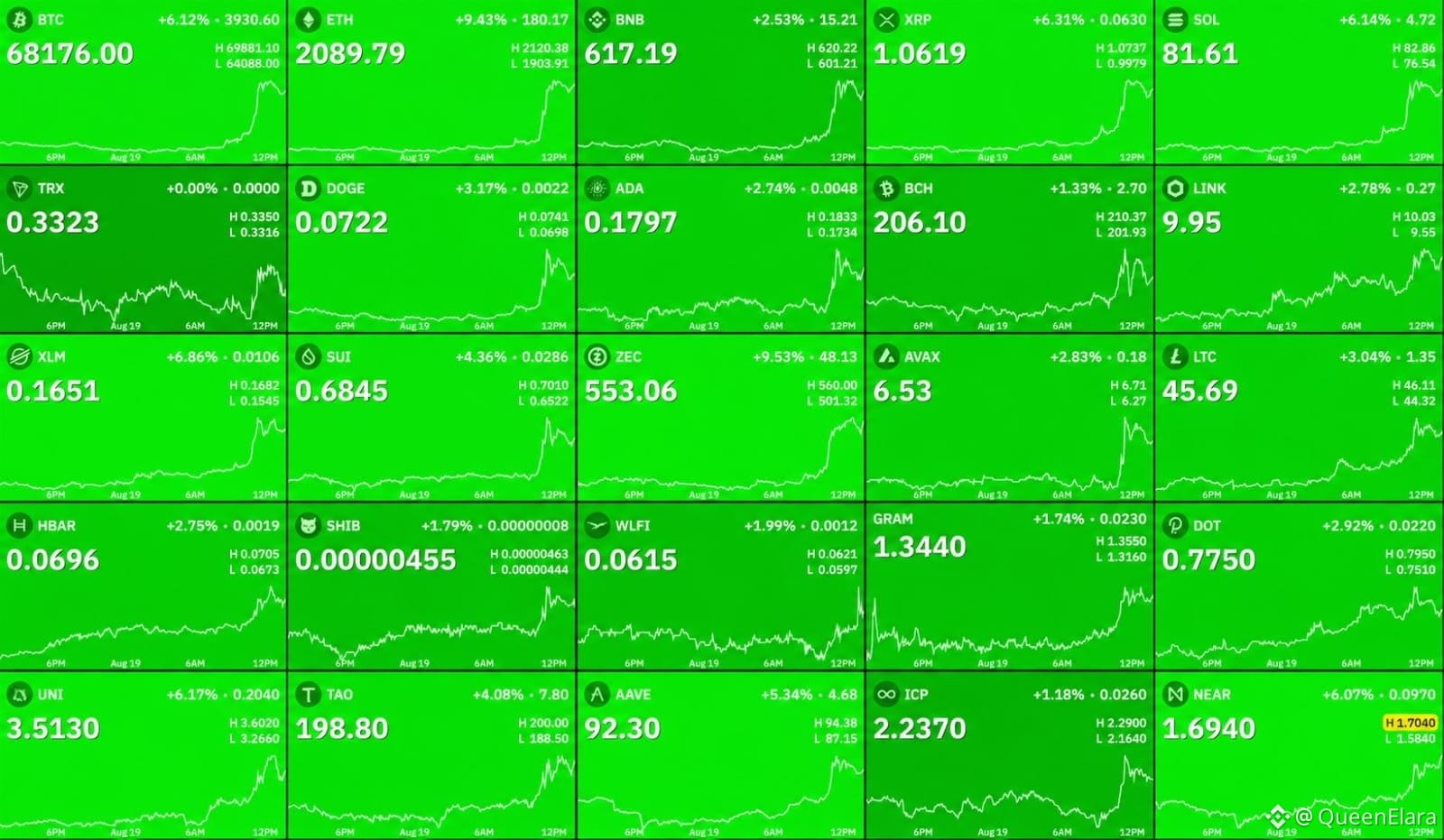
$190 MILLIARDEN wurden gerade dem Kryptomarkt hinzugefügt, während der Markt durch das gegangen ist, was als das größte Short-Liquidationsereignis in der Geschichte der Krypto-Welt beschrieben wird.
Und das Verrückte ist nicht nur die Zahl.
Es ist, wie schnell sich alles ändern kann, wenn zu viele Trader auf derselben Seite positioniert sind.
Eine Zeit lang sah der Markt stark bärisch aus. Shorts wurden weiter aufgebaut, Leverage stapelte sich auf, und dann begann der Kurs, sich in die andere Richtung zu bewegen.
Und dann wird es hässlich.
Ein Short wird liquidiert → gezwungenes Kaufen trifft den Markt → der Preis steigt → noch mehr Shorts werden liquidiert → noch mehr Kaufdruck.
Das kann sich zu einer Kettenreaktion entwickeln.
Darum achte ich immer auf Positionierung und Leverage – nicht nur auf den Chart.
Ein Markt kann direkt bis zu dem Moment schwach aussehen, in dem alle, die short gegangen sind, eingekesselt werden.
Und sobald das passiert, kann die Bewegung VIEL größer werden, als irgendjemand erwartet hat.
Die Frage ist jetzt ganz einfach:
War das der Beginn einer echten Veränderung der Marktsentiments – oder nur ein massiver Leverage-Flush? 👀
Denn nach so einer Bewegung interessiert mich viel mehr, was als Nächstes passiert, als die Schlagzeile selbst.
$MAGMA $RE
{future}(REUSDT)
🚨 DAS IST WIRKLICH VERRÜCKT.
$190 MILLIARDEN wurden gerade dem Kryptomarkt hinzugefügt, während der Markt durch das gegangen ist, was als das größte Short-Liquidationsereignis in der Geschichte der Krypto-Welt beschrieben wird.
Und das Verrückte ist nicht nur die Zahl.
Es ist, wie schnell sich alles ändern kann, wenn zu viele Trader auf derselben Seite positioniert sind.
Eine Zeit lang sah der Markt stark bärisch aus. Shorts wurden weiter aufgebaut, Leverage stapelte sich auf, und dann begann der Kurs, sich in die andere Richtung zu bewegen.
Und dann wird es hässlich.
Ein Short wird liquidiert → gezwungenes Kaufen trifft den Markt → der Preis steigt → noch mehr Shorts werden liquidiert → noch mehr Kaufdruck.
Das kann sich zu einer Kettenreaktion entwickeln.
Darum achte ich immer auf Positionierung und Leverage – nicht nur auf den Chart.
Ein Markt kann direkt bis zu dem Moment schwach aussehen, in dem alle, die short gegangen sind, eingekesselt werden.
Und sobald das passiert, kann die Bewegung VIEL größer werden, als irgendjemand erwartet hat.
Die Frage ist jetzt ganz einfach:
War das der Beginn einer echten Veränderung der Marktsentiments – oder nur ein massiver Leverage-Flush? 👀
Denn nach so einer Bewegung interessiert mich viel mehr, was als Nächstes passiert, als die Schlagzeile selbst.
$MAGMA $RE
$190 MILLIARDEN wurden gerade dem Kryptomarkt hinzugefügt, während der Markt durch das gegangen ist, was als das größte Short-Liquidationsereignis in der Geschichte der Krypto-Welt beschrieben wird.
Und das Verrückte ist nicht nur die Zahl.
Es ist, wie schnell sich alles ändern kann, wenn zu viele Trader auf derselben Seite positioniert sind.
Eine Zeit lang sah der Markt stark bärisch aus. Shorts wurden weiter aufgebaut, Leverage stapelte sich auf, und dann begann der Kurs, sich in die andere Richtung zu bewegen.
Und dann wird es hässlich.
Ein Short wird liquidiert → gezwungenes Kaufen trifft den Markt → der Preis steigt → noch mehr Shorts werden liquidiert → noch mehr Kaufdruck.
Das kann sich zu einer Kettenreaktion entwickeln.
Darum achte ich immer auf Positionierung und Leverage – nicht nur auf den Chart.
Ein Markt kann direkt bis zu dem Moment schwach aussehen, in dem alle, die short gegangen sind, eingekesselt werden.
Und sobald das passiert, kann die Bewegung VIEL größer werden, als irgendjemand erwartet hat.
Die Frage ist jetzt ganz einfach:
War das der Beginn einer echten Veränderung der Marktsentiments – oder nur ein massiver Leverage-Flush? 👀
Denn nach so einer Bewegung interessiert mich viel mehr, was als Nächstes passiert, als die Schlagzeile selbst.
$MAGMA $RE
1
645
·
--
Bullisch
$HEMI
{future}(HEMIUSDT)
USDT 📈 LONG
Einstieg: 0.00905–0.00915
TP1: 0.00929
TP2: 0.00950
TP3: 0.00975
SL: 0.00885
Hebel: 3x–5x
15m-Struktur dreht bullisch, der Preis hält sich über MA(7/25). Volumen + MACD zeigen eine frühe Erholung.
NFA | Risiko managen
$HEMI
USDT 📈 LONG
Einstieg: 0.00905–0.00915
TP1: 0.00929
TP2: 0.00950
TP3: 0.00975
SL: 0.00885
Hebel: 3x–5x
15m-Struktur dreht bullisch, der Preis hält sich über MA(7/25). Volumen + MACD zeigen eine frühe Erholung.
NFA | Risiko managen
USDT 📈 LONG
Einstieg: 0.00905–0.00915
TP1: 0.00929
TP2: 0.00950
TP3: 0.00975
SL: 0.00885
Hebel: 3x–5x
15m-Struktur dreht bullisch, der Preis hält sich über MA(7/25). Volumen + MACD zeigen eine frühe Erholung.
NFA | Risiko managen
1
1
127
·
--
Bullisch
Verdammt...
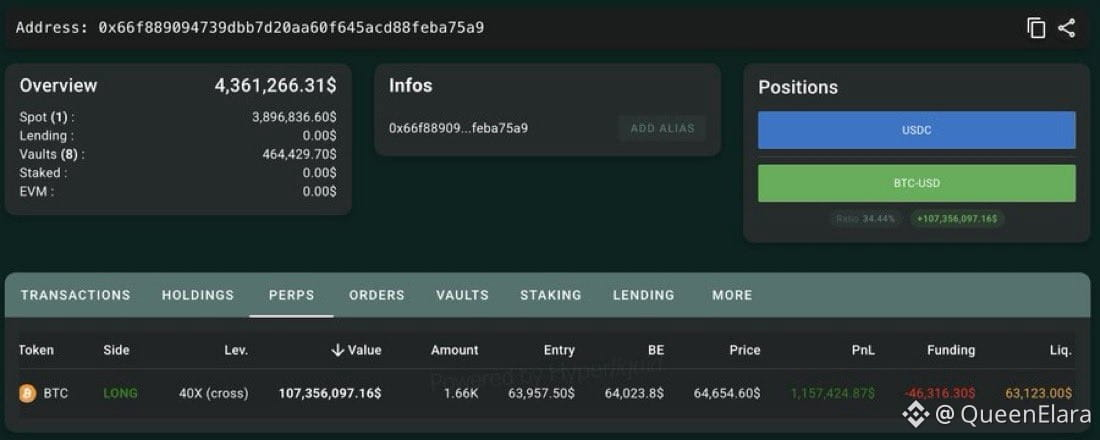
Dieser Wal hat gerade eine LONG-Position im Wert von 107,36 Mio. auf Bitcoin eröffnet.
Liquidationspreis: 63.123 $. $BTC
Verdammt...
Dieser Wal hat gerade eine LONG-Position im Wert von 107,36 Mio. auf Bitcoin eröffnet.
Liquidationspreis: 63.123 $. $BTC
Dieser Wal hat gerade eine LONG-Position im Wert von 107,36 Mio. auf Bitcoin eröffnet.
Liquidationspreis: 63.123 $. $BTC
82
·
--
Bullisch
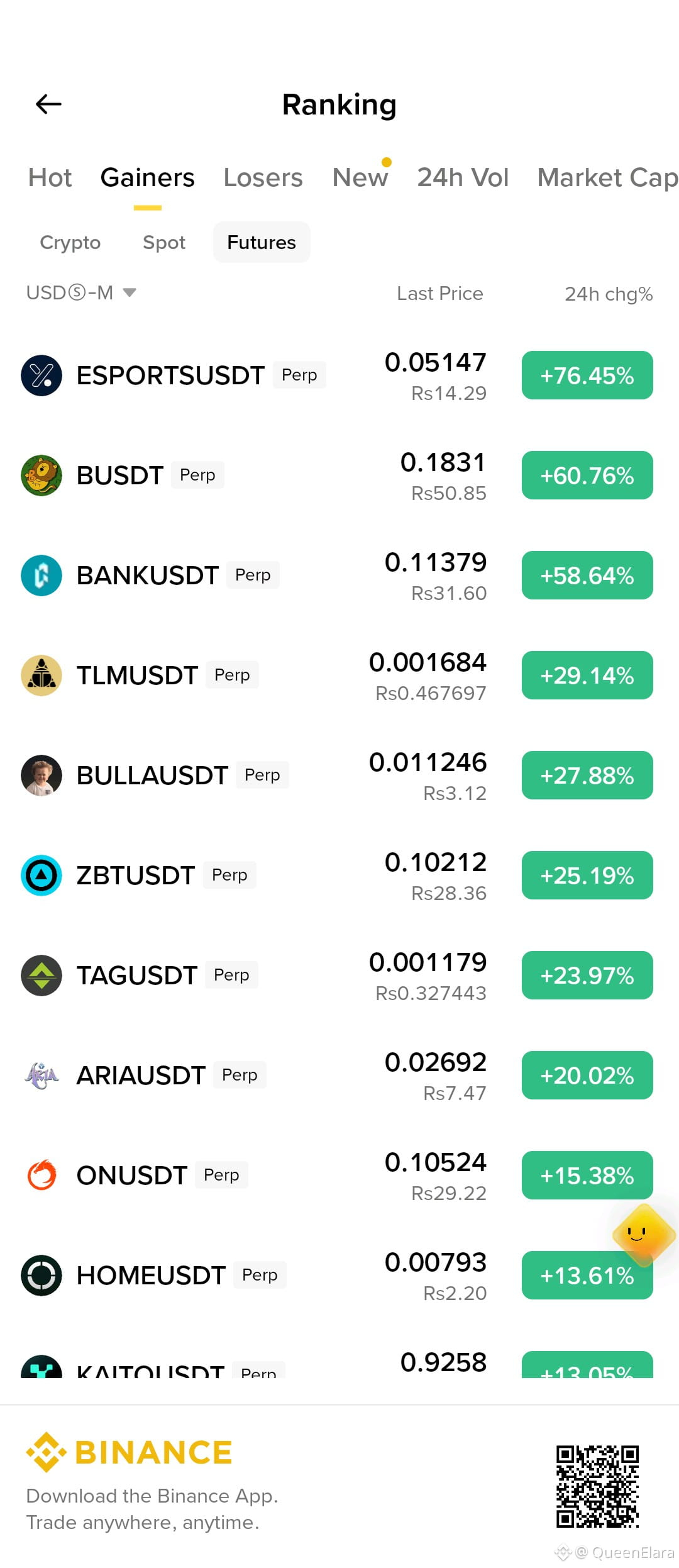
Guten Morgen! 🌞🌄🌄🌄
Heute ist der Markt grün, grün. Wach auf, meine Crypto-Familie.😅
Guten Morgen! 🌞🌄🌄🌄
Heute ist der Markt grün, grün. Wach auf, meine Crypto-Familie.😅
Heute ist der Markt grün, grün. Wach auf, meine Crypto-Familie.😅
1
223
·
--
#pixel
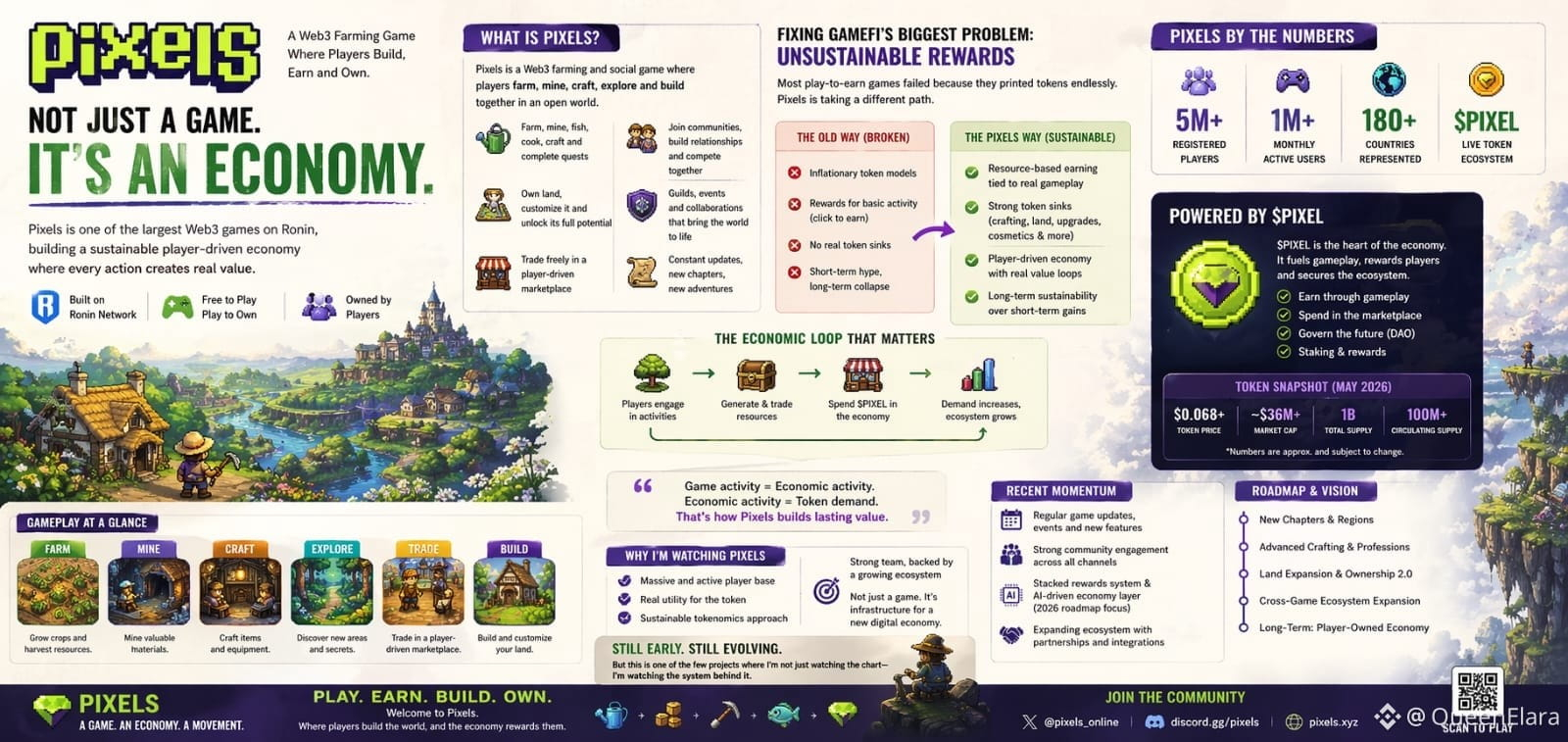
Ich habe in letzter Zeit @pixels ganz genau beobachtet… und irgendetwas fühlt sich anders an.
Auf den ersten Blick sieht es aus wie ein weiteres Web3 Farming-Spiel. Aber wenn man tiefer gräbt, erzählen die Zahlen und die Struktur eine andere Geschichte.
Pixels jagt nicht dem Hype hinterher, sondern baut eine Wirtschaft auf.
Wir reden hier von: • Millionen registrierter Spieler
• Eines der aktivsten Spiele auf Ronin
• Ein lebendiges Token-Ökosystem ($PIXEL ), das direkt mit der Produktivität im Spiel verknüpft ist
Was meine Aufmerksamkeit erregte, ist, wie sie versuchen, das größte Problem in GameFi zu lösen — nicht nachhaltige Belohnungen.
Anstatt endlos Tokens zu drucken, macht Pixels: → Wechselt zu ressourcenbasiertem Verdienen
→ Führt Senken ein, die wirklich wichtig sind
→ Gestaltet Schleifen, in denen Spieler beitragen, nicht nur farmen
Beispiel: Du verdienst nicht nur durch Klicken — du verdienst durch die Teilnahme an einer Wirtschaft (Handwerk, Handel, Nutzung von Land). Das ist ein großer Wandel vom traditionellen P2E.
Aus der Perspektive eines Traders ändert sich alles.
Denn jetzt: Spielaktivität = wirtschaftliche Aktivität
Wirtschaftliche Aktivität = Token-Nachfrage
Wenn sie dieses Gleichgewicht richtig hinbekommen, wird Pixels nicht nur ein Spiel sein… es wird zur Infrastruktur.
Noch früh. Noch in Entwicklung.
Aber das ist eines der wenigen Projekte, bei denen ich nicht nur das Chart beobachte — ich beobachte das System dahinter.
{future}(PIXELUSDT)
#pixel
Ich habe in letzter Zeit @Pixels ganz genau beobachtet… und irgendetwas fühlt sich anders an.
Auf den ersten Blick sieht es aus wie ein weiteres Web3 Farming-Spiel. Aber wenn man tiefer gräbt, erzählen die Zahlen und die Struktur eine andere Geschichte.
Pixels jagt nicht dem Hype hinterher, sondern baut eine Wirtschaft auf.
Wir reden hier von: • Millionen registrierter Spieler
• Eines der aktivsten Spiele auf Ronin
• Ein lebendiges Token-Ökosystem ($PIXEL ), das direkt mit der Produktivität im Spiel verknüpft ist
Was meine Aufmerksamkeit erregte, ist, wie sie versuchen, das größte Problem in GameFi zu lösen — nicht nachhaltige Belohnungen.
Anstatt endlos Tokens zu drucken, macht Pixels: → Wechselt zu ressourcenbasiertem Verdienen
→ Führt Senken ein, die wirklich wichtig sind
→ Gestaltet Schleifen, in denen Spieler beitragen, nicht nur farmen
Beispiel: Du verdienst nicht nur durch Klicken — du verdienst durch die Teilnahme an einer Wirtschaft (Handwerk, Handel, Nutzung von Land). Das ist ein großer Wandel vom traditionellen P2E.
Aus der Perspektive eines Traders ändert sich alles.
Denn jetzt: Spielaktivität = wirtschaftliche Aktivität
Wirtschaftliche Aktivität = Token-Nachfrage
Wenn sie dieses Gleichgewicht richtig hinbekommen, wird Pixels nicht nur ein Spiel sein… es wird zur Infrastruktur.
Noch früh. Noch in Entwicklung.
Aber das ist eines der wenigen Projekte, bei denen ich nicht nur das Chart beobachte — ich beobachte das System dahinter.
Ich habe in letzter Zeit @Pixels ganz genau beobachtet… und irgendetwas fühlt sich anders an.
Auf den ersten Blick sieht es aus wie ein weiteres Web3 Farming-Spiel. Aber wenn man tiefer gräbt, erzählen die Zahlen und die Struktur eine andere Geschichte.
Pixels jagt nicht dem Hype hinterher, sondern baut eine Wirtschaft auf.
Wir reden hier von: • Millionen registrierter Spieler
• Eines der aktivsten Spiele auf Ronin
• Ein lebendiges Token-Ökosystem ($PIXEL ), das direkt mit der Produktivität im Spiel verknüpft ist
Was meine Aufmerksamkeit erregte, ist, wie sie versuchen, das größte Problem in GameFi zu lösen — nicht nachhaltige Belohnungen.
Anstatt endlos Tokens zu drucken, macht Pixels: → Wechselt zu ressourcenbasiertem Verdienen
→ Führt Senken ein, die wirklich wichtig sind
→ Gestaltet Schleifen, in denen Spieler beitragen, nicht nur farmen
Beispiel: Du verdienst nicht nur durch Klicken — du verdienst durch die Teilnahme an einer Wirtschaft (Handwerk, Handel, Nutzung von Land). Das ist ein großer Wandel vom traditionellen P2E.
Aus der Perspektive eines Traders ändert sich alles.
Denn jetzt: Spielaktivität = wirtschaftliche Aktivität
Wirtschaftliche Aktivität = Token-Nachfrage
Wenn sie dieses Gleichgewicht richtig hinbekommen, wird Pixels nicht nur ein Spiel sein… es wird zur Infrastruktur.
Noch früh. Noch in Entwicklung.
Aber das ist eines der wenigen Projekte, bei denen ich nicht nur das Chart beobachte — ich beobachte das System dahinter.
3
7
173
·
--
Artikel
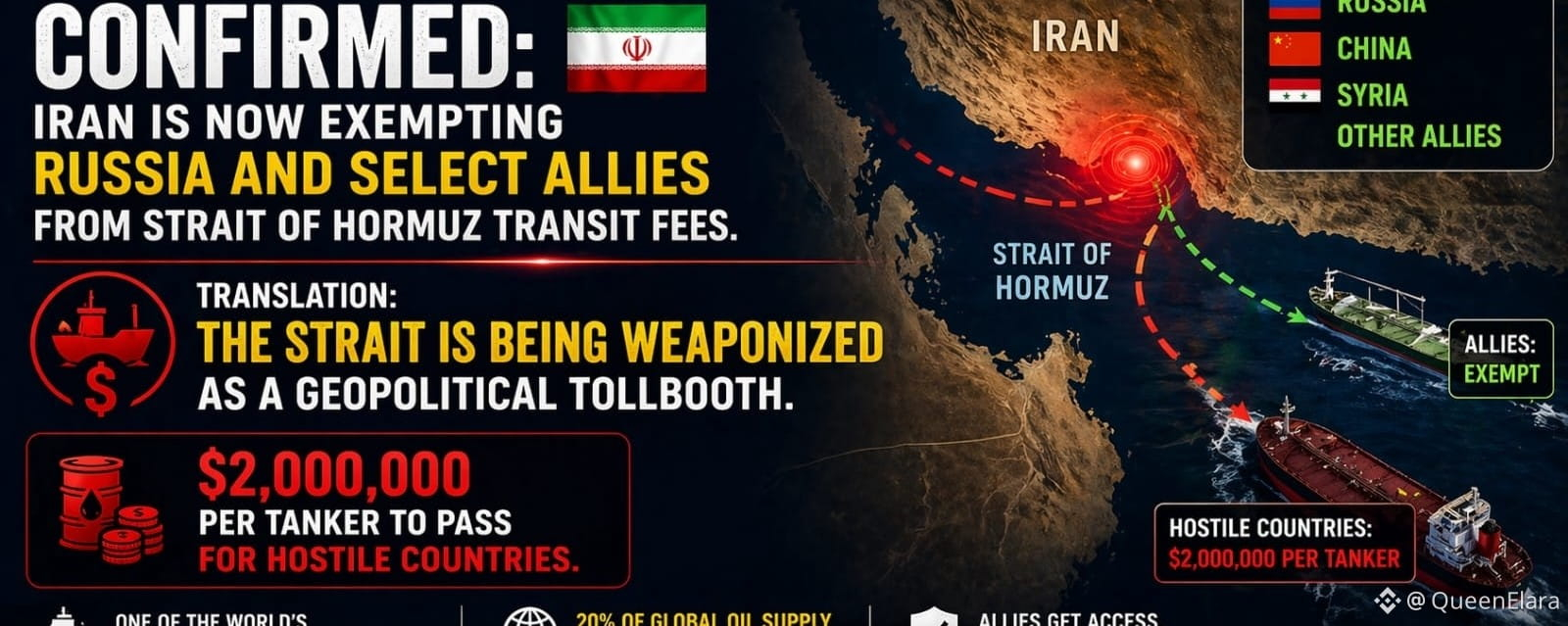
Breaking: Iran macht die Straße von Hormuz zu einem strategischen HebelIn den letzten Stunden habe ich eine Entwicklung beobachtet, die sich wie ein großer Wandel in der Nutzung globaler Handelsrouten anfühlt. Iran führt Berichten zufolge Transitgebühren für Schiffe ein, die durch die Straße von Hormuz fahren—während gleichzeitig Verbündete wie Russland und andere "freundliche" Nationen ausgenommen werden. Aus meiner Sicht ist das nicht nur Politik—es ist Strategie.
Was mir auffällt, ist die selektive Natur dieser Regeln. Das ist kein pauschales System, das gleichmäßig angewendet wird—es ist gezielt. Verbündete bewegen sich frei, während andere mit hohen Kosten konfrontiert werden, die Berichten zufolge Millionen pro Tanker erreichen. Eine solche Struktur reguliert nicht nur den Verkehr—sie gestaltet ihn um.
Breaking: Iran macht die Straße von Hormuz zu einem strategischen Hebel
In den letzten Stunden habe ich eine Entwicklung beobachtet, die sich wie ein großer Wandel in der Nutzung globaler Handelsrouten anfühlt. Iran führt Berichten zufolge Transitgebühren für Schiffe ein, die durch die Straße von Hormuz fahren—während gleichzeitig Verbündete wie Russland und andere "freundliche" Nationen ausgenommen werden. Aus meiner Sicht ist das nicht nur Politik—es ist Strategie.
Was mir auffällt, ist die selektive Natur dieser Regeln. Das ist kein pauschales System, das gleichmäßig angewendet wird—es ist gezielt. Verbündete bewegen sich frei, während andere mit hohen Kosten konfrontiert werden, die Berichten zufolge Millionen pro Tanker erreichen. Eine solche Struktur reguliert nicht nur den Verkehr—sie gestaltet ihn um.
Was mir auffällt, ist die selektive Natur dieser Regeln. Das ist kein pauschales System, das gleichmäßig angewendet wird—es ist gezielt. Verbündete bewegen sich frei, während andere mit hohen Kosten konfrontiert werden, die Berichten zufolge Millionen pro Tanker erreichen. Eine solche Struktur reguliert nicht nur den Verkehr—sie gestaltet ihn um.
4
398
·
--
Artikel
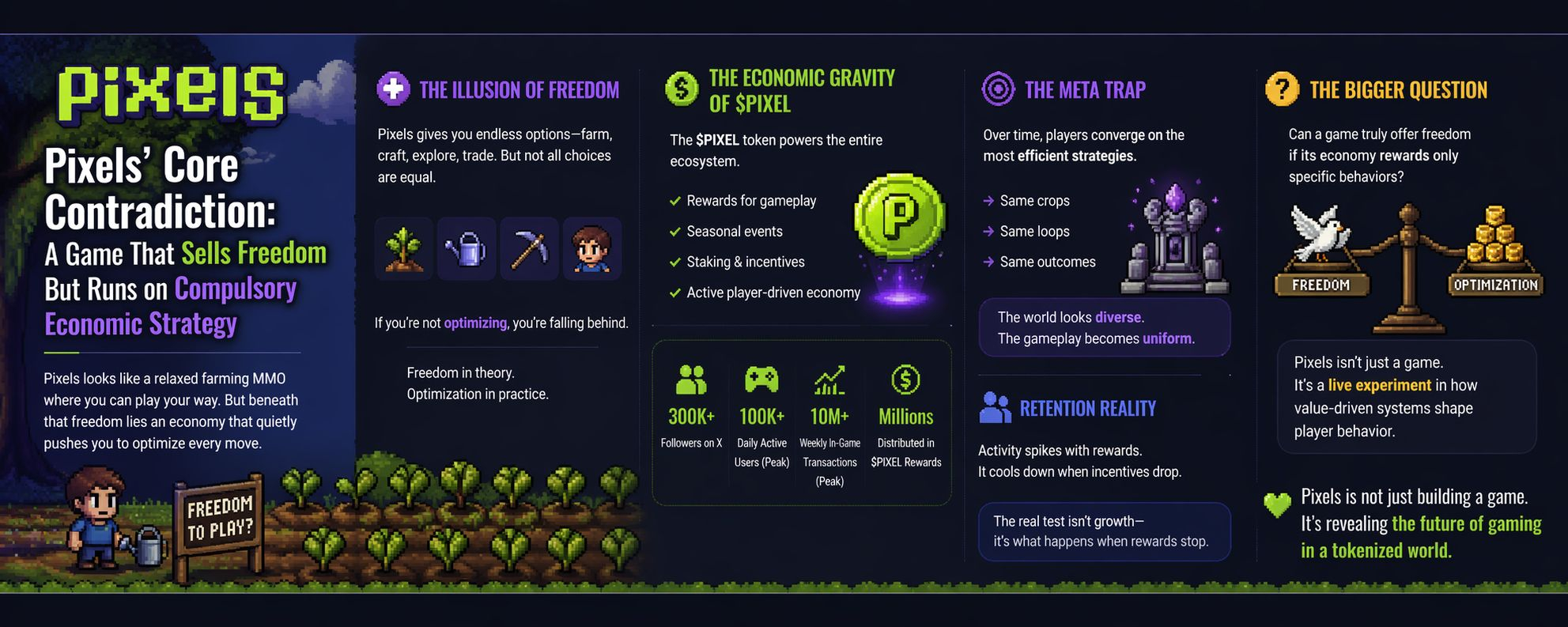
Pixels' Kernwiderspruch: Ein Spiel, das Freiheit verkauft, aber auf verpflichtenden Wirtschaftsstrategien basiert.@pixels #pixel $PIXEL
Ich hätte nicht erwartet, dass Pixels mich dazu bringt, darüber nachzudenken, was „Freiheit“ in einem Spiel tatsächlich bedeutet—aber das tat es.
Als ich zum ersten Mal in Pixels eintrat, fühlte es sich erfrischend offen an. Kein starrer Weg, kein sofortiger Druck—nur eine Welt, in der ich nach Belieben farmen, erkunden, craften und interagieren konnte. Es gab mir dieses seltene Gefühl von Kontrolle, das die meisten Spiele versprechen, aber heimlich einschränken.
Je länger ich blieb, desto mehr fiel mir etwas unter dieser Freiheit auf.
Es schränkte mich nicht direkt ein—es leitete mich. Subtil, konstant und fast unsichtbar.
Pixels' Kernwiderspruch: Ein Spiel, das Freiheit verkauft, aber auf verpflichtenden Wirtschaftsstrategien basiert.
@Pixels #pixel $PIXEL
Ich hätte nicht erwartet, dass Pixels mich dazu bringt, darüber nachzudenken, was „Freiheit“ in einem Spiel tatsächlich bedeutet—aber das tat es.
Als ich zum ersten Mal in Pixels eintrat, fühlte es sich erfrischend offen an. Kein starrer Weg, kein sofortiger Druck—nur eine Welt, in der ich nach Belieben farmen, erkunden, craften und interagieren konnte. Es gab mir dieses seltene Gefühl von Kontrolle, das die meisten Spiele versprechen, aber heimlich einschränken.
Je länger ich blieb, desto mehr fiel mir etwas unter dieser Freiheit auf.
Es schränkte mich nicht direkt ein—es leitete mich. Subtil, konstant und fast unsichtbar.
Ich hätte nicht erwartet, dass Pixels mich dazu bringt, darüber nachzudenken, was „Freiheit“ in einem Spiel tatsächlich bedeutet—aber das tat es.
Als ich zum ersten Mal in Pixels eintrat, fühlte es sich erfrischend offen an. Kein starrer Weg, kein sofortiger Druck—nur eine Welt, in der ich nach Belieben farmen, erkunden, craften und interagieren konnte. Es gab mir dieses seltene Gefühl von Kontrolle, das die meisten Spiele versprechen, aber heimlich einschränken.
Je länger ich blieb, desto mehr fiel mir etwas unter dieser Freiheit auf.
Es schränkte mich nicht direkt ein—es leitete mich. Subtil, konstant und fast unsichtbar.
3
9
134
·
--
@pixels #pixel $PIXEL
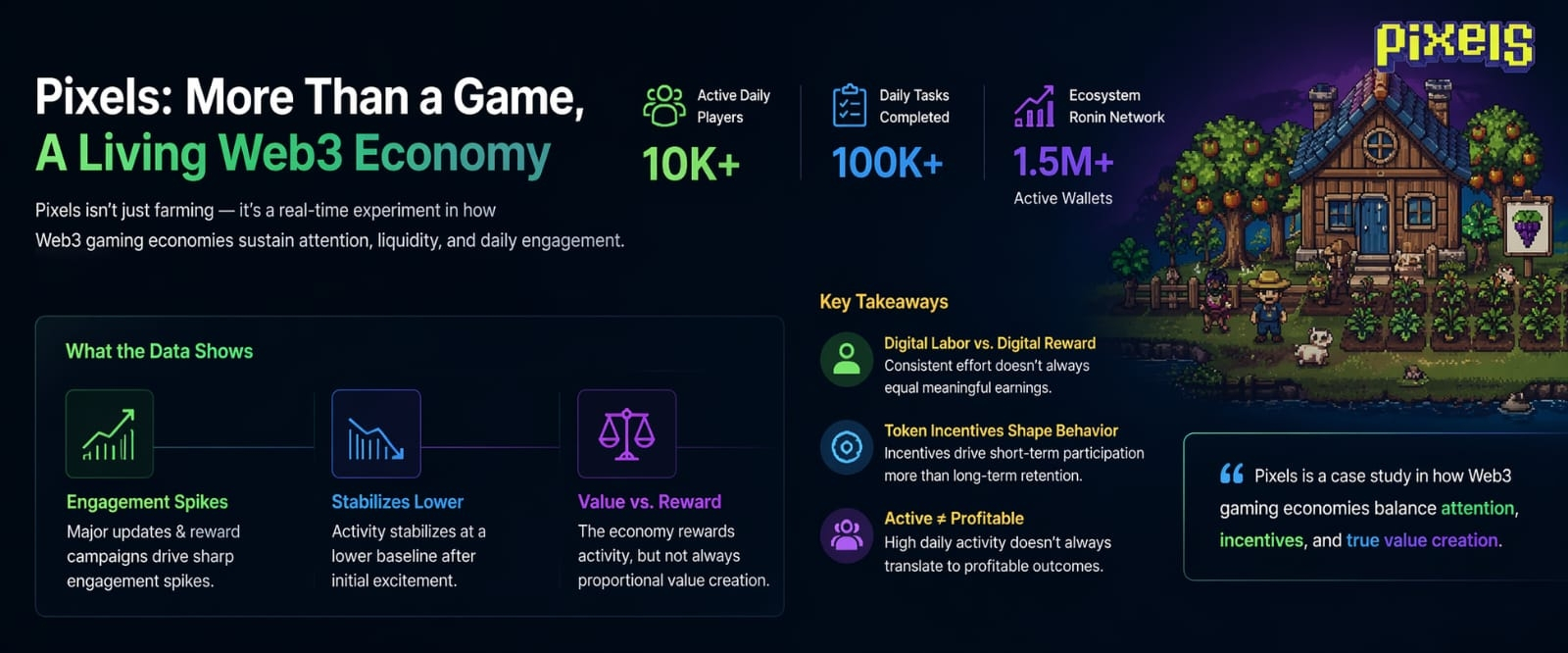
Ich habe Pixels genau beobachtet, und was mir auffällt, ist nicht nur das Gameplay, sondern das Verhalten des Ökosystems selbst.
Auf den ersten Blick sieht es aus wie ein einfaches Farming-Spiel. Aber wenn man tiefer eintaucht, ist es eigentlich ein lebendiges Experiment, wie Web3-Gaming-Ökonomien Aufmerksamkeit, Liquidität und tägliches Engagement aufrechterhalten.
Was ich interessant finde, ist folgendes:
Tausende von Spielern sind täglich aktiv, farmen und erledigen Aufgaben.
Doch ein großer Teil hat immer noch Schwierigkeiten, konsistente Anstrengungen in sinnvolle Einnahmen umzuwandeln.
Die Ökonomie belohnt Aktivität, aber nicht immer die proportionale Wertschöpfung.
Zum Beispiel: Während großer Updates und Belohnungskampagnen steigt das Engagement erheblich an – stabilisiert sich dann aber wieder auf einem niedrigeren Basisniveau. Dieses Muster ist in Play-to-Earn-Systemen üblich, wo Anreize kurzfristige Teilnahme mehr antreiben als langfristige Bindung.
Gleichzeitig hat es Pixels geschafft, im Ronin-Ökosystem relevant zu bleiben, das selbst eines der aktiveren Web3-Gaming-Netzwerke geworden ist. Das allein sagt viel über die Fähigkeit aus, das Interesse der Community trotz Marktschwankungen aufrechtzuerhalten.
Aus meiner Sicht ist Pixels nicht nur ein Spiel, sondern eine Fallstudie in:
Digitaler Arbeit vs. digitales Belohnungsgewicht.
Wie Token-Anreize das Verhalten der Spieler formen.
Und warum "aktive Nutzer" nicht immer "profitable Nutzer" bedeuten.
Und das macht es wert, genau beobachtet zu werden.
@Pixels #pixel $PIXEL
Ich habe Pixels genau beobachtet, und was mir auffällt, ist nicht nur das Gameplay, sondern das Verhalten des Ökosystems selbst.
Auf den ersten Blick sieht es aus wie ein einfaches Farming-Spiel. Aber wenn man tiefer eintaucht, ist es eigentlich ein lebendiges Experiment, wie Web3-Gaming-Ökonomien Aufmerksamkeit, Liquidität und tägliches Engagement aufrechterhalten.
Was ich interessant finde, ist folgendes:
Tausende von Spielern sind täglich aktiv, farmen und erledigen Aufgaben.
Doch ein großer Teil hat immer noch Schwierigkeiten, konsistente Anstrengungen in sinnvolle Einnahmen umzuwandeln.
Die Ökonomie belohnt Aktivität, aber nicht immer die proportionale Wertschöpfung.
Zum Beispiel: Während großer Updates und Belohnungskampagnen steigt das Engagement erheblich an – stabilisiert sich dann aber wieder auf einem niedrigeren Basisniveau. Dieses Muster ist in Play-to-Earn-Systemen üblich, wo Anreize kurzfristige Teilnahme mehr antreiben als langfristige Bindung.
Gleichzeitig hat es Pixels geschafft, im Ronin-Ökosystem relevant zu bleiben, das selbst eines der aktiveren Web3-Gaming-Netzwerke geworden ist. Das allein sagt viel über die Fähigkeit aus, das Interesse der Community trotz Marktschwankungen aufrechtzuerhalten.
Aus meiner Sicht ist Pixels nicht nur ein Spiel, sondern eine Fallstudie in:
Digitaler Arbeit vs. digitales Belohnungsgewicht.
Wie Token-Anreize das Verhalten der Spieler formen.
Und warum "aktive Nutzer" nicht immer "profitable Nutzer" bedeuten.
Und das macht es wert, genau beobachtet zu werden.
Ich habe Pixels genau beobachtet, und was mir auffällt, ist nicht nur das Gameplay, sondern das Verhalten des Ökosystems selbst.
Auf den ersten Blick sieht es aus wie ein einfaches Farming-Spiel. Aber wenn man tiefer eintaucht, ist es eigentlich ein lebendiges Experiment, wie Web3-Gaming-Ökonomien Aufmerksamkeit, Liquidität und tägliches Engagement aufrechterhalten.
Was ich interessant finde, ist folgendes:
Tausende von Spielern sind täglich aktiv, farmen und erledigen Aufgaben.
Doch ein großer Teil hat immer noch Schwierigkeiten, konsistente Anstrengungen in sinnvolle Einnahmen umzuwandeln.
Die Ökonomie belohnt Aktivität, aber nicht immer die proportionale Wertschöpfung.
Zum Beispiel: Während großer Updates und Belohnungskampagnen steigt das Engagement erheblich an – stabilisiert sich dann aber wieder auf einem niedrigeren Basisniveau. Dieses Muster ist in Play-to-Earn-Systemen üblich, wo Anreize kurzfristige Teilnahme mehr antreiben als langfristige Bindung.
Gleichzeitig hat es Pixels geschafft, im Ronin-Ökosystem relevant zu bleiben, das selbst eines der aktiveren Web3-Gaming-Netzwerke geworden ist. Das allein sagt viel über die Fähigkeit aus, das Interesse der Community trotz Marktschwankungen aufrechtzuerhalten.
Aus meiner Sicht ist Pixels nicht nur ein Spiel, sondern eine Fallstudie in:
Digitaler Arbeit vs. digitales Belohnungsgewicht.
Wie Token-Anreize das Verhalten der Spieler formen.
Und warum "aktive Nutzer" nicht immer "profitable Nutzer" bedeuten.
Und das macht es wert, genau beobachtet zu werden.
2
7
162
·
--
Artikel
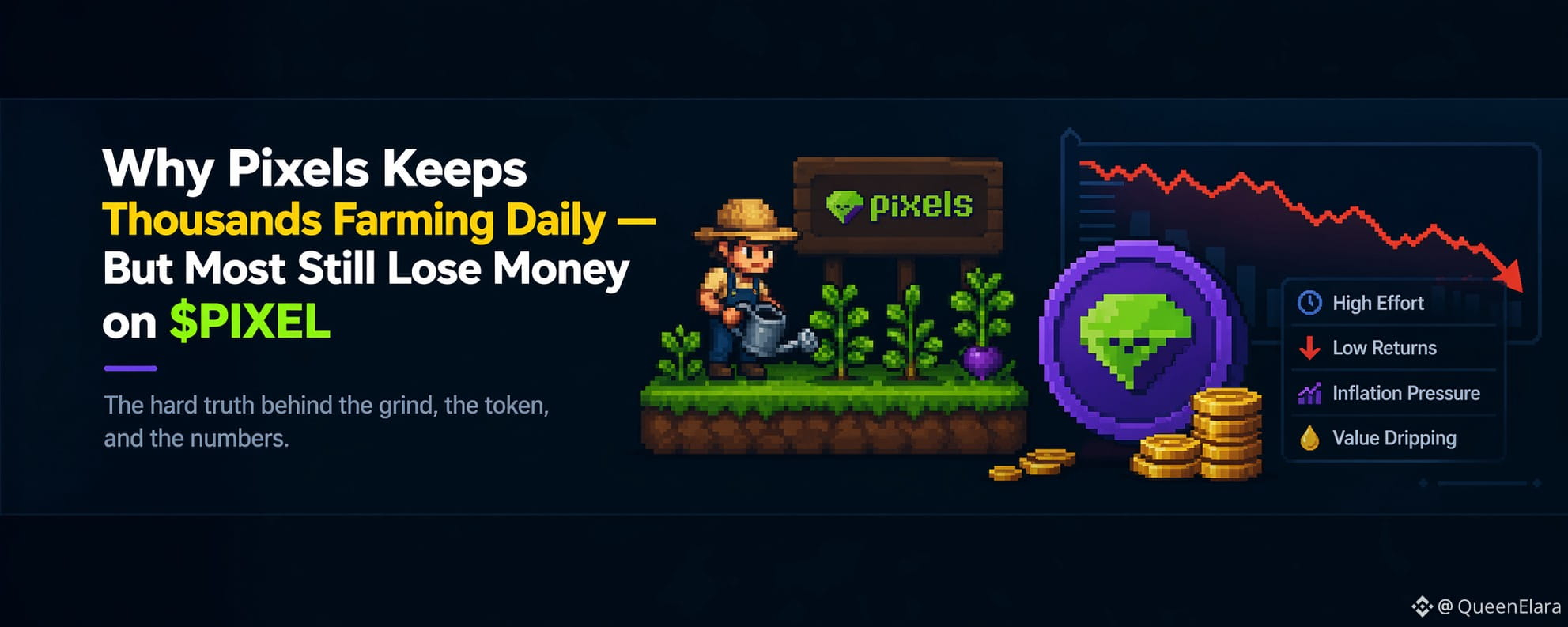
Warum Pixels Tausende täglich farmen lässt, aber die meisten trotzdem Geld verlieren bei $PIXEL@pixels #pixel $PIXEL
Ich habe Pixels zuerst nicht verstanden.
Auf den ersten Blick sah es aus wie ein einfaches Farming-Spiel mit einem Token. Pflanzen, ernten, craften, wiederholen. Aber je mehr Zeit ich darin verbrachte, desto mehr wurde mir klar, dass das nicht nur ein Spiel war – es war ein System. Und wie jedes System belohnt es bestimmte Verhaltensweisen, während es andere leise bestraft.
Was mich am meisten verwirrte, war nicht, warum die Leute spielten. Das ist offensichtlich. Was heraussticht, ist folgendes: Tausende von Spielern loggen sich täglich ein, bleiben aktiv und pushen – doch die meisten von ihnen verdienen tatsächlich kein Geld.
Warum Pixels Tausende täglich farmen lässt, aber die meisten trotzdem Geld verlieren bei $PIXEL
@Pixels #pixel $PIXEL
Ich habe Pixels zuerst nicht verstanden.
Auf den ersten Blick sah es aus wie ein einfaches Farming-Spiel mit einem Token. Pflanzen, ernten, craften, wiederholen. Aber je mehr Zeit ich darin verbrachte, desto mehr wurde mir klar, dass das nicht nur ein Spiel war – es war ein System. Und wie jedes System belohnt es bestimmte Verhaltensweisen, während es andere leise bestraft.
Was mich am meisten verwirrte, war nicht, warum die Leute spielten. Das ist offensichtlich. Was heraussticht, ist folgendes: Tausende von Spielern loggen sich täglich ein, bleiben aktiv und pushen – doch die meisten von ihnen verdienen tatsächlich kein Geld.
Ich habe Pixels zuerst nicht verstanden.
Auf den ersten Blick sah es aus wie ein einfaches Farming-Spiel mit einem Token. Pflanzen, ernten, craften, wiederholen. Aber je mehr Zeit ich darin verbrachte, desto mehr wurde mir klar, dass das nicht nur ein Spiel war – es war ein System. Und wie jedes System belohnt es bestimmte Verhaltensweisen, während es andere leise bestraft.
Was mich am meisten verwirrte, war nicht, warum die Leute spielten. Das ist offensichtlich. Was heraussticht, ist folgendes: Tausende von Spielern loggen sich täglich ein, bleiben aktiv und pushen – doch die meisten von ihnen verdienen tatsächlich kein Geld.
7
64
·
--
Artikel
MOVR/USDT EXPLOSION: Momentum-Höhepunkt oder Smart Money Ausbruch in Arbeit?MOVR/Analyse
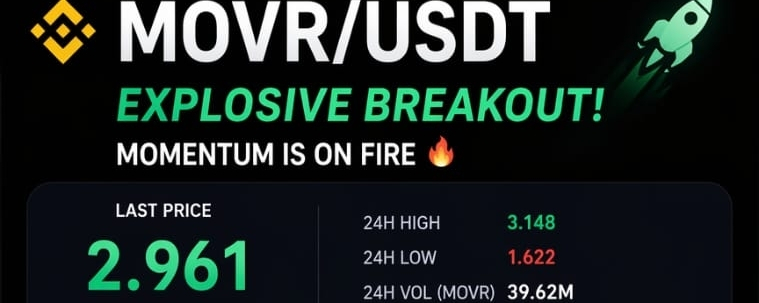
Die aktuelle Struktur auf $MOVR ist nicht nur ein lässiger Pump – es ist ein Lehrbuchbeispiel für aggressive Momentum-Expansion, unterstützt durch Volumenbestätigung. Auf dem 15-Minuten-Zeitrahmen hat sich der Preis von einer langsamen Akkumulationsphase im Bereich von 1,60–1,90 in einen nahezu vertikalen Ausbruch verwandelt, der bis zum Hoch bei 3,14 geht. So eine Bewegung passiert nicht isoliert; sie spiegelt ein scharfes Ungleichgewicht zwischen Käufern und Verkäufern wider, wobei die Nachfrage das Angebot vollständig überfordert.
Was sofort ins Auge springt, ist das Volumenverhalten. Als der Preis begann, aus seiner Konsolidierungsbasis auszubrechen, stieg das Volumen nicht nur an – es explodierte regelrecht. Das ist ein wichtiger Indikator für das Engagement größerer Player und nicht nur für Retail, die hinterherjagen. Die konstanten grünen Kerzen mit minimalen Rücksetzern zeigen eine starke Überzeugung im Trend, werfen aber auch eine kritische Frage auf: Nachhaltigkeit.
MOVR/USDT EXPLOSION: Momentum-Höhepunkt oder Smart Money Ausbruch in Arbeit?
MOVR/Analyse
Die aktuelle Struktur auf $MOVR ist nicht nur ein lässiger Pump – es ist ein Lehrbuchbeispiel für aggressive Momentum-Expansion, unterstützt durch Volumenbestätigung. Auf dem 15-Minuten-Zeitrahmen hat sich der Preis von einer langsamen Akkumulationsphase im Bereich von 1,60–1,90 in einen nahezu vertikalen Ausbruch verwandelt, der bis zum Hoch bei 3,14 geht. So eine Bewegung passiert nicht isoliert; sie spiegelt ein scharfes Ungleichgewicht zwischen Käufern und Verkäufern wider, wobei die Nachfrage das Angebot vollständig überfordert.
Was sofort ins Auge springt, ist das Volumenverhalten. Als der Preis begann, aus seiner Konsolidierungsbasis auszubrechen, stieg das Volumen nicht nur an – es explodierte regelrecht. Das ist ein wichtiger Indikator für das Engagement größerer Player und nicht nur für Retail, die hinterherjagen. Die konstanten grünen Kerzen mit minimalen Rücksetzern zeigen eine starke Überzeugung im Trend, werfen aber auch eine kritische Frage auf: Nachhaltigkeit.
Die aktuelle Struktur auf $MOVR ist nicht nur ein lässiger Pump – es ist ein Lehrbuchbeispiel für aggressive Momentum-Expansion, unterstützt durch Volumenbestätigung. Auf dem 15-Minuten-Zeitrahmen hat sich der Preis von einer langsamen Akkumulationsphase im Bereich von 1,60–1,90 in einen nahezu vertikalen Ausbruch verwandelt, der bis zum Hoch bei 3,14 geht. So eine Bewegung passiert nicht isoliert; sie spiegelt ein scharfes Ungleichgewicht zwischen Käufern und Verkäufern wider, wobei die Nachfrage das Angebot vollständig überfordert.
Was sofort ins Auge springt, ist das Volumenverhalten. Als der Preis begann, aus seiner Konsolidierungsbasis auszubrechen, stieg das Volumen nicht nur an – es explodierte regelrecht. Das ist ein wichtiger Indikator für das Engagement größerer Player und nicht nur für Retail, die hinterherjagen. Die konstanten grünen Kerzen mit minimalen Rücksetzern zeigen eine starke Überzeugung im Trend, werfen aber auch eine kritische Frage auf: Nachhaltigkeit.
3
124
·
--

Artikel
Breaking: Hormuz hat sich gerade in eine Live-Konfliktzone verwandeltDas fühlt sich nicht mehr wie eine Warnung an – es fühlt sich an, als wäre eine Grenze überschritten worden. Donald Trump hat jetzt die US Navy befohlen, auf alle Boote zu feuern, die Minen im Hormuz-Streifen legen, während die Minenräumoperationen auf das Dreifache des vorherigen Niveaus hochgefahren werden. So wie ich das sehe, ist das keine Vorbereitung – das ist Ausführung.
Der Ton hier ist komplett anders als zuvor. Es gibt keinen grauen Bereich mehr. Wenn ein Schiff als Bedrohung identifiziert wird, wird es zum Ziel. Diese Klarheit könnte das Zögern am Boden verringern, erhöht jedoch auch die Wahrscheinlichkeit, dass sich etwas sehr schnell eskaliert.
Breaking: Hormuz hat sich gerade in eine Live-Konfliktzone verwandelt
Das fühlt sich nicht mehr wie eine Warnung an – es fühlt sich an, als wäre eine Grenze überschritten worden. Donald Trump hat jetzt die US Navy befohlen, auf alle Boote zu feuern, die Minen im Hormuz-Streifen legen, während die Minenräumoperationen auf das Dreifache des vorherigen Niveaus hochgefahren werden. So wie ich das sehe, ist das keine Vorbereitung – das ist Ausführung.
Der Ton hier ist komplett anders als zuvor. Es gibt keinen grauen Bereich mehr. Wenn ein Schiff als Bedrohung identifiziert wird, wird es zum Ziel. Diese Klarheit könnte das Zögern am Boden verringern, erhöht jedoch auch die Wahrscheinlichkeit, dass sich etwas sehr schnell eskaliert.
Der Ton hier ist komplett anders als zuvor. Es gibt keinen grauen Bereich mehr. Wenn ein Schiff als Bedrohung identifiziert wird, wird es zum Ziel. Diese Klarheit könnte das Zögern am Boden verringern, erhöht jedoch auch die Wahrscheinlichkeit, dass sich etwas sehr schnell eskaliert.
1
284
·
--
Bullisch
Ich habe Pixels genau im Auge behalten – und irgendwie fühlt sich das in letzter Zeit anders an.
Zunächst schien es ein einfaches Farming-Spiel zu sein. Chillige Vibes, leichtes Onboarding, stetige Belohnungen. Aber unter der Oberfläche hat sich Pixels heimlich zu etwas viel Komplexerem entwickelt.
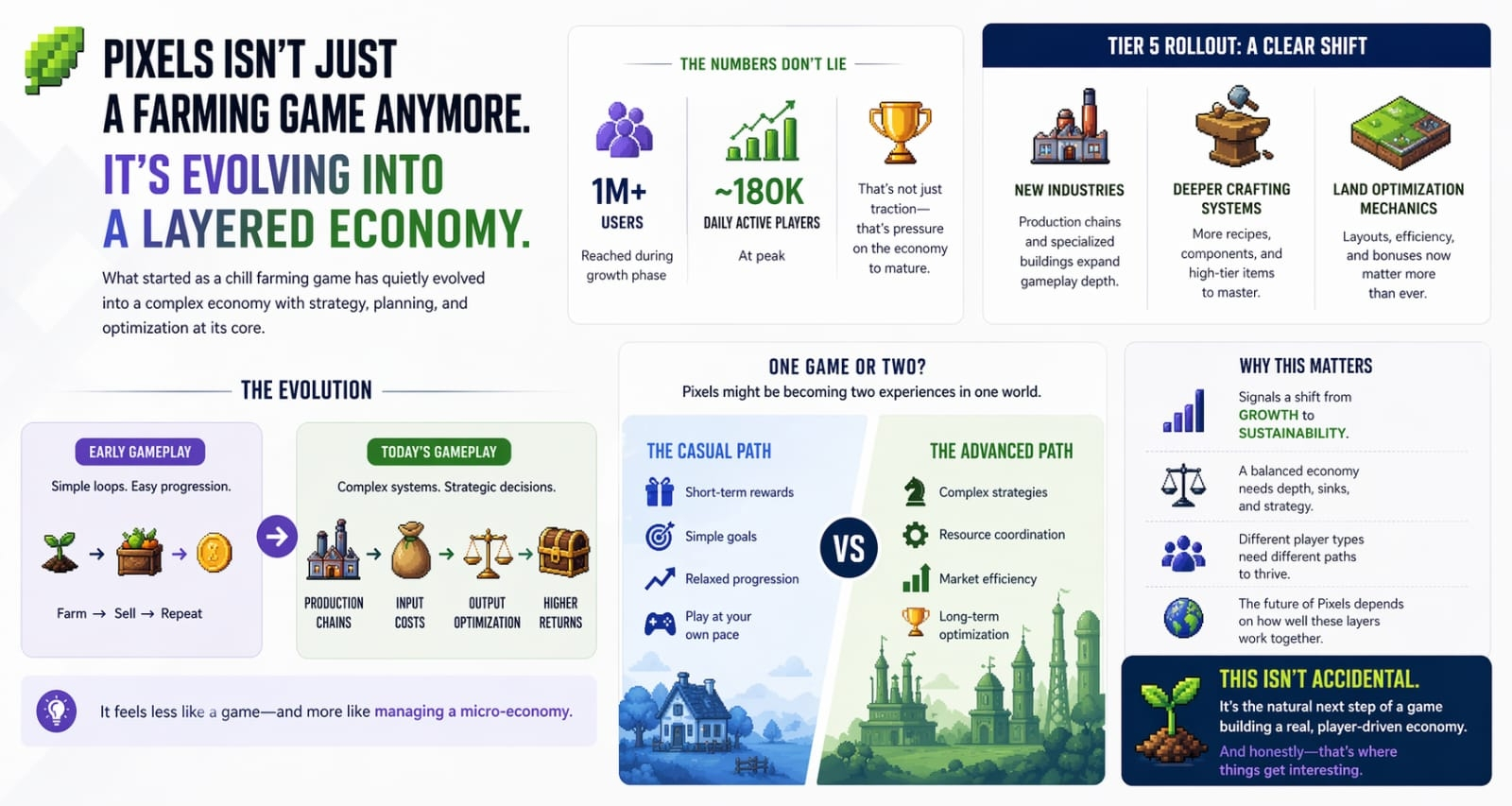
Mit dem kürzlichen Rollout der Stufe 5 sehe ich einen klaren Wechsel.
Neue Industrien, tiefere Crafting-Systeme und Landoptimierungsmechaniken sind nicht einfach "Updates" – sie sind Signale. Das Spiel bewegt sich in Richtung einer geschichteten Wirtschaft, in der Strategie wichtiger ist als die aufgebrachte Zeit.
Und die Zahlen bestätigen das: Pixels hat während seiner Wachstumsphase die 1M+ Nutzer-Marke überschritten, mit ~180K täglich aktiven Spielern zu Spitzenzeiten. Das ist nicht nur Traktion – das ist Druck auf die Wirtschaft, sich weiterzuentwickeln.
Hier ist, was mir auffällt: Frühe Spieler konnten mit einfachen Schleifen vorankommen – anbauen, verkaufen, wiederholen.
Jetzt erfordern höhere Stufen Planung, Ressourcenkoordination und Effizienz.
Zum Beispiel: Statt einfach nur Pflanzen anzubauen, denkst du jetzt über Produktionsketten, Inputkosten und Output-Optimierung nach. Es fühlt sich weniger wie ein Spiel an – und mehr wie die Verwaltung einer Mikro-Ökonomie.
Das wirft eine größere Frage auf: Ist Pixels immer noch ein Spiel – oder wird es heimlich zu zweien?
Eines für Gelegenheitsspieler, die kurzfristige Belohnungen jagen.
Ein anderes für fortgeschrittene Spieler, die sich durch ein komplexes, wettbewerbsfähiges System navigieren.
Ich denke nicht, dass das zufällig ist.
Es ist das, was passiert, wenn ein Spiel von Wachstum zu Nachhaltigkeit übergeht.
Und ehrlich gesagt – da wird es spannend.
@pixels #pixel $PIXEL
Ich habe Pixels genau im Auge behalten – und irgendwie fühlt sich das in letzter Zeit anders an.
Zunächst schien es ein einfaches Farming-Spiel zu sein. Chillige Vibes, leichtes Onboarding, stetige Belohnungen. Aber unter der Oberfläche hat sich Pixels heimlich zu etwas viel Komplexerem entwickelt.
Mit dem kürzlichen Rollout der Stufe 5 sehe ich einen klaren Wechsel.
Neue Industrien, tiefere Crafting-Systeme und Landoptimierungsmechaniken sind nicht einfach "Updates" – sie sind Signale. Das Spiel bewegt sich in Richtung einer geschichteten Wirtschaft, in der Strategie wichtiger ist als die aufgebrachte Zeit.
Und die Zahlen bestätigen das: Pixels hat während seiner Wachstumsphase die 1M+ Nutzer-Marke überschritten, mit ~180K täglich aktiven Spielern zu Spitzenzeiten. Das ist nicht nur Traktion – das ist Druck auf die Wirtschaft, sich weiterzuentwickeln.
Hier ist, was mir auffällt: Frühe Spieler konnten mit einfachen Schleifen vorankommen – anbauen, verkaufen, wiederholen.
Jetzt erfordern höhere Stufen Planung, Ressourcenkoordination und Effizienz.
Zum Beispiel: Statt einfach nur Pflanzen anzubauen, denkst du jetzt über Produktionsketten, Inputkosten und Output-Optimierung nach. Es fühlt sich weniger wie ein Spiel an – und mehr wie die Verwaltung einer Mikro-Ökonomie.
Das wirft eine größere Frage auf: Ist Pixels immer noch ein Spiel – oder wird es heimlich zu zweien?
Eines für Gelegenheitsspieler, die kurzfristige Belohnungen jagen.
Ein anderes für fortgeschrittene Spieler, die sich durch ein komplexes, wettbewerbsfähiges System navigieren.
Ich denke nicht, dass das zufällig ist.
Es ist das, was passiert, wenn ein Spiel von Wachstum zu Nachhaltigkeit übergeht.
Und ehrlich gesagt – da wird es spannend.
@Pixels #pixel $PIXEL
Zunächst schien es ein einfaches Farming-Spiel zu sein. Chillige Vibes, leichtes Onboarding, stetige Belohnungen. Aber unter der Oberfläche hat sich Pixels heimlich zu etwas viel Komplexerem entwickelt.
Mit dem kürzlichen Rollout der Stufe 5 sehe ich einen klaren Wechsel.
Neue Industrien, tiefere Crafting-Systeme und Landoptimierungsmechaniken sind nicht einfach "Updates" – sie sind Signale. Das Spiel bewegt sich in Richtung einer geschichteten Wirtschaft, in der Strategie wichtiger ist als die aufgebrachte Zeit.
Und die Zahlen bestätigen das: Pixels hat während seiner Wachstumsphase die 1M+ Nutzer-Marke überschritten, mit ~180K täglich aktiven Spielern zu Spitzenzeiten. Das ist nicht nur Traktion – das ist Druck auf die Wirtschaft, sich weiterzuentwickeln.
Hier ist, was mir auffällt: Frühe Spieler konnten mit einfachen Schleifen vorankommen – anbauen, verkaufen, wiederholen.
Jetzt erfordern höhere Stufen Planung, Ressourcenkoordination und Effizienz.
Zum Beispiel: Statt einfach nur Pflanzen anzubauen, denkst du jetzt über Produktionsketten, Inputkosten und Output-Optimierung nach. Es fühlt sich weniger wie ein Spiel an – und mehr wie die Verwaltung einer Mikro-Ökonomie.
Das wirft eine größere Frage auf: Ist Pixels immer noch ein Spiel – oder wird es heimlich zu zweien?
Eines für Gelegenheitsspieler, die kurzfristige Belohnungen jagen.
Ein anderes für fortgeschrittene Spieler, die sich durch ein komplexes, wettbewerbsfähiges System navigieren.
Ich denke nicht, dass das zufällig ist.
Es ist das, was passiert, wenn ein Spiel von Wachstum zu Nachhaltigkeit übergeht.
Und ehrlich gesagt – da wird es spannend.
@Pixels #pixel $PIXEL
1
4
58
·
--
Artikel
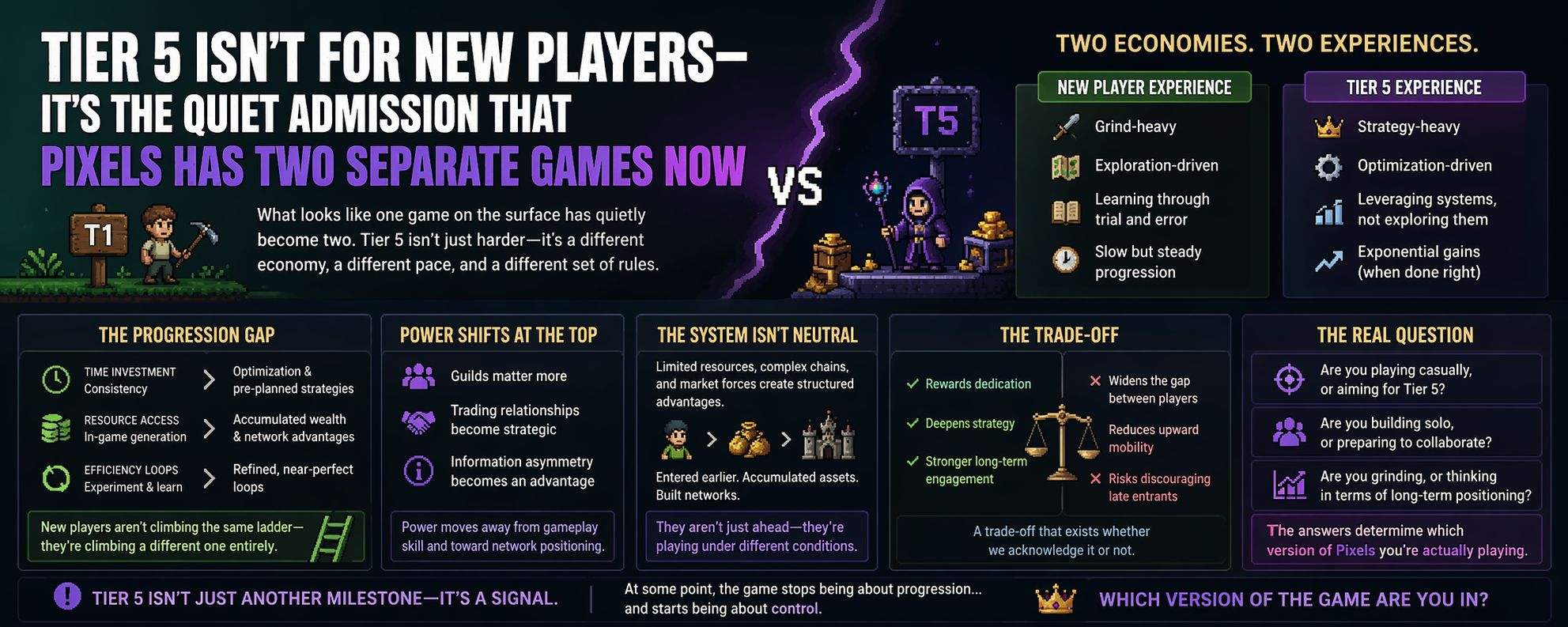
Tier 5 ist nicht für neue Spieler—es ist das stille Eingeständnis, dass Pixels jetzt zwei separate Spiele hat.@pixels #pixel $PIXEL
Ich habe den Wandel nicht auf einmal bemerkt. Es war kein einzelnes Update oder eine laute Ankündigung. Es ging langsamer als das—fast subtil. Aber die Einführung und der Fortschritt von Tier 5 machten mir eines klar: Pixels ist nicht mehr ein Spiel. Es sind zwei. Und wenn du neu bist, spielst du wahrscheinlich nicht dasselbe wie alle anderen.
Zunächst fühlte sich Tier 5 wie eine natürliche Erweiterung an—etwas für Spätspieler, die bereits "die Dinge herausgefunden" hatten. Das ist in den meisten Spielen normal. Man erwartet, dass höhere Tiers mehr Aufwand, mehr Koordination und mehr Ressourcen verlangen. Aber als ich tiefer grub, wurde mir klar, dass es sich hier nicht nur um schwierigere Inhalte handelte. Es war eine andere Wirtschaft, ein anderes Tempo und ein anderes Regelwerk. Tier 5 hat nicht nur die obere Grenze erhöht—es hat stillschweigend auch die untere Grenze dafür erhöht, was "kompetitiv" in Pixels überhaupt bedeutet.
Tier 5 ist nicht für neue Spieler—es ist das stille Eingeständnis, dass Pixels jetzt zwei separate Spiele hat.
@Pixels #pixel $PIXEL
Ich habe den Wandel nicht auf einmal bemerkt. Es war kein einzelnes Update oder eine laute Ankündigung. Es ging langsamer als das—fast subtil. Aber die Einführung und der Fortschritt von Tier 5 machten mir eines klar: Pixels ist nicht mehr ein Spiel. Es sind zwei. Und wenn du neu bist, spielst du wahrscheinlich nicht dasselbe wie alle anderen.
Zunächst fühlte sich Tier 5 wie eine natürliche Erweiterung an—etwas für Spätspieler, die bereits "die Dinge herausgefunden" hatten. Das ist in den meisten Spielen normal. Man erwartet, dass höhere Tiers mehr Aufwand, mehr Koordination und mehr Ressourcen verlangen. Aber als ich tiefer grub, wurde mir klar, dass es sich hier nicht nur um schwierigere Inhalte handelte. Es war eine andere Wirtschaft, ein anderes Tempo und ein anderes Regelwerk. Tier 5 hat nicht nur die obere Grenze erhöht—es hat stillschweigend auch die untere Grenze dafür erhöht, was "kompetitiv" in Pixels überhaupt bedeutet.
Ich habe den Wandel nicht auf einmal bemerkt. Es war kein einzelnes Update oder eine laute Ankündigung. Es ging langsamer als das—fast subtil. Aber die Einführung und der Fortschritt von Tier 5 machten mir eines klar: Pixels ist nicht mehr ein Spiel. Es sind zwei. Und wenn du neu bist, spielst du wahrscheinlich nicht dasselbe wie alle anderen.
Zunächst fühlte sich Tier 5 wie eine natürliche Erweiterung an—etwas für Spätspieler, die bereits "die Dinge herausgefunden" hatten. Das ist in den meisten Spielen normal. Man erwartet, dass höhere Tiers mehr Aufwand, mehr Koordination und mehr Ressourcen verlangen. Aber als ich tiefer grub, wurde mir klar, dass es sich hier nicht nur um schwierigere Inhalte handelte. Es war eine andere Wirtschaft, ein anderes Tempo und ein anderes Regelwerk. Tier 5 hat nicht nur die obere Grenze erhöht—es hat stillschweigend auch die untere Grenze dafür erhöht, was "kompetitiv" in Pixels überhaupt bedeutet.
2
4
226
·
--
Bullisch
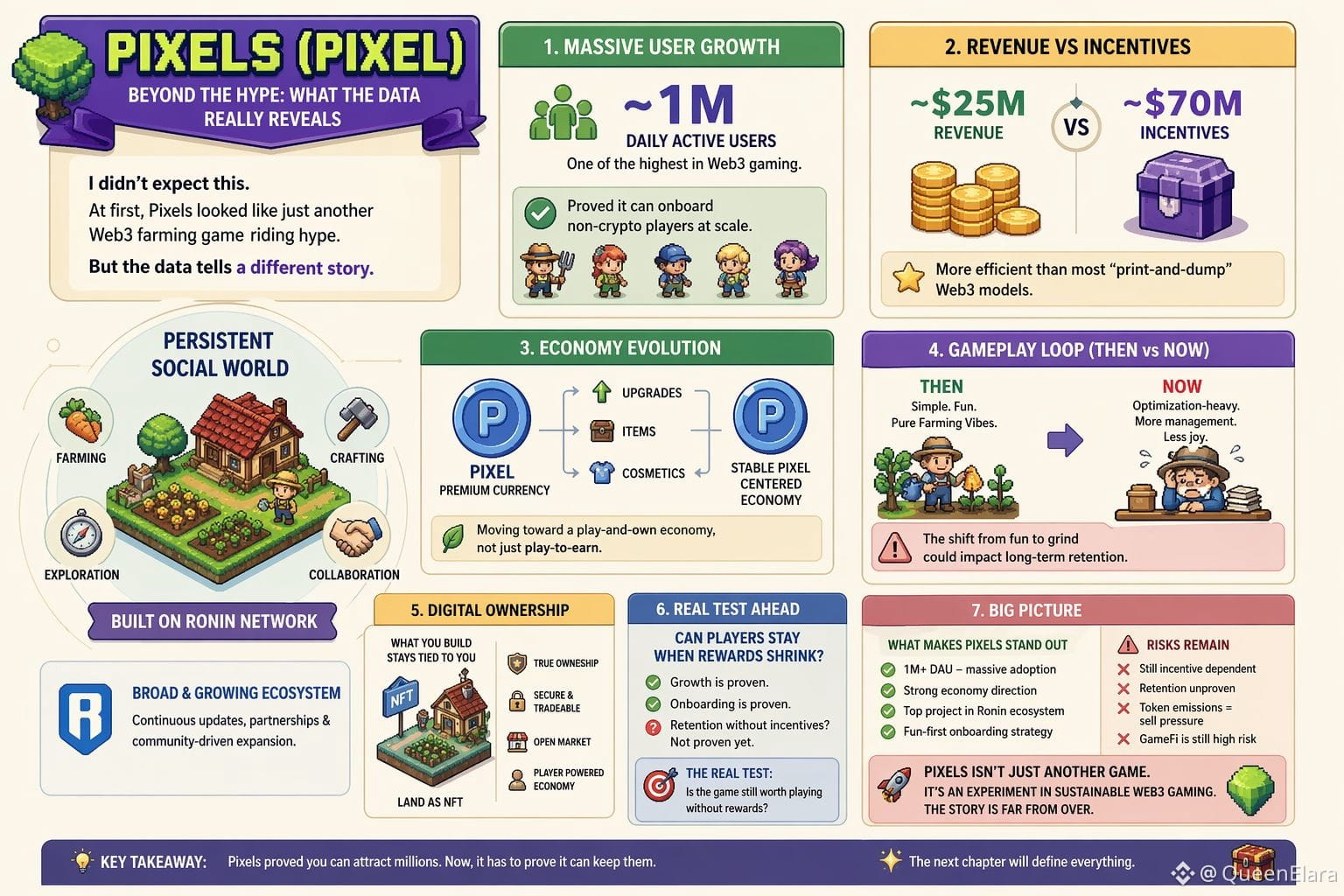
Das habe ich nicht erwartet.
Als ich zum ersten Mal bei Pixels reinschaute, dachte ich, es wäre nur ein weiteres Web3-Farming-Spiel, das dem Hype folgt.
Aber die Daten erzählen eine andere Geschichte.
Pixels hat leise ~1M täglich aktive Nutzer überschritten – eine Zahl, die die meisten GameFi-Projekte nicht einmal annähernd erreichen. Das allein hat mich dazu gebracht, tiefer zu graben.
Und was ich gefunden habe, ist... ein bisschen unangenehm.
Ja, das Spiel hat rund 25M $ an Umsatz aus ~70M $ an Anreizen generiert. Nicht perfekt, aber viel effizienter als die typischen "print-and-dump" Web3-Modelle.
Ja, sie haben die Inflation gesenkt und streben eine Play-and-Own-Wirtschaft anstelle von purem Play-to-Earn an.
Aber hier ist der Haken 👇
Der Gameplay-Loop, der einst einfach und spaßig war, verwandelt sich langsam in ein optimierungsintensives Grinden.
Weniger Farming. Mehr Management. Weniger Freude.
Und dieser Wandel ist wichtiger als die Kennzahlen.
Denn Wachstum ist das eine...
Retention ist das andere.
Pixels hat bewiesen, dass man Nicht-Krypto-Spieler in großem Maßstab onboarden kann.
Was es noch nicht bewiesen hat, ist, ob diese Spieler bleiben, wenn die Belohnungen schrumpfen.
Das ist der echte Test.
Nicht der Tokenpreis.
Nicht die DAU-Spitzen.
Sondern ob das Spiel ohne Anreize immer noch spielenswert ist.
Und ehrlich?
Das ist der Punkt, an dem die Geschichte interessant wird.
@pixels #pixel $PIXEL
{future}(PIXELUSDT)
Das habe ich nicht erwartet.
Als ich zum ersten Mal bei Pixels reinschaute, dachte ich, es wäre nur ein weiteres Web3-Farming-Spiel, das dem Hype folgt.
Aber die Daten erzählen eine andere Geschichte.
Pixels hat leise ~1M täglich aktive Nutzer überschritten – eine Zahl, die die meisten GameFi-Projekte nicht einmal annähernd erreichen. Das allein hat mich dazu gebracht, tiefer zu graben.
Und was ich gefunden habe, ist... ein bisschen unangenehm.
Ja, das Spiel hat rund 25M $ an Umsatz aus ~70M $ an Anreizen generiert. Nicht perfekt, aber viel effizienter als die typischen "print-and-dump" Web3-Modelle.
Ja, sie haben die Inflation gesenkt und streben eine Play-and-Own-Wirtschaft anstelle von purem Play-to-Earn an.
Aber hier ist der Haken 👇
Der Gameplay-Loop, der einst einfach und spaßig war, verwandelt sich langsam in ein optimierungsintensives Grinden.
Weniger Farming. Mehr Management. Weniger Freude.
Und dieser Wandel ist wichtiger als die Kennzahlen.
Denn Wachstum ist das eine...
Retention ist das andere.
Pixels hat bewiesen, dass man Nicht-Krypto-Spieler in großem Maßstab onboarden kann.
Was es noch nicht bewiesen hat, ist, ob diese Spieler bleiben, wenn die Belohnungen schrumpfen.
Das ist der echte Test.
Nicht der Tokenpreis.
Nicht die DAU-Spitzen.
Sondern ob das Spiel ohne Anreize immer noch spielenswert ist.
Und ehrlich?
Das ist der Punkt, an dem die Geschichte interessant wird.
@Pixels #pixel $PIXEL
Als ich zum ersten Mal bei Pixels reinschaute, dachte ich, es wäre nur ein weiteres Web3-Farming-Spiel, das dem Hype folgt.
Aber die Daten erzählen eine andere Geschichte.
Pixels hat leise ~1M täglich aktive Nutzer überschritten – eine Zahl, die die meisten GameFi-Projekte nicht einmal annähernd erreichen. Das allein hat mich dazu gebracht, tiefer zu graben.
Und was ich gefunden habe, ist... ein bisschen unangenehm.
Ja, das Spiel hat rund 25M $ an Umsatz aus ~70M $ an Anreizen generiert. Nicht perfekt, aber viel effizienter als die typischen "print-and-dump" Web3-Modelle.
Ja, sie haben die Inflation gesenkt und streben eine Play-and-Own-Wirtschaft anstelle von purem Play-to-Earn an.
Aber hier ist der Haken 👇
Der Gameplay-Loop, der einst einfach und spaßig war, verwandelt sich langsam in ein optimierungsintensives Grinden.
Weniger Farming. Mehr Management. Weniger Freude.
Und dieser Wandel ist wichtiger als die Kennzahlen.
Denn Wachstum ist das eine...
Retention ist das andere.
Pixels hat bewiesen, dass man Nicht-Krypto-Spieler in großem Maßstab onboarden kann.
Was es noch nicht bewiesen hat, ist, ob diese Spieler bleiben, wenn die Belohnungen schrumpfen.
Das ist der echte Test.
Nicht der Tokenpreis.
Nicht die DAU-Spitzen.
Sondern ob das Spiel ohne Anreize immer noch spielenswert ist.
Und ehrlich?
Das ist der Punkt, an dem die Geschichte interessant wird.
@Pixels #pixel $PIXEL
1
3
30
Anmelden und weiter Inhalte entdecken
Krypto-Nutzer weltweit auf Binance Square kennenlernen
⚡️ Bleib in Sachen Krypto stets am Puls.
💬 Die weltgrößte Kryptobörse vertraut darauf.
👍 Erhalte verlässliche Einblicke von verifizierten Creators.
E-Mail-Adresse/Telefonnummer
Trendthemen
NEARRisesNearly80%InAWeek
7,365 Aufrufe
474 Kommentare
#nearrisesnearly80%inaweek
NEAR-Protokoll in absoluter Hochstimmung diese Woche – hier ist, was den Anstieg antreibt 🔥
Was für eine Woche für NEAR! 🚀 Gewinne von fast 80 % in nur 7 Tagen sind kein reiner Zufall; das deutet auf einen großen Momentum hin, der sich um NEARs Vision formt: die Kette zu entkoppeln und KI-Integration. Wenn technische Effizienz auf die Markthoffnung der Trader trifft, bekommen wir genau diese Art von Kursbewegung.
Hältst du NEAR langfristig, oder nimmst du Gewinne in diesem Bereich mit? Nenne deine Strategie unten! 👇
Bitte folgen Sie
$NEAR
#BitcoinHits$85K #Near #SolanaCutsTargetSlotTimeTo250ms
Shamika Metting
·2 Likes
·1.4k Aufrufe
MultiversXPlansHardForkRecovery
8,575 Aufrufe
405 Kommentare
CircleLaunchesInstitutionalBTCBackedBorrowing
11,248 Aufrufe
543 Kommentare