
Anuu_
7.9k Beiträge

Anuu_
I’m living in charts,chasing every move crypto isn’t luck,it’s my lifestyle
Trade eröffnen
Regelmäßiger Trader
11.3 Monate
824 Following
22.5K+ Follower
8.5K+ Like gegeben
Beiträge
Portfolio
Alle
Zitierungen
Live
Übersetzung ansehen
Ok, so I spent the last few days digging into Dusk Network, mainly because I'm a little tired of projects throwing around "privacy" and "compliance" like they're the same thing.
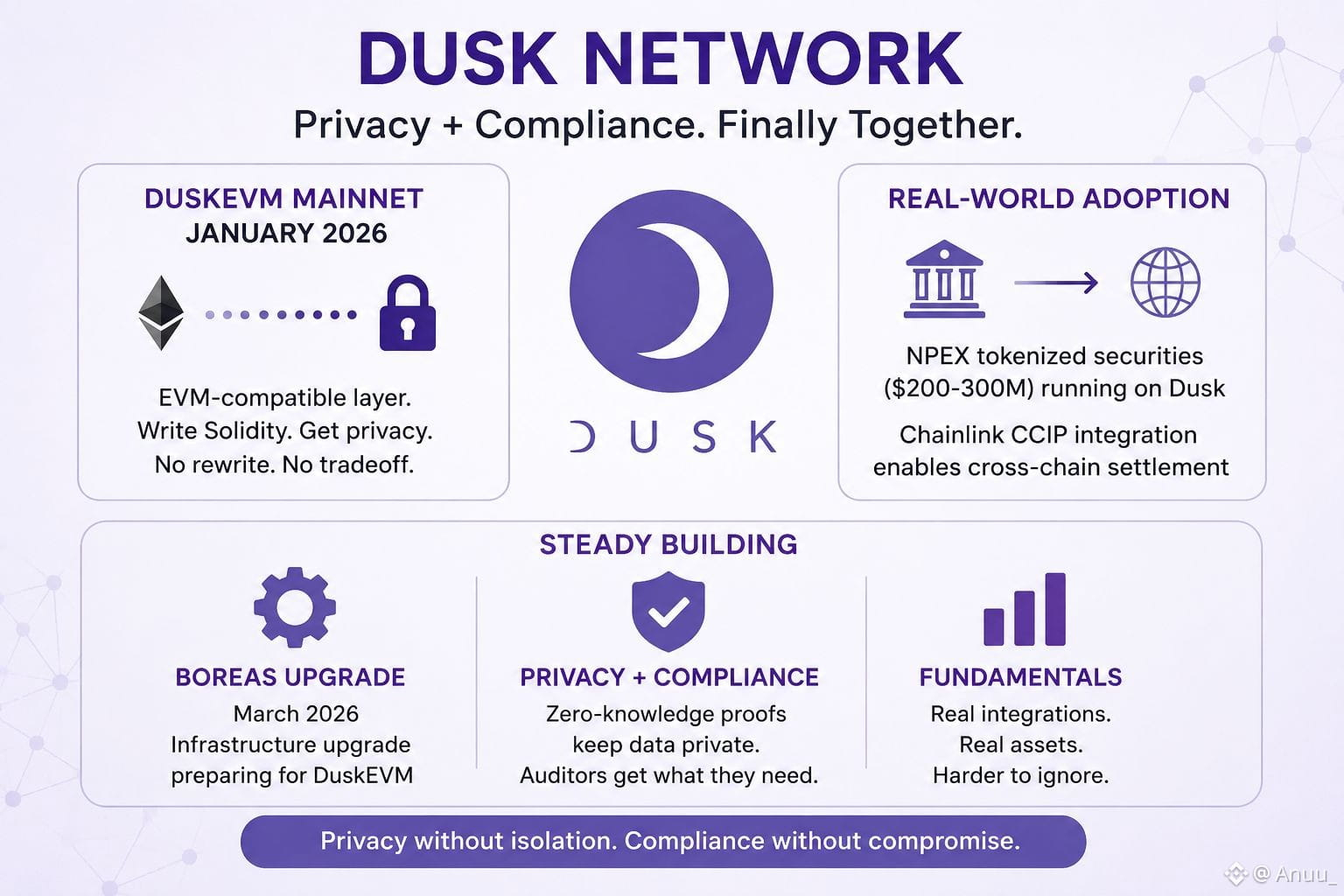
What actually got me paying attention was the DuskEVM mainnet, which went live in January 2026 as a fully EVM-compatible layer sitting on top of Dusk's base chain. In plain terms: developers can write regular Solidity code, the stuff Ethereum devs already know, and it still automatically inherits Dusk's underlying privacy protections. No rewrite, no separate ecosystem to learn from scratch.
The difference here is most privacy chains force you to pick a side — stay private and isolated, or stay compatible and give up confidentiality. This setup tries to sidestep that tradeoff entirely.
Then there's the part that actually involves real money. NPEX's tokenized securities operation, somewhere in the $200-300M range, is running on Dusk now, and a Chainlink integration from January lets those assets settle across chains using CCIP. That's a step further than most RWA pitches ever get.
Add the Boreas network upgrade from March, mostly unglamorous infrastructure work to prep for DuskEVM, and the overall picture is steady building rather than loud announcements.
Not sure how the market prices any of this long term, but the fundamentals are getting harder to wave off.
@Dusk #dusk $DUSK
What actually got me paying attention was the DuskEVM mainnet, which went live in January 2026 as a fully EVM-compatible layer sitting on top of Dusk's base chain. In plain terms: developers can write regular Solidity code, the stuff Ethereum devs already know, and it still automatically inherits Dusk's underlying privacy protections. No rewrite, no separate ecosystem to learn from scratch.
The difference here is most privacy chains force you to pick a side — stay private and isolated, or stay compatible and give up confidentiality. This setup tries to sidestep that tradeoff entirely.
Then there's the part that actually involves real money. NPEX's tokenized securities operation, somewhere in the $200-300M range, is running on Dusk now, and a Chainlink integration from January lets those assets settle across chains using CCIP. That's a step further than most RWA pitches ever get.
Add the Boreas network upgrade from March, mostly unglamorous infrastructure work to prep for DuskEVM, and the overall picture is steady building rather than loud announcements.
Not sure how the market prices any of this long term, but the fundamentals are getting harder to wave off.
@Dusk #dusk $DUSK
Übersetzung ansehen
I’ve been looking at Dusk Network lately, and I keep coming back to a simple question: what does “privacy” actually need to look like when the users are financial institutions?
The more I dig into it, the more I think Dusk is taking a different route from the usual privacy narrative.
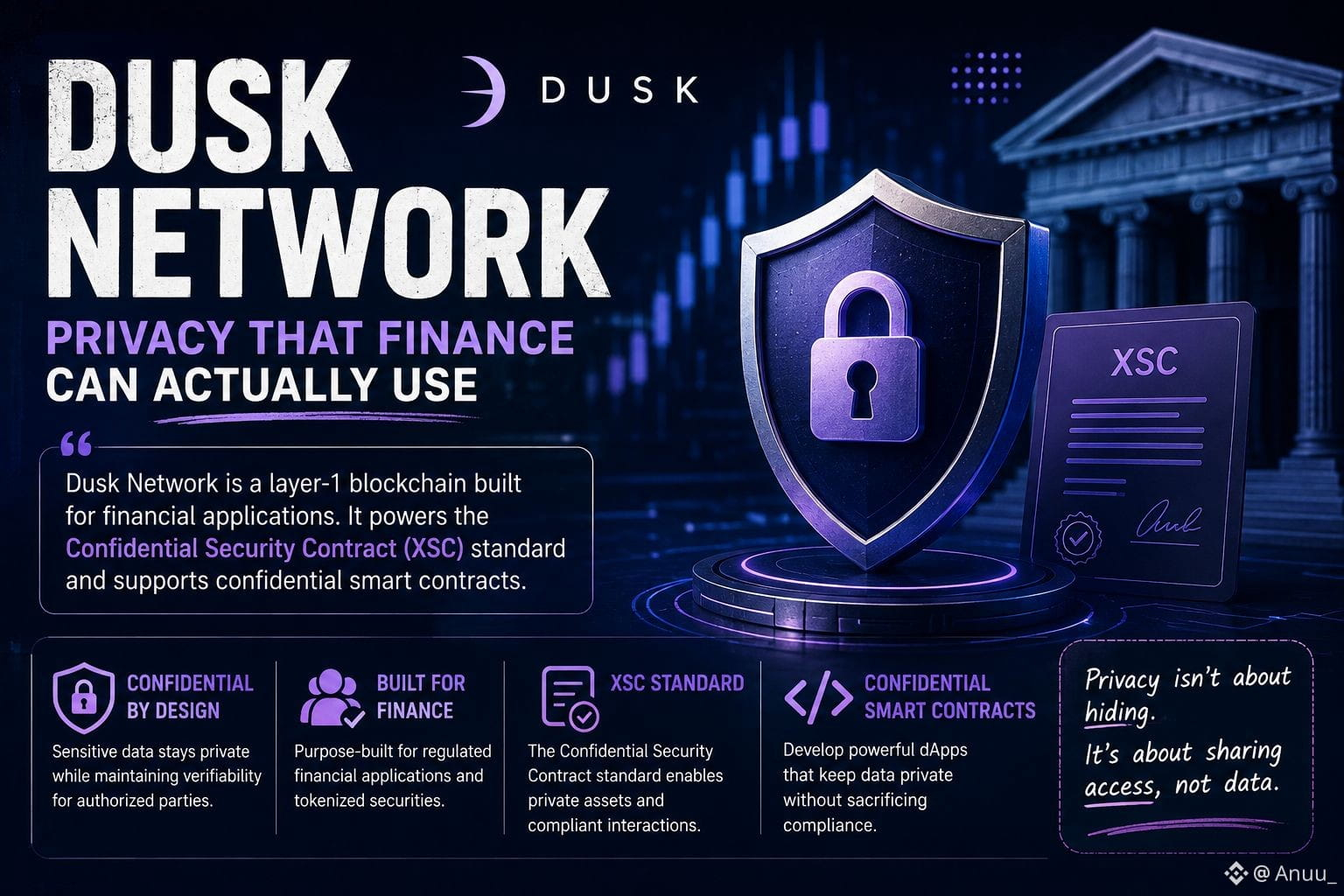
It’s a Layer-1 built around confidential smart contracts, with its XSC standard designed specifically for financial assets. What interests me isn’t just hiding transaction data. It’s the idea that sensitive information can stay private while authorized parties can still verify that everything is valid.
That feels much closer to how real finance already works.
I don’t want my financial activity broadcast to the entire world, but regulators and authorized institutions still need ways to check that things are legitimate. That balance is where Dusk starts getting interesting for me.
I’ll be honest, I’m still watching the execution more than the narrative. Building privacy technology is one thing; getting actual financial markets to trust and use it is another.
But if Dusk can bridge that gap, I think its value proposition becomes much easier to understand.
That’s the part I’m watching now.
$DUSK
#dusk
@Dusk
The more I dig into it, the more I think Dusk is taking a different route from the usual privacy narrative.
It’s a Layer-1 built around confidential smart contracts, with its XSC standard designed specifically for financial assets. What interests me isn’t just hiding transaction data. It’s the idea that sensitive information can stay private while authorized parties can still verify that everything is valid.
That feels much closer to how real finance already works.
I don’t want my financial activity broadcast to the entire world, but regulators and authorized institutions still need ways to check that things are legitimate. That balance is where Dusk starts getting interesting for me.
I’ll be honest, I’m still watching the execution more than the narrative. Building privacy technology is one thing; getting actual financial markets to trust and use it is another.
But if Dusk can bridge that gap, I think its value proposition becomes much easier to understand.
That’s the part I’m watching now.
$DUSK
#dusk
@Dusk
Übersetzung ansehen
I’ve been looking at @TermMax again, and one thing keeps bothering me in a good way: I’m starting to think I’ve been looking at DeFi rates the wrong way.
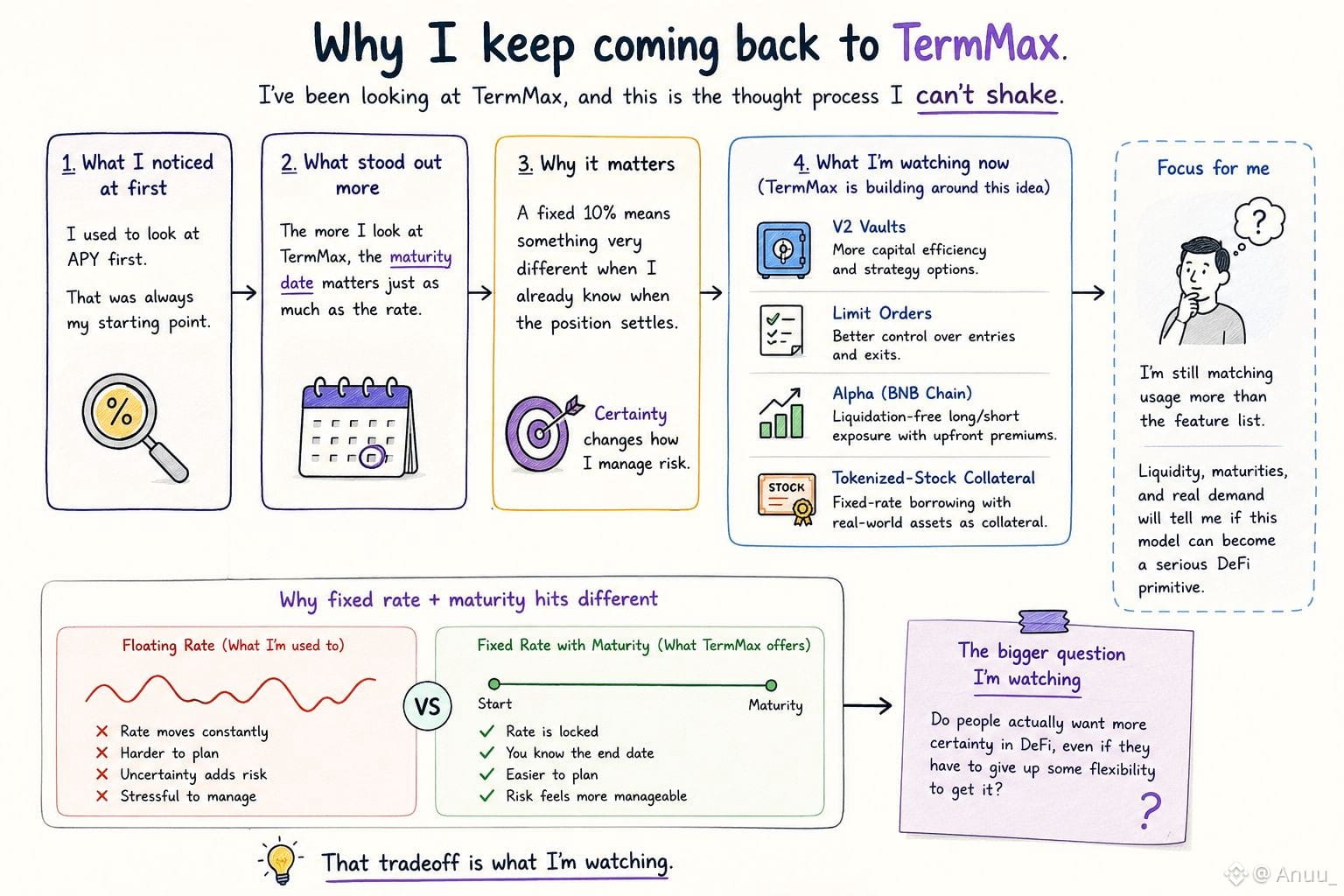
I usually notice the APY first.But the more I dig into TermMax,the maturity date keeps standing out more. A fixed rate feels very different when I already know when the position ends instead of watching a floating rate move around me.
What I’m watching now is how the protocol is building around that idea.V2 vaults, limit orders, and its newer BNB Chain products add more flexibility, while the options side lets users take leveraged exposure with an upfront premium rather than relying entirely on traditional liquidation mechanics.
I’m not convinced yet that fixed-rate DeFi is going to become mainstream.
But I do think TermMax is testing something interesting: whether people actually want more certainty in DeFi, even if they have to give up some flexibility to get it.
That tradeoff is what I’m watching.
@TermMax #TermMax
I usually notice the APY first.But the more I dig into TermMax,the maturity date keeps standing out more. A fixed rate feels very different when I already know when the position ends instead of watching a floating rate move around me.
What I’m watching now is how the protocol is building around that idea.V2 vaults, limit orders, and its newer BNB Chain products add more flexibility, while the options side lets users take leveraged exposure with an upfront premium rather than relying entirely on traditional liquidation mechanics.
I’m not convinced yet that fixed-rate DeFi is going to become mainstream.
But I do think TermMax is testing something interesting: whether people actually want more certainty in DeFi, even if they have to give up some flexibility to get it.
That tradeoff is what I’m watching.
@TermMax #TermMax
Verifiziert
Ich habe mir @TermMax erneut angesehen, und das, worauf ich immer wieder zurückkomme, ist, wie anders DeFi sich anfühlt, wenn ich tatsächlich den Satz und das Datum kenne, zu dem ich einsteige.
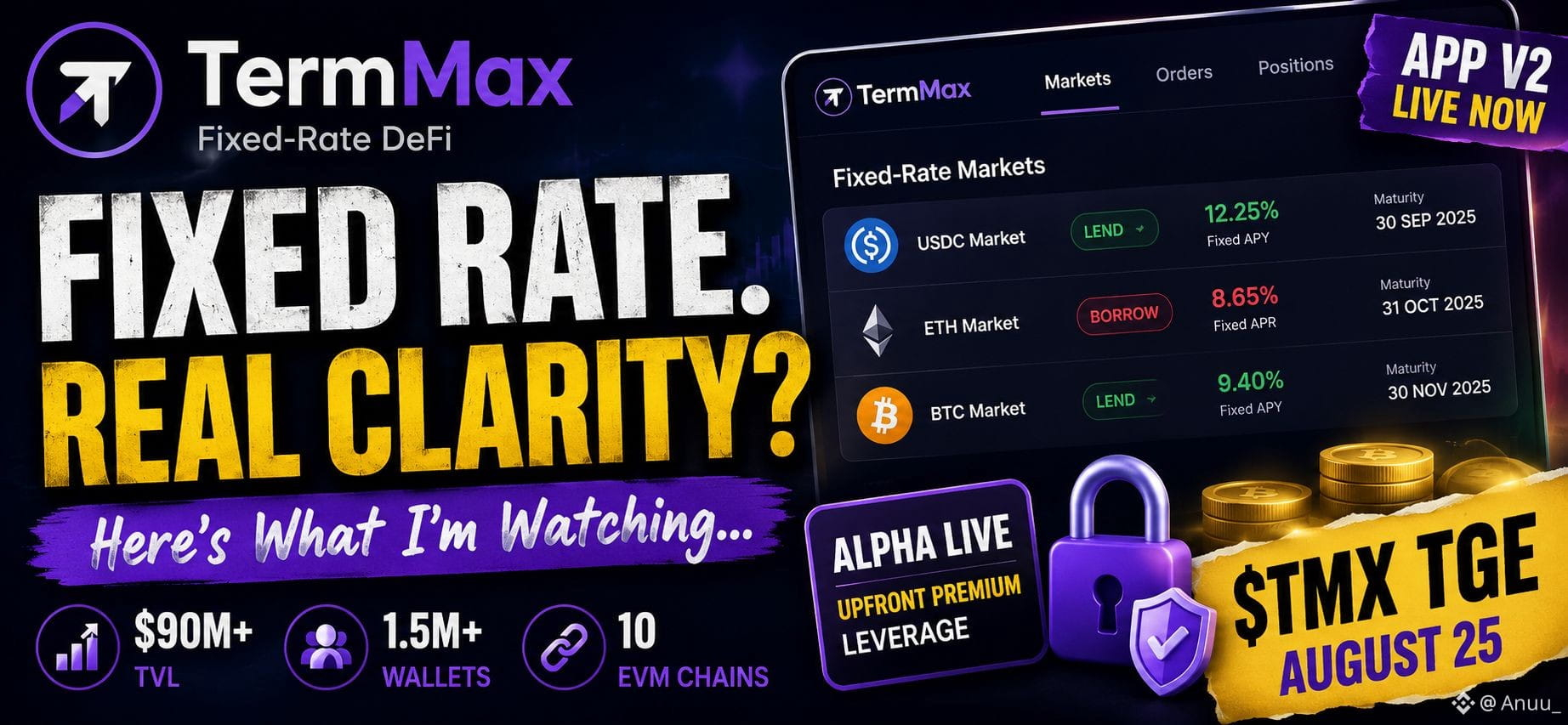
Früher habe ich zuerst auf die APY geschaut. Je mehr ich Märkte mit festem Zinssatz beobachtet habe, desto mehr glaube ich, dass das rückwärts gedacht ist. Ein Zinssatz von 10 % bedeutet etwas völlig anderes, wenn ich genau weiß, wann die Position fällig wird, statt mich zu fragen, wie ein variabler Zinssatz in ein paar Wochen aussehen wird.
Was meine Aufmerksamkeit geweckt hat, ist, wie TermMax das Produkt rund um diese Idee weiter ausbaut. App V2 bringt Märkte, Orders und Positionen zusammen, und Limit-Orders sind jetzt verfügbar. Alpha nutzt zudem einen Hebel mit einer Vorausprämie statt dem üblichen fortlaufenden Margin-Call-Druck.
Auch die Zahlen sind interessant: über 90 Mio. $ TVL, 1,5 Mio.+ registrierte Wallets und Unterstützung über 10 EVM-Chains. Mit dem für den 25. August angekündigten $TMX TGE bin ich gespannt, was als Nächstes passiert.
Allerdings bin ich nicht allein von Zahlen überzeugt. Ich möchte sehen, ob die Leute das Produkt wirklich weiter nutzen, sobald die anfängliche Aufmerksamkeit nachlässt.
@TermMax #TermMax
$AVAAI
$COLLECT
$LAB
Früher habe ich zuerst auf die APY geschaut. Je mehr ich Märkte mit festem Zinssatz beobachtet habe, desto mehr glaube ich, dass das rückwärts gedacht ist. Ein Zinssatz von 10 % bedeutet etwas völlig anderes, wenn ich genau weiß, wann die Position fällig wird, statt mich zu fragen, wie ein variabler Zinssatz in ein paar Wochen aussehen wird.
Was meine Aufmerksamkeit geweckt hat, ist, wie TermMax das Produkt rund um diese Idee weiter ausbaut. App V2 bringt Märkte, Orders und Positionen zusammen, und Limit-Orders sind jetzt verfügbar. Alpha nutzt zudem einen Hebel mit einer Vorausprämie statt dem üblichen fortlaufenden Margin-Call-Druck.
Auch die Zahlen sind interessant: über 90 Mio. $ TVL, 1,5 Mio.+ registrierte Wallets und Unterstützung über 10 EVM-Chains. Mit dem für den 25. August angekündigten $TMX TGE bin ich gespannt, was als Nächstes passiert.
Allerdings bin ich nicht allein von Zahlen überzeugt. Ich möchte sehen, ob die Leute das Produkt wirklich weiter nutzen, sobald die anfängliche Aufmerksamkeit nachlässt.
@TermMax #TermMax
$AVAAI
$COLLECT
$LAB
Okay, ich bin jetzt seit etwa einer Woche immer wieder bei Dusk Network gelandet – größtenteils aus reiner Neugier, ob eine Privacy-Chain wirklich Kontakt mit Regulierungsbehörden überleben kann, statt nur ein großes Spiel darüber zu erzählen.
Das, was mich zurückgebracht hat, war DuskEVM. Es ist nichts Spektakuläres – im Grunde eine Kompatibilitätsschicht, damit Solidity-Apps auf Dusk laufen können, ohne dass ein kompletter Rewrite nötig ist. Aber das ist der Teil, der mich innehalten ließ: Apps, die migrieren, müssen die Privacy danach nicht noch zusätzlich „dranbauen“ – sie erben sie einfach. Die meisten Chains behandeln Privacy als Add-on-Funktion. Dusk betrachtet sie als den standardmäßigen Zustand, in den man automatisch zurückfällt.
Dann gibt es noch das NPEX-Thema, das ehrlich gesagt der Teil ist, zu dem ich immer wieder zurückkomme. Die haben bereits mehr als 300 Millionen Euro in echte Wertpapiere tokenisiert – mit einer lizenzierten niederländischen Börse. Kein Demo, kein Testnet-Spielzeug – echte regulierte Finanzwerte, die on-chain sitzen. Das ist eine ganz andere Art von „Flex“ als bei den meisten Projekten.
Außerdem haben sie Chainlink CCIP integriert, um diese tokenisierten Assets über Chains hinweg zu bewegen. Das ist wichtiger, als es klingt – sonst hättest du konforme Assets, die auf ein einziges Netzwerk festgenagelt wären, was den Zweck im Grunde zunichtemacht.
Spannend ist: Ihre Version von „Privacy“ ist nicht totale Intransparenz. Auditoren können weiterhin bestimmte Dinge prüfen, ohne dass die komplette Transaktion offengelegt wird. Wirkt wie ein seltener Mittelweg, der tatsächlich dazu passt, wie Regulierer denken.
Keine Ahnung, wie der Markt das am Ende bepreist. Aber der Release-Rhythmus ist real – auch wenn die Aufmerksamkeit derzeit noch nicht da ist.
@Dusk #dusk $DUSK
$MRNAon
$SKYAI
Das, was mich zurückgebracht hat, war DuskEVM. Es ist nichts Spektakuläres – im Grunde eine Kompatibilitätsschicht, damit Solidity-Apps auf Dusk laufen können, ohne dass ein kompletter Rewrite nötig ist. Aber das ist der Teil, der mich innehalten ließ: Apps, die migrieren, müssen die Privacy danach nicht noch zusätzlich „dranbauen“ – sie erben sie einfach. Die meisten Chains behandeln Privacy als Add-on-Funktion. Dusk betrachtet sie als den standardmäßigen Zustand, in den man automatisch zurückfällt.
Dann gibt es noch das NPEX-Thema, das ehrlich gesagt der Teil ist, zu dem ich immer wieder zurückkomme. Die haben bereits mehr als 300 Millionen Euro in echte Wertpapiere tokenisiert – mit einer lizenzierten niederländischen Börse. Kein Demo, kein Testnet-Spielzeug – echte regulierte Finanzwerte, die on-chain sitzen. Das ist eine ganz andere Art von „Flex“ als bei den meisten Projekten.
Außerdem haben sie Chainlink CCIP integriert, um diese tokenisierten Assets über Chains hinweg zu bewegen. Das ist wichtiger, als es klingt – sonst hättest du konforme Assets, die auf ein einziges Netzwerk festgenagelt wären, was den Zweck im Grunde zunichtemacht.
Spannend ist: Ihre Version von „Privacy“ ist nicht totale Intransparenz. Auditoren können weiterhin bestimmte Dinge prüfen, ohne dass die komplette Transaktion offengelegt wird. Wirkt wie ein seltener Mittelweg, der tatsächlich dazu passt, wie Regulierer denken.
Keine Ahnung, wie der Markt das am Ende bepreist. Aber der Release-Rhythmus ist real – auch wenn die Aufmerksamkeit derzeit noch nicht da ist.
@Dusk #dusk $DUSK
$MRNAon
$SKYAI
🅰️ Privacy
0%
🅱️ Real-world assets
0%
🅲️ Cross-chain
0%
🅳️ DuskEVM
0%
0 Stimmen • Abstimmung beendet
Ich habe mir in letzter Zeit TermMax angesehen, und es schafft sich dort eine interessante Nische in einem Kreditmarkt, der noch immer weitgehend von Floating-Rate-Giganten wie Aave und Morpho dominiert wird.
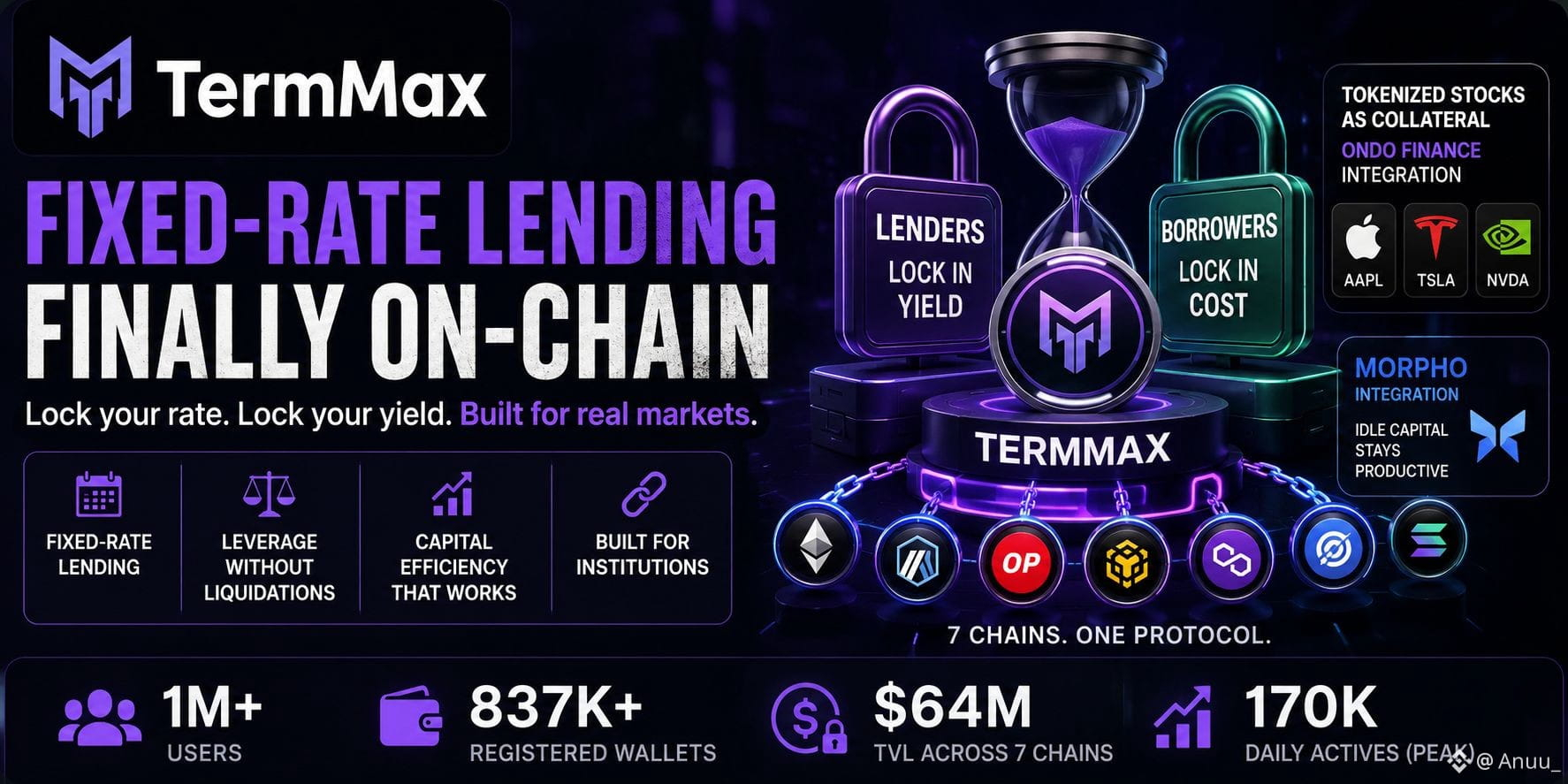
Die Idee selbst ist nicht kompliziert. Kreditgeber sichern sich eine Rendite, Kreditnehmer sichern sich die Kosten – beides an ein Fälligkeitsdatum gekoppelt. Im Grunde ist es eine Anleihe, nur eben on-chain statt über eine Bank. Außerdem gibt es ein Leverage-Produkt: Dabei zahlst du eine feste Prämie im Voraus, statt dich mit laufenden Margin Calls auseinandersetzen zu müssen. Das umgeht die Liquidations-Kaskaden, die Menschen auf Plattformen mit variablem Zinssatz schon verbrannt haben.
Was aber meine Aufmerksamkeit wirklich geweckt hat, waren die Zahlen. Über 1 Million Nutzer, 837K+ registrierte Wallets, ein TVL in der Größenordnung von 64 Mio. US-Dollar, verteilt auf sieben Chains, und tägliche Aktive, die zeitweise nahe an 170.000 lagen. Das ist ein echter Sprung im Vergleich zu dem, wo die Dinge Anfang des Jahres standen.
Ein weiterer Punkt, den man erwähnen sollte, ist, in welche Richtung sie sich ausweiten. Sie haben begonnen, tokenisierte Aktien-Token von Ondo als Sicherheit zu akzeptieren. Das ist ein klares Signal dafür, dass sie eher institutionelle Nutzer ansprechen wollen – und nicht nur Retail-Farmer. Und die Morpho-Integration ist eine clevere Lösung für ein Problem, das die meisten Protokolle mit festem Zinssatz nie wirklich beheben: Kapital, das untätig herumsteht, während es darauf wartet, gematcht zu werden. Hier verdient dieses „brachliegende“ Kapital in der Zwischenzeit weiterhin etwas.
Die meisten Projekte sprechen davon, die Kapitaleffizienz zu verbessern. Weniger liefern tatsächlich etwas, das das Problem direkt adressiert.
Noch früh, aber es wirkt, als würde hier gerade etwas Gestalt annehmen.
@TermMax #TermMax
Die Idee selbst ist nicht kompliziert. Kreditgeber sichern sich eine Rendite, Kreditnehmer sichern sich die Kosten – beides an ein Fälligkeitsdatum gekoppelt. Im Grunde ist es eine Anleihe, nur eben on-chain statt über eine Bank. Außerdem gibt es ein Leverage-Produkt: Dabei zahlst du eine feste Prämie im Voraus, statt dich mit laufenden Margin Calls auseinandersetzen zu müssen. Das umgeht die Liquidations-Kaskaden, die Menschen auf Plattformen mit variablem Zinssatz schon verbrannt haben.
Was aber meine Aufmerksamkeit wirklich geweckt hat, waren die Zahlen. Über 1 Million Nutzer, 837K+ registrierte Wallets, ein TVL in der Größenordnung von 64 Mio. US-Dollar, verteilt auf sieben Chains, und tägliche Aktive, die zeitweise nahe an 170.000 lagen. Das ist ein echter Sprung im Vergleich zu dem, wo die Dinge Anfang des Jahres standen.
Ein weiterer Punkt, den man erwähnen sollte, ist, in welche Richtung sie sich ausweiten. Sie haben begonnen, tokenisierte Aktien-Token von Ondo als Sicherheit zu akzeptieren. Das ist ein klares Signal dafür, dass sie eher institutionelle Nutzer ansprechen wollen – und nicht nur Retail-Farmer. Und die Morpho-Integration ist eine clevere Lösung für ein Problem, das die meisten Protokolle mit festem Zinssatz nie wirklich beheben: Kapital, das untätig herumsteht, während es darauf wartet, gematcht zu werden. Hier verdient dieses „brachliegende“ Kapital in der Zwischenzeit weiterhin etwas.
Die meisten Projekte sprechen davon, die Kapitaleffizienz zu verbessern. Weniger liefern tatsächlich etwas, das das Problem direkt adressiert.
Noch früh, aber es wirkt, als würde hier gerade etwas Gestalt annehmen.
@TermMax #TermMax
Ich habe in letzter Zeit meine Abende damit verbracht, die Dokumentation des Dusk Network sowie die neuesten Updates durchzugehen, und ein paar Dinge stachen genug hervor, dass ich sie notieren musste.
Zuerst: Das Mainnet ist endlich im Januar nach sechs Jahren Entwicklungszeit live gegangen. Das ist eine ungewöhnlich lange Startbahn, und ich frage mich, was so lange gedauert hat – auch wenn die Antwort wohl ist, dass Privacy-Plus-Compliance tatsächlich harte Ingenieursarbeit ist.
Das technische Herzstück ist DuskEVM. Entwickler schreiben normalen Solidity-Code, nichts Exotisches, und die Datenschicht sitzt darunter, ohne dass man einen Rewrite erzwingen müsste. Das ist ziemlich interessant, weil die meisten datenschutzorientierten Chains dich dazu bringen, dich zu entscheiden: Entweder du behältst deine vertrauten Tools oder du bekommst Privacy. Hier musst du nicht wählen.
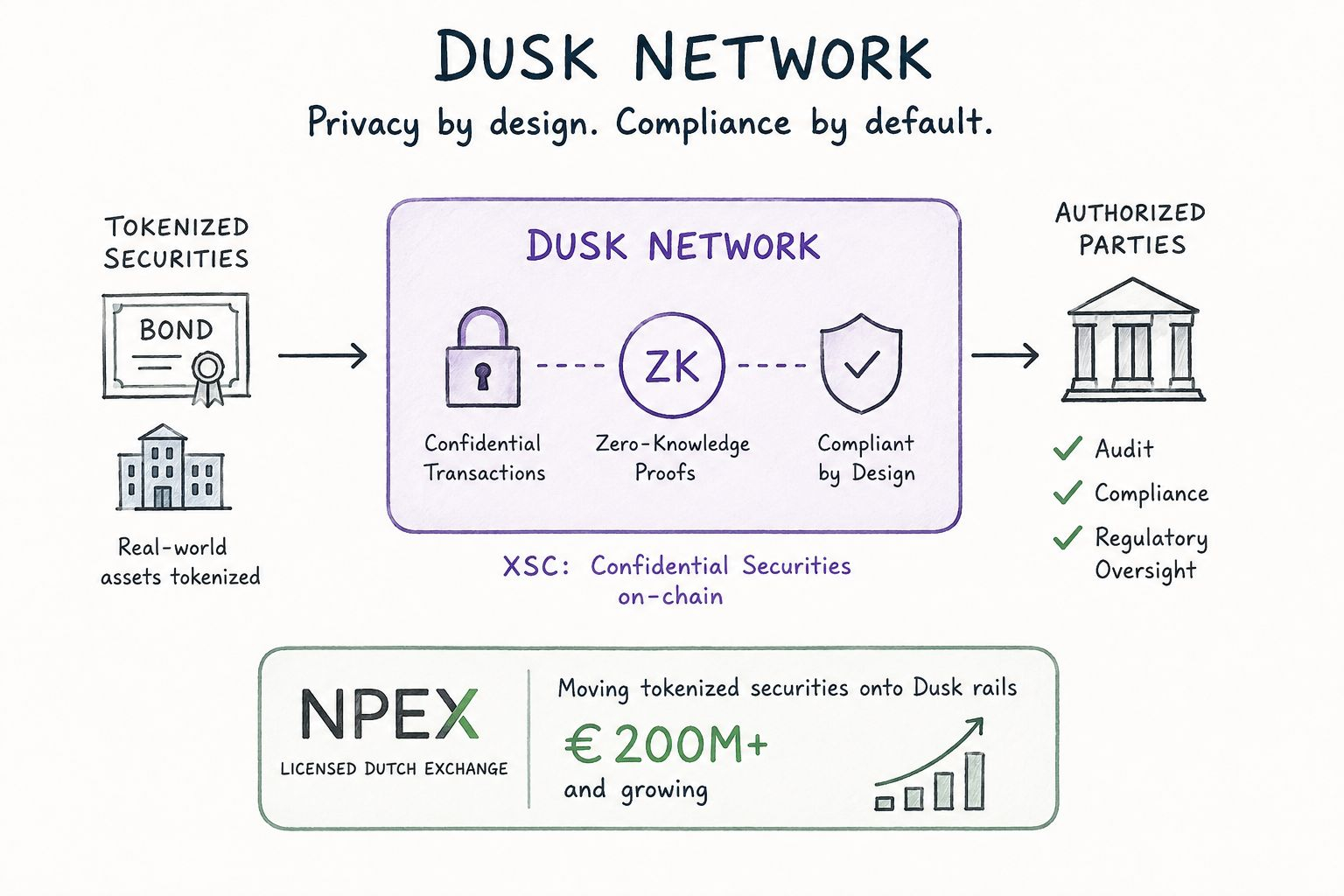
Hedger ist die andere Komponente, die man verstehen sollte. Es kombiniert Zero-Knowledge-Beweise mit homomorpher Verschlüsselung, sodass Transaktionen standardmäßig vertraulich bleiben, aber dennoch auditiert werden können, wenn ein Regulator hinschauen muss. Der Unterschied hier ist, dass „privat“ nicht bedeutet „unbeantwortlich“.
Auch auf der Adoptions-Seite zielt die NPEX-Partnerschaft auf ungefähr 200–300 Mio. € tokenisierte niederländische Wertpapiere ab, die auf Dusk laufen, zusammen mit einer Chainlink-CCIP-Integration für die Abwicklung über mehrere Ketten hinweg. Das ist echtes institutionelles Gewicht – nicht nur eine Ankündigung.
Die Kursentwicklung hat das noch nicht abgebildet. Ich bin mir nicht sicher, wie der Markt das am Ende bepreisen wird, aber die Grundlagen werden immer schwerer zu ignorieren.
@Dusk #dusk $DUSK
Zuerst: Das Mainnet ist endlich im Januar nach sechs Jahren Entwicklungszeit live gegangen. Das ist eine ungewöhnlich lange Startbahn, und ich frage mich, was so lange gedauert hat – auch wenn die Antwort wohl ist, dass Privacy-Plus-Compliance tatsächlich harte Ingenieursarbeit ist.
Das technische Herzstück ist DuskEVM. Entwickler schreiben normalen Solidity-Code, nichts Exotisches, und die Datenschicht sitzt darunter, ohne dass man einen Rewrite erzwingen müsste. Das ist ziemlich interessant, weil die meisten datenschutzorientierten Chains dich dazu bringen, dich zu entscheiden: Entweder du behältst deine vertrauten Tools oder du bekommst Privacy. Hier musst du nicht wählen.
Hedger ist die andere Komponente, die man verstehen sollte. Es kombiniert Zero-Knowledge-Beweise mit homomorpher Verschlüsselung, sodass Transaktionen standardmäßig vertraulich bleiben, aber dennoch auditiert werden können, wenn ein Regulator hinschauen muss. Der Unterschied hier ist, dass „privat“ nicht bedeutet „unbeantwortlich“.
Auch auf der Adoptions-Seite zielt die NPEX-Partnerschaft auf ungefähr 200–300 Mio. € tokenisierte niederländische Wertpapiere ab, die auf Dusk laufen, zusammen mit einer Chainlink-CCIP-Integration für die Abwicklung über mehrere Ketten hinweg. Das ist echtes institutionelles Gewicht – nicht nur eine Ankündigung.
Die Kursentwicklung hat das noch nicht abgebildet. Ich bin mir nicht sicher, wie der Markt das am Ende bepreisen wird, aber die Grundlagen werden immer schwerer zu ignorieren.
@Dusk #dusk $DUSK
🔐 Privacy by default
0%
⚖️ Regulatory compliance
0%
🌐 Institutional adoption
0%
0 Stimmen • Abstimmung beendet
Ich habe mehr Zeit damit verbracht, TermMax zu beobachten, und ganz ehrlich: Mich interessiert das Label „Fixed-Rate DeFi“ weniger als die Frage, ob die Leute wirklich einen Grund haben, es zu nutzen.
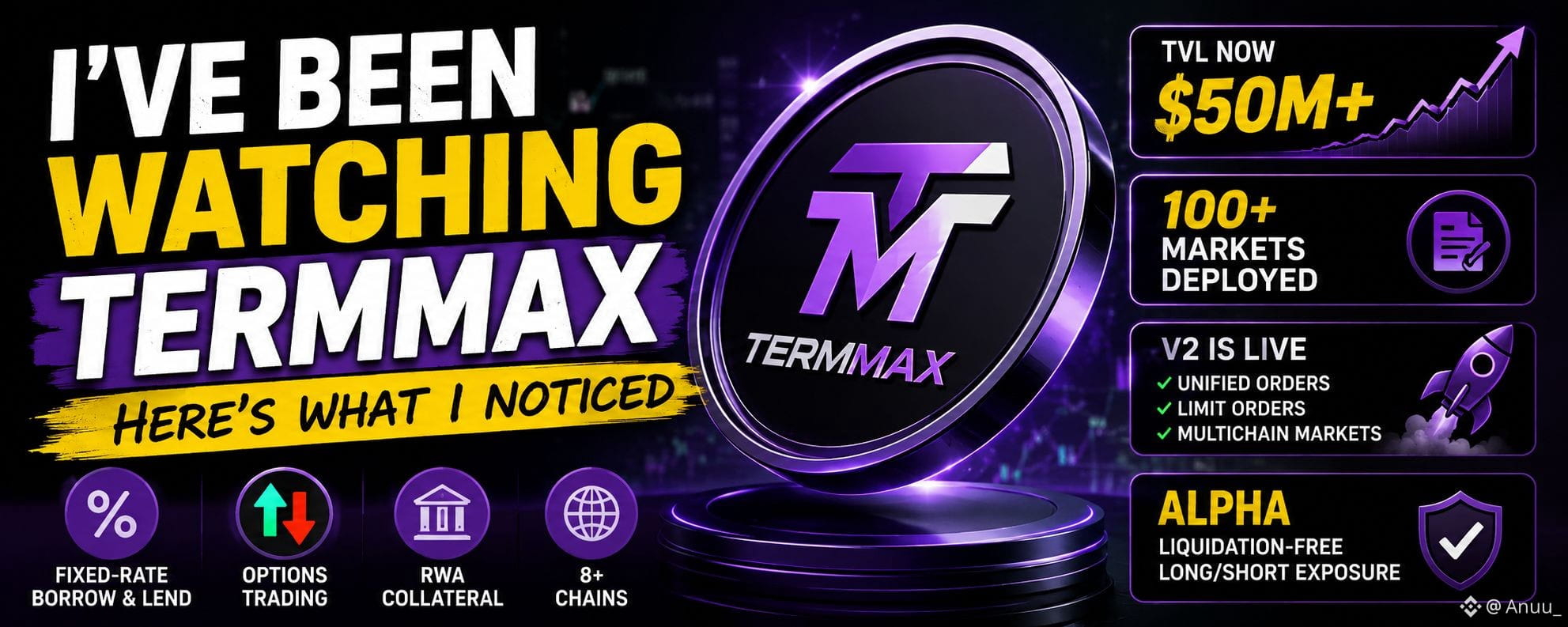
Je mehr ich hinschaue, desto spannender finde ich, wie die Bausteine allmählich zusammenpassen. Fixed-Rate-Kredite und -Anlagegeschäfte, Exposure im Stil von Optionen, RWA-Kollateral und Marktdaten über mehrere Chains hinweg.
Eine Sache, die mir aufgefallen ist: TermMax sitzt nicht einfach nur auf der ursprünglichen Lending-Idee. V2 bringt Dinge wie einheitliche Orders und Limit Orders mit, während Alpha eine andere Möglichkeit hinzufügt, long oder short zu gehen – ohne das übliche Liquidations-Setup.
Ich schaue mir die Zahlen natürlich auch weiterhin an. TVL ist über 50 Mio. $ gestiegen, und die Märkte sind über 8+ Chains hinweg ausgerollt.
Aber ich bin noch nicht überzeugt.
Für mich ist der eigentliche Test ganz einfach: Kann TermMax all diese Flexibilität in eine gleichmäßige Nachfrage und nutzbare Liquidität umwandeln?
Das ist der Teil, auf den ich warte.
@TermMax #TermMax
Je mehr ich hinschaue, desto spannender finde ich, wie die Bausteine allmählich zusammenpassen. Fixed-Rate-Kredite und -Anlagegeschäfte, Exposure im Stil von Optionen, RWA-Kollateral und Marktdaten über mehrere Chains hinweg.
Eine Sache, die mir aufgefallen ist: TermMax sitzt nicht einfach nur auf der ursprünglichen Lending-Idee. V2 bringt Dinge wie einheitliche Orders und Limit Orders mit, während Alpha eine andere Möglichkeit hinzufügt, long oder short zu gehen – ohne das übliche Liquidations-Setup.
Ich schaue mir die Zahlen natürlich auch weiterhin an. TVL ist über 50 Mio. $ gestiegen, und die Märkte sind über 8+ Chains hinweg ausgerollt.
Aber ich bin noch nicht überzeugt.
Für mich ist der eigentliche Test ganz einfach: Kann TermMax all diese Flexibilität in eine gleichmäßige Nachfrage und nutzbare Liquidität umwandeln?
Das ist der Teil, auf den ich warte.
@TermMax #TermMax
Ich schaue mir die @Dusk mittlerweile genauer an, und eine Sache lässt mich gedanklich nicht los: Mich interessiert weniger, was das Projekt angeblich kann, und mehr, ob die Menschen es tatsächlich anfangen zu nutzen.
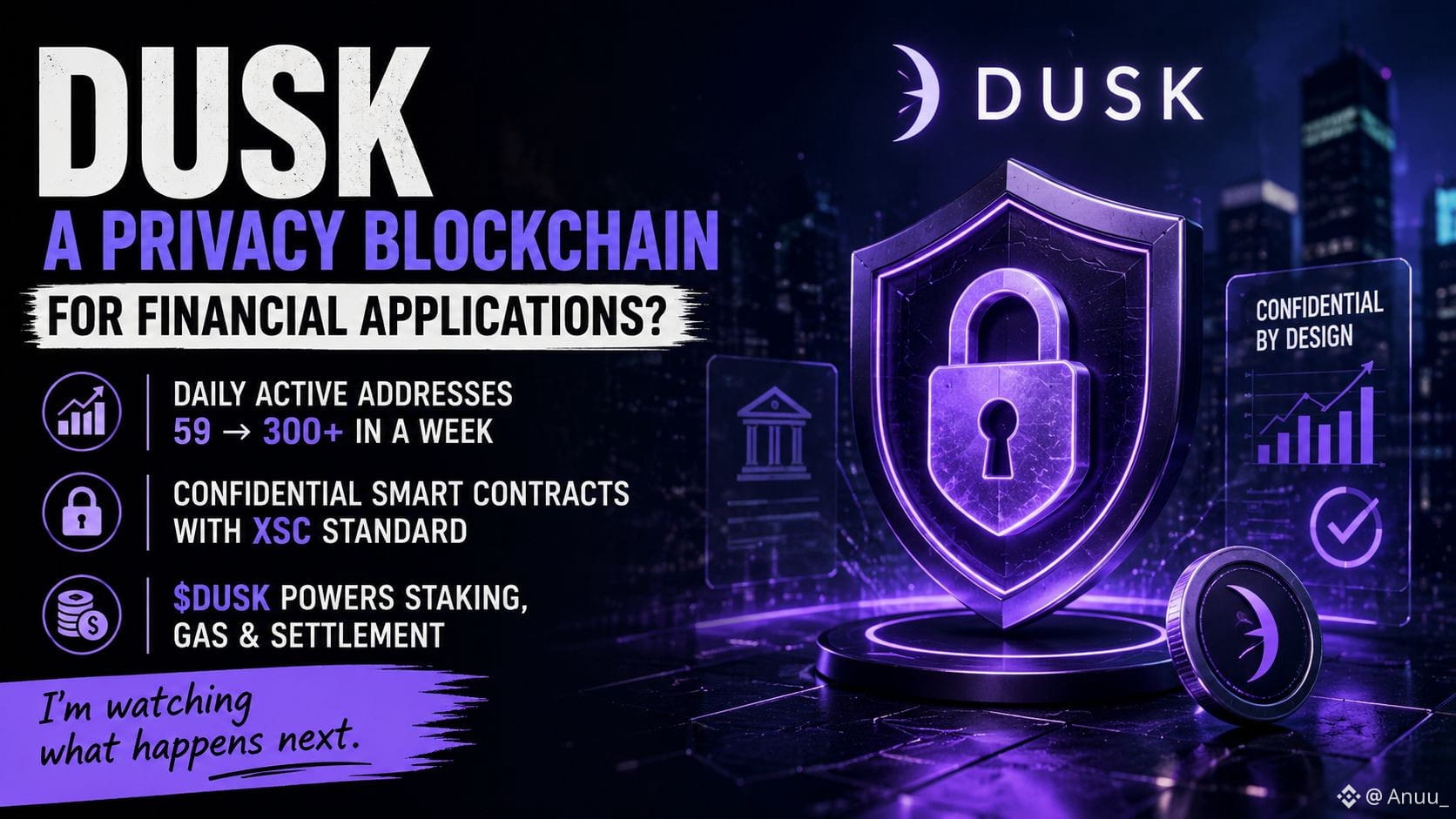
Ich komme immer wieder zur Aktivität zurück, weil mich die Zahlen ein wenig überrascht haben. Die täglichen aktiven Adressen sind von ungefähr 59 auf mehr als 300 in etwa einer Woche gestiegen. Es ist noch keine riesige Zahl, aber diese Art von Veränderung kann ich für mich nicht komplett ignorieren.
Ich beobachte auch den Staking-Bereich. Das 1.000 DUSK Minimum, die Validator-Installation und die Art, wie $DUSK in Staking, Gas und Settlement eingebettet ist, machen mich neugierig darauf zu sehen, wie viel davon sich in tatsächliche Netzwerk-Nachfrage übersetzt.
Ich bin noch nicht überzeugt, und ich glaube, genau das ist der interessante Teil.
Für mich ist die größere Frage, ob Dusk seinen Ansatz für Privatsphäre und Compliance in etwas umwandeln kann, das finanzielle Anwendungen wirklich brauchen—und nicht nur in ein weiteres, gut aussehendes Blockchain-Narrativ.
#dusk @Dusk $DUSK
Ich komme immer wieder zur Aktivität zurück, weil mich die Zahlen ein wenig überrascht haben. Die täglichen aktiven Adressen sind von ungefähr 59 auf mehr als 300 in etwa einer Woche gestiegen. Es ist noch keine riesige Zahl, aber diese Art von Veränderung kann ich für mich nicht komplett ignorieren.
Ich beobachte auch den Staking-Bereich. Das 1.000 DUSK Minimum, die Validator-Installation und die Art, wie $DUSK in Staking, Gas und Settlement eingebettet ist, machen mich neugierig darauf zu sehen, wie viel davon sich in tatsächliche Netzwerk-Nachfrage übersetzt.
Ich bin noch nicht überzeugt, und ich glaube, genau das ist der interessante Teil.
Für mich ist die größere Frage, ob Dusk seinen Ansatz für Privatsphäre und Compliance in etwas umwandeln kann, das finanzielle Anwendungen wirklich brauchen—und nicht nur in ein weiteres, gut aussehendes Blockchain-Narrativ.
#dusk @Dusk $DUSK
Ich habe diese Woche etwas Zeit damit verbracht, einfach Dusk’ On-Chain-Zahlen anzuschauen, statt noch einen weiteren Thread dazu zu lesen — und eine Kennzahl hat mich tatsächlich kurz innehalten lassen: Die täglich aktiven Adressen gingen innerhalb von etwa einer Woche von 59 auf über 300. Klar, kleine Zahlen im großen Ganze — aber der Sprung selbst war so deutlich, dass man ihn bemerken konnte.
Viele sprechen von Dusk als „der Privacy-Chain“, und ja, das ist sie. Aber das, was ich interessanter fand, war das Validator-Setup. Hier gibt es kein Mining — Staker werden ausgewählt, um Blöcke vorzuschlagen und zu validieren, basierend darauf, wie viel sie gestaked haben und wie zuverlässig sie waren. Kapital und Verfügbarkeit, nicht GPUs.
Dann gibt es noch den unübersichtlicheren Teil, den niemand so gern anspricht. Die Brücke, die Dusk mit der BNB Smart Chain verbindet, wurde noch in diesem Jahr getroffen, und Gelder wurden über eine kompromittierte Signing-Wallet abgezogen — nicht als Bug im eigentlichen Protokoll von Dusk. Diese Unterscheidung ist wichtiger, als viele ihr zugestehen: Eine Chain kann sicher sein, und alles, was darum herum an diese Sicherheit gekoppelt ist, sind zwei getrennte Aussagen — und dieser Vorfall macht diese Lücke ziemlich deutlich.
Der institutionelle Part ist weiterhin NPEX: eine regulierte niederländische Börse, die Berichten zufolge echte Wertpapiere im Wert von mehreren hundert Millionen auf Dusk bringen will. Viele Chains versprechen so etwas. Weniger schaffen es tatsächlich, einen regulierten Partner fest zu verpflichten.
Keine Ahnung, ob dieser Adress-Sprung langfristig etwas bedeutet oder ob er in einem Monat wieder verpufft. Ich behalte das im Blick, bevor ich mehr dazu sage.
#dusk @Dusk $DUSK
$GPS
$STAR
Viele sprechen von Dusk als „der Privacy-Chain“, und ja, das ist sie. Aber das, was ich interessanter fand, war das Validator-Setup. Hier gibt es kein Mining — Staker werden ausgewählt, um Blöcke vorzuschlagen und zu validieren, basierend darauf, wie viel sie gestaked haben und wie zuverlässig sie waren. Kapital und Verfügbarkeit, nicht GPUs.
Dann gibt es noch den unübersichtlicheren Teil, den niemand so gern anspricht. Die Brücke, die Dusk mit der BNB Smart Chain verbindet, wurde noch in diesem Jahr getroffen, und Gelder wurden über eine kompromittierte Signing-Wallet abgezogen — nicht als Bug im eigentlichen Protokoll von Dusk. Diese Unterscheidung ist wichtiger, als viele ihr zugestehen: Eine Chain kann sicher sein, und alles, was darum herum an diese Sicherheit gekoppelt ist, sind zwei getrennte Aussagen — und dieser Vorfall macht diese Lücke ziemlich deutlich.
Der institutionelle Part ist weiterhin NPEX: eine regulierte niederländische Börse, die Berichten zufolge echte Wertpapiere im Wert von mehreren hundert Millionen auf Dusk bringen will. Viele Chains versprechen so etwas. Weniger schaffen es tatsächlich, einen regulierten Partner fest zu verpflichten.
Keine Ahnung, ob dieser Adress-Sprung langfristig etwas bedeutet oder ob er in einem Monat wieder verpufft. Ich behalte das im Blick, bevor ich mehr dazu sage.
#dusk @Dusk $DUSK
$GPS
$STAR
🚀 Yes, real growth
100%
🧐 Too early to tell
0%
📉 Likely fades
0%
🤔 Need more data
0%
1 Stimmen • Abstimmung beendet
Verifiziert
@Dusk $DUSK #dusk
Ich habe mich in letzter Zeit mit Dusk Network beschäftigt, und ehrlich gesagt ist der Teil, zu dem ich immer wieder zurückkomme, wie fokussiert es auf ein Problem ist, das die meisten Blockchains nicht besonders gut lösen: Finanzielle Privatsphäre.
Dusk ist eine Layer-1, die auf vertraulichen Transaktionen aufgebaut ist; sein XSC-Standard ist für regulierte Assets und Wertpapiere ausgelegt. Einfach gesagt: Sensible Informationen können privat bleiben, während autorisierte Parteien dennoch überprüfen können, dass die Regeln eingehalten wurden.
Was meine Aufmerksamkeit geweckt hat, war die kürzlich durchgeführte Boreas-Upgrade-Arbeit. Das ist nicht die Art von Schlagzeile, die alle in Begeisterung versetzt, aber Verbesserungen bei der Netzwerk-Resilienz, dem Resource Accounting, der Client-Kompatibilität und dem DuskEVM sind entscheidend, wenn das Netzwerk tatsächlich echte Anwendungen unterstützen soll.
Dusk erweitert außerdem die Nutzerseite mit Dusk Connect und seiner aktualisierten Rusk Wallet, wodurch sich das Ökosystem leichter nutzen und mit ihm interagieren lässt.
Und dann ist da noch die Chainlink-Integration mit NPEX: Sie bringt externe Marktdaten und Cross-Chain-Infrastruktur mit ins Spiel.
Das ist tatsächlich ziemlich interessant, denn bei der Tokenisierung von Wertpapieren ist die Geschichte noch vergleichsweise einfach. Privatsphäre, Compliance und Abwicklung gemeinsam zum Laufen zu bringen, ist deutlich schwieriger.
Die meisten Projekte sprechen über die Übernahme durch Institutionen. Mich interessiert mehr, ob die Infrastruktur den Institutionen irgendwann tatsächlich einen Grund gibt, sie auch zu nutzen.
Noch früh, aber es wirkt, als würde hier gerade etwas Gestalt annehmen.
$MarsCoin
$DOLO
Ich habe mich in letzter Zeit mit Dusk Network beschäftigt, und ehrlich gesagt ist der Teil, zu dem ich immer wieder zurückkomme, wie fokussiert es auf ein Problem ist, das die meisten Blockchains nicht besonders gut lösen: Finanzielle Privatsphäre.
Dusk ist eine Layer-1, die auf vertraulichen Transaktionen aufgebaut ist; sein XSC-Standard ist für regulierte Assets und Wertpapiere ausgelegt. Einfach gesagt: Sensible Informationen können privat bleiben, während autorisierte Parteien dennoch überprüfen können, dass die Regeln eingehalten wurden.
Was meine Aufmerksamkeit geweckt hat, war die kürzlich durchgeführte Boreas-Upgrade-Arbeit. Das ist nicht die Art von Schlagzeile, die alle in Begeisterung versetzt, aber Verbesserungen bei der Netzwerk-Resilienz, dem Resource Accounting, der Client-Kompatibilität und dem DuskEVM sind entscheidend, wenn das Netzwerk tatsächlich echte Anwendungen unterstützen soll.
Dusk erweitert außerdem die Nutzerseite mit Dusk Connect und seiner aktualisierten Rusk Wallet, wodurch sich das Ökosystem leichter nutzen und mit ihm interagieren lässt.
Und dann ist da noch die Chainlink-Integration mit NPEX: Sie bringt externe Marktdaten und Cross-Chain-Infrastruktur mit ins Spiel.
Das ist tatsächlich ziemlich interessant, denn bei der Tokenisierung von Wertpapieren ist die Geschichte noch vergleichsweise einfach. Privatsphäre, Compliance und Abwicklung gemeinsam zum Laufen zu bringen, ist deutlich schwieriger.
Die meisten Projekte sprechen über die Übernahme durch Institutionen. Mich interessiert mehr, ob die Infrastruktur den Institutionen irgendwann tatsächlich einen Grund gibt, sie auch zu nutzen.
Noch früh, aber es wirkt, als würde hier gerade etwas Gestalt annehmen.
$MarsCoin
$DOLO
Bullish 💚
67%
Bearish ❤️
33%
Neutral 👈
0%
12 Stimmen • Abstimmung beendet
@Dusk #dusk $DUSK
Ich habe die letzten Tage damit verbracht, in Dusk einzutauchen, und ehrlich gesagt ist das, was ich am interessantesten finde, nicht der Token-Preis.
Mich fasziniert die Lücke zwischen dem, was Dusk tatsächlich gebaut hat, und der bisher erstaunlich geringen Nutzung des Netzwerks.
Die Idee selbst ergibt für mich Sinn. Institutionen wollen Privatsphäre, weil sie nicht möchten, dass jede Transaktion öffentlich offengelegt wird, aber Regulierer brauchen weiterhin eine Möglichkeit, um nachzuverfolgen, was passiert.
Dusk versucht im Grunde, beide Probleme mit Zero-Knowledge-Proofs zu lösen: die Details privat halten, während sie bei Bedarf dennoch überprüfbar sind.
Das Mainnet ist endlich nach Jahren der Entwicklung live gegangen, DuskEVM macht Solidity-Deployments möglich, und die NPEX-Partnerschaft verleiht dem Projekt eine glaubwürdigere institutionelle Perspektive als die üblichen „RWA-Partnerschaft“-Schlagzeilen.
Aber dann schaue ich mir die Zahlen an.
TVL lag in den Daten, die ich mir angesehen habe, immer noch unter 1 Mio. US-Dollar – trotz all dieser Entwicklung.
Das ist der Teil, den ich nicht ignorieren kann.
Vielleicht ist es einfach noch zu früh. Regulierte Assets bewegen sich nicht mit der Geschwindigkeit von Meme-Coins, und echte Wertpapiere auf eine Blockchain zu bringen, bedeutet, ganz andere Hürden zu überwinden.
Trotzdem ist genau das der Grund, warum ich Dusk im Blick habe.
Die Technologie-Story sieht interessant aus. Die Story rund um die Adoption hat noch viel zu beweisen.
$ACE
$KII
Ich habe die letzten Tage damit verbracht, in Dusk einzutauchen, und ehrlich gesagt ist das, was ich am interessantesten finde, nicht der Token-Preis.
Mich fasziniert die Lücke zwischen dem, was Dusk tatsächlich gebaut hat, und der bisher erstaunlich geringen Nutzung des Netzwerks.
Die Idee selbst ergibt für mich Sinn. Institutionen wollen Privatsphäre, weil sie nicht möchten, dass jede Transaktion öffentlich offengelegt wird, aber Regulierer brauchen weiterhin eine Möglichkeit, um nachzuverfolgen, was passiert.
Dusk versucht im Grunde, beide Probleme mit Zero-Knowledge-Proofs zu lösen: die Details privat halten, während sie bei Bedarf dennoch überprüfbar sind.
Das Mainnet ist endlich nach Jahren der Entwicklung live gegangen, DuskEVM macht Solidity-Deployments möglich, und die NPEX-Partnerschaft verleiht dem Projekt eine glaubwürdigere institutionelle Perspektive als die üblichen „RWA-Partnerschaft“-Schlagzeilen.
Aber dann schaue ich mir die Zahlen an.
TVL lag in den Daten, die ich mir angesehen habe, immer noch unter 1 Mio. US-Dollar – trotz all dieser Entwicklung.
Das ist der Teil, den ich nicht ignorieren kann.
Vielleicht ist es einfach noch zu früh. Regulierte Assets bewegen sich nicht mit der Geschwindigkeit von Meme-Coins, und echte Wertpapiere auf eine Blockchain zu bringen, bedeutet, ganz andere Hürden zu überwinden.
Trotzdem ist genau das der Grund, warum ich Dusk im Blick habe.
Die Technologie-Story sieht interessant aus. Die Story rund um die Adoption hat noch viel zu beweisen.
$ACE
$KII
🟢 Bullish
0%
🟡 Neutral
0%
🔴 Bearish
0%
⚪ Not sure
100%
1 Stimmen • Abstimmung beendet
Verifiziert
Ich habe mich in letzter Zeit etwas mit dem Dusk Network beschäftigt, vor allem weil es eines der wenigen „Privacy Chain“-Projekte ist, das nicht einfach nur das Wort Compliance wiederholt und darauf hofft, dass niemand nachfragt.
Das DuskEVM-Mainnet ist endlich in Q1 dieses Jahres live gegangen. Es ist Solidity-kompatibel, sodass Entwickler, die auf Ethereum aufbauen, nicht alles neu lernen müssen, um hier zu deployen. Was meine Aufmerksamkeit jedoch nicht nur auf den Kompatibilitätsaspekt gelenkt hat, war das Hedger-Element darunter. Es nutzt Zero-Knowledge-Proofs und homomorphe Verschlüsselung, um Transaktionsbeträge und Identitäten vor der Öffentlichkeit zu verbergen, aber dennoch ermöglicht es einem autorisierten Regulator einen Blick hinein, wenn es nötig ist. Die meisten Privacy-Projekte betrachten Regulatoren wie ein Hindernis, um daran vorbeizukommen. Der Unterschied hier ist: Sie haben den Zugang ganz bewusst eingebaut.
Dann gibt es DuskTrade, umgesetzt mit NPEX, einer lizenzierten niederländischen Börse. Gemeinsam haben sie über 300 Millionen Euro an traditionellen Wertpapieren auf die Kette gebracht. Das ist keine Testnet-Zahl oder Projektion, sondern ein echtes, reguliertes Bestandsvolumen.
Außerdem gab es im März ein Network-Upgrade, Rusk v1.7.0 – größtenteils Aufräum- und Infrastrukturarbeit rund um Resilienz und Ressourcenabrechnung im Vorfeld des EVM-Launches. Nicht besonders aufregend, aber oft sind die eher langweiligen Updates genau die, die später entscheidend sind.
Ich bin mir nicht sicher, wie der Markt es langfristig bewertet, aber die Grundlagen werden zunehmend schwerer zu ignorieren.
@Dusk #dusk $DUSK
$AKE
$KII
Das DuskEVM-Mainnet ist endlich in Q1 dieses Jahres live gegangen. Es ist Solidity-kompatibel, sodass Entwickler, die auf Ethereum aufbauen, nicht alles neu lernen müssen, um hier zu deployen. Was meine Aufmerksamkeit jedoch nicht nur auf den Kompatibilitätsaspekt gelenkt hat, war das Hedger-Element darunter. Es nutzt Zero-Knowledge-Proofs und homomorphe Verschlüsselung, um Transaktionsbeträge und Identitäten vor der Öffentlichkeit zu verbergen, aber dennoch ermöglicht es einem autorisierten Regulator einen Blick hinein, wenn es nötig ist. Die meisten Privacy-Projekte betrachten Regulatoren wie ein Hindernis, um daran vorbeizukommen. Der Unterschied hier ist: Sie haben den Zugang ganz bewusst eingebaut.
Dann gibt es DuskTrade, umgesetzt mit NPEX, einer lizenzierten niederländischen Börse. Gemeinsam haben sie über 300 Millionen Euro an traditionellen Wertpapieren auf die Kette gebracht. Das ist keine Testnet-Zahl oder Projektion, sondern ein echtes, reguliertes Bestandsvolumen.
Außerdem gab es im März ein Network-Upgrade, Rusk v1.7.0 – größtenteils Aufräum- und Infrastrukturarbeit rund um Resilienz und Ressourcenabrechnung im Vorfeld des EVM-Launches. Nicht besonders aufregend, aber oft sind die eher langweiligen Updates genau die, die später entscheidend sind.
Ich bin mir nicht sicher, wie der Markt es langfristig bewertet, aber die Grundlagen werden zunehmend schwerer zu ignorieren.
@Dusk #dusk $DUSK
$AKE
$KII
Bullish 💚
63%
Bearish ❤️
30%
Neutral 👈
7%
46 Stimmen • Abstimmung beendet
@Dusk $DUSK #dusk
Ich komme immer wieder auf ein Detail zum Dusk Network zurück: Es wurde von Anfang an mit Aufsichtsbehörden im Raum gebaut – nicht erst nachträglich herbeigeholt.
Die meisten Privacy-Chains behandeln Compliance wie einen nachgelagerten Gedanken: etwas, das man später dazunagelt, wenn Institutionen nachfragen. Dusk hat das gesamte System genau um diese Frage herum gebaut.
Der zentrale Baustein ist XSC, ein Vertragsstandard für vertrauliche Wertpapiere. Transaktionsdetails bleiben der Öffentlichkeit verborgen, aber Zero-Knowledge-Beweise ermöglichen es einer autorisierten Partei, zu bestätigen, dass alles stimmt – ohne jemals die Rohzahlen zu sehen. Das ist eine eher enge Form von Privatsphäre, ehrlich gesagt, und es ist eindeutig für jemanden gebaut, der nicht nur eine Wallet-Balance vor der Welt verstecken will, sondern einen Prüfer zufriedenstellen muss.
Was meine Aufmerksamkeit nicht in erster Linie auf die Kryptografie gelenkt hat, sondern auf NPEX: eine lizenzierte niederländische Börse, die still und leise tokenisierte Wertpapiere auf die Schienen von Dusk gebracht hat – laut manchen Angaben im Wert von über 200 Millionen Euro.
Die meisten Projekte jagen erst die Aufmerksamkeit des Retail-Markts und kümmern sich später (falls überhaupt) um Compliance. Dusk ging den umgekehrten Weg – was wahrscheinlich langsameren Wachstum bedeutet, aber einen glaubwürdigeren Weg in Richtung institutionelle Nutzung.
Ich hatte eine weitere Privacy-Coin-Pitch erwartet. Was ich vorfand, fühlte sich eher wie Infrastruktur an.
Noch ist es früh, aber es ist eine Frage, mit der man sich lohnt zu beschäftigen.
$AVAAI $APR
Ich komme immer wieder auf ein Detail zum Dusk Network zurück: Es wurde von Anfang an mit Aufsichtsbehörden im Raum gebaut – nicht erst nachträglich herbeigeholt.
Die meisten Privacy-Chains behandeln Compliance wie einen nachgelagerten Gedanken: etwas, das man später dazunagelt, wenn Institutionen nachfragen. Dusk hat das gesamte System genau um diese Frage herum gebaut.
Der zentrale Baustein ist XSC, ein Vertragsstandard für vertrauliche Wertpapiere. Transaktionsdetails bleiben der Öffentlichkeit verborgen, aber Zero-Knowledge-Beweise ermöglichen es einer autorisierten Partei, zu bestätigen, dass alles stimmt – ohne jemals die Rohzahlen zu sehen. Das ist eine eher enge Form von Privatsphäre, ehrlich gesagt, und es ist eindeutig für jemanden gebaut, der nicht nur eine Wallet-Balance vor der Welt verstecken will, sondern einen Prüfer zufriedenstellen muss.
Was meine Aufmerksamkeit nicht in erster Linie auf die Kryptografie gelenkt hat, sondern auf NPEX: eine lizenzierte niederländische Börse, die still und leise tokenisierte Wertpapiere auf die Schienen von Dusk gebracht hat – laut manchen Angaben im Wert von über 200 Millionen Euro.
Die meisten Projekte jagen erst die Aufmerksamkeit des Retail-Markts und kümmern sich später (falls überhaupt) um Compliance. Dusk ging den umgekehrten Weg – was wahrscheinlich langsameren Wachstum bedeutet, aber einen glaubwürdigeren Weg in Richtung institutionelle Nutzung.
Ich hatte eine weitere Privacy-Coin-Pitch erwartet. Was ich vorfand, fühlte sich eher wie Infrastruktur an.
Noch ist es früh, aber es ist eine Frage, mit der man sich lohnt zu beschäftigen.
$AVAAI $APR
Je tiefer ich in @BabylonLabs_io hineingeschaut habe, desto mehr habe ich erkannt, dass der interessante Teil nicht darin lag, dass es sich selbst „staked“. Es war die Tatsache, dass Bitcoin das Bitcoin-Netzwerk niemals verlassen muss. Nachdem ich jahrelang Projekte gesehen hatte, die Menschen dazu auffordern, ihr BTC zu verpacken oder über Brücken zu senden, machte mich das sofort neugierig.
Was meine Aufmerksamkeit geweckt hat, war nicht das Versprechen, eine Rendite zu erzielen. Es war die andere Art, wie Babylon das Problem angeht. Anstatt Bitcoin irgendwohin zu bewegen, nutzt es den eigenen Time-Lock-Mechanismus von Bitcoin, sodass die Coins unter der Kontrolle des Besitzers bleiben und dennoch dabei helfen, Proof-of-Stake-Chains abzusichern. Das wirkt wie eine kleine Einzelheit, bis man anfängt darüber nachzudenken, wie viele Brückenfehler wir im Laufe der Jahre gesehen haben.
Die meisten Krypto-Projekte lösen das, indem sie eine zusätzliche Vertrauensebene hinzufügen. Du gibst dein Bitcoin ab, erhältst eine „Wrapped“-Version, und hoffst, dass jedes Infrastrukturstück dazwischen zuverlässig funktioniert. Babylon scheint diese Idee umzudrehen. Anstatt Bitcoin so zu verändern, dass es zu anderen Netzwerken passt, versucht es, anderen Netzwerken zu ermöglichen, von der Sicherheit von Bitcoin zu profitieren.
Ehrlich gesagt hatte ich erwartet, dass das Konzept eher ein Forschungsprojekt ist als ein funktionierendes Netzwerk. Stattdessen habe ich festgestellt, dass Babylon Genesis bereits natives BTC-Staking unterstützt – neben BABY-Staking und Co-Staking. Das hat mich kurz innehalten lassen, weil es eine Sache ist, eine Idee auf Papier zu beschreiben, und eine ganz andere, sie tatsächlich umzusetzen.
Auch das Ausmaß hat mich überrascht. Als ich sah, dass bereits BTC im Wert von Milliardenbeträgen dem Protokoll verpflichtet sind, wurde mir klar: Das ist nicht mehr nur ein Nischenexperiment. Es beweist nicht, dass das Modell am Ende gewinnt, aber es zeigt, dass echtes Interesse daran besteht, einen anderen Ansatz auszuprobieren.
Vielleicht lese ich zu viel hinein, aber ich glaube nicht, dass die Belohnungen der interessanteste Teil von Babylon sind. Ich komme immer wieder zu der Idee zurück, dass Bitcoin seine Sicherheit beisteuern kann, ohne jemals seine eigene Chain zu verlassen. Ob daraus am Ende eine große Weichenstellung wird oder nur ein weiteres Kapitel in der Evolution von Bitcoin – es ist eine der durchdachtesten Ideen, denen ich in letzter Zeit begegnet bin.
@BabylonLabs_io #baby $BABY
$HEI $BANK
Was meine Aufmerksamkeit geweckt hat, war nicht das Versprechen, eine Rendite zu erzielen. Es war die andere Art, wie Babylon das Problem angeht. Anstatt Bitcoin irgendwohin zu bewegen, nutzt es den eigenen Time-Lock-Mechanismus von Bitcoin, sodass die Coins unter der Kontrolle des Besitzers bleiben und dennoch dabei helfen, Proof-of-Stake-Chains abzusichern. Das wirkt wie eine kleine Einzelheit, bis man anfängt darüber nachzudenken, wie viele Brückenfehler wir im Laufe der Jahre gesehen haben.
Die meisten Krypto-Projekte lösen das, indem sie eine zusätzliche Vertrauensebene hinzufügen. Du gibst dein Bitcoin ab, erhältst eine „Wrapped“-Version, und hoffst, dass jedes Infrastrukturstück dazwischen zuverlässig funktioniert. Babylon scheint diese Idee umzudrehen. Anstatt Bitcoin so zu verändern, dass es zu anderen Netzwerken passt, versucht es, anderen Netzwerken zu ermöglichen, von der Sicherheit von Bitcoin zu profitieren.
Ehrlich gesagt hatte ich erwartet, dass das Konzept eher ein Forschungsprojekt ist als ein funktionierendes Netzwerk. Stattdessen habe ich festgestellt, dass Babylon Genesis bereits natives BTC-Staking unterstützt – neben BABY-Staking und Co-Staking. Das hat mich kurz innehalten lassen, weil es eine Sache ist, eine Idee auf Papier zu beschreiben, und eine ganz andere, sie tatsächlich umzusetzen.
Auch das Ausmaß hat mich überrascht. Als ich sah, dass bereits BTC im Wert von Milliardenbeträgen dem Protokoll verpflichtet sind, wurde mir klar: Das ist nicht mehr nur ein Nischenexperiment. Es beweist nicht, dass das Modell am Ende gewinnt, aber es zeigt, dass echtes Interesse daran besteht, einen anderen Ansatz auszuprobieren.
Vielleicht lese ich zu viel hinein, aber ich glaube nicht, dass die Belohnungen der interessanteste Teil von Babylon sind. Ich komme immer wieder zu der Idee zurück, dass Bitcoin seine Sicherheit beisteuern kann, ohne jemals seine eigene Chain zu verlassen. Ob daraus am Ende eine große Weichenstellung wird oder nur ein weiteres Kapitel in der Evolution von Bitcoin – es ist eine der durchdachtesten Ideen, denen ich in letzter Zeit begegnet bin.
@BabylonLabs_io #baby $BABY
$HEI $BANK
Bullish 🚀
0%
Neutral 👀
0%
Still Researching 📚
0%
Bearish ⚠️
0%
0 Stimmen • Abstimmung beendet
Nach meiner Meinung schlägt nachhaltiges Wachstum immer vorübergehende Volumen-Spitzen.

Crypto_Cobain
·
--
@BabylonLabs_io #baby $BABY
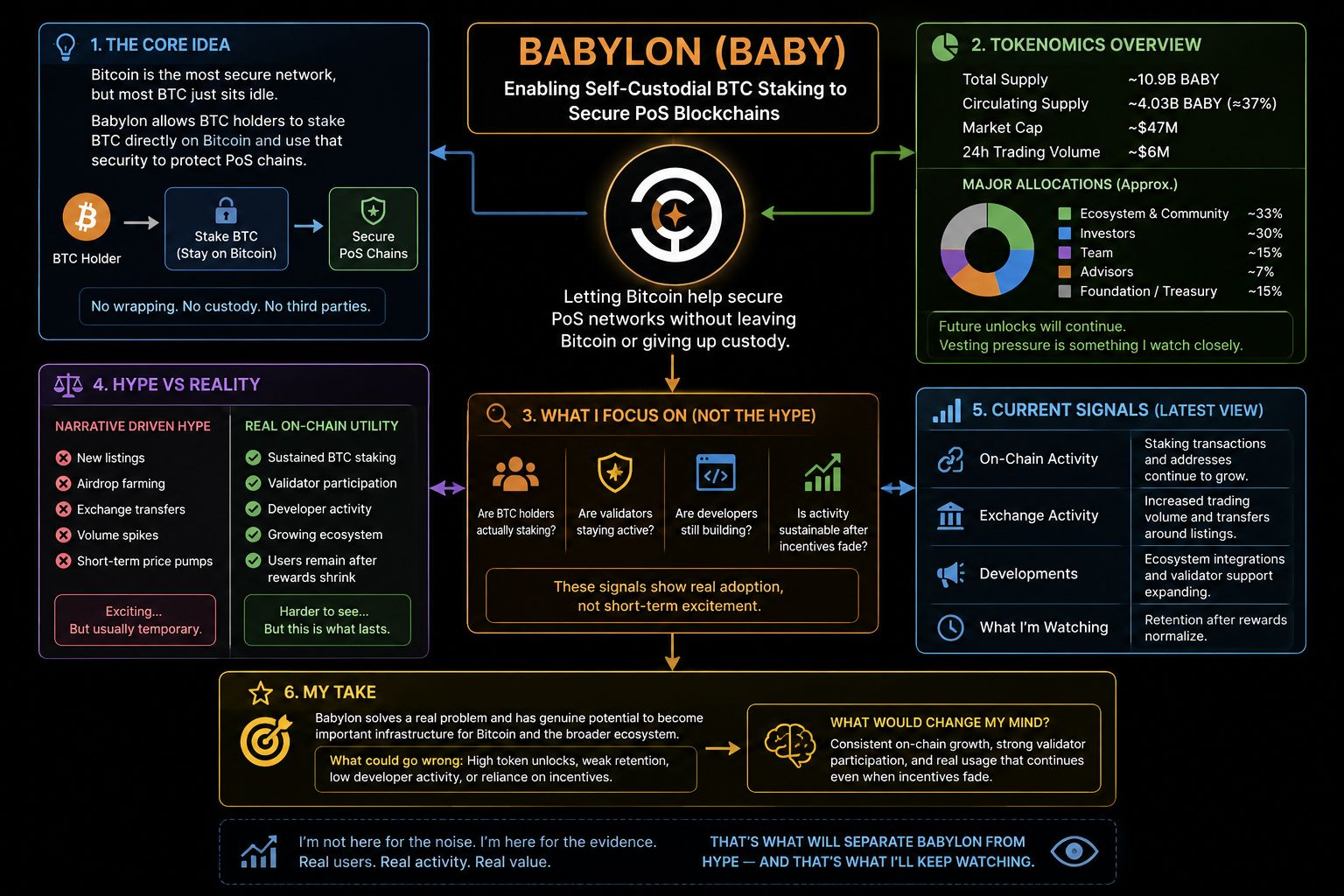
Ich habe viel Zeit damit verbracht, mir verschiedene Krypto-Projekte anzusehen, und Babylon ist eines der wenigen, die mich wirklich innehalten ließen. Es versucht nicht, Bitcoin zu ersetzen oder komplett zu verändern, wie es funktioniert. Stattdessen stellt es die Frage, ob Bitcoin helfen kann, PoS-Netzwerke abzusichern, während es gleichzeitig in Ihrer eigenen Wallet bleibt. Das wirkte wie eine einfache Idee mit echtem Mehrwert – und genau deshalb habe ich angefangen, genauer hinzuschauen.
Dabei sehe ich mir Technik jedoch nie nur für sich allein an. Tokenomics erzählen meist die andere Hälfte der Geschichte. Wenn ein großer Anteil der Versorgung noch gesperrt ist, können zukünftige Entsperrungen Druck erzeugen, selbst wenn das Projekt selbst gerade gut dasteht. Ich habe genug neue Listings gesehen, um zu wissen, dass ein Anstieg des Volumens, Airdrop-Farming und Aktivitäten an Börsen fast alles stärker wirken lassen können, als es in Wahrheit ist.
Die Dinge, die mich interessieren, sind viel weniger spektakulär, aber weitaus wichtiger. Wird nach dem Auslaufen der Belohnungen noch gestakt? Nehmen Validatoren weiter am Betrieb teil? Bauen Entwickler weiter, weil sie langfristigen Wert sehen – und nicht nur kurzfristige Anreize?
Im Moment halte ich mir eine offene Haltung. Ich mag die Richtung, in die Babylon geht, aber ich werde der Geschichte erst glauben, wenn die On-Chain-Aktivität weiter wächst, nachdem der Hype abgeflaut ist. Das ist die Art von Signal, der ich am meisten vertraue.
$QUID
$CYS
Ich habe viel Zeit damit verbracht, mir verschiedene Krypto-Projekte anzusehen, und Babylon ist eines der wenigen, die mich wirklich innehalten ließen. Es versucht nicht, Bitcoin zu ersetzen oder komplett zu verändern, wie es funktioniert. Stattdessen stellt es die Frage, ob Bitcoin helfen kann, PoS-Netzwerke abzusichern, während es gleichzeitig in Ihrer eigenen Wallet bleibt. Das wirkte wie eine einfache Idee mit echtem Mehrwert – und genau deshalb habe ich angefangen, genauer hinzuschauen.
Dabei sehe ich mir Technik jedoch nie nur für sich allein an. Tokenomics erzählen meist die andere Hälfte der Geschichte. Wenn ein großer Anteil der Versorgung noch gesperrt ist, können zukünftige Entsperrungen Druck erzeugen, selbst wenn das Projekt selbst gerade gut dasteht. Ich habe genug neue Listings gesehen, um zu wissen, dass ein Anstieg des Volumens, Airdrop-Farming und Aktivitäten an Börsen fast alles stärker wirken lassen können, als es in Wahrheit ist.
Die Dinge, die mich interessieren, sind viel weniger spektakulär, aber weitaus wichtiger. Wird nach dem Auslaufen der Belohnungen noch gestakt? Nehmen Validatoren weiter am Betrieb teil? Bauen Entwickler weiter, weil sie langfristigen Wert sehen – und nicht nur kurzfristige Anreize?
Im Moment halte ich mir eine offene Haltung. Ich mag die Richtung, in die Babylon geht, aber ich werde der Geschichte erst glauben, wenn die On-Chain-Aktivität weiter wächst, nachdem der Hype abgeflaut ist. Das ist die Art von Signal, der ich am meisten vertraue.
$QUID
$CYS
@BabylonLabs_io $BABY #baby
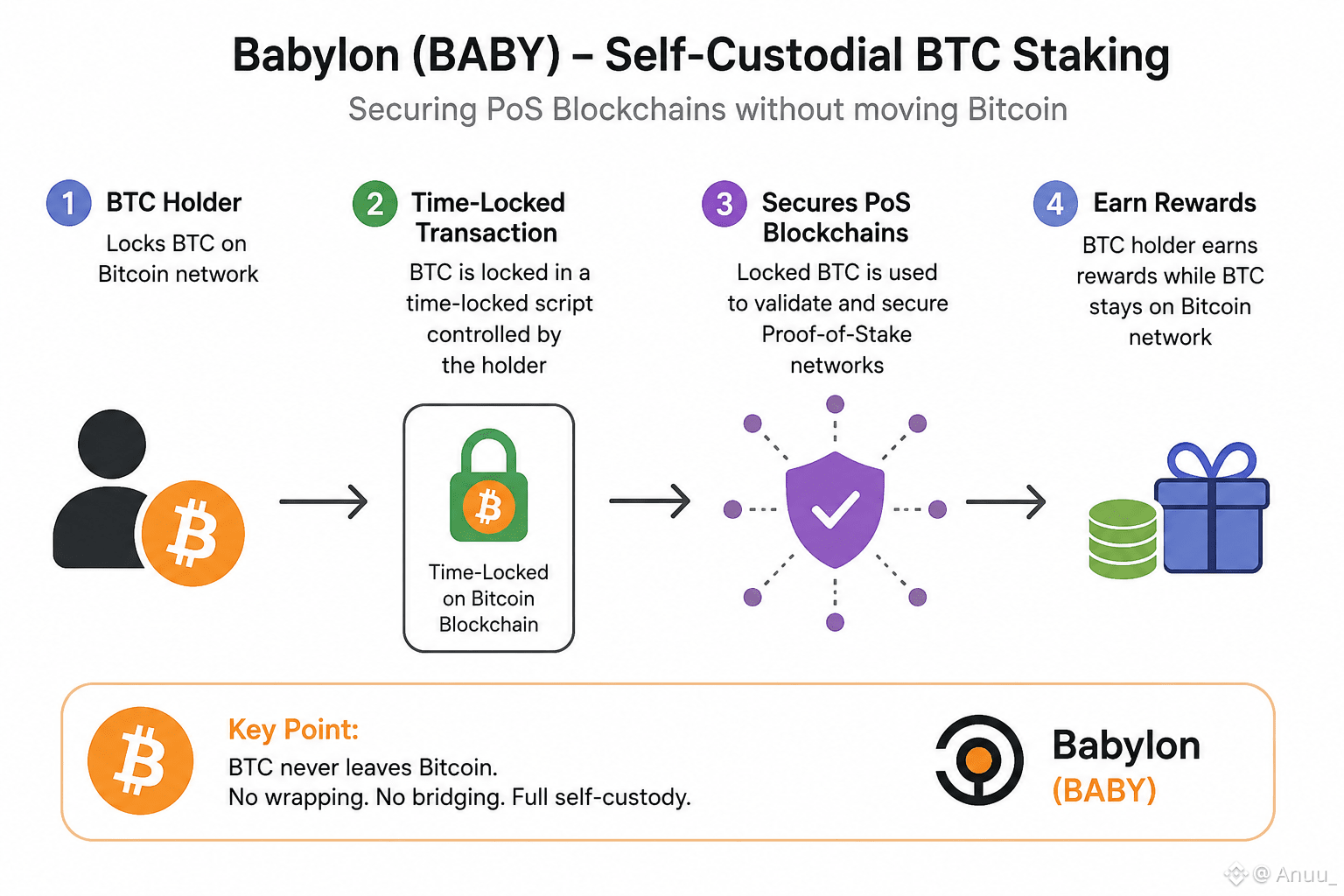
Ich habe inzwischen mehr Zeit damit verbracht, mir Babylon (BABY) anzusehen, und versuche immer noch herauszufinden, ob es einen Haken gibt. Das Einzige, zu dem ich immer wieder zurückkomme, ist überraschend simpel: Es fordert Bitcoin nie dazu auf, Bitcoin zu verlassen. Nach Jahren mit Wrapped-BTC und Problemen rund um Bridges ist mir das sofort aufgefallen.
Mich hat vor allem überrascht, wie leise das Projekt vorangekommen ist. Babylons Genesis-Netzwerk ist live, das native Bitcoin-Staking wächst, und das Protokoll hat sich in manchen Phasen mehr als 56.000 BTC gesichert – und Milliarden Dollar an Bitcoin für die Arbeit eingesetzt, ohne daran etwas zu ändern, wer es kontrolliert. Das ist mittlerweile kein kleines Experiment mehr.
Die Idee ist leichter zu verstehen, als die Dokumentation es klingen lässt. Statt deine BTC auf eine andere Kette zu schicken, sperrst du sie in einer Bitcoin-Transaktion, die weiterhin unter deiner Kontrolle bleibt. Dieses gesperrte Bitcoin hilft dabei, Proof-of-Stake-Netzwerke zu stärken, während die Coins selbst die Bitcoin-Blockchain nie verlassen.
Das ist tatsächlich ziemlich spannend, weil die meisten Projekte davon sprechen, Bitcoin produktiv zu machen, aber sie fangen normalerweise damit an, eine zusätzliche Vertrauensebene einzuziehen. Der Unterschied hier ist, dass Babylon versucht, mit dem bestehenden Sicherheitsmodell von Bitcoin zu arbeiten, anstatt die Leute dazu aufzufordern, daran vorbeizugehen.
Vielleicht übersehe ich etwas, und ich werde weiter graben. Aber je mehr ich lese, desto mehr wirkt es so, als würde Babylon ein Problem auf eine Weise lösen, mit der sich Bitcoin-Inhaber tatsächlich wohlfühlen könnten. Ob daraus eine langfristige Einführung wird, bleibt abzuwarten – aber zumindest liefern sie.
Ich habe inzwischen mehr Zeit damit verbracht, mir Babylon (BABY) anzusehen, und versuche immer noch herauszufinden, ob es einen Haken gibt. Das Einzige, zu dem ich immer wieder zurückkomme, ist überraschend simpel: Es fordert Bitcoin nie dazu auf, Bitcoin zu verlassen. Nach Jahren mit Wrapped-BTC und Problemen rund um Bridges ist mir das sofort aufgefallen.
Mich hat vor allem überrascht, wie leise das Projekt vorangekommen ist. Babylons Genesis-Netzwerk ist live, das native Bitcoin-Staking wächst, und das Protokoll hat sich in manchen Phasen mehr als 56.000 BTC gesichert – und Milliarden Dollar an Bitcoin für die Arbeit eingesetzt, ohne daran etwas zu ändern, wer es kontrolliert. Das ist mittlerweile kein kleines Experiment mehr.
Die Idee ist leichter zu verstehen, als die Dokumentation es klingen lässt. Statt deine BTC auf eine andere Kette zu schicken, sperrst du sie in einer Bitcoin-Transaktion, die weiterhin unter deiner Kontrolle bleibt. Dieses gesperrte Bitcoin hilft dabei, Proof-of-Stake-Netzwerke zu stärken, während die Coins selbst die Bitcoin-Blockchain nie verlassen.
Das ist tatsächlich ziemlich spannend, weil die meisten Projekte davon sprechen, Bitcoin produktiv zu machen, aber sie fangen normalerweise damit an, eine zusätzliche Vertrauensebene einzuziehen. Der Unterschied hier ist, dass Babylon versucht, mit dem bestehenden Sicherheitsmodell von Bitcoin zu arbeiten, anstatt die Leute dazu aufzufordern, daran vorbeizugehen.
Vielleicht übersehe ich etwas, und ich werde weiter graben. Aber je mehr ich lese, desto mehr wirkt es so, als würde Babylon ein Problem auf eine Weise lösen, mit der sich Bitcoin-Inhaber tatsächlich wohlfühlen könnten. Ob daraus eine langfristige Einführung wird, bleibt abzuwarten – aber zumindest liefern sie.
#baby $BABY @BabylonLabs_io
Ich bin ehrlich: Ich denke in letzter Zeit wieder häufiger über Babylon nach. Ich warte immer noch darauf, dass jemand den Haken erklärt, denn das Einzige, worauf ich immer wieder zurückkomme, ist überraschend einfach: Babylon fordert Bitcoin nicht dazu auf, das Zuhause zu verlassen.
Die meisten BTC-Yield-Schemata wollen, dass du die Coins verpackst, sie irgendwohin brückst oder einem Custodian vertraust. Babylon macht das komplett anders.
Die Grundidee ist einfach, sobald man sich damit beschäftigt. Bitcoin-Inhaber setzen natives BTC direkt ein, um Proof-of-Stake-Ketten abzusichern – ohne Wrapping oder Bridging. Du erschaffst keine synthetische Version deiner Münze. Du sperrst sie einfach in Bitcoin und verleihst ihre Sicherheit anderweitig.
Stell es dir wie einen Marktplatz vor: Bitcoin-Inhaber stellen Staking-Assets bereit, und Proof-of-Stake-Ketten sowie Rollups tauchen auf, um nach Sicherheit zu suchen.
Was meine Aufmerksamkeit wirklich geweckt hat, war allerdings nicht die TVL-Zahl – auch wenn sie bemerkenswert ist. Babylon erreichte ein Allzeithoch von über 5,6 Milliarden US-Dollar, fiel nach einem großen Unstaking-Ereignis im Zusammenhang mit einem Übergang des Finality-Providers stark ab und stieg dann innerhalb weniger Monate wieder auf über 4 Milliarden US-Dollar. Diese Widerstandsfähigkeit sagt mehr aus als das Hoch.
Überraschend war auch zu sehen, wie die Stiftung still und leise Gelder in Aave bewegt hat – ein vorsichtiges Signal Richtung Ethereum DeFi von einer Bitcoin-nativen Basis aus. Kleine Geste, merkwürdiges Signal.
Die meisten Wetten auf BTC-DeFi scheitern an Annahmen über Vertrauen. Babylons Wette ist, dass Bitcoin sich nicht verändern muss, um nützlich zu sein.
Also ja… ich beobachte das weiterhin. Vielleicht liege ich falsch, aber das fühlt sich an wie eine der wenigen Bitcoin-Infrastrukturideen, die versucht, mit Bitcoin zu arbeiten – statt darum zu bitten, dass Bitcoin zu etwas anderem wird.
Noch früh, aber irgendetwas fühlt sich anders an.
Ich bin ehrlich: Ich denke in letzter Zeit wieder häufiger über Babylon nach. Ich warte immer noch darauf, dass jemand den Haken erklärt, denn das Einzige, worauf ich immer wieder zurückkomme, ist überraschend einfach: Babylon fordert Bitcoin nicht dazu auf, das Zuhause zu verlassen.
Die meisten BTC-Yield-Schemata wollen, dass du die Coins verpackst, sie irgendwohin brückst oder einem Custodian vertraust. Babylon macht das komplett anders.
Die Grundidee ist einfach, sobald man sich damit beschäftigt. Bitcoin-Inhaber setzen natives BTC direkt ein, um Proof-of-Stake-Ketten abzusichern – ohne Wrapping oder Bridging. Du erschaffst keine synthetische Version deiner Münze. Du sperrst sie einfach in Bitcoin und verleihst ihre Sicherheit anderweitig.
Stell es dir wie einen Marktplatz vor: Bitcoin-Inhaber stellen Staking-Assets bereit, und Proof-of-Stake-Ketten sowie Rollups tauchen auf, um nach Sicherheit zu suchen.
Was meine Aufmerksamkeit wirklich geweckt hat, war allerdings nicht die TVL-Zahl – auch wenn sie bemerkenswert ist. Babylon erreichte ein Allzeithoch von über 5,6 Milliarden US-Dollar, fiel nach einem großen Unstaking-Ereignis im Zusammenhang mit einem Übergang des Finality-Providers stark ab und stieg dann innerhalb weniger Monate wieder auf über 4 Milliarden US-Dollar. Diese Widerstandsfähigkeit sagt mehr aus als das Hoch.
Überraschend war auch zu sehen, wie die Stiftung still und leise Gelder in Aave bewegt hat – ein vorsichtiges Signal Richtung Ethereum DeFi von einer Bitcoin-nativen Basis aus. Kleine Geste, merkwürdiges Signal.
Die meisten Wetten auf BTC-DeFi scheitern an Annahmen über Vertrauen. Babylons Wette ist, dass Bitcoin sich nicht verändern muss, um nützlich zu sein.
Also ja… ich beobachte das weiterhin. Vielleicht liege ich falsch, aber das fühlt sich an wie eine der wenigen Bitcoin-Infrastrukturideen, die versucht, mit Bitcoin zu arbeiten – statt darum zu bitten, dass Bitcoin zu etwas anderem wird.
Noch früh, aber irgendetwas fühlt sich anders an.

#baby @BabylonLabs_io $BABY
Ich sag's ehrlich: Ich hatte nicht erwartet, dass Babylon mich so lange in Atem hält.
Ich bin immer wieder auf eine Frage gestoßen: Wie kann man Bitcoin einsetzen, ohne ihn jemals an jemand anderen auszuhändigen? Also ja, ich habe gewartet, weiter gelesen und angenommen, da müsste irgendwo ein Haken sein.
Kein Wrapped Token. Keine Bridge. Kein Custodian, der im Hintergrund leise deine Keys verwahrt.
Am Anfang dachte ich, das sei nur Marketingsprache – so etwas nutzt jedes Projekt. Aber Bitcoin läuft keine Smart Contracts, also ist das native Staking ein echtes technisches Problem und kein Slogan. Der Weg, den Babylon dafür findet, ist ein Timelock-Script, kombiniert mit dem eigenen Signatur-Setup von Bitcoin: So bleibt der BTC auf seiner nativen Chain sitzen und kann trotzdem die Sicherheit für andere Proof-of-Stake-Netzwerke absichern.
Was meine Aufmerksamkeit geweckt hat, war nicht die Raffinesse daran. Es war, wie unspektakulär sich das ganze Design anfühlt. Es wird nichts Neues geprägt. Der Bitcoin sitzt einfach nur dort und macht zusätzliche Arbeit, die er vorher nicht geleistet hat.
Die Aave-Integration war es dann, die mich wirklich weiter graben ließ. Babylon hat mit einem Experiment gezeigt, wie natives BTC als Sicherheit genutzt wird, um USDC auf Ethereum zu leihen – ohne über ein Wrapped-BTC-Setup zu gehen. Die meisten Lösungen im BTCFi-Umfeld umgehen dieses Problem mit Custodians oder synthetischen Stellvertretern für Bitcoin. Das hier ist eine ruhigere Route.
Ein TVL nahe 5,6 Milliarden US-Dollar ist keine kleine Zahl – auch wenn sich der Token bislang nicht wirklich im gleichen Takt dazu bewegt.
Je länger ich darüber nachgedacht habe, desto mehr hat es sich angefühlt wie Infrastruktur, die geduldig aufgebaut wird – nicht wie eine Geschichte, die laut verkauft wird. Ob der Markt irgendwann aufholt, ist eine andere Frage. Noch früh, aber irgendwie fühlt es sich so an, als wäre es das Beobachten wert.
$DEXE
$LAB
Ich sag's ehrlich: Ich hatte nicht erwartet, dass Babylon mich so lange in Atem hält.
Ich bin immer wieder auf eine Frage gestoßen: Wie kann man Bitcoin einsetzen, ohne ihn jemals an jemand anderen auszuhändigen? Also ja, ich habe gewartet, weiter gelesen und angenommen, da müsste irgendwo ein Haken sein.
Kein Wrapped Token. Keine Bridge. Kein Custodian, der im Hintergrund leise deine Keys verwahrt.
Am Anfang dachte ich, das sei nur Marketingsprache – so etwas nutzt jedes Projekt. Aber Bitcoin läuft keine Smart Contracts, also ist das native Staking ein echtes technisches Problem und kein Slogan. Der Weg, den Babylon dafür findet, ist ein Timelock-Script, kombiniert mit dem eigenen Signatur-Setup von Bitcoin: So bleibt der BTC auf seiner nativen Chain sitzen und kann trotzdem die Sicherheit für andere Proof-of-Stake-Netzwerke absichern.
Was meine Aufmerksamkeit geweckt hat, war nicht die Raffinesse daran. Es war, wie unspektakulär sich das ganze Design anfühlt. Es wird nichts Neues geprägt. Der Bitcoin sitzt einfach nur dort und macht zusätzliche Arbeit, die er vorher nicht geleistet hat.
Die Aave-Integration war es dann, die mich wirklich weiter graben ließ. Babylon hat mit einem Experiment gezeigt, wie natives BTC als Sicherheit genutzt wird, um USDC auf Ethereum zu leihen – ohne über ein Wrapped-BTC-Setup zu gehen. Die meisten Lösungen im BTCFi-Umfeld umgehen dieses Problem mit Custodians oder synthetischen Stellvertretern für Bitcoin. Das hier ist eine ruhigere Route.
Ein TVL nahe 5,6 Milliarden US-Dollar ist keine kleine Zahl – auch wenn sich der Token bislang nicht wirklich im gleichen Takt dazu bewegt.
Je länger ich darüber nachgedacht habe, desto mehr hat es sich angefühlt wie Infrastruktur, die geduldig aufgebaut wird – nicht wie eine Geschichte, die laut verkauft wird. Ob der Markt irgendwann aufholt, ist eine andere Frage. Noch früh, aber irgendwie fühlt es sich so an, als wäre es das Beobachten wert.
$DEXE
$LAB
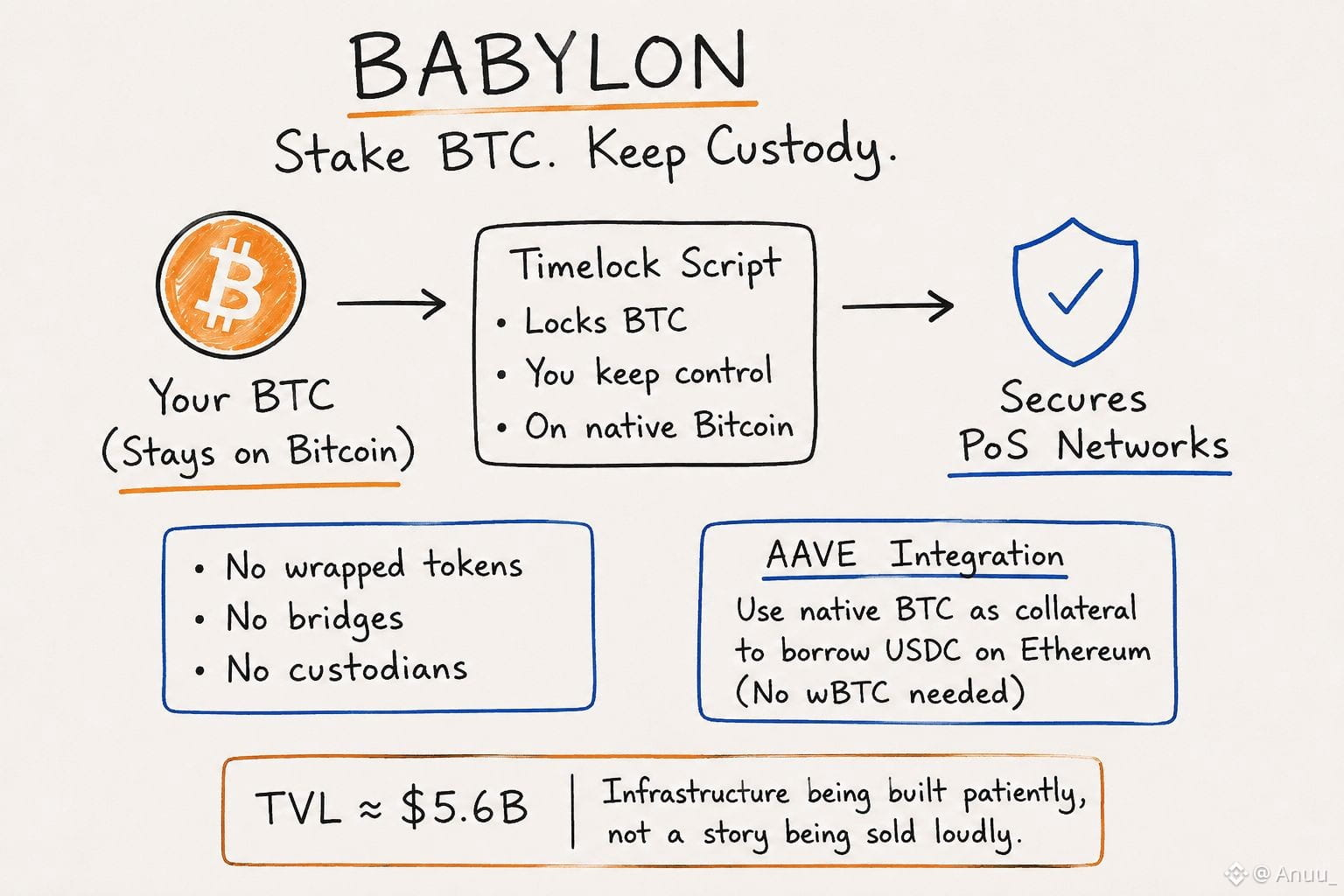
Ich komme immer wieder zu einem Detail über Babylon zurück: Das BTC verlässt Bitcoin nie wirklich. Das klingt fast zu simpel, aber es verändert den ganzen Rahmen. Babylon Genesis startete sein Mainnet am 10. April 2025, und der Ablauf der Phase 2 brachte Staker in ein Setup, in dem natives BTC PoS-Systeme absichern kann – ohne Wrapper oder Custodians.
Was meine Aufmerksamkeit nicht auf die Staking-Überschrift gelenkt hat. Es war die Art, wie Babylon versucht, die Bitcoin-Sicherheit nutzbar zu machen, ohne dass man die Kontrolle abgeben muss. In Krypto bedeutet das normalerweise eine Brücke, ein verpacktes Asset oder eine dritte Partei, die dazwischen sitzt. Hier ist das Design näher an „Auf Bitcoin bleiben und trotzdem etwas Produktives tun“, was interessanter wirkt, als es klingt.
Auch das Ausmaß ist schwer zu übersehen. Babylon sagte, es habe bis August 2025 etwa 5 Milliarden US-Dollar in Bitcoin gestaked, und es gehörte zu den Top-10-Projekten mit BTC TVL auf DeFi Llama. Das hat mich kurz innehalten lassen, denn das ist nicht mehr nur eine Whitepaper-Idee, die nach Aufmerksamkeit sucht.
Ich hatte eine weitere BTCFi-Story erwartet, die sich um Leverage und Anreize dreht, aber Babylon stellt eine andere Frage: Kann Bitcoin eine Sicherheitsschicht für andere Chains werden, ohne vorher etwas anderes zu werden? Vielleicht lese ich zu viel hinein, aber genau das wirkt dauerhaft.
Noch früh, aber irgendetwas fühlt sich anders an.
$DEXE $LAB $SYN
#USStorageStocksExtendLosses
#BrentCrudeFallsAbout6%
#CXMTStarMarketIPORaises57.9BYuan
#WTICrudeFuturesFall8%
Was meine Aufmerksamkeit nicht auf die Staking-Überschrift gelenkt hat. Es war die Art, wie Babylon versucht, die Bitcoin-Sicherheit nutzbar zu machen, ohne dass man die Kontrolle abgeben muss. In Krypto bedeutet das normalerweise eine Brücke, ein verpacktes Asset oder eine dritte Partei, die dazwischen sitzt. Hier ist das Design näher an „Auf Bitcoin bleiben und trotzdem etwas Produktives tun“, was interessanter wirkt, als es klingt.
Auch das Ausmaß ist schwer zu übersehen. Babylon sagte, es habe bis August 2025 etwa 5 Milliarden US-Dollar in Bitcoin gestaked, und es gehörte zu den Top-10-Projekten mit BTC TVL auf DeFi Llama. Das hat mich kurz innehalten lassen, denn das ist nicht mehr nur eine Whitepaper-Idee, die nach Aufmerksamkeit sucht.
Ich hatte eine weitere BTCFi-Story erwartet, die sich um Leverage und Anreize dreht, aber Babylon stellt eine andere Frage: Kann Bitcoin eine Sicherheitsschicht für andere Chains werden, ohne vorher etwas anderes zu werden? Vielleicht lese ich zu viel hinein, aber genau das wirkt dauerhaft.
Noch früh, aber irgendetwas fühlt sich anders an.
$DEXE $LAB $SYN
#USStorageStocksExtendLosses
#BrentCrudeFallsAbout6%
#CXMTStarMarketIPORaises57.9BYuan
#WTICrudeFuturesFall8%
Rain 🌧️ DEXE UP 👍
0%
Moon 🌗 LAB DOWN 🥵
0%
Love 😘 SYN BULLISH 💚
0%
Hate 🥺 BABY 🍼
0%
0 Stimmen • Abstimmung beendet
Anmelden und weiter Inhalte entdecken