
BNB Fox
3.3k Beiträge

BNB Fox
 Square Verified
Tired of crypto noise? I share what actually matters. No hype, just clarity. Follow for the edge 🦊 X: @Fox_BNB_
Trade eröffnen
Regelmäßiger Trader
2.2 Jahre
565 Following
30.0K+ Follower
5.1K+ Like gegeben
Beiträge
Portfolio
Alle
Live

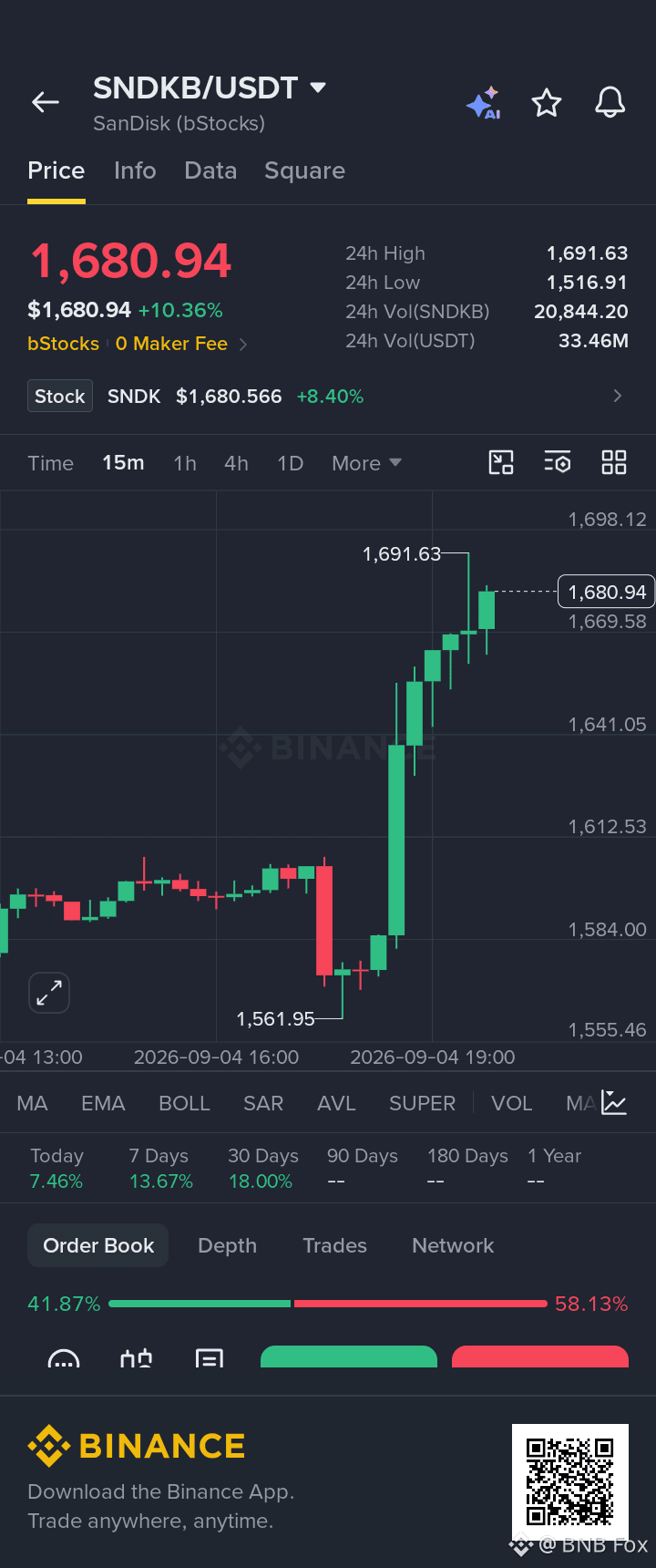
🚨 $SNDKB REIßT AB — KOMMT EIN NEUES HOCH?
$SNDKB hat eine kraftvolle V-förmige Umkehr von $1,561.95 hingelegt, ist auf $1,691.63 explodiert und hält sich nun nahe $1,680.94. 🔥
Das entspricht ungefähr +10.36% in 24H, und Käufer halten den Preis weiterhin nahe am Tageshoch.
🎯 $1,691.63 → wichtiger Ausbruchsauslöser
🚀 Darüber ausbrechen & halten → $1,700+ rückt in den Fokus
👀 $1,640–$1,670 → wichtiger Unterstützungsbereich
🔻 Wird diese Zone verloren → das Momentum könnte schnell abkühlen.
Eines zum Beobachten: Das sichtbare Orderbuch tendiert derzeit zu den Verkäufern mit ungefähr 58% Asks gegenüber 42% Bids. Die Bullen haben Momentum, aber Widerstand zeigt sich.
$SNDKB ist nur einen starken Schub davon entfernt, das Hoch zu durchbrechen. 👀🔥
Knacken die Bullen als Nächstes die $1,700?
⚠️ Keine Finanzberatung. Risiko managen.
$SNDKB hat eine kraftvolle V-förmige Umkehr von $1,561.95 hingelegt, ist auf $1,691.63 explodiert und hält sich nun nahe $1,680.94. 🔥
Das entspricht ungefähr +10.36% in 24H, und Käufer halten den Preis weiterhin nahe am Tageshoch.
🎯 $1,691.63 → wichtiger Ausbruchsauslöser
🚀 Darüber ausbrechen & halten → $1,700+ rückt in den Fokus
👀 $1,640–$1,670 → wichtiger Unterstützungsbereich
🔻 Wird diese Zone verloren → das Momentum könnte schnell abkühlen.
Eines zum Beobachten: Das sichtbare Orderbuch tendiert derzeit zu den Verkäufern mit ungefähr 58% Asks gegenüber 42% Bids. Die Bullen haben Momentum, aber Widerstand zeigt sich.
$SNDKB ist nur einen starken Schub davon entfernt, das Hoch zu durchbrechen. 👀🔥
Knacken die Bullen als Nächstes die $1,700?
⚠️ Keine Finanzberatung. Risiko managen.
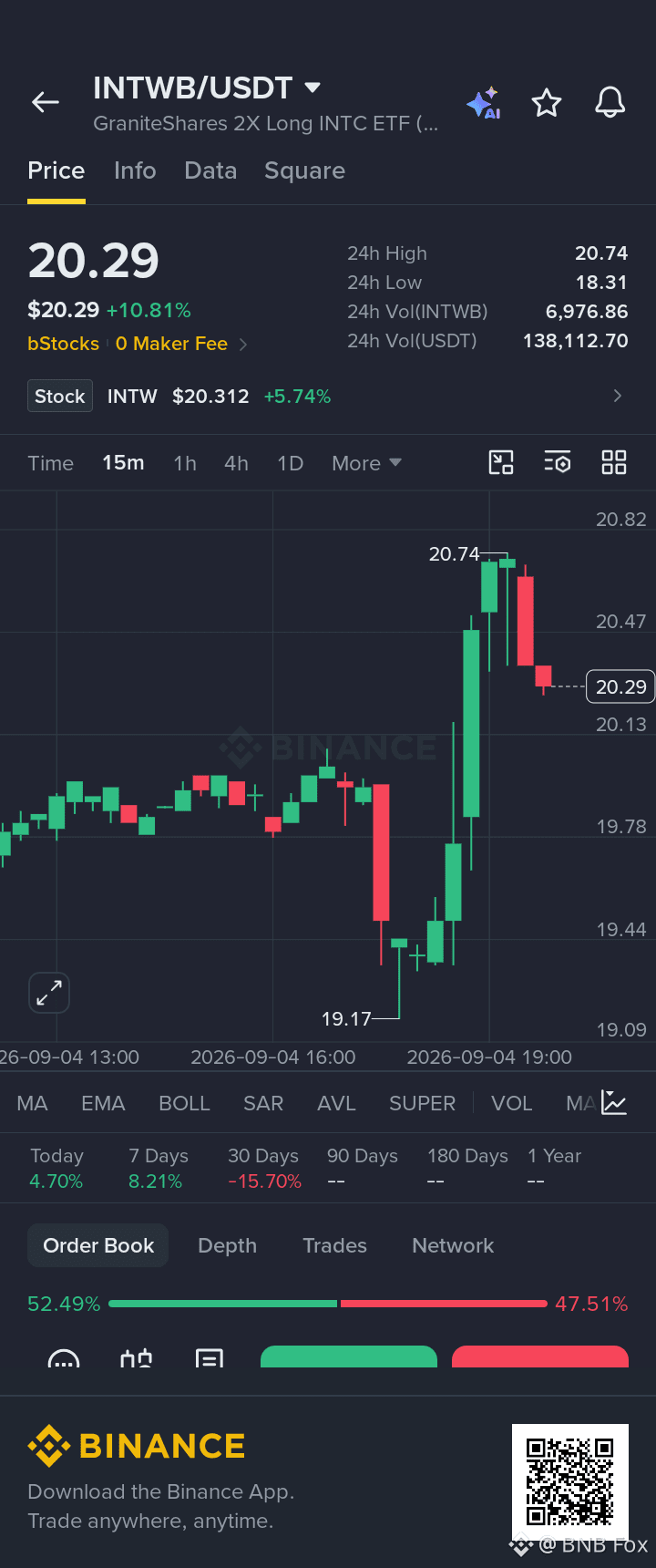
🚨 $INTWB HAT EINE GEWALTIGE UMKEHRBEWEGUNG VOLLZOGEN!
Nachdem der Kurs bis auf 19,17 $ durchgereicht wurde, griffen Käufer aggressiv ein und trieben $INTWB direkt auf 20,74 $. 🔥
Jetzt wird er um 20,29 $ gehandelt, immer noch rund +10,8 % in 24H — aber der erste echte Rücksetzer ist da.
🎯 20,74 $ → wichtiges Ausbruchsniveau
⚡ Über 20,47 $ → Bullen können an Momentum zurückgewinnen
👀 20,10–20,15 $ → unmittelbare Unterstützungszone
🔻 Fällt 19,78 $ → eine tiefere Korrektur wird möglich
Das sichtbare Orderbuch ist mit 52,5 % Bid-Volumen gegenüber 47,5 % Ask-Volumen fast ausgeglichen, daher könnte dieser nächste Kampf wichtig werden.
Die Bewegung von 19,17 $ → 20,74 $ geschah SCHNELL.
Lädt $INTWB hier wieder nach und greift 20,74 $ erneut an… oder war das das lokale Hoch? 👀🔥
⚠️ Keine Finanzberatung. Risiko managen.
Nachdem der Kurs bis auf 19,17 $ durchgereicht wurde, griffen Käufer aggressiv ein und trieben $INTWB direkt auf 20,74 $. 🔥
Jetzt wird er um 20,29 $ gehandelt, immer noch rund +10,8 % in 24H — aber der erste echte Rücksetzer ist da.
🎯 20,74 $ → wichtiges Ausbruchsniveau
⚡ Über 20,47 $ → Bullen können an Momentum zurückgewinnen
👀 20,10–20,15 $ → unmittelbare Unterstützungszone
🔻 Fällt 19,78 $ → eine tiefere Korrektur wird möglich
Das sichtbare Orderbuch ist mit 52,5 % Bid-Volumen gegenüber 47,5 % Ask-Volumen fast ausgeglichen, daher könnte dieser nächste Kampf wichtig werden.
Die Bewegung von 19,17 $ → 20,74 $ geschah SCHNELL.
Lädt $INTWB hier wieder nach und greift 20,74 $ erneut an… oder war das das lokale Hoch? 👀🔥
⚠️ Keine Finanzberatung. Risiko managen.
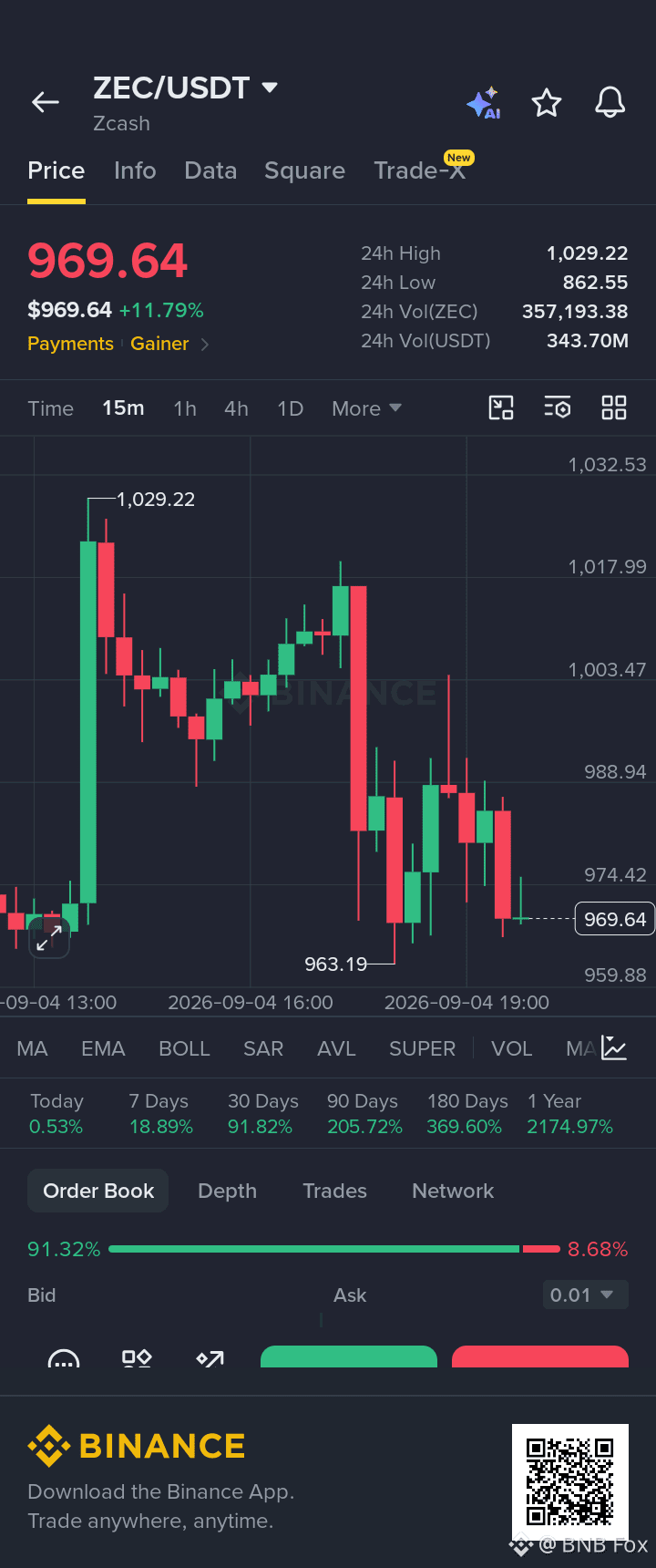
🚨 $ZEC IST AUF EINER ENTSCHEIDENDEN STUFE!
Nachdem es auf $1,029.22 explodiert ist, wurde $ZEC durch aggressives Gewinnmitnehmen getroffen und ist nun wieder in Richtung $969.64 gefallen.
Aber hier ist, was dieses Setup interessant macht 👀
Der Bereich um $963 hat bereits Käufer angezogen, und das sichtbare Orderbuch zeigt ein ungewöhnlich starkes Bid-Ungleichgewicht — in diesem Snapshot etwa 91% Bids gegenüber 9% Asks. 🔥
⚡ $989 zurückerobern → $1,003 wird zum nächsten Kampf.
🚀 $1,029 durchbrechen → die Bullen gewinnen volle Dynamik zurück.
🔻 $963 verlieren → auf eine weitere Abwärtsausweitung achten.
$ZEC liegt immer noch ungefähr bei +11.8% über 24H, aber die Volatilität ist extrem. Das ist nicht der Ort, um blind FOMO zu machen.
$963 könnte die nächste große Bewegung entscheiden.
Sind die Käufer dabei, den Kurs wieder über $1,000 zu schicken? 👀
⚠️ Keine Finanzberatung. Risiko managen.
Nachdem es auf $1,029.22 explodiert ist, wurde $ZEC durch aggressives Gewinnmitnehmen getroffen und ist nun wieder in Richtung $969.64 gefallen.
Aber hier ist, was dieses Setup interessant macht 👀
Der Bereich um $963 hat bereits Käufer angezogen, und das sichtbare Orderbuch zeigt ein ungewöhnlich starkes Bid-Ungleichgewicht — in diesem Snapshot etwa 91% Bids gegenüber 9% Asks. 🔥
⚡ $989 zurückerobern → $1,003 wird zum nächsten Kampf.
🚀 $1,029 durchbrechen → die Bullen gewinnen volle Dynamik zurück.
🔻 $963 verlieren → auf eine weitere Abwärtsausweitung achten.
$ZEC liegt immer noch ungefähr bei +11.8% über 24H, aber die Volatilität ist extrem. Das ist nicht der Ort, um blind FOMO zu machen.
$963 könnte die nächste große Bewegung entscheiden.
Sind die Käufer dabei, den Kurs wieder über $1,000 zu schicken? 👀
⚠️ Keine Finanzberatung. Risiko managen.
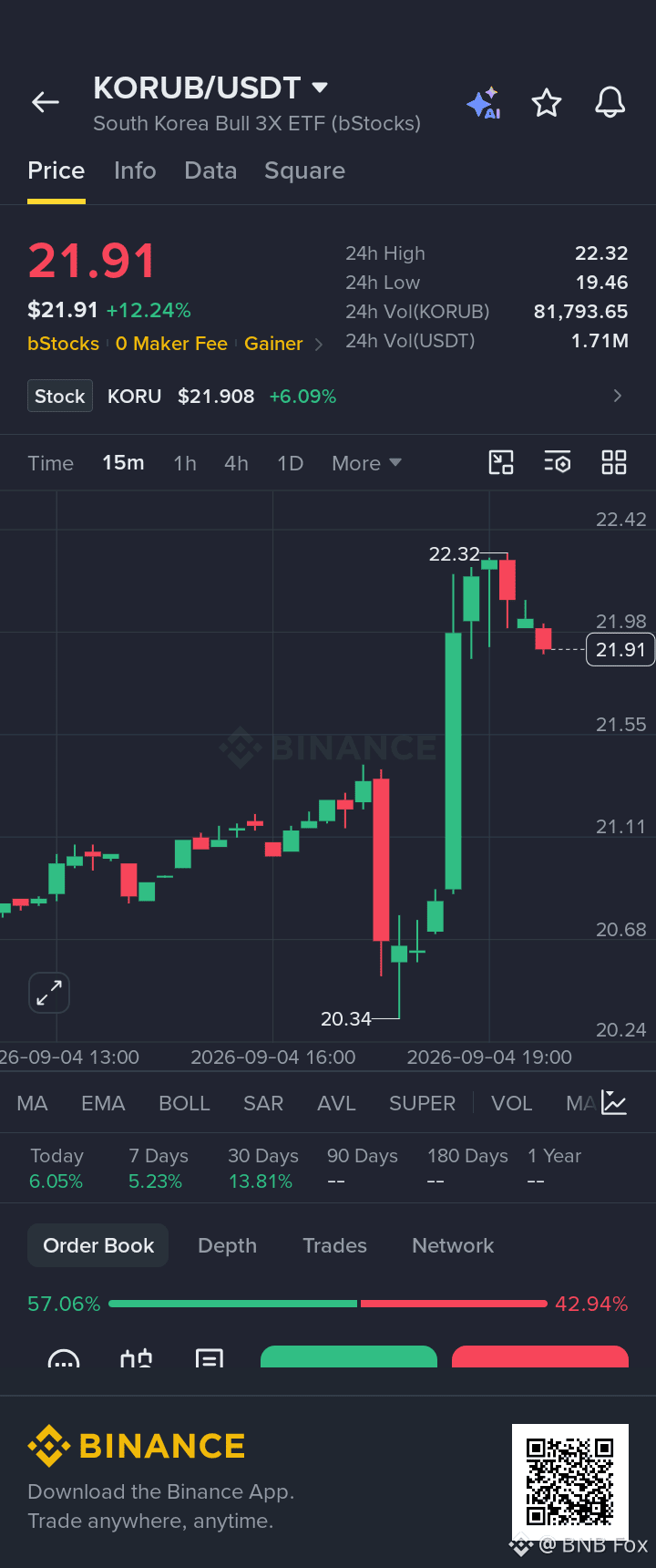
🚨 $KORUB IST GERADE EXPLODIERT — ABER JETZT KOMMT DER ECHTE TEST!
$KORUB prallte heftig von $20.34 → $22.32 ab, zeigte eine massive bullische Expansion und schob das Paar um etwa +12.2% in 24H nach oben. 🔥
Jetzt kühlt sich der Preis um $21.91 ab, knapp unter dem jüngsten Hoch.
⚡ Über $22.32 hinausbrechen → Bullen könnten eine weitere Aufwärtsbewegung auslösen.
👀 $21.55–$21.70 halten → die bullische Struktur bleibt intakt.
🔻 $21.10 verlieren → tiefere Gewinnmitnahmen könnten einsetzen.
Selbst nach dem Rücksetzer zeigt das Orderbuch ungefähr 57% Bids gegenüber 43% Asks — Käufer sind noch nicht verschwunden.
Die einfache Bewegung ist bereits passiert.
Jetzt entscheidet $22.32, ob daraus ein weiterer Ausbruch wird… oder ein lokales Top. 👀🔥
⚠️ Keine Finanzberatung. Risikomanagement beachten und dem vertikalen Kerzenverlauf nicht hinterherjagen.
$KORUB prallte heftig von $20.34 → $22.32 ab, zeigte eine massive bullische Expansion und schob das Paar um etwa +12.2% in 24H nach oben. 🔥
Jetzt kühlt sich der Preis um $21.91 ab, knapp unter dem jüngsten Hoch.
⚡ Über $22.32 hinausbrechen → Bullen könnten eine weitere Aufwärtsbewegung auslösen.
👀 $21.55–$21.70 halten → die bullische Struktur bleibt intakt.
🔻 $21.10 verlieren → tiefere Gewinnmitnahmen könnten einsetzen.
Selbst nach dem Rücksetzer zeigt das Orderbuch ungefähr 57% Bids gegenüber 43% Asks — Käufer sind noch nicht verschwunden.
Die einfache Bewegung ist bereits passiert.
Jetzt entscheidet $22.32, ob daraus ein weiterer Ausbruch wird… oder ein lokales Top. 👀🔥
⚠️ Keine Finanzberatung. Risikomanagement beachten und dem vertikalen Kerzenverlauf nicht hinterherjagen.
🚨 $MUUB IST GERADE PARABOLISCH ANGESTIEGEN!
Nachdem der Kurs bis auf 30,94 $ gefallen war, haben die Käufer das Momentum komplett gedreht und $MUUB auf 33,51 $ gebracht. 🔥
Das Paar wird jetzt bei etwa 33,03 $ gehandelt, was einem Anstieg von rund +13,4 % in 24H entspricht.
Aber hier wird es interessant:
⚡ 33,51 $ Ausbruch → möglicherweise folgt eine weitere bullische Expansion.
👀 32,50 $–32,90 $ hält → die Struktur bleibt stark.
🔻 Fällt 32,50 $ → das Momentum könnte sich schnell abkühlen.
Der Preis konsolidiert sich direkt unter dem Hoch nach einer explosiven Umkehr — eine wichtige Entscheidungszone.
Eine Warnung: Das Orderbuch zeigt derzeit ungefähr 55,5 % Asks gegenüber 44,5 % Bids, also drücken die Verkäufer zurück.
33,51 $ ist der Auslöser. Wird diese Marke mit Stärke gebrochen, könnte $MUUB wieder heiß laufen. 👀🔥
Ausbruch oder Zurückweisung?
⚠️ Keine Finanzberatung. Risikomanagement beachten.
Nachdem der Kurs bis auf 30,94 $ gefallen war, haben die Käufer das Momentum komplett gedreht und $MUUB auf 33,51 $ gebracht. 🔥
Das Paar wird jetzt bei etwa 33,03 $ gehandelt, was einem Anstieg von rund +13,4 % in 24H entspricht.
Aber hier wird es interessant:
⚡ 33,51 $ Ausbruch → möglicherweise folgt eine weitere bullische Expansion.
👀 32,50 $–32,90 $ hält → die Struktur bleibt stark.
🔻 Fällt 32,50 $ → das Momentum könnte sich schnell abkühlen.
Der Preis konsolidiert sich direkt unter dem Hoch nach einer explosiven Umkehr — eine wichtige Entscheidungszone.
Eine Warnung: Das Orderbuch zeigt derzeit ungefähr 55,5 % Asks gegenüber 44,5 % Bids, also drücken die Verkäufer zurück.
33,51 $ ist der Auslöser. Wird diese Marke mit Stärke gebrochen, könnte $MUUB wieder heiß laufen. 👀🔥
Ausbruch oder Zurückweisung?
⚠️ Keine Finanzberatung. Risikomanagement beachten.
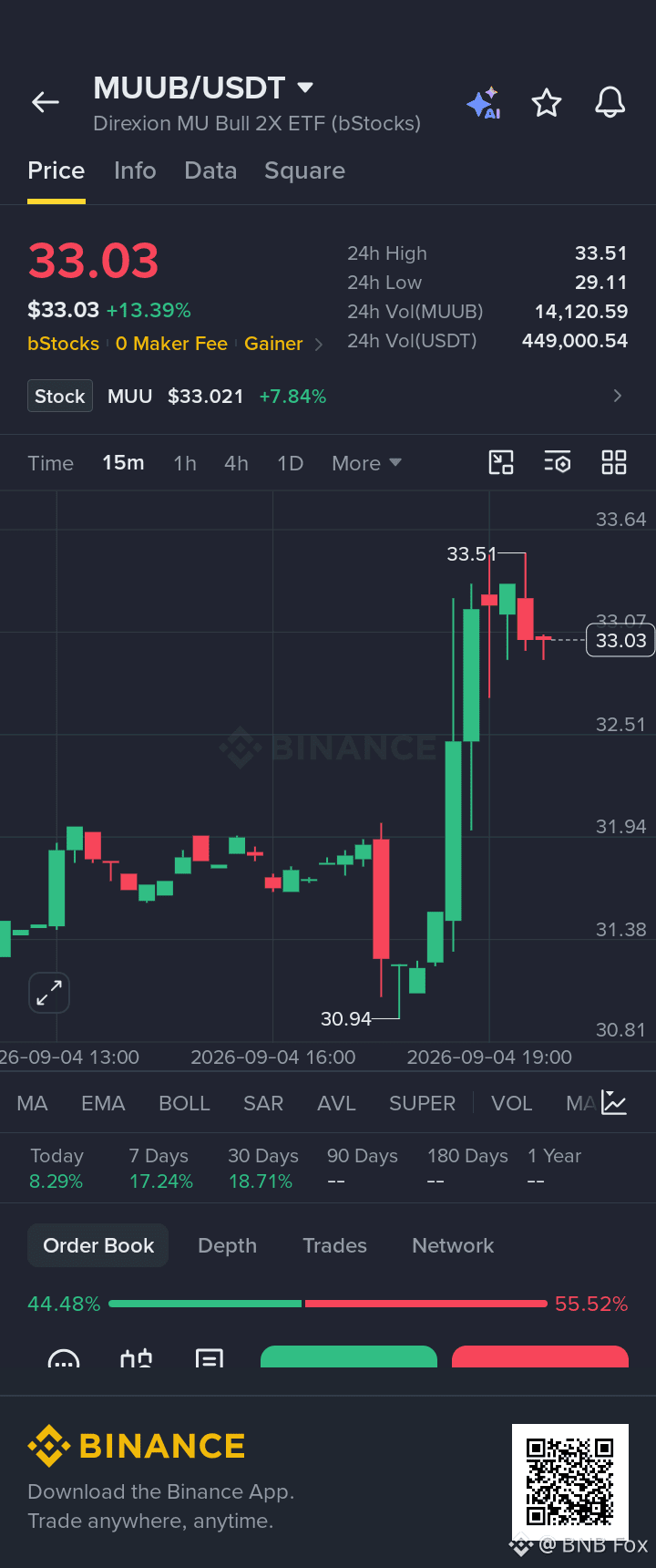
🚨 $CBRSB IST GERADE EXPLODIERT — KÄUFER HABEN DIE KONTROLLE!
$CBRSB ist von etwa $188.32 auf $210.53 gestiegen, mit einer Reihe aggressiver grüner Kerzen, die das Paar um rund +13.5% in 24H nach oben treiben. 🔥
Und jetzt kommt der entscheidende Teil…
Der Preis hält sich nahe $208.92, knapp unter dem Hoch, statt sofort abverkauft zu werden.
⚡ Über $210.53 ausbrechen → Bullen könnten eine weitere Expansion freischalten.
👀 $206–$207 hält → das Momentum bleibt stark.
🔻 Unter $202 fallen → eine tiefere Gewinnmitnahme wird wahrscheinlicher.
Das Orderbuch zeigt derzeit außerdem ungefähr 64% Bids gegenüber 36% Asks — Käufer sind ganz klar präsent.
Dieser Chart ist schnell von ruhiger Konsolidierung zu einer vollständigen vertikalen Expansion übergegangen.
$210.53 ist das Niveau, das jeder im Auge behalten sollte. 👀🔥
Der nächste Ausbruch… oder ist der Pump erschöpft?
⚠️ Keine Finanzberatung. Verwalte dein Risiko.
$CBRSB ist von etwa $188.32 auf $210.53 gestiegen, mit einer Reihe aggressiver grüner Kerzen, die das Paar um rund +13.5% in 24H nach oben treiben. 🔥
Und jetzt kommt der entscheidende Teil…
Der Preis hält sich nahe $208.92, knapp unter dem Hoch, statt sofort abverkauft zu werden.
⚡ Über $210.53 ausbrechen → Bullen könnten eine weitere Expansion freischalten.
👀 $206–$207 hält → das Momentum bleibt stark.
🔻 Unter $202 fallen → eine tiefere Gewinnmitnahme wird wahrscheinlicher.
Das Orderbuch zeigt derzeit außerdem ungefähr 64% Bids gegenüber 36% Asks — Käufer sind ganz klar präsent.
Dieser Chart ist schnell von ruhiger Konsolidierung zu einer vollständigen vertikalen Expansion übergegangen.
$210.53 ist das Niveau, das jeder im Auge behalten sollte. 👀🔥
Der nächste Ausbruch… oder ist der Pump erschöpft?
⚠️ Keine Finanzberatung. Verwalte dein Risiko.
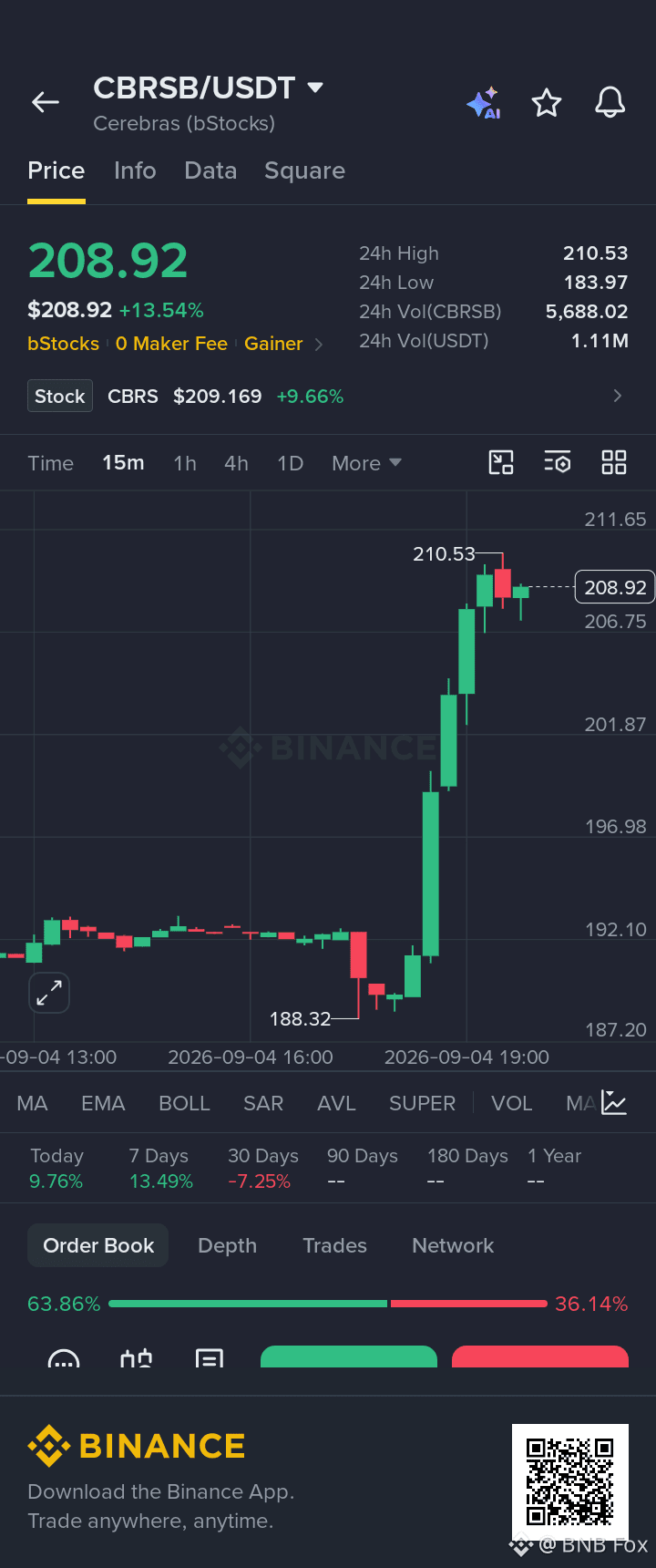
🚨 $SOXLB HAT GERADE EINE MONSTER-UMKEHR GEDRUCKT!
Nachdem der Kurs auf $108.96 abgestraft wurde, griffen die Käufer hart ein und trieben $SOXLB bis auf $117.83 nach oben. 🔥
Jetzt kühlt sich der Preis um $115.68 ab, aber das Paar liegt weiterhin ungefähr +14% in 24H.
Das ist die Zone, die ich beobachte:
⚡ Über $117.83 ausbrechen → eine frische bullische Fortsetzung könnte beginnen.
👀 $114–$115 halten → die Bullen bleiben in Kontrolle.
🔻 $114 verlieren → stärkere Gewinnmitnahmen werden möglich.
Diese explosive V-förmige Erholung zeigt ernsthaftes Momentum — aber nach so einer vertikalen Bewegung ist es riskant, hier noch hinterherzujagen.
$117.83 ist die entscheidende Marke. Wird sie gebrochen, könnte es SCHNELL interessant werden. 🚀
Bullisch oder eher eine größere Korrektur erwartet?
⚠️ Keine Finanzberatung. Risikomanagement beachten.
Nachdem der Kurs auf $108.96 abgestraft wurde, griffen die Käufer hart ein und trieben $SOXLB bis auf $117.83 nach oben. 🔥
Jetzt kühlt sich der Preis um $115.68 ab, aber das Paar liegt weiterhin ungefähr +14% in 24H.
Das ist die Zone, die ich beobachte:
⚡ Über $117.83 ausbrechen → eine frische bullische Fortsetzung könnte beginnen.
👀 $114–$115 halten → die Bullen bleiben in Kontrolle.
🔻 $114 verlieren → stärkere Gewinnmitnahmen werden möglich.
Diese explosive V-förmige Erholung zeigt ernsthaftes Momentum — aber nach so einer vertikalen Bewegung ist es riskant, hier noch hinterherzujagen.
$117.83 ist die entscheidende Marke. Wird sie gebrochen, könnte es SCHNELL interessant werden. 🚀
Bullisch oder eher eine größere Korrektur erwartet?
⚠️ Keine Finanzberatung. Risikomanagement beachten.
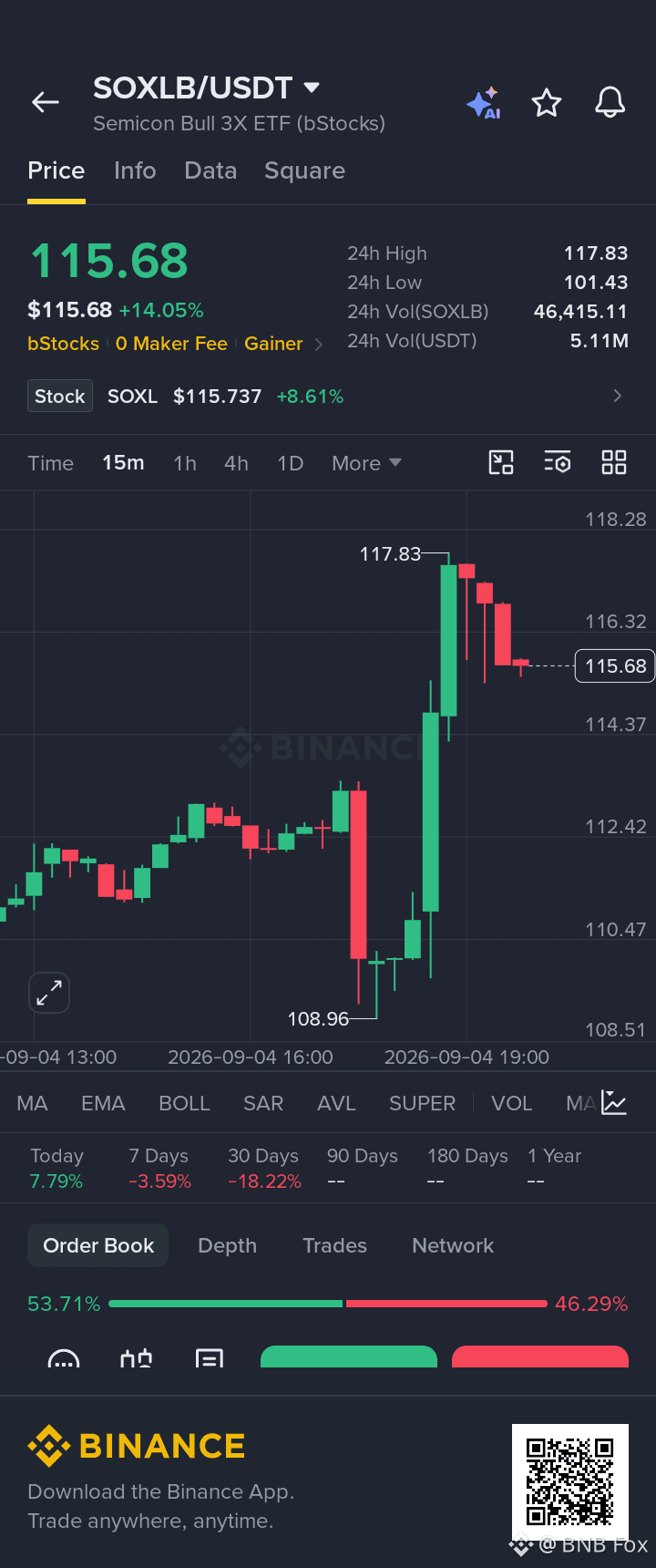
🚨 $DASH IST GERADE ERWACHT — ABER DIESE MARKTZONE ENTSCHEIDET ALLES!
$DASH stieg bis auf $54.60, bevor Verkäufer es wieder auf etwa $50 zurückdrückten, und dennoch liegt es in 24H immer noch bei rund +15%. 🔥
Jetzt komprimiert sich der Kurs, nachdem $49.23 verteidigt wurde — und das schafft ein entscheidendes Schlachtfeld.
⚡ $50.50–$51.30 zurückerobert → Bullen könnten $52.50 anpeilen, dann erneut $54.60.
🔻 $49.23 verloren → das Momentum könnte schnell kippen.
Der interessante Teil? Nach diesem brutalen Abverkauf nehmen Käufer den Druck um $50 weiterhin auf, anstatt komplett zu verschwinden.
$DASH spannt sich zusammen. Der nächste Ausbruch könnte heftig werden. 👀
Würdest du den Retest von $54.60 handeln oder erwartest du zuerst einen weiteren Dump?
⚠️ Keine Finanzberatung. Handle mit angemessenem Risikomanagement.
$DASH stieg bis auf $54.60, bevor Verkäufer es wieder auf etwa $50 zurückdrückten, und dennoch liegt es in 24H immer noch bei rund +15%. 🔥
Jetzt komprimiert sich der Kurs, nachdem $49.23 verteidigt wurde — und das schafft ein entscheidendes Schlachtfeld.
⚡ $50.50–$51.30 zurückerobert → Bullen könnten $52.50 anpeilen, dann erneut $54.60.
🔻 $49.23 verloren → das Momentum könnte schnell kippen.
Der interessante Teil? Nach diesem brutalen Abverkauf nehmen Käufer den Druck um $50 weiterhin auf, anstatt komplett zu verschwinden.
$DASH spannt sich zusammen. Der nächste Ausbruch könnte heftig werden. 👀
Würdest du den Retest von $54.60 handeln oder erwartest du zuerst einen weiteren Dump?
⚠️ Keine Finanzberatung. Handle mit angemessenem Risikomanagement.
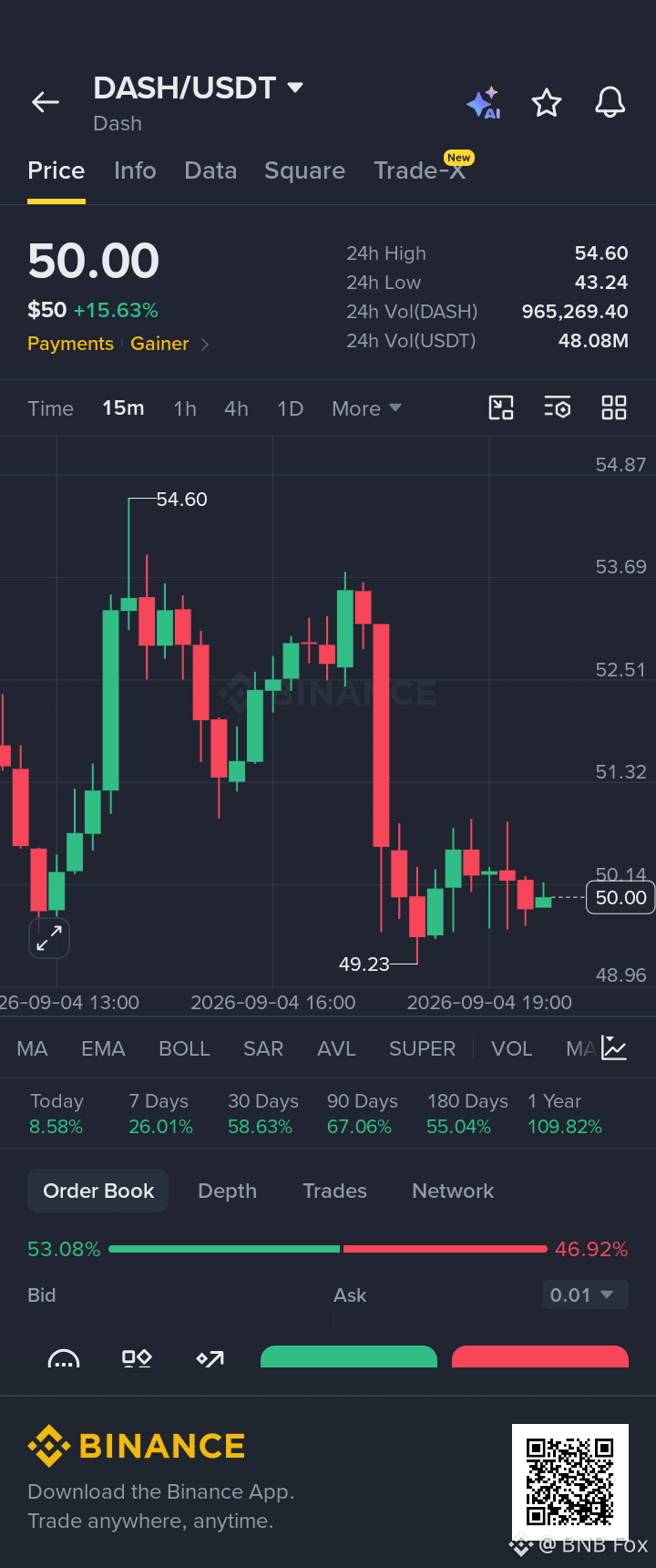
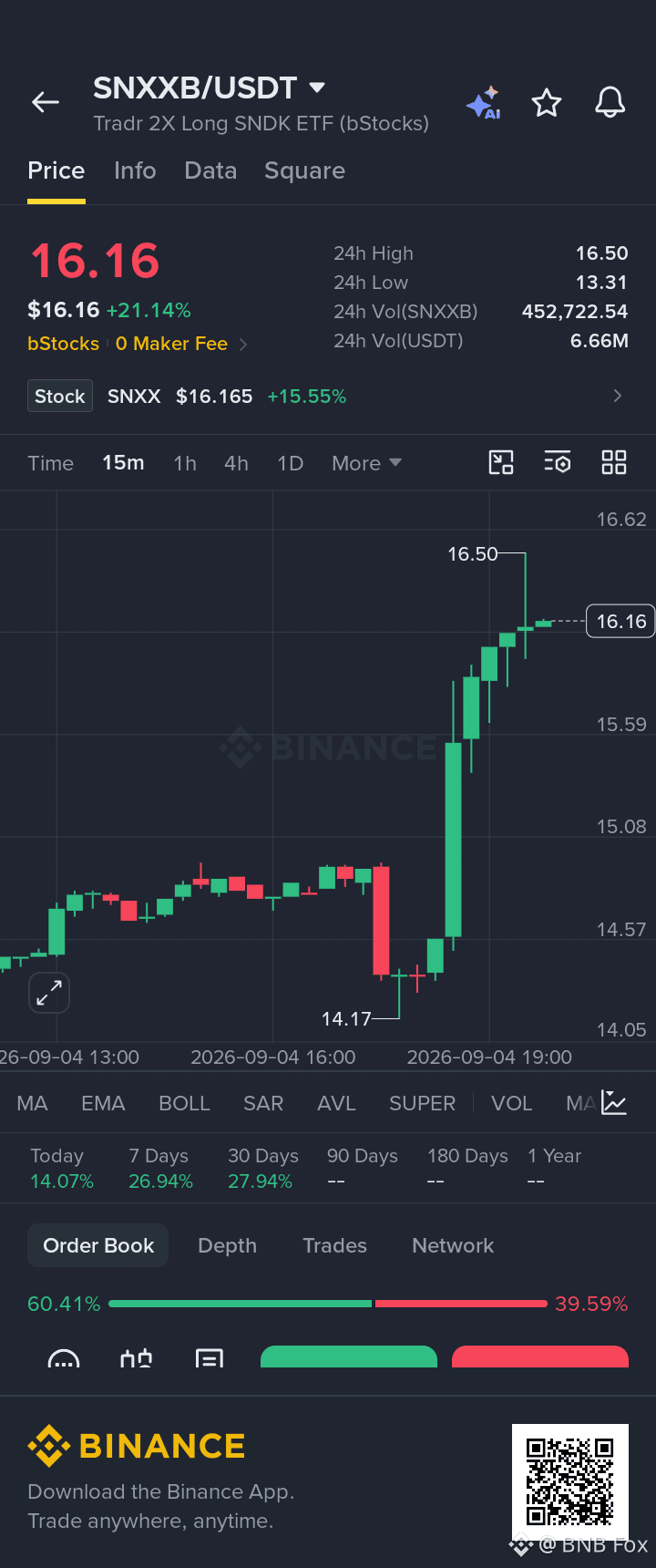
🚨 $SNXXB FLIEGT ABSOLUT!
Käufer sind gerade aggressiv eingestiegen und haben $SNXXB von etwa $14.17 auf $16.50 getrieben, während das Paar bei ungefähr +21% in 24H liegt. 🔥
Der 15M-Chart zeigt eine starke bullische Expansion, gefolgt davon, dass sich der Preis nahe den Höchstständen hält — genau dort, wo es interessant wird.
👀 Wichtige Marke: $16.50
Ein Ausbruch und Halten darüber → die Bullen könnten in eine weitere Expansion übergehen.
Ablehnung hier → achtet auf einen Rücksetzer in Richtung der jüngsten Ausbruchszone.
Das Orderbuch zeigt derzeit ungefähr 60% Bids gegenüber 40% Asks, was den kurzfristigen bullischen Druck zusätzlich verstärkt.
Jagt keine vertikale Kerze blind hinterher. Lasst den Markt die nächste Bewegung bestätigen.
$SNXXB Bullen — brechen wir als Nächstes die $16.50? 🚀
⚠️ Keine Finanzberatung. Risikomanagement beachten.
Käufer sind gerade aggressiv eingestiegen und haben $SNXXB von etwa $14.17 auf $16.50 getrieben, während das Paar bei ungefähr +21% in 24H liegt. 🔥
Der 15M-Chart zeigt eine starke bullische Expansion, gefolgt davon, dass sich der Preis nahe den Höchstständen hält — genau dort, wo es interessant wird.
👀 Wichtige Marke: $16.50
Ein Ausbruch und Halten darüber → die Bullen könnten in eine weitere Expansion übergehen.
Ablehnung hier → achtet auf einen Rücksetzer in Richtung der jüngsten Ausbruchszone.
Das Orderbuch zeigt derzeit ungefähr 60% Bids gegenüber 40% Asks, was den kurzfristigen bullischen Druck zusätzlich verstärkt.
Jagt keine vertikale Kerze blind hinterher. Lasst den Markt die nächste Bewegung bestätigen.
$SNXXB Bullen — brechen wir als Nächstes die $16.50? 🚀
⚠️ Keine Finanzberatung. Risikomanagement beachten.
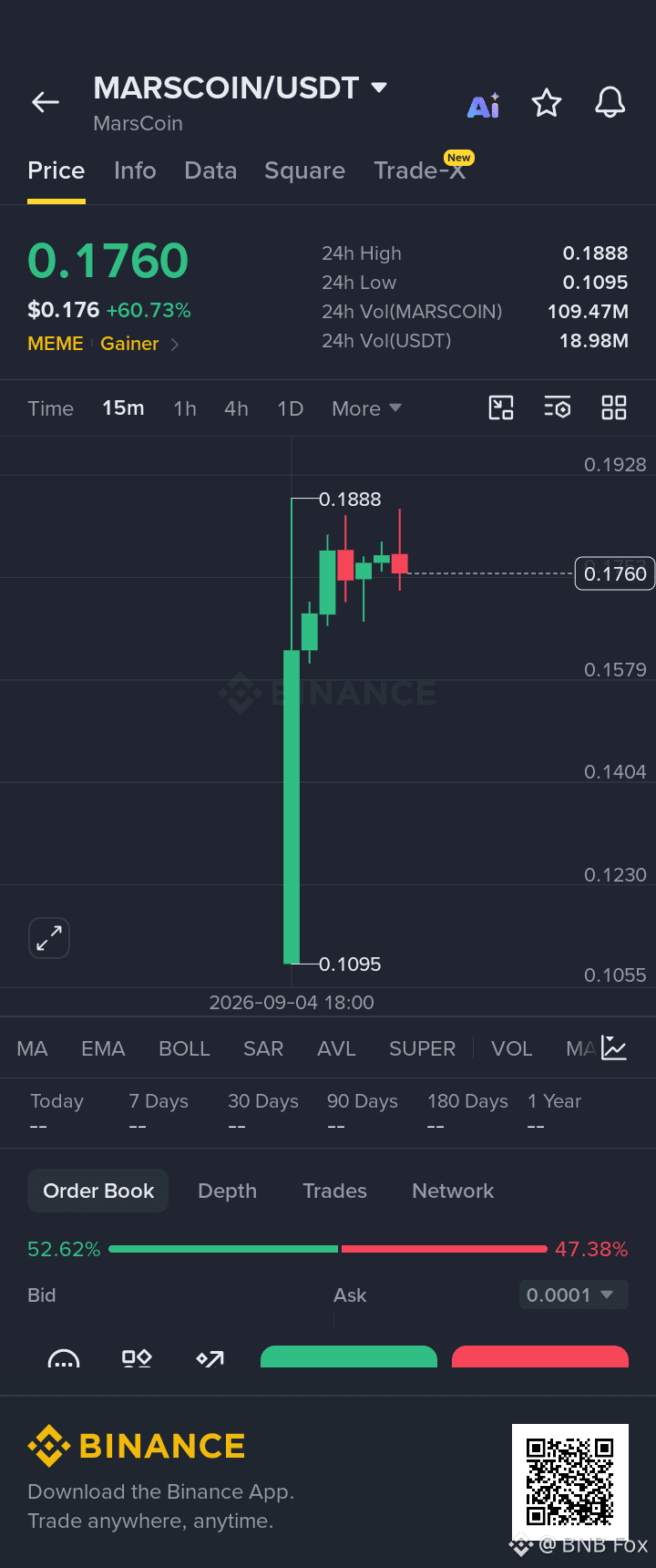
🚨 $MARSCOIN IST GERADE VERTIKAL GEHEN!
MarsCoin ist um über +60 % explodiert und stieg von etwa $0.1095 auf $0.1888, bevor er sich nahe $0.176 abkühlte.
Diese erste Kerze ist absolut wild. 🔥
Jetzt beginnt der eigentliche Kampf:
Über $0.1888 → ein weiterer Ausbruch könnte Price Discovery auslösen.
Verliert $0.158 → das Momentum könnte schnell kippen.
Nach einer so aggressiven Bewegung ist es gefährlich, der grünen Kerze hinterherzujagen. Ich beobachte, ob Käufer die aktuelle Konsolidierung verteidigen und das Hoch erneut angreifen können.
$MARSCOIN steht offiziell auf meinem Radar. 👀
⚠️ Meme-Coins können brutal umkehren. Risikomanagement betreiben und nicht FOMO bekommen.
Würdest du den Ausbruch KAUFEN oder auf den Rücksetzer warten?
MarsCoin ist um über +60 % explodiert und stieg von etwa $0.1095 auf $0.1888, bevor er sich nahe $0.176 abkühlte.
Diese erste Kerze ist absolut wild. 🔥
Jetzt beginnt der eigentliche Kampf:
Über $0.1888 → ein weiterer Ausbruch könnte Price Discovery auslösen.
Verliert $0.158 → das Momentum könnte schnell kippen.
Nach einer so aggressiven Bewegung ist es gefährlich, der grünen Kerze hinterherzujagen. Ich beobachte, ob Käufer die aktuelle Konsolidierung verteidigen und das Hoch erneut angreifen können.
$MARSCOIN steht offiziell auf meinem Radar. 👀
⚠️ Meme-Coins können brutal umkehren. Risikomanagement betreiben und nicht FOMO bekommen.
Würdest du den Ausbruch KAUFEN oder auf den Rücksetzer warten?
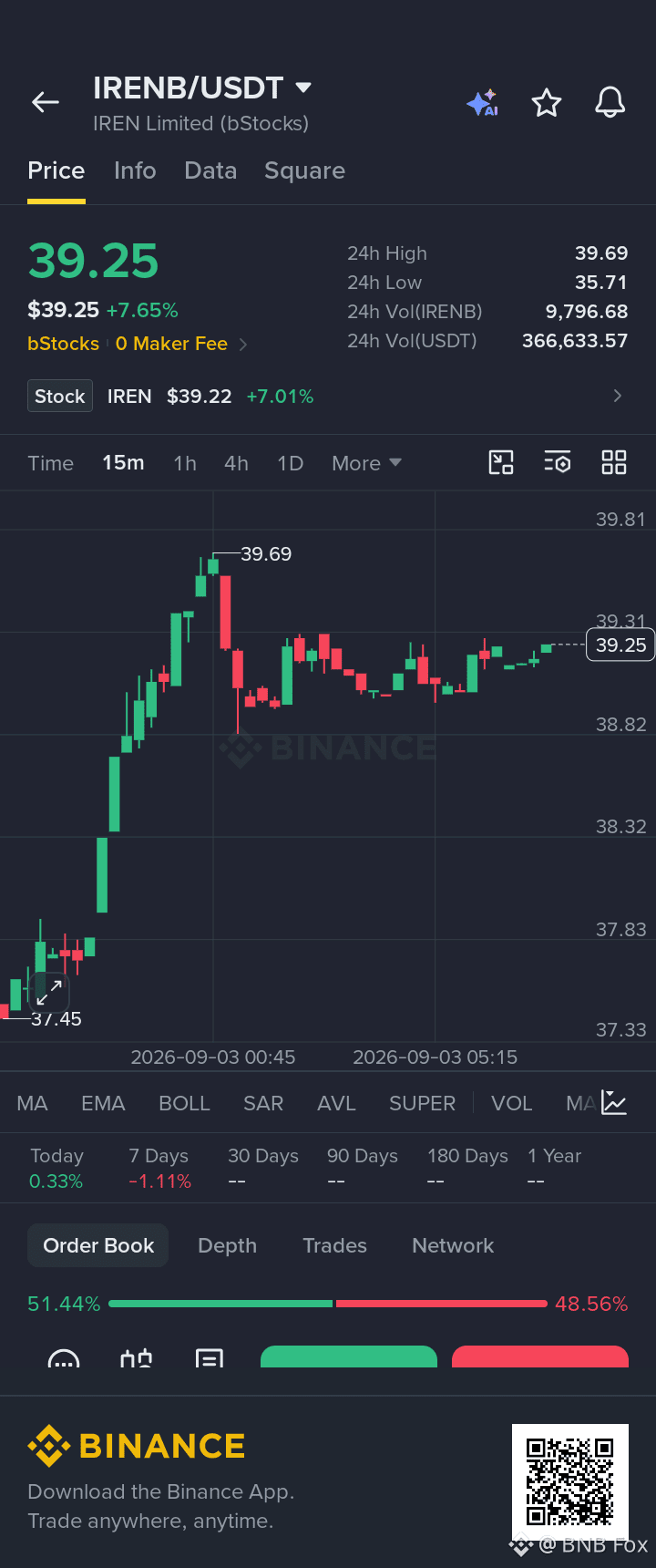
🚨 $IRENB LANGER AUFBAU — KONSOLIDIERUNG VOR EINEM WEITEREN PUSH?
$IRENB handelt rund $39.25, +7.65% im Plus, nach einer starken Rallye von etwa $37.45 auf $39.69.
🟢 Einstiegszone: $39.00–$39.25
🎯 TP1: $39.50
🎯 TP2: $39.69
🎯 TP3: $40.20
🛑 Stop Loss: $38.75
Nach der Abweisung bei $39.69 ist der Kurs nicht eingebrochen. Stattdessen konsolidiert der 15M-Chart um $38.90–$39.30 und drückt sich allmählich wieder nach oben.
🔥 $39.31 = erster Ausbruch-Trigger
🚀 $39.69 = wichtiges Widerstandslevel
Ein sauberer Break über $39.69 könnte den Weg in Richtung der psychologischen $40+-Zone öffnen.
Hält $38.82 → die Struktur bleibt konstruktiv.
Break $39.69 → Bullen könnten FAST beschleunigen. 👀
Keine Finanzberatung. Risiko managen.
$IRENB handelt rund $39.25, +7.65% im Plus, nach einer starken Rallye von etwa $37.45 auf $39.69.
🟢 Einstiegszone: $39.00–$39.25
🎯 TP1: $39.50
🎯 TP2: $39.69
🎯 TP3: $40.20
🛑 Stop Loss: $38.75
Nach der Abweisung bei $39.69 ist der Kurs nicht eingebrochen. Stattdessen konsolidiert der 15M-Chart um $38.90–$39.30 und drückt sich allmählich wieder nach oben.
🔥 $39.31 = erster Ausbruch-Trigger
🚀 $39.69 = wichtiges Widerstandslevel
Ein sauberer Break über $39.69 könnte den Weg in Richtung der psychologischen $40+-Zone öffnen.
Hält $38.82 → die Struktur bleibt konstruktiv.
Break $39.69 → Bullen könnten FAST beschleunigen. 👀
Keine Finanzberatung. Risiko managen.
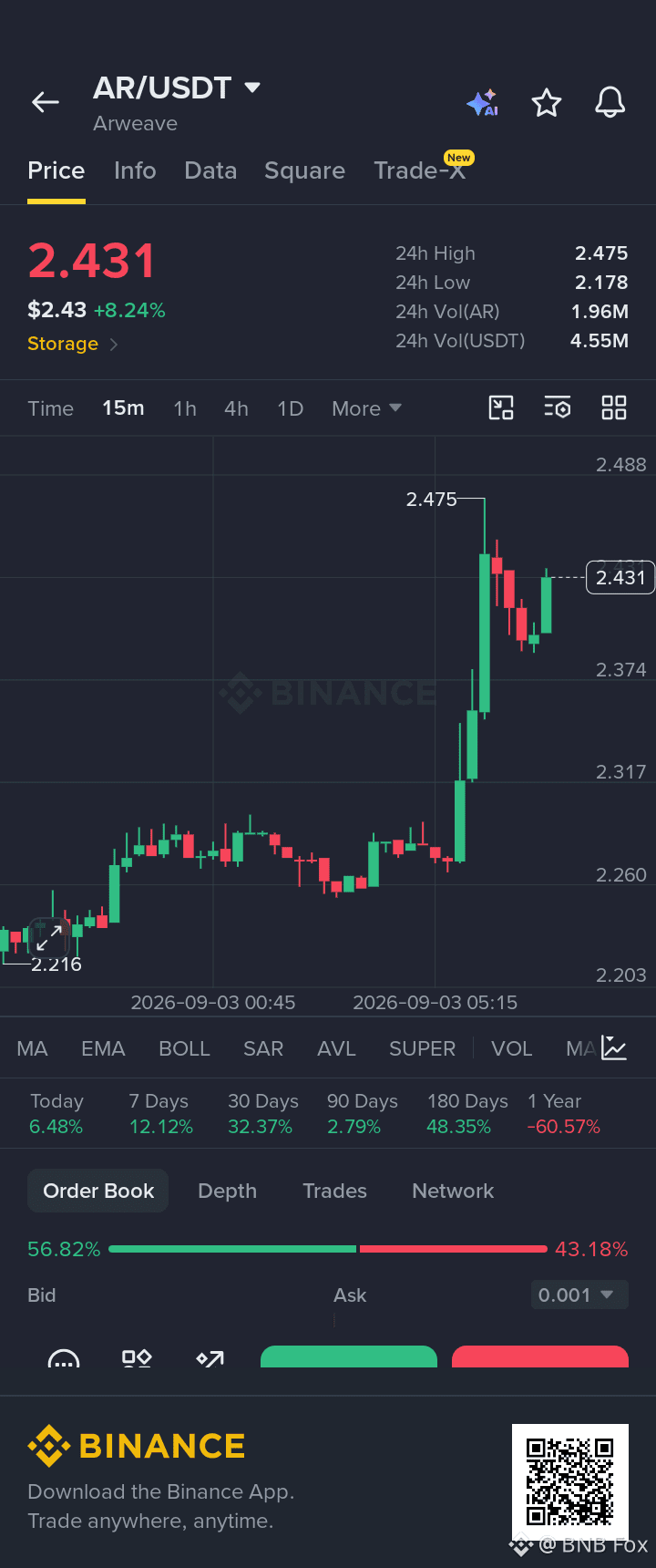
🚨 $AR LONG SETUP — EXPLOSIVER AUSBRUCH, BULLS WOLLEN MEHR!
$AR handelt derzeit um 2,431 USD, +8,24%, nachdem sie sich gewaltsam aus dem Bereich von 2,26 gelöst und 2,475 erreicht hat.
🟢 Einstiegzone: 2,39–2,43
🎯 TP1: 2,475
🎯 TP2: 2,52
🎯 TP3: 2,60
🛑 Stop Loss: 2,36
Die erste Ablehnung bei 2,475 wurde schnell gekauft, und der Kurs drückt jetzt erneut nach oben.
🔥 Wichtiger Auslöser: 2,475
Brich 2,475 → 2,50+ könnte SCHNELL kommen.
🚀 Halte über 2,40 → Bullen bleiben in Kontrolle.
⚠️ Verliere 2,374 → Ausbruchsmomentum schwächt sich.
Das angezeigte Orderbuch begünstigt außerdem Käufer mit ca. 57% Bids vs. 43% Asks.
$AR ist noch nicht wieder auf dem Hoch — aber die Bullen klopfen bereits erneut an die Tür. 👀🔥
Keine Finanzberatung. Risikomanagement beachten.
$AR handelt derzeit um 2,431 USD, +8,24%, nachdem sie sich gewaltsam aus dem Bereich von 2,26 gelöst und 2,475 erreicht hat.
🟢 Einstiegzone: 2,39–2,43
🎯 TP1: 2,475
🎯 TP2: 2,52
🎯 TP3: 2,60
🛑 Stop Loss: 2,36
Die erste Ablehnung bei 2,475 wurde schnell gekauft, und der Kurs drückt jetzt erneut nach oben.
🔥 Wichtiger Auslöser: 2,475
Brich 2,475 → 2,50+ könnte SCHNELL kommen.
🚀 Halte über 2,40 → Bullen bleiben in Kontrolle.
⚠️ Verliere 2,374 → Ausbruchsmomentum schwächt sich.
Das angezeigte Orderbuch begünstigt außerdem Käufer mit ca. 57% Bids vs. 43% Asks.
$AR ist noch nicht wieder auf dem Hoch — aber die Bullen klopfen bereits erneut an die Tür. 👀🔥
Keine Finanzberatung. Risikomanagement beachten.
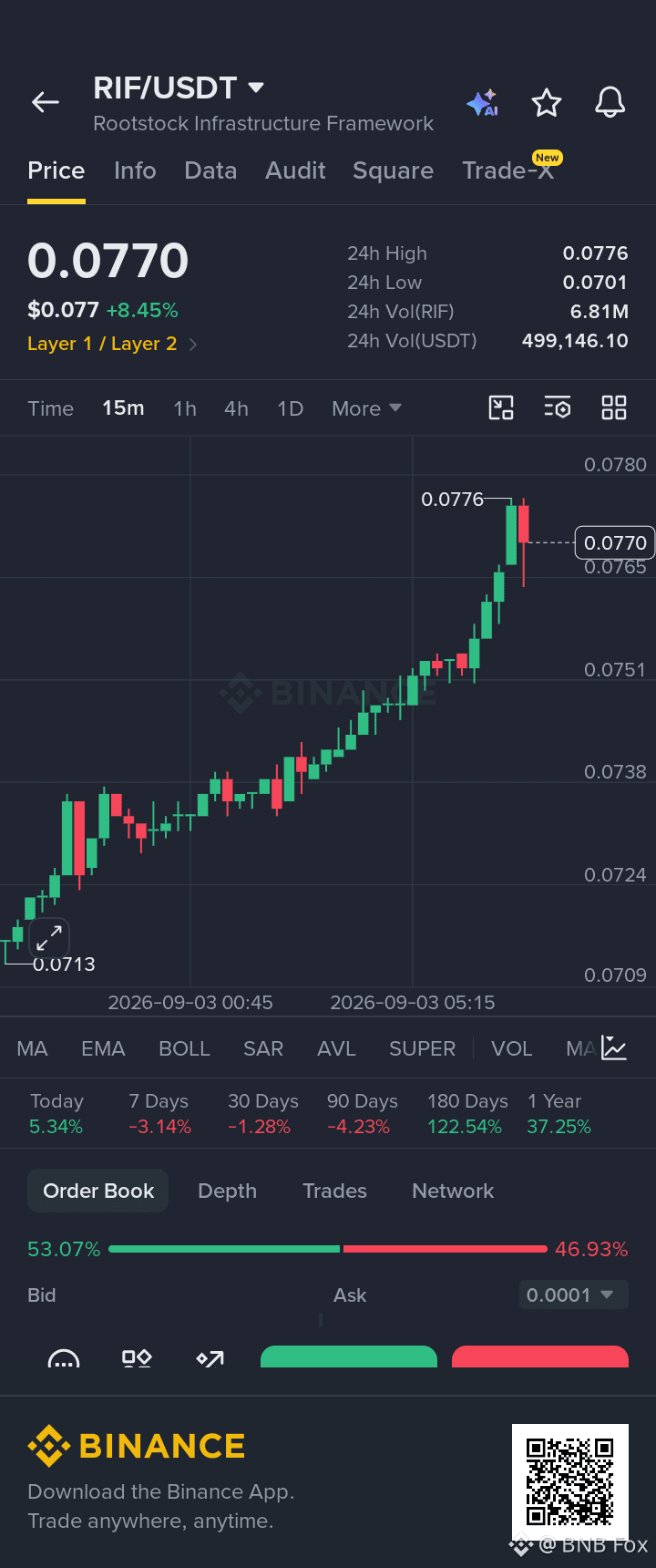
🚨 $RIF LANGES SETUP — BULLEN KLINGEN AN ANBRUCHZONE DES AUSBRUCHS!
$RIF handelt bei etwa 0,0770 $, +8,45 % in 24 Std., nachdem es eine saubere 15M-Welle von ungefähr 0,0713 $ nach oben gegeben hat.
🟢 Entry-Zone: 0,0763–0,0770
🎯 TP1: 0,0776
🎯 TP2: 0,0785
🎯 TP3: 0,0800
🛑 Stop-Loss: 0,0750
Die Struktur bleibt bullisch mit einer starken Reihe aus höheren Hochs und höheren Tiefs, aber $RIF wurde gerade an dem 0,0776 24H-Hoch abgewiesen.
🔥 0,0776 ist der Auslöser.
Ein sauberer 15M-Close über dieser Marke könnte die nächste Ausdehnung Richtung 0,0785–0,0800 entfachen.
⚠️ Wenn 0,0751 scheitert, beginnt der bullische Drive an Stärke zu verlieren.
Brich 0,0776 → Bullen könnten es FAST pushen. 🚀
Keine finanzielle Beratung. Risiko managen.
$RIF handelt bei etwa 0,0770 $, +8,45 % in 24 Std., nachdem es eine saubere 15M-Welle von ungefähr 0,0713 $ nach oben gegeben hat.
🟢 Entry-Zone: 0,0763–0,0770
🎯 TP1: 0,0776
🎯 TP2: 0,0785
🎯 TP3: 0,0800
🛑 Stop-Loss: 0,0750
Die Struktur bleibt bullisch mit einer starken Reihe aus höheren Hochs und höheren Tiefs, aber $RIF wurde gerade an dem 0,0776 24H-Hoch abgewiesen.
🔥 0,0776 ist der Auslöser.
Ein sauberer 15M-Close über dieser Marke könnte die nächste Ausdehnung Richtung 0,0785–0,0800 entfachen.
⚠️ Wenn 0,0751 scheitert, beginnt der bullische Drive an Stärke zu verlieren.
Brich 0,0776 → Bullen könnten es FAST pushen. 🚀
Keine finanzielle Beratung. Risiko managen.
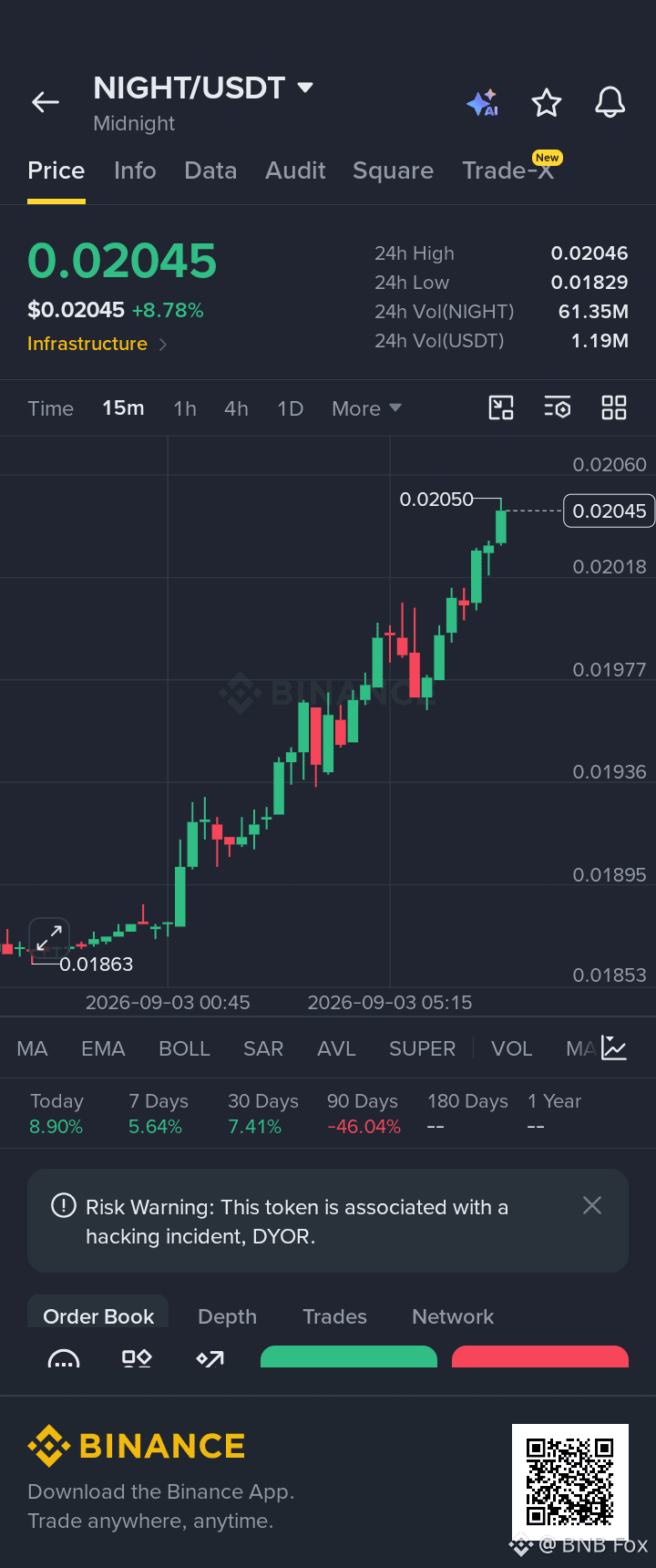
🚨 $NIGHT BREAKOUT-ALERT — BULLS GREIFEN DAS HIGH AN!
$NIGHT handelt rund um 0,02045 $, +8,78 % im Plus, wobei der 15M-Chart eine starke Abfolge aus höheren Hochs + höheren Tiefs zeigt.
🟢 Einstiegszone: 0,02005–0,02025 $
🎯 TP1: 0,02050 $
🎯 TP2: 0,02080 $
🎯 TP3: 0,02120 $
🛑 Stop Loss: 0,01970 $
🔥 Der Kurs sitzt fast direkt am 24H-High bei rund 0,02046–0,02050 $.
Ein bestätigter Breakout über 0,02050 könnte eine weitere Momentum-Welle freischalten, während ein Rückweis hier den Kurs zurück in Richtung 0,0200 senden könnte.
.
Brich 0,02050 → Breakout beobachten. 🚀
Verlier 0,01977 → das Momentum schwächt sich.
High-Risk-Setup — Positionsgröße eng halten.
Keine Finanzberatung. DYOR.
$NIGHT handelt rund um 0,02045 $, +8,78 % im Plus, wobei der 15M-Chart eine starke Abfolge aus höheren Hochs + höheren Tiefs zeigt.
🟢 Einstiegszone: 0,02005–0,02025 $
🎯 TP1: 0,02050 $
🎯 TP2: 0,02080 $
🎯 TP3: 0,02120 $
🛑 Stop Loss: 0,01970 $
🔥 Der Kurs sitzt fast direkt am 24H-High bei rund 0,02046–0,02050 $.
Ein bestätigter Breakout über 0,02050 könnte eine weitere Momentum-Welle freischalten, während ein Rückweis hier den Kurs zurück in Richtung 0,0200 senden könnte.
.
Brich 0,02050 → Breakout beobachten. 🚀
Verlier 0,01977 → das Momentum schwächt sich.
High-Risk-Setup — Positionsgröße eng halten.
Keine Finanzberatung. DYOR.
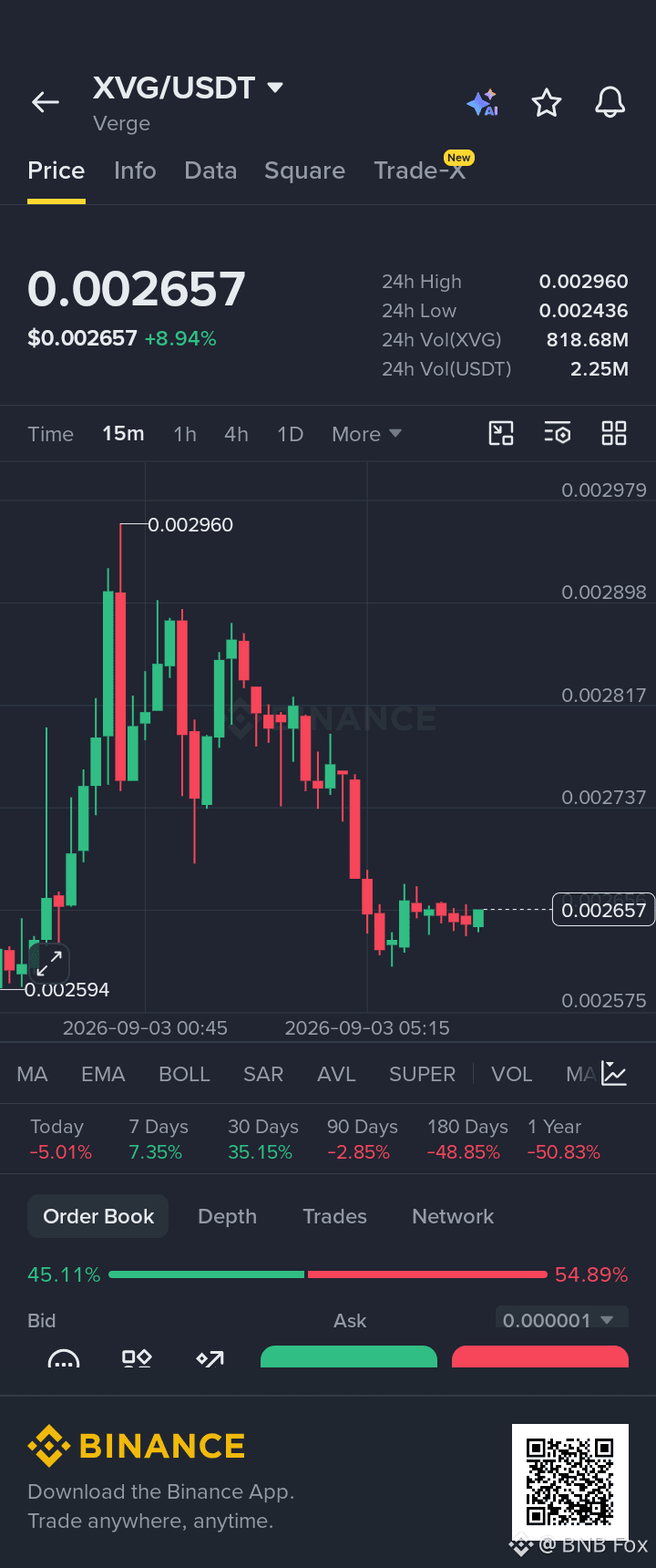
🚨 $XVG SETUP — GROßER MOVE KÖNNTE ALS NÄCHSTES KOMMEN!
$XVG handelt derzeit um $0.002657, nachdem es hart bei $0.002960 abgewiesen wurde. Das 15M-Chart zeigt, wie der Kurs versucht, sich nahe einer wichtigen Support-Zone zu stabilisieren.
🟢 Entry-Zone: $0.00262–$0.00266
🎯 TP1: $0.00274
🎯 TP2: $0.00282
🎯 TP3: $0.00290
🛑 Stop Loss: $0.00257
🔥 Wichtiger Trigger: $0.00274
Eine starke Rückeroberung über $0.00274 könnte die kurzfristige Dynamik bullish drehen und den Weg Richtung $0.00282–$0.00290 öffnen.
⚠️ Aber Bullen sind noch nicht in Sicherheit. Das Chart zeigt weiterhin niedrigere Hochs, und das angezeigte Orderbook bevorzugt Verkäufer mit ungefähr 55% Asks vs. 45% Bids.
Haltet $0.00260 → Chance auf Rebound bleibt bestehen.
Bricht $0.00274 → Bullen könnten FAST angreifen. 👀
Keine Finanzberatung. Risiko managen.
$XVG handelt derzeit um $0.002657, nachdem es hart bei $0.002960 abgewiesen wurde. Das 15M-Chart zeigt, wie der Kurs versucht, sich nahe einer wichtigen Support-Zone zu stabilisieren.
🟢 Entry-Zone: $0.00262–$0.00266
🎯 TP1: $0.00274
🎯 TP2: $0.00282
🎯 TP3: $0.00290
🛑 Stop Loss: $0.00257
🔥 Wichtiger Trigger: $0.00274
Eine starke Rückeroberung über $0.00274 könnte die kurzfristige Dynamik bullish drehen und den Weg Richtung $0.00282–$0.00290 öffnen.
⚠️ Aber Bullen sind noch nicht in Sicherheit. Das Chart zeigt weiterhin niedrigere Hochs, und das angezeigte Orderbook bevorzugt Verkäufer mit ungefähr 55% Asks vs. 45% Bids.
Haltet $0.00260 → Chance auf Rebound bleibt bestehen.
Bricht $0.00274 → Bullen könnten FAST angreifen. 👀
Keine Finanzberatung. Risiko managen.
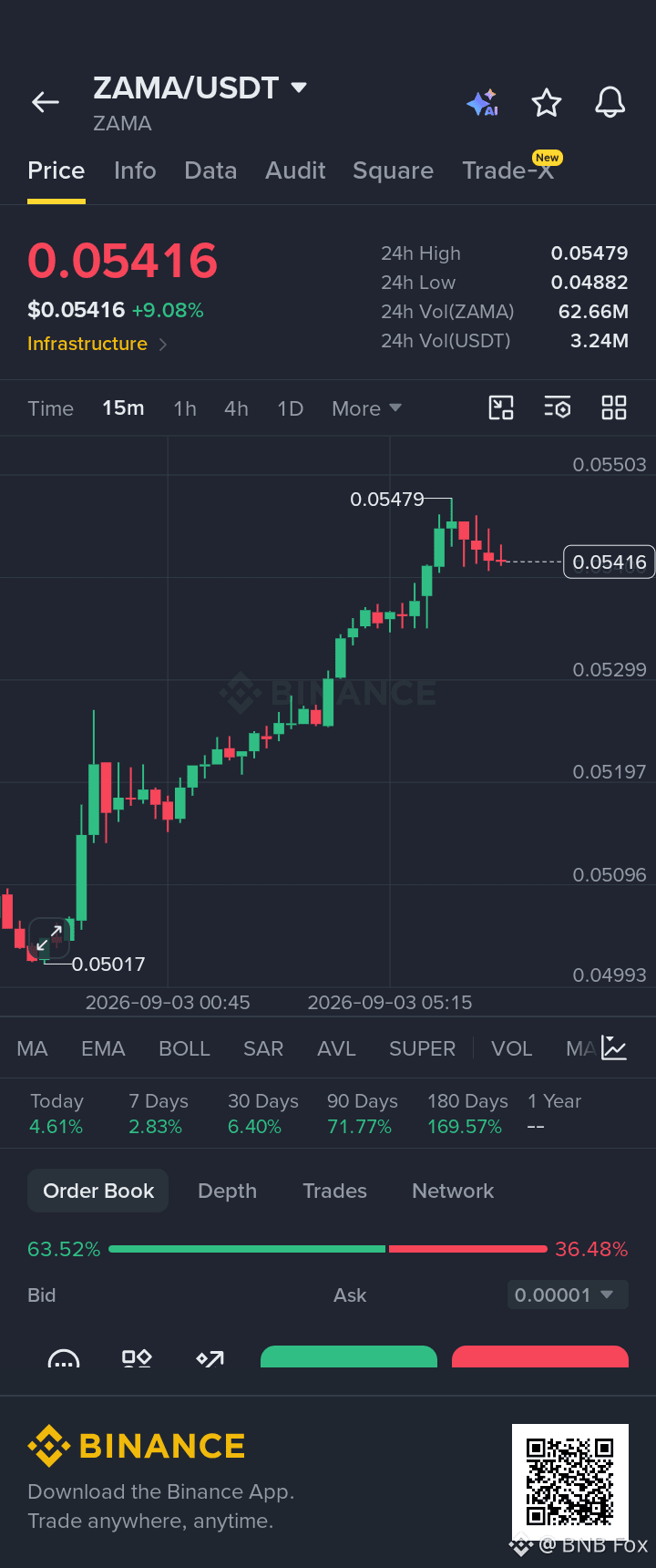
🚨 $ZAMA LONG SETUP — BULLEN DRÜCKEN DEN HOCHPUNKT!
$ZAMA handelt derzeit um 0,05416$, +9,08% nach einer sauberen Treppenrallye von ungefähr 0,05017$ bis 0,05479$.
🟢 Einstieg-Zone: 0,05380–0,05415
🎯 TP1: 0,05479
🎯 TP2: 0,05550
🎯 TP3: 0,05620
🛑 Stop Loss: 0,05290
Die 15M-Struktur bleibt bullisch mit einer klaren Abfolge aus höheren Hochs + höheren Tiefs. Der Kurs konsolidiert gerade direkt unter dem Widerstand bei 0,05479$.
🔥 Brich 0,05479$ → der Momentum könnte FAST beschleunigen.
🚀 Bleib über 0,05500$ → 0,05600+ wird zur nächsten Zone.
⚠️ Verliere 0,05299$ → die bullische Struktur beginnt zu schwächeln.
Das angezeigte Orderbuch spricht ebenfalls für Käufer bei ungefähr 63,5% Geboten vs. 36,5% Anfragen.
$ZAMA sitzt direkt unter der Ausbruchstür. Eine starke Kerze könnte sie aufstoßen. 👀🔥
Keine Finanzberatung. Risikomanagement betreiben.
$ZAMA handelt derzeit um 0,05416$, +9,08% nach einer sauberen Treppenrallye von ungefähr 0,05017$ bis 0,05479$.
🟢 Einstieg-Zone: 0,05380–0,05415
🎯 TP1: 0,05479
🎯 TP2: 0,05550
🎯 TP3: 0,05620
🛑 Stop Loss: 0,05290
Die 15M-Struktur bleibt bullisch mit einer klaren Abfolge aus höheren Hochs + höheren Tiefs. Der Kurs konsolidiert gerade direkt unter dem Widerstand bei 0,05479$.
🔥 Brich 0,05479$ → der Momentum könnte FAST beschleunigen.
🚀 Bleib über 0,05500$ → 0,05600+ wird zur nächsten Zone.
⚠️ Verliere 0,05299$ → die bullische Struktur beginnt zu schwächeln.
Das angezeigte Orderbuch spricht ebenfalls für Käufer bei ungefähr 63,5% Geboten vs. 36,5% Anfragen.
$ZAMA sitzt direkt unter der Ausbruchstür. Eine starke Kerze könnte sie aufstoßen. 👀🔥
Keine Finanzberatung. Risikomanagement betreiben.
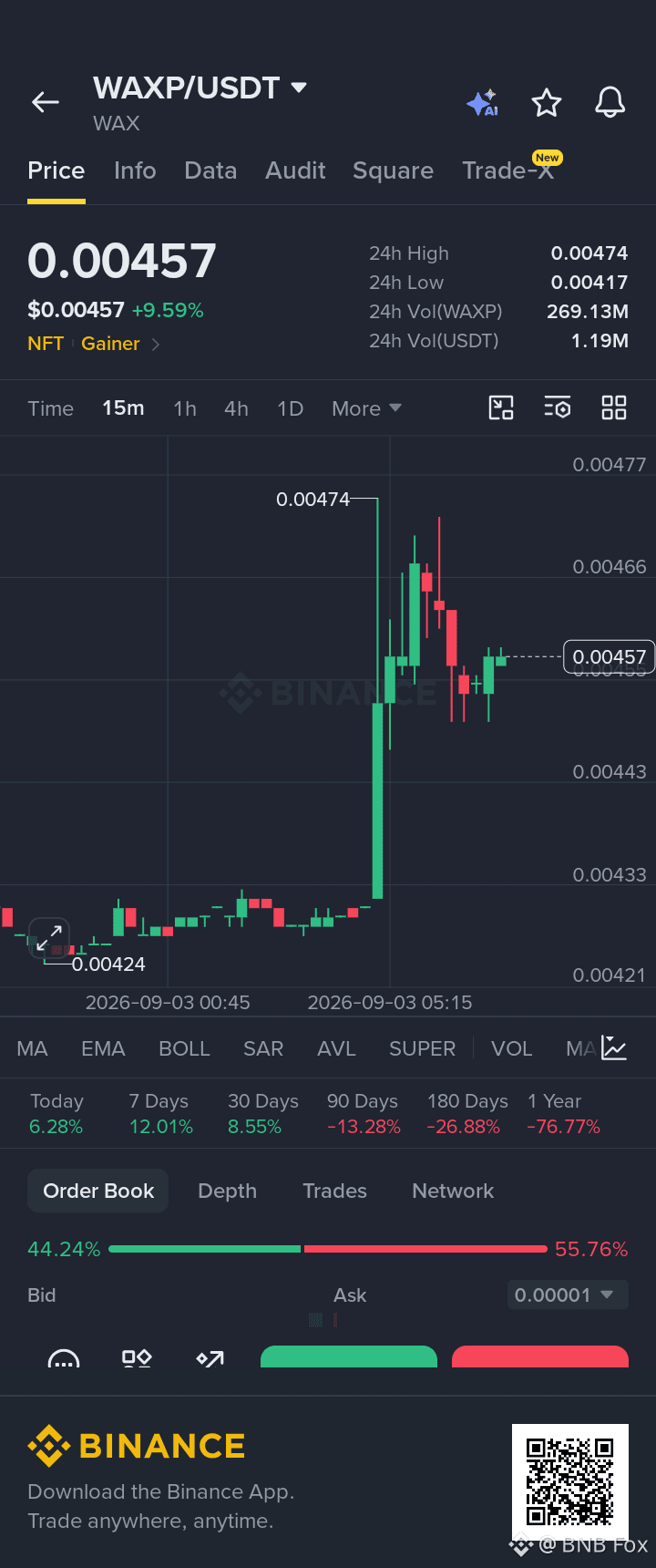
🚨 $WAXP LONG SETUP — BREAKOUT-HALT NACH DEM SPIKE!
$WAXP handelt derzeit um 0,00457 $, ist in 24 h nahezu +9,6 % im Plus, nachdem es aus dem Bereich von 0,00430 $ ausgebrochen ist und 0,00474 $ erreicht hat.
🟢 Einstieg-Zone: 0,00450–0,00457
🎯 TP1: 0,00466
🎯 TP2: 0,00474
🎯 TP3: 0,00485
🛑 Stop Loss: 0,00442
Das Entscheidende jetzt: Der Kurs ist von 0,00474 $ zurückgekommen, handelt aber immer noch deutlich über der Breakout-Basis.
🔥 Brich 0,00466 → 0,00474 Retest wahrscheinlich
🚀 Räum 0,00474 → weitere Expansion wird möglich
⚠️ Verliere 0,00443 → bullisches Setup wird schwächer
Eine Vorsicht: Das angezeigte Orderbuch begünstigt aktuell Verkäufer mit ungefähr 56 % Offers vs. 44 % Bids, daher ist Bestätigung wichtig.
$WAXP hat bereits den ersten Schritt gemacht. Jetzt müssen die Bullen beweisen, dass es nicht nur ein Spike war. 👀
Keine Finanzberatung. Steuere dein Risiko.
$WAXP handelt derzeit um 0,00457 $, ist in 24 h nahezu +9,6 % im Plus, nachdem es aus dem Bereich von 0,00430 $ ausgebrochen ist und 0,00474 $ erreicht hat.
🟢 Einstieg-Zone: 0,00450–0,00457
🎯 TP1: 0,00466
🎯 TP2: 0,00474
🎯 TP3: 0,00485
🛑 Stop Loss: 0,00442
Das Entscheidende jetzt: Der Kurs ist von 0,00474 $ zurückgekommen, handelt aber immer noch deutlich über der Breakout-Basis.
🔥 Brich 0,00466 → 0,00474 Retest wahrscheinlich
🚀 Räum 0,00474 → weitere Expansion wird möglich
⚠️ Verliere 0,00443 → bullisches Setup wird schwächer
Eine Vorsicht: Das angezeigte Orderbuch begünstigt aktuell Verkäufer mit ungefähr 56 % Offers vs. 44 % Bids, daher ist Bestätigung wichtig.
$WAXP hat bereits den ersten Schritt gemacht. Jetzt müssen die Bullen beweisen, dass es nicht nur ein Spike war. 👀
Keine Finanzberatung. Steuere dein Risiko.
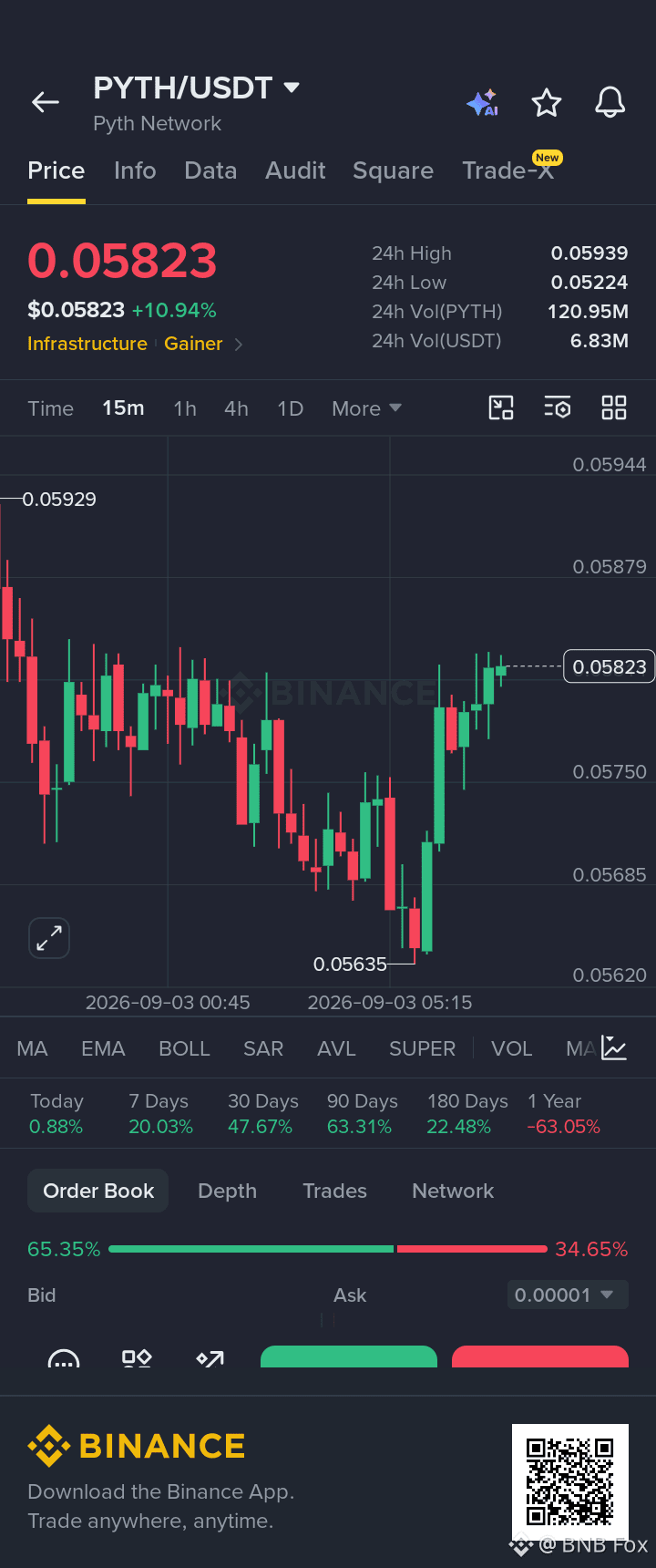
🚨 $PYTH LONG SETUP — KÄUFER TRETEN ZURÜCK IN!
$PYTH wird bei etwa 0,05823 $ gehandelt, fast +11% in 24H, nachdem es sich stark von dem lokalen Tief bei 0,05635 $ erholt hat.
🟢 Einstiegzone: 0,05770–0,05820
🎯 TP1: 0,05880
🎯 TP2: 0,05930
🎯 TP3: 0,06000
🛑 Stop Loss: 0,05680
Der 15M-Chart zeigt eine starke Erholung: Der Kurs drückt wieder zurück in Richtung der Session-Höchststände. Käufer stellen außerdem etwa 65% des dargestellten Orderbooks gegenüber 35% Verkaufsaufträgen.
🔥 0,0593 ist die Marke, die es zu beobachten gilt.
Wenn die Bullen die Marke brechen und darüber halten, könnte schnell 0,0600 ins Spiel kommen.
Halt bei 0,0575 → bullischer Momentum bleibt am Leben.
Bruch bei 0,0593 → als Nächstes könnte eine Ausweitung beginnen. 🚀
Kein FOMO in den Widerstand. Erst das Abwärtsrisiko managen.
Keine finanzielle Beratung.
$PYTH wird bei etwa 0,05823 $ gehandelt, fast +11% in 24H, nachdem es sich stark von dem lokalen Tief bei 0,05635 $ erholt hat.
🟢 Einstiegzone: 0,05770–0,05820
🎯 TP1: 0,05880
🎯 TP2: 0,05930
🎯 TP3: 0,06000
🛑 Stop Loss: 0,05680
Der 15M-Chart zeigt eine starke Erholung: Der Kurs drückt wieder zurück in Richtung der Session-Höchststände. Käufer stellen außerdem etwa 65% des dargestellten Orderbooks gegenüber 35% Verkaufsaufträgen.
🔥 0,0593 ist die Marke, die es zu beobachten gilt.
Wenn die Bullen die Marke brechen und darüber halten, könnte schnell 0,0600 ins Spiel kommen.
Halt bei 0,0575 → bullischer Momentum bleibt am Leben.
Bruch bei 0,0593 → als Nächstes könnte eine Ausweitung beginnen. 🚀
Kein FOMO in den Widerstand. Erst das Abwärtsrisiko managen.
Keine finanzielle Beratung.
Anmelden und weiter Inhalte entdecken