

Dr_MD_07
7.4k Beiträge

Dr_MD_07
 Square Verified
Melden
Nutzer blockieren
【Gold Standard Club】the Founding Co-builder || Binance square creater ||Market update || Binance Insights Explorer ||
Trade eröffnen
Hochfrequenz-Trader
1.3 Jahre
833 Following
38.1K+ Follower
27.9K+ Like gegeben
Beiträge
Portfolio
Alle
Zitierungen
Videos
Live
·
--
Letzte Nacht hatte ich nicht vor, mir etwas Neues zum Lernen vorzunehmen.
Ich öffnete die @babylonlabs_io docs in der Annahme, dass ich fünf Minuten lang lesen würde, bevor ich den Tag beende.
Doch stattdessen zog mich ein Abschnitt komplett in seinen Bann.
Er beantwortete eine Frage, die ich mir nicht einmal selbst gestellt hatte:
Was hält jemanden davon ab, beim Einsatz von Bitcoin zu schummeln?
Genau da bin ich auf Slashing gestoßen.
Die Dokumentation erklärt es anhand einer Person namens Alice.
Vor dem Staking erstellt sie ein EOTS-Schlüsselpaar und fügt den öffentlichen Schlüssel in ihren Staking-Contract ein.
Später, wenn sie in einer PoS-Chain über einen Block abstimmt, erzeugt sie einen Nonce, verpflichtet sich öffentlich zu der zugehörigen öffentlichen Nonce und signiert ihre Abstimmung.
Alles kann von beliebigen Personen überprüft werden.
Aber was, wenn Alice versucht, an derselben Blockhöhe zwei verschiedene Blöcke mit derselben geheimen Nonce zu wählen?
Dann wird das Design interessant.
Wer beide Signaturen sieht, kann ihren geheimen Schlüssel wiederherstellen, wodurch der Slashing-Fall im Contract ausgelöst wird und ihr gestaktes Bitcoin in Gefahr gerät.
Was mir daran besonders auffiel, war nicht nur die Strafe.
Es war, wie die Kryptographie unehrliches Verhalten teuer macht – statt die Teilnehmer einfach nur zu bitten, sich ehrlich zu verhalten.
Ein weiteres Detail, das ich geschätzt habe, ist die Dokumentation selbst.
Sie nennt das Design offen eine naive Slashing-Idee und erkennt an, dass es nur der Ausgangspunkt ist.
Ich mag diesen Ansatz.
Gutes Protokolldesign bedeutet nicht, so zu tun, als sei die erste Version perfekt.
Es geht darum, das System Schritt für Schritt zu verbessern, sobald neue Herausforderungen auftauchen.
Deshalb lese ich gerne technische Dokumentationen.
Sie erklären nicht nur, was ein Protokoll macht.
Sie erklären auch, warum es so entworfen wurde.
Glaubst du, dass die Sicherheit einer Blockchain stärker von der Kryptographie selbst abhängt – oder von Anreizen, die Betrügen so teuer machen, dass es sich nicht lohnt?
#baby $BABY
{future}(BABYUSDT)
$BLESS
{future}(BLESSUSDT)
$BTW
{future}(BTWUSDT)
Was macht eine Blockchain sicherer?
Letzte Nacht hatte ich nicht vor, mir etwas Neues zum Lernen vorzunehmen.
Ich öffnete die @BabylonLabs_io docs in der Annahme, dass ich fünf Minuten lang lesen würde, bevor ich den Tag beende.
Doch stattdessen zog mich ein Abschnitt komplett in seinen Bann.
Er beantwortete eine Frage, die ich mir nicht einmal selbst gestellt hatte:
Was hält jemanden davon ab, beim Einsatz von Bitcoin zu schummeln?
Genau da bin ich auf Slashing gestoßen.
Die Dokumentation erklärt es anhand einer Person namens Alice.
Vor dem Staking erstellt sie ein EOTS-Schlüsselpaar und fügt den öffentlichen Schlüssel in ihren Staking-Contract ein.
Später, wenn sie in einer PoS-Chain über einen Block abstimmt, erzeugt sie einen Nonce, verpflichtet sich öffentlich zu der zugehörigen öffentlichen Nonce und signiert ihre Abstimmung.
Alles kann von beliebigen Personen überprüft werden.
Aber was, wenn Alice versucht, an derselben Blockhöhe zwei verschiedene Blöcke mit derselben geheimen Nonce zu wählen?
Dann wird das Design interessant.
Wer beide Signaturen sieht, kann ihren geheimen Schlüssel wiederherstellen, wodurch der Slashing-Fall im Contract ausgelöst wird und ihr gestaktes Bitcoin in Gefahr gerät.
Was mir daran besonders auffiel, war nicht nur die Strafe.
Es war, wie die Kryptographie unehrliches Verhalten teuer macht – statt die Teilnehmer einfach nur zu bitten, sich ehrlich zu verhalten.
Ein weiteres Detail, das ich geschätzt habe, ist die Dokumentation selbst.
Sie nennt das Design offen eine naive Slashing-Idee und erkennt an, dass es nur der Ausgangspunkt ist.
Ich mag diesen Ansatz.
Gutes Protokolldesign bedeutet nicht, so zu tun, als sei die erste Version perfekt.
Es geht darum, das System Schritt für Schritt zu verbessern, sobald neue Herausforderungen auftauchen.
Deshalb lese ich gerne technische Dokumentationen.
Sie erklären nicht nur, was ein Protokoll macht.
Sie erklären auch, warum es so entworfen wurde.
Glaubst du, dass die Sicherheit einer Blockchain stärker von der Kryptographie selbst abhängt – oder von Anreizen, die Betrügen so teuer machen, dass es sich nicht lohnt?
#baby $BABY
$BLESS
$BTW
Was macht eine Blockchain sicherer?
Ich öffnete die @BabylonLabs_io docs in der Annahme, dass ich fünf Minuten lang lesen würde, bevor ich den Tag beende.
Doch stattdessen zog mich ein Abschnitt komplett in seinen Bann.
Er beantwortete eine Frage, die ich mir nicht einmal selbst gestellt hatte:
Was hält jemanden davon ab, beim Einsatz von Bitcoin zu schummeln?
Genau da bin ich auf Slashing gestoßen.
Die Dokumentation erklärt es anhand einer Person namens Alice.
Vor dem Staking erstellt sie ein EOTS-Schlüsselpaar und fügt den öffentlichen Schlüssel in ihren Staking-Contract ein.
Später, wenn sie in einer PoS-Chain über einen Block abstimmt, erzeugt sie einen Nonce, verpflichtet sich öffentlich zu der zugehörigen öffentlichen Nonce und signiert ihre Abstimmung.
Alles kann von beliebigen Personen überprüft werden.
Aber was, wenn Alice versucht, an derselben Blockhöhe zwei verschiedene Blöcke mit derselben geheimen Nonce zu wählen?
Dann wird das Design interessant.
Wer beide Signaturen sieht, kann ihren geheimen Schlüssel wiederherstellen, wodurch der Slashing-Fall im Contract ausgelöst wird und ihr gestaktes Bitcoin in Gefahr gerät.
Was mir daran besonders auffiel, war nicht nur die Strafe.
Es war, wie die Kryptographie unehrliches Verhalten teuer macht – statt die Teilnehmer einfach nur zu bitten, sich ehrlich zu verhalten.
Ein weiteres Detail, das ich geschätzt habe, ist die Dokumentation selbst.
Sie nennt das Design offen eine naive Slashing-Idee und erkennt an, dass es nur der Ausgangspunkt ist.
Ich mag diesen Ansatz.
Gutes Protokolldesign bedeutet nicht, so zu tun, als sei die erste Version perfekt.
Es geht darum, das System Schritt für Schritt zu verbessern, sobald neue Herausforderungen auftauchen.
Deshalb lese ich gerne technische Dokumentationen.
Sie erklären nicht nur, was ein Protokoll macht.
Sie erklären auch, warum es so entworfen wurde.
Glaubst du, dass die Sicherheit einer Blockchain stärker von der Kryptographie selbst abhängt – oder von Anreizen, die Betrügen so teuer machen, dass es sich nicht lohnt?
#baby $BABY
$BLESS
$BTW
Was macht eine Blockchain sicherer?
Better Cryptography
0%
Better Incentives
0%
Both Together
0%
More Validators
0%
0 Stimmen • Abstimmung beendet
2
2
254
·
--
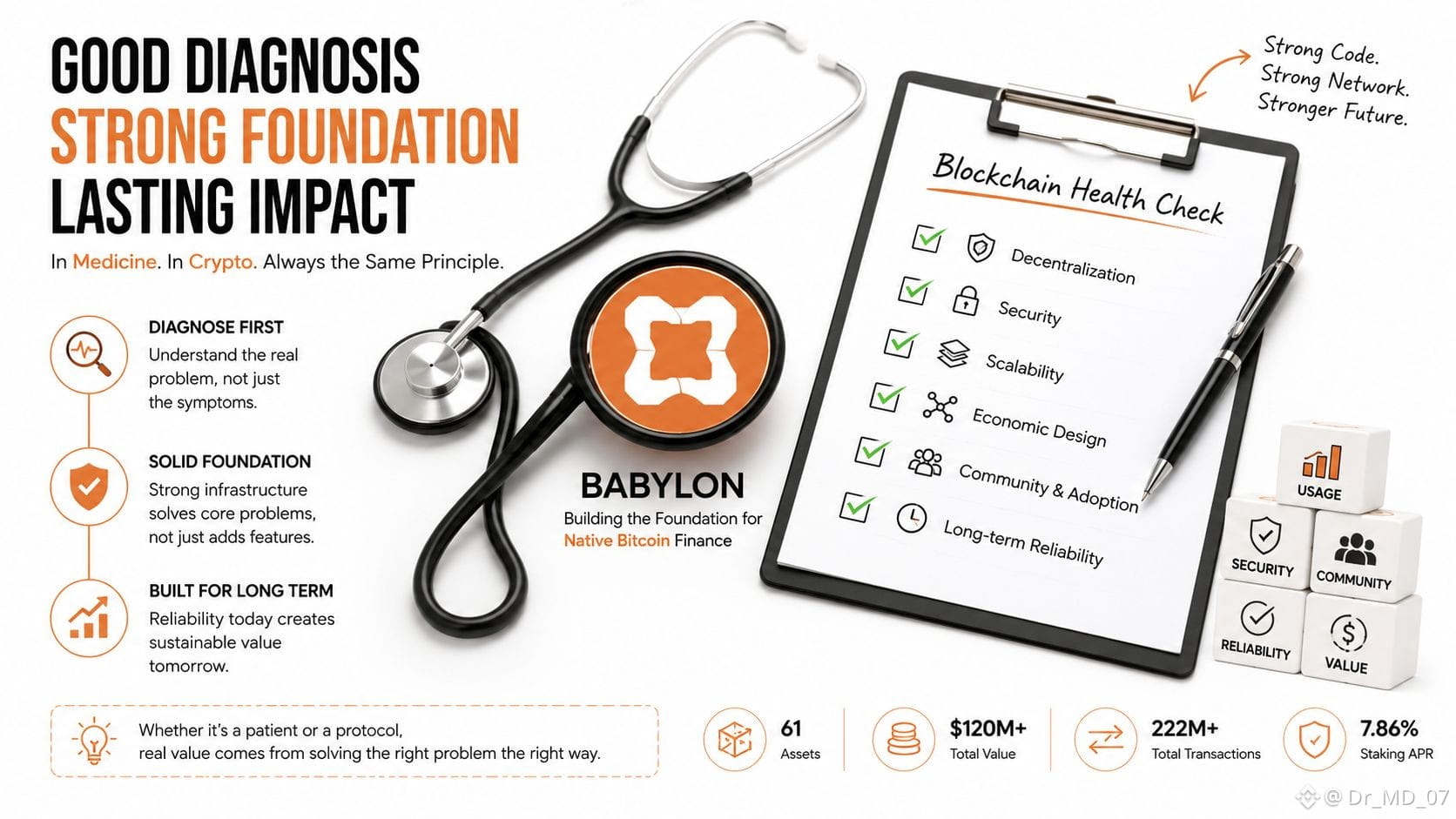
Heute habe ich mich für einen Moment als Arzt gesehen.
Jeder Patient, der in eine Klinik kommt, bringt etwas Neues mit. Manche brauchen Medikamente. Andere brauchen eine OP. Aber es gibt eine Regel, egal was passiert: Man verschreibt nichts, bevor man die echte Diagnose herausgefunden hat.
Das hat mich ehrlich gesagt zum Lächeln gebracht. Die gleiche Logik passt auch in Krypto.
Menschen stürzen sich auf Projekte, in der Hoffnung auf schnelle Erfolge. Aber wie oft halten wir wirklich inne und fragen: Welches Problem versucht dieses Protokoll überhaupt zu lösen?
Als ich in den @babylonlabs_io -Dokumenten gestöbert habe, bin ich immer wieder auf genau diese Idee zurückgekommen. Bitcoin ist eines der stärksten Assets überhaupt. Aber die eigentliche Frage ist nicht nur, wie man es nutzt. Es geht darum, ob die Infrastruktur darunter stabil genug ist, um auch künftig neue Finanzanwendungen zu tragen.
Denk mal darüber nach: Ein guter Arzt prüft den allgemeinen Gesundheitszustand des Patienten – nicht nur die Symptome. Und eine starke Blockchain sollte nicht einfach neue Features aus dem Ärmel schütteln, sondern sich mit den Kernproblemen auseinandersetzen.
Das hat mich wirklich gepackt, als ich mir Trustless Bitcoin Vaults (TBV) angesehen habe. Dabei geht es nicht nur ums Ausleihen. Es geht darum, ein System zu schaffen, in dem langfristige Verlässlichkeit genauso viel zählt wie Innovation.
Nach einem Jahr des Stolperns und Lernens habe ich es endlich verstanden. Die Projekte, die am Ende durchziehen, sind nicht immer die, die am lautesten schreien. Meistens bauen sie leise ihre Grundlagen aus, während alle anderen Trends hinterherjagen.
Medizin oder Technik – das Prinzip bleibt gleich. Wenn du dauerhaften Fortschritt willst, beginne mit einer starken Diagnose.
Wenn du eine Blockchain bewerten würdest, so wie ein Arzt einen Patienten beurteilt: Was würdest du zuerst prüfen – die glänzenden Features oder den tieferen Gesundheitszustand des Netzwerks?
#baby $BABY
{future}(BABYUSDT)
$KOMA
{future}(KOMAUSDT)
$SNXXB
{spot}(SNXXBUSDT)
Heute habe ich mich für einen Moment als Arzt gesehen.
Jeder Patient, der in eine Klinik kommt, bringt etwas Neues mit. Manche brauchen Medikamente. Andere brauchen eine OP. Aber es gibt eine Regel, egal was passiert: Man verschreibt nichts, bevor man die echte Diagnose herausgefunden hat.
Das hat mich ehrlich gesagt zum Lächeln gebracht. Die gleiche Logik passt auch in Krypto.
Menschen stürzen sich auf Projekte, in der Hoffnung auf schnelle Erfolge. Aber wie oft halten wir wirklich inne und fragen: Welches Problem versucht dieses Protokoll überhaupt zu lösen?
Als ich in den @BabylonLabs_io -Dokumenten gestöbert habe, bin ich immer wieder auf genau diese Idee zurückgekommen. Bitcoin ist eines der stärksten Assets überhaupt. Aber die eigentliche Frage ist nicht nur, wie man es nutzt. Es geht darum, ob die Infrastruktur darunter stabil genug ist, um auch künftig neue Finanzanwendungen zu tragen.
Denk mal darüber nach: Ein guter Arzt prüft den allgemeinen Gesundheitszustand des Patienten – nicht nur die Symptome. Und eine starke Blockchain sollte nicht einfach neue Features aus dem Ärmel schütteln, sondern sich mit den Kernproblemen auseinandersetzen.
Das hat mich wirklich gepackt, als ich mir Trustless Bitcoin Vaults (TBV) angesehen habe. Dabei geht es nicht nur ums Ausleihen. Es geht darum, ein System zu schaffen, in dem langfristige Verlässlichkeit genauso viel zählt wie Innovation.
Nach einem Jahr des Stolperns und Lernens habe ich es endlich verstanden. Die Projekte, die am Ende durchziehen, sind nicht immer die, die am lautesten schreien. Meistens bauen sie leise ihre Grundlagen aus, während alle anderen Trends hinterherjagen.
Medizin oder Technik – das Prinzip bleibt gleich. Wenn du dauerhaften Fortschritt willst, beginne mit einer starken Diagnose.
Wenn du eine Blockchain bewerten würdest, so wie ein Arzt einen Patienten beurteilt: Was würdest du zuerst prüfen – die glänzenden Features oder den tieferen Gesundheitszustand des Netzwerks?
#baby $BABY
$KOMA
$SNXXB
Jeder Patient, der in eine Klinik kommt, bringt etwas Neues mit. Manche brauchen Medikamente. Andere brauchen eine OP. Aber es gibt eine Regel, egal was passiert: Man verschreibt nichts, bevor man die echte Diagnose herausgefunden hat.
Das hat mich ehrlich gesagt zum Lächeln gebracht. Die gleiche Logik passt auch in Krypto.
Menschen stürzen sich auf Projekte, in der Hoffnung auf schnelle Erfolge. Aber wie oft halten wir wirklich inne und fragen: Welches Problem versucht dieses Protokoll überhaupt zu lösen?
Als ich in den @BabylonLabs_io -Dokumenten gestöbert habe, bin ich immer wieder auf genau diese Idee zurückgekommen. Bitcoin ist eines der stärksten Assets überhaupt. Aber die eigentliche Frage ist nicht nur, wie man es nutzt. Es geht darum, ob die Infrastruktur darunter stabil genug ist, um auch künftig neue Finanzanwendungen zu tragen.
Denk mal darüber nach: Ein guter Arzt prüft den allgemeinen Gesundheitszustand des Patienten – nicht nur die Symptome. Und eine starke Blockchain sollte nicht einfach neue Features aus dem Ärmel schütteln, sondern sich mit den Kernproblemen auseinandersetzen.
Das hat mich wirklich gepackt, als ich mir Trustless Bitcoin Vaults (TBV) angesehen habe. Dabei geht es nicht nur ums Ausleihen. Es geht darum, ein System zu schaffen, in dem langfristige Verlässlichkeit genauso viel zählt wie Innovation.
Nach einem Jahr des Stolperns und Lernens habe ich es endlich verstanden. Die Projekte, die am Ende durchziehen, sind nicht immer die, die am lautesten schreien. Meistens bauen sie leise ihre Grundlagen aus, während alle anderen Trends hinterherjagen.
Medizin oder Technik – das Prinzip bleibt gleich. Wenn du dauerhaften Fortschritt willst, beginne mit einer starken Diagnose.
Wenn du eine Blockchain bewerten würdest, so wie ein Arzt einen Patienten beurteilt: Was würdest du zuerst prüfen – die glänzenden Features oder den tieferen Gesundheitszustand des Netzwerks?
#baby $BABY
$KOMA
$SNXXB
28
8
1.1k
·
--
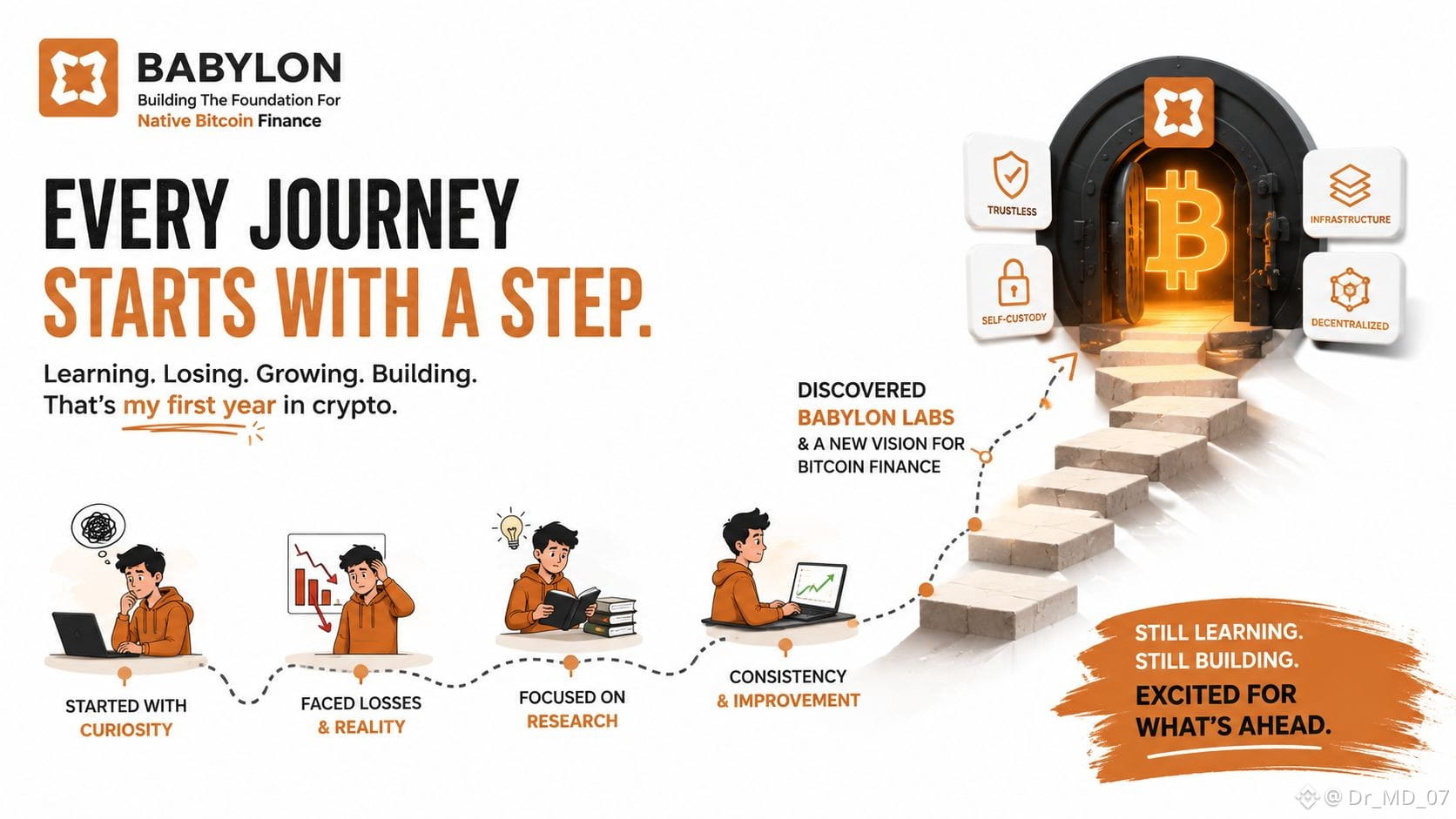
Ich bin jetzt ungefähr seit einem Jahr in Krypto.
Wie viele andere bin auch ich in diesen Bereich gekommen in der Hoffnung, dass allein das Traden meine finanzielle Zukunft verändern könnte.
Ich komme aus einer Mittelklasse-Familie, und genau diese Hoffnung hat gereicht, um mich anzufangen.
Doch die Realität war anders.
Meine ersten Monate waren voller mehr Verluste als Gewinne.
Also hörte ich auf, zu fragen: „Welche Coin wird als Nächstes pumpen?“
Stattdessen begann ich zu fragen: „Was macht ein Krypto-Projekt langfristig wirklich wertvoll?“
Diese Frage hat alles verändert.
Im Laufe der Zeit habe ich erkannt, dass erfolgreiches Investieren nicht nur darin besteht, Charts zu lesen.
Es geht darum, die Technologie zu verstehen, die Anreize und das echte Problem, das ein Protokoll zu lösen versucht.
Als die Kampagne „@babylonlabs_io CreatorPad“ angekündigt wurde, bin ich mit demselben Ansatz vorgegangen.
Anstatt sofort loszuschreiben, habe ich mir Zeit genommen, die Dokumentation zu lesen und Trustless Bitcoin Vaults (TBV) zu recherchieren.
Eine Idee stach besonders heraus.
Die stärksten Ökosysteme entstehen nicht dadurch, dass man einfach mehr Funktionen veröffentlicht.
Sie entstehen dadurch, dass man zuerst stärkere Grundlagen schafft.
Diese Perspektive hat mich dazu gebracht, Babylon anders zu betrachten.
Statt nur auf die heutigen Use Cases zu fokussieren, geht es darum, eine Infrastruktur aufzubauen, die Bitcoins Rolle in der kommenden On-Chain-Ökonomie unterstützen kann.
Für mich ist das eine viel größere Diskussion als nur etwas zu leihen oder zu verleihen.
Ich lerne noch.
Ich verbessere mich noch.
Aber eine Sache hat sich in den vergangenen zwölf Monaten ganz sicher verändert.
Heute verbringe ich mehr Zeit mit Recherchieren als damit, schnellen Gelegenheiten hinterherzulaufen.
Ironischerweise ist diese Denkweise zu meinem größten Vorteil geworden.
Glaubst du, dass die größten Chancen in Krypto daraus entstehen, Markttrends zu folgen, oder daraus, die Infrastruktur zu verstehen, die die Zukunft still und leise mitgestaltet?
@babylonlabs_io
#baby $BABY
$ON $COTI
Ich bin jetzt ungefähr seit einem Jahr in Krypto.
Wie viele andere bin auch ich in diesen Bereich gekommen in der Hoffnung, dass allein das Traden meine finanzielle Zukunft verändern könnte.
Ich komme aus einer Mittelklasse-Familie, und genau diese Hoffnung hat gereicht, um mich anzufangen.
Doch die Realität war anders.
Meine ersten Monate waren voller mehr Verluste als Gewinne.
Also hörte ich auf, zu fragen: „Welche Coin wird als Nächstes pumpen?“
Stattdessen begann ich zu fragen: „Was macht ein Krypto-Projekt langfristig wirklich wertvoll?“
Diese Frage hat alles verändert.
Im Laufe der Zeit habe ich erkannt, dass erfolgreiches Investieren nicht nur darin besteht, Charts zu lesen.
Es geht darum, die Technologie zu verstehen, die Anreize und das echte Problem, das ein Protokoll zu lösen versucht.
Als die Kampagne „@BabylonLabs_io CreatorPad“ angekündigt wurde, bin ich mit demselben Ansatz vorgegangen.
Anstatt sofort loszuschreiben, habe ich mir Zeit genommen, die Dokumentation zu lesen und Trustless Bitcoin Vaults (TBV) zu recherchieren.
Eine Idee stach besonders heraus.
Die stärksten Ökosysteme entstehen nicht dadurch, dass man einfach mehr Funktionen veröffentlicht.
Sie entstehen dadurch, dass man zuerst stärkere Grundlagen schafft.
Diese Perspektive hat mich dazu gebracht, Babylon anders zu betrachten.
Statt nur auf die heutigen Use Cases zu fokussieren, geht es darum, eine Infrastruktur aufzubauen, die Bitcoins Rolle in der kommenden On-Chain-Ökonomie unterstützen kann.
Für mich ist das eine viel größere Diskussion als nur etwas zu leihen oder zu verleihen.
Ich lerne noch.
Ich verbessere mich noch.
Aber eine Sache hat sich in den vergangenen zwölf Monaten ganz sicher verändert.
Heute verbringe ich mehr Zeit mit Recherchieren als damit, schnellen Gelegenheiten hinterherzulaufen.
Ironischerweise ist diese Denkweise zu meinem größten Vorteil geworden.
Glaubst du, dass die größten Chancen in Krypto daraus entstehen, Markttrends zu folgen, oder daraus, die Infrastruktur zu verstehen, die die Zukunft still und leise mitgestaltet?
@BabylonLabs_io
#baby $BABY
$ON $COTI
Wie viele andere bin auch ich in diesen Bereich gekommen in der Hoffnung, dass allein das Traden meine finanzielle Zukunft verändern könnte.
Ich komme aus einer Mittelklasse-Familie, und genau diese Hoffnung hat gereicht, um mich anzufangen.
Doch die Realität war anders.
Meine ersten Monate waren voller mehr Verluste als Gewinne.
Also hörte ich auf, zu fragen: „Welche Coin wird als Nächstes pumpen?“
Stattdessen begann ich zu fragen: „Was macht ein Krypto-Projekt langfristig wirklich wertvoll?“
Diese Frage hat alles verändert.
Im Laufe der Zeit habe ich erkannt, dass erfolgreiches Investieren nicht nur darin besteht, Charts zu lesen.
Es geht darum, die Technologie zu verstehen, die Anreize und das echte Problem, das ein Protokoll zu lösen versucht.
Als die Kampagne „@BabylonLabs_io CreatorPad“ angekündigt wurde, bin ich mit demselben Ansatz vorgegangen.
Anstatt sofort loszuschreiben, habe ich mir Zeit genommen, die Dokumentation zu lesen und Trustless Bitcoin Vaults (TBV) zu recherchieren.
Eine Idee stach besonders heraus.
Die stärksten Ökosysteme entstehen nicht dadurch, dass man einfach mehr Funktionen veröffentlicht.
Sie entstehen dadurch, dass man zuerst stärkere Grundlagen schafft.
Diese Perspektive hat mich dazu gebracht, Babylon anders zu betrachten.
Statt nur auf die heutigen Use Cases zu fokussieren, geht es darum, eine Infrastruktur aufzubauen, die Bitcoins Rolle in der kommenden On-Chain-Ökonomie unterstützen kann.
Für mich ist das eine viel größere Diskussion als nur etwas zu leihen oder zu verleihen.
Ich lerne noch.
Ich verbessere mich noch.
Aber eine Sache hat sich in den vergangenen zwölf Monaten ganz sicher verändert.
Heute verbringe ich mehr Zeit mit Recherchieren als damit, schnellen Gelegenheiten hinterherzulaufen.
Ironischerweise ist diese Denkweise zu meinem größten Vorteil geworden.
Glaubst du, dass die größten Chancen in Krypto daraus entstehen, Markttrends zu folgen, oder daraus, die Infrastruktur zu verstehen, die die Zukunft still und leise mitgestaltet?
@BabylonLabs_io
#baby $BABY
$ON $COTI
14
5
408
·
--
Verifiziert
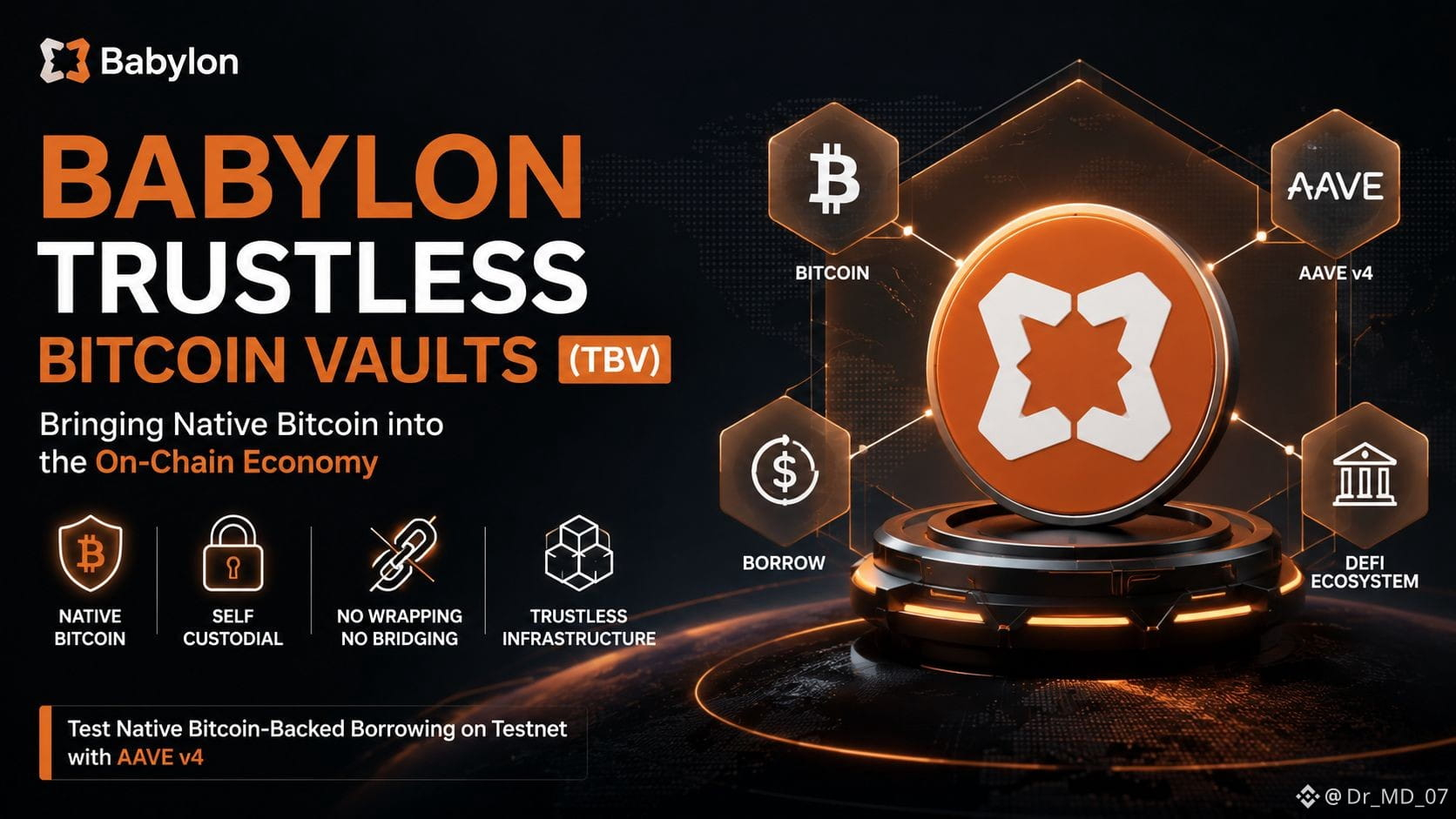
Jedes Mal, wenn ich an Bitcoin und DeFi denke, bleibe ich an demselben Problem hängen: Die Nutzung von BTC on-chain fühlt sich immer wie ein Kompromiss an. Meistens musst du deine Coins umwickeln, einer vertrauenswürdigen Drittanbieter-Bridge vertrauen oder dich auf ein neues Protokoll verlassen, das an genau dem herummanipuliert, was Bitcoin überhaupt sicher macht.
Deshalb ist @babylonlabs_io für mich herausgestochen. Ihre Trustless Bitcoin Vaults (TBV) versuchen nicht, Bitcoin neu zu erfinden oder eine weitere Version davon zu bauen. Sie gehen etwas anderes an: Sie finden Wege, wie natives BTC in der wachsenden On-Chain-Welt nützlich sein kann, und lassen Nutzer dabei die volle Kontrolle über ihre Coins behalten.
So stelle ich es mir vor. Stell dir dein Haus vor. Du kannst dein Haus als Sicherheit für einen Kredit nutzen, aber du gibst dabei nicht die Schlüssel an irgendeinen Fremden heraus. Bei den meisten Krypto-Systemen jedoch fühlt sich die Nutzung von Bitcoin so an, als müsstest du erst dein Haus an einen Zwischenhändler übergeben, bevor du damit überhaupt etwas Produktives machen kannst. TBV will genau das umdrehen: Menschen sollen ihr originales BTC in Arbeit bringen können – ohne Wrapper oder Bridges, ohne zentralisierte Custodians.
Das ist eine große Sache. Bitcoin hält den größten Batzen an Krypto-Vermögen, aber ein Großteil davon liegt einfach nur herum und wird nicht genutzt. Wenn man es ermöglicht, gegen echtes BTC zu leihen – mit Plattformen wie Aave v4 – und gleichzeitig die Verwahrung in den eigenen Händen zu behalten, kann Bitcoin plötzlich direkt in DeFi einfließen. Die Technologie ersetzt Bitcoin nicht, sie erweitert das, was bereits da ist.
Natürlich ist nichts davon einfach. Trust-minimierte Systeme bringen immer mehr technische Hürden mit sich, und es ist schwer, Menschen eine reibungslose Erfahrung zu bieten, ohne bei der Sicherheit Abstriche zu machen. Dieses Gleichgewicht muss Web3 treffen – und es wird darüber entscheiden, ob diese Tools langfristig wirklich angenommen werden.
Also hier ist die große Frage, zu der ich immer wieder zurückkomme: Sollte Bitcoin der On-Chain-Ökonomie beitreten, indem es verändert, was es ist, oder indem es sich stärker auf die Werte konzentriert, die es von Anfang an wertvoll gemacht haben? Wie wir darauf antworten, wird nicht nur das Leihen und Verleihen beeinflussen – es könnte die ganze nächste Etappe des dezentralen Finanzwesens prägen.
#baby $BABY $BTW
Jedes Mal, wenn ich an Bitcoin und DeFi denke, bleibe ich an demselben Problem hängen: Die Nutzung von BTC on-chain fühlt sich immer wie ein Kompromiss an. Meistens musst du deine Coins umwickeln, einer vertrauenswürdigen Drittanbieter-Bridge vertrauen oder dich auf ein neues Protokoll verlassen, das an genau dem herummanipuliert, was Bitcoin überhaupt sicher macht.
Deshalb ist @BabylonLabs_io für mich herausgestochen. Ihre Trustless Bitcoin Vaults (TBV) versuchen nicht, Bitcoin neu zu erfinden oder eine weitere Version davon zu bauen. Sie gehen etwas anderes an: Sie finden Wege, wie natives BTC in der wachsenden On-Chain-Welt nützlich sein kann, und lassen Nutzer dabei die volle Kontrolle über ihre Coins behalten.
So stelle ich es mir vor. Stell dir dein Haus vor. Du kannst dein Haus als Sicherheit für einen Kredit nutzen, aber du gibst dabei nicht die Schlüssel an irgendeinen Fremden heraus. Bei den meisten Krypto-Systemen jedoch fühlt sich die Nutzung von Bitcoin so an, als müsstest du erst dein Haus an einen Zwischenhändler übergeben, bevor du damit überhaupt etwas Produktives machen kannst. TBV will genau das umdrehen: Menschen sollen ihr originales BTC in Arbeit bringen können – ohne Wrapper oder Bridges, ohne zentralisierte Custodians.
Das ist eine große Sache. Bitcoin hält den größten Batzen an Krypto-Vermögen, aber ein Großteil davon liegt einfach nur herum und wird nicht genutzt. Wenn man es ermöglicht, gegen echtes BTC zu leihen – mit Plattformen wie Aave v4 – und gleichzeitig die Verwahrung in den eigenen Händen zu behalten, kann Bitcoin plötzlich direkt in DeFi einfließen. Die Technologie ersetzt Bitcoin nicht, sie erweitert das, was bereits da ist.
Natürlich ist nichts davon einfach. Trust-minimierte Systeme bringen immer mehr technische Hürden mit sich, und es ist schwer, Menschen eine reibungslose Erfahrung zu bieten, ohne bei der Sicherheit Abstriche zu machen. Dieses Gleichgewicht muss Web3 treffen – und es wird darüber entscheiden, ob diese Tools langfristig wirklich angenommen werden.
Also hier ist die große Frage, zu der ich immer wieder zurückkomme: Sollte Bitcoin der On-Chain-Ökonomie beitreten, indem es verändert, was es ist, oder indem es sich stärker auf die Werte konzentriert, die es von Anfang an wertvoll gemacht haben? Wie wir darauf antworten, wird nicht nur das Leihen und Verleihen beeinflussen – es könnte die ganze nächste Etappe des dezentralen Finanzwesens prägen.
#baby $BABY $BTW
Deshalb ist @BabylonLabs_io für mich herausgestochen. Ihre Trustless Bitcoin Vaults (TBV) versuchen nicht, Bitcoin neu zu erfinden oder eine weitere Version davon zu bauen. Sie gehen etwas anderes an: Sie finden Wege, wie natives BTC in der wachsenden On-Chain-Welt nützlich sein kann, und lassen Nutzer dabei die volle Kontrolle über ihre Coins behalten.
So stelle ich es mir vor. Stell dir dein Haus vor. Du kannst dein Haus als Sicherheit für einen Kredit nutzen, aber du gibst dabei nicht die Schlüssel an irgendeinen Fremden heraus. Bei den meisten Krypto-Systemen jedoch fühlt sich die Nutzung von Bitcoin so an, als müsstest du erst dein Haus an einen Zwischenhändler übergeben, bevor du damit überhaupt etwas Produktives machen kannst. TBV will genau das umdrehen: Menschen sollen ihr originales BTC in Arbeit bringen können – ohne Wrapper oder Bridges, ohne zentralisierte Custodians.
Das ist eine große Sache. Bitcoin hält den größten Batzen an Krypto-Vermögen, aber ein Großteil davon liegt einfach nur herum und wird nicht genutzt. Wenn man es ermöglicht, gegen echtes BTC zu leihen – mit Plattformen wie Aave v4 – und gleichzeitig die Verwahrung in den eigenen Händen zu behalten, kann Bitcoin plötzlich direkt in DeFi einfließen. Die Technologie ersetzt Bitcoin nicht, sie erweitert das, was bereits da ist.
Natürlich ist nichts davon einfach. Trust-minimierte Systeme bringen immer mehr technische Hürden mit sich, und es ist schwer, Menschen eine reibungslose Erfahrung zu bieten, ohne bei der Sicherheit Abstriche zu machen. Dieses Gleichgewicht muss Web3 treffen – und es wird darüber entscheiden, ob diese Tools langfristig wirklich angenommen werden.
Also hier ist die große Frage, zu der ich immer wieder zurückkomme: Sollte Bitcoin der On-Chain-Ökonomie beitreten, indem es verändert, was es ist, oder indem es sich stärker auf die Werte konzentriert, die es von Anfang an wertvoll gemacht haben? Wie wir darauf antworten, wird nicht nur das Leihen und Verleihen beeinflussen – es könnte die ganze nächste Etappe des dezentralen Finanzwesens prägen.
#baby $BABY $BTW
17
5
449
·
--
Vor ein paar Tagen erwischte ich mich dabei, wie ich über etwas Einfaches nachdachte.
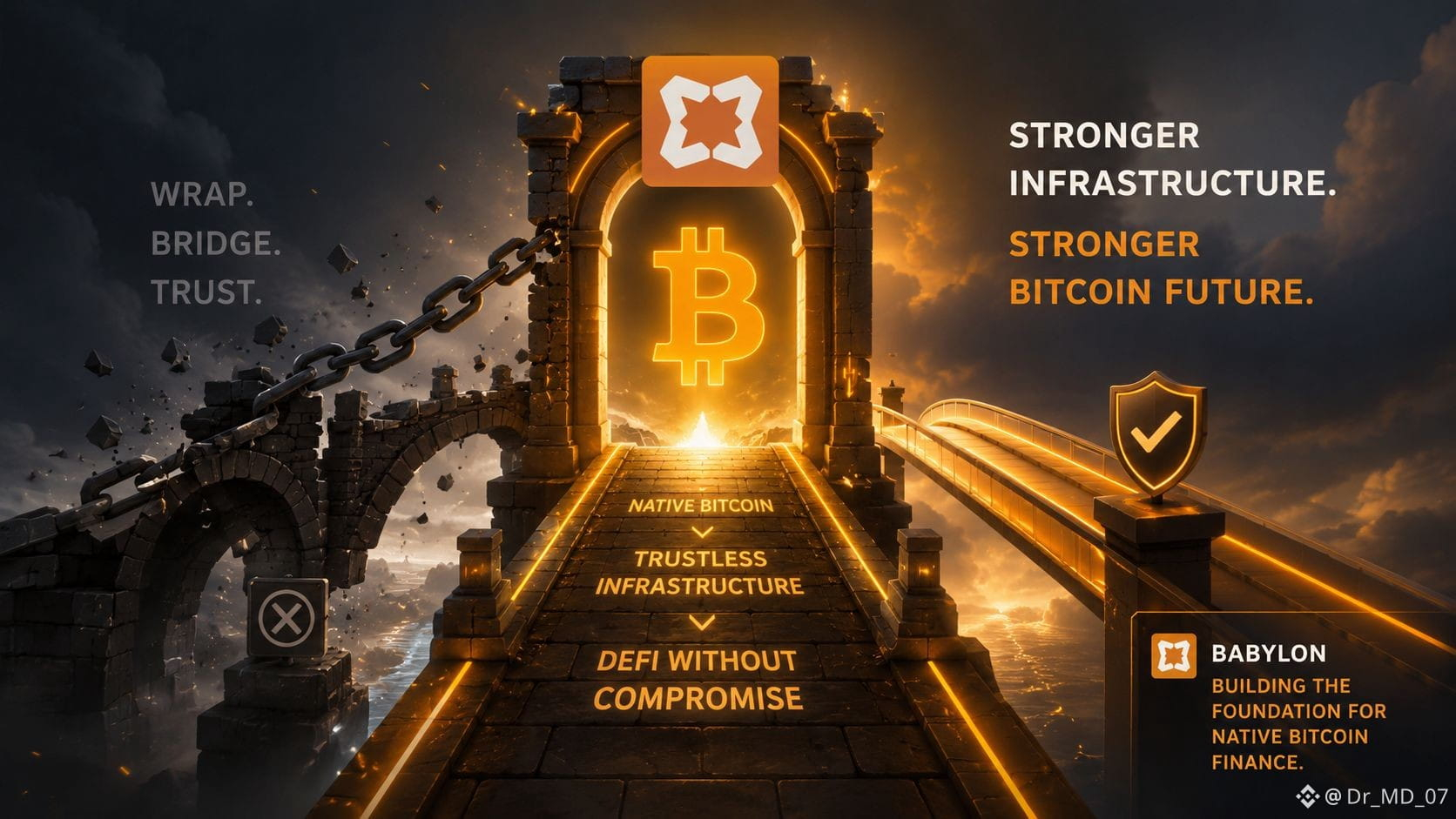
Warum beginnt die Nutzung von Bitcoin in DeFi fast immer damit, Bitcoin selbst zu verändern?
Je länger ich über diese Frage nachdachte, desto mehr ließ sie mich nicht los.
Bitcoin hat sich seinen Ruf dadurch verdient, dass es seinen eigenen Regeln treu geblieben ist. Also warum entfernen wir diese Kernidentität, wenn wir es in DeFi einsetzen wollen?
Diese Frage zog mich tiefer als die Oberfläche und in die @babylonlabs_io Dokumentation, nicht mehr nur flüchtig Schlagzeilen überfliegend.
Als ich mich mit Trustless Bitcoin Vaults (TBV) beschäftigte, wurde mir klar, dass der eigentliche Durchbruch nicht nur darin liegt, gegen Bitcoin zu leihen. Es ist die Infrastruktur selbst.
Stell dir vor, du baust eine Stadt. Du kannst Gebäude immer höher und höher stapeln, aber wenn die Straßen und Fundamente nicht stimmen, fällt das Ganze auseinander. Auf unsicherem Boden kann man nicht skalieren.
TBV dreht diese Idee um. Statt Bitcoin zu verändern, baut es neue Straßen, die es nativem Bitcoin ermöglichen, direkt an DeFi teilzunehmen, ohne Wrapping, ohne Bridges, ohne Zwischenhändler.
Auf den ersten Blick wirkt es wie eine kleine Anpassung.
Aber die Richtung ist völlig anders.
Nimm Aave v4 als Beispiel. Es ist der erste Beweis dafür, was diese Art von Infrastruktur freisetzt.
Heute vielleicht Kreditvergabe.
Morgen Stablecoins.
Später Versicherungen. Oder Dinge, die sich noch niemand vorgestellt hat.
Die eigentliche Stärke ist nicht nur ein einzelnes Produkt.
Es ist eine Plattform, in die sich andere Ideen einklinken können, während Bitcoin seine eigene Identität behält.
Sicher, Infrastruktur lässt sich nicht so leicht verkaufen wie neue Produkte. Die meisten Menschen bemerken das Glänzende an der Oberfläche, nicht die Fundamente darunter. Aber die Geschichte bevorzugt die stillen Strukturen: Ökosysteme, die Bestand haben, scheinen immer auf robuster Infrastruktur unter allem anderen zu beruhen.
Das ist es, was mir nach der Recherche zu Babylon im Kopf geblieben ist.
Manchmal besteht die wahre Innovation nicht darin, die Sache selbst zu verändern, sondern alles zu verändern, was man um sie herum aufbaut.
Wenn wir also eine engere, intelligentere Infrastruktur bekommen, prägt das dann Bitcoins Zukunft stärker als das Hinzufügen neuer Funktionen und Produkte?
Das ist die Frage, zu der ich immer wieder zurückkomme.
@babylonlabs_io #baby $BABY
{future}(BABYUSDT)
$EUL $1000SHIB
Vor ein paar Tagen erwischte ich mich dabei, wie ich über etwas Einfaches nachdachte.
Warum beginnt die Nutzung von Bitcoin in DeFi fast immer damit, Bitcoin selbst zu verändern?
Je länger ich über diese Frage nachdachte, desto mehr ließ sie mich nicht los.
Bitcoin hat sich seinen Ruf dadurch verdient, dass es seinen eigenen Regeln treu geblieben ist. Also warum entfernen wir diese Kernidentität, wenn wir es in DeFi einsetzen wollen?
Diese Frage zog mich tiefer als die Oberfläche und in die @BabylonLabs_io Dokumentation, nicht mehr nur flüchtig Schlagzeilen überfliegend.
Als ich mich mit Trustless Bitcoin Vaults (TBV) beschäftigte, wurde mir klar, dass der eigentliche Durchbruch nicht nur darin liegt, gegen Bitcoin zu leihen. Es ist die Infrastruktur selbst.
Stell dir vor, du baust eine Stadt. Du kannst Gebäude immer höher und höher stapeln, aber wenn die Straßen und Fundamente nicht stimmen, fällt das Ganze auseinander. Auf unsicherem Boden kann man nicht skalieren.
TBV dreht diese Idee um. Statt Bitcoin zu verändern, baut es neue Straßen, die es nativem Bitcoin ermöglichen, direkt an DeFi teilzunehmen, ohne Wrapping, ohne Bridges, ohne Zwischenhändler.
Auf den ersten Blick wirkt es wie eine kleine Anpassung.
Aber die Richtung ist völlig anders.
Nimm Aave v4 als Beispiel. Es ist der erste Beweis dafür, was diese Art von Infrastruktur freisetzt.
Heute vielleicht Kreditvergabe.
Morgen Stablecoins.
Später Versicherungen. Oder Dinge, die sich noch niemand vorgestellt hat.
Die eigentliche Stärke ist nicht nur ein einzelnes Produkt.
Es ist eine Plattform, in die sich andere Ideen einklinken können, während Bitcoin seine eigene Identität behält.
Sicher, Infrastruktur lässt sich nicht so leicht verkaufen wie neue Produkte. Die meisten Menschen bemerken das Glänzende an der Oberfläche, nicht die Fundamente darunter. Aber die Geschichte bevorzugt die stillen Strukturen: Ökosysteme, die Bestand haben, scheinen immer auf robuster Infrastruktur unter allem anderen zu beruhen.
Das ist es, was mir nach der Recherche zu Babylon im Kopf geblieben ist.
Manchmal besteht die wahre Innovation nicht darin, die Sache selbst zu verändern, sondern alles zu verändern, was man um sie herum aufbaut.
Wenn wir also eine engere, intelligentere Infrastruktur bekommen, prägt das dann Bitcoins Zukunft stärker als das Hinzufügen neuer Funktionen und Produkte?
Das ist die Frage, zu der ich immer wieder zurückkomme.
@BabylonLabs_io #baby $BABY
$EUL $1000SHIB
Warum beginnt die Nutzung von Bitcoin in DeFi fast immer damit, Bitcoin selbst zu verändern?
Je länger ich über diese Frage nachdachte, desto mehr ließ sie mich nicht los.
Bitcoin hat sich seinen Ruf dadurch verdient, dass es seinen eigenen Regeln treu geblieben ist. Also warum entfernen wir diese Kernidentität, wenn wir es in DeFi einsetzen wollen?
Diese Frage zog mich tiefer als die Oberfläche und in die @BabylonLabs_io Dokumentation, nicht mehr nur flüchtig Schlagzeilen überfliegend.
Als ich mich mit Trustless Bitcoin Vaults (TBV) beschäftigte, wurde mir klar, dass der eigentliche Durchbruch nicht nur darin liegt, gegen Bitcoin zu leihen. Es ist die Infrastruktur selbst.
Stell dir vor, du baust eine Stadt. Du kannst Gebäude immer höher und höher stapeln, aber wenn die Straßen und Fundamente nicht stimmen, fällt das Ganze auseinander. Auf unsicherem Boden kann man nicht skalieren.
TBV dreht diese Idee um. Statt Bitcoin zu verändern, baut es neue Straßen, die es nativem Bitcoin ermöglichen, direkt an DeFi teilzunehmen, ohne Wrapping, ohne Bridges, ohne Zwischenhändler.
Auf den ersten Blick wirkt es wie eine kleine Anpassung.
Aber die Richtung ist völlig anders.
Nimm Aave v4 als Beispiel. Es ist der erste Beweis dafür, was diese Art von Infrastruktur freisetzt.
Heute vielleicht Kreditvergabe.
Morgen Stablecoins.
Später Versicherungen. Oder Dinge, die sich noch niemand vorgestellt hat.
Die eigentliche Stärke ist nicht nur ein einzelnes Produkt.
Es ist eine Plattform, in die sich andere Ideen einklinken können, während Bitcoin seine eigene Identität behält.
Sicher, Infrastruktur lässt sich nicht so leicht verkaufen wie neue Produkte. Die meisten Menschen bemerken das Glänzende an der Oberfläche, nicht die Fundamente darunter. Aber die Geschichte bevorzugt die stillen Strukturen: Ökosysteme, die Bestand haben, scheinen immer auf robuster Infrastruktur unter allem anderen zu beruhen.
Das ist es, was mir nach der Recherche zu Babylon im Kopf geblieben ist.
Manchmal besteht die wahre Innovation nicht darin, die Sache selbst zu verändern, sondern alles zu verändern, was man um sie herum aufbaut.
Wenn wir also eine engere, intelligentere Infrastruktur bekommen, prägt das dann Bitcoins Zukunft stärker als das Hinzufügen neuer Funktionen und Produkte?
Das ist die Frage, zu der ich immer wieder zurückkomme.
@BabylonLabs_io #baby $BABY
$EUL $1000SHIB
31
17
395
·
--
🚨 SHIB bricht aus? Die Bullen sind zurück! 🚨
1000SHIB ist mit steigendem Volumen stark aus der 0.0040-Supportzone zurückgesprungen, zusammen mit einem bullischen MACD-Crossover. Wenn Käufer über 0.0047 halten, könnten die nächsten Ziele bei 0.0051–0.0056 liegen. Das Verlieren von 0.0044 würde den Schwung schwächen.
👉Was kommt als Nächstes für SHIB?
$1000SHIB
{future}(1000SHIBUSDT)
$DEXE
{future}(DEXEUSDT)
$EUL
{future}(EULUSDT)
🚨 SHIB bricht aus? Die Bullen sind zurück! 🚨
1000SHIB ist mit steigendem Volumen stark aus der 0.0040-Supportzone zurückgesprungen, zusammen mit einem bullischen MACD-Crossover. Wenn Käufer über 0.0047 halten, könnten die nächsten Ziele bei 0.0051–0.0056 liegen. Das Verlieren von 0.0044 würde den Schwung schwächen.
👉Was kommt als Nächstes für SHIB?
$1000SHIB
$DEXE
$EUL
1000SHIB ist mit steigendem Volumen stark aus der 0.0040-Supportzone zurückgesprungen, zusammen mit einem bullischen MACD-Crossover. Wenn Käufer über 0.0047 halten, könnten die nächsten Ziele bei 0.0051–0.0056 liegen. Das Verlieren von 0.0044 würde den Schwung schwächen.
👉Was kommt als Nächstes für SHIB?
$1000SHIB
$DEXE
$EUL
🚀 Rally to 0.0055+
74%
📈 Consolidate around 0.0047
5%
🔻 Reject and revisit 0.0040
21%
19 Stimmen • Abstimmung beendet
3
2.7k
·
--
Als die @babylonlabs_io CreatorPad-Kampagne angekündigt wurde, wollte ich nicht sofort darüber schreiben.
Ich wollte erst verstehen, was tatsächlich aufgebaut wird.
Also nahm ich mir Zeit, die @babylonlabs_io -Dokumentation zu lesen und den TBV-Testnet-Kreditaufnahme-Flow von Anfang bis Ende durchzugehen.
Meine erste Frage war ganz simpel.
Kann Bitcoin produktiv werden, ohne es zu verpacken oder einem Intermediär zu vertrauen?
Da hat mein Interesse sich auf Trustless Bitcoin Vaults (TBV) gerichtet.
TBV ermöglicht es, natives Bitcoin als Sicherheit zu nutzen, während es weiterhin im Bitcoin-Netzwerk bleibt.
Kein Wrapping.
Kein Bridging.
Nur ein anderer Ansatz, um BTC in DeFi einzusetzen.
Danach habe ich mir die Kreditaufnahme-Reise angesehen – und sie war überraschend unkompliziert.
• Verbinden Sie Ihre Bitcoin- und Ethereum-Wallets.
• Hinterlegen Sie signet-BTC, um einen Vault zu erstellen.
• Aktivieren Sie den verifizierten Vault als Sicherheit.
• Leihen Sie Assets wie USDC oder USDT über Aave v4.
• Zahlen Sie den Kredit zurück, wenn Sie bereit sind.
• Lösen Sie Ihren BTC nach dem Verifizierungsprozess des Protokolls ein.
Eine Funktion, die ich besonders mochte, war der Health Factor.
Statt Nutzer raten zu lassen, gibt er eine einfache Kennzahl dafür, wie sicher eine Kreditposition ist.
Natürlich ist das kein Erlebnis mit einem Klick.
Bitcoin-Bestätigungen, die Einlösungsphase und das Erlernen eines neuen Workflows erfordern Geduld.
Aber den Aufbau vertrauensloser Infrastruktur gab es noch nie als Abkürzung.
Nach dem Durcharbeiten der Dokumentation blieb mir eine Erkenntnis.
TBV ist nicht einfach nur eine weitere Lending-Funktion.
Es ist der Versuch, die Nützlichkeit von Bitcoin zu erweitern – und dabei die Prinzipien zu respektieren, die Bitcoin von Anfang an wertvoll gemacht haben.
#baby $BABY $DEXE $BANK
Wenn natives Bitcoin DeFi-Möglichkeiten erschließen kann, ohne die Selbstverwahrung aufzugeben: Könnte das die Richtung sein, in die sich die Bitcoin-Finanzierung entwickelt?
Als die @BabylonLabs_io CreatorPad-Kampagne angekündigt wurde, wollte ich nicht sofort darüber schreiben.
Ich wollte erst verstehen, was tatsächlich aufgebaut wird.
Also nahm ich mir Zeit, die @BabylonLabs_io -Dokumentation zu lesen und den TBV-Testnet-Kreditaufnahme-Flow von Anfang bis Ende durchzugehen.
Meine erste Frage war ganz simpel.
Kann Bitcoin produktiv werden, ohne es zu verpacken oder einem Intermediär zu vertrauen?
Da hat mein Interesse sich auf Trustless Bitcoin Vaults (TBV) gerichtet.
TBV ermöglicht es, natives Bitcoin als Sicherheit zu nutzen, während es weiterhin im Bitcoin-Netzwerk bleibt.
Kein Wrapping.
Kein Bridging.
Nur ein anderer Ansatz, um BTC in DeFi einzusetzen.
Danach habe ich mir die Kreditaufnahme-Reise angesehen – und sie war überraschend unkompliziert.
• Verbinden Sie Ihre Bitcoin- und Ethereum-Wallets.
• Hinterlegen Sie signet-BTC, um einen Vault zu erstellen.
• Aktivieren Sie den verifizierten Vault als Sicherheit.
• Leihen Sie Assets wie USDC oder USDT über Aave v4.
• Zahlen Sie den Kredit zurück, wenn Sie bereit sind.
• Lösen Sie Ihren BTC nach dem Verifizierungsprozess des Protokolls ein.
Eine Funktion, die ich besonders mochte, war der Health Factor.
Statt Nutzer raten zu lassen, gibt er eine einfache Kennzahl dafür, wie sicher eine Kreditposition ist.
Natürlich ist das kein Erlebnis mit einem Klick.
Bitcoin-Bestätigungen, die Einlösungsphase und das Erlernen eines neuen Workflows erfordern Geduld.
Aber den Aufbau vertrauensloser Infrastruktur gab es noch nie als Abkürzung.
Nach dem Durcharbeiten der Dokumentation blieb mir eine Erkenntnis.
TBV ist nicht einfach nur eine weitere Lending-Funktion.
Es ist der Versuch, die Nützlichkeit von Bitcoin zu erweitern – und dabei die Prinzipien zu respektieren, die Bitcoin von Anfang an wertvoll gemacht haben.
#baby $BABY $DEXE $BANK
Wenn natives Bitcoin DeFi-Möglichkeiten erschließen kann, ohne die Selbstverwahrung aufzugeben: Könnte das die Richtung sein, in die sich die Bitcoin-Finanzierung entwickelt?
Ich wollte erst verstehen, was tatsächlich aufgebaut wird.
Also nahm ich mir Zeit, die @BabylonLabs_io -Dokumentation zu lesen und den TBV-Testnet-Kreditaufnahme-Flow von Anfang bis Ende durchzugehen.
Meine erste Frage war ganz simpel.
Kann Bitcoin produktiv werden, ohne es zu verpacken oder einem Intermediär zu vertrauen?
Da hat mein Interesse sich auf Trustless Bitcoin Vaults (TBV) gerichtet.
TBV ermöglicht es, natives Bitcoin als Sicherheit zu nutzen, während es weiterhin im Bitcoin-Netzwerk bleibt.
Kein Wrapping.
Kein Bridging.
Nur ein anderer Ansatz, um BTC in DeFi einzusetzen.
Danach habe ich mir die Kreditaufnahme-Reise angesehen – und sie war überraschend unkompliziert.
• Verbinden Sie Ihre Bitcoin- und Ethereum-Wallets.
• Hinterlegen Sie signet-BTC, um einen Vault zu erstellen.
• Aktivieren Sie den verifizierten Vault als Sicherheit.
• Leihen Sie Assets wie USDC oder USDT über Aave v4.
• Zahlen Sie den Kredit zurück, wenn Sie bereit sind.
• Lösen Sie Ihren BTC nach dem Verifizierungsprozess des Protokolls ein.
Eine Funktion, die ich besonders mochte, war der Health Factor.
Statt Nutzer raten zu lassen, gibt er eine einfache Kennzahl dafür, wie sicher eine Kreditposition ist.
Natürlich ist das kein Erlebnis mit einem Klick.
Bitcoin-Bestätigungen, die Einlösungsphase und das Erlernen eines neuen Workflows erfordern Geduld.
Aber den Aufbau vertrauensloser Infrastruktur gab es noch nie als Abkürzung.
Nach dem Durcharbeiten der Dokumentation blieb mir eine Erkenntnis.
TBV ist nicht einfach nur eine weitere Lending-Funktion.
Es ist der Versuch, die Nützlichkeit von Bitcoin zu erweitern – und dabei die Prinzipien zu respektieren, die Bitcoin von Anfang an wertvoll gemacht haben.
#baby $BABY $DEXE $BANK
Wenn natives Bitcoin DeFi-Möglichkeiten erschließen kann, ohne die Selbstverwahrung aufzugeben: Könnte das die Richtung sein, in die sich die Bitcoin-Finanzierung entwickelt?
Yes, Absolutely
100%
Needs Testing
0%
Too Early
0%
Not Likely
0%
1 Stimmen • Abstimmung beendet
26
10
191
·
--
Bärisch
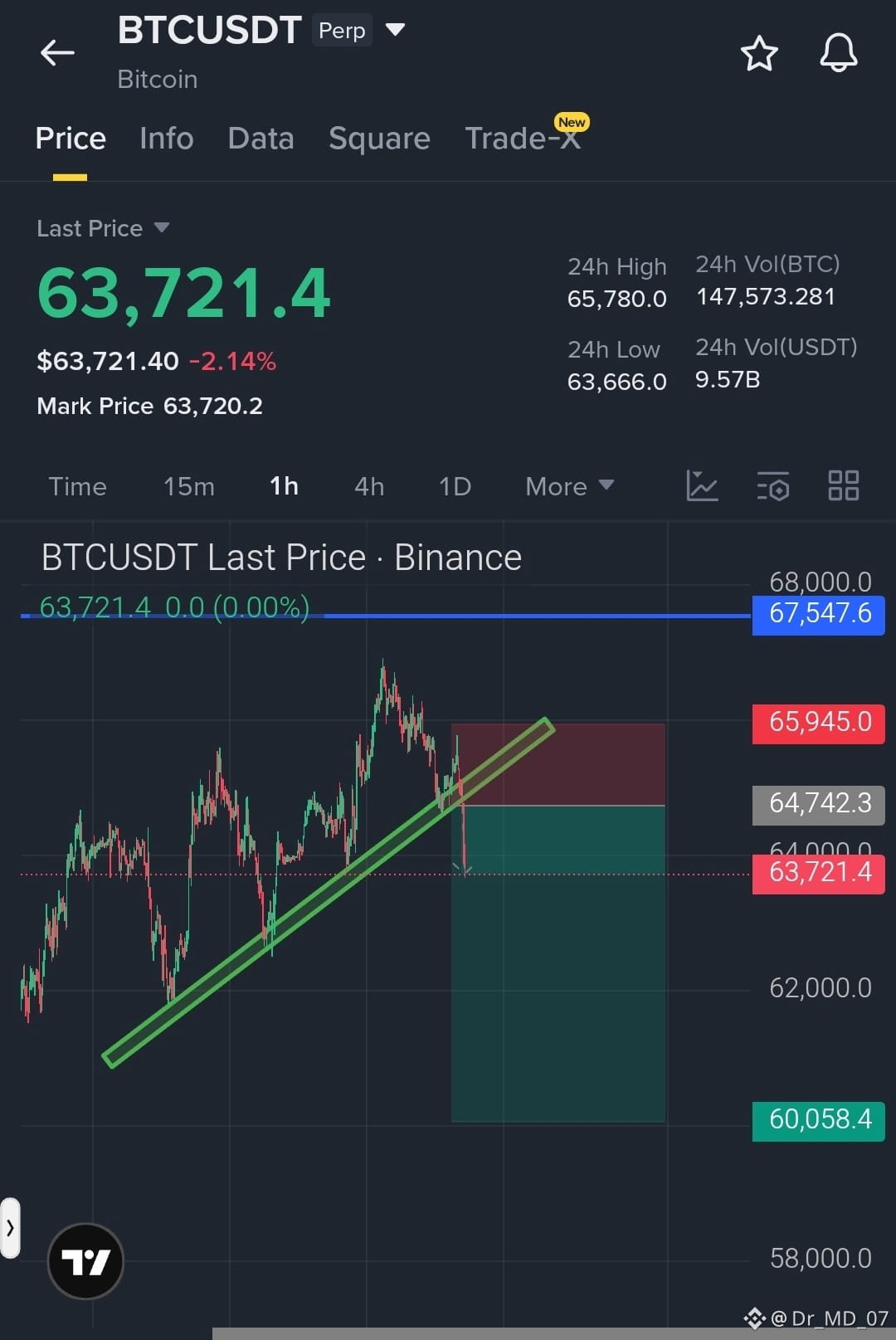
$BTC BTCUSDT – Short-Setup
Bias: bärisch 📉
Einstieg: 63.700–63.900 $ (oder bei einem Retest unterhalb der gebrochenen Trendlinie)
Stop-Loss: 65.950 $
Ziel 1: 62.800 $
Ziel 2: 61.500 $
Ziel 3: 60.050 $
Breakdown:
Der Preis ist unter die aufsteigende Trendlinie ausgebrochen, was auf eine Schwächung des bullischen Impulses hindeutet.
Ein fehlgeschlagener Retest unterhalb der Trendlinie stärkt die bärische These.
Solange der Preis unter 64,7k–65k $ bleibt, haben die Verkäufer die Kontrolle.
Ein Move über 65.950 $ würde dieses Short-Setup ungültig machen.
DYOR 👉 Dies ist eine technische Analyse basierend auf dem bereitgestellten Chart und keine finanzielle Beratung.
{future}(BTCUSDT)
$DEXE
{future}(DEXEUSDT)
$ESPORTS
{future}(ESPORTSUSDT)
$BTC BTCUSDT – Short-Setup
Bias: bärisch 📉
Einstieg: 63.700–63.900 $ (oder bei einem Retest unterhalb der gebrochenen Trendlinie)
Stop-Loss: 65.950 $
Ziel 1: 62.800 $
Ziel 2: 61.500 $
Ziel 3: 60.050 $
Breakdown:
Der Preis ist unter die aufsteigende Trendlinie ausgebrochen, was auf eine Schwächung des bullischen Impulses hindeutet.
Ein fehlgeschlagener Retest unterhalb der Trendlinie stärkt die bärische These.
Solange der Preis unter 64,7k–65k $ bleibt, haben die Verkäufer die Kontrolle.
Ein Move über 65.950 $ würde dieses Short-Setup ungültig machen.
DYOR 👉 Dies ist eine technische Analyse basierend auf dem bereitgestellten Chart und keine finanzielle Beratung.
$DEXE
$ESPORTS
Bias: bärisch 📉
Einstieg: 63.700–63.900 $ (oder bei einem Retest unterhalb der gebrochenen Trendlinie)
Stop-Loss: 65.950 $
Ziel 1: 62.800 $
Ziel 2: 61.500 $
Ziel 3: 60.050 $
Breakdown:
Der Preis ist unter die aufsteigende Trendlinie ausgebrochen, was auf eine Schwächung des bullischen Impulses hindeutet.
Ein fehlgeschlagener Retest unterhalb der Trendlinie stärkt die bärische These.
Solange der Preis unter 64,7k–65k $ bleibt, haben die Verkäufer die Kontrolle.
Ein Move über 65.950 $ würde dieses Short-Setup ungültig machen.
DYOR 👉 Dies ist eine technische Analyse basierend auf dem bereitgestellten Chart und keine finanzielle Beratung.
$DEXE
$ESPORTS
1
375
·
--
$DEXE 🚨 DEXE: Liquidity Hunt abgeschlossen? Reversal-Laden... 🚨
Von etwa $1.5–2.0 auf nahezu $50, dann ein brutaler Flush zurück auf $1.28.
Sowohl Long- als auch Short-Liquidität scheinen abgefischt. Ist das der Punkt, an dem Smart Money wieder anfängt zu akkumulieren? 👀
DEXE lieferte eine der wildesten Bewegungen: ein massiver Pump, gefolgt von einer fast vollständigen Rückabwicklung. Nach dem Antippen von ~$1.28 wirkt das Abwärtsmomentum zunehmend begrenzt, außer es treten frische negative Katalysatoren auf. Wenn Käufer diese Zone verteidigen, könnte zunächst eine Erholungsrally Richtung $4–6 kommen, während eine stärkere Trendwende auf lange Sicht $8–12+ anvisieren könnte. Achte auf Volumenbestätigung, bevor du bullisch wirst.$ESPORTS
{future}(ESPORTSUSDT)
$RIF
{future}(RIFUSDT)
📊 teile deine Meinung: Wohin geht DEXE als Nächstes?
{future}(DEXEUSDT)
$DEXE 🚨 DEXE: Liquidity Hunt abgeschlossen? Reversal-Laden... 🚨
Von etwa $1.5–2.0 auf nahezu $50, dann ein brutaler Flush zurück auf $1.28.
Sowohl Long- als auch Short-Liquidität scheinen abgefischt. Ist das der Punkt, an dem Smart Money wieder anfängt zu akkumulieren? 👀
DEXE lieferte eine der wildesten Bewegungen: ein massiver Pump, gefolgt von einer fast vollständigen Rückabwicklung. Nach dem Antippen von ~$1.28 wirkt das Abwärtsmomentum zunehmend begrenzt, außer es treten frische negative Katalysatoren auf. Wenn Käufer diese Zone verteidigen, könnte zunächst eine Erholungsrally Richtung $4–6 kommen, während eine stärkere Trendwende auf lange Sicht $8–12+ anvisieren könnte. Achte auf Volumenbestätigung, bevor du bullisch wirst.$ESPORTS
$RIF
📊 teile deine Meinung: Wohin geht DEXE als Nächstes?
Von etwa $1.5–2.0 auf nahezu $50, dann ein brutaler Flush zurück auf $1.28.
Sowohl Long- als auch Short-Liquidität scheinen abgefischt. Ist das der Punkt, an dem Smart Money wieder anfängt zu akkumulieren? 👀
DEXE lieferte eine der wildesten Bewegungen: ein massiver Pump, gefolgt von einer fast vollständigen Rückabwicklung. Nach dem Antippen von ~$1.28 wirkt das Abwärtsmomentum zunehmend begrenzt, außer es treten frische negative Katalysatoren auf. Wenn Käufer diese Zone verteidigen, könnte zunächst eine Erholungsrally Richtung $4–6 kommen, während eine stärkere Trendwende auf lange Sicht $8–12+ anvisieren könnte. Achte auf Volumenbestätigung, bevor du bullisch wirst.$ESPORTS
$RIF
📊 teile deine Meinung: Wohin geht DEXE als Nächstes?
🟢 $4–6 rebound
27%
🚀 $8–12+ reversal
33%
🔴 Below $1.28 again?
40%
52 Stimmen • Abstimmung beendet
1
2.1k
·
--
Verifiziert
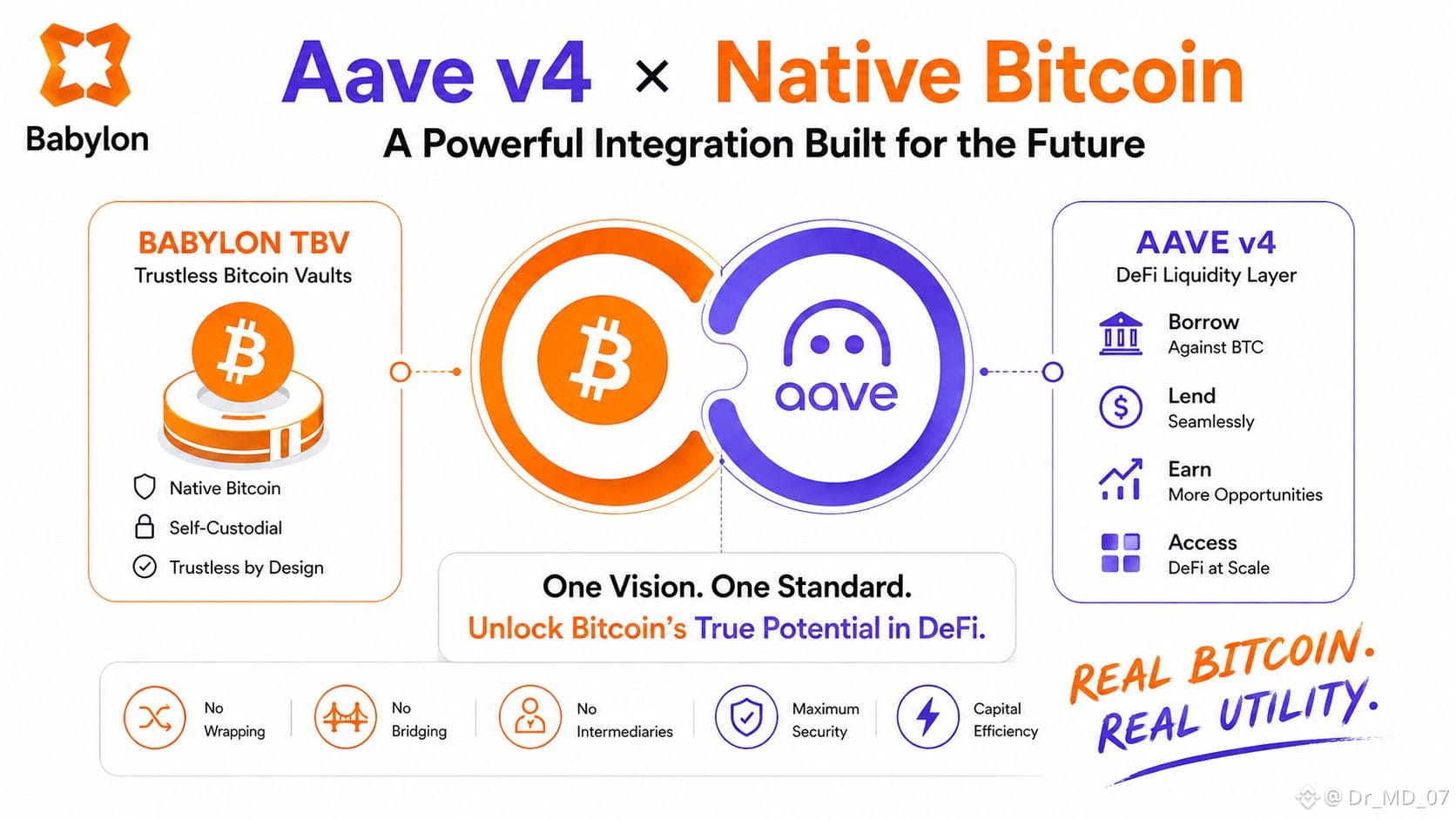
Aave v4 trifft Native Bitcoin: Warum diese Integration Aufmerksamkeit verdient
Was macht diese Integration anders als so viele andere im DeFi?
Für mich liegt der Unterschied nicht nur darin, dass Aave v4 und Babylon miteinander arbeiten.
Es ist die Tatsache, dass Trustless Bitcoin Vaults (TBV) erforschen, wie nativer Bitcoin als Sicherheit genutzt werden kann – ohne Wrapping, Bridging oder die Abhängigkeit von zentralisierten Intermediären.
Das hat sofort meine Sicht auf die Idee verändert.
Denk an eine moderne Autobahn.
Die besten Straßen verlangen nicht, dass du alle paar Kilometer das Fahrzeug wechselst.
Sie ermöglichen dir einfach, mehr Ziele effizient zu erreichen.
Ich sehe TBV in einer ähnlichen Weise.
Statt Bitcoin in eine andere Version umzuwandeln, bevor es nutzbar wird, ist die Infrastruktur so konzipiert, dass Bitcoin nativen Charakter behält – und gleichzeitig erweitert, was es leisten kann.
Also: Warum ist Aave v4 hier wichtig?
Weil hier das Konzept praktisch wird.
Anstatt BTC ungenutzt herumliegen zu lassen, ermöglicht durch nativen Bitcoin abgesichertes Borrowing, dass es Liquidität unterstützt, während Nutzer ihre eigenen Assets weiterhin kontrollieren.
Für mich ist das eine viel stärkere Grundlage, als von Nutzern zu verlangen, das Eigentum für Bequemlichkeit aufzugeben.
Heißt das, dass bereits alles gelöst ist?
Keineswegs.
Ein trustloses System ist naturgemäß komplexer als ein verwaltetes (custodial).
Die größte Herausforderung besteht nicht nur darin, sichere Infrastruktur zu bauen – sondern diese Infrastruktur so einfach zu machen, dass alltägliche Nutzer sie verstehen und übernehmen können.
Das ist das Gleichgewicht, das jedes langfristige Web3-Projekt erreichen muss.
Nachdem ich mehr über Babylons Ansatz gelesen habe, sehe ich diese Integration nicht als bloßes weiteres DeFi-Feature.
Ich sehe sie als Experiment, Bitcoin nützlicher zu machen, ohne das zu verändern, was Bitcoin überhaupt wertvoll macht.
Glaubst du, dass die Zukunft von Bitcoin vor allem auf Bequemlichkeit setzen sollte – oder darauf, natives Eigentum zu bewahren und gleichzeitig den Nutzen zu erweitern?
@babylonlabs_io $BABY #baby
#baby
$ESPORTS $DEXE
Aave v4 trifft Native Bitcoin: Warum diese Integration Aufmerksamkeit verdient
Was macht diese Integration anders als so viele andere im DeFi?
Für mich liegt der Unterschied nicht nur darin, dass Aave v4 und Babylon miteinander arbeiten.
Es ist die Tatsache, dass Trustless Bitcoin Vaults (TBV) erforschen, wie nativer Bitcoin als Sicherheit genutzt werden kann – ohne Wrapping, Bridging oder die Abhängigkeit von zentralisierten Intermediären.
Das hat sofort meine Sicht auf die Idee verändert.
Denk an eine moderne Autobahn.
Die besten Straßen verlangen nicht, dass du alle paar Kilometer das Fahrzeug wechselst.
Sie ermöglichen dir einfach, mehr Ziele effizient zu erreichen.
Ich sehe TBV in einer ähnlichen Weise.
Statt Bitcoin in eine andere Version umzuwandeln, bevor es nutzbar wird, ist die Infrastruktur so konzipiert, dass Bitcoin nativen Charakter behält – und gleichzeitig erweitert, was es leisten kann.
Also: Warum ist Aave v4 hier wichtig?
Weil hier das Konzept praktisch wird.
Anstatt BTC ungenutzt herumliegen zu lassen, ermöglicht durch nativen Bitcoin abgesichertes Borrowing, dass es Liquidität unterstützt, während Nutzer ihre eigenen Assets weiterhin kontrollieren.
Für mich ist das eine viel stärkere Grundlage, als von Nutzern zu verlangen, das Eigentum für Bequemlichkeit aufzugeben.
Heißt das, dass bereits alles gelöst ist?
Keineswegs.
Ein trustloses System ist naturgemäß komplexer als ein verwaltetes (custodial).
Die größte Herausforderung besteht nicht nur darin, sichere Infrastruktur zu bauen – sondern diese Infrastruktur so einfach zu machen, dass alltägliche Nutzer sie verstehen und übernehmen können.
Das ist das Gleichgewicht, das jedes langfristige Web3-Projekt erreichen muss.
Nachdem ich mehr über Babylons Ansatz gelesen habe, sehe ich diese Integration nicht als bloßes weiteres DeFi-Feature.
Ich sehe sie als Experiment, Bitcoin nützlicher zu machen, ohne das zu verändern, was Bitcoin überhaupt wertvoll macht.
Glaubst du, dass die Zukunft von Bitcoin vor allem auf Bequemlichkeit setzen sollte – oder darauf, natives Eigentum zu bewahren und gleichzeitig den Nutzen zu erweitern?
@BabylonLabs_io $BABY #baby
#baby
$ESPORTS $DEXE
Was macht diese Integration anders als so viele andere im DeFi?
Für mich liegt der Unterschied nicht nur darin, dass Aave v4 und Babylon miteinander arbeiten.
Es ist die Tatsache, dass Trustless Bitcoin Vaults (TBV) erforschen, wie nativer Bitcoin als Sicherheit genutzt werden kann – ohne Wrapping, Bridging oder die Abhängigkeit von zentralisierten Intermediären.
Das hat sofort meine Sicht auf die Idee verändert.
Denk an eine moderne Autobahn.
Die besten Straßen verlangen nicht, dass du alle paar Kilometer das Fahrzeug wechselst.
Sie ermöglichen dir einfach, mehr Ziele effizient zu erreichen.
Ich sehe TBV in einer ähnlichen Weise.
Statt Bitcoin in eine andere Version umzuwandeln, bevor es nutzbar wird, ist die Infrastruktur so konzipiert, dass Bitcoin nativen Charakter behält – und gleichzeitig erweitert, was es leisten kann.
Also: Warum ist Aave v4 hier wichtig?
Weil hier das Konzept praktisch wird.
Anstatt BTC ungenutzt herumliegen zu lassen, ermöglicht durch nativen Bitcoin abgesichertes Borrowing, dass es Liquidität unterstützt, während Nutzer ihre eigenen Assets weiterhin kontrollieren.
Für mich ist das eine viel stärkere Grundlage, als von Nutzern zu verlangen, das Eigentum für Bequemlichkeit aufzugeben.
Heißt das, dass bereits alles gelöst ist?
Keineswegs.
Ein trustloses System ist naturgemäß komplexer als ein verwaltetes (custodial).
Die größte Herausforderung besteht nicht nur darin, sichere Infrastruktur zu bauen – sondern diese Infrastruktur so einfach zu machen, dass alltägliche Nutzer sie verstehen und übernehmen können.
Das ist das Gleichgewicht, das jedes langfristige Web3-Projekt erreichen muss.
Nachdem ich mehr über Babylons Ansatz gelesen habe, sehe ich diese Integration nicht als bloßes weiteres DeFi-Feature.
Ich sehe sie als Experiment, Bitcoin nützlicher zu machen, ohne das zu verändern, was Bitcoin überhaupt wertvoll macht.
Glaubst du, dass die Zukunft von Bitcoin vor allem auf Bequemlichkeit setzen sollte – oder darauf, natives Eigentum zu bewahren und gleichzeitig den Nutzen zu erweitern?
@BabylonLabs_io $BABY #baby
#baby
$ESPORTS $DEXE
33
14
630
·
--
Verifiziert
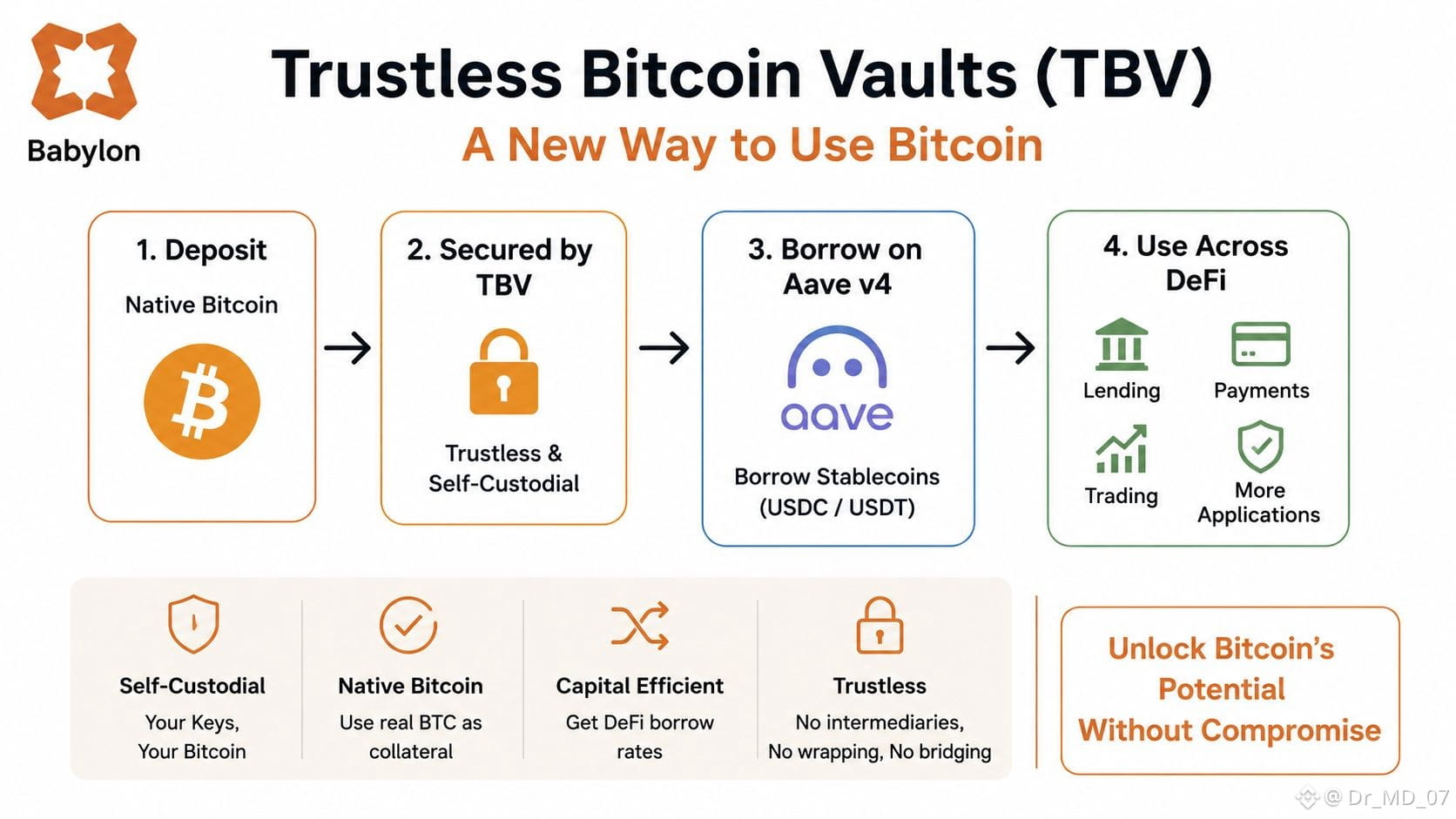
Meine ersten Eindrücke von Trustless Bitcoin Vaults (TBV): Eine neue Idee, Bitcoin zu nutzen
Ich habe Bitcoin immer als eines der ganz großen Schwergewichte im Krypto-Bereich gesehen, aber ganz ehrlich: Seine Rolle in DeFi wirkte für mich oft… etwas zu kurz gekommen. Meistens bedeutete es, dass man BTC mit verschiedenen Apps nutzen wollte, dass man es erst verpacken, überbrücken oder irgendeinem Mittelsmann vertrauen musste. Das hat nie wirklich zu mir gepasst – gerade weil es bei Bitcoin doch um echtes Eigentum und Dezentralisierung geht.
Als ich dann anfing, mich mit Trustless Bitcoin Vaults (TBV) von @babylonlabs_io zu beschäftigen, hat mich das tatsächlich innehalten lassen und zum Nachdenken gebracht, wie nativer Bitcoin endlich eine größere Rolle im On-Chain-Finanzwesen spielen kann.
Es ist ja nicht so, dass Kreditaufnahme eine brandneue Idee wäre – Lending und Borrowing waren schon immer Teil von Krypto. Aber die Art, wie Babylon das macht, sticht heraus. Anstatt dich durch Hürden springen zu lassen, nur damit dein Bitcoin nützlich wird, ermöglicht dir TBV, deinen echten Bitcoin als Sicherheit zu verwenden. Kein Wrapping, keine Bridge, kein Abgeben deiner Keys an irgendwen.
Das ist eine große Veränderung, finde ich. Wenn Bitcoin so vertrauenswürdig ist, dann ist es viel stimmiger, seine ursprünglichen Eigenschaften intakt zu lassen und es gleichzeitig tatsächlich noch nützlicher zu machen – genau so, wie Bitcoin von Anfang an gedacht war.
Und da ist noch ein weiterer Punkt, der mir aufgefallen ist: Babylon hat sich mit Aave v4 zusammengetan, um natives, bitcoin-gestütztes Borrowing einzurichten. Das weist endlich auf eine Zukunft hin, in der BTC mehr ist als nur etwas, das in deiner Wallet herumliegt. Du musst nicht zwischen „Bitcoin sicher halten“ und „Liquidität bekommen“ wählen. Dieses neue Modell zeigt, dass beides möglich ist.
Außerdem finde ich es cool zu sehen, dass Babylon ein öffentliches Testnetz öffnet. Jeder kann mitmachen, mit dem System herumprobieren und echtes Feedback geben, bevor die Dinge für alle ausgerollt werden. Diese Art von direkter Beteiligung macht Projekte am Ende wirklich besser.
Für mich ist TBV daher nicht einfach nur ein weiteres DeFi-Projekt – es ist ein Einblick, wie sich die Utility von Bitcoin tatsächlich weiterentwickeln kann, ohne zu vergessen, was es so besonders gemacht hat. Ich behalte im Blick, wie es wächst, und ich bin ziemlich gespannt, wohin das alles führt.
@babylonlabs_io #baby $BABY
{future}(BABYUSDT)
Meine ersten Eindrücke von Trustless Bitcoin Vaults (TBV): Eine neue Idee, Bitcoin zu nutzen
Ich habe Bitcoin immer als eines der ganz großen Schwergewichte im Krypto-Bereich gesehen, aber ganz ehrlich: Seine Rolle in DeFi wirkte für mich oft… etwas zu kurz gekommen. Meistens bedeutete es, dass man BTC mit verschiedenen Apps nutzen wollte, dass man es erst verpacken, überbrücken oder irgendeinem Mittelsmann vertrauen musste. Das hat nie wirklich zu mir gepasst – gerade weil es bei Bitcoin doch um echtes Eigentum und Dezentralisierung geht.
Als ich dann anfing, mich mit Trustless Bitcoin Vaults (TBV) von @BabylonLabs_io zu beschäftigen, hat mich das tatsächlich innehalten lassen und zum Nachdenken gebracht, wie nativer Bitcoin endlich eine größere Rolle im On-Chain-Finanzwesen spielen kann.
Es ist ja nicht so, dass Kreditaufnahme eine brandneue Idee wäre – Lending und Borrowing waren schon immer Teil von Krypto. Aber die Art, wie Babylon das macht, sticht heraus. Anstatt dich durch Hürden springen zu lassen, nur damit dein Bitcoin nützlich wird, ermöglicht dir TBV, deinen echten Bitcoin als Sicherheit zu verwenden. Kein Wrapping, keine Bridge, kein Abgeben deiner Keys an irgendwen.
Das ist eine große Veränderung, finde ich. Wenn Bitcoin so vertrauenswürdig ist, dann ist es viel stimmiger, seine ursprünglichen Eigenschaften intakt zu lassen und es gleichzeitig tatsächlich noch nützlicher zu machen – genau so, wie Bitcoin von Anfang an gedacht war.
Und da ist noch ein weiterer Punkt, der mir aufgefallen ist: Babylon hat sich mit Aave v4 zusammengetan, um natives, bitcoin-gestütztes Borrowing einzurichten. Das weist endlich auf eine Zukunft hin, in der BTC mehr ist als nur etwas, das in deiner Wallet herumliegt. Du musst nicht zwischen „Bitcoin sicher halten“ und „Liquidität bekommen“ wählen. Dieses neue Modell zeigt, dass beides möglich ist.
Außerdem finde ich es cool zu sehen, dass Babylon ein öffentliches Testnetz öffnet. Jeder kann mitmachen, mit dem System herumprobieren und echtes Feedback geben, bevor die Dinge für alle ausgerollt werden. Diese Art von direkter Beteiligung macht Projekte am Ende wirklich besser.
Für mich ist TBV daher nicht einfach nur ein weiteres DeFi-Projekt – es ist ein Einblick, wie sich die Utility von Bitcoin tatsächlich weiterentwickeln kann, ohne zu vergessen, was es so besonders gemacht hat. Ich behalte im Blick, wie es wächst, und ich bin ziemlich gespannt, wohin das alles führt.
@BabylonLabs_io #baby $BABY
Ich habe Bitcoin immer als eines der ganz großen Schwergewichte im Krypto-Bereich gesehen, aber ganz ehrlich: Seine Rolle in DeFi wirkte für mich oft… etwas zu kurz gekommen. Meistens bedeutete es, dass man BTC mit verschiedenen Apps nutzen wollte, dass man es erst verpacken, überbrücken oder irgendeinem Mittelsmann vertrauen musste. Das hat nie wirklich zu mir gepasst – gerade weil es bei Bitcoin doch um echtes Eigentum und Dezentralisierung geht.
Als ich dann anfing, mich mit Trustless Bitcoin Vaults (TBV) von @BabylonLabs_io zu beschäftigen, hat mich das tatsächlich innehalten lassen und zum Nachdenken gebracht, wie nativer Bitcoin endlich eine größere Rolle im On-Chain-Finanzwesen spielen kann.
Es ist ja nicht so, dass Kreditaufnahme eine brandneue Idee wäre – Lending und Borrowing waren schon immer Teil von Krypto. Aber die Art, wie Babylon das macht, sticht heraus. Anstatt dich durch Hürden springen zu lassen, nur damit dein Bitcoin nützlich wird, ermöglicht dir TBV, deinen echten Bitcoin als Sicherheit zu verwenden. Kein Wrapping, keine Bridge, kein Abgeben deiner Keys an irgendwen.
Das ist eine große Veränderung, finde ich. Wenn Bitcoin so vertrauenswürdig ist, dann ist es viel stimmiger, seine ursprünglichen Eigenschaften intakt zu lassen und es gleichzeitig tatsächlich noch nützlicher zu machen – genau so, wie Bitcoin von Anfang an gedacht war.
Und da ist noch ein weiterer Punkt, der mir aufgefallen ist: Babylon hat sich mit Aave v4 zusammengetan, um natives, bitcoin-gestütztes Borrowing einzurichten. Das weist endlich auf eine Zukunft hin, in der BTC mehr ist als nur etwas, das in deiner Wallet herumliegt. Du musst nicht zwischen „Bitcoin sicher halten“ und „Liquidität bekommen“ wählen. Dieses neue Modell zeigt, dass beides möglich ist.
Außerdem finde ich es cool zu sehen, dass Babylon ein öffentliches Testnetz öffnet. Jeder kann mitmachen, mit dem System herumprobieren und echtes Feedback geben, bevor die Dinge für alle ausgerollt werden. Diese Art von direkter Beteiligung macht Projekte am Ende wirklich besser.
Für mich ist TBV daher nicht einfach nur ein weiteres DeFi-Projekt – es ist ein Einblick, wie sich die Utility von Bitcoin tatsächlich weiterentwickeln kann, ohne zu vergessen, was es so besonders gemacht hat. Ich behalte im Blick, wie es wächst, und ich bin ziemlich gespannt, wohin das alles führt.
@BabylonLabs_io #baby $BABY
33
17
361
·
--
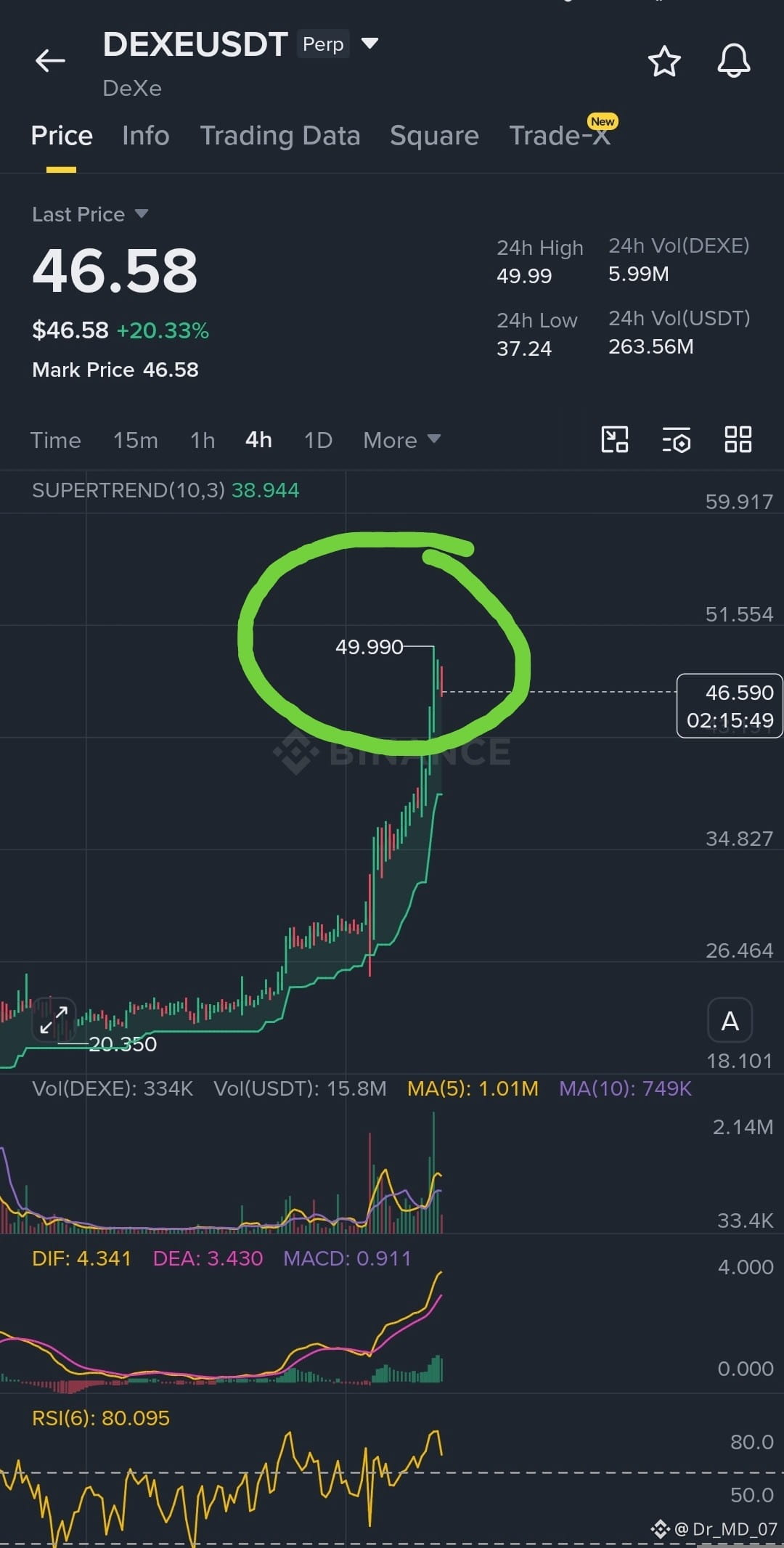
$DEXE Gestern sagte ich, dass DEXE anfängt, wie der nächste RIVER-Schritt auszusehen.
Heute hat der Chart das bestätigt: ein starker Push, der $49.99 gedruckt hat. Der Impuls war der Grund für die Empfehlung, nicht Hype.
Der Trend liefert genau das, was ich beobachtet habe. Jetzt ist die große Frage… ist das erst der Anfang, oder wird $50 zur Startplattform für die nächste Etappe?
{future}(DEXEUSDT)
$DODOX
{future}(DODOXUSDT)
$AGLD
{future}(AGLDUSDT)
$DEXE Gestern sagte ich, dass DEXE anfängt, wie der nächste RIVER-Schritt auszusehen.
Heute hat der Chart das bestätigt: ein starker Push, der $49.99 gedruckt hat. Der Impuls war der Grund für die Empfehlung, nicht Hype.
Der Trend liefert genau das, was ich beobachtet habe. Jetzt ist die große Frage… ist das erst der Anfang, oder wird $50 zur Startplattform für die nächste Etappe?
$DODOX
$AGLD
Heute hat der Chart das bestätigt: ein starker Push, der $49.99 gedruckt hat. Der Impuls war der Grund für die Empfehlung, nicht Hype.
Der Trend liefert genau das, was ich beobachtet habe. Jetzt ist die große Frage… ist das erst der Anfang, oder wird $50 zur Startplattform für die nächste Etappe?
$DODOX
$AGLD
593
·
--
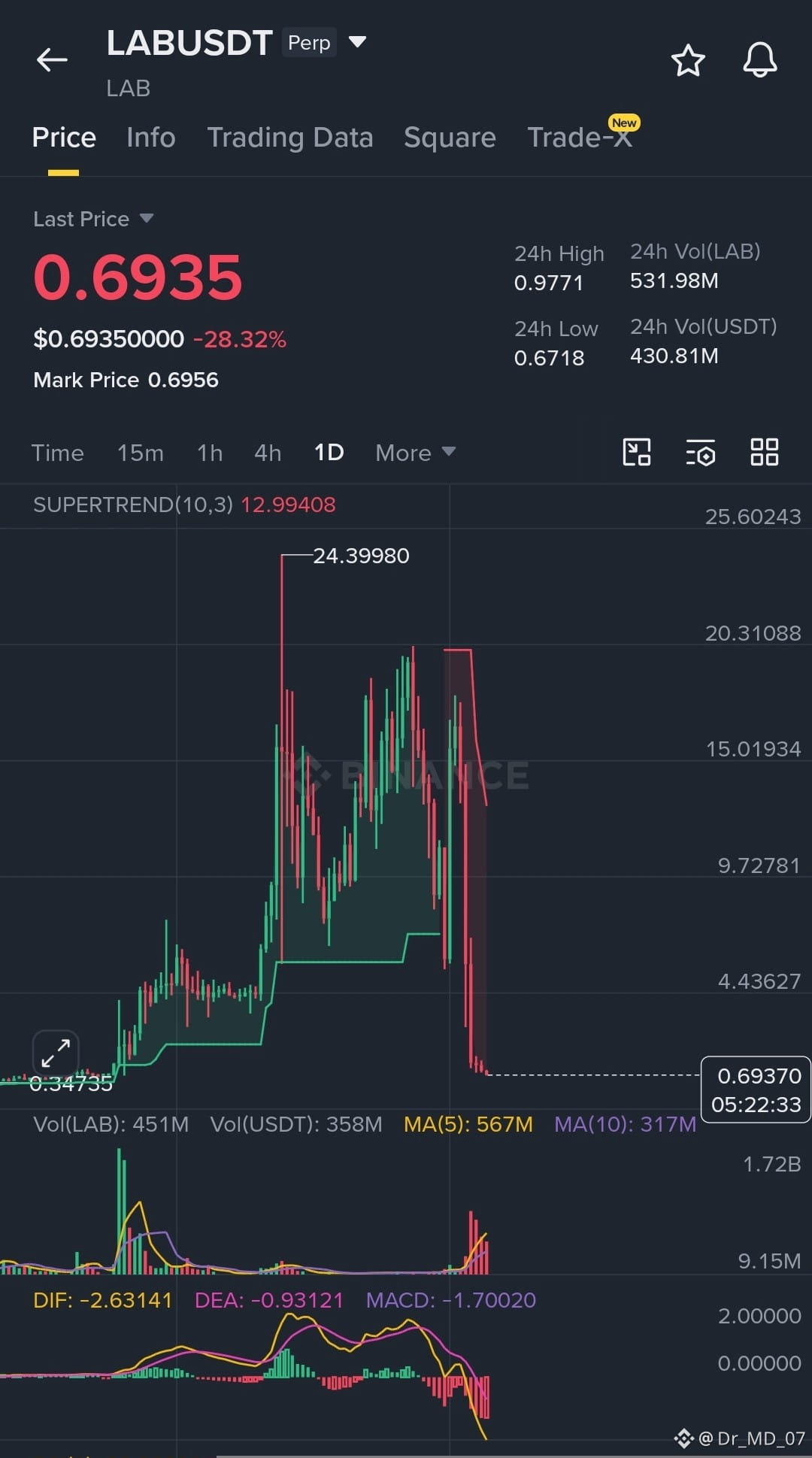
$LAB
👉Handeln Sie nicht aus FOMO heraus. Handeln Sie mit einem Plan.
Warten Sie 🫷 auf die Bestätigung, ,
👉 Verfolgen Sie nicht den Kurs. Warten Sie auf Ihr Setup.
{future}(LABUSDT)
$SXT 🔥🔥
{future}(SXTUSDT)
$ICP Setup kommt bald
{future}(ICPUSDT)
$LAB
👉Handeln Sie nicht aus FOMO heraus. Handeln Sie mit einem Plan.
Warten Sie 🫷 auf die Bestätigung, ,
👉 Verfolgen Sie nicht den Kurs. Warten Sie auf Ihr Setup.
$SXT 🔥🔥
$ICP Setup kommt bald
👉Handeln Sie nicht aus FOMO heraus. Handeln Sie mit einem Plan.
Warten Sie 🫷 auf die Bestätigung, ,
👉 Verfolgen Sie nicht den Kurs. Warten Sie auf Ihr Setup.
$SXT 🔥🔥
$ICP Setup kommt bald
724
·
--
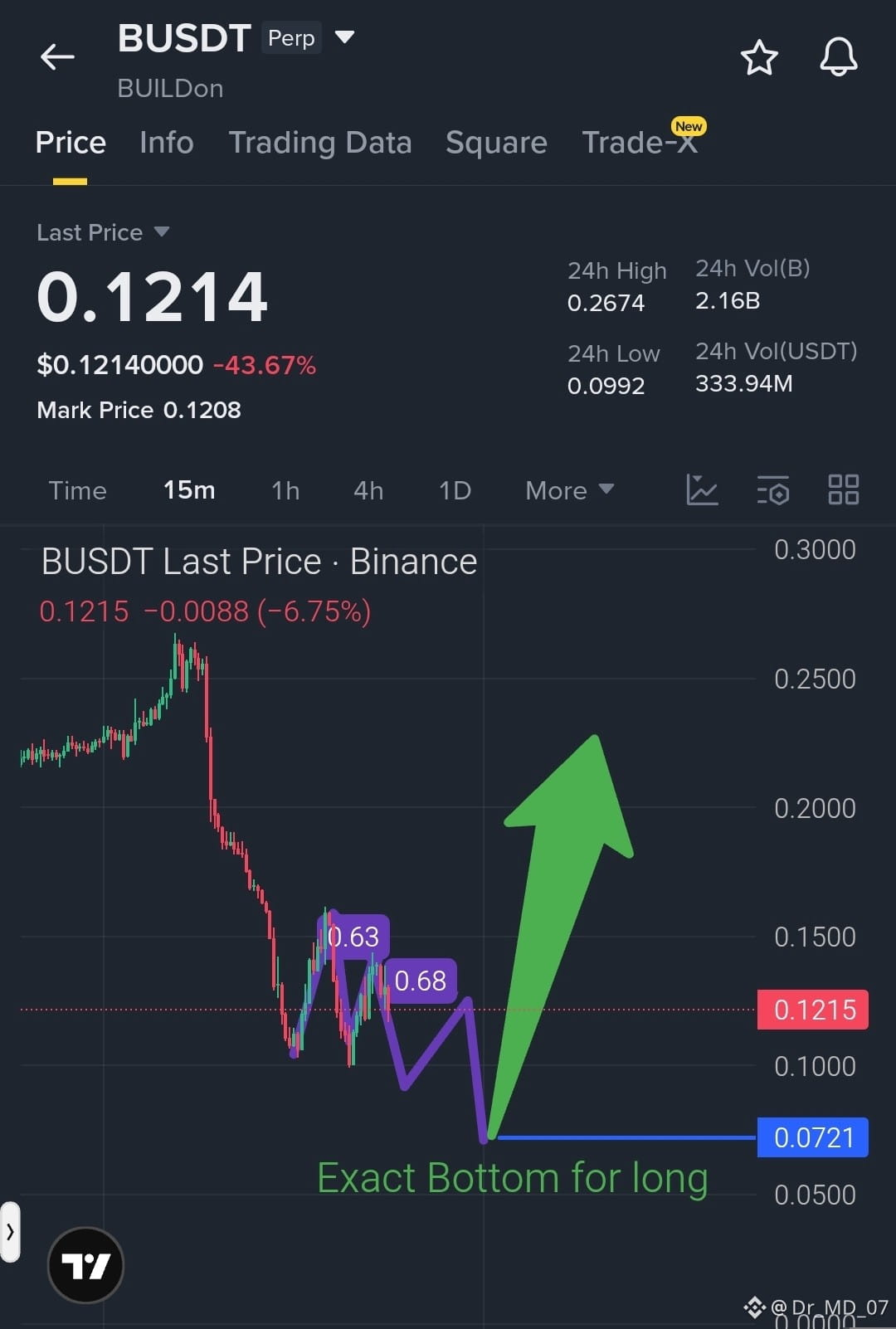
$B 🚨 : Verfolge den Dump nicht lange, verfolge das Setup! 🎯
Geduld ist dein größter Vorteil. Der Markt belohnt Disziplin, nicht FOMO.
BUSDT zeigt weiterhin bärischen Momentum, also ist das noch nicht die ideale Long-Zone. Ich beobachte den Bereich $0.070–0.072 für ein Long-Setup mit hoher Wahrscheinlichkeit. Lass den Kurs zu dir kommen. Die besten Trader warten auf den perfekten Einstieg—alle anderen jagen Kerzen. #Crypto #trading
{future}(BUSDT)
$SXT
{future}(SXTUSDT)
$T
{future}(TUSDT)
$B 🚨 : Verfolge den Dump nicht lange, verfolge das Setup! 🎯
Geduld ist dein größter Vorteil. Der Markt belohnt Disziplin, nicht FOMO.
BUSDT zeigt weiterhin bärischen Momentum, also ist das noch nicht die ideale Long-Zone. Ich beobachte den Bereich $0.070–0.072 für ein Long-Setup mit hoher Wahrscheinlichkeit. Lass den Kurs zu dir kommen. Die besten Trader warten auf den perfekten Einstieg—alle anderen jagen Kerzen. #Crypto #trading
$SXT
$T
Geduld ist dein größter Vorteil. Der Markt belohnt Disziplin, nicht FOMO.
BUSDT zeigt weiterhin bärischen Momentum, also ist das noch nicht die ideale Long-Zone. Ich beobachte den Bereich $0.070–0.072 für ein Long-Setup mit hoher Wahrscheinlichkeit. Lass den Kurs zu dir kommen. Die besten Trader warten auf den perfekten Einstieg—alle anderen jagen Kerzen. #Crypto #trading
$SXT
$T
3
1.1k
·
--
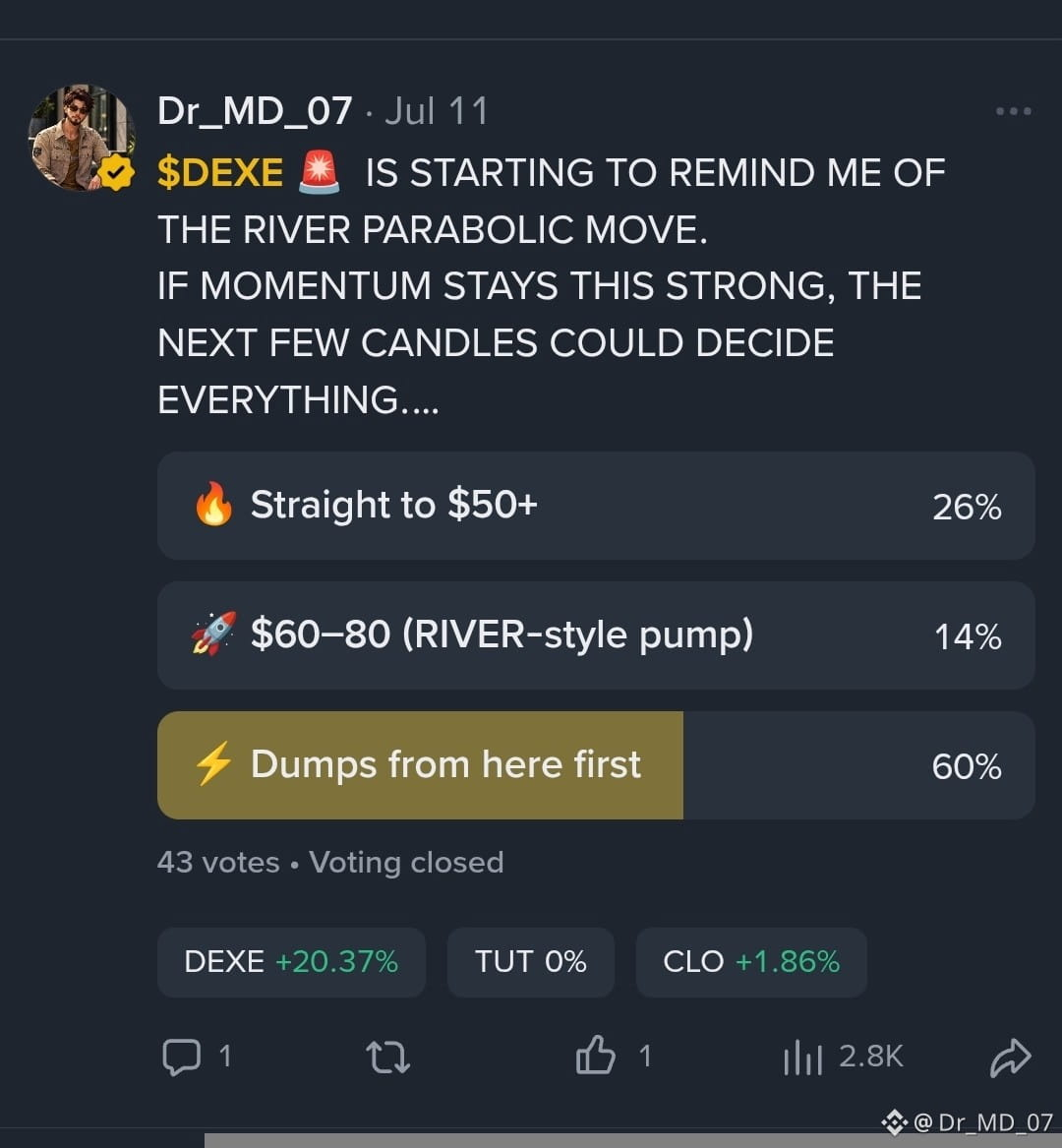
$DEXE 🚨 ES FÄNGT AN, MICH AN DIE RIVER-PARABOLIC-BEWEGUNG ZU ERINNERN.
WENN MOMENTUM SO STARK BLEIBT, KÖNNTEN DIE NÄCHSTEN WENIGEN KERZEN ALLES ENTSCHEIDEN.
ABER PARABOLISCHE PUMPS KÖNNEN AUCH MIT SCHAREN DUMPS ENDEN.
Nachdem DEXE sich vom $1,5er-Bereich zurückgeholt und über $37 gebracht hat, ist es in einen reinen Momentum-Modus eingetreten. Die Struktur beginnt, ähnlich zu aussehen wie der explosive RIVER-Run, der über $80 hinausging, bevor er sich abkühlte.
Wenn Käufer diese Breakout weiterhin verteidigen, wäre ich nicht überrascht zu sehen: 🎯 $45–50 zuerst
🚀 $60–80, wenn FOMO einsetzt.
Aber wenn diese Bewegung erschöpft wird, ist auch eine scharfe Korrektur von den aktuellen Kursen aus möglich. Momentum ist jetzt König.
📈 DEXE's nächste große Bewegung?
{future}(DEXEUSDT)
$TUT
{future}(TUTUSDT)
$CLO
{future}(CLOUSDT)
$DEXE 🚨 ES FÄNGT AN, MICH AN DIE RIVER-PARABOLIC-BEWEGUNG ZU ERINNERN.
WENN MOMENTUM SO STARK BLEIBT, KÖNNTEN DIE NÄCHSTEN WENIGEN KERZEN ALLES ENTSCHEIDEN.
ABER PARABOLISCHE PUMPS KÖNNEN AUCH MIT SCHAREN DUMPS ENDEN.
Nachdem DEXE sich vom $1,5er-Bereich zurückgeholt und über $37 gebracht hat, ist es in einen reinen Momentum-Modus eingetreten. Die Struktur beginnt, ähnlich zu aussehen wie der explosive RIVER-Run, der über $80 hinausging, bevor er sich abkühlte.
Wenn Käufer diese Breakout weiterhin verteidigen, wäre ich nicht überrascht zu sehen: 🎯 $45–50 zuerst
🚀 $60–80, wenn FOMO einsetzt.
Aber wenn diese Bewegung erschöpft wird, ist auch eine scharfe Korrektur von den aktuellen Kursen aus möglich. Momentum ist jetzt König.
📈 DEXE's nächste große Bewegung?
$TUT
$CLO
WENN MOMENTUM SO STARK BLEIBT, KÖNNTEN DIE NÄCHSTEN WENIGEN KERZEN ALLES ENTSCHEIDEN.
ABER PARABOLISCHE PUMPS KÖNNEN AUCH MIT SCHAREN DUMPS ENDEN.
Nachdem DEXE sich vom $1,5er-Bereich zurückgeholt und über $37 gebracht hat, ist es in einen reinen Momentum-Modus eingetreten. Die Struktur beginnt, ähnlich zu aussehen wie der explosive RIVER-Run, der über $80 hinausging, bevor er sich abkühlte.
Wenn Käufer diese Breakout weiterhin verteidigen, wäre ich nicht überrascht zu sehen: 🎯 $45–50 zuerst
🚀 $60–80, wenn FOMO einsetzt.
Aber wenn diese Bewegung erschöpft wird, ist auch eine scharfe Korrektur von den aktuellen Kursen aus möglich. Momentum ist jetzt König.
📈 DEXE's nächste große Bewegung?
$TUT
$CLO
🔥 Straight to $50+
26%
🚀 $60–80 (RIVER-style pump)
14%
⚡ Dumps from here first
60%
43 Stimmen • Abstimmung beendet
1
2
2.9k
·
--
Verifiziert
Ich habe gerade den neuesten Artikel von GRVT fertig gelesen, und ganz ehrlich: Was meine Aufmerksamkeit wirklich gepackt hat, war nicht der Token selbst, sondern die Art und Weise, wie das Team über Mitgliedschaft denkt.
Die meisten Exchange-Tokens? Das sind einfach Möglichkeiten, deine Handelsgebühren zu senken oder eine kleine Handvoll an Vorteilen der Plattform freizuschalten. So ist es hier nicht. #grvt stellt die Frage auf den Kopf. Anstatt zu fragen, „Welche Vorteile können wir in diesen Token packen?“, beginnen sie mit: „Wie machen wir die gesamte Plattform wertvoller für alle, die sie nutzen?“
Diese Art des Denkens hat tatsächlich meine Sicht auf das gesamte Projekt verändert.
Der $GRVT-Token geht also im Grunde darum, der Zugang zu einem größeren Ökosystem zu sein – nicht nur ein weiterer Utility-Coin mit grundlegenden Anwendungen. Egal, ob du tradest, investierst, Rendite erwirtschaften möchtest oder später sogar Zahlungsdienste nutzt: Der Token ist so ausgelegt, dass er dein gesamtes Erlebnis verbessert – und das alles innerhalb dieses einen Mitgliedschaftsansatzes.
Ein Punkt, der mir besonders aufgefallen ist: Du kannst selbst entscheiden, wie du auf diese Vorteile zugreifst. Entweder zahlst du ein monatliches Fiat-Abo oder du setzt stattdessen einfach $GRVT ein. Du bekommst Flexibilität, und gleichzeitig motiviert es die Menschen, sich langfristig wirklich in die Plattform einzubringen.
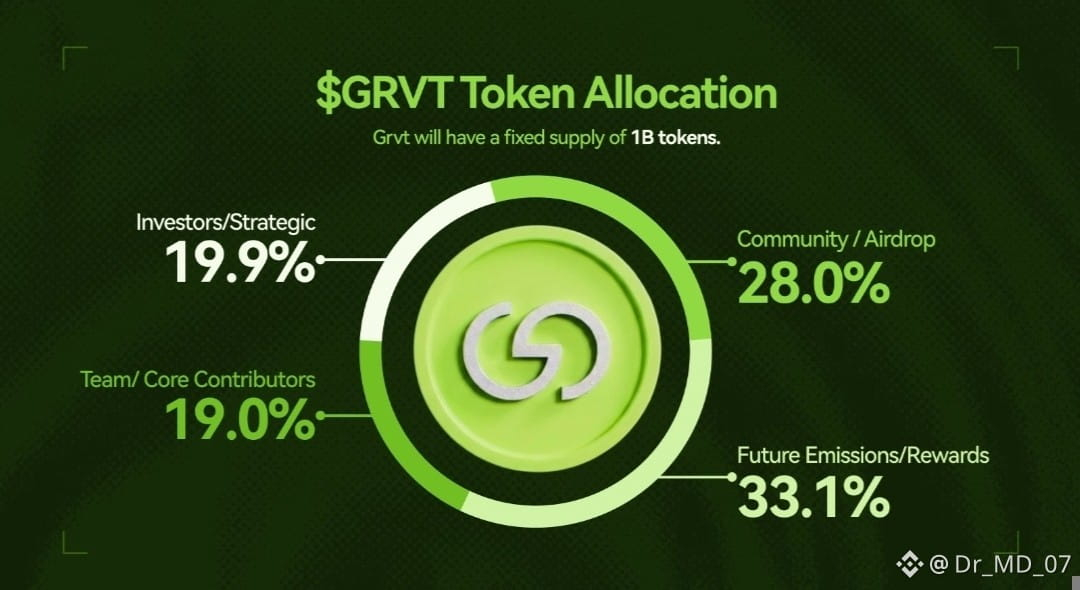
Außerdem ist das wichtig: Die Token-Zuordnung ist bei einer Milliarde festgesperrt. Keine Inflation danach, Punkt. Ein fixes Cap garantiert keinen Erfolg, aber zumindest kennst du die Regeln im Voraus – und das macht es leichter zu verstehen, worauf du dich einlässt.
Aber was ich am meisten mochte? GRVT versucht nicht, den Token als Hauptattraktion zu inszenieren. Der echte Fokus liegt auf der Exchange, den Services und dem gesamten Nutzererlebnis. Der Token verbindet das Ganze nur, statt selbst der Star der Show sein zu wollen.
Kurz gesagt: GRVT zielt nicht nur darauf ab, einen weiteren Exchange-Token mit begrenzten, isolierten Funktionen zu schaffen. Sie bauen ein Mitgliedschafts-Ökosystem auf, in dem jede neue Trade-, Invest-, Earn- oder Pay-Funktion die Chance hat, den Wert mitzumessen, Teil ihrer Community zu sein.
Ich bin tatsächlich neugierig, das komplette Architektur-Design genauer unter die Lupe zu nehmen und zu sehen, ob diese Gestaltung wirklich die langfristige Nachhaltigkeit liefert.
@grvt_io $SKL $TAG $VELVET #grvt
Ich habe gerade den neuesten Artikel von GRVT fertig gelesen, und ganz ehrlich: Was meine Aufmerksamkeit wirklich gepackt hat, war nicht der Token selbst, sondern die Art und Weise, wie das Team über Mitgliedschaft denkt.
Die meisten Exchange-Tokens? Das sind einfach Möglichkeiten, deine Handelsgebühren zu senken oder eine kleine Handvoll an Vorteilen der Plattform freizuschalten. So ist es hier nicht. #grvt stellt die Frage auf den Kopf. Anstatt zu fragen, „Welche Vorteile können wir in diesen Token packen?“, beginnen sie mit: „Wie machen wir die gesamte Plattform wertvoller für alle, die sie nutzen?“
Diese Art des Denkens hat tatsächlich meine Sicht auf das gesamte Projekt verändert.
Der $GRVT-Token geht also im Grunde darum, der Zugang zu einem größeren Ökosystem zu sein – nicht nur ein weiterer Utility-Coin mit grundlegenden Anwendungen. Egal, ob du tradest, investierst, Rendite erwirtschaften möchtest oder später sogar Zahlungsdienste nutzt: Der Token ist so ausgelegt, dass er dein gesamtes Erlebnis verbessert – und das alles innerhalb dieses einen Mitgliedschaftsansatzes.
Ein Punkt, der mir besonders aufgefallen ist: Du kannst selbst entscheiden, wie du auf diese Vorteile zugreifst. Entweder zahlst du ein monatliches Fiat-Abo oder du setzt stattdessen einfach $GRVT ein. Du bekommst Flexibilität, und gleichzeitig motiviert es die Menschen, sich langfristig wirklich in die Plattform einzubringen.
Außerdem ist das wichtig: Die Token-Zuordnung ist bei einer Milliarde festgesperrt. Keine Inflation danach, Punkt. Ein fixes Cap garantiert keinen Erfolg, aber zumindest kennst du die Regeln im Voraus – und das macht es leichter zu verstehen, worauf du dich einlässt.
Aber was ich am meisten mochte? GRVT versucht nicht, den Token als Hauptattraktion zu inszenieren. Der echte Fokus liegt auf der Exchange, den Services und dem gesamten Nutzererlebnis. Der Token verbindet das Ganze nur, statt selbst der Star der Show sein zu wollen.
Kurz gesagt: GRVT zielt nicht nur darauf ab, einen weiteren Exchange-Token mit begrenzten, isolierten Funktionen zu schaffen. Sie bauen ein Mitgliedschafts-Ökosystem auf, in dem jede neue Trade-, Invest-, Earn- oder Pay-Funktion die Chance hat, den Wert mitzumessen, Teil ihrer Community zu sein.
Ich bin tatsächlich neugierig, das komplette Architektur-Design genauer unter die Lupe zu nehmen und zu sehen, ob diese Gestaltung wirklich die langfristige Nachhaltigkeit liefert.
@grvt_io $SKL $TAG $VELVET #grvt
Die meisten Exchange-Tokens? Das sind einfach Möglichkeiten, deine Handelsgebühren zu senken oder eine kleine Handvoll an Vorteilen der Plattform freizuschalten. So ist es hier nicht. #grvt stellt die Frage auf den Kopf. Anstatt zu fragen, „Welche Vorteile können wir in diesen Token packen?“, beginnen sie mit: „Wie machen wir die gesamte Plattform wertvoller für alle, die sie nutzen?“
Diese Art des Denkens hat tatsächlich meine Sicht auf das gesamte Projekt verändert.
Der $GRVT-Token geht also im Grunde darum, der Zugang zu einem größeren Ökosystem zu sein – nicht nur ein weiterer Utility-Coin mit grundlegenden Anwendungen. Egal, ob du tradest, investierst, Rendite erwirtschaften möchtest oder später sogar Zahlungsdienste nutzt: Der Token ist so ausgelegt, dass er dein gesamtes Erlebnis verbessert – und das alles innerhalb dieses einen Mitgliedschaftsansatzes.
Ein Punkt, der mir besonders aufgefallen ist: Du kannst selbst entscheiden, wie du auf diese Vorteile zugreifst. Entweder zahlst du ein monatliches Fiat-Abo oder du setzt stattdessen einfach $GRVT ein. Du bekommst Flexibilität, und gleichzeitig motiviert es die Menschen, sich langfristig wirklich in die Plattform einzubringen.
Außerdem ist das wichtig: Die Token-Zuordnung ist bei einer Milliarde festgesperrt. Keine Inflation danach, Punkt. Ein fixes Cap garantiert keinen Erfolg, aber zumindest kennst du die Regeln im Voraus – und das macht es leichter zu verstehen, worauf du dich einlässt.
Aber was ich am meisten mochte? GRVT versucht nicht, den Token als Hauptattraktion zu inszenieren. Der echte Fokus liegt auf der Exchange, den Services und dem gesamten Nutzererlebnis. Der Token verbindet das Ganze nur, statt selbst der Star der Show sein zu wollen.
Kurz gesagt: GRVT zielt nicht nur darauf ab, einen weiteren Exchange-Token mit begrenzten, isolierten Funktionen zu schaffen. Sie bauen ein Mitgliedschafts-Ökosystem auf, in dem jede neue Trade-, Invest-, Earn- oder Pay-Funktion die Chance hat, den Wert mitzumessen, Teil ihrer Community zu sein.
Ich bin tatsächlich neugierig, das komplette Architektur-Design genauer unter die Lupe zu nehmen und zu sehen, ob diese Gestaltung wirklich die langfristige Nachhaltigkeit liefert.
@grvt_io $SKL $TAG $VELVET #grvt

8
6
451
·
--
Artikel
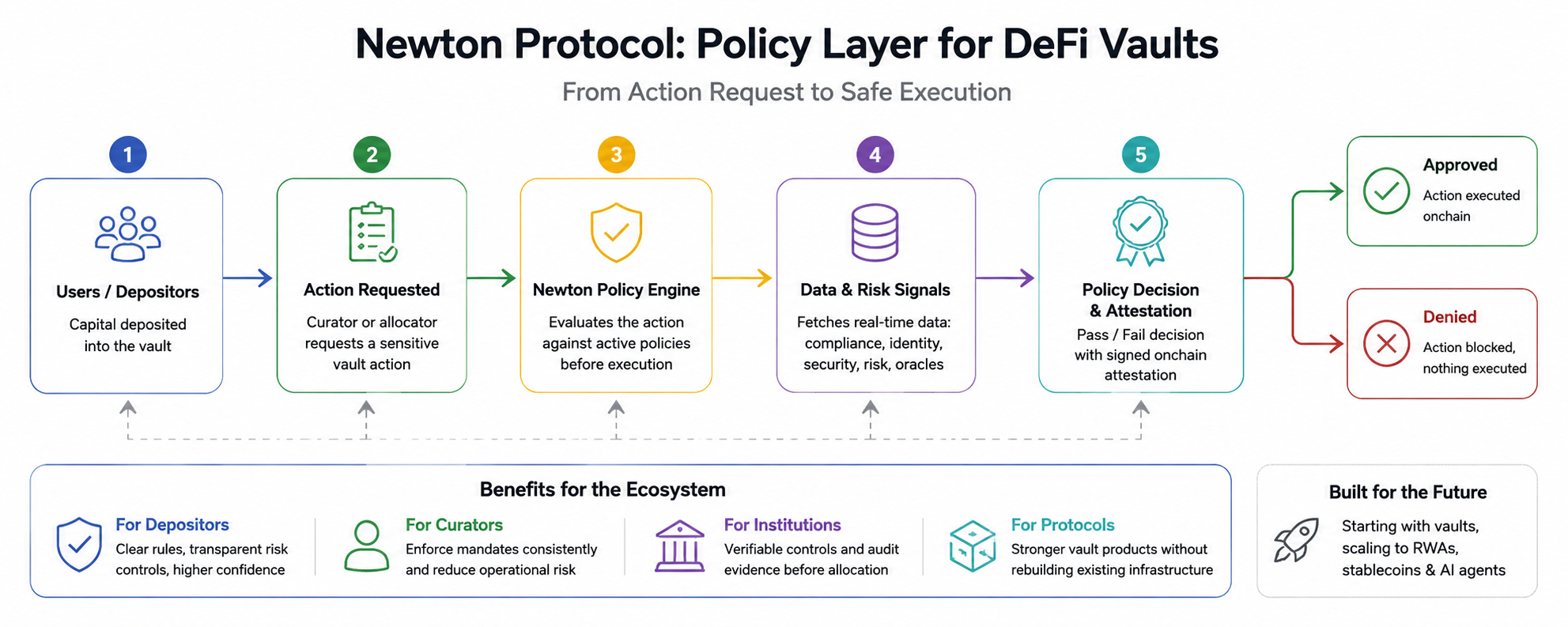
Warum die nächste Generation von DeFi-Vaults eine Policy-Ebene braucht – nicht nur bessere StrategienFür eine lange Zeit dachte ich, Vaults würden hauptsächlich anhand der Performance miteinander konkurrieren.
Ein höheres APY bedeutete ein besseres Produkt.
Aber nachdem ich Zeit damit verbracht hatte, die Entwicklerdokumentation von Newton Protocol zu lesen, begann ich, Vaults aus einer völlig anderen Perspektive zu betrachten.
Rendite zieht Kapital an.
Risikomanagement sorgt dafür.
Während immer mehr Institutionen damit beginnen, DeFi zu erforschen, verlagert sich das Gespräch allmählich von „Wie viel kann dieses Vault verdienen?“ hin zu einer viel wichtigeren Frage:
Wie trifft dieser Vault Entscheidungen, und kann man diesen Entscheidungen vertrauen?
Warum die nächste Generation von DeFi-Vaults eine Policy-Ebene braucht – nicht nur bessere Strategien
Für eine lange Zeit dachte ich, Vaults würden hauptsächlich anhand der Performance miteinander konkurrieren.
Ein höheres APY bedeutete ein besseres Produkt.
Aber nachdem ich Zeit damit verbracht hatte, die Entwicklerdokumentation von Newton Protocol zu lesen, begann ich, Vaults aus einer völlig anderen Perspektive zu betrachten.
Rendite zieht Kapital an.
Risikomanagement sorgt dafür.
Während immer mehr Institutionen damit beginnen, DeFi zu erforschen, verlagert sich das Gespräch allmählich von „Wie viel kann dieses Vault verdienen?“ hin zu einer viel wichtigeren Frage:
Wie trifft dieser Vault Entscheidungen, und kann man diesen Entscheidungen vertrauen?
Ein höheres APY bedeutete ein besseres Produkt.
Aber nachdem ich Zeit damit verbracht hatte, die Entwicklerdokumentation von Newton Protocol zu lesen, begann ich, Vaults aus einer völlig anderen Perspektive zu betrachten.
Rendite zieht Kapital an.
Risikomanagement sorgt dafür.
Während immer mehr Institutionen damit beginnen, DeFi zu erforschen, verlagert sich das Gespräch allmählich von „Wie viel kann dieses Vault verdienen?“ hin zu einer viel wichtigeren Frage:
Wie trifft dieser Vault Entscheidungen, und kann man diesen Entscheidungen vertrauen?
9
4
465
·
--
Die fehlende Infrastruktur hinter institutionellem DeFi @NewtonProtocol
Nachdem ich mehr über das Newton Protocol gelesen habe, ist mir etwas Interessantes aufgefallen.
Die meisten Menschen beurteilen einen Vault anhand seiner APY.
Institutionen beurteilen ihn jedoch nach etwas ganz anderem.
Sie fragen:
• Wer kann die Strategie ändern? • Was passiert, wenn das Risiko plötzlich steigt? • Können jede wichtigen Entscheidungen später verifiziert werden? • Werden Sicherheit und Compliance automatisch durchgesetzt?
Diese Fragen entscheiden darüber, ob Milliardenbeträge sicher in DeFi fließen können.
Genau hier sticht Newton Protocol hervor.
Anstatt Nutzer darauf zu vertrauen, dass Kuratoren alles richtig machen, ermöglicht Newton Vaults, Programmierbare Policy-Regeln an sensible Aktionen zu koppeln. Jede Aktion kann vor der Ausführung überprüft und durch eine Onchain-Bestätigung abgesichert werden.
Was mir gefällt, ist, dass Newton keine bestehenden Vault-Protokolle ersetzt.
Es wird lediglich zur Policy-Ebene zwischen einer Aktion und ihrer Ausführung.
Das bedeutet, dass Entwickler weiterhin auf vertrauter Infrastruktur aufbauen können, während sie institutionelles Niveau bei Kontrolle hinzufügen, ohne alles neu zu entwerfen.
Mit Vault SDK und Policy Packs werden Sicherheit, Compliance, Oracle-Validierung und operatives Risiko zu wiederverwendbaren Bausteinen – statt zu individuellem Sondercode.
Für mich fühlt es sich weniger wie ein weiteres DeFi-Protokoll an und mehr wie Infrastruktur, die ernsthaftes Kapital irgendwann erwarten wird.
Während DeFi weiter reift, glaube ich, dass die größte Innovation nicht immer eine höhere Rendite sein wird.
Es wird darum gehen, bestehende Rendite sicherer, verifizierbarer und leichter vertrauenswürdig zu machen.
@NewtonProtocol #Newt
#newt $NEWT
{future}(NEWTUSDT)
$LAB $TAG
Die fehlende Infrastruktur hinter institutionellem DeFi @NewtonProtocol
Nachdem ich mehr über das Newton Protocol gelesen habe, ist mir etwas Interessantes aufgefallen.
Die meisten Menschen beurteilen einen Vault anhand seiner APY.
Institutionen beurteilen ihn jedoch nach etwas ganz anderem.
Sie fragen:
• Wer kann die Strategie ändern? • Was passiert, wenn das Risiko plötzlich steigt? • Können jede wichtigen Entscheidungen später verifiziert werden? • Werden Sicherheit und Compliance automatisch durchgesetzt?
Diese Fragen entscheiden darüber, ob Milliardenbeträge sicher in DeFi fließen können.
Genau hier sticht Newton Protocol hervor.
Anstatt Nutzer darauf zu vertrauen, dass Kuratoren alles richtig machen, ermöglicht Newton Vaults, Programmierbare Policy-Regeln an sensible Aktionen zu koppeln. Jede Aktion kann vor der Ausführung überprüft und durch eine Onchain-Bestätigung abgesichert werden.
Was mir gefällt, ist, dass Newton keine bestehenden Vault-Protokolle ersetzt.
Es wird lediglich zur Policy-Ebene zwischen einer Aktion und ihrer Ausführung.
Das bedeutet, dass Entwickler weiterhin auf vertrauter Infrastruktur aufbauen können, während sie institutionelles Niveau bei Kontrolle hinzufügen, ohne alles neu zu entwerfen.
Mit Vault SDK und Policy Packs werden Sicherheit, Compliance, Oracle-Validierung und operatives Risiko zu wiederverwendbaren Bausteinen – statt zu individuellem Sondercode.
Für mich fühlt es sich weniger wie ein weiteres DeFi-Protokoll an und mehr wie Infrastruktur, die ernsthaftes Kapital irgendwann erwarten wird.
Während DeFi weiter reift, glaube ich, dass die größte Innovation nicht immer eine höhere Rendite sein wird.
Es wird darum gehen, bestehende Rendite sicherer, verifizierbarer und leichter vertrauenswürdig zu machen.
@NewtonProtocol #Newt
#newt $NEWT
$LAB $TAG
Nachdem ich mehr über das Newton Protocol gelesen habe, ist mir etwas Interessantes aufgefallen.
Die meisten Menschen beurteilen einen Vault anhand seiner APY.
Institutionen beurteilen ihn jedoch nach etwas ganz anderem.
Sie fragen:
• Wer kann die Strategie ändern? • Was passiert, wenn das Risiko plötzlich steigt? • Können jede wichtigen Entscheidungen später verifiziert werden? • Werden Sicherheit und Compliance automatisch durchgesetzt?
Diese Fragen entscheiden darüber, ob Milliardenbeträge sicher in DeFi fließen können.
Genau hier sticht Newton Protocol hervor.
Anstatt Nutzer darauf zu vertrauen, dass Kuratoren alles richtig machen, ermöglicht Newton Vaults, Programmierbare Policy-Regeln an sensible Aktionen zu koppeln. Jede Aktion kann vor der Ausführung überprüft und durch eine Onchain-Bestätigung abgesichert werden.
Was mir gefällt, ist, dass Newton keine bestehenden Vault-Protokolle ersetzt.
Es wird lediglich zur Policy-Ebene zwischen einer Aktion und ihrer Ausführung.
Das bedeutet, dass Entwickler weiterhin auf vertrauter Infrastruktur aufbauen können, während sie institutionelles Niveau bei Kontrolle hinzufügen, ohne alles neu zu entwerfen.
Mit Vault SDK und Policy Packs werden Sicherheit, Compliance, Oracle-Validierung und operatives Risiko zu wiederverwendbaren Bausteinen – statt zu individuellem Sondercode.
Für mich fühlt es sich weniger wie ein weiteres DeFi-Protokoll an und mehr wie Infrastruktur, die ernsthaftes Kapital irgendwann erwarten wird.
Während DeFi weiter reift, glaube ich, dass die größte Innovation nicht immer eine höhere Rendite sein wird.
Es wird darum gehen, bestehende Rendite sicherer, verifizierbarer und leichter vertrauenswürdig zu machen.
@NewtonProtocol #Newt
#newt $NEWT
$LAB $TAG
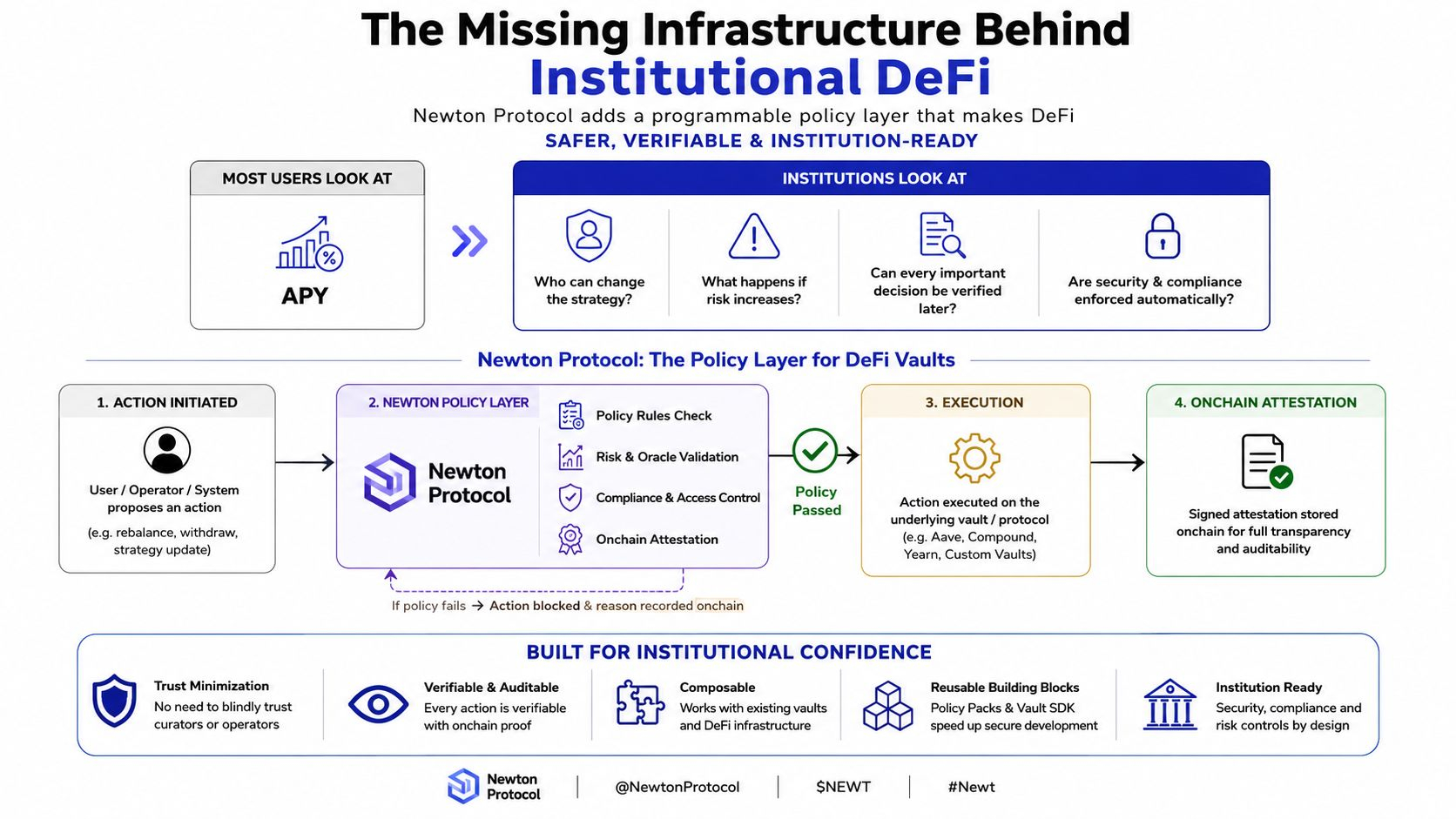
8
2
508
Anmelden und weiter Inhalte entdecken
Krypto-Nutzer weltweit auf Binance Square kennenlernen
⚡️ Bleib in Sachen Krypto stets am Puls.
💬 Die weltgrößte Kryptobörse vertraut darauf.
👍 Erhalte verlässliche Einblicke von verifizierten Creators.
E-Mail-Adresse/Telefonnummer
Trendthemen
BinancePick
2.6M Aufrufe
140,919 Kommentare
Mach bei #Gewinnsaison mit: Prognostiziere Unternehmensergebnisse auf Binance Pick und teile deine Meinung auf Binance Square!
Binance Square Official
·401 Likes
·338.3k Aufrufe
EarningsSeason
5M Aufrufe
24,292 Kommentare
FranklinTempletonFilesForTwoDividendToBitcoinETFs
1,001 Aufrufe
61 Kommentare