
Ade_Krypt
1.7k Beiträge

Ade_Krypt
Melden
Nutzer blockieren
16 Following
2.2K+ Follower
4.1K+ Like gegeben
Beiträge
Alle
Zitierungen
PINNED
·
--
$BTC Markt-Ausblick
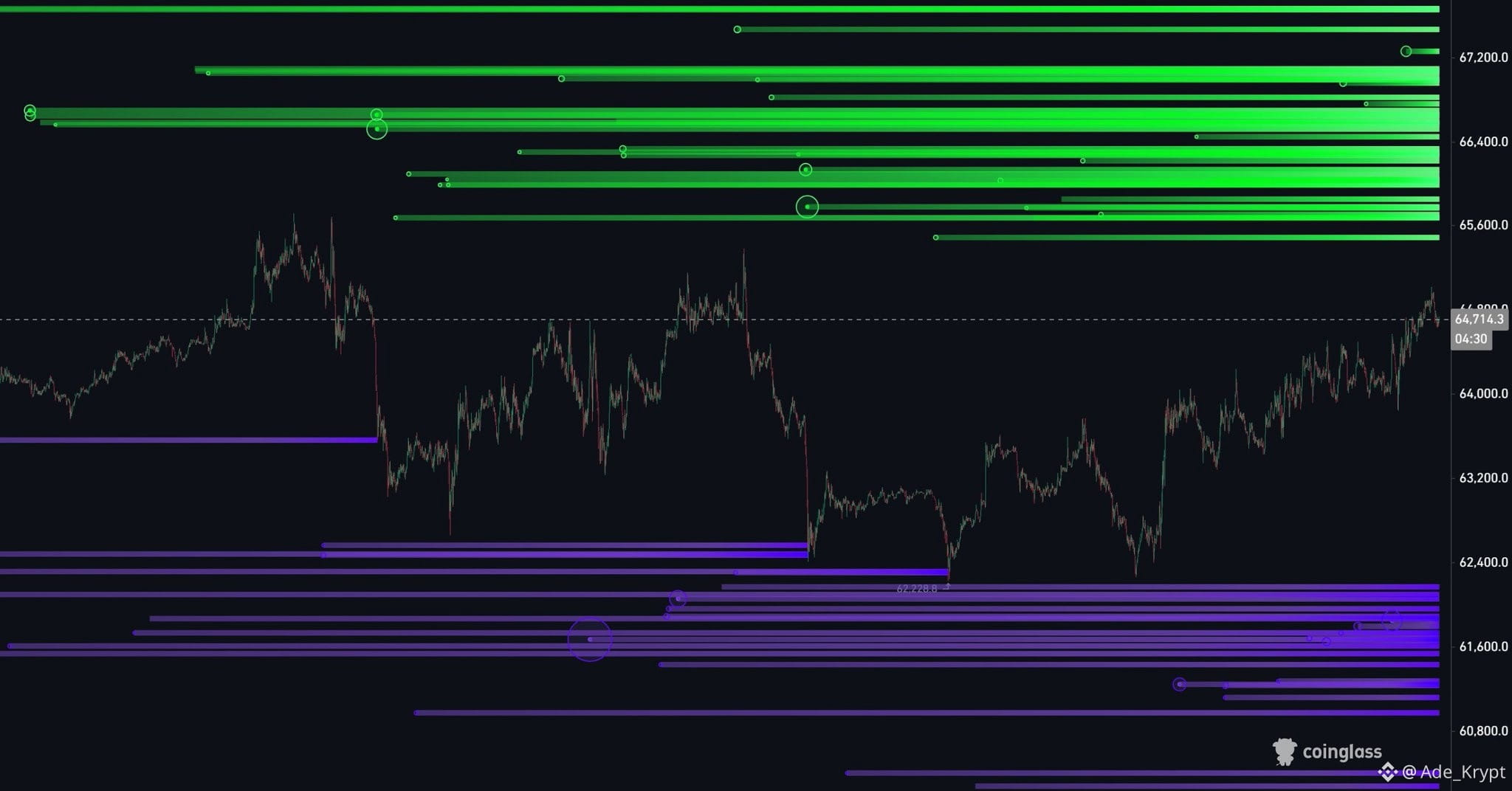
Bitcoin steigt stetig weiter und hat nun eine wichtige Entscheidungszone um 65.000 erreicht.
Das letzte Mal, als der Preis auf diesem Niveau gehandelt wurde, wurde er abgewiesen und fiel anschließend. Ich tendiere zu einem ähnlichen Ausgang, sofern $BTC nicht über der Spanne 65,2k–65,6k ausbrechen und dort halten kann.
Ein bestätigter Ausbruch über diesen Widerstand würde den aktuellen bärischen Ausblick entkräften, die Marktstruktur in Richtung bullisch verschieben und sehr wahrscheinlich eine Welle von Short-Liquidationen auslösen. In diesem Fall könnte BTC in den kommenden Tagen in Richtung des Bereichs 67k–68k laufen.
Vorerst halte ich an meinen Short-Positionen fest und setze klar definierte Stop-Loss-Levels oberhalb des Widerstands. Wenn der Preis erneut aus dieser Zone nach unten abgewiesen wird, erwarte ich erhöhte Volatilität und eine Bewegung in Richtung 61,3k.
Kurz gesagt: Bitcoin steht an einem wichtigen Entscheidungspunkt. Die nächste Bewegung wird voraussichtlich bestimmen, ob wir einen Rückgang auf 61,3k sehen oder ob ein Ausbruch den Preis in die mFVG-Zone bei 67k–68k drückt.
#ChinaLaunchesBroadestTradeRetaliationOnUSFirms #ADPJulyPrivatePayrollsMissedExpectations
$BTC Markt-Ausblick
Bitcoin steigt stetig weiter und hat nun eine wichtige Entscheidungszone um 65.000 erreicht.
Das letzte Mal, als der Preis auf diesem Niveau gehandelt wurde, wurde er abgewiesen und fiel anschließend. Ich tendiere zu einem ähnlichen Ausgang, sofern $BTC nicht über der Spanne 65,2k–65,6k ausbrechen und dort halten kann.
Ein bestätigter Ausbruch über diesen Widerstand würde den aktuellen bärischen Ausblick entkräften, die Marktstruktur in Richtung bullisch verschieben und sehr wahrscheinlich eine Welle von Short-Liquidationen auslösen. In diesem Fall könnte BTC in den kommenden Tagen in Richtung des Bereichs 67k–68k laufen.
Vorerst halte ich an meinen Short-Positionen fest und setze klar definierte Stop-Loss-Levels oberhalb des Widerstands. Wenn der Preis erneut aus dieser Zone nach unten abgewiesen wird, erwarte ich erhöhte Volatilität und eine Bewegung in Richtung 61,3k.
Kurz gesagt: Bitcoin steht an einem wichtigen Entscheidungspunkt. Die nächste Bewegung wird voraussichtlich bestimmen, ob wir einen Rückgang auf 61,3k sehen oder ob ein Ausbruch den Preis in die mFVG-Zone bei 67k–68k drückt.
#ChinaLaunchesBroadestTradeRetaliationOnUSFirms #ADPJulyPrivatePayrollsMissedExpectations
Bitcoin steigt stetig weiter und hat nun eine wichtige Entscheidungszone um 65.000 erreicht.
Das letzte Mal, als der Preis auf diesem Niveau gehandelt wurde, wurde er abgewiesen und fiel anschließend. Ich tendiere zu einem ähnlichen Ausgang, sofern $BTC nicht über der Spanne 65,2k–65,6k ausbrechen und dort halten kann.
Ein bestätigter Ausbruch über diesen Widerstand würde den aktuellen bärischen Ausblick entkräften, die Marktstruktur in Richtung bullisch verschieben und sehr wahrscheinlich eine Welle von Short-Liquidationen auslösen. In diesem Fall könnte BTC in den kommenden Tagen in Richtung des Bereichs 67k–68k laufen.
Vorerst halte ich an meinen Short-Positionen fest und setze klar definierte Stop-Loss-Levels oberhalb des Widerstands. Wenn der Preis erneut aus dieser Zone nach unten abgewiesen wird, erwarte ich erhöhte Volatilität und eine Bewegung in Richtung 61,3k.
Kurz gesagt: Bitcoin steht an einem wichtigen Entscheidungspunkt. Die nächste Bewegung wird voraussichtlich bestimmen, ob wir einen Rückgang auf 61,3k sehen oder ob ein Ausbruch den Preis in die mFVG-Zone bei 67k–68k drückt.
#ChinaLaunchesBroadestTradeRetaliationOnUSFirms #ADPJulyPrivatePayrollsMissedExpectations
24
1
149
434k
PINNED
·
--
Verifiziert
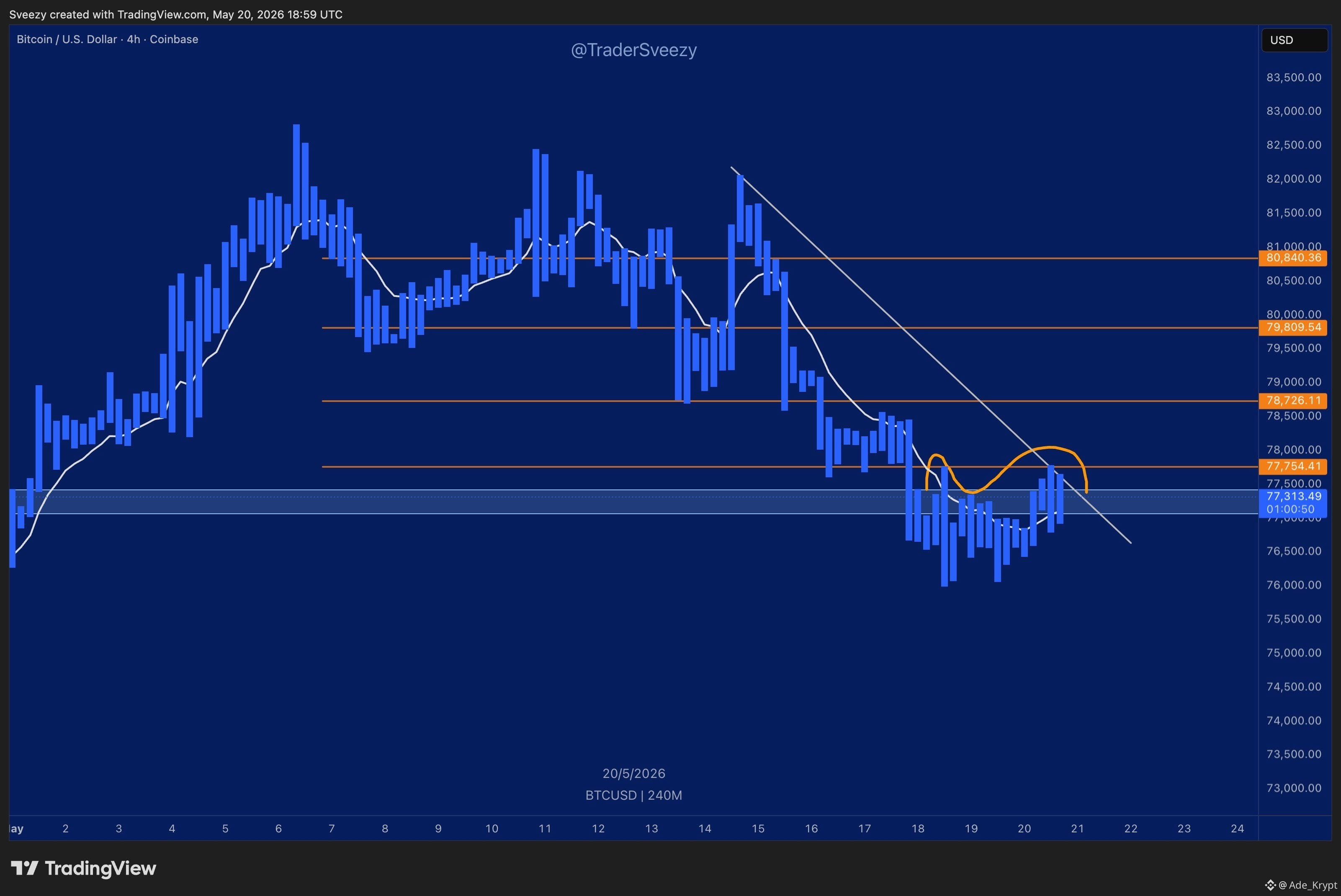
$BTC kämpft immer noch um die Widerstandszone von $77,75k.
Im Moment limitiert das die Aufwärtsdynamik, aber was auffällt, ist, dass die Verkäufer es immer noch nicht geschafft haben, einen echten Rücksetzer zu erzwingen.
Der Preis konsolidiert sich jetzt seit Stunden knapp unter dem Widerstand.
Normalerweise, wenn der Preis weiterhin unter einem Widerstandslevel gedrückt wird, ohne eine starke Ablehnung, deutet das darauf hin, dass sich die Dynamik für einen möglichen Ausbruch aufbaut.
Wenn $BTC einen sauberen Move über $77,75k schafft, gibt es eine gute Chance, dass der Preis in die Liquidität darüber beschleunigt.
Für jetzt bleibt der Widerstand intakt, aber mit dieser Art von Kompression ist es kein Level, gegen das ich selbstbewusst shorten würde.
#GoogleLaunchesGemini3.5Flash #Trump'sIranAttackDelayed
$BTC kämpft immer noch um die Widerstandszone von $77,75k.
Im Moment limitiert das die Aufwärtsdynamik, aber was auffällt, ist, dass die Verkäufer es immer noch nicht geschafft haben, einen echten Rücksetzer zu erzwingen.
Der Preis konsolidiert sich jetzt seit Stunden knapp unter dem Widerstand.
Normalerweise, wenn der Preis weiterhin unter einem Widerstandslevel gedrückt wird, ohne eine starke Ablehnung, deutet das darauf hin, dass sich die Dynamik für einen möglichen Ausbruch aufbaut.
Wenn $BTC einen sauberen Move über $77,75k schafft, gibt es eine gute Chance, dass der Preis in die Liquidität darüber beschleunigt.
Für jetzt bleibt der Widerstand intakt, aber mit dieser Art von Kompression ist es kein Level, gegen das ich selbstbewusst shorten würde.
#GoogleLaunchesGemini3.5Flash #Trump'sIranAttackDelayed
Im Moment limitiert das die Aufwärtsdynamik, aber was auffällt, ist, dass die Verkäufer es immer noch nicht geschafft haben, einen echten Rücksetzer zu erzwingen.
Der Preis konsolidiert sich jetzt seit Stunden knapp unter dem Widerstand.
Normalerweise, wenn der Preis weiterhin unter einem Widerstandslevel gedrückt wird, ohne eine starke Ablehnung, deutet das darauf hin, dass sich die Dynamik für einen möglichen Ausbruch aufbaut.
Wenn $BTC einen sauberen Move über $77,75k schafft, gibt es eine gute Chance, dass der Preis in die Liquidität darüber beschleunigt.
Für jetzt bleibt der Widerstand intakt, aber mit dieser Art von Kompression ist es kein Level, gegen das ich selbstbewusst shorten würde.
#GoogleLaunchesGemini3.5Flash #Trump'sIranAttackDelayed
41
19
193
745.9k
·
--
Übersetzung ansehen
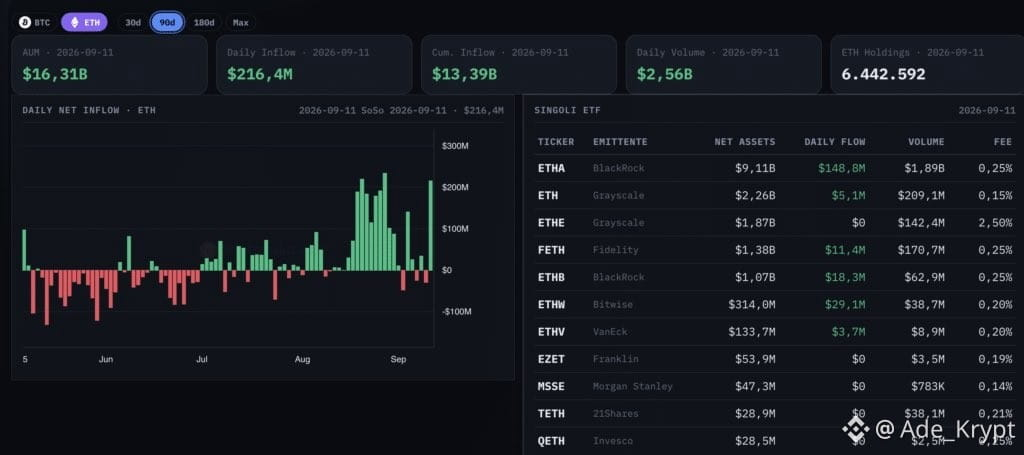
$ETH ETFs saw $216.4M in inflows last Friday, marking their strongest day since August 27.
Meanwhile, $BTC ETFs recorded their fourth consecutive day of outflows during the same session.
BlackRock also purchased $250M worth of ETH directly that day, separate from ETF activity.
On-chain activity is picking up too, with transactions above $1M rising 14% in just 24 hours.
Three bullish signals appearing almost simultaneously.
But the chart remains uncertain. $ETH formed a weekly doji with little real body, sitting directly around the 50-week SMA after rejecting the $2,450 resistance level.
After a 32.6% rally in August, could ETH be setting up for a reversal?
#AnthropicCEOCallsForAISlowdown
#BitcoinThirdSingleBlockReorgInFourWeeks
$ETH ETFs saw $216.4M in inflows last Friday, marking their strongest day since August 27.
Meanwhile, $BTC ETFs recorded their fourth consecutive day of outflows during the same session.
BlackRock also purchased $250M worth of ETH directly that day, separate from ETF activity.
On-chain activity is picking up too, with transactions above $1M rising 14% in just 24 hours.
Three bullish signals appearing almost simultaneously.
But the chart remains uncertain. $ETH formed a weekly doji with little real body, sitting directly around the 50-week SMA after rejecting the $2,450 resistance level.
After a 32.6% rally in August, could ETH be setting up for a reversal?
#AnthropicCEOCallsForAISlowdown
#BitcoinThirdSingleBlockReorgInFourWeeks
Meanwhile, $BTC ETFs recorded their fourth consecutive day of outflows during the same session.
BlackRock also purchased $250M worth of ETH directly that day, separate from ETF activity.
On-chain activity is picking up too, with transactions above $1M rising 14% in just 24 hours.
Three bullish signals appearing almost simultaneously.
But the chart remains uncertain. $ETH formed a weekly doji with little real body, sitting directly around the 50-week SMA after rejecting the $2,450 resistance level.
After a 32.6% rally in August, could ETH be setting up for a reversal?
#AnthropicCEOCallsForAISlowdown
#BitcoinThirdSingleBlockReorgInFourWeeks
146
·
--
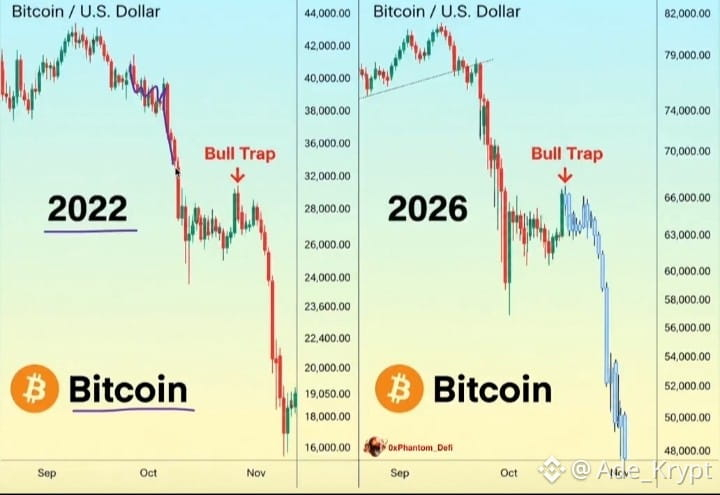
BITCOIN KÖNNTE IN 25 TAGEN VOM TOTALEN KAPITULATIONSPUNKT ENTFERNT SEIN
Die $79K-Bull-Trap, vor der ich gewarnt habe, scheint sich ausgeplätschert zu haben.
Jetzt, $BTC
, zeigt eine Struktur, die beunruhigend ähnlich aussieht wie das Setup, das zum brutalen Selloff im Jahr 2022 führte.
Wenn dieses Muster sich weiter wiederholt, könnte Bitcoin potenziell innerhalb der nächsten 25 Tage unter $50K fallen.
Nicht nächstes Jahr.
Nicht irgendwann.
25 Tage.
Die Abfolge ist simpel:
Bull Trap → Distribution → Breakdown → Kapitulation
$79K war die Falle.
$48K könnte der Ort sein, an dem die echte Panik beginnt.
Und das gefährlichste daran? Jeder Rücksetzer auf dem Weg dorthin könnte Händler davon überzeugen, dass der Boden bereits erreicht ist.
Speichere das ab.
Wenn $BTC unter $50K handelt, komm zu diesem Post zurück.
Ich beobachte die Struktur genau und teile meine Levels, sobald ich glaube, dass das Chance/Risiko-Verhältnis wieder Sinn ergibt.
Verwechsle nicht jeden Bounce mit einem bestätigten Tief.
#SECReceivesGrayscaleLitecoinTrustETFFiling #US10YearTreasuryYieldNears5%
BITCOIN KÖNNTE IN 25 TAGEN VOM TOTALEN KAPITULATIONSPUNKT ENTFERNT SEIN
Die $79K-Bull-Trap, vor der ich gewarnt habe, scheint sich ausgeplätschert zu haben.
Jetzt, $BTC
, zeigt eine Struktur, die beunruhigend ähnlich aussieht wie das Setup, das zum brutalen Selloff im Jahr 2022 führte.
Wenn dieses Muster sich weiter wiederholt, könnte Bitcoin potenziell innerhalb der nächsten 25 Tage unter $50K fallen.
Nicht nächstes Jahr.
Nicht irgendwann.
25 Tage.
Die Abfolge ist simpel:
Bull Trap → Distribution → Breakdown → Kapitulation
$79K war die Falle.
$48K könnte der Ort sein, an dem die echte Panik beginnt.
Und das gefährlichste daran? Jeder Rücksetzer auf dem Weg dorthin könnte Händler davon überzeugen, dass der Boden bereits erreicht ist.
Speichere das ab.
Wenn $BTC unter $50K handelt, komm zu diesem Post zurück.
Ich beobachte die Struktur genau und teile meine Levels, sobald ich glaube, dass das Chance/Risiko-Verhältnis wieder Sinn ergibt.
Verwechsle nicht jeden Bounce mit einem bestätigten Tief.
#SECReceivesGrayscaleLitecoinTrustETFFiling #US10YearTreasuryYieldNears5%
Die $79K-Bull-Trap, vor der ich gewarnt habe, scheint sich ausgeplätschert zu haben.
Jetzt, $BTC
, zeigt eine Struktur, die beunruhigend ähnlich aussieht wie das Setup, das zum brutalen Selloff im Jahr 2022 führte.
Wenn dieses Muster sich weiter wiederholt, könnte Bitcoin potenziell innerhalb der nächsten 25 Tage unter $50K fallen.
Nicht nächstes Jahr.
Nicht irgendwann.
25 Tage.
Die Abfolge ist simpel:
Bull Trap → Distribution → Breakdown → Kapitulation
$79K war die Falle.
$48K könnte der Ort sein, an dem die echte Panik beginnt.
Und das gefährlichste daran? Jeder Rücksetzer auf dem Weg dorthin könnte Händler davon überzeugen, dass der Boden bereits erreicht ist.
Speichere das ab.
Wenn $BTC unter $50K handelt, komm zu diesem Post zurück.
Ich beobachte die Struktur genau und teile meine Levels, sobald ich glaube, dass das Chance/Risiko-Verhältnis wieder Sinn ergibt.
Verwechsle nicht jeden Bounce mit einem bestätigten Tief.
#SECReceivesGrayscaleLitecoinTrustETFFiling #US10YearTreasuryYieldNears5%
1
1
209
·
--
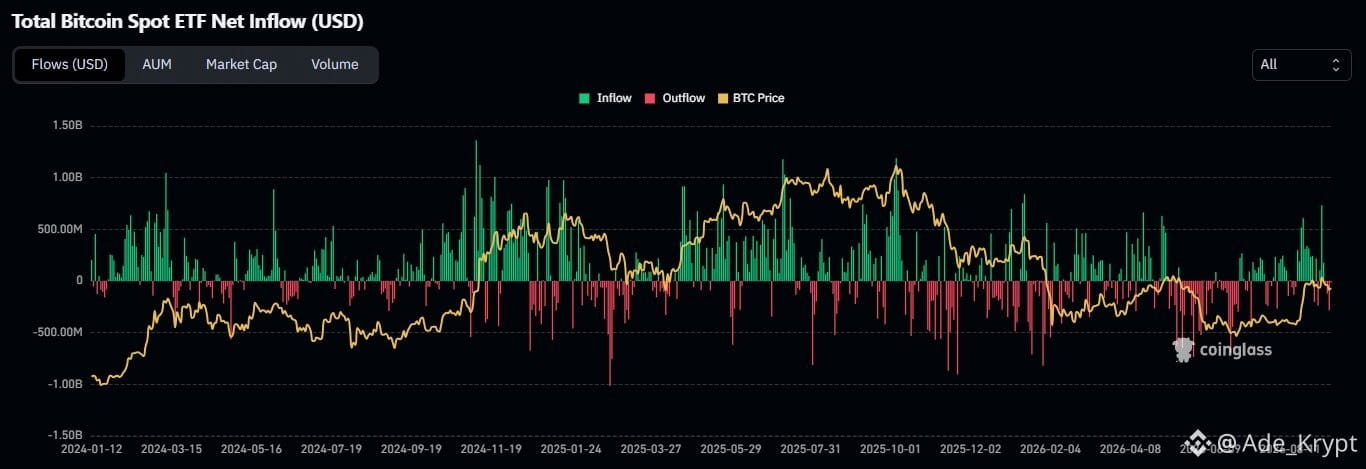
Der Spot-Bitcoin-ETF-Bedarf scheint wieder anzuziehen.
Aktuelle Daten zeigen eine der stärksten täglichen Zufluss-Sessions seit Monaten, doch der Preis $BTC hat bisher kaum reagiert.
Diese Divergenz lohnt es, im Blick zu behalten. Sie könnte auf eine erneute institutionelle Akkumulation hindeuten, während der breitere Markt weiterhin vorsichtig bleibt. Dennoch reicht ein starker Zufluss-Tag allein nicht aus, um einen Trend zu bestätigen.
Wenn die positiven ETF-Zuflüsse in den kommenden Handelssitzungen anhalten, könnte Bitcoin die Nachfrage erhalten, die für seinen nächsten bedeutenden Schritt nötig ist.
#SECReceivesGrayscaleLitecoinTrustETFFiling #US10YearTreasuryYieldNears5%
Der Spot-Bitcoin-ETF-Bedarf scheint wieder anzuziehen.
Aktuelle Daten zeigen eine der stärksten täglichen Zufluss-Sessions seit Monaten, doch der Preis $BTC hat bisher kaum reagiert.
Diese Divergenz lohnt es, im Blick zu behalten. Sie könnte auf eine erneute institutionelle Akkumulation hindeuten, während der breitere Markt weiterhin vorsichtig bleibt. Dennoch reicht ein starker Zufluss-Tag allein nicht aus, um einen Trend zu bestätigen.
Wenn die positiven ETF-Zuflüsse in den kommenden Handelssitzungen anhalten, könnte Bitcoin die Nachfrage erhalten, die für seinen nächsten bedeutenden Schritt nötig ist.
#SECReceivesGrayscaleLitecoinTrustETFFiling #US10YearTreasuryYieldNears5%
Aktuelle Daten zeigen eine der stärksten täglichen Zufluss-Sessions seit Monaten, doch der Preis $BTC hat bisher kaum reagiert.
Diese Divergenz lohnt es, im Blick zu behalten. Sie könnte auf eine erneute institutionelle Akkumulation hindeuten, während der breitere Markt weiterhin vorsichtig bleibt. Dennoch reicht ein starker Zufluss-Tag allein nicht aus, um einen Trend zu bestätigen.
Wenn die positiven ETF-Zuflüsse in den kommenden Handelssitzungen anhalten, könnte Bitcoin die Nachfrage erhalten, die für seinen nächsten bedeutenden Schritt nötig ist.
#SECReceivesGrayscaleLitecoinTrustETFFiling #US10YearTreasuryYieldNears5%
1
310
·
--
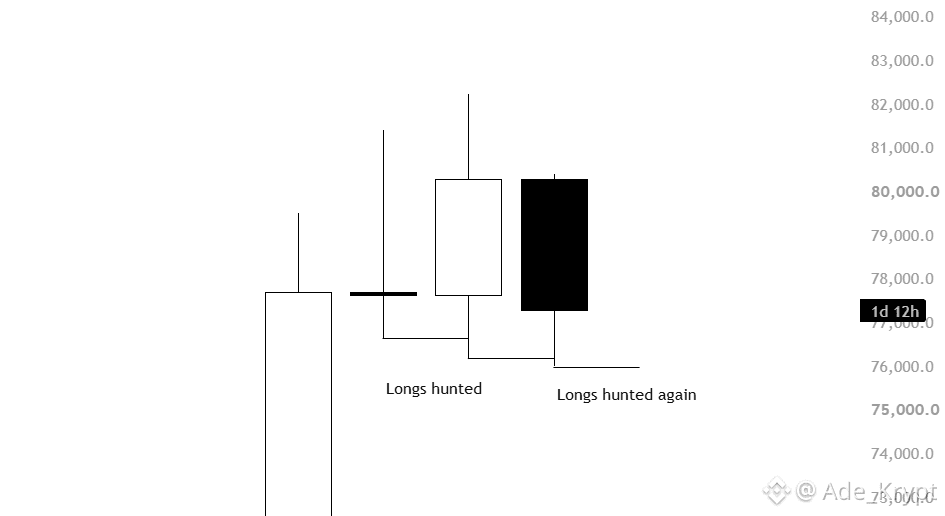
Trotz des LTF-Chops bei $BTC jagt der Markt konsequent Longs unter vorherigen Tiefs.
Also die größere Frage ist: Warum zielt man weiterhin auf dieselbe Seite?
Wenn eine Seite wiederholt abgefischt wird, gibt es oft einen Grund. Der Markt könnte Liquidität bereinigen, Leverage reduzieren und langsam das Vertrauen in Longs zerstören.
Irgendwann werden Trader so konditioniert, dass sie erwarten, dass jeder Rücksetzer unter die Tiefs zu einem weiteren Zusammenbruch führt.
Und dann kann sich einiges ändern.
Der finale Sweep kann zum lokalen Tiefpunkt werden, gefolgt von einer Ausweitung zurück in Richtung der Hochs.
Die Idee ist einfach: Die spätere gewinnende Seite so unangenehm wie möglich machen. Sie herauszuschütteln, die Überzeugung zu zerstören und sie glauben zu lassen, dass sie falsch liegen.
Das wiederholte Abfischen der Tiefs nach einem starken Impuls ist genau so, wie sich dieses Setup entwickeln kann.
#USBankCompletesCrossBorderPaymentPilotOnStellar #EtherRalliesAsBearishBetsLiquidate
Trotz des LTF-Chops bei $BTC jagt der Markt konsequent Longs unter vorherigen Tiefs.
Also die größere Frage ist: Warum zielt man weiterhin auf dieselbe Seite?
Wenn eine Seite wiederholt abgefischt wird, gibt es oft einen Grund. Der Markt könnte Liquidität bereinigen, Leverage reduzieren und langsam das Vertrauen in Longs zerstören.
Irgendwann werden Trader so konditioniert, dass sie erwarten, dass jeder Rücksetzer unter die Tiefs zu einem weiteren Zusammenbruch führt.
Und dann kann sich einiges ändern.
Der finale Sweep kann zum lokalen Tiefpunkt werden, gefolgt von einer Ausweitung zurück in Richtung der Hochs.
Die Idee ist einfach: Die spätere gewinnende Seite so unangenehm wie möglich machen. Sie herauszuschütteln, die Überzeugung zu zerstören und sie glauben zu lassen, dass sie falsch liegen.
Das wiederholte Abfischen der Tiefs nach einem starken Impuls ist genau so, wie sich dieses Setup entwickeln kann.
#USBankCompletesCrossBorderPaymentPilotOnStellar #EtherRalliesAsBearishBetsLiquidate
Also die größere Frage ist: Warum zielt man weiterhin auf dieselbe Seite?
Wenn eine Seite wiederholt abgefischt wird, gibt es oft einen Grund. Der Markt könnte Liquidität bereinigen, Leverage reduzieren und langsam das Vertrauen in Longs zerstören.
Irgendwann werden Trader so konditioniert, dass sie erwarten, dass jeder Rücksetzer unter die Tiefs zu einem weiteren Zusammenbruch führt.
Und dann kann sich einiges ändern.
Der finale Sweep kann zum lokalen Tiefpunkt werden, gefolgt von einer Ausweitung zurück in Richtung der Hochs.
Die Idee ist einfach: Die spätere gewinnende Seite so unangenehm wie möglich machen. Sie herauszuschütteln, die Überzeugung zu zerstören und sie glauben zu lassen, dass sie falsch liegen.
Das wiederholte Abfischen der Tiefs nach einem starken Impuls ist genau so, wie sich dieses Setup entwickeln kann.
#USBankCompletesCrossBorderPaymentPilotOnStellar #EtherRalliesAsBearishBetsLiquidate
144
·
--
$BTC Shorts sind um 2.000 Punkte gestiegen, back-to-back W’s.
TP2 wurde getroffen und sichert weitere 30%, während der Trade sich um etwa 3,7R bewegt. Jetzt warten wir geduldig auf den Bereich bei 76K.
Der Plan ist fast perfekt aufgegangen. Wir haben den Long bei 77K genannt und dann am selben Tag bei rund 79,5K auf Short gewechselt.
Keine Notwendigkeit, es zu komplizieren. Alles wurde live vorhergesagt—und das ist das Wichtigste.
Noch ein solider Trade. Ich hoffe, du hast die Bewegung entweder mitgenommen oder etwas Nützliches aus dem Prozess gelernt.
Back-to-back W’s. Lass es weiterlaufen.
#CPIWatch #BNBTops730USDT
$BTC Shorts sind um 2.000 Punkte gestiegen, back-to-back W’s.
TP2 wurde getroffen und sichert weitere 30%, während der Trade sich um etwa 3,7R bewegt. Jetzt warten wir geduldig auf den Bereich bei 76K.
Der Plan ist fast perfekt aufgegangen. Wir haben den Long bei 77K genannt und dann am selben Tag bei rund 79,5K auf Short gewechselt.
Keine Notwendigkeit, es zu komplizieren. Alles wurde live vorhergesagt—und das ist das Wichtigste.
Noch ein solider Trade. Ich hoffe, du hast die Bewegung entweder mitgenommen oder etwas Nützliches aus dem Prozess gelernt.
Back-to-back W’s. Lass es weiterlaufen.
#CPIWatch #BNBTops730USDT
TP2 wurde getroffen und sichert weitere 30%, während der Trade sich um etwa 3,7R bewegt. Jetzt warten wir geduldig auf den Bereich bei 76K.
Der Plan ist fast perfekt aufgegangen. Wir haben den Long bei 77K genannt und dann am selben Tag bei rund 79,5K auf Short gewechselt.
Keine Notwendigkeit, es zu komplizieren. Alles wurde live vorhergesagt—und das ist das Wichtigste.
Noch ein solider Trade. Ich hoffe, du hast die Bewegung entweder mitgenommen oder etwas Nützliches aus dem Prozess gelernt.
Back-to-back W’s. Lass es weiterlaufen.
#CPIWatch #BNBTops730USDT

205
·
--
$BTC schwebt derzeit um das $76,2K vorherige Wochentief vor dem CPI.
Ehrlich gesagt fühlt sich diese Spanne ziemlich tot an, und ich erwarte, dass das bis zur CPI-Veröffentlichung so bleibt.
Bitcoin baut Liquidität um $76,2K herum auf, aber dieser Bounce wirkt nicht besonders überzeugend. OI deutet darauf hin, dass der letzte Dump viele Shorts angezogen hat, und die aktuelle Bewegung nach oben scheint größtenteils durch aggressives Short-Covering getrieben zu sein.
Für heute beobachte ich zwei Szenarien nach dem CPI (08:30 ET).
Erstens, ein Sweep des $76,2K PWL, der mehr Verkäufe auslöst und Longs liquidiert. Ich werde auf Long-Setups achten, falls das passiert.
Zweitens, und das ist mein bevorzugtes Szenario, ein scharfer CPI-getriebener Docht unter $75,5K. Das könnte verbleibende Käufer ausspülen und die Liquidität schaffen, die für stärkere Longs auf höheren Timeframes nötig ist.
Die $80K–$81K Short-POIs bleiben gültig, aber ich erwarte nicht, dass BTC sie heute erreicht.
#CPIWatch #CLARITYActRevisionToRuleNonDeFiControllers
$BTC schwebt derzeit um das $76,2K vorherige Wochentief vor dem CPI.
Ehrlich gesagt fühlt sich diese Spanne ziemlich tot an, und ich erwarte, dass das bis zur CPI-Veröffentlichung so bleibt.
Bitcoin baut Liquidität um $76,2K herum auf, aber dieser Bounce wirkt nicht besonders überzeugend. OI deutet darauf hin, dass der letzte Dump viele Shorts angezogen hat, und die aktuelle Bewegung nach oben scheint größtenteils durch aggressives Short-Covering getrieben zu sein.
Für heute beobachte ich zwei Szenarien nach dem CPI (08:30 ET).
Erstens, ein Sweep des $76,2K PWL, der mehr Verkäufe auslöst und Longs liquidiert. Ich werde auf Long-Setups achten, falls das passiert.
Zweitens, und das ist mein bevorzugtes Szenario, ein scharfer CPI-getriebener Docht unter $75,5K. Das könnte verbleibende Käufer ausspülen und die Liquidität schaffen, die für stärkere Longs auf höheren Timeframes nötig ist.
Die $80K–$81K Short-POIs bleiben gültig, aber ich erwarte nicht, dass BTC sie heute erreicht.
#CPIWatch #CLARITYActRevisionToRuleNonDeFiControllers
Ehrlich gesagt fühlt sich diese Spanne ziemlich tot an, und ich erwarte, dass das bis zur CPI-Veröffentlichung so bleibt.
Bitcoin baut Liquidität um $76,2K herum auf, aber dieser Bounce wirkt nicht besonders überzeugend. OI deutet darauf hin, dass der letzte Dump viele Shorts angezogen hat, und die aktuelle Bewegung nach oben scheint größtenteils durch aggressives Short-Covering getrieben zu sein.
Für heute beobachte ich zwei Szenarien nach dem CPI (08:30 ET).
Erstens, ein Sweep des $76,2K PWL, der mehr Verkäufe auslöst und Longs liquidiert. Ich werde auf Long-Setups achten, falls das passiert.
Zweitens, und das ist mein bevorzugtes Szenario, ein scharfer CPI-getriebener Docht unter $75,5K. Das könnte verbleibende Käufer ausspülen und die Liquidität schaffen, die für stärkere Longs auf höheren Timeframes nötig ist.
Die $80K–$81K Short-POIs bleiben gültig, aber ich erwarte nicht, dass BTC sie heute erreicht.
#CPIWatch #CLARITYActRevisionToRuleNonDeFiControllers

212
·
--
$BTC Bitcoin — Update
Mit derselben Logik, die am 1. März korrekt prognostiziert hat, dass der April über 70.202 $ schließen würde, deutet das aktuelle Modell darauf hin, dass Mai 2027 unter 87.496 $ schließen könnte.
Dies setzt voraus, dass der 2M-Zeitrahmen damit begonnen hat, einen bärischen Zyklus aus Kyushu-Ashi-Kerzen zu bilden, mit einer minimalen Zyklusdauer von 7–9–2 Kerzen.
Das deckt sich auch mit meinem Basisszenario: $BTC könnte 1+ Jahr lang in einer Spanne tendieren, bevor der nächste große Bullenmarkt beginnt.
Die These könnte widerlegt werden, wenn Dezember 2026 über 99,8 K $ schließt, oder wenn auf dem 2M-Chart eine weitere bullische KA-Kerze entsteht und den aktuellen bärischen Zyklus durchbricht.
#USAugustPPIRisesLessThanExpected #USContinuingJoblessClaims1.774M
$BTC Bitcoin — Update
Mit derselben Logik, die am 1. März korrekt prognostiziert hat, dass der April über 70.202 $ schließen würde, deutet das aktuelle Modell darauf hin, dass Mai 2027 unter 87.496 $ schließen könnte.
Dies setzt voraus, dass der 2M-Zeitrahmen damit begonnen hat, einen bärischen Zyklus aus Kyushu-Ashi-Kerzen zu bilden, mit einer minimalen Zyklusdauer von 7–9–2 Kerzen.
Das deckt sich auch mit meinem Basisszenario: $BTC könnte 1+ Jahr lang in einer Spanne tendieren, bevor der nächste große Bullenmarkt beginnt.
Die These könnte widerlegt werden, wenn Dezember 2026 über 99,8 K $ schließt, oder wenn auf dem 2M-Chart eine weitere bullische KA-Kerze entsteht und den aktuellen bärischen Zyklus durchbricht.
#USAugustPPIRisesLessThanExpected #USContinuingJoblessClaims1.774M
Mit derselben Logik, die am 1. März korrekt prognostiziert hat, dass der April über 70.202 $ schließen würde, deutet das aktuelle Modell darauf hin, dass Mai 2027 unter 87.496 $ schließen könnte.
Dies setzt voraus, dass der 2M-Zeitrahmen damit begonnen hat, einen bärischen Zyklus aus Kyushu-Ashi-Kerzen zu bilden, mit einer minimalen Zyklusdauer von 7–9–2 Kerzen.
Das deckt sich auch mit meinem Basisszenario: $BTC könnte 1+ Jahr lang in einer Spanne tendieren, bevor der nächste große Bullenmarkt beginnt.
Die These könnte widerlegt werden, wenn Dezember 2026 über 99,8 K $ schließt, oder wenn auf dem 2M-Chart eine weitere bullische KA-Kerze entsteht und den aktuellen bärischen Zyklus durchbricht.
#USAugustPPIRisesLessThanExpected #USContinuingJoblessClaims1.774M

16
31
51.2k
·
--
Brian Armstrong glaubt, dass $BTC realistisch bis 2030 400.000 US-Dollar erreichen könnte.
Zunächst klingt dieses Ziel äußerst ambitioniert.
Doch Bitcoins Position im globalen Finanzsystem verändert sich rapide.
Spot-ETFs haben den institutionellen Zugang erleichtert, die unternehmerische Akzeptanz nimmt weiter zu, und Bitcoin wird zunehmend als Makro-Asset betrachtet – nicht nur als spekulativer Trade.
Dann ist da noch die Angebotsseite.
Es wird nur 21 Millionen $BTC geben, während das Kapital, das eine Exponierung erhalten kann, weiter wächst.
400K zu erreichen wird nicht einfach sein, und der Weg wird sicherlich nicht geradeaus verlaufen.
Wenn die institutionelle Nachfrage jedoch weiter beschleunigt, könnten die heutigen ambitionierten Ziele bis 2030 deutlich realistischer wirken.
Das größere Risiko könnte darin liegen, die Menge an Kapital zu unterschätzen, die sich irgendwann nach Bitcoin-Exponierung sehnt.
#AppleDebutsFoldablePhone #TSMCAugustRevenueUp53.3%YoY
Brian Armstrong glaubt, dass $BTC realistisch bis 2030 400.000 US-Dollar erreichen könnte.
Zunächst klingt dieses Ziel äußerst ambitioniert.
Doch Bitcoins Position im globalen Finanzsystem verändert sich rapide.
Spot-ETFs haben den institutionellen Zugang erleichtert, die unternehmerische Akzeptanz nimmt weiter zu, und Bitcoin wird zunehmend als Makro-Asset betrachtet – nicht nur als spekulativer Trade.
Dann ist da noch die Angebotsseite.
Es wird nur 21 Millionen $BTC geben, während das Kapital, das eine Exponierung erhalten kann, weiter wächst.
400K zu erreichen wird nicht einfach sein, und der Weg wird sicherlich nicht geradeaus verlaufen.
Wenn die institutionelle Nachfrage jedoch weiter beschleunigt, könnten die heutigen ambitionierten Ziele bis 2030 deutlich realistischer wirken.
Das größere Risiko könnte darin liegen, die Menge an Kapital zu unterschätzen, die sich irgendwann nach Bitcoin-Exponierung sehnt.
#AppleDebutsFoldablePhone #TSMCAugustRevenueUp53.3%YoY
Zunächst klingt dieses Ziel äußerst ambitioniert.
Doch Bitcoins Position im globalen Finanzsystem verändert sich rapide.
Spot-ETFs haben den institutionellen Zugang erleichtert, die unternehmerische Akzeptanz nimmt weiter zu, und Bitcoin wird zunehmend als Makro-Asset betrachtet – nicht nur als spekulativer Trade.
Dann ist da noch die Angebotsseite.
Es wird nur 21 Millionen $BTC geben, während das Kapital, das eine Exponierung erhalten kann, weiter wächst.
400K zu erreichen wird nicht einfach sein, und der Weg wird sicherlich nicht geradeaus verlaufen.
Wenn die institutionelle Nachfrage jedoch weiter beschleunigt, könnten die heutigen ambitionierten Ziele bis 2030 deutlich realistischer wirken.
Das größere Risiko könnte darin liegen, die Menge an Kapital zu unterschätzen, die sich irgendwann nach Bitcoin-Exponierung sehnt.
#AppleDebutsFoldablePhone #TSMCAugustRevenueUp53.3%YoY

2
5
4.4k
·
--
Verifiziert
XRP’s Zentralisierungsdebatte steht vor einer großen Herausforderung
Der Vermögensverwalter 21Shares hat sich gegen eine der langjährigen Kritikpunkte gewandt, die im Zusammenhang mit $XRP und dem Einfluss von Ripple auf das XRP Ledger stehen.
Laut 21Shares betreibt Ripple lediglich einen Validator unter rund 35 auf der Standard-Trusted-Liste, während das XRP Ledger insgesamt mehr als 150 Validatoren hat.
Protokolländerungen erfordern zudem mindestens 80% Zustimmung der Validatoren, wodurch sich weiter einschränkt, wie stark ein einzelnes Unternehmen das Netzwerk kontrollieren kann.
Die wichtigste Erkenntnis: Riple’s starke Präsenz im $XRP -Ökosystem bedeutet nicht zwangsläufig, dass es die Validierung von Transaktionen kontrolliert.
#RippleLobbiesToAdvanceCLARITYActVote #DowFallsOver600Points
XRP’s Zentralisierungsdebatte steht vor einer großen Herausforderung
Der Vermögensverwalter 21Shares hat sich gegen eine der langjährigen Kritikpunkte gewandt, die im Zusammenhang mit $XRP und dem Einfluss von Ripple auf das XRP Ledger stehen.
Laut 21Shares betreibt Ripple lediglich einen Validator unter rund 35 auf der Standard-Trusted-Liste, während das XRP Ledger insgesamt mehr als 150 Validatoren hat.
Protokolländerungen erfordern zudem mindestens 80% Zustimmung der Validatoren, wodurch sich weiter einschränkt, wie stark ein einzelnes Unternehmen das Netzwerk kontrollieren kann.
Die wichtigste Erkenntnis: Riple’s starke Präsenz im $XRP -Ökosystem bedeutet nicht zwangsläufig, dass es die Validierung von Transaktionen kontrolliert.
#RippleLobbiesToAdvanceCLARITYActVote #DowFallsOver600Points
Der Vermögensverwalter 21Shares hat sich gegen eine der langjährigen Kritikpunkte gewandt, die im Zusammenhang mit $XRP und dem Einfluss von Ripple auf das XRP Ledger stehen.
Laut 21Shares betreibt Ripple lediglich einen Validator unter rund 35 auf der Standard-Trusted-Liste, während das XRP Ledger insgesamt mehr als 150 Validatoren hat.
Protokolländerungen erfordern zudem mindestens 80% Zustimmung der Validatoren, wodurch sich weiter einschränkt, wie stark ein einzelnes Unternehmen das Netzwerk kontrollieren kann.
Die wichtigste Erkenntnis: Riple’s starke Präsenz im $XRP -Ökosystem bedeutet nicht zwangsläufig, dass es die Validierung von Transaktionen kontrolliert.
#RippleLobbiesToAdvanceCLARITYActVote #DowFallsOver600Points
1
2
2k
·
--
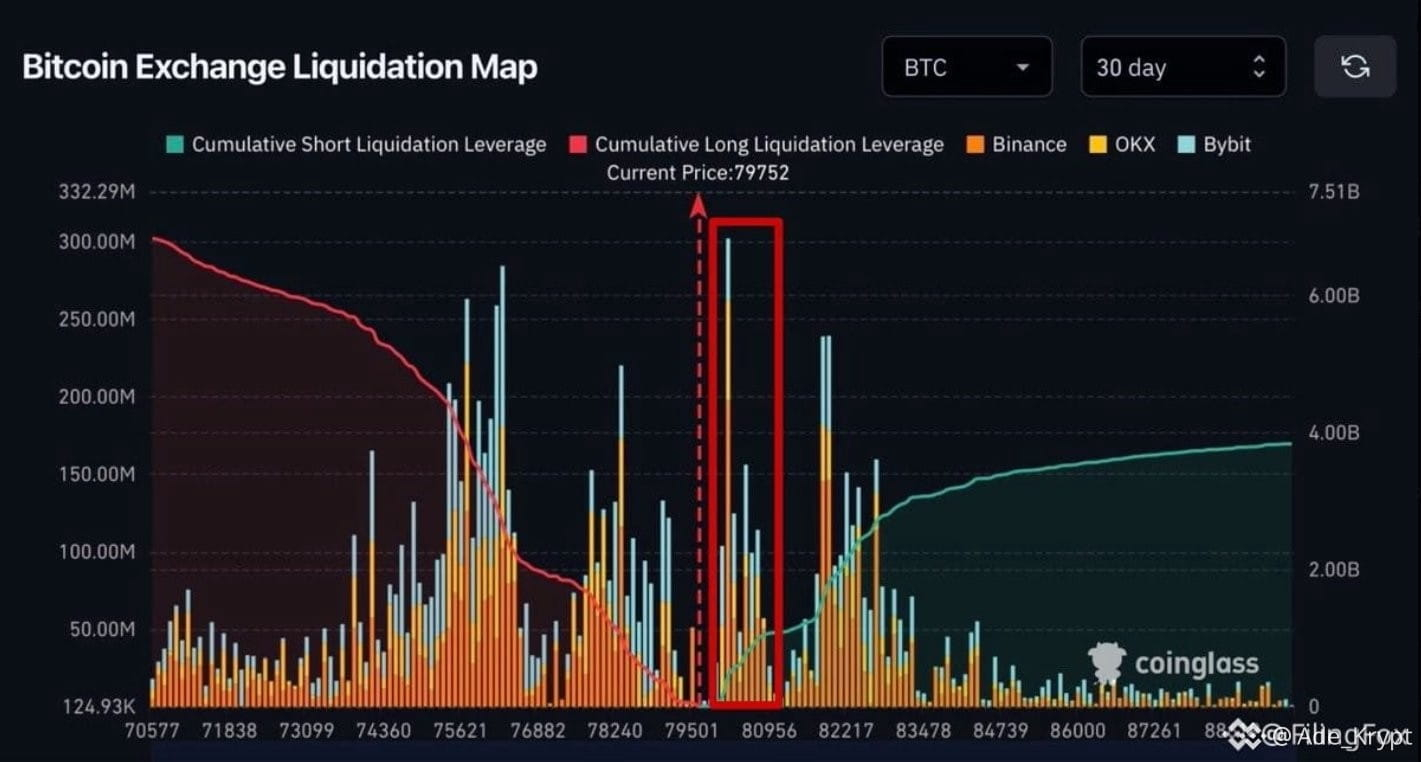
Die 30-Tage-$BTC -Liquidations-Heatmap zeigt einen klaren Tauziehen-Kampf um die 80.000-Dollar-Marke.
BTC wird derzeit nahe 79.752 US-Dollar gehandelt, mit einem dichten Cluster an Short-Liquidationen oberhalb des Bereichs 80K–81K. Gleichzeitig gibt es aber auch erhebliche Long-Liquidität darunter, die bei einem scharfen Abwärtsmove von $BTC abgeräumt werden könnte.
Die Liquidität liegt auf beiden Seiten gestapelt, was bedeutet, dass ein starker Impuls eine Liquidations-Kaskade auslösen und die Preisbewegung schnell beschleunigen könnte.
Die große Frage lautet also:
Wird BTC zuerst nach oben gehen, um die Shorts abzugreifen, oder weiter nach unten fallen, um die Longs zu eliminieren?
#ChinaAugustCPIRises0.8%YoY #USStrikesTargetsNearHormuzAndJask
Die 30-Tage-$BTC -Liquidations-Heatmap zeigt einen klaren Tauziehen-Kampf um die 80.000-Dollar-Marke.
BTC wird derzeit nahe 79.752 US-Dollar gehandelt, mit einem dichten Cluster an Short-Liquidationen oberhalb des Bereichs 80K–81K. Gleichzeitig gibt es aber auch erhebliche Long-Liquidität darunter, die bei einem scharfen Abwärtsmove von $BTC abgeräumt werden könnte.
Die Liquidität liegt auf beiden Seiten gestapelt, was bedeutet, dass ein starker Impuls eine Liquidations-Kaskade auslösen und die Preisbewegung schnell beschleunigen könnte.
Die große Frage lautet also:
Wird BTC zuerst nach oben gehen, um die Shorts abzugreifen, oder weiter nach unten fallen, um die Longs zu eliminieren?
#ChinaAugustCPIRises0.8%YoY #USStrikesTargetsNearHormuzAndJask
BTC wird derzeit nahe 79.752 US-Dollar gehandelt, mit einem dichten Cluster an Short-Liquidationen oberhalb des Bereichs 80K–81K. Gleichzeitig gibt es aber auch erhebliche Long-Liquidität darunter, die bei einem scharfen Abwärtsmove von $BTC abgeräumt werden könnte.
Die Liquidität liegt auf beiden Seiten gestapelt, was bedeutet, dass ein starker Impuls eine Liquidations-Kaskade auslösen und die Preisbewegung schnell beschleunigen könnte.
Die große Frage lautet also:
Wird BTC zuerst nach oben gehen, um die Shorts abzugreifen, oder weiter nach unten fallen, um die Longs zu eliminieren?
#ChinaAugustCPIRises0.8%YoY #USStrikesTargetsNearHormuzAndJask
1
1.5k
·
--
Das wird wieder richtig interessant.
$BTC fiel am Wochenende von 82.300 $ auf 78.600 $ und löste damit rund 1,4 Mrd. $ an Liquidationen aus.
Der entscheidende Punkt: 80.000 $ war die kritische Ausbruchsschwelle, und sobald sie scheiterte, wurde die Liquidität darunter genau wie erwartet freigelegt.
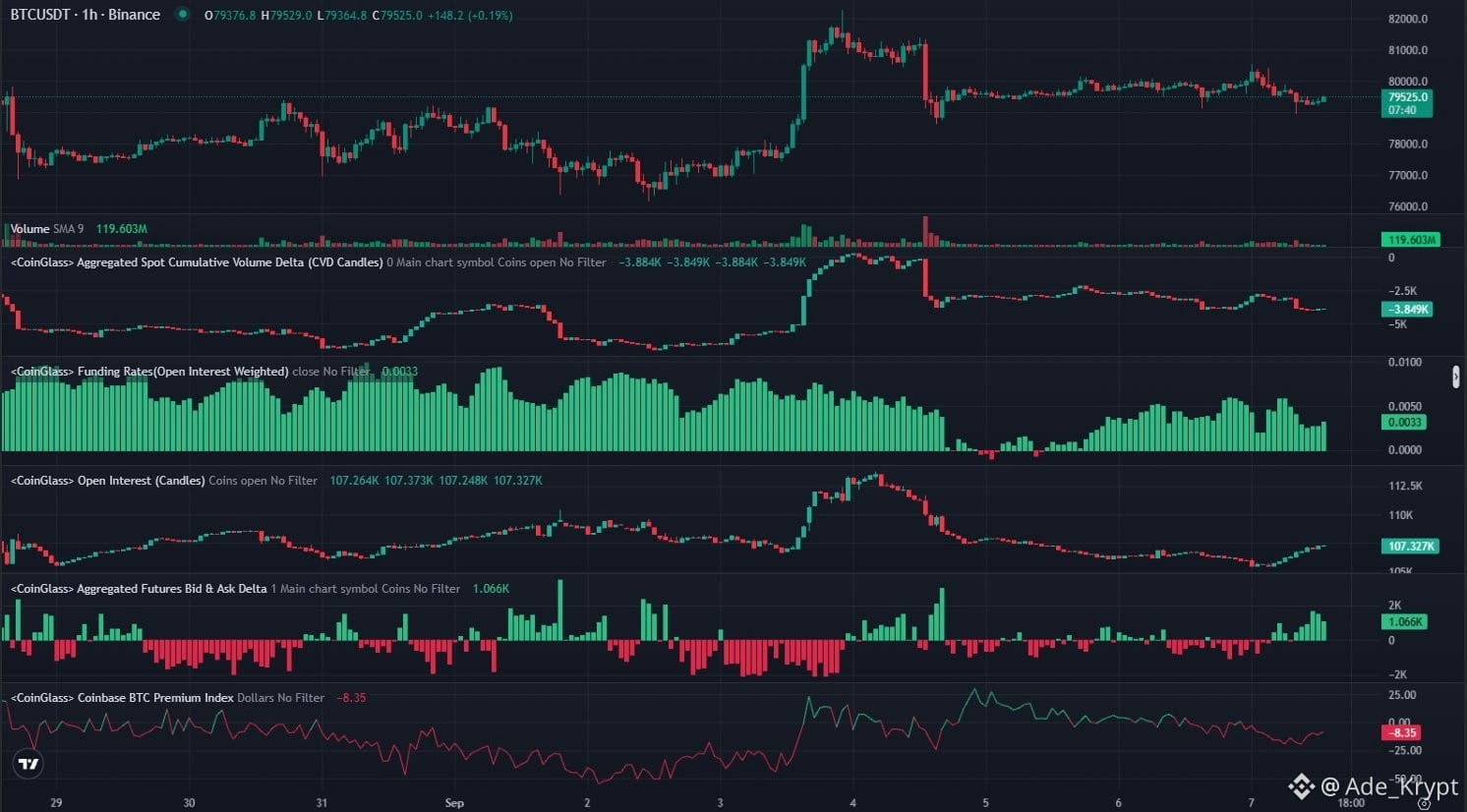
Bitcoin hat jetzt ungefähr 2,3 Mrd. $ an Liquidität unterhalb zwischen 76.500–78.500 $, während weitere 2,3 Mrd. $ oberhalb zwischen 80.500–83.000 $ liegen. Die HTF-Liquidität ist inzwischen fast perfekt ausgeglichen, sodass auf keiner Seite ein klarer Vorteil besteht.
Auf dem LTF liegen große Liquiditätscluster bei 78.400–78.900 $ unterhalb und bei 79.900–81.000 $ oberhalb, wodurch ein Abfischen (Sweep) aus jeder dieser Zonen zunehmend wahrscheinlicher wird.
Wale zeigen weiterhin starkes Kaufinteresse rund um 78K–79K, während große Verkaufswände oberhalb von 80K bis 83K bestehen. Käufer verteidigen die Unterseite, aber die Bullen müssen noch eine erhebliche Menge Angebot absorbieren, bevor ich einem weiteren Ausbruch wieder vertrauen würde.
Die Spot-Nachfrage ist geschwächt, der Coinbase Premium bleibt negativ, und das OI beginnt erst wieder zu steigen, während Future-Trader erneut bullisch werden. Das Leverage kehrt zurück, aber ich möchte weiterhin eine stärkere Spot-Nachfrage sehen, bevor ich bullisch werde.
Wichtige Levels:
- Die Unterstützung bei 79K–80K ist gescheitert
- Das Abfischen nach unten bei 78,6K ist abgeschlossen
- 78,9K und 79,9K sind wichtige LTF-Zonen
- HTF-Liquidität ist ausgeglichen
- 80K–81K zurückerobern = Bullen übernehmen wieder die Kontrolle
- 78,4K verlieren = ein weiteres Downside-Sweep wird wahrscheinlich
$BTC #USIranTradeTankerStrikesEscalate #CanadaToImpose15%To50%TariffsOnUSGoods
Das wird wieder richtig interessant.
$BTC fiel am Wochenende von 82.300 $ auf 78.600 $ und löste damit rund 1,4 Mrd. $ an Liquidationen aus.
Der entscheidende Punkt: 80.000 $ war die kritische Ausbruchsschwelle, und sobald sie scheiterte, wurde die Liquidität darunter genau wie erwartet freigelegt.
Bitcoin hat jetzt ungefähr 2,3 Mrd. $ an Liquidität unterhalb zwischen 76.500–78.500 $, während weitere 2,3 Mrd. $ oberhalb zwischen 80.500–83.000 $ liegen. Die HTF-Liquidität ist inzwischen fast perfekt ausgeglichen, sodass auf keiner Seite ein klarer Vorteil besteht.
Auf dem LTF liegen große Liquiditätscluster bei 78.400–78.900 $ unterhalb und bei 79.900–81.000 $ oberhalb, wodurch ein Abfischen (Sweep) aus jeder dieser Zonen zunehmend wahrscheinlicher wird.
Wale zeigen weiterhin starkes Kaufinteresse rund um 78K–79K, während große Verkaufswände oberhalb von 80K bis 83K bestehen. Käufer verteidigen die Unterseite, aber die Bullen müssen noch eine erhebliche Menge Angebot absorbieren, bevor ich einem weiteren Ausbruch wieder vertrauen würde.
Die Spot-Nachfrage ist geschwächt, der Coinbase Premium bleibt negativ, und das OI beginnt erst wieder zu steigen, während Future-Trader erneut bullisch werden. Das Leverage kehrt zurück, aber ich möchte weiterhin eine stärkere Spot-Nachfrage sehen, bevor ich bullisch werde.
Wichtige Levels:
- Die Unterstützung bei 79K–80K ist gescheitert
- Das Abfischen nach unten bei 78,6K ist abgeschlossen
- 78,9K und 79,9K sind wichtige LTF-Zonen
- HTF-Liquidität ist ausgeglichen
- 80K–81K zurückerobern = Bullen übernehmen wieder die Kontrolle
- 78,4K verlieren = ein weiteres Downside-Sweep wird wahrscheinlich
$BTC #USIranTradeTankerStrikesEscalate #CanadaToImpose15%To50%TariffsOnUSGoods
$BTC fiel am Wochenende von 82.300 $ auf 78.600 $ und löste damit rund 1,4 Mrd. $ an Liquidationen aus.
Der entscheidende Punkt: 80.000 $ war die kritische Ausbruchsschwelle, und sobald sie scheiterte, wurde die Liquidität darunter genau wie erwartet freigelegt.
Bitcoin hat jetzt ungefähr 2,3 Mrd. $ an Liquidität unterhalb zwischen 76.500–78.500 $, während weitere 2,3 Mrd. $ oberhalb zwischen 80.500–83.000 $ liegen. Die HTF-Liquidität ist inzwischen fast perfekt ausgeglichen, sodass auf keiner Seite ein klarer Vorteil besteht.
Auf dem LTF liegen große Liquiditätscluster bei 78.400–78.900 $ unterhalb und bei 79.900–81.000 $ oberhalb, wodurch ein Abfischen (Sweep) aus jeder dieser Zonen zunehmend wahrscheinlicher wird.
Wale zeigen weiterhin starkes Kaufinteresse rund um 78K–79K, während große Verkaufswände oberhalb von 80K bis 83K bestehen. Käufer verteidigen die Unterseite, aber die Bullen müssen noch eine erhebliche Menge Angebot absorbieren, bevor ich einem weiteren Ausbruch wieder vertrauen würde.
Die Spot-Nachfrage ist geschwächt, der Coinbase Premium bleibt negativ, und das OI beginnt erst wieder zu steigen, während Future-Trader erneut bullisch werden. Das Leverage kehrt zurück, aber ich möchte weiterhin eine stärkere Spot-Nachfrage sehen, bevor ich bullisch werde.
Wichtige Levels:
- Die Unterstützung bei 79K–80K ist gescheitert
- Das Abfischen nach unten bei 78,6K ist abgeschlossen
- 78,9K und 79,9K sind wichtige LTF-Zonen
- HTF-Liquidität ist ausgeglichen
- 80K–81K zurückerobern = Bullen übernehmen wieder die Kontrolle
- 78,4K verlieren = ein weiteres Downside-Sweep wird wahrscheinlich
$BTC #USIranTradeTankerStrikesEscalate #CanadaToImpose15%To50%TariffsOnUSGoods
1
3
2.9k
·
--
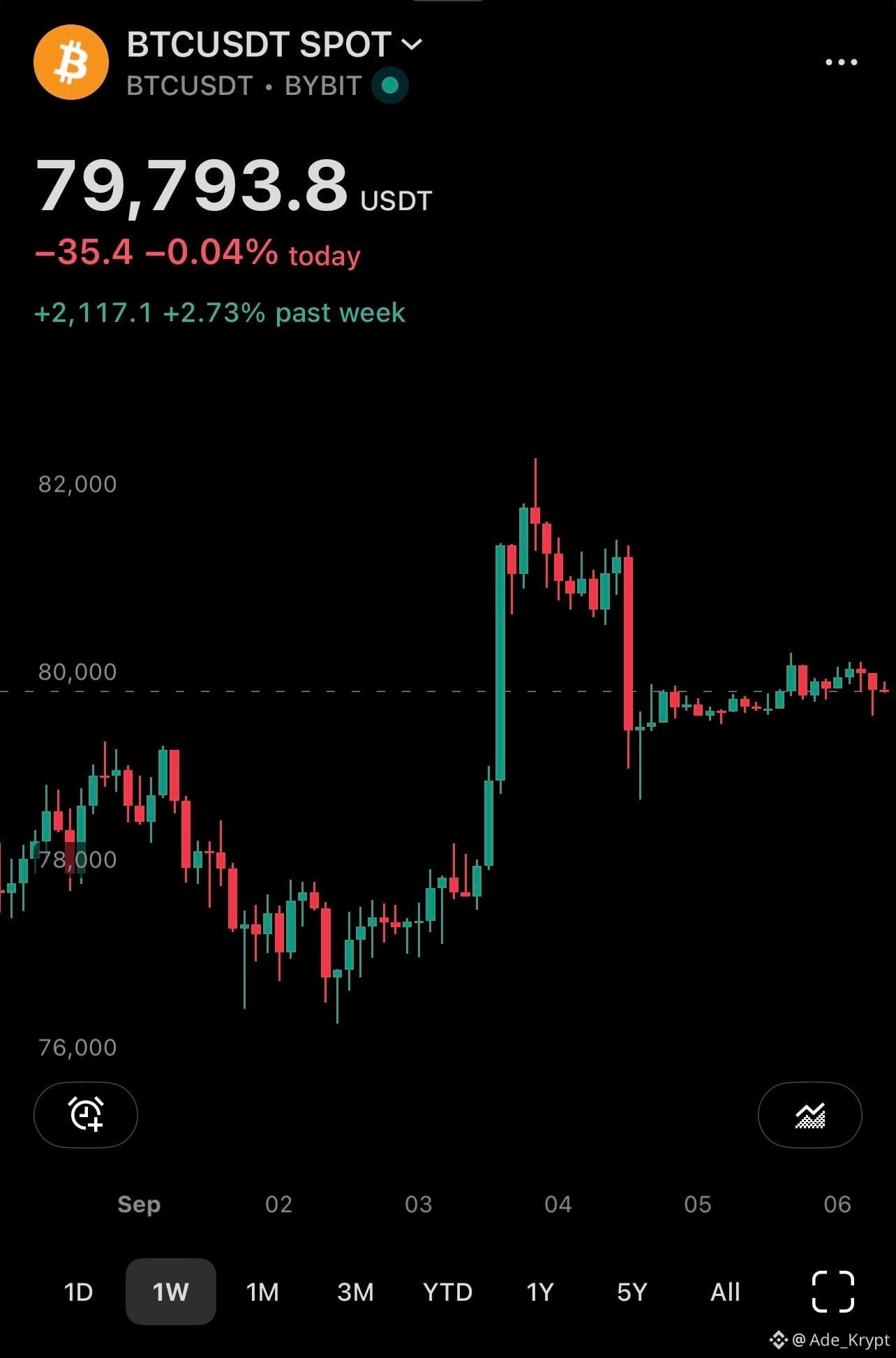
$BTC handelt nach einem ruhigen Wochenende um etwa 79,8.000 $.
Der Plan bleibt gegenüber gestern unverändert. Ich warte auf die morgige Eröffnung, um zu sehen, für welche Richtung sich Bitcoin entscheidet.
Das wahrscheinlichste Szenario ist eine Rücknahme des kleinen Wochenend-Pumps, bevor die nächste Bewegung Gestalt annimmt.
Ein erneuter Test der Tiefs könnte eine starke Gelegenheit bieten, Long-Positionen aufzubauen, während das Short-Setup gültig bleibt, falls $BTC erneut den Bereich um 81.000 $ ansteuert.
Nächste Woche könnte starke Dynamik und möglicherweise neue Höchststände bringen.
Allerdings erscheint vor dem zunehmend bärischen makroökonomischen Hintergrund ein tieferer Rücksetzer weiterhin sehr wahrscheinlich.
Für mich würde das einfach eine Gelegenheit schaffen, Swing-Longs an übergeordneten Kurszonen schrittweise aufzubauen.
Augen auf die morgige Eröffnung.
#RussiaUkraine72-hourCeasefire #LululemonTumbles20%OnWeakGuidance
$BTC handelt nach einem ruhigen Wochenende um etwa 79,8.000 $.
Der Plan bleibt gegenüber gestern unverändert. Ich warte auf die morgige Eröffnung, um zu sehen, für welche Richtung sich Bitcoin entscheidet.
Das wahrscheinlichste Szenario ist eine Rücknahme des kleinen Wochenend-Pumps, bevor die nächste Bewegung Gestalt annimmt.
Ein erneuter Test der Tiefs könnte eine starke Gelegenheit bieten, Long-Positionen aufzubauen, während das Short-Setup gültig bleibt, falls $BTC erneut den Bereich um 81.000 $ ansteuert.
Nächste Woche könnte starke Dynamik und möglicherweise neue Höchststände bringen.
Allerdings erscheint vor dem zunehmend bärischen makroökonomischen Hintergrund ein tieferer Rücksetzer weiterhin sehr wahrscheinlich.
Für mich würde das einfach eine Gelegenheit schaffen, Swing-Longs an übergeordneten Kurszonen schrittweise aufzubauen.
Augen auf die morgige Eröffnung.
#RussiaUkraine72-hourCeasefire #LululemonTumbles20%OnWeakGuidance
Der Plan bleibt gegenüber gestern unverändert. Ich warte auf die morgige Eröffnung, um zu sehen, für welche Richtung sich Bitcoin entscheidet.
Das wahrscheinlichste Szenario ist eine Rücknahme des kleinen Wochenend-Pumps, bevor die nächste Bewegung Gestalt annimmt.
Ein erneuter Test der Tiefs könnte eine starke Gelegenheit bieten, Long-Positionen aufzubauen, während das Short-Setup gültig bleibt, falls $BTC erneut den Bereich um 81.000 $ ansteuert.
Nächste Woche könnte starke Dynamik und möglicherweise neue Höchststände bringen.
Allerdings erscheint vor dem zunehmend bärischen makroökonomischen Hintergrund ein tieferer Rücksetzer weiterhin sehr wahrscheinlich.
Für mich würde das einfach eine Gelegenheit schaffen, Swing-Longs an übergeordneten Kurszonen schrittweise aufzubauen.
Augen auf die morgige Eröffnung.
#RussiaUkraine72-hourCeasefire #LululemonTumbles20%OnWeakGuidance
1
1
78
129.1k
·
--
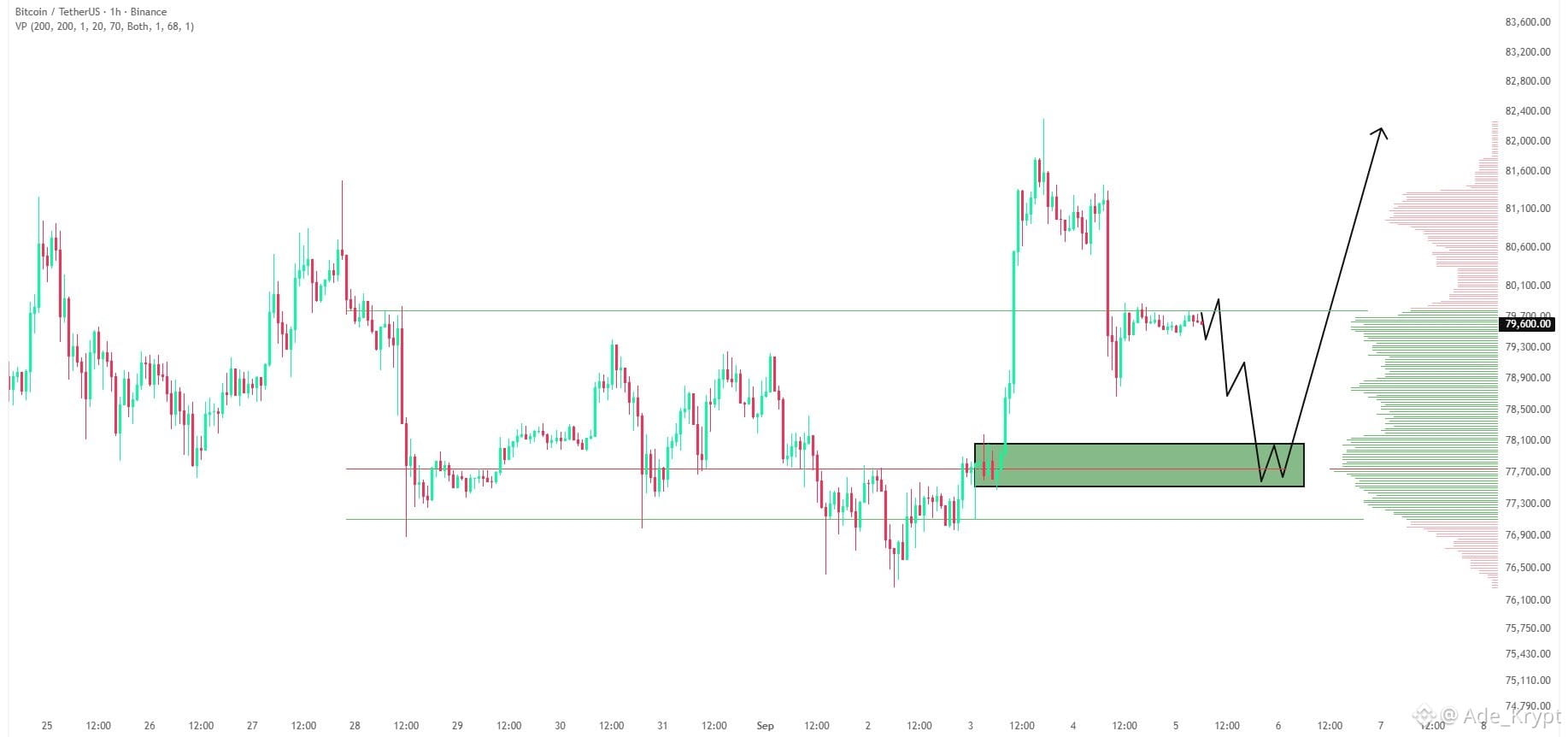
$BTC konsolidiert unterhalb des Widerstands bei $80K nach seinem jüngsten impulsiven Anstieg.
Der Preis bleibt relativ eng, was darauf hindeutet, dass der Markt sich möglicherweise auf eine weitere Liquiditätsausweitung vorbereitet.
Die wichtige Unterstützungszone nach unten liegt bei $77.5K–$78.1K, wo starke Nachfrage sichtbar ist.
Ein Sweep in diesen Bereich würde die bullische Struktur nicht zwangsläufig brechen; es könnte einfach ein Liquidity Grab vor der Fortsetzung sein.
Wenn $BTC die Zone hält und $80K mit Momentum zurückerobert, wird $82K zum nächsten wichtigen Kursziel nach oben.
Für mich ist die Reaktion um $77.5K–$78.1K die wichtigste Bestätigung, auf die ich achten werde.
#ZECHitsANewAllTimeHigh #LululemonTumbles20%OnWeakGuidance
$BTC konsolidiert unterhalb des Widerstands bei $80K nach seinem jüngsten impulsiven Anstieg.
Der Preis bleibt relativ eng, was darauf hindeutet, dass der Markt sich möglicherweise auf eine weitere Liquiditätsausweitung vorbereitet.
Die wichtige Unterstützungszone nach unten liegt bei $77.5K–$78.1K, wo starke Nachfrage sichtbar ist.
Ein Sweep in diesen Bereich würde die bullische Struktur nicht zwangsläufig brechen; es könnte einfach ein Liquidity Grab vor der Fortsetzung sein.
Wenn $BTC die Zone hält und $80K mit Momentum zurückerobert, wird $82K zum nächsten wichtigen Kursziel nach oben.
Für mich ist die Reaktion um $77.5K–$78.1K die wichtigste Bestätigung, auf die ich achten werde.
#ZECHitsANewAllTimeHigh #LululemonTumbles20%OnWeakGuidance
Der Preis bleibt relativ eng, was darauf hindeutet, dass der Markt sich möglicherweise auf eine weitere Liquiditätsausweitung vorbereitet.
Die wichtige Unterstützungszone nach unten liegt bei $77.5K–$78.1K, wo starke Nachfrage sichtbar ist.
Ein Sweep in diesen Bereich würde die bullische Struktur nicht zwangsläufig brechen; es könnte einfach ein Liquidity Grab vor der Fortsetzung sein.
Wenn $BTC die Zone hält und $80K mit Momentum zurückerobert, wird $82K zum nächsten wichtigen Kursziel nach oben.
Für mich ist die Reaktion um $77.5K–$78.1K die wichtigste Bestätigung, auf die ich achten werde.
#ZECHitsANewAllTimeHigh #LululemonTumbles20%OnWeakGuidance
1
2
1.9k
·
--
Bitcoin beginnt wieder zunehmend bullisch auszusehen.
Der Bereich um 61.000 $ hat zweimal gehalten und damit eine solide Unterstützungsbasis geschaffen, während die jüngste Erholung $BTC wieder über 80.000 $ und zurück in seine breitere Aufwärtsstruktur gebracht hat.
Wenn dieses Setup intakt bleibt und $BTC den Bereich von 80.000 $ bis 81.000 $ klar zurückerobert, könnte das nächste große Ziel 97.000 $ sein.
Ein entscheidender Ausbruch über 97.000 $ könnte das ATH von 125.000 $ wieder in den Fokus rücken.
Das größere Bild erinnert weiterhin an eine große Akkumulationsstruktur und könnte die Bühne für die nächste große Aufwärtsbewegung bereiten.
#LululemonTumbles20%OnWeakGuidance #USAugustJobGrowthNearlyTriplesForecast
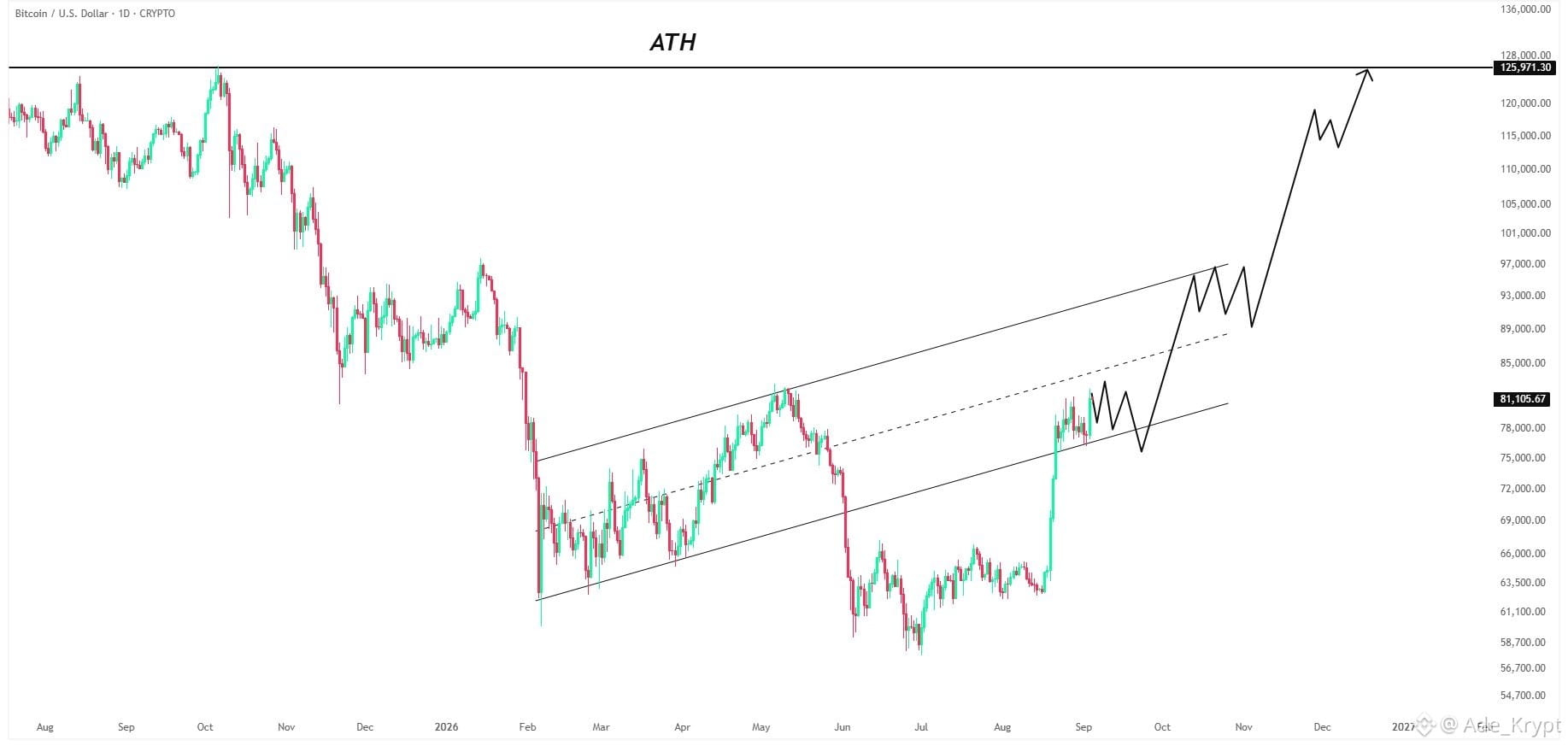
Bitcoin beginnt wieder zunehmend bullisch auszusehen.
Der Bereich um 61.000 $ hat zweimal gehalten und damit eine solide Unterstützungsbasis geschaffen, während die jüngste Erholung $BTC wieder über 80.000 $ und zurück in seine breitere Aufwärtsstruktur gebracht hat.
Wenn dieses Setup intakt bleibt und $BTC den Bereich von 80.000 $ bis 81.000 $ klar zurückerobert, könnte das nächste große Ziel 97.000 $ sein.
Ein entscheidender Ausbruch über 97.000 $ könnte das ATH von 125.000 $ wieder in den Fokus rücken.
Das größere Bild erinnert weiterhin an eine große Akkumulationsstruktur und könnte die Bühne für die nächste große Aufwärtsbewegung bereiten.
#LululemonTumbles20%OnWeakGuidance #USAugustJobGrowthNearlyTriplesForecast
Der Bereich um 61.000 $ hat zweimal gehalten und damit eine solide Unterstützungsbasis geschaffen, während die jüngste Erholung $BTC wieder über 80.000 $ und zurück in seine breitere Aufwärtsstruktur gebracht hat.
Wenn dieses Setup intakt bleibt und $BTC den Bereich von 80.000 $ bis 81.000 $ klar zurückerobert, könnte das nächste große Ziel 97.000 $ sein.
Ein entscheidender Ausbruch über 97.000 $ könnte das ATH von 125.000 $ wieder in den Fokus rücken.
Das größere Bild erinnert weiterhin an eine große Akkumulationsstruktur und könnte die Bühne für die nächste große Aufwärtsbewegung bereiten.
#LululemonTumbles20%OnWeakGuidance #USAugustJobGrowthNearlyTriplesForecast
2
2k
·
--
$BTC KÖNNTE SICH AUF EINEN WEITEREN ABWÄRTSBEWEGUNG VORBEREITEN
Ich glaube nicht, dass dies der richtige Ort ist, um der Aufwärtsbewegung hinterherzujagen.
Der Preis ist erneut an dieselbe obere Begrenzung zurückgekehrt, die ihn zuvor bereits abgewiesen hat, während die übergeordnete Struktur weiterhin ungelöst aussieht.
Wenn wir von hier aus eine weitere Ablehnung sehen, werden die Abwärtsziele ziemlich klar:
Zuerst 70.000 $.
Dann der Bereich um 60.000 $.
Und wenn der Verkaufsdruck zunimmt, würde ich einen tieferen Rückgang in Richtung der Tiefs der Handelsspanne um 57.000–58.000 $ nicht ausschließen.
Könnte $BTC ausbrechen und dieses Setup vollständig ungültig machen?
Absolut.
Aber im Moment würde ich die bestehende Struktur lieber respektieren, als einen Ausbruch vorwegzunehmen.
Das ist das Szenario, das ich genau beobachte.
#BitcoinEthereumHitMultiMonthHighs #比特币突破8万美元
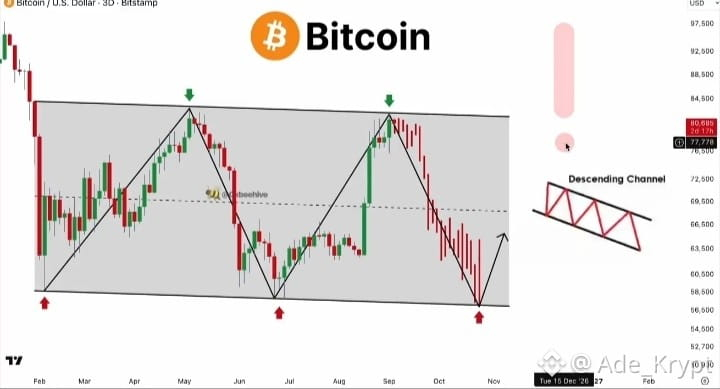
$BTC KÖNNTE SICH AUF EINEN WEITEREN ABWÄRTSBEWEGUNG VORBEREITEN
Ich glaube nicht, dass dies der richtige Ort ist, um der Aufwärtsbewegung hinterherzujagen.
Der Preis ist erneut an dieselbe obere Begrenzung zurückgekehrt, die ihn zuvor bereits abgewiesen hat, während die übergeordnete Struktur weiterhin ungelöst aussieht.
Wenn wir von hier aus eine weitere Ablehnung sehen, werden die Abwärtsziele ziemlich klar:
Zuerst 70.000 $.
Dann der Bereich um 60.000 $.
Und wenn der Verkaufsdruck zunimmt, würde ich einen tieferen Rückgang in Richtung der Tiefs der Handelsspanne um 57.000–58.000 $ nicht ausschließen.
Könnte $BTC ausbrechen und dieses Setup vollständig ungültig machen?
Absolut.
Aber im Moment würde ich die bestehende Struktur lieber respektieren, als einen Ausbruch vorwegzunehmen.
Das ist das Szenario, das ich genau beobachte.
#BitcoinEthereumHitMultiMonthHighs #比特币突破8万美元
Ich glaube nicht, dass dies der richtige Ort ist, um der Aufwärtsbewegung hinterherzujagen.
Der Preis ist erneut an dieselbe obere Begrenzung zurückgekehrt, die ihn zuvor bereits abgewiesen hat, während die übergeordnete Struktur weiterhin ungelöst aussieht.
Wenn wir von hier aus eine weitere Ablehnung sehen, werden die Abwärtsziele ziemlich klar:
Zuerst 70.000 $.
Dann der Bereich um 60.000 $.
Und wenn der Verkaufsdruck zunimmt, würde ich einen tieferen Rückgang in Richtung der Tiefs der Handelsspanne um 57.000–58.000 $ nicht ausschließen.
Könnte $BTC ausbrechen und dieses Setup vollständig ungültig machen?
Absolut.
Aber im Moment würde ich die bestehende Struktur lieber respektieren, als einen Ausbruch vorwegzunehmen.
Das ist das Szenario, das ich genau beobachte.
#BitcoinEthereumHitMultiMonthHighs #比特币突破8万美元
2
2.1k
·
--
$BTC bewegt sich genau dorthin, wo die Heatmap hingedeutet hat. Jetzt zeigt die Leverage-Map ein noch spannenderes Setup.
Letzte Woche: $BTC war bei etwa $79.200, mit dem wichtigsten Liquiditäts-Magneten bei $81.500–$82.000. Heute steht der Kurs bei $80.933.
Alle fragen, ob die $82K-Marke durchbrochen wird. Ich denke, die bessere Frage ist: Wohin ist das Leverage gewandert?
→ Oben: $81.500–$82.000 bleibt stark gestapelt, während sich ein neues Cluster bei $82.500–$83.000 gebildet hat. Short-Positionen verteidigen diesen Bereich aggressiv.
→ Unten: Das stärkste Liquiditäts-Cluster liegt jetzt bei $79.200–$79.400. Dort sind viele der späten Longs dieser Woche positioniert.
Longs haben der Bewegung hinterher gejagt. Shorts haben nachgelegt. Der Kurs ist genau dazwischen gefangen.
Das Open Interest liegt jetzt bei $142,9 Mrd., heute +5%. Die Liquidationen haben $511 Mio. erreicht, +52% in den vergangenen 24 Stunden, mit der Aufteilung Long/Short bei 51/49.
Gleiches Setup wie letzte Woche, nur mit mehr Leverage und weiterhin extrem wenig Überzeugung.
Klare $82K nehmen – und die Shorts darüber könnten einen scharfen Short Squeeze befeuern.
$79,2K verlieren – und die darunterliegenden Longs könnten in einem Zug ausgelöscht werden.
Ich jage keiner der beiden Seiten hinterher. Das Chance/Risiko kommt für mich, oder ich bleibe draußen.
#比特币突破8万美元 #USWeeklyInitialJoblessClaimsRiseTo206000
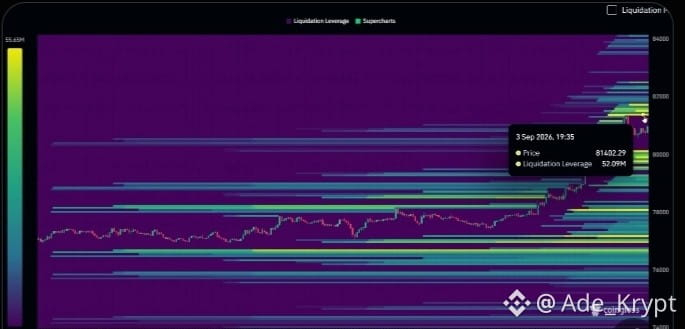
$BTC bewegt sich genau dorthin, wo die Heatmap hingedeutet hat. Jetzt zeigt die Leverage-Map ein noch spannenderes Setup.
Letzte Woche: $BTC war bei etwa $79.200, mit dem wichtigsten Liquiditäts-Magneten bei $81.500–$82.000. Heute steht der Kurs bei $80.933.
Alle fragen, ob die $82K-Marke durchbrochen wird. Ich denke, die bessere Frage ist: Wohin ist das Leverage gewandert?
→ Oben: $81.500–$82.000 bleibt stark gestapelt, während sich ein neues Cluster bei $82.500–$83.000 gebildet hat. Short-Positionen verteidigen diesen Bereich aggressiv.
→ Unten: Das stärkste Liquiditäts-Cluster liegt jetzt bei $79.200–$79.400. Dort sind viele der späten Longs dieser Woche positioniert.
Longs haben der Bewegung hinterher gejagt. Shorts haben nachgelegt. Der Kurs ist genau dazwischen gefangen.
Das Open Interest liegt jetzt bei $142,9 Mrd., heute +5%. Die Liquidationen haben $511 Mio. erreicht, +52% in den vergangenen 24 Stunden, mit der Aufteilung Long/Short bei 51/49.
Gleiches Setup wie letzte Woche, nur mit mehr Leverage und weiterhin extrem wenig Überzeugung.
Klare $82K nehmen – und die Shorts darüber könnten einen scharfen Short Squeeze befeuern.
$79,2K verlieren – und die darunterliegenden Longs könnten in einem Zug ausgelöscht werden.
Ich jage keiner der beiden Seiten hinterher. Das Chance/Risiko kommt für mich, oder ich bleibe draußen.
#比特币突破8万美元 #USWeeklyInitialJoblessClaimsRiseTo206000
Letzte Woche: $BTC war bei etwa $79.200, mit dem wichtigsten Liquiditäts-Magneten bei $81.500–$82.000. Heute steht der Kurs bei $80.933.
Alle fragen, ob die $82K-Marke durchbrochen wird. Ich denke, die bessere Frage ist: Wohin ist das Leverage gewandert?
→ Oben: $81.500–$82.000 bleibt stark gestapelt, während sich ein neues Cluster bei $82.500–$83.000 gebildet hat. Short-Positionen verteidigen diesen Bereich aggressiv.
→ Unten: Das stärkste Liquiditäts-Cluster liegt jetzt bei $79.200–$79.400. Dort sind viele der späten Longs dieser Woche positioniert.
Longs haben der Bewegung hinterher gejagt. Shorts haben nachgelegt. Der Kurs ist genau dazwischen gefangen.
Das Open Interest liegt jetzt bei $142,9 Mrd., heute +5%. Die Liquidationen haben $511 Mio. erreicht, +52% in den vergangenen 24 Stunden, mit der Aufteilung Long/Short bei 51/49.
Gleiches Setup wie letzte Woche, nur mit mehr Leverage und weiterhin extrem wenig Überzeugung.
Klare $82K nehmen – und die Shorts darüber könnten einen scharfen Short Squeeze befeuern.
$79,2K verlieren – und die darunterliegenden Longs könnten in einem Zug ausgelöscht werden.
Ich jage keiner der beiden Seiten hinterher. Das Chance/Risiko kommt für mich, oder ich bleibe draußen.
#比特币突破8万美元 #USWeeklyInitialJoblessClaimsRiseTo206000
1
8
11.3k
·
--
$BTC hält sich weiterhin sehr stark und versucht nun, die Marke von $78.000 zurückzuerobern.
Wenn Bitcoin über $78K ausbrechen kann und diese als Unterstützung beibehält, liegt der nächste wichtige Widerstand bei etwa $79K. Ein erfolgreicher Ausbruch darüber könnte den Weg in Richtung $82.000–$83.000 öffnen.
Auffällig ist die Widerstandsfähigkeit von BTC trotz steigender Ölpreise. Bisher sehe ich keine starken Anzeichen für eine größere bärische Korrektur oder einen tieferen Move in Richtung deutlich niedrigerer Kurse.
Ich halte hier keine Short-Position mehr. Vorerst bleibe ich geduldig und warte auf ein klares Setup, bevor ich mich für den nächsten möglichen Aufwärts-Impuls mit einem $BTC long positioniere.
Lass den Preis die Bewegung zuerst bestätigen.
#USWeeklyInitialJoblessClaimsRiseTo206000 #SECNewCryptoRulesAimToBringFirmsBackToUS
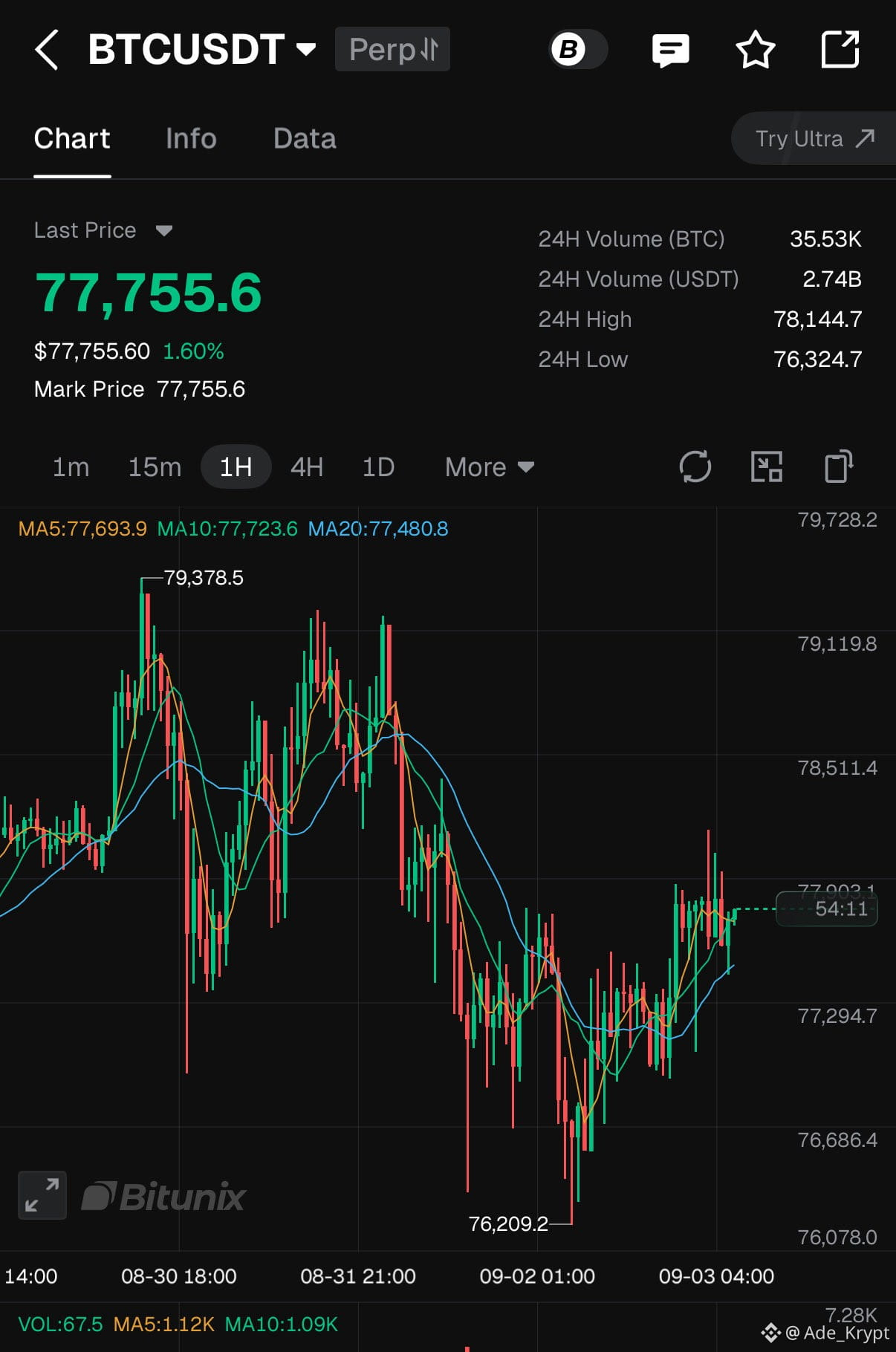
$BTC hält sich weiterhin sehr stark und versucht nun, die Marke von $78.000 zurückzuerobern.
Wenn Bitcoin über $78K ausbrechen kann und diese als Unterstützung beibehält, liegt der nächste wichtige Widerstand bei etwa $79K. Ein erfolgreicher Ausbruch darüber könnte den Weg in Richtung $82.000–$83.000 öffnen.
Auffällig ist die Widerstandsfähigkeit von BTC trotz steigender Ölpreise. Bisher sehe ich keine starken Anzeichen für eine größere bärische Korrektur oder einen tieferen Move in Richtung deutlich niedrigerer Kurse.
Ich halte hier keine Short-Position mehr. Vorerst bleibe ich geduldig und warte auf ein klares Setup, bevor ich mich für den nächsten möglichen Aufwärts-Impuls mit einem $BTC long positioniere.
Lass den Preis die Bewegung zuerst bestätigen.
#USWeeklyInitialJoblessClaimsRiseTo206000 #SECNewCryptoRulesAimToBringFirmsBackToUS
Wenn Bitcoin über $78K ausbrechen kann und diese als Unterstützung beibehält, liegt der nächste wichtige Widerstand bei etwa $79K. Ein erfolgreicher Ausbruch darüber könnte den Weg in Richtung $82.000–$83.000 öffnen.
Auffällig ist die Widerstandsfähigkeit von BTC trotz steigender Ölpreise. Bisher sehe ich keine starken Anzeichen für eine größere bärische Korrektur oder einen tieferen Move in Richtung deutlich niedrigerer Kurse.
Ich halte hier keine Short-Position mehr. Vorerst bleibe ich geduldig und warte auf ein klares Setup, bevor ich mich für den nächsten möglichen Aufwärts-Impuls mit einem $BTC long positioniere.
Lass den Preis die Bewegung zuerst bestätigen.
#USWeeklyInitialJoblessClaimsRiseTo206000 #SECNewCryptoRulesAimToBringFirmsBackToUS
1
1
2.6k
·
--
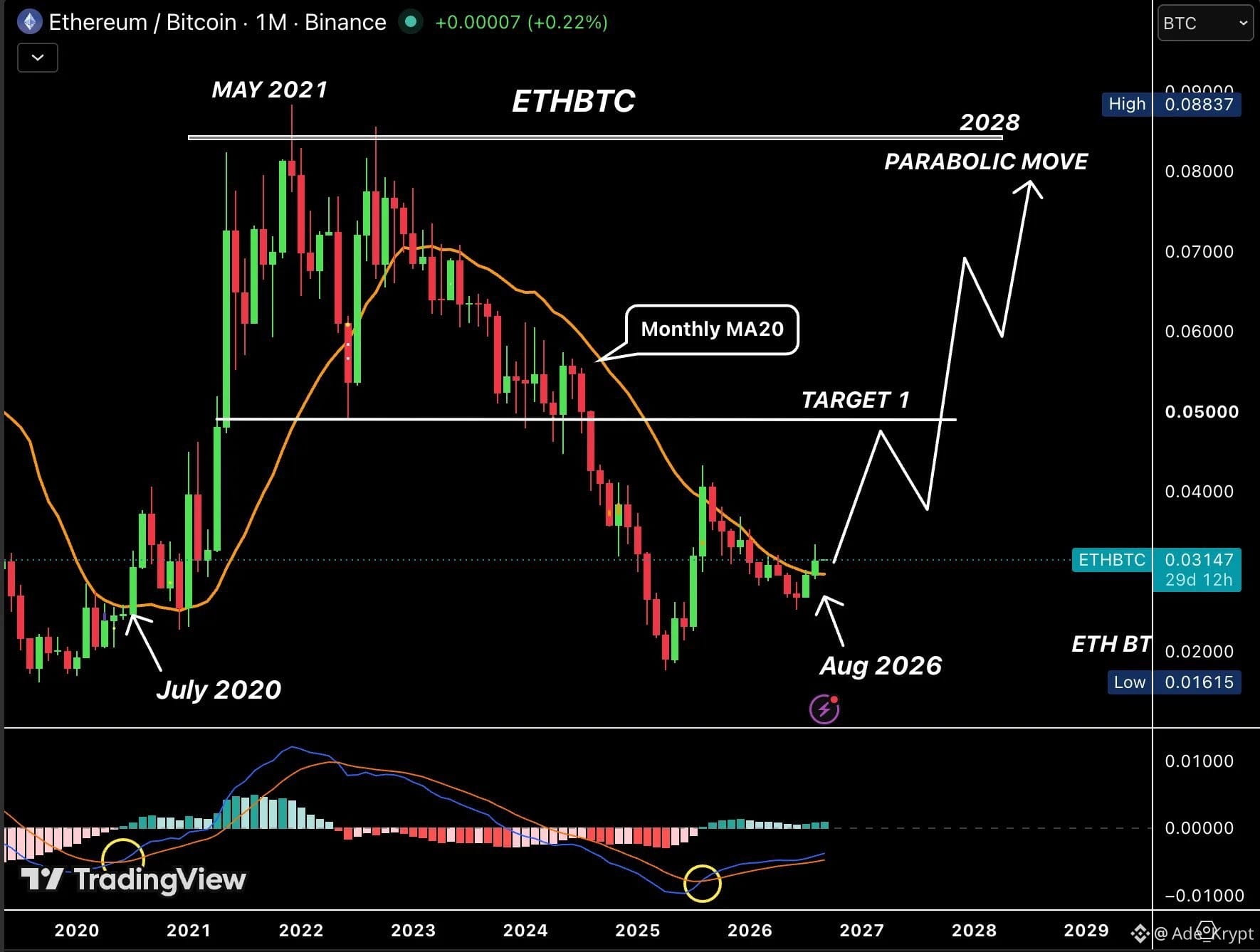
$ETH / $BTC befindet sich an einem großen technischen Wendepunkt.
Die monatliche Kerze hat über der MA20 geschlossen, aber der eigentliche Test ist nun, ob ETH/BTC den Ausbruch bestätigen und diese Marke in Unterstützung umwandeln kann.
Die letzte starke Rückeroberung gab es im Juli 2020. ETH/BTC stieg von 0.0315 auf 0.088, während ETH von 225 $ auf 4.372 $ explodierte.
August 2025 brachte eine weitere MA20-Rückeroberung, die jedoch nicht gehalten hat, und das Paar bewegte sich schließlich wieder zurück in Richtung seiner Tiefs.
Diesmal ist der entscheidende Punkt ganz einfach: Die MA20 muss zur Unterstützung werden.
Auch der MACD dreht bullisch, aus einer Zone heraus, die ähnlich ist wie jene, die dem Ausbruch von 2020 vorausging.
Wenn der Ausbruch hält:
🎯 Ziel 1: 0.050
🚀 Erweiterungsziel: 0.088
In der Zwischenzeit kam der ISM auf 54,6 gegenüber 55,2 erwartet, was darauf hindeutet, dass das Wachstum weiterhin wächst, aber allmählich abkühlt. Das könnte der Fed mehr Spielraum geben, um vorerst an der bisherigen Linie festzuhalten.
Wenn ETH/BTC die MA20 erfolgreich hält, könnte ETH in eine bedeutende Phase der Outperformance gegenüber BTC eintreten.
#SolanaFallsOver3% #DellSurges8%OnEarningsBeat
$ETH / $BTC befindet sich an einem großen technischen Wendepunkt.
Die monatliche Kerze hat über der MA20 geschlossen, aber der eigentliche Test ist nun, ob ETH/BTC den Ausbruch bestätigen und diese Marke in Unterstützung umwandeln kann.
Die letzte starke Rückeroberung gab es im Juli 2020. ETH/BTC stieg von 0.0315 auf 0.088, während ETH von 225 $ auf 4.372 $ explodierte.
August 2025 brachte eine weitere MA20-Rückeroberung, die jedoch nicht gehalten hat, und das Paar bewegte sich schließlich wieder zurück in Richtung seiner Tiefs.
Diesmal ist der entscheidende Punkt ganz einfach: Die MA20 muss zur Unterstützung werden.
Auch der MACD dreht bullisch, aus einer Zone heraus, die ähnlich ist wie jene, die dem Ausbruch von 2020 vorausging.
Wenn der Ausbruch hält:
🎯 Ziel 1: 0.050
🚀 Erweiterungsziel: 0.088
In der Zwischenzeit kam der ISM auf 54,6 gegenüber 55,2 erwartet, was darauf hindeutet, dass das Wachstum weiterhin wächst, aber allmählich abkühlt. Das könnte der Fed mehr Spielraum geben, um vorerst an der bisherigen Linie festzuhalten.
Wenn ETH/BTC die MA20 erfolgreich hält, könnte ETH in eine bedeutende Phase der Outperformance gegenüber BTC eintreten.
#SolanaFallsOver3% #DellSurges8%OnEarningsBeat
Die monatliche Kerze hat über der MA20 geschlossen, aber der eigentliche Test ist nun, ob ETH/BTC den Ausbruch bestätigen und diese Marke in Unterstützung umwandeln kann.
Die letzte starke Rückeroberung gab es im Juli 2020. ETH/BTC stieg von 0.0315 auf 0.088, während ETH von 225 $ auf 4.372 $ explodierte.
August 2025 brachte eine weitere MA20-Rückeroberung, die jedoch nicht gehalten hat, und das Paar bewegte sich schließlich wieder zurück in Richtung seiner Tiefs.
Diesmal ist der entscheidende Punkt ganz einfach: Die MA20 muss zur Unterstützung werden.
Auch der MACD dreht bullisch, aus einer Zone heraus, die ähnlich ist wie jene, die dem Ausbruch von 2020 vorausging.
Wenn der Ausbruch hält:
🎯 Ziel 1: 0.050
🚀 Erweiterungsziel: 0.088
In der Zwischenzeit kam der ISM auf 54,6 gegenüber 55,2 erwartet, was darauf hindeutet, dass das Wachstum weiterhin wächst, aber allmählich abkühlt. Das könnte der Fed mehr Spielraum geben, um vorerst an der bisherigen Linie festzuhalten.
Wenn ETH/BTC die MA20 erfolgreich hält, könnte ETH in eine bedeutende Phase der Outperformance gegenüber BTC eintreten.
#SolanaFallsOver3% #DellSurges8%OnEarningsBeat
969
Anmelden und weiter Inhalte entdecken
Krypto-Nutzer weltweit auf Binance Square kennenlernen
⚡️ Bleib in Sachen Krypto stets am Puls.
💬 Die weltgrößte Kryptobörse vertraut darauf.
👍 Erhalte verlässliche Einblicke von verifizierten Creators.
E-Mail-Adresse/Telefonnummer