
AYLA艾拉
3.3k Beiträge

AYLA艾拉
Melden
Nutzer blockieren
"Web3 analyst | DeFi lover | Market psychology addict 📊"
720 Following
19.0K+ Follower
6.3K+ Like gegeben
Beiträge
Alle
Zitierungen
Videos
Live
·
--
Artikel
Sign Protocol: Aufbau der Grundlage digitaler SouveränitätIn einer Ära, in der Daten das neue Öl sind, sind Eigentum und Verifizierung zu den entscheidenden Herausforderungen der digitalen Welt geworden. Von Identitätssystemen bis hin zu Finanzunterlagen ist die Frage nicht nur, was wahr ist – es ist, wer diese Wahrheit kontrolliert. Hier kommt das Sign Protocol ins Spiel, das eine leistungsstarke Infrastruktur bietet, die darauf ausgelegt ist, Vertrauen, Verifizierung und Souveränität im digitalen Zeitalter neu zu definieren.
Was ist das Sign Protocol?
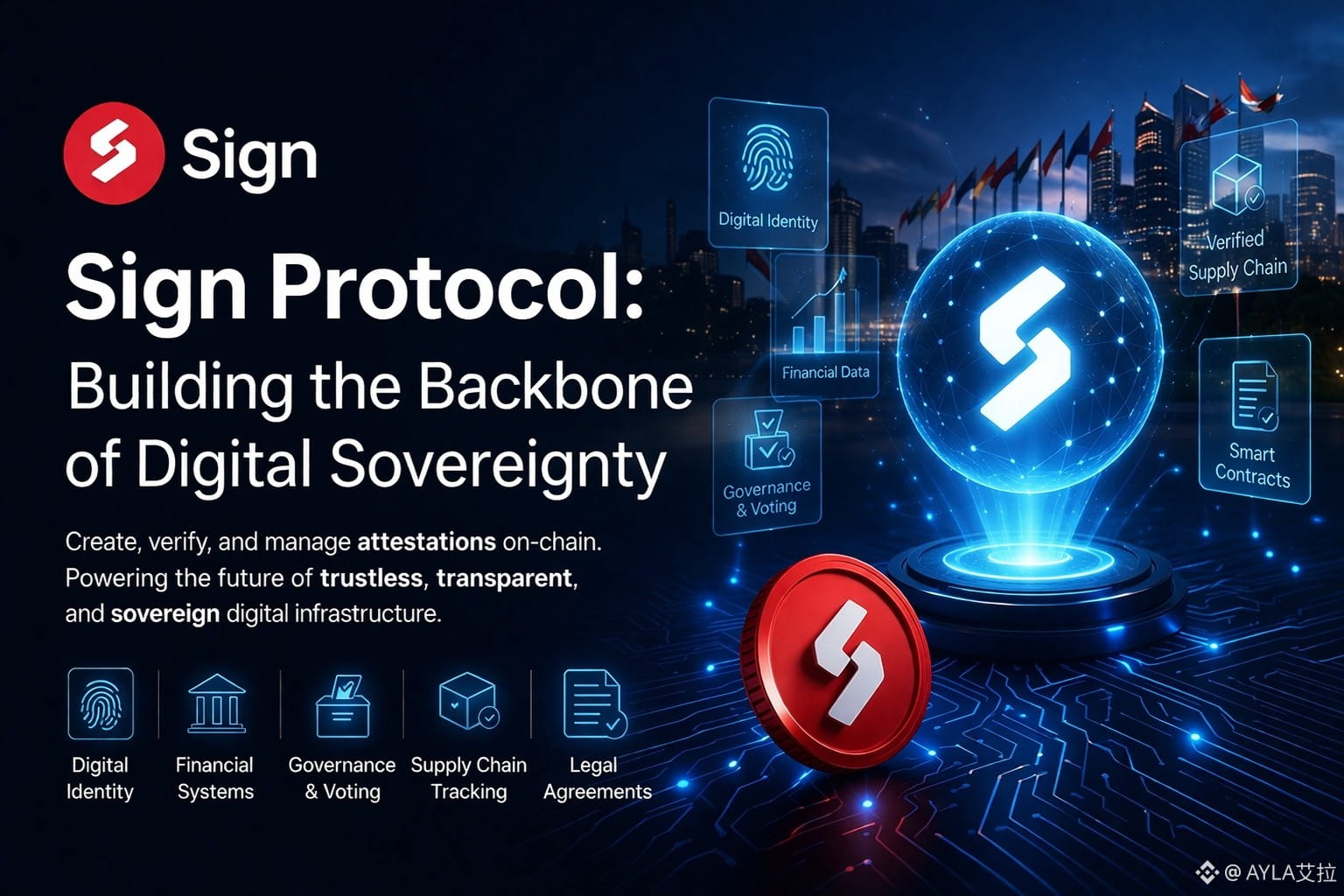
Das Sign Protocol ist eine dezentrale Attestationsinfrastruktur, die es Einzelpersonen, Organisationen und Regierungen ermöglicht, Ansprüche on-chain zu erstellen, zu verifizieren und zu verwalten. Diese Ansprüche – bekannt als Attestationen – können alles von Identitätsnachweisen und Finanzunterlagen bis hin zu Verträgen und Zertifikaten repräsentieren.
Sign Protocol: Aufbau der Grundlage digitaler Souveränität
In einer Ära, in der Daten das neue Öl sind, sind Eigentum und Verifizierung zu den entscheidenden Herausforderungen der digitalen Welt geworden. Von Identitätssystemen bis hin zu Finanzunterlagen ist die Frage nicht nur, was wahr ist – es ist, wer diese Wahrheit kontrolliert. Hier kommt das Sign Protocol ins Spiel, das eine leistungsstarke Infrastruktur bietet, die darauf ausgelegt ist, Vertrauen, Verifizierung und Souveränität im digitalen Zeitalter neu zu definieren.
Was ist das Sign Protocol?
Das Sign Protocol ist eine dezentrale Attestationsinfrastruktur, die es Einzelpersonen, Organisationen und Regierungen ermöglicht, Ansprüche on-chain zu erstellen, zu verifizieren und zu verwalten. Diese Ansprüche – bekannt als Attestationen – können alles von Identitätsnachweisen und Finanzunterlagen bis hin zu Verträgen und Zertifikaten repräsentieren.
Was ist das Sign Protocol?
Das Sign Protocol ist eine dezentrale Attestationsinfrastruktur, die es Einzelpersonen, Organisationen und Regierungen ermöglicht, Ansprüche on-chain zu erstellen, zu verifizieren und zu verwalten. Diese Ansprüche – bekannt als Attestationen – können alles von Identitätsnachweisen und Finanzunterlagen bis hin zu Verträgen und Zertifikaten repräsentieren.
2
3
284
·
--
#signdigitalsovereigninfra $SIGN
Die Zukunft des digitalen Vertrauens aufbauen 🌐
@SignOfficial definiert, wie Nationen und Benutzer über sichere, überprüfbare Infrastruktur mit Blockchain interagieren.
$SIGN ist nicht nur ein Token – es ist ein Schritt in Richtung echter digitaler Souveränität.
#SignDigitalSovereignInfra
#signdigitalsovereigninfra $SIGN
Die Zukunft des digitalen Vertrauens aufbauen 🌐
@SignOfficial definiert, wie Nationen und Benutzer über sichere, überprüfbare Infrastruktur mit Blockchain interagieren.
$SIGN ist nicht nur ein Token – es ist ein Schritt in Richtung echter digitaler Souveränität.
#SignDigitalSovereignInfra
Die Zukunft des digitalen Vertrauens aufbauen 🌐
@SignOfficial definiert, wie Nationen und Benutzer über sichere, überprüfbare Infrastruktur mit Blockchain interagieren.
$SIGN ist nicht nur ein Token – es ist ein Schritt in Richtung echter digitaler Souveränität.
#SignDigitalSovereignInfra
1
1
99
·
--
Artikel
Der Aufstieg von SIGN — Aufbau von digitalem Vertrauen in Web3In der sich schnell entwickelnden digitalen Welt von heute bleibt eines der größten Herausforderungen das Vertrauen. Ob es darum geht, Identitäten zu überprüfen, Transaktionen zu sichern oder Betrug zu verhindern, traditionelle Systeme scheitern oft aufgrund von Ineffizienzen, Zentralisierung und mangelnder Transparenz. Hier kommt SIGN ins Spiel — nicht nur als ein weiteres Blockchain-Projekt, sondern als eine grundlegende Schicht für digitales Vertrauen.
SIGN definiert, wie Identität und Verifikation in Web3 funktionieren, neu. Anstatt sich auf zentrale Behörden zu verlassen, die langsam, teuer oder unzuverlässig sein können, führt SIGN einen dezentralen Ansatz ein, bei dem die Nutzer die Kontrolle über ihre eigenen Daten haben. Dieser Wandel ist entscheidend, da das Eigentum an Identität genauso wichtig wird wie das Eigentum an Vermögenswerten im digitalen Zeitalter.
Der Aufstieg von SIGN — Aufbau von digitalem Vertrauen in Web3
In der sich schnell entwickelnden digitalen Welt von heute bleibt eines der größten Herausforderungen das Vertrauen. Ob es darum geht, Identitäten zu überprüfen, Transaktionen zu sichern oder Betrug zu verhindern, traditionelle Systeme scheitern oft aufgrund von Ineffizienzen, Zentralisierung und mangelnder Transparenz. Hier kommt SIGN ins Spiel — nicht nur als ein weiteres Blockchain-Projekt, sondern als eine grundlegende Schicht für digitales Vertrauen.
SIGN definiert, wie Identität und Verifikation in Web3 funktionieren, neu. Anstatt sich auf zentrale Behörden zu verlassen, die langsam, teuer oder unzuverlässig sein können, führt SIGN einen dezentralen Ansatz ein, bei dem die Nutzer die Kontrolle über ihre eigenen Daten haben. Dieser Wandel ist entscheidend, da das Eigentum an Identität genauso wichtig wird wie das Eigentum an Vermögenswerten im digitalen Zeitalter.
SIGN definiert, wie Identität und Verifikation in Web3 funktionieren, neu. Anstatt sich auf zentrale Behörden zu verlassen, die langsam, teuer oder unzuverlässig sein können, führt SIGN einen dezentralen Ansatz ein, bei dem die Nutzer die Kontrolle über ihre eigenen Daten haben. Dieser Wandel ist entscheidend, da das Eigentum an Identität genauso wichtig wird wie das Eigentum an Vermögenswerten im digitalen Zeitalter.
3
5
177
·
--
#signdigitalsovereigninfra $SIGN
Digitaler Vertrauen ist gebrochen — aber SIGN repariert es.
Mit schneller, sicherer und dezentraler Identitätsverifizierung gestaltet $SIGN die Zukunft der Web3-Infrastruktur.
#SignDigitalSovereignInfra @SignOfficial $SIGN
#signdigitalsovereigninfra $SIGN
Digitaler Vertrauen ist gebrochen — aber SIGN repariert es.
Mit schneller, sicherer und dezentraler Identitätsverifizierung gestaltet $SIGN die Zukunft der Web3-Infrastruktur.
#SignDigitalSovereignInfra @SignOfficial $SIGN
Digitaler Vertrauen ist gebrochen — aber SIGN repariert es.
Mit schneller, sicherer und dezentraler Identitätsverifizierung gestaltet $SIGN die Zukunft der Web3-Infrastruktur.
#SignDigitalSovereignInfra @SignOfficial $SIGN
3
230
·
--
Artikel
Der Aufstieg von $SIGN — Vertrauen in einer vertrauenslosen Welt#SignDigitalSovereignInfra @SignOfficial
Einführung
Eine der größten Widersprüche in Web3 ist dies: Während die Blockchain die Notwendigkeit von Vertrauen beseitigt, hängen die Anwendungen in der realen Welt immer noch davon ab. Ob es um Identitätsverifizierung, Berechtigungen oder Reputation geht, Vertrauen bleibt eine fundamentale Schicht, die die meisten dezentralen Systeme schwer effizient handhaben können.
Hier kommt $SIGN ins Spiel.
Anstatt zu versuchen, bestehende Systeme zu ersetzen, baut Sign etwas viel Mächtigeres auf – ein universelles Framework für verifizierbare digitale Identitäten und Berechtigungen.
Der Aufstieg von $SIGN — Vertrauen in einer vertrauenslosen Welt
#SignDigitalSovereignInfra @SignOfficial
Einführung
Eine der größten Widersprüche in Web3 ist dies: Während die Blockchain die Notwendigkeit von Vertrauen beseitigt, hängen die Anwendungen in der realen Welt immer noch davon ab. Ob es um Identitätsverifizierung, Berechtigungen oder Reputation geht, Vertrauen bleibt eine fundamentale Schicht, die die meisten dezentralen Systeme schwer effizient handhaben können.
Hier kommt $SIGN ins Spiel.
Anstatt zu versuchen, bestehende Systeme zu ersetzen, baut Sign etwas viel Mächtigeres auf – ein universelles Framework für verifizierbare digitale Identitäten und Berechtigungen.
Einführung
Eine der größten Widersprüche in Web3 ist dies: Während die Blockchain die Notwendigkeit von Vertrauen beseitigt, hängen die Anwendungen in der realen Welt immer noch davon ab. Ob es um Identitätsverifizierung, Berechtigungen oder Reputation geht, Vertrauen bleibt eine fundamentale Schicht, die die meisten dezentralen Systeme schwer effizient handhaben können.
Hier kommt $SIGN ins Spiel.
Anstatt zu versuchen, bestehende Systeme zu ersetzen, baut Sign etwas viel Mächtigeres auf – ein universelles Framework für verifizierbare digitale Identitäten und Berechtigungen.
3
2
163
·
--
$SIGN baut leise die Vertrauensschicht auf, die Web3 gefehlt hat.
Von der Identitätsverifizierung bis hin zu On-Chain-Zertifikaten verwandelt Sign Reputation in ein verifiziertes Asset. Kein Lärm, nur echte Infrastruktur.
#Sign #Web3 #DigitalIdentity @SignOfficial
#signdigitalsovereigninfra $SIGN
$SIGN baut leise die Vertrauensschicht auf, die Web3 gefehlt hat.
Von der Identitätsverifizierung bis hin zu On-Chain-Zertifikaten verwandelt Sign Reputation in ein verifiziertes Asset. Kein Lärm, nur echte Infrastruktur.
#Sign #Web3 #DigitalIdentity @SignOfficial
#signdigitalsovereigninfra $SIGN
Von der Identitätsverifizierung bis hin zu On-Chain-Zertifikaten verwandelt Sign Reputation in ein verifiziertes Asset. Kein Lärm, nur echte Infrastruktur.
#Sign #Web3 #DigitalIdentity @SignOfficial
#signdigitalsovereigninfra $SIGN
2
3
90
·
--
🇩🇪 Die nationale Schuldenlast der USA übersteigt 38 Billionen Dollar mitten in der Regierungsstilllegung
#U.S. #NationalDebt
Das US-Finanzministerium hat berichtet, dass die Bruttoschulden der Vereinigten Staaten zum ersten Mal in der Geschichte 38 Billionen Dollar überschreiten, was einen bedeutenden Meilenstein in der fiskalischen Entwicklung des Landes darstellt.
Diese Entwicklung kommt zu einem besonders fragilen Zeitpunkt, da die Bundesregierung aufgrund eines anhaltenden politischen Stillstands über Haushaltsgenehmigungen in Washington, D.C. geschlossen bleibt.
📉 Wirtschaftlicher Druck intensiviert sich
Die Schließung hat Hunderttausende von Bundesangestellten in Zwangsurlaub oder unbezahlte Arbeit gezwungen, was essentielle Dienstleistungen stört und die Verbraucherausgaben reduziert. Ökonomen warnen, dass längere Schließungen das Wirtschaftswachstum bremsen und das Vertrauen der Investoren erschüttern könnten.
💰 Warum die Schulden steigen
Der Anstieg über 38 Billionen Dollar spiegelt eine Kombination von:
Erhöhten Staatsausgaben in den letzten Jahren
Steigenden Zinszahlungen auf bestehende Schulden
Anhaltenden Haushaltsdefiziten
wider. Da die Kreditkosten steigen, wird die Bedienung der Schulden selbst zu einer größeren Belastung für die öffentlichen Finanzen.
⚠️ Breitere Implikationen
Der gleichzeitige Anstieg der Schulden und die Regierungsstilllegung werfen Bedenken auf über:
Langfristige fiskalische Nachhaltigkeit
Druck auf die Kreditwürdigkeit
Globale Marktstabilität
Analysten weisen darauf hin, dass anhaltende Unsicherheit die wirtschaftlichen Aussichten der USA schwächen könnte, wenn die Entscheidungsträger nicht bald eine Lösung finden.
🧭 Was kommt als Nächstes?
Die Gesetzgeber stehen unter zunehmendem Druck, die Regierung wieder zu öffnen und fiskalische Herausforderungen anzugehen. Eine längere Blockade könnte wirtschaftliche Störungen vertiefen und die Bemühungen zur Stabilisierung der Finanzen des Landes weiter komplizieren.
🇩🇪 Die nationale Schuldenlast der USA übersteigt 38 Billionen Dollar mitten in der Regierungsstilllegung
#U.S. #NationalDebt
Das US-Finanzministerium hat berichtet, dass die Bruttoschulden der Vereinigten Staaten zum ersten Mal in der Geschichte 38 Billionen Dollar überschreiten, was einen bedeutenden Meilenstein in der fiskalischen Entwicklung des Landes darstellt.
Diese Entwicklung kommt zu einem besonders fragilen Zeitpunkt, da die Bundesregierung aufgrund eines anhaltenden politischen Stillstands über Haushaltsgenehmigungen in Washington, D.C. geschlossen bleibt.
📉 Wirtschaftlicher Druck intensiviert sich
Die Schließung hat Hunderttausende von Bundesangestellten in Zwangsurlaub oder unbezahlte Arbeit gezwungen, was essentielle Dienstleistungen stört und die Verbraucherausgaben reduziert. Ökonomen warnen, dass längere Schließungen das Wirtschaftswachstum bremsen und das Vertrauen der Investoren erschüttern könnten.
💰 Warum die Schulden steigen
Der Anstieg über 38 Billionen Dollar spiegelt eine Kombination von:
Erhöhten Staatsausgaben in den letzten Jahren
Steigenden Zinszahlungen auf bestehende Schulden
Anhaltenden Haushaltsdefiziten
wider. Da die Kreditkosten steigen, wird die Bedienung der Schulden selbst zu einer größeren Belastung für die öffentlichen Finanzen.
⚠️ Breitere Implikationen
Der gleichzeitige Anstieg der Schulden und die Regierungsstilllegung werfen Bedenken auf über:
Langfristige fiskalische Nachhaltigkeit
Druck auf die Kreditwürdigkeit
Globale Marktstabilität
Analysten weisen darauf hin, dass anhaltende Unsicherheit die wirtschaftlichen Aussichten der USA schwächen könnte, wenn die Entscheidungsträger nicht bald eine Lösung finden.
🧭 Was kommt als Nächstes?
Die Gesetzgeber stehen unter zunehmendem Druck, die Regierung wieder zu öffnen und fiskalische Herausforderungen anzugehen. Eine längere Blockade könnte wirtschaftliche Störungen vertiefen und die Bemühungen zur Stabilisierung der Finanzen des Landes weiter komplizieren.
#U.S. #NationalDebt
Das US-Finanzministerium hat berichtet, dass die Bruttoschulden der Vereinigten Staaten zum ersten Mal in der Geschichte 38 Billionen Dollar überschreiten, was einen bedeutenden Meilenstein in der fiskalischen Entwicklung des Landes darstellt.
Diese Entwicklung kommt zu einem besonders fragilen Zeitpunkt, da die Bundesregierung aufgrund eines anhaltenden politischen Stillstands über Haushaltsgenehmigungen in Washington, D.C. geschlossen bleibt.
📉 Wirtschaftlicher Druck intensiviert sich
Die Schließung hat Hunderttausende von Bundesangestellten in Zwangsurlaub oder unbezahlte Arbeit gezwungen, was essentielle Dienstleistungen stört und die Verbraucherausgaben reduziert. Ökonomen warnen, dass längere Schließungen das Wirtschaftswachstum bremsen und das Vertrauen der Investoren erschüttern könnten.
💰 Warum die Schulden steigen
Der Anstieg über 38 Billionen Dollar spiegelt eine Kombination von:
Erhöhten Staatsausgaben in den letzten Jahren
Steigenden Zinszahlungen auf bestehende Schulden
Anhaltenden Haushaltsdefiziten
wider. Da die Kreditkosten steigen, wird die Bedienung der Schulden selbst zu einer größeren Belastung für die öffentlichen Finanzen.
⚠️ Breitere Implikationen
Der gleichzeitige Anstieg der Schulden und die Regierungsstilllegung werfen Bedenken auf über:
Langfristige fiskalische Nachhaltigkeit
Druck auf die Kreditwürdigkeit
Globale Marktstabilität
Analysten weisen darauf hin, dass anhaltende Unsicherheit die wirtschaftlichen Aussichten der USA schwächen könnte, wenn die Entscheidungsträger nicht bald eine Lösung finden.
🧭 Was kommt als Nächstes?
Die Gesetzgeber stehen unter zunehmendem Druck, die Regierung wieder zu öffnen und fiskalische Herausforderungen anzugehen. Eine längere Blockade könnte wirtschaftliche Störungen vertiefen und die Bemühungen zur Stabilisierung der Finanzen des Landes weiter komplizieren.

2
10
841
·
--
Artikel
Der Aufstieg von SIGN: Vertrauen in einer vertrauenslosen Welt#SignDigitalSovereignInfra
Einführung: Das Vertrauensproblem in Web3
In der sich schnell entwickelnden Welt von Web3 hat die Dezentralisierung immense Möglichkeiten eröffnet – aber sie hat auch eine grundlegende Herausforderung aufgezeigt: Vertrauen. Ohne zentrale Autoritäten, wie überprüfen wir Identitäten, validieren Handlungen und gewährleisten Authentizität in digitalen Ökosystemen?
Hier kommt SIGN als transformative Kraft ins Spiel. Anstatt sich auf veraltete Verifizierungssysteme oder fragmentierte Identitätsebenen zu verlassen, führt SIGN einen nahtlosen, kryptografischen Ansatz für Vertrauen ein – einen, der perfekt mit dem dezentralen Ethos übereinstimmt.
Der Aufstieg von SIGN: Vertrauen in einer vertrauenslosen Welt
#SignDigitalSovereignInfra
Einführung: Das Vertrauensproblem in Web3
In der sich schnell entwickelnden Welt von Web3 hat die Dezentralisierung immense Möglichkeiten eröffnet – aber sie hat auch eine grundlegende Herausforderung aufgezeigt: Vertrauen. Ohne zentrale Autoritäten, wie überprüfen wir Identitäten, validieren Handlungen und gewährleisten Authentizität in digitalen Ökosystemen?
Hier kommt SIGN als transformative Kraft ins Spiel. Anstatt sich auf veraltete Verifizierungssysteme oder fragmentierte Identitätsebenen zu verlassen, führt SIGN einen nahtlosen, kryptografischen Ansatz für Vertrauen ein – einen, der perfekt mit dem dezentralen Ethos übereinstimmt.
Einführung: Das Vertrauensproblem in Web3
In der sich schnell entwickelnden Welt von Web3 hat die Dezentralisierung immense Möglichkeiten eröffnet – aber sie hat auch eine grundlegende Herausforderung aufgezeigt: Vertrauen. Ohne zentrale Autoritäten, wie überprüfen wir Identitäten, validieren Handlungen und gewährleisten Authentizität in digitalen Ökosystemen?
Hier kommt SIGN als transformative Kraft ins Spiel. Anstatt sich auf veraltete Verifizierungssysteme oder fragmentierte Identitätsebenen zu verlassen, führt SIGN einen nahtlosen, kryptografischen Ansatz für Vertrauen ein – einen, der perfekt mit dem dezentralen Ethos übereinstimmt.
3
5
151
·
--
#signdigitalsovereigninfra
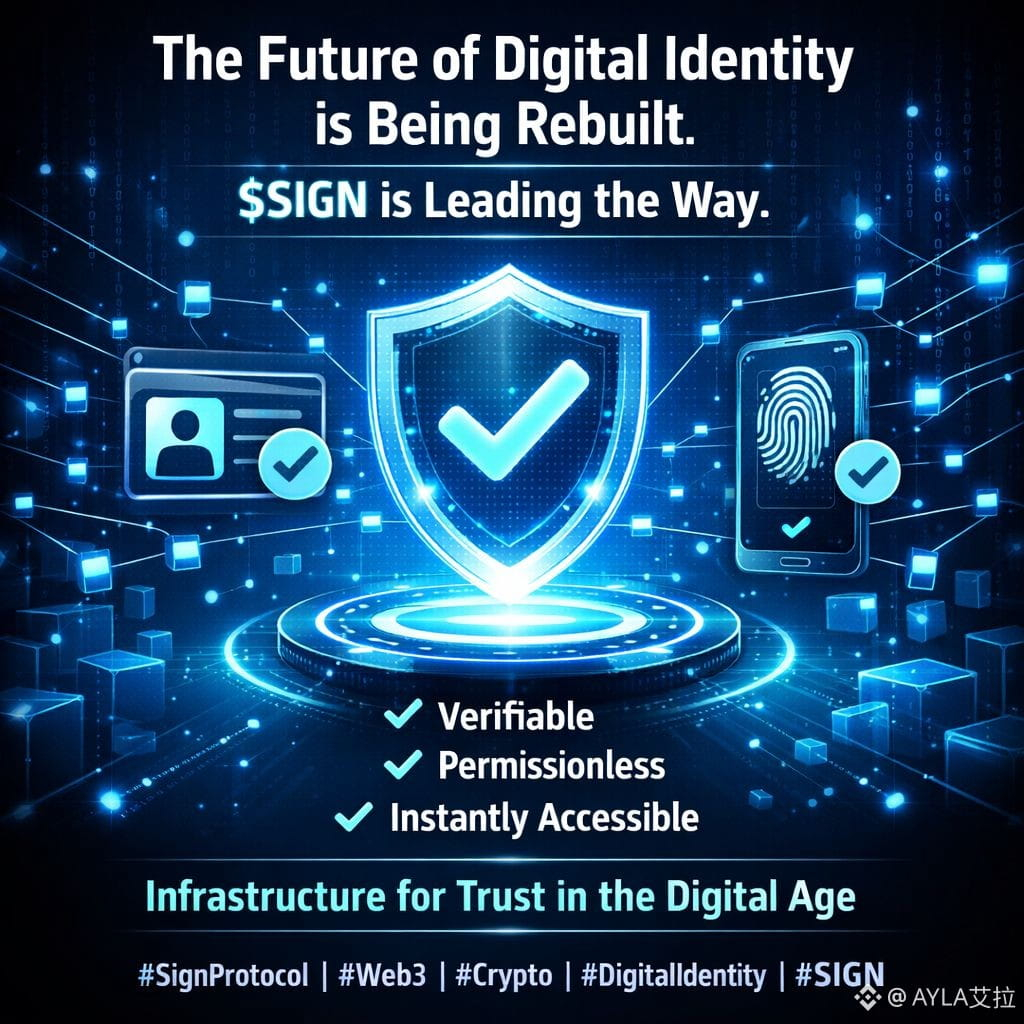
Die Zukunft der digitalen Identität wird neu gestaltet – und @SignOfficial führt den Weg.
In einer Welt, in der die Verifizierung langsam, wiederholt und oft unzuverlässig ist, führt das Sign Protocol einen intelligenteren Ansatz ein: On-Chain-Bestätigungen, die schnell, sicher und wiederverwendbar sind.
Keine endlosen Formulare mehr.
Kein Warten auf Genehmigungen mehr.
Keine Vertrauensprobleme mehr.
Mit $SIGN wird Identität:
✔️ Überprüfbar
✔️ Erlaubenlos
✔️ Sofort zugänglich
Das ist nicht nur ein weiteres Web3-Projekt – es ist die Infrastruktur für Vertrauen im digitalen Zeitalter. Von der Verhinderung von Sybil-Angriffen bis zur Vereinfachung des Geschäft-Onboardings wird $SIGN leise zu einem Rückgrat für die reale Welt.
Die Frage ist nicht, ob Identität On-Chain geht…
Es ist, wer es führt – und im Moment ist $SIGN voraus.
#signdigitalsovereigninfra
Die Zukunft der digitalen Identität wird neu gestaltet – und @SignOfficial führt den Weg.
In einer Welt, in der die Verifizierung langsam, wiederholt und oft unzuverlässig ist, führt das Sign Protocol einen intelligenteren Ansatz ein: On-Chain-Bestätigungen, die schnell, sicher und wiederverwendbar sind.
Keine endlosen Formulare mehr.
Kein Warten auf Genehmigungen mehr.
Keine Vertrauensprobleme mehr.
Mit $SIGN wird Identität:
✔️ Überprüfbar
✔️ Erlaubenlos
✔️ Sofort zugänglich
Das ist nicht nur ein weiteres Web3-Projekt – es ist die Infrastruktur für Vertrauen im digitalen Zeitalter. Von der Verhinderung von Sybil-Angriffen bis zur Vereinfachung des Geschäft-Onboardings wird $SIGN leise zu einem Rückgrat für die reale Welt.
Die Frage ist nicht, ob Identität On-Chain geht…
Es ist, wer es führt – und im Moment ist $SIGN voraus.
Die Zukunft der digitalen Identität wird neu gestaltet – und @SignOfficial führt den Weg.
In einer Welt, in der die Verifizierung langsam, wiederholt und oft unzuverlässig ist, führt das Sign Protocol einen intelligenteren Ansatz ein: On-Chain-Bestätigungen, die schnell, sicher und wiederverwendbar sind.
Keine endlosen Formulare mehr.
Kein Warten auf Genehmigungen mehr.
Keine Vertrauensprobleme mehr.
Mit $SIGN wird Identität:
✔️ Überprüfbar
✔️ Erlaubenlos
✔️ Sofort zugänglich
Das ist nicht nur ein weiteres Web3-Projekt – es ist die Infrastruktur für Vertrauen im digitalen Zeitalter. Von der Verhinderung von Sybil-Angriffen bis zur Vereinfachung des Geschäft-Onboardings wird $SIGN leise zu einem Rückgrat für die reale Welt.
Die Frage ist nicht, ob Identität On-Chain geht…
Es ist, wer es führt – und im Moment ist $SIGN voraus.
1
2
148
·
--
Artikel
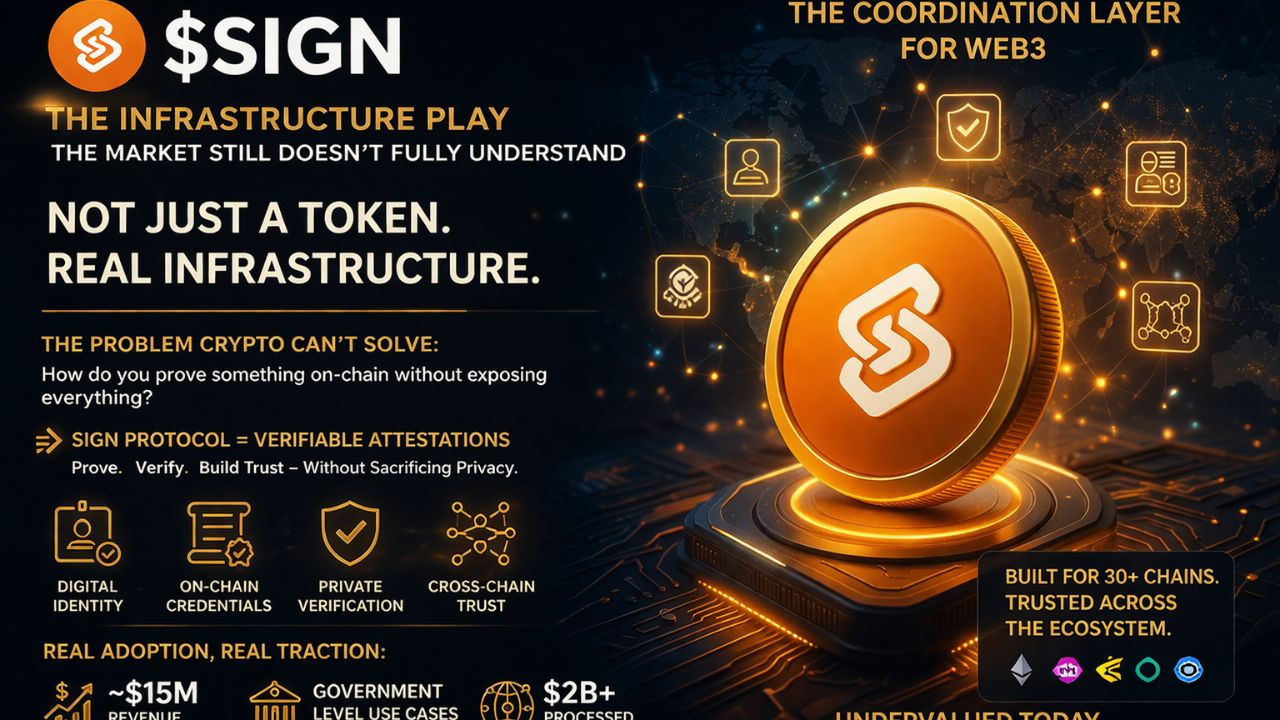
$SIGN — Das stille Infrastrukturspiel, das der Markt immer noch nicht vollständig verstehtScrollen Sie gerade jetzt durch einen Krypto-Feed und Sie werden etwas Interessantes bemerken.
Die meisten Gespräche drehen sich um
sind noch an der Oberfläche hängen geblieben:
Preis, Freischaltungen, kurzfristige Volatilität, Handelsverhalten.
Aber wenn Sie nur ein wenig herauszoomen… sieht die echte Geschichte ganz anders aus.
Weil $SIGN n’t nur ein Token ist.
Es ist Infrastruktur.
🔍 Die Missverstandene Erzählung
Gerade jetzt macht der Markt, was er immer macht:
sich auf das zu konzentrieren, was leicht zu messen ist.
• Zirkulierendes Angebot
• Token-Freischaltungen
• Kurzfristiger Preisdruck
$SIGN — Das stille Infrastrukturspiel, das der Markt immer noch nicht vollständig versteht
Scrollen Sie gerade jetzt durch einen Krypto-Feed und Sie werden etwas Interessantes bemerken.
Die meisten Gespräche drehen sich um
sind noch an der Oberfläche hängen geblieben:
Preis, Freischaltungen, kurzfristige Volatilität, Handelsverhalten.
Aber wenn Sie nur ein wenig herauszoomen… sieht die echte Geschichte ganz anders aus.
Weil $SIGN n’t nur ein Token ist.
Es ist Infrastruktur.
🔍 Die Missverstandene Erzählung
Gerade jetzt macht der Markt, was er immer macht:
sich auf das zu konzentrieren, was leicht zu messen ist.
• Zirkulierendes Angebot
• Token-Freischaltungen
• Kurzfristiger Preisdruck
Die meisten Gespräche drehen sich um
sind noch an der Oberfläche hängen geblieben:
Preis, Freischaltungen, kurzfristige Volatilität, Handelsverhalten.
Aber wenn Sie nur ein wenig herauszoomen… sieht die echte Geschichte ganz anders aus.
Weil $SIGN n’t nur ein Token ist.
Es ist Infrastruktur.
🔍 Die Missverstandene Erzählung
Gerade jetzt macht der Markt, was er immer macht:
sich auf das zu konzentrieren, was leicht zu messen ist.
• Zirkulierendes Angebot
• Token-Freischaltungen
• Kurzfristiger Preisdruck
9
15
182
·
--
#signdigitalsovereigninfra $SIGN @SignOfficial
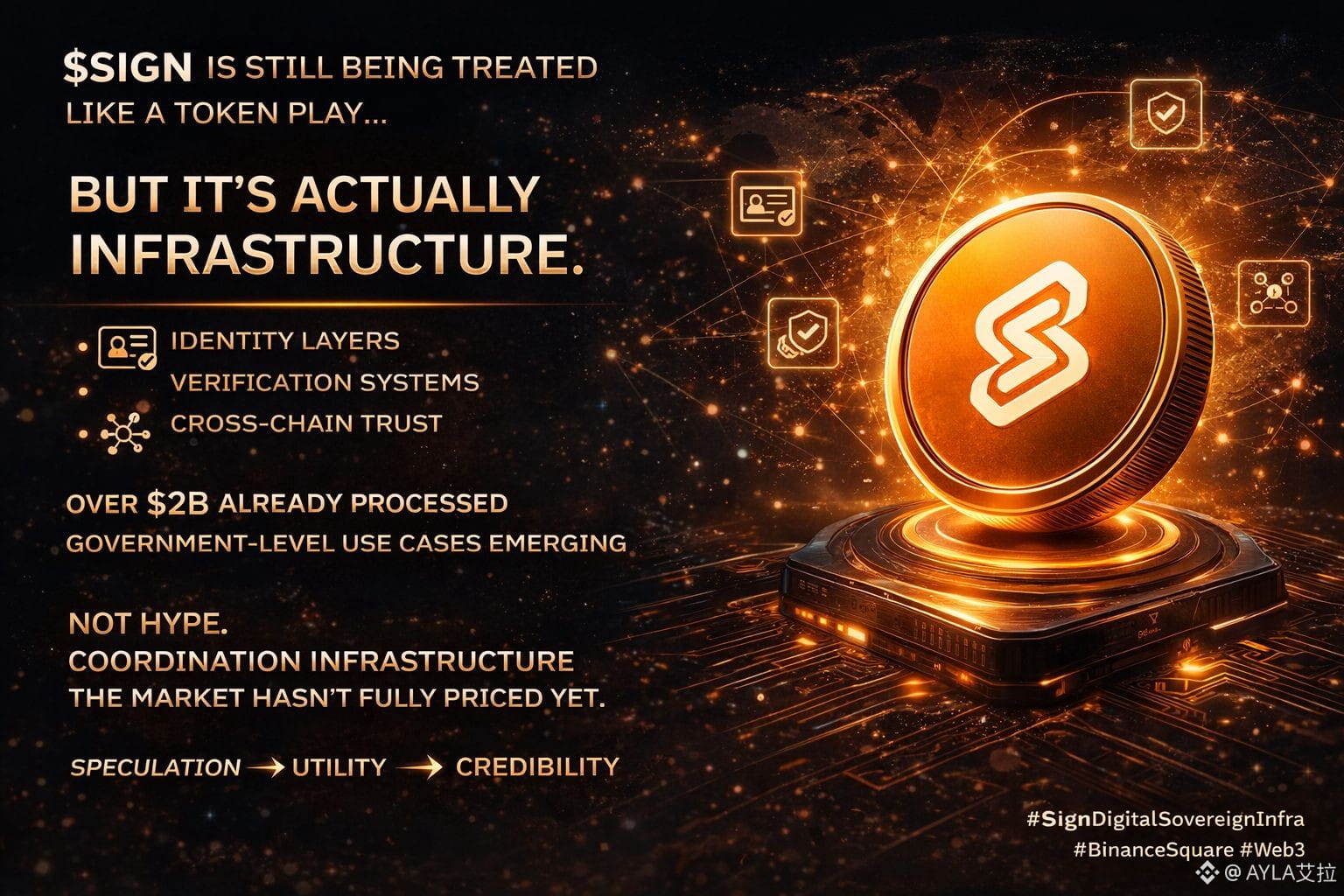
$SIGN
wird immer noch wie ein Token-Spiel behandelt...
Aber es ist eigentlich Infrastruktur.
Während der Markt sich auf:
• Preis
• Entsperrungen
• kurzfristige Bewegungen
konzentriert:
• Identitätsschichten
• Verifizierungssysteme
• vertrauensvolle Interoperabilität
Bereits über 2 Milliarden USD verarbeitet.
Anwendungsfälle auf Regierungsebene entstehen.
Das ist kein Hype.
Es ist Koordinationsinfrastruktur, die der Markt noch nicht vollständig bewertet hat.
Der Wandel ist subtil:
👉 von Spekulation → Nutzen
👉 von Aktivität → Glaubwürdigkeit
Und dort wird es interessant.
#SignDigitalSovereignInfra #BinanceSquare #Web3
#signdigitalsovereigninfra $SIGN @SignOfficial
$SIGN
wird immer noch wie ein Token-Spiel behandelt...
Aber es ist eigentlich Infrastruktur.
Während der Markt sich auf:
• Preis
• Entsperrungen
• kurzfristige Bewegungen
konzentriert:
• Identitätsschichten
• Verifizierungssysteme
• vertrauensvolle Interoperabilität
Bereits über 2 Milliarden USD verarbeitet.
Anwendungsfälle auf Regierungsebene entstehen.
Das ist kein Hype.
Es ist Koordinationsinfrastruktur, die der Markt noch nicht vollständig bewertet hat.
Der Wandel ist subtil:
👉 von Spekulation → Nutzen
👉 von Aktivität → Glaubwürdigkeit
Und dort wird es interessant.
#SignDigitalSovereignInfra #BinanceSquare #Web3
$SIGN
wird immer noch wie ein Token-Spiel behandelt...
Aber es ist eigentlich Infrastruktur.
Während der Markt sich auf:
• Preis
• Entsperrungen
• kurzfristige Bewegungen
konzentriert:
• Identitätsschichten
• Verifizierungssysteme
• vertrauensvolle Interoperabilität
Bereits über 2 Milliarden USD verarbeitet.
Anwendungsfälle auf Regierungsebene entstehen.
Das ist kein Hype.
Es ist Koordinationsinfrastruktur, die der Markt noch nicht vollständig bewertet hat.
Der Wandel ist subtil:
👉 von Spekulation → Nutzen
👉 von Aktivität → Glaubwürdigkeit
Und dort wird es interessant.
#SignDigitalSovereignInfra #BinanceSquare #Web3
3
9
132
·
--
#night $NIGHT
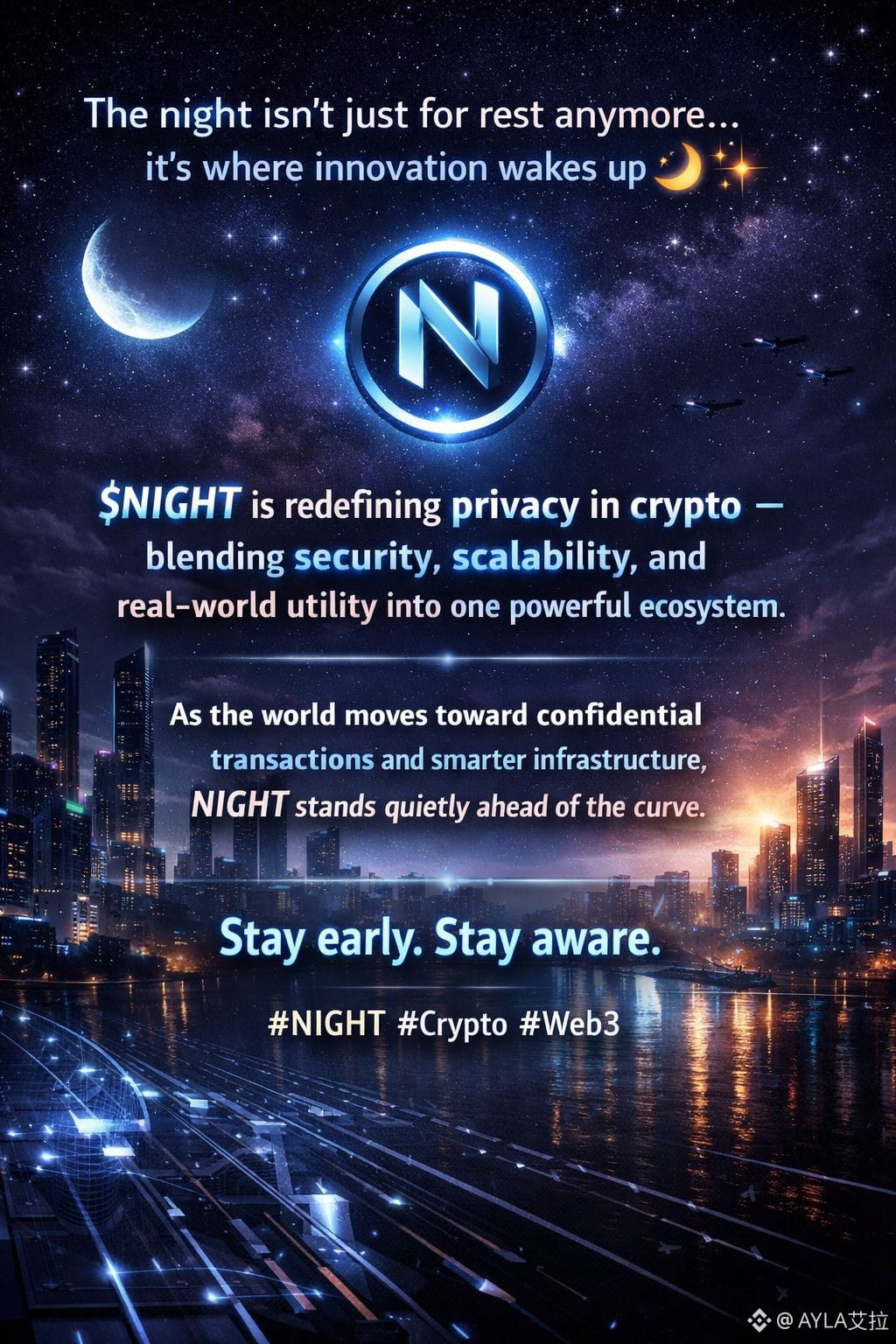
Die Nacht ist nicht mehr nur für Ruhe… sie ist der Ort, an dem Innovation aufwacht 🌙✨
$NIGHT definiert Privatsphäre in Krypto neu - Sicherheit, Skalierbarkeit und reale Anwendbarkeit in einem leistungsstarken Ökosystem vereinen.
Während die Welt auf vertrauliche Transaktionen und intelligentere Infrastrukturen zusteuert, steht die NACHT leise an der Spitze.
Bleib früh. Bleib informiert. #night #crypto #Web3 @MidnightNetwork
#night $NIGHT
Die Nacht ist nicht mehr nur für Ruhe… sie ist der Ort, an dem Innovation aufwacht 🌙✨
$NIGHT definiert Privatsphäre in Krypto neu - Sicherheit, Skalierbarkeit und reale Anwendbarkeit in einem leistungsstarken Ökosystem vereinen.
Während die Welt auf vertrauliche Transaktionen und intelligentere Infrastrukturen zusteuert, steht die NACHT leise an der Spitze.
Bleib früh. Bleib informiert. #night #crypto #Web3 @MidnightNetwork
Die Nacht ist nicht mehr nur für Ruhe… sie ist der Ort, an dem Innovation aufwacht 🌙✨
$NIGHT definiert Privatsphäre in Krypto neu - Sicherheit, Skalierbarkeit und reale Anwendbarkeit in einem leistungsstarken Ökosystem vereinen.
Während die Welt auf vertrauliche Transaktionen und intelligentere Infrastrukturen zusteuert, steht die NACHT leise an der Spitze.
Bleib früh. Bleib informiert. #night #crypto #Web3 @MidnightNetwork
4
177
·
--
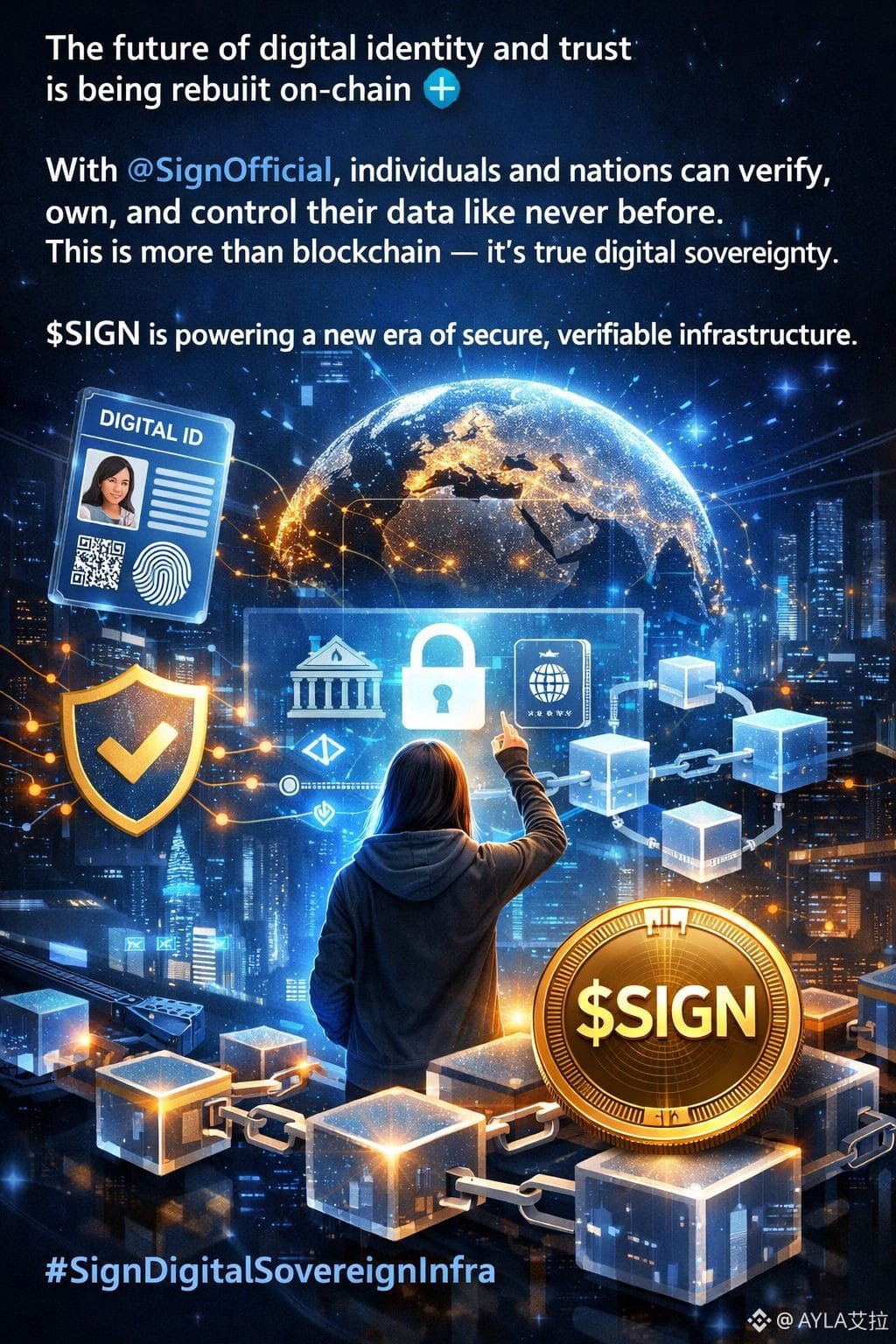
Die Zukunft der digitalen Identität und des Vertrauens wird on-chain neu aufgebaut 🌐
Mit @SignOfficial # können Einzelpersonen und Nationen ihre Daten wie nie zuvor verifizieren, besitzen und kontrollieren. Das ist mehr als Blockchain – es ist wahre digitale Souveränität.
$SIGN treibt eine neue Ära sicherer, verifizierbarer Infrastruktur voran.
#SignDigitalSovereignInfra
Die Zukunft der digitalen Identität und des Vertrauens wird on-chain neu aufgebaut 🌐
Mit @SignOfficial # können Einzelpersonen und Nationen ihre Daten wie nie zuvor verifizieren, besitzen und kontrollieren. Das ist mehr als Blockchain – es ist wahre digitale Souveränität.
$SIGN treibt eine neue Ära sicherer, verifizierbarer Infrastruktur voran.
#SignDigitalSovereignInfra
Mit @SignOfficial # können Einzelpersonen und Nationen ihre Daten wie nie zuvor verifizieren, besitzen und kontrollieren. Das ist mehr als Blockchain – es ist wahre digitale Souveränität.
$SIGN treibt eine neue Ära sicherer, verifizierbarer Infrastruktur voran.
#SignDigitalSovereignInfra
2
4
98
·
--
Artikel
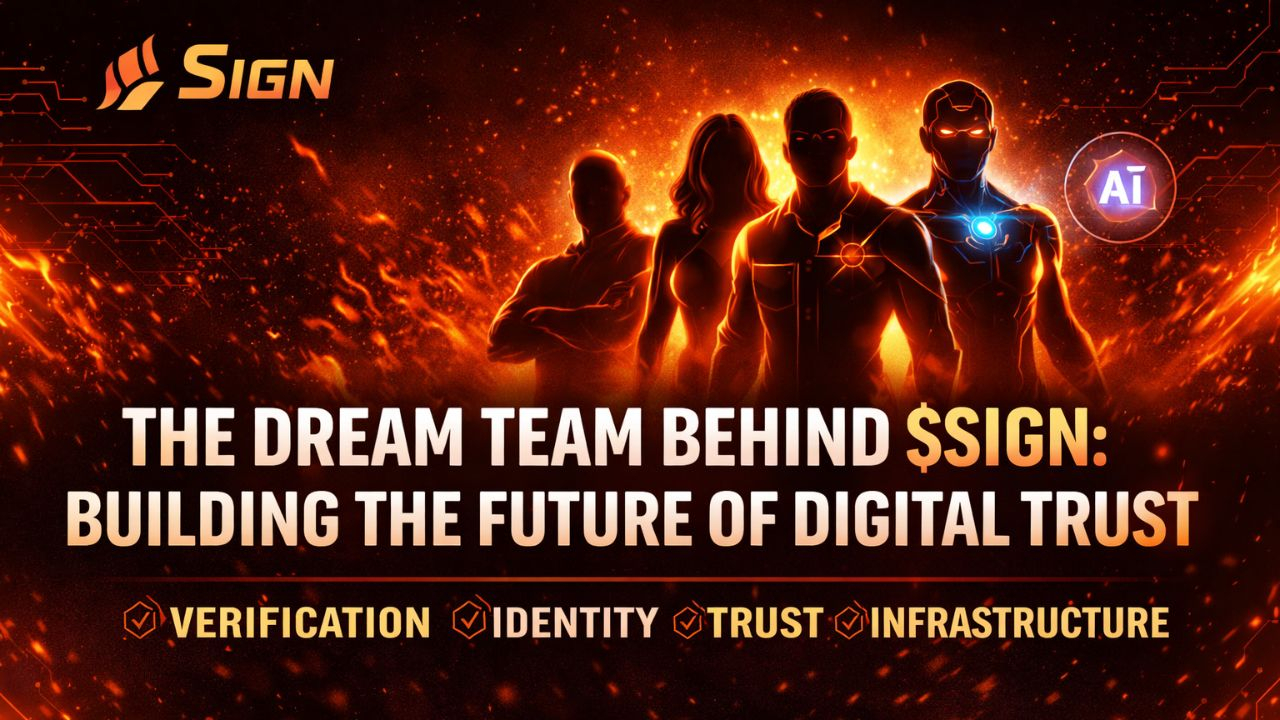
Das Dream Team hinter $SIGN: Die Zukunft des digitalen Vertrauens aufbauenIn Krypto kommen und gehen Narrative.
Hype steigt schnell. Tokens sind im Trend. Dann verschwinden die meisten in Lärm.
Aber ab und zu taucht ein Projekt auf, das anders wirkt – nicht wegen des Marketings, sondern wegen der Menschen, die es aufbauen.
Hier hebt sich $SIGN ab.
Das ist nicht nur ein weiterer Token-Launch.
Es ist das Ergebnis eines sorgfältig zusammengestellten Teams bewährter Builder, das an einem Problem arbeitet, das wirklich wichtig ist: digitale Vertrauen.
Nicht nur Builder – Bewährte Betreiber
Das Team hinter SIGN experimentiert nicht im Dunkeln.
Das Dream Team hinter $SIGN: Die Zukunft des digitalen Vertrauens aufbauen
In Krypto kommen und gehen Narrative.
Hype steigt schnell. Tokens sind im Trend. Dann verschwinden die meisten in Lärm.
Aber ab und zu taucht ein Projekt auf, das anders wirkt – nicht wegen des Marketings, sondern wegen der Menschen, die es aufbauen.
Hier hebt sich $SIGN ab.
Das ist nicht nur ein weiterer Token-Launch.
Es ist das Ergebnis eines sorgfältig zusammengestellten Teams bewährter Builder, das an einem Problem arbeitet, das wirklich wichtig ist: digitale Vertrauen.
Nicht nur Builder – Bewährte Betreiber
Das Team hinter SIGN experimentiert nicht im Dunkeln.
Hype steigt schnell. Tokens sind im Trend. Dann verschwinden die meisten in Lärm.
Aber ab und zu taucht ein Projekt auf, das anders wirkt – nicht wegen des Marketings, sondern wegen der Menschen, die es aufbauen.
Hier hebt sich $SIGN ab.
Das ist nicht nur ein weiterer Token-Launch.
Es ist das Ergebnis eines sorgfältig zusammengestellten Teams bewährter Builder, das an einem Problem arbeitet, das wirklich wichtig ist: digitale Vertrauen.
Nicht nur Builder – Bewährte Betreiber
Das Team hinter SIGN experimentiert nicht im Dunkeln.
6
11
209
·
--
Artikel
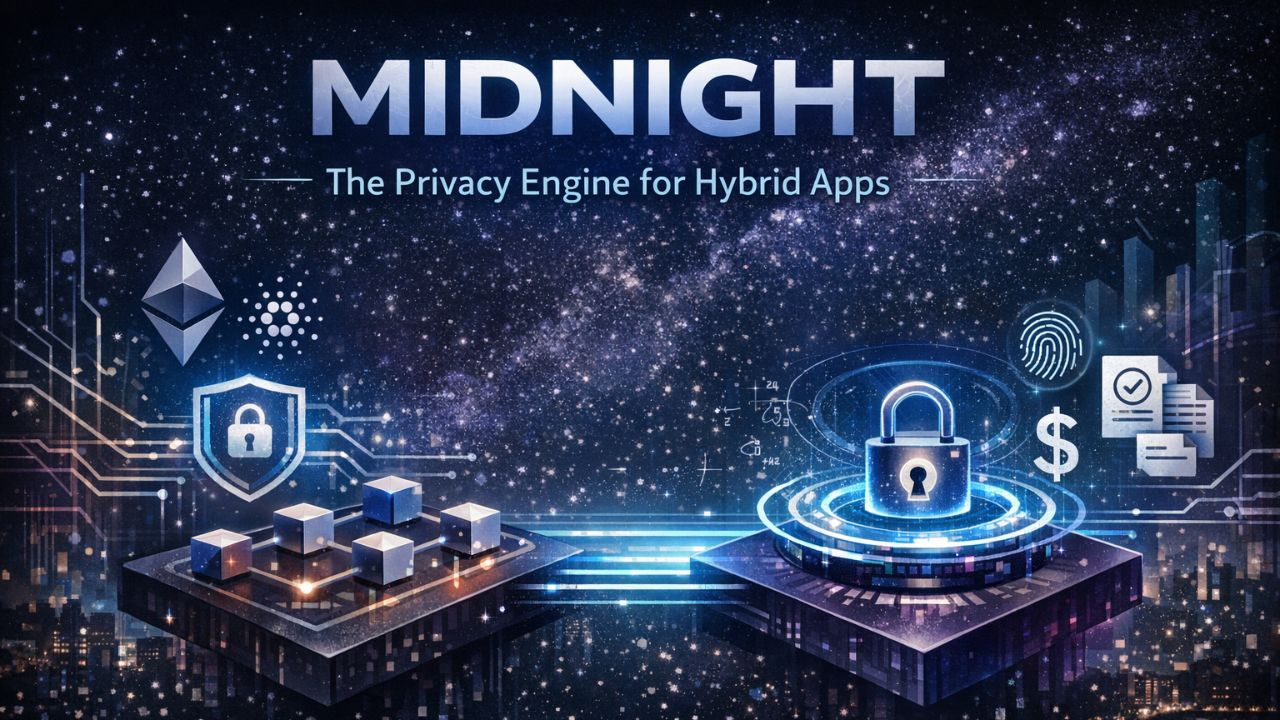
Midnight: Die Datenschutzeinheit, die für hybride Apps entwickelt wurdeTeilen
Es gibt einen Moment, der passiert, wenn Sie wirklich in das Midnight Network eintauchen—nicht nur oberflächliche Threads oder Hype-Beiträge, sondern die tatsächliche Designphilosophie—wo alles plötzlich klickt.
Mitternacht versucht nicht, bestehende Blockchains zu ersetzen.
Es konkurriert nicht darum, „der nächste Ethereum-Killer“ zu werden.
Es tut nicht einmal so, als wäre es ein Full-Stack-, All-in-One-Ökosystem.
Es macht etwas viel Fokussierteres—und arguably viel Klügeres.
Es wird für hybride Anwendungen entwickelt.
Kein Ziel—Eine Schicht, in die Sie eintauchen.
Midnight: Die Datenschutzeinheit, die für hybride Apps entwickelt wurde
Teilen
Es gibt einen Moment, der passiert, wenn Sie wirklich in das Midnight Network eintauchen—nicht nur oberflächliche Threads oder Hype-Beiträge, sondern die tatsächliche Designphilosophie—wo alles plötzlich klickt.
Mitternacht versucht nicht, bestehende Blockchains zu ersetzen.
Es konkurriert nicht darum, „der nächste Ethereum-Killer“ zu werden.
Es tut nicht einmal so, als wäre es ein Full-Stack-, All-in-One-Ökosystem.
Es macht etwas viel Fokussierteres—und arguably viel Klügeres.
Es wird für hybride Anwendungen entwickelt.
Kein Ziel—Eine Schicht, in die Sie eintauchen.
Es gibt einen Moment, der passiert, wenn Sie wirklich in das Midnight Network eintauchen—nicht nur oberflächliche Threads oder Hype-Beiträge, sondern die tatsächliche Designphilosophie—wo alles plötzlich klickt.
Mitternacht versucht nicht, bestehende Blockchains zu ersetzen.
Es konkurriert nicht darum, „der nächste Ethereum-Killer“ zu werden.
Es tut nicht einmal so, als wäre es ein Full-Stack-, All-in-One-Ökosystem.
Es macht etwas viel Fokussierteres—und arguably viel Klügeres.
Es wird für hybride Anwendungen entwickelt.
Kein Ziel—Eine Schicht, in die Sie eintauchen.
3
8
80
·
--
Artikel
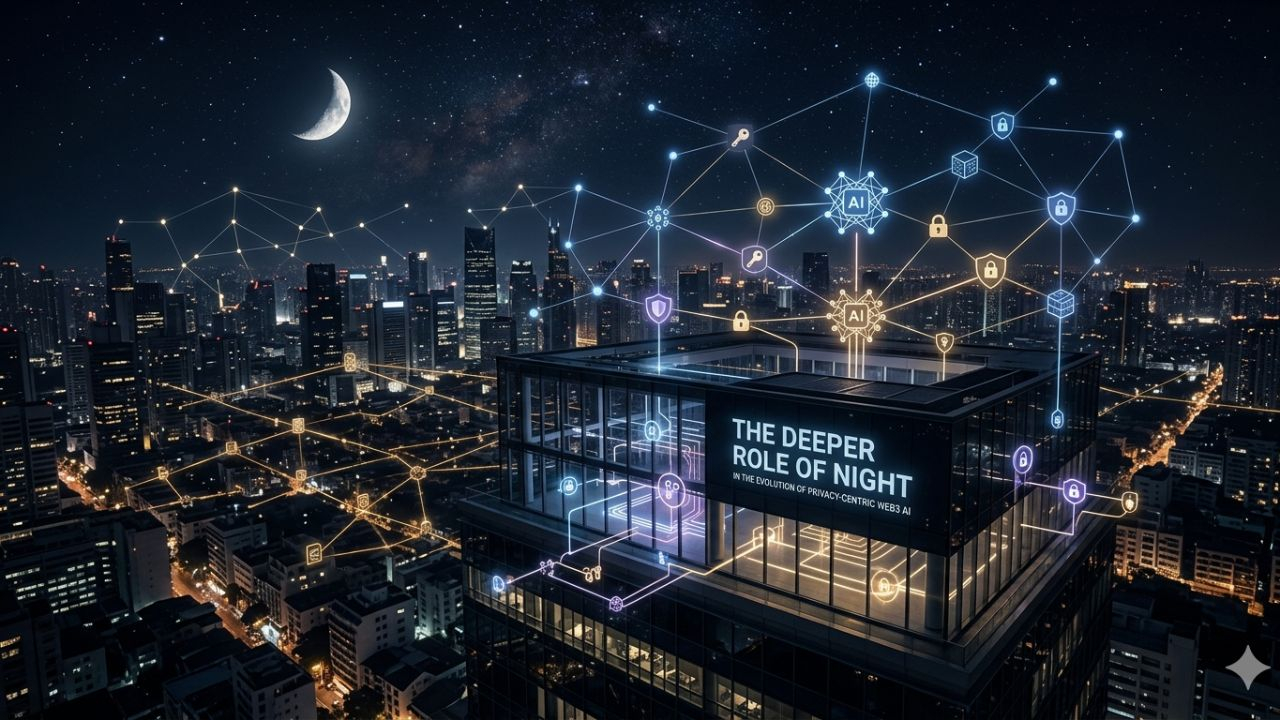
Die tiefere Rolle von NIGHT in der Evolution des datenschutzorientierten Web3@MidnightNetwork #night $NIGHT
Viele datenschutzorientierte Blockchain-Projekte scheinen einem vertrauten Muster zu folgen – Null-Kenntnis-Nachweise, geschützte Transaktionen und selektive Offenlegung. Aber wenn man sich Midnight Network genauer ansieht, beginnt die Architektur, eine viel bewusstere und nuanciertere Designphilosophie zu offenbaren. Hier kommt NIGHT ins Spiel – nicht nur als ein weiterer Token, sondern als ein Schlüsselaspekt bei der Neudefinition, wie Wert, Governance und Datenschutz in dezentralen Systemen interagieren.
Über Datenschutz als Funktion
Die tiefere Rolle von NIGHT in der Evolution des datenschutzorientierten Web3
@MidnightNetwork #night $NIGHT
Viele datenschutzorientierte Blockchain-Projekte scheinen einem vertrauten Muster zu folgen – Null-Kenntnis-Nachweise, geschützte Transaktionen und selektive Offenlegung. Aber wenn man sich Midnight Network genauer ansieht, beginnt die Architektur, eine viel bewusstere und nuanciertere Designphilosophie zu offenbaren. Hier kommt NIGHT ins Spiel – nicht nur als ein weiterer Token, sondern als ein Schlüsselaspekt bei der Neudefinition, wie Wert, Governance und Datenschutz in dezentralen Systemen interagieren.
Über Datenschutz als Funktion
Viele datenschutzorientierte Blockchain-Projekte scheinen einem vertrauten Muster zu folgen – Null-Kenntnis-Nachweise, geschützte Transaktionen und selektive Offenlegung. Aber wenn man sich Midnight Network genauer ansieht, beginnt die Architektur, eine viel bewusstere und nuanciertere Designphilosophie zu offenbaren. Hier kommt NIGHT ins Spiel – nicht nur als ein weiterer Token, sondern als ein Schlüsselaspekt bei der Neudefinition, wie Wert, Governance und Datenschutz in dezentralen Systemen interagieren.
Über Datenschutz als Funktion
2
5
66
·
--
#night $NACHT
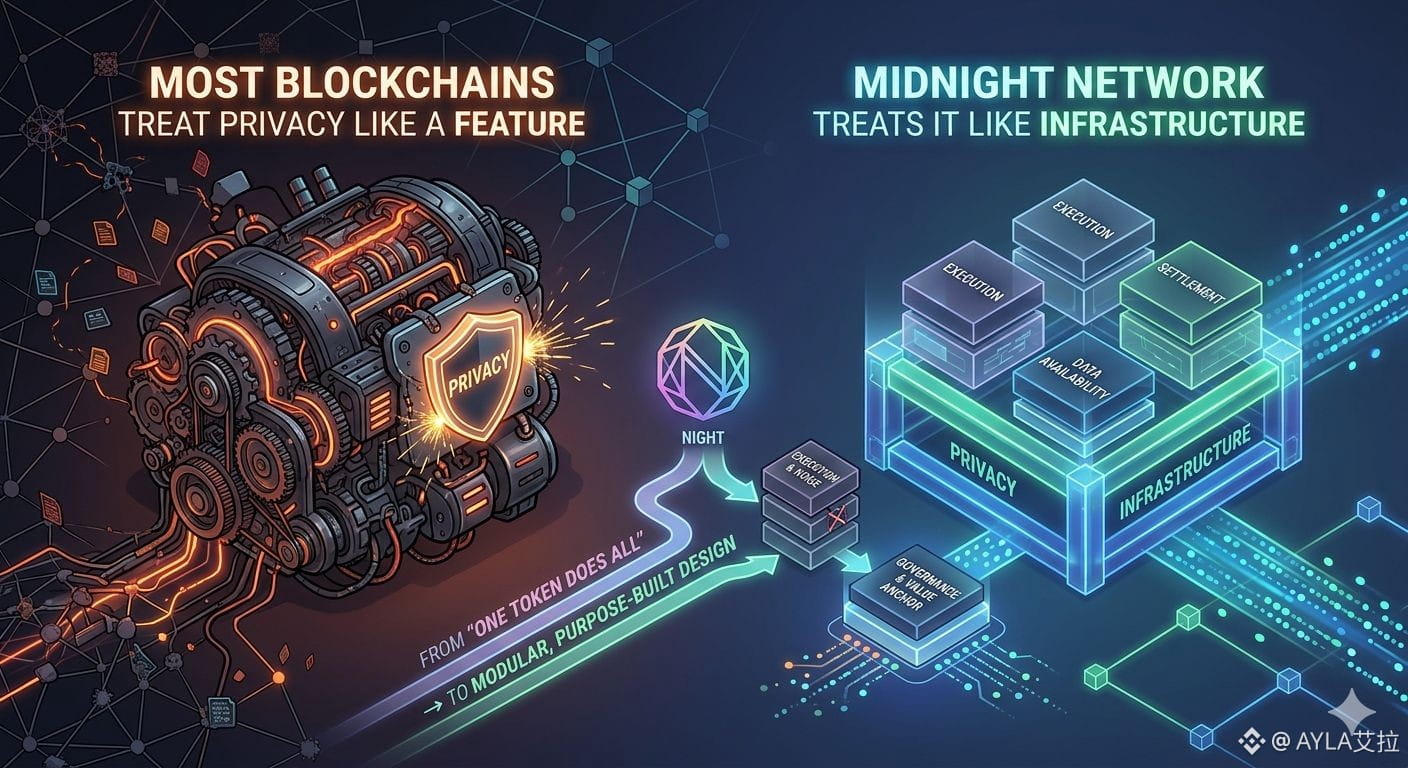
Die meisten Blockchains behandeln Privatsphäre wie ein Feature.
Das Midnight Network behandelt es wie Infrastruktur.
Und NACHT?
Es ist nicht hier, um alles zu tun.
• Nicht für Gebühren
• Nicht für Ausführung
• Nicht für Lärm
Es verankert Governance und Wert—getrennt von den Kernoperationen des Systems.
Diese Trennung verändert alles.
Von „ein Token macht alles“ → zu modularer, zweckgebundener Gestaltung
Und das könnte es sein, was Web3, das die Privatsphäre in den Vordergrund stellt, tatsächlich braucht.
@MidnightNetwork
#night $NACHT
Die meisten Blockchains behandeln Privatsphäre wie ein Feature.
Das Midnight Network behandelt es wie Infrastruktur.
Und NACHT?
Es ist nicht hier, um alles zu tun.
• Nicht für Gebühren
• Nicht für Ausführung
• Nicht für Lärm
Es verankert Governance und Wert—getrennt von den Kernoperationen des Systems.
Diese Trennung verändert alles.
Von „ein Token macht alles“ → zu modularer, zweckgebundener Gestaltung
Und das könnte es sein, was Web3, das die Privatsphäre in den Vordergrund stellt, tatsächlich braucht.
@MidnightNetwork
Die meisten Blockchains behandeln Privatsphäre wie ein Feature.
Das Midnight Network behandelt es wie Infrastruktur.
Und NACHT?
Es ist nicht hier, um alles zu tun.
• Nicht für Gebühren
• Nicht für Ausführung
• Nicht für Lärm
Es verankert Governance und Wert—getrennt von den Kernoperationen des Systems.
Diese Trennung verändert alles.
Von „ein Token macht alles“ → zu modularer, zweckgebundener Gestaltung
Und das könnte es sein, was Web3, das die Privatsphäre in den Vordergrund stellt, tatsächlich braucht.
@MidnightNetwork
6
115
·
--
Artikel
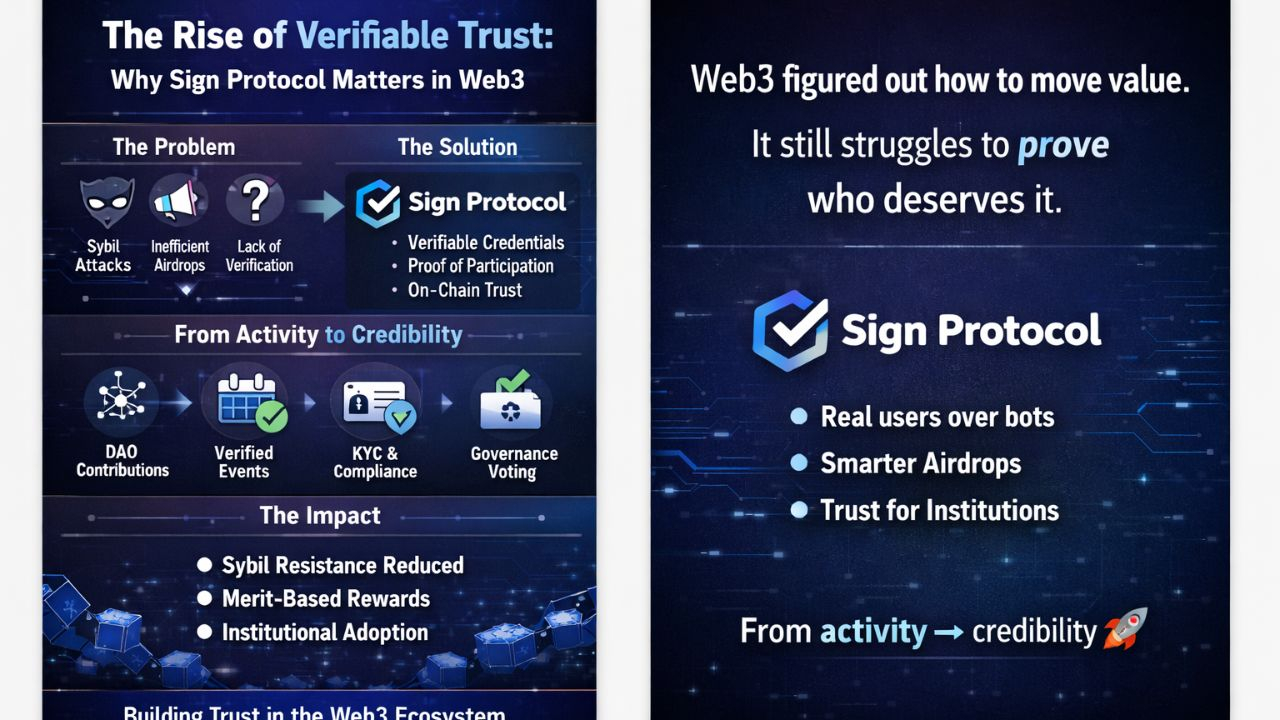
Der Aufstieg des verifizierbaren Vertrauens – Warum das Sign Protocol in Web3 wichtig ist@SignOfficial $SIGN #SignDigitalSovereignInfra
In den frühen Tagen von Web3 war der Fokus klar: Wert ohne Zwischenhändler bewegen. Blockchains wie Bitcoin und Ethereum haben bewiesen, dass dezentrale Systeme Vermögenswerte sicher, transparent und global übertragen können. Doch als der Raum reifte, begann ein tieferes Problem aufzutauchen – Wert konnte bewegt werden, aber Vertrauen nicht.
Diese Lücke ist genau der Punkt, an dem das Sign Protocol ins Spiel kommt.
Die fehlende Schicht in Web3
Das heutige Web3-Ökosystem basiert stark auf Annahmen:
Wallet-Aktivitäten werden als Identität behandelt
Der Aufstieg des verifizierbaren Vertrauens – Warum das Sign Protocol in Web3 wichtig ist
@SignOfficial $SIGN #SignDigitalSovereignInfra
In den frühen Tagen von Web3 war der Fokus klar: Wert ohne Zwischenhändler bewegen. Blockchains wie Bitcoin und Ethereum haben bewiesen, dass dezentrale Systeme Vermögenswerte sicher, transparent und global übertragen können. Doch als der Raum reifte, begann ein tieferes Problem aufzutauchen – Wert konnte bewegt werden, aber Vertrauen nicht.
Diese Lücke ist genau der Punkt, an dem das Sign Protocol ins Spiel kommt.
Die fehlende Schicht in Web3
Das heutige Web3-Ökosystem basiert stark auf Annahmen:
Wallet-Aktivitäten werden als Identität behandelt
In den frühen Tagen von Web3 war der Fokus klar: Wert ohne Zwischenhändler bewegen. Blockchains wie Bitcoin und Ethereum haben bewiesen, dass dezentrale Systeme Vermögenswerte sicher, transparent und global übertragen können. Doch als der Raum reifte, begann ein tieferes Problem aufzutauchen – Wert konnte bewegt werden, aber Vertrauen nicht.
Diese Lücke ist genau der Punkt, an dem das Sign Protocol ins Spiel kommt.
Die fehlende Schicht in Web3
Das heutige Web3-Ökosystem basiert stark auf Annahmen:
Wallet-Aktivitäten werden als Identität behandelt
2
3
81
·
--
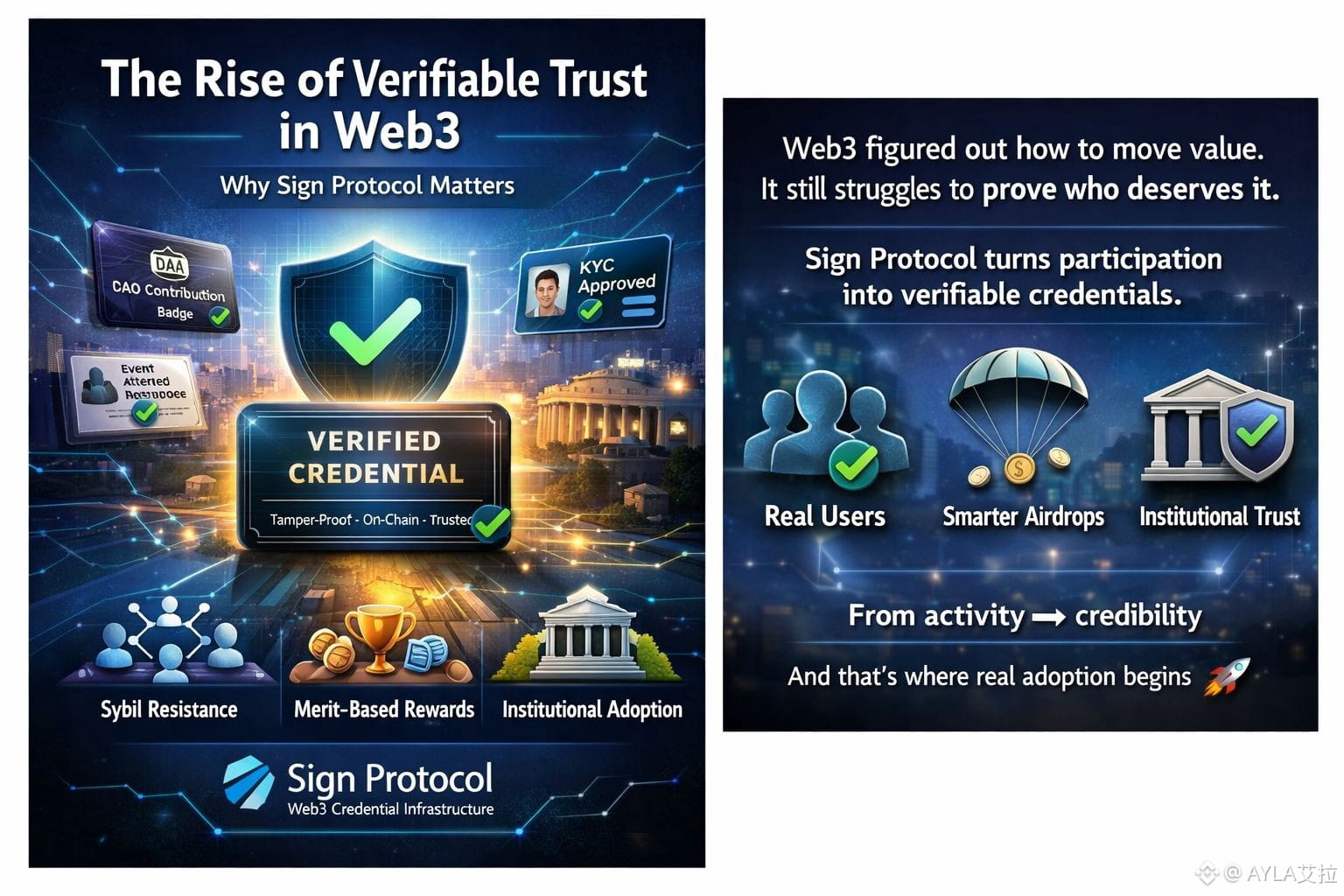
#signdigitalsovereigninfra $SIGN
Web3 hat herausgefunden, wie man Werte bewegt.
Es hat immer noch Schwierigkeiten zu beweisen, wer es verdient.
Das Sign Protocol ändert das.
Indem es die Teilnahme in überprüfbare Berechtigungen umwandelt, ermöglicht es:
• Echte Nutzer über Bots
• Intelligentere Airdrops
• Vertrauen, auf das Institutionen sich verlassen können
Der Wandel ist subtil, aber kraftvoll:
Von Aktivität → Glaubwürdigkeit
Und genau dort beginnt die echte Akzeptanz 🚀
@SignOfficial
#signdigitalsovereigninfra $SIGN
Web3 hat herausgefunden, wie man Werte bewegt.
Es hat immer noch Schwierigkeiten zu beweisen, wer es verdient.
Das Sign Protocol ändert das.
Indem es die Teilnahme in überprüfbare Berechtigungen umwandelt, ermöglicht es:
• Echte Nutzer über Bots
• Intelligentere Airdrops
• Vertrauen, auf das Institutionen sich verlassen können
Der Wandel ist subtil, aber kraftvoll:
Von Aktivität → Glaubwürdigkeit
Und genau dort beginnt die echte Akzeptanz 🚀
@SignOfficial
Web3 hat herausgefunden, wie man Werte bewegt.
Es hat immer noch Schwierigkeiten zu beweisen, wer es verdient.
Das Sign Protocol ändert das.
Indem es die Teilnahme in überprüfbare Berechtigungen umwandelt, ermöglicht es:
• Echte Nutzer über Bots
• Intelligentere Airdrops
• Vertrauen, auf das Institutionen sich verlassen können
Der Wandel ist subtil, aber kraftvoll:
Von Aktivität → Glaubwürdigkeit
Und genau dort beginnt die echte Akzeptanz 🚀
@SignOfficial
1
2
79
·
--
Artikel
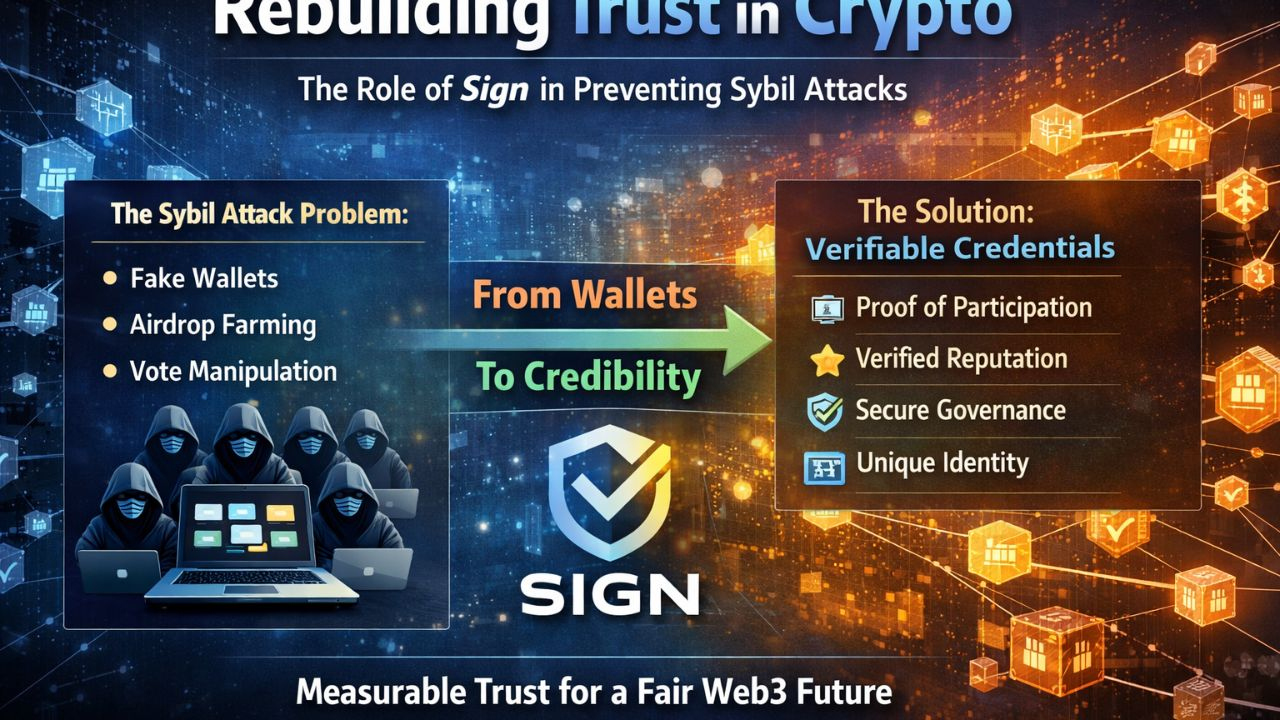
Vertrauen in Krypto wiederherstellen: Die Rolle von Signaturen bei der Verhinderung von Sybil-Angriffen#SignDigitalSovereignInfra $SIGN @SignOfficial
Vertrauen in Krypto wiederherstellen: Die Rolle von Signaturen bei der Verhinderung von Sybil-Angriffen
Einführung: Das Vertrauensproblem in Web3
Krypto versprach eine vertrauenslose Welt – aber ironischerweise ist Vertrauen zu einer der größten Herausforderungen geworden.
Von Airdrop-Farming bis hin zu Governance-Manipulation, ein Problem taucht immer wieder auf: Sybil-Angriffe. Wenn eine einzige Entität mehrere gefälschte Identitäten erstellt, um Systeme auszunutzen, beginnt das gesamte Fundament der Fairness in Web3 zu bröckeln.
Die Branche hat versucht, dies mit Wallets, Staking-Anforderungen und Aktivitätsmetriken zu lösen. Aber diese Ansätze scheitern oft. Sie messen Aktivität, nicht Authentizität.
Vertrauen in Krypto wiederherstellen: Die Rolle von Signaturen bei der Verhinderung von Sybil-Angriffen
#SignDigitalSovereignInfra $SIGN @SignOfficial
Vertrauen in Krypto wiederherstellen: Die Rolle von Signaturen bei der Verhinderung von Sybil-Angriffen
Einführung: Das Vertrauensproblem in Web3
Krypto versprach eine vertrauenslose Welt – aber ironischerweise ist Vertrauen zu einer der größten Herausforderungen geworden.
Von Airdrop-Farming bis hin zu Governance-Manipulation, ein Problem taucht immer wieder auf: Sybil-Angriffe. Wenn eine einzige Entität mehrere gefälschte Identitäten erstellt, um Systeme auszunutzen, beginnt das gesamte Fundament der Fairness in Web3 zu bröckeln.
Die Branche hat versucht, dies mit Wallets, Staking-Anforderungen und Aktivitätsmetriken zu lösen. Aber diese Ansätze scheitern oft. Sie messen Aktivität, nicht Authentizität.
Vertrauen in Krypto wiederherstellen: Die Rolle von Signaturen bei der Verhinderung von Sybil-Angriffen
Einführung: Das Vertrauensproblem in Web3
Krypto versprach eine vertrauenslose Welt – aber ironischerweise ist Vertrauen zu einer der größten Herausforderungen geworden.
Von Airdrop-Farming bis hin zu Governance-Manipulation, ein Problem taucht immer wieder auf: Sybil-Angriffe. Wenn eine einzige Entität mehrere gefälschte Identitäten erstellt, um Systeme auszunutzen, beginnt das gesamte Fundament der Fairness in Web3 zu bröckeln.
Die Branche hat versucht, dies mit Wallets, Staking-Anforderungen und Aktivitätsmetriken zu lösen. Aber diese Ansätze scheitern oft. Sie messen Aktivität, nicht Authentizität.
8
139
Anmelden und weiter Inhalte entdecken
Krypto-Nutzer weltweit auf Binance Square kennenlernen
⚡️ Bleib in Sachen Krypto stets am Puls.
💬 Die weltgrößte Kryptobörse vertraut darauf.
👍 Erhalte verlässliche Einblicke von verifizierten Creators.
E-Mail-Adresse/Telefonnummer
Trendthemen
AnthropicCEOCallsForAISlowdown
14,037 Aufrufe
299 Kommentare
#anthropicceocallsforaislowdown
"Wir müssen die KI ausbremsen": Warum sogar Branchenchefs eine Pause fordern?
Das Tech-Ökosystem ist daran gewöhnt, Dinge kaputtzumachen und schnell voranzuschreiten ("move fast and break things"). Dennoch hat sich der CEO von Anthropic dem weltweiten Ruf angeschlossen, bei der Entwicklung der Künstlichen Intelligenz vorsichtiger zu handeln.
Es geht nicht darum, Innovation aus Angst auszubremsen, sondern die Risiken früher zu erkennen, bevor die Entwicklungsgeschwindigkeit unsere Möglichkeiten zur Regulierung und Kontrolle übersteigt.
Was steht auf dem Spiel?
Sicherheit und Ausrichtung: Sicherstellen, dass die fortschrittlichsten Modelle weiterhin sicher und an den menschlichen Werten ausgerichtet sind, bevor sie in großem Maßstab eingesetzt werden.
Realistische Regulierungsrahmen: Regierungen und Institutionen Zeit geben, die Technologie zu verstehen und wirksame, nicht reaktive Gesetze zu schaffen.
Minderung systemischer Risiken: Eine "Aufrüstungsspirale" im Wettbewerb zwischen Technologieriesen verhindern, bei der Geschwindigkeit stärker gewichtet wird als soziale und wirtschaftliche Stabilität.
Wahre Innovation heißt nicht nur, das Modell am schnellsten auf den Markt zu bringen, sondern die sicherste und verlässlichste Infrastruktur für die Zukunft aufzubauen.
$VTHO
$SCR
$CVC
Joseph RRG S7
·1 Likes
·365 Aufrufe
AnthropicChoosesNasdaqForPotentialIPO
2,562 Aufrufe
82 Kommentare
SECReceivesGrayscaleLitecoinTrustETFFiling
131,183 Aufrufe
1,810 Kommentare