
N O R A 莉莎
3.4k Beiträge

N O R A 莉莎
Melden
Nutzer blockieren
70 Following
21.7K+ Follower
9.5K Like gegeben
Beiträge
Alle
Zitierungen
Videos
Live
·
--
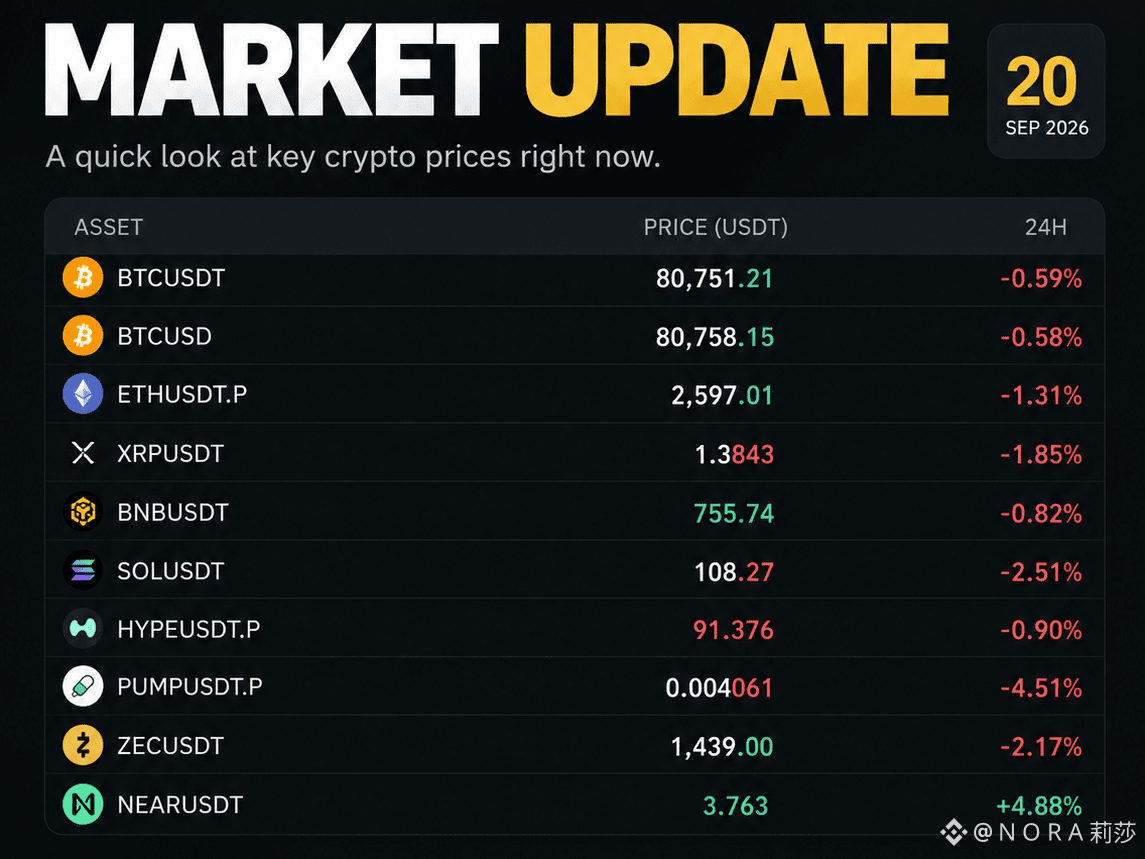
Der Markt ist rot, aber nicht alles ist schwach. 👀
$BTC hält sich bei etwa 80,7K $ und während $ETH , XRP, BNB und SOL alle tiefer notieren.
Aber $NEAR geht gegen den Strom: +4,88%, während der Großteil der Beobachtungsliste im Minus sitzt.
{spot}(NEARUSDT)
{spot}(BTCUSDT)
Diese relative Stärke ist das, worauf ich achte.
Rote Tage sind nicht nur wegen der Rücksetzer da—sie zeigen dir, welche Assets Käufer noch immer bereit sind zu verteidigen.
Für jetzt ist entscheidend, dass BTC den Bereich um 80K $ hält. Wenn dieses Niveau intakt bleibt, bleibt auch die größere Struktur es wert, genau im Blick zu behalten.
Die Volatilität ist hoch. Manage das Risiko und warte auf Bestätigung, statt Moves hinterherzulaufen.
#BinanceSquare #XRPExchangeReservesHitSevenYearLow #BTC☀ #BNB走势 #SolanaStrong
Der Markt ist rot, aber nicht alles ist schwach. 👀
$BTC hält sich bei etwa 80,7K $ und während $ETH , XRP, BNB und SOL alle tiefer notieren.
Aber $NEAR geht gegen den Strom: +4,88%, während der Großteil der Beobachtungsliste im Minus sitzt.
Diese relative Stärke ist das, worauf ich achte.
Rote Tage sind nicht nur wegen der Rücksetzer da—sie zeigen dir, welche Assets Käufer noch immer bereit sind zu verteidigen.
Für jetzt ist entscheidend, dass BTC den Bereich um 80K $ hält. Wenn dieses Niveau intakt bleibt, bleibt auch die größere Struktur es wert, genau im Blick zu behalten.
Die Volatilität ist hoch. Manage das Risiko und warte auf Bestätigung, statt Moves hinterherzulaufen.
#BinanceSquare #XRPExchangeReservesHitSevenYearLow #BTC☀ #BNB走势 #SolanaStrong
$BTC hält sich bei etwa 80,7K $ und während $ETH , XRP, BNB und SOL alle tiefer notieren.
Aber $NEAR geht gegen den Strom: +4,88%, während der Großteil der Beobachtungsliste im Minus sitzt.
Diese relative Stärke ist das, worauf ich achte.
Rote Tage sind nicht nur wegen der Rücksetzer da—sie zeigen dir, welche Assets Käufer noch immer bereit sind zu verteidigen.
Für jetzt ist entscheidend, dass BTC den Bereich um 80K $ hält. Wenn dieses Niveau intakt bleibt, bleibt auch die größere Struktur es wert, genau im Blick zu behalten.
Die Volatilität ist hoch. Manage das Risiko und warte auf Bestätigung, statt Moves hinterherzulaufen.
#BinanceSquare #XRPExchangeReservesHitSevenYearLow #BTC☀ #BNB走势 #SolanaStrong
1
390
·
--
$BTC gerade eine Bewegung gemacht, die es wert ist, beachtet zu werden.
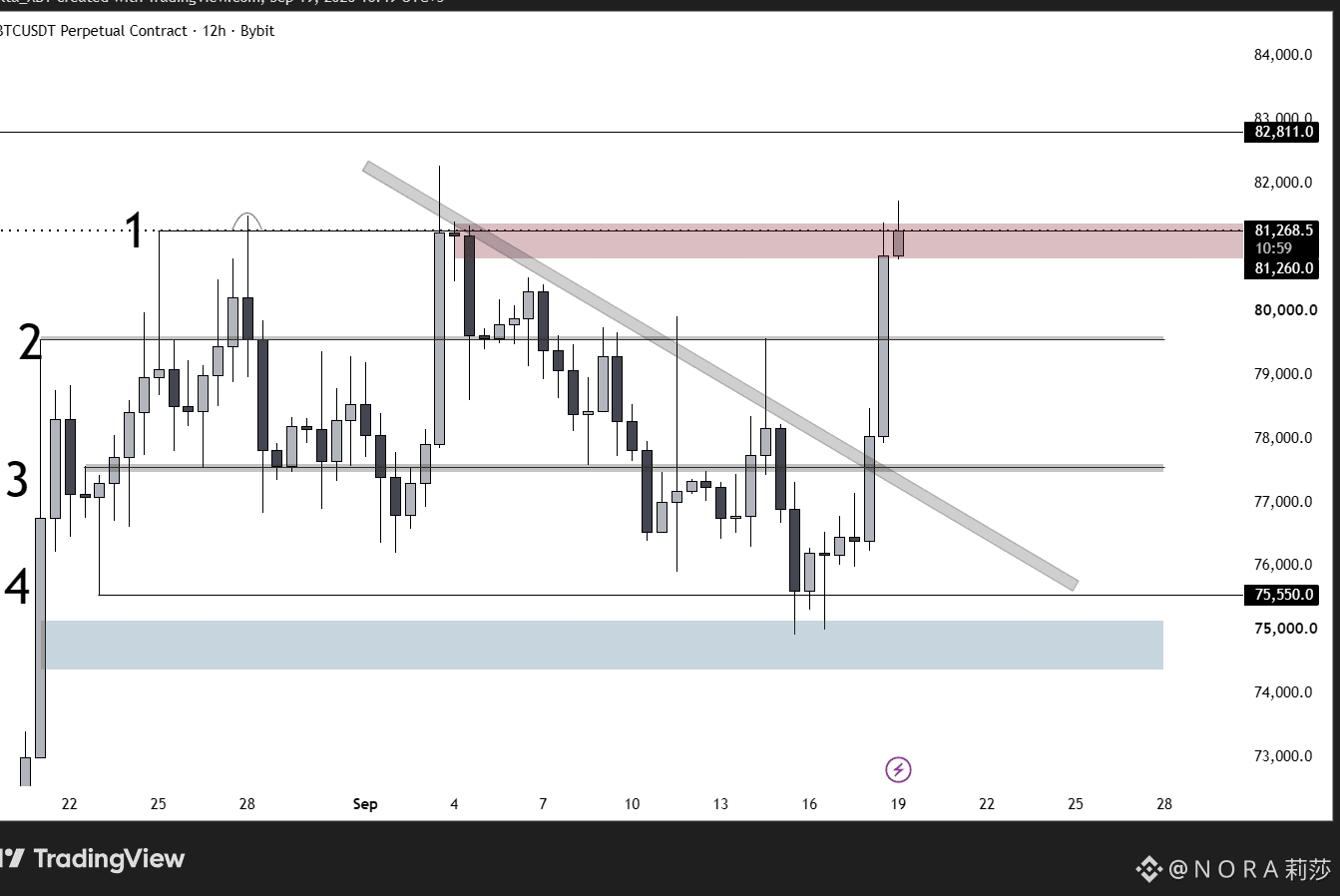
Nachdem Bitcoin mehrere Tage lang unter einer absteigenden Trendlinie zusammengedrückt war, ist es endlich mit einer starken impulsiven Kerze nach oben ausgebrochen und direkt in die Widerstandszone bei 81K vorgestoßen.
Was auf dem 12H-Chart auffällt:
→ Absteigende Trendlinie wurde gebrochen
→ Der Widerstand bei ~79,5K wurde während der Bewegung zurückerobert
→ Der Preis testet nun den wichtigen Angebotsbereich bei 81,0K–81,3K
→ Das nächste größere Niveau darüber liegt bei etwa 82,8K
→ Wenn es zu einer Abweisung kommt, wird ~79,5K zu einer wichtigen Zone, die man für einen Re-Test im Blick behalten sollte
Der Ausbruch selbst sieht stark aus, aber genau hier ist die Bestätigung entscheidend.
Ein sauberes Halten über 81,3K würde die Ausbruch-Struktur festigen und die Region um 82,8K wieder in den Fokus rücken.
Doch wenn BTC hier keine Akzeptanz herstellen kann, würde ein Rücksetzer in Richtung 79,5K die Bewegung nicht automatisch ungültig machen – es könnte einfach sein, dass der Markt den Ausbruch testet.
Für den Moment hat sich die Struktur klar verbessert.
Ausbruch passiert. Widerstand wird getestet. Jetzt beobachte ich, ob Käufer 81K von einer Deckelzone in eine Unterstützung verwandeln können.
$BTC wird wieder interessant.
{spot}(BTCUSDT)
Keine Finanzberatung. Behalte immer das Risiko im Blick.
#BTC走势分析 #BTCBreaks80K #BitcoinMarketCapTopsTesla
$BTC gerade eine Bewegung gemacht, die es wert ist, beachtet zu werden.
Nachdem Bitcoin mehrere Tage lang unter einer absteigenden Trendlinie zusammengedrückt war, ist es endlich mit einer starken impulsiven Kerze nach oben ausgebrochen und direkt in die Widerstandszone bei 81K vorgestoßen.
Was auf dem 12H-Chart auffällt:
→ Absteigende Trendlinie wurde gebrochen
→ Der Widerstand bei ~79,5K wurde während der Bewegung zurückerobert
→ Der Preis testet nun den wichtigen Angebotsbereich bei 81,0K–81,3K
→ Das nächste größere Niveau darüber liegt bei etwa 82,8K
→ Wenn es zu einer Abweisung kommt, wird ~79,5K zu einer wichtigen Zone, die man für einen Re-Test im Blick behalten sollte
Der Ausbruch selbst sieht stark aus, aber genau hier ist die Bestätigung entscheidend.
Ein sauberes Halten über 81,3K würde die Ausbruch-Struktur festigen und die Region um 82,8K wieder in den Fokus rücken.
Doch wenn BTC hier keine Akzeptanz herstellen kann, würde ein Rücksetzer in Richtung 79,5K die Bewegung nicht automatisch ungültig machen – es könnte einfach sein, dass der Markt den Ausbruch testet.
Für den Moment hat sich die Struktur klar verbessert.
Ausbruch passiert. Widerstand wird getestet. Jetzt beobachte ich, ob Käufer 81K von einer Deckelzone in eine Unterstützung verwandeln können.
$BTC wird wieder interessant.
Keine Finanzberatung. Behalte immer das Risiko im Blick.
#BTC走势分析 #BTCBreaks80K #BitcoinMarketCapTopsTesla
Nachdem Bitcoin mehrere Tage lang unter einer absteigenden Trendlinie zusammengedrückt war, ist es endlich mit einer starken impulsiven Kerze nach oben ausgebrochen und direkt in die Widerstandszone bei 81K vorgestoßen.
Was auf dem 12H-Chart auffällt:
→ Absteigende Trendlinie wurde gebrochen
→ Der Widerstand bei ~79,5K wurde während der Bewegung zurückerobert
→ Der Preis testet nun den wichtigen Angebotsbereich bei 81,0K–81,3K
→ Das nächste größere Niveau darüber liegt bei etwa 82,8K
→ Wenn es zu einer Abweisung kommt, wird ~79,5K zu einer wichtigen Zone, die man für einen Re-Test im Blick behalten sollte
Der Ausbruch selbst sieht stark aus, aber genau hier ist die Bestätigung entscheidend.
Ein sauberes Halten über 81,3K würde die Ausbruch-Struktur festigen und die Region um 82,8K wieder in den Fokus rücken.
Doch wenn BTC hier keine Akzeptanz herstellen kann, würde ein Rücksetzer in Richtung 79,5K die Bewegung nicht automatisch ungültig machen – es könnte einfach sein, dass der Markt den Ausbruch testet.
Für den Moment hat sich die Struktur klar verbessert.
Ausbruch passiert. Widerstand wird getestet. Jetzt beobachte ich, ob Käufer 81K von einer Deckelzone in eine Unterstützung verwandeln können.
$BTC wird wieder interessant.
Keine Finanzberatung. Behalte immer das Risiko im Blick.
#BTC走势分析 #BTCBreaks80K #BitcoinMarketCapTopsTesla
9
12
773
·
--
Bullisch
$SUI sieht hier gerade ziemlich interessant aus. 👀
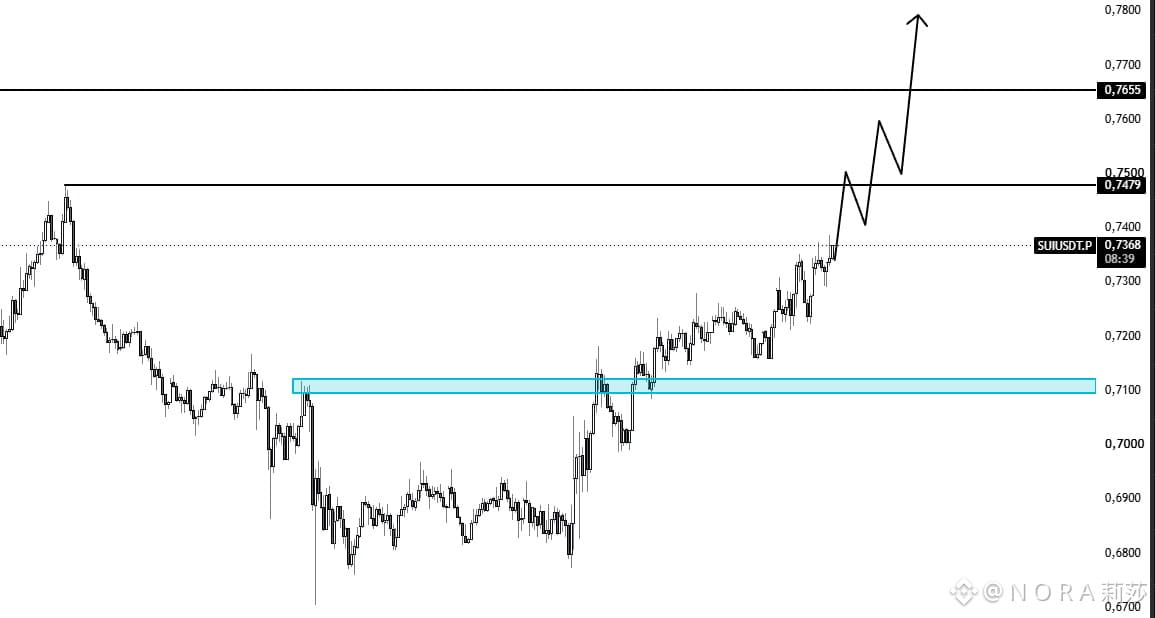
Die Struktur ist bullish geworden: Der Kurs hat die wichtige $0.71-Supportzone zurückerobert, und Käufer drücken weiterhin nach oben.
Aktuell handelt SUI bei etwa $0.7368 und liegt knapp unter dem ersten großen Liquiditätsbereich.
Meine Levels:
📍 Einstieg: $0.7368
🎯 Ziel 1: $0.7442
🎯 Ziel 2: $0.7655
🎯 Ziel 3: $0.7929
🛑 Ungültigkeit: $0.7093
Der wichtigste Bereich für mich ist $0.744–$0.748.
Ein sauberer Breakout und ein Halt über diesem Bereich könnte den Weg in Richtung $0.7655 öffnen, während anhaltender Schwung das höhere Ziel bei etwa $0.7929 in den Fokus rücken könnte.
Aber ich ignoriere das Abwärts-Szenario nicht. Wenn SUI die $0.71-Supportregion verliert, schwächt sich dieses bullishe Setup deutlich.
Für jetzt: bullishe Struktur, zurückeroberter Support, Liquidität liegt oberhalb.
Ich beobachte, wie der Kurs auf diesen ersten Widerstand reagiert, bevor ich zu aggressiv werde.
Würdest du den Breakout nehmen oder auf den Retest warten? 👀
#sui #SUIUSDT #BinanceSquare
$SUI sieht hier gerade ziemlich interessant aus. 👀
Die Struktur ist bullish geworden: Der Kurs hat die wichtige $0.71-Supportzone zurückerobert, und Käufer drücken weiterhin nach oben.
Aktuell handelt SUI bei etwa $0.7368 und liegt knapp unter dem ersten großen Liquiditätsbereich.
Meine Levels:
📍 Einstieg: $0.7368
🎯 Ziel 1: $0.7442
🎯 Ziel 2: $0.7655
🎯 Ziel 3: $0.7929
🛑 Ungültigkeit: $0.7093
Der wichtigste Bereich für mich ist $0.744–$0.748.
Ein sauberer Breakout und ein Halt über diesem Bereich könnte den Weg in Richtung $0.7655 öffnen, während anhaltender Schwung das höhere Ziel bei etwa $0.7929 in den Fokus rücken könnte.
Aber ich ignoriere das Abwärts-Szenario nicht. Wenn SUI die $0.71-Supportregion verliert, schwächt sich dieses bullishe Setup deutlich.
Für jetzt: bullishe Struktur, zurückeroberter Support, Liquidität liegt oberhalb.
Ich beobachte, wie der Kurs auf diesen ersten Widerstand reagiert, bevor ich zu aggressiv werde.
Würdest du den Breakout nehmen oder auf den Retest warten? 👀
#sui #SUIUSDT #BinanceSquare
Die Struktur ist bullish geworden: Der Kurs hat die wichtige $0.71-Supportzone zurückerobert, und Käufer drücken weiterhin nach oben.
Aktuell handelt SUI bei etwa $0.7368 und liegt knapp unter dem ersten großen Liquiditätsbereich.
Meine Levels:
📍 Einstieg: $0.7368
🎯 Ziel 1: $0.7442
🎯 Ziel 2: $0.7655
🎯 Ziel 3: $0.7929
🛑 Ungültigkeit: $0.7093
Der wichtigste Bereich für mich ist $0.744–$0.748.
Ein sauberer Breakout und ein Halt über diesem Bereich könnte den Weg in Richtung $0.7655 öffnen, während anhaltender Schwung das höhere Ziel bei etwa $0.7929 in den Fokus rücken könnte.
Aber ich ignoriere das Abwärts-Szenario nicht. Wenn SUI die $0.71-Supportregion verliert, schwächt sich dieses bullishe Setup deutlich.
Für jetzt: bullishe Struktur, zurückeroberter Support, Liquidität liegt oberhalb.
Ich beobachte, wie der Kurs auf diesen ersten Widerstand reagiert, bevor ich zu aggressiv werde.
Würdest du den Breakout nehmen oder auf den Retest warten? 👀
#sui #SUIUSDT #BinanceSquare
11
15
2k
·
--
Eine der frühesten Lektionen, die mir Krypto beigebracht hat, war, dass Identität allein kein Vertrauen schafft.
In den frühen Tagen waren Wallets anonym, Profile waren wegwerfbar, und Reputation musste sich aus dem Verhalten entwickeln. Die Leute, die konsequent geliefert, kommuniziert und Verpflichtungen eingehalten haben, haben etwas Wertvolleres als Tokens angesammelt: Glaubwürdigkeit.
Ich denke, KI tritt in eine ähnliche Phase ein.
Heute konzentrieren sich die meisten Diskussionen auf die Intelligenz von Modellen. Welches System ist smarter? Welcher Benchmark ist höher? Welcher Agent kann mehr Aufgaben erledigen? Aber die Geschichte legt nahe, dass Intelligenz nur ein Teil der Gleichung ist.
Wenn KI-Agenten Teilnehmer an Finanzsystemen, Marktplätzen, Forschungsnetzwerken und digitalen Ökonomien werden, könnte das schwierigere Problem die Attribution sein. Nicht was ein Agent weiß, sondern ob man ihm vertrauen kann. Hat er Aufgaben zuverlässig erledigt? Hat er im Laufe der Zeit genaue Informationen bereitgestellt? Können seine Entscheidungen verifiziert und mit einer anhaltenden Geschichte verknüpft werden?
Deshalb fühlt sich die Infrastruktur der Reputation zunehmend wie eine fehlende Schicht an.
So wie Krypto sich von anonymen Transaktionen hin zu verifizierbaren Onchain-Geschichten entwickelt hat, kann KI sich von isolierter Intelligenz hin zu anhaltender Reputation entwickeln. Verhalten wird zu Daten. Zuverlässigkeit wird messbar. Vertrauen wird portabel.
Das ist ein Grund, warum ich $GENIUS weiterhin aufmerksam verfolge.
Die langfristige Gelegenheit könnte nicht darin liegen, die intelligentesten Agenten zu schaffen. Es könnte darin liegen, Systeme zu schaffen, die helfen, herauszufinden, welche Agenten Vertrauen verdienen.
Wenn KI im Überfluss vorhanden ist, könnte Reputation rar werden.
Und knappe Schichten neigen dazu, grundlegend zu werden.
$GENIUS #genius @GeniusOfficial
Eine der frühesten Lektionen, die mir Krypto beigebracht hat, war, dass Identität allein kein Vertrauen schafft.
In den frühen Tagen waren Wallets anonym, Profile waren wegwerfbar, und Reputation musste sich aus dem Verhalten entwickeln. Die Leute, die konsequent geliefert, kommuniziert und Verpflichtungen eingehalten haben, haben etwas Wertvolleres als Tokens angesammelt: Glaubwürdigkeit.
Ich denke, KI tritt in eine ähnliche Phase ein.
Heute konzentrieren sich die meisten Diskussionen auf die Intelligenz von Modellen. Welches System ist smarter? Welcher Benchmark ist höher? Welcher Agent kann mehr Aufgaben erledigen? Aber die Geschichte legt nahe, dass Intelligenz nur ein Teil der Gleichung ist.
Wenn KI-Agenten Teilnehmer an Finanzsystemen, Marktplätzen, Forschungsnetzwerken und digitalen Ökonomien werden, könnte das schwierigere Problem die Attribution sein. Nicht was ein Agent weiß, sondern ob man ihm vertrauen kann. Hat er Aufgaben zuverlässig erledigt? Hat er im Laufe der Zeit genaue Informationen bereitgestellt? Können seine Entscheidungen verifiziert und mit einer anhaltenden Geschichte verknüpft werden?
Deshalb fühlt sich die Infrastruktur der Reputation zunehmend wie eine fehlende Schicht an.
So wie Krypto sich von anonymen Transaktionen hin zu verifizierbaren Onchain-Geschichten entwickelt hat, kann KI sich von isolierter Intelligenz hin zu anhaltender Reputation entwickeln. Verhalten wird zu Daten. Zuverlässigkeit wird messbar. Vertrauen wird portabel.
Das ist ein Grund, warum ich $GENIUS weiterhin aufmerksam verfolge.
Die langfristige Gelegenheit könnte nicht darin liegen, die intelligentesten Agenten zu schaffen. Es könnte darin liegen, Systeme zu schaffen, die helfen, herauszufinden, welche Agenten Vertrauen verdienen.
Wenn KI im Überfluss vorhanden ist, könnte Reputation rar werden.
Und knappe Schichten neigen dazu, grundlegend zu werden.
$GENIUS #genius @GeniusOfficial
In den frühen Tagen waren Wallets anonym, Profile waren wegwerfbar, und Reputation musste sich aus dem Verhalten entwickeln. Die Leute, die konsequent geliefert, kommuniziert und Verpflichtungen eingehalten haben, haben etwas Wertvolleres als Tokens angesammelt: Glaubwürdigkeit.
Ich denke, KI tritt in eine ähnliche Phase ein.
Heute konzentrieren sich die meisten Diskussionen auf die Intelligenz von Modellen. Welches System ist smarter? Welcher Benchmark ist höher? Welcher Agent kann mehr Aufgaben erledigen? Aber die Geschichte legt nahe, dass Intelligenz nur ein Teil der Gleichung ist.
Wenn KI-Agenten Teilnehmer an Finanzsystemen, Marktplätzen, Forschungsnetzwerken und digitalen Ökonomien werden, könnte das schwierigere Problem die Attribution sein. Nicht was ein Agent weiß, sondern ob man ihm vertrauen kann. Hat er Aufgaben zuverlässig erledigt? Hat er im Laufe der Zeit genaue Informationen bereitgestellt? Können seine Entscheidungen verifiziert und mit einer anhaltenden Geschichte verknüpft werden?
Deshalb fühlt sich die Infrastruktur der Reputation zunehmend wie eine fehlende Schicht an.
So wie Krypto sich von anonymen Transaktionen hin zu verifizierbaren Onchain-Geschichten entwickelt hat, kann KI sich von isolierter Intelligenz hin zu anhaltender Reputation entwickeln. Verhalten wird zu Daten. Zuverlässigkeit wird messbar. Vertrauen wird portabel.
Das ist ein Grund, warum ich $GENIUS weiterhin aufmerksam verfolge.
Die langfristige Gelegenheit könnte nicht darin liegen, die intelligentesten Agenten zu schaffen. Es könnte darin liegen, Systeme zu schaffen, die helfen, herauszufinden, welche Agenten Vertrauen verdienen.
Wenn KI im Überfluss vorhanden ist, könnte Reputation rar werden.
Und knappe Schichten neigen dazu, grundlegend zu werden.
$GENIUS #genius @GeniusOfficial

6
168
·
--
Verifiziert
Eine Sache, die mir die Krypto früh beigebracht hat, ist, dass Vertrauen selten aus Identität kommt.
Es kommt aus der Geschichte.
Bevor DeFi Institutionen, Bewertungen oder formale Garantien hatte, lernten die Leute, Wallets, Builder und Protokolle basierend auf beobachtbarem Verhalten zu vertrauen. Wer lieferte konstant? Wer war während schwieriger Marktbedingungen da? Wer baute eine Erfolgsbilanz, die unabhängig verifiziert werden konnte?
Ich denke, KI bewegt sich in eine ähnliche Richtung.
Im Moment wird das Gespräch von Intelligenz dominiert. Größere Modelle. Besseres Denken. Höhere Benchmark-Werte.
Aber in einer Welt, in der Intelligenz zunehmend im Überfluss vorhanden ist, könnte der wahre Engpass Vertrauen werden.
Kann ein KI-Agent für seine Handlungen zur Rechenschaft gezogen werden? Können seine Entscheidungen zurückverfolgt werden? Kann Zuverlässigkeit über Monate statt Minuten gemessen werden? Kann Attribution über Netzwerke und Anwendungen hinweg bestehen bleiben?
Diese Fragen erscheinen mir wichtiger als eine weitere inkrementelle Verbesserung der Modellleistung.
Deshalb finde ich die Reputationsebene zunehmend interessant.
Genauso wie Blockchains unveränderliche Geschichten für Transaktionen geschaffen haben, beginnt die aufkommende KI-Infrastruktur, anhaltende Geschichten für Agenten zu erkunden. Verhalten wird zu Reputation. Reputation wird zu einem Signal. Und im Laufe der Zeit könnte dieses Signal wertvoller werden als rohe Intelligenz selbst.
Das ist ein Grund, warum ich $BR weiterhin im Auge behalte.
Die nächste Phase der KI könnte nicht davon definiert werden, wer die smartesten Agenten baut, sondern davon, wer die Systeme entwickelt, die uns helfen zu bestimmen, welche Agenten Vertrauen verdienen.
Die Geschichte zeigt, dass, wenn Informationen im Überfluss vorhanden sind, Glaubwürdigkeit zur knappen Ressource wird.
$BR #bedrock @Bedrock
Eine Sache, die mir die Krypto früh beigebracht hat, ist, dass Vertrauen selten aus Identität kommt.
Es kommt aus der Geschichte.
Bevor DeFi Institutionen, Bewertungen oder formale Garantien hatte, lernten die Leute, Wallets, Builder und Protokolle basierend auf beobachtbarem Verhalten zu vertrauen. Wer lieferte konstant? Wer war während schwieriger Marktbedingungen da? Wer baute eine Erfolgsbilanz, die unabhängig verifiziert werden konnte?
Ich denke, KI bewegt sich in eine ähnliche Richtung.
Im Moment wird das Gespräch von Intelligenz dominiert. Größere Modelle. Besseres Denken. Höhere Benchmark-Werte.
Aber in einer Welt, in der Intelligenz zunehmend im Überfluss vorhanden ist, könnte der wahre Engpass Vertrauen werden.
Kann ein KI-Agent für seine Handlungen zur Rechenschaft gezogen werden? Können seine Entscheidungen zurückverfolgt werden? Kann Zuverlässigkeit über Monate statt Minuten gemessen werden? Kann Attribution über Netzwerke und Anwendungen hinweg bestehen bleiben?
Diese Fragen erscheinen mir wichtiger als eine weitere inkrementelle Verbesserung der Modellleistung.
Deshalb finde ich die Reputationsebene zunehmend interessant.
Genauso wie Blockchains unveränderliche Geschichten für Transaktionen geschaffen haben, beginnt die aufkommende KI-Infrastruktur, anhaltende Geschichten für Agenten zu erkunden. Verhalten wird zu Reputation. Reputation wird zu einem Signal. Und im Laufe der Zeit könnte dieses Signal wertvoller werden als rohe Intelligenz selbst.
Das ist ein Grund, warum ich $BR weiterhin im Auge behalte.
Die nächste Phase der KI könnte nicht davon definiert werden, wer die smartesten Agenten baut, sondern davon, wer die Systeme entwickelt, die uns helfen zu bestimmen, welche Agenten Vertrauen verdienen.
Die Geschichte zeigt, dass, wenn Informationen im Überfluss vorhanden sind, Glaubwürdigkeit zur knappen Ressource wird.
$BR #bedrock @Bedrock
Es kommt aus der Geschichte.
Bevor DeFi Institutionen, Bewertungen oder formale Garantien hatte, lernten die Leute, Wallets, Builder und Protokolle basierend auf beobachtbarem Verhalten zu vertrauen. Wer lieferte konstant? Wer war während schwieriger Marktbedingungen da? Wer baute eine Erfolgsbilanz, die unabhängig verifiziert werden konnte?
Ich denke, KI bewegt sich in eine ähnliche Richtung.
Im Moment wird das Gespräch von Intelligenz dominiert. Größere Modelle. Besseres Denken. Höhere Benchmark-Werte.
Aber in einer Welt, in der Intelligenz zunehmend im Überfluss vorhanden ist, könnte der wahre Engpass Vertrauen werden.
Kann ein KI-Agent für seine Handlungen zur Rechenschaft gezogen werden? Können seine Entscheidungen zurückverfolgt werden? Kann Zuverlässigkeit über Monate statt Minuten gemessen werden? Kann Attribution über Netzwerke und Anwendungen hinweg bestehen bleiben?
Diese Fragen erscheinen mir wichtiger als eine weitere inkrementelle Verbesserung der Modellleistung.
Deshalb finde ich die Reputationsebene zunehmend interessant.
Genauso wie Blockchains unveränderliche Geschichten für Transaktionen geschaffen haben, beginnt die aufkommende KI-Infrastruktur, anhaltende Geschichten für Agenten zu erkunden. Verhalten wird zu Reputation. Reputation wird zu einem Signal. Und im Laufe der Zeit könnte dieses Signal wertvoller werden als rohe Intelligenz selbst.
Das ist ein Grund, warum ich $BR weiterhin im Auge behalte.
Die nächste Phase der KI könnte nicht davon definiert werden, wer die smartesten Agenten baut, sondern davon, wer die Systeme entwickelt, die uns helfen zu bestimmen, welche Agenten Vertrauen verdienen.
Die Geschichte zeigt, dass, wenn Informationen im Überfluss vorhanden sind, Glaubwürdigkeit zur knappen Ressource wird.
$BR #bedrock @Bedrock

10
124
·
--
Ich denke ständig darüber nach, wie frühe Krypto nicht an der Technologie gescheitert ist, sondern am Vertrauen.
Zur Zeit der BTC und der frühen DeFi-Ära hatten wir perfekt funktionierende Systeme, die dennoch von den Nutzern immer wieder die gleiche Frage verlangten: Kann man darauf vertrauen, jetzt, in diesem Kontext? Schließlich hat der Markt das mit Layer-Proof-Mechanismen, Audits, On-Chain-Historie und letztendlich mit Reputation, die aus Verhalten statt Versprechen aufgebaut wurde, gelöst.
Was ich um $BR und ähnliche AI-Reputationsprimitiven herum aufkomme, fühlt sich an wie ein ähnlicher Wendepunkt, aber für Intelligenzsysteme statt für finanzielle.
Wir bewegen uns leise von "Wie smart ist dieses Modell?" zu "Wie konsistent verhält es sich, attribuiert es und bleibt zuverlässig über Zeit und Interaktionskontexte?"
Dieser Wandel ist wichtiger, als er aussieht.
Denn Intelligenz ist jetzt billig. Attribution nicht. Konsistenz nicht. Verifizierbares Verhalten in verschiedenen Umgebungen definitiv nicht.
Wenn Krypto uns etwas beigebracht hat, dann, dass rohe Fähigkeiten schnell commodifiziert werden, aber Vertrauensschichten die echte Infrastruktur bilden. In DeFi spielte Liquidität ohne Glaubwürdigkeit keine Rolle. In AI-Systemen wird die Qualität der Ausgabe ohne ein Reputationsgerüst, das beschreibt, wie diese Ausgabe produziert und nachverfolgt wird, keine Rolle spielen.
Ich vermute, wir stehen am Anfang einer Phase, in der Reputation eine erstklassige Rechenebene wird, die auf Verhaltenshistorie, Ausfallraten und Attributionsintegrität basiert.
Und wenn sich das bewahrheitet, hört Intelligenz auf, das Unterscheidungsmerkmal zu sein.
Reputation wird zum Flaschenhals.
#bedrock @Bedrock
Ich denke ständig darüber nach, wie frühe Krypto nicht an der Technologie gescheitert ist, sondern am Vertrauen.
Zur Zeit der BTC und der frühen DeFi-Ära hatten wir perfekt funktionierende Systeme, die dennoch von den Nutzern immer wieder die gleiche Frage verlangten: Kann man darauf vertrauen, jetzt, in diesem Kontext? Schließlich hat der Markt das mit Layer-Proof-Mechanismen, Audits, On-Chain-Historie und letztendlich mit Reputation, die aus Verhalten statt Versprechen aufgebaut wurde, gelöst.
Was ich um $BR und ähnliche AI-Reputationsprimitiven herum aufkomme, fühlt sich an wie ein ähnlicher Wendepunkt, aber für Intelligenzsysteme statt für finanzielle.
Wir bewegen uns leise von "Wie smart ist dieses Modell?" zu "Wie konsistent verhält es sich, attribuiert es und bleibt zuverlässig über Zeit und Interaktionskontexte?"
Dieser Wandel ist wichtiger, als er aussieht.
Denn Intelligenz ist jetzt billig. Attribution nicht. Konsistenz nicht. Verifizierbares Verhalten in verschiedenen Umgebungen definitiv nicht.
Wenn Krypto uns etwas beigebracht hat, dann, dass rohe Fähigkeiten schnell commodifiziert werden, aber Vertrauensschichten die echte Infrastruktur bilden. In DeFi spielte Liquidität ohne Glaubwürdigkeit keine Rolle. In AI-Systemen wird die Qualität der Ausgabe ohne ein Reputationsgerüst, das beschreibt, wie diese Ausgabe produziert und nachverfolgt wird, keine Rolle spielen.
Ich vermute, wir stehen am Anfang einer Phase, in der Reputation eine erstklassige Rechenebene wird, die auf Verhaltenshistorie, Ausfallraten und Attributionsintegrität basiert.
Und wenn sich das bewahrheitet, hört Intelligenz auf, das Unterscheidungsmerkmal zu sein.
Reputation wird zum Flaschenhals.
#bedrock @Bedrock
Zur Zeit der BTC und der frühen DeFi-Ära hatten wir perfekt funktionierende Systeme, die dennoch von den Nutzern immer wieder die gleiche Frage verlangten: Kann man darauf vertrauen, jetzt, in diesem Kontext? Schließlich hat der Markt das mit Layer-Proof-Mechanismen, Audits, On-Chain-Historie und letztendlich mit Reputation, die aus Verhalten statt Versprechen aufgebaut wurde, gelöst.
Was ich um $BR und ähnliche AI-Reputationsprimitiven herum aufkomme, fühlt sich an wie ein ähnlicher Wendepunkt, aber für Intelligenzsysteme statt für finanzielle.
Wir bewegen uns leise von "Wie smart ist dieses Modell?" zu "Wie konsistent verhält es sich, attribuiert es und bleibt zuverlässig über Zeit und Interaktionskontexte?"
Dieser Wandel ist wichtiger, als er aussieht.
Denn Intelligenz ist jetzt billig. Attribution nicht. Konsistenz nicht. Verifizierbares Verhalten in verschiedenen Umgebungen definitiv nicht.
Wenn Krypto uns etwas beigebracht hat, dann, dass rohe Fähigkeiten schnell commodifiziert werden, aber Vertrauensschichten die echte Infrastruktur bilden. In DeFi spielte Liquidität ohne Glaubwürdigkeit keine Rolle. In AI-Systemen wird die Qualität der Ausgabe ohne ein Reputationsgerüst, das beschreibt, wie diese Ausgabe produziert und nachverfolgt wird, keine Rolle spielen.
Ich vermute, wir stehen am Anfang einer Phase, in der Reputation eine erstklassige Rechenebene wird, die auf Verhaltenshistorie, Ausfallraten und Attributionsintegrität basiert.
Und wenn sich das bewahrheitet, hört Intelligenz auf, das Unterscheidungsmerkmal zu sein.
Reputation wird zum Flaschenhals.
#bedrock @Bedrock
1
6
129
·
--
Ich erinnere mich, als frühe Krypto fast ausschließlich auf Konsens fokussiert war. Die Annahme war einfach: Wenn das Netzwerk sich auf die Wahrheit einigen konnte, würde alles andere folgen.
Was später entstand, war Reputation. Wallet-Historie, Onchain-Verhalten, Beitragsaufzeichnungen und soziales Vertrauen wurden genauso wertvoll wie das Protokoll selbst.
KI könnte einen ähnlichen Weg einschlagen.
Wenn die Modelle immer fähiger werden, könnte das größere Problem nicht Intelligenz, sondern Attribution sein. Welchem Agenten kann vertraut werden? Welche Outputs sind durchweg zuverlässig? Welche Entscheidungen haben eine verifizierbare Historie dahinter?
Deshalb ziehen Projekte wie $GENIUS meine Aufmerksamkeit auf sich. Die nächste Schicht der KI-Infrastruktur könnte nicht ein weiterer Sprung in der Modellleistung sein, sondern Systeme, die Verhalten verfolgen, Verantwortlichkeit herstellen und Reputation portabel machen.
Langfristig kann Intelligenz repliziert werden. Reputation muss verdient werden.
#genius @GeniusOfficial
Ich erinnere mich, als frühe Krypto fast ausschließlich auf Konsens fokussiert war. Die Annahme war einfach: Wenn das Netzwerk sich auf die Wahrheit einigen konnte, würde alles andere folgen.
Was später entstand, war Reputation. Wallet-Historie, Onchain-Verhalten, Beitragsaufzeichnungen und soziales Vertrauen wurden genauso wertvoll wie das Protokoll selbst.
KI könnte einen ähnlichen Weg einschlagen.
Wenn die Modelle immer fähiger werden, könnte das größere Problem nicht Intelligenz, sondern Attribution sein. Welchem Agenten kann vertraut werden? Welche Outputs sind durchweg zuverlässig? Welche Entscheidungen haben eine verifizierbare Historie dahinter?
Deshalb ziehen Projekte wie $GENIUS meine Aufmerksamkeit auf sich. Die nächste Schicht der KI-Infrastruktur könnte nicht ein weiterer Sprung in der Modellleistung sein, sondern Systeme, die Verhalten verfolgen, Verantwortlichkeit herstellen und Reputation portabel machen.
Langfristig kann Intelligenz repliziert werden. Reputation muss verdient werden.
#genius @GeniusOfficial
Was später entstand, war Reputation. Wallet-Historie, Onchain-Verhalten, Beitragsaufzeichnungen und soziales Vertrauen wurden genauso wertvoll wie das Protokoll selbst.
KI könnte einen ähnlichen Weg einschlagen.
Wenn die Modelle immer fähiger werden, könnte das größere Problem nicht Intelligenz, sondern Attribution sein. Welchem Agenten kann vertraut werden? Welche Outputs sind durchweg zuverlässig? Welche Entscheidungen haben eine verifizierbare Historie dahinter?
Deshalb ziehen Projekte wie $GENIUS meine Aufmerksamkeit auf sich. Die nächste Schicht der KI-Infrastruktur könnte nicht ein weiterer Sprung in der Modellleistung sein, sondern Systeme, die Verhalten verfolgen, Verantwortlichkeit herstellen und Reputation portabel machen.
Langfristig kann Intelligenz repliziert werden. Reputation muss verdient werden.
#genius @GeniusOfficial

1
5
138
·
--
Eine Sache, die mir die frühe Krypto-Welt beigebracht hat, ist, dass Konsens wichtiger war als rohe Rechenleistung.
Bitcoin hat nicht gewonnen, weil es die mächtigste Maschine war. Es hat gewonnen, weil die Leute sich darauf einigen konnten, wer was, wann und unter welchen Regeln gemacht hat.
KI könnte sich einem ähnlichen Moment nähern.
Heute geht die meiste Aufmerksamkeit auf die Modellintelligenz. Aber während autonome Agenten beginnen, miteinander zu interagieren, könnten Zuverlässigkeit, Attribution und Verhaltensgeschichte viel wichtiger werden als nur die Ausgabequalität.
Deshalb beobachte ich weiterhin $GENIUS .
Die langfristige Herausforderung könnte nicht darin bestehen, intelligentere KI zu schaffen. Es könnte vielmehr darum gehen, Systeme zu schaffen, die konsequent identifizieren können, welche Intelligenz Vertrauen verdient.
In dieser Welt wird Reputation zur Infrastruktur, nicht zu einem Feature.
#genius @GeniusOfficial
Eine Sache, die mir die frühe Krypto-Welt beigebracht hat, ist, dass Konsens wichtiger war als rohe Rechenleistung.
Bitcoin hat nicht gewonnen, weil es die mächtigste Maschine war. Es hat gewonnen, weil die Leute sich darauf einigen konnten, wer was, wann und unter welchen Regeln gemacht hat.
KI könnte sich einem ähnlichen Moment nähern.
Heute geht die meiste Aufmerksamkeit auf die Modellintelligenz. Aber während autonome Agenten beginnen, miteinander zu interagieren, könnten Zuverlässigkeit, Attribution und Verhaltensgeschichte viel wichtiger werden als nur die Ausgabequalität.
Deshalb beobachte ich weiterhin $GENIUS .
Die langfristige Herausforderung könnte nicht darin bestehen, intelligentere KI zu schaffen. Es könnte vielmehr darum gehen, Systeme zu schaffen, die konsequent identifizieren können, welche Intelligenz Vertrauen verdient.
In dieser Welt wird Reputation zur Infrastruktur, nicht zu einem Feature.
#genius @GeniusOfficial
Bitcoin hat nicht gewonnen, weil es die mächtigste Maschine war. Es hat gewonnen, weil die Leute sich darauf einigen konnten, wer was, wann und unter welchen Regeln gemacht hat.
KI könnte sich einem ähnlichen Moment nähern.
Heute geht die meiste Aufmerksamkeit auf die Modellintelligenz. Aber während autonome Agenten beginnen, miteinander zu interagieren, könnten Zuverlässigkeit, Attribution und Verhaltensgeschichte viel wichtiger werden als nur die Ausgabequalität.
Deshalb beobachte ich weiterhin $GENIUS .
Die langfristige Herausforderung könnte nicht darin bestehen, intelligentere KI zu schaffen. Es könnte vielmehr darum gehen, Systeme zu schaffen, die konsequent identifizieren können, welche Intelligenz Vertrauen verdient.
In dieser Welt wird Reputation zur Infrastruktur, nicht zu einem Feature.
#genius @GeniusOfficial

1
135
·
--
Das nächste Wettrüsten im Bereich KI könnte um Reputation und nicht um Intelligenz gehen.Ich denke ständig an ein altes Problem aus der Krypto-Welt, das rückblickend nie wirklich um Geld ging.
In den frühen Jahren der Blockchain-Netzwerke war eine der größten Herausforderungen nicht die Schaffung digitaler Vermögenswerte. Es ging darum, Vertrauen zwischen Fremden aufzubauen. Bitcoin hat einen Teil dieses Problems durch Konsens gelöst. Ethereum hat es durch programmierbare Koordination erweitert. Ganze Ökosysteme sind entstanden, um Eigentum zu beweisen, Transaktionen zu verifizieren und zuverlässige Aufzeichnungen ohne zentrale Vermittler zu etablieren.
Das nächste Wettrüsten im Bereich KI könnte um Reputation und nicht um Intelligenz gehen.
Ich denke ständig an ein altes Problem aus der Krypto-Welt, das rückblickend nie wirklich um Geld ging.
In den frühen Jahren der Blockchain-Netzwerke war eine der größten Herausforderungen nicht die Schaffung digitaler Vermögenswerte. Es ging darum, Vertrauen zwischen Fremden aufzubauen. Bitcoin hat einen Teil dieses Problems durch Konsens gelöst. Ethereum hat es durch programmierbare Koordination erweitert. Ganze Ökosysteme sind entstanden, um Eigentum zu beweisen, Transaktionen zu verifizieren und zuverlässige Aufzeichnungen ohne zentrale Vermittler zu etablieren.
In den frühen Jahren der Blockchain-Netzwerke war eine der größten Herausforderungen nicht die Schaffung digitaler Vermögenswerte. Es ging darum, Vertrauen zwischen Fremden aufzubauen. Bitcoin hat einen Teil dieses Problems durch Konsens gelöst. Ethereum hat es durch programmierbare Koordination erweitert. Ganze Ökosysteme sind entstanden, um Eigentum zu beweisen, Transaktionen zu verifizieren und zuverlässige Aufzeichnungen ohne zentrale Vermittler zu etablieren.
2
5
176
·
--
Die meisten Leute erinnern sich daran, als Smartphones überall präsent wurden.
Was sie vergessen, ist, wie unbeholfen der Übergang zuvor aussah.
Die Akkulaufzeit war schlecht.
Apps waren limitiert.
Netzwerke waren inkonsistent.
Und viele Menschen fragten sich, warum jemand einen Computer in der Tasche braucht.
Die Technologie existierte lange bevor sich das Verhalten normalisierte.
Dieses Muster zeigt sich immer wieder bei großen technologischen Veränderungen.
Die erste Version sieht selten aus wie das endgültige Ergebnis.
Der gleiche Gedanke kommt mir in den Sinn, wenn ich $GENIUS betrachte.
Was mich interessiert, ist nicht, ob die heutigen Tools perfekt sind. Es ist der schrittweise Wandel, wie Menschen mit Informationen interagieren.
Jahrelang war der Standardansatz einfach:
Informationen finden.
Manuell analysieren.
Allein Entscheidungen treffen.
Jetzt sehen wir die frühen Phasen von etwas anderem.
Die Leute beginnen, Teile der Recherche, Filterung, Organisation und Ausführung an Systeme zu delegieren, die sich parallel zu ihnen verbessern.
Von außen fühlt sich das Ökosystem immer noch fragmentiert an.
Verschiedene Tools.
Verschiedene Ansätze.
Verschiedene Annahmen darüber, wo der Markt hingeht.
Aber Fragmentierung erscheint oft vor der Standardisierung.
Das Internet sah fragmentiert aus.
Mobile Computer sahen fragmentiert aus.
Cloud-Software sah fragmentiert aus.
Dann wurde eines Tages das neue Verhalten zur Norm.
Ich glaube nicht, dass wir an diesem Punkt sind.
Aber ich denke, dass der Verhaltenswandel unter der Oberfläche schwerer zu ignorieren wird.
Und wenn sich Verhalten in großem Maßstab ändert, folgt in der Regel die Infrastruktur.
@GeniusOfficial #genius
Die meisten Leute erinnern sich daran, als Smartphones überall präsent wurden.
Was sie vergessen, ist, wie unbeholfen der Übergang zuvor aussah.
Die Akkulaufzeit war schlecht.
Apps waren limitiert.
Netzwerke waren inkonsistent.
Und viele Menschen fragten sich, warum jemand einen Computer in der Tasche braucht.
Die Technologie existierte lange bevor sich das Verhalten normalisierte.
Dieses Muster zeigt sich immer wieder bei großen technologischen Veränderungen.
Die erste Version sieht selten aus wie das endgültige Ergebnis.
Der gleiche Gedanke kommt mir in den Sinn, wenn ich $GENIUS betrachte.
Was mich interessiert, ist nicht, ob die heutigen Tools perfekt sind. Es ist der schrittweise Wandel, wie Menschen mit Informationen interagieren.
Jahrelang war der Standardansatz einfach:
Informationen finden.
Manuell analysieren.
Allein Entscheidungen treffen.
Jetzt sehen wir die frühen Phasen von etwas anderem.
Die Leute beginnen, Teile der Recherche, Filterung, Organisation und Ausführung an Systeme zu delegieren, die sich parallel zu ihnen verbessern.
Von außen fühlt sich das Ökosystem immer noch fragmentiert an.
Verschiedene Tools.
Verschiedene Ansätze.
Verschiedene Annahmen darüber, wo der Markt hingeht.
Aber Fragmentierung erscheint oft vor der Standardisierung.
Das Internet sah fragmentiert aus.
Mobile Computer sahen fragmentiert aus.
Cloud-Software sah fragmentiert aus.
Dann wurde eines Tages das neue Verhalten zur Norm.
Ich glaube nicht, dass wir an diesem Punkt sind.
Aber ich denke, dass der Verhaltenswandel unter der Oberfläche schwerer zu ignorieren wird.
Und wenn sich Verhalten in großem Maßstab ändert, folgt in der Regel die Infrastruktur.
@GeniusOfficial #genius
Was sie vergessen, ist, wie unbeholfen der Übergang zuvor aussah.
Die Akkulaufzeit war schlecht.
Apps waren limitiert.
Netzwerke waren inkonsistent.
Und viele Menschen fragten sich, warum jemand einen Computer in der Tasche braucht.
Die Technologie existierte lange bevor sich das Verhalten normalisierte.
Dieses Muster zeigt sich immer wieder bei großen technologischen Veränderungen.
Die erste Version sieht selten aus wie das endgültige Ergebnis.
Der gleiche Gedanke kommt mir in den Sinn, wenn ich $GENIUS betrachte.
Was mich interessiert, ist nicht, ob die heutigen Tools perfekt sind. Es ist der schrittweise Wandel, wie Menschen mit Informationen interagieren.
Jahrelang war der Standardansatz einfach:
Informationen finden.
Manuell analysieren.
Allein Entscheidungen treffen.
Jetzt sehen wir die frühen Phasen von etwas anderem.
Die Leute beginnen, Teile der Recherche, Filterung, Organisation und Ausführung an Systeme zu delegieren, die sich parallel zu ihnen verbessern.
Von außen fühlt sich das Ökosystem immer noch fragmentiert an.
Verschiedene Tools.
Verschiedene Ansätze.
Verschiedene Annahmen darüber, wo der Markt hingeht.
Aber Fragmentierung erscheint oft vor der Standardisierung.
Das Internet sah fragmentiert aus.
Mobile Computer sahen fragmentiert aus.
Cloud-Software sah fragmentiert aus.
Dann wurde eines Tages das neue Verhalten zur Norm.
Ich glaube nicht, dass wir an diesem Punkt sind.
Aber ich denke, dass der Verhaltenswandel unter der Oberfläche schwerer zu ignorieren wird.
Und wenn sich Verhalten in großem Maßstab ändert, folgt in der Regel die Infrastruktur.
@GeniusOfficial #genius


2
4
242
·
--
In KI-Systemen verblasst Intelligenz, das verhaltensmäßige Vertrauen wird zur echten InfrastrukturIch komme immer wieder darauf zurück, wie frühe Krypto-Systeme Unsicherheiten gelöst haben, denn es fühlt sich zunehmend relevant an, wie sich KI-Systeme zu entwickeln beginnen.
Im Bitcoin wurde das Vertrauen nicht eliminiert – es wurde verschoben. Anstatt Institutionen oder Identitäten zu vertrauen, verankerte das System das Vertrauen in überprüfbares Verhalten über Zeit: validierte Blöcke, konsistenter Konsens und ein unveränderliches Protokoll dessen, was tatsächlich passiert ist. Ethereum hat dies in die programmierbare Ausführung ausgeweitet, aber der tiefere Wandel blieb derselbe – Zustand und Geschichte wurden zuverlässiger als Absicht oder Ruf im menschlichen Sinne.
In KI-Systemen verblasst Intelligenz, das verhaltensmäßige Vertrauen wird zur echten Infrastruktur
Ich komme immer wieder darauf zurück, wie frühe Krypto-Systeme Unsicherheiten gelöst haben, denn es fühlt sich zunehmend relevant an, wie sich KI-Systeme zu entwickeln beginnen.
Im Bitcoin wurde das Vertrauen nicht eliminiert – es wurde verschoben. Anstatt Institutionen oder Identitäten zu vertrauen, verankerte das System das Vertrauen in überprüfbares Verhalten über Zeit: validierte Blöcke, konsistenter Konsens und ein unveränderliches Protokoll dessen, was tatsächlich passiert ist. Ethereum hat dies in die programmierbare Ausführung ausgeweitet, aber der tiefere Wandel blieb derselbe – Zustand und Geschichte wurden zuverlässiger als Absicht oder Ruf im menschlichen Sinne.
Im Bitcoin wurde das Vertrauen nicht eliminiert – es wurde verschoben. Anstatt Institutionen oder Identitäten zu vertrauen, verankerte das System das Vertrauen in überprüfbares Verhalten über Zeit: validierte Blöcke, konsistenter Konsens und ein unveränderliches Protokoll dessen, was tatsächlich passiert ist. Ethereum hat dies in die programmierbare Ausführung ausgeweitet, aber der tiefere Wandel blieb derselbe – Zustand und Geschichte wurden zuverlässiger als Absicht oder Ruf im menschlichen Sinne.
2
4
143
·
--
Ich denke ständig über KI-Reputationssysteme nach, betrachtet durch die Linse der frühen Krypto-Infrastruktur.
Bei Bitcoin war der Durchbruch nicht die Intelligenz. Es war die Verifizierbarkeit. Das Netzwerk musste nicht vertrauen, wer eine Aussage gemacht hat, weil es die Geschichte dahinter überprüfen konnte.
KI scheint sich einem ähnlichen Übergang zu nähern.
Heute konzentriert sich die meiste Aufmerksamkeit auf die Modellfähigkeiten: größere Kontextfenster, besseres Denken, schnellere Ausgaben. Aber wenn autonome Agenten häufiger werden, beginnt eine andere Frage wichtig zu werden:
Kann dieses System über die Zeit hinweg vertrauenswürdig sein?
Hier werden Projekte wie $GENIUS interessant.
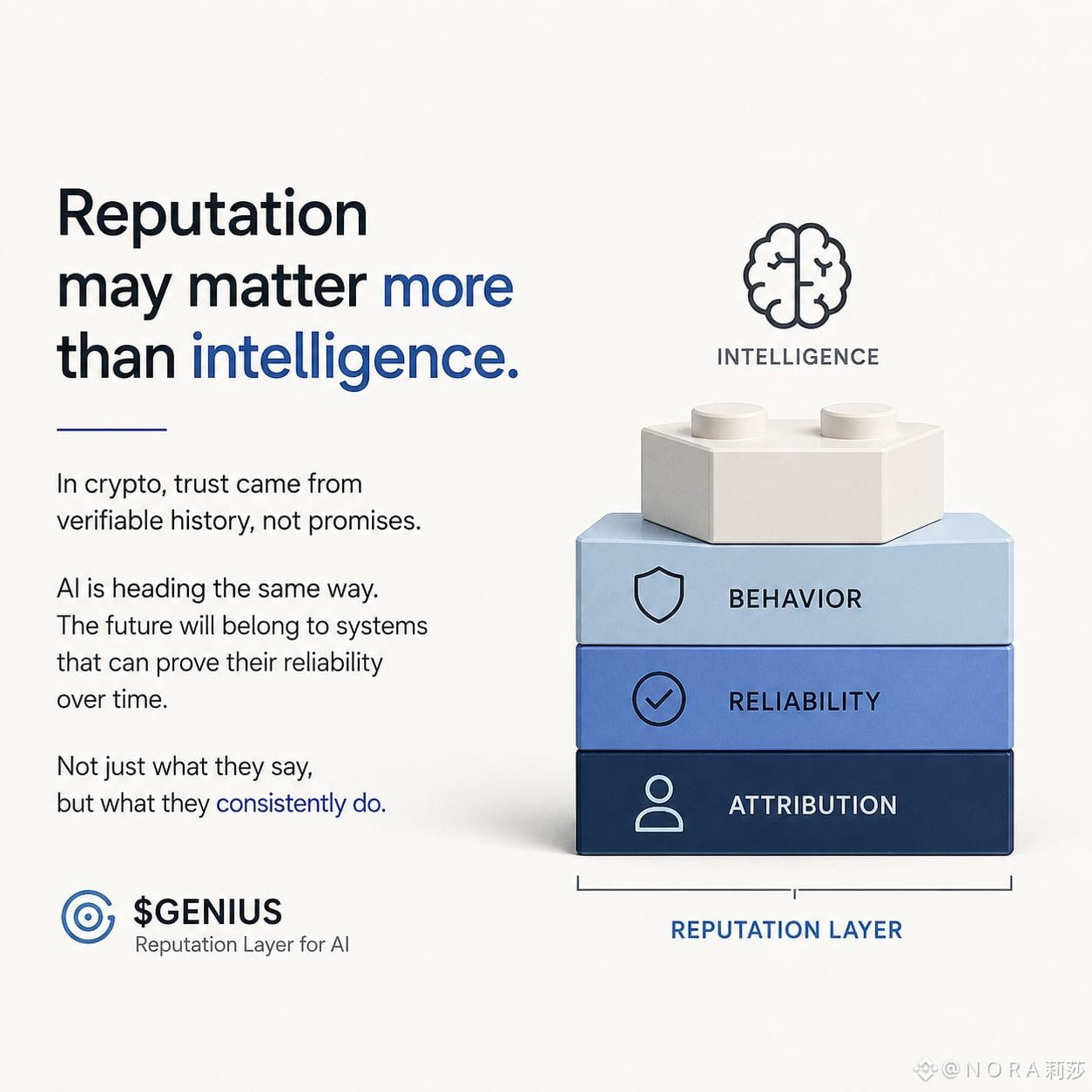
Die nächste Generation von KI könnte nicht nur nach Intelligenz bewertet werden, sondern nach dem Ruf, der aus Verhalten, Zuverlässigkeit, Attribution und historischer Leistung aufgebaut wurde. Nicht was ein Agent sagt, dass er tun kann, sondern was er konsequent getan hat.
Krypto hat uns gelehrt, dass eine transparente Geschichte oft mehr zählt als Versprechen.
Wenn diese Lektion in die KI einfließt, könnte der Ruf eine fundamentale Schicht des Stapels werden, die letztendlich wertvoller ist als rohe Intelligenz selbst.
#genius @GeniusOfficial
Ich denke ständig über KI-Reputationssysteme nach, betrachtet durch die Linse der frühen Krypto-Infrastruktur.
Bei Bitcoin war der Durchbruch nicht die Intelligenz. Es war die Verifizierbarkeit. Das Netzwerk musste nicht vertrauen, wer eine Aussage gemacht hat, weil es die Geschichte dahinter überprüfen konnte.
KI scheint sich einem ähnlichen Übergang zu nähern.
Heute konzentriert sich die meiste Aufmerksamkeit auf die Modellfähigkeiten: größere Kontextfenster, besseres Denken, schnellere Ausgaben. Aber wenn autonome Agenten häufiger werden, beginnt eine andere Frage wichtig zu werden:
Kann dieses System über die Zeit hinweg vertrauenswürdig sein?
Hier werden Projekte wie $GENIUS interessant.
Die nächste Generation von KI könnte nicht nur nach Intelligenz bewertet werden, sondern nach dem Ruf, der aus Verhalten, Zuverlässigkeit, Attribution und historischer Leistung aufgebaut wurde. Nicht was ein Agent sagt, dass er tun kann, sondern was er konsequent getan hat.
Krypto hat uns gelehrt, dass eine transparente Geschichte oft mehr zählt als Versprechen.
Wenn diese Lektion in die KI einfließt, könnte der Ruf eine fundamentale Schicht des Stapels werden, die letztendlich wertvoller ist als rohe Intelligenz selbst.
#genius @GeniusOfficial
Bei Bitcoin war der Durchbruch nicht die Intelligenz. Es war die Verifizierbarkeit. Das Netzwerk musste nicht vertrauen, wer eine Aussage gemacht hat, weil es die Geschichte dahinter überprüfen konnte.
KI scheint sich einem ähnlichen Übergang zu nähern.
Heute konzentriert sich die meiste Aufmerksamkeit auf die Modellfähigkeiten: größere Kontextfenster, besseres Denken, schnellere Ausgaben. Aber wenn autonome Agenten häufiger werden, beginnt eine andere Frage wichtig zu werden:
Kann dieses System über die Zeit hinweg vertrauenswürdig sein?
Hier werden Projekte wie $GENIUS interessant.
Die nächste Generation von KI könnte nicht nur nach Intelligenz bewertet werden, sondern nach dem Ruf, der aus Verhalten, Zuverlässigkeit, Attribution und historischer Leistung aufgebaut wurde. Nicht was ein Agent sagt, dass er tun kann, sondern was er konsequent getan hat.
Krypto hat uns gelehrt, dass eine transparente Geschichte oft mehr zählt als Versprechen.
Wenn diese Lektion in die KI einfließt, könnte der Ruf eine fundamentale Schicht des Stapels werden, die letztendlich wertvoller ist als rohe Intelligenz selbst.
#genius @GeniusOfficial
2
4
144
·
--
Ich denke immer mehr über $OPEN als ein Koordinationsproblem und weniger als ein Produkt nach.
Krypto hat dieses Muster bereits gezeigt: Bitcoin hat nicht durch Geschwindigkeit oder Flexibilität gewonnen, sondern durch verifizierbare Historie. Ethereum hat das in komposable Ausführung erweitert. Aber beide haben stillschweigend etwas Tieferes eingeführt, Systeme, in denen Verhalten dauerhaft lesbar wird.
KI scheint jetzt die gleiche Grenze zu erreichen.
Wir bewerten Modelle weiterhin wie isolierte Outputs: korrekt oder inkorrekt, nützlich oder nicht. Aber sobald KI-Agenten anfangen zu interagieren, zu delegieren und auf der Arbeit anderer aufzubauen, funktioniert dieses Rahmenwerk nicht mehr.
Hier beginnt eine Reputationsschicht wichtig zu werden: Verhalten, Zuverlässigkeit und Attribution, die über Zeit und Systeme hinweg getragen werden, nicht nur einzelne Antworten.
In diesem Sinne weist $OPEN auf etwas hin, das näher an Infrastruktur als an Anwendung ist: Wie macht man KI vertrauenswürdig accumulativ statt episodisch?
Und zunehmend scheint es, dass Intelligenz nicht mehr der Engpass sein wird. Reputation wird es sein.
#OpenLedger @Openledger
Ich denke immer mehr über $OPEN als ein Koordinationsproblem und weniger als ein Produkt nach.
Krypto hat dieses Muster bereits gezeigt: Bitcoin hat nicht durch Geschwindigkeit oder Flexibilität gewonnen, sondern durch verifizierbare Historie. Ethereum hat das in komposable Ausführung erweitert. Aber beide haben stillschweigend etwas Tieferes eingeführt, Systeme, in denen Verhalten dauerhaft lesbar wird.
KI scheint jetzt die gleiche Grenze zu erreichen.
Wir bewerten Modelle weiterhin wie isolierte Outputs: korrekt oder inkorrekt, nützlich oder nicht. Aber sobald KI-Agenten anfangen zu interagieren, zu delegieren und auf der Arbeit anderer aufzubauen, funktioniert dieses Rahmenwerk nicht mehr.
Hier beginnt eine Reputationsschicht wichtig zu werden: Verhalten, Zuverlässigkeit und Attribution, die über Zeit und Systeme hinweg getragen werden, nicht nur einzelne Antworten.
In diesem Sinne weist $OPEN auf etwas hin, das näher an Infrastruktur als an Anwendung ist: Wie macht man KI vertrauenswürdig accumulativ statt episodisch?
Und zunehmend scheint es, dass Intelligenz nicht mehr der Engpass sein wird. Reputation wird es sein.
#OpenLedger @OpenLedger
Krypto hat dieses Muster bereits gezeigt: Bitcoin hat nicht durch Geschwindigkeit oder Flexibilität gewonnen, sondern durch verifizierbare Historie. Ethereum hat das in komposable Ausführung erweitert. Aber beide haben stillschweigend etwas Tieferes eingeführt, Systeme, in denen Verhalten dauerhaft lesbar wird.
KI scheint jetzt die gleiche Grenze zu erreichen.
Wir bewerten Modelle weiterhin wie isolierte Outputs: korrekt oder inkorrekt, nützlich oder nicht. Aber sobald KI-Agenten anfangen zu interagieren, zu delegieren und auf der Arbeit anderer aufzubauen, funktioniert dieses Rahmenwerk nicht mehr.
Hier beginnt eine Reputationsschicht wichtig zu werden: Verhalten, Zuverlässigkeit und Attribution, die über Zeit und Systeme hinweg getragen werden, nicht nur einzelne Antworten.
In diesem Sinne weist $OPEN auf etwas hin, das näher an Infrastruktur als an Anwendung ist: Wie macht man KI vertrauenswürdig accumulativ statt episodisch?
Und zunehmend scheint es, dass Intelligenz nicht mehr der Engpass sein wird. Reputation wird es sein.
#OpenLedger @OpenLedger
2
146
·
--
Wenn Intelligenz billig wird, wird Reputation zur echten Infrastruktur-EbeneIch komme immer wieder zu einer einfachen Beobachtung zurück: In der Krypto-Welt haben wir Jahre damit verbracht, die Verifizierung des Zustands zu optimieren, und jetzt stehen wir vor einem anderen Problem: der Verifizierung des Verhaltens über die Zeit.
Wenn Bitcoin die Frage "Was ist gerade wahr?" gelöst hat und Ethereum das in "Was kann vertrauenslos ausgeführt werden?" erweitert hat, dann weisen die aufkommenden KI-Systeme und Protokolle wie $OPEN , die sich um sie gruppieren, zunehmend auf eine schwierigere Frage hin: "Was war konstant zuverlässig, zuordenbar und rechenschaftspflichtig?"
Wenn Intelligenz billig wird, wird Reputation zur echten Infrastruktur-Ebene
Ich komme immer wieder zu einer einfachen Beobachtung zurück: In der Krypto-Welt haben wir Jahre damit verbracht, die Verifizierung des Zustands zu optimieren, und jetzt stehen wir vor einem anderen Problem: der Verifizierung des Verhaltens über die Zeit.
Wenn Bitcoin die Frage "Was ist gerade wahr?" gelöst hat und Ethereum das in "Was kann vertrauenslos ausgeführt werden?" erweitert hat, dann weisen die aufkommenden KI-Systeme und Protokolle wie $OPEN , die sich um sie gruppieren, zunehmend auf eine schwierigere Frage hin: "Was war konstant zuverlässig, zuordenbar und rechenschaftspflichtig?"
Wenn Bitcoin die Frage "Was ist gerade wahr?" gelöst hat und Ethereum das in "Was kann vertrauenslos ausgeführt werden?" erweitert hat, dann weisen die aufkommenden KI-Systeme und Protokolle wie $OPEN , die sich um sie gruppieren, zunehmend auf eine schwierigere Frage hin: "Was war konstant zuverlässig, zuordenbar und rechenschaftspflichtig?"
1
3
136
·
--
Ich denke immer wieder darüber nach, wie sich Krypto leise von „wer kann am meisten berechnen“ zu „wer kann über die Zeit hinweg vertraut werden“ gewandelt hat.
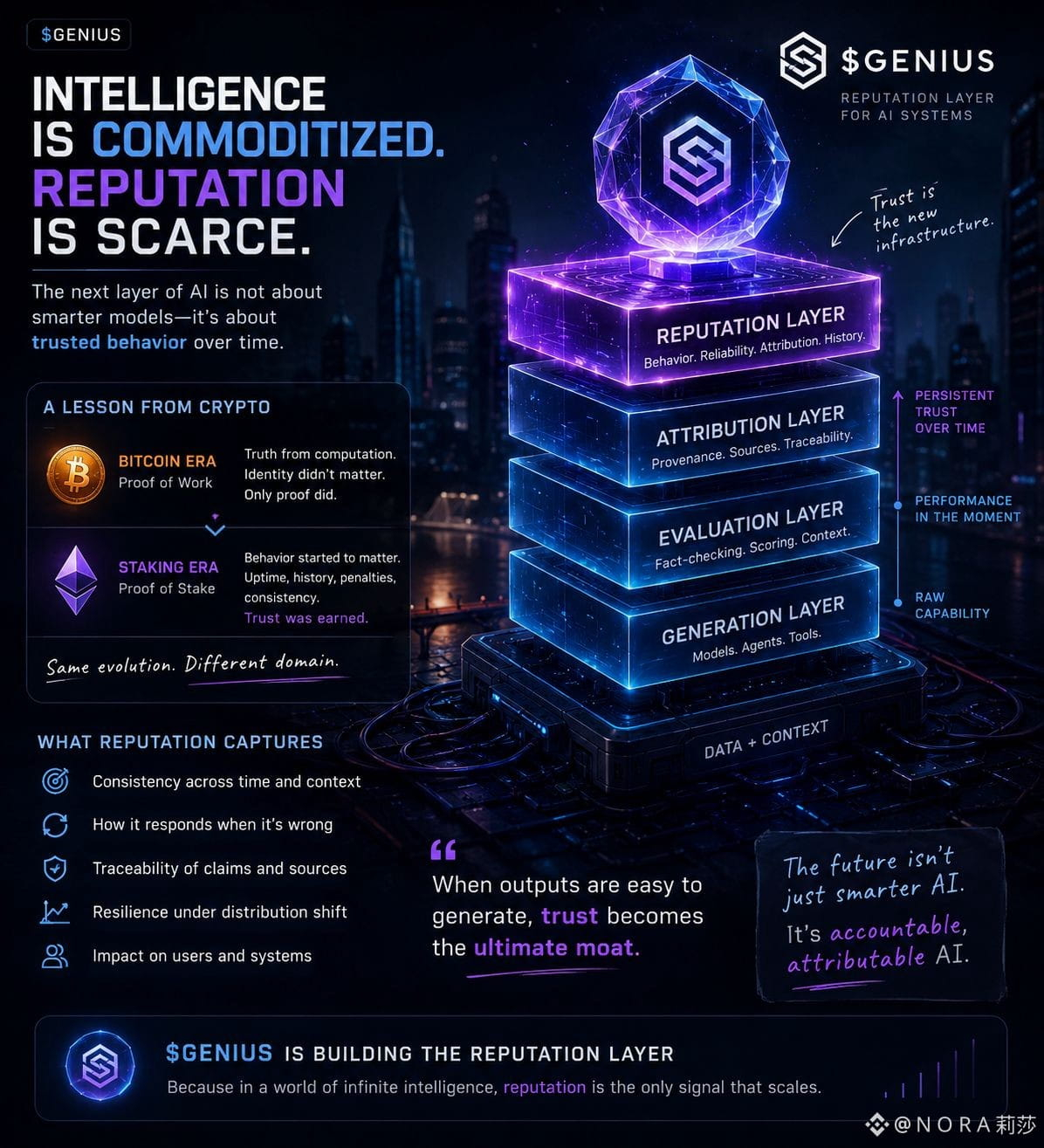
Bitcoin begann als reine Proof-of-Work-Wahrheit, die aus Energie und Verifizierung entstand, nicht aus Identität. Aber als wir in Staking-Systeme übergingen, änderte sich der Schwerpunkt. Plötzlich zählte die Geschichte: Uptime, Verhalten, Strafen, Konsistenz. Vertrauen wurde zu etwas, das angesammelt und nicht angenommen wurde.
Was ich mit $GENIUS sehe, fühlt sich nach diesem gleichen Übergang an, aber innerhalb von KI-Systemen.
Wir befinden uns nicht mehr in einer Phase, in der rohe Intelligenz der Engpass ist. Modelle können bereits kompetente Ausgaben generieren. Die eigentliche Lücke ist: Können wir Zuverlässigkeit über Zeit, Kontext und Korrekturrunden hinweg verfolgen?
Das ist ein Reputationsproblem, kein Modellproblem.
In Krypto-Begriffen sieht es eher nach Validator-Scoring als nach Berechnung aus. Nicht nur das, was du produzierst, sondern auch, wie du dich verhältst, wenn sich die Bedingungen ändern, wenn du falsch liegst, wenn sich Daten verschieben, wenn Mehrdeutigkeit zunimmt.
Also beginnt KI weniger wie eine einzelne Intelligenzschicht und mehr wie ein gestapeltes System auszusehen: Generation, Bewertung, Attribution und dann ein persistenter Reputationsdatensatz, der über allem schwebt.
Und das ändert die Hierarchie.
Denn sobald Verhalten messbar und beständig ist, hört Intelligenz allein auf, das knappe Gut zu sein.
Reputation wird zur echten Infrastrukturebene.
#genius @GeniusOfficial
Ich denke immer wieder darüber nach, wie sich Krypto leise von „wer kann am meisten berechnen“ zu „wer kann über die Zeit hinweg vertraut werden“ gewandelt hat.
Bitcoin begann als reine Proof-of-Work-Wahrheit, die aus Energie und Verifizierung entstand, nicht aus Identität. Aber als wir in Staking-Systeme übergingen, änderte sich der Schwerpunkt. Plötzlich zählte die Geschichte: Uptime, Verhalten, Strafen, Konsistenz. Vertrauen wurde zu etwas, das angesammelt und nicht angenommen wurde.
Was ich mit $GENIUS sehe, fühlt sich nach diesem gleichen Übergang an, aber innerhalb von KI-Systemen.
Wir befinden uns nicht mehr in einer Phase, in der rohe Intelligenz der Engpass ist. Modelle können bereits kompetente Ausgaben generieren. Die eigentliche Lücke ist: Können wir Zuverlässigkeit über Zeit, Kontext und Korrekturrunden hinweg verfolgen?
Das ist ein Reputationsproblem, kein Modellproblem.
In Krypto-Begriffen sieht es eher nach Validator-Scoring als nach Berechnung aus. Nicht nur das, was du produzierst, sondern auch, wie du dich verhältst, wenn sich die Bedingungen ändern, wenn du falsch liegst, wenn sich Daten verschieben, wenn Mehrdeutigkeit zunimmt.
Also beginnt KI weniger wie eine einzelne Intelligenzschicht und mehr wie ein gestapeltes System auszusehen: Generation, Bewertung, Attribution und dann ein persistenter Reputationsdatensatz, der über allem schwebt.
Und das ändert die Hierarchie.
Denn sobald Verhalten messbar und beständig ist, hört Intelligenz allein auf, das knappe Gut zu sein.
Reputation wird zur echten Infrastrukturebene.
#genius @GeniusOfficial
Bitcoin begann als reine Proof-of-Work-Wahrheit, die aus Energie und Verifizierung entstand, nicht aus Identität. Aber als wir in Staking-Systeme übergingen, änderte sich der Schwerpunkt. Plötzlich zählte die Geschichte: Uptime, Verhalten, Strafen, Konsistenz. Vertrauen wurde zu etwas, das angesammelt und nicht angenommen wurde.
Was ich mit $GENIUS sehe, fühlt sich nach diesem gleichen Übergang an, aber innerhalb von KI-Systemen.
Wir befinden uns nicht mehr in einer Phase, in der rohe Intelligenz der Engpass ist. Modelle können bereits kompetente Ausgaben generieren. Die eigentliche Lücke ist: Können wir Zuverlässigkeit über Zeit, Kontext und Korrekturrunden hinweg verfolgen?
Das ist ein Reputationsproblem, kein Modellproblem.
In Krypto-Begriffen sieht es eher nach Validator-Scoring als nach Berechnung aus. Nicht nur das, was du produzierst, sondern auch, wie du dich verhältst, wenn sich die Bedingungen ändern, wenn du falsch liegst, wenn sich Daten verschieben, wenn Mehrdeutigkeit zunimmt.
Also beginnt KI weniger wie eine einzelne Intelligenzschicht und mehr wie ein gestapeltes System auszusehen: Generation, Bewertung, Attribution und dann ein persistenter Reputationsdatensatz, der über allem schwebt.
Und das ändert die Hierarchie.
Denn sobald Verhalten messbar und beständig ist, hört Intelligenz allein auf, das knappe Gut zu sein.
Reputation wird zur echten Infrastrukturebene.
#genius @GeniusOfficial
1
1
4
162
·
--
Ich vergleiche KI gerade mit der frühen Krypto nicht in Bezug auf Technologie, sondern darauf, was tatsächlich Systeme zum Brechen bringt.
In beiden Fällen ging es nie nur um die Fähigkeit. Bitcoin ist nicht gescheitert, weil das Hashing schwach war. DeFi ist nicht gescheitert, weil die Smart Contracts langsam waren. Systeme sind gescheitert, als das Verhalten unter Stress nicht messbar oder nachvollziehbar war.
KI stößt an dieselbe Grenze.
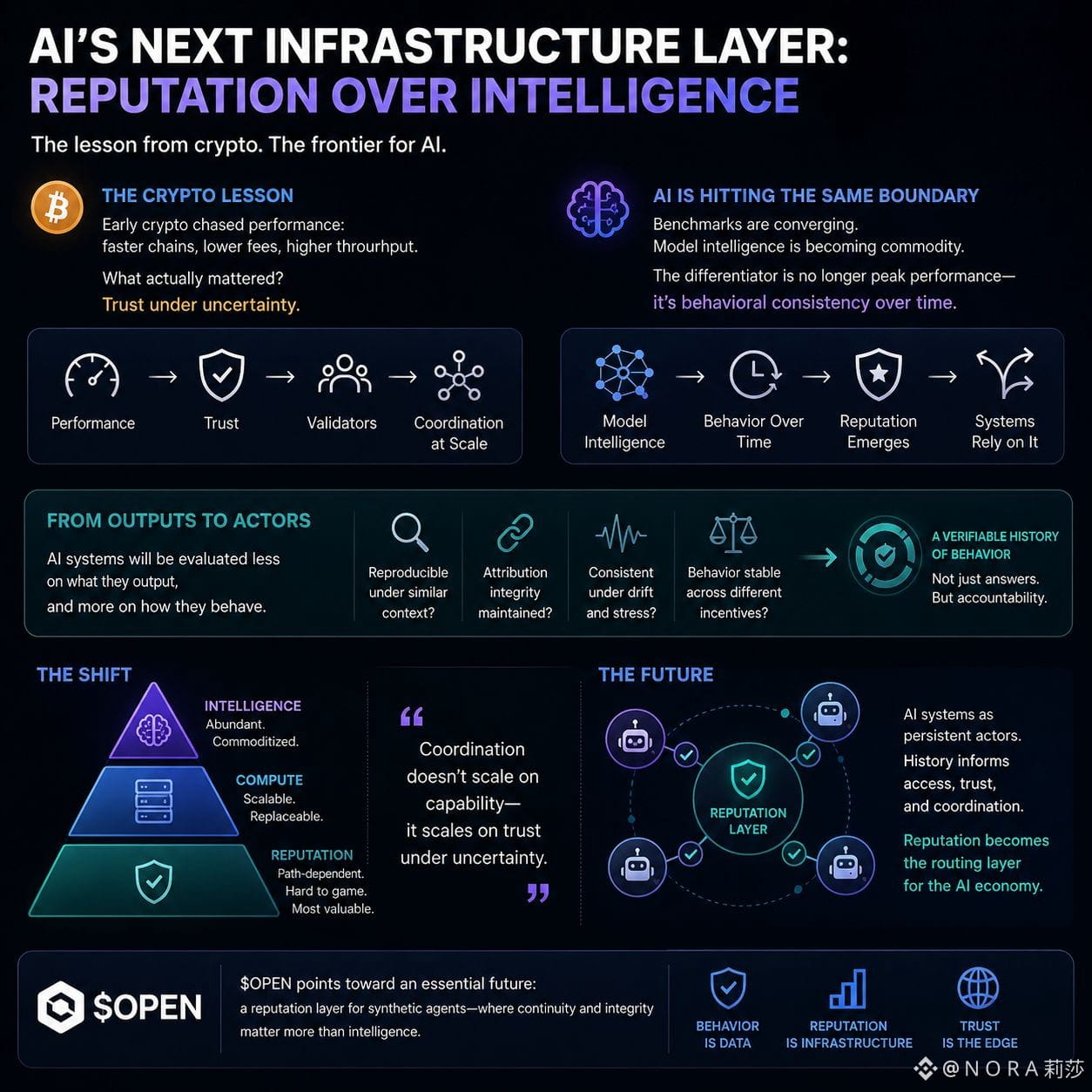
Mit $OPEN fällt auf, dass der Fokus weggeht von der Bewertung von Modellen als statische Intelligenz hin zu deren Behandlung als persistente Akteure mit Geschichten. Nicht „Was kann es tun?“ sondern „Wie verhält es sich über die Zeit, in wechselnden Kontexten und Anreizen?“
Diese Unterscheidung wird wichtiger, je mehr KI in agentische Umgebungen wie Trading, Automatisierung und Entscheidungsprozesse eintritt, wo ein unzuverlässiges Ergebnis nicht isoliert bleibt; es propagiert.
Benchmarks komprimieren bereits. Die Intelligenz von Modellen wird weniger differenzierend. Was nicht komprimiert, ist das Verhalten: Konsistenz, Integrität der Attribution, Fehlermuster unter Drift.
Hier beginnt der Ruf nach Reputation wichtiger zu werden als rohe Intelligenz.
Nicht Reputation als Branding, sondern als ein kumulierter, prüfbarer Nachweis des Verhaltens, der bewertet, rangiert und umgangen werden kann.
Wenn Krypto etwas gelehrt hat, dann das: Koordination skaliert nicht nach Fähigkeit – sie skaliert nach Vertrauen unter Unsicherheit.
KI betritt jetzt genau diesen Problembereich.
#OpenLedger @Openledger
Ich vergleiche KI gerade mit der frühen Krypto nicht in Bezug auf Technologie, sondern darauf, was tatsächlich Systeme zum Brechen bringt.
In beiden Fällen ging es nie nur um die Fähigkeit. Bitcoin ist nicht gescheitert, weil das Hashing schwach war. DeFi ist nicht gescheitert, weil die Smart Contracts langsam waren. Systeme sind gescheitert, als das Verhalten unter Stress nicht messbar oder nachvollziehbar war.
KI stößt an dieselbe Grenze.
Mit $OPEN fällt auf, dass der Fokus weggeht von der Bewertung von Modellen als statische Intelligenz hin zu deren Behandlung als persistente Akteure mit Geschichten. Nicht „Was kann es tun?“ sondern „Wie verhält es sich über die Zeit, in wechselnden Kontexten und Anreizen?“
Diese Unterscheidung wird wichtiger, je mehr KI in agentische Umgebungen wie Trading, Automatisierung und Entscheidungsprozesse eintritt, wo ein unzuverlässiges Ergebnis nicht isoliert bleibt; es propagiert.
Benchmarks komprimieren bereits. Die Intelligenz von Modellen wird weniger differenzierend. Was nicht komprimiert, ist das Verhalten: Konsistenz, Integrität der Attribution, Fehlermuster unter Drift.
Hier beginnt der Ruf nach Reputation wichtiger zu werden als rohe Intelligenz.
Nicht Reputation als Branding, sondern als ein kumulierter, prüfbarer Nachweis des Verhaltens, der bewertet, rangiert und umgangen werden kann.
Wenn Krypto etwas gelehrt hat, dann das: Koordination skaliert nicht nach Fähigkeit – sie skaliert nach Vertrauen unter Unsicherheit.
KI betritt jetzt genau diesen Problembereich.
#OpenLedger @OpenLedger
In beiden Fällen ging es nie nur um die Fähigkeit. Bitcoin ist nicht gescheitert, weil das Hashing schwach war. DeFi ist nicht gescheitert, weil die Smart Contracts langsam waren. Systeme sind gescheitert, als das Verhalten unter Stress nicht messbar oder nachvollziehbar war.
KI stößt an dieselbe Grenze.
Mit $OPEN fällt auf, dass der Fokus weggeht von der Bewertung von Modellen als statische Intelligenz hin zu deren Behandlung als persistente Akteure mit Geschichten. Nicht „Was kann es tun?“ sondern „Wie verhält es sich über die Zeit, in wechselnden Kontexten und Anreizen?“
Diese Unterscheidung wird wichtiger, je mehr KI in agentische Umgebungen wie Trading, Automatisierung und Entscheidungsprozesse eintritt, wo ein unzuverlässiges Ergebnis nicht isoliert bleibt; es propagiert.
Benchmarks komprimieren bereits. Die Intelligenz von Modellen wird weniger differenzierend. Was nicht komprimiert, ist das Verhalten: Konsistenz, Integrität der Attribution, Fehlermuster unter Drift.
Hier beginnt der Ruf nach Reputation wichtiger zu werden als rohe Intelligenz.
Nicht Reputation als Branding, sondern als ein kumulierter, prüfbarer Nachweis des Verhaltens, der bewertet, rangiert und umgangen werden kann.
Wenn Krypto etwas gelehrt hat, dann das: Koordination skaliert nicht nach Fähigkeit – sie skaliert nach Vertrauen unter Unsicherheit.
KI betritt jetzt genau diesen Problembereich.
#OpenLedger @OpenLedger
3
5
123
·
--
Artikel
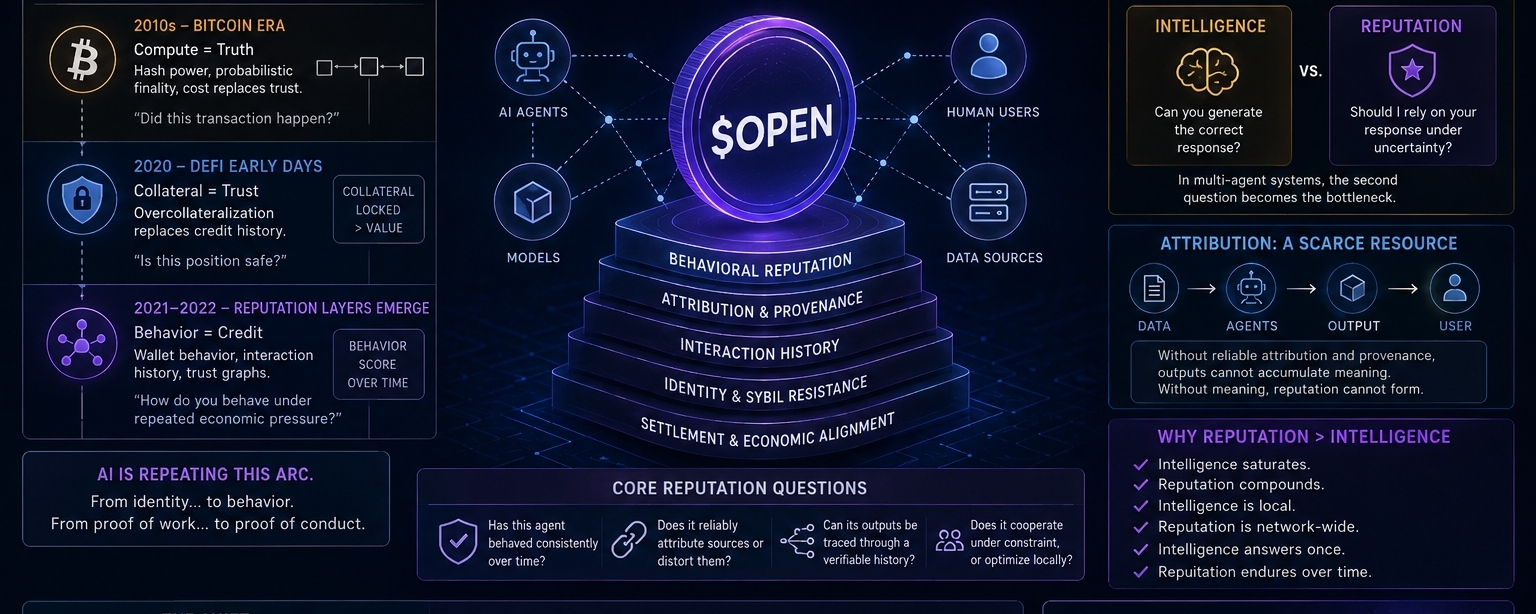
Reputation > Intelligenz: Die verborgene Infrastruktur, die AI-Systeme antreibtIch komme immer wieder auf ein einfaches Missverhältnis zurück, wie wir derzeit Intelligenzsysteme bewerten: Wir neigen immer noch dazu, die Ausgabequalität zu belohnen, während die Systeme selbst sich leise in Richtung etwas Grundlegendem bewegen – verhaltensmäßige Zuverlässigkeit über die Zeit.
$OPEN ist in diesem Sinne besser als Infrastruktur-Signal zu verstehen als als Token-Erzählung. Nicht weil es ein fertiges System repräsentiert, sondern weil es sich innerhalb einer breiteren Richtung befindet, in die sich der AI-Stack bewegt: Reputation als erstklassiges primitives Konzept.
Reputation > Intelligenz: Die verborgene Infrastruktur, die AI-Systeme antreibt
Ich komme immer wieder auf ein einfaches Missverhältnis zurück, wie wir derzeit Intelligenzsysteme bewerten: Wir neigen immer noch dazu, die Ausgabequalität zu belohnen, während die Systeme selbst sich leise in Richtung etwas Grundlegendem bewegen – verhaltensmäßige Zuverlässigkeit über die Zeit.
$OPEN ist in diesem Sinne besser als Infrastruktur-Signal zu verstehen als als Token-Erzählung. Nicht weil es ein fertiges System repräsentiert, sondern weil es sich innerhalb einer breiteren Richtung befindet, in die sich der AI-Stack bewegt: Reputation als erstklassiges primitives Konzept.
$OPEN ist in diesem Sinne besser als Infrastruktur-Signal zu verstehen als als Token-Erzählung. Nicht weil es ein fertiges System repräsentiert, sondern weil es sich innerhalb einer breiteren Richtung befindet, in die sich der AI-Stack bewegt: Reputation als erstklassiges primitives Konzept.
3
5
125
·
--
Ich denke immer wieder darüber nach, wie das Internet aussah, bevor Breitbandverbindungen normal wurden.
Die Infrastruktur war vorhanden.
Die Anwendungsfälle waren noch chaotisch.
Die meisten Leute konnten noch nicht genau erklären, warum es wichtig war.
Aber das Verhalten änderte sich bereits unter dem Lärm.
So sehe ich gerade $GENIUS .
Nicht als fertige Produktkategorie, sondern als frühen Verhaltenswandel. Die Leute bewegen sich langsam von der manuellen Verarbeitung von Informationen hin zu einer Delegierung von Entscheidungsprozessen, Filtern und Ausführungen an Systeme, die parallel dazu lernen.
Was diese Phase verwirrend macht, ist, dass das Ökosystem von außen noch fragmentiert aussieht. Zu viele Werkzeuge. Zu viele Narrative. Zu viel Experimentieren, das vorgibt, Gewissheit zu sein.
Aber frühe technologische Übergänge fühlen sich fast immer ineffizient an, bevor sie unvermeidlich wirken.
Suchmaschinen sahen chaotisch aus, bevor sie das Standardverhalten wurden.
Cloud-Software schien unzuverlässig, bevor Unternehmen komplette Operationen darum herum aufbauten.
Selbst algorithmische Feeds fühlten sich einst unnatürlich an, bevor sie leise die Aufmerksamkeit selbst umgestalteten.
Ich bin mir nicht ganz sicher, ob jemand bereits versteht, wie die ausgereifte Version dieses Marktes aussieht. Aber ich denke, dass der zugrundeliegende Verhaltenswandel echt ist.
Und sobald sich das Verhalten im großen Maßstab ändert, folgt normalerweise die Infrastruktur.
#genius @GeniusOfficial
Ich denke immer wieder darüber nach, wie das Internet aussah, bevor Breitbandverbindungen normal wurden.
Die Infrastruktur war vorhanden.
Die Anwendungsfälle waren noch chaotisch.
Die meisten Leute konnten noch nicht genau erklären, warum es wichtig war.
Aber das Verhalten änderte sich bereits unter dem Lärm.
So sehe ich gerade $GENIUS .
Nicht als fertige Produktkategorie, sondern als frühen Verhaltenswandel. Die Leute bewegen sich langsam von der manuellen Verarbeitung von Informationen hin zu einer Delegierung von Entscheidungsprozessen, Filtern und Ausführungen an Systeme, die parallel dazu lernen.
Was diese Phase verwirrend macht, ist, dass das Ökosystem von außen noch fragmentiert aussieht. Zu viele Werkzeuge. Zu viele Narrative. Zu viel Experimentieren, das vorgibt, Gewissheit zu sein.
Aber frühe technologische Übergänge fühlen sich fast immer ineffizient an, bevor sie unvermeidlich wirken.
Suchmaschinen sahen chaotisch aus, bevor sie das Standardverhalten wurden.
Cloud-Software schien unzuverlässig, bevor Unternehmen komplette Operationen darum herum aufbauten.
Selbst algorithmische Feeds fühlten sich einst unnatürlich an, bevor sie leise die Aufmerksamkeit selbst umgestalteten.
Ich bin mir nicht ganz sicher, ob jemand bereits versteht, wie die ausgereifte Version dieses Marktes aussieht. Aber ich denke, dass der zugrundeliegende Verhaltenswandel echt ist.
Und sobald sich das Verhalten im großen Maßstab ändert, folgt normalerweise die Infrastruktur.
#genius @GeniusOfficial
Die Infrastruktur war vorhanden.
Die Anwendungsfälle waren noch chaotisch.
Die meisten Leute konnten noch nicht genau erklären, warum es wichtig war.
Aber das Verhalten änderte sich bereits unter dem Lärm.
So sehe ich gerade $GENIUS .
Nicht als fertige Produktkategorie, sondern als frühen Verhaltenswandel. Die Leute bewegen sich langsam von der manuellen Verarbeitung von Informationen hin zu einer Delegierung von Entscheidungsprozessen, Filtern und Ausführungen an Systeme, die parallel dazu lernen.
Was diese Phase verwirrend macht, ist, dass das Ökosystem von außen noch fragmentiert aussieht. Zu viele Werkzeuge. Zu viele Narrative. Zu viel Experimentieren, das vorgibt, Gewissheit zu sein.
Aber frühe technologische Übergänge fühlen sich fast immer ineffizient an, bevor sie unvermeidlich wirken.
Suchmaschinen sahen chaotisch aus, bevor sie das Standardverhalten wurden.
Cloud-Software schien unzuverlässig, bevor Unternehmen komplette Operationen darum herum aufbauten.
Selbst algorithmische Feeds fühlten sich einst unnatürlich an, bevor sie leise die Aufmerksamkeit selbst umgestalteten.
Ich bin mir nicht ganz sicher, ob jemand bereits versteht, wie die ausgereifte Version dieses Marktes aussieht. Aber ich denke, dass der zugrundeliegende Verhaltenswandel echt ist.
Und sobald sich das Verhalten im großen Maßstab ändert, folgt normalerweise die Infrastruktur.
#genius @GeniusOfficial

2
8
194
·
--
$GENIUS erinnert mich stark daran, wie sich die frühe Cloud-Infrastruktur anfühlte, bevor die breite Akzeptanz vollständig einsetzte.
Damals sahen die meisten Menschen Fragmentierung, überlappende Tools und Systeme, die zu chaotisch schienen, um grundlegend zu werden. Aber unter der Oberfläche änderte sich das Verhalten bereits. Entwickler und Unternehmen begannen langsam zu bauen, als ob cloudbasierte Systeme unvermeidlich wären, lange bevor die öffentliche Erzählung mithalten konnte.
Das ist das gleiche Gefühl, das ich hier habe.
Der interessante Teil an frühen Infrastrukturveränderungen ist, dass sie in Echtzeit selten sauber erscheinen. Sie sehen normalerweise chaotisch, experimentell und schwer zu kategorisieren aus, gerade bevor sie normal werden.
Ich bin mir nicht sicher, ob jemand vollständig versteht, wie die endgültige Struktur rund um die KI-Koordination und Maschineninteraktion aussehen wird.
Aber das Verhalten, das sich ändert, bevor ein Konsens entsteht, war schon immer eines der frühesten Signale, dass sich etwas Größeres formen könnte.
#genius @GeniusOfficial
$GENIUS erinnert mich stark daran, wie sich die frühe Cloud-Infrastruktur anfühlte, bevor die breite Akzeptanz vollständig einsetzte.
Damals sahen die meisten Menschen Fragmentierung, überlappende Tools und Systeme, die zu chaotisch schienen, um grundlegend zu werden. Aber unter der Oberfläche änderte sich das Verhalten bereits. Entwickler und Unternehmen begannen langsam zu bauen, als ob cloudbasierte Systeme unvermeidlich wären, lange bevor die öffentliche Erzählung mithalten konnte.
Das ist das gleiche Gefühl, das ich hier habe.
Der interessante Teil an frühen Infrastrukturveränderungen ist, dass sie in Echtzeit selten sauber erscheinen. Sie sehen normalerweise chaotisch, experimentell und schwer zu kategorisieren aus, gerade bevor sie normal werden.
Ich bin mir nicht sicher, ob jemand vollständig versteht, wie die endgültige Struktur rund um die KI-Koordination und Maschineninteraktion aussehen wird.
Aber das Verhalten, das sich ändert, bevor ein Konsens entsteht, war schon immer eines der frühesten Signale, dass sich etwas Größeres formen könnte.
#genius @GeniusOfficial
Damals sahen die meisten Menschen Fragmentierung, überlappende Tools und Systeme, die zu chaotisch schienen, um grundlegend zu werden. Aber unter der Oberfläche änderte sich das Verhalten bereits. Entwickler und Unternehmen begannen langsam zu bauen, als ob cloudbasierte Systeme unvermeidlich wären, lange bevor die öffentliche Erzählung mithalten konnte.
Das ist das gleiche Gefühl, das ich hier habe.
Der interessante Teil an frühen Infrastrukturveränderungen ist, dass sie in Echtzeit selten sauber erscheinen. Sie sehen normalerweise chaotisch, experimentell und schwer zu kategorisieren aus, gerade bevor sie normal werden.
Ich bin mir nicht sicher, ob jemand vollständig versteht, wie die endgültige Struktur rund um die KI-Koordination und Maschineninteraktion aussehen wird.
Aber das Verhalten, das sich ändert, bevor ein Konsens entsteht, war schon immer eines der frühesten Signale, dass sich etwas Größeres formen könnte.
#genius @GeniusOfficial

2
5
300
·
--
Artikel
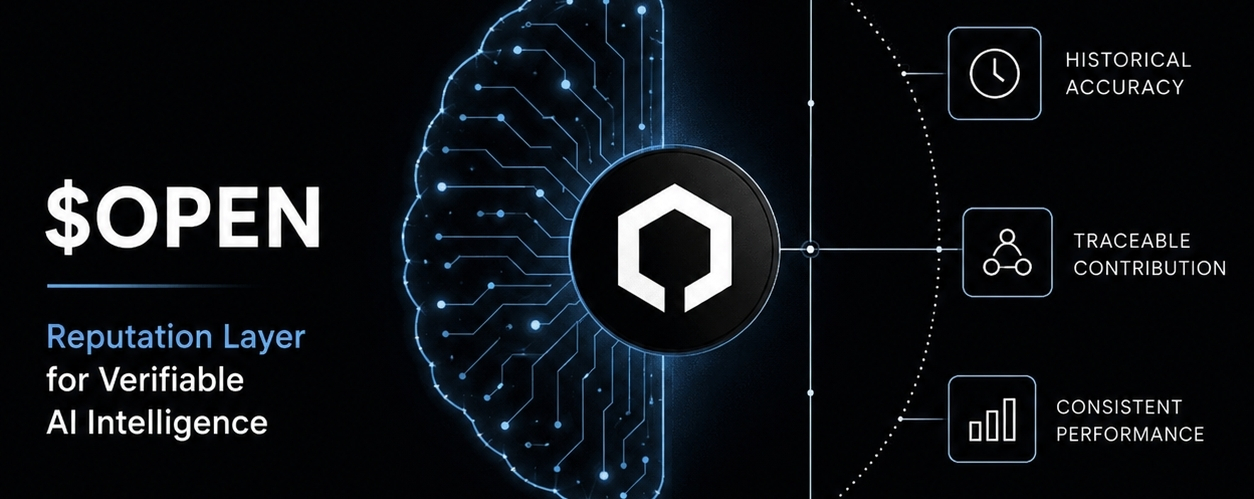
$OPEN und die aufkommende Schicht von verifizierbarem AI-RufIch komme immer wieder auf $OPEN zurück, aber nicht als Produkt-Narrativ, sondern mehr als ein Koordinationsproblem, das sich langsam offenbart.
Der nächste historische Vergleich, der mir einfällt, ist das frühe Krypto selbst, bevor sich Tokenpreise oder Narrative im Space stabilisiert haben. Zu dieser Zeit war die echte Innovation nicht "Währung" oder "DeFi", sondern die Einführung von verifizierbarem Verhalten in Systemen, die zuvor auf Vertrauen angewiesen waren. Bitcoin hat keine Intelligenz oder Effizienz gelöst; es hat die Zuschreibung unter adversen Bedingungen gelöst. Man konnte endlich beobachten, wer was wann und mit welcher Konsequenz getan hat, ohne um Erlaubnis von einer Institution zu fragen.
$OPEN und die aufkommende Schicht von verifizierbarem AI-Ruf
Ich komme immer wieder auf $OPEN zurück, aber nicht als Produkt-Narrativ, sondern mehr als ein Koordinationsproblem, das sich langsam offenbart.
Der nächste historische Vergleich, der mir einfällt, ist das frühe Krypto selbst, bevor sich Tokenpreise oder Narrative im Space stabilisiert haben. Zu dieser Zeit war die echte Innovation nicht "Währung" oder "DeFi", sondern die Einführung von verifizierbarem Verhalten in Systemen, die zuvor auf Vertrauen angewiesen waren. Bitcoin hat keine Intelligenz oder Effizienz gelöst; es hat die Zuschreibung unter adversen Bedingungen gelöst. Man konnte endlich beobachten, wer was wann und mit welcher Konsequenz getan hat, ohne um Erlaubnis von einer Institution zu fragen.
Der nächste historische Vergleich, der mir einfällt, ist das frühe Krypto selbst, bevor sich Tokenpreise oder Narrative im Space stabilisiert haben. Zu dieser Zeit war die echte Innovation nicht "Währung" oder "DeFi", sondern die Einführung von verifizierbarem Verhalten in Systemen, die zuvor auf Vertrauen angewiesen waren. Bitcoin hat keine Intelligenz oder Effizienz gelöst; es hat die Zuschreibung unter adversen Bedingungen gelöst. Man konnte endlich beobachten, wer was wann und mit welcher Konsequenz getan hat, ohne um Erlaubnis von einer Institution zu fragen.
1
5
97
Anmelden und weiter Inhalte entdecken
Krypto-Nutzer weltweit auf Binance Square kennenlernen
⚡️ Bleib in Sachen Krypto stets am Puls.
💬 Die weltgrößte Kryptobörse vertraut darauf.
👍 Erhalte verlässliche Einblicke von verifizierten Creators.
E-Mail-Adresse/Telefonnummer
Trendthemen
SaylorHintsStrategyBitcoinBuy
2.3M Aufrufe
12,477 Kommentare
#saylorhintsstrategybitcoinbuy
🚨 SAYLOR HAT DEN SONNTAGS-$BTC-HINWEIS GEGEBEN 👀
Michael Saylor hat seinen üblichen Bitcoin-Chart wieder erneut gepostet.
Wenn sich die Geschichte wiederholt, könnten diese orangefarbenen Punkte ein Signal dafür sein, dass eine weitere Strategy BTC-Kaufaktion bevorsteht. 🟠
Und wenn Saylor kauft, schaut der Markt zu.
🐋 Massive BTC-Bestände
💰 Fortgesetzte Akkumulationsstrategie
📈 Möglicher Stimmungs-Boost im Kurzfristbereich
Aber das ist der entscheidende Punkt:
Ein Repost ist KEINE Bestätigung eines Kaufs.
Das eigentliche Signal kommt, wenn Strategy die Transaktion offiziell meldet.
🔥 Wenn ein weiterer großer BTC-Kauf angekündigt wird – wird der Markt dieses Mal reagieren?
Oder ist Saylors Akkumulation mittlerweile so routiniert, dass Trader kaum noch reagieren?
👀 Beobachte die Ankündigung.
$MSTRB
#BTC #strategy #crypto #BitcoinNews
sdatta
·5 Likes
·6.9k Aufrufe
BOJRaisesRatesTo31YearHigh
261,261 Aufrufe
3,298 Kommentare
BuffettStepsDownAsBerkshireChairman
127,798 Aufrufe
1,770 Kommentare