Binance Square

Andrew Smithh

Binance Kol || Web3 Guru || Crypto Mentor || X: @Crypto_Advis0r ||
194 Following
17.4K+ Follower
51.1K+ Like gegeben
7.2K+ Geteilt
Beiträge
PINNED
·
--
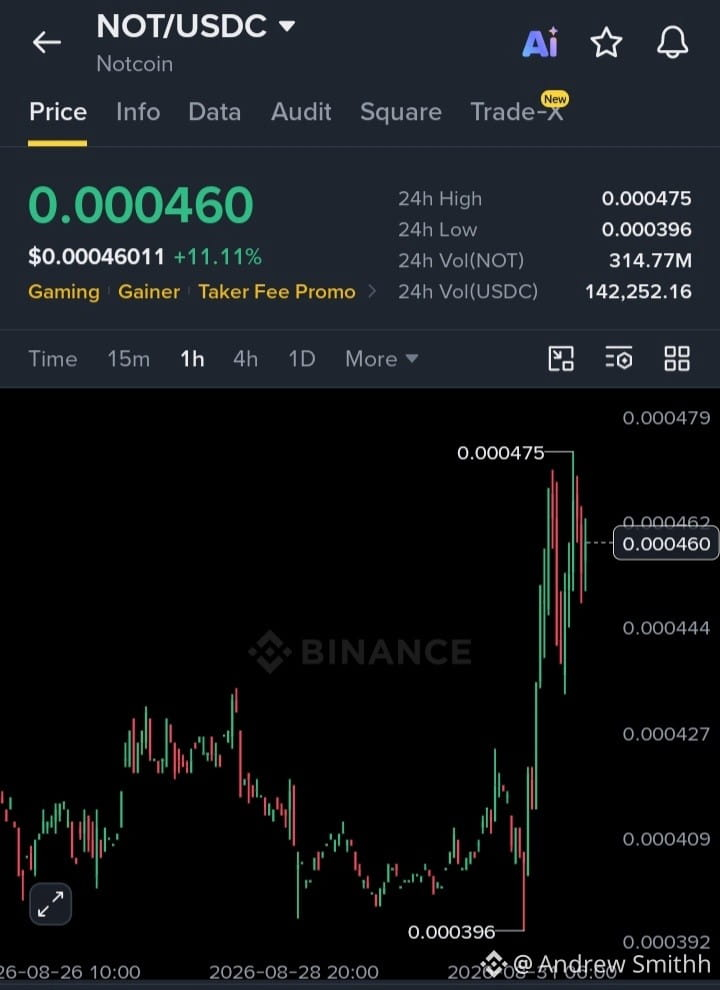
NUR NOCH NEUN STUNDEN! Die Nachricht von der Notierung von $NOT verbreitet sich wie ein Lauffeuer 🔥. Schnallen Sie sich an, $NOT wird morgen um 12:00 UTC auf Binance gelistet. Wenn Sie mehr als das 2000-Fache erreichen möchten, nehmen Sie am Live-Event teil und werden Sie Teil eines bahnbrechenden Projekts in der Kryptowelt. Morgen ist der Tag von NotCoin 🚀. @thenotcoin @Binance #BinanceLaunchpool #PEPEATH
NUR NOCH NEUN STUNDEN!

Die Nachricht von der Notierung von $NOT verbreitet sich wie ein Lauffeuer 🔥.

Schnallen Sie sich an, $NOT wird morgen um 12:00 UTC auf Binance gelistet.

Wenn Sie mehr als das 2000-Fache erreichen möchten, nehmen Sie am Live-Event teil und werden Sie Teil eines bahnbrechenden Projekts in der Kryptowelt.

Morgen ist der Tag von NotCoin 🚀.

@Daily Notcoin @Binance

#BinanceLaunchpool #PEPEATH
·
--
Bullisch
Übersetzung ansehen
$NEAR showing strong momentum on 1H 🔥 Clean breakout above $1.29 resistance with rising volume, printing higher highs & higher lows. After tapping $1.45, price is consolidating near $1.33 healthy pullback, not weakness. Bullish bias stays intact above $1.29. AI narrative + Layer1 strength = why smart money is watching. #Trading #Binance
$NEAR showing strong momentum on 1H 🔥

Clean breakout above $1.29 resistance with rising volume, printing higher highs & higher lows.

After tapping $1.45, price is consolidating near $1.33 healthy pullback, not weakness.

Bullish bias stays intact above $1.29. AI narrative + Layer1 strength = why smart money is watching.

#Trading #Binance
Übersetzung ansehen
Nexo’s US Comeback: From Crackdown Casualty to Compliance-First Crypto LenderThree years after writing a $45 million check and exiting the world’s largest capital market, Nexo is back in the United States. But this isn’t a simple relaunch it’s a structural rewrite. The difference between 2023 and 2026 isn’t just timing. It’s architecture. Back then, the issue centered on Nexo’s Earn Interest Product (EIP). Today, the comeback hinges on licensed partners, regulated intermediaries and a compliance-by-design model anchored by Bakkt. This shift may define the next era of centralized crypto lending in America. Why Nexo Left in 2023 In January 2023, the U.S. Securities and Exchange Commission charged Nexo with offering unregistered securities through its Earn Interest Product. Regulators argued that the yield-bearing accounts functioned as investment contracts and therefore required registration. Nexo agreed to: Pay $45 million in combined federal and state penalties Cease offering the product to US investors Exit the US retail lending market The company neither admitted nor denied wrongdoing, but the message from regulators was clear: retail crypto yield programs would face securities scrutiny. This action was part of a broader post-2022 lending crackdown. Industry failures exposed liquidity mismatches, rehypothecation risks and opaque return generation. “Earn” products were no longer viewed as simple savings alternatives they were being examined as securities offerings. What Actually Changed in 2026 Nexo’s return is not about reviving the old Earn model. It’s about redesigning how the product is delivered. Instead of directly issuing yield products to US customers, Nexo now operates through licensed US partners. Where required, services are structured with SEC-registered investment advisers and regulated intermediaries. The key distinction: Old model: Direct-to-consumer yield issuance New model: Partner-led, compliance-embedded infrastructure This structural separation is crucial. Rather than functioning as the issuer of an investment product, Nexo positions itself within a regulated ecosystem. The Earn Interest Product that triggered the 2023 order has been phased out for US users. The Bakkt Partnership: Compliance as Infrastructure The collaboration with Bakkt is central to this comeback. Bakkt is a publicly traded US crypto firm with multiple regulatory licenses. By leveraging regulated entities for trading, custody or advisory functions, Nexo shifts from being the direct product issuer to operating through a compliance layer. In practice, that means: Custody may reside with licensed entities Advisory components may involve SEC-registered structures Regulatory supervision may span multiple jurisdictions This model distributes responsibility across regulated intermediaries — addressing the structural objections regulators raised in 2023. Crypto-Backed Loans: The Core Offering The new US strategy emphasizes crypto-backed loans rather than unsecured yield promises. How it works: Users deposit digital assets as collateral They borrow against that collateral Liquidation triggers automatically if loan-to-value thresholds are breached Unlike unsecured lending models that collapsed in 2022, collateralized structures provide real-time risk management via automated liquidation systems. However, crypto’s 24/7 volatility makes these systems far more dynamic than traditional margin lending. A Softer but Still Fragmented Regulatory Climate The enforcement landscape has evolved since 2023. Under the administration of Donald Trump, the SEC has scaled back or resolved several crypto-related enforcement cases. That doesn’t mean oversight disappeared. US crypto compliance remains fragmented across: Federal securities regulation State securities regulators Money transmitter licensing Consumer lending laws A product structured to satisfy federal securities rules may still face state-level scrutiny. The difference now is tone less aggressive crackdown, more structured readjustment. What US Users Must Evaluate Before Participating A “compliant structure” does not equal “risk-free.” Before using any crypto-backed loan or yield-style product, users should examine: 1. Legal Counterparty Are you contracting with Nexo directly, or a licensed US entity? 2. Custody Framework Who holds the assets? Under what regulatory regime? 3. Revenue Generation Are returns generated via lending, staking, market-making or other strategies? 4. Liquidation Mechanics What is the loan-to-value threshold? How quickly can liquidation occur? What fees apply? 5. Disclosure Quality Look for: Rehypothecation clauses Conflict-of-interest statements Jurisdiction and dispute terms Risk disclosures Unlike banks, most crypto lenders do not carry federal deposit insurance. Protection depends heavily on contractual clarity and custody structure. The Bigger Industry Signal Nexo’s reentry may represent Phase 3 of centralized crypto lending in the US: Phase 1 (Pre-2023): Direct retail yield, minimal registration Phase 2 (2023–2025): Enforcement, exits and restructuring Phase 3 (2026 onward): Partner-led, regulated infrastructure models If this compliance-embedded framework proves durable, other international crypto firms may follow the same blueprint rather than attempting direct issuance models. The Real Shift: It’s About the Wrapper The economics haven’t changed. Users still want: Yield on idle digital assets Liquidity without selling crypto Capital efficiency What changed is the wrapper around those services. Instead of testing the boundaries of securities law, Nexo’s model integrates into regulated rails from the outset. The long-term question is not whether crypto-backed lending can exist in the US it can. The real question is whether transparency, risk management and multi-layer regulatory coordination will be strong enough to prevent a repeat of 2022’s systemic failures. For now, Nexo’s return signals something important: Crypto lending in America isn’t disappearing. It’s evolving from aggressive growth to structured compliance. And in this new era, architecture matters more than marketing.

Nexo’s US Comeback: From Crackdown Casualty to Compliance-First Crypto Lender

Three years after writing a $45 million check and exiting the world’s largest capital market, Nexo is back in the United States. But this isn’t a simple relaunch it’s a structural rewrite.
The difference between 2023 and 2026 isn’t just timing. It’s architecture.
Back then, the issue centered on Nexo’s Earn Interest Product (EIP). Today, the comeback hinges on licensed partners, regulated intermediaries and a compliance-by-design model anchored by Bakkt.
This shift may define the next era of centralized crypto lending in America.
Why Nexo Left in 2023
In January 2023, the U.S. Securities and Exchange Commission charged Nexo with offering unregistered securities through its Earn Interest Product. Regulators argued that the yield-bearing accounts functioned as investment contracts and therefore required registration.
Nexo agreed to:
Pay $45 million in combined federal and state penalties
Cease offering the product to US investors
Exit the US retail lending market
The company neither admitted nor denied wrongdoing, but the message from regulators was clear: retail crypto yield programs would face securities scrutiny.
This action was part of a broader post-2022 lending crackdown. Industry failures exposed liquidity mismatches, rehypothecation risks and opaque return generation. “Earn” products were no longer viewed as simple savings alternatives they were being examined as securities offerings.
What Actually Changed in 2026
Nexo’s return is not about reviving the old Earn model. It’s about redesigning how the product is delivered.
Instead of directly issuing yield products to US customers, Nexo now operates through licensed US partners. Where required, services are structured with SEC-registered investment advisers and regulated intermediaries.
The key distinction:
Old model: Direct-to-consumer yield issuance
New model: Partner-led, compliance-embedded infrastructure
This structural separation is crucial. Rather than functioning as the issuer of an investment product, Nexo positions itself within a regulated ecosystem.
The Earn Interest Product that triggered the 2023 order has been phased out for US users.
The Bakkt Partnership: Compliance as Infrastructure
The collaboration with Bakkt is central to this comeback.
Bakkt is a publicly traded US crypto firm with multiple regulatory licenses. By leveraging regulated entities for trading, custody or advisory functions, Nexo shifts from being the direct product issuer to operating through a compliance layer.
In practice, that means:
Custody may reside with licensed entities
Advisory components may involve SEC-registered structures
Regulatory supervision may span multiple jurisdictions
This model distributes responsibility across regulated intermediaries — addressing the structural objections regulators raised in 2023.
Crypto-Backed Loans: The Core Offering
The new US strategy emphasizes crypto-backed loans rather than unsecured yield promises.
How it works:
Users deposit digital assets as collateral
They borrow against that collateral
Liquidation triggers automatically if loan-to-value thresholds are breached
Unlike unsecured lending models that collapsed in 2022, collateralized structures provide real-time risk management via automated liquidation systems.
However, crypto’s 24/7 volatility makes these systems far more dynamic than traditional margin lending.
A Softer but Still Fragmented Regulatory Climate
The enforcement landscape has evolved since 2023. Under the administration of Donald Trump, the SEC has scaled back or resolved several crypto-related enforcement cases.
That doesn’t mean oversight disappeared.
US crypto compliance remains fragmented across:
Federal securities regulation
State securities regulators
Money transmitter licensing
Consumer lending laws
A product structured to satisfy federal securities rules may still face state-level scrutiny.
The difference now is tone less aggressive crackdown, more structured readjustment.
What US Users Must Evaluate Before Participating
A “compliant structure” does not equal “risk-free.”
Before using any crypto-backed loan or yield-style product, users should examine:
1. Legal Counterparty
Are you contracting with Nexo directly, or a licensed US entity?
2. Custody Framework
Who holds the assets? Under what regulatory regime?
3. Revenue Generation
Are returns generated via lending, staking, market-making or other strategies?
4. Liquidation Mechanics
What is the loan-to-value threshold?
How quickly can liquidation occur?
What fees apply?
5. Disclosure Quality
Look for:
Rehypothecation clauses
Conflict-of-interest statements
Jurisdiction and dispute terms
Risk disclosures
Unlike banks, most crypto lenders do not carry federal deposit insurance. Protection depends heavily on contractual clarity and custody structure.
The Bigger Industry Signal
Nexo’s reentry may represent Phase 3 of centralized crypto lending in the US:
Phase 1 (Pre-2023): Direct retail yield, minimal registration
Phase 2 (2023–2025): Enforcement, exits and restructuring
Phase 3 (2026 onward): Partner-led, regulated infrastructure models
If this compliance-embedded framework proves durable, other international crypto firms may follow the same blueprint rather than attempting direct issuance models.
The Real Shift: It’s About the Wrapper
The economics haven’t changed. Users still want:
Yield on idle digital assets
Liquidity without selling crypto
Capital efficiency
What changed is the wrapper around those services.
Instead of testing the boundaries of securities law, Nexo’s model integrates into regulated rails from the outset.
The long-term question is not whether crypto-backed lending can exist in the US it can.
The real question is whether transparency, risk management and multi-layer regulatory coordination will be strong enough to prevent a repeat of 2022’s systemic failures.
For now, Nexo’s return signals something important:
Crypto lending in America isn’t disappearing.
It’s evolving from aggressive growth to structured compliance.
And in this new era, architecture matters more than marketing.
·
--
Bullisch
$ROBO explodiert auf 1H, bis +51% mit starken Momentum-Kerzen und Volumenerweiterung. Durchbruch über $0.052 hat Widerstand in Unterstützung umgewandelt; jetzt auf die Zone $0.063–$0.065 schauend. Sauberer Schluss über $0.065 öffnet den Weg in Richtung $0.072+. Rücksetzer auf $0.052–$0.055 könnten gesunde Nachladebereiche sein. Die KI- und Automatisierungserzählung des Fabric Protocol gewinnt an Fahrt. Trend stark. @FabricFND $ROBO #ROBO
$ROBO explodiert auf 1H, bis +51% mit starken Momentum-Kerzen und Volumenerweiterung.

Durchbruch über $0.052 hat Widerstand in Unterstützung umgewandelt; jetzt auf die Zone $0.063–$0.065 schauend.

Sauberer Schluss über $0.065 öffnet den Weg in Richtung $0.072+. Rücksetzer auf $0.052–$0.055 könnten gesunde Nachladebereiche sein.

Die KI- und Automatisierungserzählung des Fabric Protocol gewinnt an Fahrt. Trend stark.

@Fabric Foundation $ROBO #ROBO
·
--
Bullisch
Übersetzung ansehen
$MIRA holding steady on 1H around $0.094 after sharp volatility spike to $0.11. Structure shows higher lows forming above $0.088 support while $0.099–$0.105 remains key resistance. Break and close above $0.105 opens path to $0.12+. Fundamentally, Mira’s decentralized AI verification model adds strong narrative tailwind. Momentum building. @mira_network $MIRA #Mira
$MIRA holding steady on 1H around $0.094 after sharp volatility spike to $0.11.

Structure shows higher lows forming above $0.088 support while $0.099–$0.105 remains key resistance. Break and close above $0.105 opens path to $0.12+.

Fundamentally, Mira’s decentralized AI verification model adds strong narrative tailwind.

Momentum building.

@Mira - Trust Layer of AI $MIRA #Mira
Übersetzung ansehen
From Hallucination to Hard Proof: How Mira Network Turns AI Output Into Trust@mira_network $MIRA #Mira Artificial intelligence is scaling faster than any technology in modern history. Models write code, generate research, summarize legal contracts, and power autonomous agents that execute financial decisions. But beneath the acceleration lies a structural flaw: AI does not inherently guarantee truth. Hallucinations. Bias. Overconfidence. Fabricated citations. These aren’t edge cases they’re systemic design tradeoffs in probabilistic systems. That’s where Mira Network introduces a paradigm shift. Instead of asking, “Is this AI output convincing?” Mira asks, “Is this AI output verifiable?” And that single shift changes everything. The Core Problem: AI Without Accountability Modern large language models optimize for likelihood, not certainty. They predict what sounds correct based on patterns in training data. That works until it doesn’t. When AI systems are used for: Financial decision-making Legal documentation Healthcare recommendations Autonomous agents executing trades Governance and policy simulations Even a small hallucination can create massive downstream risk. Traditional solutions rely on: Centralized oversight Human fact-checking Proprietary guardrails Internal model alignment But these approaches do not scale trustlessly. They scale authority not verification. Mira’s Breakthrough: Verification as Infrastructure Mira Network reframes AI output as verifiable data structures, not just generated text. Instead of treating an answer as a single block of information, Mira: Breaks output into discrete factual claims Distributes those claims across independent AI validators Applies economic incentives Reaches blockchain-based consensus Produces cryptographic verification proof The result? AI outputs that are: Cross-validated Economically incentivized Cryptographically anchored Trust-minimized This is not “AI checking AI.” This is AI validated through decentralized consensus. Step-by-Step: The Mira Verification Workflow Let’s break down how it works in practice. 1️⃣ Claim Decomposition When an AI produces output for example, a market analysis or legal summary Mira doesn’t treat it as one monolithic response. It parses the output into atomic claims. Example: Original AI Output: “Bitcoin ETF inflows increased 23% last quarter according to Bloomberg.” Mira extracts: Claim A: Bitcoin ETF inflows increased 23% Claim B: Data source is Bloomberg Claim C: Time period is last quarter Each becomes independently verifiable. This modularity is critical. Because truth is composable. 2️⃣ Distributed Validator Network Mira distributes claims to independent validator nodes. Each node may: Run different AI models Access different data sources Apply alternative verification logic Cross-reference APIs or structured datasets Validators are economically staked. Meaning: Correct verification earns rewards Malicious validation risks slashing This aligns incentives with truth. Verification becomes a market mechanism. 3️⃣ Consensus & Conflict Resolution What happens if validators disagree? Mira applies layered consensus: Majority agreement thresholds Weighted trust scoring Historical validator performance tracking Economic penalties for divergence If consensus is reached → claim is verified. If contested → flagged with probabilistic confidence score. This introduces something AI currently lacks: Transparent uncertainty modeling. Instead of pretending to be 100% correct, outputs carry verifiable confidence metadata. That alone upgrades AI reliability. 4️⃣ Cryptographic Anchoring Verified claims are: Hashed Timestamped Anchored on-chain This produces an immutable verification trail. So when someone references AI-generated output in: Financial reports Legal filings DAO governance votes Autonomous trading systems They’re referencing: A verifiable, audit-ready data object. Trust shifts from model branding to mathematical proof. Why This Matters for AI Agents Autonomous AI agents are the next evolution. They: Trade on-chain Execute smart contracts Manage treasuries Allocate liquidity Vote in governance But without verification, agents can: Act on false data Misinterpret fabricated information Execute flawed logic Mira introduces a pre-execution validation layer. Agents can require: “Only act on verified claims.” This creates a secure feedback loop between: AI → Verification → Action Without verification, autonomous AI is speculation. With verification, it becomes infrastructure. The Economic Layer: Incentivizing Truth Most AI systems rely on internal alignment. Mira adds: Staking Slashing Reputation systems Incentivized consensus Truth becomes economically enforced. This mirrors how blockchain secured financial transactions: Bitcoin secured value transfer Ethereum secured programmable logic Mira secures AI outputs We are witnessing the emergence of: AI Truth as a Service (TaaS). Comparing Mira to Traditional AI Guardrails Traditional AI Mira Verification Centralized moderation Decentralized validation Model-based alignment Multi-model consensus Black-box confidence Transparent scoring Corporate trust Cryptographic proof Static evaluation Real-time verification The difference is philosophical. Guardrails try to prevent mistakes. Verification accepts imperfection and corrects for it systematically. Use Cases That Become Possible With verified AI outputs, entire industries unlock new possibilities. 📊 Financial Markets Verified macro data Proof-backed trading signals On-chain AI hedge funds ⚖️ Legal & Compliance Verified regulatory summaries Audit-ready AI documentation Risk-checked contract drafting 🏥 Healthcare Verified medical literature summaries Cross-validated research synthesis Reduced hallucination risk in diagnostics 🏛 DAO Governance Fact-checked proposal summaries Transparent economic modeling AI-driven but consensus-verified voting insights Verification transforms AI from assistant → infrastructure. The Long-Term Vision: Trustless Intelligence The future of AI is not just bigger models. It is: Accountable models Verifiable outputs Transparent uncertainty Economic alignment Cryptographic guarantees Mira Network is building a verification layer that sits between: Generation and execution. Between: Possibility and proof. In a world where AI content floods markets, media, governance, and finance verification becomes the scarce asset. Trust becomes programmable. And programmable trust becomes the foundation of autonomous economies. Why Mira’s Model Is Timely We are entering an era where: AI agents manage billions in on-chain capital Enterprises rely on AI for operational decisions Governments evaluate AI integration frameworks Decentralized systems automate financial coordination The risk surface is expanding. Without verification, scale multiplies error. With verification, scale multiplies confidence. Mira’s workflow turns probabilistic output into verifiable truth objects. That is not incremental innovation. It is foundational infrastructure. Final Thought: The Trust Layer AI Was Missing The internet needed HTTPS. Crypto needed consensus. AI needs verification. Mira Network is not competing to build the smartest model. It is building the most trustworthy output layer. In the next wave of decentralized AI, the winners won’t just generate intelligence. They’ll verify it. And that shift from generation to validation may define the entire next era of AI infrastructure. Because in autonomous systems, trust is not optional. It’s protocol.

From Hallucination to Hard Proof: How Mira Network Turns AI Output Into Trust

@Mira - Trust Layer of AI $MIRA #Mira

Artificial intelligence is scaling faster than any technology in modern history. Models write code, generate research, summarize legal contracts, and power autonomous agents that execute financial decisions. But beneath the acceleration lies a structural flaw: AI does not inherently guarantee truth.
Hallucinations. Bias. Overconfidence. Fabricated citations.
These aren’t edge cases they’re systemic design tradeoffs in probabilistic systems.
That’s where Mira Network introduces a paradigm shift.
Instead of asking, “Is this AI output convincing?”
Mira asks, “Is this AI output verifiable?”
And that single shift changes everything.
The Core Problem: AI Without Accountability
Modern large language models optimize for likelihood, not certainty. They predict what sounds correct based on patterns in training data.
That works until it doesn’t.
When AI systems are used for:
Financial decision-making
Legal documentation
Healthcare recommendations
Autonomous agents executing trades
Governance and policy simulations
Even a small hallucination can create massive downstream risk.
Traditional solutions rely on:
Centralized oversight
Human fact-checking
Proprietary guardrails
Internal model alignment
But these approaches do not scale trustlessly.
They scale authority not verification.
Mira’s Breakthrough: Verification as Infrastructure
Mira Network reframes AI output as verifiable data structures, not just generated text.
Instead of treating an answer as a single block of information, Mira:
Breaks output into discrete factual claims
Distributes those claims across independent AI validators
Applies economic incentives
Reaches blockchain-based consensus
Produces cryptographic verification proof
The result?
AI outputs that are:
Cross-validated
Economically incentivized
Cryptographically anchored
Trust-minimized
This is not “AI checking AI.”
This is AI validated through decentralized consensus.
Step-by-Step: The Mira Verification Workflow
Let’s break down how it works in practice.
1️⃣ Claim Decomposition
When an AI produces output for example, a market analysis or legal summary Mira doesn’t treat it as one monolithic response.
It parses the output into atomic claims.
Example:
Original AI Output:
“Bitcoin ETF inflows increased 23% last quarter according to Bloomberg.”
Mira extracts:
Claim A: Bitcoin ETF inflows increased 23%
Claim B: Data source is Bloomberg
Claim C: Time period is last quarter
Each becomes independently verifiable.
This modularity is critical.
Because truth is composable.
2️⃣ Distributed Validator Network
Mira distributes claims to independent validator nodes.
Each node may:
Run different AI models
Access different data sources
Apply alternative verification logic
Cross-reference APIs or structured datasets
Validators are economically staked.
Meaning:
Correct verification earns rewards
Malicious validation risks slashing
This aligns incentives with truth.
Verification becomes a market mechanism.
3️⃣ Consensus & Conflict Resolution
What happens if validators disagree?
Mira applies layered consensus:
Majority agreement thresholds
Weighted trust scoring
Historical validator performance tracking
Economic penalties for divergence
If consensus is reached → claim is verified.
If contested → flagged with probabilistic confidence score.
This introduces something AI currently lacks:
Transparent uncertainty modeling.
Instead of pretending to be 100% correct, outputs carry verifiable confidence metadata.
That alone upgrades AI reliability.
4️⃣ Cryptographic Anchoring
Verified claims are:
Hashed
Timestamped
Anchored on-chain
This produces an immutable verification trail.
So when someone references AI-generated output in:
Financial reports
Legal filings
DAO governance votes
Autonomous trading systems
They’re referencing: A verifiable, audit-ready data object.
Trust shifts from model branding to mathematical proof.
Why This Matters for AI Agents
Autonomous AI agents are the next evolution.
They:
Trade on-chain
Execute smart contracts
Manage treasuries
Allocate liquidity
Vote in governance
But without verification, agents can:
Act on false data
Misinterpret fabricated information
Execute flawed logic
Mira introduces a pre-execution validation layer.
Agents can require: “Only act on verified claims.”
This creates a secure feedback loop between: AI → Verification → Action
Without verification, autonomous AI is speculation.
With verification, it becomes infrastructure.
The Economic Layer: Incentivizing Truth
Most AI systems rely on internal alignment.
Mira adds:
Staking
Slashing
Reputation systems
Incentivized consensus
Truth becomes economically enforced.
This mirrors how blockchain secured financial transactions:
Bitcoin secured value transfer
Ethereum secured programmable logic
Mira secures AI outputs
We are witnessing the emergence of:
AI Truth as a Service (TaaS).
Comparing Mira to Traditional AI Guardrails
Traditional AI
Mira Verification
Centralized moderation
Decentralized validation
Model-based alignment
Multi-model consensus
Black-box confidence
Transparent scoring
Corporate trust
Cryptographic proof
Static evaluation
Real-time verification
The difference is philosophical.
Guardrails try to prevent mistakes.
Verification accepts imperfection and corrects for it systematically.
Use Cases That Become Possible
With verified AI outputs, entire industries unlock new possibilities.
📊 Financial Markets
Verified macro data
Proof-backed trading signals
On-chain AI hedge funds
⚖️ Legal & Compliance
Verified regulatory summaries
Audit-ready AI documentation
Risk-checked contract drafting
🏥 Healthcare
Verified medical literature summaries
Cross-validated research synthesis
Reduced hallucination risk in diagnostics
🏛 DAO Governance
Fact-checked proposal summaries
Transparent economic modeling
AI-driven but consensus-verified voting insights
Verification transforms AI from assistant → infrastructure.
The Long-Term Vision: Trustless Intelligence
The future of AI is not just bigger models.
It is:
Accountable models
Verifiable outputs
Transparent uncertainty
Economic alignment
Cryptographic guarantees
Mira Network is building a verification layer that sits between: Generation and execution.
Between: Possibility and proof.
In a world where AI content floods markets, media, governance, and finance verification becomes the scarce asset.
Trust becomes programmable.
And programmable trust becomes the foundation of autonomous economies.
Why Mira’s Model Is Timely
We are entering an era where:
AI agents manage billions in on-chain capital
Enterprises rely on AI for operational decisions
Governments evaluate AI integration frameworks
Decentralized systems automate financial coordination
The risk surface is expanding.
Without verification, scale multiplies error.
With verification, scale multiplies confidence.
Mira’s workflow turns probabilistic output into verifiable truth objects.
That is not incremental innovation.
It is foundational infrastructure.
Final Thought: The Trust Layer AI Was Missing
The internet needed HTTPS.
Crypto needed consensus.
AI needs verification.
Mira Network is not competing to build the smartest model.
It is building the most trustworthy output layer.
In the next wave of decentralized AI, the winners won’t just generate intelligence.
They’ll verify it.
And that shift from generation to validation may define the entire next era of AI infrastructure.
Because in autonomous systems,
trust is not optional.
It’s protocol.
Der Aufstieg autonomer Wirtschaften: Wie die Fabric Foundation die Web3-Koordination neu definiert@FabricFND $ROBO #ROBO Web3 begann als Bewegung zur Beseitigung von Intermediären. Smart Contracts ersetzten Vertrauen durch deterministischen Code, der dezentrale Finanzen, NFTs und genehmigungsfreie Anwendungen ermöglichte. Doch als das Ökosystem reifte, wurde eine kritische Einschränkung offensichtlich: Smart Contracts führen aus. Sie denken nicht. Heute sichern Blockchain-Netzwerke Billionen an Werten, dennoch bleibt die Entscheidungsfindung weitgehend menschlich. Die Governance beruht auf manueller Abstimmung. Treasury-Strategien hängen von statischen Vorschlägen ab. Das Liquiditätsmanagement ist reaktiv. In einer Welt, die zunehmend von künstlicher Intelligenz geprägt ist, wirkt dieses Modell unvollständig.

Der Aufstieg autonomer Wirtschaften: Wie die Fabric Foundation die Web3-Koordination neu definiert

@Fabric Foundation $ROBO #ROBO

Web3 begann als Bewegung zur Beseitigung von Intermediären. Smart Contracts ersetzten Vertrauen durch deterministischen Code, der dezentrale Finanzen, NFTs und genehmigungsfreie Anwendungen ermöglichte. Doch als das Ökosystem reifte, wurde eine kritische Einschränkung offensichtlich:
Smart Contracts führen aus.
Sie denken nicht.
Heute sichern Blockchain-Netzwerke Billionen an Werten, dennoch bleibt die Entscheidungsfindung weitgehend menschlich. Die Governance beruht auf manueller Abstimmung. Treasury-Strategien hängen von statischen Vorschlägen ab. Das Liquiditätsmanagement ist reaktiv. In einer Welt, die zunehmend von künstlicher Intelligenz geprägt ist, wirkt dieses Modell unvollständig.
·
--
Bullisch
Übersetzung ansehen
$LINK holding $8.80–$9.00 after a brutal flush to $7.15 and reclaiming short-term structure on 1D. Higher lows forming with buyers dominating the book (57% bids). If momentum continues, next big targets sit at $9.98 → $11.57 → $13.17. Flip $10 into support and LINK could start a trend reversal. #Trading #Binance
$LINK holding $8.80–$9.00 after a brutal flush to $7.15 and reclaiming short-term structure on 1D. Higher lows forming with buyers dominating the book (57% bids).

If momentum continues, next big targets sit at $9.98 → $11.57 → $13.17.

Flip $10 into support and LINK could start a trend reversal.

#Trading #Binance
·
--
Bullisch
Übersetzung ansehen
$ETH showing strong momentum on 15m Clean breakout from $1,920 range with explosive volume expansion. Bulls pushed price to $2,090 and now consolidating around $2,055. MACD still bullish, structure intact with higher highs & higher lows. If $2,030 holds as support → continuation likely. Momentum favors buyers. #Trading #Binance
$ETH showing strong momentum on 15m

Clean breakout from $1,920 range with explosive volume expansion. Bulls pushed price to $2,090 and now consolidating around $2,055.

MACD still bullish, structure intact with higher highs & higher lows.

If $2,030 holds as support → continuation likely.

Momentum favors buyers.

#Trading #Binance
·
--
Bullisch
$MIRA Sieht stark aus auf dem 15m-Chart 🔥 Sauberer Impuls von $0.086 → $0.110 zeigt aggressive Nachfrage, gefolgt von gesunder Konsolidierung über der Unterstützung von $0.091. Höhere Tiefs bilden sich nahe $0.0933 mit immer noch hohem Volumen (55M+). Solange $0.091 hält, zielen die Bullen auf $0.100–$0.106 als Nächstes. KI-Erzählung + echte Nützlichkeit = warum jeder optimistisch auf $MIRA ist🚀 @mira_network #Mira
$MIRA Sieht stark aus auf dem 15m-Chart 🔥

Sauberer Impuls von $0.086 → $0.110 zeigt aggressive Nachfrage, gefolgt von gesunder Konsolidierung über der Unterstützung von $0.091.

Höhere Tiefs bilden sich nahe $0.0933 mit immer noch hohem Volumen (55M+).

Solange $0.091 hält, zielen die Bullen auf $0.100–$0.106 als Nächstes.

KI-Erzählung + echte Nützlichkeit = warum jeder optimistisch auf $MIRA ist🚀

@Mira - Trust Layer of AI #Mira
Übersetzung ansehen
Machines Don’t Sleep But They Still Need a LedgerThe global economy is quietly shifting. Warehouses hum with autonomous vehicles. Factories operate with robotic precision. AI agents negotiate, optimize, and execute tasks faster than any human team. But here’s the paradox: machines are working yet they don’t truly earn. They generate value, but they don’t meter it. They execute labor, but they don’t account for it independently. The world has built robots. Now it needs a ledger for them. That’s where Fabric Foundation enters the conversation. The Ledger of Labor: Why Fabric Foundation Is Building the Meter for Machines The next economic revolution won’t be human-centric. It will be machine-coordinated. In a future where autonomous systems handle logistics, manufacturing, trading, research, and infrastructure maintenance, we face a new challenge: How do machines measure, price, and settle their own work? Today, robot labor is abstracted behind corporate balance sheets. A delivery drone flies. A robotic arm assembles. An AI model optimizes. The value flows to centralized operators. But what happens when machines operate across networks, jurisdictions, and protocols? What happens when autonomous agents transact with other autonomous agents? They need identity. They need accounting. They need settlement rails. They need a meter. The Problem: Machines Create Value Without Native Accounting Autonomous systems are scaling rapidly. From self-driving fleets to AI-powered data processors, machine labor is becoming continuous, measurable, and programmable. Yet there is no standardized way for machines to: Prove completed work Price micro-tasks dynamically Receive payment trustlessly Reinvest or allocate earned capital Coordinate with other machine agents Traditional financial systems were built for humans and corporations not non-human economic actors. A robot cannot open a bank account. An AI cannot autonomously manage cross-border settlement. Machine-to-machine micropayments at millisecond speed break legacy rails. Without infrastructure, the robot economy remains dependent not sovereign. Fabric’s Thesis: Labor Must Be Metered to Be Monetized Fabric Foundation is building what can be described as the ledger of labor — a programmable metering layer for machine output. The concept is simple but powerful: If machines can measure their work, they can: Assign value to execution Track contribution Receive real-time compensation Coordinate autonomously Become independent economic agents Fabric is not just about payments. It’s about verifiable production. A robotic warehouse arm doesn’t just assemble components it generates timestamped, cryptographically provable output. An AI validator doesn’t just process data — it produces attestable computation. When work becomes verifiable on-chain, labor becomes programmable. Why Metering Matters Think of electricity. Before utility meters, energy distribution couldn’t scale efficiently. Measurement unlocked billing, pricing models, and entire industries. Machines today are like pre-meter electricity systems. They work — but their contribution isn’t granularly tracked in open networks. Metering enables: 1. Micro-compensation Machines can be paid per action, per cycle, per validated output. 2. Transparent Accountability Performance metrics become immutable and auditable. 3. Economic Autonomy Machines accumulate capital, stake it, reinvest it, or allocate it programmatically. 4. Market Pricing of Machine Labor Supply and demand determine the real-time cost of robotic work. Without metering, the robot economy remains centralized. With it, machine labor becomes a marketplace. From Automation to Autonomy There’s a difference between automation and autonomy. Automation executes predefined instructions. Autonomy makes decisions within economic constraints. For machines to truly become autonomous, they must operate inside an incentive structure. Incentives require: Identity Reputation Collateral Settlement Governance participation Fabric aims to provide the foundational rails for these primitives. When a machine can: Prove identity Log completed work Earn tokens Stake capital Access decentralized markets It stops being a tool and starts becoming an economic participant. Machine-to-Machine Markets Imagine this: A delivery drone network requires weather data. An AI oracle specializes in hyper-local atmospheric predictions. A robotic maintenance unit offers repair services. Instead of human intermediaries negotiating contracts, machine agents discover, price, and settle services in real time. This is machine-to-machine (M2M) commerce. For M2M markets to function, there must be: Deterministic pricing logic Instant settlement Verifiable output Low-friction micropayments Minimal trust assumptions Fabric’s metering layer becomes the accounting backbone of this ecosystem. The Tokenization of Labor In a human economy, wages represent compensation for time and skill. In a machine economy, value is tied to: Compute cycles Energy expenditure Task completion Accuracy metrics Latency performance Fabric envisions tokenizing these outputs. A robotic arm’s throughput becomes quantifiable yield. An AI’s validation accuracy becomes stake-weighted value. Labor transforms from abstract productivity into measurable digital units. Security in a Machine Economy With autonomy comes risk. If machines transact independently, they must: Prevent fraud Resist spoofed output Avoid malicious coordination Maintain uptime reliability Fabric’s architecture centers on cryptographic verification and consensus-backed validation. Work must be provable. Identity must be secured. Settlement must be final. Without strong primitives, machine markets collapse under manipulation. Why This Matters Now We are entering an era defined by: AI agents acting autonomously Robotics integrated into infrastructure Edge computing proliferation Real-time global connectivity The volume of machine-generated value is rising exponentially. Yet economic infrastructure for machines remains primitive. Fabric’s thesis is that the next wave of blockchain adoption will not come from humans speculating — but from machines transacting. When robots pay robots, scale becomes exponential. Economic Implications A machine-native ledger unlocks profound consequences: Capital Formation for Machines Autonomous agents could accumulate reserves and self-fund upgrades. Decentralized Infrastructure Networks Robotic fleets governed by token holders rather than centralized corporations. Programmable Productivity Machine labor markets that rebalance in real time based on demand. Reduced Operational Friction Elimination of slow, manual settlement systems. This is not theoretical. The underlying technologies — AI, robotics, blockchain — already exist. What’s missing is the connective economic tissue. The Meter Is the Foundation Every industrial revolution required measurement. Steam engines required pressure gauges. Electricity required kilowatt meters. Internet traffic requiraed bandwidth accounting. The robot economy requires labor metering. Fabric Foundation positions itself as that layer — the programmable ledger that transforms mechanical output into economic signal. Beyond Hype Infrastructure While many narratives focus on speculative tokens or short-term cycles, Fabric’s mission is structural. It is about: Long-term economic rails Autonomous coordination Machine-native identity Cryptographic accountability This is infrastructure thinking not trend chasing. Final Perspective Machines are no longer just tools. They are becoming actors. As AI agents negotiate, robots execute, and networks optimize without human intervention, the question is no longer if machines will participate economically but how. Without a ledger, machine labor remains invisible. Without a meter, productivity remains centralized. Fabric Foundation is betting that the future economy will require both. The ledger of labor is not optional it’s inevitable. And the machines are already online. @FabricFND $ROBO #ROBO

Machines Don’t Sleep But They Still Need a Ledger

The global economy is quietly shifting. Warehouses hum with autonomous vehicles. Factories operate with robotic precision. AI agents negotiate, optimize, and execute tasks faster than any human team.
But here’s the paradox: machines are working yet they don’t truly earn.
They generate value, but they don’t meter it. They execute labor, but they don’t account for it independently. The world has built robots. Now it needs a ledger for them.
That’s where Fabric Foundation enters the conversation.
The Ledger of Labor: Why Fabric Foundation Is Building the Meter for Machines
The next economic revolution won’t be human-centric. It will be machine-coordinated.
In a future where autonomous systems handle logistics, manufacturing, trading, research, and infrastructure maintenance, we face a new challenge:
How do machines measure, price, and settle their own work?
Today, robot labor is abstracted behind corporate balance sheets. A delivery drone flies. A robotic arm assembles. An AI model optimizes. The value flows to centralized operators.
But what happens when machines operate across networks, jurisdictions, and protocols?
What happens when autonomous agents transact with other autonomous agents?
They need identity.
They need accounting.
They need settlement rails.
They need a meter.
The Problem: Machines Create Value Without Native Accounting
Autonomous systems are scaling rapidly. From self-driving fleets to AI-powered data processors, machine labor is becoming continuous, measurable, and programmable.
Yet there is no standardized way for machines to:
Prove completed work
Price micro-tasks dynamically
Receive payment trustlessly
Reinvest or allocate earned capital
Coordinate with other machine agents
Traditional financial systems were built for humans and corporations not non-human economic actors.
A robot cannot open a bank account.
An AI cannot autonomously manage cross-border settlement.
Machine-to-machine micropayments at millisecond speed break legacy rails.
Without infrastructure, the robot economy remains dependent not sovereign.
Fabric’s Thesis: Labor Must Be Metered to Be Monetized
Fabric Foundation is building what can be described as the ledger of labor — a programmable metering layer for machine output.
The concept is simple but powerful:
If machines can measure their work, they can:
Assign value to execution
Track contribution
Receive real-time compensation
Coordinate autonomously
Become independent economic agents
Fabric is not just about payments. It’s about verifiable production.
A robotic warehouse arm doesn’t just assemble components it generates timestamped, cryptographically provable output.
An AI validator doesn’t just process data — it produces attestable computation.
When work becomes verifiable on-chain, labor becomes programmable.
Why Metering Matters
Think of electricity. Before utility meters, energy distribution couldn’t scale efficiently. Measurement unlocked billing, pricing models, and entire industries.
Machines today are like pre-meter electricity systems. They work — but their contribution isn’t granularly tracked in open networks.
Metering enables:
1. Micro-compensation
Machines can be paid per action, per cycle, per validated output.
2. Transparent Accountability
Performance metrics become immutable and auditable.
3. Economic Autonomy
Machines accumulate capital, stake it, reinvest it, or allocate it programmatically.
4. Market Pricing of Machine Labor
Supply and demand determine the real-time cost of robotic work.
Without metering, the robot economy remains centralized. With it, machine labor becomes a marketplace.
From Automation to Autonomy
There’s a difference between automation and autonomy.
Automation executes predefined instructions.
Autonomy makes decisions within economic constraints.
For machines to truly become autonomous, they must operate inside an incentive structure.
Incentives require:
Identity
Reputation
Collateral
Settlement
Governance participation
Fabric aims to provide the foundational rails for these primitives.
When a machine can:
Prove identity
Log completed work
Earn tokens
Stake capital
Access decentralized markets
It stops being a tool and starts becoming an economic participant.
Machine-to-Machine Markets
Imagine this:
A delivery drone network requires weather data.
An AI oracle specializes in hyper-local atmospheric predictions.
A robotic maintenance unit offers repair services.
Instead of human intermediaries negotiating contracts, machine agents discover, price, and settle services in real time.
This is machine-to-machine (M2M) commerce.
For M2M markets to function, there must be:
Deterministic pricing logic
Instant settlement
Verifiable output
Low-friction micropayments
Minimal trust assumptions
Fabric’s metering layer becomes the accounting backbone of this ecosystem.
The Tokenization of Labor
In a human economy, wages represent compensation for time and skill.
In a machine economy, value is tied to:
Compute cycles
Energy expenditure
Task completion
Accuracy metrics
Latency performance
Fabric envisions tokenizing these outputs.
A robotic arm’s throughput becomes quantifiable yield.
An AI’s validation accuracy becomes stake-weighted value.
Labor transforms from abstract productivity into measurable digital units.
Security in a Machine Economy
With autonomy comes risk.
If machines transact independently, they must:
Prevent fraud
Resist spoofed output
Avoid malicious coordination
Maintain uptime reliability
Fabric’s architecture centers on cryptographic verification and consensus-backed validation.
Work must be provable.
Identity must be secured.
Settlement must be final.
Without strong primitives, machine markets collapse under manipulation.
Why This Matters Now
We are entering an era defined by:
AI agents acting autonomously
Robotics integrated into infrastructure
Edge computing proliferation
Real-time global connectivity
The volume of machine-generated value is rising exponentially.
Yet economic infrastructure for machines remains primitive.
Fabric’s thesis is that the next wave of blockchain adoption will not come from humans speculating — but from machines transacting.
When robots pay robots, scale becomes exponential.
Economic Implications
A machine-native ledger unlocks profound consequences:
Capital Formation for Machines
Autonomous agents could accumulate reserves and self-fund upgrades.
Decentralized Infrastructure Networks
Robotic fleets governed by token holders rather than centralized corporations.
Programmable Productivity
Machine labor markets that rebalance in real time based on demand.
Reduced Operational Friction
Elimination of slow, manual settlement systems.
This is not theoretical. The underlying technologies — AI, robotics, blockchain — already exist. What’s missing is the connective economic tissue.
The Meter Is the Foundation
Every industrial revolution required measurement.
Steam engines required pressure gauges.
Electricity required kilowatt meters.
Internet traffic requiraed bandwidth accounting.
The robot economy requires labor metering.
Fabric Foundation positions itself as that layer — the programmable ledger that transforms mechanical output into economic signal.
Beyond Hype Infrastructure
While many narratives focus on speculative tokens or short-term cycles, Fabric’s mission is structural.
It is about:
Long-term economic rails
Autonomous coordination
Machine-native identity
Cryptographic accountability
This is infrastructure thinking not trend chasing.
Final Perspective
Machines are no longer just tools. They are becoming actors.
As AI agents negotiate, robots execute, and networks optimize without human intervention, the question is no longer if machines will participate economically but how.
Without a ledger, machine labor remains invisible.
Without a meter, productivity remains centralized.
Fabric Foundation is betting that the future economy will require both.
The ledger of labor is not optional it’s inevitable.
And the machines are already online.

@Fabric Foundation $ROBO #ROBO
·
--
Bullisch
Das Fabric-Protokoll legt die Grundlagen für eine echte Roboterwirtschaft Indem autonome Maschinen in die Lage versetzt werden, Transaktionen durchzuführen, zu koordinieren und Werte on-chain abzuwickeln, verwandelt Fabric Roboter in unabhängige wirtschaftliche Akteure. Von KI-gesteuerten Logistiklösungen bis hin zu Maschinen-zu-Maschinen-Zahlungen, hier trifft Automatisierung auf Blockchain. Sichere Identität. Vertrauenslose Koordination. Echtzeit-Abwicklung. Die Zukunft ist nicht nur KI-gesteuert, sondern roboter-native. @FabricFND $ROBO #ROBO
Das Fabric-Protokoll legt die Grundlagen für eine echte Roboterwirtschaft

Indem autonome Maschinen in die Lage versetzt werden, Transaktionen durchzuführen, zu koordinieren und Werte on-chain abzuwickeln, verwandelt Fabric Roboter in unabhängige wirtschaftliche Akteure. Von KI-gesteuerten Logistiklösungen bis hin zu Maschinen-zu-Maschinen-Zahlungen, hier trifft Automatisierung auf Blockchain.

Sichere Identität. Vertrauenslose Koordination. Echtzeit-Abwicklung.

Die Zukunft ist nicht nur KI-gesteuert, sondern roboter-native.

@Fabric Foundation $ROBO #ROBO
KI braucht Wahrheit. Wahrheit braucht Überprüfung. Warum Mira die Oracle-Ebene autonomer Intelligenz antreiben könnte.Künstliche Intelligenz wächst schneller als jeder technologische Wandel in der modernen Geschichte. Von Handelsagenten und autonomen Forschungsmodellen bis hin zu KI-gesteuerten Finanzprotokollen und selbst ausführenden DAOs ist die nächste Grenze nicht nur schlauere Modelle. Es sind vertrauenswürdige Modelle. Und hier ist die unangenehme Realität: KI kann Intelligenz erzeugen. Aber sie kann die Wahrheit nicht garantieren. Das ist der Punkt, an dem Orakel ins Spiel kommen. Und da könnte das Mira-Netzwerk leise zu einer der wichtigsten Infrastrukturebenen in der KI-Wirtschaft werden.

KI braucht Wahrheit. Wahrheit braucht Überprüfung. Warum Mira die Oracle-Ebene autonomer Intelligenz antreiben könnte.

Künstliche Intelligenz wächst schneller als jeder technologische Wandel in der modernen Geschichte. Von Handelsagenten und autonomen Forschungsmodellen bis hin zu KI-gesteuerten Finanzprotokollen und selbst ausführenden DAOs ist die nächste Grenze nicht nur schlauere Modelle.
Es sind vertrauenswürdige Modelle.
Und hier ist die unangenehme Realität:
KI kann Intelligenz erzeugen. Aber sie kann die Wahrheit nicht garantieren.
Das ist der Punkt, an dem Orakel ins Spiel kommen.
Und da könnte das Mira-Netzwerk leise zu einer der wichtigsten Infrastrukturebenen in der KI-Wirtschaft werden.
·
--
Bullisch
$XRP macht Eindruck auf der 1H Starker V-förmiger Rückgang von $1.27 Tief mit höheren Hochs & höheren Tiefs, die sich bilden. Sauberer Ausbruch über $1.37 Widerstand, der zu Unterstützung wurde. Bullen verteidigen die Zone $1.38–$1.39. Über $1.415 eröffnet sich eine Bewegung in Richtung $1.45+. Markt bullish auf $XRP für rechtliche Klarheit, Momentum, Utility-Narrativ & starke Liquiditätsströme. #Trading #Binance
$XRP macht Eindruck auf der 1H

Starker V-förmiger Rückgang von $1.27 Tief mit höheren Hochs & höheren Tiefs, die sich bilden.

Sauberer Ausbruch über $1.37 Widerstand, der zu Unterstützung wurde. Bullen verteidigen die Zone $1.38–$1.39.

Über $1.415 eröffnet sich eine Bewegung in Richtung $1.45+.

Markt bullish auf $XRP für rechtliche Klarheit, Momentum, Utility-Narrativ & starke Liquiditätsströme.

#Trading #Binance
·
--
Bullisch
Übersetzung ansehen
$DOGE looking strong on the 4H Clean bounce from $0.090 support with higher lows forming. Price reclaiming $0.094–$0.095 zone while volume expands on green candles bullish momentum building. Above $0.099 opens move toward $0.103+. Market stays bullish on $DOGE for its massive community, liquidity & meme-cycle strength. #Trading #Binance
$DOGE looking strong on the 4H

Clean bounce from $0.090 support with higher lows forming. Price reclaiming $0.094–$0.095 zone while volume expands on green candles bullish momentum building.

Above $0.099 opens move toward $0.103+.

Market stays bullish on $DOGE for its massive community, liquidity & meme-cycle strength.

#Trading #Binance
Übersetzung ansehen
Washington Turns Up the Heat on Binance: Sanctions, AML & a $1.7B QuestionThe regulatory spotlight on Binance has intensified once again this time from a bipartisan group of 11 US senators demanding a federal probe into the exchange’s sanctions compliance and Anti-Money Laundering (AML) controls. The lawmakers are urging Treasury and Justice Department officials to conduct a “prompt, comprehensive review” following reports that billions in digital assets may have flowed through Binance to sanctioned entities. The Letter That Sparked the Storm The senators sent a formal letter to US Treasury Secretary Scott Bessent and Attorney General Pamela Bondi, requesting clarity on whether Binance is adhering to the 2023 settlement agreements it previously reached with US authorities. Among the signatories were: Chris Van Hollen Ruben Gallego Elizabeth Warren Mark R. Warner Jack Reed They’ve asked federal agencies to report back by March 13 on any investigative steps taken. The Core Allegation: $1.7 Billion in Iran-Linked Flows At the center of the controversy are reports claiming that approximately $1.7 billion in digital assets may have moved through Binance to Iranian entities tied to terrorism, including groups allegedly connected to: Islamic Revolutionary Guard Corps Houthis Investigators reportedly identified: Over 1,500 accounts accessed by users in Iran Potential activity linked to Russian sanctions evasion Internal compliance concerns allegedly raised — and in some cases followed by staff dismissals Lawmakers argue these findings raise serious questions about Binance’s monitoring systems and willingness to cooperate with US law enforcement. A Broader Congressional Push This development follows a separate congressional inquiry launched by Richard Blumenthal, who sent a letter to Binance CEO Richard Teng requesting internal records and documentation related to sanctions controls. The concern isn’t limited to past transactions. Senators also flagged newer Binance offerings including payment cards in parts of the former Soviet Union and stablecoin partnerships warning these products could potentially create alternative rails for sanctions evasion. Binance Pushes Back Binance has strongly denied the allegations. The company stated that: It does not permit Iranian users on its platform It actively identifies and reports suspicious transactions Media reports have mischaracterized its compliance efforts CEO Richard Teng criticized a report published by The Wall Street Journal, calling the $1.7 billion claim defamatory and seeking a retraction. Binance maintains that it has significantly strengthened its compliance framework following its 2023 settlement with US authorities. Why This Matters for Crypto Markets This isn’t just about one exchange it’s about the broader credibility of centralized crypto platforms operating under global regulatory pressure. Key implications: 1️⃣ Regulatory Precedent If US regulators escalate enforcement, other major exchanges could face stricter AML audits. 2️⃣ Stablecoin Scrutiny Partnerships involving cross-border payment systems and stablecoins may face enhanced monitoring. 3️⃣ Institutional Confidence Wall Street and institutional investors closely track compliance risk. Prolonged investigations could affect liquidity, reserves, and user flows. The Bigger Picture: Crypto vs. Geopolitics Crypto markets now sit at the intersection of: National security Financial surveillance Cross-border capital flows Decentralized finance innovation As global sanctions frameworks tighten, exchanges operating at scale must demonstrate airtight compliance or risk becoming geopolitical flashpoints. What Comes Next? Federal agencies are expected to review Binance’s internal controls and provide feedback to lawmakers by mid-March. Depending on findings, outcomes could range from: No further action Compliance recommendations Financial penalties Or renewed enforcement proceedings For now, Binance remains operational and denies wrongdoing but the regulatory cloud has thickened. Final Take This situation underscores a reality the crypto industry can no longer avoid: Compliance is no longer optional it’s existential. Whether the allegations hold or not, the era of “growth first, oversight later” is over. The next phase of crypto will be shaped not just by innovation but by how well platforms align with global regulatory standards. The outcome of this probe could set the tone for centralized exchanges worldwide.

Washington Turns Up the Heat on Binance: Sanctions, AML & a $1.7B Question

The regulatory spotlight on Binance has intensified once again this time from a bipartisan group of 11 US senators demanding a federal probe into the exchange’s sanctions compliance and Anti-Money Laundering (AML) controls.
The lawmakers are urging Treasury and Justice Department officials to conduct a “prompt, comprehensive review” following reports that billions in digital assets may have flowed through Binance to sanctioned entities.
The Letter That Sparked the Storm
The senators sent a formal letter to US Treasury Secretary Scott Bessent and Attorney General Pamela Bondi, requesting clarity on whether Binance is adhering to the 2023 settlement agreements it previously reached with US authorities.
Among the signatories were:
Chris Van Hollen
Ruben Gallego
Elizabeth Warren
Mark R. Warner
Jack Reed
They’ve asked federal agencies to report back by March 13 on any investigative steps taken.
The Core Allegation: $1.7 Billion in Iran-Linked Flows
At the center of the controversy are reports claiming that approximately $1.7 billion in digital assets may have moved through Binance to Iranian entities tied to terrorism, including groups allegedly connected to:
Islamic Revolutionary Guard Corps
Houthis
Investigators reportedly identified:
Over 1,500 accounts accessed by users in Iran
Potential activity linked to Russian sanctions evasion
Internal compliance concerns allegedly raised — and in some cases followed by staff dismissals
Lawmakers argue these findings raise serious questions about Binance’s monitoring systems and willingness to cooperate with US law enforcement.
A Broader Congressional Push
This development follows a separate congressional inquiry launched by Richard Blumenthal, who sent a letter to Binance CEO Richard Teng requesting internal records and documentation related to sanctions controls.
The concern isn’t limited to past transactions.
Senators also flagged newer Binance offerings including payment cards in parts of the former Soviet Union and stablecoin partnerships warning these products could potentially create alternative rails for sanctions evasion.
Binance Pushes Back
Binance has strongly denied the allegations.
The company stated that:
It does not permit Iranian users on its platform
It actively identifies and reports suspicious transactions
Media reports have mischaracterized its compliance efforts
CEO Richard Teng criticized a report published by The Wall Street Journal, calling the $1.7 billion claim defamatory and seeking a retraction.
Binance maintains that it has significantly strengthened its compliance framework following its 2023 settlement with US authorities.
Why This Matters for Crypto Markets
This isn’t just about one exchange it’s about the broader credibility of centralized crypto platforms operating under global regulatory pressure.
Key implications:
1️⃣ Regulatory Precedent
If US regulators escalate enforcement, other major exchanges could face stricter AML audits.
2️⃣ Stablecoin Scrutiny
Partnerships involving cross-border payment systems and stablecoins may face enhanced monitoring.
3️⃣ Institutional Confidence
Wall Street and institutional investors closely track compliance risk. Prolonged investigations could affect liquidity, reserves, and user flows.
The Bigger Picture: Crypto vs. Geopolitics
Crypto markets now sit at the intersection of:
National security
Financial surveillance
Cross-border capital flows
Decentralized finance innovation
As global sanctions frameworks tighten, exchanges operating at scale must demonstrate airtight compliance or risk becoming geopolitical flashpoints.
What Comes Next?
Federal agencies are expected to review Binance’s internal controls and provide feedback to lawmakers by mid-March. Depending on findings, outcomes could range from:
No further action
Compliance recommendations
Financial penalties
Or renewed enforcement proceedings
For now, Binance remains operational and denies wrongdoing but the regulatory cloud has thickened.
Final Take
This situation underscores a reality the crypto industry can no longer avoid:
Compliance is no longer optional it’s existential.
Whether the allegations hold or not, the era of “growth first, oversight later” is over. The next phase of crypto will be shaped not just by innovation but by how well platforms align with global regulatory standards.
The outcome of this probe could set the tone for centralized exchanges worldwide.
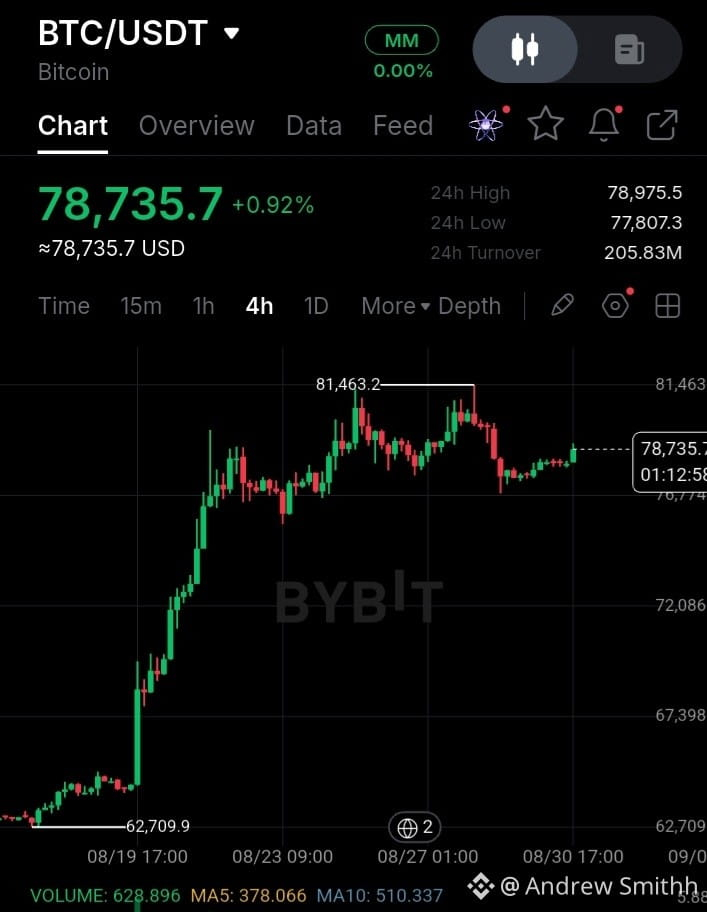
$BTC Leverage ist extrem unausgewogen: ~$8B Shorts vs <200M Longs. Das ist Treibstoff für einen Squeeze. Wenn die Positionierung so einseitig wird, reicht es aus, über den wichtigen Widerstand zu steigen, um kaskadierende Liquidationen auszulösen. Volatilität lädt sich auf. Bleiben Sie scharf.
$BTC Leverage ist extrem unausgewogen: ~$8B Shorts vs <200M Longs.

Das ist Treibstoff für einen Squeeze. Wenn die Positionierung so einseitig wird, reicht es aus, über den wichtigen Widerstand zu steigen, um kaskadierende Liquidationen auszulösen.

Volatilität lädt sich auf. Bleiben Sie scharf.
$ROBO Haltestruktur auf dem 1H nach starkem Impuls von $0,020 → $0,048. Höheres Tief gebildet um $0,032 und konsolidiert jetzt über der Unterstützung von $0,036. Verkaufsdruck schwächt sich ab, während die Kerzen enger werden = Akkumulationsphase. Eine saubere Rückeroberung von $0,043 öffnet den Weg zu $0,050+. Momentum baut sich leise auf. Bullische Neigung bleibt über $0,035 intakt. @FabricFND $ROBO #ROBO
$ROBO Haltestruktur auf dem 1H nach starkem Impuls von $0,020 → $0,048.

Höheres Tief gebildet um $0,032 und konsolidiert jetzt über der Unterstützung von $0,036.

Verkaufsdruck schwächt sich ab, während die Kerzen enger werden = Akkumulationsphase.

Eine saubere Rückeroberung von $0,043 öffnet den Weg zu $0,050+.

Momentum baut sich leise auf. Bullische Neigung bleibt über $0,035 intakt.

@Fabric Foundation $ROBO #ROBO
Übersetzung ansehen
$MIRA showing early stabilization on the 1H chart after sharp correction from $0.15 highs. Price holding above $0.0836 local low with tight consolidation near $0.085–$0.086. Selling pressure fading, candles compressing = volatility squeeze building. A reclaim of $0.095 flips structure bullish. Accumulation zone forming @mira_network $MIRA #Mira
$MIRA showing early stabilization on the 1H chart after sharp correction from $0.15 highs.

Price holding above $0.0836 local low with tight consolidation near $0.085–$0.086.

Selling pressure fading, candles compressing = volatility squeeze building.

A reclaim of $0.095 flips structure bullish. Accumulation zone forming

@Mira - Trust Layer of AI $MIRA #Mira
Der Aufstieg des autonomen Wertes: Warum das Fabric Foundation jetzt wichtig istWir treten in eine Ära ein, in der Maschinen nicht nur Befehle ausführen, sondern Entscheidungen treffen, Werte transagieren und autonom mit anderen Maschinen koordinieren. Von KI-gesteuerten Drohnen und Lagerrobotern bis hin zu autonomen Fahrzeugen und industriellen Cobots entwickelt sich die Robotik schnell über die Automatisierung hinaus zu wirtschaftlicher Teilhabe. Aber es gibt ein Problem. Die heutigen Roboter arbeiten in Silos. Sie sind auf zentrale Cloud-Plattformen, fragmentierte APIs und proprietäre Ökosysteme angewiesen. Sie können nicht nativ Vermögenswerte besitzen, Identität überprüfen, vertrauenslos Transaktionen durchführen oder wirtschaftlich mit anderen Maschinen koordinieren.

Der Aufstieg des autonomen Wertes: Warum das Fabric Foundation jetzt wichtig ist

Wir treten in eine Ära ein, in der Maschinen nicht nur Befehle ausführen, sondern Entscheidungen treffen, Werte transagieren und autonom mit anderen Maschinen koordinieren. Von KI-gesteuerten Drohnen und Lagerrobotern bis hin zu autonomen Fahrzeugen und industriellen Cobots entwickelt sich die Robotik schnell über die Automatisierung hinaus zu wirtschaftlicher Teilhabe.
Aber es gibt ein Problem.
Die heutigen Roboter arbeiten in Silos. Sie sind auf zentrale Cloud-Plattformen, fragmentierte APIs und proprietäre Ökosysteme angewiesen. Sie können nicht nativ Vermögenswerte besitzen, Identität überprüfen, vertrauenslos Transaktionen durchführen oder wirtschaftlich mit anderen Maschinen koordinieren.
Melde dich an, um weitere Inhalte zu entdecken
Bleib immer am Ball mit den neuesten Nachrichten aus der Kryptowelt
⚡️ Beteilige dich an aktuellen Diskussionen rund um Kryptothemen
💬 Interagiere mit deinen bevorzugten Content-Erstellern
👍 Entdecke für dich interessante Inhalte
E-Mail-Adresse/Telefonnummer
Sitemap
Cookie-Präferenzen
Nutzungsbedingungen der Plattform