
AMJADCRYPTO840
18.2k Beiträge

AMJADCRYPTO840
 Square Verified+
Binance Creator | Breaking News | Whale Moves | Federal Reserve Updates | Helping you stay ahead of the volatility
Trade eröffnen
Hochfrequenz-Trader
10.5 Monate
1.2K+ Following
50.7K+ Follower
26.2K+ Like gegeben
Beiträge
Portfolio
Alle
Zitierungen
Live
ANALYTISCHE EINSTELLUNG
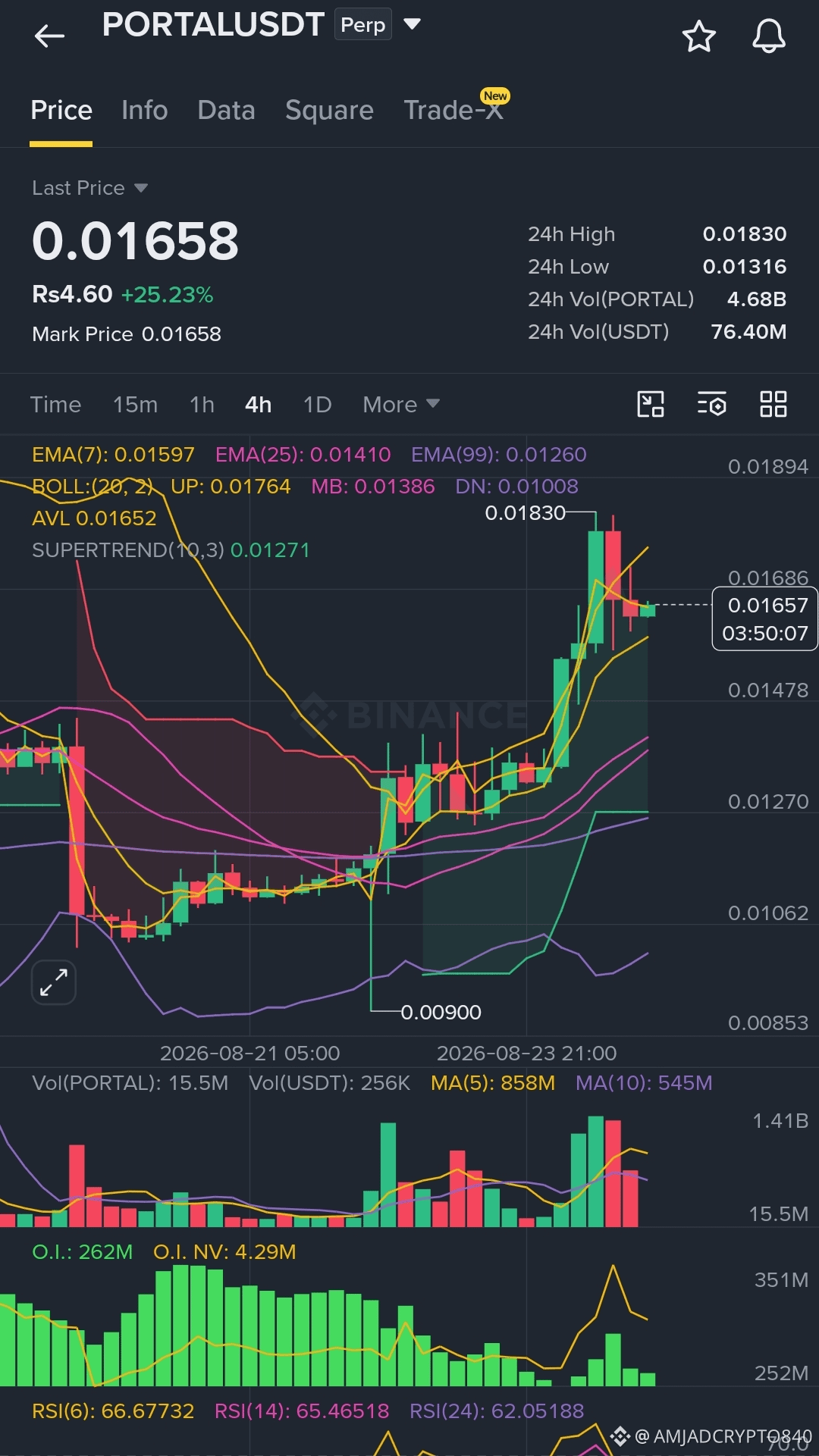
$PORTAL
Vertrag: Perpetual Futures
Aktueller Preis: 0,01658 $
Markt: Moderat bullish
Marktnotiz: Die Struktur über höheren Zeitrahmen bleibt bullish, während sich die unteren Zeitrahmen konsolidieren. Dadurch haben Käufer beim kontrollierten Pullback einen stärkeren relativen Vorteil.
Richtung: Long
Einstieg: 0,01615–0,01630 $
TP: 0,01690 / 0,01760 / 0,01830
SL: 0,01560 $
Wichtige Level
Hauptwiderstand: 0,01760–0,01830 $
Hauptunterstützung: 0,01570–0,01615 $
Hier handeln: $PORTAL
Hinweis: Diese Einrichtung basiert auf meiner persönlichen Beobachtung anhand der verfügbaren Charts, technischer Indikatoren und Derivate-Daten. Die Marktbedingungen können sich schnell ändern, daher können die Ergebnisse variieren. Schütze dein Kapital, steuere das Risiko, handle diszipliniert und DYOR.
$PORTAL
Vertrag: Perpetual Futures
Aktueller Preis: 0,01658 $
Markt: Moderat bullish
Marktnotiz: Die Struktur über höheren Zeitrahmen bleibt bullish, während sich die unteren Zeitrahmen konsolidieren. Dadurch haben Käufer beim kontrollierten Pullback einen stärkeren relativen Vorteil.
Richtung: Long
Einstieg: 0,01615–0,01630 $
TP: 0,01690 / 0,01760 / 0,01830
SL: 0,01560 $
Wichtige Level
Hauptwiderstand: 0,01760–0,01830 $
Hauptunterstützung: 0,01570–0,01615 $
Hier handeln: $PORTAL
Hinweis: Diese Einrichtung basiert auf meiner persönlichen Beobachtung anhand der verfügbaren Charts, technischer Indikatoren und Derivate-Daten. Die Marktbedingungen können sich schnell ändern, daher können die Ergebnisse variieren. Schütze dein Kapital, steuere das Risiko, handle diszipliniert und DYOR.
ANALYTISCHER SETUP
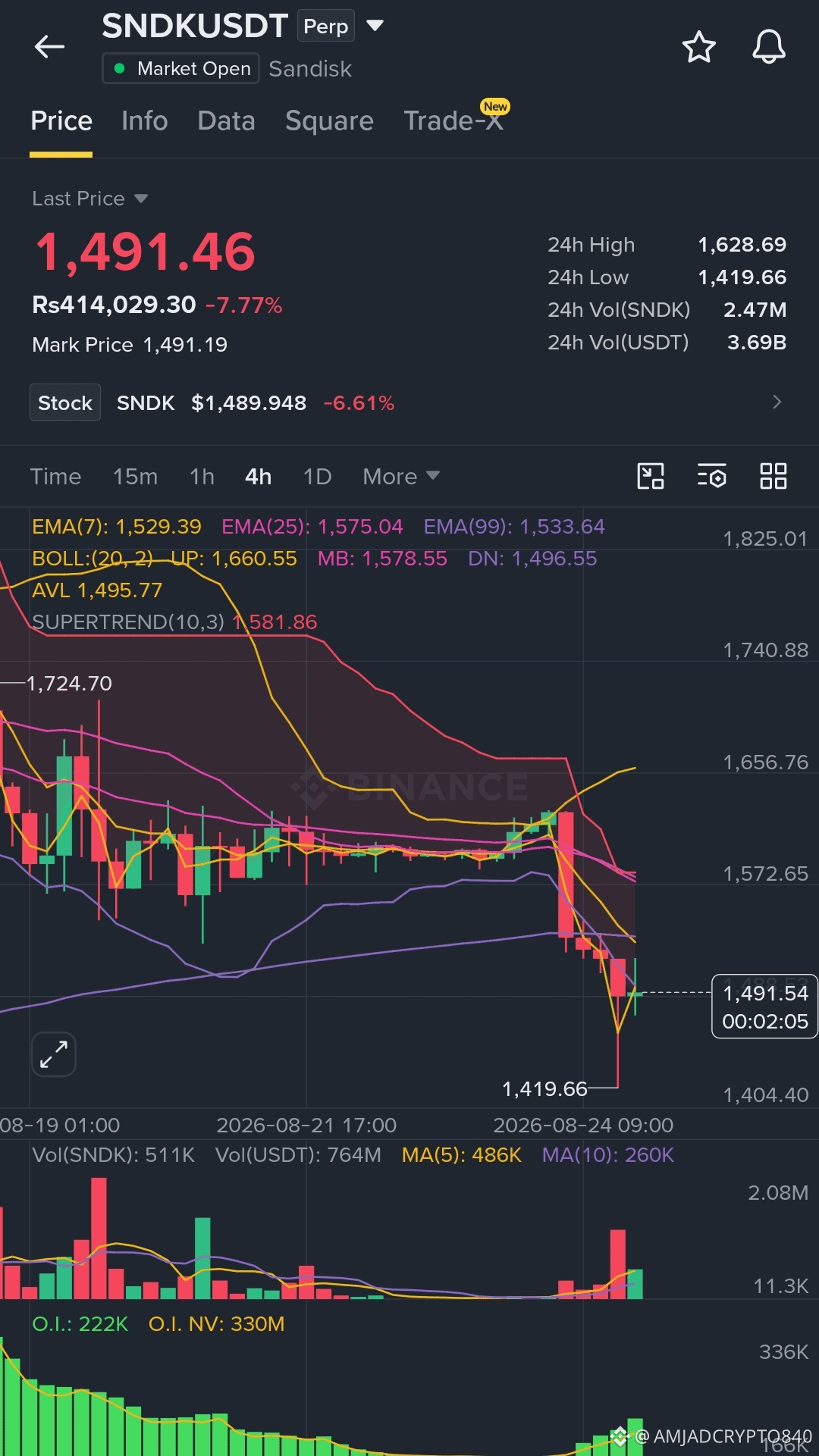
$SNDK
Kontrakt: SNDKUSDT Perpetual
Aktueller Preis: 1.491,79 $
Markt: Moderat bärisch
Marktnotiz: Die Struktur auf höherem Zeitrahmen bleibt nach dem starken Zusammenbruch bärisch, während der aktuelle Rebound auf schwere Widerstände trifft und die hohe Anzahl an Long-Positionen den relativen Vorteil bei den Verkäufern erhält.
Richtung: Short
Einstieg: 1.508–1.524 $
TP: 1.480 / 1.450 / 1.422 $
SL: 1.542 $
Wichtige Levels
Hauptwiderstand: 1.520–1.535 $ Hauptsupport: 1.445–1.420 $
Hier traden: $SNDK
Hinweis: Dieses Setup spiegelt meine persönliche Beobachtung basierend auf den verfügbaren Charts, technischen Indikatoren und Derivate-Daten wider. Die Marktbedingungen können sich schnell ändern, daher können die Ergebnisse variieren. Schütze dein Kapital, steuere das Risiko, trade diszipliniert und DYOR.
$SNDK
Kontrakt: SNDKUSDT Perpetual
Aktueller Preis: 1.491,79 $
Markt: Moderat bärisch
Marktnotiz: Die Struktur auf höherem Zeitrahmen bleibt nach dem starken Zusammenbruch bärisch, während der aktuelle Rebound auf schwere Widerstände trifft und die hohe Anzahl an Long-Positionen den relativen Vorteil bei den Verkäufern erhält.
Richtung: Short
Einstieg: 1.508–1.524 $
TP: 1.480 / 1.450 / 1.422 $
SL: 1.542 $
Wichtige Levels
Hauptwiderstand: 1.520–1.535 $ Hauptsupport: 1.445–1.420 $
Hier traden: $SNDK
Hinweis: Dieses Setup spiegelt meine persönliche Beobachtung basierend auf den verfügbaren Charts, technischen Indikatoren und Derivate-Daten wider. Die Marktbedingungen können sich schnell ändern, daher können die Ergebnisse variieren. Schütze dein Kapital, steuere das Risiko, trade diszipliniert und DYOR.
ANALYTISCHE EINRICHTUNG
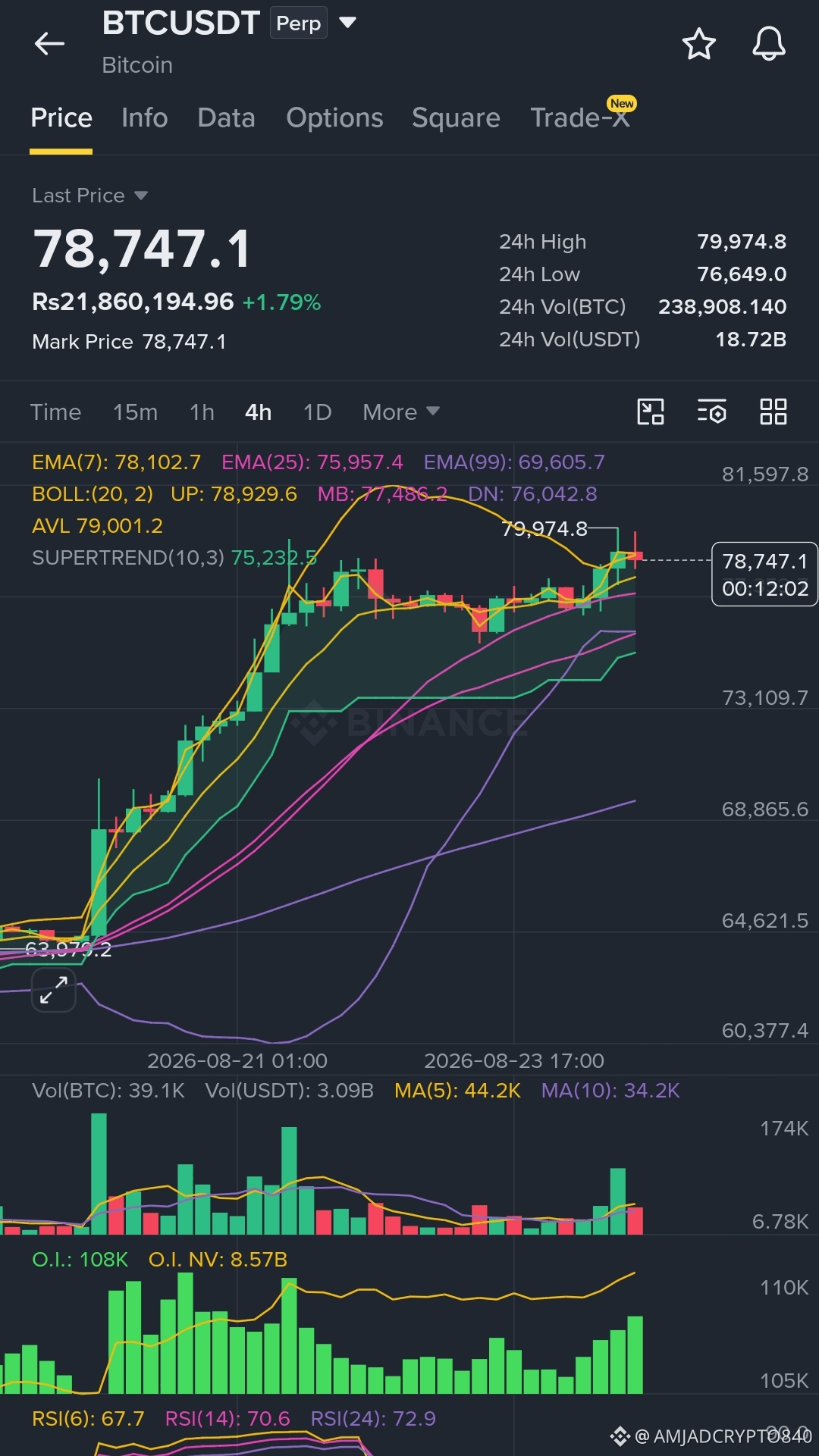
$BTC
Vertrag: BTCUSDT Perpetual
Aktueller Preis: $78.820,62
Markt: Moderat bullisch
Marktnotiz: Die Struktur auf höherer Zeitebene bleibt bullisch, während sich der kurzfristige Momentum-Impuls nach der Ablehnung bei $79.974 abkühlt. Das spricht eher für einen Long-Einstieg bei einem Rücksetzer statt dafür, dem aktuellen Preis hinterherzulaufen.
Richtung: Long
Einstieg: $78.150–$78.350
TP: $78.950 / $79.400 / $79.950 SL:
$77.750
Wichtige Levels
Hauptwiderstand: $79.400–$79.975
Hauptsupport: $78.100–$78.350
Hier handeln: $BTC
Hinweis: Dieses Setup basiert auf meiner persönlichen Beobachtung anhand der verfügbaren Charts, technischer Indikatoren und Derivate-Daten. Die Marktbedingungen können sich schnell ändern, daher können die Ergebnisse variieren. Schütze dein Kapital, steuere dein Risiko, trade diszipliniert und DYOR.
$BTC
Vertrag: BTCUSDT Perpetual
Aktueller Preis: $78.820,62
Markt: Moderat bullisch
Marktnotiz: Die Struktur auf höherer Zeitebene bleibt bullisch, während sich der kurzfristige Momentum-Impuls nach der Ablehnung bei $79.974 abkühlt. Das spricht eher für einen Long-Einstieg bei einem Rücksetzer statt dafür, dem aktuellen Preis hinterherzulaufen.
Richtung: Long
Einstieg: $78.150–$78.350
TP: $78.950 / $79.400 / $79.950 SL:
$77.750
Wichtige Levels
Hauptwiderstand: $79.400–$79.975
Hauptsupport: $78.100–$78.350
Hier handeln: $BTC
Hinweis: Dieses Setup basiert auf meiner persönlichen Beobachtung anhand der verfügbaren Charts, technischer Indikatoren und Derivate-Daten. Die Marktbedingungen können sich schnell ändern, daher können die Ergebnisse variieren. Schütze dein Kapital, steuere dein Risiko, trade diszipliniert und DYOR.

ANALYTISCHES SETUP
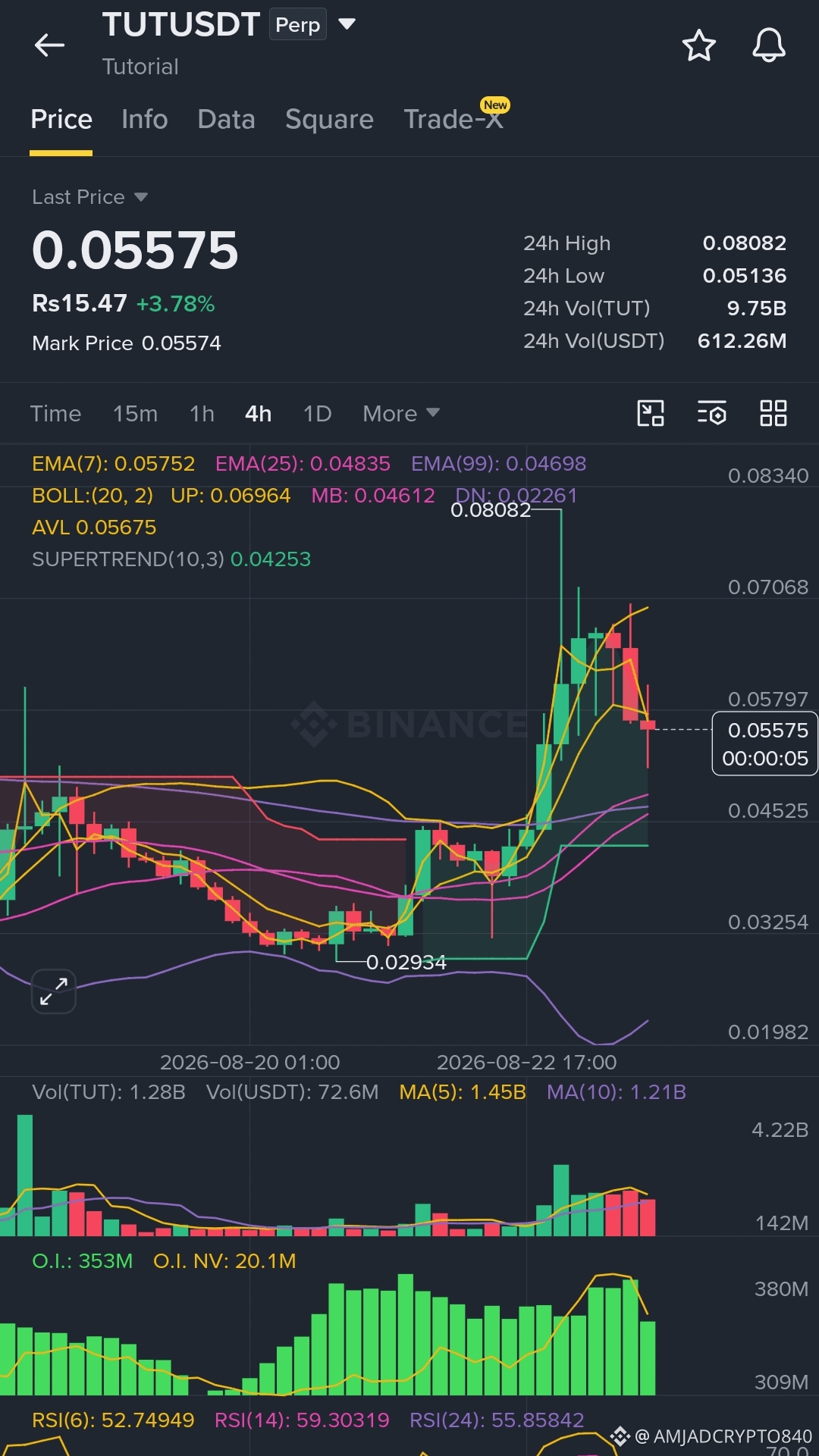
$TUT
Vertrag: TUTUSDT Perpetual
Aktueller Preis: 0,05577 $
Markt: Moderat bullisch
Markt-Hinweis: Die 4H-Struktur bleibt bullisch, trotz einer scharfen Korrektur im niedrigeren Zeitrahmen. Die stärkere relative Gelegenheit spricht für einen Long von einem etablierten Support.
Richtung: Long
Einstieg: 0,05340–0,05450 $
TP: 0,05870 / 0,06180 / 0,06600 $
SL: 0,05080 $
Wichtige Levels
Hauptwiderstand: 0,05870–0,06180 $
Hauptsupport: 0,05135–0,05400 $
Hier handeln: $TUT
Hinweis: Dieses Setup spiegelt meine persönliche Beobachtung auf Basis der verfügbaren Charts, technischen Indikatoren und Derivate-Daten wider. Marktbedingungen können sich schnell ändern, daher können die Ergebnisse variieren. Schütze dein Kapital, steuere das Risiko, trade diszipliniert und DYOR.
$TUT
Vertrag: TUTUSDT Perpetual
Aktueller Preis: 0,05577 $
Markt: Moderat bullisch
Markt-Hinweis: Die 4H-Struktur bleibt bullisch, trotz einer scharfen Korrektur im niedrigeren Zeitrahmen. Die stärkere relative Gelegenheit spricht für einen Long von einem etablierten Support.
Richtung: Long
Einstieg: 0,05340–0,05450 $
TP: 0,05870 / 0,06180 / 0,06600 $
SL: 0,05080 $
Wichtige Levels
Hauptwiderstand: 0,05870–0,06180 $
Hauptsupport: 0,05135–0,05400 $
Hier handeln: $TUT
Hinweis: Dieses Setup spiegelt meine persönliche Beobachtung auf Basis der verfügbaren Charts, technischen Indikatoren und Derivate-Daten wider. Marktbedingungen können sich schnell ändern, daher können die Ergebnisse variieren. Schütze dein Kapital, steuere das Risiko, trade diszipliniert und DYOR.
Übersetzung ansehen
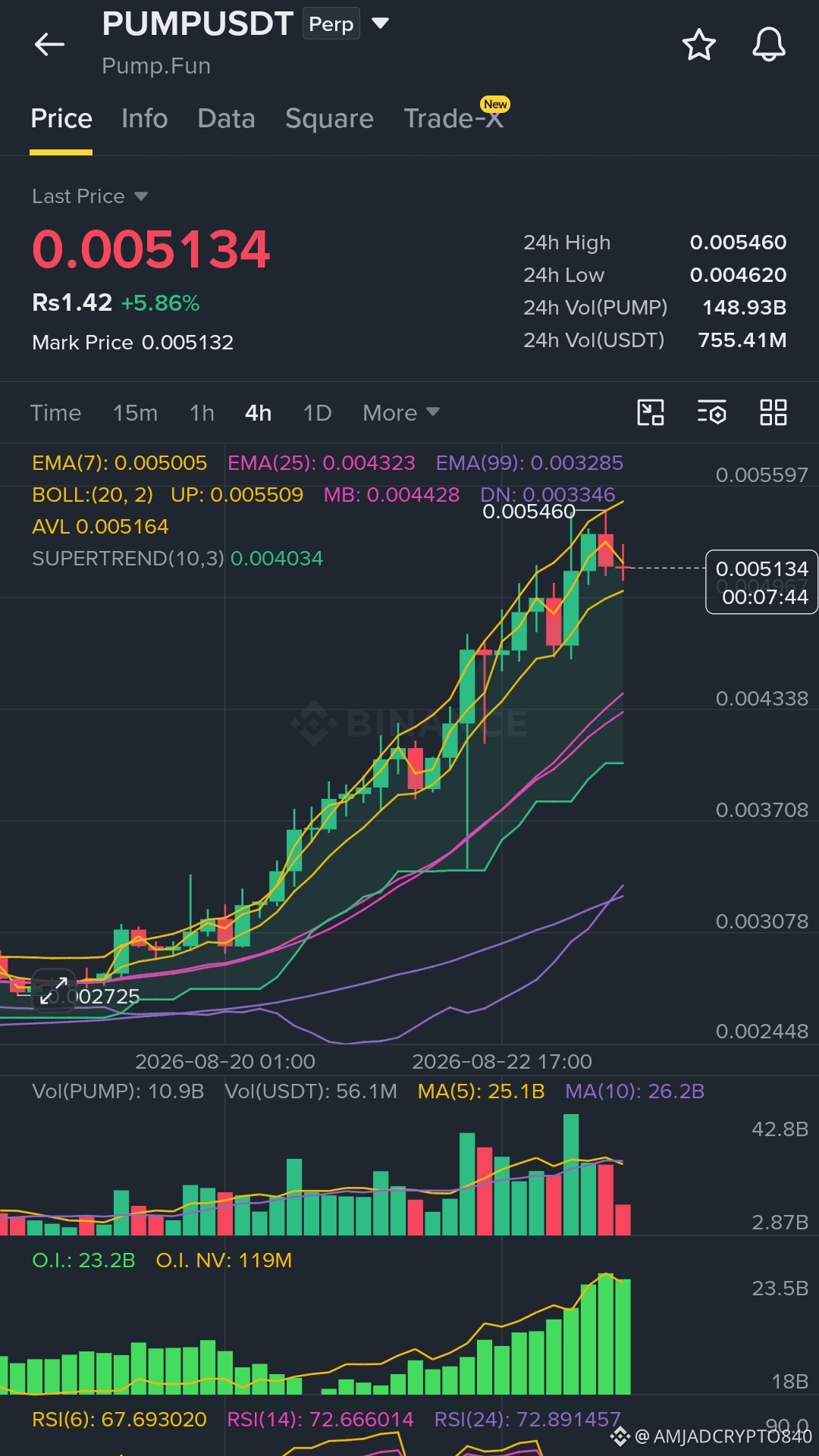
ANALYTICAL SETUP
$PUMP
Contract: PUMPUSDT Perpetual
Current Price: $0.005129
Market: Moderately Bullish
Market Note: Higher-timeframe structure remains bullish while short-term momentum is consolidating, giving the long side the stronger relative advantage from support.
Direction: Long
Entry: $0.005030–$0.005075
TP: $0.005230 / $0.005350 / $0.005460
SL: $0.004970
Key Levels
Main Resistance: $0.005230–$0.005460
Main Support: $0.005020–$0.005065
Trade Here: $PUMP
Note: This setup reflects my personal observation based on available charts, technical indicators, and derivatives data. Market conditions can change rapidly, so outcomes may vary. Protect your capital, manage risk, trade with discipline, and DYOR.
$PUMP
Contract: PUMPUSDT Perpetual
Current Price: $0.005129
Market: Moderately Bullish
Market Note: Higher-timeframe structure remains bullish while short-term momentum is consolidating, giving the long side the stronger relative advantage from support.
Direction: Long
Entry: $0.005030–$0.005075
TP: $0.005230 / $0.005350 / $0.005460
SL: $0.004970
Key Levels
Main Resistance: $0.005230–$0.005460
Main Support: $0.005020–$0.005065
Trade Here: $PUMP
Note: This setup reflects my personal observation based on available charts, technical indicators, and derivatives data. Market conditions can change rapidly, so outcomes may vary. Protect your capital, manage risk, trade with discipline, and DYOR.
Übersetzung ansehen
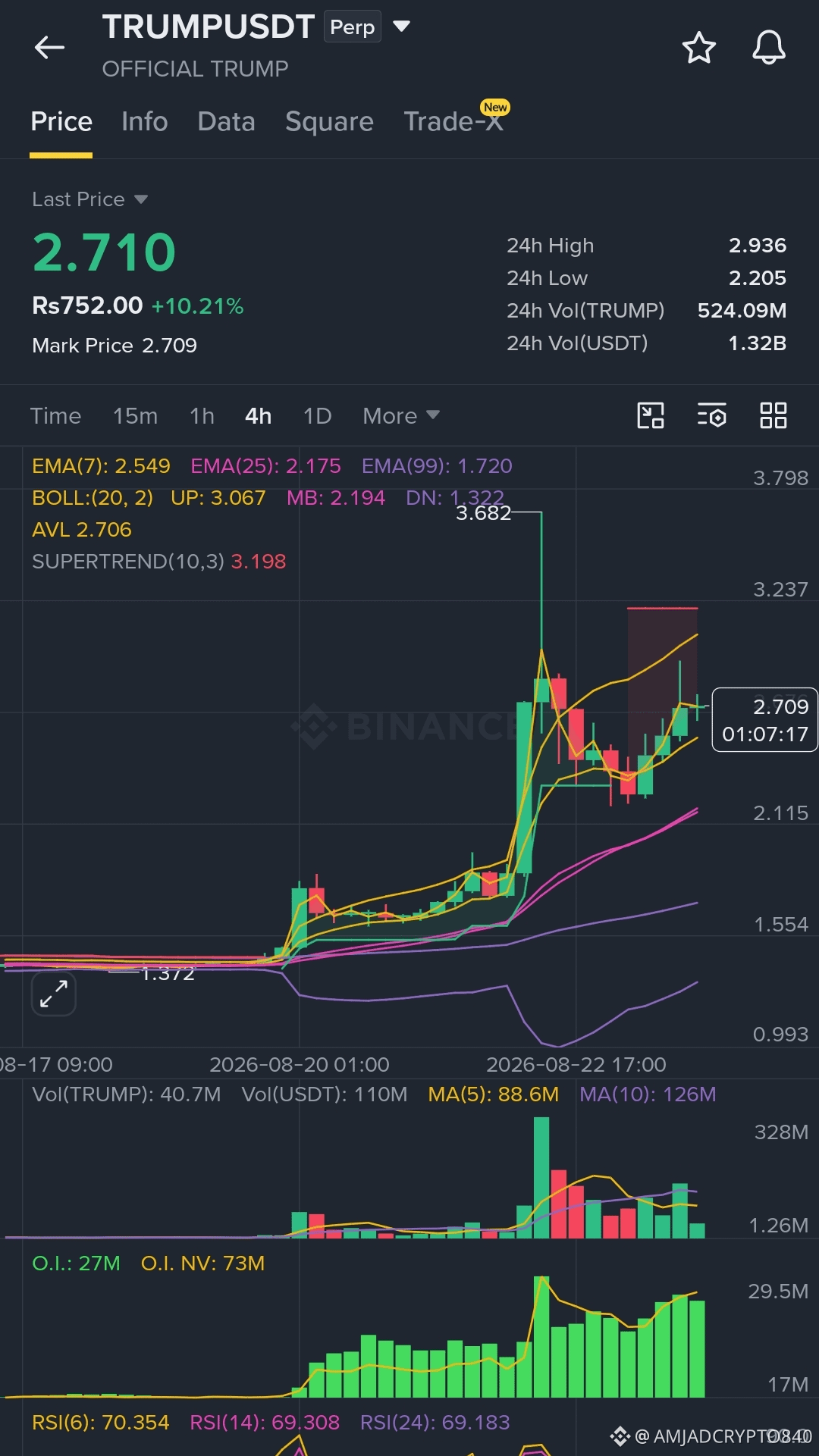
ANALYTICAL SETUP
$TRUMP
Contract: TRUMPUSDT Perpetual
Current Price: $2.711
Market: Moderately Bullish
Market Note: Higher-timeframe structure remains bullish, but short-term momentum is consolidating with weakening volume, negative daily flow, and heavier sell-side positioning near resistance.
Direction: Long
Entry: $2.640–$2.680
TP: $2.800 / $2.936 / $3.060
SL: $2.575
Key Levels
Main Resistance: $2.800–$2.936
Main Support: $2.620–$2.680
Trade Here: $TRUMP
Note: This setup reflects my personal observation based on available charts, technical indicators, and derivatives data. Market conditions can change rapidly, so outcomes may vary. Protect your capital, manage risk, trade with discipline, and DYOR.
$TRUMP
Contract: TRUMPUSDT Perpetual
Current Price: $2.711
Market: Moderately Bullish
Market Note: Higher-timeframe structure remains bullish, but short-term momentum is consolidating with weakening volume, negative daily flow, and heavier sell-side positioning near resistance.
Direction: Long
Entry: $2.640–$2.680
TP: $2.800 / $2.936 / $3.060
SL: $2.575
Key Levels
Main Resistance: $2.800–$2.936
Main Support: $2.620–$2.680
Trade Here: $TRUMP
Note: This setup reflects my personal observation based on available charts, technical indicators, and derivatives data. Market conditions can change rapidly, so outcomes may vary. Protect your capital, manage risk, trade with discipline, and DYOR.
Übersetzung ansehen
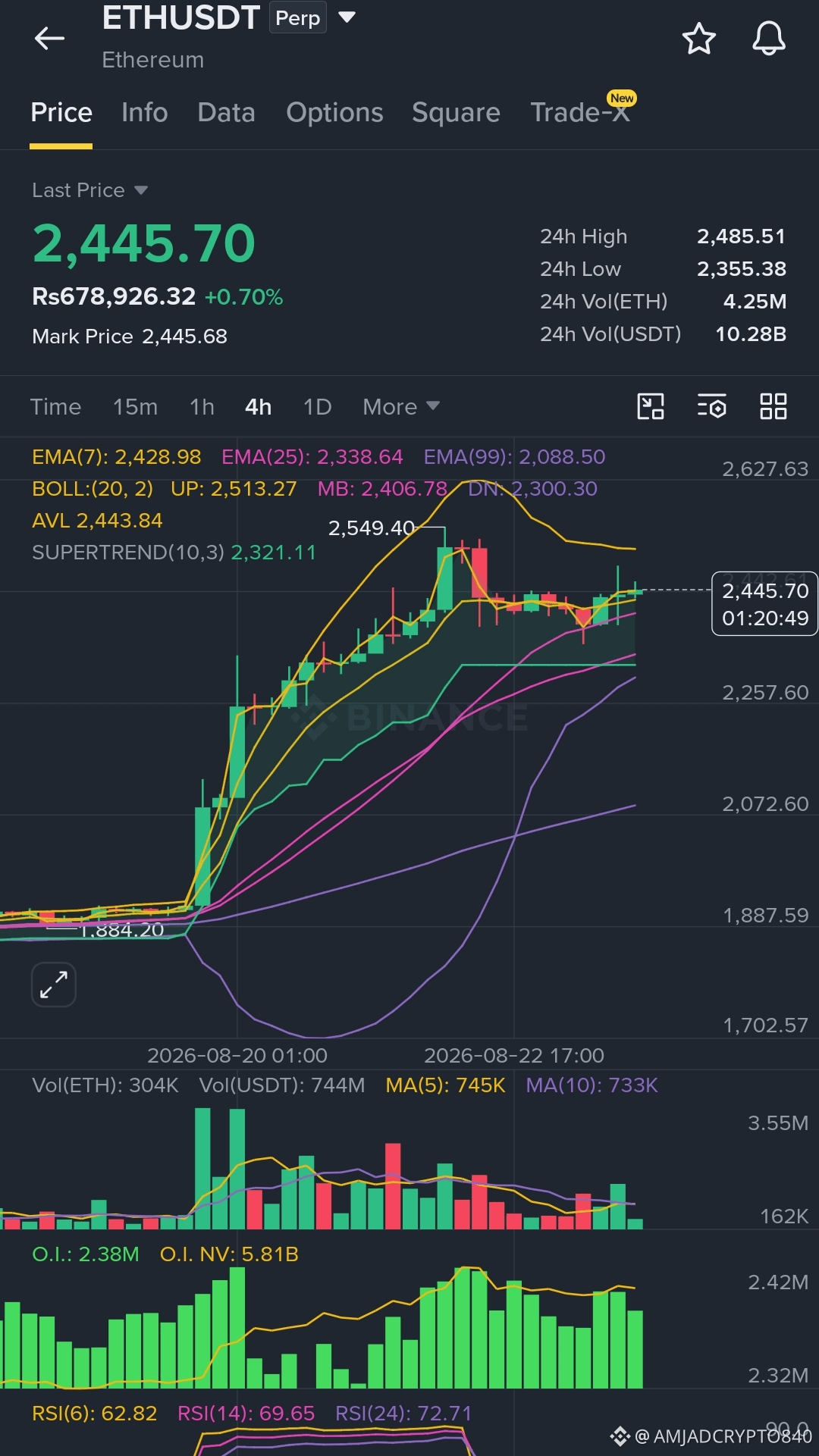
ANALYTICAL SETUP
$ETH
Contract: ETHUSDT Perpetual
Current Price: $2,446.74
Market: Moderately Bullish
Market Note: Higher-timeframe structure remains bullish with positive capital inflow, while short-term consolidation and crowded longs favor buying from support rather than chasing current price.
Direction: Long
Entry: $2,428–$2,438
TP: $2,460 / $2,478 / $2,485
SL: $2,412
Key Levels
Main Resistance: $2,460–$2,485
Main Support: $2,426–$2,438
Trade Here: $ETH
Note: This setup reflects my personal observation based on available charts, technical indicators, and derivatives data. Market conditions can change rapidly, so outcomes may vary. Protect your capital, manage risk, trade with discipline, and DYOR.
$ETH
Contract: ETHUSDT Perpetual
Current Price: $2,446.74
Market: Moderately Bullish
Market Note: Higher-timeframe structure remains bullish with positive capital inflow, while short-term consolidation and crowded longs favor buying from support rather than chasing current price.
Direction: Long
Entry: $2,428–$2,438
TP: $2,460 / $2,478 / $2,485
SL: $2,412
Key Levels
Main Resistance: $2,460–$2,485
Main Support: $2,426–$2,438
Trade Here: $ETH
Note: This setup reflects my personal observation based on available charts, technical indicators, and derivatives data. Market conditions can change rapidly, so outcomes may vary. Protect your capital, manage risk, trade with discipline, and DYOR.
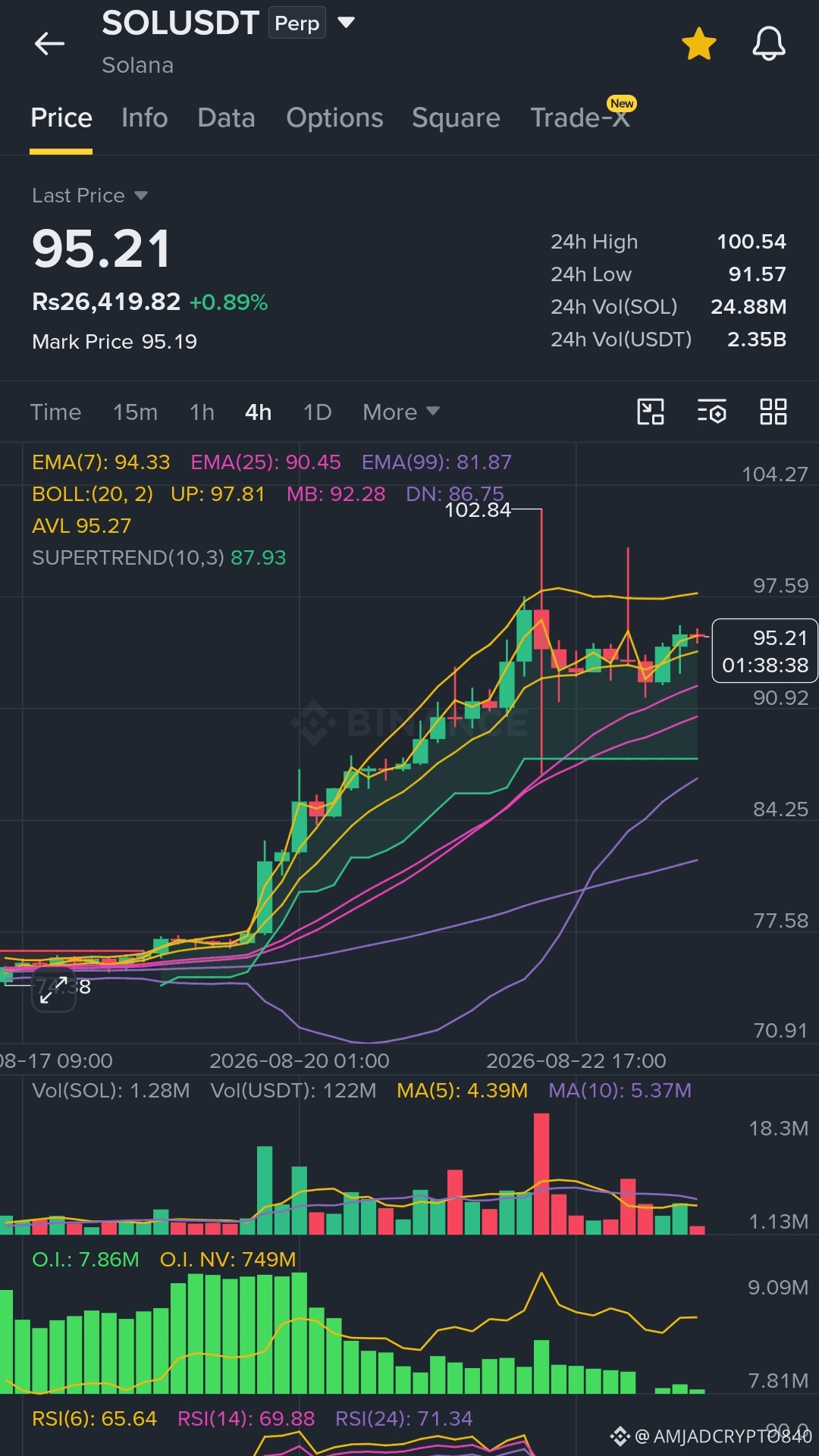
ANALYTISCHES SETUP
$SOL
Kontrakt: USDT-M Perpetual
Aktueller Preis: $95.17
Markt: Moderat Bullisch
Markt-Notiz: Die Struktur über höhere Timeframes bleibt bullisch, während der kurzfristige Preis sich unterhalb des Widerstands konsolidiert. Ein bescheidener relativer Vorteil bleibt dabei weiterhin zugunsten der Käufer.
Richtung: Long
Einstieg: $94.80–$95.05
TP: $95.80 / $96.40 / $97.75
SL: $94.15
Wichtige Levels
Hauptwiderstand: $95.80–$96.40
Hauptsupport: $94.25–$94.80
Hier handeln: $SOL
Hinweis: Dieses Setup spiegelt meine persönliche Beobachtung basierend auf den verfügbaren Charts, technischen Indikatoren und Derivate-Daten wider. Die Marktlage kann sich schnell ändern, daher können die Ergebnisse variieren. Schütze dein Kapital, manage das Risiko, handle diszipliniert und DYOR.
$SOL
Kontrakt: USDT-M Perpetual
Aktueller Preis: $95.17
Markt: Moderat Bullisch
Markt-Notiz: Die Struktur über höhere Timeframes bleibt bullisch, während der kurzfristige Preis sich unterhalb des Widerstands konsolidiert. Ein bescheidener relativer Vorteil bleibt dabei weiterhin zugunsten der Käufer.
Richtung: Long
Einstieg: $94.80–$95.05
TP: $95.80 / $96.40 / $97.75
SL: $94.15
Wichtige Levels
Hauptwiderstand: $95.80–$96.40
Hauptsupport: $94.25–$94.80
Hier handeln: $SOL
Hinweis: Dieses Setup spiegelt meine persönliche Beobachtung basierend auf den verfügbaren Charts, technischen Indikatoren und Derivate-Daten wider. Die Marktlage kann sich schnell ändern, daher können die Ergebnisse variieren. Schütze dein Kapital, manage das Risiko, handle diszipliniert und DYOR.
ANALYTISCHE EINSTELLUNG
$BTC
Vertrag: BTCUSDT Perpetual
Aktueller Preis: 77.203,51 $
Markt: Konsolidierung
Marktbeobachtung: Die Struktur über höhere Timeframes bleibt bullisch, während sich der kurzfristige Impuls nahe dem Support abkühlt, wodurch Käufer einen moderaten relativen Vorteil haben.
Richtung: Long
Einstieg: 76.980–77.060 $
TP: 77.420 / 77.560 / 77.770 $
SL: 76.820 $
Wichtige Kursniveaus
Hauptwiderstand: 77.530–77.780 $
Hauptsupport: 76.980–77.060 $
Hier handeln: $BTC
Hinweis: Diese Konfiguration spiegelt meine persönliche Beobachtung anhand der verfügbaren Charts, technischen Indikatoren und Derivate-Daten wider. Die Marktbedingungen können sich schnell ändern, daher können die Ergebnisse abweichen. Schütze dein Kapital, steuere das Risiko, handle diszipliniert und DYOR.
$BTC
Vertrag: BTCUSDT Perpetual
Aktueller Preis: 77.203,51 $
Markt: Konsolidierung
Marktbeobachtung: Die Struktur über höhere Timeframes bleibt bullisch, während sich der kurzfristige Impuls nahe dem Support abkühlt, wodurch Käufer einen moderaten relativen Vorteil haben.
Richtung: Long
Einstieg: 76.980–77.060 $
TP: 77.420 / 77.560 / 77.770 $
SL: 76.820 $
Wichtige Kursniveaus
Hauptwiderstand: 77.530–77.780 $
Hauptsupport: 76.980–77.060 $
Hier handeln: $BTC
Hinweis: Diese Konfiguration spiegelt meine persönliche Beobachtung anhand der verfügbaren Charts, technischen Indikatoren und Derivate-Daten wider. Die Marktbedingungen können sich schnell ändern, daher können die Ergebnisse abweichen. Schütze dein Kapital, steuere das Risiko, handle diszipliniert und DYOR.
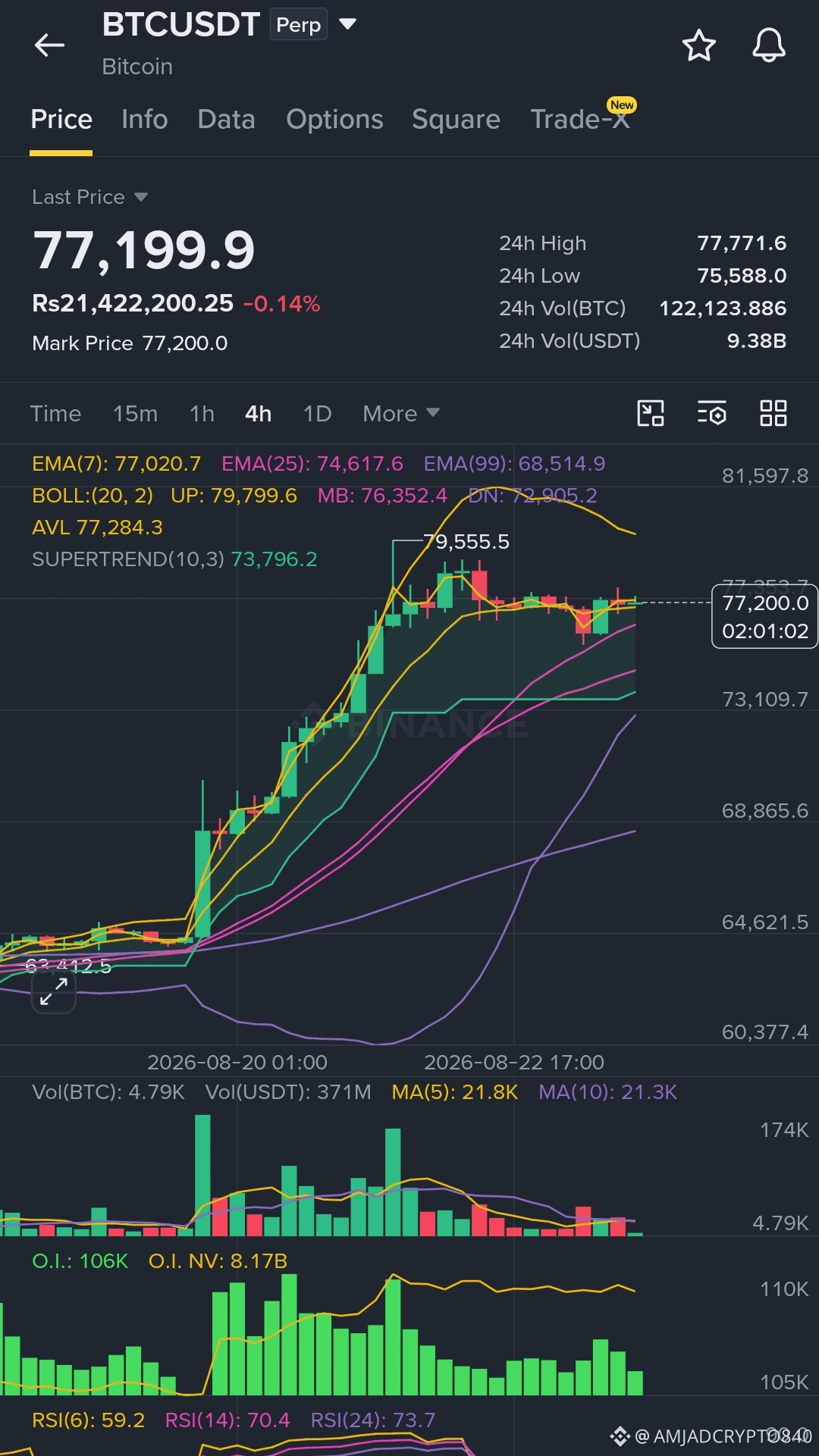
ANALYTICAL SETUP
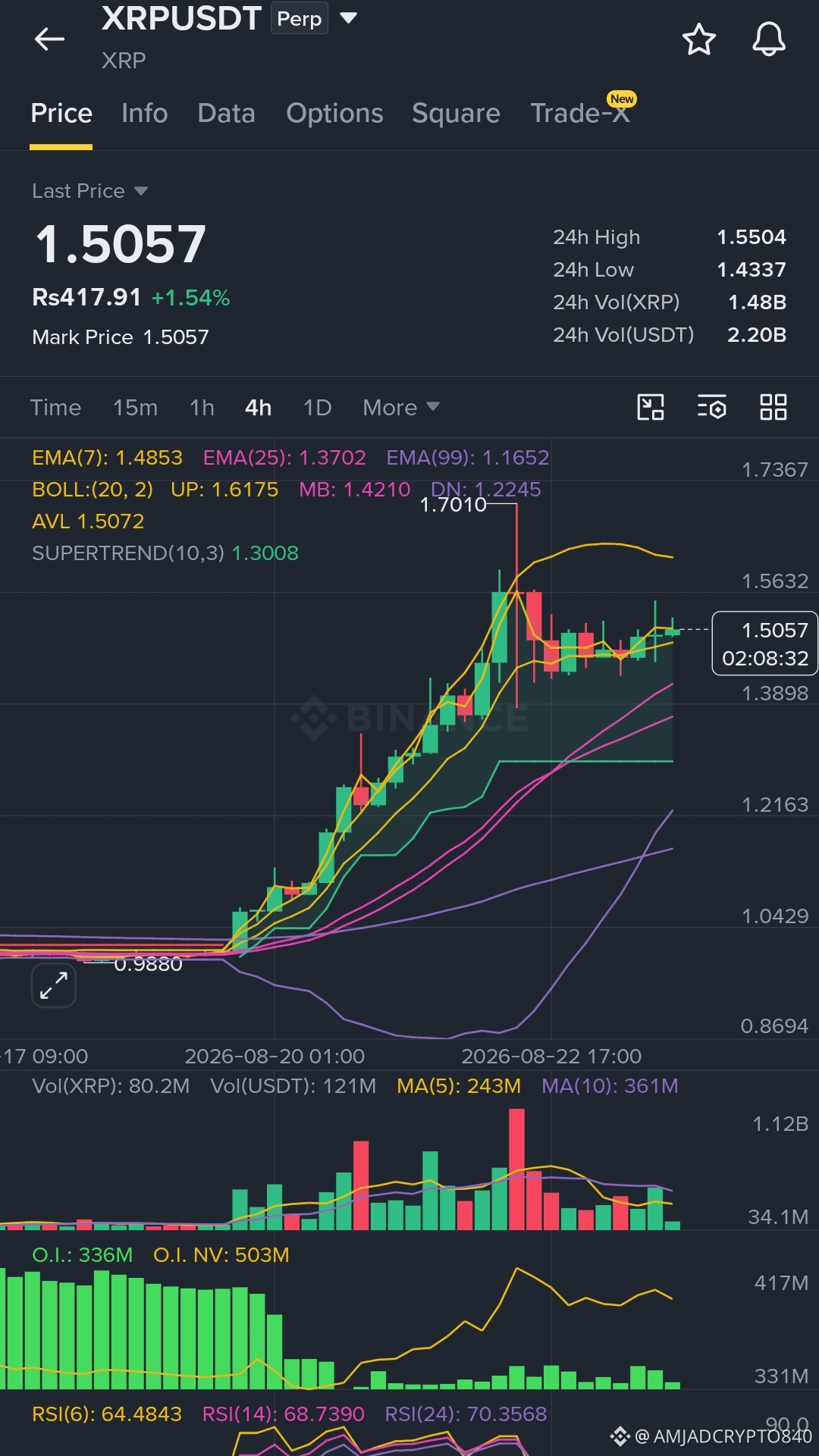
$XRP
Vertrag: XRPUSDT Perpetual
Aktueller Preis: $1.5079
Markt: Konsolidierend
Markt-Notiz: Die Struktur über höhere Timeframes bleibt bullisch, aber das kurzfristige Momentum ist komprimiert und Long-Positionen sind stark frequentiert. Dadurch ist ein Long nahe der unteren Unterstützung das stärkere relative Setup.
Richtung: Long
Einstieg: $1.4850–$1.4930
TP: $1.5153 / $1.5338 / $1.5504
SL: $1.4740
Wichtige Levels
Hauptwiderstand: $1.5153–$1.5338
Hauptunterstützung: $1.4850–$1.4930
Trade Here: $XRP
Hinweis: Dieses Setup basiert auf meiner persönlichen Beobachtung anhand der verfügbaren Charts, technischer Indikatoren und Derivate-Daten. Die Marktbedingungen können sich schnell ändern, daher können die Ergebnisse variieren. Schütze dein Kapital, manage das Risiko, trade diszipliniert und DYOR.
$XRP
Vertrag: XRPUSDT Perpetual
Aktueller Preis: $1.5079
Markt: Konsolidierend
Markt-Notiz: Die Struktur über höhere Timeframes bleibt bullisch, aber das kurzfristige Momentum ist komprimiert und Long-Positionen sind stark frequentiert. Dadurch ist ein Long nahe der unteren Unterstützung das stärkere relative Setup.
Richtung: Long
Einstieg: $1.4850–$1.4930
TP: $1.5153 / $1.5338 / $1.5504
SL: $1.4740
Wichtige Levels
Hauptwiderstand: $1.5153–$1.5338
Hauptunterstützung: $1.4850–$1.4930
Trade Here: $XRP
Hinweis: Dieses Setup basiert auf meiner persönlichen Beobachtung anhand der verfügbaren Charts, technischer Indikatoren und Derivate-Daten. Die Marktbedingungen können sich schnell ändern, daher können die Ergebnisse variieren. Schütze dein Kapital, manage das Risiko, trade diszipliniert und DYOR.
ANALYTISCHES SETUP
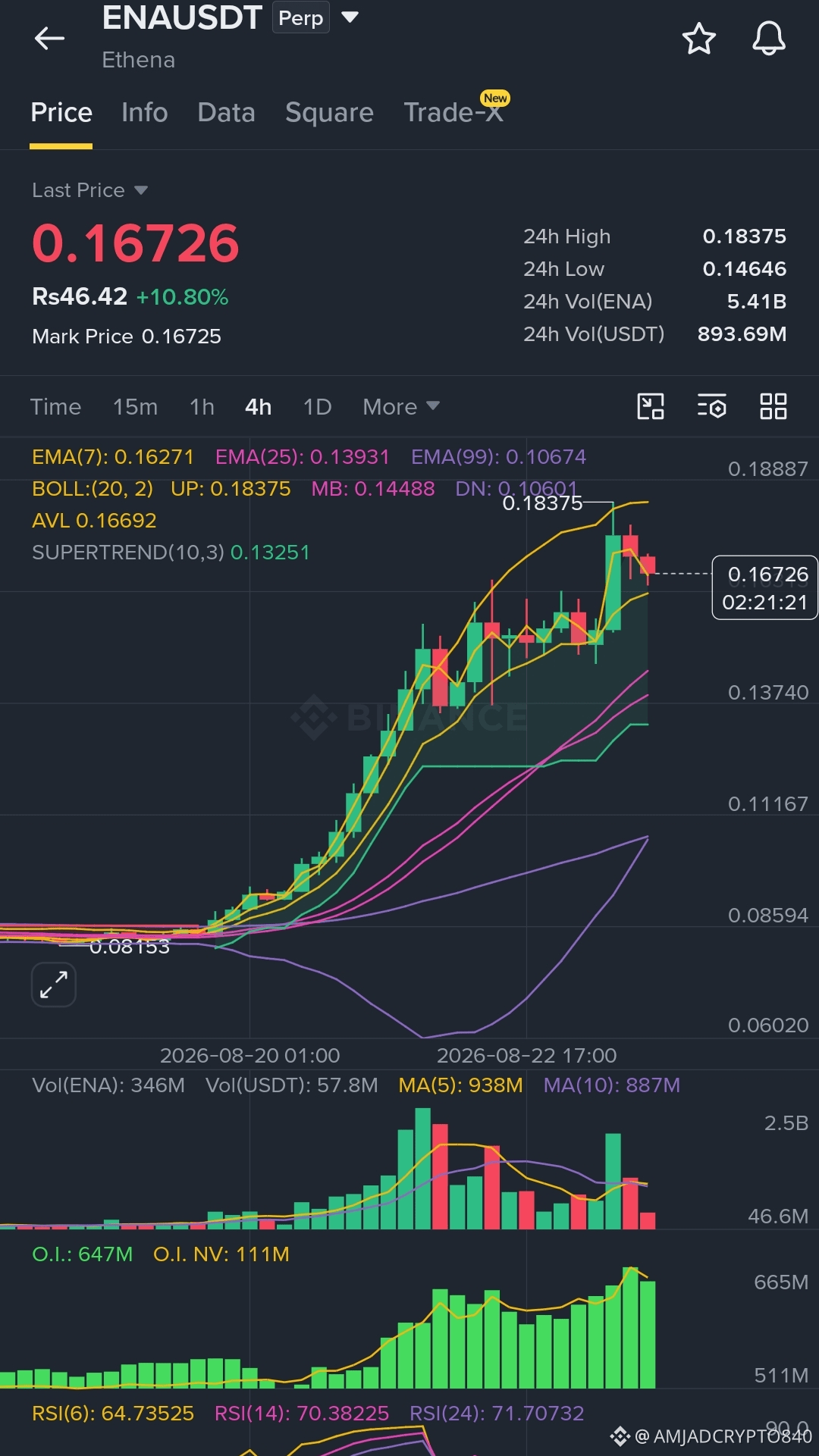
$ENA
Vertrag: ENAUSDT Perpetual
Aktueller Kurs: 0,1672 $
Markt: Moderat bullisch
Markt-Notiz: Die Struktur auf höherem Zeithorizont bleibt bullisch, aber das kurzfristige Momentum korrigiert, wodurch die Long-Seite ihren Vorteil eher durch niedrigere Unterstützung erhält – nicht zum aktuellen Kurs.
Richtung: Long
Einstieg: 0,1625–0,1645 $
TP: 0,1693 / 0,1763 / 0,1837 $
SL: 0,1588 $
Wichtige Levels
Hauptwiderstand: 0,1693–0,1715 $
Hauptunterstützung: 0,1625–0,1645 $
Hier handeln: $ENA
Hinweis: Dieses Setup spiegelt meine persönliche Beobachtung basierend auf den verfügbaren Charts, technischen Indikatoren und Derivate-Daten wider. Die Marktbedingungen können sich schnell ändern, daher können die Ergebnisse variieren. Schütze dein Kapital, manage das Risiko, trade mit Disziplin und mach deine eigene Recherche (DYOR).
$ENA
Vertrag: ENAUSDT Perpetual
Aktueller Kurs: 0,1672 $
Markt: Moderat bullisch
Markt-Notiz: Die Struktur auf höherem Zeithorizont bleibt bullisch, aber das kurzfristige Momentum korrigiert, wodurch die Long-Seite ihren Vorteil eher durch niedrigere Unterstützung erhält – nicht zum aktuellen Kurs.
Richtung: Long
Einstieg: 0,1625–0,1645 $
TP: 0,1693 / 0,1763 / 0,1837 $
SL: 0,1588 $
Wichtige Levels
Hauptwiderstand: 0,1693–0,1715 $
Hauptunterstützung: 0,1625–0,1645 $
Hier handeln: $ENA
Hinweis: Dieses Setup spiegelt meine persönliche Beobachtung basierend auf den verfügbaren Charts, technischen Indikatoren und Derivate-Daten wider. Die Marktbedingungen können sich schnell ändern, daher können die Ergebnisse variieren. Schütze dein Kapital, manage das Risiko, trade mit Disziplin und mach deine eigene Recherche (DYOR).
Übersetzung ansehen
ANALYTICAL SETUP
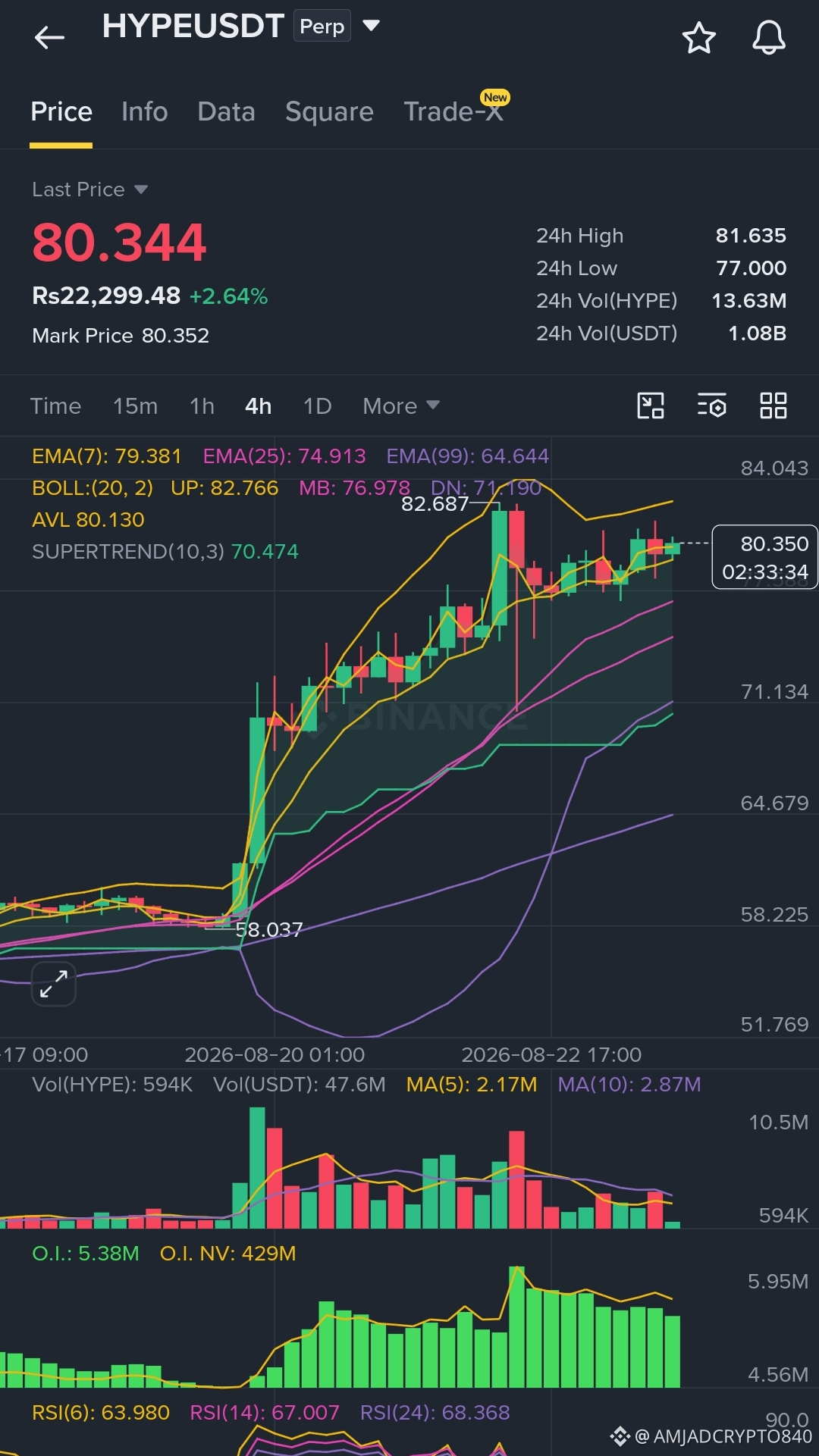
$HYPE
Contract: HYPEUSDT Perpetual Current Price: $80.235
Market: Moderately Bullish
Market Note: Higher-timeframe structure remains bullish, but crowded long positioning and nearby resistance favor a pullback Long rather than chasing current price.
Direction: Long
Entry: $79.20–79.60
TP: $80.90 / $81.63 / $82.68
SL: $78.20
Key Levels
Main Resistance: $81.60–82.70
Main Support: $79.00–79.30
Trade Here: $HYPE
Note: This setup reflects my personal observation based on available charts, technical indicators, and derivatives data. Market conditions can change rapidly, so outcomes may vary. Protect your capital, manage risk, trade with discipline, and DYOR.
$HYPE
Contract: HYPEUSDT Perpetual Current Price: $80.235
Market: Moderately Bullish
Market Note: Higher-timeframe structure remains bullish, but crowded long positioning and nearby resistance favor a pullback Long rather than chasing current price.
Direction: Long
Entry: $79.20–79.60
TP: $80.90 / $81.63 / $82.68
SL: $78.20
Key Levels
Main Resistance: $81.60–82.70
Main Support: $79.00–79.30
Trade Here: $HYPE
Note: This setup reflects my personal observation based on available charts, technical indicators, and derivatives data. Market conditions can change rapidly, so outcomes may vary. Protect your capital, manage risk, trade with discipline, and DYOR.
Übersetzung ansehen
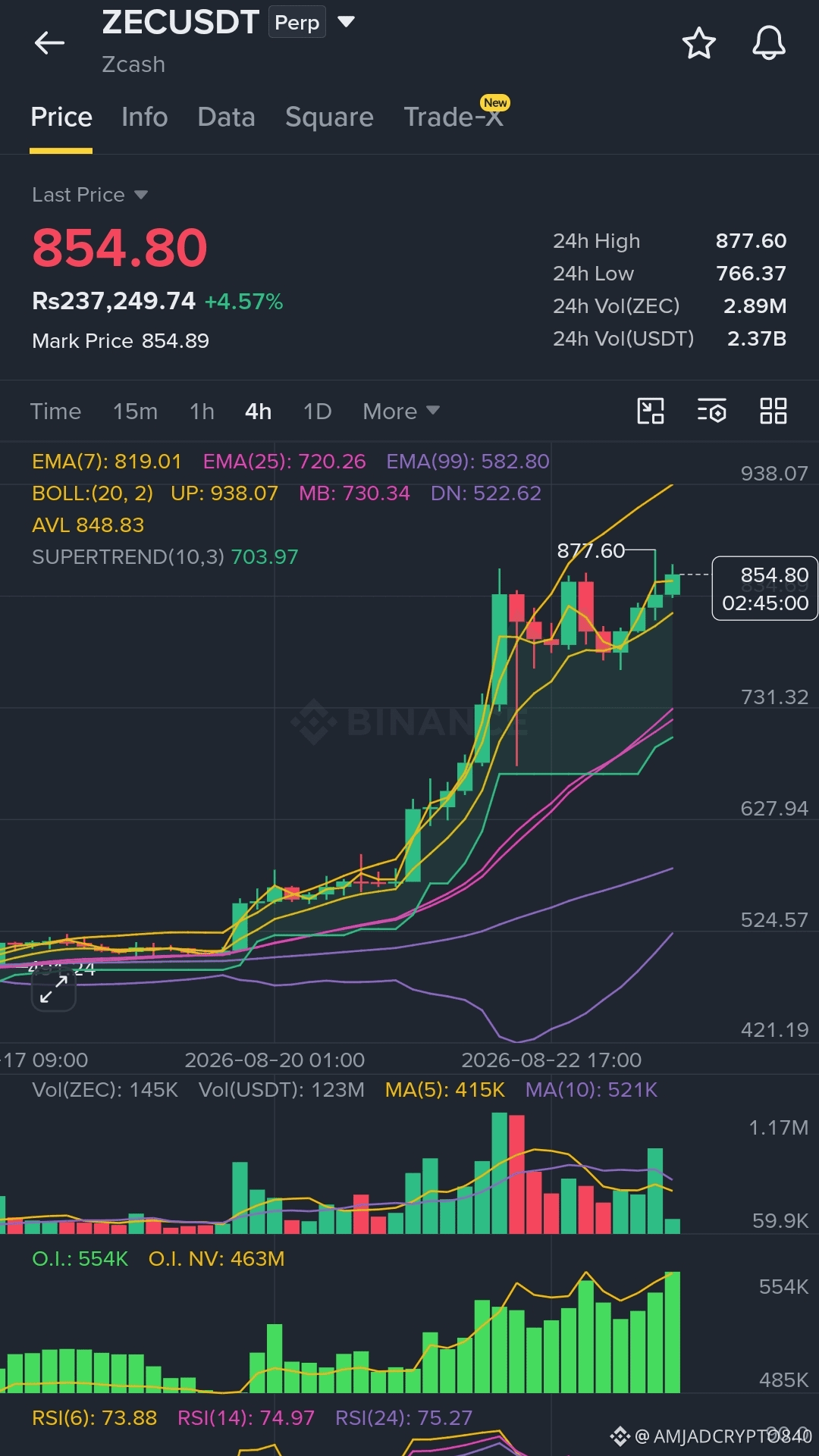
ANALYTICAL SETUP
$ZEC
Contract: ZECUSDT Perpetual Current Price: $851.94
Market: Moderately Bullish
Market Note: Higher-timeframe structure remains bullish with rising OI and short-heavy positioning, but price is extended near resistance, favoring a pullback Long rather than chasing.
Direction: Long
Entry: $842–848
TP: $862 / $877.60 / $900
SL: $833
Key Levels
Main Resistance: $870–877.60 Main Support: $837–842
Trade Here: $ZEC
Note: This setup reflects my personal observation based on available charts, technical indicators, and derivatives data. Market conditions can change rapidly, so outcomes may vary. Protect your capital, manage risk, trade with discipline, and DYOR.
$ZEC
Contract: ZECUSDT Perpetual Current Price: $851.94
Market: Moderately Bullish
Market Note: Higher-timeframe structure remains bullish with rising OI and short-heavy positioning, but price is extended near resistance, favoring a pullback Long rather than chasing.
Direction: Long
Entry: $842–848
TP: $862 / $877.60 / $900
SL: $833
Key Levels
Main Resistance: $870–877.60 Main Support: $837–842
Trade Here: $ZEC
Note: This setup reflects my personal observation based on available charts, technical indicators, and derivatives data. Market conditions can change rapidly, so outcomes may vary. Protect your capital, manage risk, trade with discipline, and DYOR.
Verifiziert
Ich dachte früher, Blockchain-Abrechnung sei ganz einfach: Sobald eine Transaktion in einem Block auftaucht, ist die Aufgabe im Grunde erledigt.
Wenn man genauer hinsieht, merkt man durch @Dusk, dass dabei eine wichtige Unterscheidung übersprungen wird.
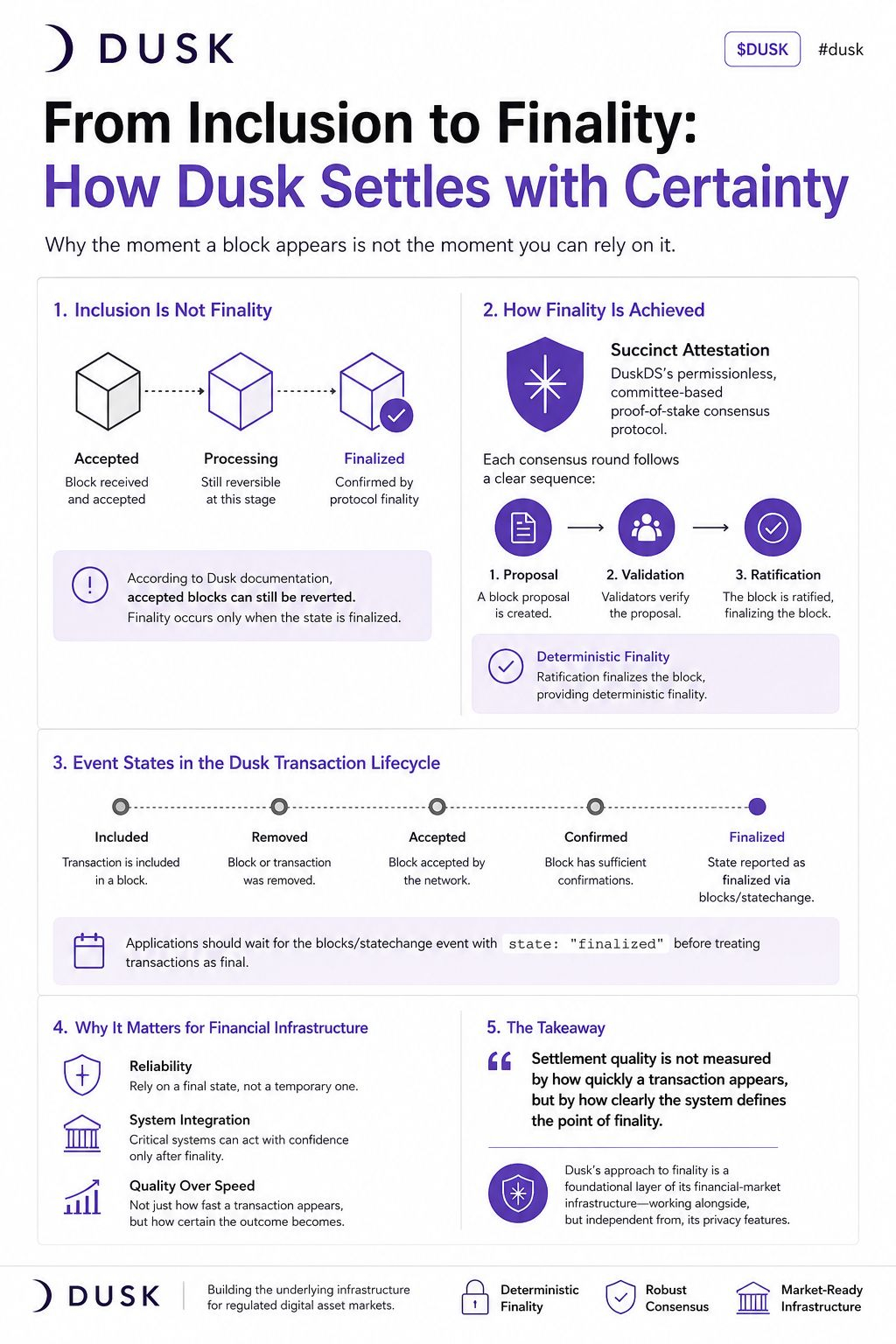
Der Transaktionslebenszyklus von Dusk trennt die Blockannahme von der Finalität. Laut Dunks Dokumentation können angenommene Blöcke noch rückgängig gemacht werden. Ein Block und seine Transaktionen werden final, wenn ein Ereignis „blocks/statechange“ den Status als „finalized“ meldet.
Diese Unterscheidung wird besonders interessant, wenn man den Mechanismus darunter betrachtet.
DuskDS nutzt „Succinct Attestation“, Dunks permissionlesses, komiteebasiertes Proof-of-Stake-Konsensprotokoll. Jede Konsensrunde durchläuft Vorschlag, Validierung und Ratifizierung; die Ratifizierung finalisiert den Block und liefert deterministische Finalität.
Bei gewöhnlicher Blockchain-Aktivität kann der Unterschied zwischen der Aufnahme in einen angenommenen Block und dem Erreichen der Finalität technisch klingen. Bei finanzieller Infrastruktur stellt sich meiner Meinung nach jedoch eine viel praktischere Frage: Ab welchem Zeitpunkt sollte ein anderes System damit beginnen, eine Transaktion als final zu behandeln?
Das hat die Art verändert, wie ich auf Blockchain-Geschwindigkeit schaue.
Vielleicht sollte die Abrechnungsqualität nicht nur danach beurteilt werden, wie schnell eine Transaktion erscheint. Ebenso wichtig ist ein klar definierter Zeitpunkt, an dem der resultierende Zustand final wird.
Das macht Dusks Ansatz zur Finalität zu einem interessanten Bestandteil seiner Infrastruktur für Finanzmärkte – getrennt von den Datenschutzfunktionen, denen normalerweise mehr Aufmerksamkeit geschenkt wird.
@Dusk $DUSK #dusk
Wenn man genauer hinsieht, merkt man durch @Dusk, dass dabei eine wichtige Unterscheidung übersprungen wird.
Der Transaktionslebenszyklus von Dusk trennt die Blockannahme von der Finalität. Laut Dunks Dokumentation können angenommene Blöcke noch rückgängig gemacht werden. Ein Block und seine Transaktionen werden final, wenn ein Ereignis „blocks/statechange“ den Status als „finalized“ meldet.
Diese Unterscheidung wird besonders interessant, wenn man den Mechanismus darunter betrachtet.
DuskDS nutzt „Succinct Attestation“, Dunks permissionlesses, komiteebasiertes Proof-of-Stake-Konsensprotokoll. Jede Konsensrunde durchläuft Vorschlag, Validierung und Ratifizierung; die Ratifizierung finalisiert den Block und liefert deterministische Finalität.
Bei gewöhnlicher Blockchain-Aktivität kann der Unterschied zwischen der Aufnahme in einen angenommenen Block und dem Erreichen der Finalität technisch klingen. Bei finanzieller Infrastruktur stellt sich meiner Meinung nach jedoch eine viel praktischere Frage: Ab welchem Zeitpunkt sollte ein anderes System damit beginnen, eine Transaktion als final zu behandeln?
Das hat die Art verändert, wie ich auf Blockchain-Geschwindigkeit schaue.
Vielleicht sollte die Abrechnungsqualität nicht nur danach beurteilt werden, wie schnell eine Transaktion erscheint. Ebenso wichtig ist ein klar definierter Zeitpunkt, an dem der resultierende Zustand final wird.
Das macht Dusks Ansatz zur Finalität zu einem interessanten Bestandteil seiner Infrastruktur für Finanzmärkte – getrennt von den Datenschutzfunktionen, denen normalerweise mehr Aufmerksamkeit geschenkt wird.
@Dusk $DUSK #dusk
🎙️ 🎉2026狂暴牛市,号角已吹响,行情尽在BSC链!!11月1号马斯克将为火星狗Marvin庆祝生日,这波链上行情一定要抓住!
Beenden
03 h 00 m 27 s
14.4k
67
Verifiziert
Ich dachte früher, das Auf-die-Blockchain-Bringen eines finanziellen Vermögenswerts sei vor allem ein technisches Upgrade. Die schwierigere Frage scheint jedoch zu sein, was passiert, nachdem der Token erstellt wurde.
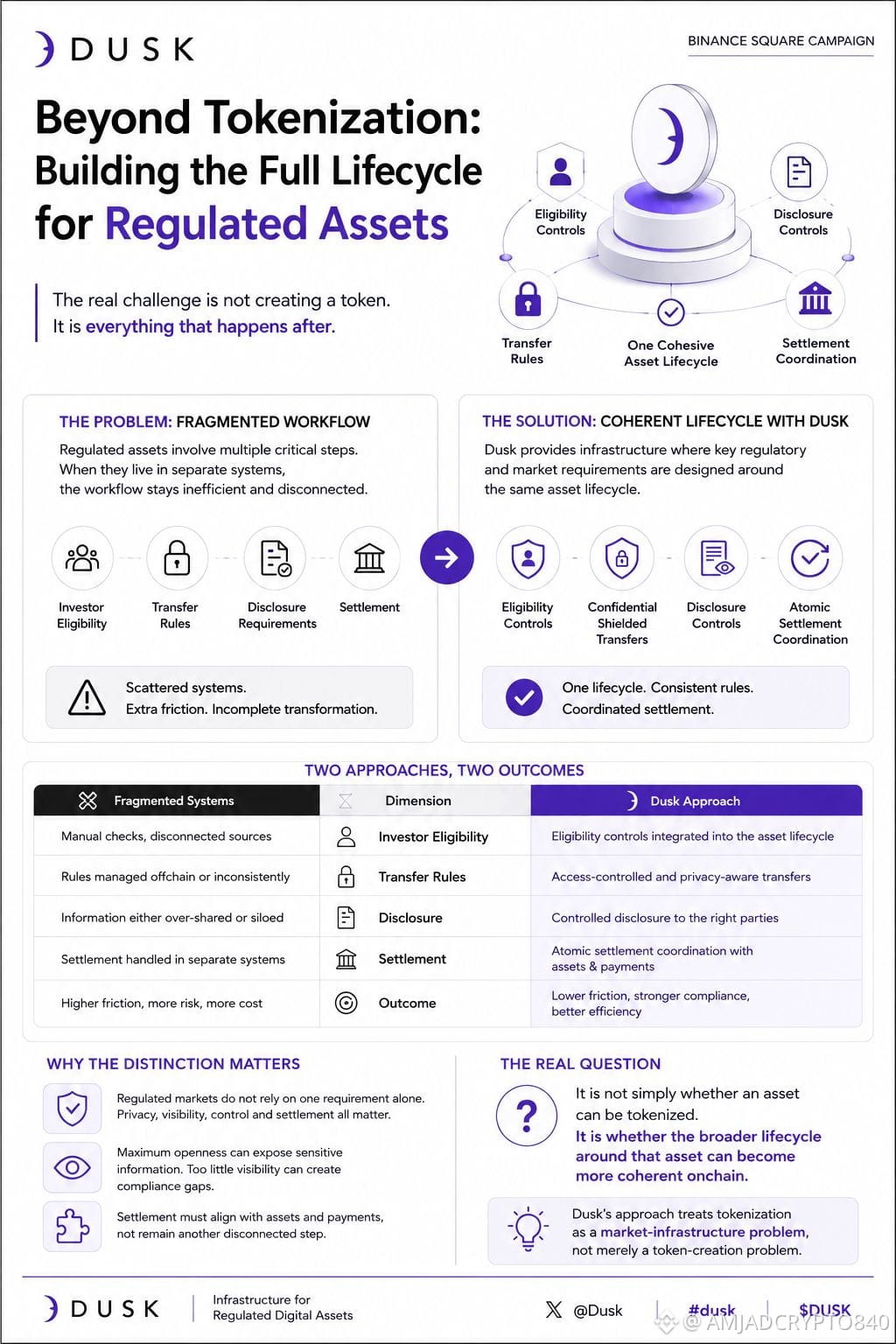
Ein regulierter Vermögenswert muss weiterhin die Schritte zur Anlegerberechtigung, die Übertragungsregeln, die Offenlegungspflichten und die Abwicklung durchlaufen. Wenn diese Bausteine weiterhin in getrennten Systemen verstreut bleiben, kann Tokenisierung zwar die „Hülle“ verändern, aber den darunterliegenden Workflow nicht wirklich beheben.
Genau dort wird für mich @Dusk interessant.
Dusk stellt Infrastruktur für regulierte digitale Vermögenswerte bereit, bei der Berechtigung, Privatsphäre, Offenlegung und Abwicklung entlang desselben Asset-Lebenszyklus entworfen werden können. In den offiziellen Materialien werden zugriffskontrollierte Übertragungen, vertrauliche abgeschirmte Übertragungen, transparente öffentliche Konten und eine atomare Abstimmungskoordination der Abwicklung als Bestandteile dieser Infrastruktur beschrieben.
Diese Unterscheidung ist wichtig, weil regulierte Märkte nicht von nur einer einzigen Anforderung abhängen. Einige Informationen müssen möglicherweise geschützt werden, während bestimmte Teilnehmer weiterhin angemessene Transparenz und Übertragungskontrollen benötigen. Die Abwicklung muss zudem mit dem Asset- und Zahlungsprozess koordiniert werden, statt ein weiterer, abgetrennter Schritt zu bleiben.
Vielleicht lautet die nützliche Frage also nicht einfach, ob ein Vermögenswert tokenisiert werden kann.
Sondern ob der umfassendere Lebenszyklus rund um diesen Vermögenswert kohärenter auf der Chain werden kann.
Das ist es, was ich an Dusk’ Ansatz interessant finde: Tokenisierung als Problem der Marktinfrastruktur zu behandeln – nicht nur als Problem der Token-Erstellung.
#dusk $DUSK @Dusk
Ein regulierter Vermögenswert muss weiterhin die Schritte zur Anlegerberechtigung, die Übertragungsregeln, die Offenlegungspflichten und die Abwicklung durchlaufen. Wenn diese Bausteine weiterhin in getrennten Systemen verstreut bleiben, kann Tokenisierung zwar die „Hülle“ verändern, aber den darunterliegenden Workflow nicht wirklich beheben.
Genau dort wird für mich @Dusk interessant.
Dusk stellt Infrastruktur für regulierte digitale Vermögenswerte bereit, bei der Berechtigung, Privatsphäre, Offenlegung und Abwicklung entlang desselben Asset-Lebenszyklus entworfen werden können. In den offiziellen Materialien werden zugriffskontrollierte Übertragungen, vertrauliche abgeschirmte Übertragungen, transparente öffentliche Konten und eine atomare Abstimmungskoordination der Abwicklung als Bestandteile dieser Infrastruktur beschrieben.
Diese Unterscheidung ist wichtig, weil regulierte Märkte nicht von nur einer einzigen Anforderung abhängen. Einige Informationen müssen möglicherweise geschützt werden, während bestimmte Teilnehmer weiterhin angemessene Transparenz und Übertragungskontrollen benötigen. Die Abwicklung muss zudem mit dem Asset- und Zahlungsprozess koordiniert werden, statt ein weiterer, abgetrennter Schritt zu bleiben.
Vielleicht lautet die nützliche Frage also nicht einfach, ob ein Vermögenswert tokenisiert werden kann.
Sondern ob der umfassendere Lebenszyklus rund um diesen Vermögenswert kohärenter auf der Chain werden kann.
Das ist es, was ich an Dusk’ Ansatz interessant finde: Tokenisierung als Problem der Marktinfrastruktur zu behandeln – nicht nur als Problem der Token-Erstellung.
#dusk $DUSK @Dusk
Anmelden und weiter Inhalte entdecken