

Eric Carson
5.9k Beiträge

Eric Carson
 Square Verified
Melden
Nutzer blockieren
Crypto KOL | Content Creator | Trader | HODLer | Degen | Web3 & Market Insights | X: @xEric_OG
Trade eröffnen
Hochfrequenz-Trader
4.2 Jahre
216 Following
38.9K+ Follower
30.2K+ Like gegeben
Beiträge
Portfolio
Alle
Zitierungen
Live
PINNED
·
--
Gute Nacht 🌃
Auf die Reise zu 50K 🚀
Verpasse deine Belohnung nicht 🎁
Gute Nacht 🌃
Auf die Reise zu 50K 🚀
Verpasse deine Belohnung nicht 🎁
Auf die Reise zu 50K 🚀
Verpasse deine Belohnung nicht 🎁

2.9k
4
142
2.9k
·
--
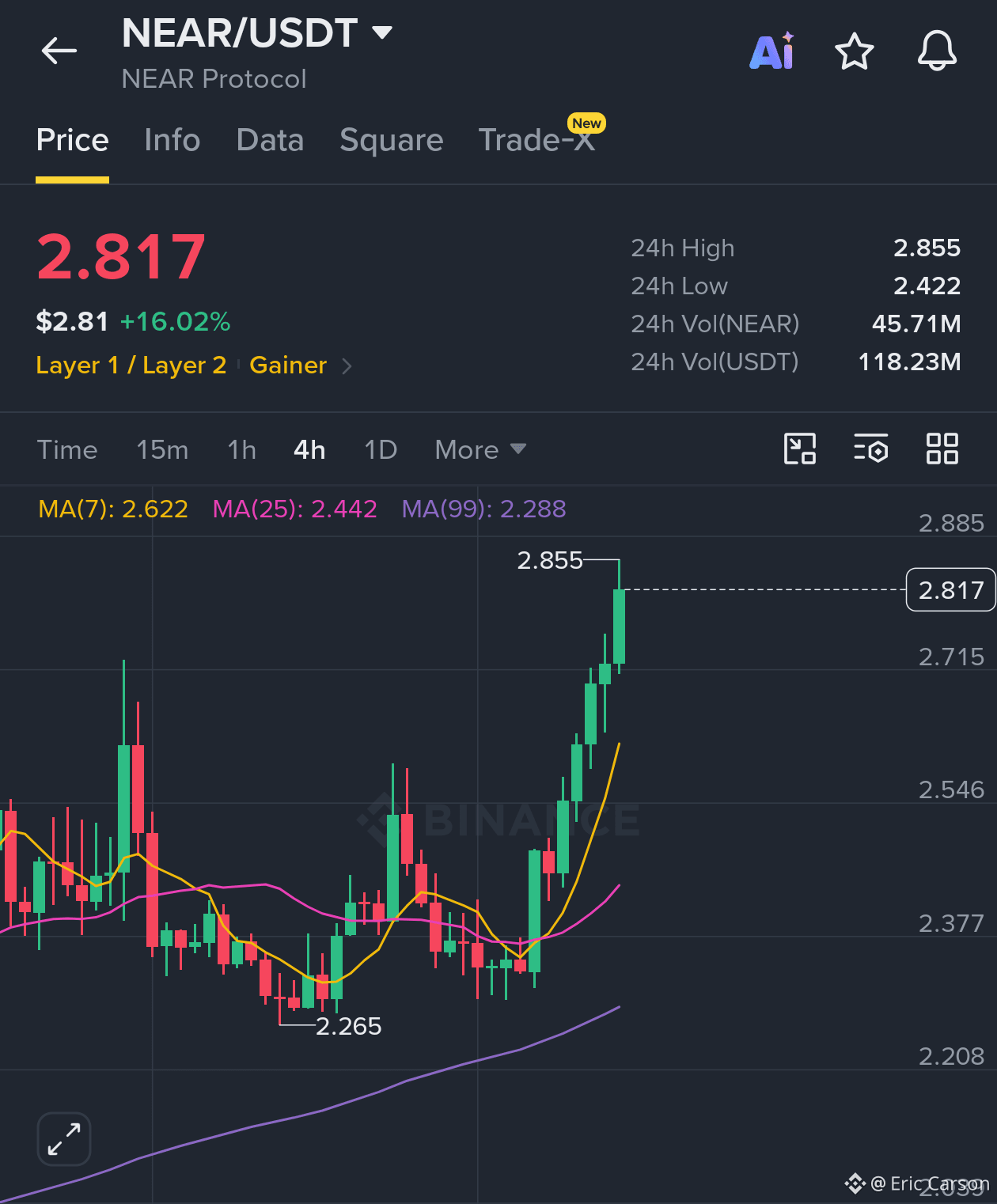
$NEAR hat gerade einen starken Schritt gemacht, aber ich jage ihm hier nicht hinterher.
NEAR liegt bei etwa 2,81 $, ist in 24H um 16 %+ gestiegen und bewegt sich in einer Spanne von 2,422–2,855 $.
Auf 4H hat sich die Struktur höher verschoben, ausgehend vom Tief bei 2,26 $, und der Preis liegt jetzt über:
→ MA7: 2,622 $
→ MA25: 2,442 $
→ MA99: 2,288 $
Das ist konstruktiv, aber der Preis ist nach der starken Expansion bereits nahe an dem Widerstand bei 2,855 $.
Was ich mag
◆ Starker 4H-Impuls
◆ Höheres-Hoch-Struktur
◆ Preis über allen wichtigen MAs
Was ich nicht mag
Der Widerstand ist zu nah, wodurch ein frischer Einstieg hier ein schlechtes Chance-Risiko-Verhältnis hat.
Mein Plan: WARTEN.
Ich würde lieber einen Rücksetzer in Richtung 2,62–2,70 $ abwarten, gefolgt von einer klaren Reaktion.
Support: 2,62–2,70 $
Widerstand: 2,855 $
Invalidierung: ~2,54–2,58 $
Es gibt keinen Grund, einer Bewegung hinterherzulaufen, die sich bereits stark ausgedehnt hat. Lass den Preis auf das Niveau kommen.
Hält $NEAR 2,62–2,70 $, oder flaut der Impuls zuerst ab?
#NEAR🚀🚀🚀 #Binance #cryptotrading
$NEAR hat gerade einen starken Schritt gemacht, aber ich jage ihm hier nicht hinterher.
NEAR liegt bei etwa 2,81 $, ist in 24H um 16 %+ gestiegen und bewegt sich in einer Spanne von 2,422–2,855 $.
Auf 4H hat sich die Struktur höher verschoben, ausgehend vom Tief bei 2,26 $, und der Preis liegt jetzt über:
→ MA7: 2,622 $
→ MA25: 2,442 $
→ MA99: 2,288 $
Das ist konstruktiv, aber der Preis ist nach der starken Expansion bereits nahe an dem Widerstand bei 2,855 $.
Was ich mag
◆ Starker 4H-Impuls
◆ Höheres-Hoch-Struktur
◆ Preis über allen wichtigen MAs
Was ich nicht mag
Der Widerstand ist zu nah, wodurch ein frischer Einstieg hier ein schlechtes Chance-Risiko-Verhältnis hat.
Mein Plan: WARTEN.
Ich würde lieber einen Rücksetzer in Richtung 2,62–2,70 $ abwarten, gefolgt von einer klaren Reaktion.
Support: 2,62–2,70 $
Widerstand: 2,855 $
Invalidierung: ~2,54–2,58 $
Es gibt keinen Grund, einer Bewegung hinterherzulaufen, die sich bereits stark ausgedehnt hat. Lass den Preis auf das Niveau kommen.
Hält $NEAR 2,62–2,70 $, oder flaut der Impuls zuerst ab?
#NEAR🚀🚀🚀 #Binance #cryptotrading
NEAR liegt bei etwa 2,81 $, ist in 24H um 16 %+ gestiegen und bewegt sich in einer Spanne von 2,422–2,855 $.
Auf 4H hat sich die Struktur höher verschoben, ausgehend vom Tief bei 2,26 $, und der Preis liegt jetzt über:
→ MA7: 2,622 $
→ MA25: 2,442 $
→ MA99: 2,288 $
Das ist konstruktiv, aber der Preis ist nach der starken Expansion bereits nahe an dem Widerstand bei 2,855 $.
Was ich mag
◆ Starker 4H-Impuls
◆ Höheres-Hoch-Struktur
◆ Preis über allen wichtigen MAs
Was ich nicht mag
Der Widerstand ist zu nah, wodurch ein frischer Einstieg hier ein schlechtes Chance-Risiko-Verhältnis hat.
Mein Plan: WARTEN.
Ich würde lieber einen Rücksetzer in Richtung 2,62–2,70 $ abwarten, gefolgt von einer klaren Reaktion.
Support: 2,62–2,70 $
Widerstand: 2,855 $
Invalidierung: ~2,54–2,58 $
Es gibt keinen Grund, einer Bewegung hinterherzulaufen, die sich bereits stark ausgedehnt hat. Lass den Preis auf das Niveau kommen.
Hält $NEAR 2,62–2,70 $, oder flaut der Impuls zuerst ab?
#NEAR🚀🚀🚀 #Binance #cryptotrading
1
3
1.1k

·
--
🎙️ Über Marktentwicklung und Trading sprechen – und BNB per Sparplan kaufen!

Beenden
03 h 27 m 47 s
17.4k
45
40
·
--
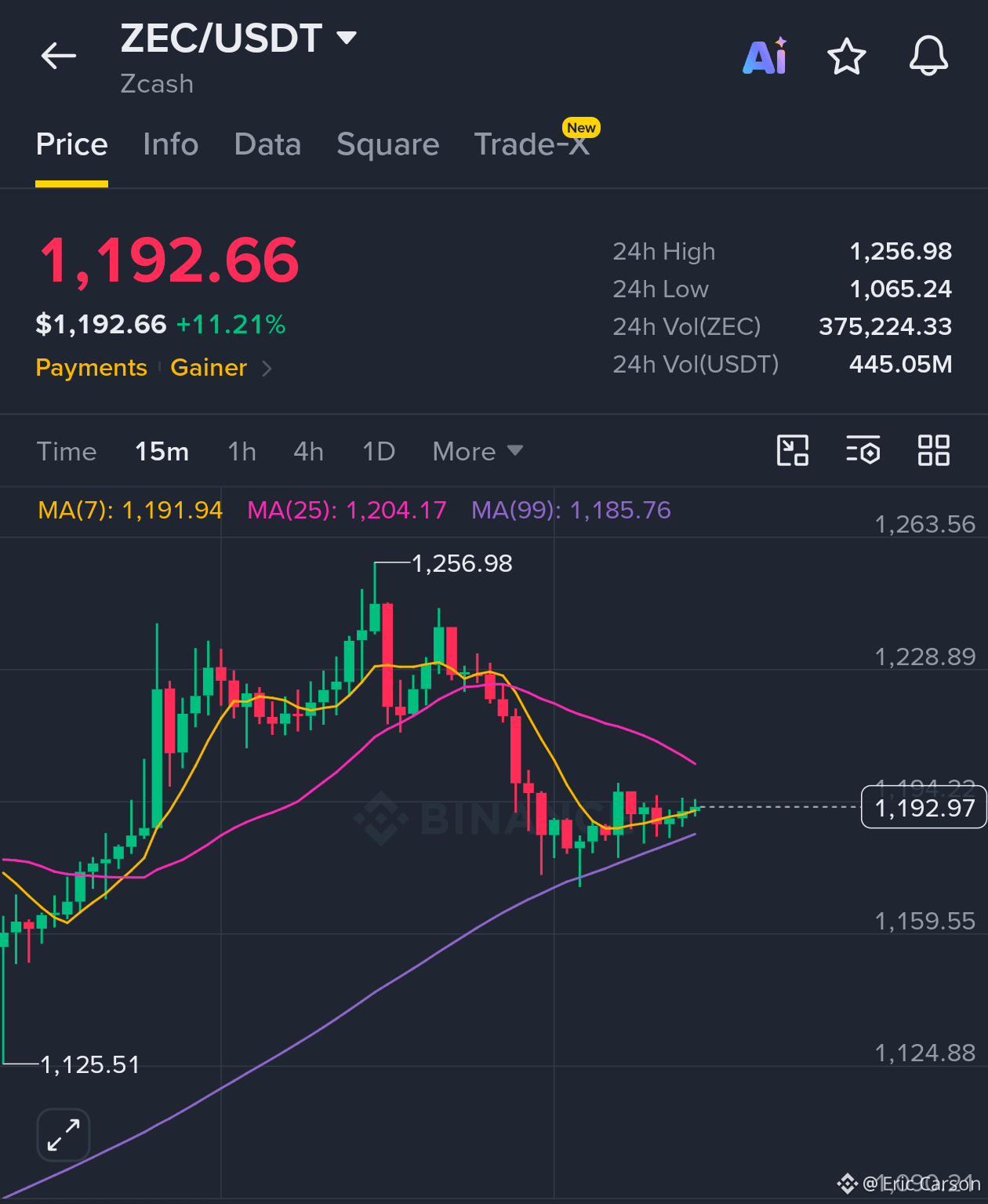
$ZEC wirkt nach der Ablehnung bei $1,256 erschöpft, aber Käufer versuchen still, $1,192 zu verteidigen.
Wir ziehen uns eng in einer aufsteigenden Basis zwischen dem 99 MA bei $1,185 und dem 25 MA bei $1,204 zusammen, während das Volumen austrocknet.
Wenn $1,185 nachgibt, ist ein Rückgang in Richtung $1,160 zu erwarten, während ein Zurückerobern von $1,204 eine weitere Aufwärtsbewegung eröffnet.
Ich halte mich zurück, bis diese Spanne tatsächlich ausbricht.
#ZEC #crypto
$ZEC wirkt nach der Ablehnung bei $1,256 erschöpft, aber Käufer versuchen still, $1,192 zu verteidigen.
Wir ziehen uns eng in einer aufsteigenden Basis zwischen dem 99 MA bei $1,185 und dem 25 MA bei $1,204 zusammen, während das Volumen austrocknet.
Wenn $1,185 nachgibt, ist ein Rückgang in Richtung $1,160 zu erwarten, während ein Zurückerobern von $1,204 eine weitere Aufwärtsbewegung eröffnet.
Ich halte mich zurück, bis diese Spanne tatsächlich ausbricht.
#ZEC #crypto
Wir ziehen uns eng in einer aufsteigenden Basis zwischen dem 99 MA bei $1,185 und dem 25 MA bei $1,204 zusammen, während das Volumen austrocknet.
Wenn $1,185 nachgibt, ist ein Rückgang in Richtung $1,160 zu erwarten, während ein Zurückerobern von $1,204 eine weitere Aufwärtsbewegung eröffnet.
Ich halte mich zurück, bis diese Spanne tatsächlich ausbricht.
#ZEC #crypto
393
·
--
🎙️ Was ist der „Vermögenscode“? BNB regelmäßig kaufen, BTC regelmäßig kaufen
Beenden
02 h 00 m 32 s
7.7k
16
20
·
--
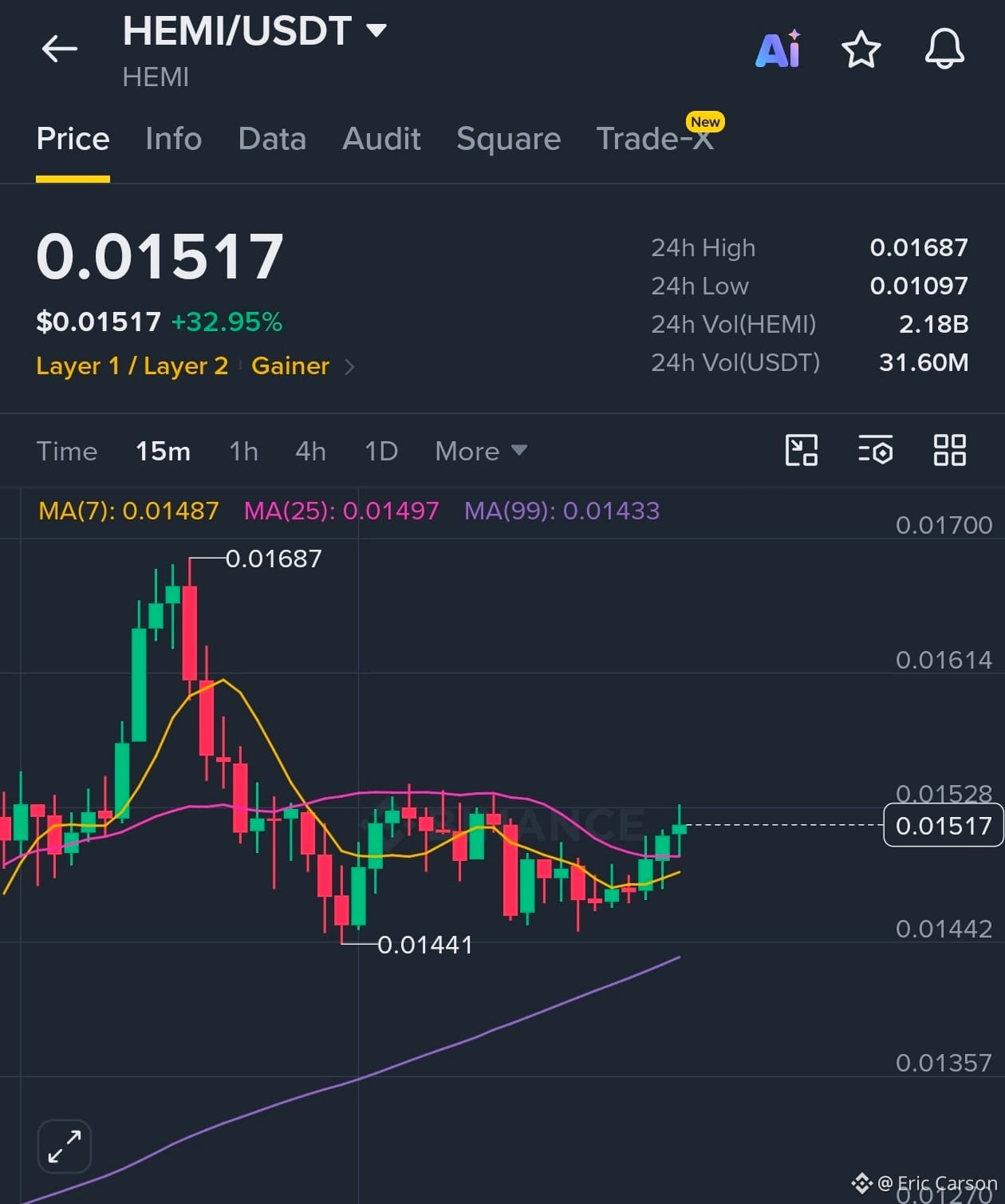
$HEMI Nach dem anfänglichen Impuls-Wick bis auf 0.01687 hat der Markt eine gesunde Konsolidierungsphase abgeschlossen und eine solide Double-Bottom-Basis über dem wichtigen horizontalen Support bei 0.01441 etabliert.
Der Aufwärtsimpuls übernimmt wieder die Kontrolle, da der Preis im 15-Minuten-Zeitrahmen sauber zurück über dem 7 MA und 25 MA liegt. Die breitere Struktur bleibt stark gestützt durch den steigenden 99 MA unterhalb der aktuellen Preisbewegung. Ein anhaltender Vorstoß durch den lokalen Widerstand bei 0.01530 bestätigt eine Expansionsphase mit erheblichem Ausbruchrisiko nach oben, mit Zielen in Richtung der vorherigen Swing-Highs.
Trade-Parameter
• Einstieg: 0.01485 - 0.01520
• TP1: 0.01585
• TP2: 0.01685
• TP3: 0.01820
• Stop-Loss: 0.01430
Risiko strikt managen und Stopps nachziehen, sobald die Ziele erreicht werden.
#HEMI #WriteToEarnUpgrade
$HEMI Nach dem anfänglichen Impuls-Wick bis auf 0.01687 hat der Markt eine gesunde Konsolidierungsphase abgeschlossen und eine solide Double-Bottom-Basis über dem wichtigen horizontalen Support bei 0.01441 etabliert.
Der Aufwärtsimpuls übernimmt wieder die Kontrolle, da der Preis im 15-Minuten-Zeitrahmen sauber zurück über dem 7 MA und 25 MA liegt. Die breitere Struktur bleibt stark gestützt durch den steigenden 99 MA unterhalb der aktuellen Preisbewegung. Ein anhaltender Vorstoß durch den lokalen Widerstand bei 0.01530 bestätigt eine Expansionsphase mit erheblichem Ausbruchrisiko nach oben, mit Zielen in Richtung der vorherigen Swing-Highs.
Trade-Parameter
• Einstieg: 0.01485 - 0.01520
• TP1: 0.01585
• TP2: 0.01685
• TP3: 0.01820
• Stop-Loss: 0.01430
Risiko strikt managen und Stopps nachziehen, sobald die Ziele erreicht werden.
#HEMI #WriteToEarnUpgrade
Der Aufwärtsimpuls übernimmt wieder die Kontrolle, da der Preis im 15-Minuten-Zeitrahmen sauber zurück über dem 7 MA und 25 MA liegt. Die breitere Struktur bleibt stark gestützt durch den steigenden 99 MA unterhalb der aktuellen Preisbewegung. Ein anhaltender Vorstoß durch den lokalen Widerstand bei 0.01530 bestätigt eine Expansionsphase mit erheblichem Ausbruchrisiko nach oben, mit Zielen in Richtung der vorherigen Swing-Highs.
Trade-Parameter
• Einstieg: 0.01485 - 0.01520
• TP1: 0.01585
• TP2: 0.01685
• TP3: 0.01820
• Stop-Loss: 0.01430
Risiko strikt managen und Stopps nachziehen, sobald die Ziele erreicht werden.
#HEMI #WriteToEarnUpgrade
299
·
--
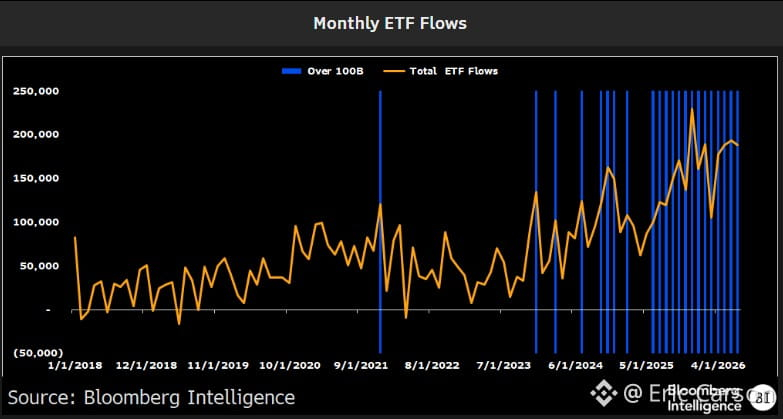
🔥 BULLISCHES SIGNAL: $100B+ WIRD ZUR NORMALITÄT
Laut Bloomberg Intelligence haben die ETF-Zuflüsse inzwischen 14 Monate in Folge $100B überschritten.
Das ist nicht nur eine starke Nachfrage.
Es deutet auf einen strukturellen Wandel in der Kapitalallokation hin.
Institutionen steigen nicht nur in Hype-Phasen in den Markt ein – sie behandeln ETFs zunehmend als zentrales Vehikel für ihr Exposure.
Der $100B-Monat wird zur neuen Normalität.
Und wenn sich dieser Trend fortsetzt, könnte die nächste Phase des Marktes ganz anders aussehen. 📈
#BTC #ETF #EthereumFoundationDropsPoseidonForL1
🔥 BULLISCHES SIGNAL: $100B+ WIRD ZUR NORMALITÄT
Laut Bloomberg Intelligence haben die ETF-Zuflüsse inzwischen 14 Monate in Folge $100B überschritten.
Das ist nicht nur eine starke Nachfrage.
Es deutet auf einen strukturellen Wandel in der Kapitalallokation hin.
Institutionen steigen nicht nur in Hype-Phasen in den Markt ein – sie behandeln ETFs zunehmend als zentrales Vehikel für ihr Exposure.
Der $100B-Monat wird zur neuen Normalität.
Und wenn sich dieser Trend fortsetzt, könnte die nächste Phase des Marktes ganz anders aussehen. 📈
#BTC #ETF #EthereumFoundationDropsPoseidonForL1
Laut Bloomberg Intelligence haben die ETF-Zuflüsse inzwischen 14 Monate in Folge $100B überschritten.
Das ist nicht nur eine starke Nachfrage.
Es deutet auf einen strukturellen Wandel in der Kapitalallokation hin.
Institutionen steigen nicht nur in Hype-Phasen in den Markt ein – sie behandeln ETFs zunehmend als zentrales Vehikel für ihr Exposure.
Der $100B-Monat wird zur neuen Normalität.
Und wenn sich dieser Trend fortsetzt, könnte die nächste Phase des Marktes ganz anders aussehen. 📈
#BTC #ETF #EthereumFoundationDropsPoseidonForL1
2
318
·
--
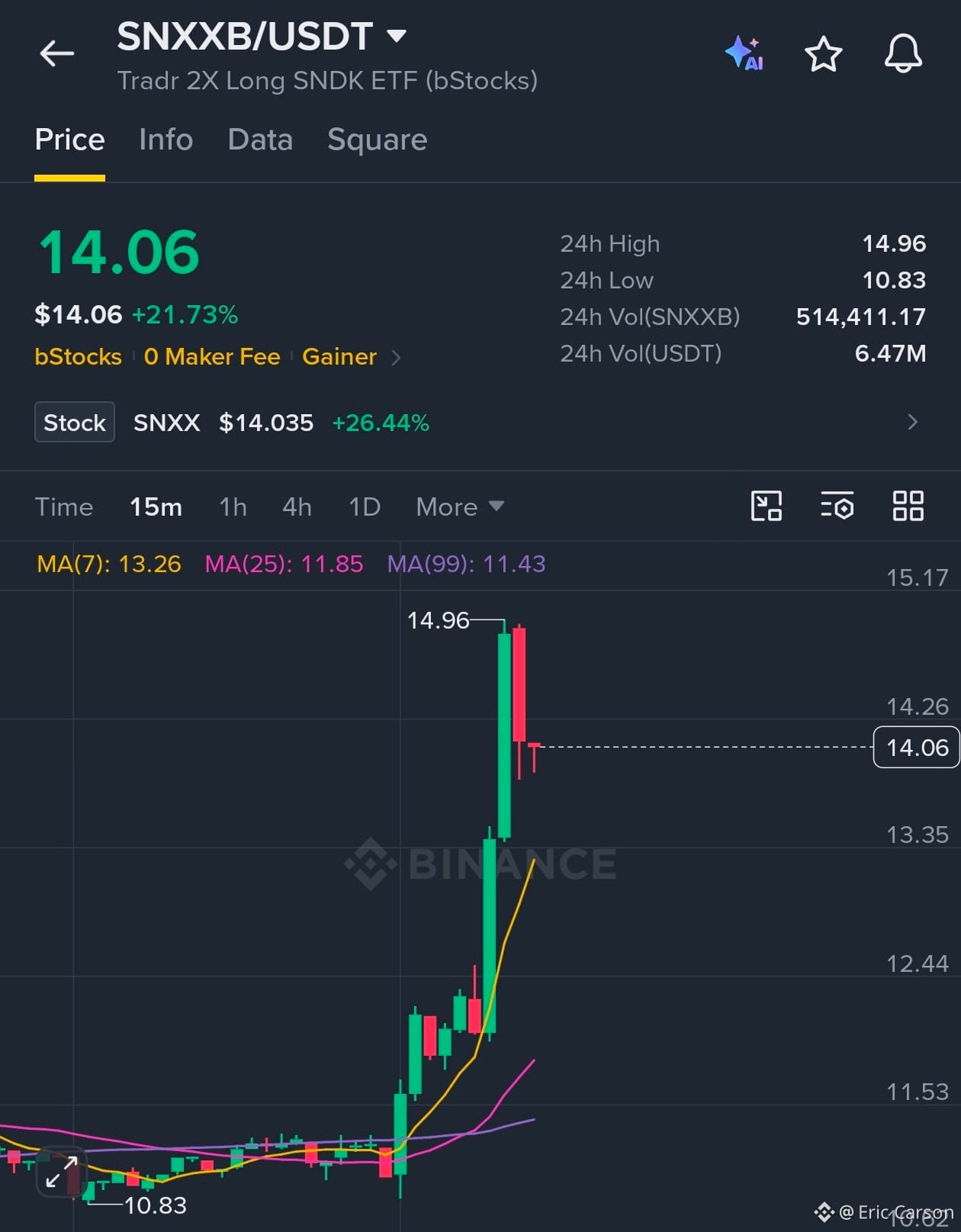
$SNXXB
Wenn wir uns das Diagramm für 163464.jpg ansehen, erkennen wir eine lehrbuchmäßige Momentum-Wende. Wir haben gerade einen sauberen, aggressiven Ausbruch aus den Tiefs gedruckt und dabei frühere Kursmarken mit deutlich anziehendem Volumen durchbrochen. Derzeit befindet sich der Kurs in einer engen Konsolidierungsphase nahe dem lokalen Hoch. Mit den gleitenden Durchschnitten, die gestapelt und aufgefächert sind, liegt der übergeordnete Trend klar im bullischen Bereich. Der unmittelbare Support hält stand, und das Ausbruchsrisiko nach oben ist hoch, falls Käufer zurückkommen, um den lokalen Widerstand zu durchbrechen. Behalte deine Größe im Griff und halte dich an das Setup.
• Einstieg Zone: 13.30 - 14.06 • TP1: 14.50, TP2: 14.96, TP3: 15.50 • Stop-Loss: 12.50
#SNXXB #WriteToEarnUpgrade
$SNXXB
Wenn wir uns das Diagramm für 163464.jpg ansehen, erkennen wir eine lehrbuchmäßige Momentum-Wende. Wir haben gerade einen sauberen, aggressiven Ausbruch aus den Tiefs gedruckt und dabei frühere Kursmarken mit deutlich anziehendem Volumen durchbrochen. Derzeit befindet sich der Kurs in einer engen Konsolidierungsphase nahe dem lokalen Hoch. Mit den gleitenden Durchschnitten, die gestapelt und aufgefächert sind, liegt der übergeordnete Trend klar im bullischen Bereich. Der unmittelbare Support hält stand, und das Ausbruchsrisiko nach oben ist hoch, falls Käufer zurückkommen, um den lokalen Widerstand zu durchbrechen. Behalte deine Größe im Griff und halte dich an das Setup.
• Einstieg Zone: 13.30 - 14.06 • TP1: 14.50, TP2: 14.96, TP3: 15.50 • Stop-Loss: 12.50
#SNXXB #WriteToEarnUpgrade
Wenn wir uns das Diagramm für 163464.jpg ansehen, erkennen wir eine lehrbuchmäßige Momentum-Wende. Wir haben gerade einen sauberen, aggressiven Ausbruch aus den Tiefs gedruckt und dabei frühere Kursmarken mit deutlich anziehendem Volumen durchbrochen. Derzeit befindet sich der Kurs in einer engen Konsolidierungsphase nahe dem lokalen Hoch. Mit den gleitenden Durchschnitten, die gestapelt und aufgefächert sind, liegt der übergeordnete Trend klar im bullischen Bereich. Der unmittelbare Support hält stand, und das Ausbruchsrisiko nach oben ist hoch, falls Käufer zurückkommen, um den lokalen Widerstand zu durchbrechen. Behalte deine Größe im Griff und halte dich an das Setup.
• Einstieg Zone: 13.30 - 14.06 • TP1: 14.50, TP2: 14.96, TP3: 15.50 • Stop-Loss: 12.50
#SNXXB #WriteToEarnUpgrade
150
·
--
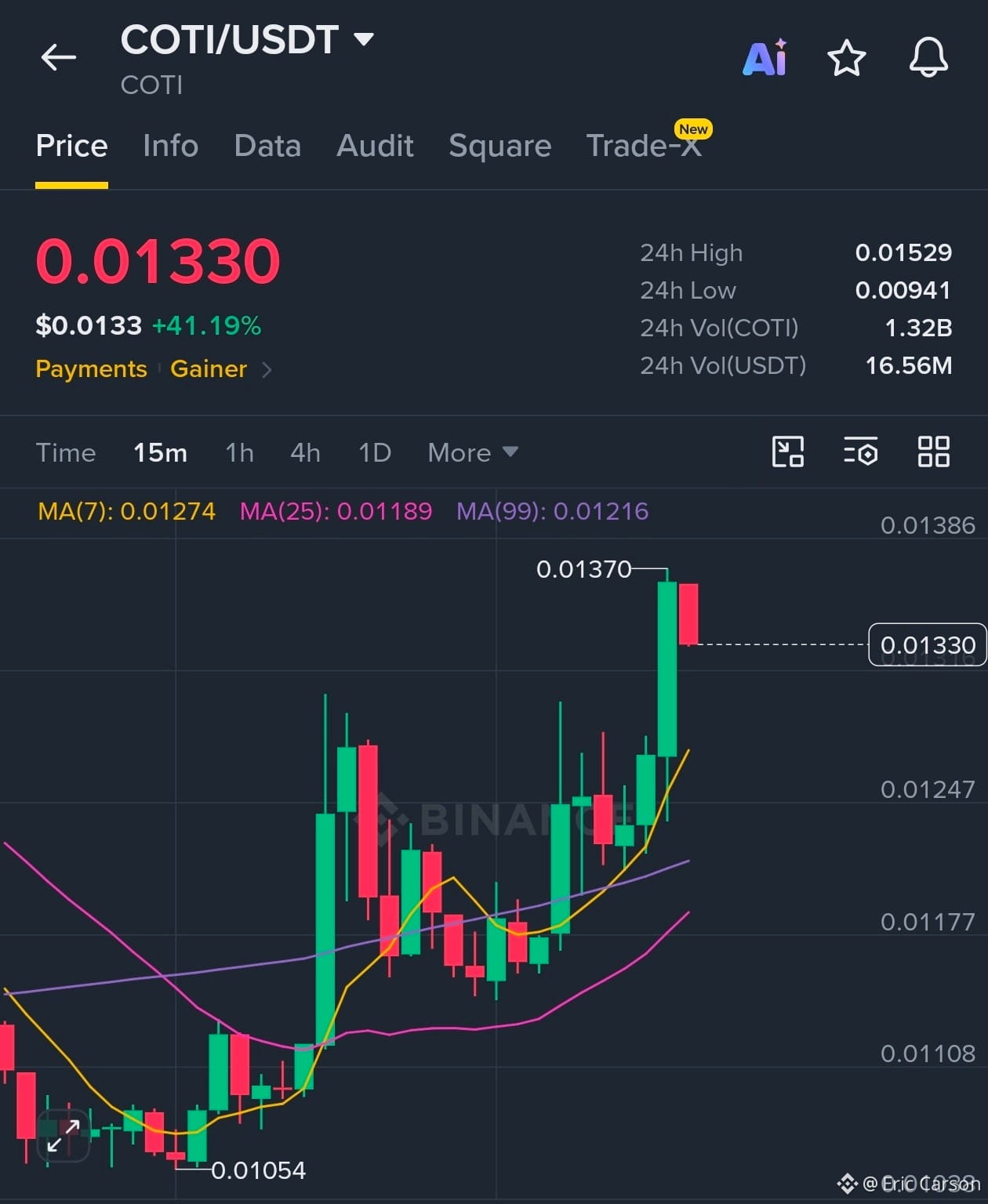
$COTI
Wie in der Grafik zu 163462.jpg zu sehen ist, erleben wir eine massive Momentum-Verschiebung. Der Kurs hat gerade einen sauberen, impulsiven Ausbruch aus der jüngsten Konsolidierungszone veröffentlicht und lässt die niedrigeren Niveaus hinter sich. Der übergeordnete Trend bleibt fest bullisch: Die gleitenden Durchschnitte sind vollständig ausgerichtet und signalisieren starken Kaufdruck.
Unmittelbarer Support wurde nahe der 0.01270-Marke etabliert, wodurch die aktuelle Marktstruktur intakt bleibt. Aktuell besteht ein ernstes Ausbruchsrisiko, falls das Volumen zurückkehrt und den lokalen Widerstand bei 0.01370 zerschmettert. Wenn dieses Momentum im Tempo oberhalb der gleitenden Durchschnitte anhält, ist der Weg frei für einen direkten Lauf Richtung des 24-Stunden-Hochs. Steuere dein Risiko und halte dich an die Levels.
Einstiegszone: 0.01270 - 0.01330
TP1: 0.01370, TP2: 0.01450, TP3: 0.01529
Stop-Loss: 0.01150
#COTI #WriteToEarnUpgrade
$COTI
Wie in der Grafik zu 163462.jpg zu sehen ist, erleben wir eine massive Momentum-Verschiebung. Der Kurs hat gerade einen sauberen, impulsiven Ausbruch aus der jüngsten Konsolidierungszone veröffentlicht und lässt die niedrigeren Niveaus hinter sich. Der übergeordnete Trend bleibt fest bullisch: Die gleitenden Durchschnitte sind vollständig ausgerichtet und signalisieren starken Kaufdruck.
Unmittelbarer Support wurde nahe der 0.01270-Marke etabliert, wodurch die aktuelle Marktstruktur intakt bleibt. Aktuell besteht ein ernstes Ausbruchsrisiko, falls das Volumen zurückkehrt und den lokalen Widerstand bei 0.01370 zerschmettert. Wenn dieses Momentum im Tempo oberhalb der gleitenden Durchschnitte anhält, ist der Weg frei für einen direkten Lauf Richtung des 24-Stunden-Hochs. Steuere dein Risiko und halte dich an die Levels.
Einstiegszone: 0.01270 - 0.01330
TP1: 0.01370, TP2: 0.01450, TP3: 0.01529
Stop-Loss: 0.01150
#COTI #WriteToEarnUpgrade
Wie in der Grafik zu 163462.jpg zu sehen ist, erleben wir eine massive Momentum-Verschiebung. Der Kurs hat gerade einen sauberen, impulsiven Ausbruch aus der jüngsten Konsolidierungszone veröffentlicht und lässt die niedrigeren Niveaus hinter sich. Der übergeordnete Trend bleibt fest bullisch: Die gleitenden Durchschnitte sind vollständig ausgerichtet und signalisieren starken Kaufdruck.
Unmittelbarer Support wurde nahe der 0.01270-Marke etabliert, wodurch die aktuelle Marktstruktur intakt bleibt. Aktuell besteht ein ernstes Ausbruchsrisiko, falls das Volumen zurückkehrt und den lokalen Widerstand bei 0.01370 zerschmettert. Wenn dieses Momentum im Tempo oberhalb der gleitenden Durchschnitte anhält, ist der Weg frei für einen direkten Lauf Richtung des 24-Stunden-Hochs. Steuere dein Risiko und halte dich an die Levels.
Einstiegszone: 0.01270 - 0.01330
TP1: 0.01370, TP2: 0.01450, TP3: 0.01529
Stop-Loss: 0.01150
#COTI #WriteToEarnUpgrade
1
1
431
·
--
🎙️ DCA in BTC, BNB und SOL – On-Chain-Marktlage erfassen

Beenden
03 h 06 m 12 s
11.5k
16
22
·
--
Guten Morgen ☀️
Auf dem Weg zur 50K-Reise 🚀
Verpasse deine Belohnung nicht 🎁
Guten Morgen ☀️
Auf dem Weg zur 50K-Reise 🚀
Verpasse deine Belohnung nicht 🎁
Auf dem Weg zur 50K-Reise 🚀
Verpasse deine Belohnung nicht 🎁

59
4
130
·
--
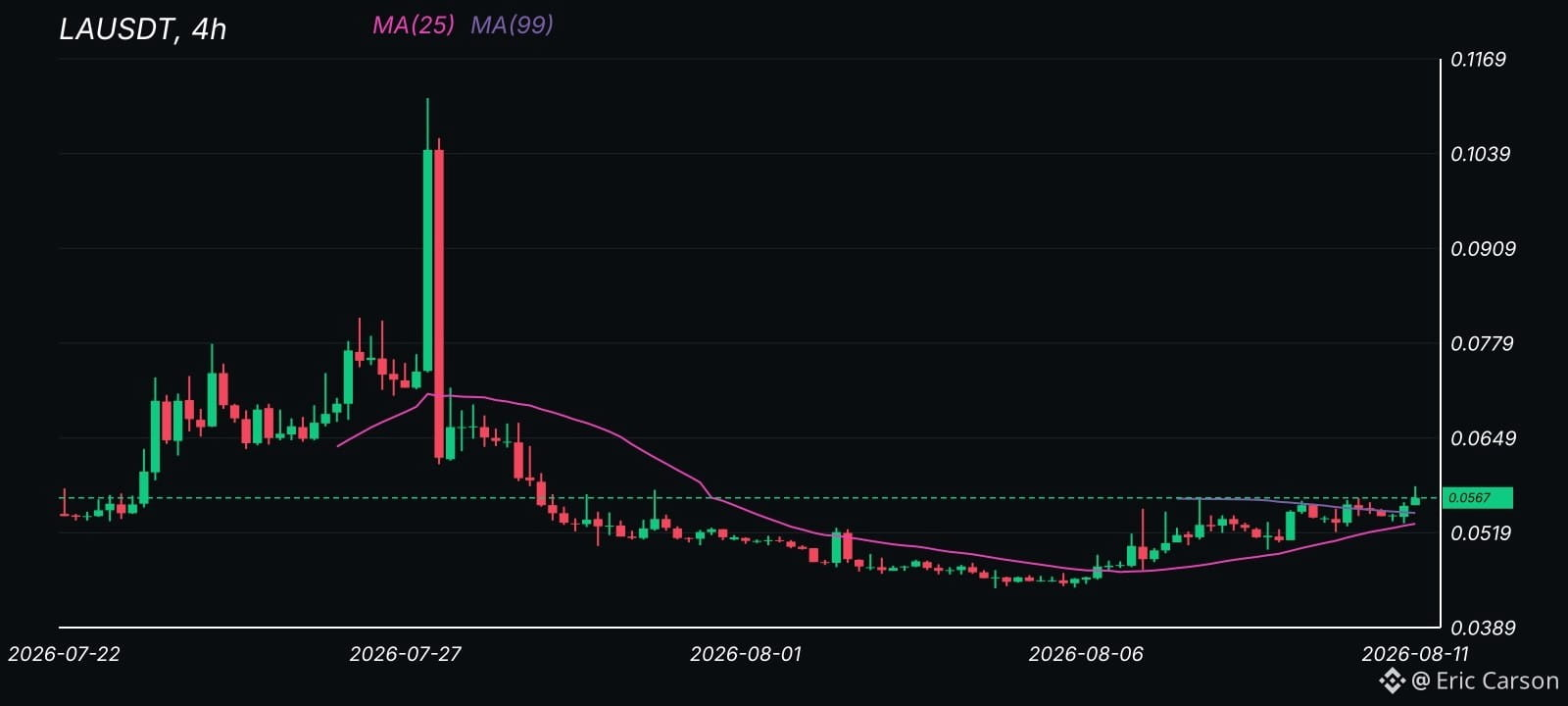
$LA
4H-CHART – SPANNENORIENTIERT MIT BULLISHER TENDENZ
Der Kurs handelt im mittleren Bereich, nachdem es zu einem scharfen Rücksetzer von 0.1169 kam.
MA25 (0.0649) als Widerstand darüber, MA99 (0.0779) weit darüber – die bärische Struktur bleibt zwar intakt, aber der Impuls verlangsamt sich.
Der aktuelle Bereich bei 0.0565 wirkt als Pivot. Wenn 0.0532 gehalten wird, bleibt der Aufwärtsspielraum bestehen.
Das Ausbruchrisiko ist moderat. Für einen Lauf in Richtung 0.0649 muss 0.0583 überschritten werden.
Ein Fehlschlag unter 0.0532 eröffnet einen erneuten Test von 0.0519 und tiefer.
• Einstieg-Zone: 0.0550 – 0.0565
• TP1: 0.0585
• TP2: 0.0649
• TP3: 0.0779
• Stop-Loss: 0.0530
Beobachte das Volumen beim Ausbruch. Geringe Überzeugung unter 0.0583 – vorsichtig stufenweise einsteigen.
Ein sauberer Schlusskurs oberhalb von MA25 verschiebt das Momentum zugunsten der Käufer.
#LAUSDT #WriteToEarnUpgrade
$LA
4H-CHART – SPANNENORIENTIERT MIT BULLISHER TENDENZ
Der Kurs handelt im mittleren Bereich, nachdem es zu einem scharfen Rücksetzer von 0.1169 kam.
MA25 (0.0649) als Widerstand darüber, MA99 (0.0779) weit darüber – die bärische Struktur bleibt zwar intakt, aber der Impuls verlangsamt sich.
Der aktuelle Bereich bei 0.0565 wirkt als Pivot. Wenn 0.0532 gehalten wird, bleibt der Aufwärtsspielraum bestehen.
Das Ausbruchrisiko ist moderat. Für einen Lauf in Richtung 0.0649 muss 0.0583 überschritten werden.
Ein Fehlschlag unter 0.0532 eröffnet einen erneuten Test von 0.0519 und tiefer.
• Einstieg-Zone: 0.0550 – 0.0565
• TP1: 0.0585
• TP2: 0.0649
• TP3: 0.0779
• Stop-Loss: 0.0530
Beobachte das Volumen beim Ausbruch. Geringe Überzeugung unter 0.0583 – vorsichtig stufenweise einsteigen.
Ein sauberer Schlusskurs oberhalb von MA25 verschiebt das Momentum zugunsten der Käufer.
#LAUSDT #WriteToEarnUpgrade
4H-CHART – SPANNENORIENTIERT MIT BULLISHER TENDENZ
Der Kurs handelt im mittleren Bereich, nachdem es zu einem scharfen Rücksetzer von 0.1169 kam.
MA25 (0.0649) als Widerstand darüber, MA99 (0.0779) weit darüber – die bärische Struktur bleibt zwar intakt, aber der Impuls verlangsamt sich.
Der aktuelle Bereich bei 0.0565 wirkt als Pivot. Wenn 0.0532 gehalten wird, bleibt der Aufwärtsspielraum bestehen.
Das Ausbruchrisiko ist moderat. Für einen Lauf in Richtung 0.0649 muss 0.0583 überschritten werden.
Ein Fehlschlag unter 0.0532 eröffnet einen erneuten Test von 0.0519 und tiefer.
• Einstieg-Zone: 0.0550 – 0.0565
• TP1: 0.0585
• TP2: 0.0649
• TP3: 0.0779
• Stop-Loss: 0.0530
Beobachte das Volumen beim Ausbruch. Geringe Überzeugung unter 0.0583 – vorsichtig stufenweise einsteigen.
Ein sauberer Schlusskurs oberhalb von MA25 verschiebt das Momentum zugunsten der Käufer.
#LAUSDT #WriteToEarnUpgrade
1
286
·
--
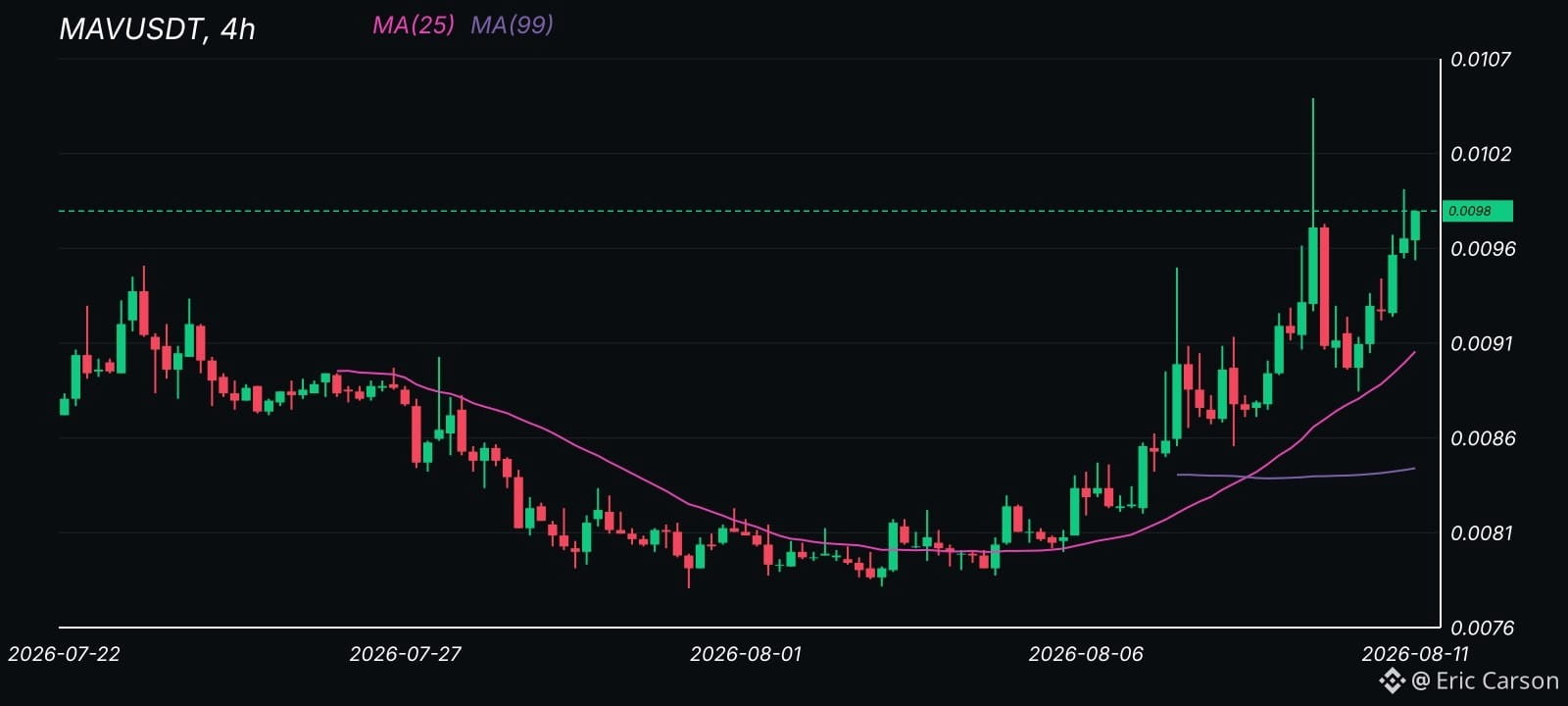
$MAV
4H-CHART – SAUBERE ABLEHNUNG AM UNTEREN BEREICH
Der Kurs hielt die 0.0086-Zone, fegte die Tiefs ab und eroberte 0.00985 zurück.
Derzeit Kompression zwischen MA25 (0.0097) und MA99 (0.0102).
Das Volumen trocknet aus – Konsolidierung vor dem nächsten Impuls.
Das Ausbruchrisiko ist hoch. Der Momentum ist auf niedrigerem Zeitrahmen bullisch im Umschwung, aber dafür muss 0.0102 überschritten werden, um fortzusetzen.
Ein Fehlschlag unter 0.0092 macht die kurzfristige Stärke ungültig.
• Einstieg-Zone: 0.0096 – 0.00985
• TP1: 0.0102
• TP2: 0.0107
• TP3: 0.0115
• Stop-Loss: 0.0091
Achte auf einen sauberen 4H-Schlusskurs über 0.0102, um die Position zu vergrößern.
Unter 0.0092 ist mit einem erneuten Test von 0.0086 zu rechnen.
#MAVUSDT #WriteToEarnUpgrade
$MAV
4H-CHART – SAUBERE ABLEHNUNG AM UNTEREN BEREICH
Der Kurs hielt die 0.0086-Zone, fegte die Tiefs ab und eroberte 0.00985 zurück.
Derzeit Kompression zwischen MA25 (0.0097) und MA99 (0.0102).
Das Volumen trocknet aus – Konsolidierung vor dem nächsten Impuls.
Das Ausbruchrisiko ist hoch. Der Momentum ist auf niedrigerem Zeitrahmen bullisch im Umschwung, aber dafür muss 0.0102 überschritten werden, um fortzusetzen.
Ein Fehlschlag unter 0.0092 macht die kurzfristige Stärke ungültig.
• Einstieg-Zone: 0.0096 – 0.00985
• TP1: 0.0102
• TP2: 0.0107
• TP3: 0.0115
• Stop-Loss: 0.0091
Achte auf einen sauberen 4H-Schlusskurs über 0.0102, um die Position zu vergrößern.
Unter 0.0092 ist mit einem erneuten Test von 0.0086 zu rechnen.
#MAVUSDT #WriteToEarnUpgrade
4H-CHART – SAUBERE ABLEHNUNG AM UNTEREN BEREICH
Der Kurs hielt die 0.0086-Zone, fegte die Tiefs ab und eroberte 0.00985 zurück.
Derzeit Kompression zwischen MA25 (0.0097) und MA99 (0.0102).
Das Volumen trocknet aus – Konsolidierung vor dem nächsten Impuls.
Das Ausbruchrisiko ist hoch. Der Momentum ist auf niedrigerem Zeitrahmen bullisch im Umschwung, aber dafür muss 0.0102 überschritten werden, um fortzusetzen.
Ein Fehlschlag unter 0.0092 macht die kurzfristige Stärke ungültig.
• Einstieg-Zone: 0.0096 – 0.00985
• TP1: 0.0102
• TP2: 0.0107
• TP3: 0.0115
• Stop-Loss: 0.0091
Achte auf einen sauberen 4H-Schlusskurs über 0.0102, um die Position zu vergrößern.
Unter 0.0092 ist mit einem erneuten Test von 0.0086 zu rechnen.
#MAVUSDT #WriteToEarnUpgrade
220
·
--
🎙️ Wahrung des ökologischen Gleichgewichts und Aufbau des Binance-Platzes

Beenden
04 h 16 m 08 s
9.9k
37
105
·
--
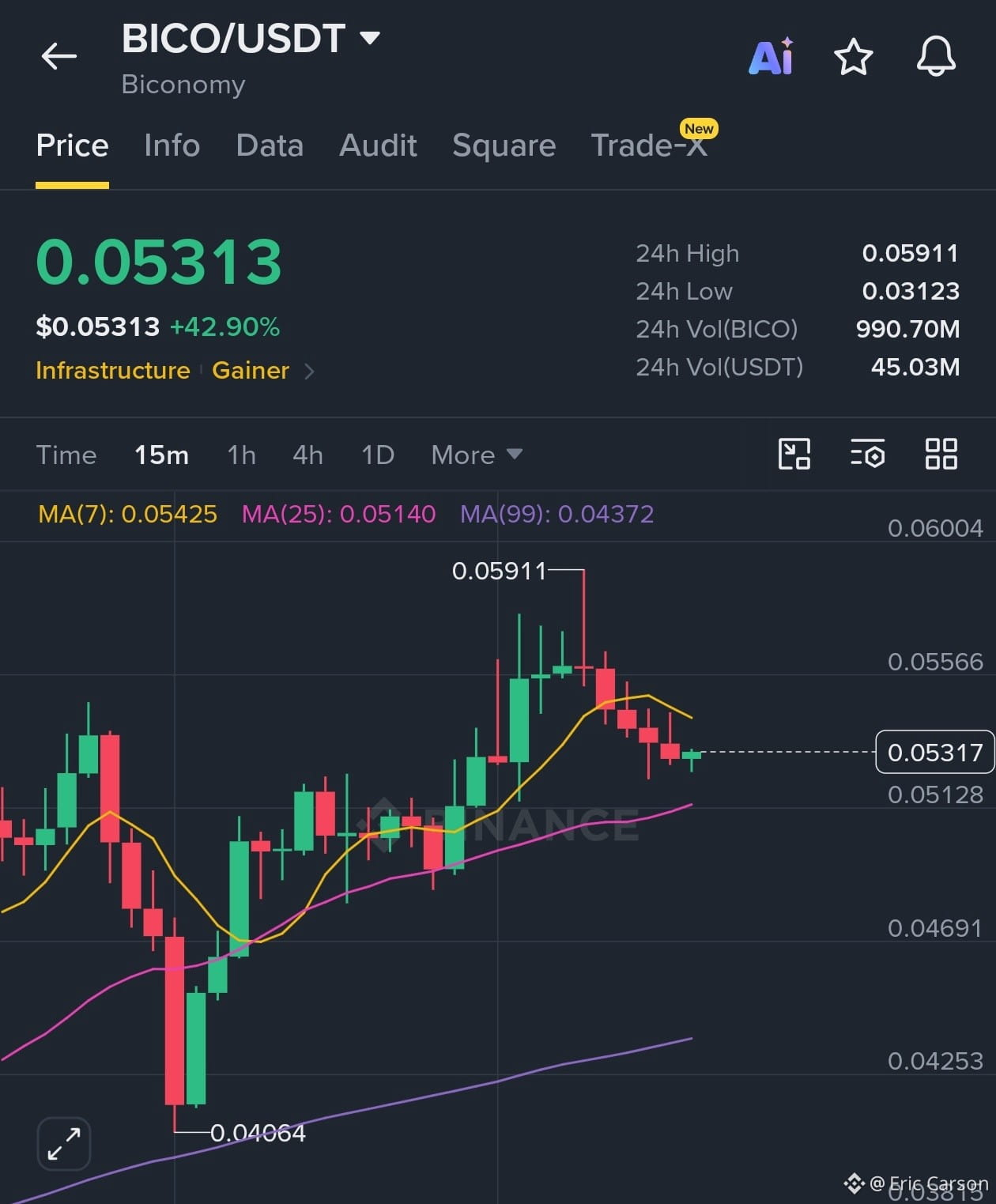
$BICO
Der Aufwärtstrend bleibt bullisch nach einem starken Ausbruch, aber der Kurs konsolidiert derzeit unter dem jüngsten Hoch. Solange der Kurs über dem Support bleibt, bleibt der Trend intakt; ein Ausbruch über den Widerstand könnte die nächste Aufwärtswelle auslösen.
• Einstiegspreis: 0,0520–0,0535
• TP1: 0,0565
• TP2: 0,0590
• TP3: 0,0630
• Stop-Loss: 0,0495
#BICO #WriteToEarnUpgrade
$BICO
Der Aufwärtstrend bleibt bullisch nach einem starken Ausbruch, aber der Kurs konsolidiert derzeit unter dem jüngsten Hoch. Solange der Kurs über dem Support bleibt, bleibt der Trend intakt; ein Ausbruch über den Widerstand könnte die nächste Aufwärtswelle auslösen.
• Einstiegspreis: 0,0520–0,0535
• TP1: 0,0565
• TP2: 0,0590
• TP3: 0,0630
• Stop-Loss: 0,0495
#BICO #WriteToEarnUpgrade
Der Aufwärtstrend bleibt bullisch nach einem starken Ausbruch, aber der Kurs konsolidiert derzeit unter dem jüngsten Hoch. Solange der Kurs über dem Support bleibt, bleibt der Trend intakt; ein Ausbruch über den Widerstand könnte die nächste Aufwärtswelle auslösen.
• Einstiegspreis: 0,0520–0,0535
• TP1: 0,0565
• TP2: 0,0590
• TP3: 0,0630
• Stop-Loss: 0,0495
#BICO #WriteToEarnUpgrade
372
·
--
🎙️ Die Wahrscheinlichkeit einer Zinserhöhung der US-Notenbank im September steigt auf 82%!! "Risikofreier" Zinssatz schießt in die Höhe, Trump äußert sich weiter und greift den Iran an; wie wird es mit dem Krypto-Markt als Nächstes weitergehen?
Beenden
03 h 21 m 10 s
10.9k
31
74
·
--
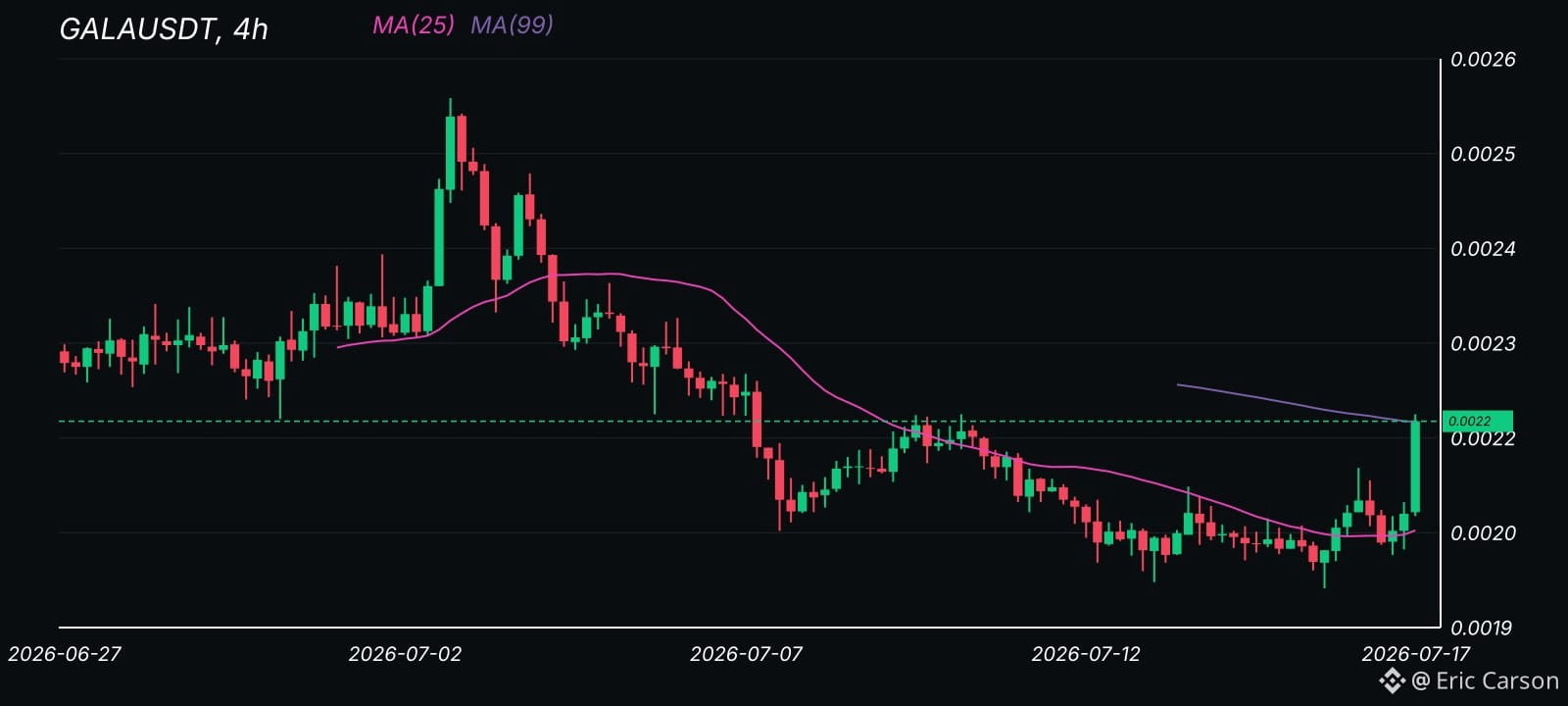
$GALA
Micro-Cap-Squeeze-Ladephase. Kurs klebt am 25 MA, druckt seit dem 7. Juli einen engen, aufsteigenden Kanal. Volumen nimmt ab – klassisch die Ruhe vor dem Sturm.
Aktueller Kurs 0.002182. 24h Hoch 0.002191, Tief 0.00201. Widerstand bei 0.0022 ist der Auslöser. Wenn wir ihn brechen, laufen wir den 99 MA bei 0.0023 an.
Einstiegszone: 0.00214 - 0.00219
TP1: 0.00230
TP2: 0.00240
TP3: 0.00260
Stop-Loss: 0.00198
Small Caps bewegen sich schnell. Respektiere den Stop.
#GALA #WriteToEarnUpgrade
$GALA
Micro-Cap-Squeeze-Ladephase. Kurs klebt am 25 MA, druckt seit dem 7. Juli einen engen, aufsteigenden Kanal. Volumen nimmt ab – klassisch die Ruhe vor dem Sturm.
Aktueller Kurs 0.002182. 24h Hoch 0.002191, Tief 0.00201. Widerstand bei 0.0022 ist der Auslöser. Wenn wir ihn brechen, laufen wir den 99 MA bei 0.0023 an.
Einstiegszone: 0.00214 - 0.00219
TP1: 0.00230
TP2: 0.00240
TP3: 0.00260
Stop-Loss: 0.00198
Small Caps bewegen sich schnell. Respektiere den Stop.
#GALA #WriteToEarnUpgrade
Micro-Cap-Squeeze-Ladephase. Kurs klebt am 25 MA, druckt seit dem 7. Juli einen engen, aufsteigenden Kanal. Volumen nimmt ab – klassisch die Ruhe vor dem Sturm.
Aktueller Kurs 0.002182. 24h Hoch 0.002191, Tief 0.00201. Widerstand bei 0.0022 ist der Auslöser. Wenn wir ihn brechen, laufen wir den 99 MA bei 0.0023 an.
Einstiegszone: 0.00214 - 0.00219
TP1: 0.00230
TP2: 0.00240
TP3: 0.00260
Stop-Loss: 0.00198
Small Caps bewegen sich schnell. Respektiere den Stop.
#GALA #WriteToEarnUpgrade
1
295
Anmelden und weiter Inhalte entdecken
Krypto-Nutzer weltweit auf Binance Square kennenlernen
⚡️ Bleib in Sachen Krypto stets am Puls.
💬 Die weltgrößte Kryptobörse vertraut darauf.
👍 Erhalte verlässliche Einblicke von verifizierten Creators.
E-Mail-Adresse/Telefonnummer