
Lately, I’ve been noticing a subtle shift across a lot of Web3 games. Nothing crashes, nothing feels broken. But over time, playing starts to feel less like a decision and more like something you’re just… maintaining.
I felt it during a farming loop. Same steps, same timing, same outcome. Plant, wait, harvest, repeat. At some point, it stopped feeling intentional. And weirdly, the more efficient I got, the less I actually felt connected to what I was doing.
Going into Pixels, I expected the same pattern. Maybe more polished, but still something that players would eventually optimize and drain. That’s usually how it goes. Systems don’t collapse, they get figured out.
But after spending time in it, something felt slightly off in a way I couldn’t ignore.
Not in a bad way. Just… inconsistent enough to stand out. Sometimes outcomes didn’t fully match expectations. Not random, but not perfectly predictable either. And that small gap started to matter.
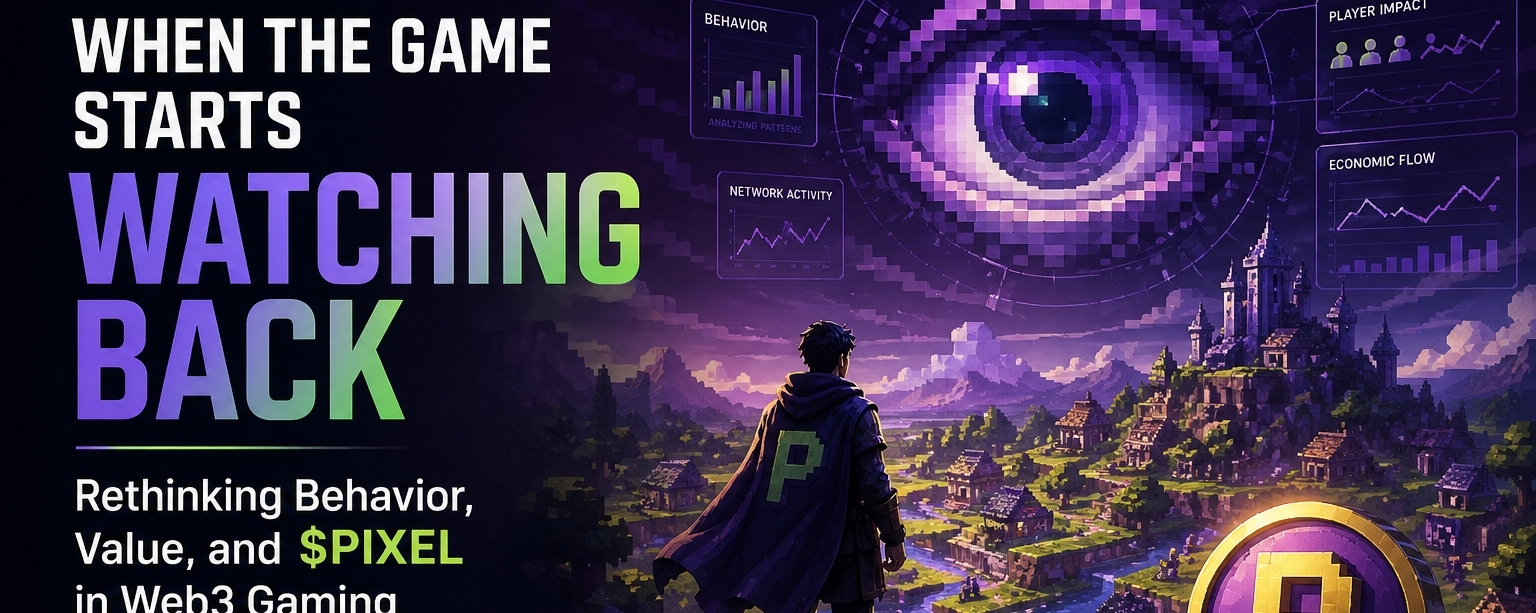
It made me realize the system might not just be rewarding actions, but paying attention to how those actions are done.
Two players can follow the same routine and still end up in slightly different positions. If someone leans too much into pure extraction, the results seem to lose strength over time. There’s no clear penalty. Just a quiet drop in effectiveness. Like the system doesn’t want to be fully solved.
Even the idea of value starts to feel different. Not everything you earn carries the same weight. Some outcomes stick, others seem to fade or shift elsewhere. It feels like there’s a background layer constantly adjusting things.
That’s where the tension comes in. Most GameFi systems push rewards outward until everything slows down. Here, it feels like there’s also something pulling things back, constantly checking if players are contributing or just taking.
And right in the middle of all this sits $PIXEL.
At first, it looks straightforward. Play, earn, use. But over time, it feels less like a reward and more like access. Most of the game runs smoothly without friction, until something important shows up. Limited items, upgrades, time-sensitive moments.
That’s when things change.
If you’re ready, you move instantly. If you’re not, you hesitate, or miss out. And over time, that gap builds. The same players seem to show up exactly when it matters. Not because they worked harder in that moment, but because they were already positioned.
It starts to feel less like a simple reward system and more like something that connects effort to outcome.
Which brings up a bigger question. Can something like this stay balanced?
Players don’t stay still. They adapt, test, optimize. But here, even when you find an edge, it doesn’t always hold. The system shifts just enough to keep things from settling.
So it stops being just about individual strategy. It becomes something collective.
You’re not only playing your own loop. You’re part of a system that adjusts based on how everyone behaves. If too many players focus on extraction, things change. If engagement stays meaningful, it stabilizes.
I don’t think Pixels has fully figured it out yet. It’s still early, and systems like this need time to really take shape.
But it’s enough to make me pay closer attention.
Because it doesn’t feel like I changed how I play.
It feels like the system noticed… and adjusted around me.