

The Pixels ecosystem is growing fast again.
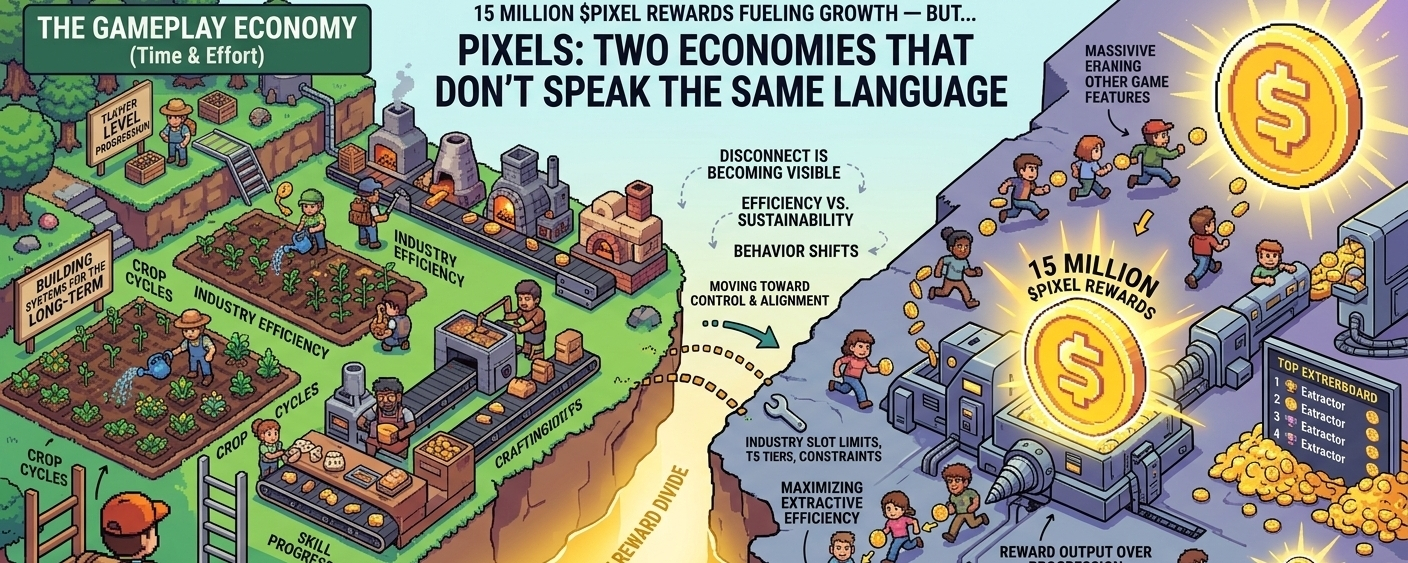
With 15 million $PIXEL in rewards being distributed through gameplay loops, industries, and seasonal incentives, activity across the world of Pixels has noticeably accelerated. Farms are running, industries are expanding, and more players are returning to optimize their strategies.
On the surface, the reward engine is doing exactly what it was designed to do:
incentivize activity and keep the economy moving.
But underneath that momentum lies a structural tension that most players haven’t fully recognized yet.
Pixels doesn’t operate on a single economy.
It operates on two parallel ones.
The Two Economies Inside Pixels
At a basic level, Pixels runs on two different value systems:
1. The Gameplay Economy
This is where players interact daily. Farming loops, crafting industries, resource management, and progression mechanics all live here. Effort, time, and efficiency determine how quickly a player can produce goods and complete loops.
2. The Token Economy
This is the $PIXEL layer the financial incentive structure tied to rewards, emissions, and market value.
These two systems are deeply connected, but they don’t always move in sync.
And that disconnect is becoming more visible as reward emissions scale.
Reward Emissions Are Driving Activity
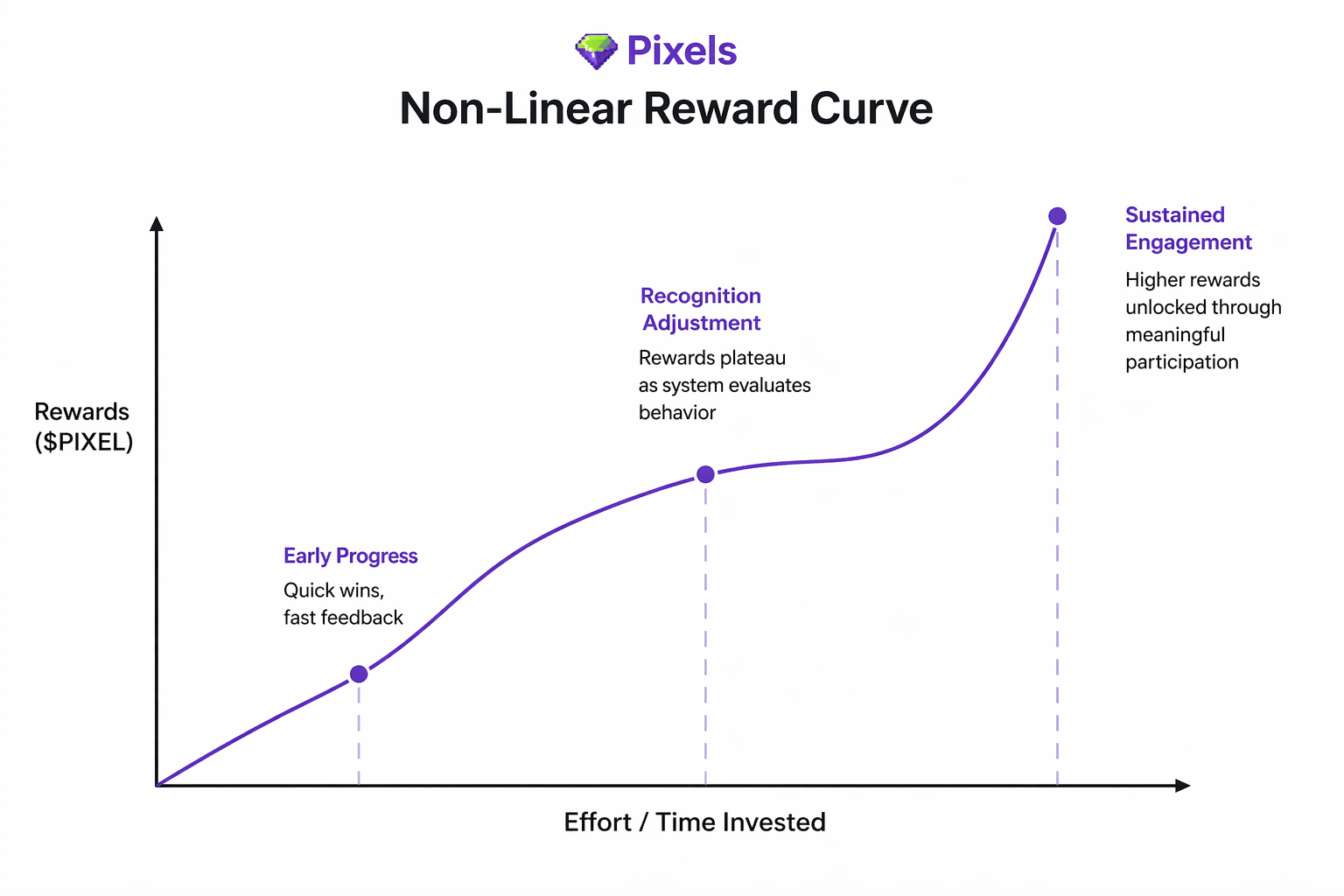
The distribution of 15 million $PIXEL has clearly achieved its first objective:
it has reactivated the ecosystem.
Players are optimizing loops again.
Industries are filling up.
Competitive efficiency is back.
When rewards increase, participation increases. That’s expected.
But participation driven by token incentives behaves very differently from participation driven by game progression.
And that’s where the tension begins.
Efficiency vs. Sustainability
In the gameplay economy, success comes from building systems that work long-term.
Players invest time upgrading land, building industries, and creating production chains that become more efficient over time.
But in the token economy, the incentives are different.
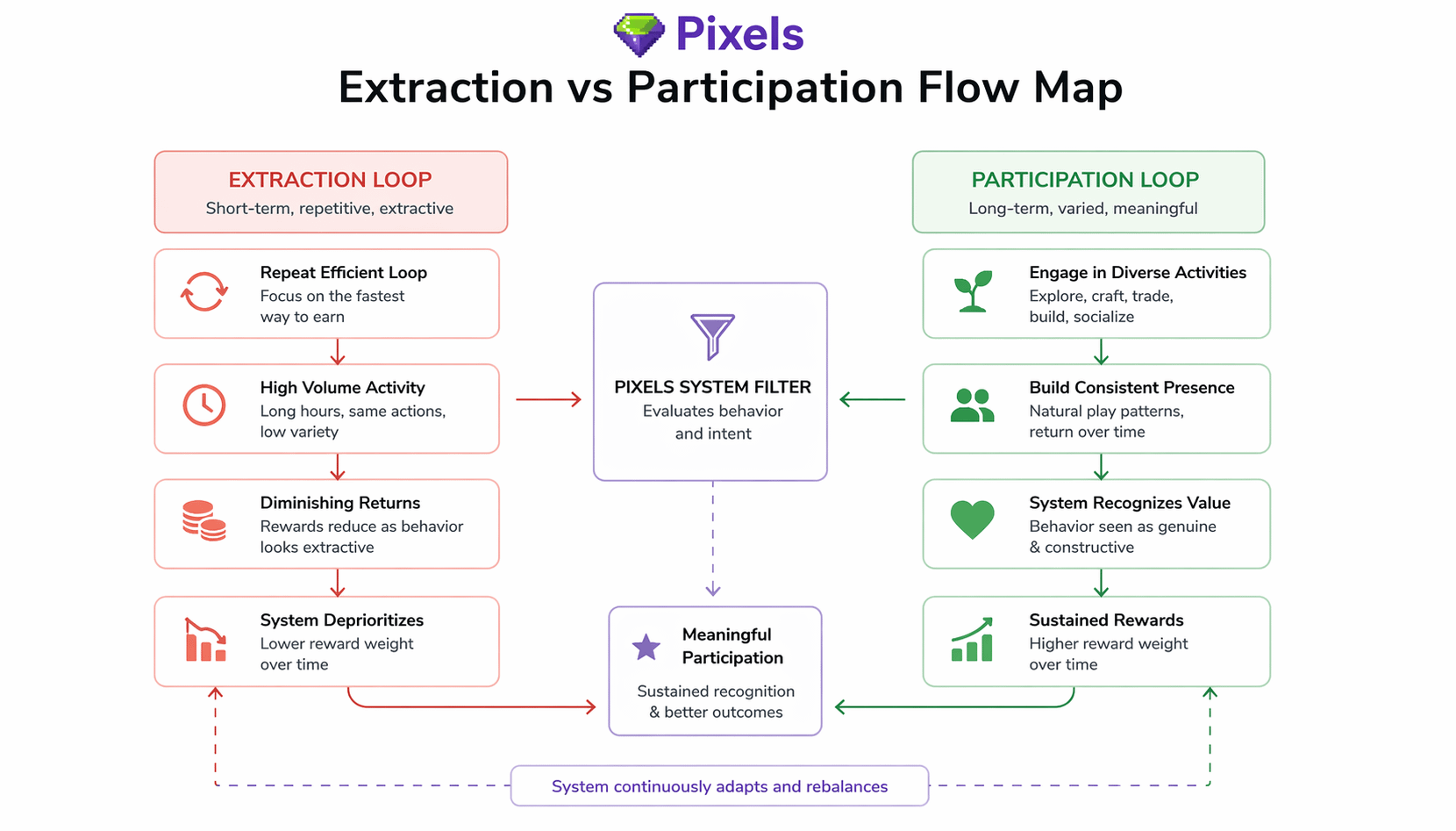
The goal becomes maximizing reward extraction per unit of effort.
This creates a natural shift in behavior:
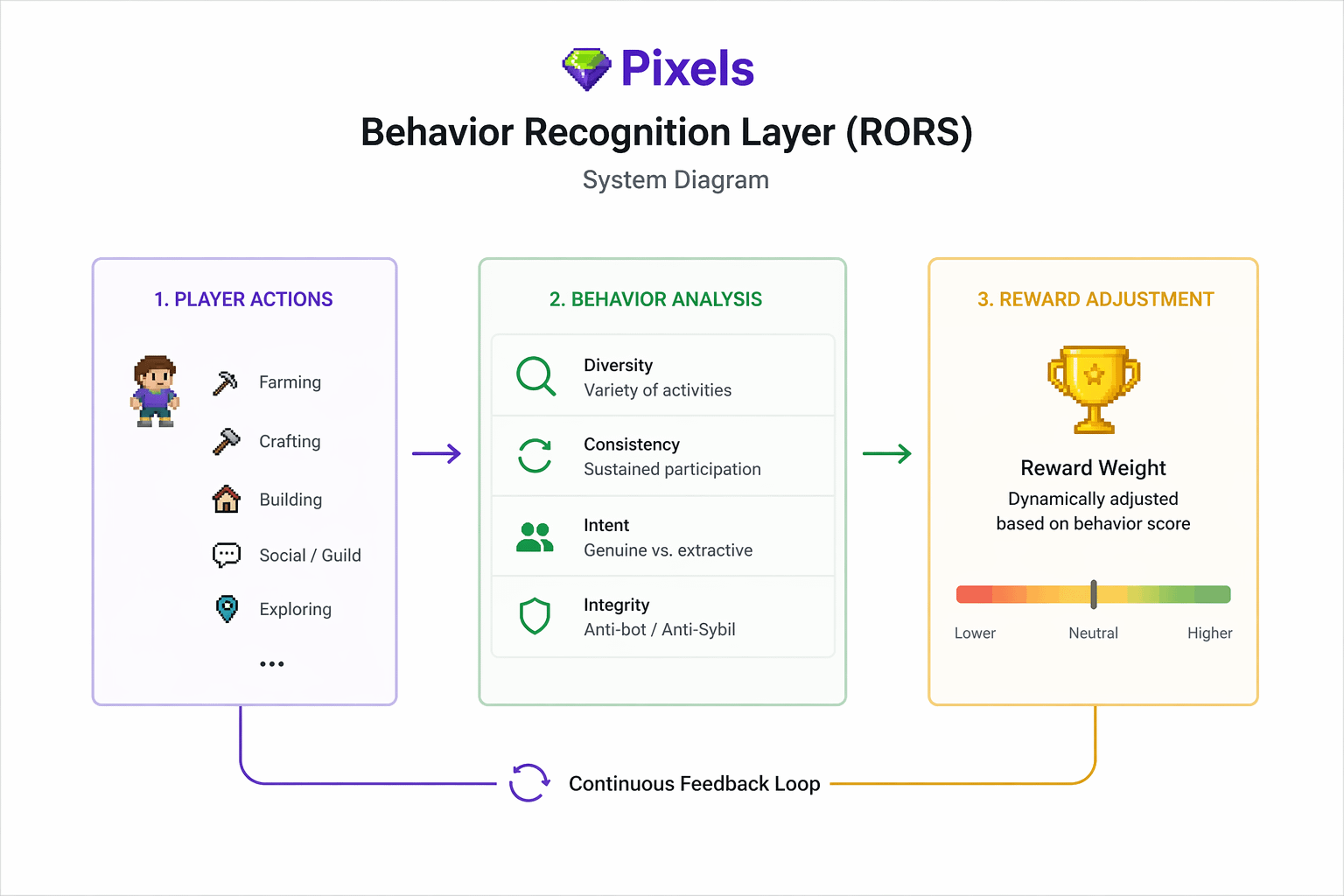
Players begin optimizing not for game progression, but for reward output.
That subtle shift changes how the economy evolves.
The Emergence of Optimization Loops
Whenever rewards are introduced into a system, players inevitably discover optimization loops.
These loops prioritize the highest reward-per-time activities rather than the most immersive gameplay paths.
In small doses, optimization is healthy.
It drives discovery and efficiency.
But at scale, it can create imbalance.
Certain activities become overused, while other parts of the ecosystem become underutilized.
And when that happens, the gameplay economy starts drifting away from the token economy.
Why This Gap Matters
If the two economies drift too far apart, a game can end up in an unstable state:
• Gameplay becomes secondary to reward extraction
• Economic balance becomes harder to maintain
• Player behavior becomes predictable and exploit-focused
This doesn’t mean rewards are the problem.
In fact, reward systems are essential for growth in Web3 games.
The real challenge is alignment.
Rewards need to reinforce the behaviors that strengthen the in-game economy not bypass it.
Pixels Is Actively Moving Toward Control
Recent updates suggest the Pixels team is aware of this dynamic.
Mechanics like:
• Industry slot limits
• Timed production cycles
• Higher-tier industries (T5)
• Access-based progression
are all signs of a system trying to slow down pure extraction and reinforce structured growth.
Instead of allowing unlimited farming of rewards, the system is gradually introducing constraints that guide player behavior.
This is how long-term economies are stabilized.
The Real Test Ahead
The 15 million $PIXEL reward pool has proven that incentives can bring players back.
But the next phase for Pixels isn’t just about growth.
It’s about synchronizing the two economies.
The gameplay economy must create meaningful scarcity and progression, while the token economy must reward the right behaviors.
If those two systems start moving together instead of separately, #pixel could evolve into something much more sustainable than a typical Web3 reward loop.
And if that happens, the current reward phase may be remembered as the moment when the economy started to mature.
Not just expand.