I will be honest, when I first tried Pixels I treated it like every other Web3 farming game. log in, do the loop, grab rewards, and do not think too much about it. I have done this enough times to know how it usually ends. early earnings feel excIting, then the token pressure kicks in, people start dumping, and the whole thing slowly loses meaning. I did not expect Pixels to be any different.
but the longer I looked at how it actually works under the hood, the more I started realIzing it is not really trying to compete as just another game. the farming layer is almost misleading. it feels familiar on purpose, lIke a comfortable entry point, but the real system is something else entIrely.
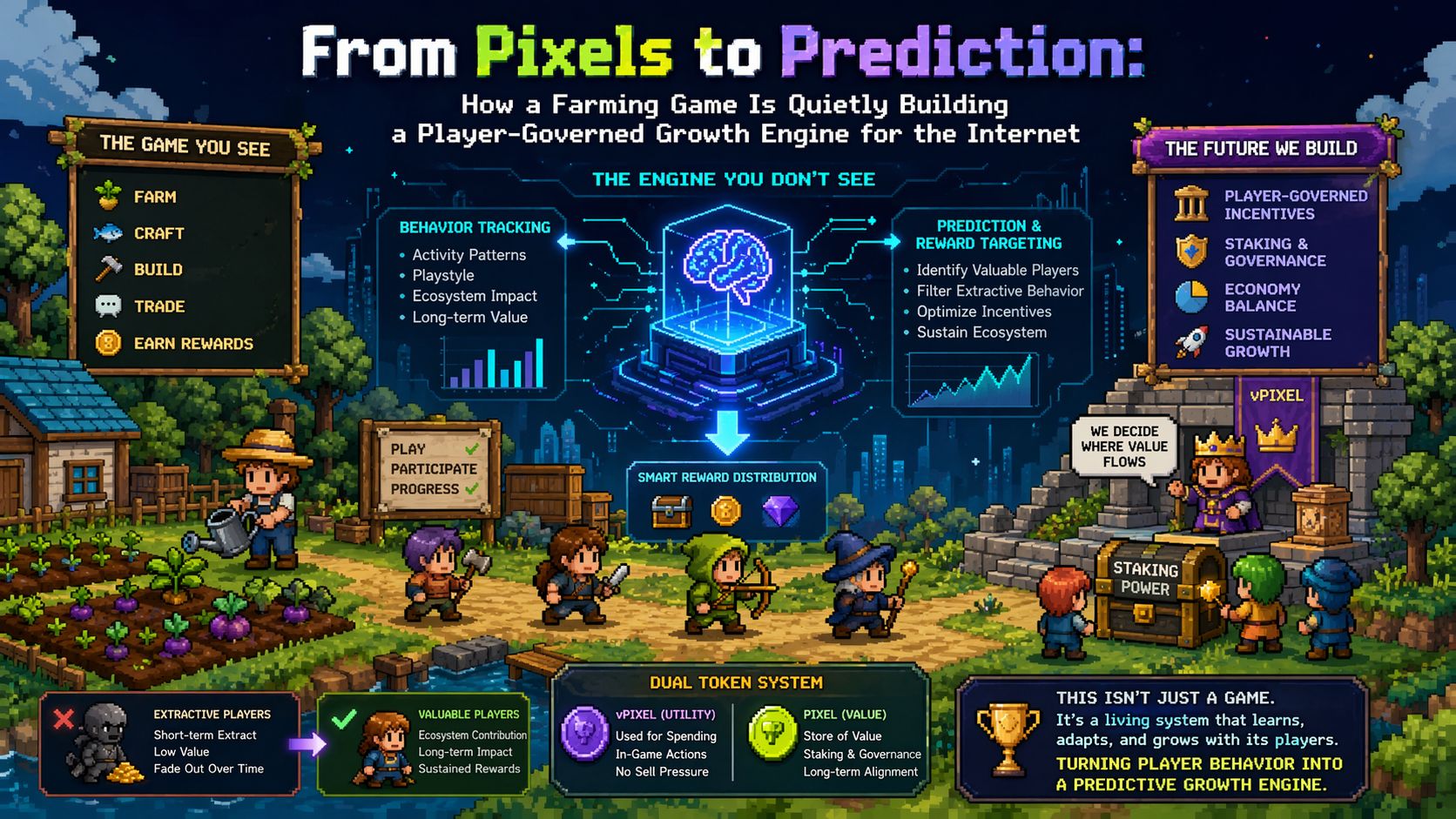
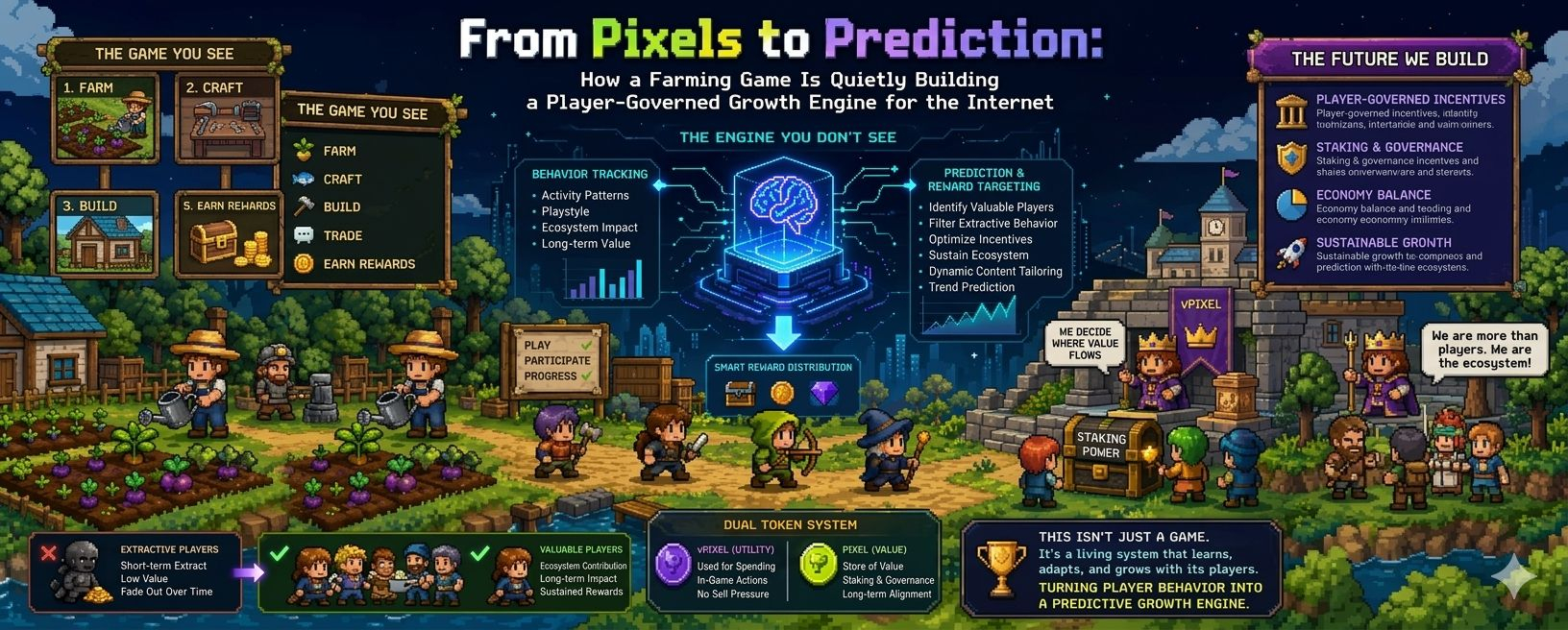
what stood out to me is how much emphasis Pixels puts on behavIor tracking and reward targeting. in most games, activity itself is enough you play more, you earn more. but Pixels does not seem satisfied with that simple loop. it is not just asking how active are you, it is slowly building a picture of what kind of player are you and do you actually matter to the ecosystem.
that distInction sounds small, but it changes everything. most Web3 games fail because they reward activity. Pixels is trying to reward utility, and that’s a completely different economy. once you shift from who is active to who is valuable, the entire incentIve structure stops being flat and starts becoming selective.
I noticed this shift especially when looking at how rewards are structured around ecosystem participation rather than pure grinding. it is not fully obvious at first, but the direction is clear: the system is designed to learn from player behavior and gradually improve how incentives are distributed. that is where the prediction idea actually makes sense. it is not predicting prices or hype cycles it is trying to predict which users are worth sustaining long term.
and I will admit, this hit me because I have been on the other side of it before. I have farmed tokens in games where I knew I was not adding real value, just extracting what I could before leaving. most systems accidentally reward that behavior. Pixels feels like it is slowly building resistance against it. not in a harsh way, but in a structural one. if you are only here to extract, over time you simply stop being as relevant in the reward flow.
the staking and governance angle adds another layer to this. instead of rewards being fully controlled by a central team, players who stake can influence where incentives go. You are not just reacting to the economy anymore you are slightly shaping it. that shift from participant to allocator is subtle, but it changes how ownership feels inside the system.
the separation between PIXEL and the main token also plays into this structure. Most Web3 games underestimate how fast sell pressure builds up. the moment users can convert everything into liquid tokens, they usually do. by isolating spend utility from value storage, Pixels is basically trying to control that pressure loop instead of letting it spiral. it is not a perfect solution, but it is a more realistic one than pretending players won’t dump.
what I find most interesting though is the bigger direction this hints at. Pixels does not feel like it is optimizing a single game economy. it feels lIke it is experImenting with a framework where player behavior becomes input data for a larger growth system. almost like the game is the interface, but the real product is the engine learning behind it.
if I had to put a stronger opinion on it, I say this: if Pixels works even halfway as intended, it won’t just improve Web3 gaming it could quietly redefine how growth itself is handled in games. not through ads, not through hype cycles, but through continuous behavioral optimization inside the system.
right now it still looks like a simple farming game on the surface, and maybe that is intentional. but underneath that layer, it feels like an experiment in something much bigger turning player behavior into a structured growth system that improves over time instead of decaying after hype.
and there is one moment that really clicked for me while thinking about it: this is not just about keeping players longer, it is about separating useful players from extractive ones without breaking the economy. that is a hard problem most projects avoid completely because it is easier to just inflate rewards and hope for the best.
if that model actually matures, the interesting part won’t be the farming mechanics at all. it will be the fact that the system slowly learned which players mattered, and used that to grow itself in a way most games have never really managed to do.