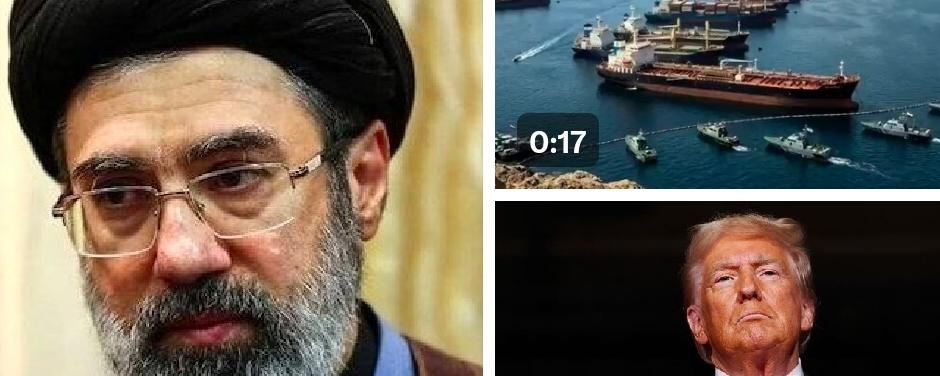
Over the past few hours, the situation has taken a sharp and concerning turn. Iran has officially described the U.S. blockade as an “act of war,” firmly rejected any extension of ceasefire talks, and warned that any interference with its ships will be met with direct military response.
This isn’t just rhetoric—it signals a clear shift from diplomacy toward confrontation.
What makes this moment especially critical is how quickly the tone has changed. Not long ago, there were still signs pointing toward negotiation and possible de-escalation. Now, that window appears to be closing fast. When language escalates to this level, it often reflects deeper strategic positioning rather than temporary pressure.
The risk level is rising.
We’re seeing a familiar pattern unfold: pressure → response → escalation. And once that cycle gains momentum, stepping back becomes increasingly difficult for all sides involved.
This situation also carries global consequences. The tensions are centered around key trade and energy routes, meaning any disruption could impact oil prices, supply chains, and broader market stability worldwide.
At the same time, the fragility of the moment cannot be ignored. Ceasefires rely on trust—and once that trust erodes, rebuilding it becomes far more complex. Right now, both sides appear to be drifting further apart, not closer together.
Key Takeaways:
Stability is fading—uncertainty is rising
The shift from negotiation to confrontation is now واضح
Escalation can accelerate quickly if actions follow warnings
At this stage, the focus is no longer on resolution—it’s on response.
And in an environment where every move carries weight, what happens next may determine whether this remains contained…
or evolves into something far more serious.
#IranAttackIsrael #write2earnonbinancesquare $PIXEL