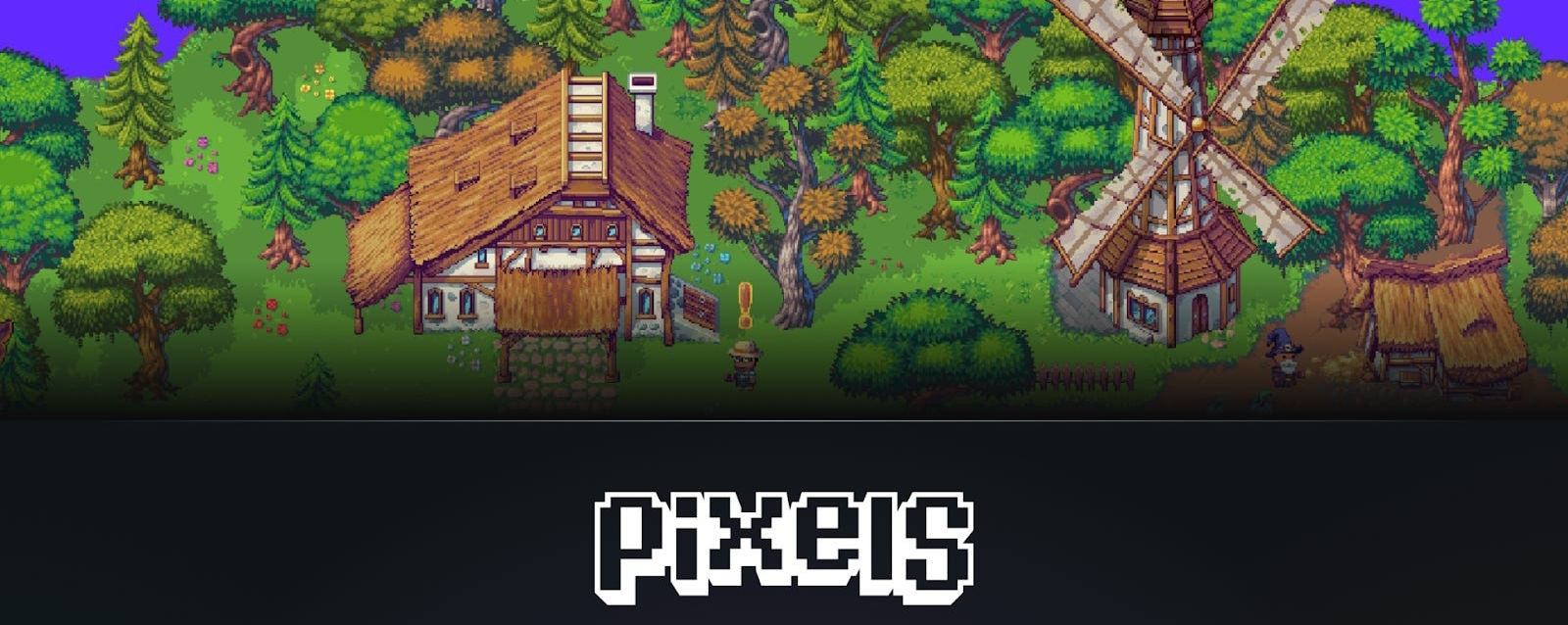

Most blockchain games follow a pattern so consistent it has become predictable to anyone who has watched enough cycles. A game launches with a token, the token creates an immediate economic gravity, and players arrive not because the world compels them but because the yield does. Activity metrics climb. Daily active wallets become a headline. The team reads the numbers as validation and accelerates more content, more events, more emissions. Then the token corrects. The players who came for yield recalculate the math and leave. What remains is a game that was never really played, only farmed, by a population that was never really a community, only a liquidity event. The servers stay online. The world empties.
This project went through that exact pressure. It survived. That fact alone is worth examining seriously, because survival in this category is not common and is rarely accidental.
The easy explanation, the one most observers would offer, is that Pixels had enough content variety to keep players engaged through the volatility. Farming mechanics, seasonal systems, expanding regional maps a sufficient surface area of things to do. That explanation is not false. But the more honest answer is that the project survived because the team eventually understood that content volume is not the same as commitment architecture, and that the difference between the two is what separates games that empty from games that compound.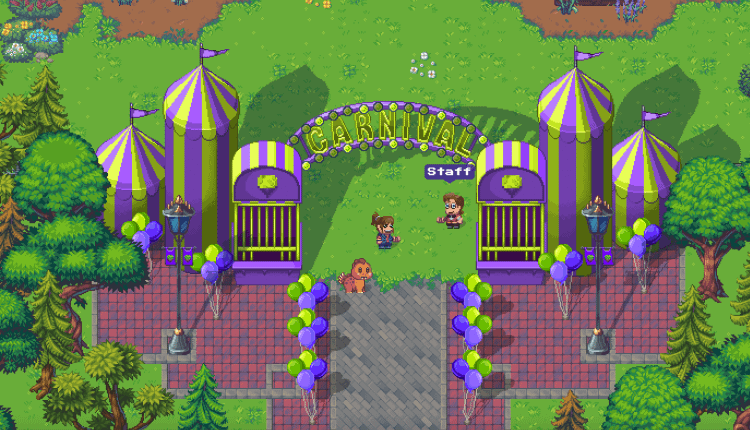
The actual crisis was the $PIXEL launch and the airdrop distribution that accompanied it. This is not a small detail to move past quickly. The distribution created a visible and documented asymmetry: players who had invested sustained time and genuine engagement in the world received allocations that, in many cases, compared unfavorably to wallets that had participated minimally but positioned strategically. The forums recorded this in real time. The grievance was not abstract. It struck at the foundational premise that effort inside the game translates into proportional recognition outside it. When that premise breaks publicly, the damage is not primarily to sentiment. It is to the legitimacy of the entire value proposition. Players do not just feel disappointed they begin questioning whether their continued presence is rational. That is a structural problem, not a communications one.
What followed revealed something important about how this team thinks. The response was not a rebranding effort or an accelerated content drop designed to change the subject. Instead, the work that emerged over the subsequent period was quieter and more fundamental. Land systems were deepened so that ownership carried productive meaning, not just speculative value. Profession mechanics were developed so that time invested in a specific craft created measurable efficiency advantages that a new player could not instantly replicate. Guild infrastructure was built so that players accumulated social context and shared history that existed independently of any single asset. None of this was shipped as a retention initiative. It was built as a world one in which a player's position becomes genuinely specific to them over time.
That specificity is the reframe. The capability that makes Pixels meaningful today its ability to generate commitment that does not depend on token price to sustain itself was not present at launch. It was constructed under pressure, because the speculative model had revealed its ceiling and the team chose to build past it rather than optimize within it. The crisis did not interrupt the project's development. It clarified what the project needed to become.
The system that exists now connects assets, progression, efficiency, and knowledge into overlapping layers. A player who has developed land, mastered a profession, and embedded themselves in a guild network holds a position that is genuinely difficult to reconstruct after exit. Not because anything is locked. But because the position is the product of a specific sequence of decisions, days, and relationships that cannot be instantly replicated. Each layer alone would be insufficient to produce that friction. Together, they make leaving a considered decision rather than a reflexive one. That is a meaningfully different architecture than anything this category typically produces.
Two things together built this outcome: a team that treated a legitimacy crisis as a product design problem rather than a narrative one, and a mechanic structure that allows commitment to accumulate across enough independent dimensions that the whole becomes harder to abandon than any single part. Neither was sufficient alone. Together, they produced something this space does not often see a game that earns continued presence rather than renting it.