
You open the game thinking you’ll grind, earn something, maybe cash out later. That’s the usual script in Web3. But a few days into Pixels, something shifts. You’re still logging in… even when the rewards aren’t that great. Strange, right? It kind of creeps up on you. Quietly. No big moment. Just a slow pull you didn’t expect.
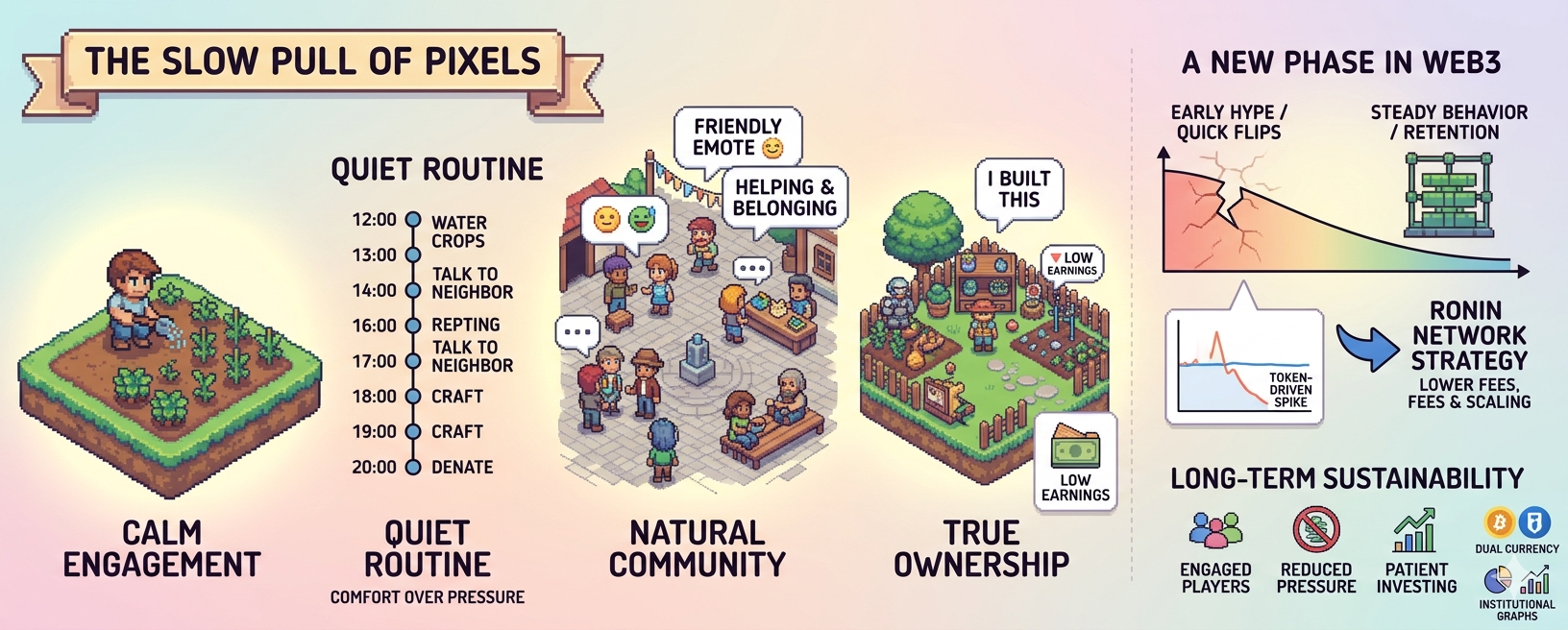
The first thing that hits is the pace. It’s not loud. Not aggressive. You plant crops, walk around, talk to people, come back later. That’s it. And somehow… it works. There’s a calm loop here that feels almost personal. You’re not rushing. You’re not chasing numbers every second. It feels like building something small with your own hands. A bit messy, a bit slow, but real enough to keep you there. That soft sense of progress… it sticks.
Now compare that with most “earn-focused” games. The moment rewards drop, people leave. No emotion attached. No connection. Just numbers going down. Pixels doesn’t rely on that pressure. It leans into something else. Routine. Comfort. Familiarity. These are quiet forces, but they’re powerful. And honestly… a bit underrated in crypto.
Then there’s the social layer. Not forced. Not overdesigned. Just natural. You see players hanging around, chatting, trading, sometimes doing nothing important at all. And that’s the point. It doesn’t feel like everyone is trying to extract value from each other. It feels… human. You log in, see familiar names, maybe help someone, maybe get help. That small interaction creates a sense of belonging. And once that happens, leaving becomes harder than expected.
Ownership also plays a deeper role than people think. Not in the usual “buy NFT, sell higher” mindset. It’s more subtle. When you spend time on your land, upgrade it, organize it your own way… it becomes yours in a different sense. Time turns into attachment. Even if the income is low, the feeling of “I built this” carries weight. That emotional anchor is something most Web3 projects failed to create.
Looking at the bigger market, this shift actually makes sense. The early hype phase of crypto gaming is fading. Fast money narratives don’t hold like before. Retail players are more careful now. Institutions are watching user retention, not just token spikes. Developers are slowly realizing that sustainability comes from engagement, not inflation. Pixels fits right into this new phase. It’s not chasing explosive growth. It’s building steady behavior.
From a developer’s angle, the design is quite intentional. The dual economy system, where soft currency handles daily actions and premium tokens stay controlled, reduces pressure on the main token. That avoids the classic death spiral we saw in earlier projects. From a trader’s perspective, this means less hype-driven volatility but more long-term structure. Not exciting for quick flips, but interesting for patient positioning. And institutions? They care about one thing here: retention. If players stay without heavy incentives, that’s a strong signal.
Of course, there are challenges. Let’s not ignore that. Earnings are limited for most players. New users can feel lost at the start. The gameplay depth, compared to traditional AAA titles, is still evolving. And yes, the entire ecosystem still depends on broader crypto market conditions. If sentiment drops hard, activity can slow down. That risk is always there.
But milestones matter. Pixels moving to the Ronin Network wasn’t random. It gave the game lower fees, smoother onboarding, and access to an already active gaming ecosystem. That decision helped it scale in a way many Web3 games couldn’t. It wasn’t just growth. It was strategic positioning.
There’s also a psychological angle people don’t talk about enough. When a game doesn’t constantly scream “earn more, earn more,” your brain relaxes. You engage differently. You explore. You stay longer. Ironically, that can create more value over time than aggressive reward systems. It’s a quiet design choice, but very effective.
In real-world terms, it’s similar to why people spend hours on games like farming sims or sandbox worlds without earning anything at all. The reward is not always financial. Sometimes it’s control, creativity, or just a peaceful escape. Pixels taps into that same space, but adds a layer of ownership on top.
And here’s my honest take. I don’t think Pixels is trying to be the biggest game overnight. It’s trying to be a game people don’t want to leave. That’s a different goal. And in this market, that might actually be the smarter one. It’s not perfect. It still has gaps. But the foundation feels… steady. And in Web3, steady is rare.