When I first started exploring @Pixels I expected the usual setup developers build the game, players play it, and that’s pretty much the end of the relationship. But the more I understood how Pixels works, the more I realized they’re trying to completely redesign that dynamic.
And honestly, that’s what makes it interesting.in traditional gaming, players and developers are mostly disconnected. Developers make decisions, push updates, control rewards, and players simply react. Even in many Web3 games, this structure hasn’t changed much players might earn tokens, but they still don’t have real influence over how the ecosystem evolves.
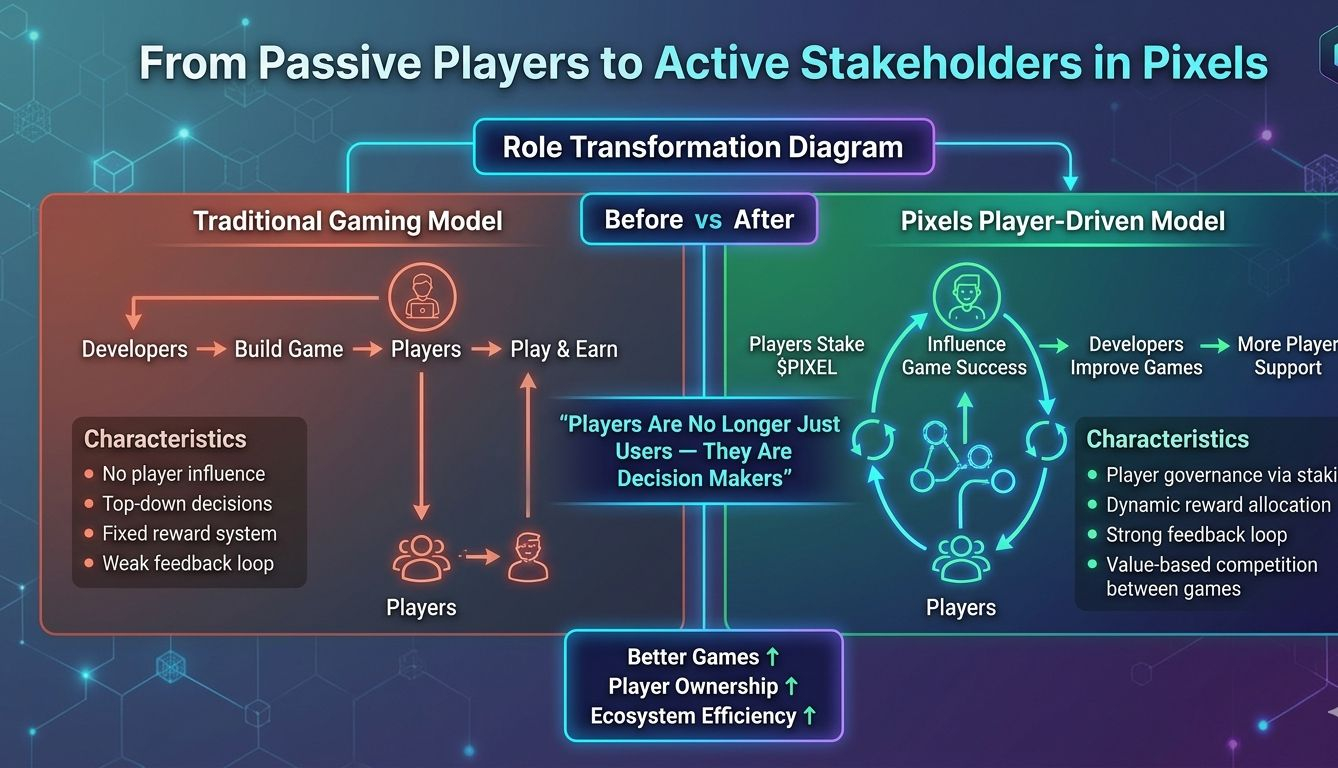
Pixels is taking a very different approach.Here, players are not just users they are active participants in shaping the ecosystem. Through staking $PIXEL, players can directly support specific games. This means they are effectively deciding which games deserve more visibility, rewards, and growth opportunities.
From my perspective, this is a major shift.Because now, developers are no longer just building for players they are building with them in mind at a much deeper level. If a game wants to succeed inside the Pixels ecosystem, it needs to attract and retain real player support. It needs to prove that it can create value.
And that changes developer behavior.instead of focusing only on short-term hype or quick user acquisition, developers are pushed to create better gameplay, stronger retention, and more engaging experiences. Because if they don’t, players simply won’t stake into their game.
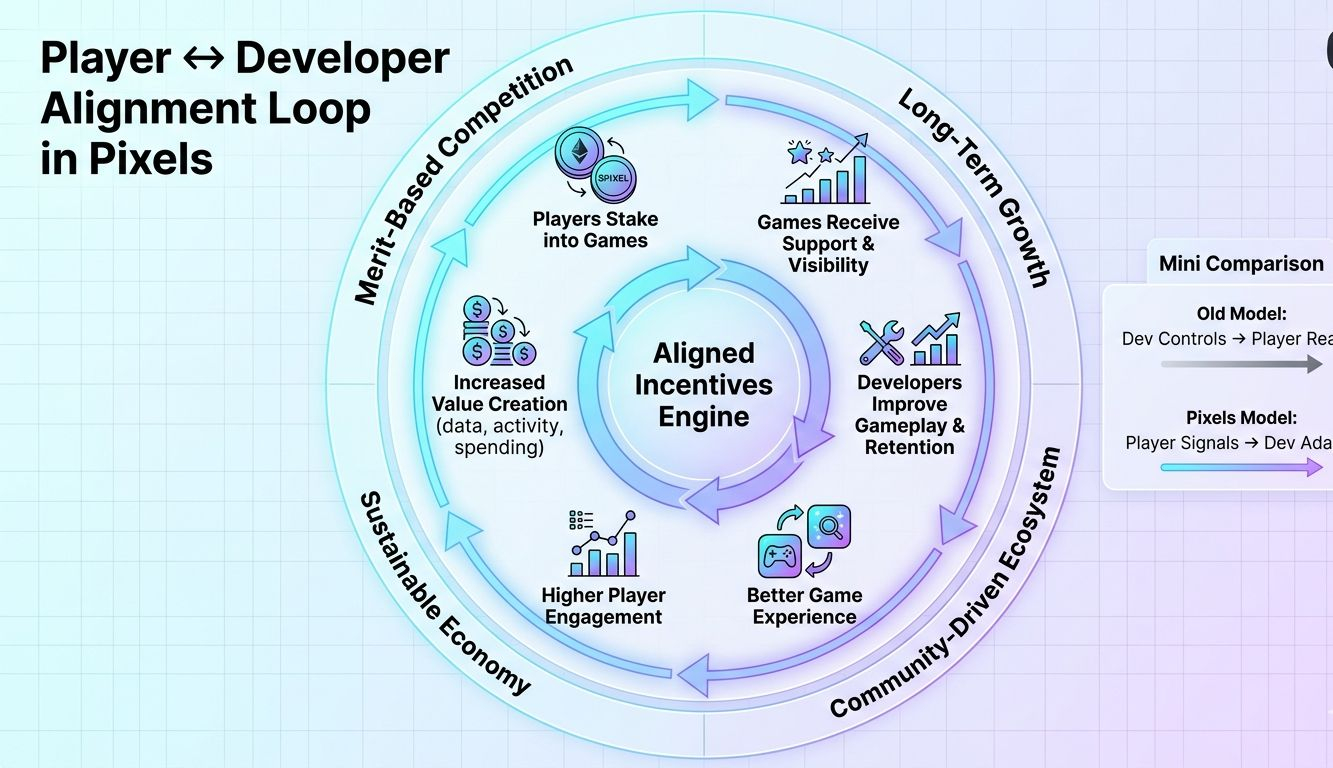
It creates a natural feedback loop.Players support games they believe in. Games that perform well receive more rewards. And underperforming games lose attention over time. This kind of system feels much more merit-based compared to traditional models.
Another thing I find interesting is how this aligns incentives.in many Web3 projects, there’s often a disconnect players want to maximize earnings, while developers want to sustain the economy. These goals can clash. But in Pixels, both sides are encouraged to think long-term.
Players benefit more when the ecosystem grows and stays healthy. Developers benefit when players stay engaged and continue contributing. So instead of working against each other, both sides are moving in the same direction.
That alignment is powerful.Pixels also uses data to strengthen this relationship. By analyzing player behavior, they can identify what works and what doesn’t. This helps developers improve their games, while also ensuring rewards are distributed more efficiently.
So it’s not just about giving players power it’s about giving both players and developers better tools and feedback.What I personally like about this model is that it gives players a sense of ownership.
You’re not just logging in to play and earn. You’re making decisions that can influence which games grow and how the ecosystem evolves. That kind of involvement makes the experience feel more meaningful.
And at the same time, developers are held to a higher standard.They can’t rely on marketing alone. They need to build something that players actually value. Otherwise, they won’t get the support needed to succeed within the ecosystem.
In the long run, I think this approach could lead to better games and healthier economies.Because when players and developers are aligned, the entire system becomes more efficient and sustainable.
That’s why I see @Pixels as more than just a game it’s a platform that’s redefining how players and developers interact, collaborate, and grow together.