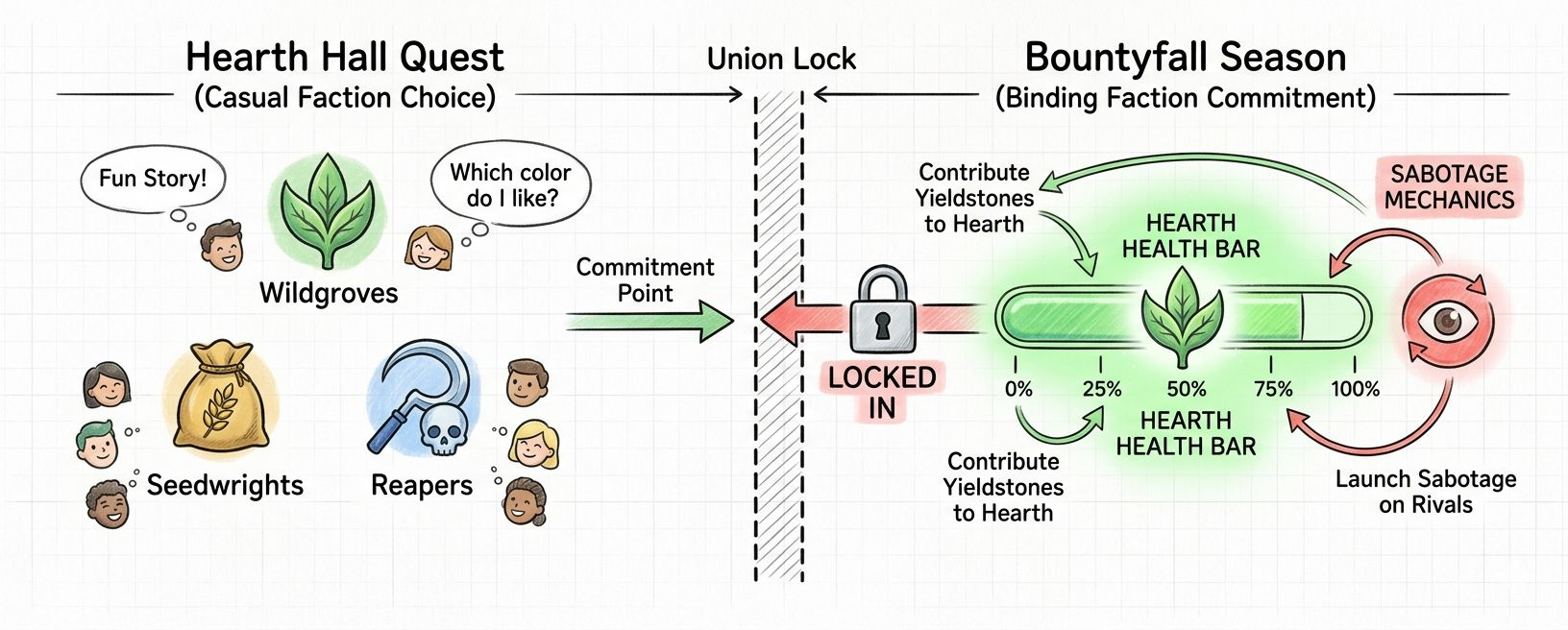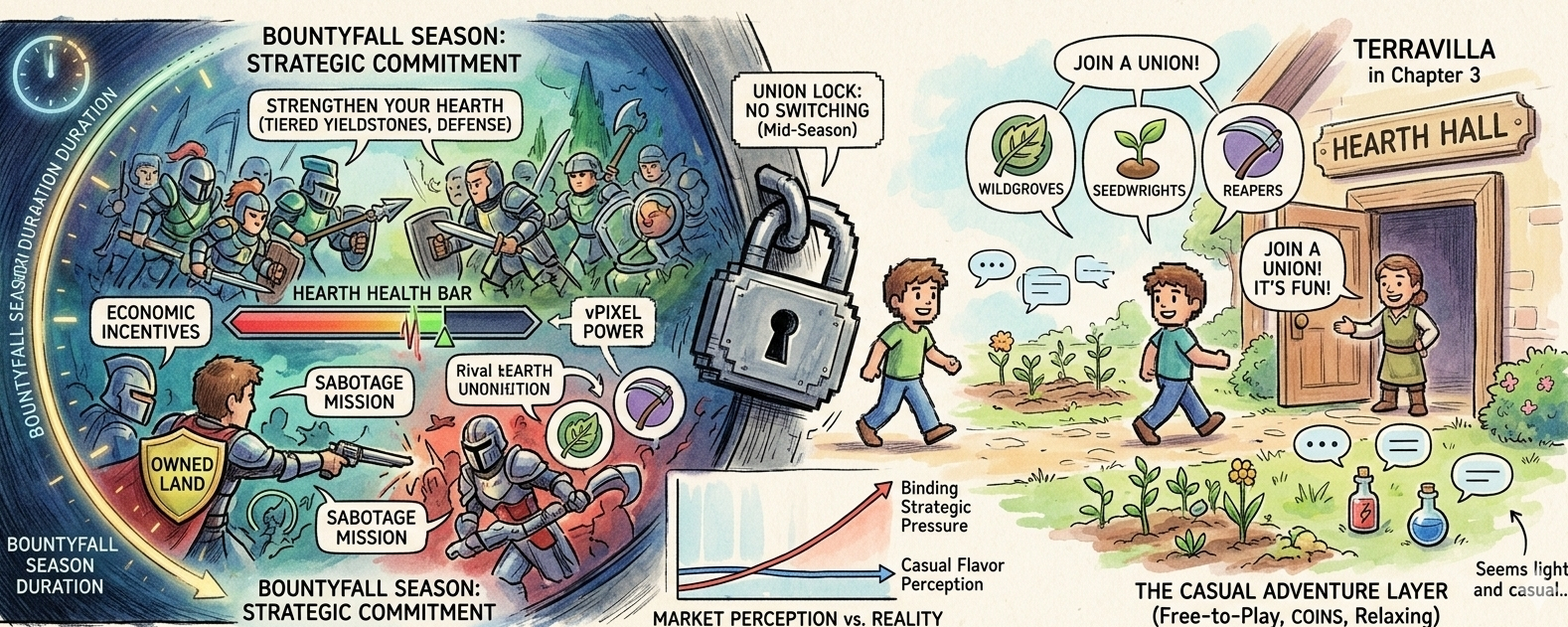
What keeps bothering me about Pixels is how the Hearth Hall quest in Terravilla makes choosing a Union feel like a light, fun story decision, but the moment you pick one it quietly locks you in for the entire Bountyfall season. I noticed it last week when I finally reached the hall and had to commit to Wildgroves, Seedwrights, or Reapers. The NPC dialogue made it sound casual, yet as soon as I chose, the sabotage mechanics and Hearth health bar turned that choice into something with real consequences. It felt strange because the game still presents itself as relaxed farming and exploration, but this one decision adds a layer of strategic risk most players probably don’t fully anticipate when they first walk in.
The part that feels more important is that this Union lock is not a small detail it is the central tension deliberately built into Chapter 3’s incentive architecture. You gather tiered Yieldstones through normal play or land work, then decide whether to strengthen your own Union’s Hearth or sabotage a rival’s, but you cannot switch sides mid-season without losing all previous contributions. Land ownership and economic PVP make the choice carry heavier weight because owned plots give better Yieldstone tiers and stronger sabotage power. Energy and Coins keep the free casual layer smooth and welcoming, while PIXEL staking and vPIXEL utility only amplify your options once you’re already committed. The system mixes cooperation inside the Union with competition across them to keep seasons alive, but it also turns what looks like a simple faction choice into a binding commitment that shapes everything you do for months.
I’m not fully convinced the market has noticed how this lock-in changes the actual feel of the game over time. What the market may be pricing wrong is the assumption that Bountyfall’s Union system is just adding fun competitive flavor on top of the casual experience.
The specific reading I’m carrying forward is this: during the next full Bountyfall season, watch whether the proportion of land-owning and high-reputation players actively engaging in sabotage and Hearth defense grows relative to total seasonal participation. If that proportion increases while casual free-player retention holds steady after the first couple of weeks, the Union lock will have shown it successfully pulls more people into the owned layer. If sabotage and defense activity stays limited to a small group and casual numbers drop noticeably once the pressure builds, it will mean the lock-in is still keeping the casual and serious layers apart. That single shift in the data will quietly reveal which version of Pixels the ecosystem is actually building.