
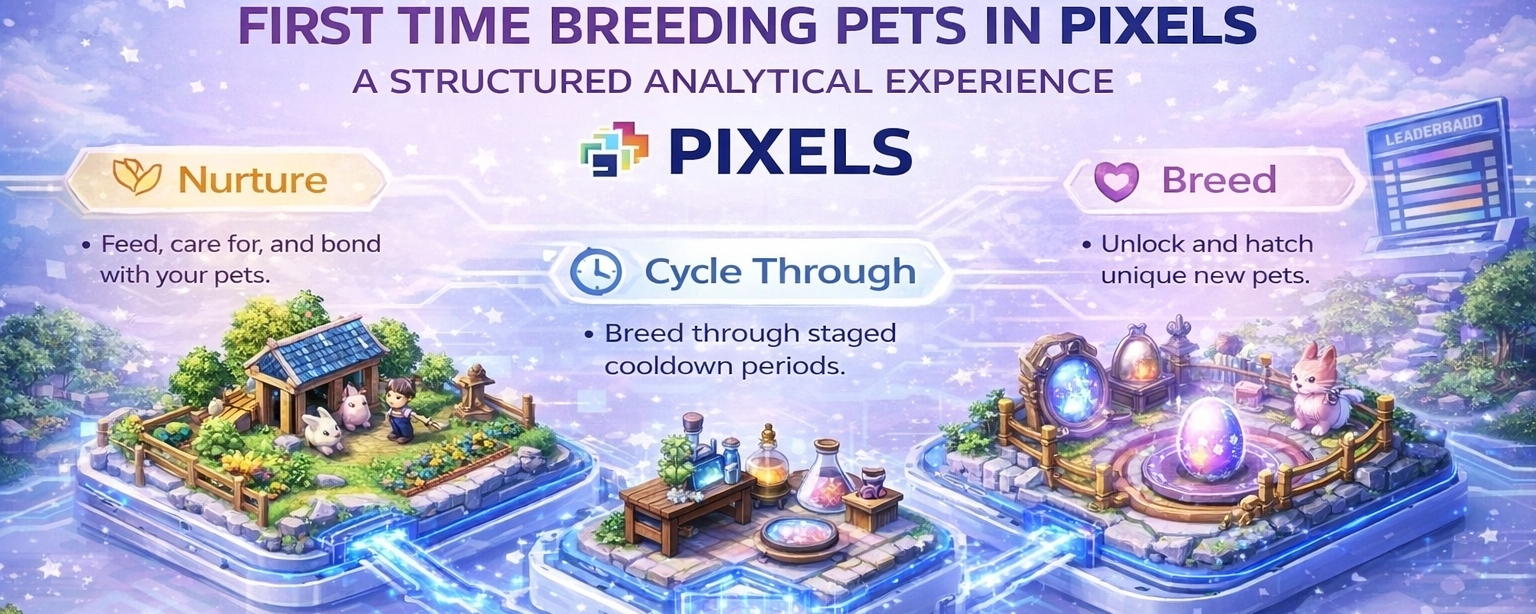
When I first used the breeding system in Pixels it did not feel like a normal part of the game. It was like a small economy where things do not happen right away but instead happen over time. This makes me think about the system in a way.
Over time I have started to see the difference between what people're doing on the surface and what is really keeping them engaged in Web3 environments. Things like how many wallets are being used how much trading is. Short-term spikes in activity can make it seem like people are engaged. But they do not necessarily mean that people will keep using the system. You can only tell if people are really adopting the system when the rewards are not as strong and people still keep participating.
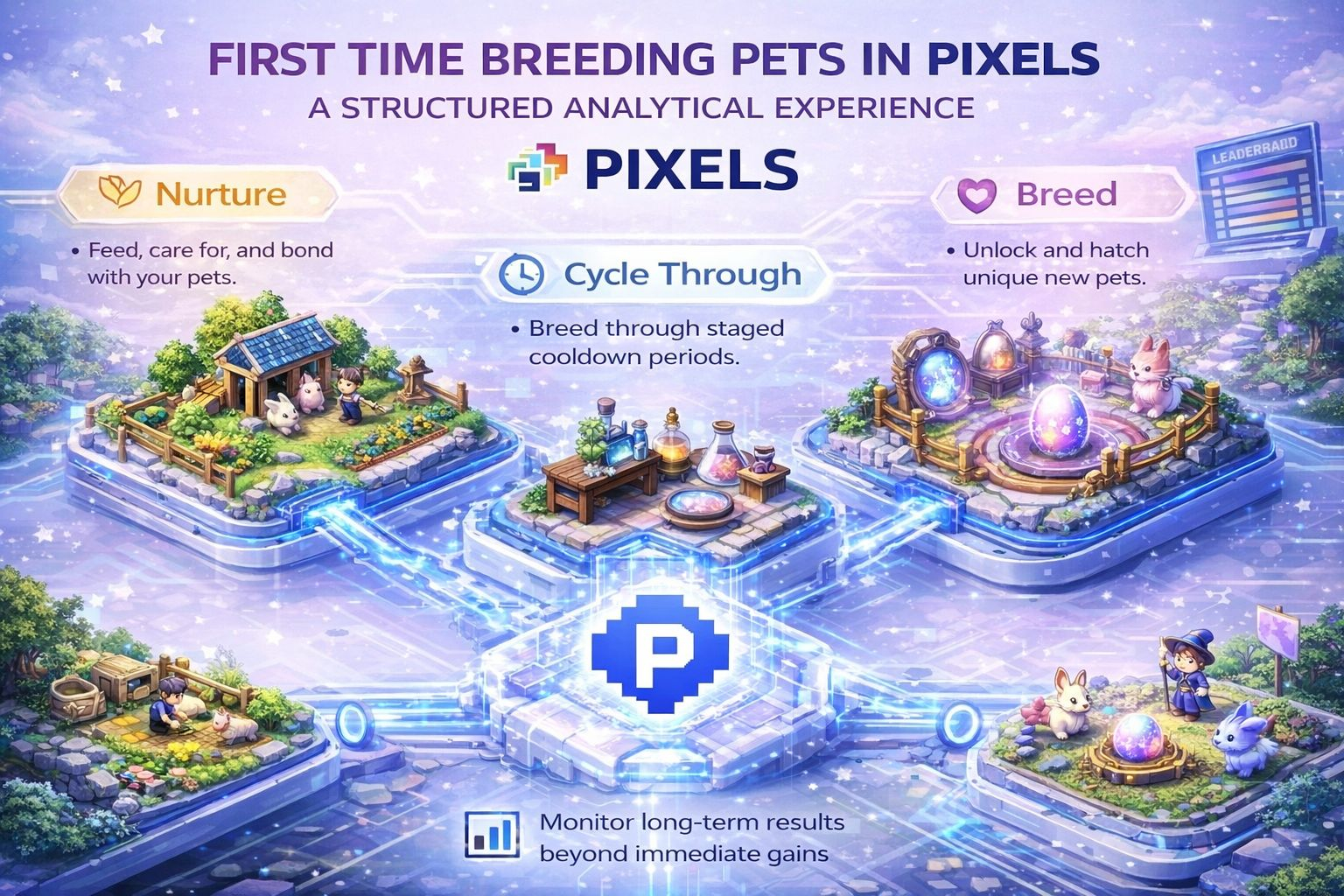
Pixels is set up to have things that repeat over and over than things that you do just once. The main things you do like farming, exploring and progressing are all designed to be repeated. The Animal Care update adds to this by introducing pets that need care. You have to feed them maintain them and eventually breed them.
Breeding pets is not something that happens away. It takes time and happens in cycles. You have to put in resources wait for periods and progress in stages. This means that users have to come multiple times rather than just doing one thing. When I used the breeding system the thing that stood out was not how complicated it was,. How repetitive it was. To make progress you have to keep interacting with the system than just doing one thing.
This design changes the way people experience the game from doing transactions to actually forming habits. In terms it tests whether people will keep using the system even when they are not getting rewards right away. This is where people either keep using the system or stop.
If players keep participating even when they are not getting rewards the system starts to feel like a game.. If people only use the system when there are events or rewards then they are only using it because of the rewards and they will stop when the rewards are gone.
The breeding system is like a filter that shows what people are like.
When looking at the $PIXEL system you have to be careful how you interpret the numbers. Just because there is a lot of trading and a lot of people holding the coin it does not mean that people are really engaged. It could just be people speculating or waiting for updates. Having a lot of money in the system does not mean that people are really using it. It could just mean that people are getting ready for updates.
Even the markets for pets can be influenced more by people trying to make a profit than by people who are really using the system. This creates a problem between the side of the system and the people who are really using it. A system can look like it is doing well financially. It can still be lacking in terms of real gameplay.
The breeding system is right in the middle of this problem. It relies on time, consistency and waiting for things to happen. Not just getting rewards away.
There are also some known issues: activity, people trying to optimize the system and rewards that are always changing. If rewards are the focus people will try to get as much as they can rather than really engaging with the system. If it takes long to progress people will get bored and stop using the system. Keeping the system balanced is not about designing it once. It is about constantly adjusting the economy.
What stands out is that Pixels is still a system that is evolving. The fact that the system's always being adjusted shows that it is still being improved. While this flexibility is good for making the system better it also makes it hard to predict what people will do in the term.
In this context the breeding system is a test case.
It asks a question:
Will players keep using the system even when rewards are not the main reason?
If the answer is yes it means that the system has a foundation, for keeping people engaged.
If not it means that people are only using the system because of the rewards.
Ultimately the best sign of a system is not how many people are using it when it is popular. But how many people are still using it when it is not as popular.