
Most Web3 games know how to attract attention. Very few know how to keep it.
They launch with noise. Big promises. Token incentives. Early hype cycles that pull players in fast. But once that initial excitement fades, something important starts to break.
The experience begins to feel heavy. Systems feel demanding. And what was once curiosity slowly turns into fatigue.
That is where Pixels takes a different path.
Instead of building around pressure, Pixels builds around ease.
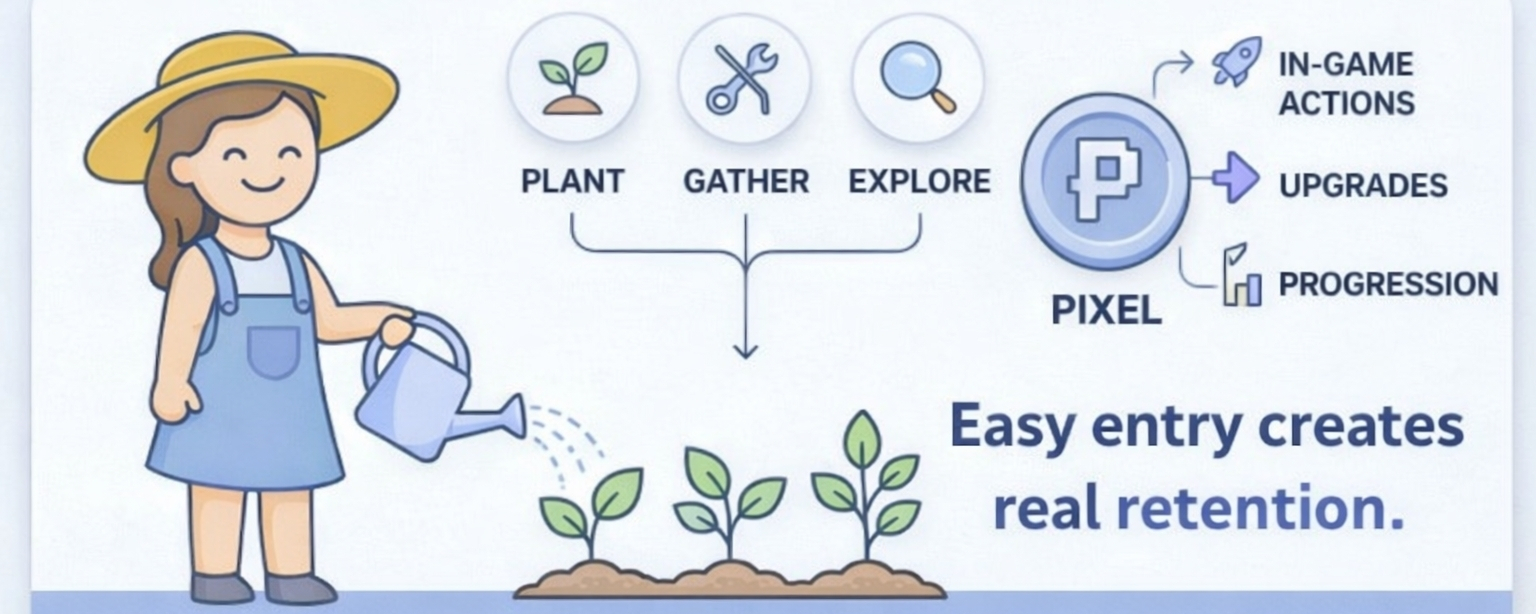
It does not try to overwhelm players with complexity or force them into aggressive optimization loops. You log in, you farm, you explore, you craft, you trade.
The mechanics are simple, but that simplicity is exactly what creates depth over time.
It feels natural.
And that feeling matters more than most Web3 projects realize.
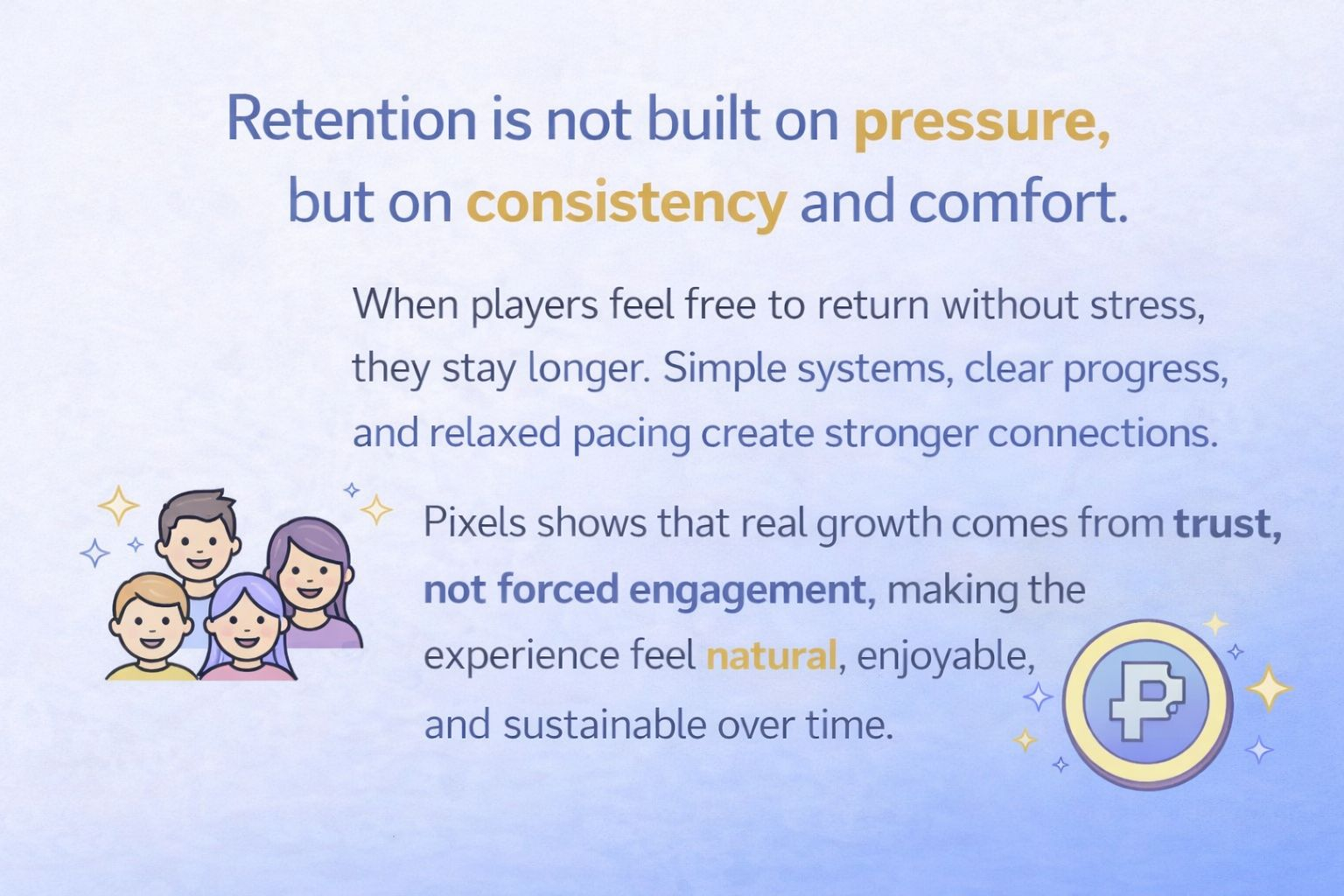
Because long term retention is not built on rewards alone. It is built on habit. On comfort. On the quiet satisfaction of returning to something that feels familiar without feeling forced.
Pixels understands this.
The game does not demand your attention. It earns it.
That is a subtle difference, but a powerful one. In many blockchain games, the experience starts to feel like a system designed for extraction, where players are constantly pushed to do more, grind more, and optimize more.
Over time, that pressure creates distance instead of loyalty.
Pixels avoids that trap by keeping the experience light.
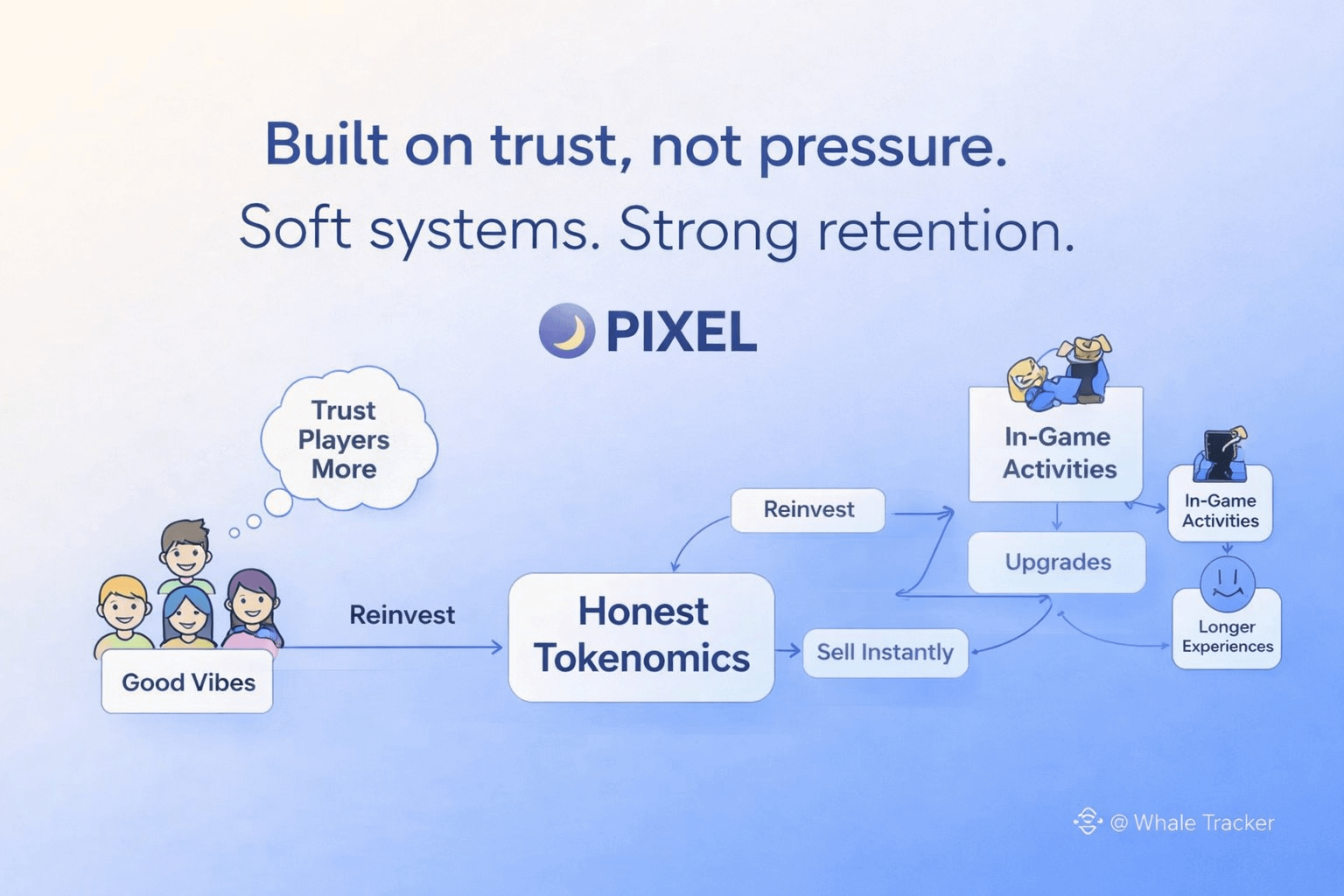
Its Web3 layer is present, but it does not dominate. Ownership exists.
The economy exists. The token has its role. But none of these elements overpower the core gameplay. Instead, they sit around it, adding meaning without replacing the experience itself.
And it is one of the main reasons the ecosystem feels sustainable instead of temporary.
Beyond mechanics, the world itself feels alive in a way that many Web3 games struggle to achieve. There is movement.
There is interaction. There is a constant sense that other players are building their own routines alongside you.
That shared presence creates warmth, and warmth is something this space often lacks.
Pixels does not just give players something to do. It gives them a place to return to.
That distinction is important.
Because in the end, no token model, no reward system, and no hype cycle can sustain a game that does not feel good to come back to
Players might arrive for incentives, but they stay for experience.
Pixels gets that balance right.
It does not try to force a vision of the future. It focuses on making the present feel enjoyable.
It builds around consistency instead of intensity. Around routine instead of pressure.
And in a space where many projects grow louder as their substance fades, Pixels does something far more difficult.
It stays simple.
It stays playable.
And most importantly, it stays worth returning to.