
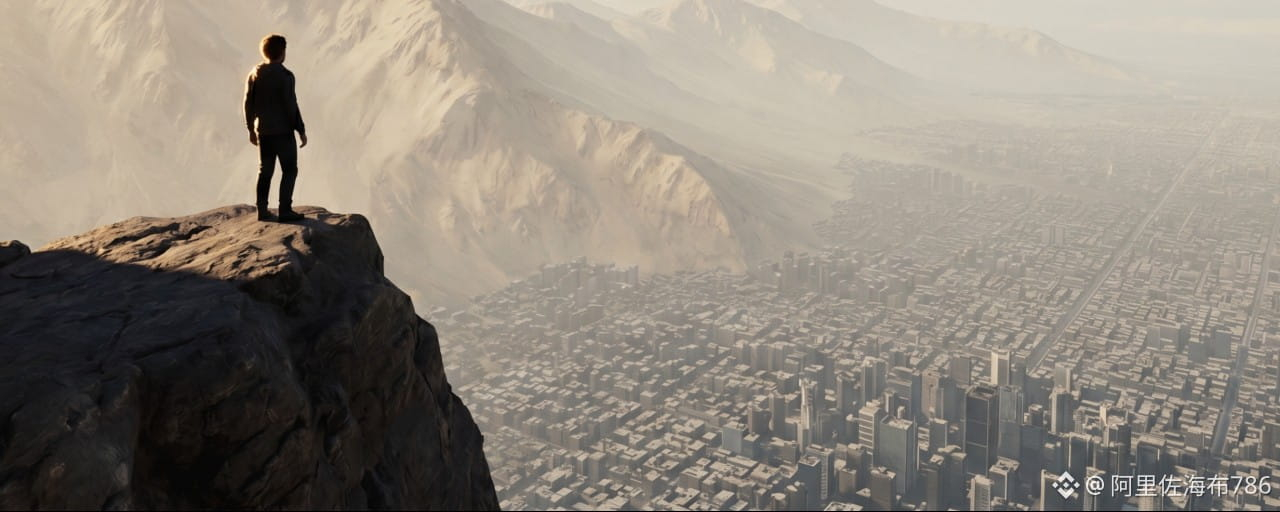
Bigger maps. Taller mountains. Cities that stretched to the horizon. You could walk for twenty real-time minutes and still not hit the edge. It felt expansive, but not always intimate. You were small in those worlds, and not in a way that felt deliberate.
Walk through a modern open-world city at night and pay attention to the windows. Some apartments are lit, others dark. In a few, you might see a television flicker blue against the walls. You can’t enter most of those rooms. You won’t meet the people who hypothetically live there. But the illusion holds because the pixels carry information—about time of day, about routine, about lives running parallel to yours. The world isn’t just a backdrop. It appears to have its own schedule.
Developers achieve this through layers of simulation and visual nuance that rarely call attention to themselves. Global illumination systems track how light bounces off brick and glass. Procedural tools scatter debris in ways that avoid visible repetition. Texture artists spend weeks on surfaces players might glance at for three seconds. A cracked tile. A worn door handle. Mud drying unevenly on a truck’s wheel well. Each choice adds friction to the image, something that resists the clean artificiality games once struggled to escape.
But warmth doesn’t come from fidelity alone. In fact, hyper-real detail can feel sterile if it isn’t grounded in behavior.
The more interesting evolution is how pixels now carry emotional cues. You notice that someone seems uncertain. Or tired. Or trying not to laugh.
That human register changes how you move through the world. Conversations linger. Silences feel deliberate instead of empty. You begin to read digital bodies the way you read real ones.
Even landscapes feel less like painted backdrops and more like places with memory. Consider weather systems. Rain used to be an overlay, a looping animation that darkened the screen. Now it accumulates. Puddles form in low ground. Footprints remain in soft soil before gradually fading. The result isn’t just prettier rain. It’s rain that interacts with the world—and with you.
There’s a design philosophy embedded here: responsiveness over spectacle.
In older open worlds, you could knock over a stack of crates and they would reset the moment you turned around. Today, more objects persist. A broken fence stays broken. Grass bends where you walked. A shopkeeper comments—sometimes hours later—on the fight you started in the street. None of this is universal or perfect. Memory still has limits. Systems still conflict. But the direction is clear. The world acknowledges your presence.
Here, the pixel is not about resolution. It’s about intention. Which frames are drawn. Which are left out. How long a blink lasts.
Constraints often force better decisions. Limited palettes push artists to choose colors that evoke season and mood precisely. Sparse environments make every object legible and meaningful. In these spaces, a single glowing window in a dark village says more than a skyline filled with lights.
The technology enabling this intimacy is complex. Real-time ray tracing. Machine learning upscaling. Advanced animation blending. Massive streaming systems that load entire regions seamlessly as you cross an invisible boundary. But players rarely think about any of that. They think about the moment they crested a hill and saw fog sitting low in a valley, or the way a companion character hummed to herself while waiting for them to finish rummaging through a drawer.
Those are pixel-level decisions. Someone had to decide how thick the fog should be. How far sound should travel. Whether the humming should repeat every thirty seconds or drift in and out unpredictably. These are not glamorous calls. They are iterative, technical, sometimes tedious. Yet they accumulate into something that feels, surprisingly, like care.
There are tradeoffs. More simulation means more processing power, which means harder choices about performance. A richly reactive world can strain hardware, introduce bugs, or limit how many characters populate a scene. Developers cut features. They scale systems back. They choose where realism serves the experience and where it clutters it. Warmth is not automatic. It’s curated.
What makes current open-world games feel more human isn’t that they perfectly mimic reality. It’s that they’ve begun to mimic attention. The world notices light. It notices weather. It notices your footsteps. Characters notice your tone, your delay, your absence. Or at least they approximate that noticing convincingly enough.
That illusion is fragile. Break it with a glitching animation or a repeated line of dialogue and the spell thins immediately. But when it holds, even briefly, the effect is striking. Vast digital territories begin to feel scaled not just to your movement, but to your perception.
All of it, in the end, comes down to pixels. Not as a measure of clarity, but as units of attention.