
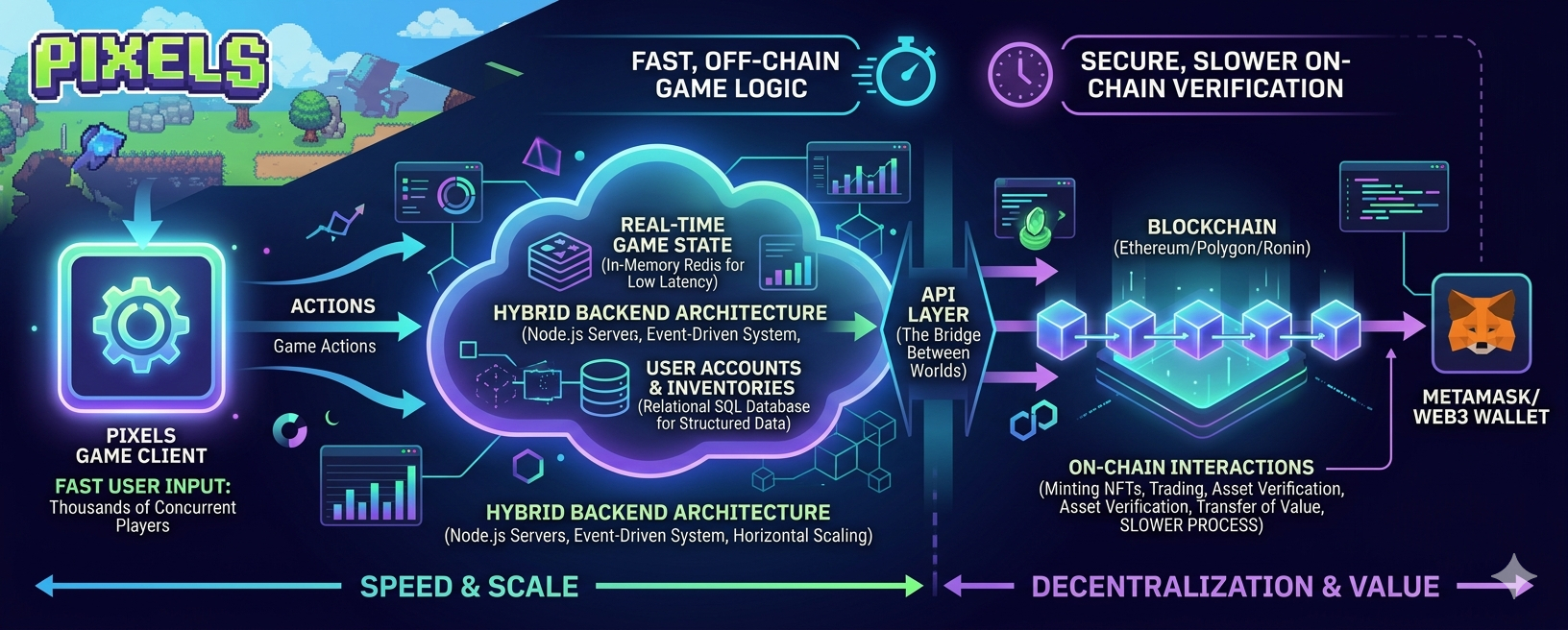


Honestly? I’ve been sitting with @Pixels backend design again, and the more I think about it, the less it feels like a “blockchain game” and more like a carefully engineered hybrid system 😂
Most people assume everything runs on-chain, but that would break instantly at scale. What Pixels actually does is rely on traditional backend technologies likely Node.js or similar event-driven systems running on cloud infrastructure that can scale horizontally. That’s how it handles thousands of concurrent players without collapsing. What I kept coming back to is that scalability here isn’t about blockchain. it’s about smart server architecture.
Databases are another layered piece. Structured data like user accounts and inventories probably live in relational systems, while real-time game state is handled through faster, in-memory stores like Redis. That split is critical. You can’t have low-latency gameplay if every action waits on a slow database or blockchain confirmation.
Latency is where the real design philosophy shows. Gameplay runs off-chain entirely, processed instantly through backend servers. Blockchain APIs are only used when necessary ownership, assets, transactions. This separation keeps the game responsive while still preserving on-chain value. But the tension here is dependency. If those APIs lag or fail, parts of the system can desync.

APIs act as the bridge between two worlds fast game logic and slower blockchain verification. It works, but it’s not purely decentralized. And that’s the trade-off Pixels accepts.
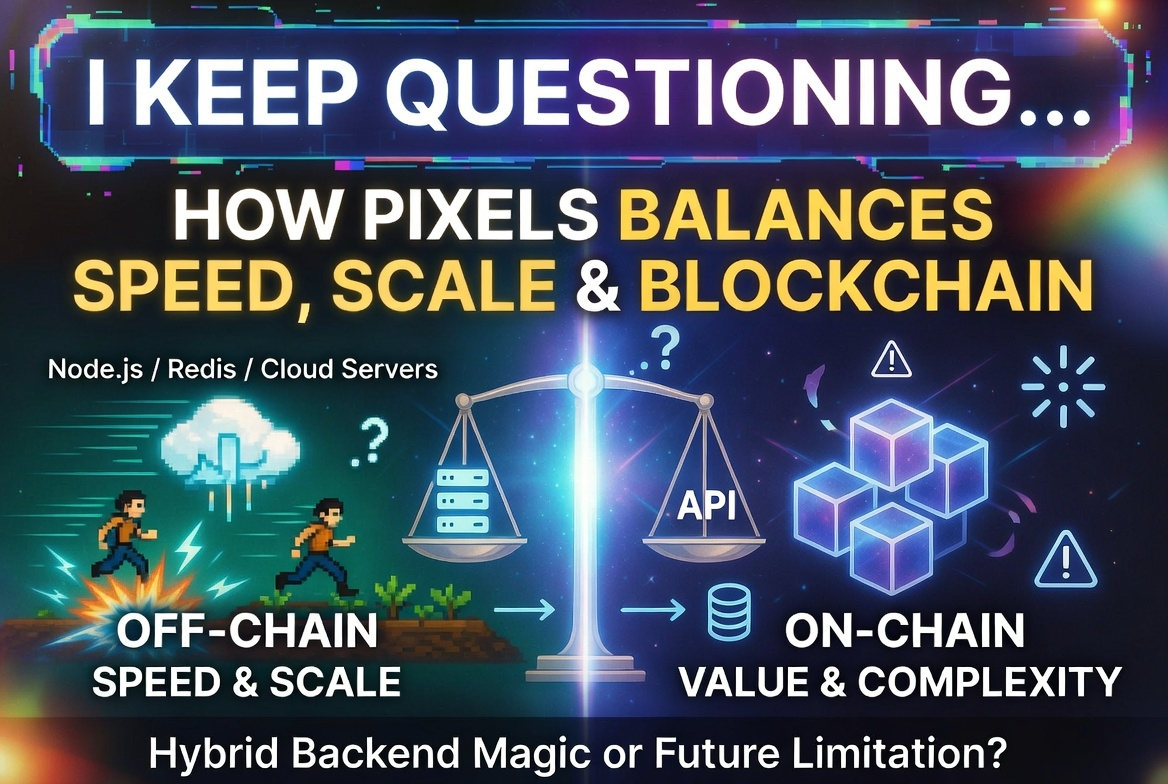
So yeah, the system is efficient, scalable, and practical. But what I keep wondering is does this hybrid model scale forever, or does complexity eventually become its biggest limitation?
