
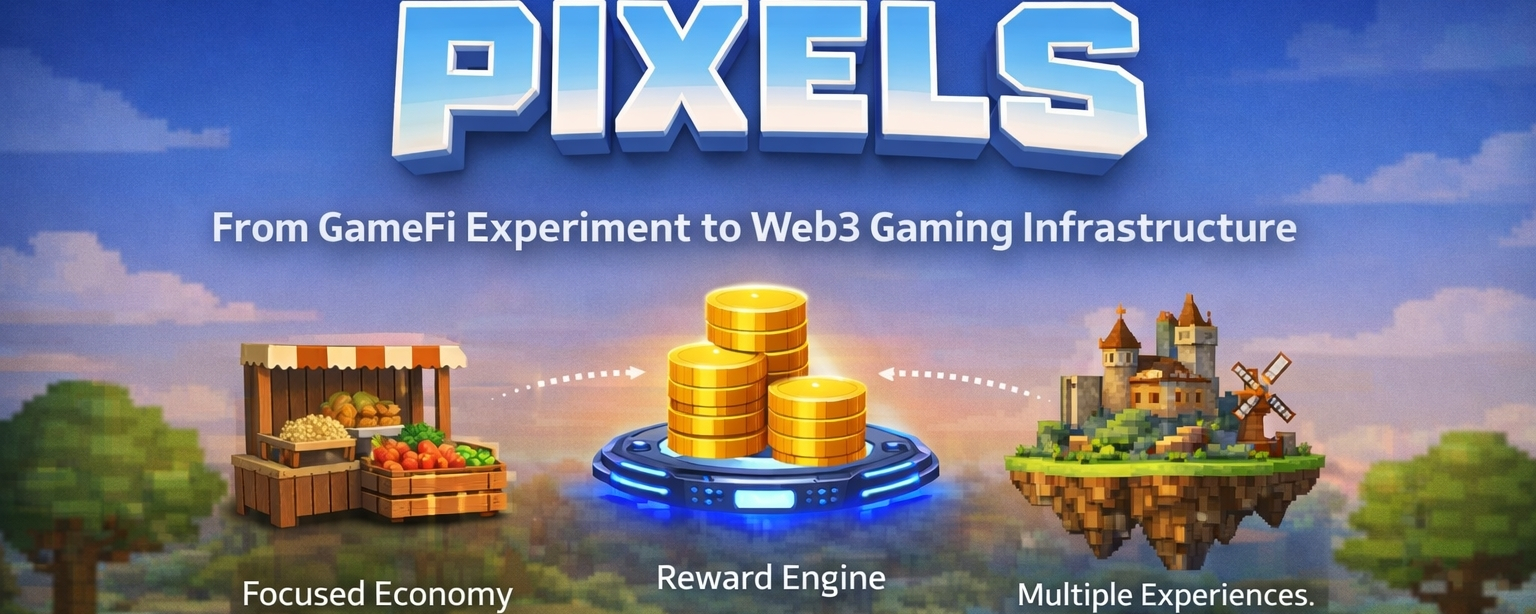

There was a time when Pixels looked like every other GameFi experiment. Fast growth, easy rewards, and a flood of users chasing short term gains. It worked for attention, but not for sustainability. And like most projects in that phase, it started to feel fragile.
What is interesting now is not that Pixels survived. It is how it adapted.
The team made a decision that most GameFi projects avoid. They tightened the economy instead of inflating it. They reduced easy farming loops and pushed players toward actual participation. That shift matters more than any marketing push because it changes behavior at the user level.
Now the introduction of Stacked is where things start to get more serious. This is not just another reward layer. It feels like a system designed to structure incentives across different activities and potentially across multiple experiences. That is a very different direction compared to a single game trying to keep players engaged.
At the same time, the token situation is becoming more stable. With a large portion of supply already in circulation, the usual fear of heavy unlock pressure is not dominating the narrative anymore. That allows the focus to move toward actual usage and ecosystem growth instead of constant dilution concerns.
What stands out to me is the shift in positioning. Pixels is no longer acting like a game trying to survive the next cycle. It is starting to behave like a platform that could support more than one experience. That is a subtle but important transition.
If you look at the broader Web3 gaming space, most projects are still stuck in the same loop. Launch, reward, inflate, decline. Very few actually try to rebuild their economy once things start breaking. Pixels did that. And more importantly, they did it while keeping users engaged.
My view is simple. This is no longer about whether Pixels is a good game. It is about whether Pixels can become infrastructure.
If Stacked evolves the way it looks like it might, and if they continue pushing toward player driven demand instead of artificial incentives, then this project could move into a completely different category. Not just a GameFi title, but a base layer for how Web3 game economies are structured.
That does not mean it is guaranteed. Execution is still everything. Expanding beyond a single successful loop into a multi experience ecosystem is difficult and most teams fail at that transition.
But for the first time, Pixels is not following the usual script. It is rewriting it in real time.
And in this market, that is exactly the kind of signal worth paying attention to.