
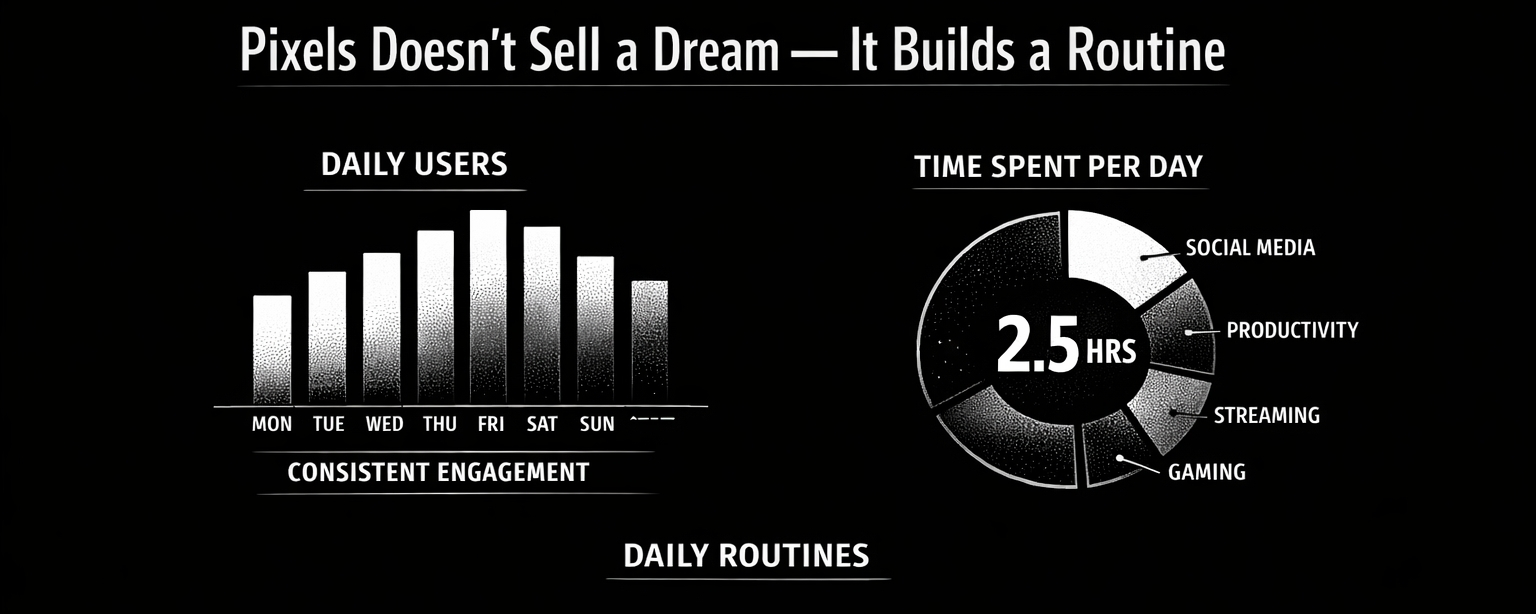

Pixels is a social casual Web3 game built on the Ronin Network, and on the surface it really doesn’t look like something that should hold attention for long. Farming, wandering around, interacting with other players, slowly building things over time. It sounds simple in a way that almost feels outdated, especially in a space that keeps trying to convince itself it’s reinventing everything every few months.
I’ve seen too many of these ideas come and go to take that description seriously on its own. Most of them lean on the same promise — mix a game with ownership, add a token, and somehow it all works out. It rarely does. People show up early, poke around, maybe earn a bit, and then the whole thing thins out once the initial pull disappears. So I didn’t come into this expecting much. If anything, I was already halfway checked out before even looking closer.
But I kept noticing it.
Not in a loud way. No constant hype waves, no over-the-top claims. Just… presence. Players staying active, doing the same small actions again and again. That kind of repetition usually means something is at least working at a basic level. And in crypto, “working” is already more than most projects achieve.
The game itself doesn’t try to overwhelm you. You plant things, you move around, you explore at your own pace, you interact if you want to. There’s no pressure to master anything quickly, no sense that you’re being pushed into some complex system just to keep up. It almost feels too calm for this space. And that calmness is strange, because crypto usually rewards the opposite — speed, noise, constant engagement.
That’s where the doubt starts to creep back in.
Because simple loops like this are easy to understand, but they’re also easy to abandon. Doing the same tasks over and over only works if it slowly turns into a habit. And habit is hard to build, especially when money is involved. The moment players start thinking in terms of rewards instead of experience, everything shifts. It stops feeling like a game and starts feeling like something else. I’ve watched that shift ruin a lot of projects that looked fine at the beginning.
Pixels isn’t immune to that. You can already sense the tension between people who are just playing and people who are trying to optimize everything. That gap tends to grow. It always does. And when it does, it changes how the whole environment feels. What was once relaxed becomes calculated. What was once social becomes transactional.
Still, there’s something about how this is put together that makes me hesitate before dismissing it.
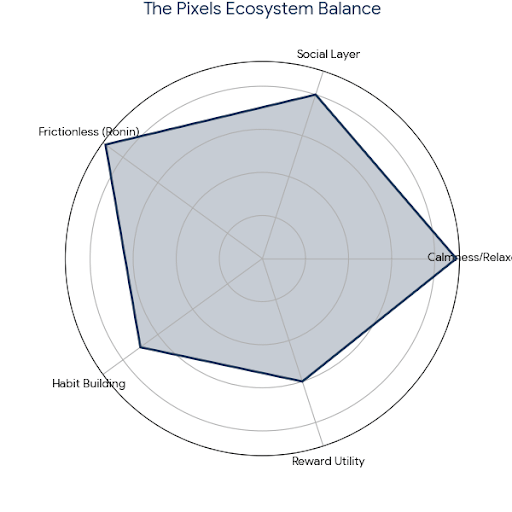
The loop is basic, but it holds together. Farming gives structure, exploration adds just enough variation, and the social layer sits there quietly without being forced. It’s not trying to impress you every second, which might actually be the point. Most Web3 games try too hard to prove themselves, and in doing that, they forget to be playable in a normal, everyday way. This one feels like it’s trying to fit into people’s time instead of taking it over.
And being on Ronin helps more than people probably realize. Not in some big, dramatic way, but in the small things that actually matter. The game runs smoothly, interactions don’t feel like a chore, and you’re not constantly reminded that you’re dealing with blockchain underneath everything. That friction, or lack of it, makes a difference. People don’t stick around for ideals. They stay because something feels easy to return to.
What I keep coming back to is how people behave inside it.
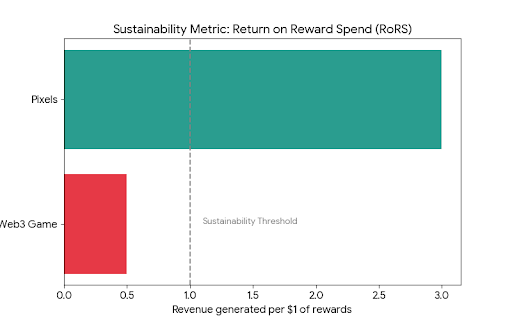
Not what’s being promised, not what might happen later, just what’s happening now. Are players showing up again the next day? Are they doing things because they want to, or just because there’s something to extract? That line is thin, and once it breaks, it’s hard to fix.
I don’t think Pixels has solved that. I don’t think any Web3 game really has. The balance between playing and earning always feels unstable, like it can tilt too far in one direction without much warning. And when it does, the entire experience can change overnight.
But at the same time, it hasn’t fallen apart either.
It’s still there, still being used, still quietly building its own rhythm while most other projects either burn out or fade away. That doesn’t mean it’s a success. It just means it hasn’t failed yet, which in this space is a different kind of signal.
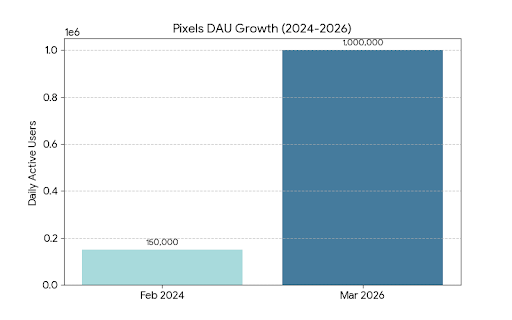
I’m not convinced this turns into something huge. I’m not even sure that’s the right way to measure it. What stands out more is that it’s trying to exist as a place people can return to, not just a system people pass through. That’s harder than it sounds, especially here.