A few months ago, I was having dinner with friends — none of them in tech. One’s a nurse. One runs a small logistics company. One teaches high school. I mentioned that robots are starting to show up in hospitals and warehouses in more serious ways.
The nurse didn’t ask about AI models.
She asked, “If it messes up, who’s responsible?”
That’s the real question.
Nobody outside our little crypto-tech bubble cares about public ledgers or verifiable computation. They care about whether the machine handing them medication, or moving pallets above their heads, is operating inside rules someone can actually enforce.
And whether those rules can be audited when something goes wrong.
I’ve been covering blockchain long enough to have scars. I watched the ICO boom inflate and collapse. I watched “Ethereum killers” promise faster throughput and better governance — remember EOS? Tezos’ governance drama? I sat through conference panels where everyone nodded solemnly about decentralization while chasing token price spikes backstage.
So when I see something like Fabric Protocol, I instinctively roll my eyes first.
Then I read deeper.
Because beneath the jargon, the core issue they’re tackling isn’t hype-driven. It’s structural.
Robots are leaving the lab. And this time, it’s not just industrial arms bolted to factory floors. These are learning systems. Updating systems. Machines making decisions in messy environments full of unpredictable humans.
I toured a semi-automated warehouse two years ago. Beautiful operation. Efficient. Quiet in that eerie, futuristic way. But when one robot glitched and froze mid-aisle, it triggered a chain reaction. Work slowed. Supervisors scrambled. Engineers dug into logs that weren’t exactly built for easy forensic analysis.
Now scale that globally. Across companies. Across countries.
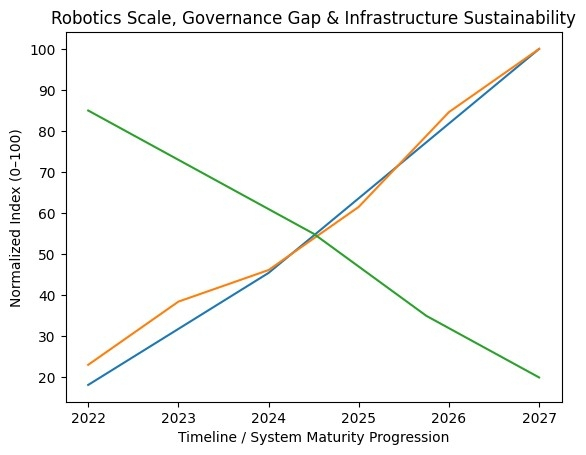
Who’s tracking which software version each robot is running? Who verifies that a hospital robot in Berlin and one in Chicago are both operating within approved safety thresholds? Who proves that a machine didn’t quietly update itself into non-compliance?
Right now? It’s fragmented. Patchwork. Often internal.
Fabric is trying to build a shared coordination layer for robots — a system where updates, decisions, and compliance rules can be tracked and cryptographically verified.
Strip it down to human terms: if a robot does something consequential, you can prove what logic it followed.
Not “trust us.” Not “our logs show.” Actually prove it.
That’s the part that matters.
The term “verifiable computing” sounds like something designed to intimidate non-engineers. But what it really means here is tamper-resistant audit trails. And in industries like healthcare or logistics — where insurance companies and regulators live and breathe documentation — that’s not optional. It’s survival.
What I find genuinely interesting is how Fabric treats robots. Not as dumb endpoints connected to human dashboards. Not as glorified IoT devices. But as network participants.
That’s subtle. And important.
Most tech stacks assume humans are the primary actors. Machines execute instructions. Fabric assumes robots will coordinate with each other directly — negotiating workloads, sharing data, updating models — and that this interaction needs structured oversight baked into the foundation.
It’s a bit like when the early internet shifted from static websites to distributed systems. The pipes had to evolve. TCP/IP didn’t become dinner conversation material. It just quietly became essential.
And that’s where my “boring tech” thesis comes in.
The best infrastructure fades into the background.
Nobody brags about DNS. Nobody thanks BGP. But without them, the internet collapses into chaos. When they fail, we notice. When they work, we forget they exist.
That’s the bar for something like Fabric.
Now — let’s talk risk. Because there’s plenty.
Vision is easy. Execution kills most projects.
Getting robotics companies — which love proprietary ecosystems — to agree on shared infrastructure? That’s not a technical challenge. That’s a political one. And politics is where idealism goes to die.
I’ve seen technically sound systems implode because token incentives were misaligned. Or because governance turned into a turf war. Or because developers simply didn’t want to migrate from what already worked.
Add a public ledger into robotics and you inherit blockchain’s baggage: scalability debates, governance fatigue, ideological arguments about decentralization. It’s not trivial.
There’s also a deeper tension here. Embedding regulation directly into infrastructure sounds responsible. It is responsible. But if you lock governance rules too tightly, you risk freezing innovation. Move too fast, and regulators panic. Move too slow, and startups route around you.
Finding that balance? Brutal.
Still — and this is where my skepticism softens slightly — I respect that Fabric is addressing coordination before disaster forces the issue.
History tells us industries don’t self-organize around safety until something breaks. Aviation didn’t standardize protocols because it was convenient. It did so because crashes made the cost of fragmentation undeniable.
Robotics hasn’t had its “oh no” moment at scale yet. But it will. Systems operating in public spaces inevitably fail at some point. The question is whether we’ll have shared infrastructure in place when that happens.
Fabric is betting yes.
Would my nurse friend ever know what Fabric is? No. She won’t download a wallet. She won’t read governance proposals. She shouldn’t have to.
What she’ll care about is that when a robot assists in surgery or dispenses medication, its behavior is constrained by rules that are transparent and enforceable. And if something goes wrong, there’s a traceable path to accountability.
That’s the human layer.
But let’s stay honest. Infrastructure projects live or die on adoption. If robotics firms see this as compliance overhead instead of strategic leverage, they won’t integrate. If performance lags behind closed alternatives, they’ll quietly ignore it. Developers are pragmatic. They follow what works.
And credibility takes years. One governance scandal, one security failure, one messy political fight — trust evaporates.
I’ve seen it happen. More than once.
Still, here’s what Fabric gets right: robotics isn’t just a hardware race. It’s a coordination problem. It’s about aligning machines, companies, regulators, and users inside shared constraints.
Without that, scale becomes chaos.
So where do I land?
Cautiously interested. Not dazzled. Not converted. But paying attention.
Because if robots are going to blend into daily life — delivering packages, assisting surgeries, managing infrastructure — the systems underneath them need to be predictable. Dull, even. In the best way.
Not flashy. Not trendy.
Just… reliable.
The projects that survive aren’t the loudest. They’re the ones that become invisible. The plumbing. The boring layer everyone depends on but nobody talks about.
If Fabric wants to matter, that’s the path.
And honestly? That’s the only kind of tech I still get excited about.
#robo @Fabric Foundation $ROBO