

Understanding the Basics: What Are Breakouts and Fakeouts?
Before we dissect how to spot them, let's clarify the terms. A breakout occurs when the price of an asset decisively moves beyond a key support or resistance level, often signaling the start of a new trend. In crypto, this could mean a coin like Bitcoin smashing through $70,000 after consolidating, leading to a sustained rally. Breakouts are fueled by genuine market momentum, such as positive news, increased adoption, or whale accumulation.
On the flip side, a fakeout (or false breakout) is a deceptive move where the price briefly pierces that level but quickly reverses, trapping unsuspecting traders. These are often engineered by market makers or whales to shake out weak hands, liquidate positions, or accumulate at better prices. In the hyper-volatile crypto space, fakeouts are rampant—think of them as the market's way of testing your conviction.
Why does this matter in 2026? With regulatory clarity improving (post-SEC approvals for more ETFs) and AI-driven trading bots on the rise, fakeouts have become more sophisticated. Data from recent analyses shows that up to 60% of apparent breakouts in altcoins end up as fakeouts, especially in low-liquidity tokens. Spotting the difference isn't just about luck; it's about layering multiple confirmations.
Key Indicators to Differentiate Real Breakouts from Fakeouts
No single tool is foolproof, but combining them boosts your accuracy. Here's a breakdown of the most reliable signals, tailored for crypto traders.
1. Volume: The Ultimate Truth-Teller
Volume is king in spotting fakes. A real breakout should come with a surge in trading volume—think 2x or more above the average—as it indicates broad participation from buyers or sellers.
- Real Breakout Sign: Sustained high volume post-breakout, with the price closing strongly above/below the level. For instance, if Ethereum breaks $4,000 with volume spiking to billions in USD, and it holds for several candles, it's likely legit.
- Fakeout Red Flag: A quick volume spike that fades immediately, often during low-liquidity hours (like weekends or Asian sessions). Whales can manipulate this in crypto, pushing prices with minimal volume to trigger stops.
Pro Tip: Use Binance's volume profile or tools like TradingView's Volume Weighted Average Price (VWAP) to confirm. If volume dries up after the initial wick, bail out fast.
2. Candlestick Patterns: Reading the Market's Mood
Candlesticks reveal the battle between bulls and bears. Look for confirmation patterns.
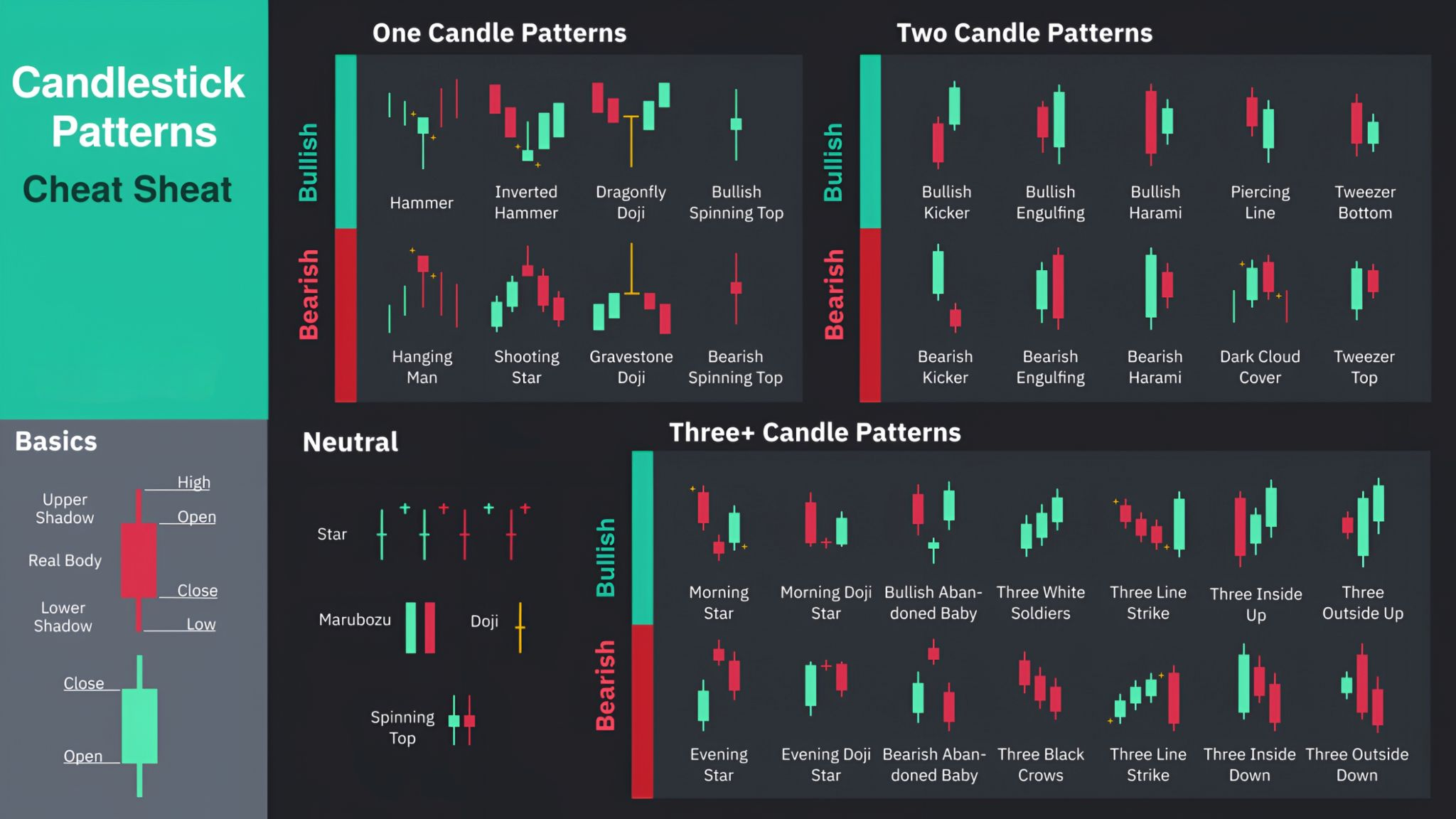
- Bullish Breakout Clues: Strong green candles like Marubozu (full body, no shadows) or a series of Three White Soldiers after breaking resistance. These show overwhelming buying pressure.
- Bearish Fakeout Warnings: Patterns like Shooting Star (long upper wick) or Hanging Man at resistance, signaling rejection. In fakeouts, you'll often see a "wick fake"—price spikes up but closes below the level.
For a visual cheat sheet on these patterns, check this out:
In crypto, where 24/7 trading amplifies emotions, fakeouts often follow hype events like token unlocks or airdrops.
3. Momentum Indicators: RSI, MACD, and More
Technical oscillators help gauge if the move has legs.
- Real Breakout: RSI breaking above 70 (overbought but with room to run in bull markets), or MACD showing a bullish crossover with increasing histogram bars.
- Fakeout: Divergence—price hits new highs, but RSI/MACD weakens. This "hidden divergence" is a classic trap signal.
In 2026, with more DeFi integrations, watch on-chain metrics like active addresses or transaction counts via tools like Glassnode. A real breakout in a token like Solana might show spiking on-chain activity, while a fakeout lacks it.
4. Time of Day and Market Context
Crypto doesn't sleep, but liquidity varies. Fakeouts thrive in thin markets.
- Real Breakout: Often during high-volume sessions (US/Europe overlap), aligned with broader market trends (e.g., Bitcoin leading alts).
- Fakeout: Weekend wicks or post-news pumps that fizzle. Always check the "buy the rumor, sell the news" dynamic—common in crypto events like Fed rate cuts.
Real-World Examples from 2025-2026 Crypto Markets
Let's apply this to fresh cases. I'll use Bitcoin and altcoins for diversity, drawing from recent market action.
Example 1: Bitcoin's 2025 Interest Rate Fakeouts – A Whale's Playground
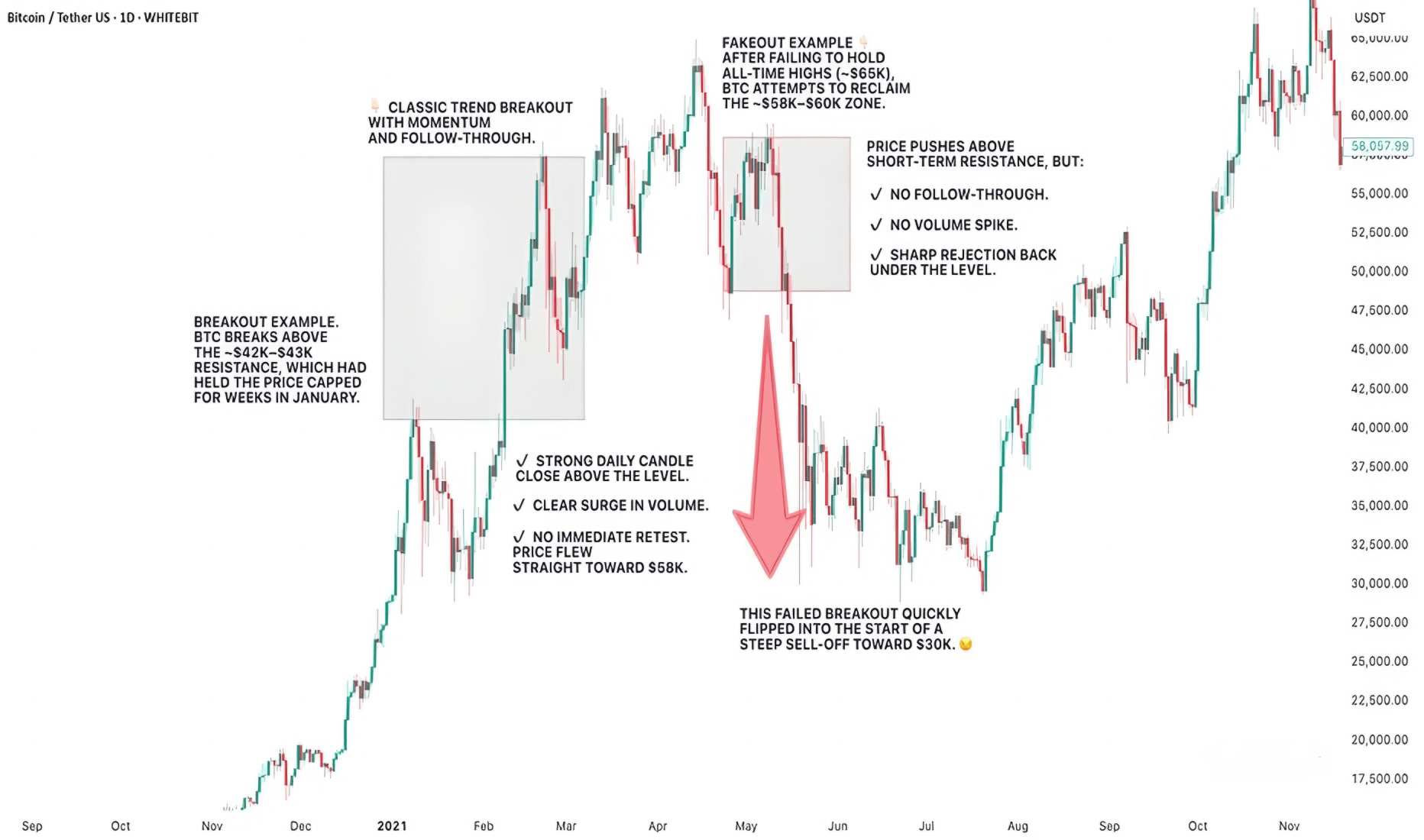
In mid-2025, Bitcoin experienced multiple fakeouts around Fed interest rate announcements. Leading up to a September rate cut, BTC teased a breakout above $65,000 with a sharp wick, drawing in retail buyers. Volume spiked briefly, but MACD showed divergence, and on-chain whale transfers indicated selling pressure. Post-announcement, it reversed sharply in a "sell the news" event, dropping 8% in hours—a classic bull trap.
Why Fakeout? Low sustained volume, occurred during off-peak hours, and aligned with whale manipulation reports. Traders who waited for a daily close above resistance avoided the trap. Contrast this with a real breakout: If volume had held and RSI pushed sustainably over 70, it could've signaled the start of a rally to $80K.
Here's a illustrative chart showing a similar BTC fakeout pattern:
Example 2: Ripple (XRP)'s February 2026 Resistance Tease – Breakout or Brutal Fake?
As of early February 2026, XRP has been coiling in a tight range, repeatedly testing $0.60 resistance amid SEC lawsuit resolutions. A recent pump to $0.62 looked promising, but it wicked back below on low volume, trapping longs. Social sentiment on X spiked with "XRP moon" hype, but on-chain metrics showed no real institutional inflow.
Why Potential Fakeout? No volume confirmation, and it followed a Shooting Star candle. However, if XRP retests and holds with increasing active addresses (signaling adoption), it could turn into a real breakout toward $1.00. Watch for MACD crossover here—key for 2026 alt season.
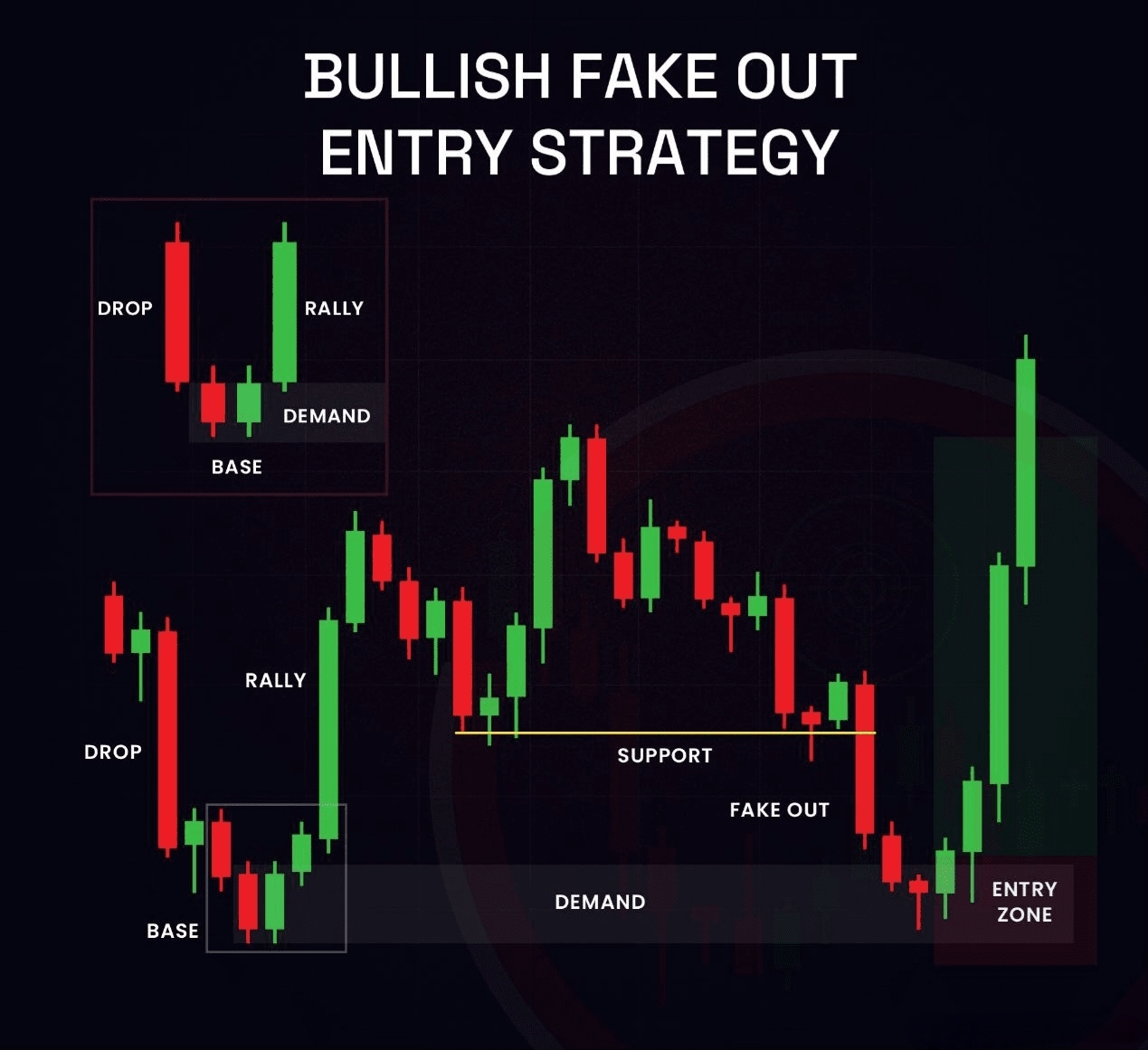
For a visual of a bullish fakeout entry (which often precedes reversals), see this strategy chart:
Example 3: Solana's Real Breakout in Late 2025 – Momentum Meets Adoption
Flashback to November 2025: Solana (SOL) consolidated around $150 before breaking out to $200+ on news of major DeFi upgrades and NFT marketplace integrations. Volume exploded 3x average, RSI hit 75 without divergence, and the daily candle closed strongly above resistance. On-chain data showed surging transactions, confirming real demand.
Why Real? Aligned with broader bull market (Bitcoin above $70K), sustained volume, and no immediate reversal. Traders who entered on the retest (price pulling back to $150 as new support) rode a 30% gain. This contrasts with fakeouts in smaller alts like meme coins, where hype fades fast.
Strategies to Trade Breakouts Safely and Profit from Fakeouts
Now, how do you put this into practice on Binance?
1. Wait for Confirmation: Never buy the initial breakout. Require at least one candle close above the level, plus volume/MACD support.
2. Use Stop-Losses Wisely: Place stops below the breakout level for longs, but widen them in volatile crypto to avoid wick hunts.
3. Fade the Fakeout: Advanced move—short the reversal after a fakeout, especially if it forms a bearish pattern like Dark Cloud Cover.
4. Multi-Timeframe Analysis: Check higher timeframes (e.g., weekly) for overall trend. A 4H breakout might be a daily fakeout.
5. Combine with Fundamentals: In crypto, news catalysts matter. Real breakouts often follow genuine events like partnerships; fakeouts exploit hype.
6. Risk Management: Never risk more than 1-2% per trade. Use Binance's futures tools for leverage, but start spot for safety.
Bonus: Backtest on historical data. For instance, Bitcoin's $25K breakout in 2023 was real due to strong closes and volume—use it as a template.
Common Pitfalls and Psychological Tips
Fakeouts prey on FOMO (fear of missing out). In 2026's AI-bot era, markets move faster, amplifying emotions. Avoid chasing wicks; patience is your superpower. Journal your trades—review why a move was fake or real. Over time, your "fakeout radar" sharpens.
Remember, even pros get trapped sometimes. The key? Learn from them. As markets evolve with quantum-resistant blockchains and more regs, adapt your strategy.
Wrapping Up: Level Up Your Trading Game in 2026
Distinguishing fakeouts from real breakouts boils down to confirmation: volume, patterns, momentum, and context. With examples like Bitcoin's 2025 whale-driven fakes and potential XRP plays in 2026, you now have fresh insights to navigate crypto's chaos. Practice on Binance demo accounts, stay disciplined, and trade smart. What's your worst fakeout story? Drop it in the comments—let's discuss!
If this helped, like and share for more guides. Happy trading! 🚀


