
#avaxusd
avaxusd
476,066 Aufrufe
693 Kommentare
Hot
Zuletzt

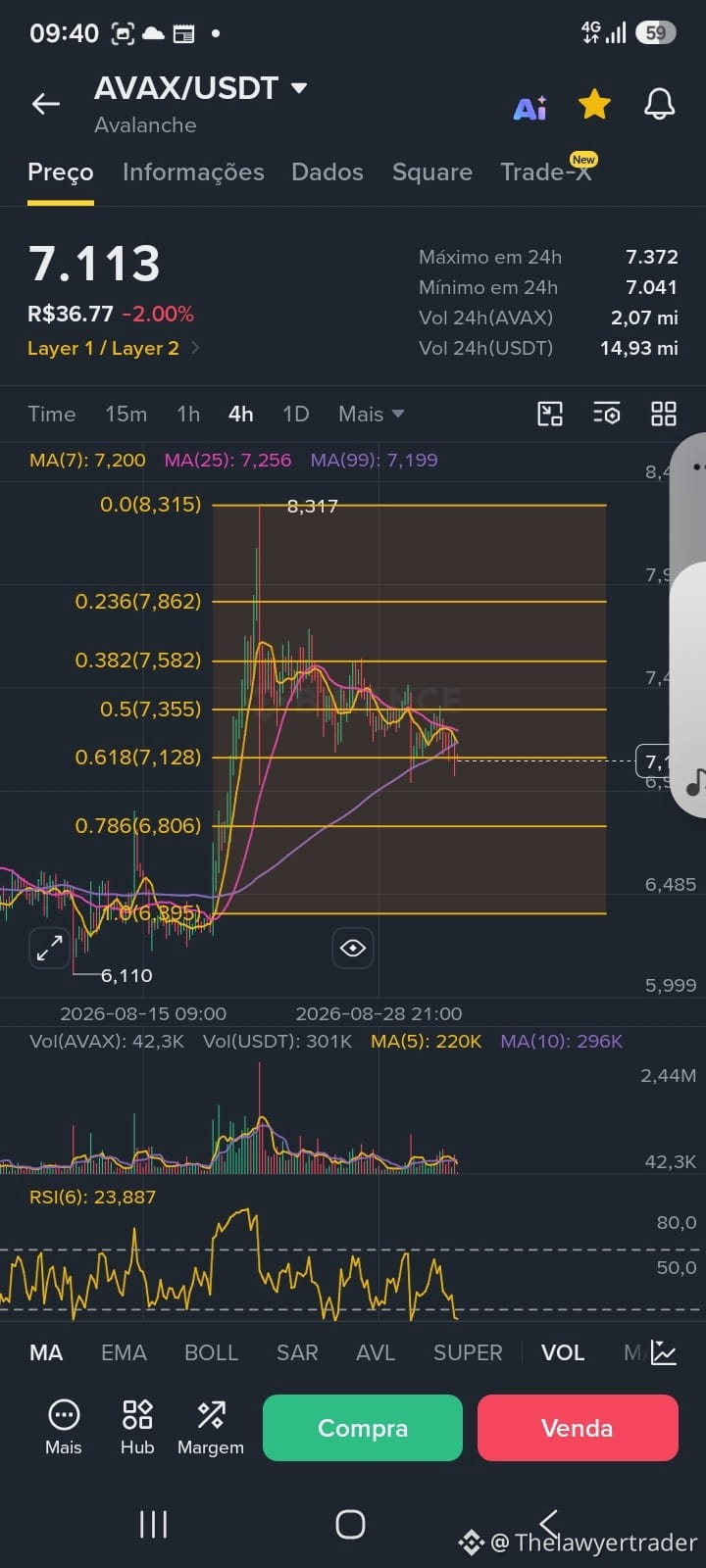
Basierend auf dem 4-Stunden-Chart des AVAX/USDT-Paares:
Hauptsupport: 6,806 (Fibonacci-Retracement im aktuellen Testbereich).
Hauptwiderstand: 7,355 (Fibonacci-Retracement von 0,5).
Einstiegsmoment: Das Asset hat eine bärische Tendenz und handelt unter den kurzfristigen und mittelfristigen gleitenden Durchschnitten. Der RSI(6) nahe 23 deutet auf einen überverkauften Bereich hin, der Käufer anziehen könnte, jedoch gibt es noch kein klares Umkehrsignal (Hoch-Pivot). Das heißt: Es ist kein idealer Zeitpunkt für einen unmittelbaren Einstieg. Am vernünftigsten wäre es, eine Bestätigung der Umkehr oder ein Stabilisierungssignal abzuwarten, bevor man eine Position einnimmt.
Wichtig: Diese Analyse ist ausschließlich technisch, basiert auf den visuellen Daten des Charts, und stellt keine Anlageempfehlung dar. Der Kryptomarkt ist volatil, und jede Kauf- oder Verkaufsentscheidung sollte das eigene Risikomanagement und die eigenen Ziele berücksichtigen.
#AVAXUSD #fibonacciretracement
Hauptsupport: 6,806 (Fibonacci-Retracement im aktuellen Testbereich).
Hauptwiderstand: 7,355 (Fibonacci-Retracement von 0,5).
Einstiegsmoment: Das Asset hat eine bärische Tendenz und handelt unter den kurzfristigen und mittelfristigen gleitenden Durchschnitten. Der RSI(6) nahe 23 deutet auf einen überverkauften Bereich hin, der Käufer anziehen könnte, jedoch gibt es noch kein klares Umkehrsignal (Hoch-Pivot). Das heißt: Es ist kein idealer Zeitpunkt für einen unmittelbaren Einstieg. Am vernünftigsten wäre es, eine Bestätigung der Umkehr oder ein Stabilisierungssignal abzuwarten, bevor man eine Position einnimmt.
Wichtig: Diese Analyse ist ausschließlich technisch, basiert auf den visuellen Daten des Charts, und stellt keine Anlageempfehlung dar. Der Kryptomarkt ist volatil, und jede Kauf- oder Verkaufsentscheidung sollte das eigene Risikomanagement und die eigenen Ziele berücksichtigen.
#AVAXUSD #fibonacciretracement

Übersetzung ansehen
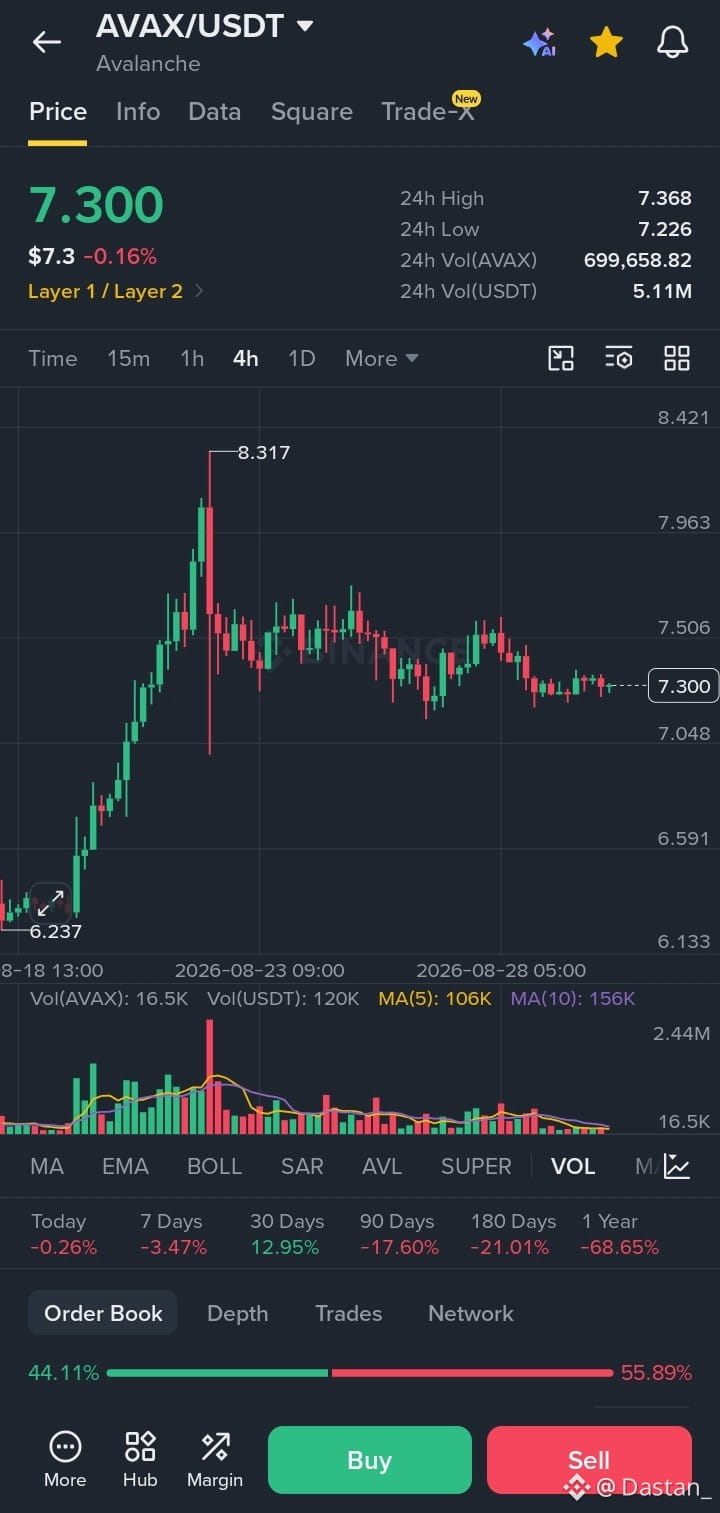
🚨 AVALANCHE trades at $7.29 as Cashlink expands institutional tokenization on-chain.
📈 AVAX price forms a symmetrical triangle, with $7.60–$7.70 set as key resistance levels.
💼 Major European institutions are using Avalanche’s network for regulated digital assets.
🌐 Investors can now own shares and gold directly in their wallets via $AVAX X-linked Web3 platforms.
@CHUKWUEMEKA25 #AVAXUSD
📈 AVAX price forms a symmetrical triangle, with $7.60–$7.70 set as key resistance levels.
💼 Major European institutions are using Avalanche’s network for regulated digital assets.
🌐 Investors can now own shares and gold directly in their wallets via $AVAX X-linked Web3 platforms.
@CHUKWUEMEKA25 #AVAXUSD



> 🚀 AVAX & DEXE: zwei Projekte, die man im Blick behalten sollte.
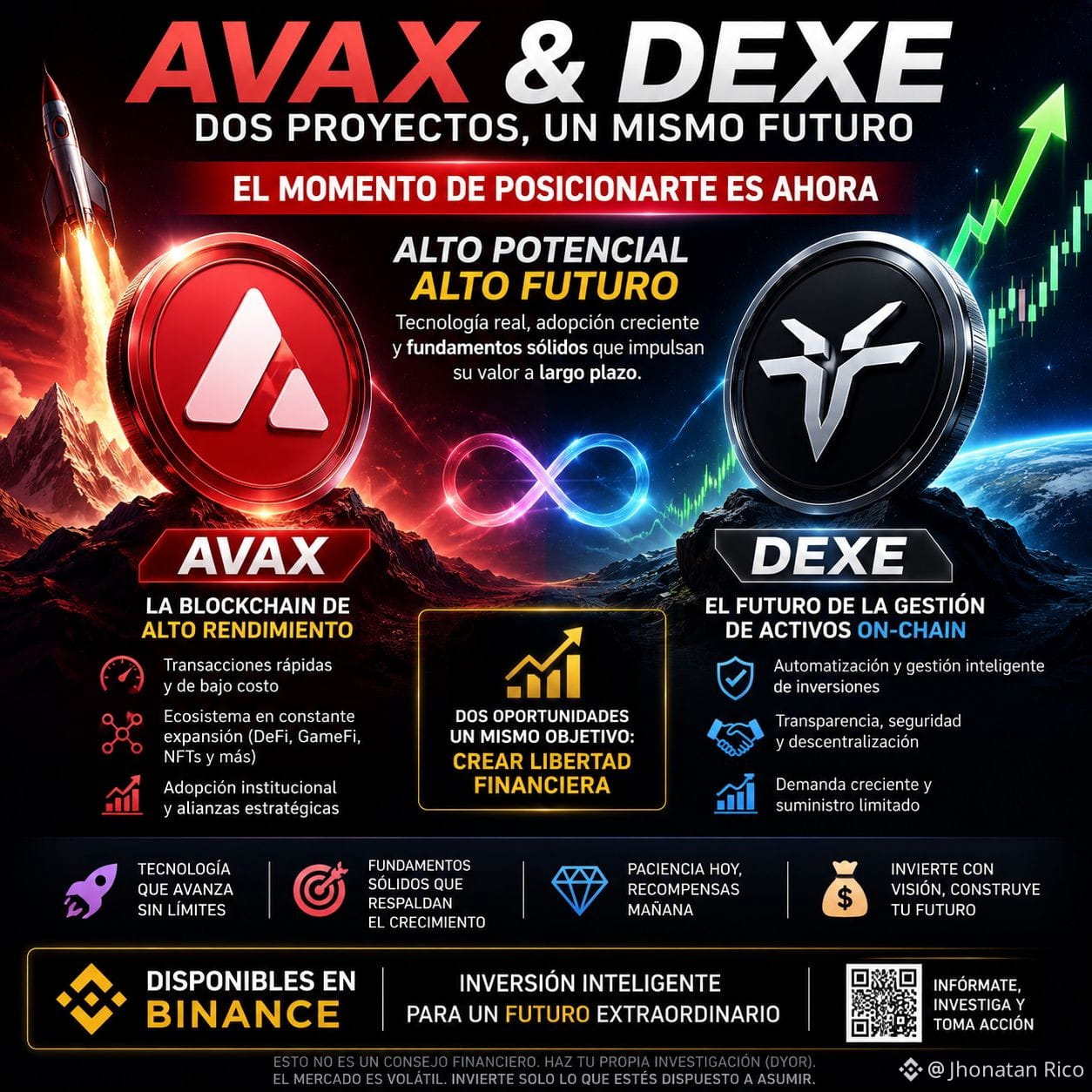
AVAX verfügt über ein etabliertes Blockchain-Ökosystem, echte Anwendungsfälle und eine kontinuierliche Entwicklung.
DEXE setzt auf eine dezentrale Verwaltung von Assets und auf ein Modell mit Wachstumspotenzial innerhalb des DeFi-Ökosystems.
📊 Es geht nicht darum, auf einen Kursanstieg von morgen zu warten. Es geht darum, sich zu positionieren, bevor der Markt sein gesamtes Potenzial erkennt.
🔥 Ich bin bereits drin. Jetzt heißt es: Geduld, analysieren und dem Markt die Bühne überlassen.
Ich will dabei sein, wenn es passiert.
#AVAXUSD #DEXE/USDT
AVAX verfügt über ein etabliertes Blockchain-Ökosystem, echte Anwendungsfälle und eine kontinuierliche Entwicklung.
DEXE setzt auf eine dezentrale Verwaltung von Assets und auf ein Modell mit Wachstumspotenzial innerhalb des DeFi-Ökosystems.
📊 Es geht nicht darum, auf einen Kursanstieg von morgen zu warten. Es geht darum, sich zu positionieren, bevor der Markt sein gesamtes Potenzial erkennt.
🔥 Ich bin bereits drin. Jetzt heißt es: Geduld, analysieren und dem Markt die Bühne überlassen.
Ich will dabei sein, wenn es passiert.
#AVAXUSD #DEXE/USDT

⚡ $AVAX KURZE IDEE
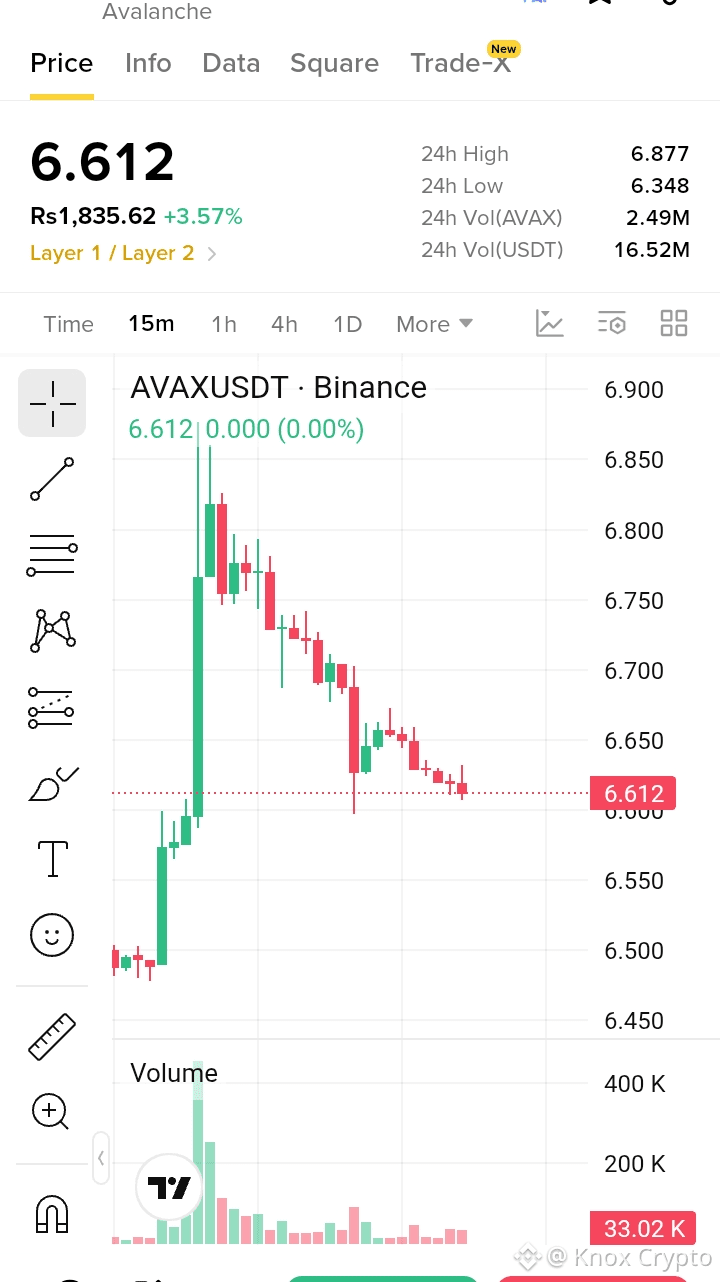
AVAX zeigt Schwäche in der aktuellen Zone. Nach unten gerichtete Levels stehen im Fokus, falls die Verkäufer die Kontrolle behalten.
Einstieg: 6,61 $ – 6,66 $
TP1: 6,55 $
TP2: 6,50 $
TP3: 6,38 $
SL: 6,72 $
Handel klug. Risikomanagement im Blick. 📉
#AVAXUSD
AVAX zeigt Schwäche in der aktuellen Zone. Nach unten gerichtete Levels stehen im Fokus, falls die Verkäufer die Kontrolle behalten.
Einstieg: 6,61 $ – 6,66 $
TP1: 6,55 $
TP2: 6,50 $
TP3: 6,38 $
SL: 6,72 $
Handel klug. Risikomanagement im Blick. 📉
#AVAXUSD

#صفقةذهبية Einstieg 6.44 Stopp-Loss 5.7 $AVAX Es ist nicht unbedingt ein Verlust, diese Währung zu besitzen. Wenn man sie jedoch über einen langen Zeitraum im sofortigen Handel kauft, werden fantastische Gewinne erzielt #AVAXUSD Das ist eine der wichtigsten Währungen für Daytrader im sofortigen Handel und gehört zu den am häufigsten gesuchten Währungen in dieser Zeit 💯💯💯💯👇👇👇Seht euch den Chart an
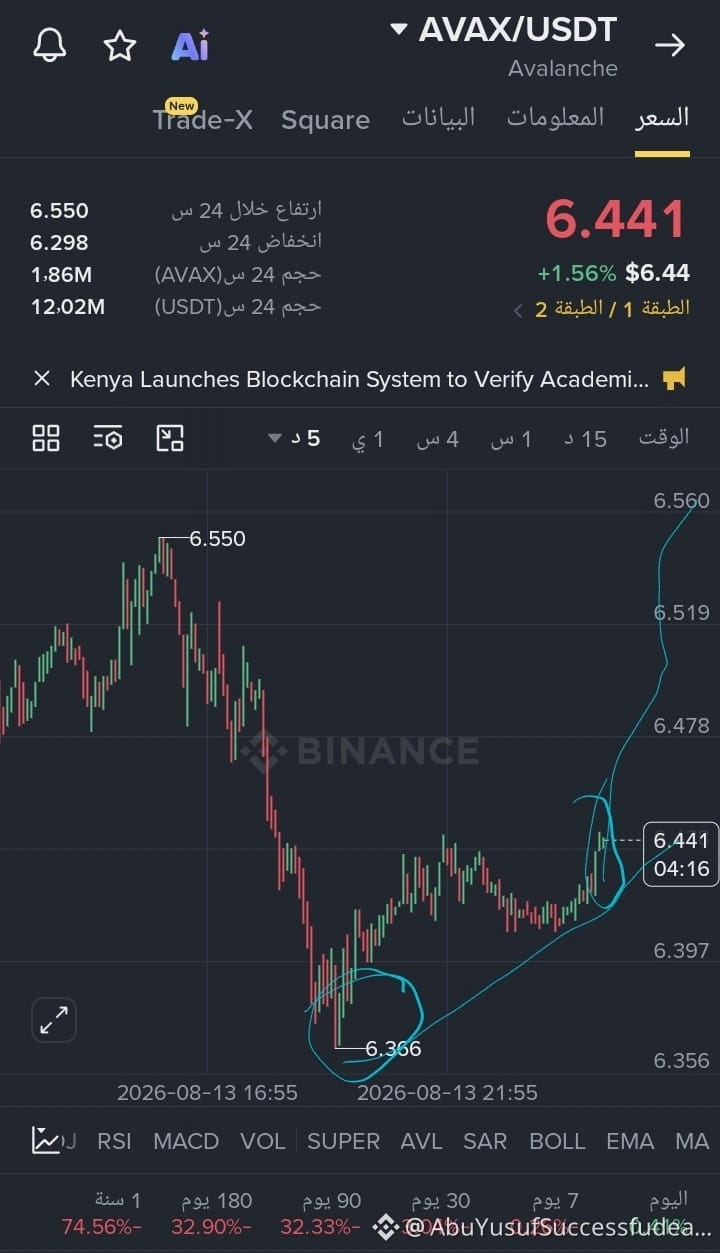

Ich bin immer noch kurz bei $AVAX
Es wird meinen Zielkurs erreichen und ich warte.
Jeder Hoch- und jeder Tiefpunkt ist für mich eine Gelegenheit.
Das ist meine 6. aufeinanderfolgende Position, die mit Gewinn schließen wird.
Folge mir für die besten Signale.
Und teile deine Gedanken mit mir.
@Professor Mikel @612 Ceros @LinhCrypto @TF_bnb @Panda Traders
#AVAXUSD #TradingSignals
Es wird meinen Zielkurs erreichen und ich warte.
Jeder Hoch- und jeder Tiefpunkt ist für mich eine Gelegenheit.
Das ist meine 6. aufeinanderfolgende Position, die mit Gewinn schließen wird.
Folge mir für die besten Signale.
Und teile deine Gedanken mit mir.
@Professor Mikel @612 Ceros @LinhCrypto @TF_bnb @Panda Traders
#AVAXUSD #TradingSignals
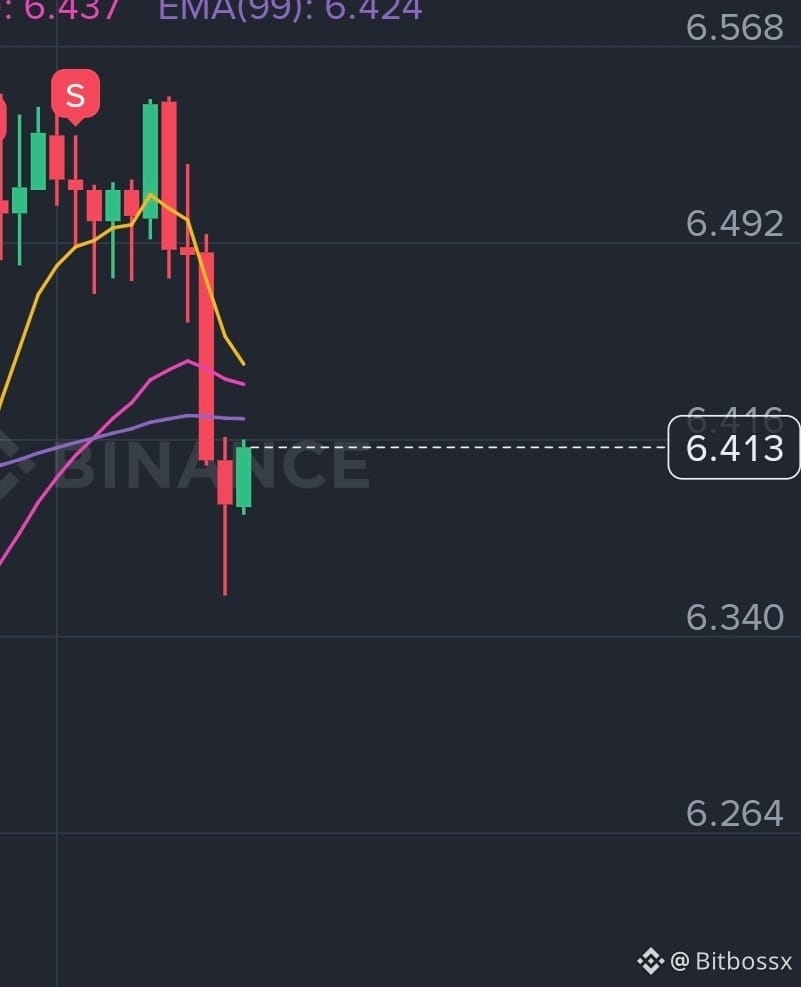

AVAX
Der Kurs der Avalanche (AVAX) bewegt sich derzeit in einer engen Spanne zwischen 6,45 und 6,55 US-Dollar. Das tägliche Handelsvolumen ist moderat und tendiert zu gelegentlichen horizontalen Schwankungen.
Die Kursbewegungs-Erwartungen für heute und morgen basieren auf kurzfristigen technischen Indikatoren:
1. Wahrscheinlichstes Szenario (seitwärtiger Handel / enge Schwankung)
Erwartete Bewegungsspanne: zwischen 6,35 und 6,65.
Grund: Der übergeordnete Trend in den kleineren Timeframes (1 Stunde bis 4 Stunden) zeigt ein Gleichgewicht zwischen Kauf- und Verkaufsdruck. Der Relative-Stärke-Index (RSI) befindet sich nahe von Neutralzonen, ohne starken Impuls, der aus der aktuellen Spanne nach oben oder unten ausbrechen würde.
2. Aktuelle und Zielniveaus (Kursbereich):
* Wichtige Support-/Unterstützungsniveaus:
* 6,42$–6,40$: ein sehr wichtiger und naher Support, um einer zusätzlichen Abwärtswelle entgegenzuwirken.
* 6,19$–6,06$: die nächste zentrale Unterstützung, falls es zu einem plötzlichen Rückgang kommt oder der Markt für Bitcoin/Altcoins nachgibt.
* Wichtige Resistance-/Widerstandsniveaus:
* 6,65$–6,75$: erste Angebotszone; ein Schlusskurs der 4-Stunden-Kerze über diesem Niveau kann dem Kurs vorübergehend einen positiven Schub geben.
* 6,97$: das nahe Hoch, das der Kurs zuletzt getestet hat. Ein Versuch, dieses Niveau zu brechen, beginnt mit dem Durchbruch über den ersten Widerstand. $AVAX #SheinToStartHKIPOBookbuildingAsSoonAsNextWeek #AVAXUSD
Der Kurs der Avalanche (AVAX) bewegt sich derzeit in einer engen Spanne zwischen 6,45 und 6,55 US-Dollar. Das tägliche Handelsvolumen ist moderat und tendiert zu gelegentlichen horizontalen Schwankungen.
Die Kursbewegungs-Erwartungen für heute und morgen basieren auf kurzfristigen technischen Indikatoren:
1. Wahrscheinlichstes Szenario (seitwärtiger Handel / enge Schwankung)
Erwartete Bewegungsspanne: zwischen 6,35 und 6,65.
Grund: Der übergeordnete Trend in den kleineren Timeframes (1 Stunde bis 4 Stunden) zeigt ein Gleichgewicht zwischen Kauf- und Verkaufsdruck. Der Relative-Stärke-Index (RSI) befindet sich nahe von Neutralzonen, ohne starken Impuls, der aus der aktuellen Spanne nach oben oder unten ausbrechen würde.
2. Aktuelle und Zielniveaus (Kursbereich):
* Wichtige Support-/Unterstützungsniveaus:
* 6,42$–6,40$: ein sehr wichtiger und naher Support, um einer zusätzlichen Abwärtswelle entgegenzuwirken.
* 6,19$–6,06$: die nächste zentrale Unterstützung, falls es zu einem plötzlichen Rückgang kommt oder der Markt für Bitcoin/Altcoins nachgibt.
* Wichtige Resistance-/Widerstandsniveaus:
* 6,65$–6,75$: erste Angebotszone; ein Schlusskurs der 4-Stunden-Kerze über diesem Niveau kann dem Kurs vorübergehend einen positiven Schub geben.
* 6,97$: das nahe Hoch, das der Kurs zuletzt getestet hat. Ein Versuch, dieses Niveau zu brechen, beginnt mit dem Durchbruch über den ersten Widerstand. $AVAX #SheinToStartHKIPOBookbuildingAsSoonAsNextWeek #AVAXUSD


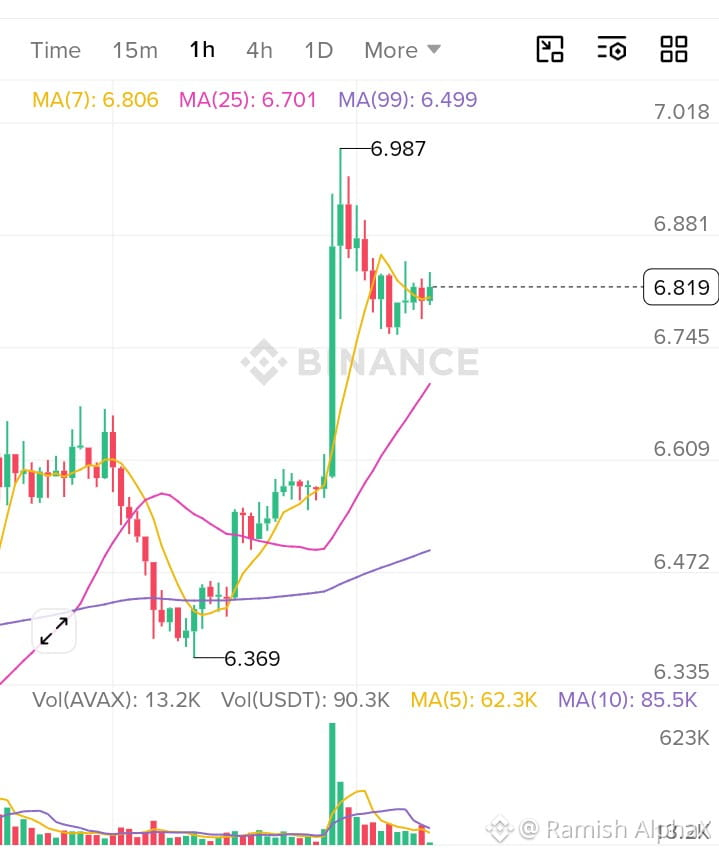
🔥 $AVAX / USDT: 1H Liquiditätssweep Reclaim & Impulsive Expansions-Setup
Der 1-Stunden (1H)-Chart für $AVAX /USDT zeigt einen aggressiven Strukturwechsel des Marktes. Nach einem tiefen Liquiditätssweep auf der Sell-Side bei $6.369 sind Käufer schnell mit starkem institutionellem Volumen eingestiegen und haben den Kurs bis auf $6.987 nach oben getrieben. Der Preis konsolidiert nun um $6.819 und hält sich oberhalb der schnellen dynamischen gleitenden Durchschnitte.
Markt-Bias: Bullisch (Impulsiver struktureller Ausbruch)
Trend-Analyse: AVAX hat bei $6.369 eine klassische Spring-Formation abgeschlossen, gefolgt von einer scharfen Expansionskerze, die sowohl den 1H MA(25) ($6.701) als auch den MA(99) ($6.499) zurückeroberte. Die höhere-Tief-Struktur oberhalb von $6.745 zeigt, dass Käufer die Ausbruch-Basis aktiv verteidigen.
Trade-Setup: LONG (Bei Retest / Order-Block-Fill)
Aktion: LONG bei einem Pullback in den lokalen 1H- Nachfragesblock.
Entry-Zone: $6.650 – $6.780 (Konfluenz mit 1H MA(25) dynamischem Retest)
Stop Loss (SL): $6.480 (Unter der strukturellen Basis des 1H MA(99))
Take Profit 1 (TP1): $6.987 (Unmittelbarer High-Liquidity-Pool)
Take Profit 2 (TP2): $7.250 (Widerstand des Order Blocks auf mittlere Sicht)
Take Profit 3 (TP3): $7.600 (Makro-Expansion-Ziel)
Risiko:Ertrag (R:R): ~1:2.6 (bis TP2)
Trade-Invalidierung: Ein nachhaltiger 1H-Kerzenabschluss unter $6.480 macht die unmittelbare bullische Fortsetzungsstruktur ungültig.
#AVAXUSD #AVAX #AVAX✅ #AVAXLegend #AVAXUSDT🚀
Der 1-Stunden (1H)-Chart für $AVAX /USDT zeigt einen aggressiven Strukturwechsel des Marktes. Nach einem tiefen Liquiditätssweep auf der Sell-Side bei $6.369 sind Käufer schnell mit starkem institutionellem Volumen eingestiegen und haben den Kurs bis auf $6.987 nach oben getrieben. Der Preis konsolidiert nun um $6.819 und hält sich oberhalb der schnellen dynamischen gleitenden Durchschnitte.
Markt-Bias: Bullisch (Impulsiver struktureller Ausbruch)
Trend-Analyse: AVAX hat bei $6.369 eine klassische Spring-Formation abgeschlossen, gefolgt von einer scharfen Expansionskerze, die sowohl den 1H MA(25) ($6.701) als auch den MA(99) ($6.499) zurückeroberte. Die höhere-Tief-Struktur oberhalb von $6.745 zeigt, dass Käufer die Ausbruch-Basis aktiv verteidigen.
Trade-Setup: LONG (Bei Retest / Order-Block-Fill)
Aktion: LONG bei einem Pullback in den lokalen 1H- Nachfragesblock.
Entry-Zone: $6.650 – $6.780 (Konfluenz mit 1H MA(25) dynamischem Retest)
Stop Loss (SL): $6.480 (Unter der strukturellen Basis des 1H MA(99))
Take Profit 1 (TP1): $6.987 (Unmittelbarer High-Liquidity-Pool)
Take Profit 2 (TP2): $7.250 (Widerstand des Order Blocks auf mittlere Sicht)
Take Profit 3 (TP3): $7.600 (Makro-Expansion-Ziel)
Risiko:Ertrag (R:R): ~1:2.6 (bis TP2)
Trade-Invalidierung: Ein nachhaltiger 1H-Kerzenabschluss unter $6.480 macht die unmittelbare bullische Fortsetzungsstruktur ungültig.
#AVAXUSD #AVAX #AVAX✅ #AVAXLegend #AVAXUSDT🚀

AVAX vs SOL vs SUI: Wer könnte den nächsten Bull Run gewinnen? 🚀
Drei Layer-1 Blockchains ziehen viel Aufmerksamkeit auf sich: $AVAX , $SOL und $SUI
.
🟠 AVAX (Avalanche)
Starke reale Nutzung
Wachsende DeFi- und Gaming-Ökosysteme
Attraktiv für langfristige Investoren
Am besten für: Nutzung und langfristiger Wert.
🟣 SOL (Solana)
Massive Nutzerakzeptanz
Schnelle und kostengünstige Transaktionen
Eines der stärksten Krypto-Ökosysteme
Am besten für: Akzeptanz und Wachstum des Ökosystems.
🔵 SUI (Sui)
Schnell wachsende Blockchain
Starker Momentum und Investoreninteresse
Hohes Risiko, hohe Belohnung
Am besten für: Wachstum und Spekulation.
📊 ICT & Preisaktionsansicht
Smart Money folgt der Liquidität. Im Moment:
SOL bleibt der stärkste Marktführer.
AVAX sieht im Vergleich zu seinen Fundamentaldaten unterbewertet aus.
SUI zieht weiterhin aggressive Käufer an.
🎯 Endgültiges Urteil
✅ Nutzung: AVAX
✅ Akzeptanz: SOL
✅ Wachstumspotenzial: SUI
Alle drei haben starkes Potenzial, aber der größte Gewinner könnte davon abhängen, welches Ökosystem die meisten Nutzer und Entwickler im nächsten Bullenmarkt anzieht.
Smart Money folgt der Liquidität, aber langfristiger Erfolg folgt der Nutzung.
#solana #SUI🔥 #AVAXUSD
Drei Layer-1 Blockchains ziehen viel Aufmerksamkeit auf sich: $AVAX , $SOL und $SUI
.
🟠 AVAX (Avalanche)
Starke reale Nutzung
Wachsende DeFi- und Gaming-Ökosysteme
Attraktiv für langfristige Investoren
Am besten für: Nutzung und langfristiger Wert.
🟣 SOL (Solana)
Massive Nutzerakzeptanz
Schnelle und kostengünstige Transaktionen
Eines der stärksten Krypto-Ökosysteme
Am besten für: Akzeptanz und Wachstum des Ökosystems.
🔵 SUI (Sui)
Schnell wachsende Blockchain
Starker Momentum und Investoreninteresse
Hohes Risiko, hohe Belohnung
Am besten für: Wachstum und Spekulation.
📊 ICT & Preisaktionsansicht
Smart Money folgt der Liquidität. Im Moment:
SOL bleibt der stärkste Marktführer.
AVAX sieht im Vergleich zu seinen Fundamentaldaten unterbewertet aus.
SUI zieht weiterhin aggressive Käufer an.
🎯 Endgültiges Urteil
✅ Nutzung: AVAX
✅ Akzeptanz: SOL
✅ Wachstumspotenzial: SUI
Alle drei haben starkes Potenzial, aber der größte Gewinner könnte davon abhängen, welches Ökosystem die meisten Nutzer und Entwickler im nächsten Bullenmarkt anzieht.
Smart Money folgt der Liquidität, aber langfristiger Erfolg folgt der Nutzung.
#solana #SUI🔥 #AVAXUSD


$AVAX zeigt bärische Signale und könnte in den nächsten Stunden um etwa $0,15 fallen. Noch nichts Großes, aber eine kurzfristige Abwärtsbewegung scheint wahrscheinlich.
📉 Bleib vorsichtig und beobachte die Unterstützungslevels.
#AVAXUSD
📉 Bleib vorsichtig und beobachte die Unterstützungslevels.
#AVAXUSD
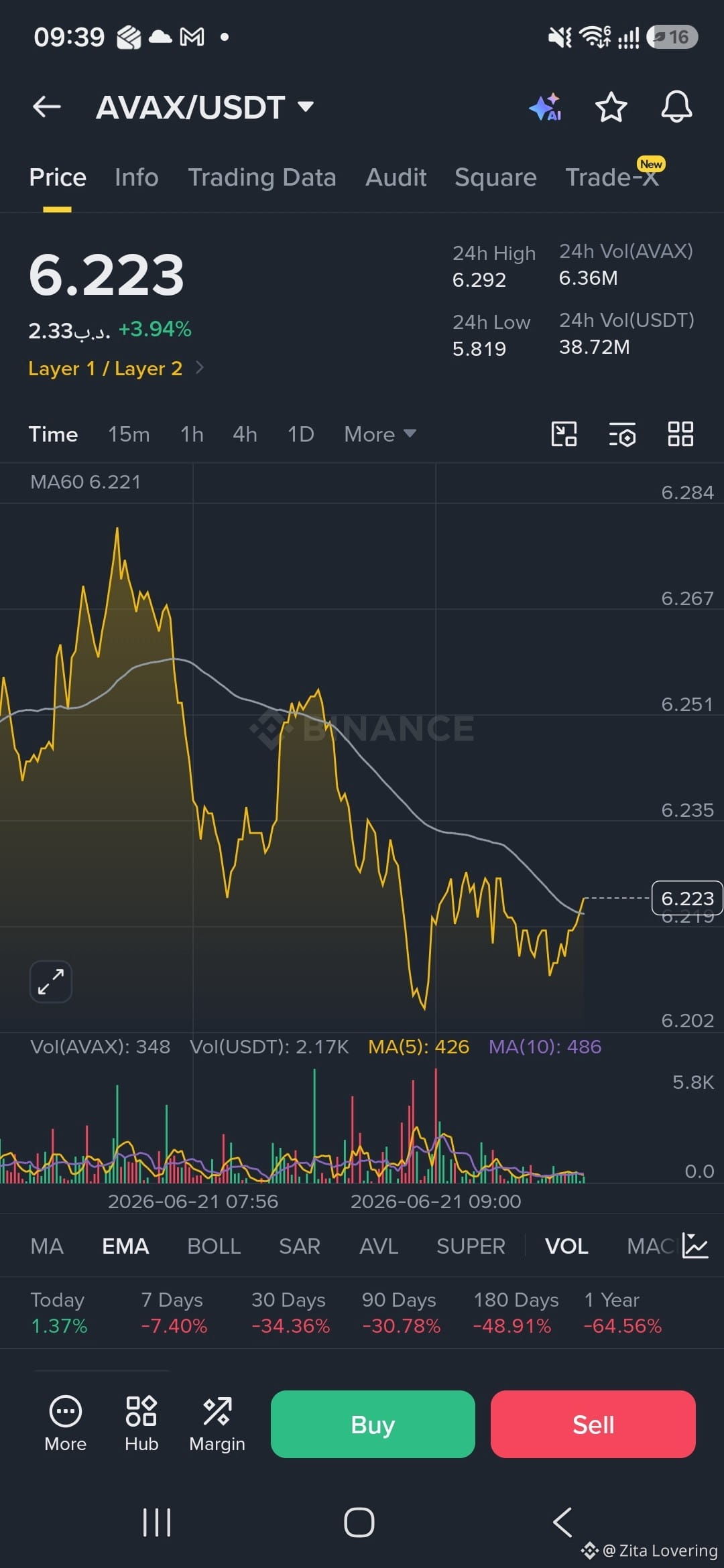

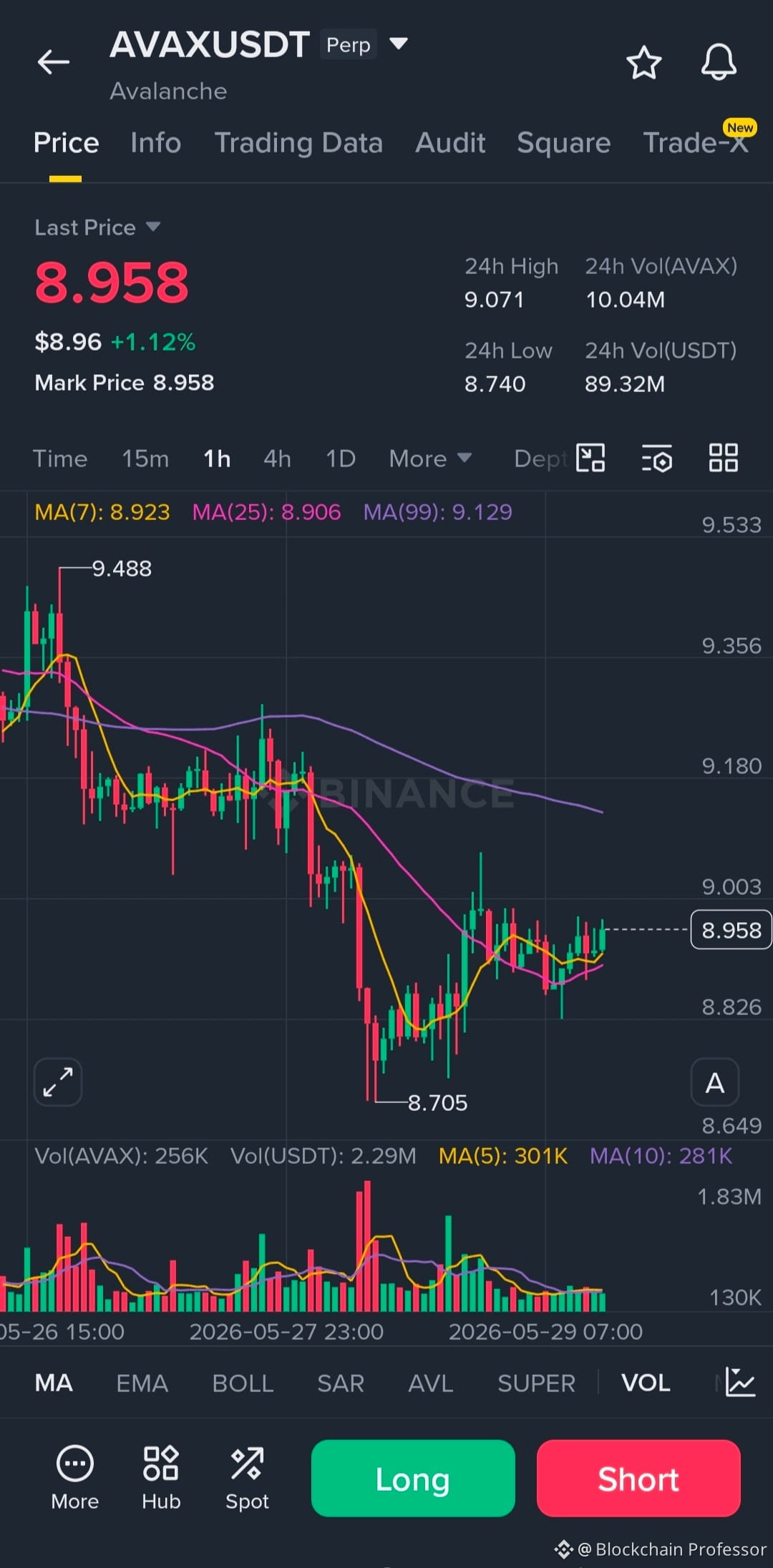
$AVAX - LONG
Einstiegspunkt: $8.85 – $8.92
Stop-Loss: $8.70
Take Profit:
TP1: $9.00
TP2: $9.35
TP3: $9.60
Der Preis hält sich nahe dem 24h-Tief von $8.74 und der strukturellen Unterstützungszone bei $8.70 – $8.80. Mehrere Candlesticks zeigen, dass Käufer an diesen Levels mit langen Dochten eingestiegen sind.
#AVAXUSD #BinanceSquareFamily #crypto $AVAX
$XRP
Einstiegspunkt: $8.85 – $8.92
Stop-Loss: $8.70
Take Profit:
TP1: $9.00
TP2: $9.35
TP3: $9.60
Der Preis hält sich nahe dem 24h-Tief von $8.74 und der strukturellen Unterstützungszone bei $8.70 – $8.80. Mehrere Candlesticks zeigen, dass Käufer an diesen Levels mit langen Dochten eingestiegen sind.
#AVAXUSD #BinanceSquareFamily #crypto $AVAX
$XRP

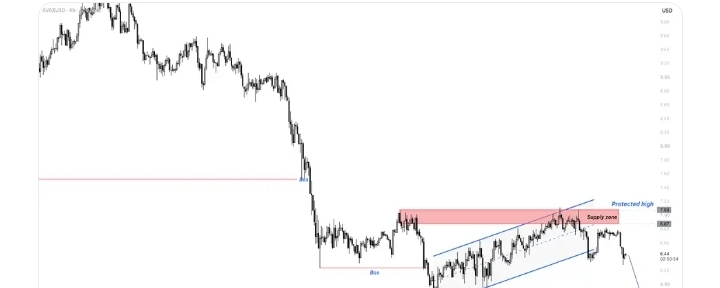
$AVAX - In den letzten 24 Stunden ist er um fast 4% gefallen, aber im 1H-Chart ist zu sehen, dass die Unterstützung im Bereich von 6.68 - 6.70 gehalten wird. Das Volumen bleibt hoch, das Open Interest ist stabil, was darauf hindeutet, dass der Markt für einen Rebound bereit ist. Bei einer Konsolidierung über 6.72 kann eine Bewegung in Richtung 6.95 - 7.10 erwartet werden
Long $AVAX
Einstieg 6.68 - 6.72
Stop 6.55
Ziel 6.95 - 7.10
DYOR
#AVAX
#AVAXUSD
#AVAX/USDT
Long $AVAX
Einstieg 6.68 - 6.72
Stop 6.55
Ziel 6.95 - 7.10
DYOR
#AVAX
#AVAXUSD
#AVAX/USDT


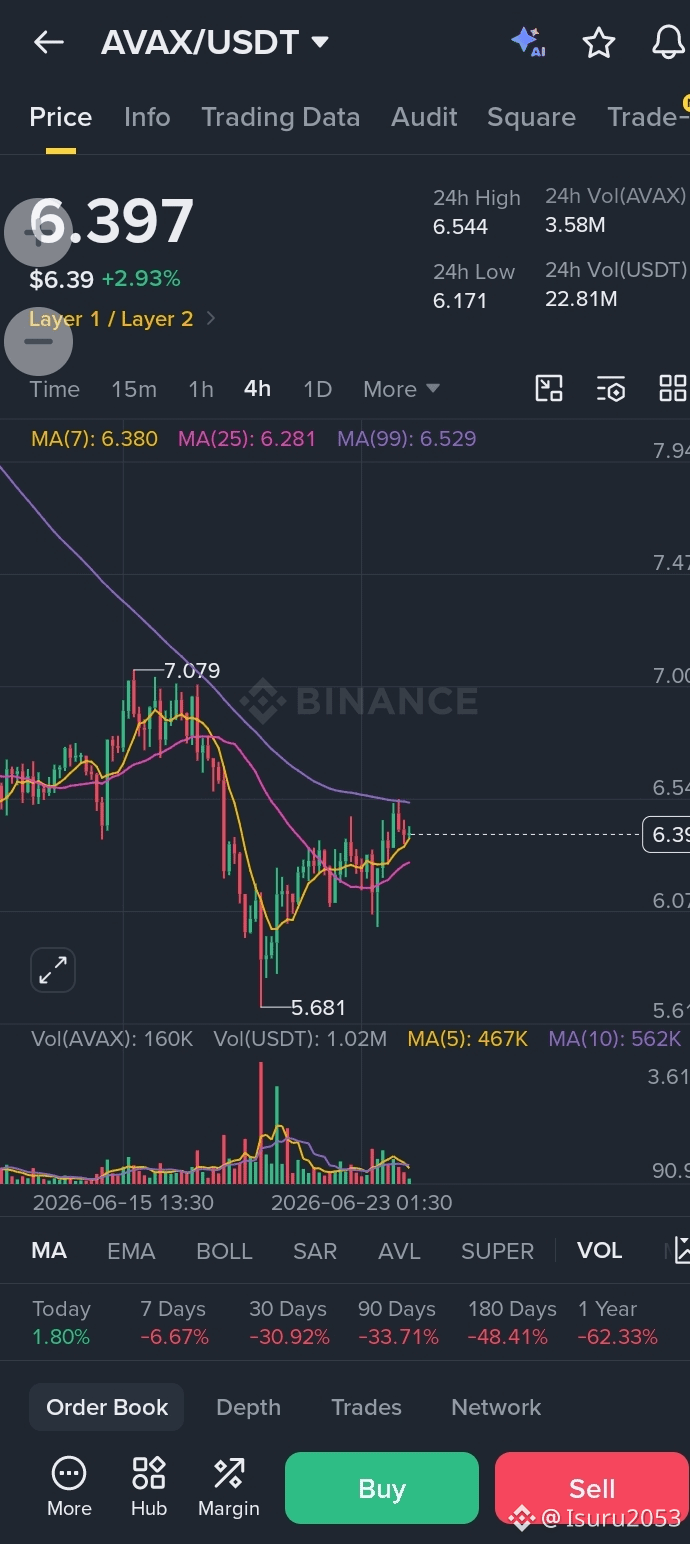
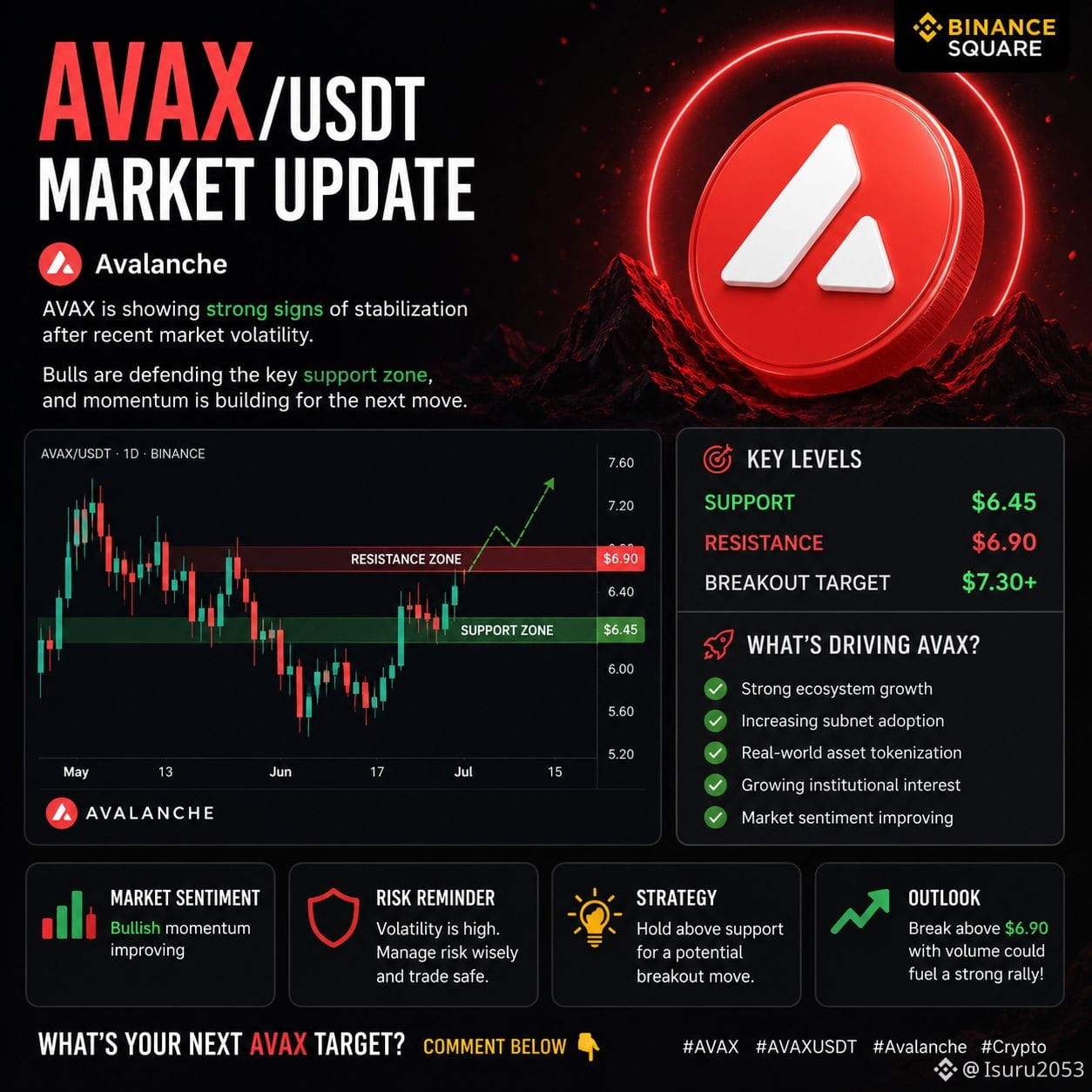
🔥 AVAX/USDT UPDATE 🔥
$AVAX wacht wieder auf 👀
Nach heftiger Volatilität gewinnen die Bullen langsam die Kontrolle, während der Markt auf den nächsten Ausbruch wartet.
📈 Schlüsselzone, die man beobachten sollte:
🟢 Unterstützung: $6.45
🔴 Widerstand: $6.90
Wenn Käufer über den Widerstand von $6.90 mit starkem Volumen drücken, könnte AVAX leicht die $7.30+ Region anvisieren 🚀
💡 Warum Trader AVAX beobachten:
✅ Wachsendes Avalanche-Ökosystem
✅ Zunehmende Adoption von Subnetzen
✅ Starkes Erholungspotenzial nach überverkauften Bedingungen
✅ Marktsentiment wendet sich langsam bullish
⚠️ Dennoch bleibt die Volatilität hoch — smartes Risikomanagement ist ein Muss.
👀 Mein Blick:
Solange AVAX über der Unterstützung bleibt, baut sich Momentum für einen möglichen Ausbruch auf. Die nächsten paar Kerzen könnten sehr wichtig sein.
Bist du bullish auf AVAX? 📊🔥
#AVAX #AVAXUSDT #Avalanche #Crypto #BinanceSquare #Altcoins #Trading
#AVAXUSD
$AVAX
$AVAX wacht wieder auf 👀
Nach heftiger Volatilität gewinnen die Bullen langsam die Kontrolle, während der Markt auf den nächsten Ausbruch wartet.
📈 Schlüsselzone, die man beobachten sollte:
🟢 Unterstützung: $6.45
🔴 Widerstand: $6.90
Wenn Käufer über den Widerstand von $6.90 mit starkem Volumen drücken, könnte AVAX leicht die $7.30+ Region anvisieren 🚀
💡 Warum Trader AVAX beobachten:
✅ Wachsendes Avalanche-Ökosystem
✅ Zunehmende Adoption von Subnetzen
✅ Starkes Erholungspotenzial nach überverkauften Bedingungen
✅ Marktsentiment wendet sich langsam bullish
⚠️ Dennoch bleibt die Volatilität hoch — smartes Risikomanagement ist ein Muss.
👀 Mein Blick:
Solange AVAX über der Unterstützung bleibt, baut sich Momentum für einen möglichen Ausbruch auf. Die nächsten paar Kerzen könnten sehr wichtig sein.
Bist du bullish auf AVAX? 📊🔥
#AVAX #AVAXUSDT #Avalanche #Crypto #BinanceSquare #Altcoins #Trading
#AVAXUSD
$AVAX


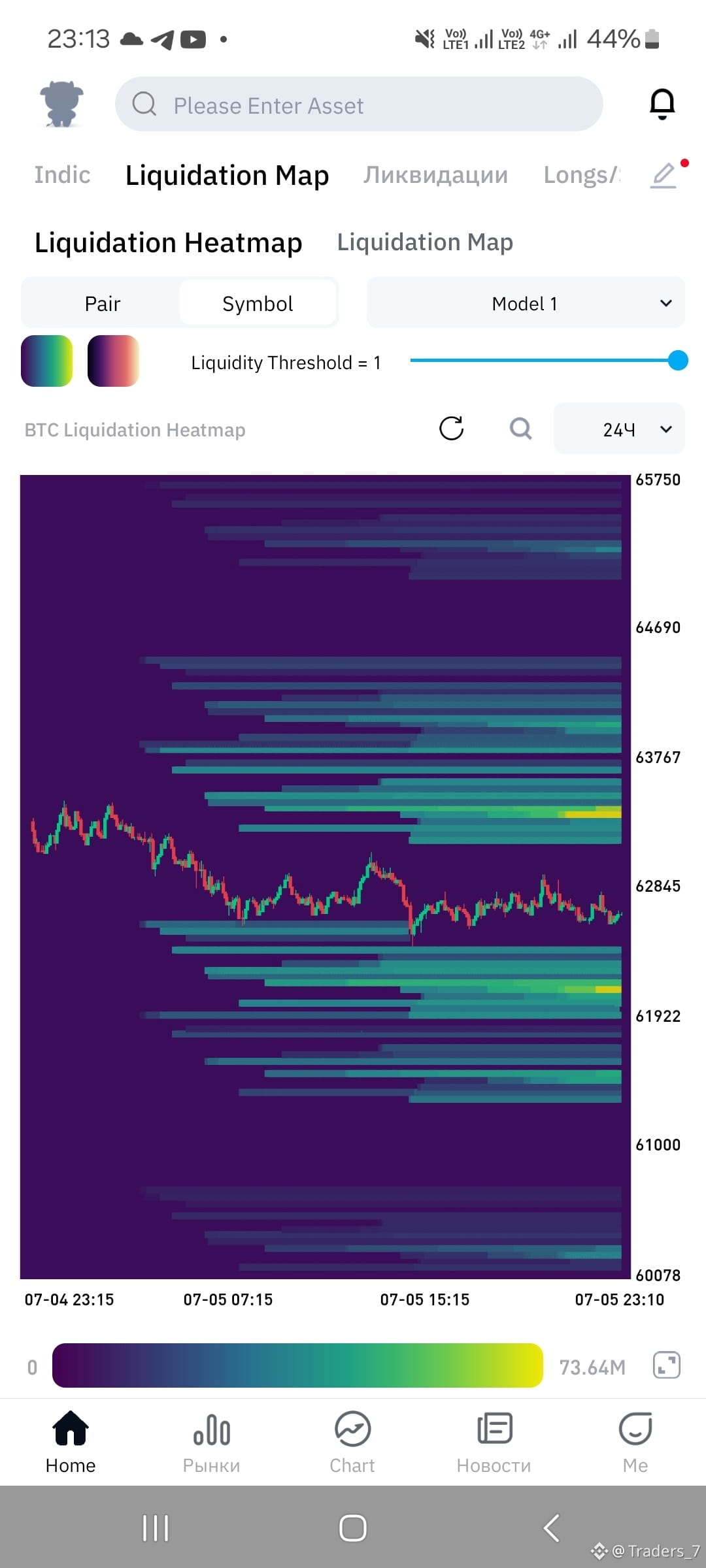
#AVAXUSD Bild 1 – Liquidations-Heatmap (BTC)
Heatmap der BTC-Liquidationen der letzten 24 Stunden. Horizontale Balken zeigen Preisniveaus, auf denen sich Positionen mit Hebel angesammelt haben – je leuchtender die Farbe (gelb), desto größer das potenzielle Volumen an Liquidationen auf dieser Höhe. Man erkennt eine Häufung der Liquiditätsansammlung ober- und unterhalb des aktuellen Preises (~62.845). Dabei liegen die hellsten Bereiche bei etwa 63.700 und 62.000.
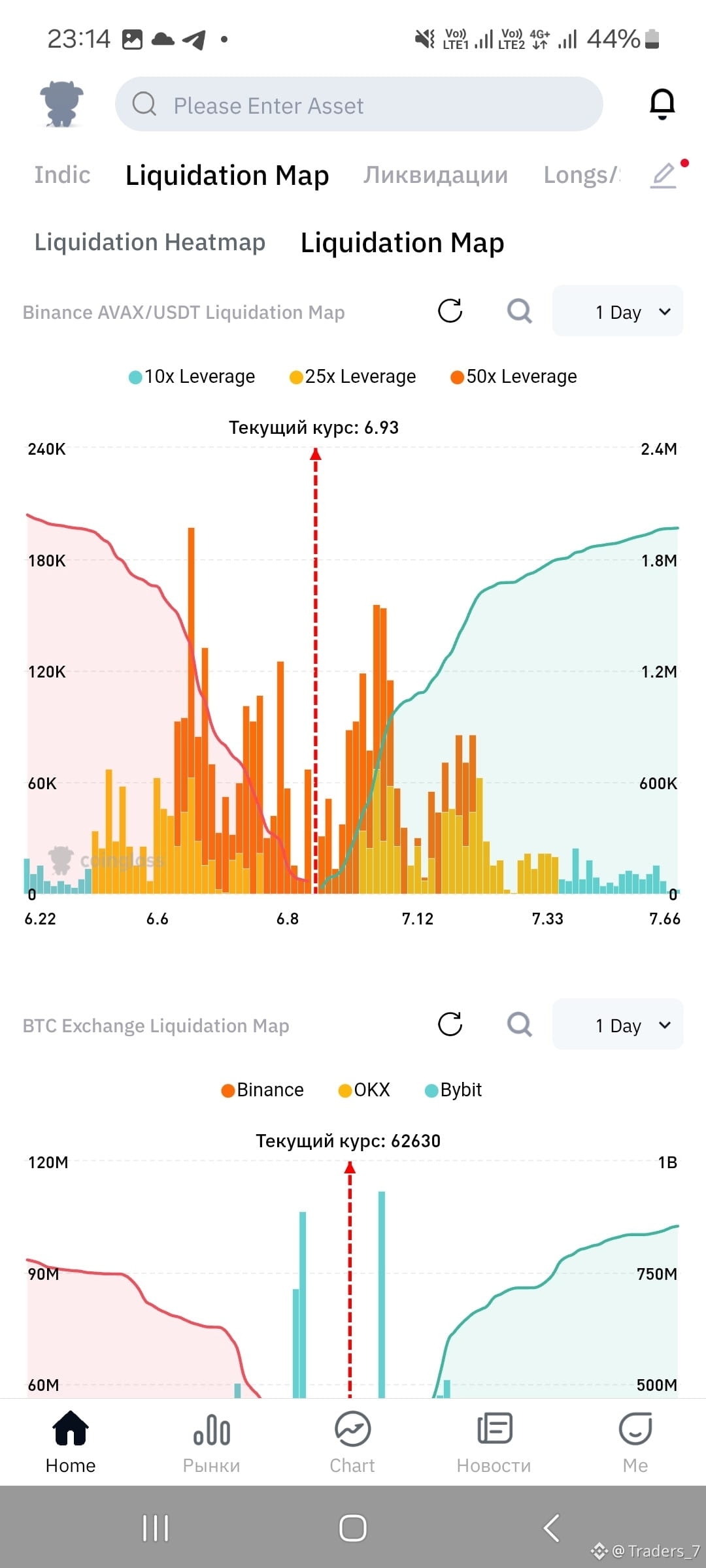
Bild 2 – Liquidations-Map
Zwei Diagramme:
Binance AVAX/USDT: zeigt Liquidationen nach Hebeln 10x/25x/50x relativ zum aktuellen Kurs von 6,93. Links (rosa) – potenzielle Liquidationen von Short-Positionen bei einem Preisrückgang; rechts (grün) – Liquidationen von Longs bei einem Kursanstieg.
BTC Exchange Liquidation Map: dasselbe, jedoch für die Börsen (Binance, OKX, Bybit) bei der aktuellen Preisgröße 62.630.
Heatmap der BTC-Liquidationen der letzten 24 Stunden. Horizontale Balken zeigen Preisniveaus, auf denen sich Positionen mit Hebel angesammelt haben – je leuchtender die Farbe (gelb), desto größer das potenzielle Volumen an Liquidationen auf dieser Höhe. Man erkennt eine Häufung der Liquiditätsansammlung ober- und unterhalb des aktuellen Preises (~62.845). Dabei liegen die hellsten Bereiche bei etwa 63.700 und 62.000.
Bild 2 – Liquidations-Map
Zwei Diagramme:
Binance AVAX/USDT: zeigt Liquidationen nach Hebeln 10x/25x/50x relativ zum aktuellen Kurs von 6,93. Links (rosa) – potenzielle Liquidationen von Short-Positionen bei einem Preisrückgang; rechts (grün) – Liquidationen von Longs bei einem Kursanstieg.
BTC Exchange Liquidation Map: dasselbe, jedoch für die Börsen (Binance, OKX, Bybit) bei der aktuellen Preisgröße 62.630.

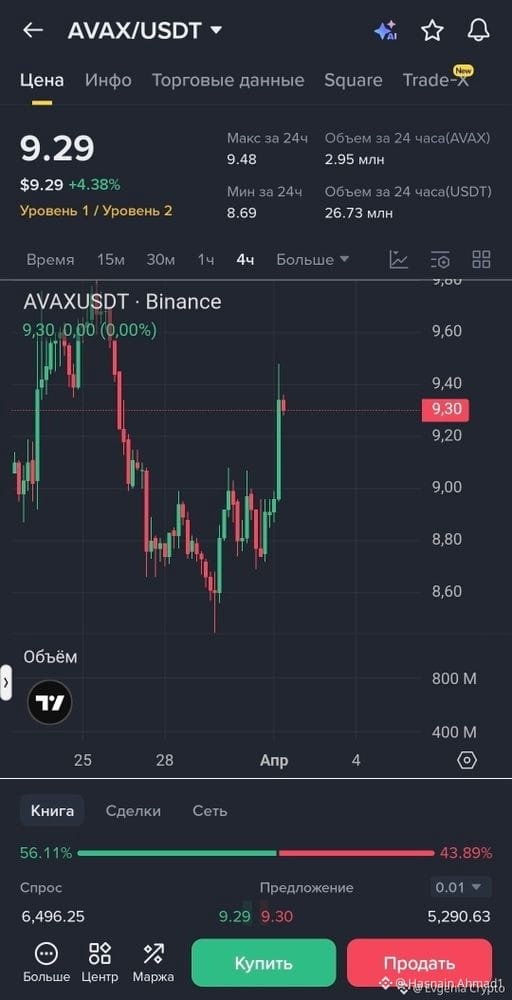

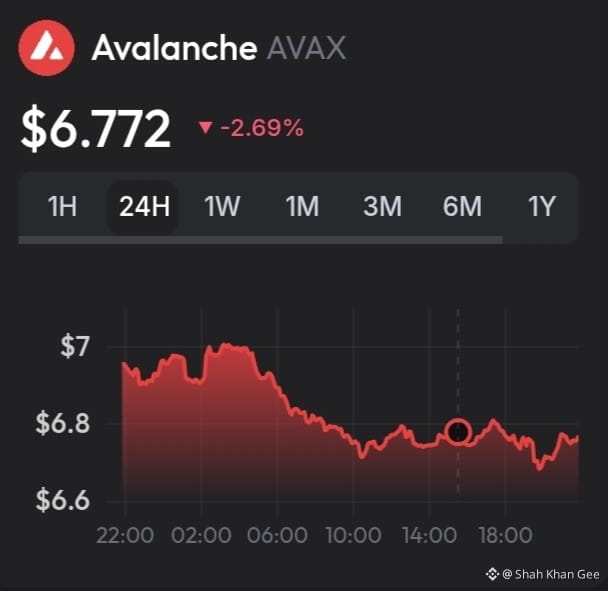
Der Preis von $AVAX today ist 6,76 $ und hat sich innerhalb der letzten 24 Stunden um -2,64 % und über die Woche um 4,22 % verändert. Die Kursentwicklung von AVAX wird von einer bärischen Stimmung geprägt.
Der aktuelle Volatilitätsindex für AVAX liegt bei 3,73 %. Das zirkulierende Angebot von AVAX beträgt 431,77 Mio. In der Gesamtschau ist der höchste Preis, den AVAX erreicht hat, 146,176 $ und der niedrigste beobachtete Preis 2,7855 $.
#AVAXUSD #AVAX✅ #AVAXLegend #TreasuryCommerceVieForBitcoinReserveControl #BTCSharpeRatioFallsToLowestSince2022
Der aktuelle Volatilitätsindex für AVAX liegt bei 3,73 %. Das zirkulierende Angebot von AVAX beträgt 431,77 Mio. In der Gesamtschau ist der höchste Preis, den AVAX erreicht hat, 146,176 $ und der niedrigste beobachtete Preis 2,7855 $.
#AVAXUSD #AVAX✅ #AVAXLegend #TreasuryCommerceVieForBitcoinReserveControl #BTCSharpeRatioFallsToLowestSince2022

🚨 $AVAX sitzt mitten in einer Liquiditätsfalle. ⚠️
🟢 Longs unterhalb: 38$ → 36$
🔴 Shorts oberhalb: 42$ → 44$ → 46$
Der Bereich zieht sich zusammen.
Eine starke Bewegung könnte eine Kettenreaktion auslösen.
Richtung? 📈📉
#avax #AVAXUSD
🟢 Longs unterhalb: 38$ → 36$
🔴 Shorts oberhalb: 42$ → 44$ → 46$
Der Bereich zieht sich zusammen.
Eine starke Bewegung könnte eine Kettenreaktion auslösen.
Richtung? 📈📉
#avax #AVAXUSD
Anmelden und weiter Inhalte entdecken