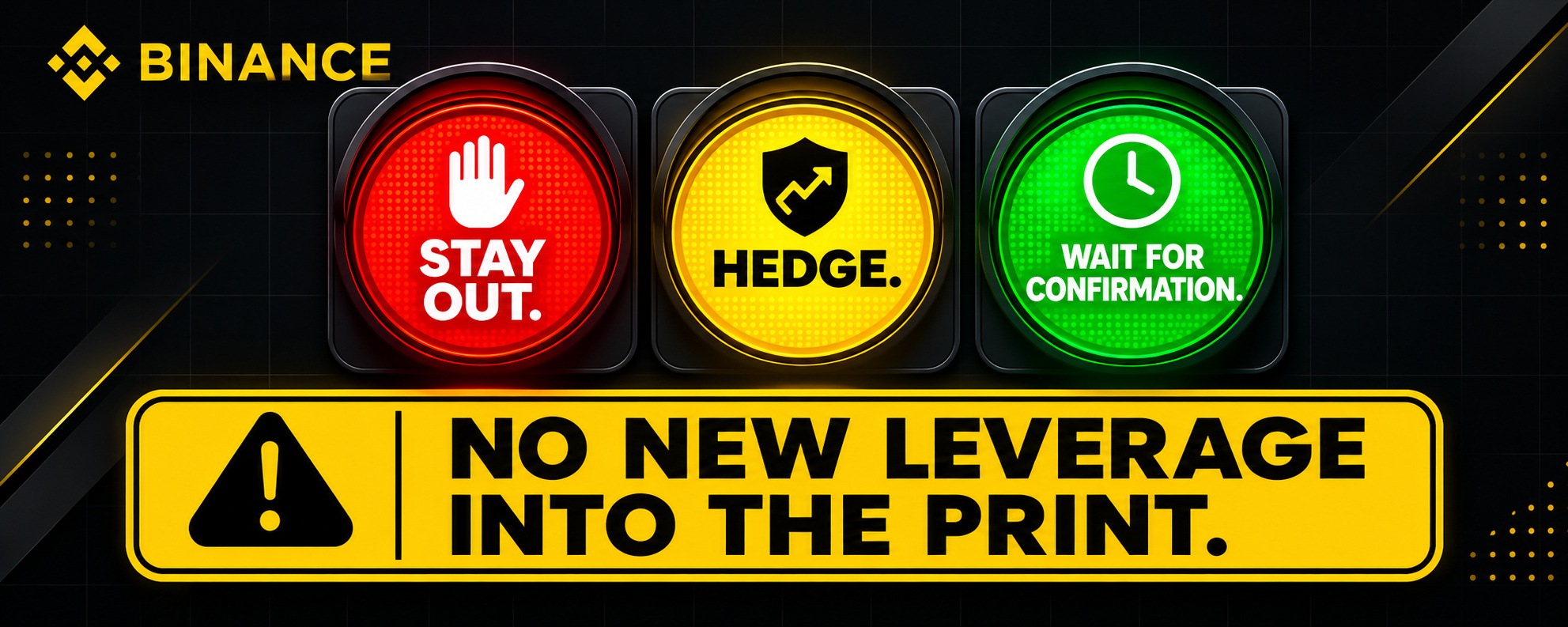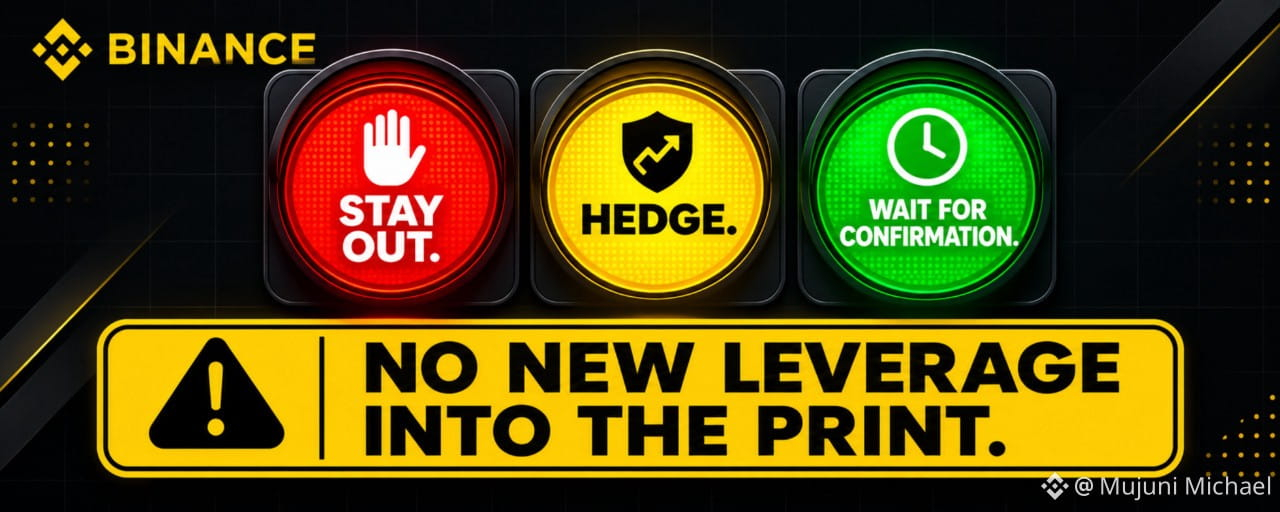

You do not have to predict CPI. You have to decide how you will interact with it before the number drops.
Play 1: Stay Out (the conservative default): Wait for the data, let the market pick a direction, and enter only after the dust settles. This is the highest-probability play for most retail traders.
Play 2: Hedge (for existing holders): If you hold a spot portfolio and fear a hot print, you can open a short perpetual position to offset potential losses. If the market dumps, the short profits cancel the spot drop. Critical caveat: hedging requires understanding funding rates and liquidation risk, do not attempt it without practicing on paper first.
Play 3: Volatility Capture (advanced only): For traders who understand options or advanced derivatives, #cpi Day can be a volatility event. But this is not a beginner play. State this clearly and repeatedly.
The one rule: No new leverage into the print. If you are already over-leveraged before CPI, no position-sizing formula will save you from a cascade of forced liquidations.
Which of the three plays is your default, Stay Out, Hedge, or Volatility Capture? And be honest: has it actually worked, or has it just felt good? I want the real answer, not the textbook one.
#RiskManagement #Write2Earn #BinanceReopensWithdrawalsForMoreAssets
NEXT UP: Monday (CPI week): The CPI Calendar Method, the 48-Hour Checklist. Thursday gave you the plays. Monday I give you the timeline: what to cut at T-48 hours, which resting orders to cancel at T-12, and the ten minutes where doing absolutely nothing is the single best trade on the board. This is the one to screenshot.