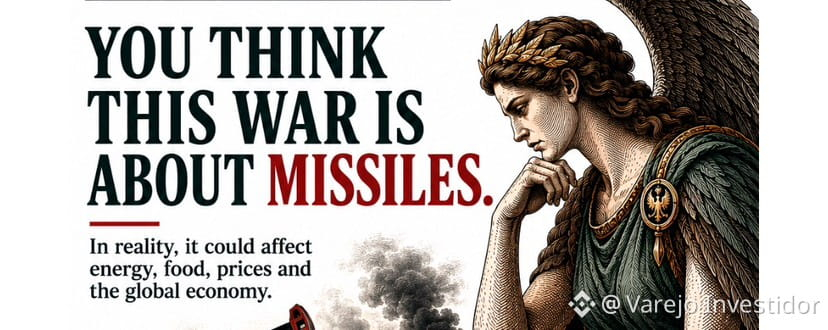

A conflict around Iran and the Strait of Hormuz is not only a military story. It is also a story about energy, shipping routes, inflation and the global economy.
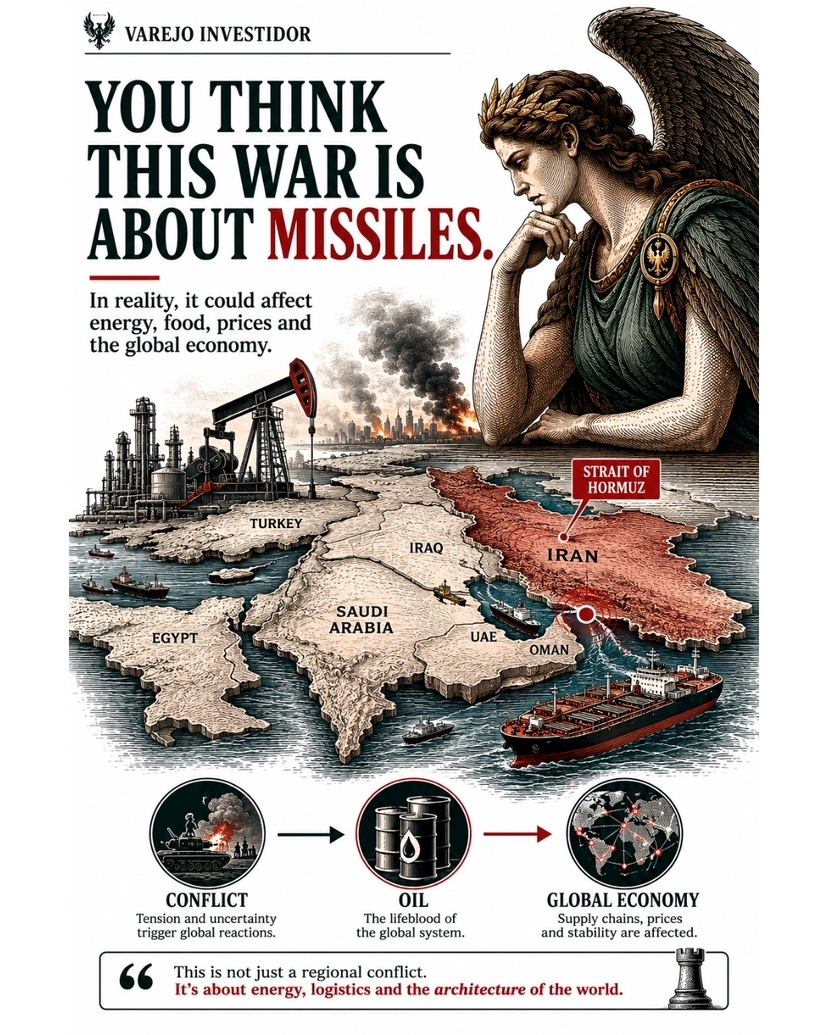
Hormuz is one of the world’s most strategically important maritime chokepoints. Disruptions or heightened risks in the area can affect how energy moves from producers to consumers, increasing uncertainty across global supply chains.
The market transmission mechanism can be powerful:
GEOPOLITICAL TENSION → ENERGY RISK → SHIPPING COSTS → INFLATION → MARKETS
Higher energy costs can influence transportation, manufacturing and consumer prices. Companies exposed to fuel and logistics may face changing costs, while investors reassess expectations for inflation, interest rates and economic growth.
This is why geopolitical events can move assets far outside the region where the conflict occurs. Oil prices, energy companies, currencies, bonds, commodities and even digital assets can all become part of the market’s response to a major global shock.
The important question is therefore not simply what happens on the battlefield.
It is what happens to the infrastructure connecting the world.
When energy routes, trade flows or strategic chokepoints come under pressure, a regional event can become an international economic issue.
Understanding those connections is essential for reading the market beyond the headlines.
#market #oil #russia #economy $OILK.ETF
$GLDB.ETF