
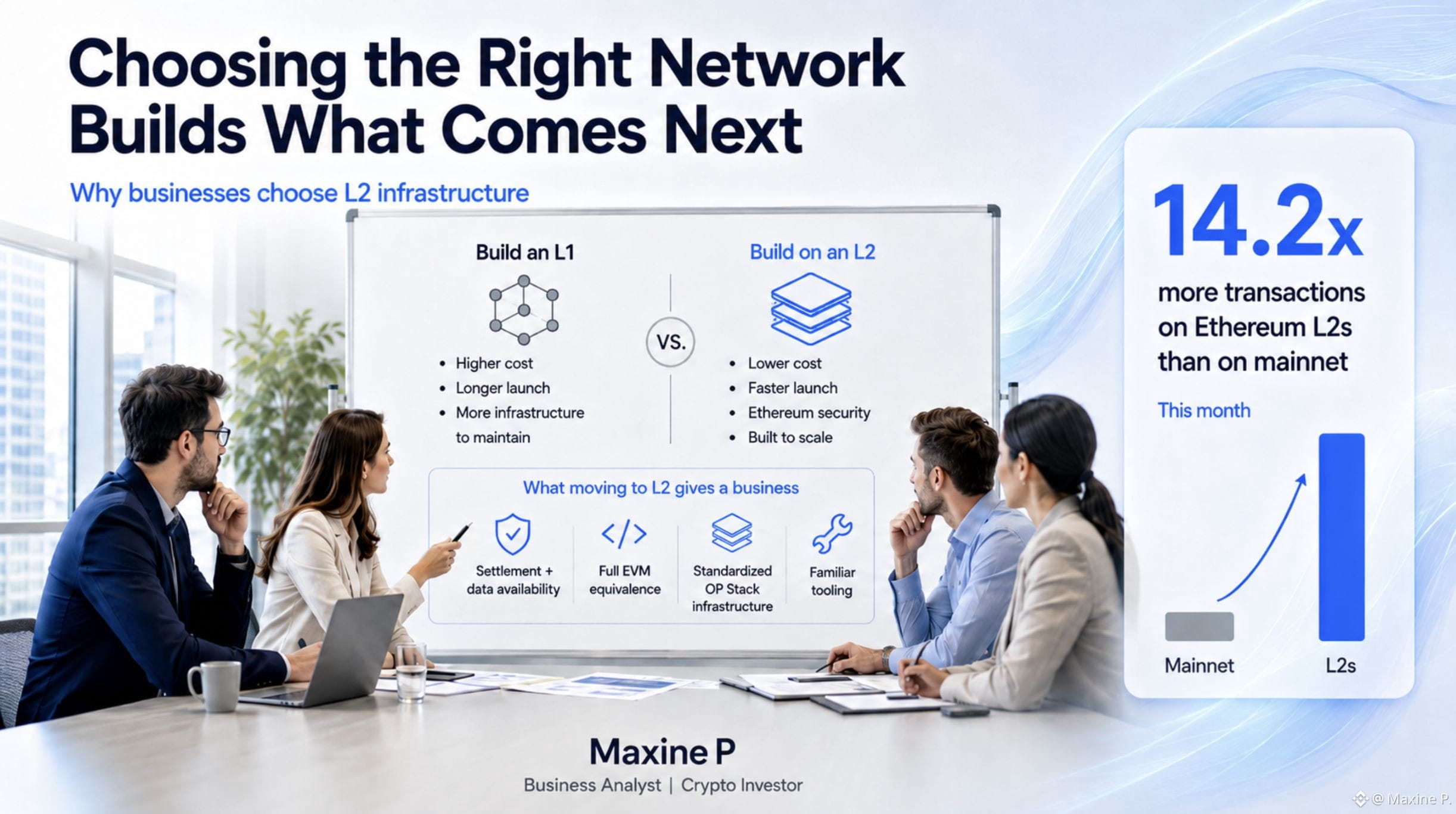
🔥 The Build-vs-Build-On Question for Businesses Going Onchain Ethereum $ETH L2s processed 14.2x more transactions than mainnet earlier this month. Much of that comes from ecosystems like Base or Arbitrum, but as L2 infrastructure matures - it is also becoming a working layer for payments, tokenization and other onchain products. So why are more businesses choosing to build on existing L2 infrastructure instead of owning the entire blockchain stack themselves? Whitechain gives us a useful real-world example - especially because it didn’t start as an L2. ▶ On August 18, Whitechain relaunched as a Distribution-First Ethereum L2 built on the OP Stack. http://whitechain.io/builders?utm_source=coinmarketcap&utm_medium=bp&utm_campaign=relaunch&utm_content=maxinep Whitechain remains the blockchain layer of the WhiteBIT ecosystem; what changes is the technical foundation underneath it: ⚡️ Ethereum settlement + blob data availability ⚡️ ~1-second soft confirmations ⚡️ EVM-equivalent infrastructure and familiar tooling And for teams building on top, Whitechain adds more than infrastructure with different support tracks depending on the project stage: New builds: up to $300K 📌 in milestone-based support for eligible teams. Full migrations: tailored ecosystem and migration support. Multichain expansion: support for $BTC teams adding Whitechain without exclusivity. ✅ If moving to L2 makes sense for a network that already had its own L1, the case is even stronger for businesses starting from zero. Existing L2 infrastructure can remove a large part of the technical groundwork and let teams focus on what they actually want to bring onchain. Disclaimer: This is not financial or investment advice. DYOR before making any decisions. Use at your own risk. #BTC Price Analysis# #Macro Insights#

نشر
إخلاء مسؤولية: يتضمن آراء جهات خارجية. لا تُعدّ نصيحة. يُمكن استخدام Binance AI دون أي ضمان. اطلع على الشروط والأحكام.