
GM and welcome to Day 29! 🔄
If you’ve ever looked at a crypto price chart and felt like you were staring at a chaotic, multi-colored bar chart from another dimension, today is your decoder ring day. Those little "candles" you see aren't just for show—they’re a visual story of the battle between buyers and sellers in every single minute, hour, or day.
Learning to read them is like learning to see the market's mood. And you don't need to memorize 100 patterns. Today, we’re focusing on the 5 core candlestick patterns that give you the most insight. You’ll start to see the story behind the price.
---
Candle Anatomy: A 10-Second Primer
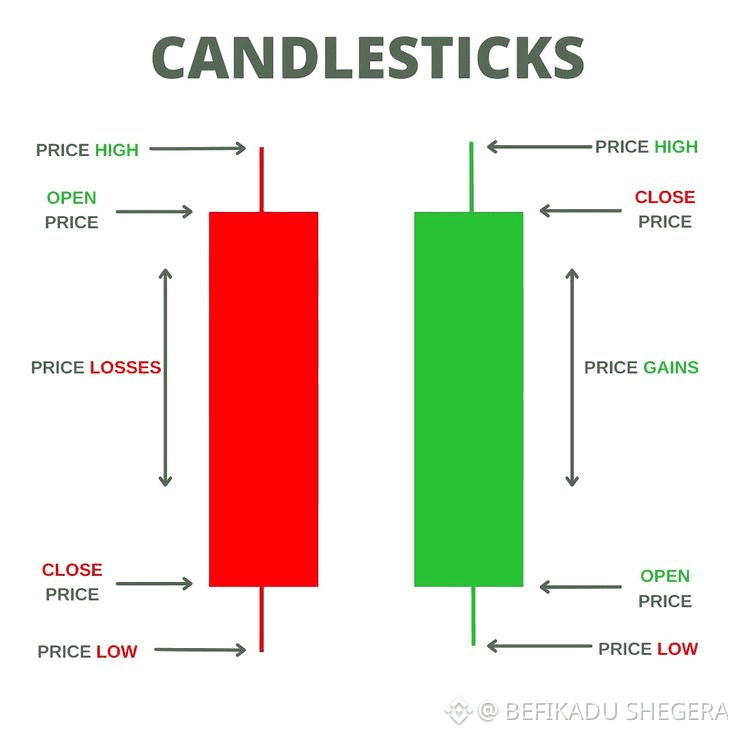
First, let’s break down one candle:
· The Body:
The thick part. Shows the opening and closing price for that time period.
· The Wick/Shadow:
The thin lines above and below. Show the highest and lowest price reached.
· The Color:
· Green (or White):
Price closed HIGHER than it opened (Bullish mood).
· Red (or Black):
Price closed LOWER than it opened (Bearish mood).
Think of it as a mini boxing match for each time period. The body is the main fight, and the wicks show how far the fighters were pushed.
---
The 5 Core Patterns to Know
Here are the essential patterns that signal a potential shift in momentum or strength.
1. The Hammer (The Rejection Slam)
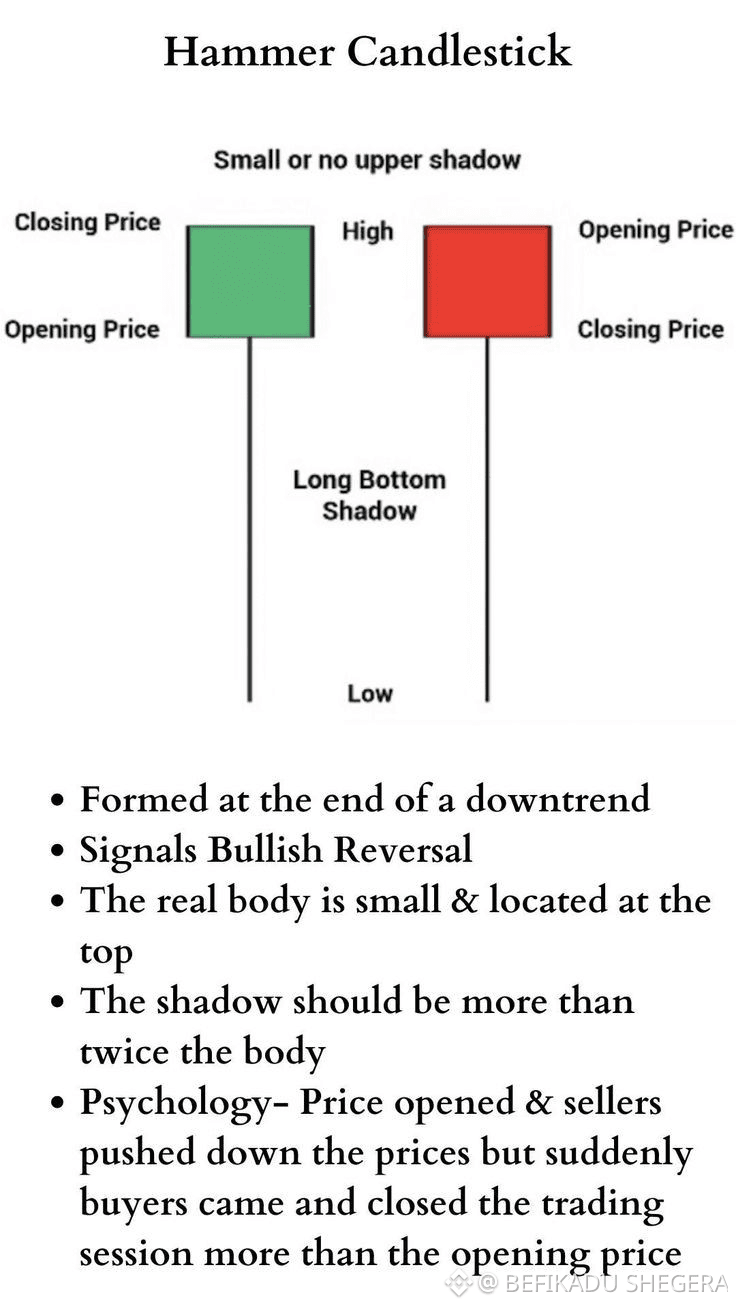
· What it looks like:
A small body at the TOP of the candle with a long wick below (2-3 times longer than the body). Looks like a hammer.
· The Story:
Sellers pushed the price way down, but BUYERS stepped in strong and slammed it back up to close near the open. It’s a potential reversal signal after a downtrend.
· The Mood: "The dip got REJECTED. Buyers are here."
2. The Doji (The Standoff)
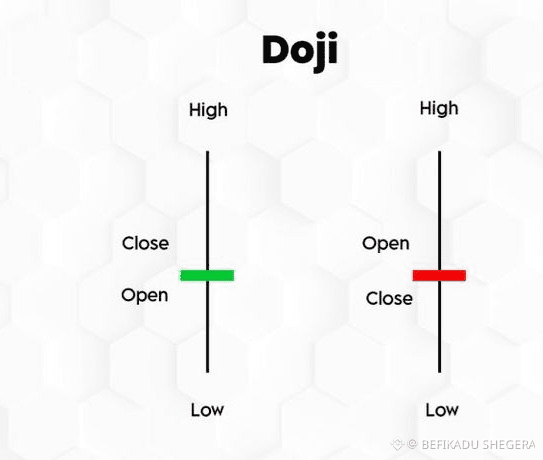
· What it looks like:
A tiny body (or a cross) with wicks on both sides. The open and close are almost identical.
· The Story:
Complete indecision. Buyers and sellers fought to a draw. After a strong trend, it signals exhaustion and a potential pause or reversal.
· The Mood: "Tug-of-war stalemate. Something's about to give."
3. The Bullish Engulfing (The Takeover)
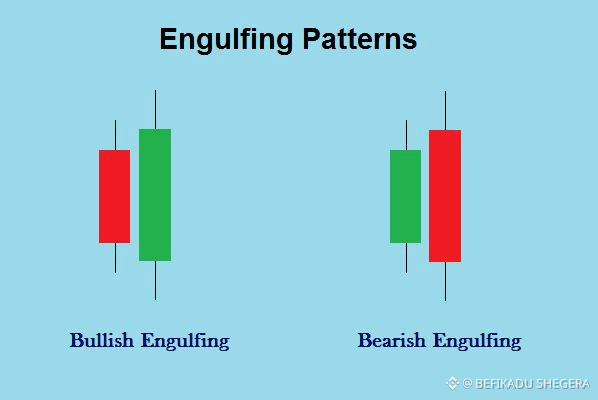
· What it looks like:
In a downtrend, a large green candle completely "engulfs" the body of the previous red candle.
· The Story:
Buying pressure overwhelmed the previous day's selling pressure. This is a strong reversal signal from down to up.
· The Mood: "Bulls just took control. The trend may be flipping."
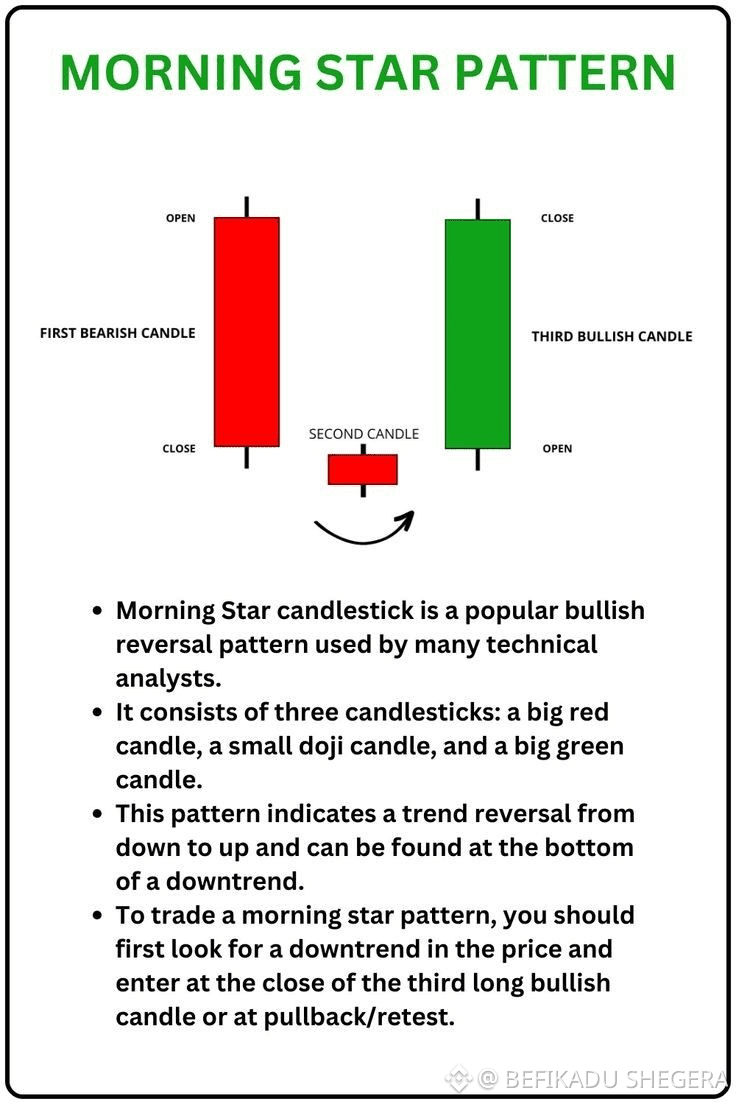
4. The Morning Star (The Dawn After the Night)
· What it looks like:
A 3-candle pattern in a downtrend: 1) A big red candle, 2) A small candle (doji or spinning top) that gaps down, 3) A big green candle that gaps up and closes into the first candle's body.
· The Story:
Selling pressure peaks, indecision follows, then buyers launch a major comeback. A very strong bullish reversal signal.
· The Mood: "The darkness is over. A new uptrend is beginning."
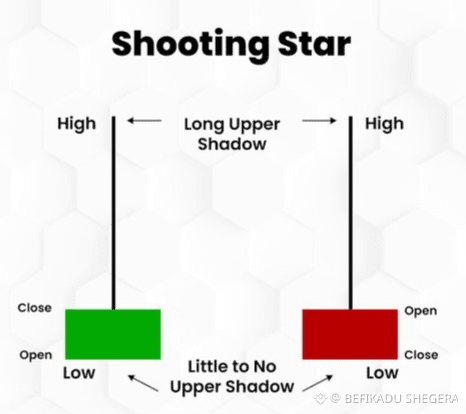
5. The Shooting Star (The Failed Rally)
· What it looks like:
The opposite of a Hammer. A small body at the BOTTOM with a long wick above. Appears after an uptrend.
· The Story:
Buyers rallied the price way up, but sellers aggressively pushed it back down to close near the open. A potential reversal signal from up to down.
· The Mood: "That rally just got shot down. Sellers are stepping in."
---
Today’s Big Takeaway: Patterns Reveal Psychology
These patterns aren't magic. They’re a visual representation of collective fear and greed. A Hammer shows fear turning into buying. A Doji shows confusion. An Engulfing pattern shows a sudden shift in power.
Your goal isn't to trade perfectly off these today. Your goal is to start seeing the market's emotional battlefield. When you look at a chart now, don't just see "up" or "down." Ask: "Is there a Hammer here showing rejection? A Doji showing exhaustion?"
This knowledge builds patience and helps you avoid buying at the very top (Shooting Star) or selling at the very bottom (Hammer).
Remember: You're not just learning charts. You're learning to read the room. And you're getting better at it every single day.
—Your Guide on the 90-Day Challenge ✨