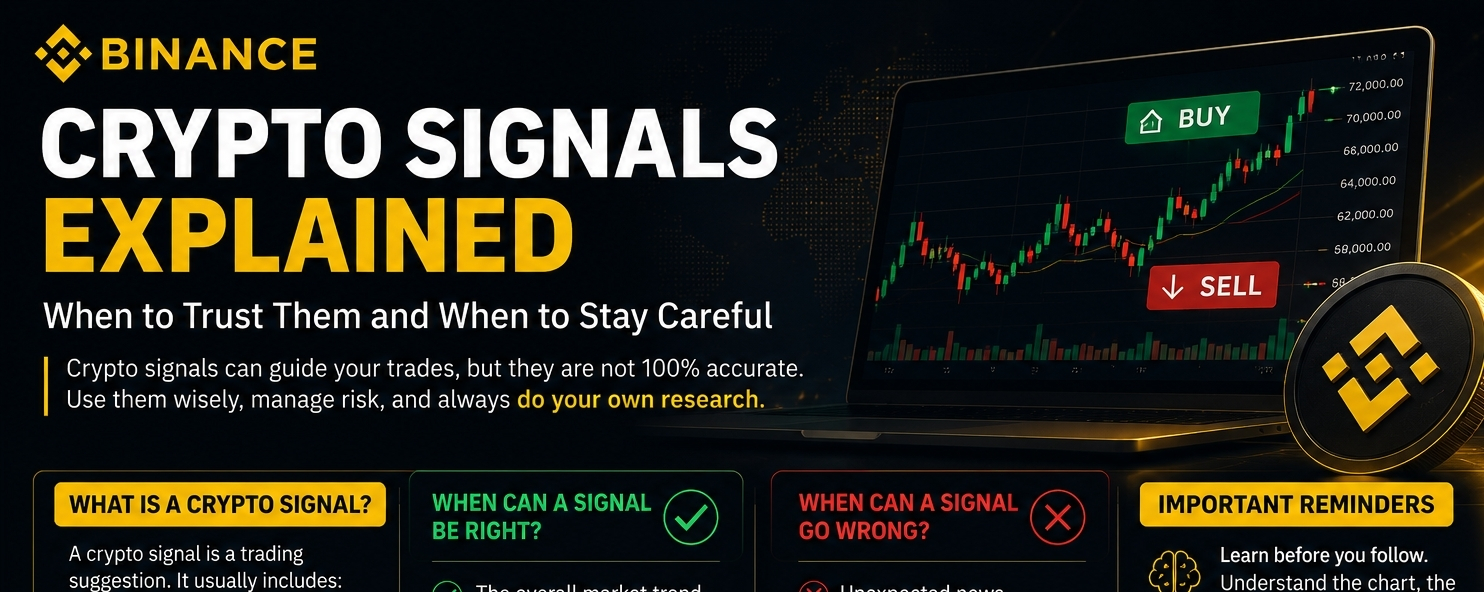
Crypto Signals Explained: When to Trust Them and When to Stay Careful
If you're new to crypto, you've probably seen people posting messages like:
📈 "BUY BTC NOW!"
🎯 "Target 1 Hit! Target 2 Coming Soon!"
🚀 "100x Gem – Don't Miss It!"
At first, crypto signals may look like an easy way to make money. But the truth is, a signal is only an idea—not a guarantee.
What Is a Crypto Signal?
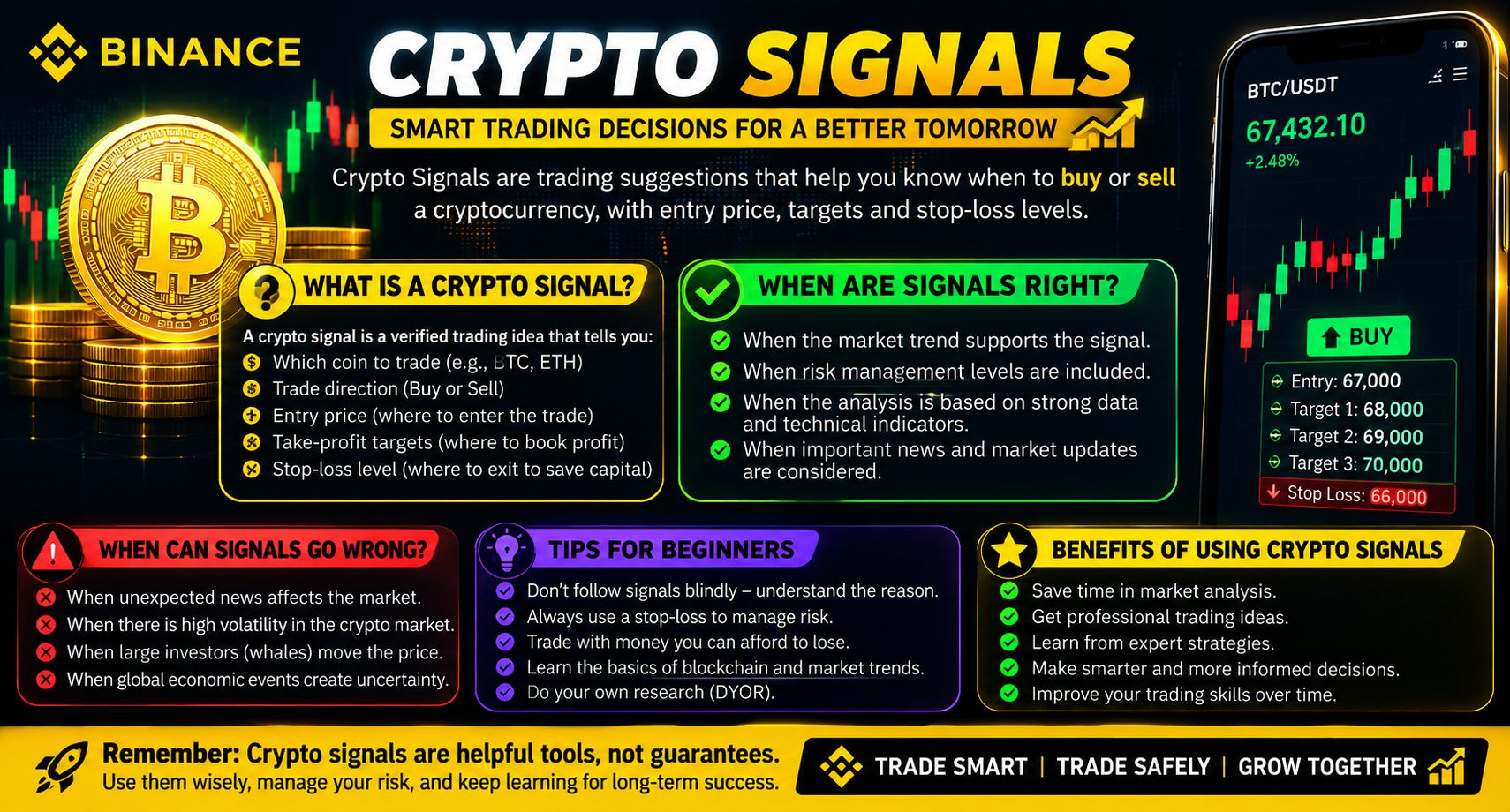
A crypto signal is a trading suggestion. It usually tells you:
Which coin to trade
Whether to Buy or Sell
The entry price
Take-profit targets
A stop-loss level
These signals are created using technical analysis, market trends, news, or a combination of different strategies.
When Can a Signal Be Right?
A signal has a better chance of working when:
✅ The overall market trend supports it.
✅ Risk management is included.
✅ The analysis is based on data instead of hype.
✅ Important news has been considered.
Even then, no one can predict the market with 100% accuracy.
When Can a Signal Go Wrong?
Crypto markets move very quickly. A good signal can fail because of:
Unexpected news
High market volatility
Large investors (whales) moving the market
Economic events affecting global markets
This is why every trader should always use a stop-loss and manage risk.
A Beginner's Mistake
Many beginners join a signal group expecting every trade to be profitable. When one trade loses, they think the signals are fake.
The reality is different.
Professional traders know that losses are part of trading. What matters is whether the overall strategy performs well over time—not whether every single trade wins.
Learn Before You Follow
Instead of copying every signal blindly, ask yourself:
Why is this trade being suggested?
What does the chart show?
Where is the stop-loss?
How much am I willing to risk?
The more you understand, the better your decisions become.
Final Thoughts
Crypto signals can be a helpful learning tool, but they should never replace your own research.
The most successful traders don't rely only on signals—they rely on knowledge, patience, discipline, and proper risk management.
Remember: In crypto, protecting your capital is just as important as making profits.
Do you use crypto signals, or do you prefer doing your own analysis?
Share your thoughts below!
#BinanceSquare #CryptoSignals #CryptoTradingoin #Ethereum #Blockchain #RiskManagement #DYOR