
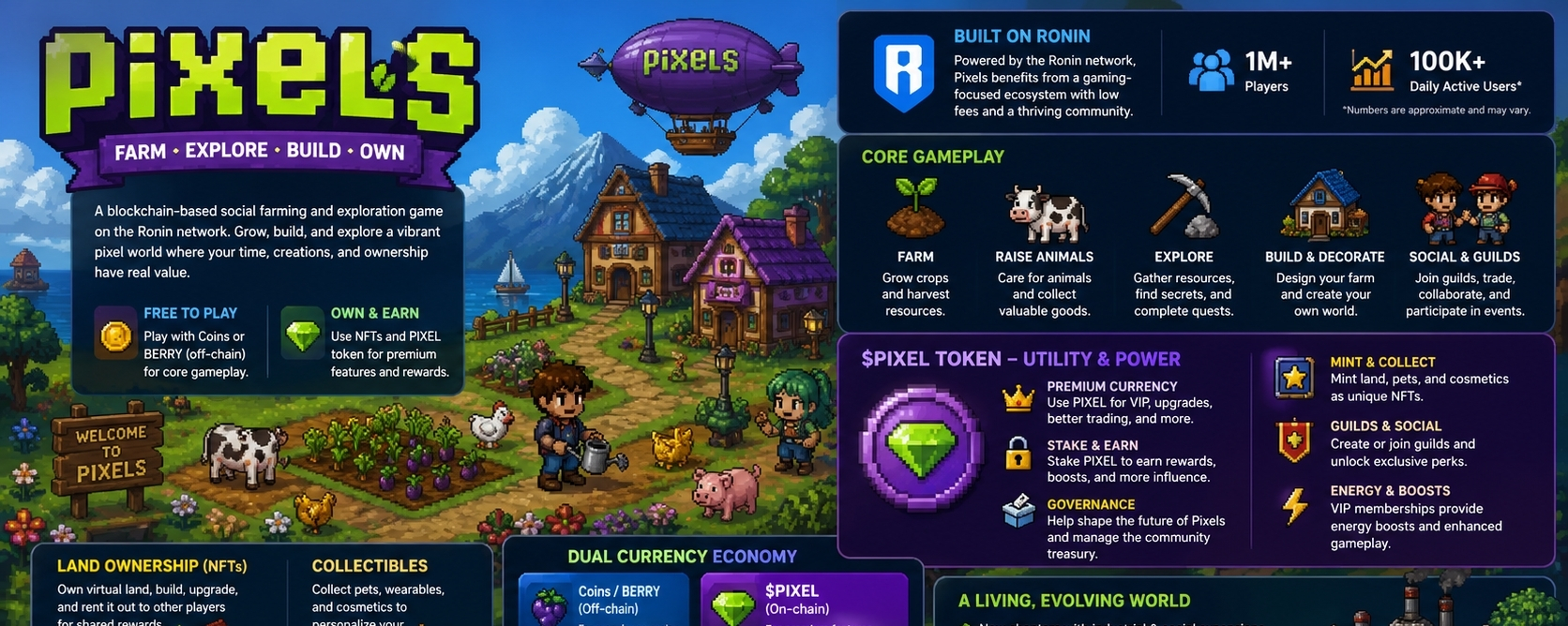


Built primarily on the Ronin network, it blends casual gameplay reminiscent of classics like Stardew Valley with elements of digital ownership through NFTs and its native token, PIXEL. Launched with the goal of making blockchain gaming accessible and fun rather than overly technical, Pixels emphasizes community, creativity, and player-driven economies.
The core experience revolves around farming, resource gathering, animal husbandry, questing, and building in an open pixel-art world. Players start with an avatar and can grow crops, raise animals, trade goods, explore the environment, and interact with others. What sets it apart is the integration of blockchain features without forcing them on newcomers. There's a free-to-play mode using an off-chain currency called Coins or BERRY for basic activities, while on-chain elements like land ownership and premium features come into play for deeper engagement.
Land plots are available as NFTs, allowing players to own virtual farmland that can be developed, upgraded, and even rented out to others for shared rewards. Pets and cosmetics also exist as collectibles. The game encourages social aspects through guilds, community events, and collaborative building. Over time, it has expanded into what developers call a platform for user-generated experiences, where players and creators can build and integrate digital collectibles more seamlessly.
At the heart of the ecosystem is the PIXEL token. It functions as a premium currency for things like minting NFTs, purchasing VIP memberships that offer energy boosts and better trading options, creating or joining guilds, and accessing exclusive perks. Staking PIXEL provides rewards, gameplay boosts, and influence over parts of the universe. The project uses a dual-currency approach to separate everyday gameplay loops from speculative elements, aiming for better long-term sustainability. PIXEL also has governance potential, with plans for holders to help manage a community treasury.
Pixels migrated to Ronin to tap into a strong gaming-focused blockchain community, which helped boost its player numbers significantly. It has been highlighted as one of the more active web3 titles by daily users, appealing to both crypto enthusiasts and those simply looking for an enjoyable farming sim with ownership twists. The team has focused on improving economics, adding new chapters with industrial and social expansions, and experimenting with additional apps and reward systems.
Like many crypto projects, Pixels has faced the typical challenges of balancing fun gameplay with rewarding mechanics. Token price volatility is present, as with most gaming tokens, and meaningful earnings often require some investment in land or VIP features. However, the free-to-play entry point remains a strength, lowering barriers compared to pay-to-win models. The project continues to iterate, with updates around staking, emissions, and cross-game integrations under initiatives like Stacked for broader rewards.
Overall, Pixels stands out for its approachable style and commitment to building a living world where what players create and own can have real value on the blockchain. It represents an ongoing effort in web3 gaming to move beyond hype toward sustainable, community-focused experiences that feel rewarding both in and out of the game. Whether you're farming for fun or diving into the token economy, it offers a relaxed yet engaging entry into blockchain-powered virtual worlds.
