
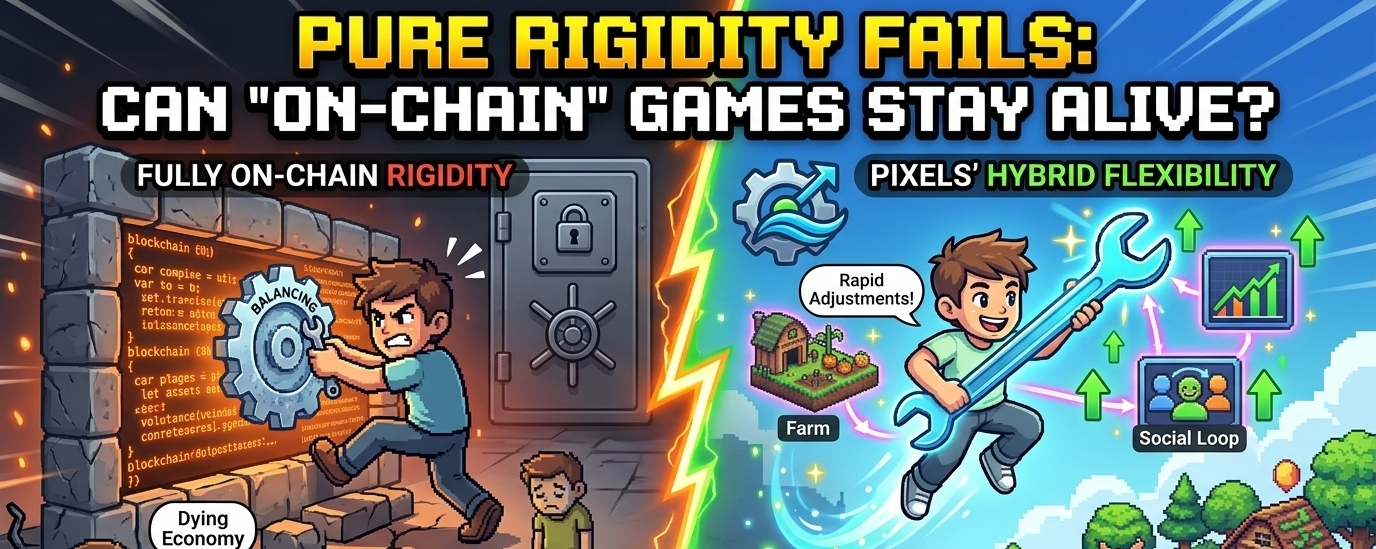
I keep wondering if a game can stay flexible when too much of it is on-chain.in theory, putting everything on-chain sounds ideal.🤷More transparency. More permanence. Less reliance on a central authority.
But I think games operate differently from most systems blockchain was designed for.
Games need to change.🤨
They need balancing, adjustments, small fixes, sometimes even complete redesigns of certain mechanics.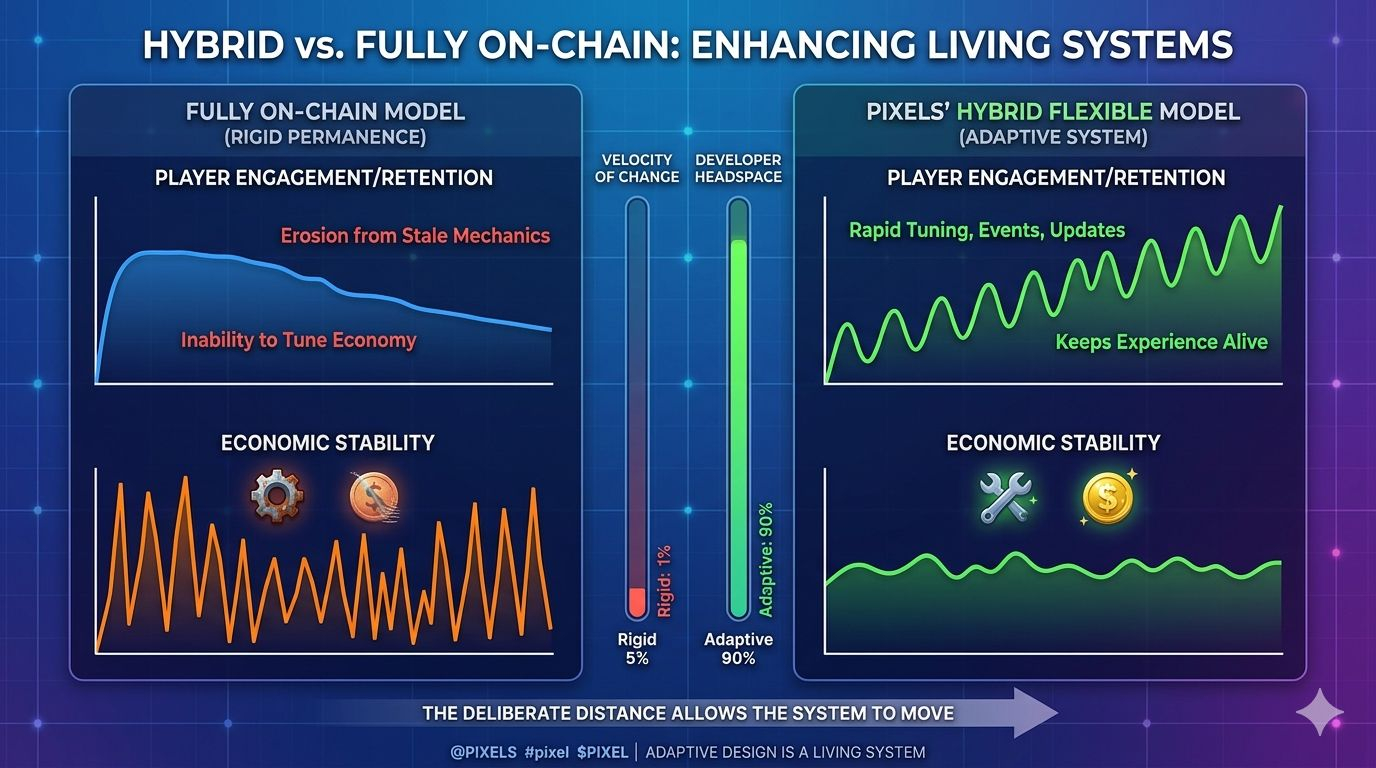 And those changes often need to happen quickly, sometimes quietly, sometimes repeatedly.
That is where I see tension.
Because the more things become permanent, the harder it is to adapt without friction. Every change starts carrying more weight. Every adjustment becomes more visible, more debated, sometimes slower.🙂
Pixels seems to be navigating that carefully.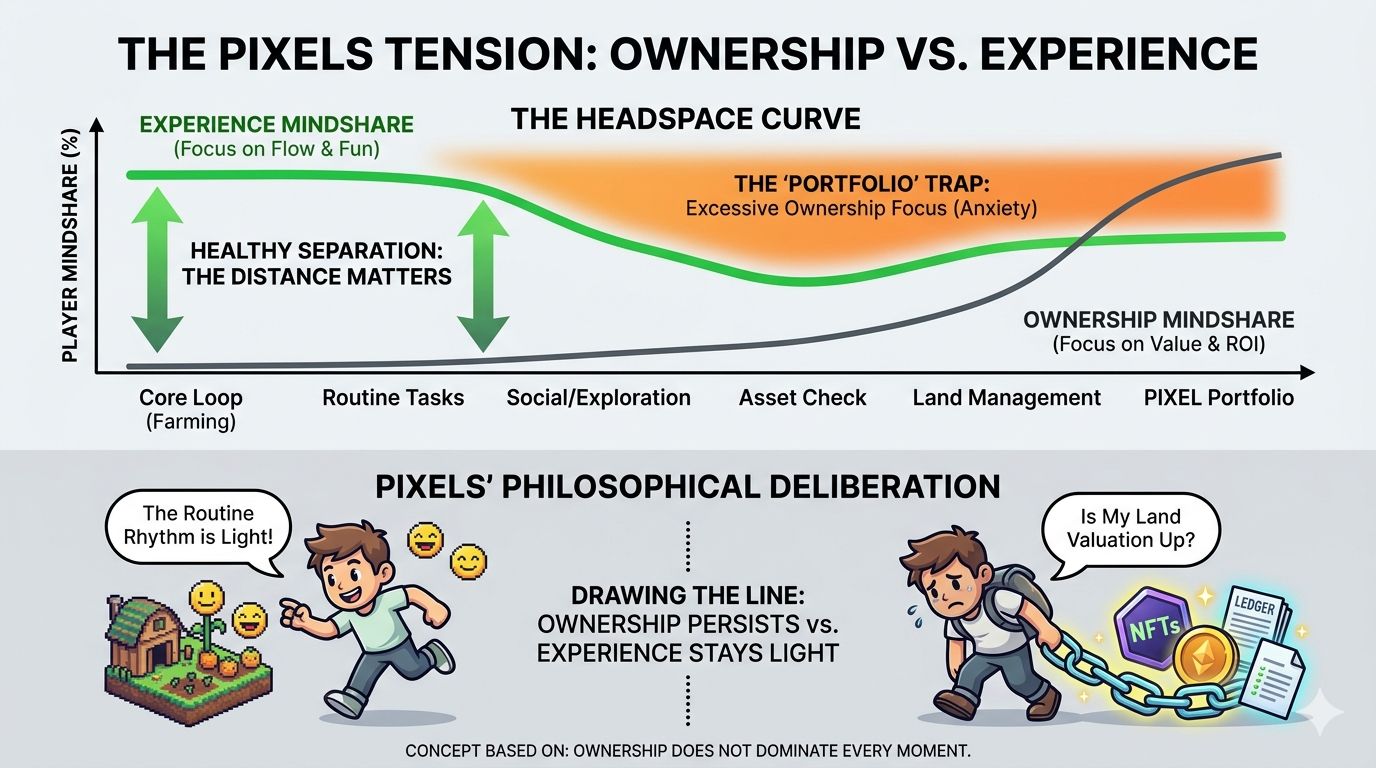
It keeps ownership-heavy elements closer to the chain, but allows much of the gameplay layer to stay flexible. That gives the system room to move, even if it means accepting some level of trust in the process.
I do not think that is a perfect solution.
But I also do not think pure rigidity works for a living game.🫶🏻
Because players will always find edges. Economies will always drift. Systems will always need tuning.
And a game that cannot respond quickly may slowly lose its ability to feel alive.🥴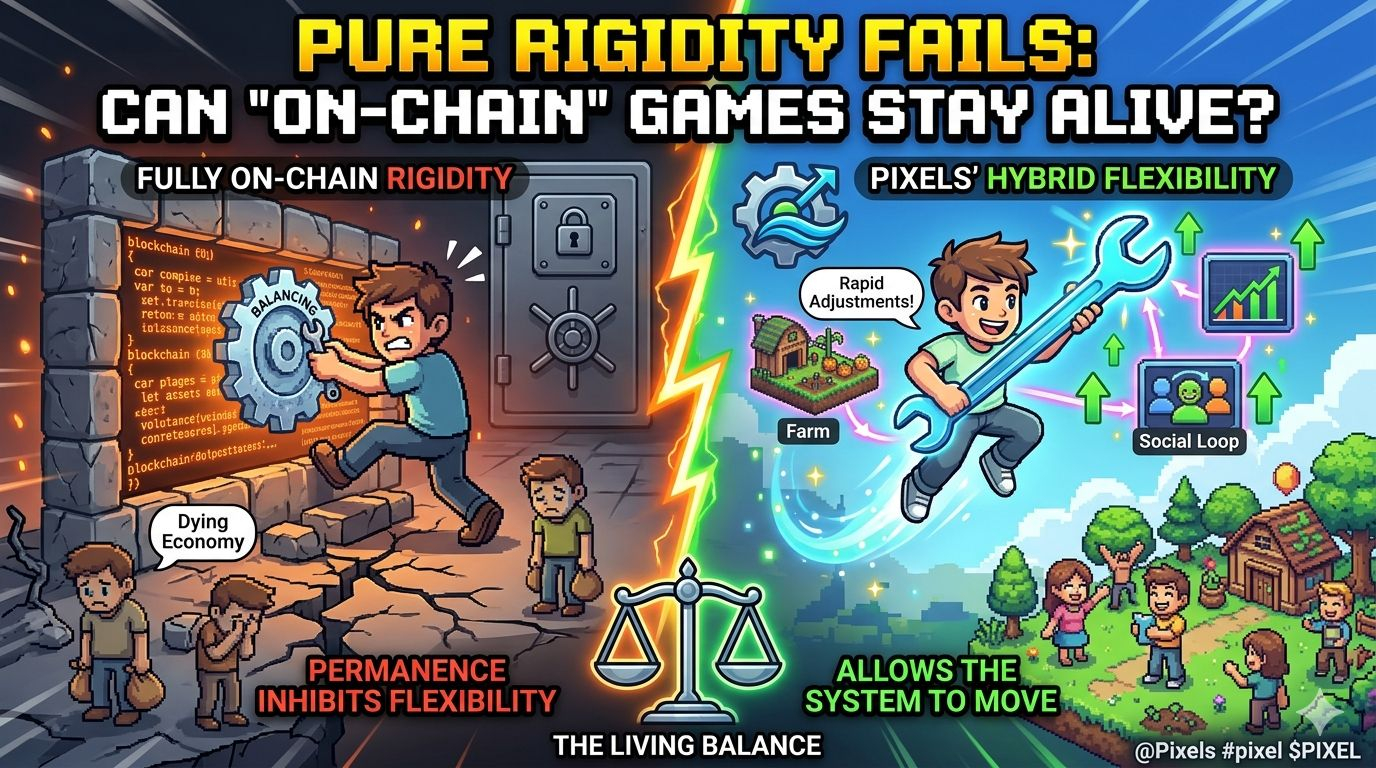
So I keep coming back to this question.Not whether everything can be on-chain…but whether a game should want that in the first place.what you think 💬 about it comment me .....