
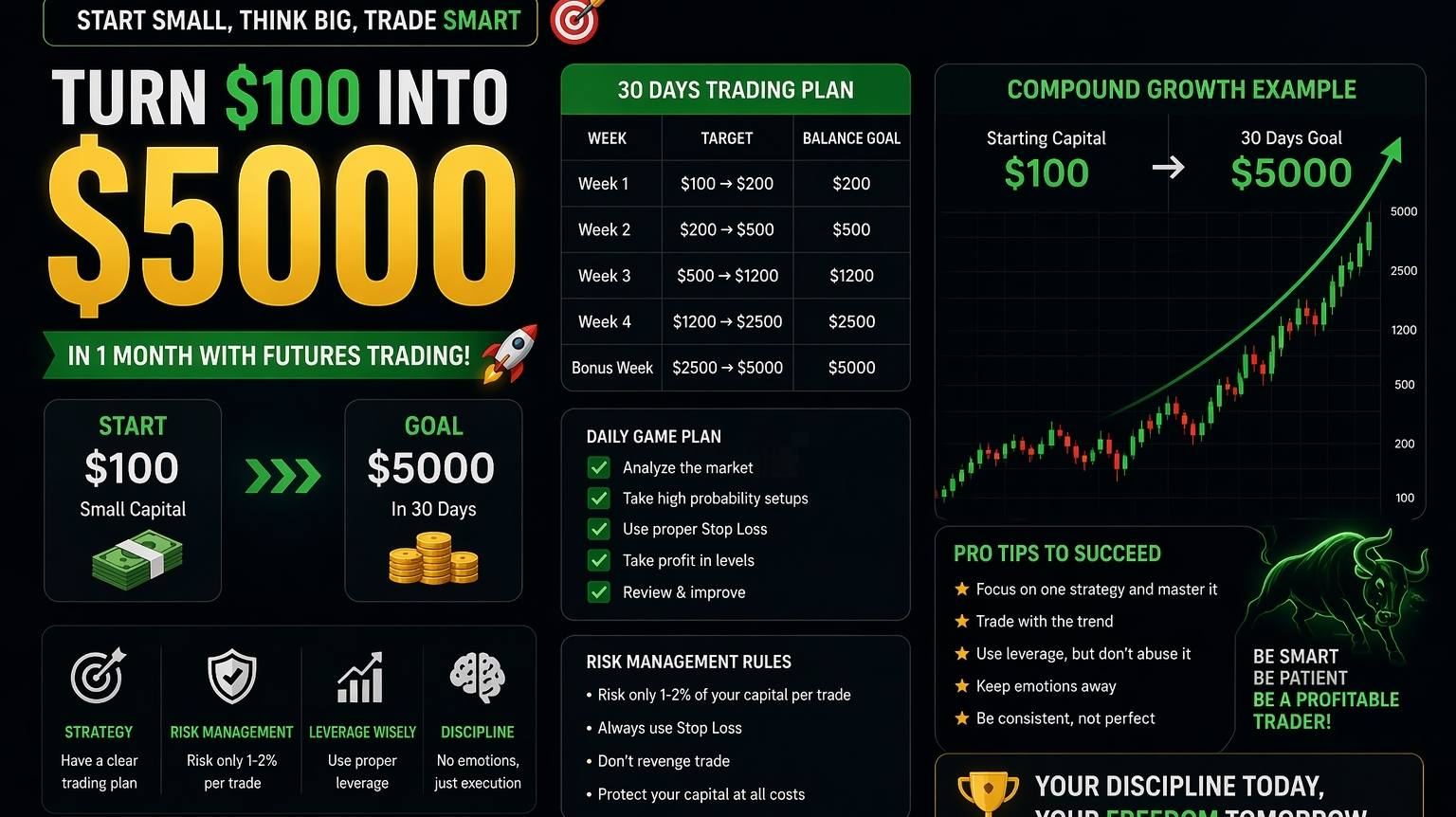
One of the most common mistakes traders make is turning $100 into $300 through futures trading, and then losing it all because of overconfidence and poor decisions. The problem isn’t the strategy — it’s the lack of discipline after making profit.
On platforms like Binance Square, many traders share signals for free. If you start with $100, reaching the first take profit is usually not that difficult. A simple trade can generate $20–$30, bringing your total to around $130. At this stage, most people get excited and start rushing into random trades. That’s where things go wrong.
Instead of rushing, the smarter approach is to slow down and repeat the same process. Verify signals, analyze chart patterns, and follow traders who have consistent accuracy. Then take another trade with the same mindset. For example, using $130 on a trade like $ZEC , targeting only the first take profit again, you might gain another $30–$50. Now your capital grows to over $200.
***1st TP is Main TP 🎯 target done, Close your trade.
This is where patience becomes powerful. When your account reaches around $200, you’ll notice that even small, controlled trades can generate $60–$70 per day. But this only works if you wait for proper setups and avoid emotional trading. Most traders fail here because they stop being patient.
The goal should be to grow steadily until you reach around $1000. Once you get there, your strategy needs to evolve. Instead of chasing small moves, you should focus on high-probability opportunities. For example, when a strong coin like $ETH makes a big upward move, it often creates a chance for a short position. With a proper stop loss and patience, you can take advantage of the pullback that usually follows a big pump.
At the beginning of such trades, it’s normal to see temporary losses, sometimes even $150–$200. This is where most traders panic and exit early. But if the analysis is correct and the risk is managed properly, the market often retraces, turning that position into a significant profit — sometimes $450 to $700 or more.
Understanding market behavior is key. After a strong upward move, the market doesn’t go up forever. It slows down, shows rejection, and eventually pulls back. Learning to recognize these moments is what separates disciplined traders from emotional ones.
In the end, trading is not about being right every time. It’s about following rules, managing risk, and staying consistent. No signal is perfect, and no strategy guarantees success. You have to decide your own entry, exit, and risk levels. $TAO
If you can learn how to take profit from different market conditions, you can become a successful trader. Otherwise, you’ll keep blaming the market instead of improving yourself.
This is not financial advice. Trade at your own risk.