

What interests me about Pixels is the idea that not every action needs to be monetized.
I think Web3 often assumes the opposite. That every loop should produce value, every routine should connect to rewards, and every action should carry some economic meaning.
I’ve become more skeptical of that over time.😅
Because when I look at systems where everything is monetized, I often feel the gameplay starts disappearing behind optimization. Players stop engaging with the world as players and start engaging with it as operators.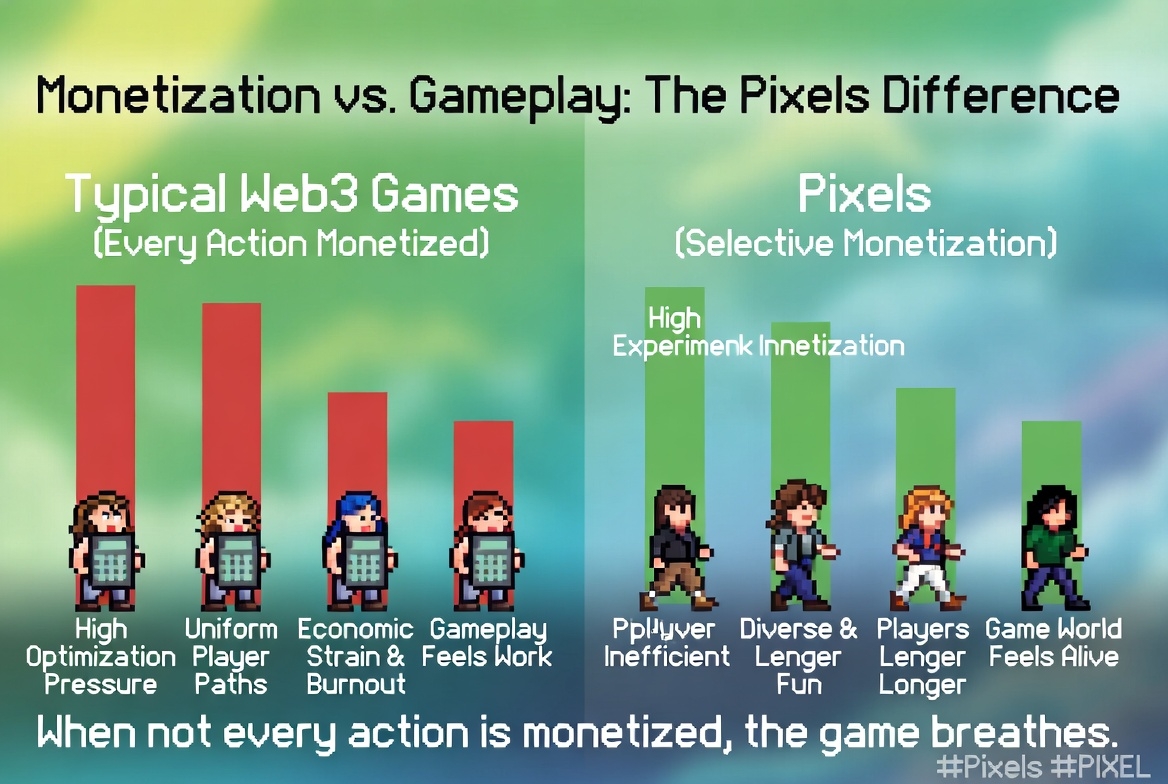
That changes the feeling of the game.
I think Pixels is interesting because it seems to resist some of that.💪
I see a design where some actions are allowed to just be part of the rhythm of play, without turning every small decision into a financial calculation. And to me, that matters more than it sounds.
Because I think when players are not pushed to extract value from every action, behavior changes.
People experiment more.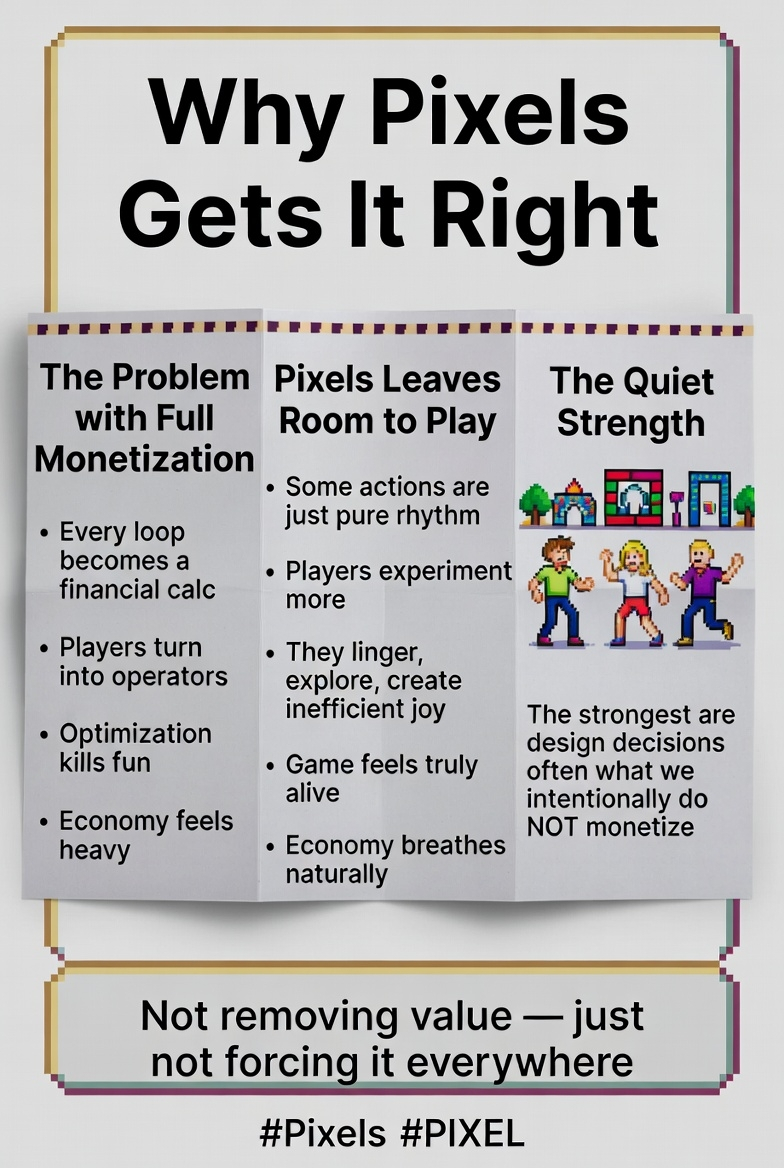
They linger longer.
They do things that are inefficient but interesting.
And I think that is often where a game starts feeling alive.
🤷 I also think this matters economically, not just experientially.
When every action is monetized, I often see behavior collapse toward optimization. Everyone moves toward the same profitable paths, and the system starts carrying pressure it was never meant to hold.
But when some things sit outside monetization, I think the economy has room to breathe.
That may be one of the quieter things Pixels is getting right.
Not by removing value…🫣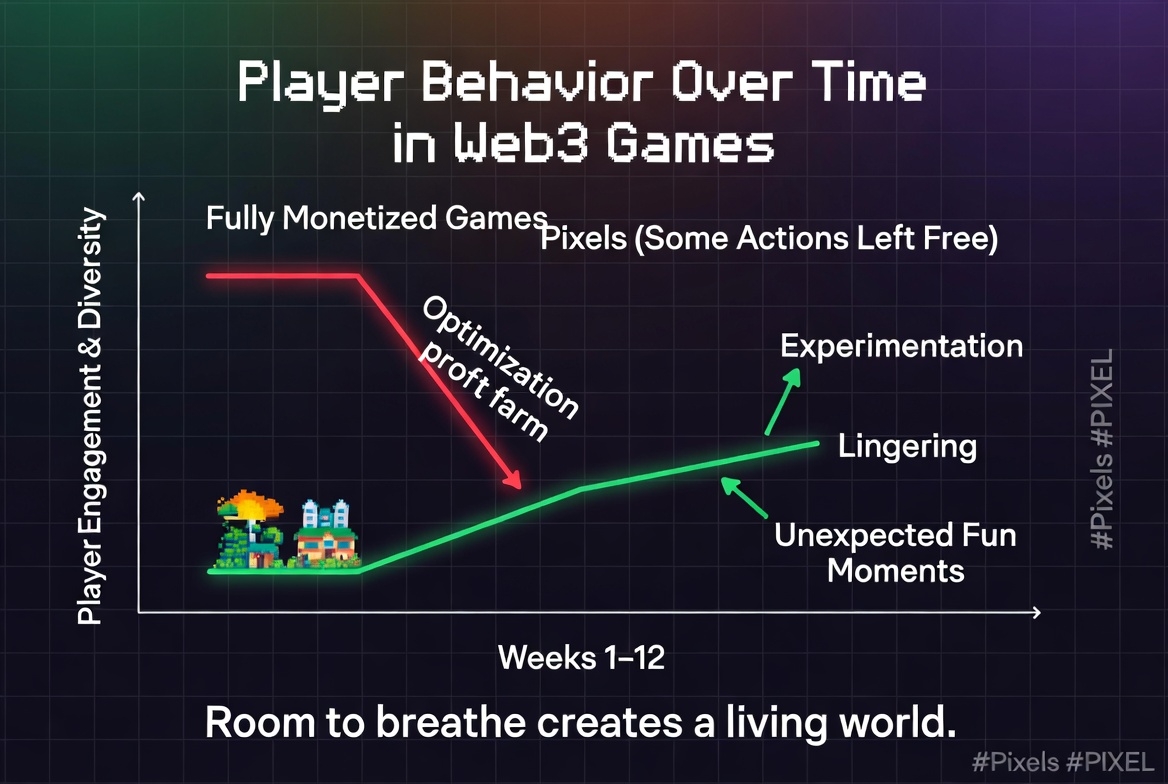
But by not asking value to explain everything.
And I keep coming back to that.
Because I’m starting to think some of the strongest game design decisions are not about what gets financialized.
but about what intentionally does not.🤔