
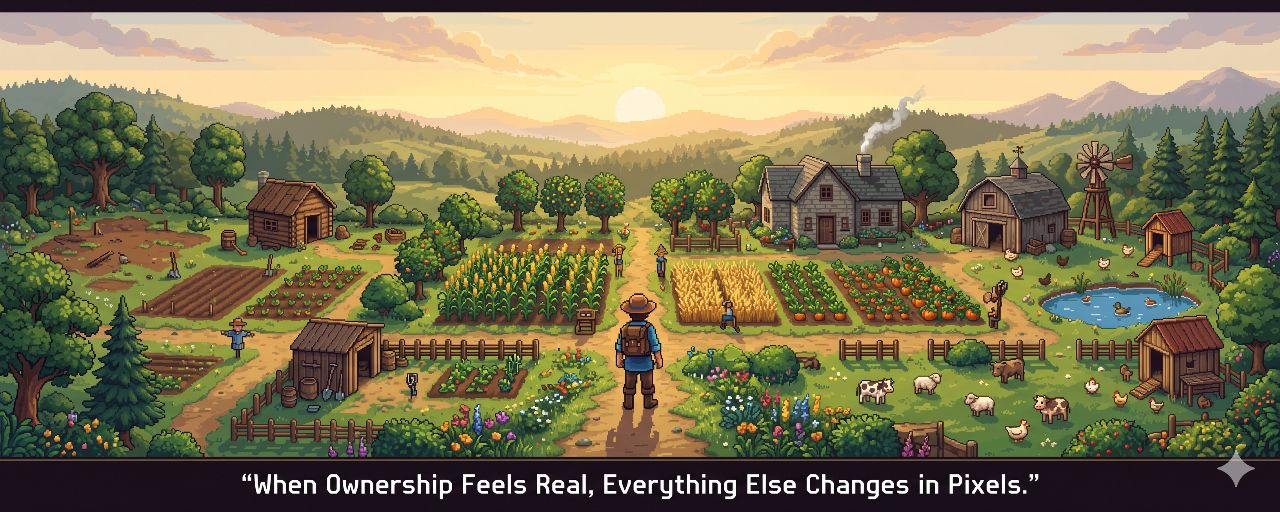
I used to think ownership in crypto games was already solved. You hold a token, maybe an NFT, and that’s it. It’s yours. That idea sounded powerful, at least on paper.
But the more I spent time in these systems, the more I realized something was missing.
Ownership existed, but it rarely felt real.
I could own assets, but they didn’t change how I behaved. I could earn tokens, but I wasn’t attached to them. Most of the time, I treated everything as temporary. Something to use, then exit. There was no real sense of connection, just access.
And that gap created a problem.
When ownership feels shallow, people act differently. They don’t build, they rotate. They don’t stay, they pass through. The system becomes a place to extract from, not something to belong to.
I have seen this pattern repeat too many times. Strong launch, fast growth, then slow detachment. Not because the system stops working, but because users never really anchor themselves inside it.
That’s where Pixels caught my attention.
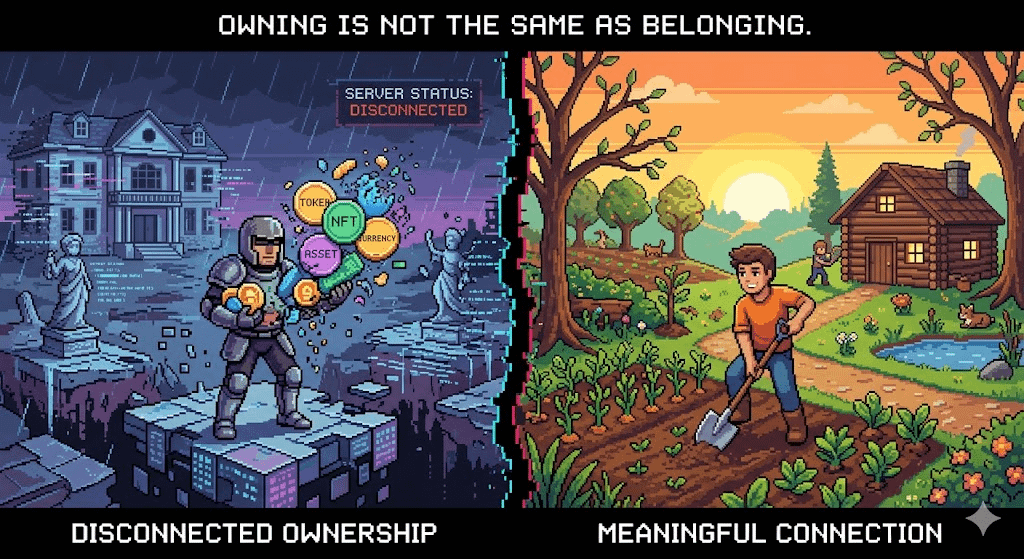
It does not try to prove ownership through technical features alone. Instead, it builds a feeling of ownership through experience. And for me, that shift is more important than it sounds.
When I spend time inside Pixels, I don’t just collect things. I start shaping a space. Farming is not just a task. It becomes something I return to. The land, the progress, even small decisions begin to feel connected to me over time.
That connection changes how I think.
I don’t rush to extract because I feel like I am part of what I am building. The value is not just in what I earn, but in what I am creating and maintaining. Even if it’s simple on the surface, it carries weight because I stayed with it.
And that’s where I see a different kind of system forming.
Instead of asking me to own something, it gives me a reason to care about it.
That might sound subtle, but I think it solves a deeper issue. Most systems cannot tell whether users are committed or just present. They treat both the same. Pixels, in its own way, starts to separate that.
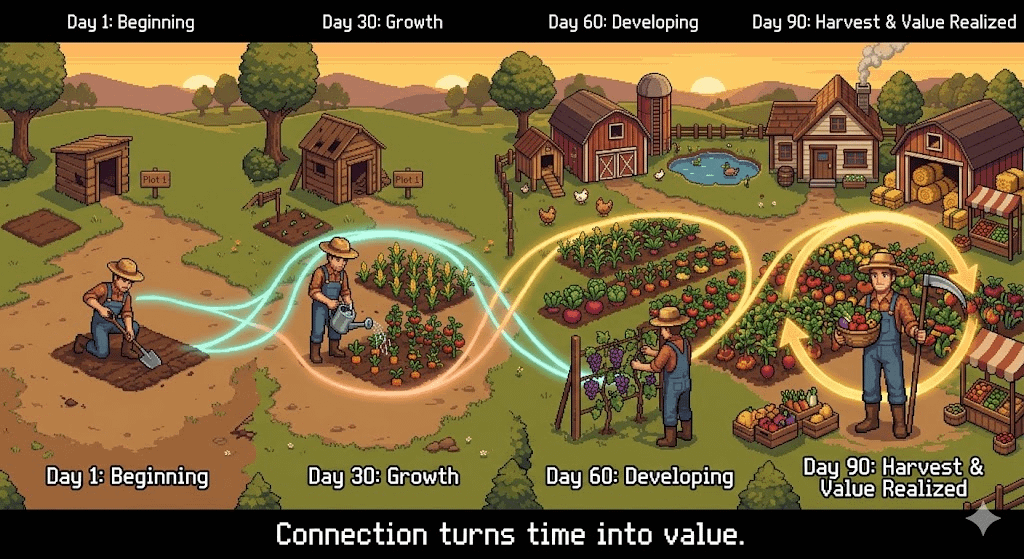
Not perfectly, but enough to matter.
Because when someone feels connected, their behavior shifts naturally. They don’t just optimize for short term gains. They think about continuity. They make decisions that stretch beyond a single session.
I notice that in myself.
I don’t log in just to collect and leave. I stay a little longer. I plan small things. I think about what I want to improve next time. It’s not intense, but it’s consistent.
That consistency builds something stronger than quick engagement.
But I also see the other side of it.
Not everyone wants that kind of attachment. Some players still move fast, still treat it as a loop to optimize. And they are not wrong. The system allows both behaviors to exist.
That creates a tension.
Pixels tries to reward presence and connection, but it cannot fully prevent extraction. And maybe it shouldn’t. Completely removing that would make the system too rigid.
So it exists in between.
A place where ownership can feel real, but only if you choose to engage with it that way.
And that choice matters more than any feature.
Because real ownership is not just about holding something. It is about how that thing changes your behavior.
If it doesn’t slow you down, if it doesn’t make you think twice before leaving, then it’s probably not as real as it looks.
Pixels gets closer to that line.
Not by forcing commitment, but by making it feel natural.
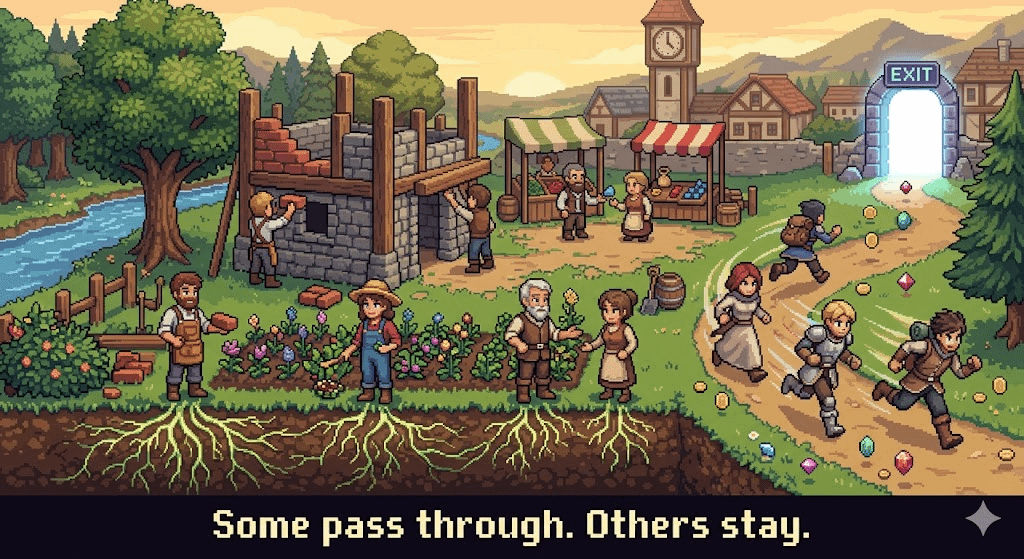
I don’t think it fully solves the problem. There are still moments where I question how deep that connection really goes. If rewards shift or attention fades, I know behavior can change again.
But it does something important.
It makes me pause before treating everything as disposable.
And that alone feels like a step forward.
Maybe the future of these systems is not about proving ownership on chain, but about making it felt in experience.
Because once ownership feels real, people stop acting like visitors.
And start acting like they belong.
