
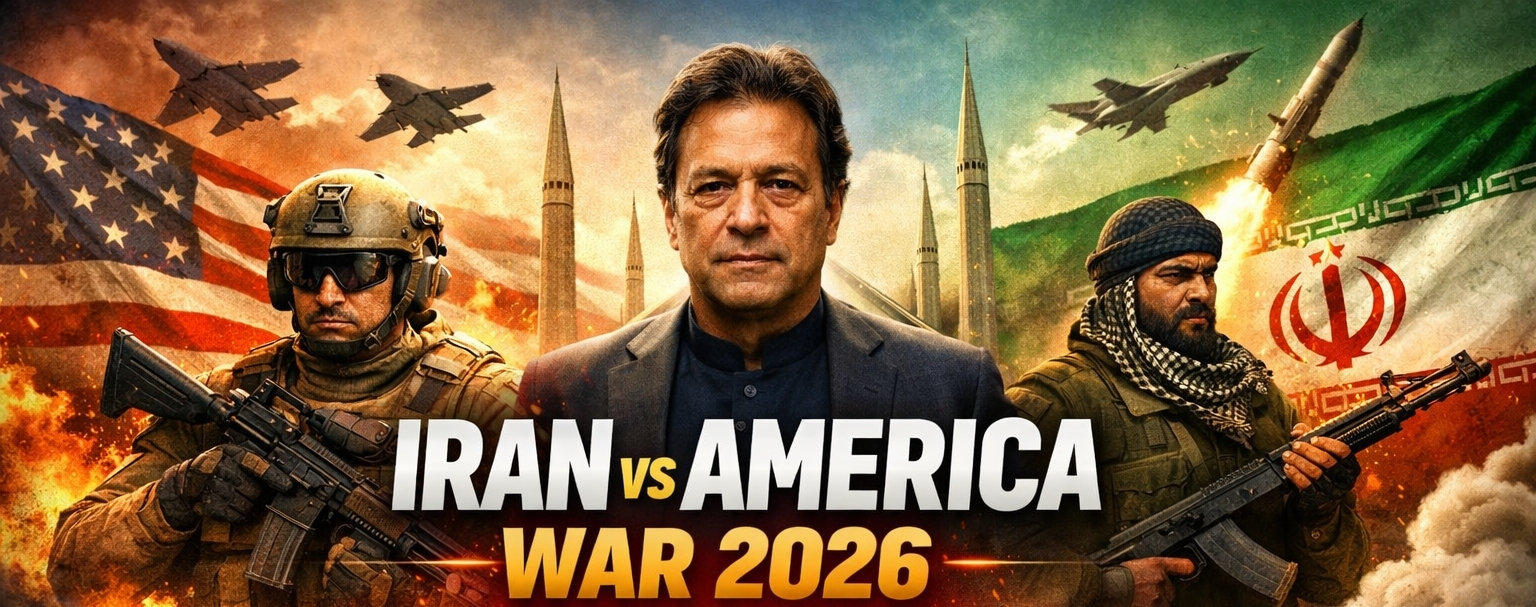
The conflict between Iran and United States has been one of the most complex geopolitical tensions in modern history. In 2026, this long-standing rivalry escalated into a serious military confrontation, raising global concerns about a wider war in the Middle East. However, amid rising tensions, Pakistan emerged as a key mediator, playing a crucial role in bringing both sides to the negotiation table.
Background of the Conflict
The roots of the Iran–America conflict go back decades, especially after the 1979 Iranian Revolution. The situation worsened over:
Iran’s nuclear program
US sanctions on Iran
Regional power struggles in the Middle East
Military alliances involving Israel and Gulf countries
In February 2026, tensions exploded into open conflict after joint US-Israel airstrikes on Iran, leading to massive retaliation by Iran through missiles and drones targeting regional interests. �
Wikipedia
This marked the beginning of a dangerous war phase with global economic and political consequences.
Escalation into War (2026)
The war intensified quickly:
Iran targeted US allies and oil routes
The US considered blocking Iran’s oil exports
Strategic areas like the Strait of Hormuz became critical
The conflict lasted for weeks, with heavy military actions and rising fear of a global crisis.
Pakistan’s Neutral but Strategic Position
Pakistan found itself in a sensitive position because:
It shares a 900 km border with Iran
It has strong ties with Saudi Arabia and the US
It needed to protect its own economic and security interests
Instead of joining the war, Pakistan chose a neutral stance and focused on diplomacy. �
Wikipedia
Pakistan’s Mediation Efforts (Compromise Role)
Pakistan played a critical diplomatic role by acting as a bridge between Iran and the United States.
Key actions by Pakistan:
Hosted peace talks in Islamabad
Engaged in shuttle diplomacy between both sides
Coordinated with regional powers like Saudi Arabia and Turkey
Persuaded both countries to agree to a temporary ceasefire
Pakistan successfully helped arrange a two-week ceasefire, giving both sides time to negotiate. �
The Indian Express
Islamabad Talks – A Historic Moment
For the first time in decades, high-level officials from Iran and the United States held direct negotiations in Islamabad. �
Axios
Highlights of the talks:
Lasted over 21 hours of intense discussions �
The Guardian
Focused on:
Nuclear program restrictions
Ceasefire agreements
Control over strategic routes
Despite serious efforts, the talks did not result in a final agreement due to major disagreements. �
The Economic Times
Why the Compromise Failed
Several key issues prevented a final deal:
Iran’s Nuclear Program
The US demanded Iran stop nuclear ambitions
Iran refused to give up its sovereignty
Control of the Strait of Hormuz
Iran wanted control over this key oil route
The US opposed this demand
Regional Influence
Both countries wanted dominance in the Middle East
Because of these differences, negotiations ended without a permanent solution. �
New York Post
Pakistan’s Achievement Despite Failure
Even though no final peace agreement was reached, Pakistan achieved several important things:
Prevented immediate escalation into a larger war
Successfully brought both enemies to the same table
Gained global recognition as a diplomatic power
Maintained balance between rival countries
Pakistan’s role was widely seen as a “major diplomatic success”, even without a final deal.
Global Impact of the Conflict
The Iran–America conflict affected the entire world:
Oil prices became unstable
Global markets experienced uncertainty
Middle East security worsened
Trade routes were at risk
The situation showed how regional conflicts can quickly become global crises.
Conclusion
The 2026 Iran–America conflict highlighted the dangers of geopolitical rivalry in the modern world. While military power dominated the battlefield, diplomacy became the only path toward peace.
Pakistan’s role as a mediator proved that even countries with limited global power can influence major international events through smart diplomacy. Although a complete compromise was not achieved, the ceasefire and negotiations prevented a larger disaster.
The future of Iran–US relations remains uncertain, but one thing is clear: dialogue, not war, is the only long-term solution.