

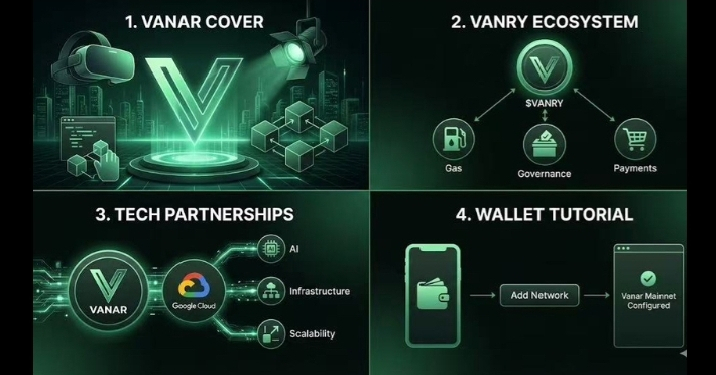
@Vanarchain is an AI-native Layer-1 blockchain, designed in such a way that applications can work not only with transactions, but also with data and intelligence.
Is Vanar Chain ($VANRY) still a “live” project? This question is a little uncomfortable, but realistic. Because we are in a market where tokens that do not move quickly, slowly try to survive by relying on narratives. However, there are some projects—working quietly, not being discussed much, but not completely shutting down either. @Vanarchain is now standing in that strange place.
First, let's look at the numbers a little more openly. In early February 2026, VANRY was trading in the range of about $0.0062 to $0.0065. The circulating supply was estimated at 2.2–2.3 billion tokens, and the market cap was roughly $13–15 million. Projects of this size have a special feature—they are not very big, but not at all micro. As a result, a decision by a large holder, a large sell or buy—can shake the chart quite well. That is, volatility here is not just a word on the chart, but a real risk.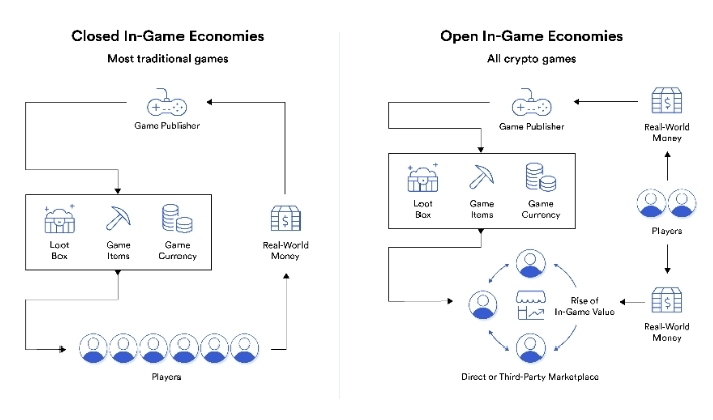
The harder truth is that around February 5, TradingView saw a low of about $0.00451. This level may seem “embarrassing” to many. But the market is not always a place of pride—sometimes such lows show how much pressure the project has withstood and is still alive. On the other hand, this is also a zone where long-term observers can also consider it a potential entry point. That is, the same data—scares someone, shows someone an opportunity.
However, it is not right to judge the future of a project only by price. The real question is: is it really alive? Or is it just floating on the charts? In the case of Vanar Chain, the team has not stopped completely. They have consistently highlighted the entertainment and gaming sectors as their main focus. Web3 gaming and interactive applications—this narrative is not new, but it still has huge potential. The problem is, the competition here is fierce. Many large funded projects are also working in this sector. As a result, it is not enough to just say “gaming focus”; actually bringing in users, retaining users—these are the areas that need to show results.
The official sources highlight the staking option, which is important for many small market cap projects. Because staking not only provides incentives, but also helps retain a part of the community long-term. However, it is also important to remember that if the staking reward is not supported by real utility, then it cannot create permanent demand even if it creates temporary holdings. So it would be a dangerous simplification to assume that staking means success.
In addition, the plans for a few offline events in the first half of 2026, such as the Hong Kong Meetup on February 10-12, indicate that the team is trying to maintain engagement at least at the community level. Sometimes we only see online hype, but offline meetups, developer events or partnership discussions are what really build the depth of the ecosystem. They may not go viral on social media, but they play a role in creating long-term network effects.
Exchange integrations, such as LBank, are mentioned in the blog. It’s not very glamorous, because we all get excited about listing on big name exchanges. But the reality is that medium or small exchange integrations also create important infrastructure. They make tokens more accessible, help reach new markets, and create opportunities to gradually increase liquidity. It’s a slow process—but sustainable ecosystems are usually built this way, not overnight.
Now let’s get to the most important part—the balance of risk and opportunity. A small market cap means that movements can be big in both directions. If user growth really comes, partnerships create real usage, and trading volume gradually stabilizes—then big returns are possible from a project of this size. If the opposite happens, that is, if development continues but users don’t grow, or volume dries up—the project may be stuck in “limbo” for a long time.
My personal observation is that @Vanarchain is no longer a hype-driven project, but an execution-dependent project. There are fewer stories of overnight price increases with big promises; rather, there are attempts to gradually build some infrastructure. Such projects are often underrated in the market, because they work regularly but are not at the center of discussion. But it’s also true—not all “silently working” projects are ultimately successful. So blind optimism is wrong, as is undue negligence.
For those who are seriously tracking $VANRY , I think three things are most important. First, on-chain activity—is user transactions really increasing, or is it just wallet silence? Second, are users really coming from partnerships, or are they just being announced? Third, trading volume—is it gradually stabilizing, or is it oscillating between spikes and drops? These three metrics often tell the truth more than any narrative.
Ultimately, Vanar Chain is now at a point where it can neither be called a complete failure, nor would it be too hasty to call it a success. It is still a “work in progress.” Low attention and small market cap—this combination is risky and promising at the same time. There is a possibility of loss if you jump in with excessive emotion, but there can also be opportunities if you observe patiently.
So let's put it simply: Look at the data, not the slogan. Look at the usage, not the hype. And most importantly—don't forget your own risk management. Because in the crypto market, it's good to have faith in a project, but blind faith is never safe. DYOR—Although this saying sounds old, in reality it is still the strongest protection.
