
#stablecoin
stablecoin
3.9M مشاهدات
17,361 يقومون بالنقاش
رائج
جديد

🚨 تقترح هيئة الأوراق المالية في تايلاند وضع حدّ يومي لتحويلات الستابل كوين عبر المحافظ الخاصة يبلغ 151 ألف دولار 🧠
📊 | $BTC | $ETH | $BNB |
- يُرجى المتابعة والإعجاب والتعليق ومشاركة رأيك 📈
- تقترح هيئة تنظيم الأوراق المالية في تايلاند (SEC) وضع حدّ أقصى يومي قدره 151,000 دولار للتحويلات باستخدام الستابل كوين في المحافظ الخاصة.
- تهدف هذه المبادرة إلى الحد من غسل الأموال والمخاطر النظامية، وتعزيز الشفافية التنظيمية.
- الموعد النهائي لجمع الآراء العامة هو 25 سبتمبر، وفي ذلك الوقت سيتم تحديد ما إذا كان سيتم تطبيق الاقتراح رسميًا. 🔥
- إذا تمت الموافقة على الحدّ، فقد يحدّ من تدفّق الستابل كوين بصفقات كبيرة، وقد تميل أحجام التداول في المدى القصير إلى الاستقرار.
- بالنسبة لحسابات الحيتان التي تمتلك كميات كبيرة من الستابل كوين، يُتوقع أن تُقيّد تحويلاتهم، ما يؤدي إلى تعديل المراكز.
- إذا استجاب السوق بشكل إيجابي لتعزيز التنظيم، فقد يعزّز ذلك الثقة العامة في الأصول الرقمية في تايلاند.
- على المدى القصير، وبسبب تأثير الحدّ، يُتوقع أن تكون تقلبات أسعار أزواج التداول المعنية محدودة، وستظل حركة السوق في نطاق عرضي.
- برأيك، ما التأثير طويل الأمد لهذا الحد على نظام الستابل كوين البيئي في تايلاند؟
- نرحب بمتابعتنا للحصول على مزيد من التحليلات العميقة لسوق العملات المشفرة وترك وجهة نظرك.
#Crypto #Stablecoin #Regulation #Whales #Trading
🚨 تقترح هيئة الأوراق المالية في تايلاند وضع حدّ يومي لتحويلات الستابل كوين عبر المحافظ الخاصة يبلغ 151 ألف دولار 🧠
📊 | $BTC | $ETH | $BNB |
- يُرجى المتابعة والإعجاب والتعليق ومشاركة رأيك 📈
- تقترح هيئة تنظيم الأوراق المالية في تايلاند (SEC) وضع حدّ أقصى يومي قدره 151,000 دولار للتحويلات باستخدام الستابل كوين في المحافظ الخاصة.
- تهدف هذه المبادرة إلى الحد من غسل الأموال والمخاطر النظامية، وتعزيز الشفافية التنظيمية.
- الموعد النهائي لجمع الآراء العامة هو 25 سبتمبر، وفي ذلك الوقت سيتم تحديد ما إذا كان سيتم تطبيق الاقتراح رسميًا. 🔥
- إذا تمت الموافقة على الحدّ، فقد يحدّ من تدفّق الستابل كوين بصفقات كبيرة، وقد تميل أحجام التداول في المدى القصير إلى الاستقرار.
- بالنسبة لحسابات الحيتان التي تمتلك كميات كبيرة من الستابل كوين، يُتوقع أن تُقيّد تحويلاتهم، ما يؤدي إلى تعديل المراكز.
- إذا استجاب السوق بشكل إيجابي لتعزيز التنظيم، فقد يعزّز ذلك الثقة العامة في الأصول الرقمية في تايلاند.
- على المدى القصير، وبسبب تأثير الحدّ، يُتوقع أن تكون تقلبات أسعار أزواج التداول المعنية محدودة، وستظل حركة السوق في نطاق عرضي.
- برأيك، ما التأثير طويل الأمد لهذا الحد على نظام الستابل كوين البيئي في تايلاند؟
- نرحب بمتابعتنا للحصول على مزيد من التحليلات العميقة لسوق العملات المشفرة وترك وجهة نظرك.
#Crypto #Stablecoin #Regulation #Whales #Trading
📊 | $BTC | $ETH | $BNB |
- يُرجى المتابعة والإعجاب والتعليق ومشاركة رأيك 📈
- تقترح هيئة تنظيم الأوراق المالية في تايلاند (SEC) وضع حدّ أقصى يومي قدره 151,000 دولار للتحويلات باستخدام الستابل كوين في المحافظ الخاصة.
- تهدف هذه المبادرة إلى الحد من غسل الأموال والمخاطر النظامية، وتعزيز الشفافية التنظيمية.
- الموعد النهائي لجمع الآراء العامة هو 25 سبتمبر، وفي ذلك الوقت سيتم تحديد ما إذا كان سيتم تطبيق الاقتراح رسميًا. 🔥
- إذا تمت الموافقة على الحدّ، فقد يحدّ من تدفّق الستابل كوين بصفقات كبيرة، وقد تميل أحجام التداول في المدى القصير إلى الاستقرار.
- بالنسبة لحسابات الحيتان التي تمتلك كميات كبيرة من الستابل كوين، يُتوقع أن تُقيّد تحويلاتهم، ما يؤدي إلى تعديل المراكز.
- إذا استجاب السوق بشكل إيجابي لتعزيز التنظيم، فقد يعزّز ذلك الثقة العامة في الأصول الرقمية في تايلاند.
- على المدى القصير، وبسبب تأثير الحدّ، يُتوقع أن تكون تقلبات أسعار أزواج التداول المعنية محدودة، وستظل حركة السوق في نطاق عرضي.
- برأيك، ما التأثير طويل الأمد لهذا الحد على نظام الستابل كوين البيئي في تايلاند؟
- نرحب بمتابعتنا للحصول على مزيد من التحليلات العميقة لسوق العملات المشفرة وترك وجهة نظرك.
#Crypto #Stablecoin #Regulation #Whales #Trading
218

·
--
عرض الترجمة
乌兹别克斯坦搞了个大动作!政府直接支持稳定币HUMO,已经和20多家商户开始测试支付了,央行亲自监督!这可是国家背书的稳定币啊,意味着加密货币正在被国家层面试水和认可!稳定币市场要起飞了,$HUMO直接受益,其他稳定币如$USDT也可能跟着涨。政府支持的数字货币越来越多,加密货币走向主流的速度比我们想象得快!#stablecoin #CBDC
乌兹别克斯坦搞了个大动作!政府直接支持稳定币HUMO,已经和20多家商户开始测试支付了,央行亲自监督!这可是国家背书的稳定币啊,意味着加密货币正在被国家层面试水和认可!稳定币市场要起飞了,$HUMO直接受益,其他稳定币如$USDT也可能跟着涨。政府支持的数字货币越来越多,加密货币走向主流的速度比我们想象得快!#stablecoin #CBDC
1
·
--
عرض الترجمة
震惊!链上经济美元和欧元竟然存在300:1的差距,而线下只有3:1!欧元稳定币占比不到1%,这差距也太离谱了。好在欧洲MiCA监管正在发力,欧元DeFi基础设施也在逐步完善。未来欧元稳定币市场潜力巨大,可能会迎来爆发式增长,美元主导地位或许会受到挑战。多元化稳定币组合将成为趋势,关注欧元区DeFi项目机会!
#DeFi #Stablecoin $EURS $USDC
震惊!链上经济美元和欧元竟然存在300:1的差距,而线下只有3:1!欧元稳定币占比不到1%,这差距也太离谱了。好在欧洲MiCA监管正在发力,欧元DeFi基础设施也在逐步完善。未来欧元稳定币市场潜力巨大,可能会迎来爆发式增长,美元主导地位或许会受到挑战。多元化稳定币组合将成为趋势,关注欧元区DeFi项目机会!
#DeFi #Stablecoin $EURS $USDC
#DeFi #Stablecoin $EURS $USDC
7
🚨 سيحدّ مقترح عملة مستقرة في تايلاند من التحويل إلى محافظ الآخرين 🧠
📊 | $BTC | $ETH | $BNB |
- يُرجى المتابعة والإعجاب والتعليق ومشاركة رأيك 📈
- تقترح الجهات التنظيمية في تايلاند قواعد للـعملات المستقرة، حيث يُطلب من الشركات المشفّرة المرخّصة فقط إجراء عمليات الإيداع والسحب بين الحسابات بعد التحقق من هوية العميل نفسه.
- يحظر هذا المقترح على المستخدمين تحويل الأموال إلى محافظ الآخرين، بهدف منع غسل الأموال والتحايل على الرقابة.
- تنطبق القواعد على جميع مزوّدي خدمات الأصول المشفّرة الحاصلين على ترخيص في تايلاند.
- في حال تطبيقه، فقد يؤثر ذلك على سيناريوهات المدفوعات عبر الحدود واستخدام العملات المحلية المستقرة. 🔥
- في الأجل القصير، قد يظل رد فعل السوق تجاه هذا المقترح في وضع المراقبة، ومن المتوقع أن يتحرك السعر بشكل جانبي.
- إذا تم فرض الرقابة بشكل صارم، فقد يؤدي ذلك إلى تحويل بعض الأموال إلى منصات خارجية أو استخدام محافظ مجهولة.
- أنشطة تحويلات الحيتان الكبيرة ما تزال محايدة حاليًا، دون ظهور تقلبات ملحوظة.
- إذا تأخر المقترح أو تم تعديله، فقد تتحسن معنويات السوق، ما يدفع الرموز ذات الصلة إلى ارتفاع طفيف.
- برأيك، هل ستحدّ إجراءات التنظيم هذه من الابتكار في مجال العملات المشفّرة في تايلاند؟ نرحب بالنقاش.
- تابعنا للحصول على المزيد من التحليلات المتعمقة لسوق العملات المشفّرة، ونتطلع إلى تعليقاتك.
- #Crypto #Stablecoin #Regulation #Whales #Market
🚨 سيحدّ مقترح عملة مستقرة في تايلاند من التحويل إلى محافظ الآخرين 🧠
📊 | $BTC | $ETH | $BNB |
- يُرجى المتابعة والإعجاب والتعليق ومشاركة رأيك 📈
- تقترح الجهات التنظيمية في تايلاند قواعد للـعملات المستقرة، حيث يُطلب من الشركات المشفّرة المرخّصة فقط إجراء عمليات الإيداع والسحب بين الحسابات بعد التحقق من هوية العميل نفسه.
- يحظر هذا المقترح على المستخدمين تحويل الأموال إلى محافظ الآخرين، بهدف منع غسل الأموال والتحايل على الرقابة.
- تنطبق القواعد على جميع مزوّدي خدمات الأصول المشفّرة الحاصلين على ترخيص في تايلاند.
- في حال تطبيقه، فقد يؤثر ذلك على سيناريوهات المدفوعات عبر الحدود واستخدام العملات المحلية المستقرة. 🔥
- في الأجل القصير، قد يظل رد فعل السوق تجاه هذا المقترح في وضع المراقبة، ومن المتوقع أن يتحرك السعر بشكل جانبي.
- إذا تم فرض الرقابة بشكل صارم، فقد يؤدي ذلك إلى تحويل بعض الأموال إلى منصات خارجية أو استخدام محافظ مجهولة.
- أنشطة تحويلات الحيتان الكبيرة ما تزال محايدة حاليًا، دون ظهور تقلبات ملحوظة.
- إذا تأخر المقترح أو تم تعديله، فقد تتحسن معنويات السوق، ما يدفع الرموز ذات الصلة إلى ارتفاع طفيف.
- برأيك، هل ستحدّ إجراءات التنظيم هذه من الابتكار في مجال العملات المشفّرة في تايلاند؟ نرحب بالنقاش.
- تابعنا للحصول على المزيد من التحليلات المتعمقة لسوق العملات المشفّرة، ونتطلع إلى تعليقاتك.
- #Crypto #Stablecoin #Regulation #Whales #Market
📊 | $BTC | $ETH | $BNB |
- يُرجى المتابعة والإعجاب والتعليق ومشاركة رأيك 📈
- تقترح الجهات التنظيمية في تايلاند قواعد للـعملات المستقرة، حيث يُطلب من الشركات المشفّرة المرخّصة فقط إجراء عمليات الإيداع والسحب بين الحسابات بعد التحقق من هوية العميل نفسه.
- يحظر هذا المقترح على المستخدمين تحويل الأموال إلى محافظ الآخرين، بهدف منع غسل الأموال والتحايل على الرقابة.
- تنطبق القواعد على جميع مزوّدي خدمات الأصول المشفّرة الحاصلين على ترخيص في تايلاند.
- في حال تطبيقه، فقد يؤثر ذلك على سيناريوهات المدفوعات عبر الحدود واستخدام العملات المحلية المستقرة. 🔥
- في الأجل القصير، قد يظل رد فعل السوق تجاه هذا المقترح في وضع المراقبة، ومن المتوقع أن يتحرك السعر بشكل جانبي.
- إذا تم فرض الرقابة بشكل صارم، فقد يؤدي ذلك إلى تحويل بعض الأموال إلى منصات خارجية أو استخدام محافظ مجهولة.
- أنشطة تحويلات الحيتان الكبيرة ما تزال محايدة حاليًا، دون ظهور تقلبات ملحوظة.
- إذا تأخر المقترح أو تم تعديله، فقد تتحسن معنويات السوق، ما يدفع الرموز ذات الصلة إلى ارتفاع طفيف.
- برأيك، هل ستحدّ إجراءات التنظيم هذه من الابتكار في مجال العملات المشفّرة في تايلاند؟ نرحب بالنقاش.
- تابعنا للحصول على المزيد من التحليلات المتعمقة لسوق العملات المشفّرة، ونتطلع إلى تعليقاتك.
- #Crypto #Stablecoin #Regulation #Whales #Market
1
80

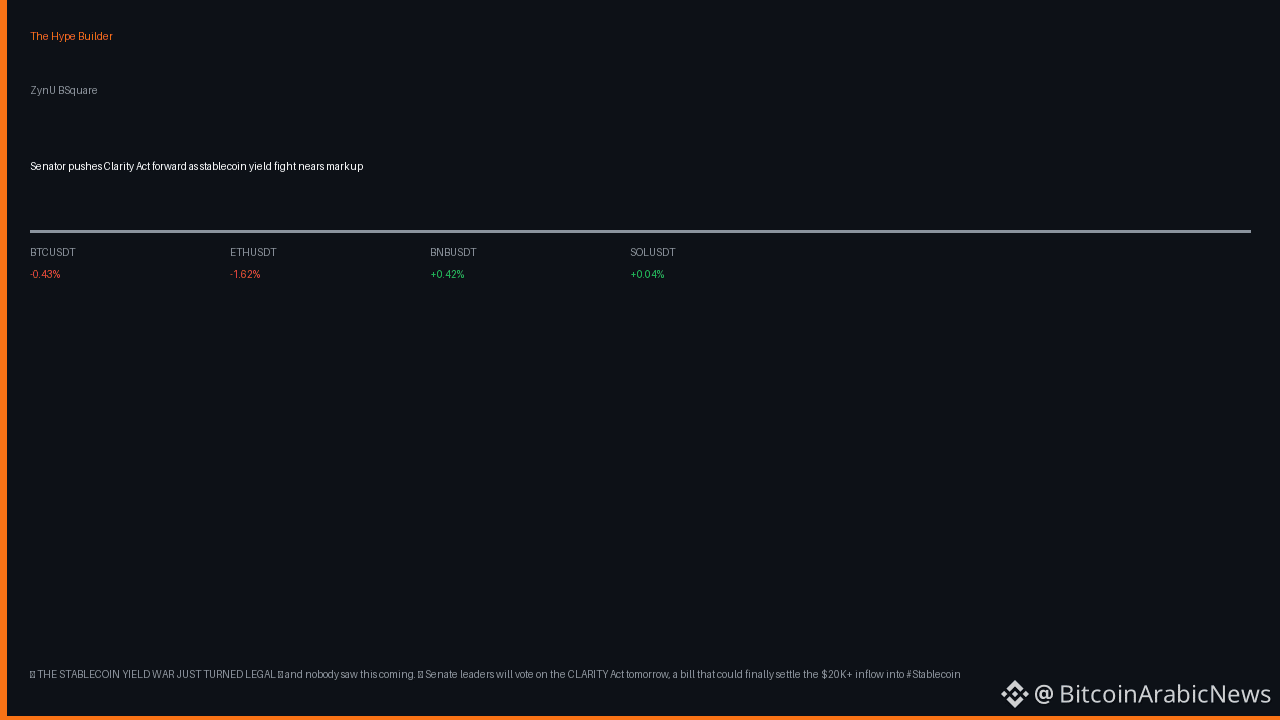
🔥 حرب عوائد الستابلكوين “استقرّت” للتو وأصبحت قانونية – ولم يتوقع أحد ذلك.
📊 سيصوّت قادة مجلس الشيوخ غدًا على قانون CLARITY، وهو مشروع قد يحسم أخيرًا التدفقات الداخلة البالغة 20 ألف دولار+ إلى #Stablecoin narratives بينما تعصف أسواق العملات الرقمية بالـ Greed بمؤشر جشع قيمته 63. وفي الوقت نفسه، يتأرجح سعر البيتكوين BTC حول 77,211$ بحجم تداول 24 ساعة يبلغ 738 مليون$ ومع تقاطع MACD صعودي، بينما تستقر الإيثيريوم ETH عند 2,526$ وRSI قيمته 56.9، وهو أيضًا صعودي. الأموال الذكية تتجه بالفعل إلى #SOL، حيث أضافت ثلاث محافظ مكسبًا إجماليًا على السلسلة بنسبة +5.44%، ما يشير إلى هجرة محتملة كبيرة قادمة.
💡 إذا قيّد القانون عوائد الستابلكوين، فسيتجه المتداولون إلى أصول ذات عوائد أعلى—وتوقع أن ترتفع #BNB at بسعر 731$ و #SOL at بسعر 102$ مع مطاردة السيولة للعائد في أماكن أخرى، وربما إشعال موجة صعود جديدة عبر العملات البديلة.
❓ هل تتمركز لتستفيد من اختراق ما بعد CLARITY أم تنتظر أن يواصل السوق التراجع/الهبوط تدريجيًا؟
🔥 حرب عوائد الستابلكوين “استقرّت” للتو وأصبحت قانونية – ولم يتوقع أحد ذلك.
📊 سيصوّت قادة مجلس الشيوخ غدًا على قانون CLARITY، وهو مشروع قد يحسم أخيرًا التدفقات الداخلة البالغة 20 ألف دولار+ إلى #Stablecoin narratives بينما تعصف أسواق العملات الرقمية بالـ Greed بمؤشر جشع قيمته 63. وفي الوقت نفسه، يتأرجح سعر البيتكوين BTC حول 77,211$ بحجم تداول 24 ساعة يبلغ 738 مليون$ ومع تقاطع MACD صعودي، بينما تستقر الإيثيريوم ETH عند 2,526$ وRSI قيمته 56.9، وهو أيضًا صعودي. الأموال الذكية تتجه بالفعل إلى #SOL، حيث أضافت ثلاث محافظ مكسبًا إجماليًا على السلسلة بنسبة +5.44%، ما يشير إلى هجرة محتملة كبيرة قادمة.
💡 إذا قيّد القانون عوائد الستابلكوين، فسيتجه المتداولون إلى أصول ذات عوائد أعلى—وتوقع أن ترتفع #BNB at بسعر 731$ و #SOL at بسعر 102$ مع مطاردة السيولة للعائد في أماكن أخرى، وربما إشعال موجة صعود جديدة عبر العملات البديلة.
❓ هل تتمركز لتستفيد من اختراق ما بعد CLARITY أم تنتظر أن يواصل السوق التراجع/الهبوط تدريجيًا؟
📊 سيصوّت قادة مجلس الشيوخ غدًا على قانون CLARITY، وهو مشروع قد يحسم أخيرًا التدفقات الداخلة البالغة 20 ألف دولار+ إلى #Stablecoin narratives بينما تعصف أسواق العملات الرقمية بالـ Greed بمؤشر جشع قيمته 63. وفي الوقت نفسه، يتأرجح سعر البيتكوين BTC حول 77,211$ بحجم تداول 24 ساعة يبلغ 738 مليون$ ومع تقاطع MACD صعودي، بينما تستقر الإيثيريوم ETH عند 2,526$ وRSI قيمته 56.9، وهو أيضًا صعودي. الأموال الذكية تتجه بالفعل إلى #SOL، حيث أضافت ثلاث محافظ مكسبًا إجماليًا على السلسلة بنسبة +5.44%، ما يشير إلى هجرة محتملة كبيرة قادمة.
💡 إذا قيّد القانون عوائد الستابلكوين، فسيتجه المتداولون إلى أصول ذات عوائد أعلى—وتوقع أن ترتفع #BNB at بسعر 731$ و #SOL at بسعر 102$ مع مطاردة السيولة للعائد في أماكن أخرى، وربما إشعال موجة صعود جديدة عبر العملات البديلة.
❓ هل تتمركز لتستفيد من اختراق ما بعد CLARITY أم تنتظر أن يواصل السوق التراجع/الهبوط تدريجيًا؟
27
🚀 $PYUSDx يحقق $100M في الأصول تحت الإدارة، وPayPal يطلق منصته على MoonPay 🟢
🦈 الآن تعمل منصة الإطلاق المرتبطة بـ PayPal على MoonPay، مستقطبة شهية المستثمرين المؤسسيين مثل المدّ. 📊 تشير الأصول البالغة 100 مليون دولار في العملات المستقرة تحت الإدارة إلى أن الأموال الذكية تُحكم قبضتها على السيولة داخل وعاء مرتبط بالدولار، استعدادًا للموجة التالية من طلبات الدخول عبر البوابات. ⚡ ومع تشغيل الجسر الخاص بالنظام البيئي بسلاسة، توقّع فروق أسعار أضيق وزيادة تدفق عبر الحدود بينما يبحث المتداولون عن المعروض الجديد.
🌊 يخلق هذا التدفق كتلة أوامر جديدة يمكن أن تعمل كمغناطيس لضغوط صعودية مستقبلًا. هل تتجهز للركوب مع اندفاع السيولة أم تنتظر المحفز التالي لقلب المعادلة؟ 💬👇
⚠️ ليست نصيحة مالية. دائمًا أدِر مخاطرك. 🛡️
🏷️ #PYUSD #Stablecoin #Liquidity #Crypto
🔥 💎
🚀 $PYUSDx يحقق $100M في الأصول تحت الإدارة، وPayPal يطلق منصته على MoonPay 🟢
🦈 الآن تعمل منصة الإطلاق المرتبطة بـ PayPal على MoonPay، مستقطبة شهية المستثمرين المؤسسيين مثل المدّ. 📊 تشير الأصول البالغة 100 مليون دولار في العملات المستقرة تحت الإدارة إلى أن الأموال الذكية تُحكم قبضتها على السيولة داخل وعاء مرتبط بالدولار، استعدادًا للموجة التالية من طلبات الدخول عبر البوابات. ⚡ ومع تشغيل الجسر الخاص بالنظام البيئي بسلاسة، توقّع فروق أسعار أضيق وزيادة تدفق عبر الحدود بينما يبحث المتداولون عن المعروض الجديد.
🌊 يخلق هذا التدفق كتلة أوامر جديدة يمكن أن تعمل كمغناطيس لضغوط صعودية مستقبلًا. هل تتجهز للركوب مع اندفاع السيولة أم تنتظر المحفز التالي لقلب المعادلة؟ 💬👇
⚠️ ليست نصيحة مالية. دائمًا أدِر مخاطرك. 🛡️
🏷️ #PYUSD #Stablecoin #Liquidity #Crypto
🔥 💎
🦈 الآن تعمل منصة الإطلاق المرتبطة بـ PayPal على MoonPay، مستقطبة شهية المستثمرين المؤسسيين مثل المدّ. 📊 تشير الأصول البالغة 100 مليون دولار في العملات المستقرة تحت الإدارة إلى أن الأموال الذكية تُحكم قبضتها على السيولة داخل وعاء مرتبط بالدولار، استعدادًا للموجة التالية من طلبات الدخول عبر البوابات. ⚡ ومع تشغيل الجسر الخاص بالنظام البيئي بسلاسة، توقّع فروق أسعار أضيق وزيادة تدفق عبر الحدود بينما يبحث المتداولون عن المعروض الجديد.
🌊 يخلق هذا التدفق كتلة أوامر جديدة يمكن أن تعمل كمغناطيس لضغوط صعودية مستقبلًا. هل تتجهز للركوب مع اندفاع السيولة أم تنتظر المحفز التالي لقلب المعادلة؟ 💬👇
⚠️ ليست نصيحة مالية. دائمًا أدِر مخاطرك. 🛡️
🏷️ #PYUSD #Stablecoin #Liquidity #Crypto
🔥 💎


31
🚨 MoneyGram تطلق 📈 بطاقة عملات مستقرة من VISA لتعزيز المنافسة في التحويلات عبر الحدود 🧠
📊 | $BTC | $ETH | $BNB |
- يُرجى متابعتنا، والإعجاب والتعليق لمناقشة هذا الموضوع. 📈
- أعلنت MoneyGram عن طرح بطاقة خصم لعملات مستقرة تستند إلى شبكة Visa، بهدف التوسع في مجال المدفوعات عبر البلوكشين.
- تأتي هذه الخطوة تماشياً مع خطط شركة ويسترن يونيون (Western Union)، لتسريع تحول شركات التحويلات التقليدية إلى مدفوعات تعتمد على العملات المشفرة.
- تدعم البطاقة عدة عملات مستقرة رئيسية، ويمكن استخدامها مباشرة لدفع الفواتير وتسوية المدفوعات لدى التجار الفعليين والمنصات عبر الإنترنت. 🔥
- قد تعزز هذه البطاقة قدرة MoneyGram التنافسية في سوق التحويلات عبر الحدود، أو تجذب مزيداً من المستخدمين الذين لديهم طلب على الأصول المشفرة.
- على المدى القصير، إذا ظلّ بيئة التنظيم متساهلة، يُتوقع أن تزداد تدريجياً استخدامات بطاقة العملات المستقرة، ما يدفع نشاط المعاملات على السلاسل ذات الصلة.
- في الوقت الحالي، ما زالت سلوكيات الحيتان محايدة، دون ظهور عمليات شراء أو بيع واسعة النطاق، وقد يستمر اتجاه السوق على المدى القصير في حالة تذبذب جانبي.
- برأيك، ما مدى تأثير الترويج لبطاقات العملات المستقرة على أعمال التحويلات التقليدية؟ نرحب بمشاركة وجهات نظرك.
- ندعوك لمواصلة متابعة تحليلنا المتعمق، وأخبرنا برأيك عبر التعليقات.
- #Crypto #Stablecoin #Payments #Blockchain #Whales
🚨 MoneyGram تطلق 📈 بطاقة عملات مستقرة من VISA لتعزيز المنافسة في التحويلات عبر الحدود 🧠
📊 | $BTC | $ETH | $BNB |
- يُرجى متابعتنا، والإعجاب والتعليق لمناقشة هذا الموضوع. 📈
- أعلنت MoneyGram عن طرح بطاقة خصم لعملات مستقرة تستند إلى شبكة Visa، بهدف التوسع في مجال المدفوعات عبر البلوكشين.
- تأتي هذه الخطوة تماشياً مع خطط شركة ويسترن يونيون (Western Union)، لتسريع تحول شركات التحويلات التقليدية إلى مدفوعات تعتمد على العملات المشفرة.
- تدعم البطاقة عدة عملات مستقرة رئيسية، ويمكن استخدامها مباشرة لدفع الفواتير وتسوية المدفوعات لدى التجار الفعليين والمنصات عبر الإنترنت. 🔥
- قد تعزز هذه البطاقة قدرة MoneyGram التنافسية في سوق التحويلات عبر الحدود، أو تجذب مزيداً من المستخدمين الذين لديهم طلب على الأصول المشفرة.
- على المدى القصير، إذا ظلّ بيئة التنظيم متساهلة، يُتوقع أن تزداد تدريجياً استخدامات بطاقة العملات المستقرة، ما يدفع نشاط المعاملات على السلاسل ذات الصلة.
- في الوقت الحالي، ما زالت سلوكيات الحيتان محايدة، دون ظهور عمليات شراء أو بيع واسعة النطاق، وقد يستمر اتجاه السوق على المدى القصير في حالة تذبذب جانبي.
- برأيك، ما مدى تأثير الترويج لبطاقات العملات المستقرة على أعمال التحويلات التقليدية؟ نرحب بمشاركة وجهات نظرك.
- ندعوك لمواصلة متابعة تحليلنا المتعمق، وأخبرنا برأيك عبر التعليقات.
- #Crypto #Stablecoin #Payments #Blockchain #Whales
📊 | $BTC | $ETH | $BNB |
- يُرجى متابعتنا، والإعجاب والتعليق لمناقشة هذا الموضوع. 📈
- أعلنت MoneyGram عن طرح بطاقة خصم لعملات مستقرة تستند إلى شبكة Visa، بهدف التوسع في مجال المدفوعات عبر البلوكشين.
- تأتي هذه الخطوة تماشياً مع خطط شركة ويسترن يونيون (Western Union)، لتسريع تحول شركات التحويلات التقليدية إلى مدفوعات تعتمد على العملات المشفرة.
- تدعم البطاقة عدة عملات مستقرة رئيسية، ويمكن استخدامها مباشرة لدفع الفواتير وتسوية المدفوعات لدى التجار الفعليين والمنصات عبر الإنترنت. 🔥
- قد تعزز هذه البطاقة قدرة MoneyGram التنافسية في سوق التحويلات عبر الحدود، أو تجذب مزيداً من المستخدمين الذين لديهم طلب على الأصول المشفرة.
- على المدى القصير، إذا ظلّ بيئة التنظيم متساهلة، يُتوقع أن تزداد تدريجياً استخدامات بطاقة العملات المستقرة، ما يدفع نشاط المعاملات على السلاسل ذات الصلة.
- في الوقت الحالي، ما زالت سلوكيات الحيتان محايدة، دون ظهور عمليات شراء أو بيع واسعة النطاق، وقد يستمر اتجاه السوق على المدى القصير في حالة تذبذب جانبي.
- برأيك، ما مدى تأثير الترويج لبطاقات العملات المستقرة على أعمال التحويلات التقليدية؟ نرحب بمشاركة وجهات نظرك.
- ندعوك لمواصلة متابعة تحليلنا المتعمق، وأخبرنا برأيك عبر التعليقات.
- #Crypto #Stablecoin #Payments #Blockchain #Whales
132

🔴 يواجه $USDP شطبًا وشيكًا – تفاعل السوق قيد التنفيذ! 🚨
أعلنت بورصة من المستوى الأعلى أنها ستوقف التداول بـ $USDP في الساعة 11:00 يوم 24 سبتمبر 2026، ما يعني فعليًا سحب البرنامج من عملة الـ stablecoin.
يتولى الباحثون عن السيولة بالفعل تجريف دفتر الأوامر، وقد يؤدي الفراغ المفاجئ في العرض إلى حدوث عمليات بيع حادة عبر الأسواق المقترنة. 📊 تشير ذروة في حجم التداول واتساع/تضييق الفارق إلى أن المال الذكي 🦈 يغادر بسرعة. ⚡ توقّع تذبذبًا أعلى في الأزواج ذات الصلة بينما يحاول المتداولون إعادة تسعير الوتد/الربط المفقود.
💬 كيف تعيد توزيع تعرضك الآن بعد أن أصبح $USDP على حافة الاستبعاد؟
⚠️ ليست نصيحة مالية. دائمًا أدرِس/أدِر مخاطرك. 🛡️
🏷️ #USDP #Delist #Stablecoin #Crypto
🚀 🔥
🔴 يواجه $USDP شطبًا وشيكًا – تفاعل السوق قيد التنفيذ! 🚨
أعلنت بورصة من المستوى الأعلى أنها ستوقف التداول بـ $USDP في الساعة 11:00 يوم 24 سبتمبر 2026، ما يعني فعليًا سحب البرنامج من عملة الـ stablecoin.
يتولى الباحثون عن السيولة بالفعل تجريف دفتر الأوامر، وقد يؤدي الفراغ المفاجئ في العرض إلى حدوث عمليات بيع حادة عبر الأسواق المقترنة. 📊 تشير ذروة في حجم التداول واتساع/تضييق الفارق إلى أن المال الذكي 🦈 يغادر بسرعة. ⚡ توقّع تذبذبًا أعلى في الأزواج ذات الصلة بينما يحاول المتداولون إعادة تسعير الوتد/الربط المفقود.
💬 كيف تعيد توزيع تعرضك الآن بعد أن أصبح $USDP على حافة الاستبعاد؟
⚠️ ليست نصيحة مالية. دائمًا أدرِس/أدِر مخاطرك. 🛡️
🏷️ #USDP #Delist #Stablecoin #Crypto
🚀 🔥
أعلنت بورصة من المستوى الأعلى أنها ستوقف التداول بـ $USDP في الساعة 11:00 يوم 24 سبتمبر 2026، ما يعني فعليًا سحب البرنامج من عملة الـ stablecoin.
يتولى الباحثون عن السيولة بالفعل تجريف دفتر الأوامر، وقد يؤدي الفراغ المفاجئ في العرض إلى حدوث عمليات بيع حادة عبر الأسواق المقترنة. 📊 تشير ذروة في حجم التداول واتساع/تضييق الفارق إلى أن المال الذكي 🦈 يغادر بسرعة. ⚡ توقّع تذبذبًا أعلى في الأزواج ذات الصلة بينما يحاول المتداولون إعادة تسعير الوتد/الربط المفقود.
💬 كيف تعيد توزيع تعرضك الآن بعد أن أصبح $USDP على حافة الاستبعاد؟
⚠️ ليست نصيحة مالية. دائمًا أدرِس/أدِر مخاطرك. 🛡️
🏷️ #USDP #Delist #Stablecoin #Crypto
🚀 🔥
47

أفضل 8 واجهات برمجة تطبيقات للـ Stablecoin في 2026 للدفع والبنية التحتية
- واجهة برمجة تطبيقات الـ Stablecoin هي أداة للمطورين، تتيح للشركات إرسال واستلام وتحويل وتخزين وإصدار أو دفع الـ stablecoin عبر البرمجة.
- تشمل حالات الاستخدام: الدفع الوارد، الدفع الصادر، المحافظ، ربط الفيات (fiat ramp)، تحويلات خزانة الدولة، الدفع للتجار، التحويلات الخارجية (التحويلات من المغتربين)، دفع الرواتب والتمويل المدمج.
- يعتمد اختيار واجهة برمجة تطبيقات stablecoin المناسبة على الاحتياجات المحددة لكل شركة.
- لم يقدّم مصدر الـ RSS تفاصيل إضافية حول قائمة أفضل 8 واجهات برمجة تطبيقات محددة.
#Stablecoin #API #CryptoNews #BinanceSquare
$btc $eth
#vlikevn Titanbot
المصدر: CoinGape
أفضل 8 واجهات برمجة تطبيقات للـ Stablecoin في 2026 للدفع والبنية التحتية
- واجهة برمجة تطبيقات الـ Stablecoin هي أداة للمطورين، تتيح للشركات إرسال واستلام وتحويل وتخزين وإصدار أو دفع الـ stablecoin عبر البرمجة.
- تشمل حالات الاستخدام: الدفع الوارد، الدفع الصادر، المحافظ، ربط الفيات (fiat ramp)، تحويلات خزانة الدولة، الدفع للتجار، التحويلات الخارجية (التحويلات من المغتربين)، دفع الرواتب والتمويل المدمج.
- يعتمد اختيار واجهة برمجة تطبيقات stablecoin المناسبة على الاحتياجات المحددة لكل شركة.
- لم يقدّم مصدر الـ RSS تفاصيل إضافية حول قائمة أفضل 8 واجهات برمجة تطبيقات محددة.
#Stablecoin #API #CryptoNews #BinanceSquare
$btc $eth
#vlikevn Titanbot
المصدر: CoinGape
- واجهة برمجة تطبيقات الـ Stablecoin هي أداة للمطورين، تتيح للشركات إرسال واستلام وتحويل وتخزين وإصدار أو دفع الـ stablecoin عبر البرمجة.
- تشمل حالات الاستخدام: الدفع الوارد، الدفع الصادر، المحافظ، ربط الفيات (fiat ramp)، تحويلات خزانة الدولة، الدفع للتجار، التحويلات الخارجية (التحويلات من المغتربين)، دفع الرواتب والتمويل المدمج.
- يعتمد اختيار واجهة برمجة تطبيقات stablecoin المناسبة على الاحتياجات المحددة لكل شركة.
- لم يقدّم مصدر الـ RSS تفاصيل إضافية حول قائمة أفضل 8 واجهات برمجة تطبيقات محددة.
#Stablecoin #API #CryptoNews #BinanceSquare
$btc $eth
#vlikevn Titanbot
المصدر: CoinGape
62
تقدّم شركة Anchorage Digital وصولًا مؤسسيًا إلى stablecoin fUSD
- سيتم تمكين العملاء المؤسسيين من التفاعل مع stablecoin fUSD الخاص بشركة Frgmnt عبر منصة الحفظ (custody) بواسطة Anchorage Digital، وهي شركة مصرفية للرموز الرقمية مرخّصة اتحاديًا في الولايات المتحدة.
- تشمل الميزات الداعمة: الحفظ (hold)، والإصدار/السكّ (mint)، والاسترداد/التحويل (redeem)، والـ stake لعملة fUSD.
- تساهم هذه الخطوة في توسيع تطبيق الـ stablecoin في الخدمات المالية المؤسسية ذات الحجم الكبير.
#BinanceSquare #CryptoNews #Stablecoin #FUSD
$fusd
#vlikevn Titanbot
المصدر: CoinTelegraph
تقدّم شركة Anchorage Digital وصولًا مؤسسيًا إلى stablecoin fUSD
- سيتم تمكين العملاء المؤسسيين من التفاعل مع stablecoin fUSD الخاص بشركة Frgmnt عبر منصة الحفظ (custody) بواسطة Anchorage Digital، وهي شركة مصرفية للرموز الرقمية مرخّصة اتحاديًا في الولايات المتحدة.
- تشمل الميزات الداعمة: الحفظ (hold)، والإصدار/السكّ (mint)، والاسترداد/التحويل (redeem)، والـ stake لعملة fUSD.
- تساهم هذه الخطوة في توسيع تطبيق الـ stablecoin في الخدمات المالية المؤسسية ذات الحجم الكبير.
#BinanceSquare #CryptoNews #Stablecoin #FUSD
$fusd
#vlikevn Titanbot
المصدر: CoinTelegraph
- سيتم تمكين العملاء المؤسسيين من التفاعل مع stablecoin fUSD الخاص بشركة Frgmnt عبر منصة الحفظ (custody) بواسطة Anchorage Digital، وهي شركة مصرفية للرموز الرقمية مرخّصة اتحاديًا في الولايات المتحدة.
- تشمل الميزات الداعمة: الحفظ (hold)، والإصدار/السكّ (mint)، والاسترداد/التحويل (redeem)، والـ stake لعملة fUSD.
- تساهم هذه الخطوة في توسيع تطبيق الـ stablecoin في الخدمات المالية المؤسسية ذات الحجم الكبير.
#BinanceSquare #CryptoNews #Stablecoin #FUSD
$fusd
#vlikevn Titanbot
المصدر: CoinTelegraph

·
--
USDT+USDC直接吞掉稳定币94%的盘子,其他选手基本只能喝汤。监管越收越紧,资金越往头部挤,小稳定币连挣扎的资格都没了。这俩就是币圈的美联储和财政部,流动性命脉全捏手里。
$BTC #Stablecoin
USDT+USDC直接吞掉稳定币94%的盘子,其他选手基本只能喝汤。监管越收越紧,资金越往头部挤,小稳定币连挣扎的资格都没了。这俩就是币圈的美联储和财政部,流动性命脉全捏手里。
$BTC #Stablecoin
$BTC #Stablecoin

97
🚨 الانكريج يحصل على وصول FRGMNT 📈 FUSD، SFUSD 🧠
📊 | $BTC | $ETH | $BNB |
- يُرجى المتابعة والإعجاب والتعليق ومشاركة رأيك 📈
- توصلت Frgmnt إلى شراكة مع Anchorage Digital لتقديم خدمة العملات المستقرة fUSD للعملاء من المؤسسات.
- يمكن للمؤسسات الاحتفاظ بـ sfUSD وصكّه وتقديمه كضمان عبر منصة الحفظ التابعة لـ Anchorage لتحقيق عوائد.
- يتيح هذا الربط الاستفادة من البنية التحتية الحالية للحفظ لدى Anchorage، لتحقيق إدخال سريع وآمن للأصول. 🔥
- يتسم السوق بتفاؤل تجاه وصول العملات المستقرة بمستوى مؤسسي، وقد تشهد احتياجات fUSD صعودًا.
- مع إطلاق منتجات تقديم sfUSD كضمان، قد يتحسن السيولة، وقد تظهر في الأجل القصير تكثيفًا لطلبات الشراء.
- بدأت حسابات الحيتان الكبيرة في تجميع الأصول ذات الصلة، ومن المتوقع أن يواصل ذلك دفع السعر إلى الأعلى.
- على المدى القصير، إذا ارتفع معدل تبني المؤسسات، فقد يستمر ارتفاع التقلبات وتدفق السيولة.
- برأيك، ما تأثير وصول المؤسسات إلى العملات المستقرة على سيولة سوق العملات المشفرة بشكل عام؟
- يُرجى الاستمرار في المتابعة والتعليق ومشاركة وجهة نظرك وتوقعاتك.
#Crypto #Stablecoin #Whales #DeFi #Trading
🚨 الانكريج يحصل على وصول FRGMNT 📈 FUSD، SFUSD 🧠
📊 | $BTC | $ETH | $BNB |
- يُرجى المتابعة والإعجاب والتعليق ومشاركة رأيك 📈
- توصلت Frgmnt إلى شراكة مع Anchorage Digital لتقديم خدمة العملات المستقرة fUSD للعملاء من المؤسسات.
- يمكن للمؤسسات الاحتفاظ بـ sfUSD وصكّه وتقديمه كضمان عبر منصة الحفظ التابعة لـ Anchorage لتحقيق عوائد.
- يتيح هذا الربط الاستفادة من البنية التحتية الحالية للحفظ لدى Anchorage، لتحقيق إدخال سريع وآمن للأصول. 🔥
- يتسم السوق بتفاؤل تجاه وصول العملات المستقرة بمستوى مؤسسي، وقد تشهد احتياجات fUSD صعودًا.
- مع إطلاق منتجات تقديم sfUSD كضمان، قد يتحسن السيولة، وقد تظهر في الأجل القصير تكثيفًا لطلبات الشراء.
- بدأت حسابات الحيتان الكبيرة في تجميع الأصول ذات الصلة، ومن المتوقع أن يواصل ذلك دفع السعر إلى الأعلى.
- على المدى القصير، إذا ارتفع معدل تبني المؤسسات، فقد يستمر ارتفاع التقلبات وتدفق السيولة.
- برأيك، ما تأثير وصول المؤسسات إلى العملات المستقرة على سيولة سوق العملات المشفرة بشكل عام؟
- يُرجى الاستمرار في المتابعة والتعليق ومشاركة وجهة نظرك وتوقعاتك.
#Crypto #Stablecoin #Whales #DeFi #Trading
📊 | $BTC | $ETH | $BNB |
- يُرجى المتابعة والإعجاب والتعليق ومشاركة رأيك 📈
- توصلت Frgmnt إلى شراكة مع Anchorage Digital لتقديم خدمة العملات المستقرة fUSD للعملاء من المؤسسات.
- يمكن للمؤسسات الاحتفاظ بـ sfUSD وصكّه وتقديمه كضمان عبر منصة الحفظ التابعة لـ Anchorage لتحقيق عوائد.
- يتيح هذا الربط الاستفادة من البنية التحتية الحالية للحفظ لدى Anchorage، لتحقيق إدخال سريع وآمن للأصول. 🔥
- يتسم السوق بتفاؤل تجاه وصول العملات المستقرة بمستوى مؤسسي، وقد تشهد احتياجات fUSD صعودًا.
- مع إطلاق منتجات تقديم sfUSD كضمان، قد يتحسن السيولة، وقد تظهر في الأجل القصير تكثيفًا لطلبات الشراء.
- بدأت حسابات الحيتان الكبيرة في تجميع الأصول ذات الصلة، ومن المتوقع أن يواصل ذلك دفع السعر إلى الأعلى.
- على المدى القصير، إذا ارتفع معدل تبني المؤسسات، فقد يستمر ارتفاع التقلبات وتدفق السيولة.
- برأيك، ما تأثير وصول المؤسسات إلى العملات المستقرة على سيولة سوق العملات المشفرة بشكل عام؟
- يُرجى الاستمرار في المتابعة والتعليق ومشاركة وجهة نظرك وتوقعاتك.
#Crypto #Stablecoin #Whales #DeFi #Trading
406

$USDC تظل عملة مستقرة رئيسية للمتداولين الباحثين عن الاستقرار في الأسواق المتقلبة. إن سيولتها القوية وتصميمها المرتبط بالدولار يجعلها مفيدة لتحريك الأموال مع البقاء على السلسلة.
#USDC" #crypto #stablecoin
{spot}(USDCUSDT)
$USDC تظل عملة مستقرة رئيسية للمتداولين الباحثين عن الاستقرار في الأسواق المتقلبة. إن سيولتها القوية وتصميمها المرتبط بالدولار يجعلها مفيدة لتحريك الأموال مع البقاء على السلسلة.
#USDC" #crypto #stablecoin
#USDC" #crypto #stablecoin

39

·
--

مقالة
تم الكشف: عملة مستقرة بدعم 21 مؤسسة قد تحقق أرباحًا من DeFi—لكن بأي تكلفة؟يركز معظم المتداولين على مخططات الأسعار. أما المال الذكي فيتابع *منحنى العائد* للمنصات/العملات المستقرة المؤسساتية.
الإشارة: من المقرر أن يطلق ائتلاف يضم 21 بنكًا عالميًا عملة مستقرة بالدولار في الربع الأول من عام 2027، وستقوم تلقائيًا بتوجيه الاحتياطيات غير المستغلة إلى بروتوكولات DeFi مُعتمدة. تُظهر البيانات على السلسلة أن العائد السنوي المتوقع قد يصل إلى 4–6٪ من العائد السنوي المكافئ (APY)، وهو أعلى بكثير من 0.05٪ الحالي من القطاع المصرفي التقليدي. #DeFiYield #Stablecoin #ثورة_البنوك
التفسير: إذا انطلق آلية عوائد العملة المستقرة، فستُنشئ مصدر سيولة جديدًا عالي الحجم لتمويل العملات اللامركزية (DeFi)، ما يؤدي إلى تشديد المعروض من $USDC و$USDT وقد يدفع أسعارها إلى الأعلى قليلًا. وفي الوقت نفسه، تمنح الضمانات التي تقدمها البنوك مظهرًا من الاطمئنان، لكن بند نقل المخاطر يعني أن أي فشل في العقد الذكي أو اختراق للبروتوكول سيتحمل مسؤوليته الحَمَلة، لا المُصدرون. قد تجذب هذه الثنائية مستثمرين متقبلين للمخاطر مع ردع المستثمرين المحافظين، ما يخلق فجوة في التقلب يمكن للمتداولين الأذكياء استغلالها.
تم الكشف: عملة مستقرة بدعم 21 مؤسسة قد تحقق أرباحًا من DeFi—لكن بأي تكلفة؟
يركز معظم المتداولين على مخططات الأسعار. أما المال الذكي فيتابع *منحنى العائد* للمنصات/العملات المستقرة المؤسساتية.
الإشارة: من المقرر أن يطلق ائتلاف يضم 21 بنكًا عالميًا عملة مستقرة بالدولار في الربع الأول من عام 2027، وستقوم تلقائيًا بتوجيه الاحتياطيات غير المستغلة إلى بروتوكولات DeFi مُعتمدة. تُظهر البيانات على السلسلة أن العائد السنوي المتوقع قد يصل إلى 4–6٪ من العائد السنوي المكافئ (APY)، وهو أعلى بكثير من 0.05٪ الحالي من القطاع المصرفي التقليدي. #DeFiYield #Stablecoin #ثورة_البنوك
التفسير: إذا انطلق آلية عوائد العملة المستقرة، فستُنشئ مصدر سيولة جديدًا عالي الحجم لتمويل العملات اللامركزية (DeFi)، ما يؤدي إلى تشديد المعروض من $USDC و$USDT وقد يدفع أسعارها إلى الأعلى قليلًا. وفي الوقت نفسه، تمنح الضمانات التي تقدمها البنوك مظهرًا من الاطمئنان، لكن بند نقل المخاطر يعني أن أي فشل في العقد الذكي أو اختراق للبروتوكول سيتحمل مسؤوليته الحَمَلة، لا المُصدرون. قد تجذب هذه الثنائية مستثمرين متقبلين للمخاطر مع ردع المستثمرين المحافظين، ما يخلق فجوة في التقلب يمكن للمتداولين الأذكياء استغلالها.
الإشارة: من المقرر أن يطلق ائتلاف يضم 21 بنكًا عالميًا عملة مستقرة بالدولار في الربع الأول من عام 2027، وستقوم تلقائيًا بتوجيه الاحتياطيات غير المستغلة إلى بروتوكولات DeFi مُعتمدة. تُظهر البيانات على السلسلة أن العائد السنوي المتوقع قد يصل إلى 4–6٪ من العائد السنوي المكافئ (APY)، وهو أعلى بكثير من 0.05٪ الحالي من القطاع المصرفي التقليدي. #DeFiYield #Stablecoin #ثورة_البنوك
التفسير: إذا انطلق آلية عوائد العملة المستقرة، فستُنشئ مصدر سيولة جديدًا عالي الحجم لتمويل العملات اللامركزية (DeFi)، ما يؤدي إلى تشديد المعروض من $USDC و$USDT وقد يدفع أسعارها إلى الأعلى قليلًا. وفي الوقت نفسه، تمنح الضمانات التي تقدمها البنوك مظهرًا من الاطمئنان، لكن بند نقل المخاطر يعني أن أي فشل في العقد الذكي أو اختراق للبروتوكول سيتحمل مسؤوليته الحَمَلة، لا المُصدرون. قد تجذب هذه الثنائية مستثمرين متقبلين للمخاطر مع ردع المستثمرين المحافظين، ما يخلق فجوة في التقلب يمكن للمتداولين الأذكياء استغلالها.
3
أطلق دائرة mua Tazapay، مع توسيع البنية التحتية للستابلكوين
- وافقت شركة Circle على شراء منصة مدفوعات عبر الحدود Tazapay الموجودة في سنغافورة.
- معاملات بقيمة 400 مليون دولار أمريكي، يتم السداد عبر أسهم.
- صفقة تضيف أكثر من 25 مليار دولار أمريكي لحجم المدفوعات السنوي، وأكثر من 60 شريكًا من البنوك/التقنيات المالية وتغطي خدمات الدفع في أكثر من 100 سوق.
- شدد Irfan Ganchi على أن نمو الستابلكوين يعتمد على البنية التحتية المحلية للمدفوعات.
#Stablecoin #Payments #Web3 #BinanceSquare
$btc $eth
#vlikevn Titanbot
المصدر: CoinGape
أطلق دائرة mua Tazapay، مع توسيع البنية التحتية للستابلكوين
- وافقت شركة Circle على شراء منصة مدفوعات عبر الحدود Tazapay الموجودة في سنغافورة.
- معاملات بقيمة 400 مليون دولار أمريكي، يتم السداد عبر أسهم.
- صفقة تضيف أكثر من 25 مليار دولار أمريكي لحجم المدفوعات السنوي، وأكثر من 60 شريكًا من البنوك/التقنيات المالية وتغطي خدمات الدفع في أكثر من 100 سوق.
- شدد Irfan Ganchi على أن نمو الستابلكوين يعتمد على البنية التحتية المحلية للمدفوعات.
#Stablecoin #Payments #Web3 #BinanceSquare
$btc $eth
#vlikevn Titanbot
المصدر: CoinGape
- وافقت شركة Circle على شراء منصة مدفوعات عبر الحدود Tazapay الموجودة في سنغافورة.
- معاملات بقيمة 400 مليون دولار أمريكي، يتم السداد عبر أسهم.
- صفقة تضيف أكثر من 25 مليار دولار أمريكي لحجم المدفوعات السنوي، وأكثر من 60 شريكًا من البنوك/التقنيات المالية وتغطي خدمات الدفع في أكثر من 100 سوق.
- شدد Irfan Ganchi على أن نمو الستابلكوين يعتمد على البنية التحتية المحلية للمدفوعات.
#Stablecoin #Payments #Web3 #BinanceSquare
$btc $eth
#vlikevn Titanbot
المصدر: CoinGape
5

$USDC 📈 ما هو USDC؟ شرح سهل للمبتدئين
USDC هو Stablecoin، وهدفه عادةً أن يحافظ على قيمته بالقرب من 1 دولار أمريكي. 💰
🔹 لماذا يتم استخدام USDC في سوق العملات الرقمية؟
• كـ Stablecoin أثناء التداول
• لحساب القيمة بين أصول تشفير مختلفة
• كأصل أكثر ثباتًا نسبيًا عند تقلبات السوق
⚠️ تذكّر: توجد مخاطر في سوق العملات الرقمية. قبل شراء أي عملة، قم بالبحث بنفسك واتخذ قرارًا وفقًا لمستوى المخاطرة الخاص بك.
#USDC #Binance #Crypto #Stablecoin #CryptoEducation #BinanceSquare
$USDC 📈 ما هو USDC؟ شرح سهل للمبتدئين
USDC هو Stablecoin، وهدفه عادةً أن يحافظ على قيمته بالقرب من 1 دولار أمريكي. 💰
🔹 لماذا يتم استخدام USDC في سوق العملات الرقمية؟
• كـ Stablecoin أثناء التداول
• لحساب القيمة بين أصول تشفير مختلفة
• كأصل أكثر ثباتًا نسبيًا عند تقلبات السوق
⚠️ تذكّر: توجد مخاطر في سوق العملات الرقمية. قبل شراء أي عملة، قم بالبحث بنفسك واتخذ قرارًا وفقًا لمستوى المخاطرة الخاص بك.
#USDC #Binance #Crypto #Stablecoin #CryptoEducation #BinanceSquare
USDC هو Stablecoin، وهدفه عادةً أن يحافظ على قيمته بالقرب من 1 دولار أمريكي. 💰
🔹 لماذا يتم استخدام USDC في سوق العملات الرقمية؟
• كـ Stablecoin أثناء التداول
• لحساب القيمة بين أصول تشفير مختلفة
• كأصل أكثر ثباتًا نسبيًا عند تقلبات السوق
⚠️ تذكّر: توجد مخاطر في سوق العملات الرقمية. قبل شراء أي عملة، قم بالبحث بنفسك واتخذ قرارًا وفقًا لمستوى المخاطرة الخاص بك.
#USDC #Binance #Crypto #Stablecoin #CryptoEducation #BinanceSquare
1
51
🚨 NU يحصل على موافقة OCC لدخول الولايات المتحدة وإطلاق حسابات عالمية للعملات المستقرة 🧠
📊 | $BTC | $ETH | $BNB |
- يُرجى متابعتنا والإعجاب وترك تعليق لمناقشة هذا الخبر. 📈
- حصلت Nu على موافقة من OCC الأمريكية، لتقدّم رسميًا حسابات وبطاقات خصم وخدمات تحويلات دولية في الولايات المتحدة.
- كما أطلقت حسابات عالمية مبنية على عملات مستقرة تغطي 35 دولة، مع دعم التحويل بين عملات متعددة. 🔥
- قد يعزّز هذا الخبر معنويات السوق، ومن المتوقع حدوث تقلبات صعودية على المدى القصير وجذب تدفقات سيولة.
- قد تتسارع تراكمات الأموال الذكية، وتُظهر سلوكيات الحيتان ميولًا للاستعداد المبكر.
- إذا تم تخفيف التنظيم أكثر، فقد تدفع حسابات Nu العالمية إلى زيادة استخدام العملات المستقرة.
- على المدى القصير، إذا حدث تصحيح، ما يزال من المتوقع الحفاظ على قوة نسبيّة.
- برأيك، كيف سيسهم توسّع أعمال Nu في الولايات المتحدة في تغيير المشهد العام لسوق العملات المشفرة؟
- نرحب بمتابعتكم المستمرة، ونتطلع إلى تعليقاتكم وتفاعلكم.
#Crypto #Stablecoin #Whales #Trading #Blockchain
🚨 NU يحصل على موافقة OCC لدخول الولايات المتحدة وإطلاق حسابات عالمية للعملات المستقرة 🧠
📊 | $BTC | $ETH | $BNB |
- يُرجى متابعتنا والإعجاب وترك تعليق لمناقشة هذا الخبر. 📈
- حصلت Nu على موافقة من OCC الأمريكية، لتقدّم رسميًا حسابات وبطاقات خصم وخدمات تحويلات دولية في الولايات المتحدة.
- كما أطلقت حسابات عالمية مبنية على عملات مستقرة تغطي 35 دولة، مع دعم التحويل بين عملات متعددة. 🔥
- قد يعزّز هذا الخبر معنويات السوق، ومن المتوقع حدوث تقلبات صعودية على المدى القصير وجذب تدفقات سيولة.
- قد تتسارع تراكمات الأموال الذكية، وتُظهر سلوكيات الحيتان ميولًا للاستعداد المبكر.
- إذا تم تخفيف التنظيم أكثر، فقد تدفع حسابات Nu العالمية إلى زيادة استخدام العملات المستقرة.
- على المدى القصير، إذا حدث تصحيح، ما يزال من المتوقع الحفاظ على قوة نسبيّة.
- برأيك، كيف سيسهم توسّع أعمال Nu في الولايات المتحدة في تغيير المشهد العام لسوق العملات المشفرة؟
- نرحب بمتابعتكم المستمرة، ونتطلع إلى تعليقاتكم وتفاعلكم.
#Crypto #Stablecoin #Whales #Trading #Blockchain
📊 | $BTC | $ETH | $BNB |
- يُرجى متابعتنا والإعجاب وترك تعليق لمناقشة هذا الخبر. 📈
- حصلت Nu على موافقة من OCC الأمريكية، لتقدّم رسميًا حسابات وبطاقات خصم وخدمات تحويلات دولية في الولايات المتحدة.
- كما أطلقت حسابات عالمية مبنية على عملات مستقرة تغطي 35 دولة، مع دعم التحويل بين عملات متعددة. 🔥
- قد يعزّز هذا الخبر معنويات السوق، ومن المتوقع حدوث تقلبات صعودية على المدى القصير وجذب تدفقات سيولة.
- قد تتسارع تراكمات الأموال الذكية، وتُظهر سلوكيات الحيتان ميولًا للاستعداد المبكر.
- إذا تم تخفيف التنظيم أكثر، فقد تدفع حسابات Nu العالمية إلى زيادة استخدام العملات المستقرة.
- على المدى القصير، إذا حدث تصحيح، ما يزال من المتوقع الحفاظ على قوة نسبيّة.
- برأيك، كيف سيسهم توسّع أعمال Nu في الولايات المتحدة في تغيير المشهد العام لسوق العملات المشفرة؟
- نرحب بمتابعتكم المستمرة، ونتطلع إلى تعليقاتكم وتفاعلكم.
#Crypto #Stablecoin #Whales #Trading #Blockchain
173
·
--

مقالة
بطاقة MoneyGram للستابل كوين المدعومة من Visa في كولومبيا تشير إلى حقبة جديدة للتحويلات عبر الحدوديركّز معظم المتداولين على حجم التداول. الأموال الذكية تراقب تدفّق دولارات التحويلات إلى عملات مستقرة (ستابل كوين).
الإشارة: أطلقت MoneyGram للتو بطاقة مستقرة مدعومة من Visa في كولومبيا، مع دمج Stellar’s XLM وبنية Rain التحتية للمدفوعات عبر الحدود وجسر Crossmint لتحويل الـNFT إلى عملات ورقية (fiat). تُظهر بيانات السلسلة (على السلسلة) قفزة بنسبة 15% في إيداعات XLM إلى المحافظ الكولومبية خلال الأسبوع الماضي، بينما وصلت نسبة تفعيل البطاقة الجديدة بالفعل إلى 3,200 مستخدم—أي ضعف المتوسط لأي منتج جديد لعملات مستقرة في LATAM. #XLM #Stablecoin #Remittance
بطاقة MoneyGram للستابل كوين المدعومة من Visa في كولومبيا تشير إلى حقبة جديدة للتحويلات عبر الحدود
يركّز معظم المتداولين على حجم التداول. الأموال الذكية تراقب تدفّق دولارات التحويلات إلى عملات مستقرة (ستابل كوين).
الإشارة: أطلقت MoneyGram للتو بطاقة مستقرة مدعومة من Visa في كولومبيا، مع دمج Stellar’s XLM وبنية Rain التحتية للمدفوعات عبر الحدود وجسر Crossmint لتحويل الـNFT إلى عملات ورقية (fiat). تُظهر بيانات السلسلة (على السلسلة) قفزة بنسبة 15% في إيداعات XLM إلى المحافظ الكولومبية خلال الأسبوع الماضي، بينما وصلت نسبة تفعيل البطاقة الجديدة بالفعل إلى 3,200 مستخدم—أي ضعف المتوسط لأي منتج جديد لعملات مستقرة في LATAM. #XLM #Stablecoin #Remittance
الإشارة: أطلقت MoneyGram للتو بطاقة مستقرة مدعومة من Visa في كولومبيا، مع دمج Stellar’s XLM وبنية Rain التحتية للمدفوعات عبر الحدود وجسر Crossmint لتحويل الـNFT إلى عملات ورقية (fiat). تُظهر بيانات السلسلة (على السلسلة) قفزة بنسبة 15% في إيداعات XLM إلى المحافظ الكولومبية خلال الأسبوع الماضي، بينما وصلت نسبة تفعيل البطاقة الجديدة بالفعل إلى 3,200 مستخدم—أي ضعف المتوسط لأي منتج جديد لعملات مستقرة في LATAM. #XLM #Stablecoin #Remittance
20

$USDC: عملة مستقرة تستحق المتابعة
$USDC هي عملة مستقرة مدعومة بالدولار الأمريكي ومصممة للحفاظ على قيمة قريبة من 1$. على عكس العملات الرقمية شديدة التقلب، فإن $USDC مبنية على الاستقرار وتُستخدم على نطاق واسع للدفع والتداول وتحريك الدولارات الرقمية عبر شبكات البلوك تشين.
للتوضيح
🔴 $1.001 ┃
🟢 $1.000 ┃ █
🔴 $0.999 ┃
🟢 $1.000 ┃ █
النقطة الأساسية: يسعى $USDC عمومًا إلى البقاء حول 1$، على الرغم من أن سعره في السوق قد يتحرك بشكل طفيف
تركّز $USDC أكثر على الاستقرار والسيولة من كونها لتحقيق مكاسب كبيرة في السعر.
#USDC #USDCoin #Binance #Crypto #Stablecoin #Write2Earn
$USDC: عملة مستقرة تستحق المتابعة
$USDC هي عملة مستقرة مدعومة بالدولار الأمريكي ومصممة للحفاظ على قيمة قريبة من 1$. على عكس العملات الرقمية شديدة التقلب، فإن $USDC مبنية على الاستقرار وتُستخدم على نطاق واسع للدفع والتداول وتحريك الدولارات الرقمية عبر شبكات البلوك تشين.
للتوضيح
🔴 $1.001 ┃
🟢 $1.000 ┃ █
🔴 $0.999 ┃
🟢 $1.000 ┃ █
النقطة الأساسية: يسعى $USDC عمومًا إلى البقاء حول 1$، على الرغم من أن سعره في السوق قد يتحرك بشكل طفيف
تركّز $USDC أكثر على الاستقرار والسيولة من كونها لتحقيق مكاسب كبيرة في السعر.
#USDC #USDCoin #Binance #Crypto #Stablecoin #Write2Earn
$USDC هي عملة مستقرة مدعومة بالدولار الأمريكي ومصممة للحفاظ على قيمة قريبة من 1$. على عكس العملات الرقمية شديدة التقلب، فإن $USDC مبنية على الاستقرار وتُستخدم على نطاق واسع للدفع والتداول وتحريك الدولارات الرقمية عبر شبكات البلوك تشين.
للتوضيح
🔴 $1.001 ┃
🟢 $1.000 ┃ █
🔴 $0.999 ┃
🟢 $1.000 ┃ █
النقطة الأساسية: يسعى $USDC عمومًا إلى البقاء حول 1$، على الرغم من أن سعره في السوق قد يتحرك بشكل طفيف
تركّز $USDC أكثر على الاستقرار والسيولة من كونها لتحقيق مكاسب كبيرة في السعر.
#USDC #USDCoin #Binance #Crypto #Stablecoin #Write2Earn
54

·
--
🚨 $ETH بنوكٌ تتجنّد لتجنيد حلفاء “الـستابلكوين” – هل الجسر المالي القادم؟ 🦈
📊 يقوم واحدٌ وعشرون بنكًا رئيسيًا بنسج “ستابلكوين” مشترك، بينما يطلق بنك U.S. تجربةً رائدةً خاصة به. تعمل Circle وPayPal على إنشاء مسارات عبر الحدود، محوّلتًا الستابلكوين من مجرد رموز متخصصة إلى بنية تحتية أساسية. ⚡ تتجمع سيولة “الأموال الذكية” عند حافة التمويل التقليدي، وكل شراكة جديدة تضيف طبقةً أخرى من العمق إلى سجل الأوامر.
🌊 إذا استمر هذا الزخم، فقد تصبح الستابلكوين هي القناة الرئيسية الرابطة بين خزائن العملات الورقية وخزائن الكريبتو، مما يعيد تشكيل كيفية تدفّق رأس المال عبر الحدود. 💡 هل تمهّدون للمشاركة في بناء الجسر أم تنتظرون الجهة الأخرى؟ 💬
⚠️ ليست نصيحة مالية. دائمًا أدِر مخاطرَك. 🛡️
🏷️ #ETH #Stablecoin #FinanceBridge #Crypto #DeFi
🔥 💎
🚨 $ETH بنوكٌ تتجنّد لتجنيد حلفاء “الـستابلكوين” – هل الجسر المالي القادم؟ 🦈
📊 يقوم واحدٌ وعشرون بنكًا رئيسيًا بنسج “ستابلكوين” مشترك، بينما يطلق بنك U.S. تجربةً رائدةً خاصة به. تعمل Circle وPayPal على إنشاء مسارات عبر الحدود، محوّلتًا الستابلكوين من مجرد رموز متخصصة إلى بنية تحتية أساسية. ⚡ تتجمع سيولة “الأموال الذكية” عند حافة التمويل التقليدي، وكل شراكة جديدة تضيف طبقةً أخرى من العمق إلى سجل الأوامر.
🌊 إذا استمر هذا الزخم، فقد تصبح الستابلكوين هي القناة الرئيسية الرابطة بين خزائن العملات الورقية وخزائن الكريبتو، مما يعيد تشكيل كيفية تدفّق رأس المال عبر الحدود. 💡 هل تمهّدون للمشاركة في بناء الجسر أم تنتظرون الجهة الأخرى؟ 💬
⚠️ ليست نصيحة مالية. دائمًا أدِر مخاطرَك. 🛡️
🏷️ #ETH #Stablecoin #FinanceBridge #Crypto #DeFi
🔥 💎
📊 يقوم واحدٌ وعشرون بنكًا رئيسيًا بنسج “ستابلكوين” مشترك، بينما يطلق بنك U.S. تجربةً رائدةً خاصة به. تعمل Circle وPayPal على إنشاء مسارات عبر الحدود، محوّلتًا الستابلكوين من مجرد رموز متخصصة إلى بنية تحتية أساسية. ⚡ تتجمع سيولة “الأموال الذكية” عند حافة التمويل التقليدي، وكل شراكة جديدة تضيف طبقةً أخرى من العمق إلى سجل الأوامر.
🌊 إذا استمر هذا الزخم، فقد تصبح الستابلكوين هي القناة الرئيسية الرابطة بين خزائن العملات الورقية وخزائن الكريبتو، مما يعيد تشكيل كيفية تدفّق رأس المال عبر الحدود. 💡 هل تمهّدون للمشاركة في بناء الجسر أم تنتظرون الجهة الأخرى؟ 💬
⚠️ ليست نصيحة مالية. دائمًا أدِر مخاطرَك. 🛡️
🏷️ #ETH #Stablecoin #FinanceBridge #Crypto #DeFi
🔥 💎
66
سجّل الدخول لاستكشاف المزيد من المُحتوى
انضم إلى مُستخدمي العملات الرقمية حول العالم على Binance Square
⚡️ احصل على أحدث المعلومات المفيدة عن العملات الرقمية.
💬 موثوقة من قبل أكبر منصّة لتداول العملات الرقمية في العالم.
👍 اكتشف الرؤى الحقيقية من صنّاع المُحتوى الموثوقين.
البريد الإلكتروني / رقم الهاتف
المواضيع الرائجة
1
#SECReceivesGrayscaleLitecoinTrustETFFiling
44,478 مشاهدات
914 يقومون بالنقاش
2
#ClarityActFacesProceduralVoteSept15
160,982 مشاهدات
1,853 يقومون بالنقاش
3
#US10YearTreasuryYieldNears5%
54,690 مشاهدات
1,000 يقومون بالنقاش
4
#CryptoLiquidations$674MIn24H
11,274 مشاهدات
158 يقومون بالنقاش
5
#TokenizedStockHoldersUp619.1%
53,402 مشاهدات
869 يقومون بالنقاش
6
#RevolutConfirmsFakeGovEmailDataBreach
83,846 مشاهدات
1,165 يقومون بالنقاش
7
#CanadaOSFISaysTokenizedDepositsEqualTraditionalDeposits
4,836 مشاهدات
97 يقومون بالنقاش
8
#USBankCompletesCrossBorderPaymentPilotOnStellar
71,520 مشاهدات
1,142 يقومون بالنقاش
9
#NvidiaInTalksToInvestUpTo$10BInAnthropicIPO
4,893 مشاهدات
83 يقومون بالنقاش
10
#EtherRalliesAsBearishBetsLiquidate
110,660 مشاهدات
1,430 يقومون بالنقاش