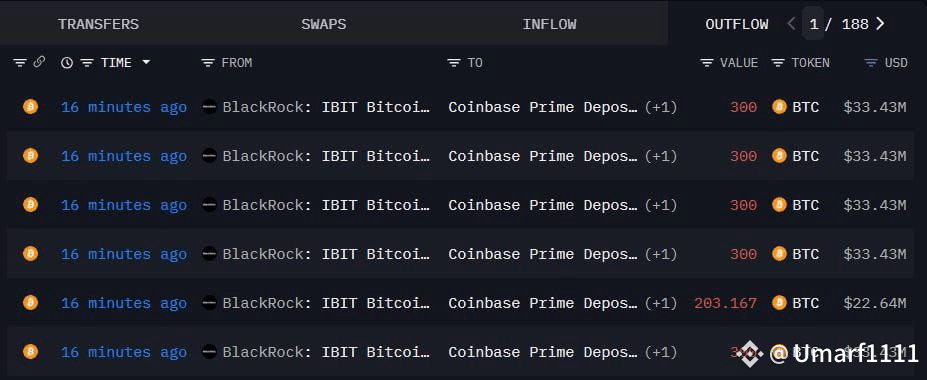
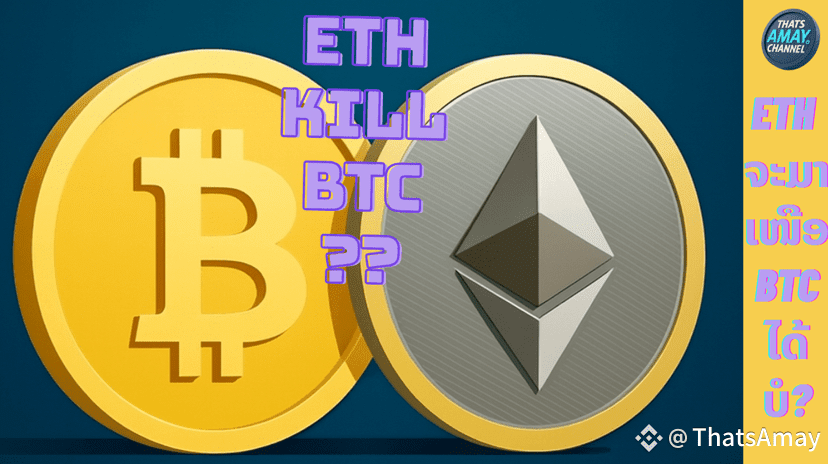
#NewHighOfProfitableBTCWallets #BTCWhalesMoveToETH #BTC走势分析 $BTC Bitcoin’s value has on balance risen substantially in recent months, despite large fluctuations. These fluctuations have attracted much attention from various sides. It appears that opinions on the future of this cryptocurrency are strongly divided. Most economists often take a different view on Bitcoin than people in the crypto world. The latter group emphasize the innovation that Bitcoin (more specifically the blockchain) brings, while economists often see Bitcoin as a bubble, with characteristics of a Ponzi scheme and underpinned by spectacular, but poorly founded economic claims. Most people have above all many questions. In this Policy Note, which has the structure of a Q&A-session, I will discuss the various arguments as objectively as I possibly can.
My conclusion: Bitcoin is not the money of the future and certainly not a future ‘world money’. If it survives, which it may, it will probably be as a high risk asset class. As such, it may strongly increase in value in the future, but it could just as easily go the other way and end up valueless. The buyer beware.
Introduction
Between September 2020 and mid-April 2021 the price of Bitcoin has risen sharply from $10,000 to more than $ 60,000, only to fall back in a couple of week to less than $40,000 (figure 1). The largest cryptocurrency’s price fluctuations is prompting talk about Bitcoin’s future. Some central banks want to clamp down on Bitcoin, but in El Salvador the President made it legal tender. Elon Musk kicks around the price of Bitcoin by Twitter. Pressing questions are coming up. Is Bitcoin money or not? Why is Bitcoin valuable? And what does the future hold?
Skeptics anticipate a collapse at some point, while true crypto believers see Bitcoin as the currency of the future. The discussions about Bitcoin are very broad and opinion is divided on even its most basic aspects. For example, Bitcoin was designed to be a payment method, but more and more people have come to view it mainly as a new investment category. The likely future of Bitcoin is also the subject of debate; will it replace the existing system, or will it eventually become “just” another new financial product that exists alongside the ones we already know?
In this Policy Note, I will attempt to answer some of the pressing questions about Bitcoin, without the least intention of even trying to settle them definitively. The main perspective I take here is that of an economist. Because regardless of all the innovation unleashed by the arrival of Bitcoin which may cause permanent changes to the financial system, some of the economic claims being thrown about deserve, at the very least, closer consideration. Some of them are just plain wrong. And it is not easy to verify claims and news. I will subject a few such news facts to further scrutiny in this Policy Note.1
First Things First: Is Bitcoin Really Money?
A Common Definition of Money
Money is frequently defined as follows: something is money if it is generally accepted within a specific society as a unit of account, a medium of exchange (payment instrument), or a store of wealth. This definition is not entirely adequate, since in a developed economy, money can be used not only as a unit of account, as a means to pay for goods and services and to accrue savings, but one should also be able to use it at the same time for borrowing money or issuing a bond.
If we take this definition of money as our starting point, we can review the various elements. Bitcoin can be used as a payment instrument, but its overall acceptance is limited to Bitcoin believers. This group can be likened to a sort of society that is spread across the world and has become pretty big. But it does not overlap with a real Bitcoin economy. In fact, there hardly is one. In this light, Bitcoin is not unlike a foreign currency, but one without an underlying economy to support it. This feature makes Bitcoin and other cryptocurrencies fairly unique.
There are relatively few companies that accept payments in Bitcoin. In early February 2021, Elon Musk announced that soon, you would be able to buy a Tesla with Bitcoin, but the next person that the same news item interviewed was a Dutch Tesla dealer who strongly denied that his business would accept such payments. On March 23, however, Musk put his Bitcoin where his mouth is. For the meantime only in the U.S., Tesla would indeed be allowing payments in Bitcoin. To begin with Tesla will not accept other cryptos, but that could very well change. However, on May 13, however, Musk announced that Tesla would stop accepting Bitcoin because of its energy-intensity. One can hardly believe that this was the real reason, as the energy-intensity of Bitcoin mining is not exactly recent news. Musk’s moves raise several interesting questions that I will address in Box 3.
On March 20, 2021, the Dutch newspaper NRC reported that approximately 200 companies in the Netherlands accept Bitcoin as a means of payment, noting that, for many, this above all is related to marketing campaigns. In practice, they at most execute a few transactions a year. Public acceptance of Bitcoin still has a long way to go, even if several million people across the globe have their own so-called wallet. Therefore, Bitcoin definitely has value (see below, too) but to turn that value into cash, which is undifferentiated purchasing power, it first has to be converted into regular money, like dollars or euros. As a unit of account, Bitcoin only works if valued in a regular currency. Whether or not inflation occurs in the Bitcoin world is an open question. No information exists on the subject. Bitcoin prices do not exist within a Bitcoin economy as an allocation mechanism, or at least not perceptibly, on which more later.
Box 1: El Salvador: the first country to introduce the Bitcoin as legal tender?
On June 9, 2021, the President of El Salvador announced that the government had decided to introduce the Bitcoin as legal tender. However, the existing currency (the USD dollar) will retain its position of legal tender as well. So we are witnessing a country using two kinds of money as legal tender at the same time. To be sure: we are talking about two types of money that may fluctuate with 10% on a daily basis against each other. This simply does not make sense. In an overwhelmingly cash-based economy like El Salvador, one may expect that the position of the dollar will remain unshaken by this decision. And prices will remain in dollars. And it is unclear how the government thinks to enforce the legal tender status of Bitcoin in a country where a substantial size of the population have no internet-access.
Three important arguments for this step were mentioned. Bitcoin should help to increase financial inclusion. Many Salvadorians don’t have a bank account, but a large proportion of them have a smartphone. Which makes it possible to use internet-based application. Secondly, El Salvador is very much dependent on remittances from Salvadorians working abroad. In the current banking systems, such payments are cumbersome, slow and expensive. Third, the government hopes to attract rich Bitcoin-owners to move to El Salvador, offering tax advantages.
These arguments are not very convincing. The first two problems, which are real, are probably better solved by a dollar-based CBDC than by Bitcoin. Many banks in emerging economies are already working on CBDC and the most important motive here is to increase financial inclusion. And such a system could also help to improve cross-border payments.
The third argument is more difficult to understand. Why would a rich Bitcoin-owner want to move to El Salvador, other than the motive to move to a less-regulated environment? What kind of companies does El Salvador want to attract?
El Salvador is apparently not able to implement its decision and had approached the World Bank for support. Which was immediately refused, because “this is not something the World Bank can support given the environmental and transparency shortcomings (of Bitcoin).” Maybe El Salvador better rephrases its request and asks for support in developing a dollar-based CBDC. The World Bank would gladly support such a project, I would think.
Bitcoin as an asset class (store of wealth)
It takes some effort to see Bitcoin as a regular investment asset too. With “regular” currencies like the euro, people can make money by investing it in a profitable business. The profit generates a return, and if the amount of money grows in line with real economic activity, investors can cash in on it. The most important point here is that one party’s gain is not necessarily another’s loss. Simultaneously, it’s also possible to borrow money to invest at a predictable interest rate and to, over time, pay the interest and loan repayments from the generated income.
Bitcoin works differently. We have seen that Bitcoin can increase or decrease strongly in value, but it is a closed system. There is no underlying economy. Moreover, Bitcoin has strong deflationary characteristics. How much Bitcoin is available is predetermined and ultimately limited. Therefore, the ROI of Bitcoin is only related to the price of the Bitcoin itself, expressed in regular currency.
Figure 1: The price of Bitcoin (in US dollars)
width=
Source: coindesk
Because there are only a very few places where they can make a payment in Bitcoin, Bitcoin investors can only claim their return if another user is prepared to invest in Bitcoin against a higher price, in exchange for regular currency, of course. This is perhaps one important reason why speculation about Bitcoin’s further upward potential is rife at the exact time that the price of Bitcoin has soared. Without the inflow of new money, investors in Bitcoin cannot reap their return in regular currency. In this, Bitcoin shares strong resemblance to a pyramid scheme. At the same time, commentators regularly point out that price manipulation can occur in the Bitcoin system, when a few big parties manipulate the price for their own gain. The market for Bitcoin is relatively illiquid compared to the traditional financial markets, which means, unfortunately, that it lends itself well to such manipulation.
Of course, the same can be said of an asset class like precious metals, too. They often have only limited value in regular economic activity, even though they have industrial applications and can be used to make jewelry. Cowrie shells and Rai stones cannot even make this claim and just like Bitcoin, their value can plummet to zero. Nonetheless, it’s a cold hard fact that these two means of payment have been in use for thousands of years, even if their significance has declined considerably. Even gold was pushed from its pedestal temporarily in the 19th century by the advent of aluminum. Early perspectives on aluminum considered it an exceptionally remarkable new metal. Napoleon III even replaced the golden tableware he used at state banquets temporarily with the new-fangled aluminum. The hype was short-lived; aluminum cutlery soon became part of soldiers’ standard equipment and disappeared even sooner from the royal court. Gold and silver have traditionally played an important role as safe investments that are relatively easy to exchange for currency. They still do.
Box 2: Paying Taxes in Bitcoin
If the government backs a currency as a means of payment, in a normal economy, it greatly helps to increase general acceptance. So the news that taxes could be paid in Bitcoin and Ethereum in Switzerland was welcomed in crypto circles.
Closer examination, however, reveals that this news is less spectacular than it first appears. It was the canton of Zug that opened the possibility of paying taxes in Bitcoin, something that was already possible in a few Swiss cities. But the tax assessment simply reads in Swiss francs. And the tax authorities just want to be paid in francs. However, people can convert their cryptos into francs through a designated crypto company with which the tax assessment can be paid. After all, local governments keep their books in the national currency.
Not so spectacular, then. At any time people can decide to convert illiquid assets, such as gold, stocks, real estate, or cryptos, into regular money to pay a bill. That has now been made a little easier for Bitcoin users.
Can You Get a Loan in Bitcoin?
The fact that Bitcoin also has some characteristics of a zero-sum game, limits its use in day-to-day-transactions. Regular money can be used for more than just payments, it can at the same time be borrowed or invested. With Bitcoin, it is the price that ultimately determines the return, positive and negative.
By definition, then, the fate of the person who takes out a loan in Bitcoin is the opposite of the investor’s. A great deal of attention is going to those people who got into Bitcoin in early 2020; they can now collect a profit thanks to the current, much higher price. But someone who, say, took out a mortgage loan in Bitcoin would have seen their debt explode in terms of regular money and would likely now be bankrupt. Incidentally, I am unaware whether many people have taken out Bitcoin loans.
The underlying problem, of course, is that there is no underlying Bitcoin economy in all costs and revenues are in Bitcoin. As long as people’s daily incomes and expenditures take place in regular money, Bitcoin (or any other random crypto) will, at best, be ill-prepared to serve the same function as money.
That said, Bitcoin fulfills the function as a store of wealth rather well, but its high volatility also makes it high risk. Therefore the most important possible role that Bitcoin could have in the future financial system is as an asset class.
Bitcoin Only Exists Virtually. Why Does Bitcoin Have Value?
Things are as valuable as the worth we attach to them. This may seem like a lazy definition, but it is not. Clearly, some goods exist that are considered valuable because they are useful. Early money standards, for example in Egypt, were based on grain. In Virginia, the money system was based on tobacco for centuries (Davies, 2018). The intrinsic value of metal coins depends on which metal is used to mint it, like copper, iron, silver, and gold. But most money has no practical application other than fulfilling the role of money.
One very old money standard was based on massive stones (Rai), while the longest functioning money standard throughout a large geographical area was based on Cowry shells. Besides dental crowns and jewels, gold has few practical applications and paper money is completely worthless the minute that no-one will accept it.
Traditional fiat money has no physical form. The same is true for Bitcoin. As long as enough people believe in Bitcoin and are prepared to pay regular money for it, Bitcoin has value. If people stop believing in it, Bitcoin becomes worthless. As noted, Bitcoin shares this characteristic with other types of fiduciary money, like the aforementioned Rai, shells, or currency and fiat money. It is important, however, that deposit money, which is a liability of the banking system, is fully back by a bank’s assets, such as loans, investments and liquidity reserves. Bitcoin has no backing at all.
It is also true that as long as people trust in the government, regular money’s status as legal tender enjoys some protection. However, that trust in money can be revoked if, during times of hyperinflation, trust in the government is utterly destroyed, as in Zimbabwe in 2008 (see Figure 2) or, more recently, in Venezuela. However, hyperinflation is a relatively rare phenomenon.
Figure 2: Hyperinflation Money in Zimbabwe
width=
Source: Reserve Bank of Zimbabwe
Is there any seigniorage in Bitcoin?
Seigniorage is the ‘profit’ that comes along with the creation of money. It originates from the fact that the production costs of money are lower than its economic value. For example: it takes only a few eurocents to produce a 100 euro bank note. If the producer of new money is also the one that brings into circulation by spending it, the difference is the profit. Monetary financing, viz. financing government spending with newly created money, is also a good example. Seigniorage is not ‘free money’ for society. Actually, it is a different form of taxation (Keynes, 1924).
Deposit money is created by commercial banks, but it brings no seigniorage. The money created by commercial banks, often via mutual debt acceptance, is a liability of the bank as it is owned by its clients. The advantage for the bank here is not seigniorage, but the return on the asset that is financed by it.2
Bitcoins are produced in a so-called mining process and the income is the reward for the miner that succeeds in solving the algorithm by hard work. This may be profitable, depending on the price of Bitcoin, but it is not by definition a constant group that receives this reward. So there probably is not an entity or group of entities that structurally generates something that looks like seigniorage. Although one cannot exclude that the inventor(s) of Bitcoin, Satoshi Nakamoto, silently had mined a first string of Bitcoins before going public. We probably will never know.
How High Can the Value of Bitcoin Rise?
Some people anticipate that the value of Bitcoin can rise much, much higher, to a million dollars even. If asked whether this is possible, I can only say: yes, it could. The value of Bitcoin could even rise to as much as two million dollars, or more. But it might not, because the chance that the value of Bitcoin could suddenly crash, even to zero, is arguably just as likely. As I have explained, the value of Bitcoin is completely determined by the value its enthusiasts attach to it. Hypes can go very far, though. Back in the 17th century when Tulip Mania was sweeping the Netherlands, there was one type of tulip bulb that was worth so much you could trade it for a fine canal house in Amsterdam. Relatively speaking, the hype surrounding Bitcoin is not so bad, although with a much larger international reach.
Bitcoin and Inflation
Bitcoin advocates regularly point out that Bitcoin is not affected by inflation. They draw attention to the fact that there is a limited amount of Bitcoin, a situation they compare to the regular money circuit, where in principle central banks can introduce an infinite amount of money to the market. While it is true that this tells us something about the amount of Bitcoin available, it tells us nothing about the rate of inflation, which is measured in terms of price development rather than the development of the amount of money. So the example tells us nothing about actual inflation in the ‘Bitcoin-world’. In order to make any claims about inflation in the world of Bitcoin, you would need to identify exactly which goods and services were being traded in Bitcoin globally, how large a share each individual product has in the total purchases in Bitcoin, and what the price development of every individual product (in Bitcoin) is over time. Only then can a price index be constructed for Bitcoin to measure its progression over time. But that information does not exist and will not be made available. Because that would require far-reaching transparency throughout the Bitcoin world, to an extent that would undermine the core philosophy of Bitcoin, which privileges privacy and pseudonymity over transparency. The claim that Bitcoin is not affected by inflation, therefore, is unfounded.
The Scarcity of Bitcoin: Advantage or Handicap?
A related factor is that Bitcoin is not suited to functioning like money in a normal economy. In this respect, the predetermined, fixed amount of Bitcoin is a great handicap. To maintain a stable price level, it is important for the amount of money to be able to grow more or less in line with economic activity. ThiBitcoin’s value has on balance risen substantially in recent months, despite large fluctuations. These fluctuations have attracted much attention from various sides. It appears that opinions on the future of this cryptocurrency are strongly divided. Most economists often take a different view on Bitcoin than people in the crypto world. The latter group emphasize the innovation that Bitcoin (more specifically the blockchain) brings, while economists often see Bitcoin as a bubble, with characteristics of a Ponzi scheme and underpinned by spectacular, but poorly founded economic claims. Most people have above all many questions. In this Policy Note, which has the structure of a Q&A-session, I will discuss the various arguments as objectively as I possibly can.
My conclusion: Bitcoin is not the money of the future and certainly not a future ‘world money’. If it survives, which it may, it will probably be as a high risk asset class. As such, it may strongly increase in value in the future, but it could just as easily go the other way and end up valueless. The buyer beware.
Introduction
Between September 2020 and mid-April 2021 the price of Bitcoin has risen sharply from $10,000 to more than $ 60,000, only to fall back in a couple of week to less than $40,000 (figure 1). The largest cryptocurrency’s price fluctuations is prompting talk about Bitcoin’s future. Some central banks want to clamp down on Bitcoin, but in El Salvador the President made it legal tender. Elon Musk kicks around the price of Bitcoin by Twitter. Pressing questions are coming up. Is Bitcoin money or not? Why is Bitcoin valuable? And what does the future hold?
Skeptics anticipate a collapse at some point, while true crypto believers see Bitcoin as the currency of the future. The discussions about Bitcoin are very broad and opinion is divided on even its most basic aspects. For example, Bitcoin was designed to be a payment method, but more and more people have come to view it mainly as a new investment category. The likely future of Bitcoin is also the subject of debate; will it replace the existing system, or will it eventually become “just” another new financial product that exists alongside the ones we already know?
In this Policy Note, I will attempt to answer some of the pressing questions about Bitcoin, without the least intention of even trying to settle them definitively. The main perspective I take here is that of an economist. Because regardless of all the innovation unleashed by the arrival of Bitcoin which may cause permanent changes to the financial system, some of the economic claims being thrown about deserve, at the very least, closer consideration. Some of them are just plain wrong. And it is not easy to verify claims and news. I will subject a few such news facts to further scrutiny in this Policy Note.1
First Things First: Is Bitcoin Really Money?
A Common Definition of Money
Money is frequently defined as follows: something is money if it is generally accepted within a specific society as a unit of account, a medium of exchange (payment instrument), or a store of wealth. This definition is not entirely adequate, since in a developed economy, money can be used not only as a unit of account, as a means to pay for goods and services and to accrue savings, but one should also be able to use it at the same time for borrowing money or issuing a bond.
If we take this definition of money as our starting point, we can review the various elements. Bitcoin can be used as a payment instrument, but its overall acceptance is limited to Bitcoin believers. This group can be likened to a sort of society that is spread across the world and has become pretty big. But it does not overlap with a real Bitcoin economy. In fact, there hardly is one. In this light, Bitcoin is not unlike a foreign currency, but one without an underlying economy to support it. This feature makes Bitcoin and other cryptocurrencies fairly unique.
There are relatively few companies that accept payments in Bitcoin. In early February 2021, Elon Musk announced that soon, you would be able to buy a Tesla with Bitcoin, but the next person that the same news item interviewed was a Dutch Tesla dealer who strongly denied that his business would accept such payments. On March 23, however, Musk put his Bitcoin where his mouth is. For the meantime only in the U.S., Tesla would indeed be allowing payments in Bitcoin. To begin with Tesla will not accept other cryptos, but that could very well change. However, on May 13, however, Musk announced that Tesla would stop accepting Bitcoin because of its energy-intensity. One can hardly believe that this was the real reason, as the energy-intensity of Bitcoin mining is not exactly recent news. Musk’s moves raise several interesting questions that I will address in Box 3.
On March 20, 2021, the Dutch newspaper NRC reported that approximately 200 companies in the Netherlands accept Bitcoin as a means of payment, noting that, for many, this above all is related to marketing campaigns. In practice, they at most execute a few transactions a year. Public acceptance of Bitcoin still has a long way to go, even if several million people across the globe have their own so-called wallet. Therefore, Bitcoin definitely has value (see below, too) but to turn that value into cash, which is undifferentiated purchasing power, it first has to be converted into regular money, like dollars or euros. As a unit of account, Bitcoin only works if valued in a regular currency. Whether or not inflation occurs in the Bitcoin world is an open question. No information exists on the subject. Bitcoin prices do not exist within a Bitcoin economy as an allocation mechanism, or at least not perceptibly, on which more later.
Box 1: El Salvador: the first country to introduce the Bitcoin as legal tender?
On June 9, 2021, the President of El Salvador announced that the government had decided to introduce the Bitcoin as legal tender. However, the existing currency (the USD dollar) will retain its position of legal tender as well. So we are witnessing a country using two kinds of money as legal tender at the same time. To be sure: we are talking about two types of money that may fluctuate with 10% on a daily basis against each other. This simply does not make sense. In an overwhelmingly cash-based economy like El Salvador, one may expect that the position of the dollar will remain unshaken by this decision. And prices will remain in dollars. And it is unclear how the government thinks to enforce the legal tender status of Bitcoin in a country where a substantial size of the population have no internet-access.
Three important arguments for this step were mentioned. Bitcoin should help to increase financial inclusion. Many Salvadorians don’t have a bank account, but a large proportion of them have a smartphone. Which makes it possible to use internet-based application. Secondly, El Salvador is very much dependent on remittances from Salvadorians working abroad. In the current banking systems, such payments are cumbersome, slow and expensive. Third, the government hopes to attract rich Bitcoin-owners to move to El Salvador, offering tax advantages.
These arguments are not very convincing. The first two problems, which are real, are probably better solved by a dollar-based CBDC than by Bitcoin. Many banks in emerging economies are already working on CBDC and the most important motive here is to increase financial inclusion. And such a system could also help to improve cross-border payments.
The third argument is more difficult to understand. Why would a rich Bitcoin-owner want to move to El Salvador, other than the motive to move to a less-regulated environment? What kind of companies does El Salvador want to attract?
El Salvador is apparently not able to implement its decision and had approached the World Bank for support. Which was immediately refused, because “this is not something the World Bank can support given the environmental and transparency shortcomings (of Bitcoin).” Maybe El Salvador better rephrases its request and asks for support in developing a dollar-based CBDC. The World Bank would gladly support such a project, I would think.
Bitcoin as an asset class (store of wealth)
It takes some effort to see Bitcoin as a regular investment asset too. With “regular” currencies like the euro, people can make money by investing it in a profitable business. The profit generates a return, and if the amount of money grows in line with real economic activity, investors can cash in on it. The most important point here is that one party’s gain is not necessarily another’s loss. Simultaneously, it’s also possible to borrow money to invest at a predictable interest rate and to, over time, pay the interest and loan repayments from the generated income.
Bitcoin works differently. We have seen that Bitcoin can increase or decrease strongly in value, but it is a closed system. There is no underlying economy. Moreover, Bitcoin has strong deflationary characteristics. How much Bitcoin is available is predetermined and ultimately limited. Therefore, the ROI of Bitcoin is only related to the price of the Bitcoin itself, expressed in regular currency.
Figure 1: The price of Bitcoin (in US dollars)
width=
Source: coindesk
Because there are only a very few places where they can make a payment in Bitcoin, Bitcoin investors can only claim their return if another user is prepared to invest in Bitcoin against a higher price, in exchange for regular currency, of course. This is perhaps one important reason why speculation about Bitcoin’s further upward potential is rife at the exact time that the price of Bitcoin has soared. Without the inflow of new money, investors in Bitcoin cannot reap their return in regular currency. In this, Bitcoin shares strong resemblance to a pyramid scheme. At the same time, commentators regularly point out that price manipulation can occur in the Bitcoin system, when a few big parties manipulate the price for their own gain. The market for Bitcoin is relatively illiquid compared to the traditional financial markets, which means, unfortunately, that it lends itself well to such manipulation.
Of course, the same can be said of an asset class like precious metals, too. They often have only limited value in regular economic activity, even though they have industrial applications and can be used to make jewelry. Cowrie shells and Rai stones cannot even make this claim and just like Bitcoin, their value can plummet to zero. Nonetheless, it’s a cold hard fact that these two means of payment have been in use for thousands of years, even if their significance has declined considerably. Even gold was pushed from its pedestal temporarily in the 19th century by the advent of aluminum. Early perspectives on aluminum considered it an exceptionally remarkable new metal. Napoleon III even replaced the golden tableware he used at state banquets temporarily with the new-fangled aluminum. The hype was short-lived; aluminum cutlery soon became part of soldiers’ standard equipment and disappeared even sooner from the royal court. Gold and silver have traditionally played an important role as safe investments that are relatively easy to exchange for currency. They still do.
Box 2: Paying Taxes in Bitcoin
If the government backs a currency as a means of payment, in a normal economy, it greatly helps to increase general acceptance. So the news that taxes could be paid in Bitcoin and Ethereum in Switzerland was welcomed in crypto circles.
Closer examination, however, reveals that this news is less spectacular than it first appears. It was the canton of Zug that opened the possibility of paying taxes in Bitcoin, something that was already possible in a few Swiss cities. But the tax assessment simply reads in Swiss francs. And the tax authorities just want to be paid in francs. However, people can convert their cryptos into francs through a designated crypto company with which the tax assessment can be paid. After all, local governments keep their books in the national currency.
Not so spectacular, then. At any time people can decide to convert illiquid assets, such as gold, stocks, real estate, or cryptos, into regular money to pay a bill. That has now been made a little easier for Bitcoin users.
Can You Get a Loan in Bitcoin?
The fact that Bitcoin also has some characteristics of a zero-sum game, limits its use in day-to-day-transactions. Regular money can be used for more than just payments, it can at the same time be borrowed or invested. With Bitcoin, it is the price that ultimately determines the return, positive and negative.
By definition, then, the fate of the person who takes out a loan in Bitcoin is the opposite of the investor’s. A great deal of attention is going to those people who got into Bitcoin in early 2020; they can now collect a profit thanks to the current, much higher price. But someone who, say, took out a mortgage loan in Bitcoin would have seen their debt explode in terms of regular money and would likely now be bankrupt. Incidentally, I am unaware whether many people have taken out Bitcoin loans.
The underlying problem, of course, is that there is no underlying Bitcoin economy in all costs and revenues are in Bitcoin. As long as people’s daily incomes and expenditures take place in regular money, Bitcoin (or any other random crypto) will, at best, be ill-prepared to serve the same function as money.
That said, Bitcoin fulfills the function as a store of wealth rather well, but its high volatility also makes it high risk. Therefore the most important possible role that Bitcoin could have in the future financial system is as an asset class.
Bitcoin Only Exists Virtually. Why Does Bitcoin Have Value?
Things are as valuable as the worth we attach to them. This may seem like a lazy definition, but it is not. Clearly, some goods exist that are considered valuable because they are useful. Early money standards, for example in Egypt, were based on grain. In Virginia, the money system was based on tobacco for centuries (Davies, 2018). The intrinsic value of metal coins depends on which metal is used to mint it, like copper, iron, silver, and gold. But most money has no practical application other than fulfilling the role of money.
One very old money standard was based on massive stones (Rai), while the longest functioning money standard throughout a large geographical area was based on Cowry shells. Besides dental crowns and jewels, gold has few practical applications and paper money is completely worthless the minute that no-one will accept it.
Traditional fiat money has no physical form. The same is true for Bitcoin. As long as enough people believe in Bitcoin and are prepared to pay regular money for it, Bitcoin has value. If people stop believing in it, Bitcoin becomes worthless. As noted, Bitcoin shares this characteristic with other types of fiduciary money, like the aforementioned Rai, shells, or currency and fiat money. It is important, however, that deposit money, which is a liability of the banking system, is fully back by a bank’s assets, such as loans, investments and liquidity reserves. Bitcoin has no backing at all.
It is also true that as long as people trust in the government, regular money’s status as legal tender enjoys some protection. However, that trust in money can be revoked if, during times of hyperinflation, trust in the government is utterly destroyed, as in Zimbabwe in 2008 (see Figure 2) or, more recently, in Venezuela. However, hyperinflation is a relatively rare phenomenon.
Figure 2: Hyperinflation Money in Zimbabwe
width=
Source: Reserve Bank of Zimbabwe
Is there any seigniorage in Bitcoin?
Seigniorage is the ‘profit’ that comes along with the creation of money. It originates from the fact that the production costs of money are lower than its economic value. For example: it takes only a few eurocents to produce a 100 euro bank note. If the producer of new money is also the one that brings into circulation by spending it, the difference is the profit. Monetary financing, viz. financing government spending with newly created money, is also a good example. Seigniorage is not ‘free money’ for society. Actually, it is a different form of taxation (Keynes, 1924).
Deposit money is created by commercial banks, but it brings no seigniorage. The money created by commercial banks, often via mutual debt acceptance, is a liability of the bank as it is owned by its clients. The advantage for the bank here is not seigniorage, but the return on the asset that is financed by it.2
Bitcoins are produced in a so-called mining process and the income is the reward for the miner that succeeds in solving the algorithm by hard work. This may be profitable, depending on the price of Bitcoin, but it is not by definition a constant group that receives this reward. So there probably is not an entity or group of entities that structurally generates something that looks like seigniorage. Although one cannot exclude that the inventor(s) of Bitcoin, Satoshi Nakamoto, silently had mined a first string of Bitcoins before going public. We probably will never know.
How High Can the Value of Bitcoin Rise?
Some people anticipate that the value of Bitcoin can rise much, much higher, to a million dollars even. If asked whether this is possible, I can only say: yes, it could. The value of Bitcoin could even rise to as much as two million dollars, or more. But it might not, because the chance that the value of Bitcoin could suddenly crash, even to zero, is arguably just as likely. As I have explained, the value of Bitcoin is completely determined by the value its enthusiasts attach to it. Hypes can go very far, though. Back in the 17th century when Tulip Mania was sweeping the Netherlands, there was one type of tulip bulb that was worth so much you could trade it for a fine canal house in Amsterdam. Relatively speaking, the hype surrounding Bitcoin is not so bad, although with a much larger international reach.
Bitcoin and Inflation
Bitcoin advocates regularly point out that Bitcoin is not affected by inflation. They draw attention to the fact that there is a limited amount of Bitcoin, a situation they compare to the regular money circuit, where in principle central banks can introduce an infinite amount of money to the market. While it is true that this tells us something about the amount of Bitcoin available, it tells us nothing about the rate of inflation, which is measured in terms of price development rather than the development of the amount of money. So the example tells us nothing about actual inflation in the ‘Bitcoin-world’. In order to make any claims about inflation in the world of Bitcoin, you would need to identify exactly which goods and services were being traded in Bitcoin globally, how large a share each individual product has in the total purchases in Bitcoin, and what the price development of every individual product (in Bitcoin) is over time. Only then can a price index be constructed for Bitcoin to measure its progression over time. But that information does not exist and will not be made available. Because that would require far-reaching transparency throughout the Bitcoin world, to an extent that would undermine the core philosophy of Bitcoin, which privileges privacy and pseudonymity over transparency. The claim that Bitcoin is not affected by inflation, therefore, is unfounded.
The Scarcity of Bitcoin: Advantage or Handicap?
A related factor is that Bitcoin is not suited to functioning like money in a normal economy. In this respect, the predetermined, fixed amount of Bitcoin is a great handicap. To maintain a stable price level, it is important for the amount of money to be able to grow more or less in line with economic activity. This is not entirely a one-to-one relationship, because the rate at which money is exchanged betwes is not entirely a one-to-one relationship, because the rate at which money is exchanged betwe