
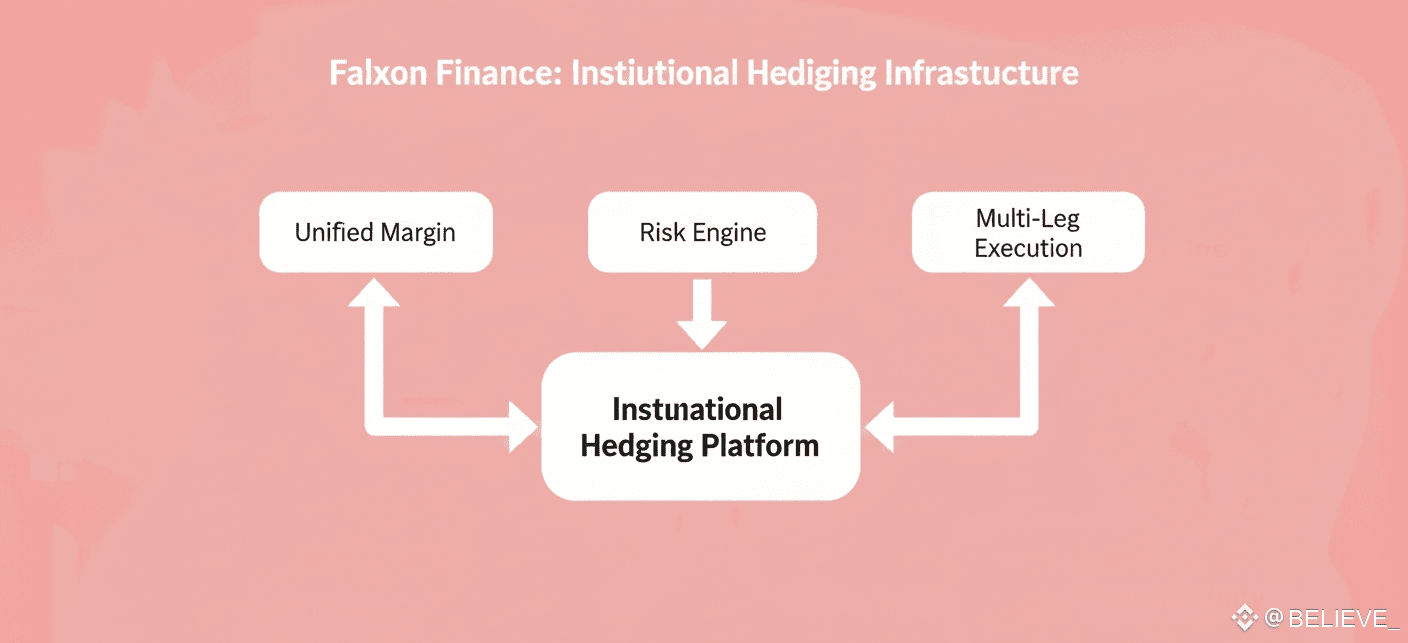
 The traditional divide between centralized and decentralized finance has always centered on one fundamental question: can on-chain infrastructure match the sophistication of institutions? For leveraged products and complex hedging strategies, this question has lingered unanswered—until platforms like Falxon Finance began bridging the gap. Falxon Finance is architected specifically to serve institutional participants, funds, and treasury managers who require not just leverage, but professional-grade infrastructure with robust risk controls, transparent execution, and the ability to execute sophisticated multi-leg hedging strategies at scale.
Institutional hedging is fundamentally different from retail speculation. While individual traders might take directional bets, institutions operate under strict risk mandates, regulatory constraints, and fiduciary responsibilities. They need to manage portfolio-level exposure, hedge against specific market risks, and maintain compliance with internal policies. Falxon Finance recognizes these requirements and has built its infrastructure accordingly, making it possible for serious institutional players to access decentralized leverage without sacrificing the controls and transparency they demand.
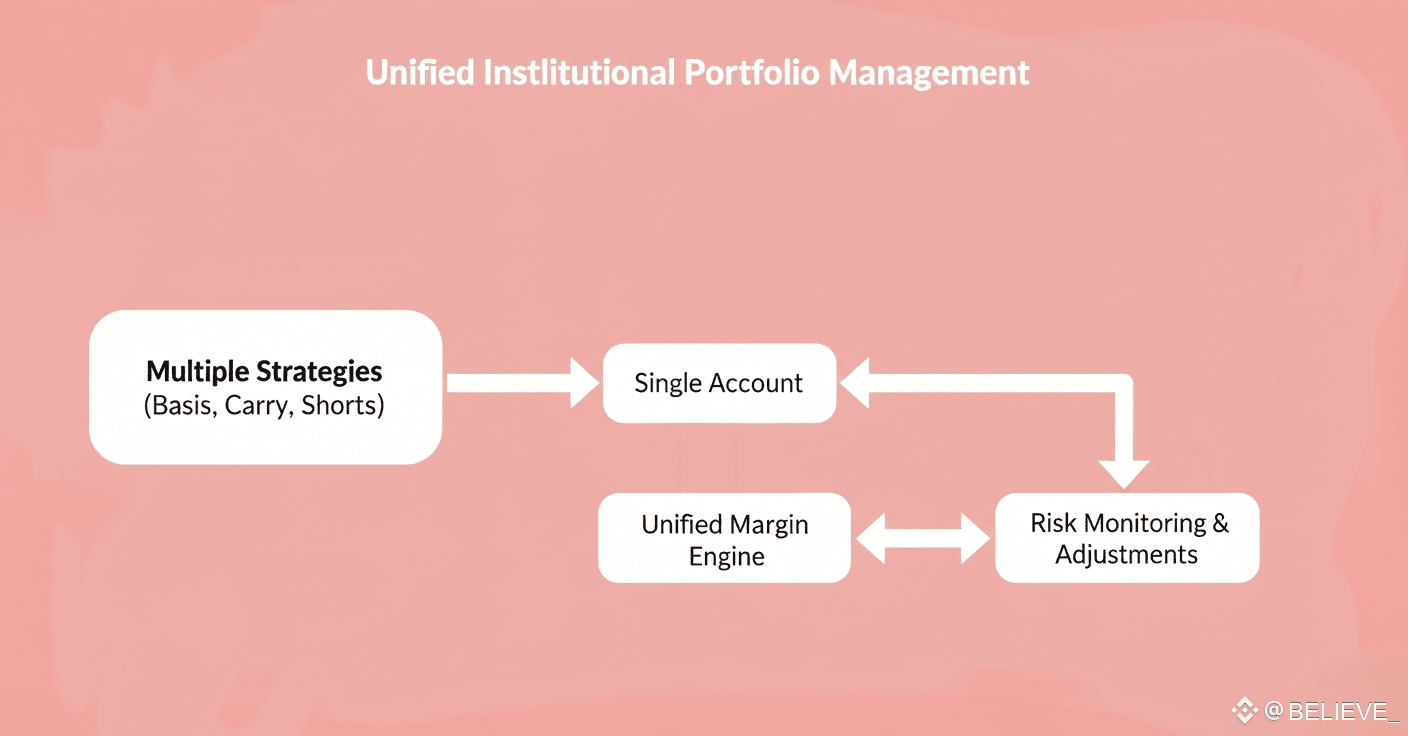 Institutions can utilize Falxon Finance in three ways. First, by consolidating all strategies and asset classes into one universal position manager, institutional users can manage their margin positive or negative across all strategies for multiple asset classes using one account instead of operating across multiple fragmented exchanges as is currently necessary.
A bank may be running two types of trades: a basis trade in Bitcoin while shorting the exposure to their stablecoin. In addition, they maintain a small carry trading position on an altcoin; therefore, they want to have all of these trades operating within one account and under unified margin requirements.
As such, Falxon Finance's risk engine will monitor and manage the overall portfolio, so that the aggregate exposure of each trader does not breach their risk management requirements. If one trade begins to lose money, the system will adjust the margin accordingly or implement a protective mechanism before the entire position is liquidated. Because the various protocols are so different, this type of coordinated management is virtually impossible to execute across fragmented systems.
For funds managing capital on behalf of limited partners, Falxon Finance's transparency and auditability are game-changing. Every transaction is recorded on-chain, creating an immutable audit trail. Returns can be calculated precisely, breakdowns show which strategies contributed what to overall performance, and the full mechanics of execution are visible. This transparency satisfies limited partner requirements for accountability and enables sophisticated performance attribution analysis that would be difficult or impossible with off-chain venues.
Institutional investors are attracted to Falxon Finance because of its high level of execution efficiency. The platform offers finality in less than one second, allowing for the coordination and confirmation of multi-leg hedges with confidence, as opposed to relying on asynchronous confirmations from multiple venues. Additionally, the platform's lower fees and slippage compared to traditional venues make it possible for investors to utilize tight-margin strategies, which require precise execution, as an economically viable options. For instance, hedge funds that manage thousands of open positions at once will experience significant performance improvements due to the cumulative efficiency gains realized by using Falxon Finance's services.
Institutional investors also appreciate Falxon Finance's ability to provide them with operational control through the governance process. Through participation in governance activities, large stakeholders can influence the protocol parameters and how they are executed. For example, a major institutional investor may want to advocate for lower liquidation haircuts for specific collateral types and promote the idea that, for example, while directional positions should have a wider margin of error, market-neutral positions should have a narrower margin of error. The ability to vote as part of the governance process allows institutional investors to help create configurations of the protocol that are in line with serious institutional use cases, rather than simply defaulting to the minimal settings of retail speculation or high-frequency gaming.
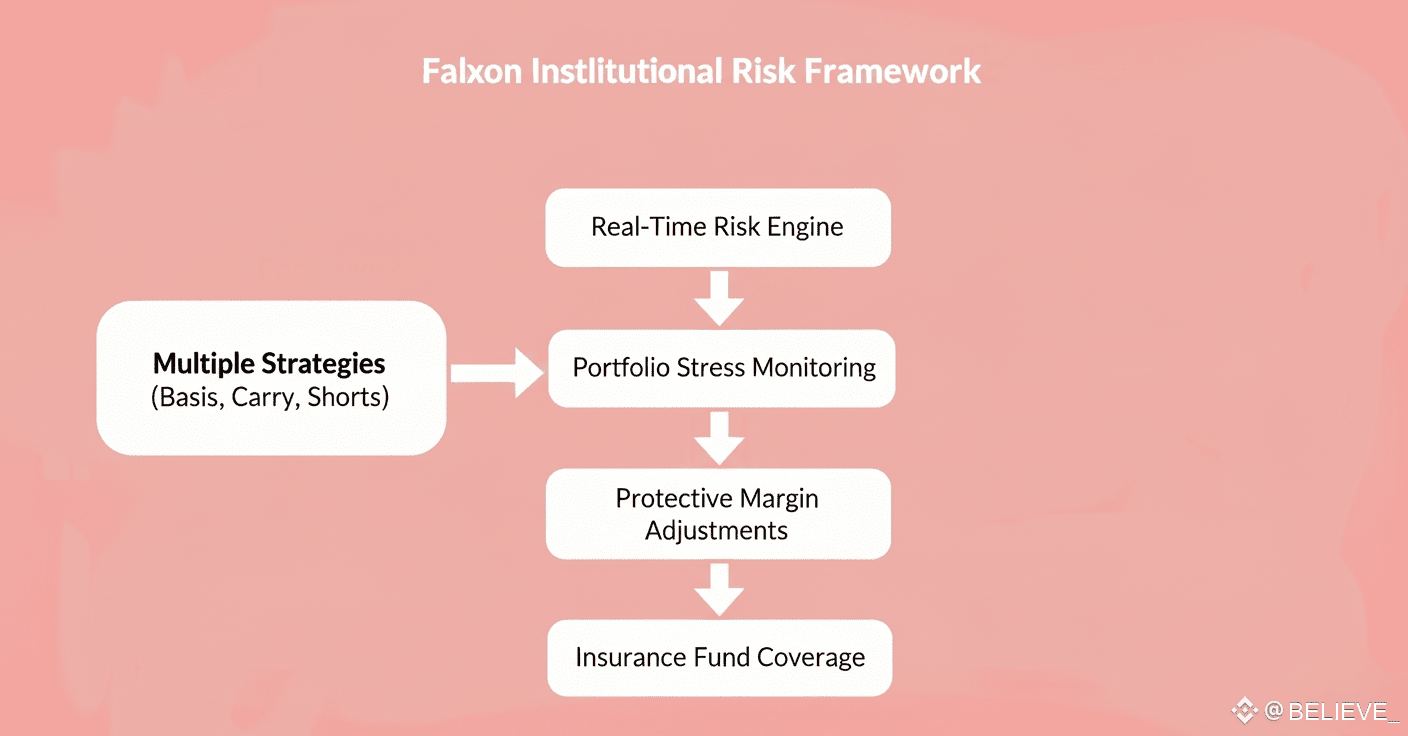 From a risk management perspective, Falxon Finance's approach to liquidations and insurance is also notably institutional-grade. The protocol maintains an insurance fund to cover shortfalls in extreme market conditions, ensuring that solvent users are not suddenly exposed to bad debt from unmanaged liquidations elsewhere in the system. This design prevents cascading failures and contagion, qualities essential for institutions that cannot tolerate systemic risk to their collateral.
The role of Falxon Finance in institutional treasury management deserves particular attention. Corporate treasuries, DAOs with large reserves, and endowments increasingly seek to deploy idle capital into yield-generating strategies. Falxon Finance enables this by providing a unified platform where such entities can run multiple strategies simultaneously—basis trades to generate steady yield, short volatility positions to benefit from calm markets, and hedges to protect core holdings. The protocol's governance allows these organizations to participate in shaping the platform, creating alignment with their long-term interests.
Falxon Finance has positioned itself as a future establishment within the crypto sector to provide leverage to institutional investors with a focus on utilizing on-chain material. By establishing a framework for the use of crypto-related activities and products while maintaining the standards of professionalism that traditional finance requires, many institutions will be looking to utilize Falxo's offering of on-chain strategies without reverting back to traditional systems. Further, Falxon's provision of both innovation and dependability within a single offering will provide institutional investors with an additional source of innovative solutions.
While Falxon's existing product offerings allude to their current product mix, the greater impact will be realized by the overall ability of decentralized finance to provide an environment for establishing institutional-level hedging, using well-designed architecture and governance structures. As institutions develop a high degree of trust in utilizing Falxon Finance's platform for hedging activities, and as more institutions implement successful hedging strategies through the platform, it is expected to form a stronger and central component of the overall ecosystem, attracting larger amounts of funding, as well as having many additional use cases.
In essence, Falxon Finance is redefining what institutional participation in DeFi can look like. By combining professional-grade risk management, unified position oversight, transparent execution, and participatory governance, it creates an environment where serious players can operate with confidence. For treasuries, hedge funds, and financial institutions seeking to access on-chain leverage and hedging without compromising standards, Falxon Finance offers infrastructure built for exactly that purpose.



